
Understanding cosmetic dental implants cost is one of the most important steps for anyone considering a permanent, natural-looking solution to missing teeth. In 2025, implants have become the gold standard for both aesthetics and function — but many patients still feel unsure about what truly determines the final price. In this detailed guide, you’ll find a clear, friendly, and comprehensive explanation designed to answer every question people typically search online. Whether you’re comparing countries, evaluating treatment steps, or trying to understand long-term value, this section will give you complete clarity on how pricing works and why implants are considered one of the best investments for a healthier, more confident smile. 😄
The overall cosmetic dental implants cost varies widely depending on geography, the dentist’s experience, the implant brand, the need for bone grafting, and the specific cosmetic goals of the patient. When researching implant treatment, many people focus only on the base fee, but the truth is that cosmetic implants involve a combination of clinical precision and artistic design. That means the price isn’t just about placing a titanium post; it also includes digital imaging, aesthetic crown design, laboratory craftsmanship, and post-care follow-up. Because cosmetic dentistry prioritizes beauty and harmony with facial features, the cost may differ from basic implant procedures — which is why understanding the details matters so much.
To make the process easier, think of implants as a multi-phase journey. First, there is a consultation, where your dentist evaluates bone density, gum health, and your overall oral structure. This stage often includes 3D CBCT imaging, which plays a major role in estimating cosmetic implant pricing variations — one of the relevant LSI (Latent Semantic Indexing) synonyms. Next comes surgical placement, healing time, and finally the cosmetic crown that blends seamlessly with your smile. Every stage has its own associated cost, and skipping any of them can compromise quality and longevity. That is why reputable clinics, including internationally accredited centers like those recognized by the American Dental Association, emphasize full professional planning from start to finish.
Another key factor influencing cosmetic dental implants cost is the material used. High-quality titanium and zirconia implants typically command higher prices because they offer exceptional durability, biocompatibility, and aesthetic outcomes. The abutment and crown — the visible part of your new tooth — also vary depending on whether you choose standard ceramic, premium porcelain, or ultra-aesthetic layered zirconium. Many patients choose zirconia because it mimics natural tooth translucency, especially in the front aesthetic zone. Of course, this level of artistry can influence cost, but it significantly enhances the final smile transformation. ✨
You may also notice differences in cosmetic implant fees between countries. For example, the United States often has higher fees due to laboratory costs, insurance limitations, and regional differences in operating expenses. Meanwhile, Turkey has become one of the world’s leading destinations for affordable, high-quality cosmetic dental care, in part because clinics there work with experienced surgeons and internationally certified implant brands at more competitive prices. Patients researching aesthetic implant pricing (another LSI term) often compare these regions to maximize value without sacrificing quality. Regardless of the country, the right clinic should provide clarity, transparency, and detailed breakdowns — including access to contact pages for scheduling personalized assessments such as the Redent Klinik Contact Page.
One of the reasons people search for detailed guides like this is because they want reassurance that the investment is worthwhile. And it absolutely is. Unlike removable dentures, implants do not slip, irritate the gums, or require adhesives. They maintain jawbone volume, contribute to facial symmetry, and allow you to chew naturally. Patients often describe the transformation as life-changing — improved confidence, stronger dental health, and the ability to smile fully again without hesitation. These benefits dramatically outweigh the initial cosmetic dental implants cost, especially when considering that implants can last decades with proper care.
Ultimately, understanding cosmetic implant pricing isn’t just about numbers — it’s about knowing what goes into creating a beautiful, lasting smile. Clinical precision, premium materials, 3D imaging, gum aesthetics, and long-term stability all play essential roles in determining the final cost. When evaluated together, they form a complete picture of value, comfort, safety, and aesthetics. This section aims to give you a foundational understanding of every important detail so you can confidently move forward in your dental restoration journey. In the next sections, you’ll find deeper explanations about factors, procedures, countries, maintenance, and everything else you need to fully understand the investment behind cosmetic dental implants. 🌟
What Influences Cosmetic Dental Implants Cost?
When patients begin researching cosmetic dental implants cost, one of the first questions they ask is: *Why does the price vary so much from one clinic or country to another?* The answer is that dental implants involve a complex, multi-layered process influenced by numerous medical, technological, and aesthetic factors. In this detailed guide, you’ll gain a clear understanding of every major element that shapes the final cost, helping you make informed decisions with confidence. 😄
The Role of Implant Materials and Manufacturing Quality
One of the biggest factors affecting cosmetic dental implants cost is the choice of implant material. Most high-quality implants are made of medical-grade titanium or zirconia, known for their biocompatibility and strength. Premium implant brands undergo advanced surface treatments, micro-etching, and sterilization processes that improve osseointegration — the biological bonding between bone and implant.
Higher-end systems also come with strong clinical documentation, long-term success data, and warranties. These qualities make them more reliable but also increase the cost. Zirconia implants, preferred especially for front-tooth cosmetic cases due to their tooth-like color, often fall on the higher end of the pricing spectrum because their manufacturing process is more advanced.
Surgeon Experience and Specialized Cosmetic Training
The expertise of the implant surgeon is another crucial factor. Dentists with decades of implant experience, international certifications, and advanced cosmetic dentistry training typically charge more — and for good reason. Cosmetic implant placement requires artistic precision. The goal is not merely functional chewing ability but achieving a natural, harmonious smile.
An experienced surgeon evaluates gum symmetry, lip structure, bite alignment, and smile esthetics, all of which contribute to the final appearance. This blend of medical knowledge and artistic skill naturally increases the overall cosmetic dental implants cost because patients receive highly personalized treatment.
Diagnostic Imaging and Digital Treatment Planning
Before implants are placed, modern clinics use advanced imaging tools such as CBCT 3D scans, digital intraoral scanners, and AI-assisted planning software. These technologies allow the dentist to analyze bone density, nerve pathways, and implant angles with exceptional accuracy.
Why Imaging Raises the Cost
While this level of precision significantly improves success rates, it also contributes to final fees. The equipment is expensive to operate and maintain, and the digital planning software requires specialized training. Still, these tools provide vital information that can affect the entire treatment plan — making them a worthwhile investment in the long-term success of your implant.
Bone Grafting, Sinus Lifts, and Additional Procedures
Not every patient has enough bone to support an implant immediately. If bone loss is present, the dentist may recommend bone grafting, sinus lifting, or ridge augmentation. These procedures ensure a solid foundation for the implant but also increase treatment time, complexity, and cost.
This is one of the main reasons why two patients might receive very different quotes for the same implant: their oral conditions require different biological preparations. In cosmetic dentistry, these steps are especially important because the visible outcome must be perfect.
Location: Why Country and City Make a Big Difference
Geographic location plays a major role in determining cosmetic dental implants cost. For example:
- United States: Higher operational costs, insurance restrictions, and laboratory fees increase prices.
- United Kingdom: Implant fees reflect high clinical overhead and strict regulatory structures.
- Turkey: Lower operational costs and high clinical expertise make cosmetic implants more affordable.
Patients often compare regions while researching aesthetic implant pricing — an LSI phrase related to cost-based searches — especially when seeking premium cosmetic results at competitive rates.
Implant Crown, Abutment, and Laboratory Customization
The visible crown attached to the implant is a major cost component. Custom cosmetic crowns require:
- Color matching with adjacent teeth
- Digital design (CAD/CAM)
- High-strength porcelain or layered zirconium
- Precision handcrafted detailing by expert technicians
Cosmetic crowns aim for translucency, natural shading, and perfect shape, which requires more time and artistry in the dental laboratory. This level of craftsmanship affects the final cosmetic dental implants cost.
Clinic Technology and Quality Standards
Clinics that use advanced sterilization procedures, modern surgical suites, guided implant systems, and top-tier sterilization technologies often charge more due to higher operational expenses. However, these clinics also deliver better outcomes, reduced healing time, and higher success rates.
Aftercare, Follow-up Visits, and Maintenance
Long-term support is another component of cosmetic implant pricing. Quality clinics offer follow-up visits, digital check-ups, and personalized aftercare instructions to ensure long-lasting results. This comprehensive approach enhances the overall value of treatment.
Every factor listed above shows that cosmetic dental implants cost is not just a number — it’s a reflection of the technology, expertise, and aesthetic excellence involved. For patient-specific estimates or personal consultations, reputable clinics often encourage direct communication through resources like the Redent Klinik Contact Page, ensuring each patient receives customized treatment planning.
Types of Cosmetic Dental Implants and Their Price Differences
When researching cosmetic dental implants cost, one of the most important factors to understand is how the different types of implants influence pricing. Not all implants are the same — each type has its own design, purpose, material composition, durability, and aesthetic outcome. These differences play a major role in determining final treatment fees. In this section, you’ll find a complete and highly detailed breakdown of every implant category, along with an explanation of how each option affects cost, longevity, and cosmetic appearance. 😄
Single Tooth Implants: The Most Common Cosmetic Solution
A single dental implant is used when one tooth is missing. This is the most straightforward type of cosmetic implant, but even here, the final cosmetic dental implants cost can vary depending on the complexity of the case, the brand of implant, and aesthetic requirements.
Price Factors for Single Implants
- Material quality: Titanium vs. zirconia
- Abutment type: Standard, angled, or custom CAD/CAM abutments
- Crown material: Porcelain, zirconium, or layered zirconia
- Position: Front teeth typically cost more due to cosmetic precision
Cosmetic cases in the front area require superior shading, translucency, and shape matching. This often increases the price due to the advanced laboratory craftsmanship involved.
Multiple Tooth Implants and Implant-Supported Bridges
When several teeth are missing in a row, dentists often use implant-supported bridges. Instead of placing one implant for every missing tooth, a bridge uses fewer implants to support multiple crowns. This approach lowers overall costs while still delivering a cosmetic and functional smile.
How Bridges Influence Cost
The cost depends on:
- The number of implants needed
- The length of the bridge (number of crowns)
- Bone density and need for grafting
- Laboratory customization for color and shape
Although bridges reduce the number of implants required, the cosmetic detailing for multiple crowns can increase laboratory time and complexity. This is why implant-supported bridges have a unique pricing structure compared to single implants.
All-on-4 and All-on-6 Implants: Full Arch Restorations
Full-arch solutions like All-on-4 and All-on-6 are among the most popular cosmetic restoration options for patients missing all teeth in the upper or lower jaw. These treatments use either four or six implants to support an entire arch of teeth. Because the final result dramatically transforms the smile, these procedures are more comprehensive and involve higher fees.
What Affects All-on-4 / All-on-6 Costs?
- Number of implants: Four vs. six implants per arch
- Prosthetic materials: Acrylic, composite, monolithic zirconia, or hybrid zirconia
- Surgical technique: Standard vs. guided implant placement
- Complexity: Whether extractions or bone leveling are needed
Premium zirconia full-arch restorations are significantly more expensive but provide unmatched aesthetics, durability, and lifelike translucency. Because patients choosing these solutions typically prioritize cosmetic perfection, the final cosmetic dental implants cost reflects the sophistication of materials and design.
Zirconia vs. Titanium Implants: Material-Based Price Differences
Two major materials are used in dental implants: titanium and zirconia. Each has unique advantages that affect aesthetic results and pricing.
Why Zirconia Often Costs More
- Natural tooth-like color that eliminates dark shades under the gums
- More complex manufacturing process
- Preferred for visible aesthetic zones
- Higher demand for cosmetic-focused patients
Titanium implants remain the industry standard due to their strength and long-term clinical studies. However, zirconia is often chosen for front-teeth cosmetic cases — which is why material choice has a direct impact on overall cosmetic dental implants cost.
Mini Implants and Their Pricing Advantages
Mini implants are smaller versions of standard implants and are often used in cases with limited bone density or for stabilizing removable dentures. Their smaller size and simplified placement make them more affordable, but they are not suitable for every cosmetic patient.
Because mini implants are typically used for functional stability rather than high-end cosmetic results, they represent a lower-cost option — but they may not deliver the same aesthetic value as full-sized implants.
Implant Brands and Their Role in Pricing
Just like electronics or medical devices, implant brands vary significantly. Premium brands invest heavily in research, clinical trials, and advanced surface technologies. Companies with long-term success data tend to offer higher reliability but also raise the cosmetic dental implants cost.
- Nobel Biocare
- Straumann
- Astra Tech
- Osstem
- Zimmer Biomet
Premium brands typically provide better osseointegration, longer warranties, and more predictable cosmetic outcomes.
Customized Abutments and Advanced Cosmetic Crown Designs
For high-level aesthetic work, dentists often use custom CAD/CAM abutments instead of standard prefabricated ones. These personalized components allow the crown to emerge naturally from the gums, enhancing symmetry and color matching.
Because these abutments require digital design and laboratory expertise, they elevate the final cosmetic dental implants cost — but greatly improve the smile’s appearance.
Ultimately, the type of implant you choose significantly shapes your final investment. Whether you’re selecting a single implant, a full-arch restoration, or zirconia implants for maximum aesthetics, understanding the differences helps ensure you choose the right treatment. For personalized treatment planning, clinics often invite patients to schedule consultations through pages like the Redent Klinik Contact Page, ensuring every detail is carefully evaluated before determining cost.
Cosmetic Dental Implants Cost vs. Traditional Implants
Many patients searching online for dental implant treatment are often unsure about the difference between cosmetic implants and traditional implants. Understanding how these two approaches compare is essential because the distinction plays a major role in determining the final cosmetic dental implants cost. Although both procedures aim to replace missing teeth, their goals, materials, precision levels, and aesthetic requirements differ significantly. This section offers a clear, detailed, and precise comparison to help you understand why cosmetic implants tend to be more comprehensive — and often more expensive — than standard functional implants.
Understanding the Core Difference Between Cosmetic and Traditional Implants
Traditional implants focus primarily on restoring chewing function and preventing bone loss. They are an excellent medical solution for missing teeth but may not prioritize advanced aesthetic refinements. In contrast, cosmetic dental implants blend functional restoration with high-level artistic design. The final result must integrate flawlessly with the patient’s facial structure, smile line, gum shape, and natural tooth color.
This cosmetic-driven approach requires enhanced technology, premium materials, and highly experienced surgeons — all of which influence the overall cosmetic dental implants cost. Patients seeking a “perfect smile makeover” rather than just a replacement tooth usually choose the cosmetic option.
Aesthetic Requirements and Their Impact on Cost
One of the biggest differences between cosmetic and traditional implants lies in the level of aesthetic detail involved. Cosmetic cases often require:
- Custom shade matching for seamless integration
- High-translucency zirconia crowns
- Soft-tissue sculpting for natural gum contours
- Digital smile design (DSD) or 3D facial scanning
- Custom abutments shaped individually for each patient
These enhancements play a crucial role in creating a natural-looking smile — and they contribute significantly to the increased cosmetic dental implants cost. Traditional implants, while highly effective, typically rely on standard components without an artistic element.
Differences in Materials: Zirconia vs. Standard Crown Materials
Material choice is another major factor differentiating cosmetic vs. traditional implants. Cosmetic treatments frequently use zirconia crowns because of their lifelike translucency and exceptional durability. Zirconia implants or layered zirconium crowns are especially preferred for front-tooth restorations where even the smallest color discrepancy is noticeable.
Why Zirconia Raises Cosmetic Implant Pricing
Zirconia:
- requires precision digital milling and specialized equipment
- offers unmatched aesthetic quality
- eliminates metal shadows at the gum line
- is preferred for the high-visibility aesthetic zone
These advantages significantly elevate the visual outcome but also increase the cosmetic dental implants cost. In contrast, traditional implants often use more basic metal-ceramic crowns, which are less expensive but also less aesthetic.
Diagnostic and Planning Technology: A Major Cost Divider
Cosmetic implant treatments rely on advanced diagnostic tools such as:
- CBCT 3D imaging
- Digital intraoral scanners
- Computer-guided surgical planning
- AI-enhanced smile design software
These technologies ensure sharper precision and predictability, reducing complications and improving long-term success. While traditional implants may use basic X-rays, cosmetic cases require more sophisticated imaging to achieve perfect results.
How Technology Affects Cost
Cosmetic dentistry demands accurate analysis of:
- lip mobility
- smile height
- gum symmetry
- tooth proportions
The planning investment alone increases aesthetic implant pricing — a relevant LSI synonym — and contributes directly to the final cosmetic dental implants cost.
Gum Sculpting and Soft Tissue Management
In cosmetic implant dentistry, gum aesthetics are just as important as the implant itself. For a restoration to look naturally embedded, the gum tissue must be shaped to create proper contours and height. This may involve:
- gingival sculpting
- soft tissue grafting
- esthetic crown lengthening
- pink aesthetics balancing
These procedures are usually unnecessary in traditional implant placements but are essential in cosmetic cases, further contributing to a higher cosmetic dental implants cost.
Laboratory Craftsmanship: Basic vs. Premium Cosmetic Work
A key difference between the two implant types is the dental laboratory that fabricates the crown. Cosmetic implants are created by master technicians who specialize in:
- multi-layer zirconia design
- custom shade painting
- texture creation (micro-impressions)
- hand polishing for natural brilliance
This level of artistry directly influences your smile’s final appearance — and significantly affects price. Traditional implants often use standardized laboratory systems with less customization.
Who Should Choose Cosmetic vs. Traditional Implants?
Patients who prioritize function over appearance often choose traditional implants because they are effective and more affordable. However, individuals who want a fully natural, Hollywood-quality smile prefer cosmetic implants due to their superior aesthetics and precise customization.
Final Comparison: Why Cosmetic Implants Cost More
Cosmetic implants involve:
- premium materials
- advanced imaging
- personalized abutments
- expert cosmetic surgeons
- high-end laboratory work
This combination explains why cosmetic implant pricing is higher than traditional treatment, and why the cosmetic dental implants cost is considered an investment in both appearance and long-term confidence.
For personalized guidance on choosing between cosmetic and traditional implants, many clinics provide direct consultation options through pages like the Redent Klinik Contact Page to help patients find the most suitable treatment plan for their unique needs.
How Bone Grafting Affects Total Implant Expenses
One of the most significant factors that can influence the final cosmetic dental implants cost is the need for bone grafting. Many patients are surprised to learn that implants cannot be placed unless there is sufficient jawbone density to support them. Bone grafting is a preparatory procedure designed to rebuild missing or thin bone, ensuring long-term implant stability. Because this step requires additional materials, surgical expertise, and healing time, it plays a crucial role in determining the final treatment price. This comprehensive section explains everything you need to know about how bone grafting affects implant expenses, why it is necessary, and how it impacts cosmetic outcomes.
Understanding Why Bone Loss Occurs
Before examining how grafting affects the cosmetic dental implants cost, it’s important to understand why bone loss happens. The jawbone relies on tooth roots for stimulation. When teeth are missing, the surrounding bone no longer receives the pressure signals generated by chewing. As a result, the bone begins to recede.
Common causes of bone loss include:
- Tooth extraction without timely implant placement
- Gum disease (periodontitis)
- Trauma or injury
- Long-term denture use
For cosmetic implant cases, bone quality is even more important because the goal is not only functionality but also aesthetic perfection. Thin bone can cause gum recession, asymmetry, and an unnatural look — which is why bone grafting is often essential.
Types of Bone Grafting and Their Cost Impact
Bone grafting is a general term, but there are several different techniques, each with its own complexity and price range. The more extensive the grafting required, the higher the final cosmetic dental implants cost will be. Below is a detailed explanation of the most commonly used grafting techniques.
Socket Preservation (Minor Grafting)
Performed immediately after a tooth extraction, socket preservation is designed to maintain the natural shape of the bone. This is one of the least complex grafting types and therefore adds a smaller amount to the overall treatment cost.
Ridge Augmentation
If the patient has been missing teeth for years, the ridge — the part of the jaw that holds tooth roots — may be significantly resorbed. Ridge augmentation rebuilds this area using bone particulate or block graft material.
Because ridge augmentation demands advanced surgical skills and often requires additional healing time, it increases the overall cosmetic dental implants cost more substantially than minor grafting procedures.
Sinus Lift (Sinus Augmentation)
A sinus lift is necessary when implants are placed in the upper back jaw and the sinus cavity sits too low. By lifting the sinus membrane and filling the space with graft material, the dentist creates enough bone height for stable implant placement.
Sinus lifts are considered one of the more complex grafting procedures, which significantly affects the final treatment price. Patients with very thin bone may require a lateral window sinus lift, which is even more advanced and involves higher fees.
Block Bone Graft
In severe bone deficiency cases, a block of bone material (either synthetic or harvested from the patient) is secured using micro screws. This method requires a highly skilled surgeon and multiple follow-up visits, which also increases the final cost.
How Bone Grafting Materials Affect Cost
Bone grafting materials vary in price depending on their source, density, and biological compatibility.
- Autograft: Bone taken from the patient — requires an additional surgical site.
- Allograft: Human donor bone that has been sterilized and processed.
- Xenograft: Bone from bovine or porcine sources used widely in implant dentistry.
- Synthetic graft materials: Advanced bioceramics like beta-TCP or HA-based grafts.
Premium graft materials designed for superior regeneration or cosmetic gum shaping naturally increase the cosmetic dental implants cost.
The Relationship Between Bone Grafting and Aesthetic Outcomes
Cosmetic implants place extra emphasis on gum harmony, facial symmetry, and natural smile appearance. Bone grafting helps restore:
- proper gum contour
- ideal tooth-to-gum ratio
- support for natural-looking crowns
- stability for long-term cosmetic results
Without adequate bone volume, even the most premium implant crowns will not look natural. Patients researching aesthetic implant pricing (an LSI keyword) often discover that bone grafting is a necessary step to achieve a high-end cosmetic transformation.
Healing Time and Its Effect on Treatment Duration
Bone grafting adds weeks or months to the implant process, depending on the graft type. Minor grafts may heal in 6–12 weeks, while major grafts can take 4–6 months. Although longer treatment time doesn’t directly increase the cosmetic dental implants cost, it does require more follow-up appointments, additional imaging, and monitoring — all of which contribute to overall expenses.
When Bone Grafting Can Be Avoided
Some implant techniques allow surgeons to avoid grafting altogether, such as:
- short implants
- zygomatic implants
- tilted implants (used in All-on-4)
However, these alternatives are not always ideal for cosmetic-focused patients because certain anatomical adjustments may compromise aesthetic perfection.
If you need bone grafting or want a personalized assessment of your bone density, most clinics encourage scheduling an evaluation through dedicated contact pages such as the Redent Klinik Contact Page. Understanding bone structure is a major step toward calculating accurate cosmetic implant pricing and achieving beautiful, long-lasting results.
Step-by-Step Implant Procedure and Associated Fees
Understanding the full breakdown of the implant procedure is essential for anyone researching cosmetic dental implants cost. A cosmetic implant treatment is not just a single appointment—it is a carefully coordinated medical and aesthetic process involving multiple stages, advanced technologies, and highly skilled dental professionals. Each step plays a crucial role in delivering a natural, functional, and long-lasting smile. Because every stage has its own associated cost, this comprehensive explanation will help you see exactly where your investment goes and why cosmetic implant treatments are considered one of the most reliable solutions for tooth replacement.
Initial Consultation and Diagnostic Imaging
The first step is a detailed consultation in which the dentist evaluates your oral health, gum condition, bone density, and cosmetic goals. This stage often includes advanced diagnostic tools such as CBCT 3D imaging, digital X-rays, and intraoral scanning. These technologies allow the dentist to plan your implant placement with exceptional accuracy.
Costs Associated with Diagnostic Planning
- 3D CBCT scan: Provides detailed bone and nerve mapping
- Digital impressions: Ensures precise crown design
- Smile design planning: Used for cosmetic customization
Because cosmetic dentistry focuses heavily on visual perfection, patients often require more detailed imaging than traditional implant cases. This directly influences the final cosmetic dental implants cost, as high-quality diagnostics are essential for predictable, aesthetic outcomes.
Tooth Extraction (If Needed)
If the damaged tooth has not already been removed, the dentist will perform a minimally invasive extraction. In many cases, socket preservation bone grafting may be performed at this stage to maintain bone volume for future implant placement.
Extraction-Related Fees
- Simple extraction vs. surgical extraction
- Socket preservation procedure
- Medications for healing and discomfort
Adding grafting at this stage contributes to the overall cosmetic dental implants cost, especially in aesthetic zones where gum shaping and bone support are essential for natural-looking results.
Bone Grafting and Healing Phase
If bone grafting is required, this stage is performed before implant placement. The healing period may last several weeks to several months, depending on graft type and individual healing rates.
This additional phase introduces extra clinical appointments, additional imaging, and material fees—all of which impact aesthetic implant pricing (an LSI-related term).
Implant Placement Surgery
Once the bone is ready, the titanium or zirconia implant post is placed into the jawbone. This is a minor surgical procedure performed under local anesthesia or sedation. Cosmetic-focused clinics often use guided implant surgery for enhanced precision.
Factors That Affect Surgical Fees
- Surgery complexity: Standard vs. guided surgery
- Implant type: Titanium vs. premium zirconia
- Number of implants placed: Single vs. multiple implants
- Surgeon experience: Highly skilled cosmetic surgeons typically charge more
The implant placement phase is a major component of the cosmetic dental implants cost because it requires clinical precision and advanced technology to ensure the implant integrates correctly with the surrounding bone.
Osseointegration Period
After placement, the implant undergoes osseointegration—the biological bonding of the implant with the bone. This ensures stability and durability. Although this stage does not involve major fees, it includes follow-up visits, healing caps, and monitoring appointments.
Abutment Placement
Once the implant has fully integrated, an abutment is attached. This small connector links the implant to the final cosmetic crown. Cosmetic dentistry often uses custom abutments created through digital CAD/CAM design to ensure perfect gum contour and crown alignment.
Cost Differences Between Abutment Types
- Standard abutments: More affordable but less precise
- Custom CAD/CAM abutments: Offer superior aesthetics and tissue shaping
Custom abutments significantly increase the overall cosmetic dental implants cost but play an essential role in achieving a natural, seamless smile.
Creation and Placement of the Final Cosmetic Crown
The final step is crafting and placing the cosmetic crown. This crown must match adjacent teeth in shape, size, translucency, and color. For high-aesthetic cases, layered zirconia or porcelain crowns are used due to their natural appearance.
Factors That Influence Crown Pricing
- Material choice: Porcelain, zirconia, or layered zirconium
- Shade customization: Multiple color layers for realism
- Laboratory expertise: Premium technicians for cosmetic detailing
Because the crown is the visible part of your new tooth, its quality directly affects both the appearance and the final cosmetic dental implants cost.
Final Follow-Up and Maintenance
The treatment concludes with final fit checks, bite adjustments, and long-term care instructions. These visits ensure your implant continues to function optimally and maintain its aesthetic appeal.
If you want precise cost information for each stage—or a personalized breakdown tailored to your condition—clinics often provide online consultation access through resources like the Redent Klinik Contact Page. Understanding each step of the procedure will help you make an informed investment in your oral health and long-term confidence.
Insurance, Financing, and Payment Options for Implants
When evaluating cosmetic dental implants cost, most patients are surprised to learn how many financial options exist to make treatment accessible. Because implants are a long-term investment in oral health, confidence, and facial harmony, understanding insurance coverage, financing plans, and payment structures is essential. Cosmetic implants are generally considered elective procedures, but that does not mean all expenses must be paid entirely out of pocket. This detailed section explains every financial pathway available, helping you make informed, confident decisions.
Why Insurance Rarely Covers Cosmetic Implants
Traditional medical and dental insurance policies often categorize implants as elective treatments—especially when they are chosen for cosmetic enhancement rather than medical necessity. This is why insurance companies typically do not cover the full amount. However, partial coverage may still exist depending on the policy’s structure.
Scenarios Where Insurance May Cover Part of the Cost
- Tooth loss due to trauma: Some plans cover medically necessary implants.
- Bone loss or infection treatment: Preparatory procedures may be partially reimbursed.
- Extractions or X-rays: Diagnostic steps may fall under general dental coverage.
- Medical complications: If implant placement is part of a reconstructive medical need, coverage can vary.
Even when partial assistance is available, it rarely reduces the total cosmetic dental implants cost by a large margin because the cosmetic components—such as zirconia crowns, smile design, or custom abutments—remain outside basic insurance criteria.
Flexible Spending Accounts (FSA) and Health Savings Accounts (HSA)
Many patients reduce out-of-pocket expenses by using tax-advantaged health accounts. FSAs and HSAs allow individuals to set aside pre-tax income for qualifying medical expenses.
How These Accounts Help
- Pre-tax savings: Reduces total taxable income.
- Direct payment option: Funds can be used for implant surgery, exams, and imaging.
- Wide eligibility: Many implant-related procedures qualify.
While cosmetic elements may not always be covered, surgical implant placement and supporting diagnostics often qualify, lowering overall cosmetic dental implants cost for eligible patients.
Financing Plans Offered by Dental Clinics
Financing is one of the most common solutions patients choose when budgeting for cosmetic implant procedures. Many reputable clinics offer in-house payment options or partner with third-party financing companies to make treatment more accessible.
Popular Financing Options
- Interest-free monthly plans: Ideal for patients who want predictable payments.
- Low-interest long-term loans: Spread over 24–60 months for large treatments.
- Hybrid plans: Combine down payments with flexible monthly installments.
Financing significantly reduces the upfront burden of cosmetic dental implants cost, enabling more patients to achieve their desired smile without long-term financial strain.
Clinic-Based Membership Plans
Some dental practices offer annual membership packages that include discounts on implants, routine exams, cleanings, and cosmetic restorations. These memberships are especially valuable for patients undergoing multi-stage treatment plans involving bone grafting, multiple implants, or premium zirconia crowns.
Membership plans help reduce:
- diagnostic fees
- follow-up visit costs
- some cosmetic laboratory expenses
Although the savings vary, they can meaningfully lower aesthetic implant pricing (an LSI synonym related to cost research) and ease the overall investment.
Discounts for Full-Mouth or Multi-Tooth Implant Packages
Patients needing several implants—such as in All-on-4, All-on-6, or full-arch restoration treatments—frequently receive package pricing. Because these procedures involve multiple implants placed at once, clinics often provide significant cost advantages compared to treating each implant individually.
Why Packages Lower Costs
- Reduced surgical time per implant
- Bulk laboratory pricing for crowns/bridges
- Streamlined digital planning processes
- Single anesthesia fee for the entire procedure
This bundled approach can meaningfully reduce the total cosmetic dental implants cost while still providing premium cosmetic results.
Medical Tourism and Destination Dentistry
Countries such as Turkey, Mexico, and Hungary have become leading destinations for cosmetic dental tourism. Patients travel internationally to access highly trained implant surgeons, advanced clinics, and premium materials at more competitive prices.
What Affects International Cost Savings?
- Lower clinical overhead
- Competitive implant material pricing
- High case volume improving clinician expertise
- International package deals including transport and accommodation
By choosing internationally accredited clinics, many patients reduce cosmetic dental implants cost by 50–70% while still receiving world-class aesthetic outcomes.
Comparing Payment Options to Choose the Best Path
Selecting the right financial approach depends on your personal budget, insurance plan, and long-term cosmetic goals. While insurance rarely covers cosmetic elements, supplemental options such as FSAs, HSAs, financing plans, and package pricing provide substantial flexibility.
If you want personalized financial guidance, clinics often encourage patients to reach out through dedicated pages such as the Redent Klinik Contact Page. Clear communication will help you understand which payment strategies best reduce your overall investment while ensuring a high-quality cosmetic implant result.
Regional Price Comparison: US, UK, and Turkey Implant Costs
When researching cosmetic dental implants cost, one of the most important steps is understanding how prices differ across countries. Implant fees vary substantially depending on healthcare systems, dentist expertise, overhead costs, laboratory pricing, and regional demand. Patients often compare implant costs in the United States, the United Kingdom, and Turkey because these regions represent three different markets: high-cost Western countries vs. internationally recognized affordable cosmetic destinations. This comprehensive section provides an accurate, detailed, and realistic breakdown of how implant pricing differs between these three regions and why these price variations exist.
Why Implant Prices Vary Globally
Dental implant procedures involve multiple cost layers—materials, surgeon expertise, diagnostics, lab work, and cosmetic customization. In addition, each country has its own regulatory standards, operational expenses, and dental market dynamics, all of which influence the final cosmetic dental implants cost.
Key Factors Affecting Price Differences
- Cost of living: High living expenses increase dental fees in the US and UK.
- Laboratory costs: Cosmetic labs in Western countries charge premium rates.
- Surgeon expertise: Experienced implantologists often charge more.
- Technology investment: Clinics using AI-guided systems or 3D printers have different pricing models.
- Government regulations: Impact sterilization, facility standards, and operating costs.
Turkey, in particular, combines Western-level clinical technology with lower operational costs, making it a popular destination for patients seeking world-class cosmetic results at more accessible prices.
United States: High-End Cosmetic Implant Market
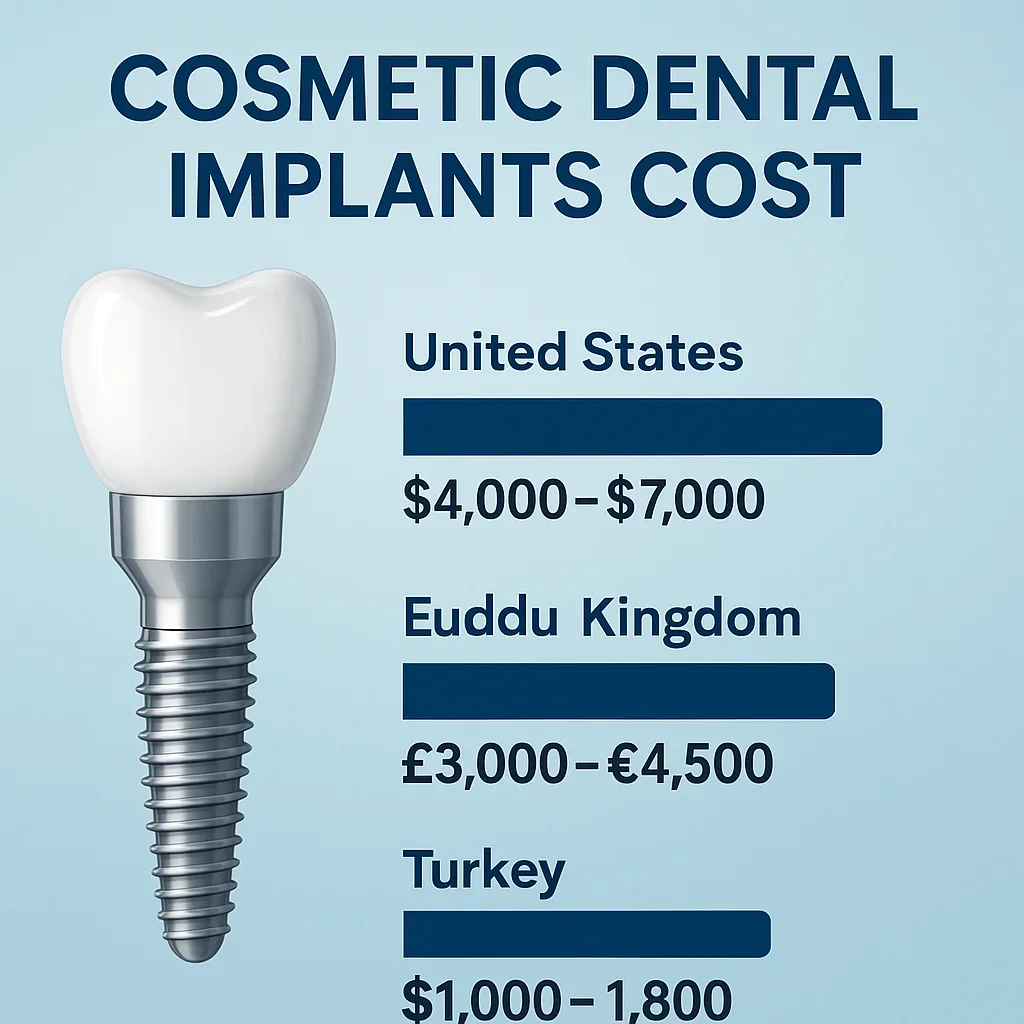
The US is known for having some of the highest dental treatment fees globally. The average cosmetic dental implants cost is elevated due to expensive dental education, high labor costs, premium laboratory fees, and insurance limitations.
Average Pricing Structure in the US
- Single cosmetic implant: $4,000–$7,000
- Implant + abutment + zirconia crown: $5,500–$9,000
- All-on-4 full arch: $25,000–$45,000 per jaw
Cosmetic-focused clinics also charge additional fees for digital smile design, cosmetic zirconia upgrades, or premium abutments. Because cosmetic crowns require advanced shading and translucency work, Western laboratories often charge significantly higher prices.
United Kingdom: Premium Yet Moderate Compared to the US
The UK has slightly lower fees than the US, but implant treatments are still considered premium-priced. Operational costs, regulatory standards, and laboratory expenses remain high.
Average Pricing Structure in the UK
- Single cosmetic implant: £3,000–£4,500
- Implant + abutment + porcelain/ziconia crown: £3,500–£6,000
- All-on-4 treatment: £16,000–£28,000 per jaw
Like the US, the UK places strong emphasis on regulatory compliance. Digital imaging and 3D scanning are often included, raising the final cosmetic dental implants cost. Cosmetic specialists in London and other major cities tend to charge higher rates due to elevated living expenses and market demand.
Turkey: Internationally Renowned for Affordable Cosmetic Excellence
Turkey has become a global leader in cosmetic implant dentistry, offering premium technology, highly trained surgeons, and state-of-the-art clinics at lower costs compared to the US and UK. Reduced operational expenses, competitive implant brand pricing, and high case volume enable Turkish clinics to provide outstanding cosmetic outcomes for significantly lower fees.
Average Pricing Structure in Turkey
- Single cosmetic implant: $1,000–$1,800
- Implant + abutment + zirconia crown: $1,400–$2,400
- All-on-4 full arch: $4,000–$8,500 per jaw
Despite lower pricing, many Turkish clinics use globally trusted implant brands such as Straumann, Nobel Biocare, Osstem, or Astra Tech. Cosmetic crowns are typically crafted using advanced CAD/CAM systems, and clinics frequently offer digital smile design at competitive rates.
Why Turkey Provides Better Value for Cosmetic Implant Tourism
Patients choose Turkey not only because of cost savings but also because of:
- High cosmetic expertise: Surgeons perform hundreds of implant cases monthly.
- Advanced digital dentistry: 3D-guided surgery, facial scanning, and smile design.
- All-inclusive packages: Airport transfers, hotel stays, and consultation services.
- Fast treatment schedules: Minimizes travel time while maximizing results.
This combination dramatically lowers the final cosmetic dental implants cost while still ensuring premium-quality results.
Side-by-Side Cost Comparison Table
| Region | Single Cosmetic Implant | Implant + Crown | All-on-4 |
|---|---|---|---|
| United States | $4,000–$7,000 | $5,500–$9,000 | $25,000–$45,000 |
| United Kingdom | £3,000–£4,500 | £3,500–£6,000 | £16,000–£28,000 |
| Turkey | $1,000–$1,800 | $1,400–$2,400 | $4,000–$8,500 |
Which Country Should You Choose?
The best choice depends on your budget, cosmetic expectations, travel willingness, and desired implant brand. Patients prioritizing affordability and high-end cosmetic results often choose Turkey, while those preferring treatment close to home may select the US or UK despite higher pricing.
For personalized treatment planning and cost discussions, dental centers typically encourage patients to reach out via pages like the Redent Klinik Contact Page. This allows clinics to evaluate your smile needs, bone structure, and aesthetic goals before providing a tailored estimate of the final cosmetic dental implants cost.
Longevity and Maintenance Costs After Getting Implants
A crucial part of understanding the full cosmetic dental implants cost is recognizing that your investment does not end once the implant is placed. Dental implants are long-lasting, highly durable, and designed to replicate the function of natural teeth—but they still require proper care, consistent hygiene habits, and occasional professional maintenance. This section provides an in-depth explanation of what long-term costs you can expect, how maintenance influences implant lifespan, and why cosmetic implants often deliver exceptional value over time.
How Long Do Cosmetic Dental Implants Last?
Dental implants are widely known for their longevity. With proper care, the implant post (the titanium or zirconia screw placed in the bone) can last decades, often for life. The cosmetic crown attached to the implant may last 10–20 years depending on the material, lifestyle habits, and maintenance routine.
Longevity Expectations
- Implant post lifespan: 25+ years with healthy gums
- Cosmetic crown lifespan: 10–20 years on average
- Abutment lifespan: Often 10–15 years
Longevity is one of the biggest reasons the cosmetic dental implants cost is considered an excellent long-term value. Unlike bridges or dentures that require frequent replacements, implants are built to last and maintain their functionality for decades.
Daily Care Requirements for Long-Term Success
Although implants are more resistant to decay than natural teeth, the surrounding gums and bone still require ongoing care. Maintaining excellent oral hygiene reduces the risk of peri-implantitis—a gum infection similar to gum disease that can jeopardize the implant.
Essential Daily Care Tips
- Brush twice daily: Use a soft brush or electric toothbrush.
- Floss daily: Special implant floss or interdental brushes may be recommended.
- Use antibacterial mouthwash: Helps reduce harmful bacteria.
- Avoid smoking: Smoking significantly shortens implant lifespan.
These simple habits preserve gum health and protect your long-term investment, ensuring the cosmetic dental implants cost pays off over many years.
Scheduled Dental Check-Ups and Professional Cleanings
Routine check-ups are critical for monitoring implant health. Dentists examine gum attachment levels, bone stability, crown condition, and bite alignment. Professional cleanings are also necessary because plaque can accumulate around crowns and abutments, even with excellent home care.
Typical Professional Maintenance Costs
- Implant check-up: Usually included in regular dental visits
- Professional implant cleaning: May require specialized tools
- X-rays or digital scans: Periodically needed to check bone health
Although these maintenance services add minor recurring expenses, they help protect your long-term results and reduce the risk of complications that could increase the overall cosmetic dental implants cost over the years.
Potential Long-Term Complications and Their Costs
While dental implants have a success rate of 95–98%, long-term complications can occur, especially when maintenance is neglected. Common complications include gum inflammation, bone loss, crown fractures, or abutment loosening. Understanding these risks helps patients plan for long-term care.
Possible Complications
- Peri-implantitis: Treatable with cleaning, antibiotics, or laser therapy
- Gum recession: May require soft tissue grafting for cosmetic improvement
- Crown wear or damage: Replacement may be needed after 10–20 years
- Abutment loosening: Usually corrected in a single appointment
Because cosmetic implants often use high-end zirconia crowns, the replacement costs may be higher compared to basic materials. However, longevity and beauty justify the long-term investment and support the overall value of the cosmetic dental implants cost.
Impact of Lifestyle on Implant Longevity
Certain lifestyle habits affect how long implants last. Smoking, heavy teeth grinding (bruxism), and poor oral hygiene significantly shorten implant lifespan. Patients who grind their teeth may need a custom night guard to protect the crown and abutment.
Recommended Lifestyle Modifications
- Stop smoking: Greatly improves gum and bone health.
- Use a night guard: Prevents pressure-related fractures.
- Limit sugary habits: Helps prevent gum inflammation.
- Protect implants during sports: Mouthguards are essential.
These small changes help patients maximize the return on their investment and maintain long-term cosmetic results without increasing the cosmetic dental implants cost unnecessarily.
Costs of Crown Replacement Over Time
While the implant post itself often lasts a lifetime, the cosmetic crown may need to be replaced due to wear, fracture, or aesthetic changes. Crown replacement fees depend heavily on the material.
Average Crown Replacement Fees
- Porcelain fused to metal: Generally lower cost
- Monolithic zirconia: Medium to high cost
- Layered zirconia: Highest aesthetic and highest replacement value
Because high-end zirconia crowns offer superior translucency, they are widely used in cosmetic cases—making them a significant factor in long-term cosmetic dental implants cost.
Why Cosmetic Implants Are Worth the Maintenance
Even with maintenance and occasional crown replacement, cosmetic implants remain one of the most cost-effective restorative solutions. They preserve bone structure, improve chewing ability, enhance facial aesthetics, and prevent the long-term oral health problems associated with missing teeth.
Ultimately, the long-term stability and aesthetic benefits justify the total investment. Patients who commit to proper hygiene and regular check-ups often enjoy decades of reliable performance and beautiful smile results—making the cosmetic dental implants cost a truly worthwhile investment.
For personalized maintenance advice or follow-up care, dental centers typically recommend contacting their support team through pages like the Redent Klinik Contact Page. Consistent care ensures your cosmetic implant continues to look beautiful and function perfectly for years to come.
Are Cosmetic Dental Implants Worth the Investment?
Many patients considering implant treatment naturally wonder whether the overall cosmetic dental implants cost truly pays off. This question is completely understandable—cosmetic implants require a financial investment, multiple clinical stages, and long-term maintenance awareness. However, when examined through functional, aesthetic, emotional, and long-term health benefits, cosmetic implants consistently rank as one of the most valuable dental treatments available today. In this section, you’ll find a deeply detailed evaluation of why these implants are worth the investment, how they outperform traditional restorations, and what real-life results patients can expect over time.
The Functional Value of Cosmetic Implants
While cosmetic implants are known for their beautiful appearance, their functional advantages are equally significant. Unlike dentures or bridges, implants restore full chewing power and feel almost identical to natural teeth. This functional stability is especially important for patients who have struggled with dietary limitations, discomfort, or embarrassment caused by missing teeth.
Functional Benefits That Enhance Long-Term Value
- Natural chewing efficiency: Eat comfortably without restrictions.
- Improved speech clarity: No slipping or clicking sounds.
- Enhanced bite force: Supports strong oral health.
- Bone preservation: Prevents further jawbone loss.
These advantages significantly influence how patients view the long-term cosmetic dental implants cost. With proper care, implants protect oral health for decades and prevent the progressive bone deterioration associated with missing teeth.
The Aesthetic Transformation
Cosmetic implants are specifically designed to create a natural-looking, harmonious smile. This is one of the biggest reasons patients consider the treatment worth the cost. Modern cosmetic dentistry uses advanced digital smile design, layered zirconia crowns, and precision abutments to ensure the implant blends perfectly with surrounding teeth.
Aesthetic Advantages
- Customized tooth shape: Designed to fit your facial structure.
- Color-matched translucency: Mimics natural enamel.
- Gum-contoured emergence profile: Seamless integration for natural beauty.
- No metal shadows: Zirconia prevents gray lines along the gum.
The cosmetic impact alone makes the cosmetic dental implants cost a highly rewarding investment for individuals seeking a confident, radiant smile.
Emotional and Psychological Benefits
The emotional transformation experienced by patients is often the most compelling factor. A complete, natural-looking smile boosts self-esteem, reduces social anxiety, and improves quality of life. Patients frequently describe feeling younger, more confident, and more willing to engage in social or professional situations.
Quality-of-Life Enhancements
- Improved self-confidence in photos and daily interactions.
- Reduced embarrassment from missing or damaged teeth.
- Increased social comfort due to natural aesthetics and stability.
- Positive psychological impact contributing to overall well-being.
These emotional benefits add substantial long-term value, making the overall cosmetic dental implants cost more than just a financial investment—it becomes a lifestyle upgrade.
Long-Term Cost Efficiency Compared to Alternatives
While the initial cost of cosmetic implants may be higher than dental bridges or removable dentures, implants offer superior durability and significantly fewer long-term expenses. Bridges may need replacement every 7–12 years, and dentures often require relining, adjustments, or complete replacement. Implants, on the other hand, can last a lifetime with proper care.
Comparing Replacement and Maintenance Costs
- Dentures: Frequent replacements and adhesives raise lifetime costs.
- Bridges: Need replacement multiple times in a lifetime.
- Implants: Require minimal maintenance and rarely need replacement.
This makes implants far more cost-effective over 15–20 years, strengthening the long-term value of the cosmetic dental implants cost.
Health Benefits That Increase Long-Term Value
Beyond aesthetics, implants contribute significantly to long-term oral and general health. Missing teeth accelerate bone loss, affect bite alignment, weaken jaw structure, and increase the risk of digestive problems due to poor chewing efficiency.
Health Benefits That Support Investment Value
- Improved nutrition through better chewing ability.
- Prevention of bone deterioration in the jaw.
- Protection of adjacent teeth from shifting or damage.
- Reduced risk of gum disease with proper implant hygiene.
These medical advantages show that the cosmetic dental implants cost is not only for aesthetics but also for essential long-term oral health.
Why Patients Say Implants Are Worth It
Many individuals who undergo cosmetic implant treatment describe it as one of the best decisions they have ever made. The combination of improved function, beauty, long-term health, and emotional well-being makes implants an outstanding investment.
Final Thoughts: The True Value of Cosmetic Implants
When evaluating cosmetic implant treatment, you must consider the decades of value they provide. Few dental treatments deliver such a powerful combination of stability, aesthetics, confidence, and long-term health support. Although the cosmetic dental implants cost may initially seem high, the lifetime benefits overwhelmingly justify the investment.
If you’re considering implants or want a personalized evaluation of your case, most reputable clinics recommend contacting their professional team through resources such as the Redent Klinik Contact Page. A consultation helps determine your exact treatment plan, predict long-term results, and calculate a fully personalized cost tailored to your goals.