
Welcome to the most comprehensive dental implants guide you will ever read — a resource carefully designed to help patients understand every stage of the dental implant journey. Whether you’re trying to restore a confident smile 😁, improve oral health, or explore long-term tooth replacement options, this guide walks you through everything clearly, step by step. Because dental implants represent a major decision — financially, medically, and aesthetically — patients deserve information that is accurate, transparent, and genuinely helpful.
In this dental implants guide, you will learn how dental implants work, the science behind them, what makes them such a reliable long-term solution, and why millions of patients worldwide choose implants over dentures or bridges. While the implant process may seem complex at first, understanding each part will help you make confident and informed decisions, whether you are considering a single implant or a full-arch restoration.
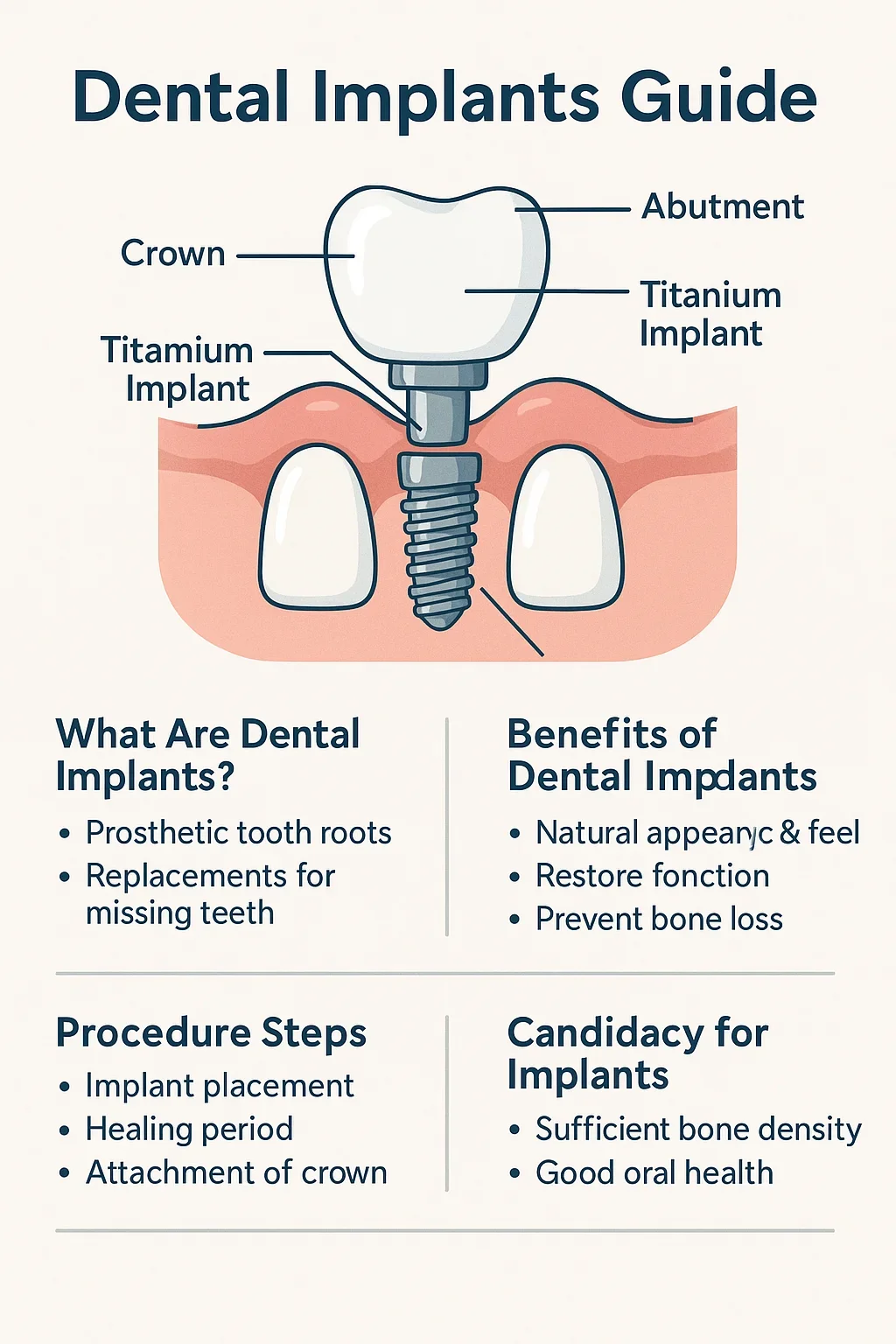
Dental implants are artificial tooth roots, typically made of titanium or zirconia, placed into the jawbone to support crowns, bridges, or dentures. What makes them exceptional is their ability to fuse with the bone — a process called osseointegration. That bonding makes implants extremely stable, long-lasting, and functionally similar to natural teeth. This dental implants guide will take you through the anatomy of an implant, the criteria needed for treatment, and how implants restore bite strength, oral comfort, and overall facial harmony.
One core reason patients rely on dental implants is their durability. Traditional dentures often slip, cause discomfort, and require adhesives. Bridges may damage adjacent teeth. Implants, on the other hand, preserve jawbone density and maintain facial structure. They prevent the bone loss that typically occurs after tooth loss — a major advantage compared to conventional restorations. The dental implants guide you’re reading provides all the essential knowledge about bone quality, implant materials, surgical phases, healing expectations, and long-term maintenance.
Choosing implant treatment also requires understanding cost variables, healing times, and the qualifications of your dental provider. Although this section does not yet focus on pricing, later parts of the article will break down cost differences clearly and transparently. We will also include references such as the
American Dental Association, which offers additional educational resources for patients wanting more scientific insight.
This dental implants guide also emphasizes patient suitability — a crucial aspect often overlooked. Factors like gum health, bone mass, systemic medical conditions, and lifestyle habits (including smoking) influence implant success rates. Modern dentistry offers advanced solutions such as bone grafts, sinus lifts, and digitally guided surgery, which help patients with insufficient bone structure still qualify for implants. These innovations will be fully explained in a later section to help you understand the possibilities available today.
If you’re unsure whether dental implants are the right choice for you, this guide will eliminate confusion and offer clarity. We explore implant types, materials, surgical methods, temporary restorations, healing stages, and post-operative care — all written in a way that real patients can understand without feeling overwhelmed. Along the way, you’ll also find clinically verified tips that improve healing, reduce risks, and ensure long-term success.
To support your treatment journey, you may contact our team anytime through the
Redent Klinik Contact Page. Our specialists provide personalized guidance, helping patients worldwide understand their options clearly and comfortably.
By the end of this dental implants guide, you will know exactly what to expect, what questions to ask your dentist, and how to evaluate treatment plans. You’ll also gain a deeper understanding of how implants can enhance not only your smile but your overall quality of life — from chewing comfortably to speaking confidently. With a success rate of over 95%, dental implants have become the gold standard of restorative dentistry, and this guide ensures that you have all the knowledge needed to navigate your implant journey with confidence and peace of mind. 🌟
What Affects Cosmetic Dental Implants Cost?
Understanding what influences cosmetic dental implants cost is essential for anyone considering implant treatment. This section of our comprehensive dental implants guide explains, in clear detail, every factor that shapes the final price. Cosmetic implants are more than a medical procedure — they are an aesthetic investment, a functional restoration, and a long-term solution designed to last decades. Because each patient has unique needs, the exact cost can vary widely. Below, you will find all the key elements that influence pricing, helping you plan more accurately and make fully informed decisions.
1. The Number of Implants Needed
One of the most significant influencers on cosmetic dental implants cost is how many implants must be placed. A single implant typically costs much less than a full-arch restoration that uses four, six, or eight implants to support a complete set of new teeth. Patients missing one tooth may only require a single implant post and crown, while those missing multiple teeth may need several implants plus bridges or hybrid dentures. This dental implants guide highlights that the total number of implants directly multiplies surgical time, material costs, and laboratory work — all of which shape the final treatment fee.
2. Bone Density and the Need for Additional Procedures
Jawbone strength plays a major role in implant success. If the bone is too thin or weak to support an implant, additional procedures are required — and they increase the overall cosmetic dental implants cost. Common add-ons include bone grafting, sinus lifts, ridge augmentation, and guided tissue regeneration. These procedures restore lost bone and create a stable foundation for the implant. While they improve outcomes, they add both time and cost. As emphasized throughout our dental implants guide, adequate bone support is essential for long-term implant stability.
Bone Grafting
Bone grafting replaces or enhances lost bone tissue, allowing implants to integrate properly. Costs vary depending on the type of graft used — synthetic, bovine, or autogenous (patient’s own bone). Each option has different pricing and healing times.
Sinus Lift
A sinus lift is often required for upper molar implants if the sinus cavity has expanded or bone has resorbed. This specialty procedure raises the sinus membrane and places bone material beneath it, increasing treatment costs due to surgical complexity.
3. Type and Quality of Implant Material
This dental implants guide places significant emphasis on implant material because it directly impacts durability, appearance, and cost. Titanium is the most common and generally more affordable option. Zirconia, known for its high aesthetics and metal-free composition, is typically more expensive. High-quality implants manufactured by reputable brands undergo extensive scientific testing, ensuring long-term success — but they also cost more. Choosing premium materials increases the total fee but enhances longevity and safety.
4. Expertise and Credentials of the Dental Surgeon
The experience level of the implant specialist greatly affects the cosmetic dental implants cost. Highly trained implantologists or oral surgeons who have advanced credentials, specialized technology, and a strong track record of successful implants may charge higher professional fees. However, this investment often leads to improved outcomes, fewer complications, and more aesthetic results. According to global standards set by institutions such as the
American Dental Association, qualifications and continuing education significantly impact the quality of implant treatment.
5. Geographic Location and Clinic Standards
Where you receive treatment also influences pricing. For example, clinics in major cities or regions with high living costs often have higher fees. Meanwhile, well-equipped international clinics that specialize in cosmetic dentistry may offer lower prices due to economic differences without compromising quality. As covered throughout our dental implants guide, clinic hygiene, equipment, digital technology, and laboratory partnerships also affect overall costs because high-standard facilities require more investment.
6. Type of Restoration (Crown, Bridge, or Full Arch)
Implant restorations vary significantly in complexity and cost. A single crown, typically made from porcelain or zirconia, will cost less than an implant-supported bridge or a full-arch prosthesis. Full-arch restorations such as All-on-4 or All-on-6 involve multiple implants, custom frameworks, premium materials, and precision engineering — all of which raise the cosmetic dental implants cost. This dental implants guide stresses the importance of understanding how the chosen prosthetic affects both function and aesthetics.
7. Digital Technology and Advanced Imaging
Modern clinics use CBCT scans, digital impressions, and computer-guided surgery to enhance precision. While these technologies improve safety and accuracy, they also increase treatment costs. A CBCT scan alone may add to the overall fee, but it provides essential 3D imaging that ensures implant placement accuracy and reduces surgical risks. This step is vital for predictability, and our dental implants guide consistently encourages patients to choose clinics that prioritize diagnostic excellence.
8. Temporary Restorations and Follow-Up Visits
Some treatments require temporary crowns, bridges, or healing dentures, which add extra costs. Additionally, follow-up visits, adjustments, and maintenance appointments contribute to the final expense. Although these additions raise the cosmetic dental implants cost, they significantly enhance the comfort, appearance, and functionality during the healing process.
9. Laboratory Fees and Aesthetic Customization
High-end cosmetic restorations require master ceramists who craft lifelike teeth with natural translucency, shade gradients, and detailed anatomy. Premium lab work improves smile aesthetics but also increases costs. As emphasized throughout this dental implants guide, personalization is key when designing cosmetic restorations because implants must harmonize with facial features, bite alignment, and gum contours.
In summary, many factors shape the final cosmetic dental implants cost, including surgical needs, restoration type, materials, technology, and the dentist’s expertise. This in-depth dental implants guide helps you understand the financial and clinical aspects of treatment so you can make confident, informed decisions about your smile transformation. For personalized guidance or cost evaluation, you may contact our specialists anytime through the
Redent Klinik Contact Page.
Types of Dental Implants and Their Price Differences
Understanding the different types of implants is a crucial part of this comprehensive dental implants guide. Patients often believe that all implants are the same, but in reality, there are several implant categories, each designed for specific anatomical, functional, and aesthetic needs. These variations play a major role not only in treatment planning but also in determining final costs. This section explores all major implant types, how they differ, and how these differences influence pricing. By the end, you’ll clearly understand which implant type best suits your situation and why costs vary so significantly from one option to another.
1. Single Tooth Implants
Single implants are the most common type used in modern dentistry. They replace one missing tooth using a titanium or zirconia implant post, an abutment, and a crown. In this dental implants guide, we emphasize that single implants are often the most affordable option because the treatment involves only one surgical site and one prosthetic crown. Cost differences within single implant cases arise from the implant brand, material quality, and the complexity of the individual case. Titanium options are generally more budget-friendly, while zirconia implants provide premium aesthetics at a higher price point.
Who Benefits Most?
Patients missing only one tooth, with adequate bone volume and healthy gums, are ideal candidates. Single implants restore chewing efficiency and prevent further bone loss, preserving facial structure.
2. Implant-Supported Bridges
When multiple adjacent teeth are missing, implant-supported bridges offer a more cost-effective solution than placing multiple single implants. Instead of an implant for every missing tooth, two or more implants support a fixed bridge. This reduces the total number of implants required, lowering overall costs while maintaining high durability. In this dental implants guide, we highlight how these bridges help maintain bite alignment and reduce pressure on natural teeth. Price variations depend on the number of implants placed, the length of the bridge, and the materials used.
Advantages of Implant Bridges
- Cost-effective for multiple missing teeth
- Reduces stress on natural teeth
- Provides excellent chewing strength
- Delivers superior stability compared to traditional bridges
3. Full-Arch Implants (All-on-4, All-on-6, All-on-8)
Full-arch implant systems are among the most transformative options in this dental implants guide. These solutions replace an entire upper or lower arch using only four, six, or eight implants. The most well-known system, All-on-4, uses strategically angled implants to maximize bone contact, often eliminating the need for bone grafting. All-on-6 and All-on-8 options offer even greater stability due to additional implant posts. The cost of full-arch implants is higher because they involve complex surgical planning, precision prosthetics, advanced imaging, and extensive laboratory work.
Why Costs Vary for Full-Arch Solutions
- Number of implants used per arch
- Type of prosthesis (temporary vs. permanent)
- Material selection: acrylic, composite, titanium frame, or zirconia
- Advanced scanning and digital design techniques
4. Mini Dental Implants
Mini implants are narrower and smaller than conventional implants. They are often used for patients with limited jawbone density or those who cannot undergo major surgery. This dental implants guide explains that mini implants are more affordable because they require less invasive procedures and fewer components. However, they are not ideal for every case and may not support heavy biting forces. Mini implants are frequently used to stabilize dentures, improving comfort and chewing ability.
Mini Implant Cost Factors
Because mini implants use less material, require shorter surgical time, and often avoid bone grafting, they typically reduce total treatment costs. However, they may not have the same longevity as full-sized implants, making long-term value an important consideration.
5. Zygomatic Implants
Zygomatic implants represent the most advanced option covered in this dental implants guide. These implants anchor into the zygomatic bone (cheekbone) instead of the jawbone, making them suitable for patients with severe bone loss who would otherwise require extensive grafting. Zygomatic implants involve complex surgical techniques and require highly specialized training, which increases their price. Because the procedure is rare and technically demanding, only select dental centers worldwide offer it.
Why Zygomatic Implants Cost More
- Bone grafting is usually unnecessary, but the surgery is more advanced
- The implants themselves are longer and more specialized
- Requires advanced imaging and surgical navigation
- Performed only by highly trained specialists
6. Material-Based Implant Differences
In addition to implant type, material selection significantly influences cost. Titanium implants are widely used due to their strength, biocompatibility, and long clinical track record. Zirconia implants, on the other hand, offer unmatched aesthetics for patients who prefer metal-free solutions. This dental implants guide stresses that zirconia options are typically more expensive because they are newer, harder to manufacture, and require precise surgical techniques.
Titanium vs. Zirconia Cost Comparison
- Titanium implants: More affordable, extremely durable, versatile for all clinical needs.
- Zirconia implants: Premium appearance, ideal for front-tooth aesthetics, more expensive.
7. Laboratory and Aesthetic Customization Options
Implant restorations vary in cost depending on whether they are made from porcelain, zirconia, composite, or acrylic. High-end restorations created by master ceramists can significantly increase pricing due to the artistry involved. This dental implants guide highlights that factors like translucency, color layering, gum shading, and anatomical detail drive costs upward but produce the most natural-looking results.
In conclusion, implant type, material, and prosthetic design all contribute to varying price ranges. Whether you need a single implant or a full-arch solution, understanding these options is essential for making informed decisions. For personalized recommendations or a detailed cost analysis, you may contact our specialists directly through the
Redent Klinik Contact Page. Our goal is to guide you using the highest standards of care supported by trusted organizations such as the
American Dental Association. With this deeply detailed dental implants guide, you now have a clear understanding of implant types and why their prices differ widely across treatments.
Step-by-Step Cosmetic Implant Procedure Explained
In this section of our comprehensive dental implants guide, we break down the cosmetic dental implant procedure step by step, ensuring that every part of the journey is clear, transparent, and easy to understand. Cosmetic implants are not only about restoring function — they also focus heavily on aesthetics, smile symmetry, gum contouring, and facial harmony. Because of this dual purpose, each stage of the procedure requires meticulous planning, advanced technologies, and precision-based execution by experienced implant specialists.
By understanding each step outlined below, patients can prepare mentally, physically, and financially for their treatment. This detailed explanation covers the initial consultation, diagnostic imaging, surgical stages, restoration design, temporary solutions, final placement, aftercare, and long-term maintenance. This dental implants guide ensures that you have all the information necessary to make informed decisions throughout the entire treatment process.
1. Comprehensive Initial Consultation
Every cosmetic implant journey begins with an in-depth consultation. During this appointment, your dentist evaluates your oral health, gum condition, bone structure, and overall aesthetic goals. The clinician will review your medical history, discuss any systemic conditions, and assess factors such as smoking habits or medication use that could affect healing. This foundational step in our dental implants guide is essential because implant success depends on precise planning and individualized treatment design.
What Happens During the Consultation?
- Clinical examination of teeth, gums, and bite alignment
- Review of your dental and medical history
- Discussion of your cosmetic expectations and smile goals
- Explanation of possible implant types, materials, and timelines
2. Advanced 3D Scanning and Diagnostic Imaging
Cosmetic dental implant planning requires high-resolution imaging to ensure maximum precision. A Cone Beam Computed Tomography (CBCT) scan provides 3D images of your jawbone, sinus cavities, nerve pathways, and anatomical details. As emphasized in this dental implants guide, accurate imaging is vital for determining whether you have enough bone volume for implants or whether bone grafting or sinus lifting may be required.
Why 3D Imaging Matters
3D scans allow the dentist to map the exact placement angle, depth, and position of the implant. This reduces surgical risks, enhances safety, and ensures that the final cosmetic result aligns perfectly with the facial structure. Digital impressions may also be taken to plan the prosthetic design.
3. Customized Treatment Planning
After the diagnostic stage, your dentist will design a personalized treatment plan. This includes choosing the implant type (single, bridge, full arch), selecting materials (titanium or zirconia), assessing aesthetic requirements, and estimating healing times. The plan also outlines any additional procedures such as gum contouring, bone grafting, or temporary restorations. As the dental implants guide explains, personalization is crucial because cosmetic implants aim for both functionality and beauty.
Key Elements of Cosmetic Planning
- Digital smile design previews
- Shade and shape matching to natural teeth
- Evaluation of gum height and color
- Creating symmetry for an aesthetically pleasing smile
4. Bone Grafting or Preparatory Procedures (If Needed)
If bone density is insufficient for implant placement, preparatory procedures may be performed. These procedures include bone grafts, ridge augmentation, and sinus lifts. This stage ensures that implants have a strong foundation, significantly increasing long-term success rates. The dental implants guide emphasizes that although these steps may extend the treatment timeline, they are essential for achieving durable and aesthetic results.
5. Implant Placement Surgery
The surgical placement of cosmetic dental implants is one of the most important steps in the entire process. Using local anesthesia or sedation, the dentist creates a small incision in the gum, prepares the bone site, and places the implant post. Once inserted, the implant begins the osseointegration process — the fusion between bone and implant surface. This process ensures long-term stability and is a key focus throughout this dental implants guide.
Surgical Advantages With Modern Technology
- Computer-guided surgery improves precision
- Minimally invasive techniques reduce swelling and pain
- High-accuracy placement promotes faster healing
6. Temporary Prosthesis Placement
In cosmetic dentistry, aesthetics matter from day one. Therefore, many patients receive temporary crowns, bridges, or dentures immediately after implant placement. These provisional restorations allow you to maintain a natural-looking smile during healing. The dental implants guide highlights that temporary teeth also help shape the gums, promoting a more natural appearance when the permanent restorations are finally attached.
7. Healing and Osseointegration Phase
Osseointegration typically takes 3–6 months, depending on bone density, implant type, and patient health. During this period, the implant fuses with the jawbone, becoming a stable foundation for the final prosthetic. This dental implants guide recommends following dentist instructions carefully during this phase, including dietary modifications and oral hygiene practices, to support successful healing.
8. Abutment Placement and Gum Shaping
Once healing is complete, an abutment — a connector that supports the crown — is attached to the implant. In cosmetic cases, precise gum contouring is often performed at this stage to create natural gingival symmetry. This step is essential for high-level aesthetics, and our dental implants guide explains that skilled design ensures the restoration blends seamlessly with surrounding teeth.
9. Final Cosmetic Crown or Prosthesis Placement
The final step involves attaching the permanent crown, bridge, or full-arch prosthesis. These restorations are crafted by skilled dental technicians, with attention to color, translucency, shape, and bite alignment. Zirconia or porcelain materials are often used for top-tier aesthetics. This dental implants guide emphasizes that the final restoration should look completely natural and complement the facial structure.
10. Aftercare, Adjustments, and Long-Term Maintenance
After the final restoration is placed, follow-up visits ensure proper fit and bite stability. Long-term maintenance includes regular check-ups, professional cleanings, and excellent home oral hygiene. Good care ensures implants can last decades — often a lifetime.
For personalized guidance about your implant procedure or to schedule a consultation, you may contact our team anytime via the
Redent Klinik Contact Page.
For additional clinical resources, refer to the
American Dental Association.
This detailed dental implants guide ensures you understand every stage of cosmetic implant treatment, helping you make confident and fully informed decisions.
Implant Materials and How They Influence Cost
Implant materials play one of the most critical roles in determining both the performance and the overall cost of treatment. In this section of our comprehensive dental implants guide, we examine the different implant materials used today, how they affect function and aesthetics, and why their prices vary significantly. Understanding these differences allows patients to make informed decisions that align with their long-term oral health goals, cosmetic expectations, and financial preferences.
The two primary materials used for modern dental implants are titanium and zirconia. While both are excellent options, they differ in durability, appearance, biocompatibility, manufacturing complexity, and cost. This detailed dental implants guide breaks down each material type, highlighting the advantages, limitations, and price variations so patients can confidently choose the most suitable option for their needs.
1. Titanium Dental Implants
Titanium has been the gold standard for dental implants for more than five decades. Known for its strength, biocompatibility, and long-term clinical success, titanium implants are widely recommended by specialists around the world. They offer exceptional stability due to their ability to fuse with the jawbone through osseointegration. In this dental implants guide, titanium remains the most commonly referenced material because of its reliability and predictable long-term outcomes.
Advantages of Titanium Implants
- High strength and durability: Titanium implants are designed to withstand chewing pressure and daily functional forces.
- Excellent osseointegration: They bond well with bone, providing long-lasting stability.
- Versatile design options: Available in many shapes and sizes, suitable for most clinical situations.
- Lower cost: Titanium implants are typically more affordable than zirconia options.
Because titanium implants are widely available and easier to manufacture, they tend to have lower associated costs. However, not all titanium implants are equal — premium brands that undergo advanced surface treatments or precision engineering may come at a higher price. As always emphasized in this dental implants guide, quality significantly impacts long-term success.
2. Zirconia Dental Implants
Zirconia implants represent the newest generation of implant materials. Made from high-strength ceramic, they provide a metal-free alternative, making them ideal for patients seeking the highest aesthetic outcome. Zirconia is naturally tooth-colored, offering superior visual integration — a key reason this material is frequently highlighted in our dental implants guide for cosmetic-focused patients.
Advantages of Zirconia Implants
- Metal-free and hypoallergenic: Ideal for patients with sensitivities to metals.
- Superior aesthetics: Mimics natural tooth color, especially beneficial for visible front teeth.
- High biocompatibility: Promotes healthy gum tissue and reduces inflammation.
- Corrosion-resistant: Zirconia does not corrode or discolor over time.
However, zirconia implants are more expensive due to manufacturing complexity, limited availability, and the precise surgical placement they require. Their brittle nature compared to titanium also means only experienced surgeons should place them. This dental implants guide underscores that although zirconia is costlier, it offers unmatched cosmetic appeal.
3. How Surface Treatments Influence Cost
Both titanium and zirconia implants undergo various surface treatments designed to enhance osseointegration. These surface technologies can significantly affect pricing because they improve implant stability and long-term success. In this dental implants guide, understanding these treatments is essential because they directly influence healing time and implant performance.
Common Surface Enhancements
- Sandblasted and acid-etched surfaces: Increase bone-to-implant contact.
- Plasma-sprayed coatings: Improve initial stability after placement.
- Laser-modified surfaces: Provide micro- and nano-patterns that enhance healing.
- Hydrophilic surfaces: Reduce healing time by improving blood absorption.
Implants with advanced surface treatments tend to be more expensive due to added research, manufacturing costs, and improved clinical outcomes. These premium implants are often recommended for patients with low bone density, smokers, or those seeking faster recovery.
4. How Abutment Materials Affect Final Cost
The abutment — the connector piece between the implant post and the crown — also influences pricing. In this dental implants guide, we highlight that abutments come in two primary materials: titanium and zirconia. Custom abutments, which are digitally designed for superior gum shaping and aesthetic integration, cost more than standard prefabricated options.
Types of Abutments
- Titanium abutments: Strong, durable, and more affordable.
- Zirconia abutments: Aesthetic, ideal for front teeth, more costly.
- Custom CAD/CAM abutments: Personalized fit, highest aesthetic level, premium price.
Custom abutments are often recommended in high-visibility areas because they help create natural gum contours and improve overall cosmetic results. This dental implants guide emphasizes that abutment selection can have a meaningful impact on both appearance and total treatment cost.
5. How Prosthetic Materials Influence Cost
The crown, bridge, or full-arch prosthesis attached to the implants also plays a major role in determining overall cost. Different materials offer various benefits in terms of strength, translucency, and durability. As detailed in this dental implants guide, the choice of prosthetic material significantly affects both aesthetics and longevity.
Common Prosthetic Materials
- Porcelain-fused-to-metal (PFM): Affordable but less aesthetic over time.
- Full zirconia: Highly aesthetic, extremely durable, more expensive.
- Layered zirconia: Offers translucent beauty for front teeth.
- Acrylic hybrid prosthetics: Used in temporary or transitional solutions.
High-end materials such as multilayered zirconia require advanced milling machines and skilled ceramists, increasing laboratory fees. However, they offer unmatched beauty and lifelike optical properties — especially important in cosmetic dentistry.
For additional clinical education regarding implant materials, you may consult the
American Dental Association.
If you would like personalized recommendations about which material suits your needs, our team is available through the
Redent Klinik Contact Page.
This thorough dental implants guide ensures that patients understand how every material choice — from implant post to crown — directly influences both cost and long-term success.
Comparing Cosmetic Dental Implants to Other Tooth Replacement Options
Choosing the right tooth replacement method can feel overwhelming, especially with the amount of information available online. This is why our comprehensive dental implants guide breaks down each option clearly, allowing you to compare cosmetic dental implants with other popular solutions such as bridges, dentures, and removable partials. Cosmetic implants stand out due to their natural appearance, long-term durability, and ability to preserve jawbone health — but understanding how they differ from alternatives is essential for making an informed decision tailored to your oral health needs and personal preferences.
Each tooth replacement method has unique advantages, limitations, costs, and maintenance requirements. This section of our dental implants guide explores these differences in detail, helping you see why cosmetic implants are considered the gold standard in modern restorative dentistry. We will analyze not only their functional and visual benefits, but also the long-term implications for comfort, stability, bone preservation, and lifestyle convenience.
1. Cosmetic Dental Implants vs. Traditional Dental Bridges
Dental bridges have been used for decades to replace missing teeth. They consist of a false tooth (pontic) supported by crowns placed on the adjacent teeth. While bridges can restore function and aesthetics, they differ significantly from implants in durability, biological impact, and cost over time. This dental implants guide highlights that bridges may be suitable for certain cases, but implants often provide superior long-term outcomes.
Key Differences Between Implants and Bridges
- Tooth Preservation: Bridges require grinding down healthy adjacent teeth; implants preserve surrounding structures.
- Longevity: Implants can last a lifetime; bridges typically last 7–12 years before replacement.
- Aesthetics: Implants offer more natural gum contours and translucency.
- Bone Health: Implants prevent bone loss; bridges do not address bone resorption.
- Cost Over Time: Bridges may require more frequent replacement, increasing long-term costs.
While bridges can be a quicker and initially cheaper solution, implants deliver unmatched health and aesthetic benefits. This dental implants guide strongly encourages patients to consider long-term value when comparing options.
2. Cosmetic Dental Implants vs. Removable Dentures
Removable dentures remain a common solution for tooth loss, especially when replacing full arches. However, they differ greatly from implants in terms of stability, comfort, and appearance. This dental implants guide explains why implants offer a more natural eating and speaking experience, as well as greater confidence for patients who struggle with loose or shifting dentures.
Key Differences Between Implants and Dentures
- Stability: Implants are fixed; dentures may shift or slip.
- Chewing Power: Implants restore up to 80–90% of natural bite force; dentures restore 20–30%.
- Comfort: Implants eliminate gum irritation caused by denture movement.
- Maintenance: Dentures require daily removal and cleaning; implants allow normal brushing and flossing.
- Bone Preservation: Implants stimulate bone; dentures accelerate bone resorption.
Dentures can be a temporary or more affordable option, but they come with lifestyle compromises. Many patients eventually transition to implant-supported dentures or full-arch implants to regain confidence and functionality. As covered in this dental implants guide, implants offer a much more permanent and stable solution.
3. Implant-Supported Dentures vs. Conventional Dentures
Implant-supported dentures combine the stability of implants with the coverage of dentures. They attach to several implants and snap in securely. This dental implants guide clarifies that these dentures offer improved comfort and chewing ability while remaining more affordable than full-arch fixed implants.
Why Implant-Supported Dentures Are Superior
- Reduced movement and improved speech
- Better chewing efficiency
- Less bone loss over time
- Greater overall comfort
- More natural appearance compared to removable dentures
While they require implants to be placed, implant-supported dentures provide a strong balance between cost and performance — making them a highly recommended option in many clinical cases.
4. Cosmetic Dental Implants vs. Resin-Bonded Bridges (Maryland Bridges)
A Maryland bridge is a less invasive option used mostly for front teeth. It uses metal or ceramic wings bonded to the adjacent teeth. While this method minimizes tooth reduction, it is not suitable for high-bite pressure areas. This dental implants guide notes that Maryland bridges are affordable and quick to install, but lack long-term durability.
Comparison Points
- Durability: Implants offer decades of reliability; Maryland bridges often debond over time.
- Aesthetics: Implants provide a more natural gumline and translucency.
- Strength: Maryland bridges cannot withstand heavy chewing forces.
While Maryland bridges may be useful in limited cases, cosmetic implants remain the superior long-term solution for most patients.
5. Long-Term Cost Comparison
This section of the dental implants guide highlights why implants, despite higher upfront costs, are more cost-effective in the long run. Alternatives such as dentures and bridges require frequent repair, replacement, or adjustments. Implants, on the other hand, rarely need replacement and help prevent future oral health problems that could lead to additional expenses.
Typical Lifespan Comparison
- Cosmetic dental implants: 20–30+ years
- Dental bridges: 7–12 years
- Dentures: 5–10 years
- Maryland bridges: 5–7 years
These differences show why many patients choose implants as the best long-term investment in their oral health and confidence.
For more educational resources on safe and effective dental care, you may refer to the
American Dental Association.
If you’re unsure which option suits your needs best, you can always reach out through the
Redent Klinik Contact Page.
With the help of this thorough dental implants guide, you can now compare treatment options clearly and confidently, ensuring you choose the solution that best supports your long-term health and aesthetic goals.
Recovery, Aftercare, and Long-Term Maintenance Costs
Recovery and aftercare are essential stages in a successful implant journey, and understanding the long-term maintenance requirements helps patients plan realistically for a lifetime of healthy implant function. This section of our comprehensive dental implants guide explains everything you need to know about healing, post-operative care, potential complications, and the associated costs of maintaining implants over the years. Whether you’re receiving a single implant or a full-arch restoration, proper aftercare significantly influences long-term success and overall treatment value.
Because cosmetic dental implants are designed to last decades, it’s crucial to recognize that the highest-quality implants still require consistent care. The following sections break down the healing timeline, daily maintenance routines, professional aftercare, and realistic budget expectations that support a long-lasting investment. This dental implants guide provides a transparent and structured explanation for patients seeking clarity about the full journey beyond surgery.
1. Immediate Post-Surgery Recovery
The first 24 to 72 hours after implant surgery are considered the acute recovery phase. During this time, swelling, mild discomfort, and minor bleeding are normal. Your dentist will provide detailed aftercare instructions designed to minimize inflammation, protect the surgical site, and encourage rapid healing. This early stage is crucial, and our dental implants guide highlights that responsible aftercare ensures a smoother and faster healing experience.
Immediate Aftercare Recommendations
- Apply cold compresses to reduce swelling.
- Stick to soft foods like soups, yogurt, and mashed vegetables.
- Avoid smoking and alcohol, which can slow healing.
- Gently rinse with saltwater after 24 hours to reduce bacteria.
- Take prescribed anti-inflammatory medications as instructed.
During this phase, patients should avoid touching the surgical site and keep oral hygiene gentle but consistent. Minor swelling typically peaks around day two, then gradually decreases.
2. Osseointegration and the Healing Timeline
Osseointegration — the process where the jawbone fuses with the implant — is one of the most important parts of this dental implants guide. This biological bonding provides the stability and strength that make implants a superior long-term tooth replacement. Depending on the patient’s bone density, health, and the number of implants placed, osseointegration typically takes 3 to 6 months.
Factors That Influence Healing Time
- Bone density: Denser bone heals faster.
- Implant material: Some surface treatments accelerate osseointegration.
- General health: Smoking, diabetes, or immune disorders may prolong healing.
- Location: Implants in the lower jaw often heal faster due to greater bone density.
During the healing period, patients should follow all dietary restrictions and maintain excellent oral hygiene to prevent peri-implant inflammation. This dental implants guide stresses that proper healing sets the foundation for long-term success.
3. Professional Follow-Up Visits
Routine follow-up visits are essential components of post-implant care. These appointments allow the dentist to monitor healing, adjust temporary restorations, and detect complications early. As explained in this dental implants guide, follow-ups are typically scheduled at:
- One week after surgery
- One month after surgery
- Three to six months after surgery
- Annually thereafter
These visits help ensure implant stability, healthy gums, and proper bite alignment. Costs for follow-up visits vary by clinic, but most are included in the initial treatment fee for the first year. Long-term maintenance visits may incur a small cost depending on your dental provider.
4. Long-Term Maintenance Costs
Although implants are designed to last for decades, they still require maintenance just like natural teeth. This section of the dental implants guide explains the realistic long-term costs patients should consider. These include regular dental cleanings, periodic X-rays, professional monitoring, and potential repairs to crowns or prosthetics.
Typical Long-Term Expenses
- Professional cleanings: Every 6 months, typically $80–$150 per visit.
- Annual check-ups with X-rays: $75–$200 depending on clinic location.
- Crown or prosthetic repairs: $200–$600 if a chip or crack occurs.
- Crown replacement: Every 10–20 years on average, ranging from $800–$2,000.
While implants themselves rarely fail, the attached crowns or bridges may wear over time. This dental implants guide emphasizes that these costs are minimal compared to the long-term expenses associated with dentures or bridges, which generally require more frequent replacements.
5. Preventing Complications
One of the greatest advantages of cosmetic dental implants is their high success rate, often exceeding 95%. However, complications can arise without proper maintenance. This dental implants guide outlines the most common risks and how to avoid them.
Common Preventable Issues
- Peri-implantitis: Inflammation caused by poor oral hygiene.
- Bone loss: Occurs when plaque accumulates or smoking continues.
- Gum recession: Linked to aggressive brushing or improper bite alignment.
- Prosthetic loosening: May require tightening or adjustments.
Most complications are preventable with proper brushing, flossing, and avoiding harmful habits such as smoking. Using water flossers and interdental brushes can also significantly reduce risk.
6. Lifestyle Choices That Support Implant Longevity
This part of the dental implants guide stresses the importance of daily habits in protecting your investment. From diet to oral hygiene tools, small lifestyle adjustments can help maximize the lifespan of your implants.
Recommended Habits
- Brush twice daily with a soft-bristle toothbrush.
- Use an alcohol-free antibacterial mouthwash.
- Floss daily, especially around the implant.
- Avoid biting hard objects like ice or pens.
- Wear a nightguard if you grind your teeth.
Following these habits ensures your implants remain stable, clean, and free from harmful bacteria.
For more information about safe dental practices, visit the
American Dental Association.
If you need personalized assistance regarding implant aftercare or maintenance costs, you can consult our specialists through the
Redent Klinik Contact Page.
With this detailed dental implants guide, you now have a clear understanding of what to expect during recovery, aftercare, and long-term implant maintenance.
Insurance, Financing, and Saving Options for Implants
Cosmetic dental implants are a long-term investment in both oral health and appearance. Because treatment costs can vary widely, understanding your financial options is essential for making confident, informed decisions. This section of our comprehensive dental implants guide explains the role of insurance, financing plans, savings strategies, and alternative payment solutions that help make implants more accessible for patients worldwide. Whether you’re replacing a single missing tooth or undergoing a full-mouth restoration, having clear knowledge of these financial pathways can significantly reduce stress and improve overall planning.
Implant dentistry is rapidly evolving, and so are the financial tools available to patients. While some insurance plans still categorize implants as elective treatments, many providers now recognize the functional and medical necessity of tooth replacement. Additionally, modern dental clinics offer a range of financing options to help patients manage payments comfortably. This dental implants guide covers every aspect you should know before beginning your treatment.
1. Dental Insurance Coverage for Implants
Insurance coverage is one of the most frequently asked questions among implant patients. Unfortunately, many insurance carriers still classify implants as cosmetic procedures, limiting their contribution. However, coverage policies are slowly shifting, and some insurers now pay for parts of the treatment, such as crowns, extractions, or bone grafts. This dental implants guide explains the types of coverage patients can expect from common dental plans.
Typical Insurance Coverage Scenarios
- Partial coverage for implant crowns: Many plans reimburse 30–60% of the crown cost.
- Coverage for medically necessary tooth loss: Accidents, trauma, or severe infection may be eligible.
- Coverage for diagnostics: X-rays, CBCT scans, and exams may be included.
- Limited or no coverage for the implant post: Some plans exclude the implant anchor itself.
It is essential to review policy documents carefully and ask your insurance provider for a pre-treatment estimate. As highlighted in this dental implants guide, understanding the exact coverage upfront prevents unexpected costs later in the treatment process.
2. Financing Plans Offered by Dental Clinics
Many modern clinics offer in-house financing, making implant treatment more affordable by breaking payments into manageable monthly installments. This financial flexibility often allows patients to begin treatment sooner rather than delaying for years. Our dental implants guide outlines the most common financing models available today.
Popular Financing Options
- 0% interest payment plans: Patients pay over 6–18 months without added interest.
- Extended payment plans: Payments spread over 24–60 months with low interest.
- Third-party financing: Companies like CareCredit or LendingClub provide dedicated medical loans.
- Clinic-managed installment plans: Customized schedules aligned with treatment phases.
Financing allows patients to choose higher-quality materials or more advanced implant systems without the pressure of a heavy upfront payment. This dental implants guide strongly recommends discussing financing early in the consultation stage to avoid confusion.
3. Health Savings Accounts (HSA) and Flexible Spending Accounts (FSA)
In certain countries, patients can use tax-advantaged accounts such as HSAs and FSAs to pay for implant treatment. These accounts offer excellent financial benefits because deposits are tax-free, increasing total savings. Our dental implants guide clarifies that these funds are allowed for medically necessary procedures, and implants often qualify under this definition.
Key Benefits of HSAs and FSAs
- Use pre-tax income to reduce overall treatment cost.
- Pay for implants, crowns, grafts, and diagnostics.
- Combine with insurance for additional savings.
- Plan contributions in advance for full-arch cases.
If you have access to an HSA or FSA, it can significantly reduce your out-of-pocket expense, helping make implant treatment more affordable.
4. Cost-Saving Strategies for Implant Patients
There are several effective ways to reduce implant costs without compromising safety or quality. This dental implants guide highlights proven strategies that many patients use to manage expenses more comfortably.
Smart Ways to Save on Implant Treatment
- Choose experienced clinics abroad: Some countries offer world-class implant dentistry at 50–70% lower prices.
- Ask about bundled pricing: Many clinics offer package deals for full-arch restorations.
- Use standard implant brands: Premium brands cost more; standard FDA-approved implants offer reliable, cost-effective alternatives.
- Plan treatment in phases: Spreading treatment over several months can ease financial pressure.
This dental implants guide reminds patients that while saving money is important, choosing a reputable, experienced implant specialist is essential for long-term success.
5. Understanding Price Transparency
High-quality clinics are transparent about their fees and provide detailed treatment plans with itemized costs. A clear financial breakdown ensures patients understand what they are paying for and prevents surprising hidden fees. In this dental implants guide, price transparency is considered a crucial indicator of professionalism.
Important Questions to Ask Your Dental Provider
- What is included in the total implant cost?
- Are follow-up visits included?
- Does the price cover temporary restorations?
- Are bone grafts or additional treatments extra?
- Do you offer financing or discounts for full-mouth cases?
Patients should always review written treatment plans and sign only when they fully understand the financial details.
6. When Insurance Doesn’t Cover Implants
If your insurance policy does not include implants, don’t lose hope. There are still numerous pathways to make treatment more affordable. As explained in this dental implants guide, many patients rely on mixed payment solutions that combine financing, savings accounts, and cost-saving strategies. With proper planning, implants can still be an achievable goal.
For additional guidance on financial planning or insurance-related questions, feel free to reach out through the
Redent Klinik Contact Page.
For authoritative information on dental care standards, refer to the
American Dental Association.
This detailed dental implants guide ensures patients understand their full range of financial options and can pursue implant treatment with confidence and peace of mind.
Country-by-Country Cost Comparison for Cosmetic Dental Implants
Cosmetic dental implant prices vary dramatically around the world due to differences in labor costs, clinical standards, technology, currency exchange rates, and governmental regulations. This section of our comprehensive dental implants guide provides an in-depth country-by-country comparison to help patients understand global pricing trends and choose a destination that fits their expectations for quality, safety, and value. Whether you prefer receiving treatment locally or exploring international dental tourism options, this analysis will give you the clarity needed for informed decision-making.
As implant dentistry becomes more advanced, many countries have positioned themselves as leaders in affordability, clinical excellence, or cutting-edge technologies. Understanding these differences not only helps you estimate costs but also ensures that you select a reputable and experienced provider. This dental implants guide breaks down average prices, reasons for cost variations, and key considerations for each region.
1. United States
The United States is known for having some of the highest dental implant costs in the world. While clinical quality is outstanding, overhead expenses, insurance limitations, and labor rates significantly increase pricing. According to this dental implants guide, patients in the U.S. can expect the following averages:
Average Costs (U.S.)
- Single Implant: $3,500–$6,000
- Implant-Supported Bridge: $6,000–$12,000
- Full Arch (All-on-4): $20,000–$35,000+ per arch
Although expensive, many patients choose the U.S. for convenience, proximity, and access to highly accredited dental professionals. The dental implants guide also emphasizes that technological advancements such as digital scanning and guided surgery are widely available in U.S. clinics.
2. United Kingdom
The U.K. offers excellent dental care but is comparable to the U.S. in cost due to high professional fees and operational expenses. Implants are typically not covered by the NHS unless medically necessary. This dental implants guide identifies typical price ranges as follows:
Average Costs (U.K.)
- Single Implant: £2,000–£3,000
- Implant Bridge: £4,000–£7,000
- Full Arch Implants: £15,000–£25,000 per arch
Patients seek U.K. treatment for its strong regulations and high clinical standards, though affordability is a common concern.
3. Germany
Germany is known for exceptional medical technology and rigorous dental training. Implant costs are higher due to advanced clinical protocols and premium materials. This dental implants guide notes the following average costs:
Average Costs (Germany)
- Single Implant: €2,500–€4,500
- Implant Bridge: €5,000–€9,000
- Full Arch Implants: €18,000–€30,000 per arch
Many patients choose Germany for precision-driven implant dentistry and consistently high success rates.
4. Turkey
Turkey has become one of the world’s leading destinations for cosmetic dental implants due to its blend of affordability, skilled specialists, and modern clinics. Prices are significantly lower without sacrificing quality. As highlighted in this dental implants guide, Turkey attracts thousands of international patients annually.
Average Costs (Turkey)
- Single Implant: $500–$1,200
- Implant Bridge: $1,200–$3,000
- Full Arch Implants: $3,500–$8,000 per arch
Turkey’s competitive pricing is due to lower operational costs, favorable currency exchange rates, and high patient volume. Many clinics provide package deals that include transportation, accommodation, and check-up visits, offering exceptional value.
5. Mexico
Mexico is a highly popular destination for North American patients seeking affordable implants. Clinics near border cities and major tourist hubs offer international-standard care at significantly lower prices. This dental implants guide outlines typical costs:
Average Costs (Mexico)
- Single Implant: $800–$1,800
- Implant Bridge: $1,800–$4,500
- Full Arch Implants: $6,000–$12,000 per arch
Mexico’s affordability is paired with convenient travel access, making it a leading choice for U.S. residents seeking cost-effective treatment.
6. Spain
Spain offers excellent implant dentistry with mid-range European prices. Clinicians are highly trained, and cities like Barcelona and Madrid are known for advanced cosmetic treatments. According to this dental implants guide, the average rates include:
Average Costs (Spain)
- Single Implant: €1,000–€2,000
- Implant Bridge: €3,000–€6,000
- Full Arch Implants: €10,000–€18,000 per arch
Spain strikes a strong balance between cost, comfort, and clinical quality.
7. Factors Explaining Global Price Differences
Several factors cause wide cost variations between countries, all outlined clearly in our dental implants guide:
Key Influencing Factors
- Labor and operational expenses
- Currency exchange rates
- Cost of implant brands and materials
- Government regulations and tax policies
- Dental tourism competition
- Clinic technology and accreditation
Understanding these factors helps patients choose destinations offering excellence at a price that fits their budget.
8. Choosing the Right Country for Your Implant Treatment
This dental implants guide emphasizes that many patients prioritize both affordability and safety when selecting an implant destination. While cost savings are appealing, the most important considerations include surgeon experience, sterile environments, high-quality materials, warranty options, and trustworthy patient reviews.
If you require personalized assistance or want to explore treatment options abroad or locally, you can always reach out through the
Redent Klinik Contact Page.
For additional evidence-based information on global dental standards, consult the
American Dental Association.
This detailed dental implants guide ensures you understand how implant costs vary worldwide and helps you select the most reliable and cost-effective destination.
How to Choose the Right Implant Specialist for Best Value
Selecting the right implant specialist is one of the most important decisions you will make during your treatment journey. A skilled, experienced practitioner not only ensures safe and predictable results but also maximizes your aesthetic and functional outcomes. This section of our comprehensive dental implants guide teaches you how to evaluate implant dentists carefully and objectively so you can receive the highest quality care at the best possible value. Because implants are a long-term investment, choosing the right expert directly affects durability, appearance, comfort, and overall satisfaction.
With technological advancements and growing dental tourism, many patients now have a wider range of options than ever before. But with more choices comes greater responsibility to research and verify qualifications. This dental implants guide provides a detailed roadmap to help you compare implantologists, oral surgeons, periodontists, and prosthodontists, ensuring that you select a provider who aligns with your health needs, aesthetic expectations, and budget.
1. Verify Credentials, Training, and Certifications
Implant dentistry is a specialized field that requires advanced training beyond standard dental school. While many general dentists offer implants, not all have completed rigorous surgical education or hands-on training. This dental implants guide emphasizes the importance of verifying your provider’s credentials before committing to treatment.
Key Qualifications to Look For
- Advanced implantology courses: Training from reputable academies or universities.
- Membership in professional organizations: Such as the ITI (International Team for Implantology).
- Surgical experience: Documented history of successful cases.
- Prosthodontic training: Critical for creating aesthetic restorations.
Patients should feel comfortable asking their dentist about their qualifications, number of implants placed, and ongoing education. High-level specialists will gladly explain their experience and show evidence of training.
2. Evaluate Experience and Case Volume
Experience is one of the strongest indicators of implant success. A dentist who places hundreds or thousands of implants will generally have greater precision, confidence, and familiarity with complex cases than someone who performs a handful of surgeries each year. This dental implants guide stresses that case volume matters — especially for cosmetic implants requiring exceptional precision.
Why Case Volume Matters
- More experience reduces the risk of complications.
- Experienced surgeons identify problems early.
- They can manage bone loss or anatomical challenges effectively.
- They achieve more consistent cosmetic outcomes.
Patients should ask how many implants the clinic places annually and request before-and-after photos of similar cases.
3. Check Before-and-After Photos and Patient Reviews
Visual evidence is crucial when choosing an implant specialist. A reputable dentist will have a gallery of completed cases showcasing natural smile results. This dental implants guide advises reviewing photos carefully to evaluate gum line symmetry, implant color matching, and overall smile aesthetics.
Evaluating Before-and-After Photos
- Look for natural tooth translucency.
- Check gum shape and contour around the implant.
- Assess how well the prosthetic blends with surrounding teeth.
- Ensure results look consistent across multiple patients.
Online reviews and patient testimonials are equally important. They provide insight into clinic communication, post-operative care, professionalism, and patient satisfaction.
4. Technology and Diagnostic Tools Used
Modern implant dentistry relies heavily on advanced technology. Clinics that invest in digital tools offer more accurate diagnostics, safer surgeries, and better cosmetic results. Throughout this dental implants guide, technology is highlighted as a key factor influencing both costs and outcomes.
Essential Tools to Look For
- CBCT 3D Imaging: Provides detailed bone analysis.
- Digital impressions: More comfortable and precise than traditional molds.
- Computer-guided surgery: Enhances placement accuracy.
- Digital smile design: Ensures aesthetic precision.
A technologically advanced clinic improves the overall treatment experience and reduces the likelihood of errors.
5. Transparency in Pricing and Treatment Planning
Honesty and clarity during the consultation phase are essential for trust. A reliable specialist provides a detailed treatment plan with clear pricing, timelines, and expectations. This dental implants guide recommends avoiding clinics that offer vague or overly simplistic estimates.
What to Expect in a Clear Treatment Plan
- Itemized costs for every component (implant, abutment, crown).
- Explanation of additional procedures like grafting or sinus lifts.
- Full timeline from surgery to final restoration.
- Follow-up visits and maintenance recommendations.
Transparency helps prevent unpleasant surprises and ensures that the patient fully understands the treatment sequence.
6. Facility Standards and Hygiene Protocols
Safety should never be compromised. Clinics must follow strict sterilization and hygiene protocols. This dental implants guide underscores that high-quality facilities use medical-grade equipment and comply with international cleanliness standards.
Signs of a High-Quality Clinic
- Spotless treatment rooms
- Single-use instruments where appropriate
- Autoclave sterilization for reusable tools
- Protective barriers and gloves used properly
Cleanliness correlates directly with reduced infection risk and higher implant success rates.
7. Communication Style, Comfort, and Patient Support
Professional communication is an often-overlooked but vital factor when choosing an implant specialist. This dental implants guide emphasizes selecting a dentist who listens attentively, answers questions clearly, and offers supportive follow-up care.
What Good Communication Looks Like
- Clear explanation of risks and benefits
- Willingness to discuss alternatives
- Respect for the patient’s concerns
- A supportive and understanding tone
Dentists who communicate well foster trust, reduce anxiety, and empower patients throughout the process.
8. Balancing Quality and Cost for Best Value
Value does not always mean choosing the cheapest option. In many cases, paying slightly more for a highly skilled specialist yields better long-term outcomes. This dental implants guide encourages patients to evaluate long-term value rather than focusing purely on cost. A well-placed implant can last decades, while a poorly placed implant may require costly repairs or replacement.
How to Assess Real Value
- Compare experience vs. cost
- Weigh technology quality against price
- Evaluate long-term maintenance costs
- Consider warranties offered by clinics
Choosing a skilled and honest specialist ultimately saves money by reducing complications and producing lasting results.
For guidance or help choosing the right implant specialist, you can reach out through the
Redent Klinik Contact Page.
To further educate yourself on standards of dental care, explore the
American Dental Association.
With this detailed dental implants guide, you can confidently evaluate implant specialists and make the best decision for your long-term oral health and cosmetic needs.