
Quick answer: The cost of lower dental implants cannot be reduced to one price because “lower implants” may mean one implant crown, an implant-retained removable denture or a fixed full-arch bridge. A reliable quote separates diagnosis, extractions, grafting, implant components, temporary teeth, final prosthesis, anesthesia and maintenance, then confirms insurance in writing before treatment.
People searching for the cost of lower dental implants are often comparing offers that do not describe the same treatment. One quote may cover a single missing lower molar. Another may describe two implants that stabilize a removable lower denture. A third may include several implants and a fixed full-arch prosthesis. Implant count, surgical complexity and the final teeth can change the scope far more than a headline price suggests.
This guide explains how to compare the cost of lower dental implants without inventing a universal fee, guaranteeing insurance coverage or promising a clinical result. Dental implants are medical devices placed surgically in the jaw, and candidacy depends on examination, imaging, health, bone, gum condition, bite and the planned restoration. Dentist Esma Çevrük Çakır reviews the content with an evidence-based, patient-safety focus.
1. Cost of Lower Dental Implants Starts With the Treatment Type
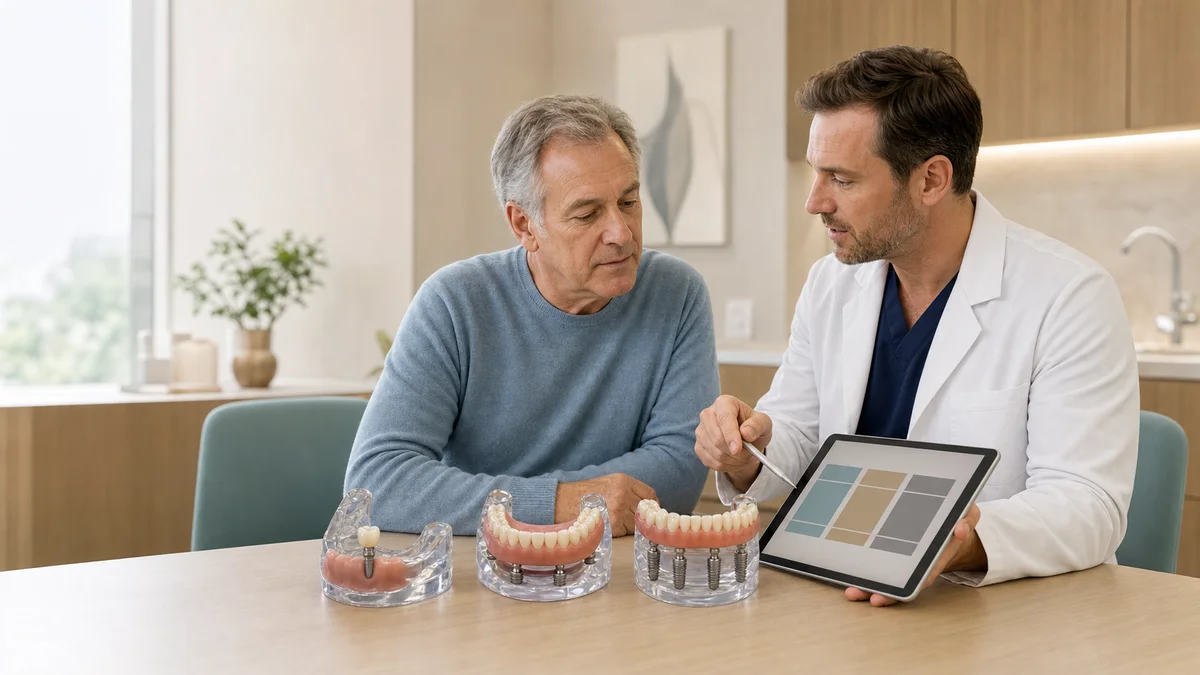
“Lower dental implants” is not a complete treatment name. For one missing tooth, the plan may include an implant body, an abutment and a crown. For several missing teeth, implants may support individual crowns, a bridge or a removable partial prosthesis. For a toothless lower jaw, the options may include an implant-retained overdenture or a fixed full-arch bridge. These solutions differ in implant count, laboratory work, cleaning and repair.
The lower jaw has its own anatomical considerations. The clinician must assess bone height and width, the inferior alveolar nerve, mental foramina, the shape of the ridge and the space available for teeth and prosthetic materials. More implants do not automatically mean better treatment. Position, distribution, bone, bite and prosthesis design work together.
Before comparing the cost of lower dental implants, ask every provider to state:
- the exact diagnosis and number of teeth being replaced;
- whether the final teeth are removable or fixed;
- the proposed number, position, brand and dimensions of implants;
- whether abutments, bars, locator-type attachments or screws are included;
- what temporary teeth will be used during healing;
- which material is planned for the definitive prosthesis;
- what happens if anatomy changes the plan after examination.
2. Single Lower Implant Crown Cost Components
A single implant tooth commonly involves more than the implant fixture. The full plan may include consultation, imaging, extraction, socket management, implant placement, healing component, abutment, digital or conventional impressions, laboratory work and the crown. If the tooth is still present, the timing and complexity of removal matter. If infection or bone loss is present, additional treatment may be needed.
The crown material, abutment choice and implant position affect laboratory and clinical steps. A lower front tooth has different space and esthetic constraints from a molar that carries heavier chewing loads. Immediate placement or immediate temporary teeth may be possible in selected cases, but they are not guaranteed and do not eliminate healing.
When assessing the cost of lower dental implants for one tooth, make sure the quote does not list only the surgical fixture. Ask whether the permanent crown, abutment, radiographs, review visits and management of a temporary gap are included.
3. Implant-Retained Lower Overdenture Costs
A lower overdenture is removable for cleaning but gains retention from implants and attachment components. This can improve stability for selected patients who struggle with a conventional lower complete denture. The plan includes the implants plus the denture, attachment housings and laboratory processing. Existing dentures are not automatically suitable for conversion.
Implant number and attachment design are individualized. Bone, hand skills, cleaning ability, available restorative space and expected forces influence the choice. A bar-supported design involves different components and laboratory work from separate stud attachments. The prosthesis still rests partly or fully on tissues depending on the design and may need adjustment as the ridge changes.
The cost of lower dental implants for an overdenture should include likely maintenance. Attachment inserts can wear, retention can change, acrylic or denture teeth can fracture, and relining may become necessary. A lower starting cost is not the same as a lower long-term cost if maintenance is excluded.
4. Fixed Full-Arch Lower Implant Costs
A fixed full-arch restoration is attached to several implants and is removed by a professional when required, not by the patient each day. Treatment may include extraction of remaining teeth, bone reshaping, implant placement, a temporary bridge, healing reviews and a definitive prosthesis. Some patients need a removable temporary denture if immediate fixed loading is not safe.
The number advertised in a branded full-arch concept is not a universal prescription. Bone distribution, implant stability, prosthetic span, jaw relationship and chewing forces determine the plan. A fixed bridge also needs enough vertical and horizontal room for a durable, cleanable structure. Additional implants can add surgery and components without correcting poor position or design.
For the cost of lower dental implants in a full arch, distinguish the provisional bridge from the definitive one. Ask about framework and tooth materials, replacement policy for the temporary prosthesis, hygiene access, screw or component maintenance and what is charged if one implant cannot be used.
5. Decision Table: Comparing Cost of Lower Dental Implants
| Plan | Typical purpose | Cost drivers | Maintenance question |
|---|---|---|---|
| Single implant crown | Replace one missing lower tooth | Extraction, grafting, fixture, abutment, crown | Who manages crown, screw or implant complications? |
| Implant bridge | Replace several adjacent teeth | Implant number, span, framework, materials | Can the bridge be repaired or removed for service? |
| Implant-retained overdenture | Stabilize a removable lower denture | Implants, attachments, denture, conversion or new fabrication | What do insert replacement and relining cost? |
| Bar-supported overdenture | Provide removable retention through a connected bar | Implants, custom bar, clips, restorative space | How is the bar cleaned and repaired? |
| Fixed full-arch bridge | Replace all lower teeth with a professional-removable bridge | Extractions, implants, provisional and final bridge, materials | What are the fees for professional removal and repair? |
| Conventional denture | Replace lower teeth without implants | Denture fabrication, adjustments and relining | Could it be a safe trial or long-term alternative? |
The table cannot calculate personal cost of lower dental implants. It prevents unlike quotes from being treated as identical. A removable overdenture and a fixed full-arch bridge may replace the same teeth but differ substantially in surgery, prosthetic materials, cleaning and future repair.
6. Diagnostic Imaging and Planning Fees
A clinical examination comes first. The dentist reviews symptoms, medical history, medications, smoking, previous treatment, gum health, remaining teeth, bite and cleaning ability. Suitable radiographs help assess teeth and bone. Three-dimensional imaging may be indicated for implant planning to evaluate bone and nearby structures, but it should answer a clinical question rather than serve as an automatic marketing upgrade.
Digital scans, photographs, jaw records and a diagnostic tooth setup may be needed for complex lower-jaw rehabilitation. A prosthetically driven plan starts with the intended final tooth position, then identifies implant positions that can support it. Placing implants wherever bone looks easiest can create an expensive prosthesis that is difficult to clean or repair.
A transparent cost of lower dental implants quote states whether consultation, imaging, guides, scans and laboratory planning are included. It should also explain whether those fees remain payable if the patient decides not to proceed.
7. Extractions, Infection Control and Site Preparation
If teeth remain, each requires a prognosis. Extraction is irreversible and should not be recommended solely to simplify a package. Caries, fracture, periodontal support, endodontic status, restorability and strategic value all matter. A second opinion can be useful when many teeth are labeled hopeless without a site-by-site explanation.
Extraction difficulty can vary with root anatomy, bone, infection and proximity to nerves. Some sites may accept immediate implant placement, while others benefit from healing first. Active gum disease and poor plaque control require management. Immediate placement does not mean the site has finished healing or that loading is automatically appropriate.
The cost of lower dental implants may change if the quote excludes extraction, socket treatment, membranes, graft material or a temporary denture. Ask whether each site has a contingency plan and price range rather than assuming every tooth follows the same pathway.
8. Bone Grafting and Nerve-Related Planning
Some lower jaws have adequate bone for the planned implants; others do not. Ridge width, height and contour can be affected by previous tooth loss, infection, trauma or anatomy. Minor grafting, ridge augmentation or a staged approach may be considered. Grafting is not automatically necessary for every implant and does not guarantee a particular result.
The nerve that supplies sensation to the lower lip and chin must be identified in posterior lower-jaw planning. The FDA lists injury to surrounding tissues and post-surgical numbness from nerve impingement or damage among potential implant risks. Implant dimensions and positions must reflect the patient’s anatomy, not a preselected package.
If grafting changes the cost of lower dental implants, request the material, donor source, surgical goal, healing time, alternatives and additional fees in writing. A quote should say whether the graft is confirmed or only a possibility after imaging or surgery.
9. Anesthesia, Sedation and Facility Costs
Many implant procedures use local anesthetic. Sedation may be offered for anxiety, longer surgery or selected medical circumstances. Oral, intravenous and deeper sedation involve different monitoring, staffing, recovery and transport requirements. More sedation is not automatically better and should not compensate for inadequate local anesthesia or poor communication.
Medical history, airway, medications, allergies and previous reactions influence suitability. Patients may need an escort, fasting instructions or time away from driving and work. The quoted facility may be a dental office, ambulatory center or hospital depending on the situation, which can affect fees.
When comparing the cost of lower dental implants, ask whether anesthetic, sedation professional, monitoring, medication, recovery and possible facility charges are separate. Do not stop prescribed medicines without coordination between the relevant clinicians.
10. Temporary Teeth and Healing-Period Costs
Implant integration takes time. The FDA notes that healing may take several months or longer. During that period, a patient may wear a temporary removable denture, a modified existing denture, a temporary crown or a provisional fixed bridge if conditions permit. Immediate provisional teeth are not the same as the definitive restoration.
Temporary prostheses can need repair, adjustment or replacement. They may have dietary restrictions and are designed around a healing plan. If implant stability is insufficient or a graft is required, the temporary plan may change. Travel and work arrangements should allow for this possibility.
The complete cost of lower dental implants must show what temporary teeth are included, how many adjustments are covered and what happens if immediate fixed loading is not possible. A package promising “teeth in one day” without a removable fallback plan is incomplete.
11. Final Prosthesis Materials and Laboratory Work
The final restoration can use different combinations of metal, ceramic, zirconia, acrylic and composite materials. Material choice affects thickness, weight, repairability, appearance, laboratory technique and fee. No material is universally best. A strong material used in an uncleanable or poorly fitting design is not a good outcome.
For full arches, the framework, veneering, tooth setup, gingival portion and access channels all require planning. For overdentures, attachment housings and reinforcement may be important. Ask whether work is produced by an identified dental laboratory and whether the clinic can provide material and component records.
A quote for the cost of lower dental implants should name the provisional and final materials separately. It should also distinguish routine adjustment from remake, repair or material upgrade.
12. Insurance, Medicare and Written Preauthorization
Coverage varies by country, employer plan, dental policy and medical circumstance. In the United States, Original Medicare generally does not cover routine dental services or items such as dentures and implants. Medicare may cover certain dental services when they are inextricably linked to the success of specified covered medical treatment, but that exception should not be assumed for ordinary implant replacement.
Medicare Advantage and private dental plans may offer different benefits, networks, annual maximums, waiting periods, exclusions or alternate benefits. “Implant coverage” may apply only to one component or percentage and may exclude grafting, the final prosthesis or treatment recommended before the policy began. A coordinator’s verbal estimate is not a guarantee of payment.
Before relying on insurance to reduce the cost of lower dental implants, submit the exact codes and plan for written review. Ask about deductible, remaining annual maximum, frequency limits, missing-tooth clauses, preauthorization, network rules, overseas treatment and appeals. The patient remains responsible for understanding the financial agreement if the insurer pays less than estimated.
13. Financing and the True Borrowing Cost
Financing can spread payments but does not reduce the treatment price. Interest rate, promotional period, deferred interest, origination fee, late fee and early payoff rules affect the total. A low monthly payment can hide a long repayment term. The American Dental Association notes that financing arrangements require careful selection and clear practice policies.
Do not sign a loan before the clinical plan, alternatives and total fee are clear. Ask whether financing begins before treatment, whether refunds go to the patient or lender, and what happens if surgery is canceled or the definitive prosthesis changes. Compare financing with a phased plan, savings, a lower-complexity prosthesis or a second quote.
To calculate the real cost of lower dental implants, add all scheduled payments and fees, not only the advertised principal. Medical necessity and informed consent should remain separate from pressure to accept credit.
14. Cost of Lower Dental Implants Over Time
Implants and their restorations require maintenance. The FDA advises regular cleaning and professional visits and recommends reporting looseness or pain promptly. The implant body, abutment, screw, attachment and prosthesis have different possible complications. A restoration may need service even when the implant remains integrated.
Overdenture inserts can wear; bars and clips may require attention; acrylic teeth can fracture; fixed bridges can chip or need professional removal. Gum and bone conditions can change. Patients with a history of periodontitis, smoking, diabetes, clenching or difficulty cleaning may need tailored follow-up.
Include these long-term items in the cost of lower dental implants:
- professional implant and gum maintenance visits;
- periodic clinical and radiographic assessment when indicated;
- home-cleaning tools for bridges, bars or attachments;
- replacement of overdenture inserts or clips;
- relining, repair or replacement of denture components;
- screw, abutment, crown or bridge service;
- night guard or bite management if clinically indicated;
- travel and emergency care if treatment was not local.
15. Risks That Can Change Cost
Dental implants can provide functional and quality-of-life benefits, but complications occur. The FDA identifies possible damage to nearby teeth or tissues, jaw injury, bite problems, screw loosening, implant loosening, infection, delayed healing and post-surgical numbness. Smoking and uncontrolled diabetes can adversely affect healing.
Complications may require medication, repair, removal, grafting or another operation. Not every complication is preventable, and no ethical provider can guarantee lifelong implant survival. A lower fee is not valuable if diagnostic shortcuts or unmaintainable design increase risk.
A patient-safe discussion of the cost of lower dental implants includes who pays for routine adjustments, unexpected repair, failed integration, damage to the temporary prosthesis and remake of the final restoration. “Warranty” terms should be written, clinically reasonable and not conditioned on impossible travel or unclear exclusions.
16. Dental Travel and Cost of Lower Dental Implants
Travel may offer different fees, scheduling or expertise, but flights, accommodation, companion costs and time away from work belong in the calculation. The clinical sequence may require several visits separated by healing. A short trip cannot guarantee that implants are ready for definitive loading.
Before traveling, confirm professional credentials, implant system, laboratory, records, emergency contact and the plan for local maintenance. Ask whether a clinician near home will service the implant system and prosthesis. Component availability matters years later.
The Redent Klinik English website offers general information about international dental care. You can use the Redent Klinik contact page to ask what records may support an initial review. Digital review cannot confirm candidacy or the final cost of lower dental implants before examination and imaging.
17. Quote Audit: 16 Lines to Verify
Ask for an itemized plan that separates confirmed work from possible additions. If two quotes use different terminology, request a plain-language crosswalk. A provider should explain why each item is needed and which parts could change.
Use this audit for the cost of lower dental implants:
- consultation and medical assessment;
- two-dimensional and three-dimensional imaging when indicated;
- scans, models, diagnostic setup and surgical guide;
- treatment of active decay or gum disease;
- extractions and socket management;
- bone grafting, membranes or other site development;
- implant fixtures with brand and model;
- healing components, abutments, bars or attachments;
- local anesthetic, sedation and facility fee;
- temporary denture, crown or fixed provisional bridge;
- final crown, bridge or overdenture and exact material;
- laboratory and delivery appointments;
- postoperative and prosthetic adjustment visits;
- maintenance, insert replacement and repair fees;
- contingency if an implant cannot be placed or integrated;
- tax, travel, financing and currency-conversion costs where relevant.
18. Frequently Asked Questions About Cost of Lower Dental Implants
Is the cost of lower dental implants a single per-tooth fee?
Usually not. A single implant restoration includes surgical and prosthetic components, while a full lower arch may use several implants to support one prosthesis. Diagnosis, extraction, grafting, temporary teeth, final materials and maintenance should be itemized.
Why does the cost of lower dental implants vary for full arches?
They may include different implant numbers, diagnostic steps, grafting, provisional teeth, final materials, laboratory quality and review care. One quote may stop at the temporary bridge while another includes the definitive prosthesis. Compare scope rather than headlines.
Does the cost of lower dental implants improve with more implants?
No. Implant number must be justified by anatomy, distribution, forces and prosthesis design. More implants add components and surgery but cannot correct poor position or inadequate hygiene access. Ask for the clinical reason behind the proposed number.
Can the cost of lower dental implants include a two-implant denture?
A selected lower overdenture may be retained by implants, but the appropriate number and attachment design are individualized. Bone, health, restorative space, cleaning ability and expected maintenance matter. Examination is required before recommending a configuration.
Does the cost of lower dental implants justify a fixed bridge?
Not for everyone. It may feel more stable and avoid daily removal, but it requires sufficient anatomy, cleanable design and professional maintenance. A removable overdenture can be easier to clean and repair. The better value depends on goals and risk.
Does Medicare pay the cost of lower dental implants?
Original Medicare generally does not cover routine dental implants or dentures. Limited dental services may be covered when directly linked to certain Medicare-covered medical treatments. Confirm the exact circumstance through Medicare and the treating providers before relying on coverage.
How does grafting affect the cost of lower dental implants?
The consent and financial plan should describe foreseeable contingencies before surgery. Ask whether grafting is optional, required or a staged alternative, what material may be used and the additional fee. You should know whether treatment can pause for a new decision.
Are temporary teeth included in the cost of lower dental implants?
They may or may not be. Confirm whether the quote includes a removable denture, temporary crown or provisional fixed bridge, how long it is expected to be used and how many repairs or adjustments are covered.
What maintenance costs should I expect?
Possible items include professional implant cleaning, replacement of overdenture inserts, relining, repair of chipped teeth or acrylic, screw or abutment service and eventual prosthesis replacement. Ask for a maintenance schedule and current fee list without treating them as fixed forever.
When is a second opinion useful?
Seek one when many teeth are proposed for extraction, grafting is extensive, implant count is not explained, the quote is unclear or financing pressure is high. Bring imaging and written plans so the comparison addresses the same clinical problem.
19. Conclusion: Calculate Cost Around a Complete Plan
The cost of lower dental implants makes sense only after the final restoration is named. A single crown, overdenture and fixed full arch are not interchangeable products. Each has different surgery, components, cleaning and maintenance. An apparently low quote may omit the abutment, final teeth, grafting or review care.
Build the decision around diagnosis, a prosthetically driven design and an itemized plan. Confirm insurance in writing, calculate financing separately and include long-term service. Balance the expected improvement in chewing and stability against surgical risk, maintenance and alternatives such as a conventional denture or bridge.
Use this guide to compare the cost of lower dental implants, then let a qualified dental team apply the questions to your health, anatomy and goals. No article can establish candidacy, implant number or final cost remotely.
Authoritative Sources
- U.S. Food and Drug Administration: Dental Implants—What You Should Know
- U.S. Food and Drug Administration: Implants and Prosthetics
- Medicare.gov: Dental Service Coverage
- Centers for Medicare & Medicaid Services: Medicare Dental Coverage
- American Dental Association: Patient Financing Options
- American Dental Association
- World Health Organization: Oral Health Fact Sheet