
Dental health plays a crucial role in overall well-being, and modern dentistry offers several solutions to restore damaged teeth. One of the most commonly discussed restorative procedures is the crown filling. Many patients wonder what a crown filling actually is, how it differs from other treatments, and when it becomes necessary. Understanding the concept of a crown filling can help patients make informed decisions about their dental care and maintain a healthier smile for years to come. 🦷
A crown filling is a restorative dental treatment used when a tooth has experienced significant damage, decay, or structural weakness. In many cases, a standard dental filling may not be sufficient to restore the tooth’s strength. When this happens, dentists may recommend a crown filling to provide additional protection and durability. Essentially, the crown filling works by restoring the damaged part of the tooth while also reinforcing the remaining structure.
Unlike small cavity treatments, a crown filling addresses more extensive damage. Dentists often recommend this procedure when a tooth has large cavities, cracks, or fractures that compromise its integrity. Without proper treatment, the affected tooth may continue to deteriorate, potentially leading to more complicated procedures such as root canal therapy or even tooth extraction.
The primary goal of a crown filling is to restore both functionality and aesthetics. When a tooth is severely decayed or structurally compromised, chewing can become painful or inefficient. A properly placed crown filling allows patients to regain normal biting strength while maintaining the natural appearance of their teeth. Modern dental materials also ensure that the crown filling blends seamlessly with surrounding teeth.
Another important advantage of a crown filling is long-term protection. Teeth weakened by large cavities or previous dental treatments can become vulnerable to fractures. By reinforcing the tooth structure, a crown filling acts as a protective shield. This prevents further damage and helps preserve the tooth for many years.
Patients often ask whether a crown filling is painful. The good news is that modern dentistry prioritizes patient comfort. Dentists use local anesthesia during the procedure, ensuring that the patient feels minimal discomfort. In fact, many patients report that the procedure feels similar to receiving a regular filling, although it may require additional steps depending on the severity of the damage.
Another key aspect of a crown filling is its customization. Every tooth is unique, and dentists carefully assess the patient’s oral health before recommending the appropriate treatment plan. During the consultation, the dentist examines the damaged tooth using digital imaging or X-rays. This allows them to determine whether a crown filling is the most effective solution.
In some cases, patients may confuse a crown filling with a dental crown. While both procedures aim to restore damaged teeth, they serve slightly different purposes. A crown filling typically repairs the damaged portion of the tooth while preserving more of the natural tooth structure. A full dental crown, on the other hand, covers the entire visible part of the tooth. The dentist will determine which option provides the best balance between strength, preservation, and aesthetics.
Advancements in dental technology have significantly improved the success rate of a crown filling. Modern materials such as composite resins and ceramic-based restorations offer excellent durability and natural appearance. These materials not only restore the tooth’s functionality but also mimic the translucency and color of natural enamel.
Patients considering a crown filling should also pay attention to long-term maintenance. Just like natural teeth, restored teeth require proper oral hygiene. Brushing twice a day, flossing regularly, and visiting the dentist for routine checkups help ensure the longevity of the restoration. Dentists also recommend avoiding extremely hard foods that could potentially damage the restored tooth.
Education is an essential part of successful dental care. Trusted organizations such as the American Dental Association emphasize the importance of early diagnosis and proper treatment of tooth decay. By addressing dental issues promptly, patients can prevent more extensive procedures and protect their natural teeth.
If you suspect that a damaged tooth may require a crown filling, consulting with a qualified dental professional is the best next step. Early evaluation allows dentists to determine the most appropriate treatment before the condition worsens. Patients seeking professional guidance or personalized treatment options can easily reach out through the Redent Klinik Contact Page.
Ultimately, a crown filling represents a highly effective restorative solution in modern dentistry. It helps repair damaged teeth, restore chewing ability, improve appearance, and protect the tooth from future complications. With proper care and regular dental visits, a crown filling can provide reliable support for many years. Understanding how this treatment works empowers patients to take proactive steps toward maintaining a healthy and confident smile. 😁
What Is a Crown Filling in Modern Dentistry?
In modern restorative dentistry, the term crown filling describes a treatment designed to repair and strengthen a damaged tooth while preserving as much of the natural structure as possible. When a tooth develops extensive decay, fractures, or structural weakness, a simple filling may not provide enough support. In these situations, dentists often recommend a crown filling to restore the tooth’s function and durability. 🦷
A crown filling essentially combines the protective advantages of a dental crown with the restorative purpose of a filling. The procedure focuses on rebuilding the damaged portion of the tooth and reinforcing it so that it can withstand everyday chewing pressure. With the help of modern dental materials and advanced techniques, a crown filling can provide both strength and a natural appearance.
Understanding how a crown filling works is important for patients who want to maintain long-term oral health. Many people assume that once a cavity becomes large, the only solution is a full crown. However, in many cases, a crown filling allows dentists to repair the tooth while conserving more of the healthy structure.
The Purpose of a Crown Filling
The main goal of a crown filling is to restore teeth that are too damaged for a regular filling but not damaged enough to require complete crown coverage. Dentists evaluate the tooth carefully to determine whether a crown filling can provide sufficient reinforcement.
A crown filling helps rebuild the structural integrity of the tooth. When tooth decay removes a large portion of enamel and dentin, the remaining tooth structure becomes fragile. A crown filling fills the damaged area while providing extra support so that the tooth can function normally again.
This restoration also improves aesthetics. Modern dental materials used in a crown filling can closely match the natural color of teeth, ensuring that the restored tooth blends seamlessly with the rest of the smile. This makes the procedure particularly attractive for patients who want both functionality and visual improvement.
How Crown Filling Differs from a Traditional Filling
While a traditional filling is designed to treat smaller cavities, a crown filling is intended for more extensive damage. Standard fillings typically involve removing decayed tissue and placing composite resin or another material into the cavity. A crown filling, however, covers a larger area and reinforces weakened tooth structure.
Another difference lies in durability. Because a crown filling restores a larger portion of the tooth, it is designed to withstand greater biting forces. Patients who grind their teeth or place heavy pressure on their molars may particularly benefit from the strength provided by a crown filling.
Additionally, a crown filling may involve more advanced preparation of the tooth. Dentists carefully shape the damaged area to ensure that the restoration bonds securely. This preparation allows the crown filling to function almost like a natural extension of the tooth.
When a Crown Filling Becomes Necessary
Dentists recommend a crown filling in several situations. The most common reason is severe tooth decay that has destroyed a large portion of the tooth. When decay spreads deep into the tooth structure, simply placing a small filling may not provide enough stability.
A crown filling may also be necessary after trauma or fractures. Teeth can crack due to accidents, biting hard objects, or long-term wear. If the tooth remains structurally viable, a crown filling can restore its integrity and prevent further breakage.
Another common scenario occurs after root canal therapy. Once the infected pulp is removed, the tooth can become more brittle. In these cases, a crown filling helps protect the tooth and restore its strength so that patients can continue to chew comfortably.
Modern Materials Used in Crown Filling
Dental technology has advanced significantly, and modern crown filling restorations use materials that combine strength with aesthetic appeal. Composite resin is one of the most commonly used materials because it bonds well to natural tooth structure and can be color-matched.
Ceramic-based restorations are also frequently used in a crown filling. These materials offer exceptional durability and closely resemble natural enamel. In high-stress areas such as molars, dentists may choose reinforced ceramics to ensure long-term reliability.
In some cases, dentists may recommend hybrid materials that combine resin and ceramic properties. These innovative options allow a crown filling to provide both flexibility and strength, reducing the risk of fractures over time.
Benefits of Choosing a Crown Filling
Patients often prefer a crown filling because it preserves more natural tooth structure compared to full crowns. Maintaining the original tooth helps support long-term oral health and can reduce the need for more extensive procedures later.
Another advantage of a crown filling is improved chewing efficiency. Once the damaged portion of the tooth is restored, patients can comfortably eat a variety of foods again. This contributes to better nutrition and overall well-being.
A crown filling also offers aesthetic benefits. Because modern materials can closely match the natural shade of teeth, the restoration is usually difficult to notice. This allows patients to smile confidently without worrying about visible dental work. 😁
Finally, the durability of a well-placed crown filling makes it a valuable long-term investment in dental health. With proper oral hygiene and regular dental checkups, many crown filling restorations can last for years while protecting the underlying tooth.
When Do Dentists Recommend a Crown Filling?
A crown filling is recommended when a tooth has suffered significant structural damage but can still be preserved. Dentists carefully evaluate the condition of the tooth before deciding whether a standard filling, a crown filling, or a full dental crown is the most appropriate treatment. The goal of a crown filling is to restore the strength, shape, and function of a tooth while preserving as much natural tooth structure as possible. 🦷
In modern dentistry, the decision to use a crown filling depends on several factors including the size of the cavity, the remaining tooth structure, the location of the tooth, and the patient’s chewing habits. Dentists use X-rays, digital imaging, and clinical examination to determine whether a crown filling will provide sufficient support and long-term stability.
Large Cavities That Weaken the Tooth
One of the most common reasons dentists recommend a crown filling is extensive tooth decay. When cavities grow large, they can remove a significant amount of enamel and dentin. If a regular filling is placed in such a weakened tooth, the surrounding tooth structure may crack or break under pressure.
A crown filling provides additional reinforcement by rebuilding the lost structure and distributing chewing forces more evenly across the tooth. This approach helps prevent fractures and preserves the natural tooth for a longer time.
Patients who delay treatment for cavities often reach a point where a crown filling becomes the best solution. Early intervention allows dentists to restore the tooth before the damage progresses to the stage where a full crown or extraction becomes necessary.
Cracked or Fractured Teeth
Another situation where a crown filling may be recommended is when a tooth develops cracks or fractures. Teeth can crack due to trauma, biting hard foods, teeth grinding (bruxism), or long-term wear. Even small fractures can compromise the structural integrity of a tooth.
When the damage is moderate and the tooth root remains healthy, a crown filling can stabilize the tooth and prevent the crack from spreading further. By reinforcing the weakened area, the crown filling helps restore chewing function and reduces the risk of tooth breakage.
Dentists also evaluate whether the crack extends below the gum line. If the fracture remains within the visible portion of the tooth, a crown filling can often repair the damage successfully.
Signs That a Cracked Tooth May Need a Crown Filling
Patients sometimes notice symptoms that indicate a cracked tooth requiring a crown filling. These symptoms may include:
- Pain when biting or chewing
- Sensitivity to hot or cold foods
- Sharp discomfort that comes and goes
- A visible crack or chipped portion of the tooth
If these symptoms occur, it is important to consult a dentist promptly. Early treatment with a crown filling can prevent further complications and preserve the tooth.
After Root Canal Treatment
Teeth that undergo root canal therapy often require additional structural support. During a root canal procedure, the infected pulp inside the tooth is removed. Although this treatment saves the tooth from infection, it can also make the tooth more brittle.
In these situations, a crown filling is frequently recommended to strengthen the treated tooth. The restoration helps protect the remaining tooth structure from fractures and allows the patient to chew normally again.
Without reinforcement, teeth treated with root canals may be more susceptible to breaking. A crown filling provides the durability needed to ensure long-term functionality.
Teeth with Large Old Fillings
Another common scenario occurs when patients already have large dental fillings that begin to fail. Over time, traditional fillings may wear down, loosen, or develop cracks. When this happens, the surrounding tooth structure may become vulnerable.
Replacing the old restoration with a crown filling can restore the tooth’s stability. The crown filling covers a larger area than a standard filling and provides stronger support for the weakened tooth.
This approach is particularly beneficial for molars, which experience significant chewing pressure every day.
Preventing Tooth Extraction
One of the key goals of modern dentistry is to preserve natural teeth whenever possible. A crown filling plays an important role in achieving this goal. By repairing and reinforcing damaged teeth, dentists can prevent further deterioration that might otherwise lead to tooth loss.
In many cases, a crown filling allows patients to avoid more invasive procedures such as dental implants or bridges. Preserving the natural tooth helps maintain proper bite alignment and jawbone health.
If patients notice discomfort, visible damage, or sensitivity in a tooth, seeking early dental evaluation is essential. A timely crown filling can restore the tooth before the problem worsens.
Factors Dentists Consider Before Recommending a Crown Filling
Dentists carefully assess several clinical factors before deciding on a crown filling. These include:
- The amount of healthy tooth structure remaining
- The location of the tooth in the mouth
- The patient’s bite force and chewing habits
- The presence of cracks or structural damage
- Previous dental treatments on the tooth
By evaluating these factors, dentists can determine whether a crown filling will provide sufficient support and longevity. Each patient’s treatment plan is customized to ensure the best possible outcome.
Ultimately, a crown filling is recommended when dentists believe it will restore both strength and functionality while preserving the natural tooth. With modern materials and advanced techniques, crown filling restorations offer a reliable and aesthetically pleasing solution for many types of dental damage. 😁
Step-by-Step Crown Filling Procedure Explained
Understanding the process of a crown filling can help patients feel more confident and comfortable before visiting the dentist. Many people feel anxious about dental procedures simply because they do not know what to expect. In reality, the crown filling procedure is a carefully planned restorative treatment designed to repair damaged teeth while preserving as much natural structure as possible. Modern dental technology and advanced materials allow dentists to perform a crown filling with high precision, minimal discomfort, and excellent long-term results. 🦷
A crown filling typically involves several stages, beginning with a comprehensive dental examination and ending with the final restoration that strengthens and protects the tooth. Each step ensures that the restoration fits perfectly, functions properly, and blends naturally with surrounding teeth.
Initial Dental Examination and Diagnosis
The first stage of a crown filling procedure is a detailed dental examination. The dentist carefully evaluates the affected tooth to determine the extent of damage or decay. This step is essential because it confirms whether a crown filling is the best treatment option compared with alternatives such as a traditional filling or a full dental crown.
During this evaluation, dentists often use digital X-rays or 3D imaging to examine the inner structure of the tooth. These diagnostic tools help identify hidden decay, cracks, or structural weaknesses that may not be visible during a visual examination. Once the dentist confirms that a crown filling is appropriate, the treatment plan is explained to the patient.
The dentist may also discuss oral health history, chewing habits, and any symptoms such as pain or sensitivity. This information helps ensure that the crown filling will address the patient’s specific dental needs.
Preparation of the Tooth
The next step in the crown filling process is preparing the tooth. Before the procedure begins, the dentist administers local anesthesia to numb the area around the tooth. This ensures that the patient remains comfortable throughout the treatment.
Once the tooth is numb, the dentist removes all decayed or damaged tissue using specialized dental instruments. This step is crucial because leaving behind infected material could lead to further decay or complications.
After the damaged portion is removed, the dentist reshapes the remaining tooth structure to create a stable foundation for the crown filling. Proper shaping allows the restorative material to bond securely and distribute chewing pressure evenly.
Cleaning and Disinfection
Before placing the crown filling material, the prepared tooth is thoroughly cleaned and disinfected. This step eliminates bacteria and debris that could interfere with the bonding process. A clean surface ensures that the crown filling adheres properly and reduces the risk of future decay.
In some cases, dentists apply a protective liner or base to shield the inner layers of the tooth. This additional layer helps protect the dental pulp and enhances the durability of the crown filling.
Placement of the Crown Filling Material
After preparation is complete, the dentist begins placing the restorative material that forms the crown filling. Modern dentistry uses advanced materials such as composite resin, ceramic-based compounds, or hybrid restorative materials.
The material is applied in layers and carefully shaped to restore the natural form of the tooth. Each layer of the crown filling is hardened using a special curing light. This process ensures that the restoration becomes strong and durable.
During this stage, the dentist pays close attention to the shape and contours of the tooth. A well-designed crown filling should mimic the natural anatomy of the tooth, allowing it to function normally during chewing and speaking.
Shaping and Polishing the Restoration
Once the crown filling material has fully hardened, the dentist refines the restoration by trimming and polishing it. This step ensures that the surface of the crown filling feels smooth and natural.
The dentist also checks the patient’s bite to ensure that the crown filling aligns properly with opposing teeth. If the restoration is too high or uneven, minor adjustments are made to improve comfort and functionality.
A properly shaped crown filling allows the patient to chew normally without discomfort. Polishing the restoration also improves its appearance, making it nearly indistinguishable from natural enamel.
Final Evaluation and Aftercare Instructions
After completing the crown filling, the dentist performs a final evaluation to confirm that the restoration fits correctly and functions well. The patient may be asked to bite down gently to ensure that the crown filling does not interfere with normal bite alignment.
Patients typically receive detailed aftercare instructions following the procedure. Although the crown filling is durable, maintaining good oral hygiene is essential for long-term success. Dentists recommend brushing twice daily, flossing regularly, and scheduling routine dental checkups.
It is also advisable to avoid extremely hard foods immediately after the procedure. While a crown filling is strong, allowing the restoration to settle properly helps ensure optimal longevity.
Recovery and Long-Term Performance
Most patients recover quickly after receiving a crown filling. Mild sensitivity to temperature or pressure may occur for a short time, but this usually disappears within a few days.
With proper care, a crown filling can provide excellent durability and functionality. Regular dental visits allow dentists to monitor the restoration and address any issues early. Many crown filling restorations last for many years while maintaining both the strength and appearance of the treated tooth.
Overall, the step-by-step process of a crown filling reflects the precision and expertise involved in modern dentistry. By combining careful diagnosis, advanced materials, and skilled techniques, dentists can restore damaged teeth effectively and help patients maintain healthy, confident smiles. 😁
Types of Materials Used for Crown Filling
The success and durability of a crown filling depend greatly on the materials used during the restoration process. Modern dentistry has evolved significantly over the past decades, offering several high-quality materials that combine strength, aesthetics, and biocompatibility. When dentists plan a crown filling, they carefully select the most appropriate material based on the location of the tooth, the amount of damage, the patient’s bite pressure, and aesthetic expectations.
Different materials provide different advantages. Some materials focus on strength and durability, making them ideal for molars that handle heavy chewing forces. Others emphasize natural appearance, which is particularly important for front teeth. Understanding the available options helps patients feel more confident when discussing their crown filling treatment plan with their dentist. 🦷
Composite Resin Crown Filling
Composite resin is one of the most widely used materials in modern crown filling procedures. This material consists of a mixture of plastic resin and fine glass particles, which allows it to closely match the natural color of teeth. Because of its aesthetic properties, composite resin is often used when restoring visible teeth.
A composite crown filling bonds directly to the tooth structure. This bonding process helps strengthen the remaining tooth and reduces the amount of tooth preparation required. Dentists apply the material in layers and use a special curing light to harden each layer.
Another advantage of composite materials in a crown filling is their versatility. They can be sculpted and shaped to replicate the natural anatomy of the tooth, ensuring a comfortable bite and natural appearance.
Advantages of Composite Crown Filling
- Excellent aesthetic appearance
- Bonds directly to natural tooth structure
- Requires less removal of healthy enamel
- Can be completed in a single appointment
However, composite materials may wear slightly faster than ceramic options in high-pressure chewing areas. For this reason, dentists evaluate each patient carefully before recommending this type of crown filling.
Ceramic Crown Filling Materials
Ceramic materials have become increasingly popular in restorative dentistry because they offer both strength and natural appearance. A ceramic crown filling can closely mimic the translucency and texture of natural enamel.
These restorations are often created using advanced digital dentistry techniques, including CAD/CAM technology. This allows dentists to design a highly precise crown filling that fits perfectly with the surrounding tooth structure.
Ceramic restorations are particularly beneficial for patients who prioritize aesthetics. Because the material reflects light similarly to natural enamel, the crown filling becomes nearly invisible when placed in the mouth.
Another important benefit is durability. Ceramic materials are resistant to staining and wear, making them suitable for long-term restorations.
Porcelain-Based Crown Filling
Porcelain is another common material used in a crown filling, especially when aesthetic results are a top priority. Porcelain restorations provide excellent color matching, making them ideal for restoring front teeth.
A porcelain crown filling can be custom fabricated in a dental laboratory or milled digitally in the clinic. Dentists shape the porcelain restoration so that it integrates seamlessly with the patient’s smile.
One of the main benefits of porcelain is its ability to replicate the natural appearance of enamel. When properly placed, a porcelain crown filling can be virtually indistinguishable from surrounding teeth.
However, porcelain may require slightly more tooth preparation than composite materials. Dentists weigh these factors carefully before recommending the most appropriate crown filling option.
Hybrid Resin-Ceramic Materials
Recent innovations in dental technology have introduced hybrid materials that combine the advantages of both resin and ceramic. These advanced materials are frequently used in modern crown filling restorations.
A hybrid crown filling offers excellent flexibility and strength. The resin component provides shock absorption, while the ceramic component adds durability and resistance to wear.
This combination makes hybrid materials particularly useful for teeth exposed to heavy chewing forces. Dentists often recommend this type of crown filling for patients who grind their teeth or have strong bite pressure.
Another benefit of hybrid materials is their natural appearance. These restorations can be color-matched to surrounding teeth, ensuring that the crown filling looks aesthetically pleasing.
Gold Alloy Crown Filling
Although less common today due to aesthetic preferences, gold alloy remains one of the most durable materials available for dental restorations. In some cases, dentists may still recommend a gold-based crown filling for back teeth that require exceptional strength.
Gold restorations have several advantages, including excellent durability and minimal wear on opposing teeth. A gold crown filling can last for many years without significant deterioration.
However, because gold does not match the natural color of teeth, it is usually reserved for molars where appearance is less of a concern.
How Dentists Choose the Right Crown Filling Material
Choosing the most suitable material for a crown filling involves several clinical considerations. Dentists evaluate factors such as:
- The location of the tooth in the mouth
- The size of the damaged area
- The patient’s chewing pressure
- Aesthetic expectations
- Long-term durability requirements
For example, a front tooth restoration may benefit from ceramic or composite materials because of their natural appearance. Meanwhile, a molar that handles strong chewing forces may require a stronger crown filling material.
Ultimately, selecting the right material ensures that the crown filling provides long-lasting strength, comfort, and aesthetics. With advancements in dental technology, patients today can benefit from highly durable restorations that closely mimic natural teeth.
A carefully selected crown filling material not only restores the tooth’s functionality but also contributes to a confident and healthy smile. 😁
Crown Filling vs Dental Crown: Key Differences
When patients hear the terms crown filling and dental crown, they often assume these treatments are the same. Although both procedures aim to restore damaged teeth, they serve different purposes and involve different levels of tooth coverage. Understanding the distinction between a crown filling and a full dental crown helps patients make informed decisions about their dental care and choose the most suitable restorative treatment.
A crown filling is designed to repair a tooth that has moderate structural damage while preserving most of the natural tooth structure. In contrast, a dental crown covers the entire visible portion of the tooth above the gum line. Dentists evaluate the severity of the damage before determining whether a crown filling or a full crown is the better solution. 🦷
The goal in modern dentistry is always to conserve as much natural tooth structure as possible. For this reason, dentists often prefer a crown filling when the tooth can still be reinforced without complete coverage.
What Is a Crown Filling?
A crown filling is a restorative dental treatment used when a tooth has lost a large amount of structure due to decay, fractures, or previous fillings. Unlike small cavity fillings, a crown filling restores a larger portion of the tooth while strengthening the remaining structure.
During a crown filling, the dentist removes decayed or weakened tooth material and replaces it with a durable restorative material. The restoration is carefully shaped to rebuild the natural form of the tooth and restore normal chewing function.
Because a crown filling preserves much of the natural tooth, it is often considered a conservative treatment option compared with a full crown.
What Is a Dental Crown?
A dental crown, sometimes referred to as a “cap,” is a restoration that covers the entire visible part of a tooth. Dentists recommend crowns when the tooth is severely weakened or when large portions of the tooth structure are missing.
While a crown filling rebuilds part of the tooth, a full crown surrounds the entire tooth to provide maximum protection. This makes crowns particularly useful after root canal therapy or when teeth have extensive fractures.
Dental crowns are commonly made from ceramic, porcelain, metal alloys, or combinations of these materials. Once placed, the crown acts as a protective shell that restores the tooth’s shape, strength, and function.
Main Structural Differences
The key structural difference between a crown filling and a dental crown lies in the amount of tooth coverage. A crown filling replaces only the damaged section of the tooth, while a crown covers the entire tooth surface above the gum line.
- Crown Filling: Restores part of the tooth structure.
- Dental Crown: Covers the entire visible tooth.
- Crown Filling: Preserves more natural enamel.
- Dental Crown: Provides maximum structural reinforcement.
Because a crown filling requires less tooth preparation, it often preserves more natural enamel and dentin compared with a full crown.
Situations Where a Crown Filling Is Preferred
Dentists recommend a crown filling when the tooth still has enough healthy structure to support a partial restoration. This option is ideal for moderate tooth damage that requires reinforcement but not complete coverage.
Common situations where a crown filling may be preferred include:
- Large cavities that weaken the tooth
- Cracks that do not extend through the entire tooth
- Replacement of large existing fillings
- Moderate structural damage caused by trauma
In these cases, a crown filling can restore the tooth while maintaining the natural tooth structure.
Situations Where a Full Dental Crown Is Necessary
There are circumstances in which a crown filling may not provide enough strength. When the damage to the tooth is extensive, a full dental crown may be required to prevent further breakage.
Examples include:
- Severely fractured teeth
- Teeth with minimal remaining structure
- Teeth that have undergone root canal treatment
- Teeth with extreme wear from grinding
In these cases, a crown provides comprehensive protection that a crown filling alone may not achieve.
Longevity and Durability Comparison
Both treatments offer excellent durability when properly maintained. However, the longevity of a crown filling depends on factors such as oral hygiene, bite pressure, and the material used.
A well-placed crown filling can last many years if the patient maintains proper oral care habits. Regular brushing, flossing, and dental checkups help extend the life of the restoration.
Dental crowns also have a long lifespan, often lasting 10–15 years or more depending on the material and oral health conditions. Because crowns provide full coverage, they may offer greater protection for severely compromised teeth.
Aesthetic Considerations
Both crown filling restorations and dental crowns can produce highly aesthetic results. Modern materials such as ceramic and composite resins allow dentists to match the restoration closely with the natural color of surrounding teeth.
A crown filling is often virtually invisible when properly shaped and polished. This makes it a popular choice for patients who want to maintain a natural-looking smile while restoring dental health.
Similarly, porcelain crowns can provide excellent aesthetic outcomes, particularly for front teeth where appearance is especially important.
Choosing the Right Treatment
The decision between a crown filling and a dental crown ultimately depends on the condition of the tooth. Dentists perform detailed examinations and diagnostic imaging before recommending the most appropriate treatment.
In many cases, a crown filling offers the ideal balance between strength and tooth preservation. By restoring damaged areas without covering the entire tooth, this treatment supports long-term dental health while maintaining natural structure.
Ultimately, both treatments play important roles in restorative dentistry. Whether a patient receives a crown filling or a full crown, the primary goal remains the same: restoring the tooth’s function, protecting it from further damage, and ensuring a healthy, confident smile. 😁
Advantages and Possible Risks of a Crown Filling
A crown filling is one of the most effective restorative dental treatments available today. It helps repair damaged teeth while preserving as much natural structure as possible. However, like any dental procedure, a crown filling comes with both advantages and potential risks. Understanding these factors allows patients to make informed decisions about their oral health and better appreciate how a crown filling contributes to long-term dental stability. 🦷
Dentists recommend a crown filling when a tooth requires stronger support than a regular filling can provide but does not need full crown coverage. By reinforcing weakened teeth and restoring their shape, a crown filling improves both function and appearance. At the same time, patients should also be aware of possible limitations and how proper care can minimize risks.
Main Advantages of a Crown Filling
One of the primary benefits of a crown filling is its ability to preserve natural tooth structure. Modern dentistry emphasizes conservative treatments whenever possible, and a crown filling allows dentists to restore damaged areas without removing the entire outer portion of the tooth.
Unlike full crowns, which require extensive tooth reshaping, a crown filling focuses only on rebuilding the damaged section. This approach helps maintain the strength and biological integrity of the natural tooth.
Another major advantage is improved chewing function. When a tooth becomes weakened by decay or fractures, biting pressure can cause discomfort or further damage. A properly placed crown filling restores the tooth’s strength and allows patients to eat comfortably again.
Natural Appearance and Aesthetic Benefits
Modern restorative materials make a crown filling almost indistinguishable from natural enamel. Composite resins and ceramic-based materials can be color-matched precisely to surrounding teeth.
This means that a crown filling not only restores function but also enhances the appearance of the smile. Patients often appreciate the fact that the restoration blends seamlessly with their natural teeth.
For front teeth or visible areas of the mouth, a crown filling provides an excellent balance between aesthetics and durability.
Durability and Structural Reinforcement
A crown filling significantly strengthens a tooth that has been weakened by decay or trauma. By rebuilding lost structure, the restoration distributes chewing forces more evenly across the tooth.
This reinforcement reduces the risk of cracks and fractures. In many cases, a crown filling prevents the need for more extensive procedures such as full crowns or tooth extraction.
When properly maintained, a high-quality crown filling can last many years. Regular dental checkups and proper oral hygiene help ensure the restoration remains strong and functional.
Minimally Invasive Treatment
Another advantage of a crown filling is that it is relatively conservative compared to other restorative procedures. Because dentists remove only the damaged portion of the tooth, the surrounding healthy enamel remains intact.
This minimally invasive approach aligns with modern dental principles focused on preserving natural teeth whenever possible. Patients benefit from a restoration that maintains both function and biological health.
Possible Risks of a Crown Filling
Although a crown filling offers many benefits, patients should also understand the potential risks associated with the procedure. These risks are generally rare and can often be minimized through proper dental care and professional treatment planning.
One potential issue is temporary sensitivity. After receiving a crown filling, some patients experience mild sensitivity to hot or cold temperatures. This typically occurs because the tooth has been recently treated and may take time to adjust.
In most cases, this sensitivity disappears within a few days or weeks.
Risk of Material Wear
Over time, the materials used in a crown filling may experience natural wear. Chewing pressure, grinding habits, and exposure to acidic foods can gradually affect the restoration.
Although modern materials are highly durable, dentists recommend regular checkups to monitor the condition of the crown filling. Early detection of wear allows for simple adjustments or repairs if necessary.
Possibility of Tooth Fracture
While a crown filling strengthens the tooth, extremely weakened teeth may still be vulnerable to fractures if exposed to excessive pressure. For example, biting hard objects such as ice or hard candies can damage the restoration or the remaining tooth structure.
Patients who grind their teeth at night may also place additional stress on a crown filling. In these cases, dentists may recommend wearing a night guard to protect both the restoration and natural teeth.
Risk of Secondary Decay
Another possible complication is secondary decay around the edges of a crown filling. If plaque accumulates along the margins of the restoration, bacteria can cause new cavities.
Maintaining excellent oral hygiene is essential to prevent this issue. Brushing twice daily, flossing regularly, and visiting the dentist for professional cleanings significantly reduce the risk of decay around a crown filling.
How to Minimize Risks
The risks associated with a crown filling can be greatly minimized through proper care and professional dental treatment. Patients should follow these recommendations:
- Maintain consistent oral hygiene habits
- Avoid biting extremely hard foods
- Attend regular dental checkups
- Use protective night guards if grinding occurs
- Seek early treatment for any discomfort or damage
These preventive measures help ensure that a crown filling remains stable and functional for many years.
Long-Term Outlook for Crown Filling Restorations
Overall, a crown filling is considered a highly reliable restorative treatment with a strong success rate. Advances in dental materials and techniques have made these restorations more durable and aesthetically pleasing than ever before.
When performed by an experienced dentist and maintained with proper oral care, a crown filling can restore tooth strength, improve chewing ability, and enhance the appearance of the smile.
By understanding both the advantages and potential risks, patients can approach their treatment with confidence. A well-planned crown filling provides an effective solution for repairing damaged teeth while supporting long-term oral health and comfort. 😁
How Long Does a Crown Filling Last?
One of the most common questions patients ask before undergoing restorative dental treatment is how long the results will last. A crown filling is designed to restore the strength and function of a damaged tooth, but its longevity depends on several factors including oral hygiene, material quality, bite pressure, and regular dental care. With proper maintenance and professional treatment, a crown filling can remain effective for many years. 🦷
Modern dentistry has significantly improved the durability of restorative procedures. Advances in dental materials and bonding technology mean that a well-placed crown filling can provide long-term structural support and aesthetic benefits. However, just like natural teeth, restorations require proper care in order to remain stable and functional.
Average Lifespan of a Crown Filling
On average, a crown filling can last between 7 and 15 years. In some cases, it may last even longer when patients follow excellent oral hygiene practices and visit their dentist regularly.
The longevity of a crown filling depends largely on the material used. Composite resin restorations may wear slightly faster than ceramic-based restorations, particularly in areas exposed to heavy chewing pressure.
Nevertheless, modern restorative materials are engineered to withstand everyday forces, making the crown filling a reliable long-term treatment option.
Typical Lifespan by Material
- Composite crown filling: 7–10 years
- Ceramic crown filling: 10–15 years
- Hybrid resin-ceramic crown filling: 10–15 years
- Gold-based crown filling: 15+ years
While these numbers provide general guidance, individual results vary depending on personal habits and oral health conditions.
Factors That Affect the Longevity of a Crown Filling
Several factors influence how long a crown filling will last. Dentists evaluate these factors during treatment planning to ensure the restoration performs effectively over time.
Oral Hygiene Habits
Good oral hygiene is one of the most important factors in extending the life of a crown filling. Brushing at least twice daily and flossing regularly helps remove plaque and bacteria that can cause decay around the restoration.
If plaque accumulates near the margins of the crown filling, bacteria may gradually weaken the surrounding tooth structure. Over time, this can lead to secondary decay or restoration failure.
Regular professional cleanings and dental checkups help detect early signs of problems and ensure the crown filling remains stable.
Bite Pressure and Teeth Grinding
Patients who grind or clench their teeth place additional stress on dental restorations. Bruxism can gradually wear down a crown filling or even cause cracks in the restoration.
For individuals who grind their teeth during sleep, dentists often recommend a custom night guard. This protective device reduces pressure on the crown filling and helps extend its lifespan.
Teeth grinding is one of the most common reasons why restorations may need replacement earlier than expected.
Diet and Eating Habits
The foods and beverages a person consumes can also influence the durability of a crown filling. Hard foods such as ice, hard candies, or nuts may place excessive pressure on the restoration.
Highly acidic foods and drinks can gradually weaken dental materials and natural enamel. While modern crown filling materials are designed to resist wear, limiting exposure to extreme conditions helps maintain their strength.
Maintaining a balanced diet and avoiding harmful chewing habits helps protect both the crown filling and natural teeth.
Signs That a Crown Filling May Need Replacement
Although a crown filling can last many years, it may eventually require replacement due to normal wear or structural changes. Patients should be aware of warning signs that indicate the restoration may need evaluation.
Common signs include:
- Pain or discomfort when chewing
- Sensitivity to hot or cold foods
- Visible cracks or chips in the restoration
- Dark lines around the edges of the crown filling
- Loosening of the restoration
If any of these symptoms occur, patients should schedule a dental appointment promptly. Early evaluation allows dentists to repair or replace the crown filling before further damage occurs.
How Dentists Extend the Life of a Crown Filling
Dentists use several techniques to maximize the longevity of a <
How Long Does a Crown Filling Last?
One of the most common questions patients ask before undergoing restorative dental treatment is how long the results will last. A crown filling is designed to restore the strength and function of a damaged tooth, but its longevity depends on several factors including oral hygiene, material quality, bite pressure, and regular dental care. With proper maintenance and professional treatment, a crown filling can remain effective for many years. 🦷
Modern dentistry has significantly improved the durability of restorative procedures. Advances in dental materials and bonding technology mean that a well-placed crown filling can provide long-term structural support and aesthetic benefits. However, just like natural teeth, restorations require proper care in order to remain stable and functional.
Average Lifespan of a Crown Filling
On average, a crown filling can last between 7 and 15 years. In some cases, it may last even longer when patients follow excellent oral hygiene practices and visit their dentist regularly.
The longevity of a crown filling depends largely on the material used. Composite resin restorations may wear slightly faster than ceramic-based restorations, particularly in areas exposed to heavy chewing pressure.
Nevertheless, modern restorative materials are engineered to withstand everyday forces, making the crown filling a reliable long-term treatment option.
Typical Lifespan by Material
- Composite crown filling: 7–10 years
- Ceramic crown filling: 10–15 years
- Hybrid resin-ceramic crown filling: 10–15 years
- Gold-based crown filling: 15+ years
While these numbers provide general guidance, individual results vary depending on personal habits and oral health conditions.
Factors That Affect the Longevity of a Crown Filling
Several factors influence how long a crown filling will last. Dentists evaluate these factors during treatment planning to ensure the restoration performs effectively over time.
Oral Hygiene Habits
Good oral hygiene is one of the most important factors in extending the life of a crown filling. Brushing at least twice daily and flossing regularly helps remove plaque and bacteria that can cause decay around the restoration.
If plaque accumulates near the margins of the crown filling, bacteria may gradually weaken the surrounding tooth structure. Over time, this can lead to secondary decay or restoration failure.
Regular professional cleanings and dental checkups help detect early signs of problems and ensure the crown filling remains stable.
Bite Pressure and Teeth Grinding
Patients who grind or clench their teeth place additional stress on dental restorations. Bruxism can gradually wear down a crown filling or even cause cracks in the restoration.
For individuals who grind their teeth during sleep, dentists often recommend a custom night guard. This protective device reduces pressure on the crown filling and helps extend its lifespan.
Teeth grinding is one of the most common reasons why restorations may need replacement earlier than expected.
Diet and Eating Habits
The foods and beverages a person consumes can also influence the durability of a crown filling. Hard foods such as ice, hard candies, or nuts may place excessive pressure on the restoration.
Highly acidic foods and drinks can gradually weaken dental materials and natural enamel. While modern crown filling materials are designed to resist wear, limiting exposure to extreme conditions helps maintain their strength.
Maintaining a balanced diet and avoiding harmful chewing habits helps protect both the crown filling and natural teeth.
Signs That a Crown Filling May Need Replacement
Although a crown filling can last many years, it may eventually require replacement due to normal wear or structural changes. Patients should be aware of warning signs that indicate the restoration may need evaluation.
Common signs include:
- Pain or discomfort when chewing
- Sensitivity to hot or cold foods
- Visible cracks or chips in the restoration
- Dark lines around the edges of the crown filling
- Loosening of the restoration
If any of these symptoms occur, patients should schedule a dental appointment promptly. Early evaluation allows dentists to repair or replace the crown filling before further damage occurs.
How Dentists Extend the Life of a Crown Filling
Dentists use several techniques to maximize the longevity of a crown filling. Careful tooth preparation and precise placement ensure the restoration bonds securely to the tooth structure.
Advanced bonding agents and curing technology strengthen the connection between the crown filling material and natural tooth enamel. This reduces the risk of loosening or detachment.
Regular dental monitoring also plays an essential role. During routine checkups, dentists examine the crown filling for signs of wear, cracks, or marginal gaps.
Professional Maintenance Tips
Dental professionals often recommend the following practices to extend the life of a crown filling:
- Brush twice daily using fluoride toothpaste
- Floss around the restoration carefully
- Avoid chewing hard objects
- Attend dental checkups every six months
- Use protective mouthguards if necessary
These preventive measures significantly increase the chances that a crown filling will last for many years.
Long-Term Outlook for Crown Filling Patients
A properly placed crown filling provides both strength and aesthetic improvement. When supported by consistent oral care, this restoration can function effectively for more than a decade.
Patients who follow their dentist’s recommendations and maintain healthy habits often enjoy excellent long-term results. A crown filling not only restores damaged teeth but also helps preserve the natural tooth structure for the future.
Ultimately, the longevity of a crown filling depends on a partnership between the dentist and the patient. Professional expertise combined with proper daily care ensures that the restoration remains durable, comfortable, and functional for many years. 😁
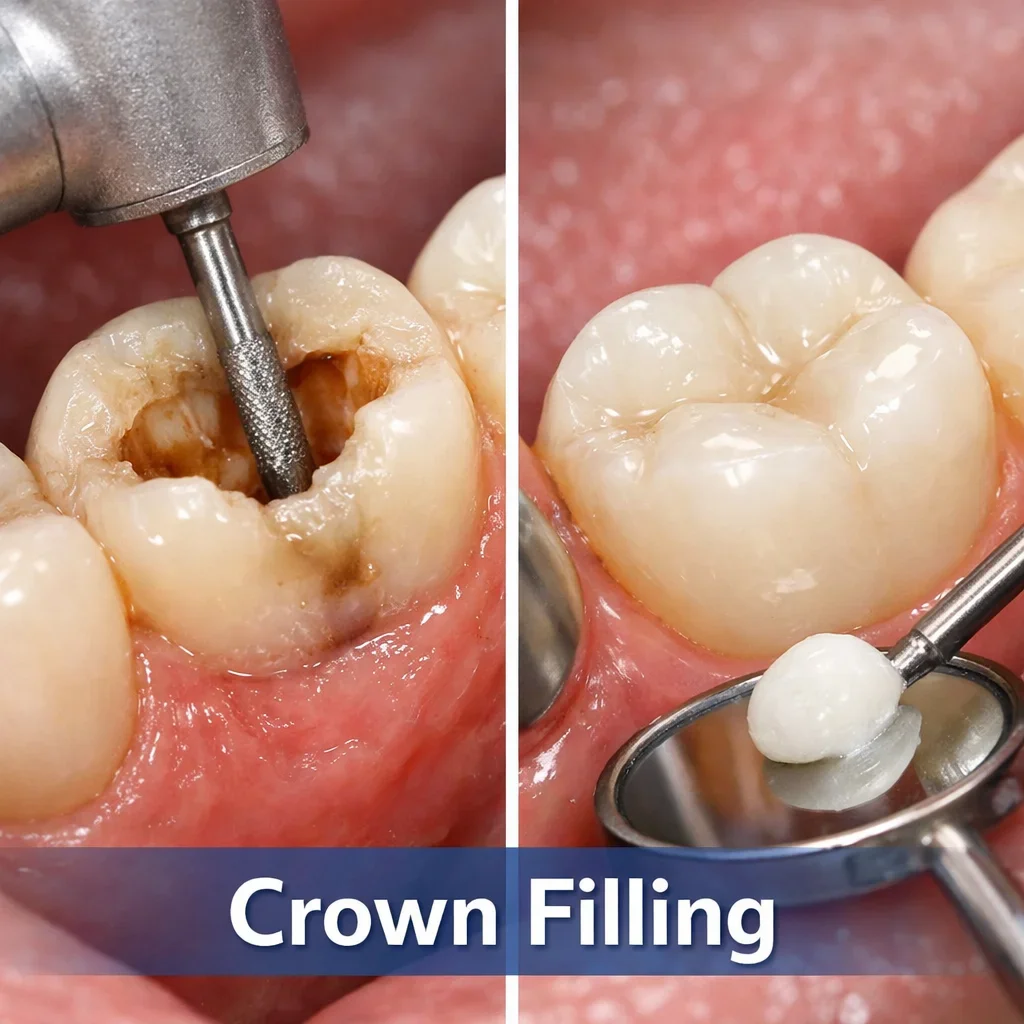
Frequently Asked Questions About Crown Filling
Many patients who are advised to undergo a crown filling have a variety of questions about the procedure, recovery, durability, and long-term results. A crown filling is a restorative dental treatment designed to repair a tooth that has lost a significant amount of structure due to decay, fracture, or previous dental work. Because the concept can sometimes be confusing, dentists often spend time explaining how a crown filling works and why it may be the most suitable option for preserving natural teeth.
This section answers the most common questions patients ask about a crown filling. Understanding these details can help patients feel more comfortable before treatment and make better decisions about maintaining their oral health. 🦷
Is a Crown Filling the Same as a Regular Filling?
No, a crown filling is not exactly the same as a regular dental filling. A standard filling is usually used to repair small cavities caused by early tooth decay. In contrast, a crown filling is designed for teeth that have lost a larger portion of their structure.
During a crown filling, the dentist rebuilds a significant part of the tooth using durable restorative materials. This process strengthens the tooth and allows it to function normally again. The restoration also provides better reinforcement than a standard filling, especially when the tooth has been weakened.
Many dentists consider a crown filling a conservative alternative to placing a full dental crown when enough natural tooth structure remains.
Does a Crown Filling Procedure Hurt?
Most patients report minimal discomfort during a crown filling procedure. Dentists typically administer local anesthesia before beginning the treatment. This numbs the area around the tooth and ensures that the patient does not feel pain while the dentist prepares the tooth.
After the procedure, mild sensitivity to temperature or pressure may occur temporarily. This sensitivity is normal and usually resolves within a few days. Proper placement of a crown filling ensures that the tooth remains comfortable and functional.
If discomfort persists longer than expected, patients should consult their dentist to ensure the crown filling is properly adjusted.
How Long Does the Procedure Take?
The length of a crown filling procedure depends on the severity of the tooth damage and the type of material used. In many cases, the treatment can be completed in a single dental visit lasting approximately 45 to 90 minutes.
More complex crown filling restorations may require additional steps such as digital scanning or custom fabrication of the restorative material. Even in these situations, the procedure remains relatively efficient compared to other restorative treatments.
Can a Crown Filling Fall Out?
Although uncommon, it is possible for a crown filling to loosen or fall out over time. This may occur if the bonding material weakens, if the restoration experiences excessive pressure, or if decay develops around the edges of the restoration.
Regular dental checkups help ensure that a crown filling remains securely attached. If a patient notices that the restoration feels loose or uncomfortable, they should contact their dentist promptly.
Prompt treatment can often repair the crown filling without requiring more extensive dental work.
How Should I Care for a Crown Filling?
Caring for a crown filling is very similar to caring for natural teeth. Good oral hygiene practices help prevent complications and extend the life of the restoration.
Daily Care Recommendations
- Brush your teeth twice daily using fluoride toothpaste.
- Floss carefully around the crown filling.
- Avoid biting extremely hard objects such as ice.
- Visit your dentist for routine cleanings and examinations.
Following these habits helps protect both the crown filling and surrounding natural teeth.
Is a Crown Filling Safe?
Yes, a crown filling is considered a safe and widely used dental treatment. Modern dental materials are carefully tested for durability, biocompatibility, and safety. Dentists choose materials that are designed to function effectively in the oral environment.
Patients who receive a crown filling benefit from improved tooth strength, restored chewing ability, and enhanced appearance. When performed by a qualified dental professional, the procedure carries a very high success rate.
Organizations such as the American Dental Association emphasize the importance of treating tooth damage early to prevent more serious dental problems.
When Should I Contact My Dentist After a Crown Filling?
Although most crown filling restorations perform well for many years, patients should monitor their oral health and contact a dentist if unusual symptoms appear.
Signs that require professional evaluation include:
- Persistent pain when chewing
- Sensitivity that does not improve
- Visible cracks in the crown filling
- Loosening or movement of the restoration
- Swelling or discomfort around the tooth
If these symptoms occur, scheduling a dental appointment quickly allows the dentist to correct the issue before it worsens.
Where Can I Get Professional Advice About Crown Filling?
If you believe you may need a crown filling, consulting a professional dental clinic is the best first step. A dentist will examine your teeth, evaluate the extent of the damage, and determine whether a crown filling is the most appropriate treatment.
Patients who want personalized guidance or wish to schedule a consultation can easily reach out through the Redent Klinik Contact Page. Professional evaluation ensures that each crown filling treatment is tailored to the patient’s specific needs.
Ultimately, a crown filling provides a reliable and effective way to restore damaged teeth while preserving natural tooth structure. With proper care and professional dental supervision, patients can enjoy strong, healthy teeth and a confident smile for many years. 😁