
Maintaining excellent dental care for braces is essential for achieving a healthy, beautiful smile during and after orthodontic treatment. Braces are designed to straighten teeth, correct bite issues, and improve overall oral health, but they also introduce new challenges that require extra attention. Without proper dental care for braces, food particles and plaque can easily accumulate around brackets and wires, increasing the risk of cavities, gum disease, and permanent enamel damage.
When you begin orthodontic treatment, your daily routine must adapt. Regular brushing and flossing are no longer enough unless performed with the correct techniques and tools. Effective dental care for braces involves a combination of proper hygiene habits, smart dietary choices, and consistent dental checkups. These steps ensure that your teeth remain healthy while your braces are doing their job.
One of the main reasons dental care for braces is so important is because braces create additional surfaces where bacteria can thrive. Plaque buildup around brackets can lead to white spot lesions, which are early signs of tooth decay. These marks can remain visible even after braces are removed, making prevention through proper dental care for braces crucial from day one.
Another critical aspect of dental care for braces is gum health. When food debris is trapped between wires and teeth, it can irritate the gums, leading to inflammation or gingivitis. Healthy gums are vital for successful orthodontic results, so maintaining proper dental care for braces helps ensure that your treatment progresses smoothly without complications.
In addition to hygiene, understanding how braces affect your daily life is key. You may notice that certain foods become difficult to eat or that cleaning your teeth takes more time. This is completely normal. However, adapting your routine and committing to consistent dental care for braces will make the process easier and more effective over time.
Using the right tools is also essential. Special orthodontic toothbrushes, interdental brushes, floss threaders, and water flossers are all designed to support better dental care for braces. These tools help you reach areas that standard brushing might miss, ensuring a more thorough clean and reducing the risk of oral health issues.
Regular dental visits play a significant role as well. Your dentist or orthodontist will monitor your progress and check for any signs of problems. Professional cleanings are particularly important because they remove hardened plaque that cannot be eliminated through home care alone. Consistent appointments are a key part of maintaining effective dental care for braces.
It is also worth noting that maintaining good dental care for braces has long-term benefits. When your braces are removed, you want to reveal not only straight teeth but also healthy, stain-free enamel. Neglecting your oral hygiene during treatment can result in additional dental procedures later, which can be avoided with proper care now.
For patients who are unsure about their routine or need professional guidance, consulting a trusted dental clinic can make a significant difference. You can always reach out through the Redent Klinik Contact Page to get personalized advice tailored to your orthodontic needs. Additionally, following recommendations from authoritative organizations such as the American Dental Association can help you maintain high standards of oral health throughout your treatment.
In summary, dental care for braces is not just about keeping your teeth clean—it is about protecting your overall oral health while ensuring the best possible outcome from your orthodontic treatment. By adopting the right habits, using proper tools, and staying consistent, you can enjoy a smooth journey to a confident, radiant smile 😁.
Why Dental Care for Braces Is More Important Than Ever
Understanding why dental care for braces is essential can significantly improve your orthodontic experience and final results. Braces are highly effective in correcting misaligned teeth, but they also introduce new oral hygiene challenges. These appliances create additional surfaces where food particles and plaque can accumulate, making dental care for braces more critical than ever. Without proper attention, these areas can quickly become breeding grounds for harmful bacteria, leading to cavities, gum disease, and long-term enamel damage.
The Impact of Braces on Oral Hygiene
Braces consist of brackets, wires, and sometimes elastic bands that all work together to move teeth into their proper positions. However, these components also make it harder to clean teeth effectively. Food can easily get trapped around brackets, and plaque can build up in areas that are difficult to reach with a standard toothbrush. This is why maintaining proper dental care for braces is essential to prevent oral health issues.
When plaque is not removed efficiently, it can harden into tartar, which cannot be cleaned at home. Over time, this buildup can lead to tooth decay and gum inflammation. Practicing consistent dental care for braces helps minimize these risks and keeps your treatment on track.
Higher Risk of Cavities and Decalcification
One of the most common concerns during orthodontic treatment is the increased risk of cavities. The presence of brackets makes it easier for sugar and bacteria to cling to the teeth. If proper dental care for braces is not followed, this can result in decalcification, which appears as white spots on the teeth.
What Are White Spot Lesions?
White spot lesions are early signs of enamel demineralization caused by plaque accumulation. These marks can become permanent if not addressed early. Maintaining proper dental care for braces is the best way to prevent these visible and often irreversible effects.
Incorporating fluoride toothpaste and mouthwash into your routine strengthens enamel and supports better dental care for braces. These products help protect teeth against acid attacks and reduce the likelihood of decay.
Gum Health and Orthodontic Success
Healthy gums are essential for successful orthodontic treatment. When plaque accumulates around the gum line, it can cause gingivitis, which is characterized by redness, swelling, and bleeding. Poor gum health can slow down tooth movement and complicate your treatment plan. This makes dental care for braces even more important.
Proper brushing and flossing techniques are vital in maintaining gum health. Using tools like interdental brushes and water flossers enhances dental care for braces by removing debris from hard-to-reach areas. Healthy gums not only support tooth movement but also ensure long-term oral health.
The Role of Diet in Dental Care for Braces
Your diet plays a crucial role in maintaining effective dental care for braces. Sticky, sugary, and hard foods can damage brackets and wires, while also increasing the risk of plaque buildup. Choosing braces-friendly foods helps protect your appliances and supports better oral hygiene.
Foods That Increase Risk
Candies, sodas, and starchy snacks can easily get trapped in braces, making cleaning more difficult. Limiting these foods is an important part of maintaining good dental care for braces. Instead, opt for soft, nutritious foods that are easy to clean off your teeth.
Long-Term Benefits of Proper Dental Care for Braces
Committing to consistent dental care for braces offers long-term benefits beyond just straight teeth. It ensures that once your braces are removed, your smile is not only aligned but also healthy and free from stains or decay. Neglecting oral hygiene during treatment can result in additional dental procedures, such as fillings or whitening treatments.
By maintaining excellent dental care for braces, you protect your investment in orthodontic treatment and ensure the best possible outcome. A clean and healthy mouth allows your orthodontist to work more efficiently, reducing the chances of delays or complications.
Professional Support and Guidance
Regular dental visits are an essential part of effective dental care for braces. Professional cleanings remove plaque and tartar that cannot be eliminated at home. Dentists and orthodontists can also identify early signs of problems and provide guidance on improving your routine.
If you have questions or need expert advice, you can always contact a trusted clinic through the Redent Klinik Contact Page. Additionally, following recommendations from the American Dental Association ensures that your dental care for braces meets the highest standards.
In conclusion, dental care for braces is more important than ever because of the unique challenges braces present. By understanding these challenges and taking proactive steps, you can protect your oral health and achieve a confident, radiant smile 😁.
Daily Oral Hygiene Routine with Dental Care for Braces
Establishing a consistent and effective daily routine is the foundation of successful dental care for braces. Unlike regular oral hygiene, cleaning teeth with braces requires extra attention, time, and the right techniques. Because brackets and wires create more surfaces for plaque and food particles to accumulate, following a structured routine for dental care for braces is essential to prevent cavities, gum disease, and staining.
Step-by-Step Brushing Routine
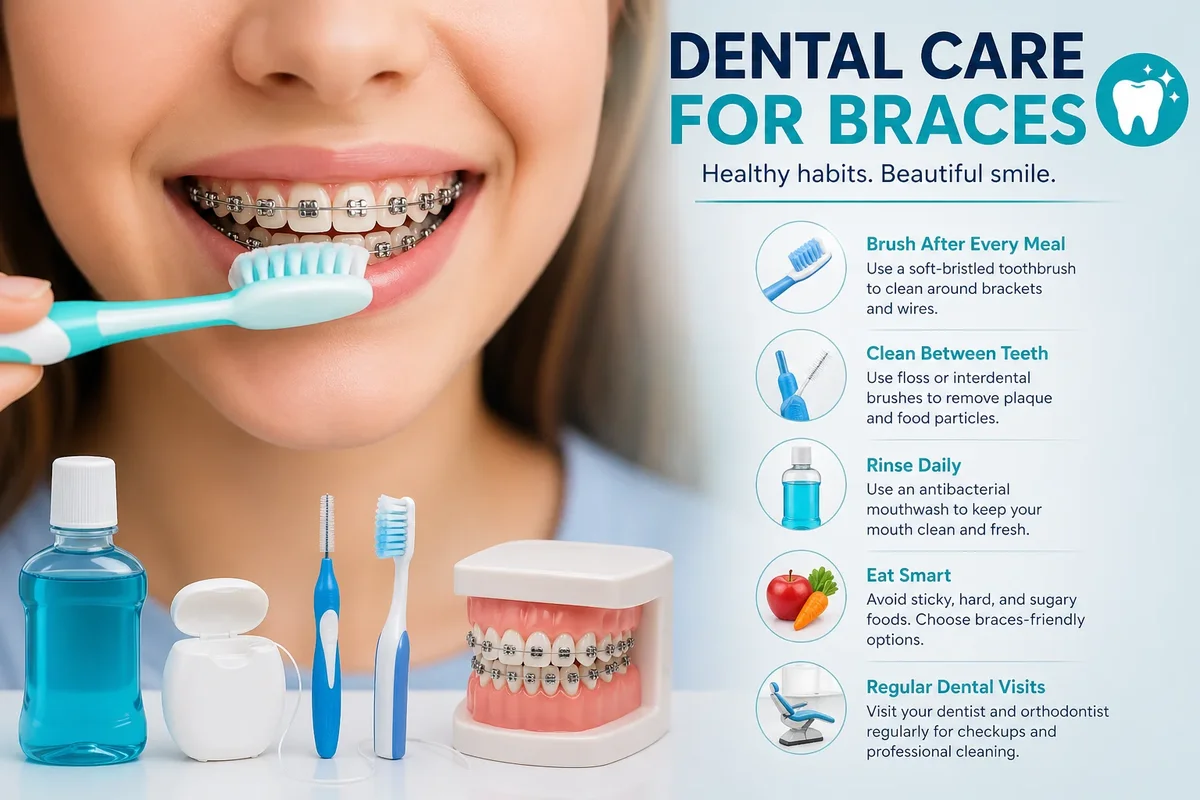
Brushing your teeth properly is the most important part of dental care for braces. Ideally, you should brush after every meal and snack to remove food debris before it hardens into plaque. Use a soft-bristled toothbrush or an orthodontic toothbrush designed specifically for braces.
Correct Brushing Technique
To achieve effective dental care for braces, hold your toothbrush at a 45-degree angle toward the gum line and brush gently in small circular motions. Make sure to clean:
- Above the brackets
- Below the brackets
- Between each tooth
- The chewing surfaces
Each section of your mouth should receive equal attention. Spending at least two minutes brushing ensures thorough dental care for braces and reduces plaque buildup.
Flossing with Braces: Essential but Challenging
Flossing is often the most overlooked part of dental care for braces, yet it is crucial for maintaining gum health. Traditional flossing can be difficult because of the wires, but tools like floss threaders or orthodontic floss make the process easier.
Using Floss Threaders
Floss threaders help guide floss under the wire, allowing you to clean between teeth effectively. This step is vital for proper dental care for braces because it removes plaque from areas your toothbrush cannot reach.
Water flossers are another excellent option. They use a stream of water to clean between teeth and around brackets, enhancing your overall dental care for braces routine.
Rinsing and Mouthwash Use
Rinsing your mouth is an important complement to brushing and flossing. Using an antibacterial or fluoride mouthwash strengthens enamel and reduces bacteria. Incorporating mouthwash into your routine improves dental care for braces by reaching areas that brushing alone might miss.
Fluoride rinses are especially beneficial because they help protect against demineralization, a common issue during orthodontic treatment. Consistent use supports stronger teeth and better dental care for braces.
Cleaning After Meals and Snacks
Food particles can easily get trapped in braces, making it essential to clean your teeth after eating. If brushing is not immediately possible, rinsing your mouth with water can help reduce debris until you can properly continue your dental care for braces.
Carrying a travel toothbrush or orthodontic kit ensures that you can maintain your dental care for braces routine wherever you are. This habit significantly reduces the risk of plaque buildup throughout the day.
Nighttime Routine for Maximum Protection
Your nighttime routine is particularly important because saliva production decreases during sleep, allowing bacteria to grow more easily. Thorough brushing and flossing before bed are critical components of effective dental care for braces.
Final Check Before Sleeping
Before going to bed, inspect your teeth in the mirror to ensure no food particles remain. This final step reinforces your commitment to proper dental care for braces and helps maintain a clean oral environment overnight.
Consistency Is the Key to Success
The effectiveness of dental care for braces depends largely on consistency. Skipping even a single cleaning session can allow plaque to build up quickly. Developing a habit of regular brushing, flossing, and rinsing ensures that your teeth remain healthy throughout your orthodontic journey.
If you ever feel unsure about your routine, professional guidance can make a significant difference. You can reach out through the Redent Klinik Contact Page for personalized advice. Additionally, following recommendations from the American Dental Association ensures that your dental care for braces routine meets professional standards.
In conclusion, a well-structured daily routine is the backbone of effective dental care for braces. By brushing properly, flossing regularly, and using supportive tools, you can protect your teeth and gums while ensuring the best possible orthodontic results. Staying disciplined with your routine will help you achieve a clean, healthy, and confident smile 😁.
Best Toothbrushes and Tools for Dental Care for Braces
Choosing the right tools is one of the most important steps in maintaining effective dental care for braces. Standard oral hygiene products are often not enough when you have brackets and wires, as these create tight spaces where plaque and food debris can easily accumulate. To achieve optimal results, you need specialized tools designed specifically to support dental care for braces. Using the right equipment not only improves cleaning efficiency but also reduces the risk of cavities, gum disease, and staining during orthodontic treatment.
Orthodontic Toothbrushes: Designed for Precision
An orthodontic toothbrush is specifically designed to enhance dental care for braces. These brushes typically feature a V-shaped bristle pattern that allows them to clean around brackets more effectively than standard toothbrushes.
Manual vs Electric Toothbrushes
Both manual and electric toothbrushes can be used for dental care for braces, but electric models often provide superior plaque removal. Their oscillating or sonic movements help reach areas that are difficult to clean manually. However, a properly used manual orthodontic brush can still deliver excellent results if used with the correct technique.
Regardless of your choice, ensure that the brush has soft bristles to avoid damaging your gums or brackets while maintaining proper dental care for braces.
Interdental Brushes: Reaching Tight Spaces
Interdental brushes are small, cone-shaped brushes designed to clean between teeth and around braces. They are an essential addition to your dental care for braces routine because they can access areas that traditional toothbrushes cannot.
How to Use Interdental Brushes
Gently insert the brush between the brackets and under the wires to remove trapped food particles. This method significantly improves dental care for braces by targeting high-risk areas where plaque tends to accumulate.
Using interdental brushes daily helps maintain cleaner teeth and healthier gums, making them indispensable for effective dental care for braces.
Flossing Tools for Braces
Flossing is a critical component of dental care for braces, but traditional floss can be difficult to use with wires in place. Fortunately, several tools make this process easier and more effective.
Floss Threaders and Orthodontic Floss
Floss threaders allow you to guide floss under the wire, making it possible to clean between each tooth thoroughly. Orthodontic floss, which has a stiffened end, simplifies this process and enhances your overall dental care for braces.
Water Flossers
Water flossers use a pressurized stream of water to remove plaque and debris. They are highly effective for dental care for braces because they can reach deep between teeth and around brackets without the difficulty of threading floss manually.
While water flossers are not a complete replacement for traditional flossing, they are an excellent supplement to improve your dental care for braces routine.
Mouthwash and Fluoride Products
Incorporating mouthwash into your routine strengthens your overall dental care for braces. Antibacterial mouthwashes help reduce plaque and bacteria, while fluoride rinses strengthen enamel and protect against decay.
Benefits of Fluoride
Fluoride plays a crucial role in preventing demineralization, which is common during orthodontic treatment. Regular use of fluoride products enhances dental care for braces by protecting teeth from acid attacks and maintaining enamel strength.
Orthodontic Wax and Maintenance Tools
Orthodontic wax is another useful tool for dental care for braces. It helps reduce irritation caused by brackets and wires, making your treatment more comfortable. While it does not directly clean your teeth, it supports overall oral health by preventing sores and discomfort that could interfere with proper hygiene.
Additionally, tools like mirror kits or plaque disclosing tablets can help you identify areas that need more attention, further improving your dental care for braces.
Travel Kits for On-the-Go Care
Maintaining dental care for braces while traveling or at work can be challenging without the right preparation. A portable dental kit that includes a toothbrush, interdental brushes, floss, and mouthwash allows you to keep your teeth clean wherever you are.
Why Portability Matters
Having your tools readily available ensures that you never skip a cleaning session. This consistency is key to maintaining effective dental care for braces and preventing plaque buildup throughout the day.
Professional Recommendations and Guidance
Choosing the best tools for dental care for braces can sometimes feel overwhelming, but professional advice can help you make the right decisions. Dentists and orthodontists often recommend specific products tailored to your needs.
If you need personalized recommendations, you can contact experts through the Redent Klinik Contact Page. Additionally, following guidance from the American Dental Association ensures that your dental care for braces routine meets high-quality standards.
In conclusion, using the right toothbrushes and tools is essential for maintaining excellent dental care for braces. From orthodontic brushes to water flossers, each tool plays a vital role in keeping your teeth clean and healthy. By investing in the proper equipment and using it consistently, you can protect your oral health and achieve the best possible results from your orthodontic treatment 😁.
Foods to Eat and Avoid During Dental Care for Braces
Your diet plays a crucial role in maintaining effective dental care for braces. While braces work to align your teeth, the foods you consume can either support or hinder your progress. Certain foods can damage brackets, bend wires, or increase plaque buildup, making dental care for braces more challenging. On the other hand, choosing the right foods can protect your appliances, improve oral hygiene, and make your orthodontic journey smoother and more comfortable.
Why Diet Matters in Dental Care for Braces
When you wear braces, food particles can easily become trapped between brackets and wires. This creates an ideal environment for bacteria to grow, increasing the risk of cavities and gum disease. Following a braces-friendly diet is an essential part of dental care for braces, as it reduces the chances of damage and helps maintain a cleaner oral environment.
In addition, certain foods can physically harm your braces. Broken brackets or bent wires can delay your treatment and require additional dental visits. This makes careful food selection a key component of successful dental care for braces.
Best Foods to Eat with Braces
Soft and easy-to-chew foods are ideal for maintaining proper dental care for braces. These foods minimize stress on your brackets and reduce the likelihood of food getting stuck.
Recommended Food Choices
- Yogurt and soft cheeses
- Mashed potatoes and cooked vegetables
- Scrambled eggs
- Soft fruits like bananas and berries
- Pasta and rice
- Soups and smoothies
These options not only protect your braces but also support better dental care for braces by being easier to clean off your teeth. Nutrient-rich foods also contribute to stronger enamel and healthier gums.
Foods to Avoid with Braces
To maintain effective dental care for braces, it is important to avoid foods that can damage your orthodontic appliances or increase plaque buildup.
Hard and Crunchy Foods
Foods like nuts, popcorn, and hard candies can break brackets or bend wires. Avoiding these items is essential for preserving your braces and maintaining proper dental care for braces.
Sticky and Chewy Foods
Caramel, chewing gum, and sticky candies can cling to brackets and are difficult to remove. These foods can compromise your dental care for braces routine by increasing the risk of plaque accumulation.
Sugary Foods and Drinks
Sugary snacks and beverages contribute to acid production, which can weaken enamel. Limiting sugar intake is a key part of maintaining effective dental care for braces and preventing cavities.
Smart Eating Habits for Dental Care for Braces
In addition to choosing the right foods, adopting smart eating habits can greatly improve your dental care for braces routine. Cutting food into smaller pieces reduces pressure on brackets and makes chewing easier.
Eating slowly and carefully also helps prevent accidental damage to your braces. After meals, it is important to rinse your mouth or brush your teeth to maintain proper dental care for braces and remove any remaining food particles.
Hydration and Its Role in Oral Health
Drinking plenty of water is another important aspect of dental care for braces. Water helps wash away food particles and bacteria, reducing the risk of plaque buildup. It also supports saliva production, which naturally protects your teeth.
Best Beverage Choices
- Water
- Milk
- Unsweetened herbal teas
Avoiding sugary and acidic drinks like soda and energy drinks is essential for maintaining strong enamel and effective dental care for braces.
Managing Occasional Cravings
It is normal to crave foods that may not be ideal for braces. However, moderation and careful consumption can help you maintain your dental care for braces routine without compromising your treatment.
If you choose to eat something slightly risky, make sure to clean your teeth thoroughly afterward. This ensures that your dental care for braces remains effective and prevents long-term damage.
Professional Advice and Dietary Guidance
Your orthodontist can provide personalized dietary recommendations based on your specific treatment. Following professional advice is an important part of maintaining effective dental care for braces.
If you need expert guidance, you can reach out through the Redent Klinik Contact Page. Additionally, trusted resources like the American Dental Association offer valuable insights into maintaining proper oral health during orthodontic treatment.
In conclusion, making smart food choices is essential for successful dental care for braces. By avoiding harmful foods and embracing a balanced, braces-friendly diet, you can protect your orthodontic appliances and maintain a healthy smile throughout your treatment 😁.
Common Problems Solved by Proper Dental Care for Braces
Orthodontic treatment is highly effective, but it comes with a set of common challenges that require careful attention. Fortunately, most of these issues can be prevented or minimized with proper dental care for braces. By maintaining a consistent hygiene routine and understanding potential risks, patients can avoid complications that may delay treatment or affect long-term oral health. Effective dental care for braces not only protects your teeth during treatment but also ensures a smooth and successful orthodontic journey.
Plaque Buildup and Tooth Decay
One of the most common problems during orthodontic treatment is plaque accumulation. Brackets and wires create small spaces where food particles can easily get trapped, making it harder to clean teeth thoroughly. Without proper dental care for braces, plaque can quickly turn into tartar, leading to cavities and enamel damage.
How to Prevent Plaque Buildup
Preventing plaque buildup requires consistent brushing, flossing, and rinsing. Using fluoride toothpaste and interdental brushes significantly improves dental care for braces by targeting areas that are difficult to reach. Regular cleaning after meals is essential to reduce bacterial growth and maintain oral hygiene.
Failing to follow proper dental care for braces can result in tooth decay that may require fillings or other treatments, potentially prolonging your orthodontic process.
Gum Inflammation and Gingivitis
Gum health is another critical factor during orthodontic treatment. When plaque accumulates along the gum line, it can cause inflammation, redness, and bleeding. This condition, known as gingivitis, is a common issue that can be prevented with effective dental care for braces.
Signs of Gum Problems
- Swollen or tender gums
- Bleeding during brushing or flossing
- Persistent bad breath
Maintaining proper dental care for braces helps keep gums healthy and supports the movement of teeth. Healthy gums are essential for achieving optimal orthodontic results.
White Spot Lesions and Enamel Damage
White spot lesions are early signs of enamel demineralization and are one of the most visible consequences of poor dental care for braces. These chalky white marks can appear around brackets and may remain even after braces are removed.
Preventing Enamel Damage
Using fluoride products and maintaining a strict oral hygiene routine are key to preventing these lesions. Proper dental care for braces ensures that plaque does not remain on the tooth surface long enough to cause damage.
Regular dental checkups also play a vital role in identifying early signs of enamel issues, allowing for timely intervention.
Bad Breath (Halitosis)
Bad breath is another common issue faced by individuals with braces. Food particles trapped in brackets can lead to bacterial growth, resulting in unpleasant odors. Consistent dental care for braces helps eliminate these particles and maintain fresh breath.
How to Maintain Fresh Breath
Brushing after every meal, flossing daily, and using antibacterial mouthwash are essential steps in maintaining proper dental care for braces. Staying hydrated also helps reduce bacteria and keeps your mouth clean.
Broken Brackets and Damaged Wires
Physical damage to braces is another challenge that patients may encounter. Eating hard or sticky foods can break brackets or bend wires, leading to discomfort and treatment delays. While this issue is not directly related to hygiene, it is still an important aspect of overall dental care for braces.
How to Avoid Damage
Following dietary guidelines and avoiding risky foods are essential for protecting your braces. Being mindful of what you eat supports effective dental care for braces and ensures that your treatment progresses as planned.
Staining Around Brackets
Staining is a common concern during orthodontic treatment. When plaque is not properly removed, it can lead to discoloration around brackets. Proper dental care for braces helps prevent uneven coloring and ensures that your teeth look clean and bright once the braces are removed.
Using whitening toothpaste (as recommended by your dentist) and maintaining a consistent cleaning routine can significantly improve your dental care for braces.
Delayed Treatment Progress
Poor oral hygiene can slow down orthodontic treatment. Inflammation, decay, or damaged braces may require additional dental procedures, extending the duration of your treatment. This makes consistent dental care for braces essential for staying on schedule.
By following proper hygiene practices and attending regular checkups, you can ensure that your dental care for braces supports efficient and timely results.
Professional Support and Preventive Care
Regular visits to your dentist and orthodontist are crucial for maintaining effective dental care for braces. Professional cleanings remove plaque and tartar that cannot be eliminated at home, while routine checkups help identify potential problems early.
If you experience any issues or need expert advice, you can contact a trusted clinic through the Redent Klinik Contact Page. Additionally, following guidelines from the American Dental Association ensures that your dental care for braces meets professional standards.
In conclusion, many common orthodontic problems can be effectively prevented or resolved with proper dental care for braces. By staying consistent with your oral hygiene routine and addressing issues early, you can protect your teeth, avoid complications, and achieve the best possible outcome from your braces treatment 😁.
Professional Checkups and Dental Care for Braces
Regular dental visits are a cornerstone of effective dental care for braces. While daily brushing and flossing are essential, they are not enough on their own to maintain optimal oral health during orthodontic treatment. Professional checkups allow dentists and orthodontists to monitor your progress, detect early signs of problems, and provide specialized cleaning that cannot be achieved at home. Consistent professional care ensures that your dental care for braces routine remains effective throughout your treatment journey.
Why Regular Dental Visits Matter
Braces create complex structures in the mouth where plaque can easily accumulate. Even with excellent home hygiene, it is difficult to remove all plaque and tartar without professional tools. This is why routine checkups are vital for maintaining proper dental care for braces. Dentists can clean hard-to-reach areas and prevent small issues from becoming serious problems.
In addition, orthodontic treatment involves gradual tooth movement, which must be carefully monitored. Regular appointments ensure that your treatment is progressing as planned and that your dental care for braces supports optimal results.
Professional Cleaning During Orthodontic Treatment
Professional dental cleanings are more detailed than everyday brushing and are an essential part of dental care for braces. Dental hygienists use specialized tools to remove plaque and tartar buildup around brackets and along the gum line.
Benefits of Professional Cleaning
- Removes hardened plaque (tartar)
- Reduces the risk of cavities
- Prevents gum disease
- Improves overall oral hygiene
These cleanings enhance your dental care for braces routine and help maintain a healthy environment for your teeth and gums. They also leave your mouth feeling fresh and clean, boosting your confidence during treatment.
Monitoring Orthodontic Progress
Orthodontists play a key role in ensuring that your braces are functioning correctly. During checkups, they adjust wires, tighten brackets, and evaluate how your teeth are moving. These adjustments are crucial for successful dental care for braces, as they keep your treatment on track.
Detecting Issues Early
Regular visits allow professionals to identify problems such as loose brackets, broken wires, or signs of decay early on. Addressing these issues promptly prevents complications and supports effective dental care for braces.
Early detection also reduces the likelihood of extended treatment time, ensuring a smoother and more efficient orthodontic process.
Frequency of Dental Checkups
Most patients with braces should visit their dentist every 3 to 6 months, depending on their oral health needs. Your orthodontist may also schedule separate appointments for adjustments. Following this schedule is essential for maintaining proper dental care for braces.
Customized Care Plans
Each patient’s needs are different, so your dentist may recommend more frequent visits if you are at higher risk for cavities or gum disease. Personalized care plans ensure that your dental care for braces is tailored to your specific situation.
Fluoride Treatments and Preventive Care
Fluoride treatments are often recommended during orthodontic treatment to strengthen enamel and prevent decay. These treatments are a valuable addition to your dental care for braces routine.
How Fluoride Helps
Fluoride protects teeth by making enamel more resistant to acid attacks from bacteria. This is especially important for patients with braces, as plaque can easily accumulate around brackets. Incorporating fluoride into your routine enhances your overall dental care for braces.
Sealants may also be recommended in some cases to protect vulnerable areas of the teeth, further supporting effective dental care for braces.
Patient Education and Guidance
Dental professionals provide valuable guidance on maintaining proper dental care for braces. They can demonstrate correct brushing and flossing techniques, recommend suitable products, and answer any questions you may have.
If you need expert advice or want to schedule a consultation, you can contact a trusted clinic through the Redent Klinik Contact Page. Additionally, following recommendations from the American Dental Association ensures that your dental care for braces meets high professional standards.
Long-Term Benefits of Regular Checkups
Consistent professional care not only supports your current treatment but also contributes to long-term oral health. By maintaining proper dental care for braces, you can avoid costly and time-consuming dental procedures in the future.
Regular checkups ensure that once your braces are removed, your teeth are not only straight but also healthy and free from damage. This comprehensive approach to dental care for braces leads to a confident, radiant smile.
In conclusion, professional checkups are an essential component of effective dental care for braces. By combining regular dental visits with a strong home hygiene routine, you can protect your oral health, prevent complications, and achieve the best possible orthodontic results 😁.
How to Prevent Stains and White Spots with Dental Care for Braces
One of the biggest concerns during orthodontic treatment is the risk of stains and white spots forming on the teeth. These issues are often caused by plaque buildup around brackets and can remain visible even after braces are removed. This is why maintaining proper dental care for braces is absolutely essential. By following the right techniques and habits, you can protect your enamel and ensure that your smile looks as good as it feels when your braces come off.
Understanding White Spots and Staining
White spots, also known as decalcification lesions, are early signs of enamel damage. They occur when plaque acids strip minerals from the tooth surface. Without effective dental care for braces, these spots can develop quickly around brackets where cleaning is more difficult.
Why Braces Increase the Risk
Brackets and wires create multiple retention points for food particles and bacteria. This makes it easier for plaque to stay on the teeth for extended periods. Proper dental care for braces is necessary to remove these deposits before they cause visible damage.
Staining, on the other hand, occurs when pigments from foods and drinks penetrate the enamel. Without consistent dental care for braces, stains can develop unevenly, especially around brackets, leaving noticeable discoloration after treatment.
Daily Cleaning Habits That Prevent Stains
Maintaining a strong daily routine is the most effective way to prevent stains and white spots. Brushing after every meal is a key part of dental care for braces, as it removes food particles before they can contribute to plaque buildup.
Focus Areas While Brushing
- Clean above and below each bracket
- Pay attention to the gum line
- Brush along the wires carefully
Using fluoride toothpaste strengthens enamel and enhances dental care for braces, making teeth more resistant to acid attacks. Consistent brushing significantly reduces the risk of both staining and decalcification.
The Role of Fluoride in Protection
Fluoride is one of the most powerful tools in preventing enamel damage. It helps remineralize weakened areas and protects teeth from further decay. Incorporating fluoride into your dental care for braces routine is essential for maintaining strong and healthy enamel.
Best Fluoride Products
- Fluoride toothpaste
- Fluoride mouthwash
- Professional fluoride treatments
Regular use of these products enhances dental care for braces and provides an extra layer of protection against white spots.
Dietary Choices That Affect Tooth Color
Your diet plays a significant role in preventing stains. Foods and drinks with strong pigments can easily discolor teeth if proper dental care for braces is not followed.
Foods and Drinks to Limit
- Coffee and tea
- Red wine
- Dark-colored sodas
- Highly pigmented sauces
Reducing consumption of these items helps maintain a uniform tooth color and supports better dental care for braces. Drinking water after consuming staining foods can also help wash away pigments.
Using Additional Cleaning Tools
Standard brushing alone may not be enough to prevent stains. Incorporating additional tools into your routine improves your dental care for braces and ensures a deeper clean.
Recommended Tools
- Interdental brushes for tight spaces
- Water flossers for thorough rinsing
- Floss threaders for cleaning between teeth
These tools help remove plaque from areas that are difficult to reach, making your dental care for braces more effective and reducing the risk of discoloration.
Professional Cleanings and Monitoring
Regular dental visits are essential for preventing stains and white spots. Professional cleanings remove plaque and tartar that cannot be eliminated at home, enhancing your dental care for braces.
Early Detection of Problems
Dentists can identify early signs of enamel damage and provide treatments to prevent further progression. This proactive approach is a key part of maintaining effective dental care for braces.
If you need professional guidance, you can contact a trusted clinic through the Redent Klinik Contact Page. Additionally, following advice from the American Dental Association ensures that your dental care for braces routine meets professional standards.
Consistency Leads to a Beautiful Smile
The key to preventing stains and white spots is consistency. Skipping even a few cleaning sessions can allow plaque to build up and cause damage. Maintaining a disciplined approach to dental care for braces ensures that your teeth remain healthy and visually appealing throughout your treatment.
In conclusion, preventing stains and white spots requires a combination of proper hygiene, smart dietary choices, and regular dental visits. By committing to excellent dental care for braces, you can protect your enamel and achieve a bright, even smile once your braces are removed 😁.
Dental Care for Braces for Teens vs Adults: Key Differences
Orthodontic treatment is common for both teenagers and adults, but the approach to dental care for braces can differ significantly between these two groups. While the fundamental principles of oral hygiene remain the same, lifestyle, biological factors, and daily habits influence how dental care for braces should be managed. Understanding these differences helps ensure better outcomes, improved comfort, and long-term oral health for both teens and adults.
Biological Differences Between Teens and Adults
One of the key factors affecting dental care for braces is the biological difference between younger and older patients. Teenagers typically have more adaptable bone structures, allowing teeth to move more quickly. Adults, on the other hand, may experience slower tooth movement due to denser bone tissue.
Impact on Oral Hygiene
Because adult treatment may take longer, maintaining consistent dental care for braces becomes even more critical. Longer treatment durations increase the risk of plaque buildup and enamel damage if proper hygiene is not followed.
Teens may complete treatment faster, but they are often more prone to inconsistent habits, making dental care for braces equally important for preventing complications.
Daily Routine and Lifestyle Factors
Lifestyle plays a major role in how individuals manage their dental care for braces. Teenagers often have busier, less structured routines, which can lead to skipped brushing or flossing sessions. Adults, while generally more disciplined, may face challenges due to work schedules and frequent meals outside the home.
Common Challenges for Teens
- Forgetting to brush after meals
- Consuming sugary snacks and drinks
- Lack of consistency in oral hygiene routines
These habits can negatively impact dental care for braces, increasing the risk of cavities and white spots.
Common Challenges for Adults
- Busy work schedules
- Frequent coffee or tea consumption
- Stress-related neglect of oral hygiene
Adults must remain mindful of these factors to maintain effective dental care for braces throughout their treatment.
Dietary Habits and Their Impact
Dietary choices differ significantly between teens and adults, affecting their approach to dental care for braces. Teenagers are more likely to consume sugary snacks and carbonated beverages, which can increase the risk of plaque buildup and enamel damage.
Teens and Sugar Intake
High sugar consumption can compromise dental care for braces by promoting bacterial growth. Encouraging healthier food choices is essential for maintaining oral health during treatment.
Adults and Staining Foods
Adults often consume beverages like coffee, tea, and wine, which can lead to staining. Proper dental care for braces helps prevent discoloration and ensures a brighter smile after treatment.
Motivation and Responsibility
Motivation levels can vary between teens and adults, influencing their commitment to dental care for braces. Adults are usually more motivated by the long-term benefits of treatment, such as improved appearance and oral health.
Teens, however, may require encouragement from parents or orthodontists to maintain consistent dental care for braces. Education and regular reminders can help build good habits.
Professional Support and Monitoring
Both teens and adults benefit from regular dental visits, but the approach to monitoring may differ. Orthodontists may provide additional guidance to teens to ensure proper dental care for braces, while adults may receive more detailed recommendations based on their specific needs.
Importance of Regular Checkups
Routine appointments allow professionals to track progress, adjust appliances, and identify potential issues early. This is a crucial part of maintaining effective dental care for braces.
If you need personalized advice or professional support, you can contact experts through the Redent Klinik Contact Page. Additionally, following guidelines from the American Dental Association ensures that your dental care for braces routine meets the highest standards.
Long-Term Outcomes and Expectations
Both teens and adults can achieve excellent results with proper dental care for braces. However, maintaining oral hygiene throughout treatment is essential for ensuring that the final outcome is both functional and aesthetically pleasing.
For teens, developing good habits early can lead to lifelong oral health benefits. For adults, consistent dental care for braces helps protect existing dental work and prevents additional complications.
In conclusion, while the fundamentals of dental care for braces remain the same, teens and adults face different challenges and responsibilities. By understanding these differences and adapting their routines accordingly, both groups can achieve successful orthodontic outcomes and enjoy a healthy, confident smile 😁.
Long-Term Benefits of Following Dental Care for Braces
Committing to consistent and effective dental care for braces does far more than protect your teeth during orthodontic treatment—it lays the foundation for lifelong oral health. Many patients focus only on achieving straight teeth, but the real value of dental care for braces lies in preserving the strength, cleanliness, and overall health of your smile long after the braces are removed. By maintaining proper habits throughout treatment, you ensure that your final results are not only visually appealing but also functionally strong and disease-free.
Achieving a Healthier Smile After Treatment
The ultimate goal of orthodontic treatment is not just alignment but also improved oral health. When you follow proper dental care for braces, your teeth remain free from cavities, stains, and gum issues, allowing you to fully enjoy the results of your treatment.
Clean and Even Enamel
One of the most noticeable benefits of good dental care for braces is the absence of white spots and discoloration. Patients who neglect oral hygiene often experience uneven coloring around where brackets were placed. In contrast, consistent dental care for braces ensures that your enamel remains smooth, bright, and uniform.
This means that when your braces come off, your smile is not only straight but also naturally attractive and healthy.
Reduced Risk of Future Dental Problems
Proper dental care for braces significantly lowers the risk of developing future dental issues such as cavities, gum disease, and enamel erosion. By maintaining strong oral hygiene habits during treatment, you reduce the likelihood of needing additional dental procedures later.
Prevention of Gum Disease
Healthy gums are essential for long-term oral health. Consistent dental care for braces prevents plaque buildup along the gum line, reducing the risk of gingivitis and more serious periodontal conditions.
Strong, healthy gums also support your teeth better, ensuring that the results of your orthodontic treatment remain stable over time.
Improved Bite and Functionality
Orthodontic treatment corrects bite issues, but proper dental care for braces ensures that these improvements are maintained. A well-aligned bite reduces stress on teeth and jaw joints, improving chewing efficiency and overall comfort.
Better Digestion and Comfort
When your teeth are properly aligned and healthy, you can chew food more effectively, which aids digestion. Maintaining excellent dental care for braces supports this functionality by keeping your teeth strong and free from damage.
This functional improvement is a key long-term benefit that goes beyond aesthetics.
Enhanced Confidence and Self-Esteem
A clean, straight smile has a powerful impact on confidence. Following proper dental care for braces ensures that your teeth look their best, boosting your self-esteem in both personal and professional settings.
The Psychological Impact of a Healthy Smile
People who maintain good dental care for braces often feel more confident when speaking, smiling, or interacting with others. This positive self-image can influence many aspects of life, from social interactions to career opportunities.
Your smile becomes a reflection of your commitment to health and self-care.
Cost Savings in the Long Run
Investing time and effort in dental care for braces can save you money in the future. Preventing cavities, gum disease, and enamel damage reduces the need for costly dental treatments after your braces are removed.
Avoiding Additional Procedures
Neglecting oral hygiene during orthodontic treatment can lead to issues that require fillings, crowns, or even gum treatments. Proper dental care for braces minimizes these risks, protecting both your health and your finances.
This proactive approach ensures that your orthodontic investment delivers maximum value.
Maintaining Results After Braces Removal
Once your braces are removed, maintaining the results becomes the next priority. Proper dental care for braces during treatment makes it easier to transition into a post-braces routine that preserves your new smile.
The Role of Retainers
Retainers help keep your teeth in their new positions, but their effectiveness depends on overall oral health. Continuing good habits learned during dental care for braces ensures long-lasting results.
Regular brushing, flossing, and dental visits remain essential even after treatment is complete.
Professional Support for Long-Term Success
Maintaining long-term oral health requires ongoing professional support. Dentists and orthodontists provide guidance and monitoring to ensure that your smile remains healthy and aligned.
If you need expert advice or follow-up care, you can contact a trusted clinic through the Redent Klinik Contact Page. Additionally, following recommendations from the American Dental Association ensures that your dental care for braces continues to meet high standards even after treatment.
Building Lifelong Oral Hygiene Habits
Perhaps the most valuable benefit of dental care for braces is the development of lifelong oral hygiene habits. The discipline required during orthodontic treatment often leads to better long-term care routines.
Habits That Last a Lifetime
Patients who practice consistent dental care for braces are more likely to continue brushing, flossing, and visiting the dentist regularly. These habits protect their oral health for years to come.
In conclusion, the long-term benefits of following proper dental care for braces extend far beyond the duration of your treatment. From improved oral health and confidence to financial savings and lasting results, these benefits make every effort worthwhile. By staying committed to your routine, you can enjoy a strong, healthy, and radiant smile for a lifetime 😁.