
Have you ever wondered why dental implants and solutions have become one of the most sought-after treatments in modern dentistry? 🌟 This comprehensive guide will walk you through everything you need to know — from what they are and how they work to their long-term benefits, maintenance, and more. Whether you’re missing a single tooth or multiple teeth, understanding dental implants and solutions will help you make the best decision for restoring your confident smile.
Dental implants are artificial tooth roots, typically made of titanium, that are surgically inserted into your jawbone to replace missing teeth. Once healed, these implants serve as a sturdy foundation for crowns, bridges, or dentures. What makes dental implants and solutions so unique is their ability to mimic the strength, appearance, and function of natural teeth. They are designed to fuse with the bone through a process called osseointegration, creating a permanent and stable bond. 🦷
Unlike removable dentures or traditional bridges, dental implants and solutions provide a long-lasting and aesthetically pleasing result. They eliminate the discomfort of slipping dentures, prevent bone loss, and maintain your facial structure. Over time, they become an integral part of your oral anatomy, giving you a natural bite and allowing you to eat, speak, and smile with total confidence. This stability and realism are why millions of patients around the world now choose implants as their preferred tooth replacement option.
There are various types of dental implants, including endosteal (placed in the bone) and subperiosteal (placed under the gum but above the bone). Depending on your bone density and overall health, your dentist will recommend the most suitable option. Many modern dental implants and solutions also come with advanced coating technologies that accelerate healing and increase implant longevity. In most cases, the treatment process involves three stages: implant placement, healing, and final restoration — a sequence designed for maximum comfort and success rate.
It’s essential to note that dental implants and solutions are not a “one size fits all” treatment. Each patient’s oral anatomy, medical history, and aesthetic goals are unique. Therefore, a thorough evaluation by an experienced implant specialist is vital. During the initial consultation, digital X-rays and 3D imaging are used to assess bone structure and plan the precise placement of each implant. Modern clinics like Redent Klinik Contact Page use cutting-edge diagnostic systems and surgical guides to ensure precision and minimize recovery time.
Another important advantage of dental implants and solutions is their ability to preserve jawbone health. When you lose a tooth, the surrounding bone begins to deteriorate due to lack of stimulation. Implants counteract this process by transferring the chewing forces directly into the bone, keeping it active and healthy. Over time, this helps maintain facial symmetry and prevents premature aging. Furthermore, implants support gum tissue health by preventing gaps where bacteria could accumulate, reducing the risk of periodontal disease. 💪
For those who have multiple missing teeth or wear dentures, full-mouth implant systems such as All-on-4 or All-on-6 offer complete smile restoration. These advanced dental implants and solutions use only a few strategically placed implants to anchor a full arch of teeth, significantly reducing treatment time and cost. Such systems have revolutionized restorative dentistry by providing immediate results and improving patients’ quality of life within days.
The success rate of dental implants and solutions exceeds 95% when performed under proper conditions and by qualified professionals. However, the success also depends on good oral hygiene and regular dental check-ups. Patients should brush and floss daily, avoid smoking, and maintain a balanced diet rich in calcium and vitamin D to ensure long-term stability. Visiting your dentist twice a year helps monitor implant health and prevent any potential complications early on.
In addition to improving oral functionality, dental implants and solutions also boost psychological well-being. Studies have shown that patients who undergo implant therapy report higher self-esteem, improved social interactions, and better overall satisfaction with their appearance. A confident smile is often linked to personal and professional success — making this treatment not just a medical solution but a lifestyle upgrade.
For further scientific insights, you can also explore resources from the American Dental Association, which provides evidence-based research and safety guidelines for implant procedures. Their studies confirm that dental implants and solutions are among the most predictable and durable dental treatments available today, often lasting decades or even a lifetime with proper care. 🌿
In conclusion, dental implants and solutions represent the perfect blend of technology, precision, and aesthetics in modern dentistry. They offer a permanent and natural-looking alternative to missing teeth while protecting your oral health for years to come. With advanced techniques and expert care, you can restore your smile, enhance your confidence, and rediscover the joy of eating and laughing freely once again. 😁
What Are Dental Implants and How Do They Work?
Dental implants and solutions are modern restorative treatments that replace missing teeth with lifelike, functional alternatives designed to last for decades. Unlike traditional dentures or bridges, which only address the visible part of the tooth, dental implants replace the entire structure—from root to crown. This comprehensive approach restores both the aesthetics and function of natural teeth while maintaining the integrity of the jawbone. 🦷
Understanding the Basic Structure of Dental Implants
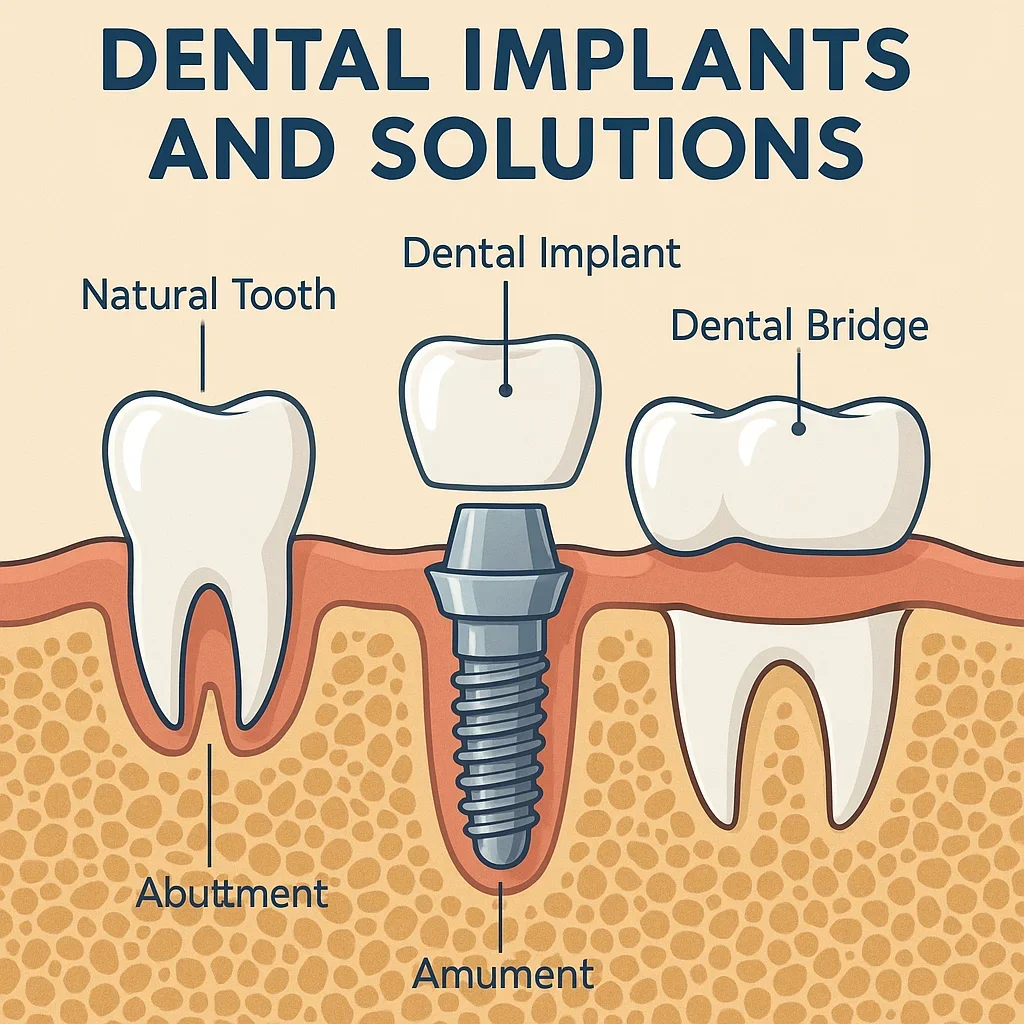
A dental implant consists of three primary components: the implant post, the abutment, and the crown. The post, typically made from titanium or zirconia, acts as an artificial root and is surgically embedded into the jawbone. Over a few months, it fuses with the bone through a biological process known as osseointegration. This fusion ensures a solid and stable foundation, allowing the implant to function just like a natural tooth. Once healing is complete, an abutment connects the implant to the crown, which is custom-made to match the color, shape, and size of your surrounding teeth.
One of the most remarkable aspects of dental implants and solutions is their ability to promote bone regeneration. When a natural tooth is lost, the surrounding bone begins to shrink because it no longer receives stimulation from chewing. Implants counteract this bone loss by transferring chewing forces directly into the jaw, maintaining bone density and facial structure. This biological integration not only improves long-term stability but also enhances the overall appearance of the smile. 🌿
The Science Behind Dental Implant Function
The success of dental implants and solutions lies in biomechanics and tissue compatibility. Titanium, used in most implant systems, is biocompatible—meaning it is well accepted by the body and rarely triggers allergic reactions. The surface of the titanium post is often treated or textured to encourage bone cells to grow and attach securely. This bond mimics the natural root structure, enabling the implant to withstand chewing forces just as effectively as a natural tooth.
During the healing process, which typically lasts 3 to 6 months, the implant integrates with the jawbone and forms a stable foundation. Once this integration is confirmed via digital imaging, the final prosthetic (the visible tooth) is attached. Advanced dental clinics like Redent Klinik Contact Page utilize 3D imaging and computer-guided implant placement for enhanced precision. This ensures that each implant is positioned at the ideal angle and depth, significantly reducing recovery time and post-surgical discomfort.
Who Can Benefit from Dental Implants?
Almost anyone missing one or more teeth can benefit from dental implants and solutions. However, candidates must have adequate bone density and healthy gums to support the implants. Conditions such as uncontrolled diabetes, smoking, or severe gum disease can affect healing and should be managed before the procedure. For patients with bone loss, modern techniques like bone grafting or sinus lifting can rebuild the jaw structure, making implants possible even in complex cases.
Implants are ideal for:
- Replacing a single missing tooth with a natural-looking crown
- Supporting bridges or partial dentures for multiple missing teeth
- Anchoring full-arch prosthetics such as All-on-4 or All-on-6 systems
- Improving speech, chewing efficiency, and facial balance
With dental implants and solutions, patients no longer have to worry about slippage or discomfort associated with removable dentures. They can laugh, eat, and speak confidently without fear that their prosthetic will move out of place. This sense of freedom is one of the primary reasons why dental implants have such high satisfaction rates among patients worldwide. 😁
Advantages Over Traditional Tooth Replacement Methods
Traditional dentures and bridges, while useful, come with limitations. Dentures can cause irritation, limit food choices, and require frequent adjustments. Bridges, on the other hand, involve reshaping adjacent teeth to anchor the prosthetic, potentially compromising their health. Dental implants and solutions overcome these issues by offering independent support without affecting neighboring teeth. They integrate seamlessly into the oral cavity, providing both functional and cosmetic excellence.
Another major benefit is the longevity of the treatment. With proper care, dental implants and solutions can last 20 years or more—often a lifetime. Maintenance is straightforward: regular brushing, flossing, and professional dental check-ups are typically enough to keep the implant healthy and stable. Unlike dentures that may need replacement every few years, implants offer a more permanent and cost-effective solution in the long run.
Long-Term Oral Health Benefits
The long-term oral health benefits of dental implants and solutions go beyond aesthetics. By preventing bone resorption and maintaining gum health, implants play a key role in overall oral stability. They also improve bite alignment, which reduces strain on surrounding teeth and prevents premature wear. This holistic restoration helps maintain natural facial contours, ensuring that your smile looks youthful for years to come.
Scientific studies conducted by the American Dental Association confirm that dental implants have a success rate of over 95%. They are considered one of the safest and most predictable procedures in restorative dentistry. These findings emphasize that dental implants and solutions are not merely cosmetic enhancements—they are medically and functionally superior alternatives for long-term oral health preservation. 🔬
In Summary
To summarize, dental implants and solutions are a revolutionary advancement that combine science, precision, and artistry. They restore lost teeth in the most natural and durable way possible while preserving bone health and facial aesthetics. Through osseointegration, titanium biocompatibility, and careful surgical planning, implants deliver unmatched strength and longevity. Whether you’re missing one tooth or several, this treatment can transform not just your smile but your entire quality of life. 🌟
Top Benefits of Choosing Dental Implants and Solutions
When it comes to restoring missing teeth, dental implants and solutions stand out as the gold standard of modern restorative dentistry. They offer a unique blend of durability, aesthetics, and functionality that no other tooth replacement method can match. 🌟 Whether you have lost a single tooth or several, the advantages of choosing implants go far beyond just improving your smile—they enhance your quality of life, oral health, and overall confidence. Let’s explore the most important benefits in detail.
1. Natural Look and Feel
One of the most remarkable advantages of dental implants and solutions is their natural appearance and feel. Implants are designed to mimic real tooth roots and are anchored securely in the jawbone, providing a realistic foundation for custom-made crowns. These crowns are carefully crafted to match the color, shape, and translucency of your surrounding teeth. As a result, no one can tell the difference between your implants and your natural teeth—even up close. 😁
Furthermore, unlike removable dentures that can slip or cause discomfort, implants stay firmly in place, allowing you to speak, chew, and smile without worrying about instability. This sense of permanence gives patients renewed confidence in their daily lives, from eating in public to attending social gatherings.
2. Preservation of Jawbone and Facial Structure
When a tooth is lost, the bone that once supported it begins to deteriorate—a process known as resorption. Over time, this leads to a sunken facial appearance and premature aging. Dental implants and solutions prevent this by stimulating the jawbone, just like natural tooth roots do. This stimulation encourages continuous bone regeneration, maintaining both bone density and facial symmetry. 🦴
By preserving your jaw structure, implants not only protect your oral health but also help maintain a youthful appearance. This dual benefit makes them a superior long-term choice compared to dentures or bridges, which do not address bone loss and often accelerate facial sagging.
3. Long-Term Durability and Reliability
With proper care, dental implants and solutions can last a lifetime. Made from biocompatible materials such as titanium or zirconia, implants are resistant to decay, corrosion, and everyday wear. Their success rate exceeds 95%, as reported by the American Dental Association. This reliability means patients can invest once and enjoy decades of benefits without frequent replacements or repairs. 🔒
While traditional dentures or bridges typically need replacement every 5 to 10 years, implants require only regular cleaning and routine dental visits. Their longevity makes them a cost-effective solution in the long term, especially for individuals seeking permanent restoration.
4. Improved Chewing and Speaking Ability
Many people who use removable dentures struggle with eating certain foods or pronouncing words clearly. Because dental implants and solutions function just like natural teeth, they restore full chewing power and clarity of speech. Patients can enjoy a wider variety of foods—including tough meats and crunchy fruits—without discomfort or fear of slippage. 🍎🥩
Additionally, implants eliminate the need for messy adhesives and reduce gum irritation commonly associated with removable prosthetics. The stable fit of implants ensures that every bite feels natural and controlled, allowing patients to regain both comfort and confidence at mealtime.
5. Protecting Adjacent Teeth
Unlike dental bridges, which require grinding down neighboring teeth for support, dental implants and solutions are entirely self-sufficient. Each implant stands independently in the jawbone, leaving surrounding teeth untouched. This preserves the natural structure and strength of your existing teeth, promoting better long-term oral health.
By avoiding unnecessary enamel removal or reshaping, implants reduce the risk of decay and structural weakening in adjacent teeth. They essentially fill the gap without compromising what remains healthy—a significant advantage in preventive dental care.
6. Enhanced Self-Esteem and Emotional Well-Being
The psychological impact of missing teeth is often underestimated. Many individuals experience self-consciousness, reluctance to smile, or even social withdrawal. Dental implants and solutions reverse this emotional toll by restoring a natural and confident smile. Studies show that patients who undergo implant therapy report higher self-esteem, improved social interactions, and an overall better quality of life. 🌼
Because implants feel and look like real teeth, patients regain a sense of normalcy and pride in their appearance. This emotional transformation often extends to professional and personal aspects of life, making implants not only a medical solution but also a powerful confidence booster.
7. Easy Maintenance and Hygiene
Maintaining dental implants and solutions is simple and straightforward. Unlike dentures that need soaking or special cleaning solutions, implants can be cared for just like natural teeth. Regular brushing, flossing, and professional check-ups are all that’s needed to keep them healthy and functional.
Since implants do not decay, the main focus is on maintaining gum health. Proper hygiene prevents peri-implantitis (inflammation around the implant) and ensures longevity. Patients are encouraged to schedule periodic visits to their dentist to monitor bone and tissue health for early detection of potential issues.
8. Versatility in Treatment Options
Dental implants and solutions can be customized for any level of tooth loss. Whether you need a single implant, multiple implants, or full-arch restorations like All-on-4 or All-on-6 systems, the flexibility of implant dentistry makes it suitable for almost every case. This adaptability also extends to aesthetic customization—each restoration is tailored to fit your facial structure and smile design for optimal results.
9. Improved Overall Oral Health
Beyond replacing teeth, dental implants and solutions promote comprehensive oral wellness. They reduce the risk of misalignment caused by shifting teeth, prevent gum recession, and maintain even pressure distribution during chewing. By stabilizing the mouth’s structure, implants create a healthier oral environment and reduce long-term dental complications.
Conclusion: Why Choose Implants Over Other Options?
In summary, dental implants and solutions combine function, aesthetics, and health preservation in a way no other treatment can. They not only restore your ability to eat and speak naturally but also protect your bone health and enhance your self-confidence. From improved comfort and appearance to unmatched durability, implants represent the future of restorative dentistry. For expert evaluation and personalized care, visit Redent Klinik Contact Page to learn how this transformative treatment can help you achieve the smile you deserve. 🌟
Different Types of Dental Implants Explained
The field of modern dentistry offers a wide variety of dental implants and solutions to meet different patient needs, bone structures, and aesthetic expectations. Each type of implant is designed to achieve optimal stability, comfort, and long-term success. 🦷 Understanding the various implant types and their characteristics helps patients make informed decisions about the best treatment for their unique situation. In this section, we’ll explore all major implant systems and their distinctive benefits in detail.
1. Endosteal Implants – The Most Common Type
Endosteal implants are the most frequently used type of dental implants and solutions worldwide. They are directly placed into the jawbone and act as artificial tooth roots. Typically made of titanium, these implants have a screw-like or cylindrical shape and integrate naturally with bone through a process called osseointegration. Once the bone has healed around the implant, a custom-made crown, bridge, or denture is attached, restoring full functionality and aesthetics. 🌿
This type of implant is ideal for patients with healthy bone density. Endosteal implants are versatile and can replace a single tooth, multiple teeth, or even full arches. Their durability, natural look, and ability to prevent bone loss make them the gold standard among dental implants and solutions.
Benefits of Endosteal Implants
- Highest success rate among implant types (over 95%)
- Promotes healthy bone growth and preservation
- Supports individual crowns or full dentures
- Feels and functions like natural teeth
Advanced clinics such as Redent Klinik Contact Page often recommend this solution for patients seeking long-term results and minimal maintenance.
2. Subperiosteal Implants – Ideal for Low Bone Density
Not every patient has sufficient bone height to support endosteal implants. In such cases, subperiosteal implants serve as an excellent alternative. Instead of being inserted into the bone, these implants rest on top of the jawbone, just beneath the gum tissue. A custom metal framework holds the artificial teeth in place. Once the gums heal, the frame becomes stable as the tissue anchors it securely.
This option within dental implants and solutions is ideal for patients who wish to avoid bone grafting. It provides a strong foundation without requiring major surgical intervention. However, because subperiosteal implants are less invasive, they may not last as long as bone-integrated implants. Regular follow-ups and maintenance are essential to ensure their long-term success.
Advantages of Subperiosteal Implants
- Perfect for patients with minimal bone mass
- Shorter treatment and recovery time
- Less invasive surgery compared to bone grafting
3. Zygomatic Implants – Advanced Option for Severe Bone Loss
For patients with significant bone loss in the upper jaw, zygomatic implants offer an advanced solution. These implants anchor into the cheekbone (zygoma) instead of the jawbone, providing exceptional stability where traditional implants may not be possible. Because the zygomatic bone is dense, it offers a strong and reliable base for implant placement.
Dental implants and solutions of this type are generally used in complex full-mouth rehabilitation cases, eliminating the need for bone grafting or sinus lift surgeries. Though the procedure is more complex, it allows patients with severe bone resorption to regain full dental function and aesthetics.
Benefits of Zygomatic Implants
- Ideal for patients with extreme upper jaw bone loss
- No need for bone grafting or sinus lift
- Provides immediate functional and aesthetic results
This advanced procedure should only be performed by highly skilled oral surgeons in specialized clinics with advanced imaging technologies. The outcome, however, is life-changing for many patients who otherwise could not receive implants.
4. All-on-4 and All-on-6 Implants – Full Arch Restoration
Among the most revolutionary dental implants and solutions available today are All-on-4 and All-on-6 systems. These methods allow a complete arch of teeth to be supported by just four or six strategically placed implants. By angling the posterior implants for maximum bone contact, this technique eliminates the need for bone grafting and significantly shortens treatment time.
Patients can often receive temporary teeth on the same day of surgery, enabling them to smile, speak, and eat immediately. These full-mouth solutions are ideal for individuals with multiple missing teeth or unstable dentures. 🌟
Advantages of All-on-4 / All-on-6 Systems
- Immediate function with same-day teeth
- Excellent stability even in patients with moderate bone loss
- Natural aesthetics and easy maintenance
- Lower overall treatment cost compared to individual implants
5. Mini Dental Implants – Small Size, Big Impact
As part of the evolving landscape of dental implants and solutions, mini dental implants have gained popularity for their simplicity and versatility. These smaller implants, usually less than 3 millimeters in diameter, are designed for patients with limited bone availability or those seeking a minimally invasive procedure. They can stabilize dentures or serve as temporary anchors during orthodontic treatments.
Because they require smaller incisions and heal faster, mini implants are an excellent option for patients who prefer a quick and less invasive solution. However, their smaller size may not provide the same long-term durability as standard implants in high-stress areas like molars.
Pros of Mini Dental Implants
- Quick and minimally invasive placement
- Cost-effective and suitable for most patients
- Immediate improvement in denture stability
6. Immediate Load (Same-Day) Implants
Also known as “teeth in a day,” immediate load implants allow patients to receive a fully functional prosthetic within 24 hours of surgery. These dental implants and solutions are designed for individuals with strong bone density who wish to avoid waiting months for integration before getting their new teeth. The result is a quick transformation from tooth loss to a radiant smile, often completed in just one dental visit. ⚡
This innovative technique combines digital planning, advanced materials, and precision surgery to provide immediate aesthetic and functional results. Patients can leave the clinic with a confident smile the same day, making it one of the most satisfying developments in implant dentistry.
7. Choosing the Right Implant for You
Selecting the right type of implant depends on several factors, including bone quality, gum health, aesthetic goals, and budget. An experienced implantologist will perform 3D scans, X-rays, and detailed assessments to determine the best option. Whether it’s a single-tooth restoration or a full-mouth rehabilitation, dental implants and solutions can be customized to fit every need.
It’s also recommended to consult accredited clinics and professionals who follow evidence-based standards, such as those outlined by the American Dental Association. Their guidelines ensure safety, precision, and long-lasting success in implant procedures.
Conclusion
From single tooth replacements to complex full-mouth restorations, the world of dental implants and solutions offers a treatment for every smile. Each type has its own benefits, applications, and healing requirements. By understanding these differences and working closely with skilled specialists, patients can achieve beautiful, functional, and lifelong results. For personalized guidance and professional consultation, contact Redent Klinik Contact Page to begin your journey toward a confident, healthy smile today. 🌼
Step-by-Step Process of Getting Dental Implants
Understanding the process of receiving dental implants and solutions helps patients feel more confident and prepared before beginning their treatment journey. The procedure may seem complex, but it follows a systematic and highly predictable series of steps that ensure precision, comfort, and long-lasting success. 🦷 Every stage, from initial consultation to final restoration, is designed to restore both the function and aesthetics of your natural teeth. Let’s explore each step of the process in detail.
1. Comprehensive Consultation and Evaluation
The journey toward dental implants and solutions begins with a thorough consultation with a qualified implant specialist. During this visit, the dentist reviews your medical and dental history, conducts an oral examination, and performs diagnostic imaging such as panoramic X-rays or 3D CBCT scans. These images allow the dentist to evaluate bone density, gum health, and the positioning of nerves and sinuses. 🩻
At this stage, the treatment plan is tailored specifically to the patient’s needs. Factors like the number of missing teeth, jawbone condition, and aesthetic expectations are all considered. The dentist will also discuss the various implant types available—such as endosteal, subperiosteal, or All-on-4 systems—so you can make an informed choice. Many clinics, including Redent Klinik Contact Page, use advanced digital planning software to simulate the entire procedure, ensuring optimal placement and outcomes.
2. Treatment Planning and Preparation
After the evaluation, a personalized treatment plan is created. This plan includes the number of implants required, the materials to be used, and the estimated timeline. If the patient’s jawbone lacks sufficient volume, preparatory procedures like bone grafting or sinus lifting may be performed. These additional steps ensure that the jawbone can properly support dental implants and solutions for years to come.
In some cases, tooth extractions or gum treatments may be scheduled before implant placement to create a healthy foundation. These preparatory measures are crucial for achieving long-term success and minimizing the risk of complications later on.
3. Bone Grafting and Sinus Lift (if Necessary)
When the jawbone is too thin or soft, bone grafting becomes an essential step. This procedure involves adding or stimulating bone growth in areas that lack density. Synthetic materials, donor tissue, or the patient’s own bone can be used to rebuild the area. Over time, this new bone integrates naturally with the jaw, creating a stable base for implants.
Similarly, patients missing upper molars may require a sinus lift, a process that raises the sinus membrane and adds bone underneath it. These preparatory steps make it possible for even patients with significant bone loss to benefit from dental implants and solutions without compromising strength or function.
4. Implant Placement Surgery
This is the core stage of receiving dental implants and solutions. Under local anesthesia (and sometimes sedation), the dentist makes a small incision in the gum tissue to expose the bone. A tiny hole is carefully drilled where the titanium implant post will be inserted. The post serves as the artificial tooth root, designed to fuse permanently with the bone during healing. 🦴
Computer-guided techniques ensure that each implant is placed at the ideal angle and depth, minimizing trauma and maximizing precision. After the implant is secured, the gum is sutured closed, and a protective cover or healing cap is placed over the implant site. Most patients experience only mild discomfort that can be easily managed with prescribed medication.
Healing and Osseointegration
The healing period, known as osseointegration, typically lasts between 3 to 6 months. During this time, the implant integrates with the surrounding bone, forming a strong and durable foundation for the future crown or prosthesis. This natural fusion process is what makes dental implants and solutions so reliable and long-lasting compared to other tooth replacement options.
Patients are usually provided with temporary restorations during this phase, allowing them to eat and smile normally while their permanent implants stabilize.
5. Abutment Placement
Once osseointegration is complete, the next step is to attach the abutment—a small connector piece that links the implant post to the artificial tooth. The gum tissue is reopened briefly to expose the implant, and the abutment is screwed securely into place. After this, the gums are allowed to heal around the abutment for about two weeks, creating a natural contour that mimics the appearance of real teeth. 🪞
At this stage, the dentist may also take impressions or 3D scans of the mouth to design a perfectly fitted dental crown, bridge, or denture that complements the patient’s facial features and bite alignment.
6. Crown or Prosthesis Placement
The final step in the dental implants and solutions process is attaching the permanent crown or prosthesis. The restoration is crafted from high-quality materials such as porcelain or zirconia to ensure durability and aesthetic perfection. The crown is color-matched and shaped to blend seamlessly with surrounding teeth, creating a flawless, natural-looking smile. ✨
Once the crown is secured, patients can resume normal eating and speaking without limitations. The new tooth not only looks natural but also feels and functions just like a real one.
7. Post-Surgery Care and Maintenance
Proper care after receiving dental implants and solutions is essential for long-term success. Patients are advised to maintain excellent oral hygiene by brushing twice daily with a soft-bristled toothbrush and using interdental floss or water flossers to clean around the implant area. Regular dental checkups every six months ensure that the implants and surrounding tissues remain healthy.
It’s also important to avoid smoking and limit excessive alcohol consumption, as these habits can interfere with healing and bone integration. Eating a balanced diet rich in calcium and vitamin D supports bone strength and implant stability. 💪
Follow-Up Visits
After the final restoration, follow-up appointments allow the dentist to monitor healing progress and adjust the bite if necessary. Clinics like Redent Klinik Contact Page often provide long-term maintenance programs and patient education to ensure every implant performs optimally for decades.
8. Lifelong Benefits of a Well-Planned Implant Journey
When done correctly, the process of dental implants and solutions results in a permanent, stable, and natural-looking restoration that can last a lifetime. Each step—from digital planning to precise placement—contributes to the treatment’s remarkable success rate. Furthermore, patients experience improved confidence, chewing ability, and overall oral health, making implants not just a restorative option but a life-changing investment.
Conclusion
Receiving dental implants and solutions is a transformative journey that combines advanced technology, skilled craftsmanship, and patient-centered care. Understanding each step helps patients approach the procedure with confidence and realistic expectations. From the initial consultation to the final smile reveal, this process represents the perfect harmony of science and artistry in modern dentistry. For a detailed evaluation or personalized plan, consult with the specialists at American Dental Association or reach out to Redent Klinik Contact Page to start your smile restoration journey today. 😁
How to Choose the Right Dental Implant Specialist
Choosing the right expert for your dental implants and solutions is one of the most important decisions you’ll make on your journey toward a perfect smile. The success, comfort, and long-term durability of your treatment depend heavily on the skill, experience, and approach of your implant specialist. 🦷 In this detailed guide, we’ll cover every factor you should consider—from qualifications and technology to communication style—so you can confidently select the best professional for your oral health needs.
1. Importance of Choosing the Right Specialist
While many general dentists offer implant procedures, not all have advanced training or experience in implantology. Dental implants and solutions require surgical precision, understanding of bone biology, and aesthetic expertise. Selecting a dentist who specializes in implantology significantly increases your chances of achieving natural-looking, long-lasting results. Studies show that specialists in oral surgery or prosthodontics have higher success rates because they are trained to handle both straightforward and complex implant cases.
Think of your implant specialist as both a surgeon and an artist—they must not only place the implant securely but also ensure that the final smile complements your face and bite alignment. This is why choosing a
Common Problems and Effective Solutions After Implant Surgery
Even though dental implants and solutions have one of the highest success rates in modern dentistry, proper care and attention after surgery are vital for maintaining long-term results. 🦷 While most patients heal without complications, certain issues may occasionally arise due to lifestyle, hygiene habits, or biological factors. Understanding these common post-implant problems and their effective solutions helps ensure a smooth recovery and protects your new smile for decades.
1. Normal Post-Surgery Discomfort
After the placement of dental implants and solutions, mild pain, swelling, or bruising around the surgical area is perfectly normal. These symptoms are simply your body’s natural response to healing. The discomfort typically subsides within a few days and can be easily managed with prescribed pain relievers, ice packs, and rest. 💊
Following your dentist’s aftercare instructions is critical during this period. Avoiding hard or hot foods, smoking, and alcohol consumption speeds up recovery and minimizes inflammation. For the first 24 hours, soft foods like yogurt, soup, or mashed potatoes are ideal.
Effective Solutions:
- Apply ice packs on your cheek for 15 minutes at a time to reduce swelling.
- Rinse gently with a saltwater solution after 24 hours to keep the area clean.
- Take only dentist-approved painkillers, never aspirin, which may cause bleeding.
Proper rest, hydration, and nutrition all contribute to faster healing and ensure your dental implants and solutions integrate successfully with the jawbone.
2. Gum Swelling and Inflammation
It’s common for patients to experience slight gum swelling after implant surgery. However, persistent inflammation may signal the early stages of infection known as peri-implant mucositis. If ignored, this condition can progress into peri-implantitis, which affects the surrounding bone and threatens the stability of the implant.
Peri-implantitis typically develops due to poor oral hygiene, smoking, or underlying gum disease. Maintaining excellent hygiene and attending regular follow-up appointments are crucial to prevent this complication. Clinics such as Redent Klinik Contact Page perform routine cleanings and checkups to detect and manage early signs of inflammation before they escalate.
Solutions and Prevention Tips:
- Brush twice daily with a soft-bristled toothbrush and non-abrasive toothpaste.
- Use interdental brushes or water flossers to clean around implants.
- Attend professional cleanings every six months.
- Avoid smoking, which greatly increases the risk of infection.
By maintaining consistent oral hygiene and following your dentist’s advice, your dental implants and solutions will remain stable and infection-free for many years. 🌿
3. Implant Loosening or Mobility
One of the rare but serious issues that can occur after implant surgery is implant loosening. This may happen if the implant fails to properly bond with the bone during the healing phase (osseointegration). Causes include insufficient bone density, excessive biting pressure, or early chewing on the implant before healing completes.
If your implant feels slightly loose or moves when you touch it, contact your dentist immediately. Trying to fix it yourself may lead to more damage. A professional evaluation will determine whether the implant can be stabilized or needs to be replaced. The good news is that modern dental implants and solutions have improved surface technology and design, greatly reducing the likelihood of loosening.
Possible Fixes:
- Adjusting the bite to reduce stress on the implant.
- Bone grafting to reinforce weakened areas.
- Replacing the implant if integration did not occur.
In most cases, timely intervention restores function and comfort without major complications. Remember: early action is key to protecting your investment in dental implants and solutions.
4. Nerve Sensitivity or Pain
Some patients may experience temporary numbness or tingling in the lips, gums, or chin after implant surgery. This typically occurs if the implant is placed close to a nerve, particularly in the lower jaw. Most of the time, the sensation fades as the tissue heals. However, persistent pain or numbness lasting longer than a few weeks should be evaluated promptly.
To avoid nerve-related issues, qualified surgeons use advanced 3D imaging to map nerve locations before surgery. This technology ensures the precise placement of dental implants and solutions, minimizing the risk of nerve contact. Clinics that use computer-guided surgery, such as those following American Dental Association guidelines, maintain extremely low complication rates.
Management and Relief:
- Use cold compresses and gentle massage to improve circulation.
- Take anti-inflammatory medication as prescribed.
- Contact your dentist if symptoms persist beyond 10–14 days.
5. Sinus Complications After Upper Jaw Implants
When implants are placed in the upper jaw, particularly near the molars, there’s a possibility of affecting the sinus cavity. Improper placement can lead to sinus infections or discomfort. That’s why many specialists recommend a sinus lift before placing upper implants if bone height is insufficient.
Experienced professionals performing dental implants and solutions always conduct detailed imaging to measure sinus distance accurately. If a sinus-related issue arises after surgery—such as nasal congestion or facial pain—contact your clinic immediately for evaluation. These cases are usually resolved with minor adjustments or short courses of antibiotics.
Prevention Techniques:
- Choose a specialist with experience in sinus lift procedures.
- Use advanced CBCT scans to identify anatomical limitations before surgery.
- Avoid blowing your nose forcefully for several days after the operation.
6. Bone Loss Around the Implant
Although dental implants and solutions are designed to stimulate the jawbone, bone loss can occasionally occur if oral hygiene is neglected or if bite forces are unevenly distributed. Bone resorption may also develop due to chronic inflammation or bruxism (teeth grinding).
Regular dental checkups are the best defense against bone loss. Your dentist can detect early signs through X-rays and recommend corrective measures. Treatments may include bone grafting, occlusal adjustment, or anti-inflammatory therapies to preserve bone health.
Long-Term Solutions:
- Wear a custom night guard if you grind your teeth.
- Have your bite alignment checked annually.
- Follow a calcium-rich diet to support bone density.
7. Allergic or Material Sensitivity Reactions
Rarely, patients might have mild allergic reactions to titanium or other implant materials. Symptoms include gum redness or irritation. In such cases, zirconia implants may be a suitable alternative. These ceramic options within dental implants and solutions are hypoallergenic and ideal for patients with metal sensitivities while offering equal durability and aesthetics.
Your dentist will evaluate your medical history and may conduct allergy testing before implant placement to ensure compatibility. Personalized treatment planning prevents these uncommon issues from occurring.
8. Psychological and Emotional Concerns
It’s important to address not just the physical but also the emotional aspects of recovery. Some patients feel anxious or self-conscious immediately after surgery, especially while waiting for their permanent crown. Open communication with your dentist helps ease these worries. Visualization tools and progress tracking can reassure patients that dental implants and solutions are integrating successfully and their final smile will look completely natural. 😁
Conclusion
Complications after implant surgery are rare and often easily managed when identified early. By maintaining excellent oral hygiene, following professional advice, and choosing an experienced specialist, patients can enjoy the long-term success of their dental implants and solutions. From minor swelling to advanced maintenance protocols, every challenge has a proven solution when addressed promptly. 🌟
For ongoing care, expert consultation, and professional maintenance, visit Redent Klinik Contact Page or consult accredited providers through the American Dental Association. A healthy, confident smile begins with proactive care and informed choices. 🌼
Maintenance Tips for Long-Lasting Dental Implants and Solutions
Receiving dental implants and solutions is only the beginning of your smile transformation. The long-term success of these restorations depends heavily on how well you maintain them. Just like natural teeth, implants require consistent care, hygiene, and periodic professional checkups. With the right maintenance routine, your implants can last a lifetime—looking beautiful and functioning perfectly. 🦷
1. The Importance of Daily Oral Hygiene
Good oral hygiene is the foundation of long-lasting dental implants and solutions. Even though implants themselves cannot decay, the surrounding gum tissue and bone are still vulnerable to bacterial infection. Poor hygiene may lead to peri-implant mucositis (gum inflammation) or peri-implantitis (bone infection), both of which can compromise the implant’s stability.
To maintain a healthy environment around your implants, follow these essential steps daily:
Essential Daily Care Routine:
- Brush twice a day with a soft-bristled toothbrush and fluoride-free toothpaste designed for implants.
- Use an interdental brush or water flosser to clean around implant posts and under the crowns.
- Rinse with an antimicrobial mouthwash to reduce bacterial buildup.
- Avoid using hard or metal tools that may scratch the surface of your dental implants and solutions.
Establishing a consistent routine is key. Plaque can form within 24 hours, so skipping brushing or flossing even for a day can allow harmful bacteria to multiply. Over time, these bacteria can weaken gum tissue and cause inflammation around the implant.
2. Professional Cleanings and Checkups
Even with excellent home care, visiting your dentist regularly is vital to the long-term success of your dental implants and solutions. Professional cleanings remove plaque and tartar that cannot be eliminated with daily brushing. Your dentist or hygienist uses special non-metal instruments that safely clean around implants without damaging the surface.
During these visits, your dentist will also take X-rays to monitor bone levels and ensure the implant is properly integrated. Early detection of potential problems allows for immediate corrective action, which protects both the implant and your surrounding teeth.
Recommended Schedule:
- Visit your dentist every 3 to 6 months for professional cleaning.
- Have an annual comprehensive exam that includes radiographs and implant evaluation.
- Schedule more frequent checkups if you smoke or have a history of gum disease.
Reputable clinics such as Redent Klinik Contact Page offer specialized maintenance programs for implant patients, ensuring consistent care and monitoring throughout the years. 🌿
3. Nutrition and Lifestyle Habits
Your diet and habits play a significant role in preserving the health of dental implants and solutions. Foods rich in calcium, vitamin D, and omega-3 fatty acids support bone density and gum health, both essential for implant stability. Avoiding excessive sugar and acidic beverages also prevents bacterial growth and protects gum tissue.
Additionally, smoking and alcohol consumption can slow down healing and increase the risk of infection. Smokers have up to a 30% higher chance of implant failure due to reduced blood circulation in the gums. Cutting back on these habits significantly improves the lifespan of your implants.
Helpful Dietary Tips:
- Eat leafy greens, dairy products, and fish for strong bone health.
- Drink plenty of water to maintain hydration and wash away food particles.
- Limit coffee and wine intake to avoid discoloration of your implant crowns.
- Chew carefully and avoid hard objects like ice or nutshells that can chip restorations.
4. Protecting Implants from Damage
Even though dental implants and solutions are highly durable, they are not indestructible. Continuous stress or trauma can lead to fractures or loosening of components. If you grind your teeth at night (bruxism), your dentist may recommend a custom night guard to protect your implants and natural teeth from pressure.
Physical activities also require precautions. If you participate in contact sports, wearing a custom-fitted mouthguard prevents damage from accidental impacts. A well-fitted mouthguard made by your dentist offers superior protection compared to over-the-counter options.
Safety Checklist:
- Wear a night guard if you clench or grind your teeth.
- Use a protective mouthguard during sports activities.
- Never use your teeth to open packages or bottles.
- Report any discomfort, clicking sounds, or loosening immediately to your dentist.
5. Managing Medical Conditions and Medications
Certain health conditions—such as diabetes, osteoporosis, or autoimmune diseases—can affect the long-term stability of dental implants and solutions. Likewise, medications like bisphosphonates or corticosteroids may influence bone density or healing ability. If you take prescription drugs, always inform your dentist so they can adjust your maintenance plan accordingly.
Regular blood tests and medical evaluations help identify potential issues early. Collaborating with both your physician and dental team ensures that your overall health supports the success of your implants.
6. Recognizing Early Warning Signs
Staying alert to early signs of implant trouble is one of the most effective ways to preserve results. Symptoms such as bleeding gums, swelling, or a change in bite alignment can indicate inflammation or loosening. Addressing these signs early prevents further complications and extends the life of your dental implants and solutions.
When to Contact Your Dentist:
- Persistent bad breath or metallic taste.
- Red or receding gums around the implant site.
- Mobility or clicking sensation when chewing.
- Pain or tenderness when brushing near the implant.
If any of these occur, don’t delay treatment—your dentist can resolve most problems quickly when addressed early.
7. Long-Term Benefits of Proper Maintenance
Following a structured maintenance plan provides numerous benefits beyond oral health. Well-maintained dental implants and solutions help preserve jawbone density, maintain facial symmetry, and ensure your smile remains naturally aesthetic. Over time, this also saves money by preventing the need for costly corrective procedures.
Patients who prioritize oral hygiene enjoy better digestion, improved confidence, and greater satisfaction with their implant results. Proper care also ensures the soft tissues around your implants remain pink, firm, and healthy—just like those supporting natural teeth. 🌼
8. Combining Professional and Home Care
Successful maintenance relies on teamwork between patient and dentist. While your daily routine keeps bacteria at bay, professional evaluations ensure that no hidden issues go unnoticed. Clinics following American Dental Association standards often offer customized maintenance programs tailored to your unique oral condition.
By combining these approaches, you create a sustainable environment that protects your dental implants and solutions for life. Regular feedback from your dentist also allows for necessary adjustments in cleaning methods or dietary recommendations as you age.
Conclusion
Proper maintenance of dental implants and solutions guarantees their long-term success, comfort, and natural appearance. Through consistent hygiene habits, professional care, healthy lifestyle choices, and early detection of potential issues, your implants can remain strong and beautiful for decades. 🪥
To ensure optimal results and personalized maintenance support, schedule regular visits with trusted professionals at Redent Klinik Contact Page. For further resources on implant care, consult the guidelines provided by the American Dental Association. A lifetime of confident smiles begins with daily care and professional dedication. 🌟
Cost, Financing, and Accessibility of Dental Implants and Solutions
Understanding the cost and accessibility of dental implants and solutions is crucial for anyone considering this life-changing procedure. Dental implants are an investment in long-term health, aesthetics, and confidence—but many patients wonder how pricing works, what financing options are available, and whether the treatment is accessible for different budgets and needs. This comprehensive section explores the various factors that influence cost, global price ranges, payment methods, and how to plan effectively for your smile restoration. 💰
1. Key Factors Affecting the Cost of Dental Implants
The total expense of dental implants and solutions can vary widely depending on multiple factors. Understanding these elements helps you evaluate quotes accurately and avoid hidden costs. Generally, pricing is influenced by the following:
Primary Cost Variables:
- Number of implants: Replacing one tooth costs significantly less than a full-mouth restoration.
- Material choice: Titanium implants are common, while zirconia (metal-free) options may cost more due to aesthetics and biocompatibility.
- Complexity of the case: Patients requiring bone grafts, sinus lifts, or other preparatory procedures will face higher costs.
- Technology and equipment: Clinics using advanced 3D imaging, guided surgery, and digital planning tools may have slightly higher fees—but provide greater precision and safety.
- Location and clinic reputation: Prices differ significantly between regions, and well-established clinics or specialists often charge more due to expertise and advanced facilities.
While initial prices might seem high, it’s important to consider that dental implants and solutions are designed to last decades—often a lifetime—making them more economical over time than bridges or dentures that require frequent replacement. 🌟
2. Average Global Price Ranges
To provide a general understanding, below is a broad range of estimated costs across different regions. These are averages and may vary based on local economies, materials, and clinical expertise.
Estimated Cost Ranges (Per Implant):
- United States: $3,000 – $6,000 per implant (including crown)
- United Kingdom: £2,000 – £4,500 per implant
- Europe (e.g., Germany, Spain, Turkey): €1,000 – €2,500 per implant
- Turkey (medical tourism hubs like Istanbul or Antalya): $800 – $1,500 per implant
Many patients travel internationally for affordable yet high-quality dental implants and solutions. Countries like Turkey have become leading destinations, offering competitive pricing with internationally certified dentists and advanced facilities. Clinics such as Redent Klinik Contact Page provide comprehensive treatment packages that include consultation, imaging, surgery, aftercare, and even accommodation options. 🏥
3. Single, Multiple, and Full-Mouth Implant Costs
The total price also depends on how many teeth are being replaced. Let’s break down typical costs by treatment type:
- Single Tooth Implant: Generally between $1,500 – $3,500.
- Multiple Implants (3–5 teeth): $5,000 – $10,000 depending on location and materials.
- Full-Mouth Implants (All-on-4 or All-on-6): $15,000 – $30,000 per arch.
Although full-mouth restorations represent a higher upfront investment, they provide long-term comfort and stability unmatched by dentures. Modern dental implants and solutions also reduce bone loss, saving patients from additional costs related to future restorative or corrective work.
4. Financing Options and Payment Plans
Because dental implants and solutions are a significant investment, many clinics now offer flexible payment plans to make treatment accessible. Patients can spread payments over several months or years through in-house financing or third-party credit services. Some providers even offer 0% interest financing for qualifying candidates. 💳
Common Financing Options:
- Installment Plans: Monthly payments divided into manageable portions.
- Dental Loans: Partnered finance companies provide low-interest loans for healthcare procedures.
- Insurance Reimbursement: While general insurance rarely covers full implant costs, partial reimbursements for surgical or diagnostic stages are sometimes possible.
- Medical Tourism Packages: Bundled treatment plans combining surgery, accommodation, and transportation for a single cost.
It’s important to discuss all available options with your clinic in advance. A transparent pricing policy builds trust and helps you plan your finances without stress. Reputable dental centers like Redent Klinik Contact Page provide detailed quotes and flexible payment options tailored to each patient’s needs.
5. Comparing Costs with Other Tooth Replacement Options
Although dental implants and solutions have higher upfront costs than dentures or bridges, they offer unmatched long-term value. Dentures may need replacement every 5–10 years and often cause discomfort or bone loss. Traditional bridges can compromise neighboring teeth by requiring enamel reduction.
In contrast, implants preserve bone health, maintain facial structure, and function just like natural teeth—resulting in less maintenance and fewer future dental visits. Over time, implants prove to be the most cost-effective and health-preserving option. 🌿
Long-Term Value Summary:
| Treatment Type | Average Lifespan | Maintenance Costs | Bone Preservation |
|---|---|---|---|
| Dentures | 5–10 years | High (repairs/replacements) | No |
| Bridges | 10–15 years | Moderate | Partial |
| Dental Implants and Solutions | 25+ years (often lifetime) | Low (routine cleanings only) | Yes ✅ |
6. Accessibility and Global Trends
Thanks to medical tourism and technological advancements, dental implants and solutions have become more accessible worldwide. Many countries now promote affordable yet high-quality dental care packages to attract international patients. Clinics in Turkey, Mexico, Hungary, and Thailand, for example, combine cutting-edge technology with lower operational costs, making implants available to a broader audience.
Additionally, digital dentistry and 3D printing have significantly reduced laboratory costs and treatment times. Patients can now receive full restorations within days instead of weeks. 🌍
7. Insurance and Government Support
While most standard health insurance plans still consider implants a cosmetic procedure, some private insurers offer partial coverage for specific aspects, such as bone grafts, consultations, or diagnostic imaging. In a few countries, government programs or supplemental dental policies provide additional support to patients with medical necessities like accident-related tooth loss.
Patients are encouraged to consult their insurance providers before treatment to understand coverage limitations. Your dentist can also provide detailed documentation to support reimbursement claims for parts of your dental implants and solutions treatment.
8. Tips for Budgeting and Planning
Preparing financially for dental implants and solutions requires strategic planning. Begin by requesting a full cost breakdown, including consultations, imaging, anesthesia, surgery, prosthetics, and follow-ups. Avoid choosing a clinic based solely on price; instead, focus on quality, experience, and patient satisfaction.
Smart Budgeting Tips:
- Request multiple quotes from certified implant specialists.
- Consider medical tourism destinations with international accreditation.
- Save monthly in a dedicated health fund before treatment.
- Use flexible spending accounts (FSA) or health savings accounts (HSA) where available.
9. Why Investing in Dental Implants Pays Off
Unlike temporary restorations, dental implants and solutions are permanent. They restore full chewing ability, improve speech, and enhance facial appearance. Beyond the physical benefits, they also contribute to emotional well-being—patients regain confidence and enjoy social interactions without fear of slippage or discomfort. 😁
Viewed as a lifelong investment rather than a short-term expense, implants deliver unparalleled returns in both quality of life and health preservation. Patients who choose premium materials and experienced professionals typically experience flawless, long-lasting results that require minimal future intervention.
Conclusion
While the cost of dental implants and solutions varies depending on materials, complexity, and location, the long-term value they provide far exceeds the initial expense. With flexible financing options, accessible global clinics, and superior outcomes, implants remain the most advanced and rewarding tooth replacement solution available today. 🌟
To explore transparent pricing, personalized treatment plans, and expert consultation, visit Redent Klinik Contact Page. For reliable international standards and patient education, consult the American Dental Association. Investing in your smile today ensures confidence, comfort, and health for a lifetime. 🌼
The Future of Dental Implants and Solutions: Innovations and Emerging Trends
The field of dental implants and solutions is advancing at a rapid pace. Continuous innovations in digital dentistry, biomaterials, regenerative medicine, and artificial intelligence are transforming the way implant treatments are planned, performed, and maintained. What was once a complex and lengthy process is now faster, safer, and more predictable than ever. 🌟 In this section, we’ll explore how groundbreaking technologies are shaping the future of dental implants and what patients can expect in the coming years.
1. Digital Dentistry and AI-Guided Implant Placement
One of the most significant developments in dental implants and solutions is the integration of digital dentistry and artificial intelligence (AI). Advanced 3D imaging, cone-beam computed tomography (CBCT), and AI-assisted planning software now allow dentists to create precise surgical guides. These tools enhance accuracy by mapping out the optimal implant position, angle, and depth before surgery even begins.
AI algorithms analyze thousands of successful implant cases to predict the best placement for each patient based on bone density, nerve position, and bite alignment. The result is a minimally invasive, highly customized approach that significantly reduces healing time and surgical complications.
Benefits of AI-Driven Implantology:
- Improved precision and reduced risk of nerve or sinus damage.
- Faster and more predictable treatment planning.
- Shorter chair time and enhanced patient comfort.
- Personalized results tailored to individual bone and facial structures.
AI-powered design tools also allow patients to preview their new smiles before treatment, increasing satisfaction and confidence. Clinics like Redent Klinik Contact Page have begun integrating these technologies to deliver next-generation care.
2. 3D Printing and Custom Implant Fabrication
Another revolutionary leap in dental implants and solutions is the widespread adoption of 3D printing technology. With 3D printing, dentists can produce custom surgical guides, abutments, and even implant-supported crowns within hours rather than weeks. This technology ensures perfect fitting, reduces material waste, and allows real-time design adjustments during the treatment process.
Furthermore, 3D printing enables the creation of customized implants based on the patient’s exact jaw anatomy. This level of personalization ensures superior stability and aesthetic outcomes. As 3D printers become more affordable and precise, same-day implant restorations will soon become the norm, allowing patients to walk out with a new smile in a single visit. 😁
Applications of 3D Printing:
- Creation of patient-specific titanium or zirconia implants.
- Rapid production of surgical templates for guided implant placement.
- Designing realistic, color-matched crowns with flawless precision.
- Developing biocompatible scaffolds that encourage bone regeneration.
3. Biocompatible and Smart Implant Materials
Material science continues to revolutionize dental implants and solutions. Titanium remains the gold standard, but new materials like zirconia, graphene, and bioactive ceramics are gaining popularity due to their enhanced aesthetic and biocompatible properties. These innovations not only improve bone integration but also minimize allergic reactions and bacterial adhesion.
Researchers are also developing “smart implants” coated with nano-materials that release antibacterial agents or growth factors over time. These coatings accelerate healing, prevent infections, and improve long-term success rates. In the near future, implants may even include embedded micro-sensors that monitor bone integration and transmit data directly to the dentist for remote evaluation. 🧠
Key Advancements in Implant Materials:
- Antibacterial nanocoatings that prevent peri-implantitis.
- Self-healing materials that stimulate bone regeneration.
- Metal-free, translucent zirconia implants for superior aesthetics.
- Bioactive surfaces that integrate faster with natural bone tissue.
4. Regenerative Medicine and Bone Engineering
Bone loss has always been one of the major challenges in implant dentistry. However, the latest dental implants and solutions now leverage regenerative medicine techniques to rebuild lost bone and gum tissue before or during implantation. Stem cell therapy and platelet-rich plasma (PRP) applications stimulate the body’s natural healing processes, resulting in stronger bone formation around the implant.
Additionally, researchers are experimenting with growth factors and bone morphogenetic proteins (BMPs) that encourage natural bone regeneration. These biological enhancements not only reduce healing time but also expand treatment eligibility for patients previously considered unsuitable for implants due to insufficient bone volume.
Emerging Regenerative Techniques:
- Stem cell-based bone grafts derived from the patient’s own tissue.
- 3D-printed scaffolds seeded with live bone cells for customized regeneration.
- PRP and platelet-rich fibrin (PRF) for faster post-surgical healing.
5. Immediate-Load and Same-Day Implants
Traditionally, implant patients had to wait several months for osseointegration before receiving their permanent crowns. Today, immediate-load dental implants and solutions allow placement of both the implant and a temporary crown within 24 hours. Thanks to improved surface technology and precision planning, these implants achieve stable integration with minimal healing complications.
This approach drastically reduces treatment time and enhances patient satisfaction. For many, it means walking into the clinic with missing teeth and leaving the same day with a functional, beautiful smile—a life-changing advancement made possible by digital workflows and advanced biomaterials. 🌿
6. Robotics and Automation in Implant Surgery
Robotic-assisted surgery is another promising innovation redefining dental implants and solutions. Robotic systems can precisely guide implant drills based on pre-planned coordinates, ensuring accuracy beyond human limits. These systems minimize human error, reduce surgery duration, and allow smaller incisions, leading to faster recovery and minimal discomfort.
Automation also extends to the laboratory side—robotic milling and assembly systems now produce implant components with micrometer-level precision, guaranteeing a perfect fit between implant parts and crowns.
Advantages of Robotic Implant Systems:
- Enhanced precision with real-time motion tracking.
- Shorter recovery time and reduced surgical trauma.
- Predictable, consistent results for complex cases.
7. Eco-Friendly and Sustainable Dentistry
As global awareness of sustainability grows, dental clinics are adopting greener practices in dental implants and solutions. Biodegradable packaging, digital documentation, and energy-efficient equipment are becoming standard. Researchers are also exploring eco-friendly implant production methods using recyclable metals and sustainable bioceramics to minimize environmental impact.
This commitment to sustainability ensures that the future of implant dentistry not only improves patient health but also supports the planet’s well-being. 🌍
8. Tele-Dentistry and Remote Monitoring
Advancements in tele-dentistry are making dental implants and solutions more accessible to patients worldwide. Through virtual consultations, dentists can assess candidates, review X-rays, and even plan implant procedures remotely. Postoperative monitoring apps allow patients to report healing progress, receive reminders, and schedule digital follow-ups without frequent in-person visits.
These technologies are particularly beneficial for international patients or those living in rural areas. Clinics like Redent Klinik Contact Page increasingly offer hybrid care models, combining virtual consultations with precision in-clinic procedures for convenience and efficiency.
9. The Role of Education and Global Collaboration
Global cooperation among dental professionals is accelerating the evolution of dental implants and solutions. Through virtual conferences, international training programs, and shared digital case databases, dentists worldwide are gaining access to the latest knowledge and innovations. This exchange promotes higher care standards and makes advanced implantology techniques universally available.
Organizations such as the American Dental Association continue to play a vital role in setting global safety and quality standards, ensuring patients benefit from consistent, evidence-based care.
Conclusion
The future of dental implants and solutions is defined by precision, personalization, and innovation. From AI-driven design and 3D printing to regenerative medicine and smart materials, the next generation of implants will be more efficient, accessible, and sustainable than ever before. Patients can look forward to quicker treatments, enhanced comfort, and natural results that last a lifetime. 🌼
To experience the latest advancements in modern implantology, visit Redent Klinik Contact Page for expert consultation and personalized treatment options. For updated professional standards and research developments, refer to the American Dental Association. The future is bright—and so is your smile with these cutting-edge dental implants and solutions. 😁