
For many patients across the UK, one of the most pressing questions when it comes to replacing missing teeth is: what is the real dental implants NHS price in 2025? 🦷 This is not just about numbers on a chart — it’s about understanding the financial and practical realities of restoring your smile. Dental implants are considered the gold standard for tooth replacement, but the cost associated with them can be confusing, particularly when comparing the NHS (National Health Service) to private treatment options.
In this detailed guide, we will break down everything you need to know about dental implants NHS price, how eligibility works, what alternatives might exist, and how the costs differ if you choose to go private. By the end of this section, you’ll have a clear understanding of why dental implants are priced the way they are on the NHS, why many patients end up seeking private treatment, and what factors truly influence affordability.
Understanding the Basics of NHS Dental Charges
The NHS operates on a banded payment system for dentistry. For most standard treatments like fillings, check-ups, and crowns, these bands make pricing predictable and affordable. However, dental implants fall outside the standard NHS coverage because they are usually categorized as a cosmetic or elective treatment. In fact, implants are only offered on the NHS when there is an exceptional medical need, such as after oral cancer surgery or when severe trauma has caused tooth loss. In these rare cases, the cost of the implant is heavily subsidized, making the dental implants NHS price far lower than what you would expect privately.
To put this into perspective, typical NHS dental charges in 2025 are:
- Band 1 (basic check-ups, X-rays, preventative care): £26.80
- Band 2 (fillings, extractions, root canals): £73.50
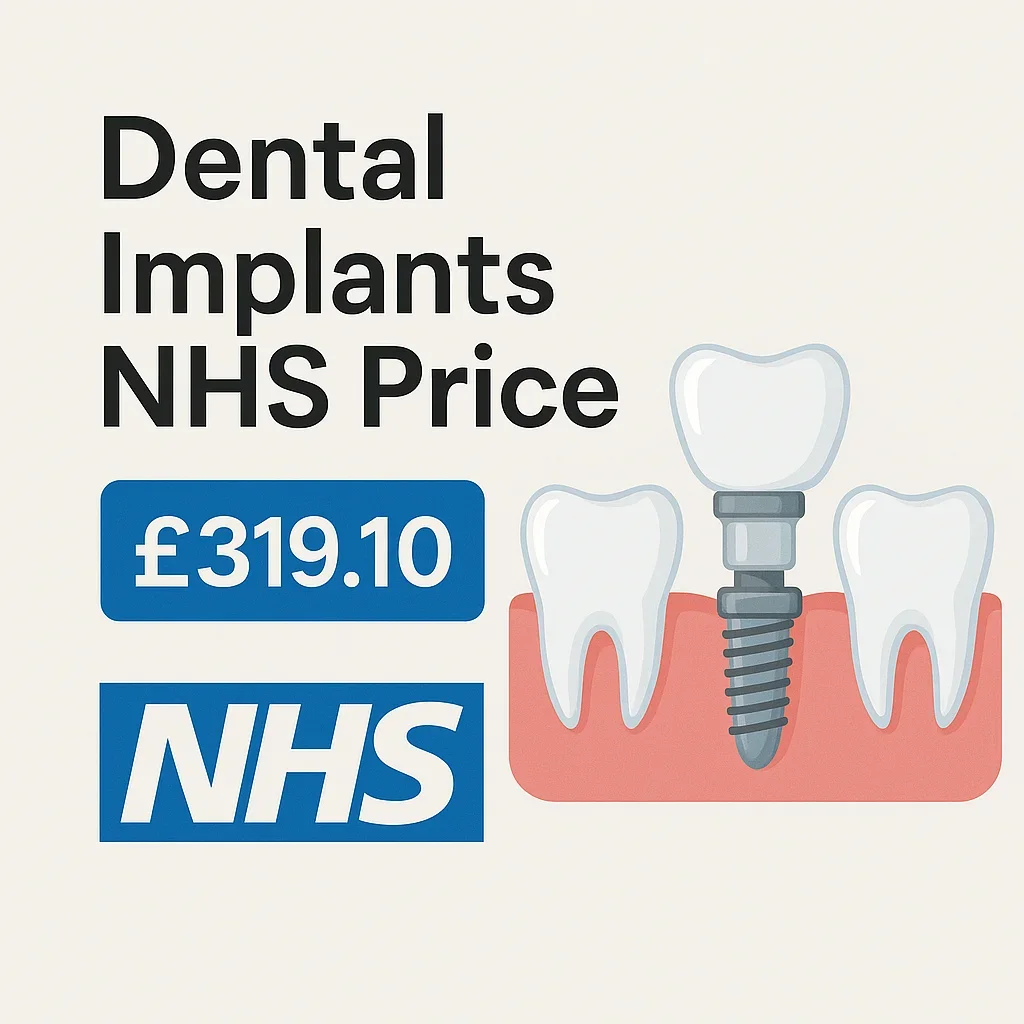
- Band 3 (complex treatments like dentures, bridges, crowns): £319.10
As you can see, none of these bands include implants. If implants are granted under special circumstances, the patient often pays the Band 3 charge (£319.10), which is a fraction of the actual implant price. This is why searches for dental implants NHS price are common: people want to know if it’s possible to access this advanced treatment at Band-level pricing.
Private vs NHS Dental Implant Costs
When implants are not available on the NHS, patients must turn to private clinics. Here, the average cost for a single implant in the UK ranges between £2,000 and £2,800 per tooth. This difference is dramatic compared to the subsidized dental implants NHS price available only to a small group of eligible patients. For this reason, many patients feel disheartened when they realize that implants are rarely covered by the NHS and that private prices can be significantly higher than they expected.
To illustrate the gap:
NHS (special cases only): ~£319.10 (Band 3 charge)
Private clinics (standard): £2,000 – £2,800 per implant
Private full-mouth reconstruction: £15,000 – £30,000
This stark contrast explains why patients are actively researching dental implants NHS price in 2025 — hoping to discover if they qualify for the lower banded fees instead of the higher private bills.
Why Are Implants Rarely Funded by the NHS?
The NHS must prioritize treatments that are essential for health and function rather than cosmetic improvement. Since removable dentures or dental bridges can restore function at a much lower cost, these are often the treatments offered to patients. Dental implants, although superior in comfort and longevity, are viewed as an upgrade rather than a necessity. Therefore, the true dental implants NHS price remains accessible only in exceptional situations.
Key Takeaway for Patients
If you are wondering whether you qualify for NHS implant funding, the reality is that very few patients do. Most will need to seek private care. However, private clinics sometimes offer finance plans, staged payments, or even package deals for multiple implants. While this does not match the affordability of an NHS Band 3 charge, it can make treatment more manageable. Patients considering implants should also evaluate the long-term benefits: better chewing ability, preserved jawbone, and improved self-confidence, which may outweigh the initial investment.
For those interested in treatment abroad, some clinics — including Redent Klinik Contact Page — offer competitive pricing, especially in destinations like Turkey, where implant dentistry is both advanced and more affordable.
For further professional standards and guidelines, you can also consult the American Dental Association, which provides evidence-based resources on implantology and oral health practices worldwide.
Conclusion
The phrase dental implants NHS price is both hopeful and misleading. Hopeful because the NHS does, in rare circumstances, provide implants at a dramatically reduced cost; misleading because the vast majority of patients will not qualify. For most people, private treatment is the only realistic route — but with options such as international clinics and finance plans, there are still ways to achieve a lasting smile restoration. By understanding the realities of cost, coverage, and eligibility, patients can make informed decisions and avoid disappointment. ✅
What Are Dental Implants and How Do They Work?
When exploring the topic of dental implants NHS price, it is essential to first understand exactly what dental implants are and how they function. Dental implants are artificial tooth roots made of biocompatible materials, most commonly titanium, that are surgically inserted into the jawbone. Once healed, these implants act as a stable base for replacement teeth such as crowns, bridges, or even full dentures. 🌟
Unlike removable dentures, which can slip or cause discomfort, implants are permanent and mimic the function of natural teeth. This makes them one of the most advanced and long-lasting dental solutions available today. Patients searching for dental implants NHS price often want to know whether this premium treatment is accessible through public healthcare, but before diving into costs, understanding the treatment itself is critical.
The Structure of a Dental Implant
A dental implant has three main components:
- Implant Fixture: This is the titanium screw placed into the jawbone. It integrates with the bone through a process called osseointegration, creating a stable foundation.
- Abutment: The connector piece that attaches to the implant fixture and supports the artificial tooth.
- Crown: The visible part of the replacement tooth, custom-made to match the shape and color of natural teeth.
Each of these components contributes to the overall cost, which explains why the private cost of implants can be so high compared to the subsidized dental implants NHS price available under rare circumstances.
The Implant Procedure Step by Step
The journey of getting a dental implant is not a one-visit solution; it involves multiple stages to ensure long-term success:
- Initial Consultation: Includes X-rays, 3D scans, and a discussion of treatment options.
- Surgical Placement: The titanium post is inserted into the jawbone under local anesthesia or sedation.
- Healing Period: Lasting 3–6 months, during which osseointegration takes place.
- Abutment Placement: After healing, the abutment is fitted to the implant.
- Crown Placement: The final prosthetic tooth is attached, completing the process.
This multi-step approach ensures durability and functionality but also impacts the financial side of the treatment. Patients often research the dental implants NHS price hoping for reduced costs, as private treatment may appear expensive when each step is itemized separately.
Benefits of Dental Implants
Dental implants provide several advantages over traditional tooth replacement methods:
- Improved chewing and speech abilities
- Long-term durability, often lasting 15–25 years with proper care
- Preservation of jawbone density, preventing the bone loss associated with missing teeth
- Natural appearance and comfort, with no slippage or adhesives needed
These benefits justify why so many patients are eager to find out the real dental implants NHS price. For many, implants are not just about aesthetics — they represent a significant improvement in quality of life.
Challenges and Limitations
Despite their advantages, implants are not suitable for every patient. Some limitations include:
- Bone Density Requirements: Patients must have sufficient bone mass to support the implant.
- Medical Conditions: Conditions like uncontrolled diabetes or smoking habits can affect healing.
- Long Treatment Time: The process can take months from start to finish.
Because of these factors, NHS guidelines restrict implant funding to only the most critical medical cases, which is why the dental implants NHS price is not widely available to the general population.
How Implants Differ from Dentures and Bridges
To fully appreciate why implants are in such high demand, it helps to compare them with alternatives:
- Dentures: Removable, less stable, often less comfortable, and typically covered under NHS Band 3 pricing.
- Bridges: Fixed but require adjacent teeth to be filed down, which may compromise healthy teeth.
- Implants: Independent, long-lasting, and protective of jawbone health.
This comparison highlights why patients researching dental implants NHS price often feel disappointed when they realize implants are not widely offered by the NHS. They recognize the superior value but face financial barriers.
Cost Connection: Why Understanding Implants Matters
Every stage of the implant journey — from consultation to final crown placement — contributes to the overall price. By understanding these steps, patients can better evaluate the difference between private costs and the rare opportunity of receiving implants through NHS support. Awareness of the treatment process also helps patients understand why private clinics often quote thousands of pounds per tooth compared to the limited Band 3 NHS charge. Knowing this puts the concept of dental implants NHS price into context and prevents unrealistic expectations.
Conclusion
Dental implants are more than just replacement teeth; they are a long-term investment in oral health, function, and self-confidence. They work by integrating with the bone and providing a strong foundation for lifelike crowns. Patients exploring the dental implants NHS price should know that while implants offer unparalleled advantages, they are rarely funded by the NHS except in exceptional circumstances. Most individuals will need to turn to private care, but the understanding of how implants function helps justify the cost. By appreciating the science and process behind implants, patients can make informed decisions and plan accordingly, whether through private UK treatment or more affordable international options. ✅
Are Dental Implants Available on the NHS?
One of the most common questions patients ask is whether dental implants are accessible through the National Health Service. The phrase dental implants NHS price has surged in online searches because many people hope that the NHS will cover this advanced treatment at an affordable cost. While the NHS provides a wide range of dental services, implants are generally considered outside the scope of standard care. This section explores the reality of NHS dental coverage, the criteria for eligibility, and what alternatives are available if you don’t qualify.
The NHS Approach to Dental Care
The NHS focuses on providing dental treatments that are essential for maintaining oral health and function rather than cosmetic improvements. This means services such as fillings, extractions, dentures, and crowns are prioritized. Dental implants, however, are usually classified as a non-essential or elective treatment. They may restore aesthetics and confidence, but since dentures or bridges can replace missing teeth at a lower cost, implants are rarely funded. This policy is why the true dental implants NHS price is not widely advertised or available to most patients.
Eligibility Criteria for NHS Dental Implants
There are some exceptional cases in which the NHS may approve dental implant treatment:
- Oral Cancer Patients: Individuals who have lost teeth due to cancer treatment or surgical removal of oral tumors.
- Severe Trauma Cases: Patients who experience tooth loss following serious accidents or facial injuries.
- Congenital Conditions: Patients born with rare conditions such as ectodermal dysplasia, where natural teeth fail to develop.
In these situations, implants are not viewed as cosmetic but rather as essential for restoring function and quality of life. If approved, patients may only need to pay the standard Band 3 charge of around £319.10, which makes the dental implants NHS price significantly lower than private costs of £2,000–£2,800 per tooth.
Why Most Patients Don’t Qualify
The reality is that most patients seeking implants due to general tooth loss, gum disease, or age-related issues will not meet NHS criteria. Instead, they are advised to use dentures or bridges, which are covered under the NHS payment bands. This often leads to disappointment when people realize that the hoped-for dental implants NHS price is not accessible in their situation.
Comparison: NHS vs Private Access
To better understand availability, it helps to compare NHS and private access:
- NHS: Only in exceptional medical circumstances; cost ~£319.10 (Band 3 charge).
- Private Clinics: Widely available; cost £2,000–£2,800 per implant, with full-mouth reconstruction reaching £15,000–£30,000.
This stark difference in cost and availability is why so many patients research dental implants NHS price online before making treatment decisions. They want to confirm if they have any chance of NHS support before committing to private care.
The Role of NHS Consultants and Referrals
If you believe you might qualify for NHS implants, the process typically involves:
- Visiting your general dentist, who assesses your case and overall oral health.
- If eligibility seems possible, your dentist refers you to an NHS hospital consultant.
- The consultant evaluates your case against strict NHS criteria.
- If approved, implants are placed under NHS funding. If denied, you may need to consider private treatment.
This process helps ensure that NHS funding is allocated only to the most critical cases. However, it also means that for the majority of patients, the dream of an affordable dental implants NHS price will remain out of reach.
Alternatives Offered by the NHS
Since implants are rarely provided, the NHS typically offers alternatives such as:
- Removable Dentures: Affordable and functional, though less stable than implants.
- Dental Bridges: Fixed solutions supported by adjacent teeth but less durable than implants.
While these treatments restore chewing ability and aesthetics, they don’t offer the long-term bone preservation or stability of implants. This explains why patients continue to search for information about the elusive dental implants NHS price.
Why Patients Consider Private or International Clinics
Given the rarity of NHS implants, many patients turn to private clinics. Others explore international options, especially in countries like Turkey, where clinics such as Redent Klinik Contact Page offer competitive implant packages. Even with travel expenses, the total cost may be significantly lower than private UK clinics. For patients who cannot access NHS funding, these alternatives can make the dream of implants a reality.
For global guidelines on implant standards, patients can also review resources from the American Dental Association, which emphasizes the importance of quality, safety, and patient-centered care in implant dentistry.
Conclusion
The question “Are dental implants available on the NHS?” does not have a simple yes or no answer. In rare and exceptional cases, patients may indeed access implants at the subsidized dental implants NHS price. However, for the majority, implants remain a treatment that must be pursued privately. Understanding eligibility criteria, referral pathways, and realistic alternatives helps patients make informed decisions. Whether you qualify for NHS support or must consider private and international clinics, the key is to weigh long-term value against cost, ensuring the best possible outcome for your oral health and confidence. ✅
Dental Implants NHS Price vs Private Clinics
When researching tooth replacement options in the UK, one of the most striking comparisons patients encounter is the difference between dental implants NHS price and the cost of implants in private dental clinics. This discrepancy is often confusing and leads patients to wonder why the NHS cannot offer implants at the same rate as private practices. In this section, we will provide a clear and comprehensive explanation of how prices differ, why these differences exist, and how patients can make informed choices.
The NHS Cost Structure for Dental Treatments
The NHS operates under a fixed banded pricing system to keep dental care affordable and accessible. These bands cover a wide range of treatments, from simple check-ups to complex procedures like crowns and dentures. However, dental implants are generally excluded from routine NHS care because they are viewed as non-essential or cosmetic. In rare, medically justified cases, implants may be offered, and the patient pays the Band 3 charge — approximately £319.10 in 2025. This creates the impression that the dental implants NHS price is far lower than private options, but this availability is extremely limited.
Private Clinics and Their Pricing Models
Private dental clinics, unlike the NHS, are not restricted by standardized bands. Instead, they calculate implant prices based on factors such as materials, clinical expertise, location, and aftercare services. On average, a single dental implant in the UK costs between £2,000 and £2,800 per tooth. When more complex cases arise, such as full-mouth restorations, the total cost can reach between £15,000 and £30,000.
This contrast is what drives patients to search specifically for dental implants NHS price information, hoping they might qualify for NHS funding instead of bearing the higher costs of private care.
Detailed Cost Comparison: NHS vs Private
To illustrate the differences, here is a breakdown of average costs in 2025:
| Treatment | NHS Price (if eligible) | Private Price (UK average) |
|---|---|---|
| Single Implant | ~£319.10 (Band 3) | £2,000 – £2,800 |
| Implant-Supported Bridge | ~£319.10 (Band 3) | £4,000 – £7,000 |
| Full-Mouth Implants | Not routinely available | £15,000 – £30,000 |
This table makes it clear why patients feel strongly about the topic of dental implants NHS price. The difference is not small — it can amount to tens of thousands of pounds.
Why Are Private Implants So Expensive?
Several factors explain the higher private costs:
- Materials: High-quality titanium fixtures and custom-made crowns are costly to produce.
- Advanced Technology: 3D scans, surgical guides, and modern implant systems add to expenses.
- Expertise: Implant dentists often have specialized training, and their fees reflect this expertise.
- Aftercare: Follow-up visits, hygiene care, and long-term maintenance are included in the cost.
When you combine these factors, the private cost of implants becomes understandable, even though it far exceeds the limited dental implants NHS price.
Geographic Variation in Costs
It is also important to note that implant prices vary across the UK. Clinics in London and other major cities tend to charge higher fees due to increased overheads, while clinics in smaller towns may offer lower prices. This variability does not exist under the NHS system, where the Band 3 charge is standardized across the country. Thus, the NHS offers predictability in price — but only to a very select group of eligible patients.
Financing Options in Private Clinics
Because private implants are expensive, many clinics provide financing options such as:
- 0% Interest Payment Plans: Spread the cost over several months without additional fees.
- Dental Loans: Longer-term loans with interest, making implants more accessible.
- Insurance Coverage: Some private health insurance plans may contribute to implant costs.
These financing options are often what make private implants feasible for patients who initially sought out the dental implants NHS price but did not qualify.
International Clinics as an Alternative
Some patients who cannot access NHS implants and find UK private prices unaffordable explore treatment abroad. Countries like Turkey offer high-quality implants at significantly lower rates, with clinics such as Redent Klinik Contact Page specializing in cost-effective packages. Even with travel costs included, the total price may be lower than private UK clinics. For additional assurance, patients can also review international standards through organizations such as the American Dental Association.
Conclusion
The difference between dental implants NHS price and private clinic pricing is one of the most significant cost gaps in modern dentistry. While the NHS may provide implants in rare and exceptional cases for a few hundred pounds, private patients can expect to pay thousands. Understanding these differences helps patients set realistic expectations, explore financing, and even consider international options if needed. Ultimately, the choice between NHS and private care depends on eligibility, budget, and the desire for long-term oral health solutions. ✅
Factors That Influence Dental Implant Costs
When patients search for the dental implants NHS price, they often hope to find a clear, fixed figure. However, the reality is far more complex. Dental implant costs vary widely depending on a range of medical, technical, and logistical factors. Understanding these influences is crucial for patients comparing NHS coverage (when available) with private treatment options. In this section, we will break down the primary elements that shape the overall cost of implants, helping you see why prices can range from a few hundred pounds on the NHS (in rare cases) to tens of thousands privately.
Number of Implants Required
Perhaps the most straightforward factor is the number of implants a patient needs. A single implant to replace one missing tooth will cost much less than a full-mouth restoration. On the NHS, if implants are approved, the patient still only pays the Band 3 charge (~£319.10), regardless of the number of implants. However, in private practice:
- Single Implant: £2,000 – £2,800
- Implant-Supported Bridge: £4,000 – £7,000
- Full-Mouth Reconstruction: £15,000 – £30,000
This explains why the dental implants NHS price is such a popular query: patients are eager to know if they can access implants at the low NHS rate instead of paying these higher private figures.
Bone Density and Grafting Requirements
Implants require adequate jawbone density to support the titanium fixture. If bone loss has occurred due to gum disease or long-term tooth loss, additional procedures like bone grafting or sinus lifts may be necessary. These add both time and cost to the treatment. On the NHS, such preparatory work is unlikely to be included unless the implant is deemed medically necessary. Privately, bone grafting can add anywhere from £500 to £2,500 to the total bill. Patients often compare this with the dental implants NHS price, hoping to avoid these extra expenses.
Sinus Lifts and Advanced Surgery
In cases where upper jaw bone is too thin, a sinus lift procedure may be required. This not only raises the cost but also extends the healing period. Since NHS implant eligibility is restricted, only a handful of patients can benefit from subsidized advanced procedures.
Materials Used
The quality and type of materials influence price significantly:
- Titanium Implants: The most common and biocompatible, durable and cost-effective.
- Zirconia Implants: Metal-free and aesthetic, but usually more expensive.
- Crowns: Porcelain-fused-to-metal, full porcelain, or zirconia crowns vary in durability and cost.
Private clinics often offer premium materials, which drive up prices. On the NHS, if implants are approved, the materials used will typically be standard, which partially explains the lower dental implants NHS price.
Geographical Location of Treatment
Where you receive treatment also plays a large role in cost:
- Major Cities (e.g., London): Higher clinic overheads and demand mean higher prices.
- Smaller Towns: Lower costs due to reduced overheads.
- International Clinics: Countries like Turkey offer significantly lower implant packages, even when factoring in travel costs.
This explains why patients often research both local dental implants NHS price options and overseas clinics such as Redent Klinik Contact Page to compare affordability.
Dentist’s Expertise and Reputation
Implantology is a specialized field. Dentists with years of training and advanced qualifications may charge higher fees for their expertise. Patients may find that paying more ensures greater success rates and fewer complications. While the NHS does not differentiate by dentist experience in terms of patient charges (since the Band system standardizes fees), in private care, this can greatly influence costs. This is another reason why dental implants NHS price is appealing to patients — the fixed NHS charge, if available, avoids these variations.
Technology and Diagnostic Tools
Modern dental implant clinics use advanced tools such as 3D imaging, CT scans, and computer-guided surgery. These technologies improve precision and outcomes but also raise costs. For example, a 3D CT scan can add £150–£400 to the overall bill privately. On the NHS, such imaging is only provided if medically necessary, which makes the rare dental implants NHS price even more attractive compared to private totals.
Aftercare and Maintenance
The long-term success of implants depends on proper aftercare, which includes follow-up visits, hygiene appointments, and sometimes adjustments to crowns or abutments. Private practices often build aftercare into the overall fee, while NHS patients pay the same Band charge if implants are granted. This creates an important distinction: NHS patients (in exceptional cases) benefit from highly subsidized care, whereas private patients pay for the full package.
Hidden and Additional Costs
Patients considering private implants should also factor in additional costs such as:
- Consultations (£50–£150 each)
- Temporary dentures or bridges during healing
- Medications and sedation fees
None of these are relevant when looking at the dental implants NHS price, since NHS charges are standardized, but they make a significant difference privately.
Conclusion
The total cost of implants is influenced by multiple factors, including the number of teeth replaced, bone quality, choice of materials, clinic location, dentist’s expertise, and aftercare requirements. While the NHS offers a heavily subsidized dental implants NHS price to a very small group of eligible patients, most people will need to consider private treatment. Understanding these cost factors helps set realistic expectations and allows patients to compare NHS, private, and international options effectively. For those who cannot access implants through the NHS, exploring private financing or overseas clinics — while following global standards from the American Dental Association — can make treatment more achievable. ✅
Alternative NHS Treatments to Dental Implants
While many patients search for the dental implants NHS price hoping to access affordable, permanent solutions for tooth loss, the truth is that implants are rarely provided by the NHS. Instead, the NHS offers a range of alternative treatments that restore function and aesthetics at a lower cost, covered under the standard dental band system. These alternatives may not provide the same long-term stability as implants, but they are effective, accessible, and significantly cheaper. This section explores the main alternatives, their benefits and drawbacks, and why patients often weigh them against private or international implant options.
Removable Dentures
One of the most common alternatives offered by the NHS is the removable denture. These can replace a single tooth, multiple teeth, or even a full arch. Patients only pay the Band 3 charge (around £319.10 in 2025) for dentures, making them far more affordable than private implants.
Advantages of Dentures
- Affordable under NHS coverage.
- Quick to fabricate and fit.
- Restores chewing and speaking ability.
- Non-invasive and does not require surgery.
Disadvantages of Dentures
- Can slip or move, especially when eating.
- May cause gum irritation over time.
- Do not prevent bone loss in the jaw.
- Require periodic adjustments or replacements.
When comparing dentures with the elusive dental implants NHS price, patients often prefer implants because of their permanence and stability. However, dentures remain the most widely available and cost-effective NHS option.
Dental Bridges
A dental bridge is another alternative frequently covered by the NHS. A bridge uses crowns on adjacent teeth to support an artificial tooth in the middle, literally “bridging” the gap caused by tooth loss.
Advantages of Bridges
- More stable than removable dentures.
- Fixed in place, so no risk of slipping.
- Covered under NHS Band 3 pricing.
Disadvantages of Bridges
- Require grinding down adjacent healthy teeth for support.
- Do not prevent long-term bone loss beneath the missing tooth.
- May need replacement after 10–15 years.
For many patients, bridges are a good compromise, but they lack the independence and bone-preserving qualities of implants. This is why so many people still search for dental implants NHS price despite bridges being available at a lower fixed cost.
Partial Dentures
For patients missing only a few teeth, partial dentures are another affordable option. They combine prosthetic teeth with a gum-colored base and metal clasps that attach to natural teeth. These are easy to adjust and repair but can feel less natural compared to fixed solutions.
Full Dentures
When all teeth in an arch are missing, full dentures are offered. They are cost-effective under the NHS, but they can lead to difficulties with chewing tougher foods and may cause long-term bone shrinkage in the jaw. This is where implants offer clear advantages, but since implants are rarely covered, full dentures remain the go-to solution for most NHS patients.
Temporary or Transitional Options
Sometimes, temporary prosthetic devices are provided to maintain aesthetics while patients wait for a more permanent solution. These are included under NHS care when medically necessary but are not long-term replacements. Such transitional devices are often used in cancer recovery or trauma cases before exploring implants or bridges.
Why NHS Alternatives Exist
The NHS must prioritize affordability and accessibility for millions of patients. Since implants are costly and time-consuming, dentures and bridges serve as practical alternatives. These treatments allow the NHS to provide functional solutions to large numbers of people without exhausting limited resources. Unfortunately, this also means that the subsidized dental implants NHS price remains available only for exceptional cases, leaving most patients reliant on these alternatives.
Comparing Alternatives with Implants
While dentures and bridges restore oral function, they fall short compared to implants in key areas:
- Bone Preservation: Only implants stimulate the jawbone to prevent bone loss.
- Longevity: Implants can last decades, while dentures and bridges often require replacement.
- Stability: Implants remain fixed, while dentures may move and bridges depend on other teeth.
These differences explain why many patients, after experiencing dentures or bridges, later research private or international implant options despite being aware of the higher costs. Clinics such as Redent Klinik Contact Page offer cost-effective solutions abroad, often aligning with international quality standards like those outlined by the American Dental Association.
Conclusion
For most patients, the NHS provides dentures and bridges as the primary alternatives to implants. These options are affordable, functional, and covered under the Band 3 charge, but they lack the permanence and stability that implants deliver. This is why patients remain interested in the limited dental implants NHS price even if they know the chances of qualifying are slim. Understanding the pros and cons of each alternative helps patients make informed decisions and balance function, cost, and expectations. ✅
Long-Term Value of Dental Implants for Patients
When patients compare treatment options, the question often arises: is the higher cost of implants justified compared to dentures or bridges? This is especially relevant when considering the limited dental implants NHS price versus the much higher private clinic costs. To answer this, it’s important to evaluate implants not just as an upfront expense, but as a long-term investment in oral health, comfort, and overall well-being. In this section, we’ll examine why implants deliver substantial long-term value for patients, even when private care is the only option.
Durability and Longevity
Dental implants are designed to last decades, with many lasting 20–30 years or even a lifetime if properly maintained. In contrast, dentures typically need replacing every 5–8 years, and bridges every 10–15 years. While the upfront private cost of implants can be daunting compared to the subsidized dental implants NHS price, the long-term savings become clear when replacement costs for dentures and bridges are factored in. Patients often discover that implants, despite the initial financial outlay, prove more cost-effective over time.
Reduced Replacement Costs
Every time a denture or bridge is replaced, additional expenses accumulate. Over 30 years, a patient may spend several thousand pounds maintaining or replacing these alternatives. With implants, the fixture integrates with the jawbone permanently, reducing the need for costly repeat treatments. This long-term durability explains why patients who initially search for dental implants NHS price eventually accept that private implants may provide better value overall.
Preservation of Jawbone Health
One of the most significant long-term benefits of implants is the preservation of jawbone density. Tooth loss naturally leads to bone resorption, which can cause a sunken facial appearance and affect chewing ability. Dentures and bridges do not prevent this process, but implants stimulate the jawbone like natural teeth, maintaining both function and facial structure.
From a health perspective, this benefit alone justifies the investment. Patients who prioritize long-term oral health often see beyond the short-term affordability of NHS dentures and recognize why implants, even at a private cost, offer better value than relying on the elusive dental implants NHS price.
Improved Quality of Life
The value of implants extends beyond cost. Implants provide comfort, confidence, and improved daily function in ways alternatives cannot:
- Chewing: Patients can enjoy a wider variety of foods, including tougher textures like steak and raw vegetables.
- Speech: Unlike dentures, implants don’t slip, making speech clearer and more natural.
- Confidence: Implants look and feel like natural teeth, boosting self-esteem and social interactions.
For patients frustrated by the limitations of dentures, the value of implants becomes clear. This is why so many continue to research the dental implants NHS price, hoping for a chance to access these benefits at a lower cost.
Psychological Benefits
Missing teeth or poorly fitting dentures can negatively impact self-image. Implants restore not only oral function but also confidence in smiling, speaking, and socializing. Patients who invest in implants often report improved mental well-being, which adds to their long-term value.
Financial Value Over Time
While implants may cost £2,000–£2,800 per tooth privately, their longevity offsets the repeated costs of other treatments. Consider this example:
Dentures: £319.10 NHS Band 3 charge initially, but replacements every 7 years → ~£1,300+ over 30 years.
Bridges: £2,000 each, replaced every 12 years → ~£6,000 over 30 years.
Implants: £2,500 each, lasting 25+ years → ~£2,500 over 30 years.
This comparison highlights that while the dental implants NHS price is rare, private implants can still be the more financially sound choice over a lifetime.
Aftercare and Maintenance
Implants require regular check-ups, just like natural teeth. Good oral hygiene and professional cleanings ensure they last for decades. This minimal ongoing maintenance contrasts with dentures, which may need adhesives, adjustments, or relining. The stability of implants means fewer long-term inconveniences and a higher return on investment for the patient.
Global Perspective
Patients unable to qualify for NHS support often explore international clinics for affordable implants. Clinics abroad, such as Redent Klinik Contact Page, offer high-quality treatment at reduced prices. These savings, combined with the long-term value of implants, make international treatment a popular choice. Global organizations like the American Dental Association provide standards that ensure safety and effectiveness, giving patients peace of mind when considering treatment options outside the UK.
Conclusion
When assessing long-term value, implants consistently outperform dentures and bridges. Their durability, ability to preserve bone health, improved quality of life, and cost-effectiveness over decades make them the superior choice. While the subsidized dental implants NHS price remains accessible only to a few, private and international options still represent a valuable investment for most patients. By focusing on lifetime benefits rather than short-term expenses, patients can see that implants are not just a treatment — they are a life-changing solution for oral health and confidence. ✅
How to Apply for NHS Dental Implant Treatment
For patients hoping to access affordable implants, understanding the application process for NHS treatment is essential. The term dental implants NHS price has become a common online search because many people want to know how to qualify and what steps are required. While implants are not routinely offered under NHS care, there is a pathway for those with exceptional medical needs. This section explains the full process — from initial consultation to approval — and provides realistic expectations for patients considering this route.
Step 1: Initial Dental Appointment
The first step is to book an appointment with your NHS dentist. During this visit, your dentist will assess your oral health and determine whether implants could be clinically justified. For the vast majority of patients, the NHS will recommend dentures or bridges instead. However, if you meet certain criteria, your dentist may refer you to a hospital consultant for further evaluation.
What to Bring to Your Appointment
- A full medical history, including details of any conditions like cancer, trauma, or congenital abnormalities.
- Dental records or X-rays, if available, to speed up the referral process.
- Evidence of functional difficulties caused by tooth loss, such as problems eating or speaking.
At this stage, it’s important to keep realistic expectations. While many people search for the dental implants NHS price, very few will qualify for treatment beyond dentures or bridges.
Step 2: Referral to NHS Hospital Consultant
If your dentist believes you may meet eligibility criteria, they will refer you to a hospital-based dental consultant. These consultants specialize in complex oral and maxillofacial cases. Their role is to assess whether your case justifies implant funding under NHS guidelines.
Eligibility Criteria Reviewed by Consultants
- Oral cancer treatment: Tooth loss due to surgical removal of tumors.
- Severe trauma: Accidents leading to loss of multiple teeth or significant jaw damage.
- Congenital conditions: Rare cases where teeth never developed properly.
Consultants apply strict criteria to ensure NHS resources are used appropriately. This explains why the dental implants NHS price is rarely applicable to everyday cases of tooth loss caused by decay or gum disease.
Step 3: Case Review and Approval Process
After referral, the hospital team will review your medical and dental history. You may undergo further diagnostic tests, including X-rays, CT scans, or impressions of your teeth and jaw. The decision-making panel typically includes oral surgeons, restorative dentists, and prosthodontists.
If approved, you will be placed on a waiting list for surgery. The procedure is usually carried out in a hospital setting, and you will pay only the Band 3 NHS charge (~£319.10). This limited but highly subsidized dental implants NHS price is one of the main reasons patients pursue the application process.
If Your Application Is Rejected
If the hospital consultant decides that you do not meet the eligibility criteria, you will be advised to consider private treatment. At this point, your dentist may provide estimates for private implants or discuss other affordable alternatives like dentures or bridges.
Step 4: Preparing for NHS Implant Surgery
For patients who are approved, preparation may include:
- Dental hygiene appointments to ensure gums and remaining teeth are healthy.
- Stopping smoking, as it can reduce implant success rates.
- Medical clearance if you have conditions such as diabetes or cardiovascular disease.
All of these steps are aimed at improving the long-term success of the implants, even though the NHS covers the majority of the financial burden, making the final dental implants NHS price incredibly affordable compared to private care.
Step 5: Surgery and Aftercare
Once surgery is scheduled, the process follows similar steps to private implant treatment: insertion of the implant fixture, healing and osseointegration, abutment placement, and finally the crown or bridge attachment. Aftercare is typically provided at the hospital clinic, and patients benefit from follow-up reviews to monitor healing and implant success.
Follow-Up and Maintenance
Although the NHS subsidizes the implant procedure, patients are expected to maintain good oral hygiene and attend regular check-ups. Failure to do so may compromise implant success and could affect eligibility for future NHS treatments.
Alternatives If NHS Funding Is Not Approved
For patients who do not qualify for NHS implants, there are still viable options:
- Private UK Clinics: Single implants cost between £2,000 and £2,800.
- International Clinics: Countries like Turkey offer packages at significantly reduced prices, such as those at Redent Klinik Contact Page.
- Bridges and Dentures: Still covered under the NHS Band system.
Patients researching the dental implants NHS price should keep these alternatives in mind, particularly if their application is unsuccessful.
Conclusion
Applying for NHS dental implant treatment involves multiple steps, including dentist consultation, referral to a hospital consultant, strict eligibility assessment, and final approval. For the few who qualify, the reduced dental implants NHS price offers a life-changing opportunity at minimal cost. However, for most patients, private or international clinics remain the more realistic solution. Understanding the process in detail helps set expectations and allows patients to prepare for both outcomes: approval or rejection. By weighing NHS pathways against private and international options, patients can make informed choices about restoring their smile. ✅
Success Rates and Risks of Dental Implants
When researching the dental implants NHS price, it’s not only important to focus on cost but also on the likelihood of success and potential risks involved. Dental implants are widely regarded as one of the most reliable treatments in modern dentistry, with success rates exceeding 95% in most clinical studies. However, like any medical procedure, they carry certain risks that patients should fully understand before committing to treatment. This section explores both the positive outcomes and the challenges associated with implants, providing a balanced view that helps patients make informed choices.
Dental Implant Success Rates
One of the reasons implants are so highly sought after is their long-term stability and predictability. Research shows:
- Single Implants: Success rates average between 95% and 98% over 10 years.
- Multiple Implants/Full Arches: Slightly lower success rates, around 90–95% depending on bone quality and patient health.
- Overall Longevity: With proper care, implants can last 20–30 years or even a lifetime.
These high success rates make implants more desirable than dentures or bridges. Patients who search for dental implants NHS price often do so because they recognize the superior outcomes compared to alternatives. However, success is not guaranteed for everyone, and several factors can influence results.
Factors That Influence Implant Success
While the overall prognosis is excellent, certain conditions can affect success:
- Bone Density: Strong jawbone is essential for osseointegration (bone fusion with the implant).
- Gum Health: Periodontal disease can increase the risk of implant failure.
- Medical Conditions: Diabetes, autoimmune disorders, or osteoporosis can affect healing.
- Lifestyle Choices: Smoking and poor oral hygiene reduce long-term success rates.
The NHS considers these factors when deciding whether to approve implants under its system. This is one reason why the reduced dental implants NHS price is granted only in exceptional cases — the NHS must ensure resources are invested in cases with the highest likelihood of success.
The Role of Surgical Expertise
Another key factor is the skill and experience of the implant dentist. Private clinics may charge higher fees due to advanced training and use of modern technology, but this often leads to higher success rates. On the NHS, implants are usually handled in hospital settings by specialists in oral surgery, which helps maintain success even within a restricted budget.
Risks and Potential Complications
Despite their high success rate, implants are not risk-free. Patients must be aware of possible complications:
- Infection: If bacteria enter the surgical site, infection may compromise healing.
- Implant Failure: In rare cases, the bone does not fuse properly, requiring removal.
- Nerve Damage: Rare but possible, particularly in the lower jaw, leading to numbness or tingling.
- Sinus Issues: For upper implants, improper placement can affect the sinuses.
Although these risks are uncommon, they emphasize the importance of choosing a skilled professional and maintaining excellent aftercare. Patients comparing private treatment with the dental implants NHS price should remember that expertise and careful planning are just as valuable as financial savings.
How Risks Are Minimized
Modern dentistry has developed effective protocols to reduce risks:
- Comprehensive pre-treatment scans (X-rays, CT scans).
- Use of surgical guides to ensure precision placement.
- Strict sterilization and infection-control measures.
- Detailed aftercare instructions for patients.
By following these procedures, both NHS hospitals and private clinics maintain the high success rates that make implants so attractive. For patients fortunate enough to qualify for the reduced dental implants NHS price, these safeguards provide additional reassurance.
Importance of Aftercare
After surgery, maintaining excellent oral hygiene is critical. Patients must brush and floss carefully, avoid smoking, and attend regular dental check-ups. Neglecting aftercare increases the risk of peri-implantitis (inflammation around the implant), which can ultimately lead to implant loss.
Comparing NHS and Private Outcomes
It’s worth noting that outcomes between NHS and private implants are not significantly different in terms of clinical success. Both use similar surgical techniques and materials. The main differences lie in availability and cost. While the dental implants NHS price is far lower for qualifying patients, private treatment provides broader access, often with more flexible scheduling and advanced technology such as 3D imaging.
Global Perspective on Implant Success
Success rates for implants are consistent worldwide, with international clinics achieving results comparable to UK standards. Clinics abroad, such as Redent Klinik Contact Page, provide high-quality treatment at competitive prices. To ensure safety, patients should review guidelines provided by professional organizations like the American Dental Association, which promote best practices in implantology.
Conclusion
Dental implants offer success rates exceeding 95%, making them one of the most effective solutions for tooth replacement. While risks such as infection, nerve damage, or implant failure exist, these can be minimized with careful planning, skilled surgery, and diligent aftercare. Patients pursuing the dental implants NHS price should understand that while cost savings are substantial under NHS care, access is restricted. For most, private or international treatment is the more realistic path. Ultimately, the long-term benefits of implants — durability, function, and improved quality of life — outweigh the risks, making them a reliable and life-changing dental solution. ✅
Ways to Save Money on Dental Implant Costs
For many patients, the cost of implants is the biggest obstacle to treatment. This is why so many people search for the dental implants NHS price online — hoping to find an affordable way to restore their smile. Unfortunately, implants are rarely funded by the NHS except in exceptional medical cases, so most patients must consider private or international solutions. The good news is that there are several effective strategies to reduce implant costs without compromising quality. In this section, we’ll explore practical ways to save money while still achieving excellent dental outcomes.
Explore NHS Eligibility First
The first step for anyone worried about cost should be to check eligibility for NHS-funded implants. Although the vast majority of patients will be directed toward dentures or bridges, some cases may qualify for implants at a highly subsidized rate.
Who Qualifies for NHS Implants?
- Patients who have lost teeth due to oral cancer treatment.
- People with severe facial trauma or jaw injury.
- Individuals with congenital defects preventing natural tooth development.
For those lucky enough to qualify, the Band 3 NHS charge (~£319.10) covers the treatment, making the dental implants NHS price unbeatable compared to private fees of £2,000–£2,800 per tooth.
Consider Treatment Abroad
One of the most popular ways to save money is to travel abroad for dental treatment. Countries like Turkey, Hungary, and Poland offer implants at a fraction of UK prices. For example, a single implant abroad may cost between £800 and £1,200 — less than half the private UK rate.
Benefits of Overseas Clinics
- Lower treatment costs without compromising quality.
- Modern facilities with internationally trained dentists.
- All-inclusive packages that cover travel, accommodation, and aftercare.
Trusted clinics such as Redent Klinik Contact Page provide English-speaking support and transparent pricing, making them attractive options for patients comparing private fees with the elusive dental implants NHS price.
Look for Dental Schools Offering Reduced Rates
Another effective strategy is to seek treatment at a dental teaching hospital. Dental students, under the supervision of highly qualified instructors, often perform implant procedures at significantly reduced prices. While the process may take longer, the savings can be considerable, and treatment quality is closely monitored.
Pros of Dental School Treatment
- Lower costs compared to private clinics.
- Supervised by experienced specialists.
- Access to advanced technology used for training purposes.
Finance and Payment Plans
Many private dental clinics offer 0% interest finance options, allowing patients to spread the cost of implants over 12–24 months. Even when NHS funding isn’t available, breaking down payments makes treatment more affordable and manageable.
Types of Financing Options
- Interest-free plans: Spread payments without additional cost.
- Low-interest loans: Longer repayment terms with minimal interest.
- Healthcare credit cards: Flexible repayment tailored to dental expenses.
When patients realize they don’t qualify for the dental implants NHS price, financing becomes a practical alternative for accessing private treatment without immediate financial strain.
Compare Clinics and Ask for Quotes
Prices can vary significantly between private clinics. Patients should request multiple quotes and compare what is included in the treatment package. Some clinics include the cost of consultations, X-rays, and follow-ups, while others charge separately. Choosing a transparent clinic with bundled pricing can save hundreds of pounds.
Opt for Mini Implants or Alternatives
Mini implants, while not suitable for everyone, can be less expensive than traditional implants. They require less bone structure and can often be fitted in a single appointment. Although they may not last as long as standard implants, they can still provide a stable and affordable solution.
Insurance and Dental Plans
Some private insurance providers and dental plans now cover part of the cost of implants. While not common in the UK, this option is growing. Patients should review their policies carefully and inquire whether implants are included or if they can upgrade their coverage for partial reimbursement.
Tax Relief and Medical Expense Deductions
In some circumstances, patients may be able to claim tax relief on medical expenses, including dental implants. While the UK does not offer direct dental tax credits, patients in other regions may benefit from deducting treatment costs, making implants more affordable.
Global Standards and Safety
When considering cheaper options abroad, patients should ensure clinics adhere to international safety standards. Organizations such as the American Dental Association provide guidance on implant best practices. Choosing accredited clinics ensures that saving money does not come at the expense of health.
Conclusion
While the subsidized dental implants NHS price remains the cheapest option, only a small group of patients qualify. For everyone else, exploring overseas clinics, dental schools, financing options, and careful comparison shopping can make implants more affordable. By using these strategies, patients can save thousands of pounds while still enjoying the long-term benefits of dental implants. The key is to balance cost savings with safety and quality — ensuring that every investment in oral health provides lasting value. ✅