
The dental implants procedure has become one of the most popular and trusted solutions for replacing missing teeth in modern dentistry 🦷. Whether you’ve lost a single tooth or multiple ones, dental implants offer a permanent, natural-looking, and comfortable alternative to dentures or bridges. In this comprehensive guide, you’ll learn everything about how the procedure works, what to expect before and after surgery, and why millions of people around the world choose implants to restore their confidence and smile.
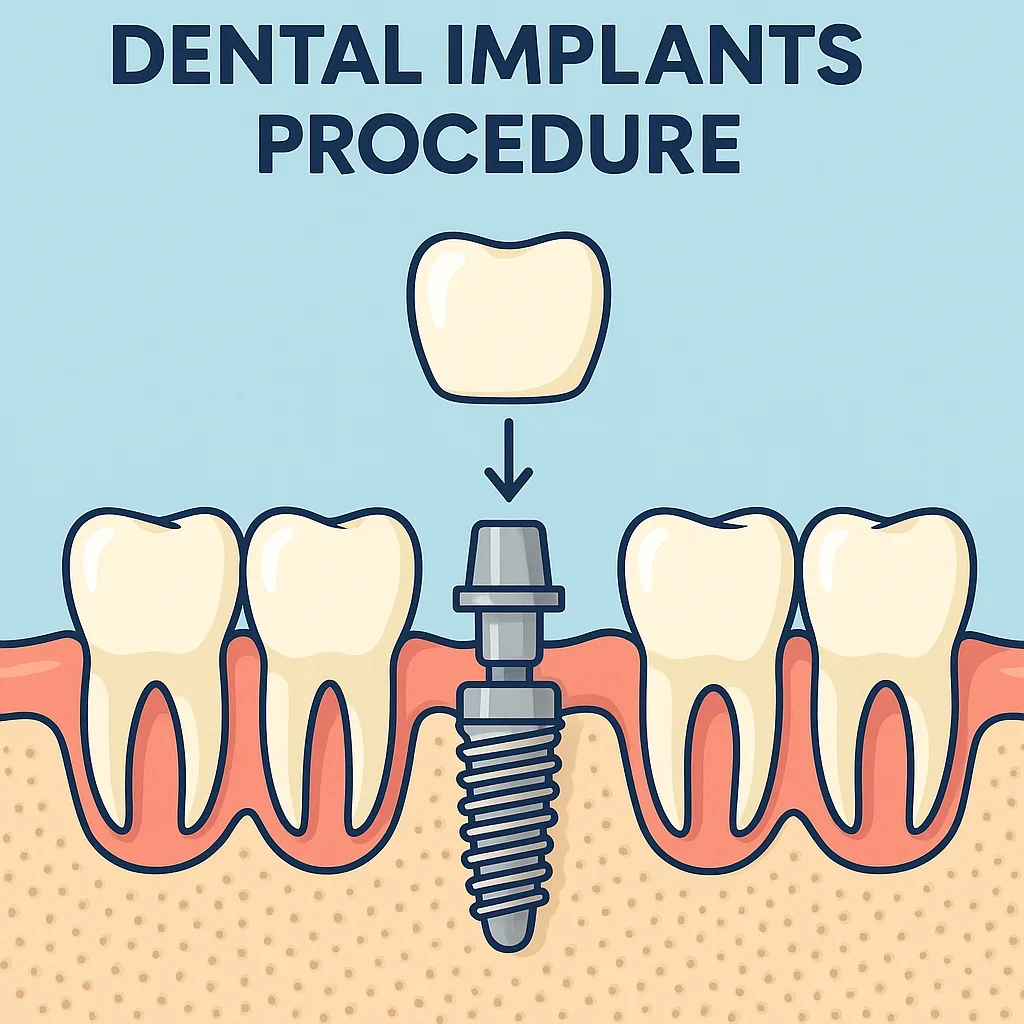
Dental implants are essentially titanium posts that act as artificial tooth roots. They are surgically inserted into the jawbone, where they fuse through a process called osseointegration. Once the implant has bonded with the bone, a crown, bridge, or denture is attached to the top, creating a natural-looking tooth replacement. This advanced technique mimics the strength and function of real teeth, allowing patients to bite, chew, and speak with complete comfort. The dental implants procedure can dramatically improve oral health and overall quality of life when performed correctly by an experienced specialist.
In recent years, technology has significantly improved the success rate of dental implants. Modern imaging tools like 3D cone beam scans and digital impressions help dentists plan implant placement with extreme precision. This ensures optimal results and minimizes potential complications. According to the American Dental Association, the success rate of dental implants exceeds 95%, making it one of the safest and most effective dental procedures available today. 🌟
Before undergoing a dental implants procedure, patients typically undergo a full dental examination. This includes X-rays, digital scans, and sometimes even blood tests to assess bone density and overall health. A personalized treatment plan is then developed. In most cases, the process involves three main stages: placement of the implant, healing and osseointegration, and placement of the final restoration (the crown or bridge). The entire process can take several months, depending on the healing process and individual circumstances.
One of the biggest advantages of this treatment is its durability. Unlike dentures that may slip or bridges that rely on neighboring teeth for support, implants stand independently. With proper care and maintenance, they can last a lifetime. Additionally, implants prevent bone loss in the jaw by stimulating bone tissue just like natural roots do. This helps maintain facial structure and prevents the “sunken” look that often occurs with long-term tooth loss. 💪
Many patients are curious about pain levels and recovery time during a dental implants procedure. Fortunately, most people report minimal discomfort thanks to advanced anesthesia and sedation techniques. Post-surgery pain is usually mild and manageable with prescribed medication. Swelling or slight bruising around the gums is common during the first few days but typically subsides within a week. Dentists often recommend soft foods and gentle oral hygiene practices during the recovery period.
Beyond the physical benefits, dental implants also have a profound emotional and psychological impact. Restoring a complete smile can significantly boost confidence and self-esteem. People who once avoided social interactions or photos due to missing teeth often feel renewed joy and assurance after receiving implants. It’s not just a dental restoration — it’s a life-changing experience for many.
For those considering the procedure, it’s essential to choose a reputable dental clinic with experienced implant specialists. You can reach out to our expert team through the Redent Klinik Contact Page for personalized consultation and step-by-step guidance. Our specialists will evaluate your oral condition, create a custom treatment plan, and ensure your comfort throughout the process. 🏥
In summary, the dental implants procedure offers a long-lasting, aesthetic, and functional solution for missing teeth. By replacing both the root and visible part of the tooth, implants deliver unmatched stability and strength compared to other methods. Whether you need a single-tooth replacement or a full-arch restoration, dental implants can restore your smile to its natural beauty while promoting better oral health. With continuous innovations in implant technology, 2025 is the best time to explore this life-enhancing dental option. ✨
Stay tuned for the next section, where we’ll explore how the entire process of getting dental implants works — from initial consultation to final restoration.
Step-by-Step Process of Getting Dental Implants
Understanding the dental implants procedure step by step helps patients prepare mentally and physically for what lies ahead 🦷. While every treatment is personalized, most dental implant journeys follow a structured process to ensure safety, precision, and long-lasting success. Below is a detailed breakdown of each stage, from the first consultation to the final crown placement.
🩺 Step 1: Initial Consultation and Dental Evaluation
The journey toward a healthy and confident smile begins with a comprehensive dental examination. During this stage, your dentist will evaluate your oral health, review your medical history, and assess your jawbone density. Advanced 3D imaging technologies such as cone beam CT scans are used to create precise digital models of your mouth. This allows your dentist to plan the implant placement with millimeter accuracy. For patients who have gum disease or bone loss, preliminary treatments like bone grafting or periodontal therapy might be required before the actual dental implants procedure.
The dentist also discusses anesthesia options, costs, and expected timelines. Patients are encouraged to ask questions and express any concerns they might have about the procedure. This is the best time to discuss expectations, as every smile is unique. Whether you are replacing one tooth or a full arch, your treatment plan is custom-designed for your individual anatomy and needs.
🦷 Step 2: Treatment Planning and 3D Mapping
Once the evaluation is complete, a detailed treatment plan is created. Using digital mapping, the dentist determines the exact implant position, angle, and depth. This ensures that the implant integrates perfectly with your bone structure and that the crown will align naturally with surrounding teeth. Planning is a critical part of the dental implants procedure because it minimizes surgical risks and improves long-term success rates.
At this stage, your dentist may also discuss the type of implants used. There are different materials (typically titanium or zirconia) and various techniques, such as single implants, All-on-4, or zygomatic implants for complex cases. Each option has its advantages, and your specialist will help you choose the one best suited for your case and aesthetic goals.
🔩 Step 3: Surgical Placement of the Dental Implant
The actual surgical phase begins with local anesthesia or conscious sedation to ensure your comfort. The gum is gently opened, and a small hole is drilled into the jawbone where the implant will be placed. The titanium post is then inserted into this prepared site. The gum tissue is closed around the implant, and a protective cap is placed on top. This part of the dental implants procedure usually takes about one to two hours per implant, depending on complexity.
For patients who require multiple implants, the surgery may take longer. The recovery time after this stage is critical. Over the next few months, the implant will fuse with the jawbone in a process called osseointegration. This step is what makes implants uniquely strong and stable compared to other tooth replacement methods.
Healing and Osseointegration Period
During this phase, the bone gradually integrates with the implant surface. This process can take anywhere from 3 to 6 months, depending on bone health and healing capacity. Patients are usually advised to follow a soft food diet and maintain impeccable oral hygiene. Avoiding smoking and alcohol during this stage significantly increases the success rate of the dental implants procedure. Your dentist will schedule follow-up visits to monitor healing progress and ensure that the implant remains stable within the bone.
🦷 Step 4: Abutment Placement
Once osseointegration is complete, the next step is to attach the abutment — a small connector that joins the implant to the dental crown. The gum tissue is reopened slightly to expose the implant, and the abutment is securely fixed in place. In some modern systems, this component may be installed during the initial surgery, eliminating the need for a second minor procedure. After abutment placement, the gum is allowed to heal for a couple of weeks before the final crown is attached.
Impression and Crown Fabrication
After the gums heal, digital impressions of your mouth are taken to design a custom-made crown that perfectly matches the color, shape, and size of your natural teeth. This ensures that your smile looks completely natural. Depending on your treatment plan, your dentist might recommend either a porcelain, zirconia, or hybrid crown for enhanced strength and aesthetics. This part of the dental implants procedure is crucial for achieving a flawless finish that blends seamlessly with your existing teeth. 😁
✨ Step 5: Final Restoration and Smile Reveal
The last and most rewarding phase of the journey is the placement of the final crown or prosthetic. The custom restoration is securely attached to the abutment, completing the dental implants procedure. Your dentist will carefully check your bite alignment and make small adjustments to ensure comfort and balance. Once finalized, you’ll be able to smile, eat, and speak with total confidence again.
After the procedure, regular checkups are essential to maintain the health and stability of your implants. Routine cleanings and examinations help prevent complications and ensure the longevity of your new teeth. When properly cared for, dental implants can last for decades or even a lifetime.
In conclusion, the dental implants procedure is a multi-stage process that combines precision, advanced technology, and surgical expertise to deliver a natural-looking smile. From consultation to the final restoration, each step is meticulously planned to provide safety, comfort, and long-term satisfaction. For anyone considering implants, it’s important to choose an experienced clinic such as Redent Klinik Contact Page, where highly qualified specialists use cutting-edge technology to make your smile transformation as smooth and successful as possible. 🌟
Who Is the Right Candidate for Dental Implant Surgery?
Not everyone is automatically an ideal candidate for a dental implants procedure, but thanks to modern technology and advanced techniques, more people than ever before can benefit from this life-changing treatment 🦷. To determine if you qualify, dentists perform a detailed evaluation of your oral and overall health. Understanding who makes the best candidate for dental implants helps ensure long-term success and minimizes potential complications.
🩺 Understanding the Ideal Candidate Profile
The perfect candidate for a dental implants procedure is someone with good oral hygiene, sufficient jawbone density, and healthy gums. Implants rely on the bone’s ability to fuse with the titanium post through osseointegration. Therefore, individuals with strong jawbones are more likely to achieve successful results. Additionally, good general health plays an essential role, since healing and bone regeneration require adequate immune response and tissue repair capacity.
Adults of all ages — from young adults who have lost a tooth due to injury to older adults seeking a permanent solution — can qualify for dental implants. Age itself is not a limiting factor, but the overall health of the gums, bones, and surrounding tissues must be sufficient. According to the American Dental Association, over 3 million people in the United States have undergone implant treatment, with success rates exceeding 95% when performed under proper conditions.
💀 Bone Health and Jaw Structure Requirements
One of the most crucial factors determining eligibility for a dental implants procedure is the condition of the jawbone. If a patient has experienced bone loss due to long-term tooth loss, gum disease, or trauma, the bone might not be strong enough to support an implant. In such cases, bone grafting may be required before proceeding with surgery. Bone grafting involves adding bone material — either synthetic or natural — to strengthen the jaw and create a solid foundation for implant placement.
Bone Density Evaluation Process
Dentists use cone beam CT scans or panoramic X-rays to assess bone volume and density. These detailed images help determine whether additional preparatory procedures, such as sinus lifts or ridge augmentations, are needed. The bone must be at least a few millimeters thick and tall enough to anchor the implant securely. This evaluation ensures that the dental implants procedure can be performed safely and effectively.
🦷 Gum Health and Periodontal Stability
Healthy gums are just as important as strong bones when it comes to implant success. Gum tissue supports the implant structure and protects it from bacterial infections. Patients with untreated gum disease (periodontitis) are at higher risk of implant failure because bacteria can compromise the healing process. Before moving forward with a dental implants procedure, your dentist will treat any existing gum inflammation or infection through professional cleaning, scaling, or antibiotic therapy.
For long-term success, maintaining excellent oral hygiene habits — such as regular brushing, flossing, and professional cleanings — is essential. Implants cannot decay like natural teeth, but the surrounding tissues can become infected if plaque is not properly removed. Maintaining gum stability ensures your implants remain healthy and functional for many years. 🪥
🚭 Lifestyle and Health Considerations
Some lifestyle choices and medical conditions can affect eligibility for a dental implants procedure. Smoking, for example, reduces blood flow to the gums and delays healing, increasing the risk of implant failure. Heavy smokers are often advised to quit before surgery to improve their success rates. Chronic conditions such as diabetes, osteoporosis, or immune disorders can also impact recovery and bone integration. However, well-controlled medical conditions do not necessarily disqualify a patient — they simply require closer monitoring and tailored treatment planning.
Medications and Healing Factors
Certain medications, especially those affecting bone metabolism (like bisphosphonates), can interfere with the osseointegration process. During your consultation, you should provide a complete list of medications and supplements you take. Your dentist will collaborate with your physician if necessary to adjust your treatment plan. This careful approach ensures that your dental implants procedure proceeds safely and successfully.
🧬 Age and Growth Factors
Although dental implants are suitable for adults of all ages, they are generally not recommended for children or teenagers whose jawbones are still developing. The jaw must reach full maturity to prevent misalignment or shifting of the implants later in life. For younger patients who have lost a tooth due to trauma, alternative temporary solutions may be used until growth is complete, after which the dental implants procedure can be safely performed.
😃 Psychological Readiness and Expectations
Beyond physical health, psychological readiness is another important aspect of candidacy. Patients should have realistic expectations and be committed to following post-operative care instructions. A positive attitude and patience during the healing process contribute greatly to overall success. Since implant treatment can span several months, commitment to appointments and oral hygiene routines is essential.
Many patients report feeling a profound emotional improvement after undergoing the dental implants procedure. Restoring a complete smile enhances self-esteem, encourages social interaction, and improves overall life quality. Therefore, mental readiness is as valuable as physical eligibility when planning for implants.
🏥 Consultation and Professional Evaluation
If you’re unsure whether you qualify, the best way to find out is through a professional dental evaluation. At Redent Klinik Contact Page, our implant specialists conduct thorough consultations, including X-rays, digital imaging, and oral assessments. We’ll review your medical history, discuss your goals, and create a personalized treatment plan to ensure maximum safety and comfort. With professional care and state-of-the-art equipment, even patients with challenging conditions can often undergo successful implant treatment.
In conclusion, the ideal candidate for a dental implants procedure is someone with healthy gums, sufficient bone density, good overall health, and a commitment to long-term oral care. Thanks to modern advancements, even those who previously didn’t qualify can often be treated successfully after preparatory procedures. By consulting with an experienced implant team and maintaining good oral hygiene, you can achieve a permanent, natural-looking smile that lasts a lifetime. ✨
Types of Dental Implants: Choosing the Best Option for You
The dental implants procedure is not a one-size-fits-all treatment — in fact, one of its greatest strengths is its versatility 🦷. There are several types of implants and techniques designed to match the unique needs of each patient. Whether you need to replace one missing tooth or a full set, understanding the different implant types helps you make an informed and confident choice. Let’s explore the main categories and discover which might be the best fit for your oral health and lifestyle.
🦷 Endosteal Implants: The Most Common Option
Endosteal implants are the gold standard in modern implant dentistry. These implants are surgically placed directly into the jawbone and are typically made of titanium — a biocompatible metal that fuses naturally with bone tissue during the healing process known as osseointegration. The dental implants procedure for endosteal implants involves inserting a small screw-shaped post that acts as an artificial root. After healing, a custom-made crown is attached to the top, replicating the appearance and function of a natural tooth.
This type is ideal for patients with healthy and sufficient bone density. It provides exceptional stability and long-term durability. Endosteal implants are also highly customizable; depending on your needs, a single implant can support one crown, or multiple implants can anchor bridges or even full dentures. According to the American Dental Association, this method achieves a success rate exceeding 95%, making it the most reliable option available today.
Advantages of Endosteal Implants
- Excellent long-term success and stability.
- Natural appearance and strong chewing ability.
- Minimal maintenance compared to removable dentures.
- Prevents bone loss by stimulating the jaw structure.
Who Is a Good Candidate?
Endosteal implants are suitable for patients who have good oral hygiene, adequate jawbone structure, and healthy gums. If bone density is insufficient, bone grafting may be performed before starting the dental implants procedure to create a stronger foundation.
🏗️ Subperiosteal Implants: For Patients with Limited Bone Volume
Subperiosteal implants are designed for patients who lack enough healthy bone to support traditional endosteal implants and prefer to avoid bone grafting. Instead of being placed inside the bone, these implants rest on top of the jawbone but beneath the gum tissue. A custom metal framework with posts protrudes through the gum, allowing crowns or bridges to be securely attached.
While subperiosteal implants were more common in the past, advances in bone grafting and 3D imaging have made endosteal implants more accessible. However, for some patients with severe bone loss or those seeking minimally invasive alternatives, subperiosteal implants can still provide a functional and aesthetic solution within the dental implants procedure.
Key Benefits
- No need for bone grafting in most cases.
- Shorter recovery period compared to traditional implants.
- Effective for patients with shallow jawbones or bone resorption.
Despite their advantages, subperiosteal implants may not last as long as endosteal ones because they are not anchored within the bone. Regular follow-ups and excellent oral hygiene are essential to maintaining their longevity.
⚙️ Zygomatic Implants: Advanced Solution for Severe Bone Loss
For patients who have experienced extreme bone loss in the upper jaw, zygomatic implants offer a groundbreaking alternative. Instead of anchoring into the jawbone, these longer implants are fixed into the cheekbone (zygoma), which provides strong and stable support. This specialized dental implants procedure is complex and typically performed by experienced oral surgeons.
Zygomatic implants eliminate the need for extensive bone grafts or sinus lifts, reducing overall treatment time. They are often used for full-mouth restorations where traditional implants are not possible. Though less common, they are revolutionary in giving patients with advanced bone loss a second chance at achieving a natural-looking, permanent smile.
Advantages of Zygomatic Implants
- Ideal for patients with significant upper jaw bone loss.
- Immediate function and faster treatment timeline.
- High long-term stability due to anchoring in dense cheekbone tissue.
Because of their complexity, zygomatic implants require specialized planning and imaging. When performed in a professional setting like Redent Klinik Contact Page, patients can expect safe and predictable results that restore both function and aesthetics.
🦷 All-on-4 and All-on-6 Implants: Full-Arch Restoration
For those who have lost most or all of their teeth, the All-on-4 and All-on-6 systems are innovative full-arch solutions. In these techniques, four or six implants are strategically placed in the jaw to support an entire set of teeth. This approach provides full functionality with minimal implants and avoids the need for individual posts for each tooth. It is one of the most transformative applications of the dental implants procedure.
All-on-4 vs. All-on-6: What’s the Difference?
- All-on-4: Uses four implants and is ideal for moderate bone density cases.
- All-on-6: Utilizes six implants for enhanced strength and better load distribution, ideal for patients with higher bite force needs.
These systems allow patients to receive temporary fixed teeth immediately after surgery — often referred to as “teeth in a day.” This rapid transformation offers both functional and psychological benefits, restoring confidence and comfort almost instantly. 😁
🧩 Mini Dental Implants: Less Invasive Alternative
Mini dental implants are smaller versions of traditional implants, typically less than 3 mm in diameter. They are used in cases where space or bone mass is limited, or to stabilize dentures. The dental implants procedure for mini implants is quicker and less invasive, often requiring only local anesthesia. Healing time is also shorter, making them a great choice for patients seeking fast, affordable solutions.
Advantages of Mini Implants
- Minimally invasive and quick recovery.
- Ideal for securing lower dentures or replacing small teeth.
- Cost-effective option with immediate stability.
However, mini implants are not suitable for all cases, especially those requiring full restoration of chewing strength. They are best used as part of a targeted treatment plan rather than a complete replacement system.
⚖️ Choosing the Right Type of Implant
The choice of implant depends on multiple factors — including bone density, gum health, budget, and aesthetic goals. Your dentist will evaluate your unique situation and recommend the most suitable option. At Redent Klinik Contact Page, advanced diagnostic imaging and computer-guided surgery help ensure perfect alignment, durability, and natural appearance for every implant type. 💎
In summary, the dental implants procedure offers a wide variety of options tailored to different needs and conditions. From standard endosteal implants to advanced zygomatic and All-on-4 techniques, there is a solution for virtually every patient. By consulting an experienced implant specialist, you can achieve a comfortable, functional, and confident smile that lasts for years — or even a lifetime. ✨
Dental Implants vs. Bridges and Dentures: Which Is Better?
When it comes to replacing missing teeth, patients often compare the dental implants procedure with traditional options such as bridges and dentures. Each solution serves the same purpose — restoring your smile and improving oral function — but they differ significantly in durability, comfort, cost, and long-term benefits. Understanding these differences will help you make a confident decision about which restoration is best suited for your needs 🦷.
🦷 Overview of the Three Tooth Replacement Options
The dental implants procedure involves surgically placing a titanium or zirconia post into the jawbone, which serves as an artificial root. After healing, a crown is attached, creating a natural-looking and fully functional tooth. Dental bridges, on the other hand, rely on adjacent teeth for support; the dentist files down neighboring teeth to anchor a bridge that spans the gap. Dentures are removable prosthetic devices designed to replace multiple or all missing teeth, sitting on the gums instead of being anchored in the bone.
While dentures and bridges can restore appearance and some degree of function, dental implants offer the most stable and natural-feeling solution. They mimic natural teeth both structurally and aesthetically, which makes them the gold standard in restorative dentistry according to the American Dental Association.
🔩 Structural Differences and Support Systems
One of the key distinctions among these options lies in how they interact with your jawbone and surrounding tissues. During a dental implants procedure, the implant post integrates directly with the bone through a biological process called osseointegration. This integration provides permanent stability and prevents the bone from deteriorating. In contrast, bridges and dentures do not stimulate the bone, leading to gradual bone resorption (bone loss) over time.
Impact on Adjacent Teeth
Dental bridges require grinding down the two healthy neighboring teeth to support the false tooth (pontic). This process can weaken the supporting teeth and increase the risk of future dental problems. Dentures, being removable, do not affect nearby teeth structurally, but they may cause gum irritation or discomfort with prolonged use. The dental implants procedure, by comparison, stands independently — leaving surrounding teeth untouched and preserving the natural integrity of your smile.
🪨 Durability and Longevity
When properly cared for, dental implants are designed to last a lifetime. The titanium post is biocompatible and resistant to decay, meaning it will not corrode or wear down over time. Bridges usually last around 10–15 years before needing replacement, while dentures often require adjustments or replacements every 5–8 years due to changes in gum and bone structure. In terms of lifespan, the dental implants procedure is far superior and offers the best return on investment in the long term.
Maintenance and Care Requirements
Maintenance routines differ greatly among these three options. Implants can be brushed and flossed just like natural teeth, making them easy to maintain. Bridges require special floss threaders to clean under the false tooth, while dentures must be removed daily for cleaning and soaking. For busy individuals or those seeking a low-maintenance solution, dental implants are clearly the most convenient choice.
😬 Comfort and Functionality
Comfort is another major consideration. Dentures can shift while speaking or eating, often causing embarrassment or soreness. Bridges, although fixed, can sometimes feel bulky or unnatural. The dental implants procedure, however, provides unmatched comfort — implants are anchored firmly into the bone, allowing you to chew, speak, and smile naturally without any slippage. The result feels and functions almost identical to real teeth, giving patients renewed confidence in their daily lives.
In addition, implants restore nearly 100% of natural chewing efficiency, compared to only 30–40% for dentures. This allows patients to enjoy a wider range of foods, improving nutrition and overall health. 🍎🥦
💵 Cost Comparison: Short-Term vs. Long-Term Investment
It’s true that the dental implants procedure can initially cost more than bridges or dentures. However, implants offer greater value over time because they are a permanent solution. Bridges and dentures require periodic replacements and maintenance, which adds up in cost over the years. On average, a single implant may cost between $2,000 and $4,000, while a bridge may cost $1,500 to $3,000 but require replacement after a decade. Dentures are cheaper upfront, ranging from $1,000 to $2,500, yet often need frequent adjustments due to bone shrinkage.
When considering longevity, comfort, and oral health preservation, dental implants become the most economical choice in the long run. Moreover, at clinics like Redent Klinik Contact Page, comprehensive treatment plans are tailored to individual budgets and needs to ensure the best possible results and affordability.
Financing and Insurance Options
Many dental offices now offer flexible payment plans or financing options for patients interested in the dental implants procedure. Additionally, some insurance providers are beginning to cover portions of implant-related treatments as they recognize the long-term benefits. Always check with your dentist and insurer to explore available options.
🌟 Aesthetic Results and Confidence Boost
When it comes to aesthetics, dental implants provide the most natural and visually appealing outcome. The crown attached to the implant is custom-designed to match your existing teeth in color, shape, and size. Dentures can look artificial, especially over time as they wear down or lose fit, and bridges may cause gum discoloration or a visible metal line. The dental implants procedure restores not only the function of missing teeth but also the harmony and symmetry of your smile — leading to greater confidence in both personal and professional settings.
⚖️ Pros and Cons Summary
| Option | Pros | Cons |
|---|---|---|
| Dental Implants | Permanent, natural feel, preserves bone, easy to maintain. | Higher upfront cost, requires surgery. |
| Bridges | Fixed in place, quick to install. | Requires grinding adjacent teeth, limited lifespan. |
| Dentures | Affordable, non-surgical. | Less stability, discomfort, frequent replacements. |
🦷 Final Thoughts: Making the Right Choice
In conclusion, while bridges and dentures serve an important purpose, the dental implants procedure stands out as the superior choice for patients seeking a permanent, comfortable, and natural-looking restoration. Implants preserve bone structure, maintain facial aesthetics, and provide unparalleled stability. They also help prevent the oral health issues commonly associated with traditional methods, such as gum irritation and bone deterioration.
If you’re evaluating your options, consult an experienced implant specialist who can assess your oral condition and guide you toward the best solution. At Redent Klinik Contact Page, our experts use advanced imaging and personalized planning to ensure the best outcome for every patient. Choosing the right treatment today means investing in a healthy, beautiful smile that lasts a lifetime. 😁
Recovery and Aftercare Tips Following the Dental Implants Procedure
The success of a dental implants procedure depends not only on the surgical process but also on how well patients manage their recovery and aftercare. Proper healing ensures the implant integrates firmly with the bone and prevents complications. 🦷 In this detailed section, we’ll explore what to expect after surgery, essential care tips, and how to maintain excellent oral health for a lifetime of confident smiles.
🕒 The Immediate Post-Surgery Period: What to Expect
Right after the dental implants procedure, it’s normal to experience mild swelling, tenderness, and minor bleeding at the surgical site. These symptoms are a natural part of healing and typically subside within a few days. Dentists usually prescribe antibiotics to prevent infection and painkillers to manage discomfort. Ice packs can be applied to the outside of the cheek for 15-minute intervals to minimize swelling during the first 24 hours.
You’ll be advised to rest and avoid physical exertion for at least 48 hours. Keeping your head elevated while sleeping helps reduce swelling and supports blood flow. Most patients find that they can return to light daily activities within two to three days following the dental implants procedure. However, the complete healing process — including bone integration — can take several months, depending on individual health and bone density.
🍲 Diet and Nutrition for Faster Healing
Nutrition plays a crucial role in the recovery process. After a dental implants procedure, a soft-food diet is recommended to prevent pressure on the implant site. Smoothies, soups, mashed vegetables, yogurt, and scrambled eggs are ideal options for the first few days. Avoid hot, spicy, or crunchy foods that may irritate the gums or disrupt the healing tissue.
Recommended Foods for Post-Surgery Recovery
- Soft fruits like bananas and avocados 🥑
- Protein-rich foods such as eggs, tofu, and fish
- Calcium sources like yogurt and milk for bone health
- Soups and broths packed with vitamins and minerals
Staying hydrated is equally important — drink plenty of water throughout the day, but avoid using straws, as the suction could dislodge blood clots and slow healing. As healing progresses, you can gradually reintroduce solid foods under your dentist’s guidance.
🪥 Oral Hygiene and Cleaning Techniques
Maintaining excellent oral hygiene is vital for the success of the dental implants procedure. However, cleaning the surgical site requires gentle care during the first few weeks. Use a soft-bristled toothbrush and avoid direct contact with the implant area for at least 5–7 days. Instead, rinse gently with warm salt water or a prescribed antibacterial mouthwash to reduce bacteria without irritating the wound.
Step-by-Step Oral Care After Surgery
- Day 1–3: Avoid brushing the implant area; rinse gently with salt water.
- Day 4–7: Begin gentle brushing with a soft toothbrush, avoiding direct pressure.
- After 1 Week: Resume normal brushing, floss carefully, and continue antiseptic rinses.
- After 2 Weeks: Follow your dentist’s cleaning routine using interdental brushes if recommended.
Avoid commercial mouthwashes containing alcohol, as they may dry out the gums and delay healing. The dental implants procedure relies on healthy tissues for successful osseointegration, so a gentle yet consistent cleaning routine is key to long-term success.
🚭 Avoiding Habits That Slow Down Healing
Smoking is one of the biggest risk factors that can compromise healing after a dental implants procedure. Nicotine constricts blood vessels and reduces oxygen supply to the gums, hindering the body’s ability to repair tissues. Studies have shown that smokers have up to twice the risk of implant failure compared to non-smokers. Quitting smoking at least two weeks before and after surgery greatly improves success rates.
Alcohol should also be avoided for at least 72 hours post-surgery, as it can interfere with medications and slow down the healing process. Likewise, refrain from touching the surgical area with your tongue or fingers, as this can introduce bacteria and cause irritation.
🧊 Managing Pain, Swelling, and Bruising
Some discomfort is expected following the dental implants procedure, but it should gradually decrease each day. Over-the-counter pain medication like ibuprofen or acetaminophen can help relieve soreness. If swelling persists beyond a week or severe pain occurs, contact your dentist immediately, as this could indicate infection or implant movement.
Applying cold compresses for the first 24–48 hours and switching to warm compresses after that can promote faster healing. Bruising around the jawline or cheeks is also common but typically fades within 5–7 days. Remember, every individual heals differently — patience and following your dentist’s instructions are vital.
🩺 Follow-Up Appointments and Monitoring
Regular check-ups are an integral part of recovery. After the dental implants procedure, your dentist will schedule follow-up visits to assess healing progress, remove stitches (if non-absorbable), and monitor the integration of the implant into the bone. X-rays may be taken to verify bone growth and implant stability. These appointments ensure that any minor issues are identified and corrected early, preventing long-term complications.
Timeline of Follow-Up Visits
- 1 week: Evaluation of gum healing and suture removal.
- 1 month: Monitoring of osseointegration progress.
- 3–6 months: Assessment for final restoration placement.
Skipping follow-up visits may lead to unnoticed problems that could compromise your implant’s success. Always follow your dentist’s schedule closely to ensure complete recovery.
🦷 Long-Term Maintenance and Care
Even after full recovery, ongoing maintenance is essential to ensure your implant lasts a lifetime. Brush twice daily, floss carefully, and schedule dental cleanings every six months. Using interdental brushes or water flossers can help clean hard-to-reach areas around the implant crown. Avoid biting hard objects like ice or pens, which can damage both natural teeth and implant restorations.
At Redent Klinik Contact Page, our specialists emphasize education on long-term implant care. Patients are guided through customized oral hygiene plans and periodic professional checkups to preserve the health and beauty of their implants for years to come. 🌟
🌿 Emotional and Lifestyle Recovery
Beyond physical healing, the dental implants procedure also brings emotional renewal. Many patients report a significant boost in confidence once they can smile and eat without worry. This psychological benefit is an often-overlooked but profound part of recovery. With a restored smile, social interactions become easier, and overall quality of life improves dramatically.
In conclusion, recovery after a dental implants procedure requires attention, patience, and proper oral hygiene. By following your dentist’s advice, maintaining a healthy diet, and attending all follow-up appointments, you can ensure your implants heal beautifully and last for decades. Implants are not just a dental solution — they’re an investment in lifelong health, confidence, and happiness. 😁
Common Risks and Complications During Dental Implant Treatment
While the dental implants procedure has a success rate exceeding 95%, it’s still a surgical operation — meaning that like any medical treatment, it carries certain risks and potential complications. These are generally rare and manageable, especially when performed by experienced specialists. However, being aware of these possible issues allows patients to take proactive steps toward prevention and successful recovery 🦷.
⚠️ Understanding the Nature of Implant Risks
The dental implants procedure involves inserting a titanium or zirconia post into the jawbone, where it must bond with the bone through a biological process known as osseointegration. This fusion forms the foundation for the new tooth. Any factor that interferes with this process — such as infection, poor bone quality, or systemic health conditions — can affect the success of the implant. Fortunately, most complications are mild, short-term, and treatable when identified early.
How Common Are Complications?
According to data from the American Dental Association, serious complications occur in less than 5% of cases. The key to prevention lies in careful planning, professional surgical execution, and patient compliance during aftercare. When all these factors align, implants can last a lifetime without major problems.
🦠 Infection at the Implant Site (Peri-Implantitis)
One of the most common complications following a dental implants procedure is infection of the surrounding gum tissue and bone, a condition called peri-implantitis. It’s similar to gum disease but occurs around the implant. Symptoms include swelling, redness, bad breath, or pus discharge near the implant site.
Peri-implantitis is often caused by poor oral hygiene, smoking, or uncontrolled diabetes. To prevent infection, patients should brush and floss regularly and attend all follow-up appointments. If detected early, this condition can be treated with antibiotics, deep cleaning, or laser therapy. In advanced cases, surgical cleaning or bone regeneration may be required.
💀 Implant Failure Due to Poor Osseointegration
Sometimes, the implant fails to fuse properly with the jawbone. This is known as implant failure and can occur in the early healing phase or even years later. Factors that may lead to poor osseointegration include low bone density, smoking, infection, or excessive mechanical stress from biting. During a dental implants procedure, precise placement and adequate healing time are essential to ensure strong fusion between bone and implant.
Recognizing Implant Failure Symptoms
- Persistent pain or swelling beyond the normal healing period.
- Mobility or looseness of the implant.
- Difficulty chewing or clicking sensations.
- Receding gums or exposed implant threads.
In many cases, implant failure can be corrected through removal, bone grafting, and re-implantation once the area has healed.
🧠 Nerve Damage and Sensory Changes
Although extremely rare, nerve damage is a possible complication if an implant is placed too close to a nerve. This can result in temporary or permanent numbness, tingling, or discomfort in the lips, gums, or chin. Advanced 3D imaging and digital planning have significantly reduced this risk by allowing precise implant placement during the dental implants procedure.
How to Prevent Nerve Injury
Preoperative imaging scans (such as cone beam CT) are used to map nerve pathways before surgery. Experienced surgeons also use depth-measuring instruments and surgical guides to ensure implants are positioned safely and accurately. If any numbness or tingling persists after surgery, patients should contact their dentist immediately for evaluation.
🩸 Sinus Problems in Upper Jaw Implants
For implants placed in the upper jaw, there’s a potential risk of sinus complications if the implant protrudes into the sinus cavity. This may cause discomfort, sinus infections, or pressure around the cheeks and forehead. The dental implants procedure may involve a sinus lift (bone grafting in the sinus area) when bone height is insufficient to prevent such complications.
Signs of Sinus Complications
- Persistent nasal congestion or sinus pain after surgery.
- Drainage from the nose or unusual pressure sensations.
- Difficulty breathing through one nostril.
These issues are rare and easily preventable when surgery is performed using proper imaging and preoperative assessment. Most sinus-related problems can be resolved with minor corrective treatment.
💧 Gum Recession and Aesthetic Issues
Gum recession around the implant site can affect both aesthetics and stability. When the gum pulls away from the implant, the metal base may become visible, making the tooth appear longer or unnatural. This problem can also expose the implant to bacteria, leading to inflammation. During the dental implants procedure, ensuring proper gum thickness and placement depth helps prevent future recession.
Correcting Gum Recession
Minor gum recession can often be treated with soft-tissue grafts that restore healthy gum coverage. Maintaining regular dental cleanings and avoiding aggressive brushing also prevent this issue from developing over time.
🩺 Allergic Reactions and Material Sensitivity
Although dental implants are made from biocompatible materials such as titanium or zirconia, a small percentage of patients may experience allergic reactions. Symptoms include swelling, burning sensations, or itching around the implant site. Prior to undergoing a dental implants procedure, patients with known metal sensitivities should inform their dentist. Alternative materials like zirconia implants can be used safely for such individuals.
🧬 Systemic Health Factors and Healing Delays
Systemic health conditions such as diabetes, osteoporosis, or autoimmune disorders can slow down healing or increase the risk of complications. Uncontrolled blood sugar levels, for instance, may impair bone regeneration after the dental implants procedure. However, with proper medical management and close collaboration between the dentist and physician, most patients can still receive implants safely.
🛡️ Preventing and Managing Complications
Most implant complications are preventable through professional care and patient compliance. Here are some essential prevention strategies:
- Choose an experienced dental surgeon with proven expertise.
- Follow all pre- and post-operative instructions carefully.
- Maintain excellent oral hygiene to prevent infection.
- Avoid smoking and alcohol during the healing phase.
- Attend all follow-up appointments for ongoing monitoring.
When to Seek Professional Help
If you notice persistent swelling, pain, mobility, or discharge from the implant site, seek immediate dental evaluation. Early intervention ensures that any issue is treated quickly, minimizing the risk of long-term damage.
At Redent Klinik Contact Page, our specialists use advanced 3D imaging, guided surgery, and sterile techniques to minimize all risks associated with the dental implants procedure. Each patient receives a tailored plan to ensure both safety and lasting results. 💎
🏁 Final Thoughts
Although complications can occur, the majority of patients experience smooth recoveries and long-term success. Awareness and proactive care are key. By choosing a qualified professional and following the recommended aftercare plan, you can significantly reduce risks and enjoy the life-changing benefits of dental implants. In essence, the dental implants procedure remains one of the safest, most predictable, and transformative treatments in modern dentistry. ✨
How Much Does a Dental Implants Procedure Cost in 2025?
One of the most common questions patients ask before starting a dental implants procedure is: “How much will it cost?” The answer can vary significantly depending on several factors such as location, materials, number of implants, and additional treatments required. While dental implants may initially seem more expensive than other options like dentures or bridges, they are a long-term investment in both oral health and confidence 🦷. In this detailed breakdown, we’ll explore all aspects of implant pricing, from average costs to what influences the final total.
💰 Average Cost of Dental Implants in 2025
As of 2025, the average price for a single dental implants procedure in the United States ranges between $2,500 and $5,000 per tooth. This includes the implant post, abutment, and crown. However, the total cost can increase if bone grafting, sinus lifts, or multiple implants are required. In contrast, countries known for medical tourism, such as Turkey, offer the same procedure for as low as $700 to $1,500 per implant — with internationally certified dentists and advanced technology.
Here’s a general overview of average 2025 implant pricing by country:
| Country | Average Cost (Single Implant) | Full-Mouth Implants (Estimate) |
|---|---|---|
| United States 🇺🇸 | $2,500 – $5,000 | $25,000 – $60,000 |
| United Kingdom 🇬🇧 | £1,800 – £3,000 | £18,000 – £35,000 |
| Germany 🇩🇪 | €1,800 – €3,500 | €20,000 – €40,000 |
| Turkey 🇹🇷 | $700 – $1,500 | $6,000 – $12,000 |
| France 🇫🇷 | €1,200 – €2,800 | €12,000 – €25,000 |
These figures are based on estimates from dental associations and clinics worldwide, including the American Dental Association. The variation reflects not only currency differences but also clinic experience, implant brands, and included services.
🦷 What’s Included in the Dental Implants Procedure Cost?
The dental implants procedure involves several stages, each contributing to the overall price. It’s important to understand that the quoted price often includes more than just the implant screw. Here’s what’s typically part of a complete implant treatment:
- Initial Consultation and X-rays: Comprehensive oral exams, 3D scans, and treatment planning.
- Surgical Implant Placement: Insertion of the titanium post into the jawbone.
- Abutment Attachment: The connector piece between the implant and crown.
- Custom Crown Fabrication: A personalized tooth-colored crown made from ceramic or zirconia.
- Follow-up Appointments: Post-surgery checkups and adjustments.
Some clinics may bundle all these services into one all-inclusive fee, while others may charge separately for each phase. Always request a detailed cost breakdown before beginning your dental implants procedure to avoid surprises.
🏗️ Factors That Affect the Cost of Dental Implants
Several variables influence the total price of an implant treatment. Understanding these helps patients make informed choices that balance quality, affordability, and long-term benefits.
1. Number of Implants Needed
The total cost naturally increases with the number of implants placed. A single-tooth implant is less costly than full-arch restorations like All-on-4 or All-on-6 systems, which can require up to six implants per jaw. However, these advanced systems are more cost-efficient per tooth because fewer implants support multiple crowns.
2. Bone Grafting or Sinus Lift Procedures
If the patient lacks sufficient jawbone density, bone grafting or a sinus lift may be required before the dental implants procedure. These preparatory surgeries add anywhere from $500 to $3,000 to the total cost but are crucial for ensuring implant stability and long-term success.
3. Material Selection: Titanium vs. Zirconia
Titanium implants remain the most popular due to their high strength and excellent biocompatibility. Zirconia implants, while more aesthetic and metal-free, tend to cost slightly more. The choice depends on patient preference, allergy considerations, and budget.
4. Implant Brand and Technology
Different implant manufacturers offer varying price points and features. Premium brands such as Nobel Biocare, Straumann, or Astra Tech use advanced surface coatings and precision-engineered components that enhance healing and longevity. These premium systems may raise the total dental implants procedure cost but often deliver better long-term results.
5. Geographic Location and Clinic Expertise
Clinic location plays a significant role in pricing. Dental treatments in metropolitan cities or Western countries tend to cost more due to higher operational expenses. Meanwhile, high-quality clinics in countries like Turkey provide world-class care at significantly lower prices — making dental tourism an attractive option for international patients.
🏥 Additional Costs to Consider
Besides the core treatment, some additional expenses might influence the total price:
- CT scans or digital 3D imaging ($150 – $500)
- Temporary prosthetics or same-day crowns ($200 – $800)
- Anesthesia or sedation fees ($250 – $600)
- Post-operative medications or maintenance products ($50 – $150)
These extras ensure comfort, accuracy, and smooth recovery after the dental implants procedure.
💵 Dental Insurance and Financing Options
While traditional dental insurance doesn’t always cover implants, many modern insurance providers now recognize their long-term value. Some plans cover portions of diagnostic imaging, crowns, or bone grafting. Always review your policy or consult with your insurer before proceeding.
Many clinics also offer financing options, allowing patients to pay for their dental implants procedure in manageable monthly installments. Flexible payment plans make it easier to enjoy high-quality dental care without financial strain. Clinics like Redent Klinik Contact Page provide personalized cost assessments and multiple payment solutions to fit your budget.
🌍 Dental Tourism: Affordable Implants Without Compromise
Dental tourism has grown rapidly, with thousands of patients traveling to destinations like Turkey for premium yet affordable implant care. The dental implants procedure in Turkey costs up to 70% less than in the U.S. or Europe — without sacrificing quality. Many clinics in Istanbul, Antalya, and Izmir use cutting-edge technology and internationally certified implant brands, offering all-inclusive packages that cover surgery, accommodation, and airport transfers.
📊 Cost Comparison Over Time
Although the initial price of a dental implants procedure is higher than bridges or dentures, it’s important to consider lifetime value. Implants can last decades, even a lifetime, while dentures often require replacement every 5–8 years. Bridges may last 10–15 years but can weaken neighboring teeth. Over time, implants become the most cost-effective and sustainable option.
Example: Lifetime Cost Comparison
| Treatment Type | Average Lifespan | Estimated Lifetime Cost |
|---|---|---|
| Dental Implants | 25+ years | $3,000 – $5,000 (one-time) |
| Dental Bridge | 10–15 years | $6,000 – $9,000 (multiple replacements) |
| Dentures | 5–8 years | $8,000 – $12,000 (replacements and adjustments) |
✨ Final Thoughts: Value Beyond the Price
While cost is an important factor, the true value of a dental implants procedure lies in its durability, comfort, and life-changing results. Unlike temporary solutions, implants restore natural chewing strength, preserve bone structure, and enhance facial aesthetics. For patients seeking a lifelong solution, they’re not just an expense — they’re an investment in oral health and self-confidence.
To receive an accurate quote and personalized treatment plan, consult experienced professionals. At Redent Klinik Contact Page, our experts evaluate every patient’s individual needs, providing transparent pricing and world-class results. 🌟
Ultimately, while the upfront cost may seem significant, the dental implants procedure offers unmatched long-term value — ensuring that your smile, comfort, and confidence remain intact for decades to come. 😁
Long-Term Care and Maintenance After a Dental Implants Procedure
Completing the dental implants procedure is only the beginning of a lifelong journey toward maintaining a healthy and radiant smile 😁. While implants are designed to be permanent, their longevity depends heavily on proper care, maintenance, and lifestyle habits. With consistent oral hygiene and professional monitoring, dental implants can last a lifetime without complications. In this section, we’ll explore every aspect of post-implant maintenance — from daily routines and professional cleaning to long-term lifestyle adjustments that ensure your investment remains strong and beautiful for decades.
🦷 Daily Oral Hygiene for Implant Longevity
One of the greatest advantages of a dental implants procedure is that implants function almost exactly like natural teeth. However, this also means they require the same level of care — and sometimes even more attention. Proper cleaning prevents plaque accumulation around the implant, protecting both the gums and the supporting bone.
Essential Daily Care Steps
- Brush Twice Daily: Use a soft-bristled toothbrush to gently clean all surfaces around the implant crown and gum line.
- Floss Once Daily: Special implant-safe floss or interdental brushes help clean between implants and adjacent teeth without damaging the gum seal.
- Use an Antibacterial Mouthwash: Rinse with an alcohol-free mouthwash to reduce bacterial buildup and inflammation.
- Avoid Abrasive Toothpaste: Choose low-abrasive formulas to protect the crown’s surface and maintain its shine.
Patients who follow these steps after a dental implants procedure are statistically shown to experience fewer complications such as peri-implantitis or gum recession. Dental professionals recommend using tools like a water flosser for even more effective cleaning between the implant and the gum line.
🧼 Professional Maintenance and Check-Ups
Even with excellent home care, professional monitoring is critical to long-term implant success. Regular check-ups allow your dentist to detect and manage early signs of potential problems such as inflammation, bone loss, or mechanical wear. After a dental implants procedure, it’s generally recommended to schedule check-ups every six months.
What to Expect During Routine Implant Check-Ups
- Implant Inspection: Your dentist will assess gum health, check for movement, and ensure proper bite alignment.
- Professional Cleaning: Specialized tools like titanium-safe scalers are used to clean around the implant without scratching the surface.
- X-rays or 3D Imaging: These may be taken every 12–18 months to evaluate bone levels and implant integration.
- Adjustment or Tightening: If necessary, the dentist may tighten the abutment or crown to prevent micro-movement or wear.
These regular visits not only maintain the aesthetics of your implant but also protect the surrounding tissues from infection or bone loss. At Redent Klinik Contact Page, specialists emphasize patient education and preventive care, ensuring each patient knows how to maintain their results for life. 🏥
🚭 Lifestyle Choices That Affect Implant Health
The success and durability of the dental implants procedure depend greatly on lifestyle habits. Certain behaviors can significantly influence the long-term stability and health of the implants.
Habits to Avoid
- Smoking: Nicotine restricts blood flow and slows tissue healing, increasing the risk of implant failure by up to 300%.
- Bruxism (Teeth Grinding): Constant grinding exerts excessive pressure on the implant. Night guards can help prevent this mechanical stress.
- Chewing Hard Items: Avoid chewing ice, pens, or hard candies that can crack or loosen the implant crown.
- Alcohol Overuse: Alcohol can interfere with gum health and bone metabolism, particularly during the healing phase.
By eliminating or minimizing these risk factors, patients ensure that their dental implants procedure remains a long-term success with minimal complications. Healthy lifestyle choices — such as staying hydrated and maintaining a balanced diet rich in calcium and vitamin D — further enhance bone strength and implant stability.
🥗 Nutrition and Oral Health Connection
Good nutrition supports both natural teeth and implants. After a dental implants procedure, eating a balanced diet rich in vitamins, minerals, and proteins accelerates tissue repair and bone regeneration. Essential nutrients such as calcium, phosphorus, vitamin C, and omega-3 fatty acids contribute to gum strength and bone density.
Recommended Foods for Implant Health
- Dairy products like milk, yogurt, and cheese 🥛
- Leafy greens such as spinach and kale
- Lean proteins (fish, poultry, beans)
- Fruits rich in vitamin C (oranges, strawberries, kiwi)
- Whole grains for long-term energy and gum health
Patients who maintain a nutrient-dense diet experience faster healing and stronger bone integration. Conversely, diets high in sugar and processed foods can promote inflammation, increasing the risk of peri-implantitis — one of the main threats to long-term implant success.
🦷 Protecting Implants From Mechanical Damage
While implants are incredibly strong, they’re not indestructible. Over time, daily wear, grinding, or external trauma can cause microfractures or loosening. To protect your implants after a dental implants procedure:
- Wear a night guard if you clench or grind your teeth during sleep.
- Use a mouthguard during sports or high-impact activities.
- Schedule bite adjustments if you experience discomfort or uneven pressure when chewing.
Taking these preventive steps can save years of potential damage and costly repairs.
🧬 Monitoring Bone and Gum Health Over Time
The stability of a dental implants procedure relies on strong bone and gum tissue support. Over the years, bone resorption (thinning) or gum shrinkage can occur naturally, particularly in patients with previous periodontal disease. Routine dental imaging ensures that even minor bone loss is detected early.
How Dentists Track Bone Health
Modern clinics use 3D cone beam computed tomography (CBCT) scans to monitor jawbone density around implants. These scans provide detailed insights into bone regeneration and help plan maintenance treatments, such as bone grafting or guided tissue regeneration if needed.
🌟 Emotional Confidence and Quality of Life
Beyond physical health, the dental implants procedure has a profound emotional impact. Patients often report feeling younger, more confident, and socially active after restoring their smiles. The ability to eat freely, speak clearly, and smile naturally leads to a substantial boost in self-esteem and mental well-being. Many studies have shown that improved oral health correlates directly with overall happiness and quality of life.
📆 Lifetime Maintenance Plan
A long-term care plan for implants typically includes:
- Daily cleaning and plaque control routines.
- Biannual dental visits for examination and cleaning.
- Annual X-rays to track bone and gum stability.
- Dietary and lifestyle reviews to ensure optimal implant health.
These maintenance habits significantly extend the lifespan of implants and preserve their natural aesthetics.
🏁 Final Thoughts on Lifelong Implant Care
Proper maintenance is the cornerstone of implant success. The dental implants procedure is designed to last decades, but only when combined with patient commitment, regular checkups, and professional care. A healthy diet, excellent oral hygiene, and a smoke-free lifestyle are your best tools to ensure lifelong benefits. For tailored maintenance plans and professional evaluations, reach out to Redent Klinik Contact Page for expert advice and follow-up services.
With diligent care and responsible habits, dental implants not only restore your smile but become a permanent part of your life — strong, beautiful, and full of confidence for years to come. 🌿
Frequently Asked Questions About the Dental Implants Procedure
The dental implants procedure is one of the most effective and transformative treatments in modern dentistry, but it’s natural for patients to have many questions before deciding to proceed. From concerns about pain and safety to questions about longevity and maintenance, understanding the details helps you make a confident, informed choice. In this section, we’ve compiled the most frequently asked questions (FAQs) about dental implants, based on expert guidance and real patient experiences. 🦷
❓ Is the Dental Implants Procedure Painful?
One of the most common fears is whether the dental implants procedure is painful. In reality, most patients report minimal discomfort thanks to local anesthesia and sedation options. During surgery, you won’t feel pain — only mild pressure. Afterward, there may be slight soreness, swelling, or bruising for a few days, similar to tooth extraction recovery. Pain is usually well-managed with over-the-counter medication or prescribed painkillers.
Comfort Tips After Surgery
- Apply ice packs intermittently for the first 24 hours to minimize swelling.
- Stick to soft, cool foods such as smoothies and yogurt for the first few days.
- Avoid strenuous activity and smoking during recovery.
With proper aftercare and rest, recovery is typically smooth, and discomfort subsides quickly. Most patients are surprised by how pain-free the entire dental implants procedure feels.
🕒 How Long Does the Entire Procedure Take?
The duration of the dental implants procedure varies depending on the complexity of the case. A single implant can take around 1–2 hours to place. However, the total process — including healing and crown placement — may take between 3 and 6 months. This period allows time for the implant to fuse with the bone (osseointegration), ensuring a stable and permanent foundation for the new tooth.
Typical Timeline Overview
- Consultation & Planning: 1–2 visits for X-rays, scans, and treatment design.
- Implant Surgery: 1–2 hours per implant.
- Healing & Osseointegration: 8–16 weeks (varies by patient).
- Abutment & Crown Placement: After healing, a final crown is attached for a natural look.
In some cases, “same-day implants” or “immediate loading implants” can be used, where the crown is placed on the same day. However, this depends on bone strength and oral health.
💸 Are Dental Implants Covered by Insurance?
Most dental insurance plans do not cover the full cost of a dental implants procedure, as it’s often classified as a restorative or cosmetic treatment. However, some policies cover portions such as diagnostics, extractions, or crowns. Many clinics, including Redent Klinik Contact Page, offer flexible payment plans or financing options to make implants accessible to more patients.
Always check with your insurance provider to confirm what’s covered. Even if not fully reimbursed, the long-term benefits of implants — such as preventing bone loss and avoiding repeated denture costs — make them a worthwhile investment.
🦷 How Long Do Dental Implants Last?
With proper care, implants can last a lifetime. The titanium post, which integrates with the jawbone, is designed to be permanent. However, the crown (the visible tooth) may need replacement after 15–25 years due to normal wear. The longevity of a dental implants procedure depends largely on oral hygiene, bone density, and overall health.
Tips for Long-Term Success
- Brush and floss daily using implant-safe tools.
- Visit your dentist every six months for cleanings and check-ups.
- Avoid smoking, which can weaken gum tissue and bone structure.
Patients who maintain these habits often report implants that remain functional and beautiful for decades. 🪥
🥗 Can I Eat Normally After Getting Dental Implants?
After the initial healing period, yes! The dental implants procedure restores nearly 100% of your natural biting and chewing function. Once healed, you can enjoy all your favorite foods again — from crunchy apples to juicy steaks. In fact, implants allow for better digestion because they promote proper chewing, unlike dentures, which can slip or limit food choices.
During the early recovery phase, stick to soft foods like soups, smoothies, and mashed vegetables until your dentist confirms it’s safe to resume normal eating.
🧬 Am I a Good Candidate for Dental Implants?
Most adults with missing teeth and good general health are suitable candidates for the dental implants procedure. However, adequate bone density in the jaw is crucial to support the implant. Patients with conditions such as diabetes or osteoporosis can still qualify if their conditions are well-managed.
Ideal Candidates Include:
- Adults with one or more missing teeth.
- Non-smokers or those willing to quit smoking before surgery.
- Individuals with healthy gums and no untreated periodontal disease.
- Patients committed to maintaining good oral hygiene.
Even if bone density is insufficient, bone grafting can strengthen the area before implant placement, allowing more patients to benefit from this life-changing treatment.
🚫 What Are the Risks of Dental Implants?
The dental implants procedure is highly safe when performed by skilled professionals, but potential risks include infection, nerve irritation, or implant failure. These complications are rare and easily preventable through proper planning, sterile surgical technique, and post-op care. Modern digital imaging and guided surgery have made the process safer than ever before.
At American Dental Association, ongoing studies and guidelines continuously improve safety standards for implant dentistry, ensuring patient outcomes remain predictable and reliable.
🦠 Can Dental Implants Get Cavities?
No — implants themselves cannot develop cavities since they’re made from metal and ceramic materials. However, the surrounding gums and bone remain susceptible to infection or inflammation. That’s why maintaining proper oral hygiene is essential after a dental implants procedure. Brushing, flossing, and routine cleanings help prevent peri-implantitis, a gum infection similar to periodontal disease.
🧳 Can I Travel After Getting Dental Implants?
Traveling is perfectly safe after the initial healing phase. If you plan to travel soon after surgery, consult your dentist first. In the days following the dental implants procedure, it’s best to avoid long flights or high-altitude travel until swelling subsides. For dental tourists — especially those visiting clinics like Redent Klinik Contact Page in Turkey — most clinics offer recovery support and follow-up guidance remotely for added convenience. ✈️
🏁 Final Thoughts
Dental implants are an investment not only in your smile but in your overall health and confidence. Understanding the process, costs, and aftercare helps you prepare for a smooth and successful experience. The dental implants procedure offers unmatched stability, aesthetics, and functionality — restoring both your oral health and quality of life. Whether you’re replacing a single tooth or an entire arch, implants remain the gold standard in restorative dentistry for 2025 and beyond. 🌟