
Many patients schedule a dental visit every year but still wonder why the dentist charge for teeth cleaning can vary so much from one clinic to another. Understanding the real reasons behind professional dental cleaning costs helps patients make informed decisions about their oral health and budget. A routine cleaning is not only about polishing teeth for a brighter smile 😊. It is one of the most important preventive dental procedures that protects your gums, prevents cavities, removes plaque buildup, and lowers the risk of expensive treatments in the future.
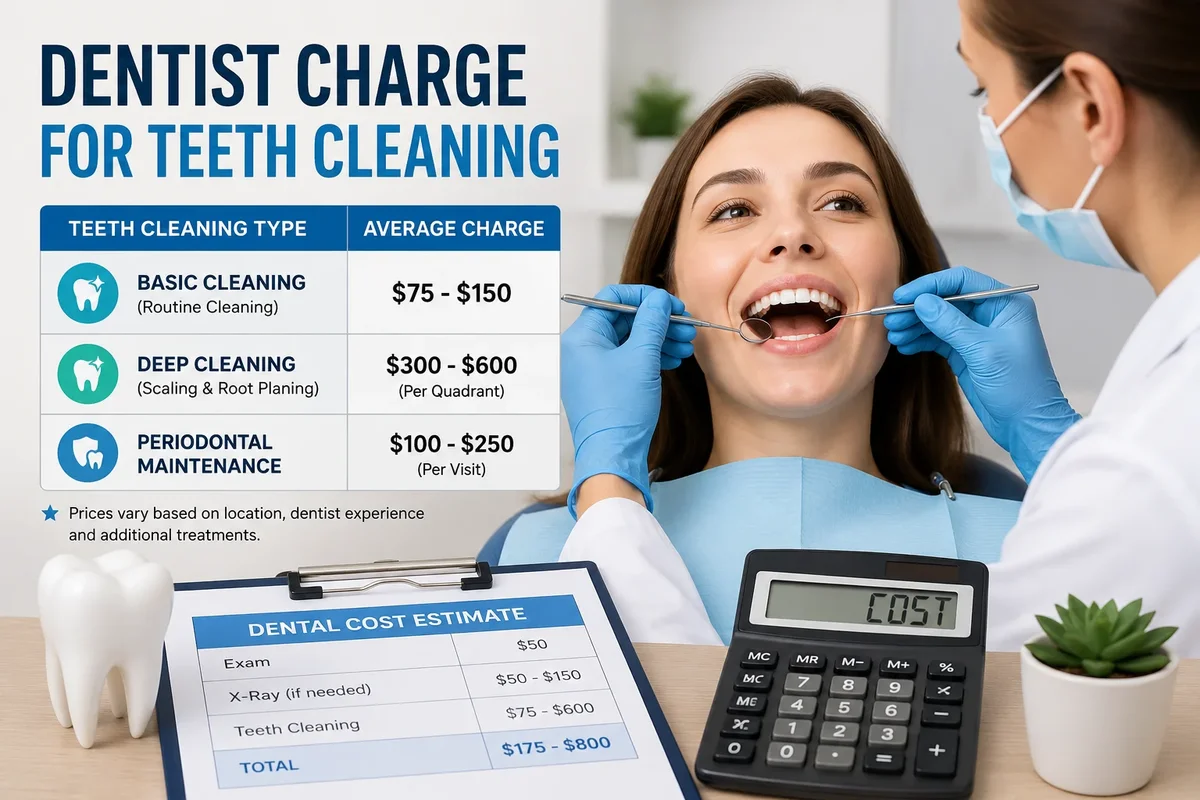
The average dentist charge for teeth cleaning depends on several factors, including the type of cleaning required, the location of the clinic, the patient’s oral health condition, and whether dental insurance is available. In most cases, a standard dental cleaning in the United States ranges between $75 and $250 without insurance. However, if deeper periodontal cleaning is needed, the dentist charge for teeth cleaning may increase significantly due to additional procedures and treatment complexity.
Professional dental cleaning is often called prophylaxis cleaning. During this treatment, a dental hygienist or dentist removes tartar, plaque, and bacteria from the teeth and gum line. Even individuals who brush and floss daily may still need regular professional cleanings because hardened tartar cannot be removed at home. This is why understanding the dentist charge for teeth cleaning is important for anyone trying to maintain long-term oral health.
Several people delay treatment because they worry about the total dentist charge for teeth cleaning. Unfortunately, postponing preventive dental care often leads to gum disease, tooth decay, and costly restorative procedures. In many cases, paying for routine cleanings twice a year is far more affordable than paying for crowns, root canals, or dental implants later. Preventive dentistry saves money over time while also protecting your smile and overall wellness.
Dental clinics usually calculate the dentist charge for teeth cleaning according to the patient’s needs. A first-time patient may require X-rays, a dental examination, and periodontal evaluation before the cleaning process begins. These additional services can increase the overall appointment cost. Some clinics also include fluoride treatment, oral cancer screening, or polishing within the cleaning package.
Below is a general overview of common professional cleaning prices in the United States:
| Dental Service | Average Cost |
|---|---|
| Basic Teeth Cleaning | $75 – $250 |
| Dental Exam | $50 – $150 |
| Dental X-Rays | $25 – $200 |
| Deep Cleaning (Scaling and Root Planing) | $150 – $400 Per Quadrant |
| Fluoride Treatment | $20 – $50 |
As shown above, the total dentist charge for teeth cleaning may vary depending on whether additional preventive services are needed. Patients with healthy gums generally pay less than patients suffering from periodontal disease or heavy tartar buildup. Deep cleaning procedures are usually more expensive because they require additional time, local anesthesia, and advanced periodontal care.
Another major factor affecting the dentist charge for teeth cleaning is geographic location. Clinics in large metropolitan cities often charge higher fees due to increased operational costs, rent, and staff salaries. On the other hand, smaller towns and suburban clinics may offer more affordable pricing. Some patients also travel internationally for dental care because professional cleanings and cosmetic treatments may be cheaper abroad while still maintaining high quality standards.
Patients with dental insurance often pay significantly less for preventive cleanings. Many insurance plans fully cover two routine cleanings per year because insurance providers recognize that preventive care reduces expensive future treatments. Without insurance, many dental offices offer payment plans, membership programs, or discounted preventive packages to make oral care more accessible.
Maintaining regular cleanings also supports overall health. Research shows that poor oral hygiene is connected to heart disease, diabetes complications, respiratory infections, and gum inflammation. By understanding the true value behind the dentist charge for teeth cleaning, patients can view preventive dentistry as an investment instead of simply another healthcare expense.
There are also cosmetic benefits associated with professional cleaning. Many patients notice whiter teeth, fresher breath, and smoother enamel after treatment 😁. Although professional cleaning is not identical to teeth whitening, removing stains and plaque can dramatically improve smile appearance. This is one reason why many people schedule routine cleanings before important events, job interviews, or social occasions.
If you are searching for affordable preventive dental services, always compare clinic experience, patient reviews, sterilization standards, and included services instead of choosing solely based on the lowest dentist charge for teeth cleaning. A high-quality dental clinic focuses on both safety and long-term oral health outcomes.
You can also learn more about oral health recommendations through the American Dental Association. For patients seeking personalized dental consultation or treatment planning, visit the Redent Klinik Contact Page.
Ultimately, understanding the dentist charge for teeth cleaning helps patients prepare financially while prioritizing preventive oral care. Whether you need a routine cleaning, tartar removal, dental hygiene maintenance, or periodontal therapy, regular professional cleanings remain one of the smartest investments for maintaining healthy teeth and gums for many years.
What Is the Average Dentist Charge for Teeth Cleaning?
Understanding the average dentist charge for teeth cleaning is extremely important for patients who want to maintain healthy teeth and gums while also managing their healthcare budget. Many people assume that every dental clinic charges the same amount for preventive cleaning services, but this is not true. The final dentist charge for teeth cleaning depends on several important factors, including the patient’s oral health condition, clinic location, treatment complexity, insurance coverage, and whether additional dental procedures are required during the appointment.
Professional dental cleanings are considered one of the most valuable preventive dental treatments available today 😊. Regular cleanings help remove plaque, tartar, bacteria, and stains that cannot always be eliminated through brushing and flossing alone. Patients who attend routine dental hygiene appointments often reduce their risk of cavities, gum disease, bad breath, and costly restorative procedures later.
Average Dentist Charge for Teeth Cleaning in the United States
The average dentist charge for teeth cleaning in the United States generally ranges between $75 and $250 for a routine cleaning without insurance. However, this price range can increase depending on the complexity of the cleaning and whether the patient requires additional treatments such as X-rays, fluoride applications, or periodontal therapy.
Here is a detailed overview of common pricing:
| Dental Cleaning Service | Estimated Cost |
|---|---|
| Routine Dental Cleaning | $75 – $250 |
| Dental Examination | $50 – $150 |
| Digital X-Rays | $25 – $200 |
| Deep Cleaning (Scaling & Root Planing) | $600 – $1,600 Total |
| Fluoride Treatment | $20 – $50 |
| Periodontal Maintenance Cleaning | $150 – $350 |
As shown above, the final dentist charge for teeth cleaning can vary significantly depending on the patient’s oral health needs. Patients with healthy gums usually require only a standard prophylaxis cleaning, while patients with gum disease may need a much more intensive deep cleaning procedure.
What Is Included in the Dentist Charge for Teeth Cleaning?
Many patients wonder what services are actually included in the standard dentist charge for teeth cleaning. In most clinics, routine preventive cleanings include:
- Removal of plaque and tartar buildup
- Professional polishing of the teeth
- Flossing between teeth
- Basic oral hygiene evaluation
- Gum health assessment
- Dental hygiene recommendations
Some dental clinics may also include fluoride treatment or digital imaging as part of the cleaning package. Others may charge separately for these services. This is why patients should always ask for a full treatment estimate before scheduling an appointment.
Routine Cleaning vs Deep Cleaning
A routine cleaning is designed for patients with generally healthy gums and minimal tartar buildup. A deep cleaning, however, targets gum disease and requires cleaning below the gumline. This type of periodontal cleaning takes more time and may involve local anesthesia, which increases the overall dentist charge for teeth cleaning.
Patients with symptoms such as bleeding gums, gum recession, persistent bad breath, or bone loss may require scaling and root planing instead of a regular cleaning. Although the cost is higher, early periodontal treatment can prevent tooth loss and expensive restorative dentistry later.
How Dental Insurance Affects Cleaning Costs
Dental insurance can greatly reduce the average dentist charge for teeth cleaning. Many insurance providers fully cover preventive cleanings twice per year because preventive dentistry lowers the risk of major future claims.
Patients without insurance often pay the full cleaning fee out of pocket. Fortunately, many clinics now offer:
- Dental membership plans
- Preventive care discounts
- Monthly payment programs
- New patient specials
- Family dental packages
These options help make preventive dental care more affordable for patients who do not have private dental coverage.
Why Dentist Charge for Teeth Cleaning Differs Between Clinics
Several important factors influence the dentist charge for teeth cleaning from one clinic to another. These include:
Clinic Location
Dental clinics in large cities or high-cost metropolitan areas often charge more due to higher operational expenses, rent, salaries, and equipment costs. Smaller towns and suburban clinics may offer lower pricing.
Technology and Equipment
Clinics using advanced digital technology, ultrasonic cleaning systems, and modern sterilization protocols may charge slightly more. However, these technologies often improve patient comfort and treatment quality.
Experience of the Dental Team
Highly experienced dentists and hygienists may charge higher fees because of their expertise and patient reputation. Many patients are willing to pay more for trusted professionals who provide gentle and effective care 😁.
Is the Dentist Charge for Teeth Cleaning Worth It?
Absolutely. Preventive dental cleanings are far less expensive than restorative procedures caused by neglected oral hygiene. Patients who skip routine cleanings often develop cavities, gum infections, tooth sensitivity, and periodontal disease.
For example, compare average treatment costs:
| Dental Treatment | Average Cost |
|---|---|
| Routine Cleaning | $75 – $250 |
| Dental Filling | $150 – $400 |
| Root Canal Treatment | $700 – $1,800 |
| Dental Crown | $800 – $2,500 |
| Dental Implant | $3,000 – $6,000 |
This comparison clearly shows why routine preventive care is a smart long-term investment. Paying a manageable dentist charge for teeth cleaning today may help patients avoid thousands of dollars in future restorative treatment expenses.
How Often Should Patients Schedule Professional Cleanings?
Most dentists recommend professional cleanings every six months. However, patients with gum disease, heavy plaque buildup, smoking habits, diabetes, or orthodontic appliances may require more frequent visits.
Regular appointments allow dentists to identify oral health issues early before they become painful or expensive. Preventive dentistry also improves overall wellness because poor oral health has been linked to heart disease, respiratory infections, and diabetes complications.
Patients interested in learning more about preventive dental care can visit the American Dental Association. If you are searching for personalized treatment options, professional dental hygiene services, or affordable preventive care, you can also visit the Redent Klinik Contact Page.
Ultimately, understanding the average dentist charge for teeth cleaning helps patients plan their dental care more effectively while protecting their oral health for the future. Whether you need a routine cleaning, tartar removal, periodontal maintenance, or a complete oral hygiene evaluation, preventive care remains one of the most cost-effective ways to maintain a healthy and confident smile.
Why Does Dentist Charge for Teeth Cleaning Vary by Location?
One of the most common questions patients ask is why the dentist charge for teeth cleaning changes so dramatically depending on where the dental clinic is located. Two patients receiving nearly identical preventive dental cleaning procedures may pay completely different prices simply because they live in different cities, states, or countries. Understanding the regional factors behind the dentist charge for teeth cleaning helps patients better evaluate treatment costs while making informed decisions about oral healthcare.
Location plays a major role in dental pricing because dental clinics must adjust their service fees according to operational expenses, local demand, staff salaries, taxes, insurance regulations, and economic conditions. In many large metropolitan areas, the average dentist charge for teeth cleaning is significantly higher than in smaller towns or suburban regions. However, higher prices do not always guarantee better treatment quality. Patients should evaluate clinic reputation, sterilization standards, dentist experience, and patient satisfaction alongside cost considerations 😊.
Urban Areas Usually Have Higher Dental Cleaning Costs
Dental clinics located in major cities such as New York, Los Angeles, Chicago, or Miami often have a higher dentist charge for teeth cleaning. The primary reason is increased operational overhead. Urban dental offices typically pay higher rent, utility costs, employee salaries, insurance premiums, and equipment expenses.
For example, a routine preventive cleaning in a large metropolitan city may range between $150 and $300 without insurance, while the same procedure in a smaller town may cost between $75 and $150.
| Location Type | Average Cleaning Cost |
|---|---|
| Large Metropolitan City | $150 – $300 |
| Suburban Area | $100 – $220 |
| Small Town or Rural Area | $75 – $150 |
| International Dental Tourism Destinations | $30 – $120 |
This pricing difference explains why many patients compare clinics in neighboring cities before booking appointments. The total dentist charge for teeth cleaning may vary substantially even within the same state.
Cost of Living Affects Dentist Charge for Teeth Cleaning
One of the strongest influences on the dentist charge for teeth cleaning is the local cost of living. Areas with expensive housing, transportation, utilities, and employee wages usually have higher healthcare service costs overall.
Higher Staff Salaries
Dental hygienists, dentists, reception staff, and dental assistants working in expensive cities generally receive higher salaries. Clinics must reflect these labor costs within their treatment pricing.
Commercial Rent and Equipment Expenses
Modern dental clinics require expensive equipment, sterilization systems, imaging technology, and treatment rooms. Renting commercial office space in large cities can dramatically increase monthly clinic expenses, which directly affects the final dentist charge for teeth cleaning.
Insurance Networks Differ by State and Region
Dental insurance coverage also impacts the average dentist charge for teeth cleaning. Some states have stronger insurance competition and broader preventive dental coverage, while others offer more limited benefits.
In regions where preventive dentistry is strongly supported by insurance providers, patients may pay little or nothing out of pocket for standard cleanings. In areas with limited insurance access, patients may need to pay the full cleaning fee themselves.
Insurance networks can also affect which dental clinics patients choose. Some clinics offer reduced rates through insurance partnerships, while others operate entirely on private-pay models.
Dental Tourism and International Price Differences
The significant variation in the dentist charge for teeth cleaning has also contributed to the rapid growth of dental tourism 🌍. Many patients travel internationally to receive affordable preventive and cosmetic dental care while still benefiting from experienced professionals and modern clinics.
Countries such as Turkey, Mexico, Thailand, Hungary, and Costa Rica are popular dental tourism destinations because treatment costs are often far lower than in the United States or Western Europe.
For example:
| Country | Average Teeth Cleaning Cost |
|---|---|
| United States | $75 – $250 |
| United Kingdom | $80 – $220 |
| Turkey | $30 – $90 |
| Mexico | $35 – $100 |
| Thailand | $40 – $110 |
Patients considering international treatment should carefully evaluate clinic accreditation, sterilization protocols, dentist qualifications, and patient reviews before scheduling care abroad.
Technology and Clinic Standards Influence Pricing
Another reason why the dentist charge for teeth cleaning differs by location is the level of technology available within local dental clinics. High-end clinics in developed urban regions often invest heavily in:
- Digital X-ray systems
- Ultrasonic cleaning devices
- Laser periodontal equipment
- Advanced sterilization systems
- Comfort-focused patient technology
These investments improve patient safety and treatment quality but also increase clinic operational expenses. As a result, clinics offering premium dental experiences may charge higher fees.
Specialized Dental Clinics
Some clinics focus heavily on cosmetic dentistry or luxury dental care. These practices often provide spa-like environments, sedation options, advanced imaging, and concierge-style services. Naturally, the dentist charge for teeth cleaning at these facilities may exceed standard market rates.
Local Competition Can Lower Prices
Interestingly, areas with many competing dental clinics sometimes offer lower preventive care pricing. When multiple clinics operate within the same neighborhood, they may provide:
- New patient cleaning specials
- Discount membership programs
- Free consultations
- Seasonal promotions
- Insurance-friendly pricing
Competition encourages clinics to improve both affordability and service quality. Patients living in highly competitive markets often benefit from better pricing flexibility.
Should Patients Choose the Cheapest Option?
Although affordability matters, patients should never select a clinic based solely on the lowest dentist charge for teeth cleaning. Extremely low prices may sometimes indicate rushed appointments, outdated equipment, poor sterilization standards, or inexperienced providers.
Instead, patients should compare:
- Dentist qualifications
- Patient reviews
- Clinic hygiene standards
- Technology used
- Treatment transparency
- Communication quality
Preventive dental cleaning is essential for long-term oral health, so choosing a trusted provider is extremely important.
How to Find Affordable and Reliable Dental Cleaning
Patients searching for a reasonable dentist charge for teeth cleaning should request written treatment estimates before appointments. It is also helpful to ask:
- Whether X-rays are included
- If fluoride treatment costs extra
- Whether insurance is accepted
- If membership plans are available
- How often cleanings are recommended
Learning about preventive oral health through trusted organizations such as the American Dental Association can also help patients make informed decisions.
If you are looking for personalized preventive care, affordable dental cleaning services, or professional oral hygiene consultations, you can also visit the Redent Klinik Contact Page.
Ultimately, the dentist charge for teeth cleaning varies by location because every region has unique economic conditions, operational costs, insurance structures, and healthcare standards. By understanding these factors, patients can make smarter choices while protecting both their oral health and financial wellbeing.
What Is Included in a Professional Dental Cleaning?
Many patients compare prices before booking a dental appointment, but they often do not fully understand what services are actually included in the dentist charge for teeth cleaning. A professional dental cleaning is much more than simply polishing teeth. It is a preventive oral healthcare procedure designed to remove harmful bacteria, plaque buildup, tartar deposits, and early signs of gum disease before they become serious problems. Understanding what is included in the dentist charge for teeth cleaning helps patients appreciate the value of preventive dental care and avoid unexpected treatment costs later 😊.
Professional teeth cleaning appointments are usually performed by a licensed dental hygienist under the supervision of a dentist. Depending on the patient’s oral health condition, the appointment may also include examinations, X-rays, fluoride treatment, periodontal evaluation, and personalized oral hygiene recommendations.
Initial Oral Examination Before Cleaning
Before beginning the actual cleaning process, many dental clinics perform a basic oral examination. This step is often included within the standard dentist charge for teeth cleaning, although some clinics may bill the examination separately.
During this evaluation, the dentist or hygienist checks for:
- Cavities and tooth decay
- Signs of gum disease
- Oral infections
- Gum recession
- Broken fillings or crowns
- Oral cancer symptoms
- Excessive tartar buildup
This examination allows the dental team to determine whether the patient only needs a routine cleaning or if deeper periodontal treatment is necessary.
Why the Examination Matters
Early diagnosis is one of the biggest advantages of preventive dentistry. A routine dental cleaning appointment may help identify small oral health issues before they become painful or expensive. Even though some patients focus only on the dentist charge for teeth cleaning, the preventive value of these examinations can save thousands of dollars in future restorative treatment costs.
Plaque and Tartar Removal
The main purpose of professional dental cleaning is removing plaque and tartar from the teeth and gumline. Plaque is a sticky layer of bacteria that forms on teeth daily. If plaque is not removed properly through brushing and flossing, it hardens into tartar, also called calculus.
Tartar cannot be removed at home using regular toothbrushes. Specialized dental instruments are required to safely clean hardened deposits from the teeth.
During this stage, the hygienist carefully removes tartar buildup around the teeth and below the gumline using manual tools or ultrasonic cleaning devices. The amount of tartar buildup directly affects the total dentist charge for teeth cleaning because heavier buildup usually requires more treatment time.
Ultrasonic Cleaning Technology
Many modern clinics now use ultrasonic scaling equipment. These devices use vibration and water spray to break apart tartar efficiently while improving patient comfort. Clinics with advanced equipment may charge slightly higher fees, which can influence the final dentist charge for teeth cleaning.
Professional Tooth Polishing
After tartar removal, the hygienist usually polishes the teeth using a rotating polishing tool and special dental paste. This process smooths the enamel surface and helps remove minor stains caused by:
- Coffee
- Tea
- Smoking
- Red wine
- Dark-colored foods
Many patients notice brighter teeth and fresher breath immediately after polishing 😁. While polishing is not the same as professional whitening, it can significantly improve smile appearance.
In most cases, polishing is already included in the standard dentist charge for teeth cleaning.
Professional Flossing and Gum Care
Another important part of preventive cleaning involves flossing between teeth and evaluating gum health. Even patients who floss regularly at home may have difficult-to-reach areas where bacteria accumulate.
The hygienist carefully cleans these areas while checking for:
- Bleeding gums
- Inflammation
- Gum pockets
- Early periodontal disease
If signs of gum disease are detected, the dentist may recommend a deeper periodontal cleaning procedure instead of a standard preventive cleaning. This can increase the total dentist charge for teeth cleaning because deep cleanings require additional treatment steps.
Fluoride Treatment
Many dental clinics also offer fluoride treatment after professional cleaning. Fluoride strengthens tooth enamel and helps reduce cavity risk.
Fluoride may be applied in several forms:
- Foam
- Gel
- Varnish
- Rinse solution
Some clinics include fluoride treatment within the routine dentist charge for teeth cleaning, while others charge separately. Fluoride is especially beneficial for:
- Children
- Patients with sensitive teeth
- Patients with frequent cavities
- Individuals with dry mouth
Dental X-Rays and Imaging
Dental X-rays are not always required at every cleaning appointment, but many patients receive periodic imaging to detect hidden dental problems.
X-rays can help identify:
- Tooth decay between teeth
- Bone loss
- Abscesses
- Impacted teeth
- Infections below the gums
Digital imaging may increase the total dentist charge for teeth cleaning, depending on clinic policy and insurance coverage.
How Often Are X-Rays Needed?
Most healthy adults do not require full dental X-rays at every cleaning appointment. However, patients with ongoing dental issues or periodontal disease may need more frequent imaging for monitoring purposes.
Oral Hygiene Education and Recommendations
A quality professional cleaning appointment also includes personalized oral hygiene guidance. The dental team may provide recommendations about:
- Proper brushing techniques
- Flossing methods
- Mouthwash selection
- Dietary habits
- Tobacco use
- Tooth sensitivity management
This preventive education is one of the most valuable parts of the dentist charge for teeth cleaning because it helps patients improve their daily oral hygiene habits and reduce future dental problems.
Deep Cleaning Is Different From Routine Cleaning
Patients with gum disease often require scaling and root planing, commonly known as deep cleaning. Unlike regular preventive cleanings, deep cleaning targets bacteria and tartar beneath the gumline.
Deep cleaning procedures may include:
- Root surface smoothing
- Local anesthesia
- Multiple treatment sessions
- Periodontal maintenance plans
Because this treatment is more complex, the dentist charge for teeth cleaning becomes much higher when periodontal therapy is necessary.
Is Professional Teeth Cleaning Worth the Cost?
Absolutely. Regular preventive cleaning appointments are one of the best investments patients can make for long-term oral health. Preventive care helps reduce the risk of:
- Tooth decay
- Gum disease
- Tooth loss
- Bad breath
- Expensive restorative treatments
Skipping professional cleanings may save money temporarily, but untreated dental issues often become much more expensive later.
Patients can learn more about preventive oral healthcare through the American Dental Association. For personalized consultations, preventive dentistry services, or affordable cleaning appointments, you can also visit the Redent Klinik Contact Page.
Ultimately, understanding what is included in the dentist charge for teeth cleaning helps patients recognize the true value of preventive dental care. From plaque removal and polishing to gum evaluations and oral health education, professional cleanings play a critical role in maintaining healthy teeth, strong gums, and long-term overall wellness.
Does Insurance Cover Dentist Charge for Teeth Cleaning?
One of the biggest concerns patients have before scheduling a preventive dental visit is whether insurance will help reduce the dentist charge for teeth cleaning. Dental insurance can significantly lower out-of-pocket costs for routine preventive care, but coverage varies depending on the insurance provider, treatment type, annual limits, and clinic network agreements. Understanding how insurance affects the dentist charge for teeth cleaning helps patients avoid unexpected expenses while maximizing their dental benefits 😊.
Most dental insurance plans strongly encourage preventive dentistry because routine cleanings reduce the risk of expensive restorative procedures in the future. For this reason, many insurance companies partially or fully cover standard teeth cleanings twice per year. However, not every cleaning procedure is categorized the same way, and patients may still have financial responsibility depending on the complexity of treatment.
What Type of Teeth Cleaning Is Usually Covered?
Insurance companies typically classify dental cleanings into two main categories:
- Preventive routine cleaning
- Periodontal deep cleaning
The amount covered by insurance depends heavily on which category the treatment falls under. Routine preventive cleanings usually receive the highest level of coverage, while deep periodontal treatments often involve higher patient costs.
Routine Preventive Cleaning Coverage
Most dental insurance plans cover preventive cleanings at 80% to 100% when performed within recommended frequency guidelines. In many cases, patients pay little or nothing for routine visits if they remain within their plan limits.
A standard preventive cleaning generally includes:
- Plaque removal
- Tartar removal
- Teeth polishing
- Basic oral examination
- Gum evaluation
When preventive services are fully covered, the patient’s direct dentist charge for teeth cleaning becomes much lower.
Deep Cleaning Coverage
Deep cleaning, also called scaling and root planing, is usually treated differently by insurance companies because it is considered periodontal therapy rather than preventive maintenance.
Deep cleaning may be required for patients experiencing:
- Gum disease
- Bone loss
- Bleeding gums
- Deep gum pockets
- Heavy tartar buildup
Insurance often covers part of the treatment, but patients may still pay significant out-of-pocket costs because periodontal care is more complex. This is why the final dentist charge for teeth cleaning can vary greatly depending on gum health.
How Dental Insurance Plans Usually Work
Most dental insurance plans follow a yearly coverage structure that includes preventive, basic, and major treatment categories.
| Dental Service Category | Typical Coverage Percentage |
|---|---|
| Preventive Care | 80% – 100% |
| Basic Procedures | 50% – 80% |
| Major Procedures | 25% – 50% |
Preventive services receive the highest coverage because insurance providers understand that early care lowers future healthcare costs. Regular cleanings help prevent:
- Cavities
- Gum disease
- Tooth loss
- Expensive restorative treatments
As a result, routine preventive appointments are usually the most affordable type of dental care for insured patients.
Why Some Patients Still Pay Out of Pocket
Even with insurance, patients may still receive a bill related to the dentist charge for teeth cleaning. Several factors can increase personal financial responsibility.
Out-of-Network Dental Clinics
Insurance providers often negotiate discounted fees with in-network dental clinics. If patients visit an out-of-network provider, the insurance company may reimburse a smaller percentage of the treatment cost.
This can significantly increase the patient’s portion of the dentist charge for teeth cleaning.
Frequency Limitations
Many insurance plans only cover two routine cleanings per year. Patients requiring more frequent periodontal maintenance due to gum disease may need to pay additional costs themselves.
Additional Services
Routine cleanings may not include all services. Patients may receive separate charges for:
- X-rays
- Fluoride treatment
- Periodontal charting
- Antibacterial rinses
- Laser gum therapy
These additional procedures can increase the total dentist charge for teeth cleaning even when insurance is active.
Dental Insurance Waiting Periods
Some dental insurance policies apply waiting periods before certain services become eligible for coverage. Preventive cleanings are often covered immediately, but periodontal treatments or advanced procedures may require waiting several months.
Patients should carefully review their policy details before scheduling treatment to understand how their benefits apply.
How to Reduce Dentist Charge for Teeth Cleaning Without Insurance
Patients without dental insurance still have several options for lowering the dentist charge for teeth cleaning. Many dental clinics now offer affordable preventive programs to encourage regular oral care.
Dental Membership Plans
Many clinics offer in-house membership programs that provide discounted preventive services for an annual fee. These plans often include:
- Routine cleanings
- Dental examinations
- X-rays
- Discounted restorative procedures
Dental Schools
Dental schools sometimes provide low-cost cleanings performed by supervised students. These clinics can be a budget-friendly solution for preventive dental care.
Seasonal Promotions
Some clinics offer promotional packages for new patients that include cleaning, examination, and X-rays at reduced pricing.
Importance of Preventive Dentistry Even Without Insurance
Some patients avoid dental visits because they worry about the total dentist charge for teeth cleaning. However, delaying preventive care often leads to more serious oral health problems that are far more expensive.
For example:
| Dental Procedure | Average Cost |
|---|---|
| Routine Cleaning | $75 – $250 |
| Dental Filling | $150 – $400 |
| Root Canal | $700 – $1,800 |
| Dental Crown | $800 – $2,500 |
| Dental Implant | $3,000 – $6,000 |
This comparison demonstrates why preventive care remains one of the smartest long-term oral health investments.
Questions Patients Should Ask Their Insurance Provider
Before scheduling an appointment, patients should ask their insurance company:
- How many cleanings are covered annually?
- Is the clinic in-network?
- Are X-rays included?
- Does the plan cover fluoride treatment?
- What percentage is covered for deep cleaning?
- Are there annual maximum limits?
Understanding these details can help patients avoid unexpected billing surprises.
Choosing the Right Dental Clinic
Patients should not select a provider based only on the lowest dentist charge for teeth cleaning. High-quality preventive care depends on experienced professionals, proper sterilization, modern technology, and accurate diagnosis.
Learning more about preventive oral healthcare through trusted organizations such as the American Dental Association can help patients make informed decisions.
If you are searching for affordable preventive dentistry, personalized treatment plans, or professional oral hygiene services, you can also visit the Redent Klinik Contact Page.
Ultimately, insurance can dramatically reduce the dentist charge for teeth cleaning, especially for routine preventive care. However, coverage rules vary widely between providers and treatment types. Patients who understand their insurance benefits are better prepared to maintain healthy teeth and gums while managing dental costs effectively.
Deep Cleaning vs Regular Cleaning: Cost Differences Explained
Many patients become confused when dentists recommend a deep cleaning instead of a regular preventive cleaning. One of the biggest reasons for this confusion is the major difference in the dentist charge for teeth cleaning between these two procedures. While routine cleanings are considered preventive care, deep cleanings are periodontal treatments designed to manage gum disease and protect the supporting structures around the teeth. Understanding the difference between these procedures helps patients better understand why the dentist charge for teeth cleaning can vary so dramatically depending on oral health conditions 😊.
Regular dental cleanings and deep cleanings may appear similar at first glance because both involve removing plaque and tartar. However, the treatment depth, complexity, equipment, time requirements, and long-term oral health goals are very different.
What Is a Regular Dental Cleaning?
A regular dental cleaning, also called prophylaxis cleaning, is a preventive treatment designed for patients with generally healthy gums and minimal tartar buildup. During this procedure, the hygienist removes plaque, tartar, and surface stains from above the gumline.
The goal of preventive cleaning is to maintain healthy teeth and gums while preventing future dental problems.
What Happens During a Routine Cleaning?
A standard cleaning appointment usually includes:
- Oral examination
- Plaque removal
- Tartar removal
- Tooth polishing
- Professional flossing
- Basic gum evaluation
The average dentist charge for teeth cleaning for a routine preventive cleaning generally ranges between $75 and $250 without insurance.
Many dental insurance plans fully cover routine cleanings twice per year because preventive care helps reduce expensive future treatments.
What Is a Deep Dental Cleaning?
Deep cleaning, also called scaling and root planing, is a periodontal treatment used for patients suffering from gum disease. Unlike routine cleanings, deep cleanings target bacteria, plaque, and tartar below the gumline where infection develops.
When gum disease progresses, bacteria create deep pockets between the teeth and gums. These infected pockets can lead to:
- Bleeding gums
- Bone loss
- Gum recession
- Tooth mobility
- Chronic bad breath
- Tooth loss
Because this treatment is much more advanced, the dentist charge for teeth cleaning becomes significantly higher for deep cleaning procedures.
Scaling and Root Planing Explained
Deep cleaning involves two primary stages:
- Scaling: Removal of plaque and tartar below the gumline
- Root Planing: Smoothing the tooth roots to help gums reattach properly
This process often requires local anesthesia because the treatment reaches sensitive areas beneath the gums.
Main Cost Differences Between Regular and Deep Cleaning
The most obvious difference between these treatments is the total dentist charge for teeth cleaning. Routine preventive cleanings are relatively simple and quick, while deep cleanings require additional time, expertise, and periodontal management.
| Procedure Type | Average Cost | Main Purpose |
|---|---|---|
| Routine Cleaning | $75 – $250 | Preventive Maintenance |
| Deep Cleaning Per Quadrant | $150 – $400 | Periodontal Disease Treatment |
| Full Mouth Deep Cleaning | $600 – $1,600+ | Advanced Gum Infection Control |
The total dentist charge for teeth cleaning increases during deep cleanings because the procedure is often divided into multiple treatment sessions, requires anesthesia, and involves extensive bacterial removal below the gums.
Why Deep Cleaning Costs More
Several important factors explain why the dentist charge for teeth cleaning becomes much higher when periodontal therapy is required.
Longer Appointment Times
Routine cleanings often take 30 to 60 minutes. Deep cleaning appointments may require multiple visits lasting much longer because each section of the mouth is treated carefully.
Use of Local Anesthesia
Deep cleanings frequently involve local numbing injections to keep patients comfortable during root cleaning procedures.
Advanced Periodontal Equipment
Dental clinics often use specialized ultrasonic devices, periodontal instruments, antibacterial irrigation systems, and laser-assisted therapies during deep cleaning.
Higher Clinical Complexity
Managing active gum disease requires advanced clinical expertise and careful monitoring. The increased treatment complexity directly affects the overall dentist charge for teeth cleaning.
Signs You May Need a Deep Cleaning
Many patients assume they only need a regular cleaning, but dentists may diagnose periodontal disease during examination.
Common warning signs include:
- Bleeding while brushing
- Persistent bad breath
- Loose teeth
- Gum swelling
- Gum recession
- Pain while chewing
- Heavy tartar buildup
If these symptoms are present, delaying periodontal treatment can allow the infection to worsen.
Can Routine Cleaning Treat Gum Disease?
No. Routine preventive cleanings only clean above the gumline. Once bacteria spread below the gums and periodontal pockets form, regular cleanings are no longer sufficient.
Attempting to avoid the higher dentist charge for teeth cleaning associated with deep cleaning may ultimately lead to:
- Bone destruction
- Advanced periodontal disease
- Tooth extraction
- Need for dental implants
- Chronic oral infections
Early periodontal treatment is always more affordable than replacing missing teeth later.
Does Insurance Cover Deep Cleaning?
Insurance often partially covers deep cleaning procedures, but patients usually pay more out of pocket compared to routine preventive visits.
Most insurance companies classify deep cleaning as periodontal therapy rather than preventive care. As a result:
- Coverage percentages may be lower
- Deductibles may apply
- Annual maximums may limit reimbursement
- Additional periodontal maintenance visits may be needed
This is why patients should verify coverage details before beginning treatment.
Recovery After Deep Cleaning
Patients often experience mild sensitivity after periodontal therapy. Common temporary symptoms include:
- Gum tenderness
- Cold sensitivity
- Mild soreness
- Minor bleeding
Most symptoms improve within a few days. Dentists usually recommend:
- Soft foods
- Gentle brushing
- Antibacterial mouthwash
- Good oral hygiene habits
Following aftercare instructions helps prevent reinfection and supports gum healing.
Which Cleaning Type Is Better?
Neither cleaning is “better” universally because the appropriate treatment depends entirely on oral health condition. Healthy patients benefit from regular preventive cleanings, while patients with periodontal disease require deep cleaning for proper infection control.
The important goal is identifying gum disease early before major complications develop. Even though the dentist charge for teeth cleaning is higher for deep cleaning, treating periodontal disease promptly can prevent severe long-term dental damage.
Patients can learn more about gum disease prevention and oral hygiene recommendations through the American Dental Association. For personalized periodontal evaluations, preventive dentistry, or professional teeth cleaning services, you can also visit the Redent Klinik Contact Page.
Ultimately, understanding the differences between regular and deep cleanings helps patients make informed oral healthcare decisions. While the dentist charge for teeth cleaning may vary significantly between procedures, preventive care and early periodontal treatment remain essential investments for maintaining healthy teeth, strong gums, and long-term overall wellness.
How Often Should You Pay for Teeth Cleaning Services?
Many patients ask dentists how often they truly need professional dental cleaning appointments and whether regular visits are really worth the dentist charge for teeth cleaning. The answer depends on several important factors, including oral hygiene habits, gum health, medical conditions, lifestyle choices, and previous dental history. While most people benefit from preventive cleanings every six months, some patients may require more frequent care to maintain healthy gums and teeth 😊.
Professional teeth cleaning is one of the most effective preventive dental treatments available today. Routine cleanings help remove plaque, tartar, and bacteria that cannot always be eliminated with brushing and flossing alone. Paying the regular dentist charge for teeth cleaning may seem like a recurring expense, but preventive care is usually far more affordable than treating advanced dental disease later.
The Standard Recommendation: Every Six Months
Most dentists recommend scheduling a professional cleaning every six months. This timeline is widely accepted because plaque buildup hardens into tartar over time, increasing the risk of:
- Cavities
- Gum inflammation
- Bad breath
- Gingivitis
- Periodontal disease
Routine cleanings twice per year allow dental professionals to monitor oral health while removing harmful bacterial buildup before serious problems develop.
For many healthy adults, paying the dentist charge for teeth cleaning twice annually is enough to maintain strong oral hygiene and reduce future treatment costs.
Why Six Months Became the Standard
The six-month preventive care model became popular because studies showed that regular professional maintenance significantly lowers long-term dental complications. Although some patients may safely wait slightly longer between appointments, six months remains the safest recommendation for most individuals.
Some Patients Need More Frequent Cleanings
Not everyone has the same oral health needs. Certain patients develop plaque and tartar much faster than others. In these situations, dentists may recommend professional cleanings every three or four months.
Although this increases the yearly dentist charge for teeth cleaning, frequent preventive care often helps avoid far more expensive procedures later.
Patients With Gum Disease
Patients diagnosed with periodontal disease usually require more frequent maintenance cleanings. Gum disease causes bacteria to collect beneath the gumline, increasing the risk of:
- Bone loss
- Loose teeth
- Tooth loss
- Gum recession
Periodontal maintenance appointments help control bacterial growth and protect long-term oral health.
Smokers and Tobacco Users
Smoking increases plaque buildup, staining, gum disease risk, and bad breath. Smokers often require more frequent professional cleanings because tobacco products negatively affect gum health and healing ability.
Patients With Diabetes
Diabetes can increase susceptibility to gum disease and oral infections. Patients with diabetes often benefit from more frequent preventive care because controlling oral bacteria is important for overall health management.
Orthodontic Patients
Patients wearing braces or aligners may struggle to clean around orthodontic appliances effectively. Additional cleanings help remove trapped plaque and reduce cavity risk during orthodontic treatment.
What Happens If You Skip Dental Cleanings?
Some people delay preventive appointments because they want to avoid the dentist charge for teeth cleaning. Unfortunately, postponing cleanings often creates more serious oral health issues that become significantly more expensive later.
Without regular cleanings:
- Plaque hardens into tartar
- Gums become inflamed
- Cavities develop more easily
- Bacteria spread below the gumline
- Bad breath worsens
- Gum disease progresses
Eventually, untreated oral health problems may require fillings, crowns, root canals, extractions, or dental implants.
Cost Comparison Between Prevention and Treatment
| Dental Service | Average Cost |
|---|---|
| Routine Cleaning | $75 – $250 |
| Dental Filling | $150 – $400 |
| Root Canal | $700 – $1,800 |
| Dental Crown | $800 – $2,500 |
| Dental Implant | $3,000 – $6,000 |
This comparison clearly demonstrates why regular preventive care is financially smarter in the long term. Paying the routine dentist charge for teeth cleaning can help patients avoid thousands of dollars in restorative treatment costs.
Can Good Brushing Replace Professional Cleaning?
Even excellent brushing and flossing habits cannot fully replace professional dental cleanings. Toothbrushes remove soft plaque, but hardened tartar requires specialized dental instruments for proper removal.
Professional cleanings also include:
- Gum health evaluations
- Early cavity detection
- Oral cancer screenings
- Polishing
- Preventive recommendations
This is why preventive appointments remain essential even for patients with strong home oral hygiene routines.
Factors That Influence Cleaning Frequency
The ideal cleaning schedule depends on several individual factors.
Oral Hygiene Habits
Patients who brush and floss consistently may require fewer intensive cleanings than individuals with poor oral hygiene.
Diet
Sugary foods and acidic beverages increase cavity risk and bacterial growth, potentially increasing the need for professional maintenance.
Genetics
Some people naturally produce more plaque and tartar due to saliva composition and genetic factors.
Age
Children, seniors, and individuals with weakened immune systems may require specialized preventive care schedules.
How Long Does a Professional Cleaning Take?
A standard preventive cleaning usually lasts between 30 and 60 minutes. Patients with heavy tartar buildup or gum disease may require longer appointments.
The total dentist charge for teeth cleaning sometimes reflects the complexity and duration of treatment. Deep periodontal cleanings typically require more time than routine maintenance visits.
How to Make Professional Cleanings More Affordable
Patients concerned about the recurring dentist charge for teeth cleaning can explore several affordability options:
- Dental insurance plans
- In-house membership programs
- Family preventive care packages
- Dental school clinics
- Seasonal promotions
Many insurance companies fully cover preventive cleanings twice annually, making routine care extremely affordable for insured patients.
Benefits Beyond Oral Health
Regular professional cleanings support more than just healthy teeth. Studies have linked poor oral hygiene to several systemic health conditions, including:
- Heart disease
- Diabetes complications
- Respiratory infections
- Inflammatory conditions
Maintaining regular preventive dental visits contributes to overall wellness while improving smile appearance and confidence 😁.
When Should You Schedule Your Next Cleaning?
If it has been more than six months since your last appointment, scheduling a preventive visit is highly recommended. Early professional care helps prevent gum disease, tooth decay, and expensive future procedures.
Patients can learn more about preventive oral health recommendations through the American Dental Association. If you are searching for affordable preventive care, professional hygiene services, or personalized dental consultations, you can also visit the Redent Klinik Contact Page.
Ultimately, paying the regular dentist charge for teeth cleaning is one of the smartest long-term investments patients can make for both oral and overall health. Consistent preventive care helps maintain healthy teeth, strong gums, fresher breath, and a confident smile while reducing the risk of costly restorative dental procedures later in life.
Ways to Reduce Dentist Charge for Teeth Cleaning Safely
Many patients want to maintain healthy teeth and gums while also lowering the overall dentist charge for teeth cleaning. Preventive dental care is essential for long-term oral health, but the cost of regular appointments can become challenging for individuals without insurance or large healthcare budgets. Fortunately, there are several safe and effective ways to reduce the dentist charge for teeth cleaning without sacrificing treatment quality or oral health standards 😊.
Patients should never ignore preventive dental care simply because of financial concerns. Skipping routine cleanings often leads to gum disease, tooth decay, infections, and expensive restorative procedures later. Instead of avoiding professional treatment completely, patients can explore affordable alternatives, preventive strategies, and cost-saving programs that help reduce dental expenses while protecting long-term oral health.
Maintain Strong Daily Oral Hygiene Habits
One of the most effective ways to reduce the future dentist charge for teeth cleaning is maintaining excellent oral hygiene at home. Patients who brush and floss consistently usually develop less tartar buildup and gum inflammation.
Good home care helps reduce:
- Plaque accumulation
- Gum disease risk
- Cavity formation
- Bad breath
- Need for deep cleaning procedures
Patients with healthy gums often require only routine preventive cleanings instead of more expensive periodontal treatments.
Recommended Daily Oral Care Routine
- Brush teeth twice daily for two minutes
- Use fluoride toothpaste
- Floss every day
- Use antibacterial mouthwash
- Limit sugary foods and drinks
- Avoid smoking and tobacco products
These simple habits can significantly lower long-term oral healthcare expenses.
Schedule Regular Preventive Appointments
Ironically, one of the best ways to reduce the overall dentist charge for teeth cleaning over time is to avoid skipping preventive appointments. Regular cleanings prevent severe plaque buildup and help dentists detect small issues before they become expensive problems.
Patients who delay dental visits for several years often require:
- Deep cleaning procedures
- Fillings
- Root canals
- Crowns
- Tooth extractions
- Dental implants
Routine preventive cleanings are usually far less expensive than restorative dentistry.
Prevention vs Treatment Cost Comparison
| Dental Procedure | Average Cost |
|---|---|
| Routine Cleaning | $75 – $250 |
| Deep Cleaning | $600 – $1,600 |
| Dental Filling | $150 – $400 |
| Root Canal Treatment | $700 – $1,800 |
| Dental Implant | $3,000 – $6,000 |
This comparison clearly demonstrates how preventive care saves money long term.
Use Dental Insurance Benefits Fully
Dental insurance can dramatically reduce the dentist charge for teeth cleaning. Many insurance providers fully cover routine preventive cleanings twice annually.
Patients should maximize their benefits by:
- Scheduling covered preventive visits regularly
- Choosing in-network providers
- Reviewing annual coverage limits
- Understanding deductible requirements
Using insurance strategically helps reduce out-of-pocket costs while maintaining proper oral hygiene.
In-Network vs Out-of-Network Clinics
In-network dental clinics often negotiate discounted treatment fees with insurance companies. Visiting an out-of-network clinic may increase the patient’s share of the dentist charge for teeth cleaning.
Consider Dental Membership Plans
Many modern dental clinics now offer in-house membership plans for patients without insurance. These programs are becoming increasingly popular because they provide affordable preventive care at predictable yearly costs.
Dental membership plans often include:
- Routine cleanings
- Dental examinations
- X-rays
- Emergency evaluations
- Discounts on restorative treatment
Membership plans can significantly lower the effective dentist charge for teeth cleaning for uninsured patients.
Take Advantage of New Patient Specials
Some dental clinics offer promotional pricing for new patients. These packages often include:
- Professional cleaning
- Dental examination
- X-rays
- Consultation
New patient promotions can help reduce the initial dentist charge for teeth cleaning, especially for individuals returning to dental care after long gaps.
Visit Dental Schools for Lower Costs
Dental schools frequently provide affordable preventive services performed by supervised students. Although appointments may take longer, treatment quality is closely monitored by experienced dental instructors.
Dental schools can offer significantly reduced:
- Cleaning costs
- X-ray fees
- Preventive examinations
- Periodontal evaluations
For budget-conscious patients, dental schools are often a safe way to reduce the dentist charge for teeth cleaning.
Prevent Gum Disease Early
One of the biggest reasons cleaning costs increase is periodontal disease. Once bacteria spread below the gumline, patients may require deep scaling and root planing procedures.
Preventing gum disease helps patients avoid:
- Deep cleaning costs
- Periodontal maintenance expenses
- Bone loss treatment
- Tooth replacement procedures
Early intervention is always more affordable than advanced periodontal treatment.
Warning Signs of Gum Disease
- Bleeding gums
- Persistent bad breath
- Swollen gums
- Gum recession
- Loose teeth
Patients experiencing these symptoms should schedule professional evaluation quickly to avoid rising dental costs.
Compare Clinics Carefully
Patients searching for lower dentist charge for teeth cleaning should compare multiple dental clinics carefully. However, choosing the cheapest option is not always the safest decision.
Important factors to evaluate include:
- Dentist qualifications
- Patient reviews
- Clinic cleanliness
- Technology used
- Sterilization standards
- Treatment transparency
Quality preventive care helps reduce future complications and long-term expenses.
Avoid Unsafe DIY Cleaning Methods
Some people attempt to avoid the dentist charge for teeth cleaning entirely by using dangerous home scraping tools or internet “DIY tartar removal” techniques.
This is strongly discouraged because improper cleaning methods can cause:
- Enamel damage
- Gum injuries
- Infections
- Tooth sensitivity
- Permanent gum recession
Professional cleanings performed by trained dental professionals remain the safest option for maintaining oral health.
Maintain Healthy Lifestyle Habits
Healthy lifestyle choices also help reduce long-term dental expenses. Patients who avoid smoking, control sugar intake, stay hydrated, and maintain balanced nutrition often experience fewer dental complications.
Strong overall health supports healthier gums and lowers the risk of costly periodontal disease.
Why Preventive Dentistry Is Worth the Cost
Although some patients focus heavily on the short-term dentist charge for teeth cleaning, preventive dentistry provides enormous long-term value. Professional cleanings help:
- Preserve natural teeth
- Prevent infections
- Improve breath freshness
- Reduce future treatment costs
- Protect overall health
Preventive care is one of the smartest healthcare investments patients can make 😁.
Patients can learn more about oral health prevention through the American Dental Association. If you are searching for affordable preventive care, personalized oral hygiene consultations, or professional teeth cleaning services, you can also visit the Redent Klinik Contact Page.
Ultimately, reducing the dentist charge for teeth cleaning safely requires a combination of strong home care, regular preventive appointments, smart financial planning, and choosing reputable dental providers. Preventive dentistry remains one of the most effective ways to maintain healthy teeth and gums while avoiding expensive future oral health complications.
Warning Signs You Need Professional Teeth Cleaning Immediately
Many people delay dental appointments because they believe their teeth feel “fine” or because they want to avoid the dentist charge for teeth cleaning. Unfortunately, oral health problems often develop silently before pain appears. By the time severe symptoms become noticeable, gum disease or tooth decay may already be advanced. Understanding the early warning signs that indicate the need for professional dental cleaning can help patients protect their oral health while preventing expensive future treatments 😊.
Professional cleanings are designed to remove plaque, tartar, and harmful bacteria before serious complications occur. Ignoring early symptoms may increase the future dentist charge for teeth cleaning because advanced gum disease often requires deep periodontal therapy instead of a simple preventive cleaning.
Bleeding Gums During Brushing or Flossing
One of the most common signs that you may need professional teeth cleaning immediately is bleeding gums. Healthy gums should not bleed regularly during brushing or flossing.
Bleeding usually indicates:
- Plaque accumulation
- Gum inflammation
- Early gingivitis
- Bacterial infection
Many patients ignore bleeding gums because they assume it is normal. However, untreated gingivitis can progress into periodontal disease, increasing both oral health risks and the eventual dentist charge for teeth cleaning.
Why Early Treatment Matters
When gum inflammation is treated early through routine preventive cleaning, recovery is often simple and affordable. Delaying treatment allows bacteria to spread beneath the gums, potentially leading to bone loss and tooth instability.
Persistent Bad Breath
Chronic bad breath, also called halitosis, may signal excessive bacterial buildup in the mouth. While temporary bad breath can result from food choices, ongoing odor often indicates deeper oral hygiene problems.
Professional cleaning may be necessary if bad breath persists despite:
- Regular brushing
- Flossing
- Mouthwash use
- Tongue cleaning
Bacteria trapped within tartar deposits produce unpleasant odors that cannot always be eliminated at home. Professional plaque and tartar removal may significantly improve breath freshness 😁.
Visible Tartar or Plaque Buildup
If you notice yellow or brown hardened deposits near your gumline, professional cleaning is likely necessary. Tartar buildup is one of the clearest signs that preventive care has been delayed.
Tartar forms when plaque hardens over time and becomes impossible to remove using normal brushing alone.
Why Tartar Is Dangerous
Tartar creates rough surfaces that allow bacteria to spread more easily. This increases the risk of:
- Cavities
- Gingivitis
- Periodontal disease
- Gum recession
- Tooth loss
The longer tartar remains untreated, the more difficult and expensive cleaning becomes. As tartar accumulates below the gumline, the overall dentist charge for teeth cleaning may rise because deeper periodontal therapy becomes necessary.
Gum Swelling or Redness
Healthy gums should appear firm and pink. Swollen, red, or tender gums often indicate inflammation caused by bacterial irritation.
Patients experiencing gum swelling may require immediate professional evaluation because untreated gum inflammation can progress rapidly.
Common causes include:
- Poor oral hygiene
- Heavy plaque buildup
- Smoking
- Hormonal changes
- Periodontal infection
Routine preventive cleanings help reduce bacterial irritation and restore healthier gum tissue.
Tooth Sensitivity
Increased sensitivity to hot, cold, sweet, or acidic foods may also indicate the need for professional cleaning.
Sensitivity can result from:
- Gum recession
- Enamel erosion
- Tartar buildup near the gums
- Early decay
- Periodontal disease
Professional cleaning allows dentists to identify the cause of sensitivity before the condition worsens.
Can Delaying Cleaning Increase Sensitivity?
Yes. Untreated plaque and tartar often irritate gum tissue and expose sensitive root surfaces. Delaying preventive treatment may increase discomfort and eventually require more expensive periodontal care.
Loose Teeth or Gum Recession
Loose teeth or receding gums are serious warning signs that should never be ignored. These symptoms often indicate advanced periodontal disease affecting the bone and tissues supporting the teeth.
At this stage, patients usually require deep cleaning instead of routine preventive treatment. The resulting dentist charge for teeth cleaning may become significantly higher because periodontal therapy is more complex.
Common symptoms of advanced gum disease include:
- Teeth appearing longer
- Spaces developing between teeth
- Tooth movement
- Pain while chewing
- Chronic inflammation
Long Time Since Your Last Dental Visit
Even without obvious symptoms, patients who have not received professional cleaning for more than six to twelve months should schedule an appointment.
Plaque accumulation occurs continuously, even in individuals with strong oral hygiene habits. Over time, this buildup hardens into tartar that requires professional removal.
Delaying appointments for several years often increases the future dentist charge for teeth cleaning because more extensive periodontal treatment may become necessary.
Smoking and Tobacco Use
Smokers often develop gum disease more quickly than non-smokers because tobacco weakens blood circulation and reduces gum healing ability.
Smoking increases:
- Tartar accumulation
- Gum recession
- Bone loss risk
- Bad breath
- Tooth staining
Smokers frequently require more frequent professional cleanings to maintain gum health.
Dry Mouth and Increased Bacterial Growth
Saliva helps naturally protect the mouth by neutralizing bacteria and washing away food particles. Patients experiencing chronic dry mouth often develop plaque more rapidly.
Dry mouth may result from:
- Medication side effects
- Medical conditions
- Dehydration
- Aging
- Smoking
Increased bacterial buildup can accelerate gum disease progression and increase the eventual dentist charge for teeth cleaning.
Why Early Cleaning Saves Money
Some patients delay appointments because they worry about the current dentist charge for teeth cleaning. However, ignoring symptoms often creates much larger expenses later.
| Dental Treatment | Average Cost |
|---|---|
| Routine Cleaning | $75 – $250 |
| Deep Cleaning | $600 – $1,600 |
| Root Canal | $700 – $1,800 |
| Dental Crown | $800 – $2,500 |
| Dental Implant | $3,000 – $6,000 |
This comparison clearly shows why early preventive care is financially beneficial.
How Professional Cleaning Improves Overall Health
Professional teeth cleaning does more than improve smile appearance. Research has linked poor oral health to:
- Heart disease
- Diabetes complications
- Respiratory infections
- Inflammatory conditions
Maintaining healthy gums through regular professional care supports overall physical wellness.
When to Contact a Dental Professional
If you notice bleeding gums, bad breath, tartar buildup, sensitivity, swelling, or gum recession, scheduling a dental cleaning as soon as possible is highly recommended.
Patients can learn more about preventive oral health through the American Dental Association. If you are searching for personalized preventive care, periodontal evaluations, or professional teeth cleaning services, you can also visit the Redent Klinik Contact Page.
Ultimately, recognizing the warning signs early helps patients avoid advanced gum disease, tooth loss, and expensive restorative procedures. While some individuals hesitate because of the dentist charge for teeth cleaning, early preventive treatment remains one of the safest and most affordable ways to maintain healthy teeth, strong gums, and long-term oral wellness.
Choosing the Right Dental Clinic for Affordable Teeth Cleaning
Choosing the right dental clinic is one of the most important decisions patients make when considering preventive oral care. While many people focus mainly on the dentist charge for teeth cleaning, the cheapest option is not always the safest or most effective choice. A high-quality dental clinic should combine affordability, professional experience, modern technology, patient comfort, and strong hygiene standards. Understanding how to evaluate dental clinics properly helps patients receive excellent preventive care while managing the overall dentist charge for teeth cleaning wisely 😊.
Professional teeth cleaning is essential for maintaining healthy gums, preventing cavities, removing plaque buildup, and lowering the risk of periodontal disease. However, treatment quality can vary significantly between clinics. Some clinics provide comprehensive preventive care with advanced equipment and highly trained staff, while others may focus only on quick low-cost services.
Why Choosing the Right Dental Clinic Matters
Preventive dental care affects both oral health and long-term healthcare costs. A trusted dental clinic can identify early signs of:
- Tooth decay
- Gum disease
- Oral infections
- Bone loss
- Oral cancer
- Enamel erosion
Early diagnosis and treatment help patients avoid expensive restorative procedures later. Although some patients search only for the lowest dentist charge for teeth cleaning, choosing an experienced clinic often provides greater long-term value.
Preventive Care Saves Future Costs
Routine professional cleanings are far more affordable than advanced restorative treatments. Clinics that emphasize prevention help patients avoid procedures such as:
- Root canals
- Crowns
- Periodontal surgery
- Tooth extractions
- Dental implants
This is why selecting the right provider is so important for both oral health and financial planning.
Look Beyond the Lowest Price
Many patients compare only the advertised dentist charge for teeth cleaning when choosing a dental clinic. However, extremely low pricing can sometimes indicate limited services, rushed appointments, outdated equipment, or poor sterilization standards.
Instead of focusing solely on price, patients should evaluate:
- Dentist qualifications
- Clinic cleanliness
- Technology used
- Patient reviews
- Treatment transparency
- Communication quality
Affordable care should never come at the expense of patient safety or treatment quality.
Check Dentist Experience and Qualifications
Experienced dentists and hygienists are often better equipped to identify early oral health problems and provide gentle, effective treatment.
When researching clinics, patients should look for:
- Professional licenses
- Continuing education certifications
- Specialized periodontal training
- Years of clinical experience
- Professional association memberships
Although highly experienced clinics may sometimes have a slightly higher dentist charge for teeth cleaning, the quality and accuracy of care are often worth the investment.
Importance of Dental Hygienists
Dental hygienists play a major role during preventive cleaning appointments. Skilled hygienists improve patient comfort while thoroughly removing plaque and tartar.
A quality hygienist also provides personalized oral hygiene education to help patients maintain healthier teeth between appointments.
Evaluate Clinic Hygiene and Sterilization Standards
Proper sterilization protocols are critical in any dental environment. Patients should choose clinics that follow strict infection control standards.
Signs of a professional clinic include:
- Clean treatment rooms
- Sealed sterilized instruments
- Protective gloves and masks
- Organized equipment
- Modern sterilization systems
Patients should never compromise safety simply to reduce the dentist charge for teeth cleaning.
Modern Technology Improves Treatment Quality
Advanced dental technology often improves patient comfort, treatment accuracy, and diagnostic capabilities.
Modern preventive dentistry may include:
- Digital X-rays
- Ultrasonic cleaning systems
- Laser periodontal therapy
- Intraoral cameras
- Digital periodontal charting
Clinics using modern technology may charge slightly more, but these investments often improve cleaning efficiency and patient experience.
Benefits of Ultrasonic Cleaning
Ultrasonic scaling devices help remove tartar more comfortably and efficiently than traditional manual tools alone. Many patients prefer clinics that offer these advanced cleaning systems.
Read Patient Reviews Carefully
Online patient reviews can provide valuable insight into clinic quality, professionalism, appointment organization, and overall patient satisfaction.
When reviewing feedback, patients should pay attention to comments regarding:
- Cleanliness
- Staff friendliness
- Treatment transparency
- Comfort during cleaning
- Unexpected fees
- Appointment wait times
Positive reviews often indicate consistent treatment quality and trustworthy patient care.
Ask About Full Pricing Transparency
Patients should always request detailed pricing information before treatment begins. Some clinics advertise a low dentist charge for teeth cleaning but later add separate charges for:
- X-rays
- Fluoride treatment
- Periodontal evaluations
- Polishing
- Consultations
Clear communication about treatment costs helps patients avoid financial surprises.
Questions Patients Should Ask
- What is included in the cleaning price?
- Are X-rays charged separately?
- Does insurance cover the procedure?
- Is fluoride treatment optional?
- Will additional periodontal treatment increase costs?
Insurance and Payment Options
Choosing a clinic that accepts your insurance provider can significantly lower the total dentist charge for teeth cleaning.
Many clinics also offer:
- Monthly payment plans
- Dental membership programs
- Family discounts
- Preventive care packages
- Seasonal promotions
These options help make preventive care more affordable for uninsured patients.
Location and Convenience Matter
Patients are more likely to maintain regular preventive care when the clinic location is convenient. Choosing a clinic close to home or work can help patients avoid skipping appointments.
Regular attendance is essential because delaying preventive care often increases the future dentist charge for teeth cleaning due to worsening gum disease or tartar buildup.
Communication and Patient Comfort
Excellent communication is one of the most overlooked aspects of choosing a dental clinic. Patients should feel comfortable asking questions about:
- Treatment recommendations
- Cleaning procedures
- Oral hygiene habits
- Costs and insurance
- Pain management options
A supportive dental team helps reduce anxiety and improves the overall patient experience 😁.
Warning Signs of Poor Dental Clinics
Patients should avoid clinics that demonstrate:
- Poor hygiene standards
- Hidden treatment fees
- Rushed appointments
- Limited explanations
- Negative patient reviews
- Outdated equipment
Choosing a low-quality provider simply because of a lower dentist charge for teeth cleaning can sometimes lead to improper diagnosis or inadequate preventive care.
Why Preventive Dentistry Is Worth the Investment
Routine preventive cleaning remains one of the smartest long-term healthcare investments patients can make. Regular appointments help:
- Maintain healthy gums
- Reduce cavity risk
- Prevent periodontal disease
- Improve breath freshness
- Protect natural teeth
Consistent preventive care also supports overall health because oral bacteria have been linked to several systemic conditions.
Patients can learn more about oral health prevention through the American Dental Association. If you are searching for professional preventive care, affordable cleaning services, or personalized dental consultations, you can also visit the Redent Klinik Contact Page.
Ultimately, selecting the right dental clinic involves much more than comparing the dentist charge for teeth cleaning. Patients should prioritize professionalism, safety, communication, experience, and preventive care quality to protect their oral health for many years while avoiding costly future dental complications.