
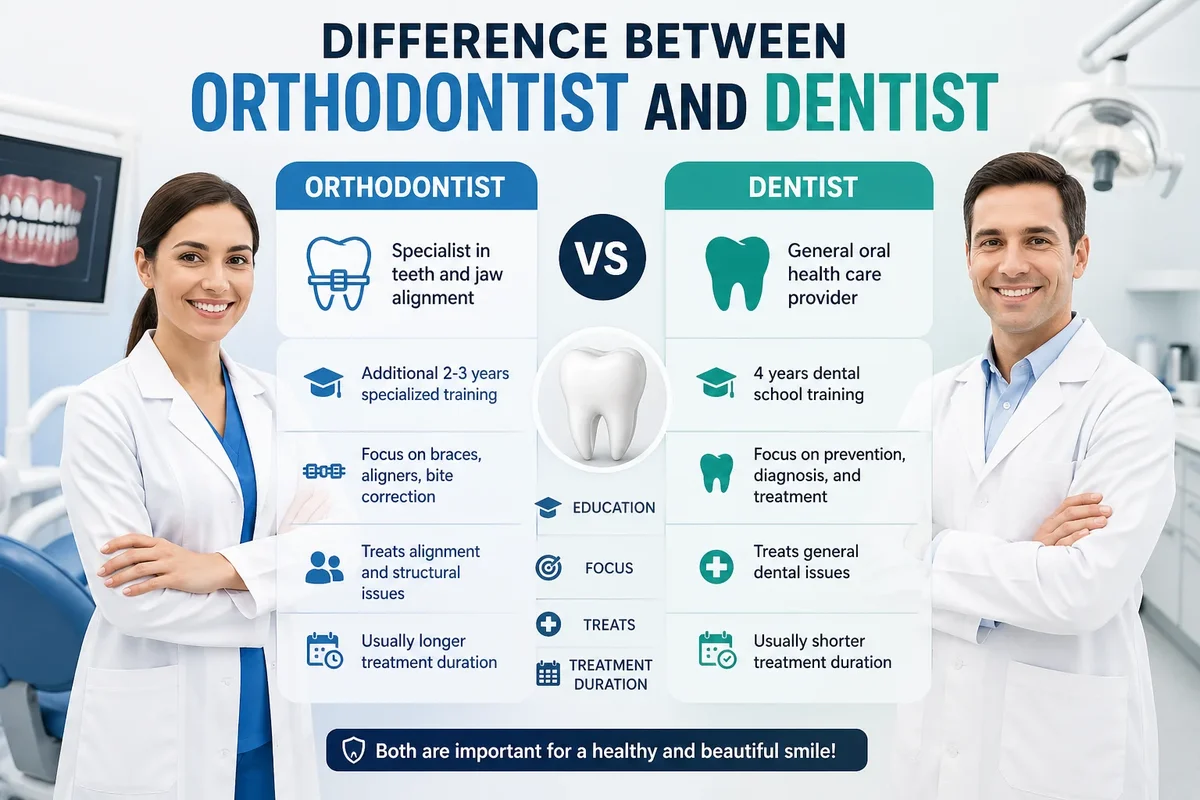
Understanding the difference between orthodontist and dentist is essential for anyone who wants to make informed decisions about their oral health. While both professionals focus on improving your smile and maintaining healthy teeth and gums, their roles, training, and treatment approaches are quite different. Many patients assume that a dentist and an orthodontist are interchangeable, but this is not the case. Knowing the difference between orthodontist and dentist helps you choose the right specialist for your specific dental needs, ensuring better results and avoiding unnecessary delays in treatment. 😊
A general dentist is your primary oral healthcare provider. Dentists are responsible for diagnosing, preventing, and treating a wide range of dental issues such as cavities, gum disease, tooth decay, and oral infections. They perform routine procedures like cleanings, fillings, crowns, and root canals. In contrast, the difference between orthodontist and dentist becomes clear when you consider that orthodontists specialize specifically in correcting misaligned teeth and jaw structures. Orthodontists focus on improving bite alignment and tooth positioning through treatments like braces and clear aligners.
The difference between orthodontist and dentist also lies in their educational path. After completing dental school, orthodontists undergo additional years of specialized training in orthodontics. This extra education allows them to master complex techniques related to tooth movement and jaw alignment. Dentists, while highly skilled, typically do not receive the same level of specialized training in alignment correction unless they pursue further certification. This educational distinction plays a major role in defining the difference between orthodontist and dentist.
Another important aspect of the difference between orthodontist and dentist is the type of problems they treat. Dentists handle general oral health issues, such as tooth pain, gum inflammation, and preventive care. Orthodontists, on the other hand, focus on issues like crooked teeth, overcrowding, gaps, overbites, underbites, and crossbites. These alignment problems can affect not only your smile but also your ability to chew, speak, and maintain proper oral hygiene. This clearly highlights the difference between orthodontist and dentist in terms of treatment focus.
Many people also wonder when they should visit each professional. The difference between orthodontist and dentist becomes practical in everyday decision-making. For routine check-ups, cleanings, and general dental concerns, you should visit a dentist regularly. However, if your dentist notices alignment issues, they may refer you to an orthodontist for specialized care. This collaboration between professionals ensures that patients receive comprehensive treatment, further emphasizing the difference between orthodontist and dentist.
In terms of tools and techniques, the difference between orthodontist and dentist is also evident. Dentists use equipment designed for cleaning, restoring, and maintaining teeth, while orthodontists use specialized tools like braces, retainers, and aligners to gradually move teeth into the correct position. Orthodontic treatments often require long-term planning and regular adjustments, which is another key point in understanding the difference between orthodontist and dentist.
Financial considerations can also reflect the difference between orthodontist and dentist. Routine dental procedures are generally more affordable and often covered by standard dental insurance plans. Orthodontic treatments, however, tend to be more expensive due to their complexity and duration. Despite the higher cost, these treatments provide long-term benefits in both function and aesthetics, reinforcing the importance of recognizing the difference between orthodontist and dentist.
From a patient perspective, understanding the difference between orthodontist and dentist can significantly improve your overall dental experience. Instead of seeking treatment from the wrong provider, you can directly consult the appropriate specialist, saving time and achieving better results. If you are unsure which professional to visit, you can always start with a consultation. For personalized guidance, you can contact professionals through the Redent Klinik Contact Page.
For further authoritative information about dental professionals and standards, you can also visit the American Dental Association, which provides reliable resources about oral health care. This helps reinforce your understanding of the difference between orthodontist and dentist from a trusted global perspective.
In summary, the difference between orthodontist and dentist lies in their scope of practice, level of specialization, and types of treatments they provide. Dentists serve as the foundation of oral healthcare, while orthodontists focus on advanced alignment solutions. Recognizing this distinction ensures that you receive the most appropriate care for your needs, leading to a healthier smile and improved confidence. 😁
What Is the Difference Between Orthodontist and Dentist?
The difference between orthodontist and dentist is one of the most commonly misunderstood topics in dental care. Many patients assume that both professionals perform the same tasks, but in reality, their roles, expertise, and treatment goals are quite distinct. Understanding the difference between orthodontist and dentist can help you make better decisions about your oral health, avoid unnecessary treatments, and ensure that you receive the most effective care possible. 😊
Core Roles: General Care vs Specialized Alignment
At the most basic level, the difference between orthodontist and dentist lies in their core responsibilities. A dentist is a general oral healthcare provider who focuses on maintaining overall dental health. This includes preventive care such as cleanings, exams, and fluoride treatments, as well as restorative procedures like fillings, crowns, and root canals. Dentists are your first point of contact for most dental concerns.
On the other hand, an orthodontist is a dental specialist who focuses exclusively on correcting misaligned teeth and jaw structures. This specialization highlights the difference between orthodontist and dentist because orthodontists do not typically perform general dental procedures. Instead, they dedicate their expertise to improving bite function and aesthetics through treatments like braces, aligners, and retainers.
Why This Difference Matters
The difference between orthodontist and dentist becomes especially important when determining the type of care you need. If you have tooth pain, cavities, or gum issues, a dentist is the right choice. However, if you are dealing with crooked teeth, gaps, or bite problems, an orthodontist is the specialist you should consult. Choosing the right professional ensures faster diagnosis and more effective treatment outcomes.
Scope of Practice and Treatment Focus
Another critical aspect of the difference between orthodontist and dentist is the scope of practice. Dentists are trained to diagnose and treat a wide variety of oral health issues. Their work includes:
- Routine dental exams and cleanings
- Tooth decay treatment (fillings)
- Gum disease management
- Cosmetic procedures such as whitening
- Basic restorative treatments
In contrast, orthodontists focus on structural alignment. This includes:
- Correcting crooked or crowded teeth
- Fixing bite issues like overbite or underbite
- Using braces, clear aligners, and retainers
- Long-term treatment planning for jaw alignment
This clearly demonstrates the difference between orthodontist and dentist in terms of treatment goals. While dentists aim to maintain oral health, orthodontists aim to improve alignment and function over time.
Patient Journey: Who Do You Visit First?
For most people, the dental journey begins with a general dentist. Regular check-ups allow dentists to monitor your oral health and identify any potential issues early. If alignment problems are detected, your dentist may refer you to an orthodontist. This referral system is a practical example of the difference between orthodontist and dentist working together to provide comprehensive care.
If you are unsure about your specific needs, you can always start by consulting a professional through the Redent Klinik Contact Page. This ensures that you are guided toward the right treatment path based on your individual condition.
Collaborative Care Approach
The difference between orthodontist and dentist does not mean they work independently. In fact, they often collaborate closely. For example, before starting orthodontic treatment, your dentist may need to address cavities or gum issues. After orthodontic treatment, your dentist helps maintain oral health and ensure long-term results. This teamwork enhances patient outcomes and highlights the importance of understanding the difference between orthodontist and dentist.
Tools and Techniques Used
The tools used by each professional further emphasize the difference between orthodontist and dentist. Dentists typically use equipment designed for cleaning, repairing, and restoring teeth. Orthodontists, however, use specialized appliances such as:
- Traditional metal braces
- Ceramic braces
- Clear aligners (like Invisalign)
- Retainers for post-treatment stability
These tools are specifically designed to gradually move teeth into proper alignment over time, which is a defining aspect of the difference between orthodontist and dentist.
Long-Term Impact on Oral Health
The difference between orthodontist and dentist also becomes evident when considering long-term outcomes. Regular dental care helps prevent decay and gum disease, ensuring that your teeth remain healthy. Orthodontic treatment, on the other hand, improves the alignment of your teeth, making them easier to clean and reducing the risk of future dental problems.
Proper alignment can also improve chewing efficiency, speech clarity, and even facial aesthetics. This makes orthodontic care not just cosmetic but also functional, further reinforcing the difference between orthodontist and dentist.
Trusted Information and Professional Standards
To better understand professional standards and guidelines, you can refer to trusted sources like the American Dental Association. This organization provides reliable information about dental care and helps patients understand the roles of different specialists. Learning from authoritative sources strengthens your understanding of the difference between orthodontist and dentist and ensures that you make informed healthcare decisions.
In conclusion, the difference between orthodontist and dentist is defined by their roles, training, and treatment focus. Dentists handle general oral health, while orthodontists specialize in correcting alignment issues. Recognizing this distinction allows you to seek the right care at the right time, leading to better oral health and a more confident smile. 😁