
Orthodontic treatment has evolved dramatically over the past decades, and one of the most important elements behind successful tooth alignment is the use of different braces wires. While brackets are the visible part attached to the teeth, braces wires are the component that actually creates the gentle pressure needed to move teeth into proper alignment. Understanding different braces wires helps patients feel more confident about their orthodontic treatment and allows them to better understand how their smile transformation works.
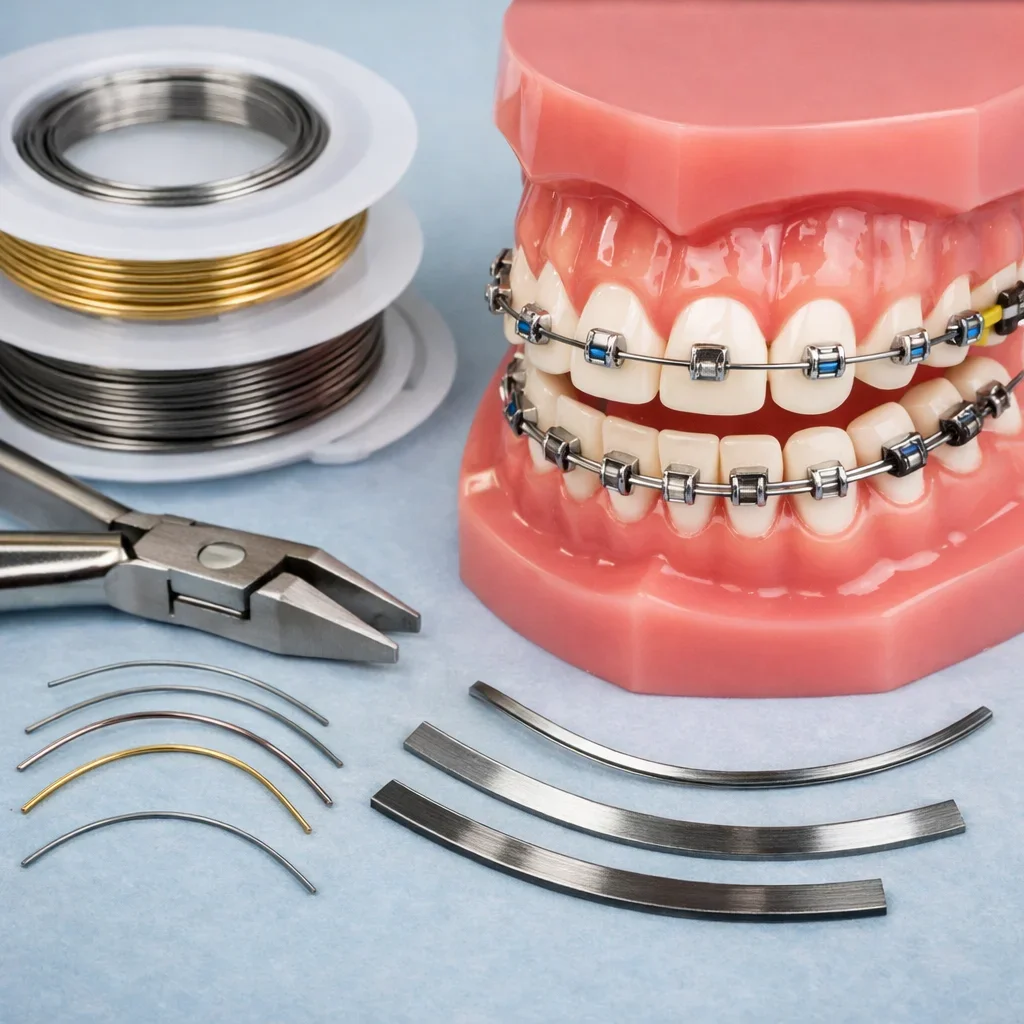
Braces wires, often called orthodontic archwires, are thin metal wires that run through the brackets placed on each tooth. These wires are responsible for guiding teeth into the correct position by applying controlled, gradual force. Orthodontists carefully select among different braces wires depending on the stage of treatment, the complexity of the case, and the desired tooth movement. Each wire type has specific properties such as flexibility, strength, and elasticity, making it suitable for different phases of orthodontic treatment.
At the beginning of treatment, orthodontists typically start with highly flexible wires. These are among the first different braces wires patients experience after getting braces. Their main purpose is to begin aligning teeth gently without causing excessive pressure or discomfort. These wires allow teeth that are crowded or rotated to start moving gradually into better positions.
As treatment progresses, orthodontists replace the early wires with stronger different braces wires that provide greater control over tooth movement. This transition is essential because different stages of treatment require varying levels of force. Early stages focus on alignment, while later stages refine the bite and ensure teeth fit together properly. Each time your orthodontist changes your archwire, they are strategically advancing your treatment plan.
One of the fascinating aspects of different braces wires is the variety of materials used in modern orthodontics. Common materials include nickel titanium, stainless steel, and beta titanium. Each material has unique characteristics that help orthodontists perform precise tooth movements. For example, nickel titanium wires are known for their memory shape properties, which allow them to return to their original shape even after being bent. This makes them extremely useful during the early alignment stage.
Patients often notice that their orthodontist changes their wires every few weeks during routine appointments. This process ensures that the most appropriate different braces wires are used as the teeth gradually move into alignment. During these adjustments, orthodontists may tighten the wire, replace it with a thicker one, or switch to a different material altogether. Although this may cause temporary soreness, it indicates that the treatment is progressing effectively.
Another reason why different braces wires are important is that they help control several types of tooth movements simultaneously. Orthodontists can use specific wires to rotate teeth, close gaps, straighten crooked teeth, and correct bite alignment. Because every patient’s dental structure is unique, orthodontists carefully plan which wires to use and when to change them.
In addition to functionality, modern different braces wires are designed to improve patient comfort. Advances in orthodontic technology have made wires smoother, more flexible, and less irritating to the inside of the mouth. Some orthodontic systems even use heat-activated wires that respond to body temperature, applying consistent and gentle pressure throughout the day.
Understanding different braces wires can also help patients follow better oral care habits during treatment. Braces wires create small spaces where food particles can accumulate, making proper brushing and flossing extremely important. Orthodontists often recommend special tools such as interdental brushes or water flossers to keep teeth and wires clean throughout treatment.
If you are considering orthodontic treatment or currently wearing braces, learning about different braces wires can give you a deeper appreciation of how the process works. Orthodontic treatment is not simply about placing brackets on teeth; it involves carefully planned mechanical systems that gradually reshape the smile.
For personalized orthodontic advice or to discuss treatment options, you can reach out through the
Redent Klinik Contact Page. Professional organizations such as the
American Dental Association also provide valuable information about orthodontic care, treatment safety, and oral health guidelines.
Ultimately, the success of orthodontic treatment depends heavily on the proper selection and timing of different braces wires. Each wire plays a strategic role in moving teeth safely and efficiently toward their ideal position. By understanding how these wires function, patients can feel more confident throughout their orthodontic journey and appreciate the advanced science behind achieving a healthy, beautiful smile. 😁
What Are Different Braces Wires and Why They Matter in Orthodontics
When people think about braces, they usually imagine the brackets attached to the teeth. However, the real driving force behind orthodontic treatment is the system of different braces wires that run through those brackets. These wires are responsible for guiding teeth into their ideal positions by applying carefully controlled pressure over time. Understanding how different braces wires work can help patients feel more comfortable during treatment and appreciate the science behind orthodontic care. 🦷
Orthodontists rely on different braces wires to create gradual and predictable tooth movement. Teeth are held in place by ligaments and bone structures that respond to gentle pressure. When braces wires apply force to teeth, the surrounding bone gradually remodels, allowing teeth to shift into new positions. This biological process is slow and controlled, which is why orthodontic treatment typically takes months or even years to complete.
The Fundamental Role of Different Braces Wires
The purpose of different braces wires is not just to connect brackets together. Each wire type is designed to perform specific orthodontic tasks such as aligning crooked teeth, closing gaps, correcting bite issues, and improving overall dental symmetry. Orthodontists carefully choose the appropriate wire for each stage of treatment to ensure the most effective results.
During early treatment phases, orthodontists usually use flexible different braces wires that gently guide teeth into alignment. These wires can bend easily and exert light pressure, making them ideal for patients whose teeth are severely crowded or misaligned. As teeth begin to move into better positions, orthodontists gradually replace them with stronger wires that offer greater control.
The strategic use of different braces wires allows orthodontists to manage several types of tooth movement simultaneously. Teeth may need to rotate, tilt, shift forward, or move vertically. Each of these movements requires a specific type of force that orthodontic wires can deliver when properly selected and adjusted.
Materials Used in Different Braces Wires
One reason orthodontic treatment works so effectively is the wide variety of materials used to produce different braces wires. Each material has unique mechanical properties that make it suitable for particular treatment phases. Orthodontists may switch between these wires throughout treatment to optimize tooth movement.
Nickel Titanium Wires
Nickel titanium wires are among the most commonly used different braces wires, especially during the initial alignment stage. These wires are known for their exceptional flexibility and shape memory properties. This means that even after being bent, they return to their original shape and continue applying gentle pressure to the teeth.
Because of these characteristics, nickel titanium different braces wires are ideal for patients who have crowded or rotated teeth at the start of treatment. They can apply consistent force without causing excessive discomfort, making the adjustment period easier for patients.
Stainless Steel Wires
Another widely used option among different braces wires is stainless steel. These wires are much stronger and more rigid than nickel titanium wires. Orthodontists typically introduce them later in treatment when teeth are already partially aligned and require more precise control.
Stainless steel different braces wires allow orthodontists to fine-tune tooth positions and correct bite alignment. Because they are highly durable, they can withstand stronger forces needed for final adjustments.
Beta Titanium Wires
Beta titanium wires, often referred to as TMA wires, are another category of different braces wires. They offer a balance between flexibility and strength. These wires provide excellent control while still allowing moderate elasticity.
Orthodontists may use beta titanium different braces wires when precise adjustments are needed but the treatment still requires some flexibility. This makes them useful in intermediate treatment phases.
Why Orthodontists Use Different Braces Wires in Stages
Orthodontic treatment is a gradual process that involves multiple stages of tooth movement. Each stage requires a different level of force and control. For this reason, orthodontists rely on a sequence of different braces wires rather than using the same wire throughout the entire treatment.
In the early stage, flexible wires begin aligning the teeth. During the middle stage, stronger different braces wires are introduced to continue moving teeth into their proper positions. Finally, rigid wires are used to refine bite alignment and stabilize the final results.
This staged approach ensures that the forces applied to teeth remain safe and comfortable. Using the correct sequence of different braces wires helps reduce treatment time and improves the overall success of orthodontic care.
Benefits of Using Different Braces Wires
There are several advantages to using a variety of different braces wires during orthodontic treatment. These include improved treatment efficiency, greater comfort for patients, and more precise control over tooth movement.
Modern orthodontics has made tremendous advances in wire technology. Today’s different braces wires are smoother, more comfortable, and more efficient than those used decades ago. Some advanced wires even respond to body temperature, providing consistent pressure throughout the day.
Because orthodontists can carefully select the most appropriate different braces wires for each stage, patients benefit from safer treatment and more predictable results. This customized approach ensures that every smile transformation is tailored to the patient’s unique dental structure.
Ultimately, understanding the role of different braces wires helps patients appreciate the complexity and precision involved in orthodontic treatment. These small but powerful components are responsible for guiding teeth into their ideal positions and creating the healthy, confident smiles that braces are designed to achieve. 😁
Early Stage Treatment: Flexible Wires Used at the Beginning of Braces
The beginning of orthodontic treatment is one of the most important phases in achieving a properly aligned smile. During this stage, orthodontists typically use flexible orthodontic archwires designed to gently start the alignment process. Among the many different braces wires used throughout treatment, early-stage wires are specifically engineered to be highly flexible and forgiving. Their purpose is not to aggressively move teeth but to gradually guide them into better positions while minimizing discomfort for the patient.
When braces are first installed, teeth are often crowded, rotated, or spaced unevenly. Because of this irregular positioning, rigid wires cannot be used immediately. Instead, orthodontists rely on softer different braces wires that can bend easily and adapt to the natural shape of the dental arch. These flexible wires allow orthodontists to begin correcting alignment without applying excessive pressure on the teeth and surrounding bone.
Why Flexible Wires Are Essential in the First Phase
The early phase of braces treatment focuses on initial tooth alignment. During this time, the orthodontist carefully selects different braces wires that produce light and continuous force. This force gradually stimulates bone remodeling, allowing teeth to shift safely into new positions.
Using flexible different braces wires at the start offers several advantages. First, it helps prevent unnecessary pain or irritation. Since teeth are often very misaligned at the beginning of treatment, applying strong forces too early could cause discomfort or even damage dental structures. Flexible wires ensure that the movement process begins gently.
Second, flexible different braces wires help orthodontists establish the correct dental arch shape. As the wire tries to return to its original shape, it gently pulls teeth toward the proper alignment. This gradual correction sets the foundation for later stages of treatment when stronger wires will be used.
Common Types of Flexible Braces Wires
Orthodontists typically choose from several types of flexible different braces wires during the initial stage of braces treatment. These wires are selected based on their elasticity, durability, and ability to apply consistent pressure.
Nickel Titanium Wires
Nickel titanium wires are among the most widely used different braces wires in early orthodontic treatment. Their popularity comes from their unique properties, particularly their shape memory and superelasticity. Shape memory means that the wire can return to its original form even after being bent significantly.
This feature allows nickel titanium different braces wires to continuously apply gentle pressure on teeth as they attempt to regain their original shape. As a result, teeth gradually move toward the desired alignment without requiring excessive force.
Another benefit of nickel titanium wires is their ability to provide consistent pressure over time. Unlike traditional wires that may lose tension quickly, these different braces wires maintain their effectiveness for longer periods between orthodontic visits.
Heat-Activated Orthodontic Wires
Another innovation among modern different braces wires is the development of heat-activated wires. These wires are made from advanced nickel titanium alloys that respond to temperature changes. When exposed to body temperature inside the mouth, the wire gradually becomes more active and begins applying gentle force to the teeth.
Heat-activated different braces wires are particularly beneficial for patient comfort. Because they activate gradually as they warm up, they apply smoother and more controlled pressure compared to traditional wires. Many orthodontists prefer these wires during the first stage of treatment because they reduce discomfort while maintaining effective tooth movement.
What Patients Typically Experience During Early Treatment
Patients often notice mild soreness during the first few days after braces are installed. This is a normal response as the flexible different braces wires begin applying gentle pressure to the teeth. The discomfort usually fades within a few days as the teeth start adjusting to the new forces.
During this stage, orthodontists may change or adjust the different braces wires every four to six weeks. Each adjustment ensures that the wires continue applying the appropriate amount of pressure as the teeth begin to align.
Patients might also notice that the wires appear thin and somewhat curved when first installed. This is because the flexible different braces wires are designed to adapt to the natural shape of the misaligned teeth. As treatment progresses, the wires will gradually become straighter as the teeth align.
How Flexible Wires Prepare Teeth for Later Treatment Stages
Flexible wires serve as the foundation for the entire orthodontic process. By initiating gentle alignment, these different braces wires prepare teeth for more advanced corrections later in treatment. Once the teeth are partially aligned, orthodontists can introduce stronger wires capable of applying more precise control.
Without the gradual movement provided by flexible different braces wires, it would be difficult to achieve safe and predictable orthodontic results. The early phase ensures that teeth move in a controlled manner, reducing the risk of complications such as root damage or gum irritation.
Ultimately, the use of flexible different braces wires during the early stage of treatment is essential for creating a smooth and comfortable orthodontic experience. These wires initiate the transformation of the smile by gently guiding teeth toward their proper alignment while preparing them for the more advanced stages of orthodontic correction. With the right sequence of wires and regular orthodontic adjustments, patients gradually move closer to achieving a healthy, well-aligned smile. 😁
Nickel Titanium Wires: The Most Common Different Braces Wires
Among all the different braces wires used in orthodontic treatment, nickel titanium wires are considered one of the most revolutionary innovations in modern orthodontics. These wires are widely used during the early and intermediate stages of treatment because they combine flexibility, durability, and a unique ability to maintain consistent force over time. Thanks to their advanced material properties, nickel titanium wires allow orthodontists to move teeth efficiently while minimizing discomfort for patients.
Orthodontic treatment relies heavily on selecting the right different braces wires at the right time. Nickel titanium wires, often referred to as NiTi wires, are frequently chosen at the beginning of treatment because they provide gentle and continuous pressure. This consistent pressure is critical for safely moving teeth without causing unnecessary stress on the surrounding bone and tissues.
What Makes Nickel Titanium Wires Unique?
Nickel titanium wires stand out among different braces wires due to their remarkable physical properties. The two most important characteristics are shape memory and superelasticity. These properties allow the wire to bend significantly and still return to its original shape.
When orthodontists place nickel titanium different braces wires into brackets, the wires may appear curved because they adapt to the current position of the teeth. However, the wire constantly attempts to return to its original arch shape. This process creates gentle pressure that gradually guides teeth into alignment.
Unlike older orthodontic wires, nickel titanium different braces wires continue working between appointments. They maintain their force over long periods, which means fewer adjustments may be required compared to traditional materials.
Superelasticity and Continuous Tooth Movement
Superelasticity is one of the main reasons nickel titanium wires dominate the category of different braces wires. Superelastic wires can undergo large deformations without permanently bending. This means they can accommodate severely misaligned teeth while still delivering the consistent force needed for correction.
Because of this flexibility, orthodontists can use nickel titanium different braces wires even when teeth are extremely crowded or rotated. The wire adapts to the irregular shape of the dental arch but continues applying steady pressure to guide teeth toward alignment.
This continuous force is biologically beneficial because teeth respond best to light and constant pressure. Using properly selected different braces wires reduces the risk of root damage or excessive discomfort during treatment.
Heat-Activated Nickel Titanium Wires
One of the most advanced types of different braces wires made from nickel titanium is the heat-activated archwire. These wires respond to temperature changes inside the mouth. At cooler temperatures, they remain relatively flexible, making them easier for orthodontists to place into brackets.
Once inside the mouth, body heat activates the wire, causing it to become slightly stiffer and begin applying pressure to the teeth. Heat-activated different braces wires are known for providing smoother and more gradual tooth movement compared to traditional wires.
Advantages of Heat-Activated Wires
Heat-activated nickel titanium different braces wires offer several benefits for both orthodontists and patients:
- They provide consistent force throughout the day.
- They reduce discomfort during early treatment stages.
- They adapt easily to severely misaligned teeth.
- They require fewer adjustments between appointments.
Because of these advantages, many orthodontists prefer using heat-activated different braces wires for patients who are just beginning orthodontic treatment.
When Orthodontists Use Nickel Titanium Wires
Nickel titanium wires are most commonly used during the initial alignment phase of orthodontic treatment. At this stage, the teeth may be crowded, spaced unevenly, or rotated. Flexible different braces wires are needed to begin correcting these irregularities without causing excessive pressure.
Orthodontists typically start with thin nickel titanium different braces wires. As the teeth begin to align, thicker wires may be introduced to increase control over tooth movement. Eventually, these wires may be replaced with stronger materials such as stainless steel or beta titanium to refine the bite and finalize alignment.
This gradual transition between different braces wires is an essential part of the orthodontic process. Each wire plays a specific role in guiding the teeth toward their ideal position.
Patient Comfort and Nickel Titanium Wires
One of the main reasons nickel titanium wires remain popular among different braces wires is their ability to improve patient comfort. Orthodontic treatment can sometimes cause mild soreness, especially after adjustments. However, the gentle and continuous force generated by nickel titanium wires helps reduce sudden pressure changes.
Patients often report that the discomfort associated with nickel titanium different braces wires is relatively mild compared to older orthodontic technologies. The flexibility of the material also makes the wires less likely to irritate the inside of the cheeks or lips.
Orthodontists also appreciate the efficiency of these different braces wires because they allow teeth to move steadily between appointments. This efficiency can contribute to shorter treatment times in some cases.
The Role of Nickel Titanium Wires in Modern Orthodontics
Modern orthodontic treatment would not be the same without nickel titanium wires. Their unique combination of flexibility, durability, and memory shape properties has made them a cornerstone among different braces wires. These wires enable orthodontists to begin treatment gently while still achieving effective tooth movement.
As orthodontic technology continues to evolve, improvements in wire materials and manufacturing techniques are making different braces wires even more efficient. Nickel titanium wires remain a key component in delivering safe, comfortable, and predictable orthodontic outcomes.
For patients beginning their braces journey, understanding the role of nickel titanium different braces wires can provide reassurance. These wires are carefully engineered to guide teeth into proper alignment while maintaining comfort and stability throughout the early stages of treatment. 😊
Stainless Steel Wires and Their Role in Tooth Alignment
As orthodontic treatment progresses beyond the early alignment stage, orthodontists begin introducing stronger materials among the different braces wires used in treatment. One of the most important and widely used materials at this stage is stainless steel. Stainless steel orthodontic archwires provide strength, precision, and durability, allowing orthodontists to fine-tune tooth positioning and bite alignment. While flexible wires initiate the process, stainless steel wires take over when more controlled tooth movement becomes necessary.
Among all different braces wires, stainless steel wires are known for their rigidity and stability. These properties make them ideal for later treatment phases when teeth have already moved closer to their correct positions. At this point, orthodontists require wires that can apply stronger forces and deliver precise adjustments to the bite and tooth orientation.
Why Stainless Steel Wires Are Used in Orthodontics
Orthodontic treatment occurs in multiple stages, and each stage requires specific types of different braces wires. In the early phase, flexible wires such as nickel titanium are used to gently align teeth. Once this alignment begins to stabilize, orthodontists switch to stainless steel wires because they provide much greater control.
Stainless steel different braces wires are particularly effective for correcting complex orthodontic problems such as closing gaps, adjusting tooth angulation, and refining bite alignment. Because these wires are less flexible, they can hold their shape and deliver stronger forces when necessary.
Another reason orthodontists rely on stainless steel different braces wires is their durability. Unlike softer wires that may gradually lose tension, stainless steel wires maintain their structure for longer periods. This allows orthodontists to perform more precise adjustments during routine appointments.
Mechanical Properties of Stainless Steel Orthodontic Wires
Among the various different braces wires available in orthodontics, stainless steel wires are valued for several mechanical advantages. These wires combine strength with corrosion resistance, making them reliable for long-term orthodontic use.
High Strength and Stability
Stainless steel wires are significantly stronger than many other different braces wires. Their high tensile strength allows them to maintain consistent pressure on teeth without bending excessively. This makes them ideal for situations where orthodontists need precise control over tooth movement.
Because these wires maintain their shape well, orthodontists can customize them by adding bends and loops. These modifications allow the orthodontist to apply targeted forces that guide teeth into very specific positions.
Durability and Resistance to Wear
Another advantage of stainless steel different braces wires is their durability. These wires resist corrosion and maintain their structural integrity even after extended exposure to saliva and oral conditions. This makes them highly reliable during longer treatment stages.
Durable different braces wires reduce the risk of wire breakage or deformation, ensuring consistent orthodontic pressure between appointments.
How Stainless Steel Wires Improve Bite Alignment
Correcting the bite is one of the final goals of orthodontic treatment. The bite refers to how the upper and lower teeth come together when the mouth closes. Achieving proper bite alignment often requires stronger forces and more precise adjustments than simple tooth straightening.
This is where stainless steel different braces wires become particularly important. Their rigidity allows orthodontists to apply controlled forces that move teeth vertically, horizontally, or rotationally as needed. These wires also allow orthodontists to close spaces between teeth and adjust the angle of individual teeth.
Because stainless steel different braces wires maintain their shape so well, they are excellent for making these fine adjustments. Orthodontists can bend the wires in specific areas to apply targeted pressure, ensuring the final alignment looks natural and functions properly.
Custom Adjustments Using Stainless Steel Wires
One of the biggest advantages of stainless steel different braces wires is their ability to be customized. Orthodontists can add loops, bends, and torque adjustments directly into the wire. These modifications allow the orthodontist to create precise forces that influence tooth movement in very specific directions.
Customized different braces wires are especially useful during the later stages of orthodontic treatment when small details matter most. Even minor adjustments in tooth position can significantly improve the appearance and functionality of the final smile.
Space Closure Techniques
Orthodontists often use stainless steel different braces wires to close gaps between teeth. Small springs or elastics may be attached to the wire to gradually pull teeth together. Because stainless steel wires are strong and stable, they provide an ideal anchor for these mechanisms.
Torque Control for Tooth Angles
Another advanced application of stainless steel different braces wires involves torque control. Torque refers to adjusting the angle of a tooth so that it sits correctly within the jawbone. Achieving proper torque ensures that teeth not only look straight but also function properly during chewing.
Patient Experience with Stainless Steel Wires
Patients may notice that stainless steel wires feel slightly firmer than earlier wires used during treatment. This is normal because these different braces wires are designed to apply more controlled pressure. Some mild soreness may occur for a few days after an adjustment, but this usually fades quickly.
Orthodontists typically monitor patient comfort closely and adjust the different braces wires gradually to ensure that the pressure remains manageable. Maintaining proper oral hygiene is also important, as stainless steel wires can trap food particles around brackets.
The Importance of Stainless Steel Wires in the Final Stages
As orthodontic treatment approaches completion, stainless steel wires play a critical role in refining the final smile. These different braces wires help orthodontists achieve precise tooth positioning, ensuring that the bite is balanced and the teeth align perfectly.
Without the strength and precision provided by stainless steel different braces wires, it would be difficult to perform the final adjustments necessary for a fully functional and aesthetically pleasing result. These wires represent the final stage of active tooth movement before patients transition to retainers.
Ultimately, stainless steel remains one of the most reliable materials used in orthodontics. Its strength, durability, and adaptability make it an essential component among the many different braces wires used throughout orthodontic treatment. By providing precise control over tooth movement, stainless steel wires help ensure that patients achieve long-lasting and beautifully aligned smiles. 😁
Beta Titanium (TMA) Wires: Precision Control in Orthodontics
In modern orthodontic treatment, orthodontists rely on several materials when selecting different braces wires. One of the most important options used during intermediate treatment stages is beta titanium, commonly referred to as TMA (Titanium Molybdenum Alloy) wires. These wires offer a unique balance between flexibility and strength, making them extremely valuable when orthodontists need greater control than flexible wires can provide but more elasticity than rigid stainless steel wires allow.
Among the many different braces wires, beta titanium wires are known for their versatility and precision. Orthodontists often choose them when treatment has progressed beyond the early alignment stage but still requires gradual and controlled tooth movement. Because of their mechanical properties, beta titanium wires are ideal for performing detailed orthodontic adjustments without applying excessive force.
What Are Beta Titanium (TMA) Wires?
Beta titanium wires are a specialized category among different braces wires made from a titanium-based alloy that includes molybdenum and other elements. This composition gives the wire a combination of flexibility, strength, and resilience that falls between nickel titanium and stainless steel wires.
Nickel titanium different braces wires are extremely flexible, which makes them ideal for the initial alignment stage. Stainless steel wires, on the other hand, are very rigid and provide strong control during the final stages of treatment. Beta titanium wires bridge the gap between these two materials by offering moderate stiffness with excellent adjustability.
Because of this balance, orthodontists frequently use beta titanium different braces wires during the middle phase of treatment when teeth have begun aligning but still require careful positioning.
Key Properties That Make Beta Titanium Wires Unique
Among the many different braces wires available in orthodontics, beta titanium wires stand out because of several important mechanical characteristics. These properties allow orthodontists to perform precise tooth movements while maintaining patient comfort.
Moderate Flexibility
Beta titanium wires offer moderate flexibility compared to other different braces wires. They are more flexible than stainless steel wires but less flexible than nickel titanium wires. This middle level of elasticity allows orthodontists to apply controlled forces without overwhelming the teeth.
This property is particularly useful during intermediate treatment stages when teeth are partially aligned but still require further movement and rotation.
Excellent Formability
One of the most valuable characteristics of beta titanium different braces wires is their ability to be shaped and customized by orthodontists. These wires can be bent easily without breaking, allowing orthodontists to create precise adjustments directly in the wire.
This ability to customize different braces wires gives orthodontists greater control over tooth movement, especially when small corrections are needed.
Low Friction in Orthodontic Systems
Beta titanium wires also offer relatively low friction when sliding through brackets. Among the many different braces wires, this feature helps teeth move more efficiently along the archwire while reducing resistance.
Lower friction can contribute to smoother orthodontic movement and may help shorten treatment time in certain cases.
When Orthodontists Use Beta Titanium Wires
Orthodontists carefully choose among different braces wires depending on the stage of treatment. Beta titanium wires are typically introduced after the initial alignment stage when the teeth are already partially straightened.
During this stage, orthodontists require wires that provide greater control over tooth angulation and positioning. Beta titanium different braces wires allow orthodontists to apply targeted forces to individual teeth while still maintaining flexibility across the dental arch.
These wires are especially helpful when correcting complex orthodontic issues such as:
- Tooth rotations
- Minor bite adjustments
- Spacing corrections
- Fine-tuning tooth positions
Because beta titanium different braces wires can be adjusted easily, orthodontists can perform precise modifications during appointments without needing to replace the entire wire system.
Advantages of Beta Titanium Wires
Among the many different braces wires used in orthodontic treatment, beta titanium wires offer several advantages that make them extremely useful for orthodontists.
Better Control for Detailed Adjustments
Beta titanium different braces wires allow orthodontists to make detailed adjustments to tooth positioning. These adjustments are critical during the intermediate phase of treatment when the general alignment has already been achieved but finer corrections are still required.
Improved Comfort Compared to Rigid Wires
Because beta titanium wires are more flexible than stainless steel wires, they often feel more comfortable for patients. Among the various different braces wires, this moderate flexibility helps reduce excessive pressure during adjustments.
Durability and Corrosion Resistance
Beta titanium different braces wires are also highly resistant to corrosion in the oral environment. This durability ensures that the wire maintains its structural integrity throughout treatment.
Reliable performance is essential because orthodontic treatment can last months or years, and the wires must function consistently during that time.
How Beta Titanium Wires Contribute to Treatment Progress
Orthodontic treatment progresses through carefully planned stages, each requiring specific different braces wires. Beta titanium wires play a crucial role in bridging the gap between early alignment and final bite correction.
At this stage, orthodontists focus on refining tooth position and preparing the dental arch for the final adjustments that will occur later with stainless steel wires. Beta titanium different braces wires allow orthodontists to maintain controlled force while still offering the flexibility needed for subtle movements.
These wires are often used alongside elastics or other orthodontic accessories to achieve complex movements such as correcting bite relationships between the upper and lower teeth.
The Importance of Beta Titanium in Modern Orthodontics
Modern orthodontics relies on a sequence of different braces wires to achieve predictable and safe tooth movement. Beta titanium wires represent an essential step in this sequence because they provide the precision needed to guide teeth into near-final positions.
Without beta titanium different braces wires, orthodontists would have fewer options for controlling tooth movement during the intermediate stage of treatment. These wires offer the ideal balance between flexibility and strength, making them a valuable tool for achieving optimal orthodontic outcomes.
Ultimately, beta titanium wires demonstrate how advancements in orthodontic materials have improved treatment effectiveness and patient comfort. By carefully selecting among different braces wires, orthodontists can deliver precise, efficient, and personalized treatment that leads to beautifully aligned smiles. 😊
Round vs Rectangular Braces Wires: Key Structural Differences
Orthodontic treatment relies heavily on the correct selection of different braces wires. While many patients focus on the materials used in orthodontic wires, another equally important factor is the shape of the wire itself. The two most common shapes used in orthodontics are round wires and rectangular wires. Each shape plays a specific role in guiding teeth into proper alignment and improving the overall function of the bite.
Orthodontists carefully choose between round and rectangular different braces wires depending on the stage of treatment and the type of tooth movement required. In early treatment phases, round wires are typically used because they are flexible and allow gentle tooth movement. Later in treatment, rectangular wires are introduced to provide greater control and precision. Understanding the differences between these two types of different braces wires helps patients better understand how orthodontic treatment progresses.
Understanding Round Braces Wires
Round orthodontic wires are among the most commonly used different braces wires during the initial stage of braces treatment. These wires have a circular cross-section and are designed to provide flexibility and gentle pressure.
When braces are first installed, teeth may be severely crowded, rotated, or misaligned. Round different braces wires are ideal in these situations because they can easily bend and adapt to the irregular shape of the dental arch. Their flexibility allows orthodontists to begin the alignment process without applying excessive pressure on the teeth.
Advantages of Round Wires
Round different braces wires offer several advantages that make them ideal for early orthodontic treatment:
- They provide gentle and continuous pressure.
- They are highly flexible and adapt easily to crowded teeth.
- They are comfortable for patients during the early stages of treatment.
- They initiate alignment without causing excessive stress on the teeth.
Because of these characteristics, round different braces wires are often the first wires placed when braces are installed. They help begin the process of straightening teeth before stronger wires are introduced.
Understanding Rectangular Braces Wires
As orthodontic treatment progresses and teeth begin to align, orthodontists transition to rectangular different braces wires. These wires have a rectangular or square cross-section and provide greater control over tooth movement.
Rectangular different braces wires fill more of the bracket slot compared to round wires. This tighter fit allows orthodontists to control the orientation and angulation of each tooth more precisely. As a result, these wires are essential for refining tooth positioning and correcting bite alignment.
Advantages of Rectangular Wires
Rectangular different braces wires offer several important benefits during the later stages of orthodontic treatment:
- They provide precise control over tooth angulation.
- They allow orthodontists to apply torque adjustments.
- They help finalize bite alignment.
- They improve the overall stability of the dental arch.
Because of their increased rigidity, rectangular different braces wires are typically introduced once the teeth have already undergone initial alignment. At this point, the orthodontist focuses on fine-tuning the position of each tooth.
How Wire Shape Affects Tooth Movement
The shape of orthodontic wires plays a major role in how forces are applied to the teeth. Different shapes of different braces wires influence the type and direction of tooth movement.
Round wires primarily produce simple alignment movements. They help straighten teeth and reduce crowding but offer limited control over tooth angulation. Rectangular wires, on the other hand, allow orthodontists to control multiple dimensions of tooth movement simultaneously.
For example, rectangular different braces wires can control torque, which refers to adjusting the angle of the tooth root within the bone. This level of control is necessary to ensure that teeth are not only straight but also properly positioned within the jaw.
Transition Between Round and Rectangular Wires
Orthodontic treatment typically involves a progression through several types of different braces wires. Patients usually start with thin round wires, which gradually align the teeth. As alignment improves, orthodontists introduce thicker round wires or transition to rectangular wires.
The introduction of rectangular different braces wires marks an important stage in treatment. At this point, the orthodontist begins focusing on detailed corrections such as tooth angulation, bite alignment, and space closure.
This gradual progression ensures that teeth move safely and predictably. Using the correct sequence of different braces wires helps minimize discomfort while maximizing treatment efficiency.
Patient Experience During Wire Changes
Patients may notice a difference in how braces feel when transitioning between different braces wires. Round wires generally feel lighter and more flexible, while rectangular wires may feel slightly firmer because they apply more precise pressure.
Some mild soreness may occur after a wire change, especially when switching to stronger different braces wires. This sensation usually disappears within a few days as the teeth begin responding to the new forces.
Orthodontists carefully monitor these adjustments to ensure that the pressure remains safe and effective. Regular appointments allow them to evaluate how the teeth respond to the selected different braces wires and make necessary modifications.
The Importance of Wire Shape in Successful Orthodontic Treatment
Choosing the correct shape of orthodontic wire is just as important as selecting the right material. The strategic use of different braces wires, including both round and rectangular wires, allows orthodontists to guide teeth through each stage of treatment efficiently.
Round wires begin the alignment process, while rectangular wires provide the precision needed to perfect the final result. Together, these different braces wires form a carefully planned sequence that gradually transforms the patient’s smile.
Ultimately, understanding the difference between round and rectangular different braces wires helps patients appreciate the complexity and precision of orthodontic treatment. Each wire plays a vital role in guiding teeth into their ideal positions, ensuring both functional bite alignment and an aesthetically pleasing smile. 😁
How Orthodontists Choose Between Different Braces Wires
Orthodontic treatment is a highly personalized process, and one of the most critical decisions orthodontists make during treatment is selecting the right different braces wires for each stage. Although braces may appear simple on the outside, orthodontists rely on advanced biomechanical principles when choosing wires that will move teeth safely and efficiently. Each type of wire has unique characteristics such as flexibility, strength, elasticity, and friction level. Because of this, orthodontists carefully evaluate several factors before selecting among different braces wires.
The decision-making process involves analyzing the patient’s dental condition, the stage of treatment, and the specific tooth movements required. By selecting the most appropriate different braces wires, orthodontists ensure that teeth move gradually without causing unnecessary discomfort or damage to the surrounding bone and tissues. This careful planning is one of the reasons modern orthodontic treatments achieve such predictable and effective results.
Patient’s Initial Dental Condition
One of the first considerations orthodontists evaluate when choosing different braces wires is the patient’s initial dental condition. Every patient begins treatment with a unique dental structure. Some patients may have crowded teeth, while others may experience spacing issues, bite misalignment, or rotated teeth.
When teeth are severely misaligned, orthodontists typically start with flexible different braces wires that can adapt easily to irregular tooth positions. These wires apply light pressure and allow the teeth to begin aligning gradually. Using flexible wires at the beginning reduces discomfort and prevents excessive stress on the dental roots.
As alignment improves, orthodontists transition to stronger different braces wires that provide greater control. This progression allows orthodontists to refine tooth positions and correct bite relationships as treatment continues.
Stage of Orthodontic Treatment
Orthodontic treatment progresses through several stages, and each stage requires specific different braces wires. The early stage focuses on initial alignment, while later stages involve detailed adjustments and bite correction.
Early Alignment Stage
During the early phase of treatment, orthodontists usually choose flexible different braces wires made from materials such as nickel titanium. These wires are capable of bending easily while still applying gentle, continuous pressure to guide teeth into better positions.
The flexibility of these different braces wires allows orthodontists to begin correcting crowding and rotation without applying excessive force. This stage lays the foundation for the rest of the orthodontic treatment.
Intermediate Adjustment Stage
Once the teeth have started aligning, orthodontists introduce stronger different braces wires that provide improved control over tooth movement. Beta titanium wires are often used during this stage because they balance flexibility and strength.
These different braces wires allow orthodontists to perform precise adjustments such as closing gaps, correcting minor bite discrepancies, and improving tooth angulation.
Final Alignment Stage
In the final phase of treatment, orthodontists often use rigid different braces wires such as stainless steel wires. These wires provide maximum control over tooth positioning and allow orthodontists to finalize bite alignment.
At this stage, the orthodontist focuses on small adjustments that ensure the teeth fit together properly and the smile looks balanced.
Type of Tooth Movement Required
Different orthodontic movements require specific types of different braces wires. Teeth can move in several directions, including forward, backward, sideways, and rotationally. Each movement requires a carefully controlled force that the orthodontic wire must deliver.
For example, rotating a tooth requires different forces compared to closing a gap between teeth. Orthodontists choose different braces wires that are capable of delivering these forces in a controlled manner.
Certain wires also allow orthodontists to add bends or loops that apply targeted pressure to specific teeth. This customization enables orthodontists to create precise movements that contribute to an optimal final result.
Bracket System and Orthodontic Technology
The type of bracket system used during treatment can also influence the choice of different braces wires. Traditional braces use elastic ligatures to hold the wire in place, while self-ligating braces use specialized clips.
Self-ligating systems often allow orthodontists to use lighter different braces wires because the wires can move more freely within the brackets. This reduced friction may allow teeth to move more smoothly during treatment.
Advanced orthodontic technologies have also improved the performance of modern different braces wires. Today’s wires are engineered to deliver more consistent pressure and improve overall treatment efficiency.
Patient Comfort and Treatment Efficiency
Another factor orthodontists consider when selecting different braces wires is patient comfort. Orthodontic treatment can sometimes cause mild soreness, especially after adjustments. Choosing the right wire helps minimize discomfort while still achieving effective tooth movement.
Flexible wires are generally more comfortable for patients during the early stages, while stronger different braces wires are introduced gradually as the teeth adapt to the orthodontic forces.
Orthodontists carefully monitor how patients respond to each wire change. If necessary, they may adjust the type of different braces wires used to ensure the treatment remains comfortable and efficient.
The Importance of Professional Expertise
Selecting the correct sequence of different braces wires requires extensive training and experience. Orthodontists spend years studying dental biomechanics and treatment planning to ensure they choose the best wires for each patient’s case.
Every orthodontic adjustment is carefully planned, and each wire plays a specific role in guiding teeth toward their ideal positions. By selecting the most appropriate different braces wires at each stage, orthodontists can create a treatment plan that is both safe and highly effective.
Ultimately, the strategic selection of different braces wires is what makes orthodontic treatment successful. Through careful planning, precise adjustments, and modern orthodontic technology, orthodontists can transform even complex dental misalignments into healthy, functional, and beautiful smiles. 😁
How Often Braces Wires Are Changed During Treatment
Orthodontic treatment is a gradual and carefully controlled process. One of the most common questions patients ask during their braces journey is how often orthodontists replace or adjust the wires. The answer depends on several factors, including the stage of treatment, the type of braces system, and the specific different braces wires being used. Each time an orthodontist changes a wire, it represents an important step in guiding the teeth toward proper alignment and improving the bite.
During treatment, orthodontists use a sequence of different braces wires, each designed to perform a specific function. Some wires are flexible and gentle, while others are stronger and designed for precise control. Changing wires at the right time allows orthodontists to gradually increase the level of control over tooth movement while ensuring that the forces applied remain safe and comfortable.
Typical Timeline for Wire Adjustments
In most orthodontic treatments, adjustments involving different braces wires occur every four to eight weeks. During these appointments, orthodontists examine how the teeth have responded to the previous wire and determine whether a new wire is needed.
This adjustment schedule allows orthodontists to maintain steady progress while avoiding excessive pressure on the teeth. Because tooth movement depends on biological processes such as bone remodeling, teeth need time to respond to each new wire before another adjustment is made.
Each replacement of different braces wires typically introduces slightly stronger forces or improved control over tooth positioning. Over time, these adjustments gradually guide the teeth toward their ideal alignment.
Wire Changes During Different Treatment Phases
Orthodontic treatment is usually divided into several stages, and each stage requires specific different braces wires. Understanding these stages helps explain why wires must be replaced periodically throughout treatment.
Initial Alignment Stage
During the first stage of treatment, orthodontists use very flexible different braces wires to begin aligning crooked or crowded teeth. These wires are typically made from nickel titanium and are designed to apply light, continuous pressure.
At this stage, orthodontists may change the different braces wires every four to six weeks. The goal is to gradually move the teeth into better alignment while minimizing discomfort.
Because these wires are flexible, they adapt easily to the irregular positions of the teeth. As the teeth begin to straighten, orthodontists gradually introduce thicker wires to maintain consistent progress.
Intermediate Adjustment Stage
Once the teeth have begun aligning, orthodontists transition to stronger different braces wires that provide greater control. During this phase, wires such as beta titanium may be used to refine tooth positioning and correct minor bite issues.
Wire changes may still occur every four to eight weeks during this stage. Each new set of different braces wires helps orthodontists apply more precise adjustments to individual teeth.
In addition to replacing wires, orthodontists may also add accessories such as elastics or springs to enhance the effectiveness of the treatment.
Final Adjustment Stage
In the final phase of orthodontic treatment, orthodontists typically use rigid different braces wires made from stainless steel. These wires allow orthodontists to fine-tune tooth positions and ensure the upper and lower teeth fit together properly.
Wire changes during this stage may occur less frequently because the teeth are already close to their final positions. However, orthodontists may still adjust or replace different braces wires to achieve perfect alignment.
Why Regular Wire Changes Are Important
Replacing orthodontic wires regularly is essential for maintaining treatment progress. Each set of different braces wires is designed to deliver a specific amount of pressure to the teeth. Over time, the wire may lose some of its effectiveness as the teeth move into new positions.
When orthodontists replace the wires, they introduce new different braces wires that restore the correct level of pressure needed for continued tooth movement. This ensures that the treatment progresses efficiently and safely.
Regular wire adjustments also allow orthodontists to evaluate the patient’s progress and make necessary modifications to the treatment plan.
What Patients May Feel After a Wire Change
It is common for patients to experience mild soreness after the orthodontist replaces different braces wires. This discomfort usually occurs because the new wire begins applying fresh pressure to the teeth.
The sensation typically lasts only a few days and can usually be managed with soft foods and over-the-counter pain relief if needed. As the teeth adjust to the new wire, the discomfort gradually fades.
Patients may also notice that the wire appears slightly curved when it is first installed. This is normal because different braces wires are designed to return to their original shape as they guide the teeth into alignment.
Factors That Influence How Often Wires Are Changed
Several factors determine how frequently orthodontists change different braces wires. These include the complexity of the orthodontic case, the patient’s age, and how quickly the teeth respond to treatment.
Patients who follow their orthodontist’s instructions carefully—such as wearing elastics and maintaining good oral hygiene—may experience smoother progress. This allows orthodontists to use different braces wires more effectively throughout the treatment process.
Modern orthodontic technology has also improved the performance of many different braces wires. Some advanced wires maintain their force longer, which may reduce the number of adjustments needed during treatment.
The Role of Wire Adjustments in Successful Orthodontic Results
The process of replacing and adjusting orthodontic wires is essential for achieving a well-aligned smile. Each set of different braces wires moves the teeth slightly closer to their final position. Over time, these gradual adjustments produce dramatic improvements in dental alignment and bite function.
Orthodontists carefully monitor each stage of treatment to ensure that the correct different braces wires are used at the appropriate time. This precise approach ensures that teeth move safely and efficiently throughout the entire treatment process.
Ultimately, regular wire adjustments play a vital role in orthodontic success. By using the correct sequence of different braces wires and scheduling routine adjustments, orthodontists can guide teeth into their ideal positions and help patients achieve healthy, confident smiles that last a lifetime. 😁
Care Tips for Patients Wearing Different Braces Wires
Orthodontic treatment requires patience, consistency, and proper oral care. While orthodontists carefully select and adjust different braces wires to guide teeth into the correct position, patients also play a critical role in maintaining the health of their teeth and braces during treatment. Proper care helps prevent complications such as broken wires, plaque buildup, and gum irritation. By understanding how to care for braces and different braces wires, patients can ensure smoother treatment progress and healthier results.
Braces create additional surfaces where food particles and bacteria can accumulate. Because different braces wires connect brackets across the teeth, they can trap debris if oral hygiene is not maintained properly. This is why orthodontists emphasize daily cleaning routines and protective habits during the entire treatment period.
Maintain Excellent Oral Hygiene
The most important care tip for patients with braces is maintaining excellent oral hygiene. Brackets and different braces wires create small spaces where plaque can easily collect. If plaque is not removed regularly, it may lead to cavities, gum inflammation, or discoloration around the brackets.
Patients should brush their teeth at least twice a day, preferably after every meal. When brushing around different braces wires, it is important to angle the toothbrush carefully to reach both the brackets and the gumline.
Use an Orthodontic Toothbrush
Orthodontic toothbrushes are designed specifically for cleaning around braces and different braces wires. These brushes have specially shaped bristles that can reach difficult areas between brackets and wires.
Using the correct toothbrush makes it easier to remove plaque and food particles that may accumulate around different braces wires.
Try Interdental Brushes
Interdental brushes are small, narrow brushes designed to clean between brackets and different braces wires. These tools are especially useful for removing food particles trapped under the wires.
Many orthodontists recommend carrying interdental brushes throughout the day so patients can quickly clean their braces after meals.
Floss Carefully Around Braces Wires
Flossing can be more challenging when braces are present because the different braces wires block direct access between teeth. However, flossing remains essential for preventing plaque buildup and maintaining gum health.
Patients can use floss threaders or orthodontic floss to navigate around different braces wires. These tools allow the floss to pass under the wire and clean the spaces between teeth effectively.
Although flossing may take a little more time with braces, maintaining this habit significantly reduces the risk of gum problems during treatment.
Avoid Foods That Can Damage Braces Wires
Certain foods can damage brackets or bend different braces wires, which may delay orthodontic progress. Orthodontists typically advise patients to avoid very hard, sticky, or chewy foods while wearing braces.
Hard Foods to Avoid
Hard foods can place excessive pressure on different braces wires and brackets. Examples include:
- Hard candies
- Ice cubes
- Unpopped popcorn kernels
- Very hard nuts
Biting into hard foods may bend or break different braces wires, requiring an unexpected orthodontic visit to repair the damage.
Sticky Foods to Limit
Sticky foods can become trapped around different braces wires and brackets. Examples include caramel, chewing gum, and sticky candies. These foods are difficult to remove and may increase the risk of plaque buildup.
Avoiding sticky foods helps protect both the braces and the different braces wires used during treatment.
Handle Minor Wire Discomfort
Occasionally, patients may feel irritation from different braces wires, especially after orthodontic adjustments. The ends of the wires may sometimes rub against the inside of the cheeks or lips.
Orthodontic wax can be applied to cover the sharp area of the wire temporarily. This creates a protective barrier between the different braces wires and the soft tissues of the mouth.
If the discomfort continues or if a wire becomes significantly bent, patients should contact their orthodontist for professional assistance.
Attend Regular Orthodontic Appointments
Regular orthodontic appointments are essential for monitoring treatment progress and adjusting different braces wires. During these visits, orthodontists evaluate how the teeth are responding to the current wire and determine whether a new wire is needed.
Each adjustment of different braces wires plays an important role in guiding the teeth toward their final positions. Missing appointments may slow down treatment progress or reduce the effectiveness of the braces.
Protect Braces During Physical Activities
Patients who participate in sports should take extra precautions to protect their braces and different braces wires. A properly fitted mouthguard can help prevent damage during physical activities.
Mouthguards protect both the teeth and the different braces wires from impact injuries. This is especially important for contact sports such as basketball, football, or martial arts.
Stay Consistent for the Best Results
Orthodontic treatment is a team effort between the orthodontist and the patient. While orthodontists carefully select and adjust different braces wires to guide tooth movement, patients must maintain good oral hygiene and follow recommended care guidelines.
Consistent care ensures that different braces wires function properly throughout the treatment process. By brushing carefully, avoiding damaging foods, and attending regular appointments, patients can help ensure that their orthodontic journey progresses smoothly.
Ultimately, taking proper care of braces and different braces wires leads to healthier teeth, improved oral hygiene, and a beautiful final smile. With the right habits and regular orthodontic supervision, patients can complete their treatment successfully and enjoy the long-term benefits of a well-aligned smile. 😁