
Orthodontic treatment has evolved dramatically over the past decades, and one of the most important innovations in modern orthodontics is the use of different wires in braces. These wires play a crucial role in guiding teeth into their correct positions, helping patients achieve healthier bites and more confident smiles. While many people focus on the brackets they see on the surface of the teeth, orthodontic wires are actually the active component that moves teeth gradually and safely.
Understanding the different wires in braces can help patients better appreciate how orthodontic treatment works. Each wire type is designed for a specific stage of treatment and performs a unique function. Orthodontists carefully select these wires based on factors such as tooth alignment, bite issues, treatment goals, and patient comfort. Because of these variables, patients may notice that their orthodontist changes wires during routine adjustment visits.
In simple terms, braces consist of three primary components: brackets, bands, and the archwire. The archwire connects all brackets and applies controlled pressure to move teeth. The reason orthodontists use different wires in braces instead of a single type is that tooth movement requires different levels of flexibility, strength, and control at various stages of treatment.
Early in treatment, orthodontists often choose very flexible wires. These wires are designed to gently start aligning crooked or crowded teeth. Flexible archwires reduce discomfort while allowing teeth to begin shifting gradually. As treatment progresses, stronger wires replace them to apply more controlled force. This transition between different wires in braces ensures that the teeth move safely and efficiently without damaging surrounding tissues.
The science behind orthodontic wires involves advanced materials and biomechanics. Orthodontists commonly use alloys such as nickel-titanium, stainless steel, and beta-titanium. Each of these materials has unique properties, including elasticity, shape memory, and resistance to deformation. These properties are precisely why orthodontists rely on different wires in braces rather than one universal wire for the entire treatment process.
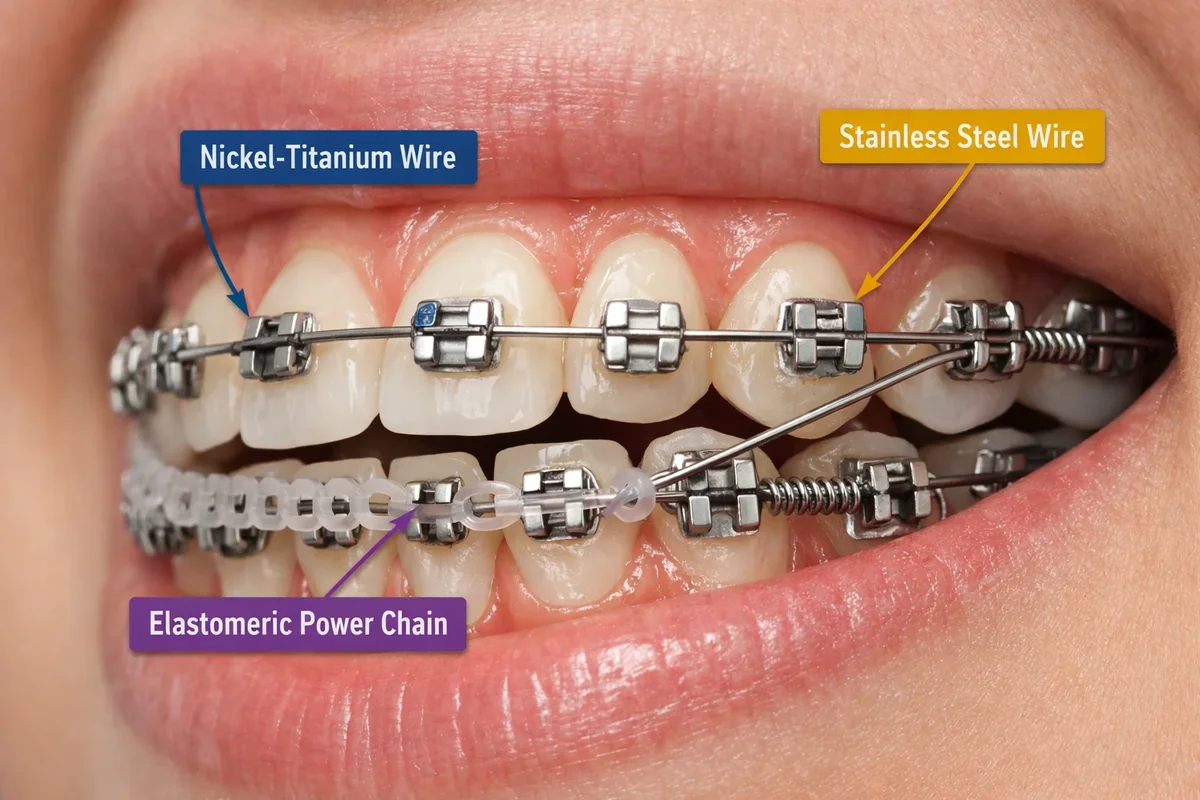
For example, nickel-titanium wires are widely known for their shape-memory ability. They return to their original form after bending, which helps them apply consistent pressure on teeth. Stainless steel wires, on the other hand, provide excellent strength and stability during later stages of orthodontic treatment. Because each stage requires different mechanical properties, orthodontists strategically use different wires in braces to optimize tooth movement.
Patients often ask whether changing wires will cause discomfort. Mild soreness is normal after wire adjustments because the teeth are responding to new pressure. However, the use of different wires in braces actually helps minimize pain compared to older orthodontic methods. Modern wires are designed to apply gentle, continuous force rather than sudden pressure. This approach significantly improves patient comfort and treatment efficiency.
Another important aspect of understanding different wires in braces is recognizing how they affect treatment duration. Efficient wire progression helps orthodontists move teeth in a controlled way while minimizing treatment time. When the right wire is used at the right stage, tooth movement becomes more predictable and stable.
Orthodontists also evaluate each patient individually before selecting wires. Factors such as bone density, age, tooth crowding, and bite problems influence the choice of orthodontic wire. Because of these individual differences, the sequence of different wires in braces may vary slightly between patients. What remains constant, however, is the principle of gradually transitioning from flexible to rigid wires throughout treatment.
Patients who want more information about orthodontic care or braces treatment can consult trusted dental organizations such as the
American Dental Association. Professional dental associations emphasize the importance of individualized orthodontic treatment planning and the correct use of different wires in braces to ensure safe results.
If you are considering orthodontic treatment or have questions about braces, speaking directly with dental professionals is always recommended. You can easily reach out through the
Redent Klinik Contact Page to receive guidance tailored to your needs. Orthodontists can evaluate your dental structure, explain how different wires in braces will be used during your treatment, and help you understand what to expect throughout the process.
In summary, different wires in braces are essential components of modern orthodontics. They allow orthodontists to move teeth gradually, safely, and efficiently by applying carefully controlled forces. By transitioning through several wire types throughout treatment, orthodontists can correct alignment issues, improve bite function, and ultimately create a balanced and healthy smile. In the following sections, we will explore each wire type in detail, including their unique characteristics, advantages, and the specific roles they play during orthodontic treatment.
What Are Different Wires in Braces and Why They Matter
Orthodontic treatment relies on a precise combination of components working together to move teeth gradually into their correct positions. While brackets and bands are the visible parts of braces, the real force behind tooth movement comes from the archwire. Understanding the role of different wires in braces is essential for anyone beginning orthodontic treatment or researching how braces work. These wires are carefully designed to apply controlled pressure on teeth over time, guiding them into alignment in a safe and predictable manner. Without the correct selection of orthodontic wires, braces would not be able to deliver the precise tooth movement needed for a healthy bite and attractive smile.
Orthodontists do not rely on a single wire type throughout treatment. Instead, they strategically change the wires during adjustment visits. Each wire has unique mechanical properties such as flexibility, elasticity, and strength. Because of these differences, orthodontists use different wires in braces to match the stage of treatment and the individual needs of the patient.
The Core Function of Orthodontic Archwires
The archwire is the metal wire that runs through each bracket attached to the teeth. When the orthodontist places this wire, it creates gentle pressure that gradually shifts teeth into proper alignment. The reason orthodontists use different wires in braces is that tooth movement requires varying levels of force at different stages of treatment.
Early in treatment, teeth may be severely crowded, rotated, or misaligned. Flexible wires are used during this stage because they can easily bend and adapt to the irregular positions of the teeth. As treatment progresses and teeth begin to straighten, orthodontists transition to stronger wires that can apply more precise pressure. This progression through different wires in braces allows orthodontists to maintain full control over tooth movement while minimizing discomfort.
How Orthodontic Pressure Moves Teeth
Many patients are surprised to learn that tooth movement is actually a biological process. When braces apply pressure through the archwire, the bone surrounding the tooth responds by remodeling. On one side of the tooth, bone slowly dissolves, while new bone forms on the opposite side. This controlled remodeling allows teeth to move gradually without causing damage.
The reason orthodontists use different wires in braces is to control the intensity and direction of this pressure. If the wire were too stiff in the early stages, it could cause unnecessary discomfort or slow the biological response. By using flexible wires first and transitioning to stronger ones later, orthodontists ensure efficient and safe tooth movement.
Materials Used in Different Wires in Braces
Modern orthodontics uses advanced metal alloys to manufacture archwires. These materials are selected for their specific mechanical properties, which allow orthodontists to use different wires in braces at various stages of treatment. Each material behaves differently under pressure and offers unique advantages.
Some of the most commonly used materials include nickel-titanium, stainless steel, and beta-titanium. Nickel-titanium wires are known for their shape memory and flexibility. Stainless steel wires offer greater strength and stability, making them useful in later treatment phases. Beta-titanium wires provide a balance between flexibility and stiffness, giving orthodontists more control over fine tooth adjustments.
Because these materials behave differently, orthodontists carefully plan the sequence of different wires in braces for each patient. The goal is to move teeth gradually while minimizing discomfort and maximizing treatment efficiency.
Why Orthodontists Change Wires During Treatment
Patients often notice that orthodontists replace the wire during routine adjustment appointments. This change is not random; it reflects the natural progression of treatment. Each new wire introduces a slightly different level of pressure and control. By switching between different wires in braces, orthodontists guide teeth through multiple phases of alignment.
During the early stage, flexible wires begin the alignment process. In the middle stage, stronger wires help level and straighten teeth further. In the final stage, rigid wires provide precise control over bite alignment. This systematic approach ensures that teeth move efficiently while maintaining comfort and safety.
How Wire Changes Affect Patient Experience
When a new wire is placed, patients may feel mild pressure or sensitivity for a short period. This sensation is completely normal and indicates that the teeth are responding to the new force. The use of different wires in braces actually helps reduce discomfort compared to older orthodontic methods that relied on constant heavy pressure.
Modern orthodontic wires apply gentle, continuous force, which allows teeth to move more comfortably. Most patients adjust to the new wire within a few days, and any temporary soreness can usually be managed with soft foods and over-the-counter pain relief if necessary.
Importance of Individualized Orthodontic Planning
No two orthodontic cases are exactly the same. Some patients have severe crowding, while others have spacing issues or bite misalignment. Because of these variations, orthodontists customize treatment plans that include a specific sequence of different wires in braces tailored to each patient.
Age, bone density, and overall oral health can also influence wire selection. Younger patients may respond differently to orthodontic pressure compared to adults. By adjusting the progression of different wires in braces, orthodontists ensure that treatment remains both effective and safe for every individual.
If patients want professional advice about orthodontic treatment or braces options, they can consult trusted dental organizations such as the
American Dental Association. Professional guidance ensures that patients receive reliable information about the role of different wires in braces and the science behind modern orthodontic care.
Patients who are considering orthodontic treatment can also contact dental professionals directly for personalized consultation. For example, the
Redent Klinik Contact Page allows individuals to connect with experienced dental teams who can explain how different wires in braces will be used throughout treatment.
In summary, different wires in braces are a fundamental part of orthodontic treatment. They allow orthodontists to control tooth movement with precision, transitioning from flexible wires that begin alignment to stronger wires that refine the final result. By carefully selecting and adjusting these wires throughout treatment, orthodontists can achieve optimal results while maintaining patient comfort and safety.
Nickel Titanium Wires: The Most Common Different Wires in Braces
When orthodontic treatment begins, one of the most frequently used materials is nickel titanium. Among the many different wires in braces, nickel titanium wires are considered the foundation of early orthodontic alignment. Orthodontists rely heavily on these wires because they combine flexibility, durability, and a unique property called shape memory. These characteristics allow the wire to gently guide teeth into position while maintaining a consistent level of pressure over time.
Patients starting braces often notice that their orthodontist places a thin and flexible wire during the first appointment. In most cases, this initial archwire is made from nickel titanium. Among all different wires in braces, nickel titanium is especially effective at the beginning of treatment because it can adapt to severely crooked or crowded teeth without applying excessive force.
What Makes Nickel Titanium Unique
Nickel titanium, often abbreviated as NiTi, is an alloy composed of nickel and titanium metals. It was originally developed for aerospace engineering before orthodontists discovered its valuable properties for dental applications. Today, it is one of the most widely used materials among the different wires in braces because of its ability to return to its original shape even after being bent or twisted.
This property is known as shape memory. When a nickel titanium wire is placed into the brackets, it attempts to return to its natural arch form. As it slowly returns to that shape, it applies gentle pressure on the teeth. This is exactly why orthodontists rely on this wire during the early stages of treatment when teeth may be misaligned in many directions.
Superelasticity and Continuous Pressure
Another remarkable feature of nickel titanium is superelasticity. Unlike rigid wires, nickel titanium wires can bend significantly and still deliver consistent force. This quality makes them one of the most efficient different wires in braces for gradually aligning teeth without causing unnecessary discomfort.
Superelastic wires provide continuous light force rather than strong intermittent pressure. Continuous force is ideal because it encourages steady tooth movement and reduces pain for patients. Orthodontists carefully select these different wires in braces to maintain comfort while ensuring treatment progresses efficiently.
Role of Nickel Titanium Wires in Early Orthodontic Treatment
Orthodontic treatment usually progresses through several stages. Nickel titanium wires are most commonly used during the initial alignment phase. At this stage, teeth may be crowded, rotated, or positioned outside the ideal arch form. Because nickel titanium wires are flexible, they can easily fit into brackets even when teeth are significantly misaligned.
Among all different wires in braces, nickel titanium wires are particularly valuable because they apply gentle force over long periods. This slow and steady pressure allows the bone surrounding each tooth to adapt and remodel naturally, which is essential for safe tooth movement.
During regular orthodontic adjustment visits, the orthodontist may replace the wire with slightly thicker nickel titanium wires before eventually transitioning to stronger materials. This gradual progression through different wires in braces ensures that teeth continue moving toward their correct positions without overwhelming the biological process.
Advantages of Nickel Titanium Wires
Nickel titanium wires offer several benefits that make them a preferred option among orthodontists. These advantages explain why they are one of the most commonly used different wires in braces around the world.
- High flexibility that adapts to severely misaligned teeth
- Shape memory that returns the wire to its original arch form
- Continuous gentle pressure for efficient tooth movement
- Improved patient comfort compared to older wire materials
- Reduced need for frequent adjustments
These advantages make nickel titanium wires particularly useful during the early months of orthodontic treatment. Patients often notice that their teeth begin to straighten relatively quickly once these wires are placed. This progress demonstrates the effectiveness of using different wires in braces strategically during treatment.
Potential Limitations of Nickel Titanium Wires
Although nickel titanium wires provide excellent flexibility and comfort, they are not ideal for every stage of orthodontic treatment. For example, they cannot always deliver the precise control needed for fine adjustments later in treatment. This is why orthodontists eventually replace them with stronger materials.
Because orthodontic treatment involves multiple phases, dentists must switch between different wires in braces depending on the specific goals of each stage. Nickel titanium wires are excellent for alignment but may not provide the rigidity required for bite correction or detailed finishing work.
Nickel Sensitivity Considerations
In rare cases, patients may have a sensitivity to nickel. While this is uncommon, orthodontists can choose alternative materials if needed. The availability of multiple materials ensures that orthodontists can always select the most appropriate different wires in braces for each patient’s health and comfort.
Importance of Professional Guidance
Selecting the correct orthodontic wire requires professional training and experience. Orthodontists evaluate several factors before choosing among the many different wires in braces, including the degree of crowding, bite alignment, and treatment goals.
Patients interested in learning more about orthodontic treatment and dental health can explore reliable information through organizations like the
American Dental Association. These resources help patients understand how orthodontic technology—including different wires in braces—supports modern dental care.
If you are considering braces or have questions about orthodontic treatment options, you can reach out to experienced dental professionals through the
Redent Klinik Contact Page. Dental specialists can evaluate your teeth and explain how different wires in braces such as nickel titanium will be used during your treatment plan.
In summary, nickel titanium wires represent one of the most important advancements in orthodontics. Their flexibility, shape memory, and ability to apply continuous gentle pressure make them a critical part of the early treatment phase. As one of the most widely used different wires in braces, nickel titanium wires help initiate tooth alignment while keeping patients comfortable and ensuring safe, predictable orthodontic results.
Stainless Steel Wires in Braces: Strength and Stability
Among the many different wires in braces, stainless steel wires are known for their exceptional strength, durability, and precision. While flexible materials like nickel titanium are commonly used during the early stages of orthodontic treatment, stainless steel wires typically become more important during the middle and later phases. Orthodontists rely on these wires because they provide greater control over tooth movement and allow for highly precise adjustments that help refine the final alignment of teeth.
The use of stainless steel wires represents a critical stage in the progression of different wires in braces. By the time these wires are introduced, many of the major alignment issues have already been corrected with more flexible wires. At this point, orthodontists need a stronger wire that can hold its shape firmly while guiding teeth into their final positions.
What Are Stainless Steel Orthodontic Wires?
Stainless steel orthodontic wires are made from a metal alloy that combines iron, chromium, nickel, and small amounts of other metals. This combination creates a material that is strong, corrosion-resistant, and highly durable. Because of these properties, stainless steel has become one of the most trusted materials used in orthodontics and remains an essential part of the progression of different wires in braces.
Unlike flexible nickel titanium wires, stainless steel wires are much more rigid. This rigidity allows orthodontists to exert more precise control over tooth positioning. As treatment advances, orthodontists carefully transition from flexible wires to stronger materials, ensuring that different wires in braces continue guiding the teeth in a controlled and predictable way.
Mechanical Properties That Make Stainless Steel Effective
Several characteristics make stainless steel wires ideal for orthodontic treatment. One of the most important is their high tensile strength, which means they can withstand significant forces without breaking or bending permanently. This property allows orthodontists to apply targeted pressure that fine-tunes tooth positioning.
Another advantage of stainless steel is its low friction when sliding through brackets. This quality helps teeth move more smoothly along the archwire. When orthodontists transition to stronger different wires in braces, minimizing friction becomes especially important because it allows controlled movement without unnecessary resistance.
Role of Stainless Steel Wires During Orthodontic Treatment
Orthodontic treatment usually progresses through several phases, and stainless steel wires are most often used during the intermediate and finishing stages. By this time, flexible wires have already corrected major crowding or spacing issues. Now orthodontists focus on refining the bite and perfecting tooth alignment. This stage requires greater stability, which is why stainless steel becomes one of the most valuable different wires in braces.
These wires allow orthodontists to perform advanced adjustments such as closing gaps between teeth, correcting bite alignment, and ensuring that the dental arch follows an ideal shape. Because stainless steel wires are less flexible, they maintain their form under pressure and give orthodontists excellent control when performing detailed corrections.
Closing Spaces and Adjusting the Bite
One of the most important uses of stainless steel wires is space closure. After teeth have been aligned, orthodontists may need to close gaps created by tooth extractions or previous spacing problems. Stainless steel wires can hold additional orthodontic accessories such as elastic chains or coil springs that help bring teeth closer together.
These attachments work together with different wires in braces to generate precise directional forces. By adjusting the wire and accessories, orthodontists can gradually close spaces and achieve a balanced bite.
Advantages of Stainless Steel Wires
Stainless steel wires provide several benefits that make them indispensable among the many different wires in braces. Their reliability and strength have made them a cornerstone of orthodontic treatment for decades.
- High strength and durability
- Excellent control for precise tooth movement
- Low friction for smoother sliding through brackets
- Stable structure that maintains arch form
- Ability to support orthodontic accessories
Because of these advantages, orthodontists frequently rely on stainless steel wires when transitioning between different wires in braces during treatment. Their ability to maintain consistent shape allows orthodontists to make subtle but important corrections that finalize the smile.
Patient Experience with Stainless Steel Wires
Patients sometimes notice that stainless steel wires feel slightly firmer than the flexible wires used earlier in treatment. This sensation occurs because the wire is designed to apply stronger and more targeted pressure. However, orthodontists carefully select the appropriate wire size and strength to maintain comfort.
As with any adjustment involving different wires in braces, mild soreness may occur for a few days after a wire change. This sensation is temporary and usually fades quickly as the teeth adapt to the new pressure. Eating soft foods and maintaining good oral hygiene can help patients adjust more comfortably.
Why Orthodontists Transition to Stainless Steel Wires
Orthodontic treatment is carefully planned to progress through a sequence of different wires in braces. Each stage of treatment requires a different balance of flexibility and control. While flexible wires begin the alignment process, stronger wires like stainless steel are essential for finishing and stabilization.
By gradually increasing the stiffness of the archwire, orthodontists can ensure that teeth move safely without sudden pressure changes. This method helps reduce treatment complications and improves the predictability of the final outcome.
Patients who want to learn more about orthodontic treatments and modern dental technology can explore trusted resources such as the
American Dental Association. Professional dental organizations provide reliable information about braces, orthodontic materials, and the importance of selecting the right different wires in braces for each stage of treatment.
For personalized advice regarding braces or orthodontic care, patients can contact dental professionals directly through the
Redent Klinik Contact Page. Orthodontic specialists can explain how different wires in braces—including stainless steel wires—will be used throughout treatment to achieve the best possible results.
In conclusion, stainless steel wires represent one of the most powerful and precise tools in orthodontic treatment. As treatment progresses through the sequence of different wires in braces, these wires provide the strength and stability needed to perfect tooth alignment and bite correction. Their durability, low friction, and ability to maintain arch form make them an essential component in achieving a healthy and well-balanced smile.
Beta-Titanium Wires and Their Role in Orthodontic Treatment
Among the many different wires in braces, beta-titanium wires occupy a unique and highly valuable position in orthodontic treatment. These wires are often used during intermediate or advanced stages of braces therapy when orthodontists need both flexibility and precise control. While nickel titanium wires are extremely flexible and stainless steel wires are very rigid, beta-titanium wires offer a balanced combination of these properties. This balance allows orthodontists to perform fine adjustments in tooth movement that would be difficult with other materials.
Understanding the role of beta-titanium wires helps patients appreciate how orthodontists strategically select different wires in braces throughout treatment. Each wire type serves a specific purpose. Beta-titanium wires are especially valuable when the orthodontist needs moderate stiffness combined with excellent adjustability. Because of these properties, they are frequently used during the transition between early alignment and final bite correction.
What Are Beta-Titanium Orthodontic Wires?
Beta-titanium wires, sometimes referred to as TMA wires (Titanium Molybdenum Alloy), are composed primarily of titanium combined with molybdenum and small amounts of other metals. This composition creates a wire that is more flexible than stainless steel but stiffer than nickel titanium. As a result, orthodontists often rely on beta-titanium wires when transitioning between different wires in braces during treatment.
The moderate stiffness of beta-titanium wires provides orthodontists with greater control over tooth positioning while still maintaining enough flexibility to apply gentle force. This balance is extremely important because orthodontic treatment requires careful pressure management to ensure safe and effective tooth movement.
Adjustability and Precision
One of the most significant advantages of beta-titanium wires is their ability to be bent and customized directly by orthodontists. Unlike some other different wires in braces, beta-titanium wires allow orthodontists to place precise bends and adjustments in the wire to influence tooth movement in very specific directions.
This adjustability is especially useful when orthodontists need to control tooth rotation, angulation, or vertical positioning. By carefully modifying the wire shape, orthodontists can guide individual teeth into their optimal positions with remarkable accuracy.
When Beta-Titanium Wires Are Used in Treatment
Orthodontic treatment typically progresses through multiple stages, each requiring a specific type of wire. Flexible wires begin the alignment process, while stronger wires help stabilize and refine the bite. Beta-titanium wires are commonly used during the intermediate phase of treatment when orthodontists require greater control but still want some flexibility in the wire.
At this stage, teeth are usually partially aligned, but subtle corrections are still necessary. Orthodontists introduce beta-titanium wires as one of the strategic different wires in braces that can apply moderate force while allowing fine-tuning of tooth movement.
For example, beta-titanium wires may be used to adjust tooth torque, improve root positioning, or correct minor alignment issues that remain after the initial straightening phase. Because these wires allow detailed customization, they are particularly useful for achieving the final aesthetic and functional goals of orthodontic treatment.
Advantages of Beta-Titanium Wires
Beta-titanium wires offer several benefits that make them a valuable part of the progression of different wires in braces. Orthodontists frequently choose these wires when they need a combination of strength, flexibility, and adjustability.
- Moderate stiffness for controlled tooth movement
- Excellent flexibility compared to stainless steel
- Highly adjustable for customized orthodontic corrections
- Ability to place precise bends for detailed alignment
- Good biocompatibility with oral tissues
Because of these advantages, beta-titanium wires are often considered one of the most versatile different wires in braces. They give orthodontists the ability to refine tooth movement while maintaining patient comfort.
Patient Comfort and Treatment Efficiency
Patients sometimes wonder whether different orthodontic wires will cause discomfort. The use of different wires in braces, including beta-titanium wires, is actually designed to improve comfort during treatment. Because beta-titanium wires apply moderate and controlled pressure, they typically produce less sudden force compared to very rigid wires.
After a new beta-titanium wire is placed, patients may feel mild pressure or sensitivity for a short period. This sensation indicates that the teeth are responding to the new orthodontic force. However, the gradual pressure provided by these different wires in braces helps minimize pain and allows the teeth to adjust naturally.
Orthodontic Control and Bite Correction
Another major advantage of beta-titanium wires is their ability to assist in bite correction. Orthodontists can use these wires to adjust how the upper and lower teeth meet when biting. Proper bite alignment is essential for long-term dental health because it prevents uneven tooth wear and jaw discomfort.
Through careful adjustments, orthodontists use different wires in braces to ensure that each tooth fits harmoniously within the dental arch. Beta-titanium wires play a key role in achieving this balanced result.
Why Orthodontists Use Multiple Wire Materials
The reason orthodontists rely on multiple wire materials is that each stage of treatment requires different mechanical properties. Early treatment focuses on flexibility, while later stages require strength and precision. Beta-titanium wires provide a bridge between these stages, making them one of the most important different wires in braces.
By transitioning gradually from flexible wires to stronger wires and then using beta-titanium for fine adjustments, orthodontists can guide teeth safely into their final positions. This systematic progression ensures both effectiveness and patient comfort.
Patients who want to learn more about orthodontic treatment methods can consult trusted dental resources such as the
American Dental Association. Professional dental organizations provide valuable information about braces technology and the role of different wires in braces in modern orthodontics.
If you are considering braces or have questions about orthodontic options, professional consultation is always recommended. You can contact dental specialists through the
Redent Klinik Contact Page to receive personalized guidance about treatment plans and how different wires in braces will be used during your orthodontic journey.
In conclusion, beta-titanium wires are an essential component of modern orthodontics. Their unique combination of flexibility, strength, and adjustability allows orthodontists to perform detailed corrections that refine the final outcome of treatment. As part of the progression of different wires in braces, these wires help ensure that patients achieve a well-aligned smile and a healthy, functional bite.
How Orthodontists Choose Between Different Wires in Braces
Orthodontic treatment is far more sophisticated than simply attaching brackets and placing a wire. One of the most important decisions orthodontists make throughout treatment is selecting the correct archwire for each stage. The strategic use of different wires in braces allows orthodontists to control tooth movement with precision, comfort, and efficiency. Each wire type has unique mechanical properties such as flexibility, elasticity, and strength. Because of these differences, orthodontists carefully evaluate multiple clinical factors before choosing which wire to place during each adjustment appointment.
The selection of different wires in braces is not random. It is based on a carefully planned orthodontic strategy that takes into account the patient’s dental condition, treatment goals, and biological response to orthodontic forces. By choosing the right wire at the right time, orthodontists can guide teeth into proper alignment while minimizing discomfort and reducing overall treatment time.
Assessment of the Patient’s Dental Condition
Before deciding which wire to use, orthodontists perform a detailed examination of the patient’s teeth, gums, and jaw structure. Diagnostic tools such as X-rays, digital scans, and bite analysis help determine the severity of misalignment and bite problems. Based on this evaluation, the orthodontist designs a treatment plan that includes a sequence of different wires in braces to gradually move the teeth into their ideal positions.
For example, a patient with severe crowding may require very flexible wires during the initial phase of treatment. These wires can adapt to crooked teeth while applying gentle pressure. As alignment improves, orthodontists gradually transition to stronger different wires in braces that allow more precise adjustments.
Importance of Initial Tooth Position
The starting position of the teeth plays a major role in wire selection. When teeth are extremely rotated or crowded, a rigid wire would not fit properly into the brackets. In such cases, orthodontists begin with highly flexible wires before introducing stronger different wires in braces later in treatment. This gradual progression ensures safe tooth movement and prevents unnecessary stress on the surrounding bone and gum tissues.
Stage of Orthodontic Treatment
Another major factor influencing the choice of orthodontic wire is the stage of treatment. Orthodontic therapy typically progresses through three main phases: alignment, leveling, and finishing. Each phase requires specific types of different wires in braces with distinct mechanical properties.
During the initial alignment stage, orthodontists prefer flexible wires that gently guide teeth into a more uniform arch shape. As treatment progresses, moderately stiff wires help level the teeth and correct vertical positioning. In the final stage, rigid wires are introduced to refine bite alignment and finalize tooth positioning. This planned sequence of different wires in braces allows orthodontists to move teeth safely while maintaining full control over treatment progress.
Transition Between Wire Types
Patients often notice that their orthodontist replaces the archwire during adjustment appointments. These changes reflect the natural progression through different wires in braces. Each new wire applies slightly different forces, allowing the orthodontist to continue guiding teeth toward their final positions.
Although mild soreness may occur after a wire change, this sensation is temporary and indicates that the teeth are responding to the new orthodontic pressure. The gradual transition between wire types helps maintain patient comfort throughout treatment.
Material Properties and Biomechanics
Orthodontists also consider the physical properties of each wire material when selecting among different wires in braces. Different materials offer varying levels of elasticity, stiffness, and shape memory. These characteristics determine how the wire behaves once placed into the brackets.
For example, nickel titanium wires are known for their flexibility and shape memory, making them ideal for early alignment. Stainless steel wires provide excellent rigidity and control during later stages of treatment. Beta-titanium wires offer a balance between flexibility and adjustability, making them useful for intermediate corrections. By choosing among these different wires in braces, orthodontists can customize treatment to meet each patient’s needs.
Patient Age and Bone Response
Another important factor influencing wire selection is the patient’s age and biological response to orthodontic forces. Younger patients often experience faster tooth movement because their bone structure is still developing. Adults, on the other hand, may require slower and more controlled adjustments.
Because of these differences, orthodontists may adjust the sequence of different wires in braces to ensure safe and efficient treatment. Using wires with the appropriate flexibility and force helps protect the surrounding bone while encouraging healthy tooth movement.
Comfort Considerations
Patient comfort is always a priority during orthodontic treatment. Modern orthodontic technology has made different wires in braces far more comfortable than those used decades ago. Today’s wires are designed to deliver continuous, gentle pressure rather than sudden force.
This improvement significantly reduces pain and allows teeth to move more naturally. Orthodontists carefully choose wires that balance effective tooth movement with patient comfort.
Role of Professional Expertise
Selecting the correct orthodontic wire requires professional training and experience. Orthodontists study dental biomechanics extensively to understand how different materials influence tooth movement. Their expertise allows them to determine which of the different wires in braces will produce the most effective results at each stage of treatment.
Patients interested in learning more about orthodontic care can explore educational resources provided by the
American Dental Association. These resources explain how modern orthodontic techniques—including the use of different wires in braces—help create healthier smiles and improved dental function.
If you are considering orthodontic treatment or want personalized guidance, you can reach out to dental professionals through the
Redent Klinik Contact Page. Experienced orthodontists can evaluate your teeth and explain how different wires in braces will be selected and adjusted throughout your treatment plan.
In conclusion, the process of choosing orthodontic wires is a critical part of successful braces treatment. Orthodontists analyze multiple factors—including tooth position, treatment stage, wire material, and patient biology—before selecting among different wires in braces. This careful decision-making ensures that teeth move safely, efficiently, and comfortably, ultimately leading to a healthy bite and a beautifully aligned smile.
Stages of Orthodontic Treatment and Different Wires in Braces
Orthodontic treatment with braces is not a single-step process. Instead, it progresses through carefully planned phases designed to gradually guide teeth into their ideal positions. One of the most important tools orthodontists use during this process is the strategic progression of different wires in braces. Each stage of treatment requires specific mechanical properties such as flexibility, elasticity, and rigidity. Because of this, orthodontists switch between different wires in braces to control tooth movement safely and effectively.
Understanding how different wires in braces correspond to each stage of orthodontic treatment can help patients know what to expect during their braces journey. The entire treatment process typically includes three main phases: alignment, leveling, and finishing. Each phase relies on specific types of orthodontic wires designed to apply appropriate forces to the teeth.
Stage 1: Initial Alignment Phase
The first stage of braces treatment focuses on correcting severe crowding, spacing, and misalignment. At the beginning of treatment, teeth may be rotated, overlapping, or positioned outside the ideal dental arch. Because of these irregularities, orthodontists begin with highly flexible archwires that can easily adapt to uneven tooth positions.
Among the many different wires in braces, nickel titanium wires are commonly used during this early phase. These wires are extremely flexible and possess shape-memory properties, allowing them to return to their original form after bending. As they attempt to regain their natural shape, they gently guide teeth toward alignment.
Flexible wires are essential during this stage because rigid wires would create excessive pressure on misaligned teeth. By using flexible different wires in braces, orthodontists can begin moving teeth gradually without causing unnecessary discomfort.
Why Flexibility Matters in Early Treatment
Flexibility is crucial when teeth are significantly misaligned. Highly flexible wires can be inserted into brackets even when teeth are positioned far from their final alignment. This adaptability makes them one of the most effective different wires in braces during the initial treatment phase.
As these wires apply continuous gentle pressure, the surrounding bone begins to remodel. This biological process allows teeth to move gradually within the jawbone while maintaining overall oral health.
Stage 2: Leveling and Space Closure
Once the teeth begin aligning properly, orthodontic treatment enters the leveling stage. At this point, the major crowding issues have improved, but additional adjustments are necessary to ensure that all teeth are positioned evenly within the dental arch.
During this phase, orthodontists transition to moderately stiff different wires in braces that can apply more controlled forces. Beta-titanium wires are often introduced during this stage because they provide a balance between flexibility and strength. These wires allow orthodontists to perform precise adjustments while still maintaining patient comfort.
In addition to leveling the teeth, orthodontists may also begin closing gaps between teeth. Elastic chains or coil springs may be attached to the archwire to help move teeth closer together. These attachments work in combination with different wires in braces to generate targeted forces that gradually eliminate spaces.
Improving Bite Alignment
Another important goal during the leveling stage is correcting bite problems such as overbite, underbite, or crossbite. Orthodontists carefully adjust the archwire to influence how the upper and lower teeth meet when the mouth closes.
By using specific different wires in braces, orthodontists can guide teeth vertically and horizontally to achieve a balanced bite. This stage is essential for ensuring that the teeth function properly once treatment is complete.
Stage 3: Finishing and Detailing
The final stage of orthodontic treatment focuses on perfecting the alignment and bite. By this time, most major corrections have already been made. However, small adjustments are still necessary to ensure that every tooth is positioned precisely within the dental arch.
During the finishing stage, orthodontists typically use stronger and more rigid different wires in braces, such as stainless steel wires. These wires maintain their shape under pressure, allowing orthodontists to fine-tune tooth positioning and achieve a symmetrical smile.
At this stage, orthodontists may add very small bends to the archwire to control individual tooth angles. These detailed adjustments ensure that the teeth fit together properly when biting and chewing.
Fine Adjustments for a Perfect Smile
Even minor tooth rotations or angulation issues can affect the final result of orthodontic treatment. The use of rigid different wires in braces allows orthodontists to perform delicate finishing adjustments that enhance both appearance and functionality.
These final refinements are critical for achieving a stable and aesthetically pleasing smile. Once the orthodontist is satisfied with the alignment, braces are removed and patients transition to the retention phase.
The Retention Phase After Braces
After braces are removed, patients typically receive retainers to maintain the newly achieved alignment. Although braces are no longer present, the results achieved through different wires in braces must be preserved. Retainers prevent teeth from gradually shifting back to their original positions.
This retention stage is an important part of orthodontic care because the surrounding bone and tissues need time to stabilize around the newly aligned teeth.
Why the Wire Progression Matters
The sequence of different wires in braces is carefully designed to optimize treatment results. Starting with flexible wires allows gentle alignment, while stronger wires later provide precision and stability. Each transition is planned to ensure that teeth move safely and predictably.
Patients who want to learn more about orthodontic care can explore trusted dental resources such as the
American Dental Association. These organizations provide valuable information about braces treatment and modern orthodontic techniques.
If you are considering orthodontic treatment or have questions about braces, you can contact dental professionals through the
Redent Klinik Contact Page. Orthodontists can evaluate your dental structure and explain how different wires in braces will be used throughout your personalized treatment plan.
In summary, orthodontic treatment progresses through several stages, each requiring specific types of orthodontic wires. The strategic use of different wires in braces ensures that teeth move gradually, safely, and efficiently. By transitioning between flexible and rigid wires at the appropriate time, orthodontists can achieve precise alignment and create a healthy, well-balanced smile.
Benefits of Using Different Wires in Braces During Treatment
Modern orthodontic treatment has advanced significantly over the past few decades, and one of the biggest reasons for this improvement is the strategic use of different wires in braces. Orthodontists no longer rely on a single rigid wire throughout treatment. Instead, they carefully select and change wires during various phases to optimize comfort, efficiency, and precision. The use of different wires in braces allows orthodontists to guide teeth gradually while minimizing stress on the surrounding bone and gum tissue.
For patients, this means more predictable results, reduced discomfort, and shorter treatment times compared to older orthodontic techniques. Understanding the benefits of different wires in braces helps explain why modern braces are far more comfortable and effective than the orthodontic appliances used in the past.
Improved Comfort for Patients
One of the most noticeable advantages of using different wires in braces is improved patient comfort. Older orthodontic systems often used stiff wires from the beginning of treatment. These wires applied strong forces that could cause significant discomfort or soreness.
Modern orthodontics uses flexible wires at the beginning of treatment. These wires apply light and continuous pressure, allowing teeth to move gradually. Because orthodontists transition through different wires in braces, the pressure applied to the teeth is carefully controlled and adjusted as treatment progresses.
Gentle Pressure for Natural Tooth Movement
The biological process of tooth movement requires the surrounding bone to remodel gradually. Using flexible different wires in braces ensures that this remodeling occurs naturally and safely. Gentle pressure stimulates bone adaptation without overwhelming the surrounding tissues.
Patients typically experience only mild soreness after wire adjustments, which usually disappears within a few days. This improved comfort is one of the key reasons modern orthodontic treatment is far more tolerable for patients of all ages.
More Efficient Tooth Movement
Another major advantage of using different wires in braces is the ability to move teeth more efficiently. Each wire type has specific mechanical properties designed for particular stages of treatment. By transitioning through these wires, orthodontists can apply the correct amount of force needed for each phase.
For example, flexible wires begin the alignment process, while stronger wires help correct bite alignment and fine-tune tooth positioning. This progression of different wires in braces allows orthodontists to control tooth movement with remarkable accuracy.
Because each wire is selected for its specific function, the overall treatment process becomes more efficient. Teeth move in a controlled sequence rather than responding to excessive pressure from a single rigid wire.
Consistent Force Application
One important principle of orthodontics is the application of consistent force over time. Certain different wires in braces, especially nickel titanium wires, provide continuous pressure that gradually moves teeth toward their ideal positions.
This constant gentle force is much more effective than intermittent pressure. It encourages steady tooth movement while reducing the risk of complications such as root damage or excessive discomfort.
Greater Precision in Tooth Alignment
Orthodontic treatment involves more than simply straightening teeth. The final goal is to create a balanced bite and ensure that the upper and lower teeth function properly together. The use of different wires in braces allows orthodontists to make highly precise adjustments throughout treatment.
As treatment progresses, orthodontists transition to wires that offer greater stability and control. These stronger wires allow orthodontists to adjust tooth angles, rotations, and vertical positions. Because each stage uses specialized different wires in braces, orthodontists can achieve extremely accurate results.
Refining the Final Smile
The finishing stage of orthodontic treatment often requires small, detailed adjustments. Even minor improvements in tooth position can significantly affect the final appearance of the smile. By carefully selecting the appropriate different wires in braces, orthodontists can refine the alignment of each individual tooth.
These finishing adjustments help ensure that the teeth fit together harmoniously, creating both an attractive smile and a functional bite.
Reduced Risk of Orthodontic Complications
The strategic use of different wires in braces also reduces the risk of complications during treatment. Applying too much pressure too quickly can damage tooth roots or irritate gum tissue. By gradually increasing wire stiffness, orthodontists ensure that teeth move safely and predictably.
This staged approach protects the surrounding bone and allows the body to adapt naturally to tooth movement. As a result, the treatment process becomes safer and more stable.
Customized Treatment for Each Patient
Every orthodontic case is unique. Some patients have crowded teeth, while others have spacing issues or bite misalignment. Because of these variations, orthodontists customize treatment plans using a sequence of different wires in braces tailored to each patient’s needs.
Age, bone density, and treatment goals all influence the choice of orthodontic wire. By adjusting the progression of different wires in braces, orthodontists can provide individualized care that produces optimal results for each patient.
Advancements in Modern Orthodontics
The development of advanced orthodontic materials has played a significant role in improving braces treatment. Modern alloys such as nickel titanium and beta titanium have expanded the range of different wires in braces available to orthodontists.
These materials offer properties such as shape memory, superelasticity, and improved strength. These innovations allow orthodontists to move teeth more efficiently while maintaining patient comfort.
Patients interested in learning more about orthodontic treatment and dental health can explore reliable resources provided by the
American Dental Association. These organizations offer valuable educational information about braces technology and the importance of proper orthodontic care.
For individuals considering orthodontic treatment, professional consultation is always recommended. You can reach dental specialists through the
Redent Klinik Contact Page to receive personalized guidance about braces and the role of different wires in braces in achieving a healthy, beautiful smile.
In summary, the use of different wires in braces offers numerous benefits, including improved comfort, greater treatment efficiency, precise tooth alignment, and reduced risk of complications. By carefully selecting and transitioning between wire types, orthodontists can guide teeth into their ideal positions while ensuring a smooth and comfortable treatment experience for patients.
Common Problems Related to Different Wires in Braces
Orthodontic treatment is generally safe and highly effective, but patients sometimes experience minor issues while wearing braces. Many of these concerns are related to the archwire, which is the component responsible for moving teeth. Because orthodontists use different wires in braces during various stages of treatment, patients may occasionally notice changes in how their braces feel or function. Understanding the common problems related to different wires in braces can help patients manage temporary discomfort and know when to seek professional advice.
Most problems associated with different wires in braces are mild and temporary. They typically occur when a new wire is placed or when the teeth begin responding to orthodontic pressure. These issues are usually part of the normal adjustment process and do not indicate a serious problem. However, being informed about potential complications helps patients maintain better oral health and comfort during treatment.
Temporary Pain or Pressure After Wire Changes
One of the most common experiences patients report is mild soreness after their orthodontist replaces the archwire. When orthodontists introduce new different wires in braces, the wire begins applying a slightly different level of pressure on the teeth. This pressure stimulates the bone around the teeth to remodel, which allows the teeth to move gradually into their proper positions.
Although this pressure is necessary for orthodontic treatment, it can create temporary sensitivity. Patients may feel discomfort when biting or chewing for a few days after the wire adjustment. Fortunately, this sensation usually disappears within three to five days as the teeth adapt to the new force applied by the different wires in braces.
How to Manage Discomfort
Patients can take several simple steps to manage soreness associated with different wires in braces. Eating soft foods such as yogurt, soup, mashed potatoes, or smoothies can reduce pressure on the teeth during the adjustment period. Over-the-counter pain relievers may also help if recommended by a dental professional.
Applying orthodontic wax to areas where wires contact the cheeks or lips can also reduce irritation. This small protective barrier helps prevent friction caused by different wires in braces rubbing against the soft tissues inside the mouth.
Poking or Protruding Wires
Another common issue patients experience involves wires that extend slightly beyond the last bracket. As teeth shift during treatment, the archwire may move slightly forward or backward. This movement can cause the end of the wire to poke the inside of the cheek or gum.
Because orthodontists frequently change different wires in braces, this issue sometimes occurs shortly after an adjustment appointment. Fortunately, the problem is usually easy to manage until the next orthodontic visit.
Quick Temporary Solutions
Orthodontic wax is often the simplest solution for covering a protruding wire. Patients can place a small piece of wax over the end of the wire to create a smooth surface. This temporary solution helps protect the cheek from irritation caused by different wires in braces.
If the wire continues to cause discomfort, patients should contact their orthodontist. The orthodontist can quickly trim or adjust the wire to restore comfort.
Loose or Shifted Archwires
Occasionally, the archwire may become loose if it slips out of one of the brackets. This can happen when chewing hard foods or when the teeth shift significantly during treatment. Since orthodontists use different wires in braces throughout treatment, the stability of the wire depends on the design of the brackets and the elastic ligatures holding the wire in place.
If the wire slips out of a bracket, it may reduce the effectiveness of the orthodontic force. In such cases, patients should schedule a visit with their orthodontist to ensure the wire is repositioned correctly.
Preventing Wire Displacement
Patients can reduce the risk of wire displacement by avoiding extremely hard or sticky foods such as popcorn kernels, chewing ice, or caramel candy. These foods can place excessive pressure on different wires in braces and cause them to move out of position.
Maintaining good oral hygiene and following orthodontic instructions also helps keep braces functioning properly throughout treatment.
Irritation of Cheeks and Lips
Because braces contain multiple components, including brackets and wires, mild irritation inside the mouth is possible. When orthodontists introduce new different wires in braces, the shape of the archwire may change slightly. This change can cause temporary friction against the cheeks or lips until the mouth adjusts.
Most patients adapt quickly as the inner tissues of the mouth become accustomed to the braces. Orthodontic wax and proper oral hygiene can significantly reduce irritation during this adjustment period.
Wire Breakage or Damage
Although rare, orthodontic wires can occasionally bend or break. This may occur if excessive pressure is applied to the braces, such as biting into hard foods or experiencing trauma to the mouth. Since orthodontists rely on carefully selected different wires in braces to guide tooth movement, damaged wires may need to be replaced to maintain treatment progress.
If a wire breaks, patients should contact their orthodontist as soon as possible. Continuing treatment with a damaged wire could reduce the effectiveness of the braces and delay the overall treatment timeline.
When to Contact Your Orthodontist
Most issues related to different wires in braces are minor and resolve quickly. However, patients should contact their orthodontist if they experience severe pain, persistent irritation, or a broken wire that cannot be temporarily managed with orthodontic wax.
Regular orthodontic appointments allow the dental team to monitor treatment progress and adjust the wires as needed. These visits ensure that different wires in braces continue guiding the teeth toward proper alignment safely and effectively.
Patients who want reliable information about orthodontic care can explore trusted resources such as the
American Dental Association. These organizations provide helpful guidance on maintaining oral health during orthodontic treatment.
If you are currently wearing braces or considering orthodontic treatment, you can also contact dental professionals directly through the
Redent Klinik Contact Page. Orthodontic specialists can answer questions about different wires in braces and help ensure your treatment progresses comfortably and successfully.
In conclusion, minor issues related to different wires in braces are a normal part of orthodontic treatment. Temporary soreness, protruding wires, and mild irritation are usually short-lived and easy to manage. With proper care and regular orthodontic visits, these small challenges can be quickly resolved, allowing patients to continue progressing toward a healthy and beautifully aligned smile.
Care Tips for Patients with Different Wires in Braces
Orthodontic treatment requires patience, consistency, and proper care to achieve the best results. When wearing braces, the archwire is the active component responsible for gradually moving teeth into their ideal positions. Because orthodontists use different wires in braces throughout treatment, patients must follow specific care guidelines to protect their braces and ensure treatment progresses smoothly. Proper care not only prevents damage to orthodontic components but also helps reduce discomfort and maintain excellent oral hygiene.
Many patients are surprised to learn that the way they eat, brush, and maintain their oral health can influence how effectively different wires in braces function. Taking the right precautions can prevent broken wires, loose brackets, and unnecessary orthodontic visits. With consistent care, patients can ensure that their braces remain effective and that tooth movement continues as planned.
Maintain Excellent Oral Hygiene
One of the most important responsibilities for patients with braces is maintaining excellent oral hygiene. Braces create additional surfaces where plaque and food particles can accumulate. When orthodontists place different wires in braces, these wires connect all brackets across the dental arch, which can make brushing slightly more challenging.
To keep teeth healthy, patients should brush their teeth at least twice a day and ideally after every meal. Using a soft-bristled toothbrush or an electric toothbrush can help remove plaque around brackets and wires. Cleaning around different wires in braces carefully prevents plaque buildup that could lead to cavities or gum inflammation.
Use Interdental Brushes and Floss Threaders
Standard brushing alone may not remove all food debris trapped between braces components. Interdental brushes are small brushes designed to fit between brackets and under orthodontic wires. These tools are extremely helpful for cleaning areas around different wires in braces that regular toothbrushes may miss.
Flossing is also essential during orthodontic treatment. Using a floss threader allows patients to pass dental floss beneath the archwire and clean between teeth effectively. Regular flossing keeps the gums healthy and prevents plaque accumulation around different wires in braces.
Avoid Foods That Can Damage Wires
Diet plays a major role in protecting orthodontic appliances. Certain foods can bend or dislodge orthodontic wires, which may interfere with treatment progress. Because orthodontists rely on carefully selected different wires in braces to apply controlled pressure on teeth, any damage to these wires can disrupt the treatment plan.
Patients should avoid very hard foods such as ice, hard candy, and popcorn kernels. Sticky foods like caramel, chewing gum, and toffee should also be avoided because they can pull on braces and shift different wires in braces out of position.
Recommended Foods During Braces Treatment
Fortunately, many foods are safe and comfortable to eat while wearing braces. Soft foods such as yogurt, scrambled eggs, pasta, cooked vegetables, and smoothies are excellent choices. These foods place minimal pressure on different wires in braces and reduce the risk of damaging orthodontic components.
Cutting harder foods into smaller pieces can also help reduce strain on braces. For example, apples and carrots should be sliced into bite-sized pieces instead of being bitten directly.
Attend Regular Orthodontic Appointments
Regular orthodontic check-ups are essential for monitoring treatment progress. During these appointments, orthodontists evaluate how the teeth are responding to the current archwire and decide when to transition to the next stage of treatment. Because orthodontists use different wires in braces throughout treatment, these visits are necessary to adjust or replace wires when needed.
Missing scheduled appointments can delay treatment progress because the orthodontist cannot change the wire or make necessary adjustments. Consistent follow-up ensures that different wires in braces continue guiding the teeth toward proper alignment.
Protect Braces During Physical Activities
Patients who participate in sports should take additional precautions to protect their braces. A mouthguard designed for orthodontic patients can prevent injuries to the teeth, lips, and cheeks during sports activities. Since braces contain delicate components such as brackets and different wires in braces, protective gear helps reduce the risk of damage caused by accidental impacts.
Orthodontic mouthguards are specially designed to fit comfortably over braces while allowing normal breathing and speaking. Wearing a mouthguard during sports ensures both safety and uninterrupted orthodontic treatment.
Handling Minor Wire Irritation
Occasionally, patients may feel mild irritation when different wires in braces rub against the inside of the cheeks or lips. Orthodontic wax can be applied over areas that cause discomfort, creating a smooth barrier that protects the soft tissues in the mouth.
If a wire becomes loose or begins poking the cheek, patients should contact their orthodontist for guidance. Temporary solutions such as orthodontic wax can help until the orthodontist adjusts the wire during the next visit.
Stay Informed About Orthodontic Care
Education plays an important role in successful orthodontic treatment. Patients who understand how different wires in braces work are more likely to follow proper care instructions and maintain their braces effectively.
Reliable dental resources such as the
American Dental Association provide helpful information about oral hygiene, orthodontic care, and maintaining dental health during braces treatment.
Patients who have questions about braces or orthodontic treatment can also contact dental professionals through the
Redent Klinik Contact Page. Dental specialists can provide personalized guidance and explain how different wires in braces will be managed throughout treatment.
Commitment to Successful Orthodontic Results
Orthodontic treatment is a partnership between the patient and the dental team. While orthodontists carefully select and adjust different wires in braces, patients must also follow proper care routines to protect their braces and maintain oral health.
With consistent brushing, careful food choices, regular orthodontic visits, and protective measures during physical activities, patients can ensure their treatment progresses efficiently. Proper care of different wires in braces ultimately leads to successful orthodontic outcomes and a healthy, confident smile.