
Many people who want straighter teeth ask the same question: does Invisalign work? With the growing popularity of clear aligners, Invisalign has become one of the most widely discussed orthodontic treatments in the world. Patients who want a discreet, comfortable alternative to metal braces often explore Invisalign as a solution. But before committing to treatment, it is important to understand how the system works, what results you can expect, and whether it is truly effective for correcting dental alignment problems.
In simple terms, the answer to the question does Invisalign work is yes—when used correctly and prescribed by a qualified dentist or orthodontist. Invisalign is designed to gradually move teeth into better alignment using a series of custom-made transparent aligners. These aligners are made from a smooth medical-grade plastic material and are tailored to fit each patient’s teeth precisely. Because the aligners are clear and removable, they offer a more comfortable and aesthetically pleasing alternative to traditional braces.
To understand does Invisalign work, it is important to look at how the treatment process functions. The journey typically begins with a digital scan of the patient’s teeth using advanced 3D imaging technology. This scan allows the dentist to map out the entire treatment plan from start to finish. Specialized software simulates how the teeth will move step by step. Patients can even see a digital preview of their future smile before the treatment begins. This advanced planning helps answer the common concern about whether does Invisalign work for specific dental issues.
Each Invisalign treatment consists of a series of aligners that are worn for approximately one to two weeks at a time. Every aligner applies gentle, controlled pressure that gradually shifts teeth into their new positions. When patients switch to the next aligner in the series, the teeth continue moving according to the planned progression. Over time, this process can correct crowding, spacing problems, overbites, underbites, and crossbites. Because of this predictable movement system, dental professionals confidently explain why does Invisalign work is no longer a doubtful question but a well-documented orthodontic solution.
Scientific studies and clinical experience have demonstrated that Invisalign can successfully correct many types of alignment issues. According to information from the American Dental Association, clear aligner therapy is considered an effective orthodontic method when supervised by trained professionals. This professional oversight plays an essential role in determining whether does Invisalign work for each individual patient.
Another reason people frequently search for does Invisalign work is because of its convenience compared with traditional braces. Invisalign aligners are removable, meaning patients can take them out while eating, brushing, or flossing. This helps maintain better oral hygiene during treatment. Unlike metal brackets and wires, the smooth plastic aligners are less likely to irritate the gums and cheeks. For adults and teenagers who want a subtle orthodontic solution, Invisalign offers a modern approach that fits easily into everyday life.
However, the effectiveness of Invisalign largely depends on patient cooperation. Orthodontists usually recommend wearing the aligners for 20–22 hours per day. If the aligners are removed too often or worn inconsistently, the treatment may take longer or become less effective. Therefore, when evaluating does Invisalign work, patient commitment is just as important as the technology itself.
Another factor influencing whether does Invisalign work is the complexity of the dental issue being treated. Invisalign is highly effective for mild to moderate alignment problems and many bite corrections. In more complex orthodontic cases, additional attachments, elastics, or even traditional braces may be recommended. A professional evaluation ensures that the treatment plan is suitable for the patient’s specific dental needs.
Cost is another topic often associated with the question does Invisalign work. While prices vary depending on location and case complexity, Invisalign treatment typically ranges between:
Average Invisalign Treatment Cost
- Mild alignment cases: $3,000 – $4,000
- Moderate orthodontic treatment: $4,000 – $6,000
- Complex cases: $6,000 – $8,000+
Many dental clinics also offer flexible payment plans to make treatment more accessible. If you want personalized advice about Invisalign options, you can contact a dental professional directly through the Redent Klinik Contact Page. A consultation allows dentists to evaluate your teeth and determine if Invisalign is the right solution.
So, does Invisalign work for people seeking a straighter smile? In most cases, the answer is yes. When treatment is carefully planned, monitored by professionals, and followed correctly by the patient, Invisalign can deliver impressive orthodontic results. Millions of people worldwide have already improved their smiles using this clear aligner technology.
Ultimately, the question does Invisalign work is best answered through a combination of modern dental technology, professional expertise, and patient commitment. With the right conditions in place, Invisalign can transform not only the alignment of teeth but also a person’s confidence and overall oral health. 😁
1. What Is Invisalign and How Does It Straighten Teeth?
When people begin researching orthodontic treatments, one of the most common questions they ask is does Invisalign work. Understanding how Invisalign functions is the first step to answering that question. Invisalign is a modern orthodontic system that uses clear, removable aligners to gradually move teeth into their ideal positions. Unlike traditional braces that rely on metal brackets and wires, Invisalign uses advanced digital planning and transparent trays that fit directly over the teeth.
The idea behind Invisalign is simple but highly effective. A series of customized aligners are designed specifically for each patient. These aligners apply gentle pressure to certain teeth while allowing others to remain stable. Over time, this pressure gradually shifts teeth into better alignment. Because of this controlled movement system, dentists and orthodontists confidently explain to patients why does Invisalign work is no longer just a question—it is a proven orthodontic treatment used by millions worldwide.
What makes Invisalign particularly appealing is that the aligners are nearly invisible when worn. Many adults and teenagers prefer Invisalign because it allows them to improve their smile without the noticeable appearance of metal braces. However, understanding the science behind tooth movement is important when evaluating does Invisalign work for orthodontic correction.
The Science Behind Invisalign Tooth Movement
To answer the question does Invisalign work, it is essential to understand how teeth move biologically. Teeth are not fixed permanently in bone; they are held in place by a ligament called the periodontal ligament. When consistent pressure is applied to a tooth, the surrounding bone slowly remodels. Bone breaks down on one side of the tooth and rebuilds on the other side, allowing the tooth to shift position.
Invisalign aligners apply controlled, precise pressure on specific teeth. Each aligner is slightly different from the previous one, gradually guiding teeth toward their ideal positions. Because the treatment is digitally planned, the entire movement sequence is mapped before the first aligner is even created. This precision is one of the reasons orthodontists confidently answer the question does Invisalign work with strong clinical evidence.
SmartTrack Material and Aligners
Another reason why dentists say does Invisalign work is because of the specialized material used to manufacture the aligners. Invisalign aligners are made with SmartTrack®, a patented medical-grade thermoplastic designed to provide consistent force. This material allows the aligners to maintain their shape while applying gentle but effective pressure on the teeth.
The flexibility and durability of SmartTrack aligners also make them comfortable to wear. Unlike traditional braces that may cause irritation from metal wires or brackets, Invisalign trays have smooth edges that reduce discomfort. Patients often report that Invisalign is easier to adapt to than conventional orthodontic appliances.
The Digital Treatment Planning Process
Another key reason why experts confidently explain does Invisalign work lies in the advanced digital planning system used before treatment begins. Invisalign uses 3D scanning technology to capture a precise model of the patient’s teeth. This digital scan replaces traditional dental impressions and provides extremely accurate measurements.
Once the scan is complete, specialized orthodontic software simulates how the teeth will move throughout treatment. Dentists can design a step-by-step plan that shows each stage of alignment. This predictive technology helps both patients and dentists visualize the final results before treatment begins.
Because of this detailed planning process, Invisalign treatments are highly predictable. When patients follow the treatment instructions correctly, the aligners guide the teeth along the planned path. This reliability is another strong reason why orthodontists confidently respond to the question does Invisalign work with positive expectations.
Attachments and Additional Tools
In some cases, small tooth-colored attachments are placed on certain teeth to help the aligners apply more precise pressure. These attachments are barely visible but improve the aligners’ ability to grip the teeth. They can assist with rotating teeth, closing gaps, or correcting bite alignment.
Patients sometimes worry when they hear about attachments, but they are an important part of making sure does Invisalign work effectively for more complex cases. These small additions increase the precision of the treatment and allow Invisalign to handle a wider range of orthodontic problems.
Daily Wear and Patient Responsibility
Another important factor in determining does Invisalign work is patient compliance. Invisalign aligners must typically be worn for 20 to 22 hours per day. They should only be removed for eating, drinking anything other than water, and oral hygiene routines.
If patients do not wear the aligners consistently, the teeth may not move according to the planned schedule. This can delay treatment or reduce effectiveness. For this reason, orthodontists emphasize that the success of Invisalign depends not only on the technology but also on the patient’s commitment.
When patients follow their treatment plan carefully, Invisalign can produce remarkable results. Teeth gradually move into alignment, improving both aesthetics and oral health. Properly aligned teeth are easier to clean, reduce the risk of gum disease, and improve bite function.
Why Invisalign Has Become So Popular
The popularity of Invisalign continues to grow because it addresses many concerns people have about traditional braces. Invisalign aligners are discreet, comfortable, removable, and supported by advanced digital technology. These advantages make many patients feel confident that the answer to does Invisalign work is a clear yes.
For people considering orthodontic treatment, the first step is a professional consultation. Dentists evaluate the position of the teeth, bite alignment, and overall oral health before recommending Invisalign. If you are curious about whether does Invisalign work for your situation, speaking with a qualified dental professional is the best way to receive accurate guidance.
Ultimately, Invisalign works because it combines modern technology with the biological principles of tooth movement. With proper planning, consistent wear, and professional monitoring, Invisalign can transform a smile while offering a comfortable and discreet orthodontic experience. 😊
2. Does Invisalign Work for Mild, Moderate, and Severe Misalignment?
One of the most common questions people ask before starting orthodontic treatment is simple but important: does Invisalign work for different levels of tooth misalignment? While Invisalign has become a popular alternative to traditional braces, many patients wonder whether it is effective for all types of dental issues or only for minor corrections.
The truth is that does Invisalign work depends largely on the complexity of the dental problem being treated. Invisalign technology has advanced significantly over the past two decades. Today, it can correct a wide range of orthodontic issues, including mild spacing problems, moderate crowding, and even some severe bite misalignments. However, the success of Invisalign always depends on proper treatment planning, patient compliance, and the expertise of the dentist or orthodontist supervising the process.
Understanding Different Levels of Dental Misalignment
Before answering the question does Invisalign work, it is helpful to understand how orthodontists classify misalignment. Dental alignment problems are typically divided into three categories:
- Mild misalignment
- Moderate misalignment
- Severe or complex orthodontic cases
Each category requires different levels of tooth movement and orthodontic control. Invisalign aligners are capable of addressing many of these issues, but the treatment approach may vary depending on the severity.
Mild Misalignment Cases
Mild orthodontic problems are the easiest to treat with clear aligners. In these situations, the answer to does Invisalign work is almost always yes. Mild cases often involve small gaps between teeth, slight crowding, or minor rotations.
These issues typically require less movement of the teeth and can often be corrected within a relatively short treatment period. Invisalign aligners gradually guide the teeth into alignment using a series of customized trays. Because the movements are small and controlled, the treatment is highly predictable.
For many patients with mild orthodontic concerns, Invisalign provides a faster and more comfortable alternative to metal braces. The clear aligners are discreet, removable, and easy to maintain, making them an attractive option for adults and teenagers who want to improve their smiles without noticeable braces.
Moderate Alignment Problems
Moderate orthodontic issues are also commonly treated with Invisalign. In these cases, patients often ask does Invisalign work when the teeth are more crowded or when bite alignment is slightly incorrect.
Examples of moderate dental problems that Invisalign can often treat include:
- Moderate crowding
- Spacing between multiple teeth
- Overbite
- Underbite
- Crossbite
Modern Invisalign treatments frequently include small tooth-colored attachments placed on the teeth. These attachments allow the aligners to apply more precise pressure, enabling complex movements such as tooth rotation or vertical adjustments.
Because of these advancements, orthodontists increasingly confirm that does Invisalign work for moderate orthodontic problems when treatment is carefully planned and monitored. Many patients who previously required traditional braces can now achieve successful results with Invisalign.
Severe Orthodontic Cases
When patients have significant bite issues or severely misaligned teeth, they often wonder does Invisalign work in these more complicated situations. Severe orthodontic cases may include:
- Severe crowding
- Large jaw alignment issues
- Significant tooth rotation
- Complex bite corrections
While Invisalign technology has improved greatly, not every severe case can be treated exclusively with aligners. In some situations, orthodontists may recommend combining Invisalign with other orthodontic tools such as elastics, attachments, or temporary braces.
However, many complex cases can still benefit from Invisalign as part of a comprehensive treatment plan. Thanks to advanced digital planning and improved aligner materials, Invisalign can perform movements that were once considered impossible with clear aligners.
The Role of Professional Evaluation
To determine whether does Invisalign work for a specific patient, a professional dental evaluation is essential. During a consultation, the dentist or orthodontist will examine the teeth, evaluate the bite, and analyze digital scans of the mouth.
This evaluation allows the dental professional to determine the severity of the orthodontic issue and decide whether Invisalign is the best treatment option. In many cases, patients are surprised to learn that Invisalign can treat problems they previously believed required traditional braces.
Digital treatment simulation also allows patients to preview the expected results of their treatment. Seeing how their smile will gradually improve helps answer the question does Invisalign work in a very visual and reassuring way.
Patient Compliance and Treatment Success
Even when Invisalign is suitable for a particular case, the treatment will only succeed if patients follow the recommended guidelines. Aligners must typically be worn between 20 and 22 hours per day. Removing them too frequently can slow down tooth movement and affect results.
This is another factor influencing the answer to does Invisalign work. Invisalign relies on consistent pressure applied by the aligners. If the aligners are not worn properly, the teeth may not move according to the planned schedule.
Patients who follow their treatment plan carefully often achieve results that are comparable to traditional orthodontic treatments. With dedication and proper supervision, Invisalign can significantly improve both dental alignment and overall smile aesthetics.
Modern Advancements in Invisalign Technology
Over the years, Invisalign technology has continued to evolve. Improvements in aligner materials, digital planning software, and orthodontic attachments have expanded the range of cases Invisalign can treat.
Because of these advancements, the question does Invisalign work has increasingly become easier to answer. Millions of successful treatments worldwide demonstrate that Invisalign can effectively correct a wide variety of orthodontic concerns.
Today, dentists and orthodontists frequently recommend Invisalign not only for cosmetic improvements but also for functional dental corrections. Properly aligned teeth contribute to better oral hygiene, improved bite balance, and reduced long-term dental complications.
Ultimately, whether does Invisalign work for mild, moderate, or severe misalignment depends on the specific needs of each patient. With professional guidance, modern technology, and patient commitment, Invisalign has the potential to transform smiles across a wide range of orthodontic situations. 😁
3. How Invisalign Aligners Move Teeth Step by Step
Many patients exploring orthodontic treatment want to understand exactly how the process works before committing to it. A very common question during consultations is does Invisalign work and, if so, how it manages to move teeth without brackets or wires. The answer lies in a carefully engineered step-by-step system that combines digital planning, precise aligner design, and biological tooth movement.
Invisalign aligners gradually reposition teeth using a series of custom-made trays that apply gentle pressure. Each aligner is designed to move teeth slightly closer to their final position. When worn consistently, these aligners guide teeth along a carefully mapped path. Understanding this sequence helps patients clearly see why orthodontists confidently answer the question does Invisalign work with strong clinical evidence.
The treatment process is not random. Every tooth movement is digitally planned in advance using advanced orthodontic software. This technology allows dentists to design a predictable treatment path that ensures teeth shift gradually and safely. Because of this precision, many patients are reassured that the question does Invisalign work has a well-documented scientific explanation.
The First Step: Digital Smile Scanning
The Invisalign journey begins with a highly detailed digital scan of the patient’s teeth. Instead of using traditional dental impressions, dentists use advanced 3D scanning technology to capture a precise model of the mouth.
This digital model allows orthodontists to analyze the position of each tooth and determine how they need to move. The scan also helps identify bite problems such as overbite, crossbite, or crowding. By studying this information, the dentist creates a personalized treatment plan that answers the patient’s biggest concern: does Invisalign work for their specific dental condition.
3D Treatment Simulation
Once the scan is completed, specialized Invisalign software simulates the entire treatment process. This digital simulation shows how the teeth will gradually move during each stage of treatment. Patients can even see a preview of their expected final smile before treatment begins.
This predictive technology helps build confidence in the treatment plan. When patients see the step-by-step simulation, they often gain a clearer understanding of why does Invisalign work is no longer just a theoretical question but a carefully calculated orthodontic solution.
The Aligners: A Series of Controlled Movements
After the digital treatment plan is finalized, Invisalign aligners are manufactured specifically for the patient. Each aligner in the series is slightly different from the previous one. These small differences create controlled pressure that gradually shifts the teeth.
Typically, patients receive a set of aligners and wear each tray for about one to two weeks. After that period, they switch to the next aligner in the sequence. Each new aligner continues the movement process, bringing the teeth closer to their final position.
This gradual process is the key reason orthodontists confidently explain why does Invisalign work. Instead of forcing teeth into place suddenly, Invisalign allows the body’s natural bone remodeling process to guide safe and steady tooth movement.
Attachments for Precise Tooth Control
In some treatments, dentists place small tooth-colored attachments on certain teeth. These attachments help the aligners grip the teeth more effectively and apply the correct amount of force.
Attachments allow Invisalign to perform more complex movements, such as rotating teeth or correcting bite alignment. Thanks to these small enhancements, the range of orthodontic problems that Invisalign can treat has expanded significantly. As a result, the question does Invisalign work has become easier to answer positively even for moderately complex cases.
The Role of Biological Tooth Movement
To understand why does Invisalign work, it is also important to understand the biological process behind orthodontics. Teeth are held in place by the periodontal ligament, which connects the tooth root to the surrounding bone.
When gentle pressure is applied to a tooth, the bone around it gradually reshapes. Bone tissue breaks down on one side and rebuilds on the other side, allowing the tooth to shift position. Invisalign aligners apply carefully controlled pressure that triggers this natural process.
Because the movements are small and gradual, the treatment is both safe and predictable when supervised by dental professionals. This biological response is one of the main scientific reasons orthodontists confidently say that does Invisalign work has been proven in clinical practice.
Daily Wear and Patient Responsibility
Another critical factor influencing the answer to does Invisalign work is patient compliance. Invisalign aligners must typically be worn for about 20 to 22 hours per day. They should only be removed when eating, drinking beverages other than water, or brushing and flossing.
Consistent wear ensures that the aligners maintain the proper pressure on the teeth. If the aligners are removed too often or worn inconsistently, the teeth may not move according to the treatment plan.
This is why dentists emphasize that the success of Invisalign depends not only on the technology but also on the patient’s dedication. Patients who follow their treatment instructions closely are far more likely to achieve excellent results.
Regular Monitoring by Dental Professionals
Throughout the treatment process, patients typically visit their dentist or orthodontist every six to eight weeks. These check-ups allow the dental professional to monitor progress and ensure that the teeth are moving as planned.
If necessary, small adjustments can be made to the treatment plan. These periodic evaluations help guarantee that the aligners continue to guide the teeth properly. Professional supervision is another important reason why experts confidently respond to the question does Invisalign work with positive outcomes.
Overall, Invisalign works through a carefully coordinated system of digital planning, customized aligners, biological tooth movement, and patient cooperation. When all these elements work together, Invisalign can transform dental alignment in a gradual and comfortable way.
By understanding how the step-by-step process works, patients gain confidence that does Invisalign work is not simply a marketing claim but a scientifically supported orthodontic method that has helped millions of people achieve healthier, straighter smiles. 😁
4. Does Invisalign Work Faster Than Traditional Braces?
When patients compare orthodontic treatments, one of the most frequently asked questions is does Invisalign work faster than traditional metal braces. Many people considering teeth straightening want an option that not only delivers great results but also minimizes treatment time. Invisalign has gained enormous popularity partly because it promises efficient treatment combined with comfort and discretion. However, understanding whether does Invisalign work faster requires examining several important factors such as treatment complexity, patient compliance, and the technology behind aligners.
Orthodontic treatment time varies from patient to patient. Some individuals only need minor adjustments, while others require significant bite correction or tooth rotation. Because of these variations, the answer to does Invisalign work faster than braces is not always the same for everyone. In many mild to moderate orthodontic cases, Invisalign can actually deliver results in a similar or shorter timeframe compared with traditional braces.
Typical Treatment Duration for Invisalign
Most Invisalign treatments take between 12 and 18 months, although some mild cases can be completed in as little as 6 months. During this period, patients typically switch to a new aligner every one or two weeks. Each aligner gently shifts the teeth closer to their final positions.
The gradual progression of aligners allows orthodontists to plan precise movements throughout treatment. Because every step is digitally mapped, dentists can often predict how long the treatment will take before it even begins. This level of planning helps patients better understand why does Invisalign work efficiently when used correctly.
Faster Results in Minor Cases
For patients with mild spacing or crowding, Invisalign treatment can sometimes be faster than braces. Traditional braces often require multiple wire adjustments and periodic tightening. Invisalign, on the other hand, uses pre-planned aligner stages that gradually guide teeth into place.
Because the aligners are replaced frequently, tooth movement can remain consistent throughout the treatment process. This continuous progression is one of the reasons many orthodontists confidently explain why does Invisalign work efficiently in simpler orthodontic cases.
Traditional Braces Treatment Timeline
Traditional metal braces have been used in orthodontics for decades and remain highly effective for complex dental corrections. However, treatment with braces often lasts between 18 and 24 months, especially for more severe misalignment cases.
Braces require regular tightening appointments, and tooth movement depends on adjustments made by the orthodontist. Although braces can correct almost any alignment problem, the treatment process may feel longer for patients who require extensive tooth movement.
When comparing braces with aligners, patients often ask again: does Invisalign work faster overall? The answer depends heavily on the complexity of the dental issue. Invisalign may be faster for certain cases, while braces might still be necessary for more severe orthodontic problems.
The Role of Advanced Digital Planning
One of the biggest advantages contributing to the efficiency of Invisalign is the advanced digital planning process. Invisalign treatment begins with detailed 3D scanning and simulation technology that maps every stage of tooth movement.
This technology allows dentists to create a customized sequence of aligners that gradually reposition teeth. Because the movements are planned before treatment begins, the aligners can guide teeth in a predictable path.
Many orthodontists believe that this precise planning plays a major role in why does Invisalign work effectively and sometimes more quickly than traditional orthodontic methods.
Continuous Pressure vs Manual Adjustments
Invisalign aligners apply consistent pressure on the teeth throughout the day. Because the aligners are worn approximately 20–22 hours daily, the teeth experience steady guidance toward their ideal positions.
Traditional braces, however, rely on periodic tightening appointments to adjust wire tension. While braces remain extremely effective, the intermittent adjustments can sometimes slow down the progression compared with Invisalign’s continuous pressure system.
This difference in mechanics helps explain why some orthodontists report that does Invisalign work efficiently in cases where consistent, gradual movement is beneficial.
Patient Compliance and Its Impact on Speed
Another critical factor in determining whether does Invisalign work faster than braces is patient compliance. Invisalign aligners must be worn for most of the day to maintain the necessary pressure on the teeth.
If patients frequently remove their aligners or forget to wear them for long periods, the treatment may slow down. In contrast, braces remain fixed to the teeth and continue working regardless of patient behavior.
Because of this difference, orthodontists often explain that the speed of Invisalign treatment depends heavily on patient responsibility. Patients who follow instructions carefully often achieve excellent results within the expected timeframe.
Comfort and Lifestyle Advantages
Although treatment speed is important, comfort and lifestyle convenience also play major roles in orthodontic decisions. Invisalign aligners offer several advantages compared with traditional braces:
- Clear, nearly invisible appearance
- Removable for meals and oral hygiene
- Less irritation to gums and cheeks
- Fewer emergency visits due to broken wires
These lifestyle benefits often make Invisalign the preferred option for adults and teenagers. When patients experience fewer discomfort issues and easier daily routines, they are more likely to remain consistent with treatment. This consistency further supports the idea that does Invisalign work efficiently for many patients.
Professional Guidance Ensures Optimal Results
The final outcome of orthodontic treatment depends largely on professional supervision. Dentists and orthodontists monitor progress throughout Invisalign treatment and make adjustments when necessary.
Regular check-ups ensure that teeth are moving according to the treatment plan. If minor modifications are required, additional aligners can be created to fine-tune the results. This ongoing monitoring helps confirm that does Invisalign work not only effectively but also safely.
Ultimately, whether Invisalign works faster than traditional braces depends on the individual case and patient commitment. In many mild to moderate alignment problems, Invisalign can deliver results in a shorter or similar timeframe while providing greater comfort and discretion.
For patients seeking a modern orthodontic solution, Invisalign offers a powerful combination of efficiency, convenience, and aesthetic appeal. When guided by experienced dental professionals and supported by consistent patient compliance, the answer to does Invisalign work faster for many individuals is often a confident yes. 😁
5. Advantages and Limitations of Invisalign Treatment
When people consider orthodontic treatment, they often compare different options to decide which one fits their lifestyle and dental needs. A common question during this comparison is does Invisalign work as effectively as traditional braces, and what advantages or limitations it may have. Invisalign has become one of the most popular orthodontic solutions in modern dentistry, but like any treatment, it has both strengths and certain limitations that patients should understand before starting the process.
Invisalign aligners are designed to gradually straighten teeth using a series of transparent trays. Because they are removable and nearly invisible, they offer unique benefits that traditional braces cannot provide. However, evaluating whether does Invisalign work for a particular patient requires understanding both the advantages and the situations where alternative orthodontic treatments might be more suitable.
Major Advantages of Invisalign Treatment
One of the main reasons patients ask does Invisalign work is because they want a treatment that improves their smile without disrupting their daily routine. Invisalign has gained popularity due to several advantages that make orthodontic treatment easier and more comfortable.
1. Nearly Invisible Appearance
One of the biggest advantages of Invisalign is its discreet design. The aligners are made from clear medical-grade plastic that fits snugly over the teeth. This makes them almost invisible when worn. Adults and teenagers who feel self-conscious about metal braces often prefer Invisalign because it allows them to straighten their teeth without drawing attention.
This aesthetic benefit is a major reason why many patients feel confident that does Invisalign work not only as a dental solution but also as a cosmetic improvement.
2. Removable for Eating and Cleaning
Unlike traditional braces, Invisalign aligners can be removed during meals. This means patients can continue eating their favorite foods without worrying about damaging brackets or wires. Hard or sticky foods that are typically restricted during braces treatment are not a problem with Invisalign.
Removability also improves oral hygiene. Patients can brush and floss normally after removing the aligners, reducing the risk of plaque buildup and gum irritation. This convenience contributes to the growing confidence among patients that does Invisalign work effectively while maintaining better oral health.
3. Increased Comfort
Traditional braces often cause irritation to the gums and cheeks due to metal wires and brackets. Invisalign aligners are smooth and custom-designed to fit each patient’s teeth, which significantly reduces discomfort.
Although patients may feel mild pressure when switching to a new aligner, this sensation is typically a sign that the aligners are working correctly. Many people report that Invisalign feels more comfortable than braces, which further supports the idea that does Invisalign work in a patient-friendly way.
Additional Benefits That Improve Patient Experience
Beyond comfort and appearance, Invisalign provides several lifestyle benefits that contribute to successful orthodontic treatment.
Fewer Dental Appointments
Traditional braces require frequent adjustments to tighten wires and monitor progress. Invisalign treatment often involves fewer in-office visits because patients switch to new aligners at home according to the dentist’s instructions.
This convenience is particularly beneficial for busy professionals and students. Many patients appreciate the flexibility, which further reinforces the belief that does Invisalign work well for modern lifestyles.
Digital Treatment Visualization
Another unique advantage of Invisalign is the digital treatment planning process. Before treatment begins, dentists create a 3D simulation that shows how the teeth will move throughout the treatment period.
This visualization helps patients understand their treatment journey and see the expected results in advance. Being able to preview the final smile often reassures patients who are wondering does Invisalign work for their specific dental situation.
Limitations of Invisalign Treatment
While Invisalign offers many advantages, it is important to acknowledge that it may not be the ideal solution for every orthodontic case. Understanding the limitations helps patients make realistic expectations when asking does Invisalign work for their needs.
Patient Discipline Is Required
One of the biggest limitations of Invisalign is that the aligners must be worn consistently for the treatment to succeed. Dentists usually recommend wearing aligners for about 20–22 hours per day.
If patients remove the aligners frequently or forget to wear them, the treatment may slow down or fail to produce the expected results. This is why orthodontists emphasize that patient commitment plays a major role in determining whether does Invisalign work effectively.
Not Ideal for Extremely Complex Cases
Although Invisalign technology has advanced significantly, extremely complex orthodontic issues may still require traditional braces or surgical treatment. Severe bite problems or major jaw misalignment may be better managed using conventional orthodontic techniques.
However, many cases that were once considered too complicated for aligners can now be treated with Invisalign thanks to new innovations such as attachments and elastics. Even so, professional evaluation remains essential when determining whether does Invisalign work for a specific case.
Cost Considerations
Another factor that patients consider when evaluating does Invisalign work is the cost of treatment. Invisalign treatment can sometimes be slightly more expensive than traditional braces due to the advanced technology used to design and manufacture the aligners.
Typical Invisalign Price Range
- Mild alignment cases: $3,000 – $4,000
- Moderate orthodontic treatment: $4,000 – $6,000
- Complex treatments: $6,000 – $8,000+
Many dental clinics offer payment plans or financing options to make treatment more affordable. While the cost may vary, many patients find that the comfort, convenience, and aesthetic advantages make Invisalign a worthwhile investment.
Balancing Benefits and Limitations
Ultimately, determining whether does Invisalign work depends on balancing its advantages with its limitations. Invisalign is highly effective for many orthodontic issues and offers a modern, comfortable alternative to traditional braces. At the same time, successful treatment requires patient commitment and professional guidance.
For individuals who value discreet treatment, flexibility, and improved comfort, Invisalign can be an excellent solution. By understanding both the strengths and potential limitations of the system, patients can make informed decisions about their orthodontic care.
In the next section, we will explore who the best candidates for Invisalign treatment are and how dentists determine whether aligners are the right option for each patient. Understanding candidacy is another key step in answering the important question: does Invisalign work for your specific smile goals. 😁
6. Who Is the Best Candidate for Invisalign?
One of the most important questions patients ask before starting orthodontic treatment is does Invisalign work for their specific situation. While Invisalign has transformed modern orthodontics and helped millions of people achieve straighter teeth, it is not always the ideal solution for every case. Understanding who the best candidates are helps clarify when the answer to does Invisalign work is a confident yes.
Invisalign is designed to treat a wide variety of dental alignment issues using clear, removable aligners. However, the success of the treatment depends on several factors, including the type of misalignment, the patient’s age, oral health condition, and their commitment to wearing the aligners consistently. Dental professionals evaluate these factors carefully before recommending Invisalign.
Patients With Mild to Moderate Alignment Problems
The most suitable candidates for Invisalign are individuals with mild to moderate orthodontic issues. These cases typically involve manageable tooth movement that aligners can correct effectively. In such situations, dentists can confidently answer the question does Invisalign work with strong expectations for successful results.
Common Issues Invisalign Can Correct
Many dental alignment problems fall into the category of mild to moderate misalignment. Invisalign aligners are specifically designed to address these types of orthodontic concerns. Some of the most common issues include:
- Minor crowding of teeth
- Small gaps between teeth
- Mild overbite
- Minor underbite
- Crossbite
- Slightly rotated teeth
For these types of problems, Invisalign can provide predictable and highly satisfying results. Because the aligners gradually guide teeth into their proper positions, many orthodontists confidently reassure patients wondering does Invisalign work for these cases.
Adults Seeking a Discreet Orthodontic Solution
Adults are among the most common Invisalign patients. Many adults avoided orthodontic treatment earlier in life and later decide to improve their smile. However, they often hesitate to wear noticeable metal braces.
This is where Invisalign becomes particularly appealing. The transparent aligners are almost invisible, allowing adults to maintain a professional appearance while undergoing orthodontic treatment. Because of this discreet design, adults frequently ask does Invisalign work as effectively as braces without compromising aesthetics.
For adults with mild or moderate alignment issues, Invisalign often provides an excellent balance between effectiveness and comfort. The ability to remove aligners for meetings, social events, or meals makes the treatment especially convenient for busy professionals.
Responsible Teenagers
Teenagers can also be excellent candidates for Invisalign, especially when they are responsible enough to wear the aligners as instructed. Invisalign Teen is specifically designed for younger patients and includes features such as wear indicators that help dentists track whether the aligners are being worn consistently.
When teenagers follow the recommended guidelines, orthodontists confidently explain why does Invisalign work for this age group as well. The removable aligners make it easier for teenagers to maintain oral hygiene and participate in sports or musical activities without the discomfort of metal braces.
Patients With Good Oral Health
Before starting Invisalign treatment, dentists evaluate the patient’s overall oral health. Healthy gums and teeth are essential for successful orthodontic treatment. Patients who have untreated cavities or gum disease may need to address these issues before beginning aligner therapy.
This evaluation is important because orthodontic movement relies on healthy bone and gum structures. When the mouth is in good condition, the answer to does Invisalign work becomes much more predictable.
Importance of Healthy Gums
Gum health plays a critical role in orthodontic treatment success. If gum disease is present, tooth movement can become unstable or uncomfortable. Dentists typically recommend treating gum issues first before starting Invisalign.
Once the gums are healthy, aligner treatment can proceed safely. This preparation helps ensure that does Invisalign work effectively while protecting long-term oral health.
Patients Willing to Follow Treatment Instructions
Perhaps the most important characteristic of a successful Invisalign candidate is discipline. Unlike braces, Invisalign aligners are removable. This means patients must take responsibility for wearing them consistently.
Orthodontists generally recommend wearing aligners for 20 to 22 hours per day. They should only be removed for eating, drinking beverages other than water, and brushing or flossing.
Patients who follow these guidelines usually achieve excellent results. However, those who frequently remove their aligners or forget to wear them may experience slower progress. Therefore, when patients ask does Invisalign work, dentists often emphasize that the treatment works best when patients are committed to the process.
Who May Not Be Ideal Candidates?
While Invisalign can treat many orthodontic conditions, some complex cases may still require alternative treatments. Severe jaw misalignment, large bite discrepancies, or significant tooth rotation may be better addressed with traditional braces or specialized orthodontic procedures.
However, Invisalign technology continues to evolve. Modern advancements have expanded the range of conditions that aligners can treat successfully. As a result, more patients than ever before can benefit from Invisalign treatment.
Professional Consultation Is Essential
The best way to determine whether does Invisalign work for a particular individual is through a professional dental consultation. During this appointment, dentists examine the teeth, evaluate the bite, and create digital scans of the mouth.
These scans allow orthodontists to simulate tooth movement and determine whether Invisalign can deliver the desired results. Patients can even preview their potential new smile using advanced digital software.
This personalized evaluation ensures that Invisalign is recommended only when it is the most effective option. With proper diagnosis and treatment planning, many patients discover that the answer to does Invisalign work for them is a clear and confident yes.
Ultimately, the best Invisalign candidates are individuals with mild to moderate alignment issues, healthy teeth and gums, and the commitment to wear aligners consistently. When these conditions are met, Invisalign can provide outstanding orthodontic results while maintaining comfort and convenience. 😁
7. Invisalign Treatment Timeline: What to Expect
One of the most common questions people ask before starting clear aligner therapy is does Invisalign work within a reasonable timeframe. Patients want to know not only whether Invisalign is effective, but also how long the treatment will take and what the process looks like from beginning to end. Understanding the Invisalign treatment timeline can help patients set realistic expectations and feel confident about their orthodontic journey.
The Invisalign process follows a structured sequence that gradually moves teeth into their ideal positions. Each stage of the treatment is carefully planned using digital technology, allowing dentists to predict the expected results before the first aligner is even worn. Because of this detailed planning, many orthodontists confidently reassure patients asking does Invisalign work that the treatment follows a clear and predictable timeline.
The Initial Consultation and Assessment
The Invisalign journey begins with an initial consultation with a dentist or orthodontist. During this appointment, the dental professional examines the patient’s teeth, bite alignment, and overall oral health. This step is essential for determining whether Invisalign is the right treatment option.
Patients who come in asking does Invisalign work for their situation often receive a thorough evaluation that includes digital scans or 3D imaging of the teeth. These advanced scans replace traditional dental impressions and allow dentists to create an accurate model of the patient’s mouth.
Digital Smile Simulation
Once the scan is complete, specialized Invisalign software generates a digital treatment plan. This software simulates how the teeth will gradually shift over time. Patients can even preview their potential new smile before starting treatment.
This visualization helps answer the common question does Invisalign work because patients can see the expected transformation step by step. The digital plan also determines how many aligners will be needed and how long the treatment will likely take.
Receiving Your First Set of Aligners
After the treatment plan is finalized, a series of custom Invisalign aligners is created specifically for the patient. These aligners are made from a clear medical-grade plastic material designed to apply gentle pressure to the teeth.
Each aligner is slightly different from the previous one. This design allows the teeth to gradually move toward their final positions. Patients typically wear each aligner for about one to two weeks before switching to the next one in the series.
This gradual progression is one of the key reasons orthodontists confidently explain why does Invisalign work effectively. The aligners guide teeth along a carefully planned path without sudden or uncomfortable adjustments.
Daily Wear Requirements
To achieve the best results, patients must wear Invisalign aligners for approximately 20–22 hours per day. The aligners should only be removed for eating, drinking anything other than water, and maintaining oral hygiene.
Consistent wear ensures that the aligners maintain steady pressure on the teeth. Patients who follow these guidelines usually see predictable progress throughout their treatment. This level of consistency helps confirm why dentists often say that does Invisalign work depends not only on the technology but also on patient cooperation.
Regular Progress Checkups
During Invisalign treatment, patients usually visit their dentist every six to eight weeks. These checkups allow the dentist to monitor progress and ensure the teeth are moving according to the treatment plan.
Unlike traditional braces, Invisalign appointments are typically shorter and less frequent because there are no wires to tighten or brackets to adjust. Instead, dentists simply evaluate the progress and provide the next sets of aligners.
These periodic checkups also help address the question does Invisalign work by confirming that the treatment is progressing as expected. If minor adjustments are needed, additional aligners can be created to refine the results.
Mid-Treatment Adjustments and Refinements
In some cases, patients may need additional aligners toward the end of treatment. These extra aligners are called refinements and are used to fine-tune the final alignment of the teeth.
Refinements are common in orthodontics because small adjustments may be necessary to achieve the ideal result. Dentists design these additional aligners based on updated digital scans of the patient’s teeth.
This flexibility is another reason why experts confidently say does Invisalign work effectively. The ability to adjust the treatment plan ensures that patients achieve the best possible outcome.
The Retention Phase
After the final aligner has been worn and the teeth are properly aligned, patients typically move into the retention phase. Retainers are used to maintain the new tooth positions and prevent them from shifting back over time.
Retention is a critical step in all orthodontic treatments. Teeth naturally tend to move slightly over time, so wearing a retainer helps preserve the results achieved through Invisalign.
Typical Invisalign Treatment Duration
The total Invisalign treatment time varies depending on the complexity of the case. However, most treatments fall within the following timeframe:
Average Invisalign Treatment Duration
- Mild alignment issues: 6–12 months
- Moderate orthodontic correction: 12–18 months
- Complex alignment cases: 18–24 months
These estimates help patients understand what to expect when evaluating whether does Invisalign work within their desired timeline.
Staying Consistent for the Best Results
While Invisalign technology plays a significant role in orthodontic success, patient commitment remains equally important. Wearing aligners as instructed, attending regular checkups, and maintaining good oral hygiene all contribute to successful treatment outcomes.
Patients who follow their dentist’s instructions closely often experience smooth progress and noticeable improvements in their smile. By the end of the treatment timeline, many individuals see dramatic changes in both dental alignment and overall confidence.
Ultimately, the Invisalign treatment timeline demonstrates that orthodontic improvement is a gradual but highly predictable process. With advanced planning, customized aligners, and consistent patient cooperation, the answer to the question does Invisalign work becomes clear: yes, when followed properly, Invisalign can effectively transform a smile step by step. 😁
8. Real Patient Results: Does Invisalign Work in Practice?
When considering orthodontic treatment, many patients want more than just theoretical explanations. They want proof that the treatment actually delivers results. This is why one of the most searched questions online is does Invisalign work in real life. Clinical studies, patient testimonials, and millions of completed treatments worldwide provide strong evidence that Invisalign can successfully transform smiles when used correctly.
Seeing real patient results often provides the most convincing answer to the question does Invisalign work. Orthodontists frequently document Invisalign cases using before-and-after images that demonstrate dramatic improvements in tooth alignment, bite correction, and overall smile aesthetics. These documented outcomes help patients feel confident about starting their own treatment.
Clinical Evidence Supporting Invisalign Effectiveness
Over the years, numerous orthodontic studies have evaluated Invisalign treatment outcomes. These studies confirm that Invisalign can effectively correct many types of dental misalignment when supervised by trained dental professionals.
Orthodontists worldwide report high success rates for Invisalign treatment, especially for mild to moderate alignment problems. The consistent results observed in clinical practice are one of the main reasons experts confidently answer the question does Invisalign work with strong scientific support.
Predictable Tooth Movement
One of the reasons Invisalign produces reliable results is the precise digital planning involved in the treatment process. Before treatment begins, dentists use advanced software to map out every stage of tooth movement.
This digital simulation allows orthodontists to design a sequence of aligners that gradually reposition teeth. Because the entire process is carefully planned in advance, many dental professionals can accurately predict the final outcome. This predictability helps confirm why does Invisalign work has become widely accepted in modern orthodontics.
Before-and-After Smile Transformations
Patients often find the most convincing evidence when they see before-and-after transformations. Invisalign treatment has helped millions of individuals improve their smiles by correcting crowding, closing gaps, and aligning bite patterns.
Typical improvements seen in Invisalign patients include:
- Straighter teeth and improved symmetry
- Reduced crowding and spacing
- Better bite alignment
- Enhanced smile aesthetics
- Improved oral hygiene due to easier cleaning
These visible improvements help answer the question does Invisalign work in a way that patients can easily understand. Many people who were once hesitant about orthodontic treatment become confident after seeing real examples of successful cases.
Common Smile Improvements
Invisalign patients frequently experience improvements beyond simple cosmetic changes. Properly aligned teeth can improve bite function, reduce strain on jaw joints, and make daily oral hygiene easier.
When teeth are properly aligned, brushing and flossing become more effective. This reduces the risk of plaque buildup, cavities, and gum disease. As a result, orthodontists often emphasize that does Invisalign work not only for cosmetic purposes but also for improving overall oral health.
Patient Testimonials and Satisfaction
Another powerful source of evidence comes from patient experiences. Many individuals who have completed Invisalign treatment report high levels of satisfaction with their results.
Patients frequently highlight several benefits of Invisalign treatment, including:
- Improved confidence when smiling
- Comfortable and discreet aligners
- Convenience of removable trays
- Gradual but noticeable improvement in tooth alignment
These testimonials play a major role in helping future patients decide whether Invisalign is right for them. Hearing real stories from people who have completed treatment often provides reassurance to those wondering does Invisalign work in everyday life.
Confidence and Lifestyle Benefits
For many patients, the biggest transformation is not just physical but emotional. A straighter smile often leads to increased self-confidence in social and professional situations.
Adults who previously avoided smiling in photos or public settings often feel more comfortable expressing themselves after orthodontic treatment. This boost in confidence further reinforces why patients who once asked does Invisalign work often become enthusiastic advocates for the treatment.
Factors That Influence Real-World Results
While Invisalign has demonstrated impressive success rates, achieving optimal results still depends on several important factors. These factors determine how effectively the aligners can move teeth and complete the treatment plan.
Patient Compliance
The most important factor influencing Invisalign success is how consistently patients wear their aligners. Dentists typically recommend wearing aligners for 20–22 hours per day.
Patients who follow this guideline closely usually achieve excellent results. However, if aligners are removed too frequently or not worn as instructed, tooth movement may slow down. Therefore, when evaluating does Invisalign work, dentists often emphasize the importance of patient cooperation.
Professional Supervision
Another key factor is professional monitoring by an experienced dentist or orthodontist. Regular checkups ensure that the teeth are moving according to the treatment plan.
If small adjustments are needed, additional aligners can be created to refine the results. This professional oversight helps maintain treatment accuracy and further supports the conclusion that does Invisalign work reliably when guided by dental experts.
Global Success of Invisalign Treatment
Invisalign has become one of the most widely used orthodontic treatments worldwide. Millions of patients across different age groups have successfully completed Invisalign therapy and achieved healthier, straighter smiles.
The growing popularity of Invisalign reflects its effectiveness, comfort, and convenience. As more people share their successful experiences, the evidence supporting Invisalign continues to expand.
Ultimately, real patient results provide one of the strongest answers to the question does Invisalign work. When properly planned and consistently followed, Invisalign can deliver impressive improvements in both dental alignment and overall confidence.
For patients considering orthodontic treatment, seeing real-life transformations helps build trust in the process. With advanced technology, professional guidance, and patient commitment, Invisalign continues to prove that the answer to does Invisalign work in practice is a clear and encouraging yes. 😁
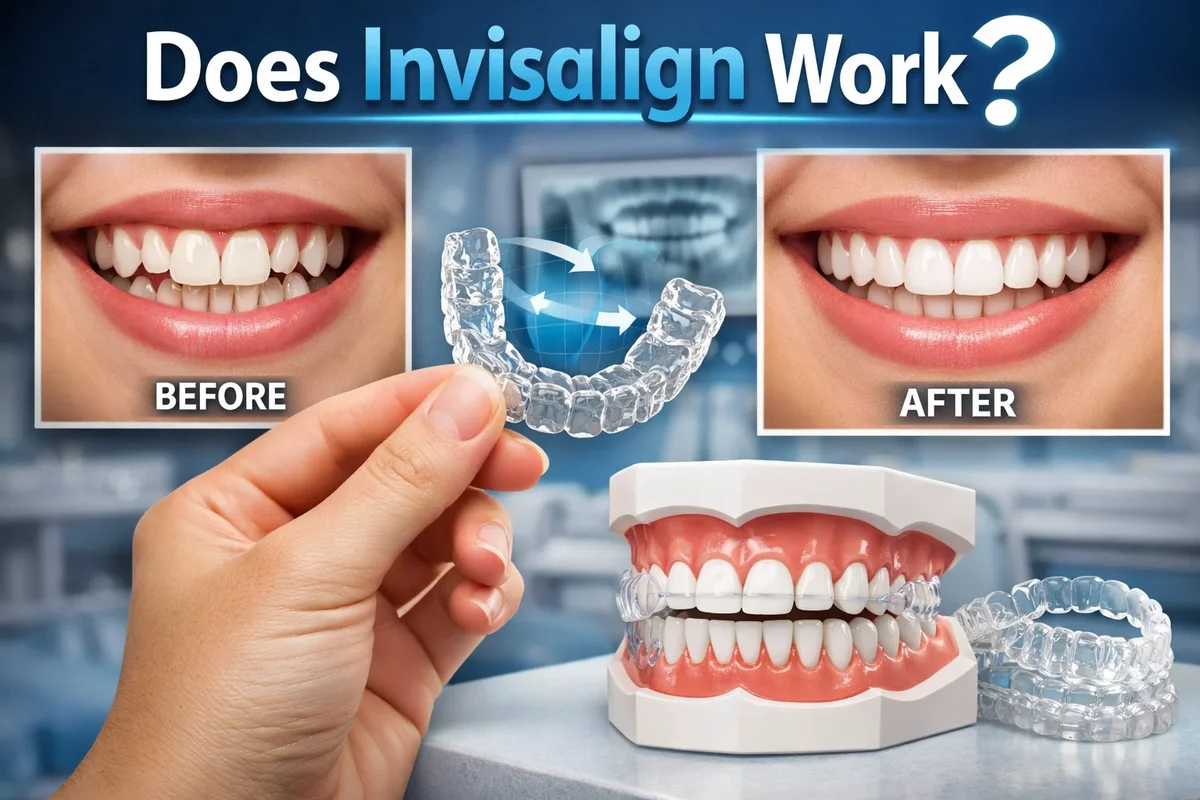
9. Tips to Make Invisalign Treatment More Effective
Many patients begin their orthodontic journey with one key question in mind: does Invisalign work? While Invisalign has proven to be highly effective for straightening teeth, the success of the treatment also depends on how well patients follow certain guidelines. Invisalign aligners are designed to gradually move teeth into better positions, but patient cooperation plays a critical role in achieving optimal results.
If you want to ensure that your Invisalign treatment progresses smoothly, understanding how to maximize its effectiveness is essential. Patients who carefully follow professional recommendations often see faster and more predictable improvements in their smile. By applying the right habits during treatment, you can help guarantee that the answer to does Invisalign work becomes a confident yes for your individual case.
Wear Your Aligners for the Recommended Time
The most important factor influencing whether does Invisalign work successfully is how consistently the aligners are worn. Dentists typically recommend wearing Invisalign aligners for about 20–22 hours per day. This ensures that the aligners apply continuous, gentle pressure on the teeth.
Removing aligners too frequently can interrupt this process and slow down tooth movement. Because Invisalign aligners are removable, patients sometimes forget to put them back in after meals or social events. However, even a few hours of missed wear each day can delay progress.
Build a Daily Routine
Creating a daily routine can help patients stay consistent with aligner wear. For example:
- Always put aligners back in immediately after meals
- Carry your aligner case when leaving home
- Set reminders on your phone if needed
- Avoid leaving aligners out for long periods
Developing these habits helps ensure that the treatment stays on schedule and reinforces why dentists often say that does Invisalign work depends heavily on patient commitment.
Maintain Excellent Oral Hygiene
Good oral hygiene is another essential factor in making Invisalign treatment effective. Because the aligners cover the teeth for most of the day, it is important to keep both the teeth and the aligners clean.
Patients should brush and floss their teeth before placing the aligners back into the mouth. This prevents food particles and bacteria from being trapped between the teeth and the aligners.
Cleaning Your Aligners Properly
Aligners should also be cleaned regularly to prevent odor and bacteria buildup. Dentists typically recommend rinsing the aligners with lukewarm water and gently brushing them with a soft toothbrush.
Proper hygiene ensures that Invisalign treatment remains comfortable and healthy, which further supports the effectiveness of the system. Maintaining cleanliness helps patients avoid complications that might otherwise interfere with the progress of treatment, reinforcing the confidence behind the question does Invisalign work.
Change Aligners on Schedule
Each Invisalign aligner is designed to be worn for a specific period, usually between one and two weeks. After that time, patients switch to the next aligner in the series. This step-by-step progression is crucial because each aligner moves the teeth slightly closer to their final positions.
Switching aligners too early or too late can disrupt the treatment plan. Dentists carefully design each stage to ensure that the teeth move gradually and safely. Following the recommended schedule helps maintain steady progress and confirms why does Invisalign work so effectively when instructions are followed properly.
Attend Regular Dental Checkups
Although Invisalign requires fewer appointments than traditional braces, regular checkups are still necessary. Dentists typically schedule visits every six to eight weeks to monitor treatment progress.
During these appointments, the dentist checks whether the teeth are moving according to the plan and may provide additional aligners if needed. These checkups allow professionals to ensure that the treatment remains on track.
Professional monitoring is another reason why orthodontists confidently answer the question does Invisalign work. Regular supervision ensures that any issues can be addressed early.
Avoid Foods and Drinks With Aligners In
One advantage of Invisalign is that the aligners can be removed during meals. However, patients should avoid eating or drinking anything other than water while wearing them.
Hot beverages, sugary drinks, and colored liquids can stain or damage the aligners. Additionally, food particles trapped inside the aligners may lead to plaque buildup or tooth decay.
Protect Your Aligners
To protect your aligners and keep treatment effective:
- Remove aligners before meals
- Rinse aligners before placing them back in your mouth
- Avoid sugary drinks while wearing aligners
- Store aligners in their protective case when not in use
Following these simple habits helps preserve the aligners and ensures that does Invisalign work continues to deliver the expected results.
Be Patient With the Process
Orthodontic treatment takes time because teeth move gradually. Some patients expect immediate results and become discouraged if they do not see changes right away. However, the Invisalign system is designed to shift teeth slowly and safely.
Most patients begin noticing improvements within a few months. Over time, these gradual changes accumulate into a dramatic transformation. Understanding this process helps patients remain motivated throughout treatment and reinforces why does Invisalign work when patience and consistency are maintained.
Communicate With Your Dentist
If patients experience discomfort, loose aligners, or unexpected issues during treatment, it is important to contact their dentist promptly. Open communication allows dentists to adjust the treatment plan if necessary.
Professional guidance ensures that Invisalign continues working effectively. Dentists can provide advice, additional aligners, or refinements to achieve the best possible results.
Ultimately, Invisalign is a powerful orthodontic tool, but its success depends on how well patients follow the treatment guidelines. Wearing aligners consistently, maintaining oral hygiene, and attending regular checkups all contribute to successful outcomes.
By following these tips and staying committed to the process, patients can significantly improve their chances of achieving a straighter, healthier smile. When these habits are maintained, the question does Invisalign work becomes easy to answer—yes, Invisalign works exceptionally well when patients actively participate in their treatment journey. 😁