
Four dental implants have become one of the most reliable and patient-friendly solutions for people who have lost multiple teeth or an entire dental arch. Instead of replacing each missing tooth individually, this modern implant technique uses just four strategically placed implants to support a fixed full-arch prosthesis. The result is a stable, natural-looking, and long-lasting smile that restores both function and confidence 😊.
In simple terms, four dental implants work by anchoring a full set of prosthetic teeth onto four titanium posts that are surgically inserted into the jawbone. These implants act like artificial tooth roots. Over time, they fuse with the bone through a process called osseointegration, creating a strong foundation that can handle daily activities such as chewing, speaking, and smiling without discomfort.
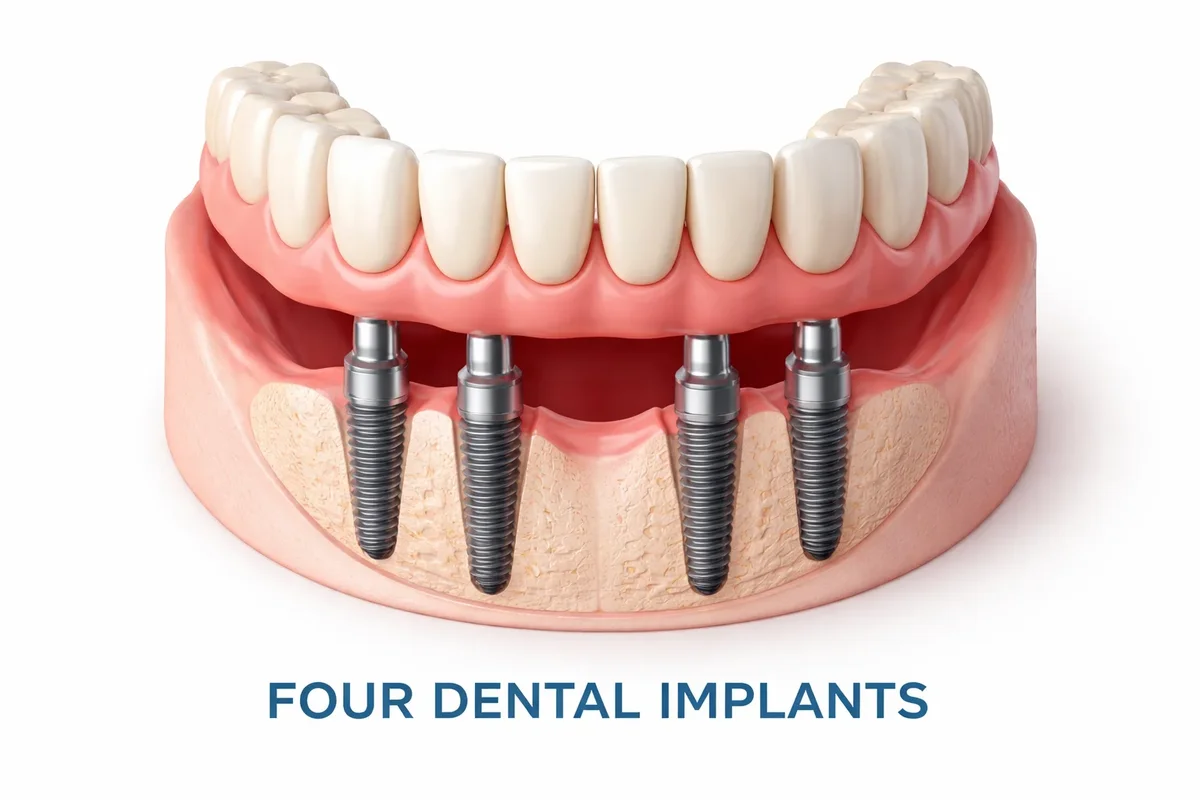
One of the main reasons four dental implants are so popular is their ability to maximize existing bone. Unlike traditional implant methods that may require six to eight implants or even bone grafting, this approach is designed to make use of the strongest areas of the jaw. Two implants are usually placed vertically at the front, while the remaining two are angled at the back. This angled placement increases stability and often eliminates the need for additional surgical procedures.
From a patient’s perspective, four dental implants offer a life-changing improvement. Dentures can slip, cause sore spots, and limit food choices, while removable solutions often feel unnatural. With four dental implants, the prosthetic teeth are fixed in place. This means no adhesives, no removal at night, and no fear of movement while eating or talking. Many patients report that their new teeth feel almost identical to natural teeth 🦷.
Functionality is just as important as appearance. When teeth are missing, the jawbone can gradually shrink due to lack of stimulation. Four dental implants help prevent this bone loss by transferring chewing forces directly into the bone, keeping it active and healthy. This not only preserves facial structure but also helps patients maintain a more youthful appearance over time.
Another key advantage of four dental implants is the relatively fast transformation. In many cases, patients can receive temporary fixed teeth on the same day as the implant surgery. This concept, often referred to as immediate loading, allows individuals to walk out of the clinic with a functional smile the very same day. While final restorations are placed after full healing, the immediate improvement in quality of life is significant.
It is also important to understand that four dental implants are not a one-size-fits-all solution, but they are suitable for a wide range of patients. People who have lost teeth due to decay, gum disease, or trauma often qualify. Even patients who were previously told they were not candidates for implants due to bone loss may still be eligible, thanks to the angled implant technique used in four dental implant systems.
From a health perspective, replacing missing teeth with four dental implants can positively impact overall well-being. Proper chewing improves digestion, clear speech supports social confidence, and a complete smile can have a powerful effect on mental health. Many patients describe feeling more comfortable in social situations and more motivated to maintain good oral hygiene after their treatment 😊.
Choosing the right clinic and professional team is crucial for success. A detailed consultation, digital imaging, and personalized treatment planning are essential steps before moving forward. If you are considering four dental implants and would like expert guidance, you can reach out directly through the Redent Klinik Contact Page to receive professional support tailored to your needs.
For additional educational resources and general oral health guidance, trusted organizations such as the American Dental Association provide valuable information that can help patients better understand implant dentistry and long-term oral care.
In summary, four dental implants represent a modern, efficient, and highly effective solution for full-arch tooth replacement. By combining advanced surgical techniques with durable materials, this approach restores not just teeth, but comfort, confidence, and quality of life. Understanding how four dental implants work is the first step toward making an informed, empowering decision for your oral health.
What Are Four Dental Implants and How Do They Work?
Four dental implants are an advanced implant-based tooth replacement method designed to restore a full arch of missing teeth using only four implants. Instead of placing an implant for each missing tooth, this approach relies on strategic positioning and biomechanical principles to achieve maximum stability with fewer implants. For patients who want a fixed, natural-feeling solution without extensive surgery, four dental implants offer a highly effective alternative to traditional methods 😊.
At their core, four dental implants consist of four medical-grade titanium posts that are surgically inserted into the jawbone. These posts function as artificial tooth roots. Once placed, they support a custom-made full-arch prosthesis, which may replace all upper teeth, all lower teeth, or both. The prosthesis is securely attached, meaning it does not move, slip, or require removal.
The Science Behind Four Dental Implants
The success of four dental implants is based on precise planning and an in-depth understanding of jaw anatomy. The jawbone is naturally denser in the front (anterior) region and often weaker toward the back (posterior), especially in patients who have been missing teeth for a long time. This technique takes advantage of that natural structure.
Typically, two implants are placed vertically in the front part of the jaw where bone density is highest. The remaining two implants are placed at an angle toward the back. This angled placement is a critical feature of four dental implants because it increases the contact surface between the implant and bone, improving stability and load distribution.
By tilting the posterior implants, clinicians can often avoid anatomical obstacles such as the sinus cavities in the upper jaw or the mandibular nerve in the lower jaw. This makes four dental implants safer and more accessible for many patients who might otherwise need bone grafting.
How Four Dental Implants Support a Full Arch
Once the implants are placed, they work together as a single, unified support system. Rather than each implant bearing force individually, the implants distribute chewing pressure evenly across the jaw. This cross-arch stabilization is what allows four dental implants to support a full set of teeth despite using fewer implants than traditional full-arch solutions.
The prosthetic bridge attached to four dental implants is usually made from high-quality materials such as zirconia or reinforced acrylic. These materials are chosen for their strength, aesthetics, and compatibility with oral tissues. The result is a smile that looks natural and functions efficiently during everyday activities like eating, speaking, and smiling.
Immediate Loading and Same-Day Teeth
One of the most appealing aspects of four dental implants is the possibility of immediate loading. In suitable cases, patients can receive a temporary fixed bridge on the same day as the implant surgery. This means you are never left without teeth during the healing period, which is a major emotional and functional benefit 😌.
Immediate loading is possible because the angled implants provide high primary stability at the time of placement. While the implants continue to integrate with the bone over several months, the temporary teeth allow patients to enjoy normal daily life with minimal interruption.
Osseointegration: The Foundation of Long-Term Success
After placement, four dental implants undergo a biological process known as osseointegration. During this phase, the surrounding bone gradually bonds with the surface of the titanium implants. This fusion creates a strong and permanent connection, allowing the implants to function like natural tooth roots.
Osseointegration is essential for the long-term success of four dental implants. Proper oral hygiene, regular dental check-ups, and following post-operative instructions all play a vital role in ensuring this process occurs smoothly. Once integration is complete, the final prosthetic teeth are placed, offering optimal strength, comfort, and aesthetics.
Why Fewer Implants Can Be Better
Many patients are surprised to learn that four dental implants can be just as effective as solutions using six or eight implants. Fewer implants mean a shorter surgical procedure, reduced cost, and faster recovery in many cases. Additionally, less surgical intervention often leads to a lower risk of complications.
From a biomechanical standpoint, four dental implants are carefully positioned to maximize efficiency. The angled placement allows the implants to handle biting forces more effectively than multiple vertically placed implants in weaker bone areas.
In summary, four dental implants work by combining strategic implant placement, advanced materials, and proven biological principles to restore a full arch of teeth with stability and confidence. Understanding how four dental implants function helps patients feel more informed and empowered when considering this life-changing treatment option.
Who Is a Good Candidate for Four Dental Implants?
Four dental implants are designed to help a wide range of patients who are missing multiple teeth or an entire dental arch, but determining candidacy is a critical step for long-term success. While this treatment is highly versatile, a proper evaluation ensures that four dental implants will function safely, comfortably, and predictably for each individual 😊.
In general, four dental implants are ideal for people who have lost most or all of their teeth in the upper jaw, lower jaw, or both. Patients who are tired of loose dentures, discomfort while eating, or embarrassment while speaking often explore four dental implants as a permanent and stable solution. However, candidacy depends on several medical, dental, and lifestyle factors.
Basic Requirements for Four Dental Implants
The first requirement for four dental implants is overall oral health. The gums should be free from active infections such as untreated periodontal disease. Healthy gum tissue provides a protective seal around the implants and supports proper healing. If gum disease is present, it must be treated before moving forward with four dental implants.
General health is another important consideration. Most healthy adults are suitable candidates for four dental implants, including older patients. Age alone is not a limiting factor. What matters more is the body’s ability to heal and integrate implants with bone. Conditions such as controlled diabetes, mild osteoporosis, or high blood pressure do not automatically disqualify a patient, but they must be well managed.
Bone Structure and Jaw Anatomy
One of the biggest advantages of four dental implants is that they are suitable for patients with limited bone volume. Traditional implant methods often require bone grafting when bone loss has occurred. In contrast, four dental implants use angled placement to maximize existing bone, especially in the front part of the jaw where bone density is typically higher.
Thanks to this design, many patients who were previously told they were not eligible for implants may still qualify for four dental implants. Advanced imaging techniques such as 3D cone beam CT scans allow clinicians to evaluate jaw anatomy in detail and determine whether the bone can support the implants safely.
Upper Jaw vs Lower Jaw Considerations
In the upper jaw, bone loss is often more significant due to sinus expansion after tooth loss. Four dental implants are especially beneficial here because the angled posterior implants can avoid the sinus cavities. In the lower jaw, the technique helps bypass the mandibular nerve, reducing surgical risks.
Lifestyle Factors That Affect Candidacy
Lifestyle habits play a major role in the success of four dental implants. Smoking, for example, can negatively impact healing and osseointegration. While smokers are not automatically excluded, they may be advised to reduce or quit smoking before and after treatment to improve outcomes.
Good oral hygiene habits are also essential. Four dental implants require daily care, including brushing, flossing, and regular professional cleanings. Patients who are committed to maintaining their oral health are more likely to experience long-term success with four dental implants.
Patients Transitioning from Dentures
Many ideal candidates for four dental implants are long-term denture wearers. Over time, dentures can accelerate bone loss and cause sore spots or instability. Four dental implants provide a fixed alternative that eliminates the need for adhesives and nightly removal.
For denture wearers, the transition to four dental implants can be life-changing. Improved chewing efficiency allows for a more varied and nutritious diet, while the fixed nature of the prosthesis restores confidence in social situations.
Medical Conditions and Special Considerations
Certain medical conditions require additional evaluation before proceeding with four dental implants. Autoimmune disorders, blood clotting issues, or recent cancer treatments may affect healing. However, with proper coordination between dental professionals and physicians, many patients with complex medical histories can still safely receive four dental implants.
Medications such as bisphosphonates or immunosuppressants may also influence treatment planning. A thorough medical history review ensures that four dental implants are placed with minimal risk and maximum predictability.
Psychological Readiness and Expectations
Beyond physical factors, psychological readiness is an often-overlooked aspect of candidacy. Patients considering four dental implants should have realistic expectations about the process, healing time, and maintenance requirements. While the results are highly rewarding, success depends on patience and cooperation during recovery.
Patients who understand the long-term benefits and responsibilities associated with four dental implants are more likely to be satisfied with their outcome 😊.
In conclusion, four dental implants are suitable for many patients, including those with bone loss, older adults, and individuals dissatisfied with dentures. A comprehensive evaluation that considers oral health, bone structure, medical history, and lifestyle habits is essential. With proper planning and professional care, four dental implants can be a safe, reliable, and transformative solution for restoring a full smile.
Benefits of Choosing Four Dental Implants for Tooth Replacement
Four dental implants offer a wide range of benefits that go far beyond simply replacing missing teeth. This modern treatment approach is designed to restore comfort, function, appearance, and long-term oral health in a way that traditional dentures or older implant methods often cannot. For many patients, four dental implants represent a permanent upgrade in quality of life 😊.
When teeth are missing, daily activities such as eating, speaking, and smiling can become stressful. Four dental implants address these challenges by providing a stable, fixed solution that feels secure and natural. Unlike removable dentures, this method restores confidence and allows patients to live without constant worry about their teeth shifting or slipping.
Superior Stability and Comfort
One of the most significant advantages of four dental implants is their exceptional stability. Because the implants are anchored directly into the jawbone, they create a firm foundation for the prosthetic teeth. This eliminates the movement and discomfort commonly associated with traditional dentures.
Patients often report that four dental implants feel like natural teeth rather than a dental appliance. There is no need for adhesives, and there are no pressure points on the gums. This level of comfort allows patients to speak clearly and smile freely without self-consciousness.
Improved Chewing and Nutrition
Chewing efficiency is dramatically improved with four dental implants. Dentures can limit food choices, forcing patients to avoid hard, crunchy, or chewy foods. With four dental implants, biting force is distributed evenly through the implants into the jawbone, closely mimicking the function of natural teeth.
This improvement allows patients to enjoy a broader, healthier diet that includes fresh fruits, vegetables, meats, and nuts. Better nutrition supports overall health, digestion, and energy levels, making four dental implants beneficial beyond oral health 🍎.
Preservation of Jawbone and Facial Structure
One of the hidden dangers of tooth loss is progressive bone loss in the jaw. Without tooth roots to stimulate the bone, it gradually shrinks, leading to facial sagging and an aged appearance. Four dental implants help prevent this process by transmitting chewing forces directly to the bone.
By preserving bone volume, four dental implants maintain natural facial contours and support the lips and cheeks. This results in a more youthful and natural appearance compared to long-term denture wearers.
Long-Term Oral Health Benefits
Four dental implants do not rely on neighboring teeth for support, unlike bridges. This means adjacent teeth remain untouched and healthy. Over time, this contributes to better overall oral health and reduces the risk of additional dental problems.
Faster Treatment and Reduced Surgical Complexity
Compared to traditional full-arch implant solutions that require six to eight implants, four dental implants often involve a shorter surgical procedure. Fewer implants mean less trauma to the jawbone, reduced surgical time, and a more comfortable recovery for many patients.
In many cases, bone grafting is not required due to the angled placement of the posterior implants. This not only shortens treatment time but also reduces costs and post-operative discomfort.
Immediate Aesthetic Improvement
Another major benefit of four dental implants is the possibility of immediate results. Many patients can receive a temporary fixed prosthesis on the same day as surgery. This means you are never without teeth during the healing period, which can be emotionally reassuring 😊.
The prosthetic teeth are custom-designed to match facial features, skin tone, and smile preferences. This results in a natural-looking smile that enhances self-esteem from day one.
Durability and Long-Term Reliability
Four dental implants are designed to last for many years, often decades, with proper care. The titanium implants integrate with the bone and provide a stable foundation that resists wear and movement. The prosthetic teeth are made from durable materials engineered to withstand daily use.
With regular dental check-ups, good oral hygiene, and healthy habits, four dental implants can be a lifelong solution rather than a temporary fix.
Psychological and Social Benefits
The emotional impact of four dental implants should not be underestimated. Many patients experience a significant boost in confidence, improved self-image, and reduced anxiety in social situations. Smiling, laughing, and speaking become natural again.
Feeling comfortable with your smile can positively affect personal relationships, professional interactions, and overall mental well-being 😊.
In summary, four dental implants provide a powerful combination of stability, comfort, aesthetics, and long-term health benefits. From improved chewing and bone preservation to enhanced confidence and convenience, four dental implants stand out as one of the most comprehensive tooth replacement solutions available today.
The Step-by-Step Procedure of Getting Four Dental Implants
Four dental implants follow a carefully planned, multi-stage procedure designed to ensure safety, comfort, and long-term success. Understanding each step helps patients feel more confident and prepared for treatment. While the process is highly advanced, it is also patient-focused, predictable, and efficient when performed by experienced professionals 😊.
Although every case is personalized, the overall journey of four dental implants follows a clear sequence—from consultation to final restoration. Each phase plays a crucial role in achieving a stable, functional, and natural-looking smile.
Initial Consultation and Digital Planning
The first step in the four dental implants process is a comprehensive consultation. During this visit, the dentist evaluates oral health, medical history, and patient expectations. Advanced imaging techniques such as panoramic X-rays and 3D cone beam CT scans are used to assess bone quality, jaw anatomy, and nerve locations.
This digital planning phase is one of the key reasons four dental implants are so successful. Using specialized software, the clinician determines the ideal implant positions, angles, and depths. This precise planning minimizes risks, shortens surgery time, and ensures optimal load distribution once the implants are in place.
Customized Treatment Design
Based on the digital analysis, a personalized treatment plan is created. This includes the type of prosthetic teeth, timeline, and whether immediate loading is possible. Patients are informed about each step so they know exactly what to expect from their four dental implants journey.
Preparation Before Surgery
Before implant placement, any existing dental issues such as infections or failing teeth are addressed. In many cases, remaining damaged teeth are extracted during the same appointment as implant surgery. This streamlined approach reduces the total number of visits and accelerates the transition to four dental implants.
Patients receive detailed pre-operative instructions, which may include temporary dietary adjustments or medication guidelines. Proper preparation helps ensure a smooth surgical experience and optimal healing.
Surgical Placement of Four Dental Implants
The surgical phase is the core of the four dental implants procedure. Under local anesthesia or conscious sedation, four titanium implants are carefully placed into the jawbone. Two implants are positioned vertically in the front of the jaw, while two are placed at an angle toward the back.
This angled placement is a defining feature of four dental implants. It maximizes bone contact, improves stability, and often eliminates the need for bone grafting. The surgery itself typically takes a few hours, depending on complexity and whether extractions are performed simultaneously.
Minimally Invasive Approach
Despite sounding complex, the procedure is designed to be minimally invasive. Advanced techniques reduce trauma to surrounding tissues, resulting in less swelling, less discomfort, and faster recovery compared to traditional implant methods.
Immediate Loading and Temporary Teeth
One of the most exciting aspects of four dental implants is the possibility of immediate loading. If sufficient stability is achieved, a temporary fixed prosthesis is attached to the implants on the same day. This allows patients to leave the clinic with a full set of functional teeth 😊.
These temporary teeth are designed for aesthetics and basic function while protecting the implants during the healing phase. Patients can smile, speak, and eat soft foods without feeling self-conscious or limited.
Healing and Osseointegration Phase
After surgery, the implants begin the osseointegration process. Over the next three to six months, the jawbone gradually bonds with the implants, creating a strong and permanent foundation. This phase is critical for the long-term success of four dental implants.
During healing, patients attend follow-up appointments to monitor progress. Mild swelling or discomfort is normal in the first few days and is typically manageable with prescribed medication and proper aftercare.
Final Prosthetic Placement
Once osseointegration is complete, the final prosthetic teeth are fabricated and attached. These restorations are custom-designed for durability, comfort, and natural appearance. The final result feels secure and closely resembles natural teeth in both function and aesthetics.
The completed four dental implants restoration allows patients to return to normal eating habits, speak confidently, and maintain oral hygiene with ease.
Post-Treatment Care and Maintenance
Long-term success with four dental implants depends on good oral hygiene and regular dental check-ups. Daily brushing, flossing, and professional cleanings help maintain healthy gums and implant stability.
In summary, the step-by-step procedure of four dental implants is a well-structured, patient-friendly process that combines advanced technology with proven surgical techniques. From digital planning to final restoration, every stage is designed to deliver a stable, comfortable, and life-changing smile.
Healing, Recovery, and Aftercare Expectations
Four dental implants are designed to provide long-lasting stability and comfort, but the healing and recovery phase plays a crucial role in achieving optimal results. Understanding what to expect after surgery helps patients feel confident, prepared, and actively involved in their own recovery 😊. While the procedure itself is highly advanced, proper aftercare is what ensures the long-term success of four dental implants.
Recovery from four dental implants is generally smoother than many patients expect, especially when compared to traditional full-arch implant methods. Because fewer implants are used and bone grafting is often avoided, healing tends to be faster and more predictable.
The First 24–72 Hours After Surgery
The initial healing phase begins immediately after the placement of four dental implants. During the first few days, mild swelling, tenderness, and minor bruising around the gums and jaw are normal responses. These symptoms are part of the body’s natural healing process and typically peak within 48 hours before gradually subsiding.
Patients are usually prescribed pain relievers and, in some cases, antibiotics to reduce discomfort and prevent infection. Applying cold compresses and following post-operative instructions carefully can significantly minimize swelling and promote faster healing.
Managing Discomfort and Swelling
Most patients report that discomfort after four dental implants is manageable and less severe than expected. Soft foods, adequate hydration, and rest are essential during this stage. Avoiding strenuous physical activity allows the body to focus its energy on healing.
Diet During the Healing Phase
Nutrition plays a vital role in recovery after four dental implants. During the first few weeks, patients are advised to follow a soft-food diet to protect the implants while the surrounding bone and tissue heal. Foods such as yogurt, soups, eggs, smoothies, mashed vegetables, and soft fish are commonly recommended.
As healing progresses, patients can gradually reintroduce firmer foods under professional guidance. Chewing should be evenly distributed to avoid placing excessive pressure on any single implant. Proper nutrition not only supports healing but also boosts overall energy and immune response 🥗.
Osseointegration: The Critical Healing Process
One of the most important phases of recovery for four dental implants is osseointegration. This biological process occurs over several months, during which the jawbone fuses with the titanium implant surfaces. Successful osseointegration is what gives four dental implants their strength and durability.
During this period, patients may already be using a temporary fixed prosthesis. While these teeth look and feel natural, they are designed to protect the implants as integration takes place. Following dietary and hygiene guidelines is essential to avoid disrupting this process.
Oral Hygiene and Daily Care
Maintaining excellent oral hygiene is non-negotiable when recovering from four dental implants. Although implants cannot decay like natural teeth, the surrounding gums and bone can still be affected by bacteria. Daily brushing with a soft toothbrush, gentle flossing, and the use of antibacterial mouth rinses help keep the area clean.
Specialized cleaning tools such as water flossers or interdental brushes may be recommended to clean around the implant-supported prosthesis. Consistent hygiene habits significantly reduce the risk of inflammation or implant-related complications.
Professional Follow-Up Appointments
Regular follow-up visits are a key part of aftercare for four dental implants. These appointments allow the dental team to monitor healing, check implant stability, and make adjustments if necessary. Early detection of potential issues ensures they are addressed before becoming serious.
Long-Term Recovery and Lifestyle Adjustments
As healing progresses and the final prosthetic teeth are placed, patients often notice a dramatic improvement in comfort and confidence. Normal eating habits, clear speech, and a natural smile become part of everyday life again. However, long-term success with four dental implants depends on maintaining healthy lifestyle habits.
Smoking cessation, stress management, and routine dental care all contribute to implant longevity. Patients who commit to these practices often enjoy decades of reliable function from their four dental implants 😊.
Signs of Healthy Healing vs Warning Signals
Healthy healing after four dental implants includes gradually decreasing discomfort, stable prosthetic teeth, and healthy pink gums. Any unusual symptoms such as persistent pain, excessive swelling, bleeding, or implant movement should be reported immediately.
Prompt professional attention can resolve most issues quickly, preserving the success of four dental implants.
In conclusion, healing and recovery after four dental implants is a structured and manageable process when proper aftercare is followed. From the initial days of recovery to long-term maintenance, patient cooperation and professional guidance work together to ensure lasting comfort, function, and confidence.
Four Dental Implants vs Other Full-Arch Solutions
Four dental implants are often compared with other full-arch tooth replacement solutions, especially by patients trying to decide which option best fits their needs, expectations, and long-term goals. Understanding the differences between four dental implants and alternative treatments is essential for making an informed and confident decision 😊.
Full-arch tooth loss can be addressed in several ways, including traditional dentures, implant-supported overdentures, and full-arch implant systems using six or more implants. Each solution has its own advantages and limitations, but four dental implants stand out for their balance of stability, efficiency, and patient comfort.
Four Dental Implants vs Traditional Dentures
Traditional dentures have been used for decades to replace missing teeth, but they come with notable drawbacks. Dentures rest on the gums and rely on suction or adhesives for retention. Over time, this can lead to slipping, sore spots, and difficulty eating or speaking.
In contrast, four dental implants are anchored directly into the jawbone. This creates a fixed solution that does not move or require removal. Patients with four dental implants can chew more effectively, speak clearly, and smile with confidence without worrying about their teeth shifting.
Comfort and Daily Convenience
Dentures must be removed for cleaning and often require adhesives. Four dental implants eliminate these inconveniences entirely. The prosthetic teeth are cleaned similarly to natural teeth, making daily oral hygiene simpler and more familiar.
Four Dental Implants vs Implant-Supported Overdentures
Implant-supported overdentures use a small number of implants to stabilize a removable denture. While this option is more stable than traditional dentures, it still involves a removable appliance.
Four dental implants differ significantly because they support a fully fixed prosthesis. There is no need to remove the teeth at night, and there is no movement during function. For patients seeking a permanent, non-removable solution, four dental implants offer a higher level of comfort and psychological satisfaction.
Four Dental Implants vs Six or Eight Implant Systems
Some full-arch implant treatments use six or even eight implants per arch. While these systems can be effective, they often involve longer surgical times, higher costs, and a greater likelihood of requiring bone grafting.
Four dental implants are designed to maximize existing bone through angled implant placement. This approach often eliminates the need for grafting and reduces overall treatment complexity. For many patients, four dental implants provide comparable stability with fewer implants and less invasive surgery.
Efficiency and Cost Considerations
Using fewer implants typically results in a more streamlined procedure. Shorter surgery times and fewer materials can make four dental implants a more accessible option without compromising quality or durability.
Bone Preservation and Facial Aesthetics
All implant-based solutions help preserve bone to some extent, but four dental implants are particularly effective due to their strategic placement. By distributing biting forces evenly across the jaw, they stimulate the bone and help maintain facial structure.
Traditional dentures, on the other hand, accelerate bone loss over time. This can lead to facial collapse and an aged appearance. Four dental implants help maintain natural facial contours, supporting both function and aesthetics.
Long-Term Reliability and Maintenance
When properly cared for, four dental implants can last for decades. They require routine dental check-ups and good oral hygiene, similar to natural teeth. Dentures and removable solutions often need frequent adjustments or replacements as the jawbone changes shape.
Patients who choose four dental implants often appreciate the long-term reliability and reduced need for ongoing modifications.
Patient Satisfaction and Quality of Life
Studies and patient feedback consistently show high satisfaction rates for four dental implants. The ability to eat freely, speak confidently, and live without removable appliances significantly improves quality of life 😊.
While other solutions may be appropriate in certain situations, four dental implants offer a comprehensive blend of stability, aesthetics, and convenience that many patients find unmatched.
In summary, four dental implants stand apart from other full-arch solutions by offering a fixed, bone-preserving, and patient-friendly approach. When compared to dentures, overdentures, or multi-implant systems, four dental implants provide a balanced solution that meets both functional and emotional needs.
Longevity, Durability, and Long-Term Success Rates
Four dental implants are widely recognized not only for their immediate functional benefits but also for their impressive longevity and durability. For patients considering a permanent tooth replacement solution, understanding how long four dental implants last and what influences their long-term success is essential 😊. When properly planned, placed, and maintained, four dental implants can provide reliable performance for decades.
Unlike temporary dental solutions, four dental implants are engineered to withstand daily chewing forces, resist wear, and remain stable over time. Their long-term success is the result of advanced materials, precise surgical techniques, and ongoing patient care.
How Long Do Four Dental Implants Last?
The titanium implants used in four dental implants are designed to be permanent. Titanium is biocompatible, corrosion-resistant, and exceptionally strong. Once osseointegration is complete, the implants become a stable part of the jawbone and can last a lifetime in many cases.
The prosthetic teeth attached to four dental implants may require replacement after many years due to normal wear, depending on the material used. However, the underlying implants typically remain intact and functional, making maintenance more predictable and cost-effective in the long run.
Success Rates of Four Dental Implants
Clinical studies and long-term data show that four dental implants have success rates exceeding 95% when placed by experienced professionals. These high success rates apply to both the upper and lower jaws and across a wide range of patient profiles.
Several factors contribute to these impressive outcomes, including strategic implant placement, even distribution of biting forces, and the elimination of unnecessary surgical procedures such as bone grafting in many cases.
Upper Jaw vs Lower Jaw Success
Success rates for four dental implants are slightly higher in the lower jaw due to denser bone. However, advances in angled implant placement have significantly improved outcomes in the upper jaw as well, even in patients with reduced bone volume.
Materials That Ensure Durability
The durability of four dental implants depends heavily on the materials used. Titanium implants are paired with high-strength prosthetic materials such as zirconia or reinforced acrylic. These materials are chosen for their resistance to fracture, wear, and discoloration.
Zirconia restorations, in particular, offer exceptional strength and a natural appearance, making them a popular choice for patients seeking both durability and aesthetics with four dental implants.
Factors That Influence Long-Term Success
While four dental implants are highly reliable, their long-term success depends on several key factors. Proper oral hygiene is one of the most important. Daily cleaning helps prevent peri-implant diseases that can compromise implant stability.
Lifestyle choices also play a role. Smoking, excessive alcohol consumption, and unmanaged medical conditions can negatively affect healing and long-term outcomes. Patients who follow professional advice and maintain healthy habits tend to experience the best results with four dental implants.
Role of Professional Maintenance
Regular dental check-ups are essential for monitoring the health of four dental implants. During these visits, dental professionals assess gum health, clean around the implants, and ensure the prosthetic teeth remain properly aligned.
Early detection of minor issues allows for prompt intervention, preventing more serious complications and preserving the longevity of four dental implants.
Mechanical Strength and Daily Function
Four dental implants are designed to handle the forces generated during normal chewing and biting. Their cross-arch stabilization distributes pressure evenly, reducing stress on individual implants and increasing overall durability.
This design allows patients to enjoy a wide range of foods without fear of damage or discomfort, contributing to a normal and satisfying daily life 😊.
Patient Commitment and Long-Term Satisfaction
Long-term success with four dental implants is a partnership between patient and provider. Patients who commit to proper care, routine follow-ups, and healthy habits often report decades of reliable function and high satisfaction.
Many patients describe four dental implants as a once-in-a-lifetime investment that continues to deliver comfort, confidence, and functionality year after year.
In conclusion, four dental implants offer exceptional longevity, durability, and success rates when supported by quality materials, expert care, and responsible maintenance. Their proven long-term performance makes four dental implants one of the most dependable full-arch tooth replacement solutions available today.
Potential Risks, Complications, and How to Avoid Them
Four dental implants are considered a safe and predictable treatment with high success rates, but like any medical procedure, they come with potential risks and complications. Understanding these risks and knowing how to minimize them allows patients to approach four dental implants with confidence and realistic expectations 😊. When performed by skilled professionals and supported by proper aftercare, complications are rare and often preventable.
Being informed about possible challenges does not mean four dental implants are unsafe. On the contrary, awareness empowers patients to take an active role in protecting their investment and long-term oral health.
Common Short-Term Risks After Surgery
In the days following surgery, patients may experience temporary side effects such as swelling, bruising, minor bleeding, or discomfort. These symptoms are normal responses to surgical intervention and typically resolve within a few days.
Infections are possible but uncommon when proper sterile techniques and post-operative care are followed. Taking prescribed medications, maintaining oral hygiene, and attending follow-up appointments significantly reduce this risk for four dental implants.
Managing Post-Surgical Discomfort
Most discomfort associated with four dental implants can be controlled with medication, cold compresses, and rest. Following dietary guidelines and avoiding physical strain during early recovery also supports smooth healing.
Implant Failure and Osseointegration Issues
One of the most serious but rare complications of four dental implants is implant failure, which occurs when an implant does not properly integrate with the jawbone. This can be influenced by factors such as poor bone quality, infection, smoking, or uncontrolled medical conditions.
The risk of implant failure is minimized through detailed planning, high-quality materials, and patient compliance. If an implant does fail, it can often be replaced after appropriate healing, preserving the overall success of four dental implants.
Gum and Bone-Related Complications
Peri-implantitis is an inflammatory condition affecting the gums and bone around implants. It is similar to gum disease and is usually caused by plaque buildup. Without treatment, it can compromise implant stability.
Good oral hygiene, regular professional cleanings, and early intervention are key to preventing peri-implantitis in patients with four dental implants.
Nerve and Sinus Considerations
In rare cases, improper implant placement can affect nearby nerves or sinus cavities. This may result in temporary numbness, tingling, or sinus discomfort. Advanced imaging and digital planning significantly reduce these risks.
The angled placement used in four dental implants is specifically designed to avoid these anatomical structures, making the procedure safer for a wide range of patients.
Mechanical Complications Over Time
Although the implants themselves are extremely durable, the prosthetic components may experience wear over time. Issues such as screw loosening, chipping, or fracture of the prosthetic teeth can occur, especially under excessive biting forces.
Routine check-ups allow dental professionals to detect and correct minor mechanical issues before they become significant problems, ensuring the longevity of four dental implants.
How to Reduce Risks and Ensure Success
Choosing an experienced implant provider is one of the most important steps in minimizing risks associated with four dental implants. Expertise in digital planning, surgical technique, and prosthetic design greatly influences outcomes.
Patients also play a critical role. Maintaining excellent oral hygiene, avoiding tobacco use, managing medical conditions, and following professional advice all contribute to long-term success 😊.
Importance of Regular Monitoring
Ongoing professional monitoring ensures that any early signs of complications are addressed promptly. This proactive approach protects both the implants and surrounding tissues.
Psychological and Behavioral Factors
Stress, teeth grinding, and unrealistic expectations can indirectly affect outcomes. Protective devices such as night guards may be recommended for patients who clench or grind their teeth.
Understanding the recovery process and committing to aftercare reduces anxiety and supports a positive experience with four dental implants.
In summary, four dental implants are a safe and reliable solution when potential risks are understood and managed proactively. Through careful planning, professional expertise, and patient cooperation, complications can be minimized, allowing four dental implants to deliver lasting comfort, stability, and confidence.
Cost, Value, and Factors That Influence Pricing
Four dental implants are often viewed as a premium dental solution, and understandably so. They combine advanced surgical techniques, high-quality materials, and long-term functionality into a single treatment. However, when evaluating the cost of four dental implants, it is important to look beyond the initial price tag and understand the long-term value they provide 😊.
The total cost of four dental implants can vary significantly depending on multiple factors, including location, clinic expertise, materials used, and individual patient needs. Rather than being a fixed number, pricing is best understood as a combination of clinical quality, durability, and life-long benefits.
Average Cost of Four Dental Implants
Globally, the cost of four dental implants can range widely. In countries such as the United States, the average price for a full-arch restoration supported by four dental implants typically falls between $18,000 and $30,000 per arch. This usually includes consultations, surgery, implants, temporary teeth, and the final prosthetic restoration.
In contrast, many international dental clinics offer four dental implants at significantly lower costs due to reduced operational expenses. In popular medical tourism destinations, the price may range from $4,000 to $8,000 per arch, often with the same internationally recognized implant systems and materials.
What Is Usually Included in the Price?
A comprehensive four dental implants package often includes diagnostic imaging, digital treatment planning, implant surgery, anesthesia, temporary fixed teeth, final prosthetic teeth, and follow-up visits. Always confirm exactly what is included to avoid unexpected costs later.
Key Factors That Influence the Cost
Several elements directly impact the total cost of four dental implants. One of the most important is the experience and expertise of the dental team. Clinics with advanced technology, specialized implant surgeons, and in-house laboratories may charge more, but they also offer higher predictability and safety.
The type of prosthetic material used also affects pricing. Zirconia restorations tend to be more expensive than acrylic options but offer superior durability, aesthetics, and longevity. Patients choosing premium materials often see better long-term value from their four dental implants.
Bone Grafting and Additional Procedures
One major advantage of four dental implants is that they often eliminate the need for bone grafting. However, in rare cases where additional procedures are required, costs may increase. Fortunately, the angled implant placement technique minimizes this risk for most patients.
Extractions, sinus lifting, or advanced sedation options can also influence the final price. A personalized consultation is the only way to determine the exact cost of four dental implants for an individual case.
Four Dental Implants as a Long-Term Investment
While the upfront cost of four dental implants may seem higher than dentures, the long-term financial picture tells a different story. Dentures often require frequent adjustments, relines, adhesives, and replacements over time. These ongoing expenses can add up significantly.
Four dental implants, on the other hand, are designed to last for decades. With proper care, the implants themselves may never need replacement. This makes four dental implants a cost-effective solution when evaluated over a lifetime.
Quality of Life and Hidden Value
The true value of four dental implants extends beyond financial considerations. Improved chewing ability, better nutrition, enhanced speech, and renewed confidence all contribute to a higher quality of life 😊.
Many patients report that they feel younger, healthier, and more socially confident after receiving four dental implants. These benefits are difficult to measure in monetary terms but are often described as priceless.
Financing and Accessibility
Many clinics offer flexible payment plans or financing options to make four dental implants more accessible. Some patients also choose treatment abroad to balance affordability with high-quality care.
Regardless of location, it is essential to prioritize safety, transparency, and professional standards when choosing a provider for four dental implants.
Making an Informed Decision
Choosing four dental implants should be based on value rather than price alone. A lower-cost option without proper planning or expertise may result in complications and additional expenses later.
In conclusion, four dental implants represent a powerful combination of cost-efficiency, durability, and life-enhancing benefits. When viewed as a long-term investment in health, comfort, and confidence, four dental implants offer exceptional value for patients seeking a permanent full-arch tooth replacement solution.