
Understanding how to get financial help for dental implants is one of the most important steps for patients who need long-term tooth replacement but feel overwhelmed by the cost. Dental implants are considered the gold standard in modern dentistry 🦷 because they look, feel, and function like natural teeth. However, their advanced technology, surgical precision, and long treatment timeline often make them financially challenging. This is exactly why learning how to get financial help for dental implants can make the difference between postponing treatment and confidently restoring your smile.
Dental implants typically involve multiple components: a titanium implant post, an abutment, and a custom-made crown. Each step requires professional expertise, advanced imaging, surgical procedures, and high-quality materials. For many patients, especially those without comprehensive dental insurance, these costs can feel discouraging 😟. Still, the good news is that there are multiple realistic pathways to explore when researching how to get financial help for dental implants, and many patients successfully combine more than one option.
First, it is important to understand that dental implants are not just a cosmetic upgrade. They play a critical role in maintaining jawbone health, preventing bone loss, and preserving facial structure. Missing teeth can lead to shifting teeth, bite problems, and even changes in facial appearance over time. Because of these medical implications, many professionals argue that implants should be considered a functional health necessity rather than a luxury. This perspective strengthens your case when seeking how to get financial help for dental implants through insurance appeals, medical necessity documentation, or alternative funding programs.
Another key aspect of how to get financial help for dental implants is proper planning. Patients who rush into treatment without exploring all available financial resources often pay significantly more than necessary. A well-planned approach includes understanding your diagnosis, reviewing treatment stages, requesting written treatment plans, and asking clinics about all available support options. Reputable clinics are transparent about costs and frequently assist patients in navigating financing, insurance claims, and alternative solutions 😊.
Many people mistakenly believe that if dental insurance does not fully cover implants, there are no other options. This is not true. Learning how to get financial help for dental implants means looking beyond traditional insurance and exploring government assistance programs, nonprofit organizations, dental schools, structured payment plans, and even international treatment options. Each option has its own advantages and limitations, but when combined strategically, they can dramatically reduce out-of-pocket expenses.
It is also essential to recognize that financial help for dental implants is not a one-size-fits-all solution. Factors such as age, income level, medical condition, geographic location, and urgency of treatment all influence which options are most suitable. Some patients qualify for partial insurance reimbursement, while others benefit more from staged treatment plans or low-interest dental financing. Understanding how to get financial help for dental implants requires matching your personal situation with the right support method.
Education is one of your strongest tools. Authoritative organizations such as the
American Dental Association provide reliable information on dental procedures, patient rights, and care standards. Being informed empowers you to ask the right questions, avoid misleading offers, and make financially sound decisions. Knowledge not only protects your health but also your budget 💡.
For patients considering treatment abroad or seeking expert consultation, professional clinics often provide guidance and individualized financial planning. If you would like personalized assistance or have questions about treatment pathways, you can reach out directly through the
Redent Klinik Contact Page. Speaking with a qualified team can clarify both medical and financial aspects before you commit to treatment.
Finally, remember that learning how to get financial help for dental implants is a proactive process. It rewards patience, research, and open communication with dental professionals. Dental implants are a long-term investment in your health, confidence, and quality of life 😄. With the right financial strategy, what once seemed unattainable can become a realistic and manageable goal.
Why Dental Implants Are Expensive and Why Financial Help Matters
To truly understand how to get financial help for dental implants, it is essential to first understand why dental implants are considered one of the most expensive dental treatments available today. Many patients assume the high cost is arbitrary or inflated, but in reality, implant dentistry involves advanced technology, multiple clinical stages, and highly specialized expertise. Recognizing these factors helps patients make informed decisions and strengthens their position when exploring how to get financial help for dental implants.
The Advanced Technology Behind Dental Implants
Dental implants are not simple dental fillings or crowns. They rely on biocompatible materials, most commonly medical-grade titanium, which integrates with the jawbone through a biological process known as osseointegration. This process requires precision planning, digital imaging such as 3D CBCT scans, and meticulous surgical placement. Each of these steps increases clinical success rates but also contributes to higher costs.
When patients research how to get financial help for dental implants, they often overlook how much technology is involved behind the scenes. From computer-guided implant surgery to custom-designed crowns, every phase requires investment in equipment and training. Clinics that follow international standards prioritize safety and longevity, which directly impacts pricing.
Multiple Treatment Stages Increase Overall Costs
Another reason dental implants are costly is that treatment rarely happens in a single visit. The process often includes:
- Initial consultation and diagnostic imaging
- Surgical implant placement
- Healing and osseointegration period (3–6 months)
- Abutment placement
- Final crown fabrication and fitting
Each stage requires clinical time, laboratory work, and professional oversight. Understanding these stages clarifies why learning how to get financial help for dental implants is so important, especially for patients who need multiple implants or full-mouth restoration.
Additional Procedures That Can Increase Costs
Not all patients are immediate candidates for implants. Bone loss, gum disease, or sinus anatomy may require additional treatments such as bone grafting or sinus lifts. These procedures significantly improve implant success rates but add to the total cost. For this reason, patients exploring how to get financial help for dental implants should always request a complete treatment plan upfront to avoid unexpected expenses.
Why Dental Insurance Often Falls Short
One of the biggest frustrations patients face is limited insurance coverage. Traditional dental insurance plans were designed decades ago and often classify implants as elective or cosmetic procedures. Even when partial coverage exists, annual maximums can severely limit reimbursement.
This gap between clinical necessity and insurance support makes how to get financial help for dental implants a critical topic. Patients must often rely on alternative funding strategies such as supplemental insurance appeals, medical necessity documentation, or combining multiple financial solutions.
The Long-Term Value of Dental Implants
Despite the high upfront cost, dental implants are often more cost-effective over time. Unlike bridges or dentures, implants can last decades with proper care. They prevent jawbone deterioration, reduce the risk of further tooth loss, and eliminate recurring replacement costs. Understanding this long-term value reframes the discussion around how to get financial help for dental implants as an investment rather than an expense.
Patients who delay treatment due to cost often face additional oral health problems later, leading to higher cumulative expenses. This is why financial assistance options are not just about affordability today, but about preventing more serious and costly issues tomorrow.
Why Financial Help Is Essential for Access to Care
Access to dental implant treatment should not be limited only to those with high disposable income. Financial barriers prevent many people from receiving life-changing care that improves nutrition, speech, confidence, and overall health 😌. This reality underscores why education about how to get financial help for dental implants is so vital.
Financial help options exist precisely because dental professionals recognize this gap. From payment plans to nonprofit assistance, these solutions aim to make advanced dental care accessible without compromising quality or safety.
Shifting Perspective: From Cost to Strategy
Instead of asking “Why are dental implants so expensive?”, a more productive question is “What is the smartest way to afford them?” This shift in mindset is central to understanding how to get financial help for dental implants. Strategic planning, informed decision-making, and professional guidance allow patients to move forward confidently without unnecessary financial stress.
In the following sections, we will explore practical, proven strategies that patients use every day to successfully navigate how to get financial help for dental implants—from insurance options to alternative care models and smart financing solutions.
Understanding Insurance Coverage for Dental Implants
When researching how to get financial help for dental implants, dental insurance is usually the first option patients consider. Unfortunately, insurance coverage for implants is often confusing, limited, or inconsistent. Understanding how dental insurance works, what it typically covers, and how to maximize benefits is essential for anyone seriously exploring how to get financial help for dental implants without unnecessary frustration.
Why Most Dental Insurance Plans Limit Implant Coverage
Traditional dental insurance plans were designed long before implant dentistry became mainstream. As a result, many policies still classify dental implants as elective or major procedures rather than essential restorative treatment. This classification is one of the biggest obstacles patients face when learning how to get financial help for dental implants.
Most dental plans focus on preventive care (cleanings, exams, X-rays) and basic treatments (fillings, simple extractions). Implants, however, fall under “major services,” which typically have:
- Lower coverage percentages (often 0–50%)
- Annual maximum limits (commonly $1,000–$2,000)
- Waiting periods of 6–12 months
These limitations mean that even when implants are partially covered, insurance rarely pays the full cost. This makes understanding how to get financial help for dental implants beyond basic insurance absolutely necessary.
Medical vs. Dental Insurance: A Critical Distinction
One overlooked strategy in how to get financial help for dental implants is determining whether part of the treatment qualifies under medical insurance instead of dental insurance. While the implant crown itself is usually considered dental, certain related procedures may qualify as medical treatment.
When Medical Insurance May Apply
Medical insurance may cover implant-related procedures when tooth loss is connected to:
- Accidents or trauma
- Cancer treatment or tumor removal
- Congenital conditions
- Severe bone loss affecting overall health
In these cases, diagnostic imaging, bone grafting, or surgical components may be partially reimbursed. This is a powerful but underused approach in how to get financial help for dental implants, and it often requires proper documentation from both dental and medical providers.
Understanding Annual Maximums and How to Work Around Them
Most dental insurance plans impose an annual maximum payout. Once this limit is reached, the patient is responsible for all remaining costs. This can be discouraging when learning how to get financial help for dental implants, but there are strategic ways to reduce the burden.
One common approach is spreading treatment across calendar years. For example, implant placement may be done late in one year, while the crown is placed in the following year. This allows patients to use two annual maximums instead of one, effectively increasing insurance contribution.
Waiting Periods and Preauthorization
Waiting periods are another barrier. Many plans require patients to hold insurance for a specific time before major procedures are covered. If implants are needed urgently, this delay can complicate how to get financial help for dental implants.
Preauthorization is essential. A preauthorization request provides a written estimate of what insurance will cover before treatment begins. This step protects patients from unexpected denials and allows them to plan additional financial support if needed.
Appealing Insurance Denials Successfully
Insurance denials are not always final. Many patients give up too quickly, but appealing is a critical step in mastering how to get financial help for dental implants. Appeals are most successful when implants are framed as medically necessary rather than cosmetic.
Effective appeals often include:
- Detailed clinical notes
- X-rays and 3D imaging
- Letters explaining functional necessity
- Documentation of failed alternative treatments
Dentists experienced with insurance claims can often assist with this process, significantly increasing approval chances.
Supplemental and Employer-Sponsored Dental Plans
Some employers offer enhanced dental plans that include better implant coverage. Others allow patients to add supplemental dental insurance specifically for major procedures. While this option requires careful cost-benefit analysis, it can be a valuable piece of the puzzle when evaluating how to get financial help for dental implants.
Patients should always compare premiums, waiting periods, exclusions, and annual maximums before enrolling. Not all plans are equal, and informed comparison is key.
Insurance as One Piece of the Financial Strategy
Ultimately, insurance should be viewed as a supporting tool—not the sole solution—when exploring how to get financial help for dental implants. While insurance can reduce costs, it rarely eliminates them entirely.
The most successful patients combine insurance benefits with other financial options such as payment plans, nonprofit programs, or alternative care models. Understanding insurance limitations empowers patients to build a realistic, stress-free plan for restoring their smile 😄.
Government Programs That May Help Cover Dental Implant Costs
When exploring how to get financial help for dental implants, many patients overlook government-supported programs because they assume dental care is never covered. While it is true that most government health systems do not routinely pay for dental implants, there are specific programs, exceptions, and assistance pathways that can significantly reduce costs. Understanding these options is a crucial step in mastering how to get financial help for dental implants, especially for low-income individuals, seniors, or patients with medical conditions.
Medicaid and Dental Implant Coverage
Medicaid is one of the most commonly discussed options when researching how to get financial help for dental implants. However, coverage varies widely by state. In most cases, adult dental benefits under Medicaid are limited and often exclude implants. That said, some states offer expanded dental benefits or make exceptions when implants are deemed medically necessary.
When Medicaid May Help
Medicaid may contribute to implant-related costs if tooth loss is linked to:
- Severe trauma or accident
- Cancer treatment or jaw surgery
- Congenital or developmental conditions
- Medical conditions affecting nutrition or speech
In these situations, certain components such as extractions, bone grafting, or surgical procedures may be covered even if the implant crown itself is not. This partial assistance still plays an important role in how to get financial help for dental implants.
Medicare: Understanding Its Limitations
Medicare does not typically cover routine dental care, including implants. This often surprises seniors who are actively searching for how to get financial help for dental implants. However, there are narrow exceptions worth understanding.
If dental treatment is required as part of a covered medical procedure—such as jaw reconstruction following an accident or tumor removal—Medicare Part A or Part B may cover related hospital or surgical costs. While this does not usually include the implant itself, it can substantially reduce overall expenses.
Veterans Affairs (VA) Dental Benefits
For veterans, the Department of Veterans Affairs (VA) can be a powerful resource when learning how to get financial help for dental implants. VA dental benefits are not automatically available to all veterans, but certain eligibility categories qualify for comprehensive dental care.
Who May Qualify for VA Dental Coverage
VA dental benefits may cover implants for veterans who:
- Have a service-connected dental disability
- Are rated 100% disabled
- Are former prisoners of war
- Are enrolled in specific VA rehabilitation programs
For eligible veterans, dental implants may be provided at low cost or even fully covered. This makes VA benefits one of the strongest government-based answers to how to get financial help for dental implants.
State and Local Assistance Programs
Beyond federal programs, many states and local governments offer limited dental assistance programs. These are often administered through public health departments or community clinics. While implants are rarely fully covered, these programs may help with diagnostic exams, extractions, or preparatory procedures.
Patients serious about how to get financial help for dental implants should contact their local health department or community health centers to ask about current dental assistance initiatives. Availability and funding can change annually.
Disability and Special Needs Programs
Individuals with disabilities or special healthcare needs may qualify for additional assistance. Certain government-supported programs recognize the impact of missing teeth on nutrition, speech, and overall quality of life. In such cases, implants may be considered part of functional rehabilitation rather than cosmetic care.
This distinction is critical when navigating how to get financial help for dental implants, as it opens doors to funding that would otherwise be inaccessible.
How to Apply and Advocate Effectively
Applying for government assistance often requires patience and thorough documentation. Successful applicants typically:
- Obtain detailed treatment plans from dental providers
- Include medical necessity statements
- Provide proof of income or disability status
- Follow up persistently on applications
Clinics experienced in complex cases can often help patients prepare the necessary paperwork. Advocacy and persistence are key skills in mastering how to get financial help for dental implants.
Government Programs as Part of a Larger Strategy
While government programs alone may not fully fund dental implants, they can significantly reduce total costs when combined with other solutions. The most effective approach to how to get financial help for dental implants is layering assistance—using government benefits for qualifying services and supplementing with financing plans or alternative care models.
Understanding these programs empowers patients to move forward with confidence, knowing they have explored every legitimate avenue for support 😊.
Dental Schools and Teaching Clinics as Affordable Alternatives
One of the most practical yet often overlooked strategies when researching how to get financial help for dental implants is seeking treatment through dental schools and teaching clinics. These institutions provide high-quality care at significantly reduced costs because procedures are performed by supervised dental students or residents as part of their advanced clinical training. For many patients, this option represents a realistic and safe pathway within the broader strategy of how to get financial help for dental implants.
Why Dental Schools Offer Lower-Cost Implant Treatment
Dental schools operate under a unique model. Students and residents must complete a required number of clinical cases to graduate, including implant dentistry. Because education—not profit—is the primary mission, treatment fees are often 30–60% lower than those charged by private practices. This pricing structure alone makes dental schools a cornerstone solution for patients learning how to get financial help for dental implants.
Importantly, all procedures are closely supervised by licensed, experienced specialists. Treatment plans are reviewed multiple times, ensuring safety, accuracy, and adherence to evidence-based standards. While appointments may take longer, the quality of care is not compromised.
Types of Dental Schools and Teaching Clinics
University Dental Schools
University-affiliated dental schools are the most common option. These institutions often have dedicated departments for oral surgery, prosthodontics, and implant dentistry. Patients seeking how to get financial help for dental implants can access advanced care, including bone grafting and full-arch implant solutions, at reduced rates.
Hospital-Based Residency Programs
Some hospitals run dental residency programs where licensed dentists receive specialized training. These programs may offer implant procedures performed by dentists who have already completed dental school and are advancing their expertise. This option can be ideal for patients who want experienced hands while still benefiting from lower costs—a powerful combination when considering how to get financial help for dental implants.
Eligibility and Patient Selection
Not all patients are immediately accepted into dental school clinics. Because these institutions are educational environments, cases are selected based on teaching value and feasibility. Patients may need to undergo a screening process that includes:
- Comprehensive oral examination
- Radiographic imaging
- Medical history review
- Assessment of case complexity
While this process may take time, it is a worthwhile step for those serious about how to get financial help for dental implants. Patients who are flexible with scheduling and treatment timelines are often the best candidates.
Advantages of Choosing a Dental School Clinic
Dental schools offer several advantages beyond cost savings. These include access to the latest research, modern technology, and multidisciplinary collaboration. Students are trained using current best practices, often incorporating cutting-edge techniques under expert supervision.
For patients navigating how to get financial help for dental implants, these benefits translate into reliable care without the financial strain typically associated with private implant treatment 😊.
Potential Drawbacks to Consider
While dental schools are an excellent option, transparency is important. Appointments may be longer, treatment timelines may extend over several months, and scheduling can be less flexible. Emergency availability may also be limited compared to private clinics.
Understanding these factors allows patients to make informed decisions while still pursuing how to get financial help for dental implants in a way that aligns with their lifestyle and expectations.
Costs and Typical Savings
Although prices vary by location and institution, dental school implant fees are often significantly reduced. For example, while a single dental implant in private practice may range from $3,000 to $5,000 in the U.S., dental school clinics may offer the same treatment for $1,500 to $2,500, depending on complexity.
These reduced costs can dramatically change the financial equation for patients exploring how to get financial help for dental implants, especially when combined with insurance or phased treatment planning.
How to Find Reputable Dental School Clinics
Patients can locate accredited dental schools through professional organizations, university websites, or referrals from local dentists. Reputable clinics are transparent about their processes, pricing, and supervision structure.
When contacting a dental school, ask specifically about implant services, wait times, and total estimated costs. Being proactive and organized strengthens your position in the overall journey of how to get financial help for dental implants.
Dental Schools as Part of a Smart Financial Strategy
Dental schools are not a last resort—they are a strategic choice. For patients willing to invest time in exchange for affordability, they represent one of the most effective solutions within how to get financial help for dental implants.
When combined with insurance benefits, government assistance, or structured payment plans, dental school clinics can make high-quality implant treatment accessible, sustainable, and stress-free 😄.
Charitable Organizations Offering Help With Dental Implant Treatment
For many patients, charitable organizations play a crucial role in understanding how to get financial help for dental implants. When insurance coverage is limited and government programs fall short, nonprofit and charity-based dental programs can provide meaningful assistance. These organizations exist to bridge the gap between clinical need and financial ability, making them an essential resource in the broader strategy of how to get financial help for dental implants.
Why Charitable Dental Programs Exist
Charitable dental organizations are founded on the recognition that oral health is directly linked to overall health, employment opportunities, nutrition, and self-confidence. Missing teeth can severely impact daily life, yet advanced treatments like implants remain out of reach for many people. This reality drives the mission behind many charities that focus on helping patients navigate how to get financial help for dental implants.
Unlike traditional insurance or government assistance, charitable programs often focus on patients who fall through the cracks—those who earn too much to qualify for public aid but too little to afford private treatment.
Types of Charitable Organizations That Help
National Dental Charities
National nonprofit organizations often run programs that provide free or reduced-cost dental care to qualifying individuals. While not all programs cover implants directly, many assist with preparatory procedures such as extractions, bone grafting, or dentures that can later support implant treatment. These services are still highly valuable when learning how to get financial help for dental implants.
Local and Community-Based Charities
Local charities, faith-based organizations, and community health foundations may offer grants or sponsor dental treatment for residents in need. These programs are often smaller but more flexible, sometimes partnering with local dentists willing to donate part of their services.
Patients who actively research local resources often uncover opportunities that significantly reduce costs, making local charities a hidden gem in how to get financial help for dental implants.
Eligibility Requirements and Application Process
Charitable programs typically have strict eligibility criteria due to limited funding. Common requirements include:
- Proof of income within a specific range
- Demonstrated dental or medical necessity
- Lack of adequate insurance coverage
- Residency within a specific geographic area
The application process may involve written forms, supporting documents, and sometimes interviews. While this may seem time-consuming, persistence is a key element of successfully navigating how to get financial help for dental implants.
Partial Assistance Is Still Valuable
It is important to note that many charitable organizations do not fully fund dental implants. Instead, they may cover a portion of the treatment or specific stages. This partial support is still incredibly valuable. For example, having extractions or bone grafting covered can significantly lower the overall cost of implant treatment.
Patients who understand how to get financial help for dental implants strategically combine charitable assistance with other options such as payment plans or dental school clinics to achieve full affordability.
How Dentists Participate in Charitable Care
Many charitable programs rely on volunteer dentists and clinics that donate time, expertise, or materials. These professionals are often highly experienced and motivated by a commitment to community health. Receiving care through such programs does not mean compromising on quality or safety.
Dentists involved in charity care typically follow the same clinical standards as in private practice, making this a trustworthy avenue when researching how to get financial help for dental implants.
Common Challenges and How to Overcome Them
One challenge with charitable programs is limited availability. Funding cycles, waitlists, and geographic restrictions can delay treatment. Patients who succeed in how to get financial help for dental implants through charities are often those who apply to multiple programs simultaneously and follow up regularly.
Keeping organized records, maintaining open communication, and being flexible with scheduling can greatly improve acceptance chances.
Finding Legitimate and Trustworthy Charities
When searching for charitable assistance, it is essential to verify legitimacy. Reputable organizations are transparent about their mission, funding, and selection process. Avoid programs that require large upfront fees or make unrealistic promises.
Dental clinics, community health centers, and nonprofit directories are reliable starting points for identifying credible organizations that support patients seeking how to get financial help for dental implants.
Charitable Support as Part of a Bigger Plan
Charitable organizations are rarely a standalone solution, but they are a powerful component of a layered financial strategy. When combined with insurance benefits, dental school treatment, or structured financing, charity support can turn an overwhelming cost into a manageable plan.
Understanding and utilizing charitable resources reflects a proactive, informed approach to how to get financial help for dental implants, bringing patients one step closer to restoring their oral health and confidence 😊.
Dental Financing Plans and Payment Options Explained
One of the most realistic and widely used solutions when learning how to get financial help for dental implants is dental financing. Even when insurance, government programs, or charitable organizations provide partial support, most patients still face out-of-pocket costs. Dental financing plans and structured payment options are designed to bridge this gap, making implant treatment accessible without requiring a large upfront payment.
Understanding how financing works—and how to use it wisely—is a critical part of mastering how to get financial help for dental implants. When used strategically, financing can reduce financial stress while allowing patients to move forward with necessary care.
What Are Dental Financing Plans?
Dental financing plans allow patients to spread the cost of treatment over time rather than paying the full amount at once. These plans may be offered directly by dental clinics or through third-party healthcare financing companies. For many patients, financing is the most immediate and practical answer to how to get financial help for dental implants.
Most financing plans operate similarly to personal loans or credit lines, with fixed monthly payments over a defined period. Some plans offer promotional interest-free periods, while others include interest based on creditworthiness and repayment length.
In-House Payment Plans Offered by Dental Clinics
Many dental clinics offer in-house payment plans that allow patients to pay in installments directly to the clinic. These plans often come with fewer credit requirements and may not involve interest, making them an attractive option for patients exploring how to get financial help for dental implants.
Advantages of In-House Payment Plans
- No third-party lenders involved
- Flexible terms based on patient needs
- Often low or zero interest
- Personalized support from the clinic
However, in-house plans may require a down payment and shorter repayment periods. Patients should ask detailed questions about terms, late fees, and total repayment amounts before committing.
Third-Party Healthcare Financing Companies
Third-party financing companies specialize in medical and dental procedures. These providers work with clinics to offer structured loans specifically for healthcare expenses. This option is commonly used by patients researching how to get financial help for dental implants when in-house plans are not available.
These financing options often provide longer repayment terms, which can lower monthly payments. Some offer promotional periods with no interest if paid within a certain timeframe. However, interest rates can increase significantly if balances are not paid off as agreed.
Interest Rates, Credit Scores, and Approval
Credit score plays an important role in financing approval and interest rates. Patients with higher credit scores typically qualify for better terms. That said, many financing providers offer options for patients with fair or limited credit histories.
When evaluating how to get financial help for dental implants, it is essential to understand the total cost of financing—not just the monthly payment. Reviewing interest rates, repayment duration, and penalties for missed payments prevents unpleasant surprises later.
Staged Treatment as a Financial Strategy
Another effective approach is staging implant treatment over time. Instead of completing all procedures at once, treatment is divided into phases that align with financial capacity. This strategy allows patients to use multiple financing cycles or insurance benefits over time.
Staged treatment is often recommended by dentists as part of a comprehensive plan for how to get financial help for dental implants, especially for full-mouth or multi-implant cases.
Combining Financing With Other Financial Help Options
Financing works best when combined with other support strategies. For example:
- Use insurance to cover diagnostics or crowns
- Apply charitable assistance to preparatory procedures
- Finance only the remaining balance
This layered approach significantly reduces overall financial burden and is a hallmark of patients who successfully navigate how to get financial help for dental implants.
Questions to Ask Before Choosing a Financing Plan
Before committing to any payment plan, patients should ask:
- What is the total repayment amount?
- Is there an interest-free promotional period?
- What happens if a payment is late?
- Are there early payoff penalties?
Clear answers to these questions empower patients to make confident decisions and avoid financial strain.
Financing as an Empowering Tool
Dental financing should not be viewed as a last resort, but as a strategic tool. When used responsibly, it enables patients to prioritize health without compromising financial stability. Understanding financing options is one of the most empowering steps in learning how to get financial help for dental implants.
With thoughtful planning, transparent communication, and the right financial partner, dental implants can become an achievable goal rather than an overwhelming expense 😄.
Medical Tourism and International Dental Implant Solutions
For many patients researching how to get financial help for dental implants, medical tourism has become a powerful and increasingly popular option. Rising dental costs in countries like the United States, Canada, and the UK have led patients to consider high-quality treatment abroad—often at a fraction of the price—without sacrificing safety or clinical outcomes. Understanding how international care fits into how to get financial help for dental implants can unlock significant savings while maintaining excellent standards of care.
Why Dental Implants Cost Less Abroad
The lower cost of dental implants in certain countries is not due to inferior quality. Instead, it reflects differences in operating expenses, labor costs, insurance systems, and government regulations. Clinics in popular medical tourism destinations often have:
- Lower overhead and staffing costs
- Favorable currency exchange rates
- High patient volume and specialization
- Government-supported healthcare infrastructure
These factors allow clinics to offer comprehensive implant treatment at prices that make international care a compelling solution for patients learning how to get financial help for dental implants.
Popular Destinations for Dental Implant Tourism
Several countries have emerged as leaders in dental implant tourism due to their clinical expertise, modern facilities, and affordability. These destinations typically attract international patients seeking advanced care with predictable costs.
What Makes a Destination Reliable
When evaluating international options for how to get financial help for dental implants, patients should look for:
- Internationally trained dentists and surgeons
- Accredited clinics with modern technology
- Transparent treatment plans and pricing
- Experience treating international patients
Reputable clinics often provide comprehensive packages that include consultations, imaging, surgery, prosthetics, and follow-up care.
Cost Comparison: Domestic vs. International Treatment
In many Western countries, a single dental implant can cost between $3,000 and $5,000. Full-mouth implant solutions can exceed $25,000–$40,000. In contrast, international clinics may offer equivalent treatments for 50–70% less.
For example, full-arch implant treatments that are financially out of reach domestically may become realistic options abroad. This dramatic cost difference is why medical tourism is often central to discussions about how to get financial help for dental implants.
Quality, Safety, and Standards of Care
Quality and safety are valid concerns when considering treatment overseas. However, many international clinics adhere to strict sterilization protocols, use globally recognized implant brands, and follow evidence-based clinical guidelines.
Patients serious about how to get financial help for dental implants should request:
- Before-and-after case documentation
- Details about implant systems used
- Warranty information on implants and prosthetics
- Clear post-treatment care instructions
Transparency is a strong indicator of clinic reliability.
Travel, Accommodation, and Treatment Timeline
Another advantage of medical tourism is efficiency. Many international clinics are designed to accommodate short-term stays and condensed treatment schedules. In some cases, implant placement and temporary restorations can be completed within a single visit.
Clinics often assist with travel coordination, accommodation recommendations, and airport transfers, simplifying the experience for patients navigating how to get financial help for dental implants.
Follow-Up Care and Long-Term Planning
One concern patients often raise is follow-up care after returning home. Reputable clinics address this by providing detailed documentation and coordinating with local dentists when needed. Some also offer remote follow-up consultations.
Understanding follow-up protocols is an essential part of safely integrating international care into how to get financial help for dental implants.
Who Is a Good Candidate for Dental Tourism?
Medical tourism is particularly suitable for patients who:
- Need multiple implants or full-mouth restoration
- Are flexible with travel
- Want predictable, all-inclusive pricing
- Have limited insurance coverage
For these individuals, international treatment can transform affordability without compromising outcomes.
Medical Tourism as a Strategic Financial Choice
Medical tourism is not about cutting corners—it is about accessing global expertise efficiently. For patients who do thorough research and choose reputable clinics, it represents one of the most impactful answers to how to get financial help for dental implants.
When combined with financing plans or phased treatment strategies, international dental care can turn what once felt financially impossible into a realistic and empowering solution 😊.
Personal Loans, Credit Options, and Smart Borrowing Strategies
When other options such as insurance, government programs, or charitable assistance do not fully cover treatment, personal borrowing becomes a practical consideration in understanding how to get financial help for dental implants. While the idea of taking on debt can feel intimidating, smart borrowing—when done strategically—can make dental implant treatment accessible without putting long-term financial stability at risk. This section explains how personal loans and credit options fit into a responsible plan for how to get financial help for dental implants.
What Are Personal Loans for Dental Implants?
Personal loans are unsecured loans offered by banks, credit unions, and online lenders that can be used for healthcare expenses, including dental implants. Unlike dental financing tied to a specific clinic, personal loans provide flexibility. Funds are deposited directly into your account, allowing you to pay providers as needed.
For many patients, personal loans are a straightforward answer to how to get financial help for dental implants because they offer predictable monthly payments and fixed repayment timelines.
Credit Cards: Useful Tool or Risky Choice?
Credit cards are another common borrowing method, but they must be used carefully. Some patients use credit cards for dental implants due to convenience or promotional offers. While this can work in certain situations, it carries higher risk if not managed responsibly.
When Credit Cards Make Sense
- 0% introductory APR periods
- Short-term balances with fast repayment
- Emergency situations requiring immediate care
Used wisely, credit cards can support how to get financial help for dental implants, but long-term balances with high interest rates can quickly become costly.
Comparing Interest Rates and Loan Terms
The most important factor in smart borrowing is understanding the total cost of the loan. Interest rates, loan duration, and fees all affect how much you ultimately pay. Patients exploring how to get financial help for dental implants should compare multiple offers before committing.
Credit unions often provide lower interest rates than traditional banks, especially for members with stable income. Online lenders may offer faster approval but sometimes at higher rates. Always review the annual percentage rate (APR), not just the monthly payment.
Using Home Equity or Lines of Credit
Some homeowners consider using home equity loans or home equity lines of credit (HELOCs) to fund dental implants. These options typically offer lower interest rates because they are secured by property. However, they also carry greater risk.
While this strategy can reduce borrowing costs, it should only be used after careful consideration. Protecting your home should remain a priority when planning how to get financial help for dental implants.
Borrow Only What You Need
A key principle of smart borrowing is avoiding unnecessary debt. Patients should borrow only the amount needed after accounting for insurance contributions, charitable aid, or clinic payment plans. Overborrowing increases interest costs and financial stress.
Requesting a detailed treatment plan and cost breakdown helps ensure accuracy when determining the loan amount. This disciplined approach is essential for sustainable success with how to get financial help for dental implants.
Building a Repayment Plan Before You Borrow
Before accepting any loan, create a realistic repayment plan. Consider your monthly income, existing obligations, and emergency savings. A loan that looks affordable on paper may feel very different over time if not aligned with your budget.
Patients who approach borrowing thoughtfully are far more likely to succeed in how to get financial help for dental implants without compromising other financial goals.
Avoiding Common Borrowing Mistakes
Common mistakes include focusing only on monthly payments, ignoring fees, or accepting the first offer available. Another frequent error is delaying treatment so long that oral health worsens, leading to higher costs later.
Education and preparation protect patients from these pitfalls and reinforce a confident approach to how to get financial help for dental implants.
Borrowing as a Strategic Health Investment
When used responsibly, borrowing is not a failure—it is a tool. Dental implants improve nutrition, speech, confidence, and long-term oral health. Framed this way, smart borrowing becomes an investment in quality of life rather than a burden.
Patients who integrate loans or credit into a broader, well-planned strategy often find that how to get financial help for dental implants is less about finding a single solution and more about making informed, balanced decisions 😊.
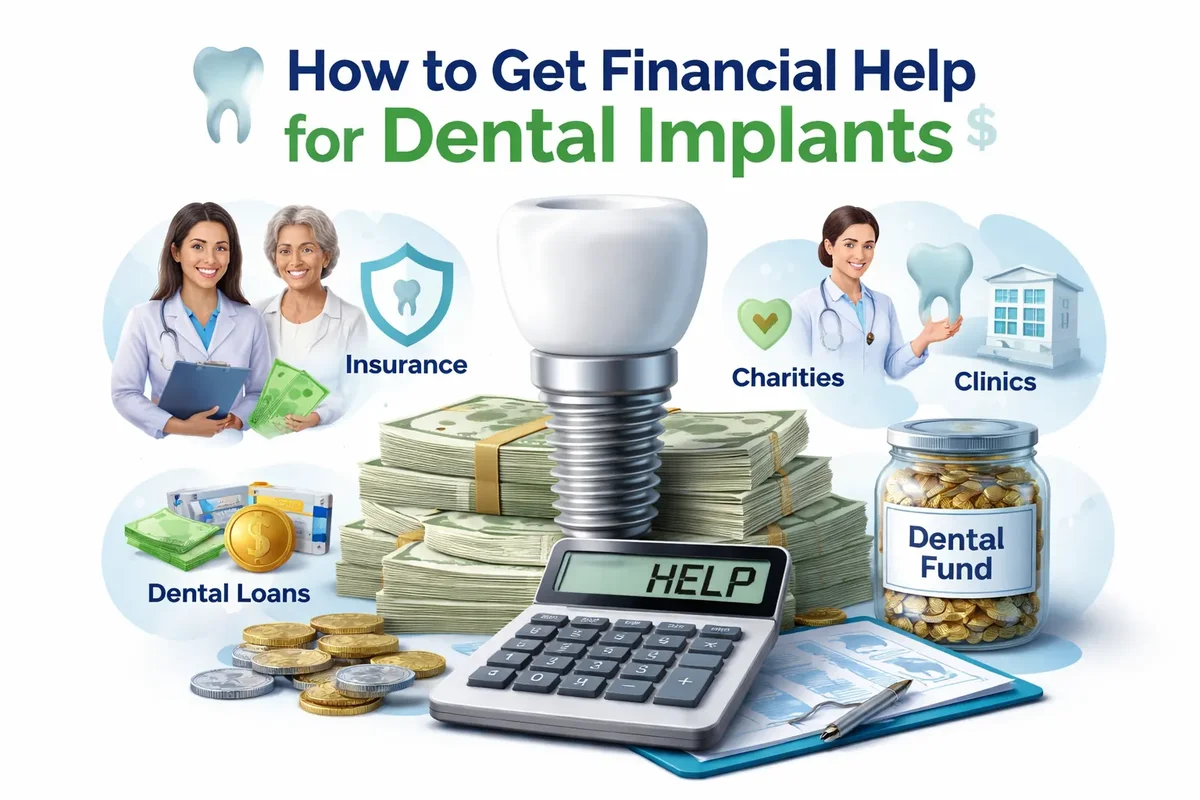
How to Combine Multiple Financial Help Options for Dental Implants
The most successful patients rarely rely on a single solution when learning how to get financial help for dental implants. Instead, they combine several financial strategies into one cohesive plan. This layered approach allows patients to significantly reduce out-of-pocket costs while maintaining flexibility and control over their treatment decisions. Understanding how to strategically combine options is often the final and most powerful step in mastering how to get financial help for dental implants.
Why a Combination Strategy Works Best
No single program—whether insurance, government aid, or financing—typically covers the full cost of dental implants. Each option has limits, exclusions, or caps. When patients understand these boundaries, they can intentionally stack resources to fill the gaps. This mindset shift is essential for anyone serious about how to get financial help for dental implants.
For example, insurance may cover diagnostic imaging, a charitable program may help with extractions, and a payment plan can handle the remaining balance. Individually, these options may seem insufficient, but together they create a manageable and realistic solution.
Step One: Start With a Complete Treatment Plan
Before combining any financial help options, patients must have a detailed, written treatment plan from a dental professional. This plan should include:
- All required procedures
- Timeline of treatment stages
- Itemized costs for each phase
This document becomes the foundation for determining how to get financial help for dental implants efficiently. Without it, patients risk overlapping coverage gaps or missing opportunities for reimbursement.
Step Two: Maximize Insurance and Public Benefits First
Insurance and government benefits should always be applied first, as they reduce costs without creating debt. Even partial coverage can significantly lower the total amount that needs to be financed or paid out of pocket.
Patients who understand how to get financial help for dental implants prioritize using annual insurance maximums, medical insurance crossover benefits, or qualifying public assistance before exploring loans or credit.
Step Three: Add Charitable or Educational Support
Once insurance contributions are identified, patients can explore charitable organizations or dental school clinics to further reduce costs. These options are particularly effective for:
- Preparatory treatments like extractions or bone grafts
- Patients with limited income
- Cases that allow flexible timelines
This step is often where patients see the biggest reduction in overall expenses, reinforcing the value of a layered approach to how to get financial help for dental implants.
Step Four: Use Financing Only for the Remaining Balance
Financing should be used strategically—not as the first option, but as a final tool to cover what remains. By reducing the total cost beforehand, patients minimize interest payments and shorten repayment timelines.
Smart financing is a key component of how to get financial help for dental implants because it transforms a large, overwhelming expense into predictable, manageable monthly payments.
Example of a Combined Strategy
A patient needing two implants might:
- Use insurance to cover imaging and part of the crown
- Receive extractions through a charitable clinic
- Complete implant placement at a dental school
- Finance only the final prosthetic stage
This integrated approach can reduce total costs by thousands of dollars.
Staging Treatment Across Time for Financial Flexibility
Another powerful combination strategy is staging treatment across months or years. This allows patients to:
- Use multiple insurance years
- Apply for assistance programs as funding becomes available
- Adjust financing as income changes
Staged treatment is especially effective for patients navigating how to get financial help for dental implants on a fixed or variable income.
Communication With Your Dental Provider Is Essential
Dental providers play a critical role in helping patients combine financial options. Transparent communication allows clinics to coordinate timing, documentation, and billing in ways that support affordability.
Patients who openly discuss their financial concerns often receive more flexible and creative solutions—an underrated but vital aspect of how to get financial help for dental implants.
A Personalized Strategy Is the Real Solution
There is no universal formula. Age, health status, location, and urgency all influence the ideal combination of financial resources. The goal is not to find a single perfect option, but to design a personalized plan that aligns with both health needs and financial reality.
When approached thoughtfully, how to get financial help for dental implants becomes a process of empowerment rather than limitation. By combining multiple support systems, patients can move forward confidently, restore their smiles, and protect their long-term well-being 😄.