
Full mouth dental implants financing is one of the most searched topics for patients seeking a complete smile restoration but needing manageable payment solutions. In this comprehensive guide, you’ll learn how financing works, the options available, who qualifies, and how to secure the most affordable and stress-free plan for your full mouth implant journey. Because full mouth implant therapy is a major investment in both oral health and quality of life, understanding the entire financing structure is essential. This article breaks everything down clearly so you can move forward confidently and without confusion. 😄
Before exploring payment plans, it’s important to understand what full-mouth restoration truly involves. This procedure typically replaces all missing or failing teeth using multiple implants strategically placed in the jaw. The process often includes extractions, bone grafting, implant placement, temporary teeth, and final zirconia or porcelain prosthetics. Since the treatment is extensive, full mouth dental implants financing becomes a practical solution for thousands of patients each year. Many clinics and financial partners now offer flexible, long-term payment structures, allowing you to begin treatment immediately without paying the full cost upfront.
For patients who worry about budget limitations, financing serves as a bridge between medical necessity and financial comfort. Full mouth dental implants financing helps break large treatment fees into predictable monthly payments that fit personal budgets. These payments may be interest-free, low-interest, or structured with extended terms, depending on your credit history and the provider you choose. Because financing companies understand the medical importance of restoring oral function, many of them offer fast approvals, minimal paperwork, and instant prequalification checks that do not affect your credit score. 📄⚡
Another crucial benefit of financing is psychological relief. Many patients delay oral treatment for years due to cost concerns, which leads to further complications such as bone loss, infection, and chewing limitations. By accessing full mouth dental implants financing early, patients avoid these risks and secure long-term oral health. Some providers even offer special programs designed for individuals with lower credit scores, giving nearly everyone the chance to qualify for at least one form of payment assistance. Additionally, alternative terms like “full arch restoration financing” or “teeth-in-a-day financing” (LSI keywords) may appear in some programs, but they refer to the same concept of helping you afford full-mouth treatment.
A major part of choosing the right financial solution is understanding all the lenders involved. Some dental clinics partner directly with well-known institutions that specialize in healthcare financing. These organizations provide competitive rates, extended plans, and immediate decisions. Others collaborate with banks, credit unions, or international financing networks for global patients. Some clinics even offer in-house financing. Regardless of the option you select, always ask for transparent breakdowns, including interest rates, loan terms, late fees, and total repayment cost. Proper planning ensures you avoid financial surprises later on.
Taking the next step in your treatment often starts with a consultation. Many reputable clinics provide free or low-cost initial assessments, digital scans, and personalized treatment breakdowns. During this session, you will also receive full mouth dental implants financing recommendations tailored to your case. If you are looking to contact a trusted clinic, you may use the
Redent Klinik Contact Page for professional assistance. They can guide you through every detail—clinically and financially.
Patients may also seek credible information from authoritative sources. For example, the
American Dental Association provides scientific insights into implant procedures, oral health standards, and long-term treatment expectations. Researching from trustworthy institutions empowers patients to make informed decisions, ensuring that their financing choices align with safe and effective dental care standards.
Ultimately, full mouth dental implants financing offers a practical, accessible, and stress-free pathway to achieving a healthy, functional, and confident smile. Whether you aim to improve chewing, correct long-standing dental issues, or drastically enhance aesthetics, financing ensures money doesn’t stand between you and the life-changing benefits of implants. 🌟
Understanding Full Mouth Restoration Costs and Financing Options
When patients begin researching full mouth restoration, one of the first concerns that appears is the total cost and how it can be managed responsibly. Because this treatment involves multiple implants, surgical stages, and advanced materials, it is often more expensive than single-tooth procedures. That is why full mouth dental implants financing has become an essential tool for making the process accessible to more people. In this section, you will learn exactly how costs are calculated, what factors influence pricing, and how financing options create flexible paths toward a healthy smile. This information ensures that your treatment decisions are informed, realistic, and financially stress-free. 😄
What Determines the Total Cost of Full Mouth Restoration?
A variety of clinical and logistical factors affect the overall cost of restoring an entire set of teeth. The most common components include diagnostic imaging, treatment planning, surgical procedures, implant materials, temporary teeth, and final prosthetics. Depending on the complexity of your case, the total fee may vary significantly. This is why many patients rely on full mouth dental implants financing—it helps break down the fee into manageable payments while still allowing immediate access to treatment. Below are the core factors that influence treatment cost:
1. Diagnostic Imaging and Digital Planning
Full mouth implant procedures require 3D scans, CBCT imaging, and digital modeling to assess bone health and create a precise plan. High-tech planning contributes to better results but also adds to the initial cost. Fortunately, financing programs allow patients to spread these fees over time, making advanced diagnostics more accessible.
2. Surgical Complexity and Number of Implants
Some patients require four implants per arch, while others may need six or more depending on bone density. Additional treatments such as extractions or sinus lifts may also be required. These variations affect the final price, and they highlight the importance of individualized full mouth dental implants financing solutions that match each patient’s needs.
3. Temporary Teeth and Final Prosthetics
Most full mouth procedures include temporary restorations for healing and final zirconia or porcelain arches for long-term function. These high-quality materials ensure durability and a natural aesthetic. Because they significantly contribute to the total treatment cost, many patients rely on financing to make the final stage more affordable without compromising on quality.
Pricing Tiers and What Patients Typically Expect
Although prices vary by country, clinic experience, and material selection, it is helpful for patients to understand general pricing tiers. These ranges help create realistic budgets and highlight why financing programs are so widely used. Below is a typical example, based on available online research:
Full Mouth Dental Implants (Per Arch):
- Economy Option: $8,000 – $12,000
- Mid-Tier Option: $15,000 – $22,000
- Premium Zirconia Option: $25,000 – $35,000+
These price ranges illustrate why full mouth dental implants financing is essential for most patients. The treatment is life-changing, but without financing, the upfront payment can be overwhelming. Financing allows you to access quality care without delay, while paying it off in structured monthly installments.
Types of Financing Options Available to Patients
Modern dental practices provide a wide range of financing pathways designed to accommodate different budgets, credit scores, and repayment preferences. Understanding these options makes it easier to choose the right plan and prepare for long-term financial comfort. Additionally, related terms like “full mouth restoration payment plans” or “implant treatment financing” (LSI keywords) may appear during your research, but they all serve the same purpose—making treatment more affordable.
1. In-House Financing Programs
Many clinics now offer their own internal installment plans. These are convenient because approval is usually fast, paperwork is minimal, and terms are tailored to the patient. Some clinics even provide interest-free periods or extended repayment schedules. If you are unsure where to begin, reaching out through the
Redent Klinik Contact Page
is an effective first step for reviewing your options.
2. Third-Party Healthcare Lenders
Several global lenders specialize in medical and dental financing. These companies provide structured loans with fixed monthly payments. They often offer multiple term lengths, instant prequalification checks, and flexible interest rates. Because these lenders understand the value of complex dental treatments, they frequently approve a wide range of applicants, including those with moderate credit scores.
3. Bank Loans or Credit Union Financing
Personal loans are another path to cover full mouth restoration costs. Banks and credit unions may offer favorable interest rates to eligible patients. While the approval process may require more documentation, competitive interest programs can significantly reduce long-term repayment pressure. This makes it another solid route for covering the cost of your implants.
4. Medical Tourism Financing for International Patients
For those traveling abroad for treatment, some clinics collaborate with international lenders offering cross-border financing. This option helps patients secure both affordable treatment and convenient repayment structures, especially in countries where implant dentistry is more cost-effective.
Ensuring Transparent and Fair Financing Terms
Regardless of the option you choose, transparency is key. Always review repayment terms, interest rates, early payoff conditions, and potential late fees. Many clinics offer financial consultations to help patients understand every detail before committing. This is particularly important for full mouth dental implants financing, which may involve long-term agreements. A trusted source such as the
American Dental Association
also offers valuable guidance on evaluating safe, ethical dental practices.
In summary, gaining a thorough understanding of full mouth restoration costs and financing options empowers patients to take the next step confidently. With transparent pricing, flexible payment choices, and accessible financing programs, full-mouth implant treatment becomes achievable for individuals from various financial backgrounds. 🌟
How Dental Implant Financing Plans Work for Full-Mouth Treatments
Understanding how financing plans work is crucial for patients considering a complete smile transformation. Since full-mouth implant procedures involve multiple stages and advanced restorative materials, many individuals rely on full mouth dental implants financing to make the treatment affordable and accessible. This section explains how financing systems operate behind the scenes, how approvals are granted, what repayment structures look like, and how patients can select the best plan for their personal financial situation. The goal is to give you full clarity so you can move confidently toward treatment without financial confusion. 😃
Why Financing Is Essential for Full-Mouth Implant Treatments
Full-mouth implant therapy is complex and often includes numerous procedures such as extractions, implant placement, bone grafting, temporary prosthetics, and final custom restorations. Because of this, the total cost can be significant. Financing allows patients to start treatment immediately while spreading payments over time. For many, full mouth dental implants financing becomes the key that unlocks access to a life-changing procedure. It empowers patients to restore chewing ability, improve speech, enhance confidence, and correct long-standing dental problems without being limited by upfront financial barriers.
How Dental Financing Plans Are Structured
Most financing plans follow a similar model: patients apply through a clinic or a third-party lender, receive approval based on credit evaluation, and commit to a structured monthly repayment plan. These programs are designed to be flexible, transparent, and accessible. They may include interest-free periods, long-term repayment schedules, or fixed-rate installment plans. Understanding the structure helps you identify whether a financing plan aligns with your long-term budget and lifestyle. Below are the major components of typical dental financing structures for full-mouth restorations:
1. Prequalification and Soft Credit Checks
Many providers offer a soft credit check, which does not affect your credit score. This step helps determine eligibility and estimate monthly payment ranges. Soft checks are quick, often taking less than one minute. For patients exploring full mouth dental implants financing, this non-committal step removes stress and gives an initial idea of financial expectations.
2. Full Application and Approval Process
Once patients choose a specific plan, the lender performs a full evaluation. This may include identity verification, income assessment, and credit review. Approval is typically fast, especially with dental-focused lenders who understand the medical necessity of full-mouth restoration. Some clinics assist patients during this process, helping complete forms and explain terms clearly.
3. Loan Terms and Monthly Payment Calculations
Monthly payments are based on the total loan amount, interest rate, and selected repayment period. For example, a patient may choose a 12-month interest-free plan or a 72-month low-interest plan. These options give flexibility depending on the patient’s financial comfort. Related LSI terms such as “implant therapy financing” or “restorative dentistry payment plans” may appear in lender documents, but they describe similar structures that support full-mouth treatment.
4. Disbursement of Funds to the Clinic
After approval, funds are sent directly to the dental clinic. Patients do not handle the money themselves. This ensures transparency and prevents miscommunication. It also allows clinics to begin treatment immediately, which is vital when dental conditions require timely intervention.
Exploring Different Payment Models for Full-Mouth Implant Care
There are multiple ways to finance full-mouth treatments, and each model offers unique benefits. The ideal choice depends on credit score, income stability, and personal preference. Below are the most common payment models patients use worldwide:
1. Interest-Free Payment Plans
These programs allow patients to make payments without incurring interest as long as the loan is paid within the designated timeframe. This makes the total repayment equal to the treatment cost, making it one of the most attractive options for full mouth dental implants financing. Clinics often reserve these plans for qualified individuals or those with strong credit.
2. Low-Interest and Extended-Term Loans
For patients who want lower monthly payments, extended-term loans—often up to 84 months—offer flexibility. Although interest may apply, these plans reduce financial pressure by spreading costs over a longer period. Many patients choose this method to maintain savings and budget comfortably.
3. Co-Signer or Joint Applications
Some lenders allow co-signers to increase approval chances. If a family member or partner has a stronger credit history, joint applications can unlock better interest rates or longer repayment terms. This option is especially helpful for individuals with limited credit history.
How Clinics Assist Patients Through the Financing Process
Reputable clinics understand that financing can feel overwhelming, so they often provide personalized guidance. Financial coordinators help patients compare lenders, estimate monthly payments, and review contract terms. Clinics like Redent Klinik simplify the process; if you want personalized help or treatment details, you can use the
Redent Klinik Contact Page
to connect with their team and request assistance.
Many financial coordinators also educate patients on reputable organizations such as the
American Dental Association,
which provides standards and scientific insights that help ensure your treatment decisions align with safe and ethical dentistry practices.
Ensuring the Best Outcome From Your Financing Plan
To maximize the benefits of full mouth dental implants financing, patients should carefully evaluate interest rates, repayment terms, prepayment penalties, and any potential additional fees. Transparency is a priority—reputable lenders provide clear breakdowns before any agreement is signed. Patients who review all plan details often achieve better long-term satisfaction and avoid financial surprises.
In conclusion, understanding how dental implant financing plans work for full-mouth treatments empowers patients to make confident, informed decisions. With flexible payment models, fast approvals, and patient-focused systems, financing is a powerful tool that brings high-quality oral reconstruction within reach for nearly everyone. 🌟
Insurance Coverage Explained for Full Mouth Dental Implant Procedures
Navigating insurance coverage for full-mouth implant treatment can feel overwhelming, especially when policies vary widely between providers. Because full-mouth restoration often includes surgical interventions, prosthetic materials, and advanced digital planning, patients frequently ask whether insurance will cover any portion of the cost. In many cases, full mouth dental implants financing becomes a necessary complement to insurance benefits, helping patients manage expenses that insurance does not address. This section provides a clear, detailed, and accurate breakdown of how insurance works for implants, what is typically covered, what is not, and how to increase your chances of receiving partial reimbursement. 😄
Why Insurance Coverage for Full-Mouth Implants Is Complex
Dental insurance was traditionally designed to cover preventive and basic restorative treatments—not comprehensive implant rehabilitation. As a result, coverage for implants and full-mouth reconstruction remains limited or highly conditional. Many insurers classify implants as “elective,” even when they are crucial for restoring chewing function or preventing bone loss. Because of this, patients often rely on full mouth dental implants financing to offset expenses not covered by insurance. Understanding the insurance landscape helps you prepare financially and prevents unexpected surprises during treatment.
What Insurance Typically Covers in Full-Mouth Implant Procedures
Although complete implant treatment may not be fully covered, many policies provide partial assistance for specific components of the procedure. Knowing what these components are can significantly reduce your total out-of-pocket cost. Below are elements that insurance may support depending on your plan:
1. Tooth Extractions and Pre-Surgical Work
If failing or damaged teeth need to be removed before implants are placed, insurance may cover extractions. Some plans also include benefits for periodontal treatment and infection control. These preliminary treatments are essential and can reduce the upfront financial burden considerably.
2. Bone Grafting or Sinus Lift Procedures
Many patients require bone grafts or sinus elevation to create a stable foundation for implants. Some insurers classify these procedures as medically necessary, especially when bone atrophy affects oral function or speech. Partial coverage for grafting may apply if strong documentation is provided.
3. Temporary Dentures During the Healing Phase
Some policies provide benefits for temporary prosthetics used during recovery. While temporary arches are only worn until the final implant-supported prosthesis is completed, including them in your claim may reduce your overall cost.
4. Diagnostic Imaging and CBCT Scans
Initial diagnostic imaging such as panoramic X-rays, CBCT scans, and digital impressions may be partially covered depending on the plan. These steps are necessary to evaluate bone structure and design the implant placement plan. Although not always fully covered, every partial benefit contributes to lowering your expenses.
What Insurance Rarely Covers in Full-Mouth Implant Treatment
It is equally important to understand what insurance typically does not cover. Most policies exclude the core components of implant rehabilitation, such as:
1. The Implants Themselves
Implants are often considered elective despite their medical importance. The titanium posts, abutments, and surgical fees involved are usually excluded from most dental policies. This is one of the main reasons patients use full mouth dental implants financing to spread costs into manageable monthly payments.
2. Final Zirconia or Porcelain Restorations
Although permanent restorations dramatically improve chewing ability and aesthetics, insurers rarely cover these high-quality prosthetics. Some plans may offer a fixed reimbursement for dentures, but full-arch implant-supported restorations typically fall outside standard coverage.
3. All-on-4, All-on-6, and Full-Arch Packages
Comprehensive treatment packages that include surgery, implants, temporary teeth, and final restorations are usually not covered because they are considered “cosmetic” or “elective.” This is where strategic financing becomes essential.
How to Increase Your Chances of Insurance Approval
While implant coverage is limited, there are methods to maximize your chances of receiving partial reimbursement. Patients who strategically prepare documentation and obtain support from their dentist often achieve better outcomes. Here are effective strategies:
1. Demonstrate Medical Necessity
Insurance companies respond more favorably when claims highlight functional issues—not cosmetic concerns. If tooth loss affects chewing, digestion, nutrition, or speech, your provider can document these issues to strengthen your claim. This may lead to partial coverage of preparatory procedures, reducing the need for large loans.
2. Obtain a Detailed Treatment Letter From Your Dentist
A comprehensive letter explaining why full-mouth rehabilitation is essential can significantly influence insurance decisions. Your dentist can outline oral health risks, jawbone deterioration, and functional limitations caused by missing teeth.
3. Request Pre-Authorization Before Treatment Begins
Pre-authorization helps determine what your insurer will cover before you commit to the full plan. Although not a guarantee, it eliminates surprises and helps you plan your use of full mouth dental implants financing accurately.
4. Review Dual Coverage Options
If you have two dental plans—for example, one employer-sponsored and one private—you may combine benefits. While this still will not cover full-mouth implant surgery entirely, it can reduce preparatory costs significantly.
Combining Insurance Benefits With Financing for the Best Outcome
The most effective strategy involves using insurance to cover preparatory or diagnostic steps and financing to cover the main surgical and restorative stages. This hybrid approach minimizes your out-of-pocket cost while maintaining access to world-class implant treatment. Clinics with dedicated financial coordinators can help you blend insurance benefits with full mouth dental implants financing to build an optimized payment plan. If you need expert guidance, you may reach out through the
Redent Klinik Contact Page.
Trusted organizations like the
American Dental Association
also offer educational resources about dental procedures, patient rights, and standard-of-care practices—valuable information when evaluating insurance decisions.
In summary, while full-mouth implant coverage from insurance can be limited, understanding how policies work—and how to combine them with financing—empowers you to make the most cost-effective decisions. With the right documentation, strong communication, and strategic planning, patients can significantly reduce financial strain and maximize treatment accessibility. 🌟
Flexible Monthly Payment Plans for Full Mouth Dental Implants
For many patients seeking full-mouth restoration, one of the biggest challenges is managing the financial commitment in a way that feels sustainable and stress-free. Because the procedure involves multiple implants, surgical stages, and custom prosthetics, the overall cost can be substantial. This is where full mouth dental implants financing becomes an essential solution. Flexible monthly payment plans allow patients to start treatment immediately while paying over time with predictable, manageable installments. In this section, you’ll discover how these plans work, what types exist, how to qualify, and how to select the best structure based on your personal financial situation. 😄
Why Monthly Payment Plans Are Ideal for Full-Mouth Implant Patients
Monthly payment systems are designed to eliminate the barrier of high upfront costs. Instead of delaying treatment for years, patients can move forward and restore their oral health sooner. This is especially valuable because dental issues tend to worsen over time—bone loss deepens, gums recede, and remaining teeth can shift. By using full mouth dental implants financing, patients take control of their health without letting financial limitations hold them back. Monthly plans also offer the advantage of transparency: you know exactly how much you will pay each month, with no hidden surprises.
How Monthly Installment Plans Are Structured
Monthly financing plans are typically designed to be simple and predictable. They follow a basic structure: the total treatment cost is divided into monthly segments over a set period. Depending on the lender and the borrower’s credit profile, this period may be short (12 months) or long (up to 84 months). These structured terms give patients the ability to choose a plan that matches their real-life financial comfort. Below are the essential components of monthly payment plans:
1. Total Treatment Cost and Loan Amount
The starting point is the final cost of your full-mouth treatment plan. This includes surgery, implants, abutments, temporary prosthetics, final restorations, and follow-up visits. Once the total cost is determined, it is used to calculate the full loan amount for full mouth dental implants financing. Pre-treatment consultations are essential for obtaining an accurate estimate.
2. Interest Rates and APR Options
Interest rates vary depending on the lender and your credit score. Some programs offer 0% APR for a limited period, while others apply low interest over an extended term. Clinics often collaborate with multiple lenders so that patients can choose between interest-free short-term plans and long-term low-interest alternatives. This flexibility is the backbone of monthly payment systems.
3. Repayment Term Length
Repayment terms usually range from 6 months to 84 months. Shorter terms require higher monthly payments but may come with little to no interest. Longer terms offer smaller monthly payments, giving patients with tight budgets a more comfortable option. Choosing the correct repayment length is essential for financial stability.
4. Fixed or Variable Monthly Payments
Most dental lenders offer fixed monthly payments, meaning your payment amount remains the same throughout the entire term. This predictability makes budgeting easier and reduces stress. Variable-rate plans exist but are less common for full-mouth restoration due to their fluctuating nature.
Types of Flexible Monthly Payment Plans
There is no one-size-fits-all financing plan. Different lenders and clinics offer a variety of monthly payment structures so patients can find the perfect match. Below are the most common types of monthly plans used for full-mouth implant procedures:
1. Interest-Free 12–24 Month Payment Plans
These short-term plans are ideal for patients with good credit. They allow repayment without paying any interest as long as the balance is cleared within the designated promotional period. This is one of the most popular forms of full mouth dental implants financing because it reduces the total cost significantly.
2. Low-Interest Long-Term Plans (36–84 Months)
These plans allow for small, manageable monthly payments over a longer period. Although some interest applies, they make full-mouth restoration financially accessible to a wider range of patients. Many individuals prefer these plans because they balance affordability with convenience.
3. Income-Based Payment Arrangements
Some financing platforms adjust monthly payments based on income, ensuring that the borrower is never overwhelmed. These plans typically require more documentation but offer considerable flexibility, especially for patients with fluctuating income levels.
4. Co-Signer or Joint Applicant Plans
If a patient’s credit score is insufficient for approval, adding a co-signer may open the door to better financing terms. This is useful for individuals who want long-term stability and lower interest rates.
How Clinics Support Patients in Choosing Monthly Payment Plans
Dental clinics that specialize in full-mouth restoration typically have financing coordinators who help patients evaluate every available option. These specialists explain interest rates, compare lenders, estimate monthly payments, and help patients secure the plan best suited for their budget. If you want personalized assistance or want to review monthly plan options, you can contact a clinic directly through the
Redent Klinik Contact Page.
This consultation ensures you never feel lost during the financing process.
It is also wise to rely on trusted professional organizations such as the
American Dental Association
when researching implant-related procedures. These organizations uphold clinical standards and provide valuable educational resources that support informed decision-making.
Why Monthly Payment Plans Help Patients Move Forward Faster
The number one reason patients choose full mouth dental implants financing is the ability to begin treatment immediately. Waiting months or years to save money can worsen oral health issues, lead to bone loss, and increase treatment costs. Monthly plans eliminate delays by providing a practical, low-stress path to restoring full oral function, facial structure, and long-term confidence.
In conclusion, flexible monthly payment plans make full-mouth implant treatment accessible to more people than ever before. With predictable payments, transparent terms, and numerous plan types, financing ensures that the road to a complete, functional smile is smooth, manageable, and financially comfortable. 🌟
Credit Score Requirements for Implant Financing Approvals
Understanding credit score requirements is one of the most important steps for patients considering financing for full-mouth implant treatment. Because a complete restoration is a major investment, lenders carefully evaluate creditworthiness to determine eligibility, interest rates, and repayment terms. Whether you have excellent credit, average credit, or a limited credit history, today’s dental lenders offer a wide range of solutions. This section explains exactly how your credit score affects full mouth dental implants financing, what thresholds lenders look for, how to improve your approval chances, and which financing paths remain open for individuals with lower credit ratings. By the end, you will understand how to position yourself for the best possible financing outcome. 😄
Why Credit Score Matters for Implant Financing
A credit score is essentially a lender’s snapshot of your financial reliability. It helps financing companies estimate how likely you are to repay a loan on time. Since full-mouth restoration involves a considerable financial commitment, lenders use credit scores as a primary tool in determining approval. However, a lower score does not automatically disqualify you — today’s dental financing systems are more flexible than ever. Many lenders specialize in healthcare loans and offer tailored solutions as part of full mouth dental implants financing to ensure that as many patients as possible can access care.
Typical Credit Score Ranges for Dental Implant Financing
Although exact requirements vary between lenders, most organizations follow similar credit score tiers. Understanding these ranges helps you estimate your approval odds before applying. Here is a clear breakdown:
1. Excellent Credit (720+)
Patients with excellent credit receive the most favorable terms. This includes the highest approval rates, the lowest interest rates, and access to 0% APR promotional periods lasting 12–24 months. Most lenders consider these applicants low-risk, making approval nearly automatic. If you fall into this category, you can maximize savings through short-term interest-free financing as part of your full mouth dental implants financing strategy.
2. Good Credit (680–719)
This range still results in strong approval odds. Patients with good credit may qualify for low-interest or mid-term financing options. Although interest-free promotions may be available, they may require shorter repayment durations or higher initial payments. Still, patients in this range generally have access to highly flexible plans.
3. Fair Credit (620–679)
Patients with fair credit can usually obtain financing, but their interest rates may be slightly higher. Lenders may offer long-term plans with extended repayment periods to ensure affordability. This credit level is extremely common among implant patients, and many financing companies have built programs specifically for this demographic.
4. Poor Credit (Below 620)
Patients in this category still have options — especially through specialized healthcare lenders and clinics offering in-house financing. Co-signer programs, income-based evaluations, or joint applications can significantly improve approval odds. For many individuals, full mouth dental implants financing remains accessible through alternative verification methods even if credit is less than ideal.
Factors Lenders Evaluate Beyond Credit Score
Although your credit score is important, lenders also consider additional factors to create a full picture of financial responsibility. A strong application is not just about the number — it is about overall financial stability. Here are common elements lenders review:
1. Income and Debt-to-Income Ratio
Lenders want to verify that your income comfortably supports monthly payments. If your debt-to-income ratio is low, you may receive better financing terms even with a modest credit score.
2. Employment Stability
Employment consistency is a strong predictor of loan repayment reliability. Patients with stable job histories often receive improved approval rates.
3. Past Credit Behavior
Late payments, charge-offs, or recent bankruptcies may affect your eligibility. However, many healthcare lenders evaluate the context — not just the numbers — especially when providing full mouth dental implants financing.
4. Existing Credit Lines
Lenders also examine how well you manage your current credit accounts. Responsible usage can offset imperfections in your credit score.
How to Improve Credit Before Applying
If you want the best approval odds and lowest interest rates, consider improving your credit score before applying. Even a modest increase can transform your financing options. Here are effective strategies:
1. Pay Down Revolving Credit Balances
Lowering credit card balances can quickly improve your score. Aim to reduce utilization below 30%, or even lower if possible.
2. Correct Errors on Your Credit Report
Mistakes such as outdated information or inaccurate late payments can negatively affect your score. Disputing and correcting these errors may raise your score swiftly.
3. Avoid Opening New Credit Accounts
Multiple new inquiries may temporarily reduce your credit score. Avoid opening new accounts in the months leading up to your financing application.
4. Pay Bills on Time
Consistent on-time payments strengthen your credit profile and signal reliability to lenders.
Financing Options for Low-Credit Applicants
Not all patients have strong credit, and lenders recognize this. Many special programs exist to support individuals with lower scores. These may involve co-signed applications, income-based plans, or in-house clinic options. In many cases, patients with imperfect credit successfully secure full mouth dental implants financing by using these alternatives.
For example, clinics like Redent Klinik offer guidance and multiple financing pathways. If you want personalized assistance or details on available programs, you can contact their financial team through the
Redent Klinik Contact Page.
Experienced coordinators can help you navigate approvals even if your credit score is below average.
Additionally, respected institutions like the
American Dental Association
provide educational resources that help patients make informed decisions about implant treatment and financial planning.
In summary, while credit score plays an important role in determining financing approval, it does not exclusively define your chances. With today’s lender flexibility, strong documentation, and clinic-assisted support, most patients can secure a suitable financing plan. By understanding credit requirements and preparing strategically, you can confidently move forward with a full-mouth restoration—regardless of your current financial situation. 🌟
Medical Tourism & Global Financing Paths for Full Mouth Implants
In recent years, medical tourism has become one of the fastest-growing pathways for patients seeking high-quality dental care at affordable rates. Many individuals travel abroad for full-mouth implant reconstruction because international clinics often provide advanced treatment at a fraction of the cost found in their home countries. When combined with full mouth dental implants financing, the global approach becomes even more practical, opening the door for patients who want excellence without financial stress. This section explores the advantages of medical tourism, the financial systems available to global patients, how cross-border financing works, and what to consider when selecting an international clinic for full-mouth implant treatment. 🌍✨
Why Patients Choose Medical Tourism for Full-Mouth Implants
Full-mouth implant procedures can be expensive in countries such as the United States, Canada, the UK, or Australia. Patients often discover that traveling abroad significantly reduces the cost without compromising on quality. In destinations known for dental tourism, clinics invest heavily in state-of-the-art technology, skilled surgeons, and modern facilities while maintaining lower treatment prices due to favorable economic conditions. When paired with full mouth dental implants financing, this global approach allows patients to make financially responsible decisions while still receiving world-class care.
Top Countries Known for Full-Mouth Implant Medical Tourism
While many countries offer competitive dental care, a few consistently rank at the top due to their clinical excellence, pricing transparency, and internationally accredited facilities. Below are leading destinations:
1. Türkiye (Turkey)
One of the most popular destinations for implant tourism, Türkiye offers advanced clinics, internationally trained surgeons, and highly competitive pricing. Many patients travel here for full-mouth implant treatment because the quality-to-cost ratio is exceptional. Clinics in Türkiye often provide comprehensive packages—airport transfers, hotel arrangements, and personal coordinators—making the process extremely convenient.
2. Mexico
Patients from the U.S. frequently travel to Mexico for affordable yet high-quality dental care. Cities like Tijuana, Cancun, and Los Algodones specialize in full-mouth implant treatment, with clinics offering all-inclusive packages that simplify logistics.
3. Thailand
Known for its hospitality and healthcare excellence, Thailand attracts patients seeking premium dental aesthetics and complex restorative procedures. Many clinics use cutting-edge digital implant planning and internationally approved implant systems.
4. Hungary
Europeans often choose Hungary for implant tourism due to its reputation for medical precision and modern dental facilities. Budapest, in particular, is considered a dental tourism hub.
Cost Benefits of Choosing Medical Tourism
One of the primary reasons patients choose treatment abroad is cost efficiency. Full-mouth implant procedures can cost between $20,000–$60,000 per arch in the U.S., while the same treatment abroad may range from $6,000–$15,000 per arch depending on materials and clinic reputation. Even after factoring in travel, accommodation, and recovery costs, patients often save 50–70%. This makes full mouth dental implants financing even more effective since the loan amount becomes smaller and easier to manage. Some patients even qualify for interest-free plans when the financed amount is lower.
How Global Financing Systems Work for Dental Tourism
Contrary to common assumptions, financing full-mouth implant treatment abroad is fully possible. Many international clinics collaborate with global lenders specializing in medical tourism loans, helping patients cover:
- Travel and accommodation expenses
- Diagnostic appointments
- Surgical and prosthetic treatment phases
- Follow-up visits
Below are common global financing pathways:
1. International Healthcare Financing Companies
These lenders specialize in cross-border medical loans. They provide funding in your local currency and pay the clinic abroad directly. Approval is often quick, and repayment plans resemble traditional healthcare financing programs.
2. Domestic Banks Offering Medical Tourism Loans
Some banks now offer personal loans specifically for medical travel. These loans may come with competitive interest rates, especially for applicants with strong credit profiles. This method allows patients to pursue full mouth dental implants financing without relying on clinic partnerships.
3. In-House International Clinic Financing
Top-tier clinics in countries like Türkiye offer in-house payment plans or collaborative financing structures with local lenders. This option is excellent for patients who prefer dealing directly with their clinic throughout the entire process.
Important Considerations When Choosing an International Clinic
Medical tourism offers tremendous benefits, but choosing the right clinic is essential for safety and success. Here are factors to evaluate:
1. Surgeon Credentials and Experience
Look for clinics with oral surgeons, periodontists, or prosthodontists who specialize in full-mouth implant rehabilitation. International certifications and extensive case portfolios indicate expertise.
2. Implant Brand and Prosthetic Material Quality
Ensure the clinic uses globally recognized implant brands and high-quality zirconia or porcelain materials for the final restorations.
3. Technology and Digital Infrastructure
CBCT imaging, guided implant surgery, and CAD/CAM prosthetics enhance accuracy and long-term success rates.
4. Transparent Pricing and Written Treatment Plans
Reputable clinics offer detailed breakdowns before treatment begins. Transparency helps patients plan full mouth dental implants financing with confidence.
How Clinics Assist International Patients With Travel and Financing
Leading dental tourism centers provide full support—airport pickup, hotel coordination, translation services, and dedicated treatment coordinators. Many clinics help patients compare financing options, calculate monthly payment plans, and streamline documentation. If you want expert assistance, you can reach out to a clinic through the
Redent Klinik Contact Page
to receive personalized guidance.
Patients researching international standards can also refer to the
American Dental Association
for science-backed insights into implant safety, procedure expectations, and oral health guidelines.
In conclusion, medical tourism combined with full mouth dental implants financing offers an affordable, high-quality pathway for patients seeking a complete smile transformation. With global clinics providing exceptional care, transparent pricing, and supportive financing systems, full-mouth implant treatment becomes accessible to individuals worldwide. 🌟✈️
Zero-Interest and Low-Interest Financing Programs Compared
Choosing the right financing program is one of the most important steps when planning for a full-mouth implant transformation. Because a complete restoration can be a significant investment, patients often want to understand which financial pathway—zero-interest or low-interest financing—provides the best long-term value. Both structures are essential components of full mouth dental implants financing, and each offers advantages depending on the patient’s credit profile, budget, and repayment preferences. This section compares these options in detail, explaining how they work, who qualifies, and how to select the most cost-effective plan for your implant journey. 😄
Understanding Zero-Interest Financing Programs
Zero-interest financing is one of the most appealing solutions for patients seeking full-mouth implant treatment. These programs allow you to repay treatment costs over a set period—usually 6, 12, 18, or 24 months—without paying any additional interest. This means that the total amount you repay is exactly equal to the treatment cost, with no financial penalties as long as you stay within the promotional period. For many patients, this is the most budget-friendly form of full mouth dental implants financing, especially when they have strong credit or stable financial profiles. Below are the key components of zero-interest plans:
1. Promotional Periods
Zero-interest offers are typically tied to promotional windows. For example, a lender may offer 0% APR for 12 months. Patients must complete repayment within that timeframe to avoid interest charges. If the balance remains afterward, interest may apply retroactively.
2. High Approval Standards
These plans often require good to excellent credit scores. Because lenders take on greater risk by offering no-interest loans, qualification criteria may be more selective.
3. Ideal for Short-Term, High-Payment Capability
Patients who can afford higher monthly payments benefit most from zero-interest programs. If your financial situation can comfortably support paying off a large portion of the balance within 12–24 months, this option is financially optimal.
Understanding Low-Interest Financing Programs
Low-interest financing provides relief for patients who prefer smaller monthly payments spread over a longer timeframe. These plans typically range from 24–84 months with manageable interest rates. Although interest is applied, the extended repayment period makes treatment accessible to individuals with a wide range of financial backgrounds. For many patients, low-interest financing makes full mouth dental implants financing not only possible but comfortable. Here’s how low-interest plans work:
1. Extended Repayment Terms
Patients can stretch payments across several years, which drastically reduces monthly financial pressure. This is particularly helpful for individuals with moderate or lower income levels.
2. Flexible Credit Requirements
Low-interest financing programs tend to be more inclusive. Even patients with fair or borderline credit scores may qualify, making these plans more accessible overall.
3. Balanced Monthly Payments
Monthly payments are smaller compared to zero-interest plans, allowing patients to prioritize other financial obligations while still receiving high-quality implant care.
Zero-Interest vs. Low-Interest: Which Is Better?
The best financing option depends on your financial situation, credit score, and long-term budgeting preferences. Here is a detailed comparison to help you determine which is right for you:
1. Cost Over Time
Zero-interest plans are cost-free if repaid on time, making them ideal for individuals with strong monthly cash flow. Low-interest plans accumulate interest but offer flexibility and smaller monthly obligations.
2. Approval Difficulty
Zero-interest financing usually requires high credit scores. Low-interest financing is more accessible and may offer approval for a broader range of patients.
3. Monthly Payment Size
Zero-interest = higher monthly payments.
Low-interest = lower monthly payments.
4. Risk and Predictability
Zero-interest plans require strict adherence to deadlines; missing the promotional window may trigger retroactive interest. Low-interest plans are more predictable over time and typically have fixed payment structures.
How to Evaluate Your Financial Readiness
Before deciding between these programs, consider your monthly budget, credit score, and personal comfort with repayment speed. A thorough evaluation helps ensure that full mouth dental implants financing fits seamlessly into your financial life. Consider the following:
- Income stability: Can you sustain higher payments for 12–24 months?
- Long-term budgeting: Do you prefer spreading costs across several years?
- Credit score: Are you eligible for promotional zero-interest rates?
- Savings impact: Would paying quickly strain your emergency fund?
Practical Examples: What Monthly Payments Might Look Like
Below is an example using online research for a $20,000 full-mouth implant financing amount:
Zero-Interest, 12 Months:
$20,000 ÷ 12 = $1,666 per month

Low-Interest, 60 Months at 7% APR:
Approx. $396 per month
These calculations show why many patients prefer low-interest financing—it offers more breathing room. Others, however, choose zero-interest to eliminate long-term debt quickly.
How Clinics Help Patients Choose the Best Financing Option
Most implant-focused clinics have financing coordinators who guide patients through the selection process. They explain loan terms, interest rates, monthly payment differences, and qualification requirements. If you want personalized assistance, you can reach out to the financial team through the
Redent Klinik Contact Page.
It is also wise to rely on trusted resources such as the
American Dental Association,
which provides objective insights about implant procedures and long-term care considerations.
In conclusion, both zero-interest and low-interest programs play essential roles in full mouth dental implants financing. Zero-interest loans are ideal for patients who can pay quickly without accumulating interest, while low-interest programs support individuals who prefer long-term budgeting flexibility. Choosing the right option ensures that your journey toward a complete, functional, and confident smile is both financially comfortable and clinically successful. 🌟
Pros & Cons of Third-Party Dental Implant Financing Companies
Third-party financing companies play a major role in making full-mouth implant treatment accessible to patients who prefer structured, manageable monthly payments. These independent lenders partner with dental clinics to offer flexible credit solutions, long-term installment options, and quick approval processes. For many individuals, third-party financing becomes a valuable resource within full mouth dental implants financing, helping them begin treatment immediately without saving for years. In this section, we will explore the advantages and disadvantages of using third-party lenders, how they operate, what you should look for when choosing one, and how to ensure that your financing experience is safe, predictable, and beneficial. 😄
How Third-Party Financing Companies Work
Third-party dental lenders function as independent financial institutions that provide loans specifically for medical and dental procedures. Rather than paying your dentist directly, you apply through the lender, receive approval, and then the lender pays the clinic for your treatment. You then repay the lender through monthly installments based on your loan terms. These companies are an essential part of full mouth dental implants financing because they offer broader accessibility than traditional banks and often approve a wider range of credit profiles.
1. Application and Approval Process
Most third-party lenders allow online applications, soft credit checks, and instant prequalification results. Once approved, the lender provides loan terms and disburses funds directly to the clinic. Some companies specialize exclusively in healthcare, making the approval process smoother and more patient-friendly.
2. Loan Terms and Repayment Options
Third-party financing companies typically offer multiple repayment structures, including short-term, interest-free plans and long-term, low-interest programs. Patients can customize their repayment schedules based on income, comfort level, and financial stability. These options make third-party lenders a versatile tool for full mouth dental implants financing.
3. Collaboration With Clinics
Dental clinics frequently partner with multiple financing companies to give patients more choices. Clinics may help compare plans, estimate monthly payments, and explain loan conditions in detail. This guidance is especially helpful for patients unfamiliar with healthcare financing systems.
Pros of Using Third-Party Dental Financing Companies
Third-party lenders offer numerous advantages that make full-mouth implant treatment more accessible than ever. Below are the most significant benefits:
1. High Accessibility for Various Credit Profiles
These companies often approve applicants who may not qualify for traditional bank loans. Even patients with fair or borderline credit may receive reasonable terms as part of full mouth dental implants financing.
2. Multiple Loan Options
Patients can choose between zero-interest, low-interest, or extended-term plans. This flexibility supports diverse financial needs and allows patients to structure payments comfortably.
3. Fast and Convenient Application Process
Applications are typically completed online with instant decisions. This allows patients to begin treatment quickly—often within days—and avoid long waiting periods associated with conventional bank loans.
4. No Need for Large Upfront Payments
Using third-party financing eliminates the need to save large sums before starting treatment. This is especially important for full-mouth reconstruction, where timely intervention prevents further oral deterioration.
5. Transparent Payment Structure
Most third-party lenders provide clear, fixed monthly payments with straightforward contracts. This makes budgeting easier and reduces financial stress throughout the repayment period.
Cons of Using Third-Party Dental Financing Companies
Despite their advantages, third-party financing companies also come with potential challenges. Understanding these drawbacks is essential for making an informed decision.
1. Interest Rates May Be Higher for Lower Credit Scores
Patients with poor or limited credit may face higher APRs, increasing total repayment costs. While financing remains available, it may become more expensive.
2. Promotional Terms Require Strict Compliance
Zero-interest promotions may apply retroactive interest if a payment is missed or the balance extends beyond the promotional period. Careful planning and timely payments are essential.
3. Additional Service Fees
Some lenders charge processing fees, late payment fees, or administrative charges. These costs can add up if not evaluated beforehand.
4. Fixed Contract Conditions
While most borrowers appreciate predictable payments, fixed contract terms may limit flexibility if a patient’s financial circumstances change.
How to Evaluate Whether a Third-Party Lender Is Right for You
Selecting the right financing partner is essential for a successful experience. Consider factors such as monthly payment size, interest rates, term length, and lender reputation. One of the most important steps is reviewing the complete contract and ensuring you fully understand the terms.
1. Compare Multiple Lenders
Because clinics often partner with multiple companies, you can compare loan amounts, interest rates, and repayment lengths. This helps identify the best balance between affordability and flexibility.
2. Review Customer Feedback
Online reviews provide insights into satisfaction levels, customer service quality, and potential issues borrowers have encountered. This helps you avoid lenders with poor service histories.
3. Ask for Detailed Cost Breakdowns
Reputable lenders provide transparent agreements outlining interest rates, payment schedules, and all associated costs. This clarity supports a smoother full mouth dental implants financing experience.
How Clinics Support Patients Through Third-Party Financing
Many dental clinics assist patients directly, helping them compare lenders and estimate monthly payments. If you want help selecting a lender or need personalized guidance, you can contact the clinic’s financial team via the
Redent Klinik Contact Page.
Additionally, organizations such as the
American Dental Association
provide helpful information for patients wanting to understand dental procedures and ethical financial practices.
In summary, third-party dental financing companies offer a powerful way to access full-mouth implant treatment without overwhelming upfront costs. Although there are advantages and disadvantages, understanding each factor ensures that full mouth dental implants financing remains safe, beneficial, and aligned with your financial comfort. With informed planning, patients can enjoy predictable payments and life-changing oral rehabilitation. 🌟
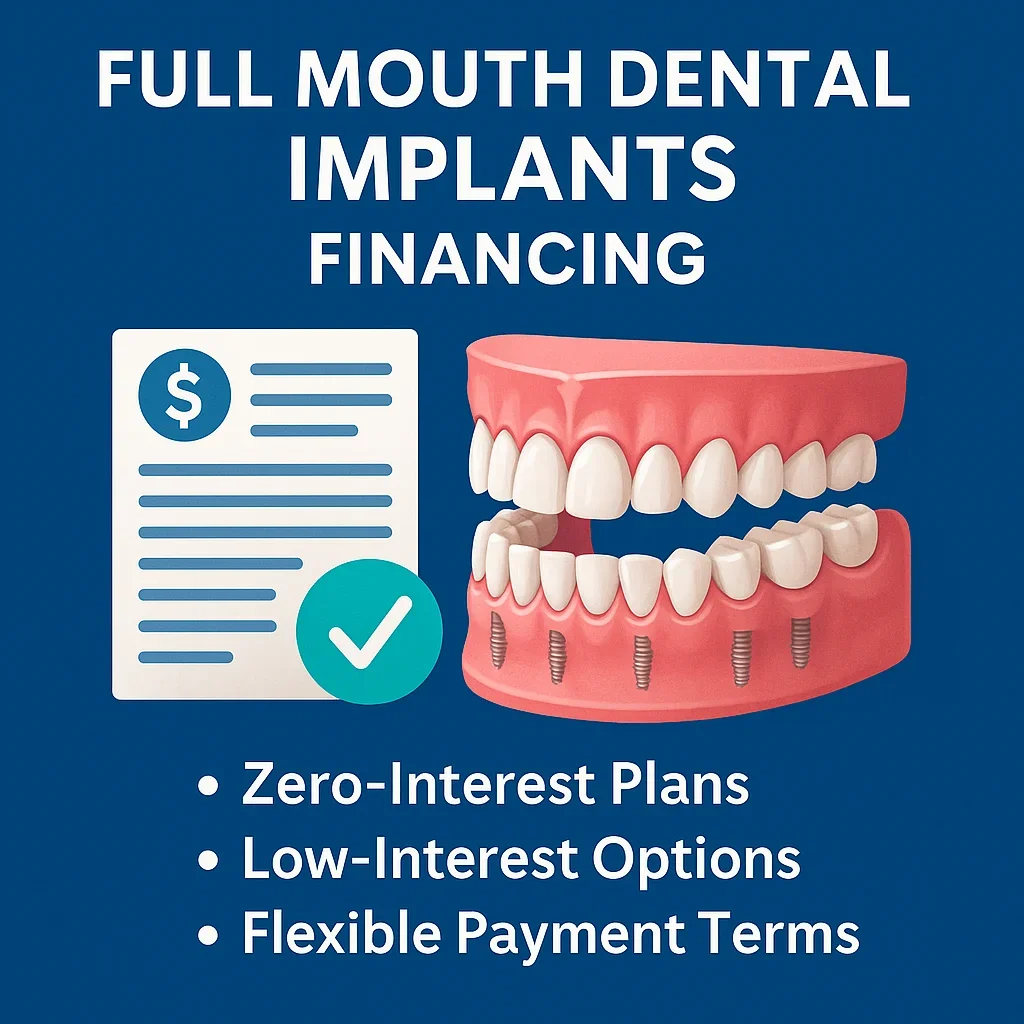
How to Choose the Best Full Mouth Dental Implants Financing Provider
Selecting the right financing provider is one of the most important decisions you’ll make on your full-mouth dental implant journey. Because treatments involving complete reconstruction can be a significant investment, it’s essential to choose a lender who offers transparent terms, fair interest rates, and dependable support. With so many financing companies, banks, and in-house options available today, understanding how to choose the best partner ensures that your full mouth dental implants financing experience is smooth, predictable, and aligned with your long-term financial comfort. This section provides a thorough and structured breakdown to help you evaluate providers effectively and confidently. 😄
Why the Right Financing Provider Matters So Much
Full-mouth implant treatment is a complex medical procedure requiring multiple appointments, advanced materials, and long-term care. The financial commitment is equally significant. A reliable financing provider enables patients to start treatment immediately, avoid delays, and manage payment obligations without stress. Because a financing plan may last several years, the provider’s reputation, transparency, and flexibility are key factors that influence your overall experience. Choosing wisely ensures that full mouth dental implants financing remains predictable and affordable throughout the entire repayment period.
Key Factors to Evaluate When Comparing Financing Providers
Before committing to a financing plan, patients should evaluate several important elements. These factors directly affect the long-term cost, repayment comfort, and overall satisfaction with the financing arrangement.
1. Interest Rates and APR Transparency
One of the first details to examine is the Annual Percentage Rate (APR). Some providers offer zero-interest promotional periods, while others provide low-interest long-term plans. However, it’s essential to review the full APR structure, including:
- Regular APR after the promotional period
- Penalties for late payments
- Variable vs. fixed interest rates
- Retroactive interest clauses
Transparent APR disclosures are a sign of a reputable financing provider. Hidden fees or unclear interest terms can complicate your full mouth dental implants financing journey.
2. Repayment Flexibility
The best financing providers offer multiple repayment periods, ranging from 6 to 84 months. Shorter terms work well for patients who prefer interest-free options, while extended terms provide smaller monthly payments. Flexibility is essential because it ensures your plan aligns with your income, expenses, and financial goals.
3. Approval Requirements
Each financing provider uses its own criteria to evaluate applicants. Some prioritize credit score, while others consider income, employment stability, or debt-to-income ratios. Understanding approval standards helps you target the right provider. Providers who specialize in full mouth dental implants financing often approve a wider range of credit profiles.
4. Customer Service and Support Quality
Because dental financing may span several years, the quality of customer service becomes extremely important. You want a provider who offers accessible support, quick responses, and helpful account management tools. Positive reviews and strong industry reputation are key indicators of reliability.
5. Digital Platform and User Experience
Many modern financing providers offer mobile apps or online dashboards that allow patients to:
- Track loan balances
- Review payment history
- Set up automatic payments
- Access statements and agreements
A user-friendly platform makes managing your full mouth dental implants financing far more convenient.
Types of Financing Providers Available
Patients typically receive financing through one of four pathways—each offering unique benefits depending on the patient’s financial profile and preferences.
1. Dental-Focused Third-Party Lenders
These companies specialize in healthcare and dental loans, offering flexible terms specifically tailored to implant patients. Their experience with medical financing often means faster approvals and more accommodating programs.
2. General Banks and Credit Unions
Some patients prefer traditional lenders for stability and familiarity. Banks may offer competitive rates for individuals with strong credit scores; however, their approval process may be stricter than dental-specific lenders.
3. Clinic-Backed In-House Financing
Many implant-focused clinics provide their own internal financing plans. These may feature interest-free offers, customizable repayment structures, and minimal paperwork. If you are unsure which plan fits you best, reaching out through the
Redent Klinik Contact Page
can help you navigate clinic-supported options.
4. Medical Tourism Financing Providers
Patients traveling abroad for treatment may work with specialized cross-border lenders. These providers coordinate currency conversion, international payment releases, and travel-support budgets—making them ideal for global patients seeking affordability.
How to Compare the Total Cost of Financing
When comparing providers, it’s essential to calculate the total repayment amount—not just the monthly payment. Some plans may seem affordable at first but include fees or interest structures that increase the long-term cost. To compare total cost effectively:
- Request a complete loan breakdown from each provider
- Examine promotional interest periods carefully
- Calculate total repayment using the full APR
- Check for prepayment penalties
A reputable provider will always disclose total repayment clearly. This helps you choose a full mouth dental implants financing plan that saves money long-term.
Warning Signs to Avoid When Choosing a Provider
Not all financing companies operate with the same level of transparency. Be cautious if you encounter any of the following issues:
- Hidden fees or unclear APR terms
- Pressure to sign contracts quickly
- Inconsistent customer service
- Unregulated international lenders
- No written breakdown of repayment terms
Avoiding providers with red flags ensures safer, more predictable financing.
The Role of Trusted Dental Organizations
When researching financing providers, it’s wise to reference organizations like the
American Dental Association,
which offers consumer-friendly guidance on dental ethics, safety, and clinical standards. While they don’t endorse lenders, their resources help patients make informed decisions.
In conclusion, choosing the best financing provider for your full-mouth implant treatment requires careful evaluation of interest rates, repayment flexibility, approval requirements, and lender transparency. With the right provider, full mouth dental implants financing becomes manageable, predictable, and fully aligned with your oral health goals. 🌟