
If you are searching for a life-changing solution to severe tooth loss, on all 4 dental implants have become one of the most reliable, efficient, and modern full-mouth reconstruction systems available today. This innovative approach offers a permanent, natural-looking alternative to removable dentures, helping patients regain their confidence, smile aesthetics, and chewing strength. 😄 Whether you struggle with multiple missing teeth, advanced gum disease, or unstable dentures, this treatment provides a stable foundation using only four strategically placed implants.
In recent years, on all 4 dental implants have grown in popularity due to their minimally invasive nature and extremely high success rates. Dentists often recommend this method because it combines advanced surgical planning, immediate-function prosthetics, and durable titanium implants designed to integrate with your jawbone. For many patients, it offers the closest experience to having natural teeth again—both in appearance and functionality. The system’s efficiency also means that in many cases, patients receive temporary teeth on the same day as the surgery, restoring their smile without prolonged waiting periods. 😍
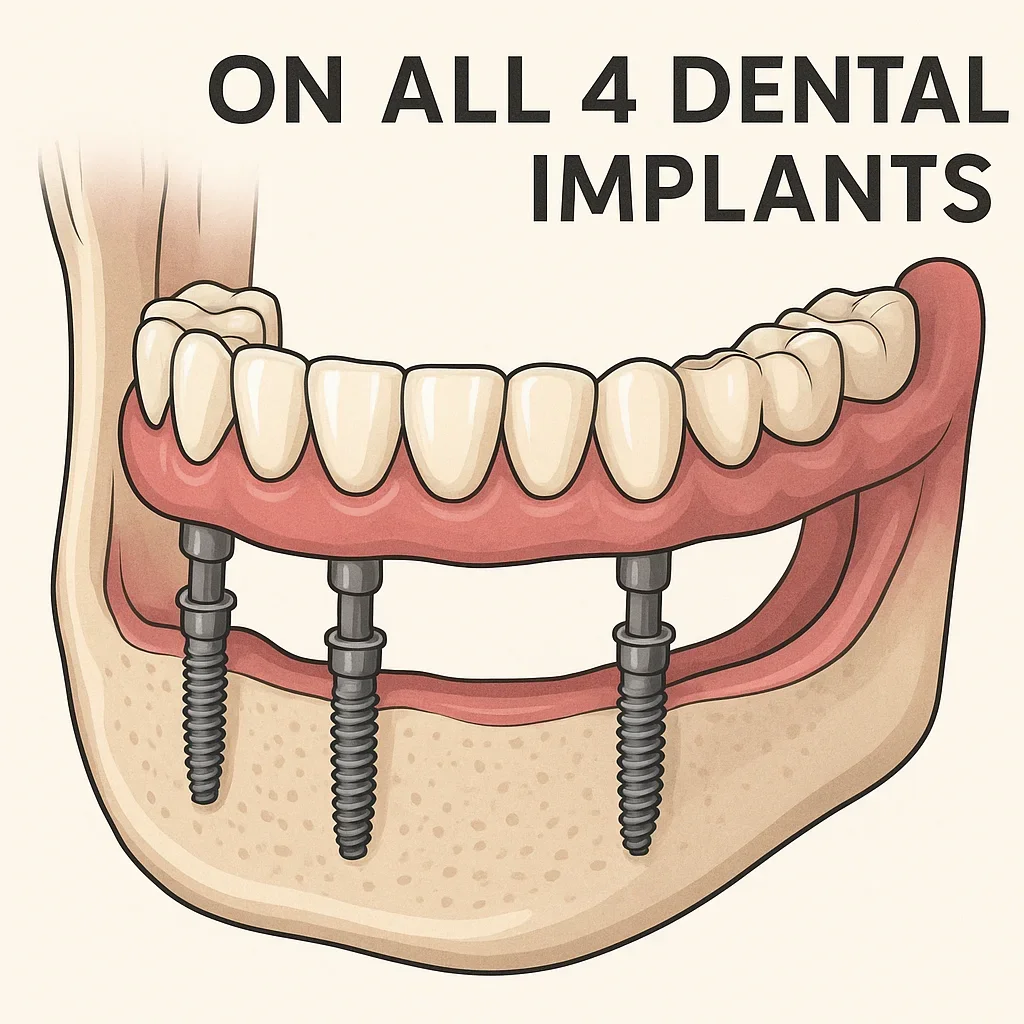
The core idea behind on all 4 dental implants is to utilize healthy, dense bone areas while avoiding complex bone grafting whenever possible. Two implants are placed vertically in the front part of the jaw, and two are positioned at an angle in the back. This angled placement maximizes contact with solid bone, ensuring long-term stability even for individuals with mild to moderate bone loss. This makes the treatment accessible to a wide range of patients who would otherwise be told they need extensive bone reconstruction.
Another major reason patients choose on all 4 dental implants is the convenience and comfort they offer. Traditional dentures often slip, cause irritation, or feel bulky during speaking or eating. In contrast, this advanced implant solution provides a fixed, non-removable set of teeth that feel secure and natural. Everyday activities such as chewing tough foods, laughing loudly, or speaking confidently become easier—improving both quality of life and oral health. In addition, fixed prosthetics contribute to better jawbone stimulation, helping prevent bone deterioration that commonly occurs with tooth loss.
From a biological standpoint, the technology behind on all 4 dental implants aligns with how the body naturally heals and adapts. Titanium implant posts undergo osseointegration—meaning they fuse with the bone to create a stable anchor. This biological bond allows the prosthetic teeth to withstand biting forces comparable to natural teeth. Patients often report a dramatic improvement in chewing efficiency, clarity of speech, and overall comfort. For individuals who have lived with unstable dentures for years, the transformation is often emotional and empowering. 😊
Choosing a full-mouth restoration is a significant decision, which is why understanding how on all 4 dental implants work is essential. This treatment does not simply replace missing teeth—it restores the full arch, enhances facial structure, and supports long-term oral wellness. Patients who suffer from sunken cheeks or facial sagging due to bone loss often notice a rejuvenated appearance after receiving their implants. By supporting the lips and cheeks properly, the prosthetic arch helps restore youthful proportions to the face.
In addition to the functional and cosmetic benefits, on all 4 dental implants are considered a cost-effective alternative to replacing each missing tooth individually. The treatment optimally combines affordability, long-term performance, and advanced dental technology. When comparing full-mouth implant solutions, this method typically requires fewer implant posts and less surgical intervention, reducing overall treatment time and cost while still delivering exceptional results.
For patients considering treatment abroad—particularly in dental tourism destinations—on all 4 dental implants continue to be an appealing choice. Clinics with advanced implantology expertise offer comprehensive care packages, often including consultations, scans, surgery, temporary teeth, permanent prosthetics, and aftercare guidance. If you are evaluating your options or planning to receive treatment in Turkey, feel free to reach out through the
Redent Klinik Contact Page.
To ensure that all treatment approaches align with global dental standards, reputable clinics follow guidelines set by organizations such as the
American Dental Association, ensuring the safety, reliability, and quality of on all 4 dental implants procedures.
You will also encounter LSI terms—such as “full arch dental implants” and “teeth in a day”—that relate closely to on all 4 dental implants and enhance understanding of this comprehensive restoration method. These terms describe the same concept: a fixed prosthetic solution supported by four titanium implants, designed to restore full dental function with long-lasting stability.
How On All 4 Dental Implants Work: Step-by-Step Process
Understanding exactly how on all 4 dental implants work is essential for any patient considering full-mouth restoration. This treatment is a sophisticated combination of surgical precision, prosthetic engineering, and advanced digital planning. It enables individuals with extensive tooth loss to regain strong, stable, and natural-looking teeth using only four strategically placed implants per arch. Below, you will find a detailed breakdown of every phase of the process—from diagnosis to final prosthetics—so you know exactly what to expect. 😄
Initial Consultation and Diagnostic Evaluation
Every successful on all 4 dental implants procedure begins with a comprehensive examination. Your dentist will review your medical and dental history, discuss your expectations, and assess whether this treatment aligns with your oral health goals. Digital X-rays, panoramic imaging, and 3D cone-beam computed tomography (CBCT) scans are essential tools that allow clinicians to evaluate bone density, jaw structure, and sinus positioning.
During this phase, professionals also identify potential issues such as gum disease, infections, or remaining damaged teeth. If needed, these problems are addressed before implant surgery. One of the reasons on all 4 dental implants have such high success rates is because planning is extremely precise. Using CBCT data, virtual simulations can predict ideal implant positioning and ensure maximum bone contact.
Digital Impressions and Smile Design
Advanced software is used to create a digital model of your future smile. The goal is to ensure that the final prosthetic teeth look natural, balanced, and harmonious with your facial anatomy. Patients can often preview their smile design before treatment begins, which helps set accurate expectations and increases satisfaction.
Implant Placement: Strategic Positioning for Stability
Once your treatment plan is finalized, the surgical stage begins. What makes on all 4 dental implants unique is the strategic placement of the four titanium posts. Two implants are inserted vertically in the front part of the jaw, where bone density is typically strongest. The other two implants are placed toward the back at an angle—usually between 30° and 45°. This angulation increases surface contact with strong bone areas and helps avoid anatomical structures such as sinuses and nerves.
This method eliminates the need for bone grafting in most cases and makes the treatment suitable for patients with moderate bone loss. For this reason, on all 4 dental implants are often preferred over traditional full-arch implant systems. The reduced surgical complexity also means shorter healing times and less postoperative discomfort.
Minimally Invasive Surgical Techniques
Modern implantology emphasizes gentle, precise surgical methods. Many clinics use flapless surgery, meaning the implants are placed without making large incisions in the gum tissue. This reduces swelling, bleeding, and healing time. With guided surgery, clinicians follow a computer-generated surgical template that ensures each implant is placed exactly as planned.
Immediate Loading: Temporary Teeth on the Same Day
One of the standout features of on all 4 dental implants is “immediate loading,” often referred to as the “teeth in a day” concept—an LSI-related term. This means patients receive a fully functioning temporary prosthetic on the same day as the surgery. The temporary teeth are strong enough for normal speaking and light chewing, allowing patients to leave the clinic with a complete smile instead of waiting months.
This phase significantly enhances quality of life. Individuals who have struggled with missing teeth or unstable dentures experience instant improvement in confidence, facial support, and oral function. The temporary prosthesis also protects the implants during their integration period, ensuring stabilization as the bone heals around the titanium posts.
Healing and Osseointegration
Over the next 3–6 months, the implants undergo osseointegration—a biological process where bone cells naturally fuse with the implant surface. This creates a solid foundation capable of supporting full biting and chewing forces. During this period, patients follow specific dietary and hygiene instructions to ensure optimal healing. 🦷
One advantage of on all 4 dental implants is that the angled posterior implants distribute pressure efficiently across the jawbone. This enhances the stability of the entire system and contributes to long-lasting success.
Regular Follow-Up Appointments
Your dental team schedules periodic checkups to monitor healing. Any minor adjustments to the temporary prosthesis are made during this time. These visits help ensure that the implants integrate safely and predictably.
Final Prosthetic Placement
Once osseointegration is complete, the temporary teeth are replaced with a custom-made permanent prosthesis. These final teeth are crafted using advanced materials such as zirconia or nano-composite resin. They are durable, stain-resistant, and aesthetically designed to match the patient’s natural smile and facial structure.
The final prosthetics allow patients to enjoy a full range of foods, speak clearly, and smile with complete confidence. The long-term comfort and functionality of on all 4 dental implants make them one of the most effective full-arch restoration solutions in modern dentistry.
If you are considering treatment or need professional guidance, you can connect directly through the Redent Klinik Contact Page for expert assistance. Reputable clinics also follow strict standards set by institutions such as the American Dental Association to ensure safe and predictable outcomes.
Benefits of On All 4 Dental Implants for Full-Mouth Restoration
Choosing on all 4 dental implants offers a long list of functional, aesthetic, and lifestyle advantages for individuals suffering from severe tooth loss, unstable dentures, or advanced oral health issues. This full-arch restoration technique has become one of the most trusted solutions worldwide because it restores natural chewing strength, prevents bone loss, enhances facial appearance, and dramatically improves quality of life. Below is a comprehensive, detailed guide explaining each benefit in depth, supported by surgical logic, patient outcomes, and modern dental science. 😄
Restoration of Natural Chewing Power and Bite Strength
One of the most significant advantages of on all 4 dental implants is the dramatic improvement in chewing ability. Traditional dentures often move or slip, making it difficult to eat tough or fibrous foods. With implants anchored directly into the jawbone, patients regain up to 80–90% of their original bite force. This allows them to comfortably enjoy foods such as nuts, meat, apples, and crunchy vegetables without fear of discomfort or instability.
The secure nature of on all 4 dental implants also enhances digestion. Proper chewing breaks food into smaller particles, enabling more efficient nutrient absorption—a benefit especially important for older adults or individuals with digestive challenges.
Biomechanical Stability
The design of this system ensures optimal load distribution. The angled posterior implants increase surface contact with dense bone regions, reducing stress and preventing micro-movement. This stability makes the prosthesis feel like natural teeth and supports long-term durability.
Preventing Bone Loss and Facial Sagging
Tooth loss leads to progressive jawbone deterioration because the bone no longer receives stimulation from natural roots. Over time, the bone shrinks, causing the cheeks to collapse inward and giving the face an aged or sunken appearance. On all 4 dental implants actively prevent this process by stimulating the jawbone through everyday chewing forces.
The titanium implants function like artificial roots, signaling to the body that the bone is still needed. This slows or stops resorption and maintains healthy bone density. As a result, patients often notice a more lifted, youthful facial structure after treatment.
Bite Support and Facial Harmony
By supporting the lips and cheeks, the prosthetic teeth restore facial balance. This improvement is especially visible in individuals who have worn poorly fitting dentures for many years. The immediate restoration provided by on all 4 dental implants often delivers instant cosmetic transformation.
Permanent, Fixed Smile That Looks and Feels Natural
Unlike removable dentures, the prosthetic teeth attached to on all 4 dental implants do not move, click, or require adhesives. They stay fixed in place 24/7 and are designed to mimic the appearance, color, and anatomy of natural teeth. High-quality zirconia or nano-ceramic materials give the final prosthesis a translucent, lifelike aesthetic.
Patients often report feeling like they have their “real teeth” back again. Speech becomes clearer, confidence increases, and social interactions feel more comfortable and natural.
Custom Smile Design
Advanced digital smile design technology allows clinicians to create a prosthetic arch tailored to your specific facial features. Proportions, shade selection, and tooth shape are carefully customized to achieve a personalized and harmonious result.
Immediate Results With Same-Day Teeth
One of the most appealing benefits of on all 4 dental implants is the ability to receive temporary teeth the very same day as the surgery. This “teeth in a day” concept—an LSI-related term—ensures that patients leave the clinic with a stable, fully functional smile instead of waiting months for healing.
This immediate transformation not only boosts confidence but also improves daily functionality. You can speak clearly, smile confidently, and enjoy soft foods immediately after surgery.
Comfort and Convenience
Because the temporary bridge is fixed, there is no risk of it slipping or irritating the gums. Most patients find the initial adjustment period surprisingly smooth and comfortable.
Cost-Effective Full-Arch Restoration
Restoring an entire arch with individual implants would require 6–8 implant posts or more, plus multiple surgical procedures and bone grafting. In contrast, on all 4 dental implants use just four implants per arch, making the treatment significantly more affordable while still delivering exceptional long-term performance.
Additionally, the minimally invasive nature of the procedure reduces overall treatment time and postoperative costs. The need for bone grafting is greatly reduced, and the same-day teeth minimize the number of clinical visits.
Durability and Long-Term Value
Titanium implants can last a lifetime with proper care. The final prosthesis is designed to withstand daily use, resist staining, and offer predictable long-term performance. Many patients view on all 4 dental implants as a long-term investment in health, function, and appearance rather than a temporary fix.
Enhanced Quality of Life and Confidence
For many individuals, tooth loss affects not only physical health but also emotional well-being. Difficulty speaking, chewing, or smiling confidently can lead to social withdrawal and lowered self-esteem. The stability and natural feel of this treatment restore confidence and eliminate the anxiety caused by loose or uncomfortable dentures.
Many patients describe the moment they see their new smile as life-changing. Activities such as laughing, eating in public, or taking photos become enjoyable again. 😍
Improved Oral and Overall Health
Full-arch restoration with on all 4 dental implants eliminates chronic oral issues such as infections from failing teeth, gum irritation from dentures, and bone loss caused by prolonged edentulism. Fixed prosthetics make oral hygiene easier because they do not trap food particles the way traditional dentures do.
Clinics that perform this procedure adhere to global standards set by organizations like the American Dental Association. If you need professional guidance or wish to begin the evaluation process, feel free to contact a specialist through the Redent Klinik Contact Page.
Candidacy: Who Qualifies for On All 4 Dental Implants?
Understanding whether you qualify for on all 4 dental implants is one of the most important steps before beginning full-mouth restoration. This treatment is designed for patients with significant tooth loss, failing teeth, or severe denture-related problems. However, it is not limited to a specific age group—thousands of adults ranging from their 30s to their 80s have successfully restored their smiles with this innovative solution. Below is a comprehensive, detailed breakdown of who makes an ideal candidate, what health factors matter, and why this system remains one of the most widely accessible implant treatments in modern dentistry. 😄
Ideal Candidates for On All 4 Dental Implants
Most individuals suffering from extensive tooth loss or oral deterioration qualify for on all 4 dental implants. Unlike traditional implants, this system is specifically designed to maximize stability even in areas where bone may be limited. In fact, one of the biggest advantages of this treatment is that it eliminates the need for excessive bone grafting in most cases.
Candidates often include people who have worn dentures for years, individuals with multiple failing or loose teeth, and those seeking a reliable, permanent alternative to removable prosthetics. The method is particularly suitable for people who want fast results, minimal surgical intervention, and long-term durability.
Common Examples of Suitable Patients
- People with several missing teeth or complete tooth loss
- Individuals with severely damaged or decayed teeth requiring full extraction
- Patients with loose, uncomfortable, or ill-fitting dentures
- People experiencing jawbone loss due to long-term edentulism
- Adults seeking a permanent, fixed replacement instead of removable dentures
Bone Density and Jaw Structure Requirements
One of the primary concerns for patients considering dental implants is jawbone density. Traditional implants often require thick, healthy bone to support individual implant posts. However, on all 4 dental implants are engineered to work even with reduced bone volume. This is achieved through the unique angulation of the posterior implants, which anchor into dense bone areas that remain strong even after years of tooth loss.
Although mild to moderate bone loss is generally not a barrier, extremely thin bone or large anatomical defects may require additional evaluation. This is why a CBCT scan (Cone Beam Computed Tomography) is essential during diagnosis—it provides a detailed 3D view of your bone structure and helps the dentist plan implant placement precisely.
When Bone Grafting May Still Be Needed
While the technique reduces the need for bone grafting, a small percentage of patients may require limited grafting if:
- The jawbone is extremely narrow
- There are cysts or pathological lesions present
- Past trauma has caused severe structural defects
- Sinus cavities are unusually enlarged
Even in these cases, the amount of grafting needed is usually minimal compared to traditional full-arch implant methods.
General Health Requirements
Your overall health plays a major role in determining your candidacy for on all 4 dental implants. Since this procedure involves oral surgery, the body must be healthy enough to support healing and osseointegration. Fortunately, many medical conditions do not automatically disqualify you—what matters is whether they are controlled and stable.
For example, patients with diabetes can often undergo implant treatment if their blood sugar levels are managed. Smokers may also be eligible, although quitting smoking significantly improves healing and long-term implant success. Your dental surgeon will review your medical history to identify any risks and recommend the safest approach.
Conditions That Require Additional Evaluation
- Uncontrolled diabetes
- Autoimmune disorders affecting healing
- Severe cardiovascular disease
- Chronic steroid use
- Blood clotting disorders
These conditions do not necessarily prevent treatment, but they require careful assessment and, in some cases, medical clearance.
Age Considerations: Who Is the Best Age Group?
There is no upper age limit for on all 4 dental implants. Many successful treatments have been performed on patients in their 70s and 80s. Since the implants integrate with bone rather than natural tooth roots, age alone is not a barrier. What matters is overall health, bone structure, and the patient’s ability to follow postoperative instructions.
Younger adults—those in their 30s or 40s—also benefit from this treatment if they suffer from aggressive gum disease or hereditary issues that lead to early tooth loss.
Psychological and Lifestyle Factors
Ideal candidates for on all 4 dental implants should also have realistic expectations regarding the treatment timeline and required aftercare. Commitment to maintaining oral hygiene and attending follow-up appointments is crucial for long-term success.
Patients With Gum Disease or Failing Teeth
Many people assume gum disease automatically disqualifies them from implant treatment. In reality, on all 4 dental implants are often the best solution for patients with advanced periodontal disease. The removal of infected teeth and placement of implants can eliminate chronic inflammation and restore a clean, healthy environment.
Following infection control and stabilization of gum health, the implants serve as strong anchors for a new prosthetic arch—offering a fresh start for individuals who have battled gum problems for years.
Final Candidacy Evaluation
The final decision about whether you qualify for on all 4 dental implants is made after a full clinical examination, X-rays, CBCT scans, and a detailed medical review. Your dental team will determine the safest, most predictable treatment plan tailored to your unique situation.
If you want a personalized assessment or professional advice, you can contact a specialist through the
Redent Klinik Contact Page. Clinics following global standards—such as those recommended by the
American Dental Association—ensure that evaluation and treatment are carried out with the highest level of safety and precision.
On All 4 Dental Implants vs. Traditional Dentures: Key Differences
When comparing tooth replacement options, many patients find themselves deciding between on all 4 dental implants and traditional dentures. Although both methods aim to restore chewing function and aesthetics, their long-term performance, comfort, stability, and overall health impact differ dramatically. Understanding these differences is essential for selecting the solution that aligns best with your needs, expectations, and lifestyle. Below, you’ll find a comprehensive and detailed examination of how these two treatments compare across functionality, cost, longevity, oral health impact, and daily comfort. 😄
Stability and Chewing Performance
Traditional dentures rest on the gums and rely on suction or adhesive to remain in place. Because they are not anchored to bone, they often shift during eating or speaking. This movement can lead to discomfort, sore spots, and reduced chewing efficiency. On the other hand, on all 4 dental implants are firmly anchored into the jawbone, providing unmatched stability. They behave like natural teeth, allowing you to bite, chew, and speak confidently.
Clinical studies show that fixed implant-supported restorations restore up to 80–90% of natural biting force, whereas dentures may restore only 15–20%. This difference dramatically affects daily life—especially when eating tough or crunchy foods such as meats, raw vegetables, apples, or nuts. Implant-supported arches allow for a more diverse and nutritious diet, improving long-term health outcomes.
Functional Longevity
Dentures tend to wear down or lose their fit over time due to continuous gum and bone changes. In contrast, on all 4 dental implants maintain their stability because they preserve bone and do not rely on soft tissue support. Their performance remains consistent year after year.
Prevention of Bone Loss
One of the biggest disadvantages of traditional dentures is their inability to prevent bone loss. When natural teeth are missing, the jawbone gradually shrinks due to lack of stimulation. Dentures simply sit on top of the gums and do nothing to stop this process. Over time, bone resorption leads to a sunken facial appearance, premature aging, and decreased denture stability.
On all 4 dental implants, however, function like artificial tooth roots and stimulate the jawbone with every bite. This stimulation significantly slows or even halts bone deterioration. The result is preserved facial structure, better long-term oral function, and a more youthful appearance. For many patients, this benefit alone is enough to choose implants over dentures.
Facial Support Benefits
Patients who switch from dentures to implant-supported arches often notice immediate improvement in facial fullness, lip support, and jawline definition. This positive change enhances self-confidence and contributes to a healthier, more natural smile. 😍
Comfort and Daily Use Experience
Comfort is another critical factor differentiating the two options. Traditional dentures may feel bulky, unstable, or awkward—especially the upper denture, which covers the palate. This can reduce taste sensitivity and alter how food feels in the mouth. Dentures can also cause gum irritation or pressure sores, requiring frequent adjustments.
On all 4 dental implants eliminate these issues entirely. Because the prosthetic teeth are fixed into place, they feel like your own natural teeth. There is no slipping, clicking, or need for adhesives. You can speak confidently, laugh freely, and enjoy meals without discomfort. This seamless integration into daily life is one of the reasons many patients describe the treatment as life-changing.
No Palate Coverage
Implant-supported arches do not cover the palate, which means improved taste perception, better speech clarity, and a more natural sensation during meals.
Maintenance Requirements
Traditional dentures require daily removal, cleaning, soaking in special solutions, and regular relining to maintain their fit. They may also trap food beneath the acrylic base, leading to discomfort and hygiene issues.
With on all 4 dental implants, maintenance is simple and similar to caring for natural teeth. Patients brush and floss daily, attend routine checkups, and clean around the prosthetic using special brushes recommended by their dentist. There is no need for adhesives, soaking, or frequent adjustments.
Durability of Materials
Modern implant-supported prosthetics are often made from durable materials such as zirconia, nano-ceramics, or high-strength composites. These materials are resistant to cracking, staining, and wear—unlike acrylic dentures, which may need replacement every 5–7 years.
Speech and Communication Improvements
Dentures may affect speech, particularly during pronunciation of certain consonants. Because they move with tongue pressure or airflow, they can cause clicking sounds or slurring during conversation.
On all 4 dental implants eliminate these problems by providing a stable, fixed structure. Many patients report clearer speech, improved confidence during social interactions, and elimination of embarrassing denture-related noises.
Cost and Long-Term Value Comparison
Although dentures are often cheaper upfront, they require ongoing maintenance, periodic relining, and eventual replacement. Over a lifetime, these costs add up significantly. In contrast, on all 4 dental implants involve a higher initial investment but deliver long-term reliability and reduced maintenance expenses. Because they prevent bone loss and provide lasting stability, they offer superior value over time.
Clinical Standards and Safety
Clinics performing both implant and denture procedures follow strict guidelines established by global authorities like the
American Dental Association. For expert guidance or personal assessment, you may contact specialists through the
Redent Klinik Contact Page.
In summary, while dentures remain a viable option for some patients, the functional, cosmetic, and health advantages of on all 4 dental implants make them the preferred full-mouth restoration method for many. Their stability, comfort, and long-term performance set a new standard for modern tooth replacement solutions.
Surgical Procedure Explained for On All 4 Dental Implants
The surgical phase of on all 4 dental implants is one of the most important components of the entire full-mouth restoration process. Although the procedure is highly advanced, it is performed routinely by implant specialists worldwide and follows a predictable, structured protocol. Understanding each step helps patients feel more confident, prepared, and informed before undergoing surgery. Below, you will find a detailed and comprehensive breakdown of how the procedure works, from pre-operative preparations to implant placement, temporary teeth fitting, and post-surgical stabilization. 😄
Pre-Surgical Planning and Digital Workflow
Before the actual surgery begins, precise planning is essential. Modern clinics use digital diagnostic tools to create a complete 3D map of your oral structure. This planning phase significantly improves the accuracy of on all 4 dental implants placement and reduces surgical risks.
CBCT Scan and Bone Analysis
Cone Beam Computed Tomography (CBCT) imaging provides a detailed 3D view of your jawbone, nerves, sinus cavities, and overall anatomical structure. The scan allows the implant surgeon to:
- Evaluate bone density and thickness
- Identify optimal implant insertion points
- Avoid critical structures like the inferior alveolar nerve
- Determine whether angulated posterior implants are needed
Because on all 4 dental implants utilize angled implants in the back of the jaw, these digital analyses are crucial for establishing the most stable positions.
Virtual Surgery and Surgical Guide Creation
Digital software simulates the exact trajectory of the implants before the surgery even starts. Based on these simulations, dentists may create a customized surgical guide. This guide functions like a template placed inside the mouth to ensure precise implant insertion.
Day of Surgery: Step-by-Step Explanation
The actual placement of on all 4 dental implants generally takes between 2 and 3 hours per arch. Many patients are pleasantly surprised by how smooth and comfortable the experience is, especially with modern sedation methods.
1. Local Anesthesia or Sedation
Depending on patient preference and clinical recommendations, the surgical team may use:
- Local anesthesia
- Oral sedation
- IV sedation (conscious sedation)
These options ensure a pain-free, relaxed experience. Many patients report remembering very little of the procedure.
2. Extraction of Remaining Teeth
If any damaged, infected, or failing teeth are still present, they are gently removed. This step eliminates infection and prepares the gums for implant placement. Because on all 4 dental implants do not require extensive bone grafting, extractions and implant placement are often performed during the same appointment.
3. Preparation of Implant Sites
The dentist prepares the jawbone at predetermined points based on the digital plan. This involves gently drilling small pilot holes where the implants will be inserted. The goal is to achieve maximum bone contact and long-term stability.
4. Placement of the Four Titanium Implants
This is the core of the surgical procedure. The four implants are inserted in strategic positions:
- Two anterior implants placed vertically in the front of the jaw
- Two posterior implants placed at a 30–45° angle to maximize bone support
The angulated placement allows the implants to anchor into dense bone while avoiding anatomical barriers such as sinus cavities (upper jaw) or the mandibular nerve (lower jaw). This is one of the reasons why on all 4 dental implants remain stable even in patients with moderate bone loss.
Immediate Loading: Attaching the Temporary Teeth
One of the most transformative stages of the procedure is attaching the temporary prosthetic arch on the same day. This concept is often called “teeth in a day,” an LSI-related term associated with this implant system.
Fabrication of the Temporary Prosthesis
Before surgery, dental technicians design a temporary bridge tailored to the patient’s smile. After the implants are placed, this prosthesis is modified and fitted over the implant abutments.
Ensuring Stability and Comfort
The temporary teeth are screwed into the implants, creating a fixed and stable smile immediately after surgery. This allows the patient to leave the clinic with fully functional teeth, eliminating the need for removable dentures during healing. 😍
Osseointegration and Healing Process
After the surgery, the implants begin a biological process called osseointegration. This occurs over 3–6 months, during which bone cells fuse with the titanium surfaces. This fusion ensures long-term strength and durability.
The angled posterior implants used in on all 4 dental implants distribute chewing forces efficiently, allowing patients to use their temporary prosthesis comfortably while healing.
Post-Operative Instructions
Patients are typically advised to:
- Follow a soft-food diet for several weeks
- Take prescribed medications to control inflammation
- Maintain excellent oral hygiene around the prosthesis
- Attend follow-up appointments for evaluation
Placement of the Permanent Prosthetic Teeth
Once osseointegration is complete, the temporary prosthesis is replaced with a custom-made final restoration. These permanent teeth are typically crafted from zirconia or high-strength ceramic materials and are designed for decades of use.
The final arch is shaped, shaded, and polished to match the patient’s facial structure, smile line, and aesthetic goals. The result is a natural-looking, durable, and comfortable smile supported by stable on all 4 dental implants.
If you wish to consult a specialist about your procedure, you may contact professionals through the
Redent Klinik Contact Page. Clinics adhering to global standards—such as those established by the
American Dental Association—ensure the safest and most predictable outcomes.
Recovery Timeline and Aftercare Tips for On All 4 Dental Implants
Understanding the recovery process after receiving on all 4 dental implants is essential for ensuring the best long-term results. Although this treatment is known for its efficiency and fast transformation, proper aftercare plays a major role in guaranteeing successful healing and long-term implant stability. In this section, you’ll find a detailed breakdown of the full recovery timeline, what to expect at each stage, and expert-level aftercare tips designed to protect your implants and maximize comfort. 😄
The First 24–48 Hours After Surgery
Immediately after your on all 4 dental implants procedure, your mouth will begin the natural healing process. It is normal to experience mild swelling, minor bleeding, and slight discomfort—similar to what you might feel after a routine extraction. Most clinics use minimally invasive techniques, which reduce the severity of early postoperative symptoms.
Managing Pain and Swelling
To control discomfort during the first two days, your dentist may prescribe:
- Anti-inflammatory medications
- Pain relievers
- Cold compresses applied externally
Swelling typically peaks within 48 hours and gradually subsides. Avoiding vigorous physical activity during this time helps prevent unnecessary irritation.
Bleeding and Oral Care
Small amounts of bleeding or oozing are normal. Biting gently on sterile gauze helps control it. Patients must avoid rinsing forcefully or spitting during the first 24 hours to prevent disturbing the surgical sites.
First Week of Recovery: Primary Healing Phase
The first week after receiving on all 4 dental implants is when tissues begin to stabilize. Most discomfort significantly decreases after the third day, and many patients feel well enough to return to work within a day or two (depending on the complexity of their treatment and level of sedation used).
Dietary Guidelines
A soft-food diet is essential during the first week. Recommended foods include:
- Scrambled eggs
- Smoothies
- Soups
- Mashed potatoes
- Pasta
Because your temporary teeth are fixed to the implants, chewing should be gentle. Although on all 4 dental implants provide stability, excessive pressure may affect the healing process.
Oral Hygiene Practices
Maintaining cleanliness around the surgical sites helps prevent infection. Dentists generally recommend brushing gently with a soft-bristle toothbrush and using antimicrobial mouthwash once healing allows. Water flossers may be recommended later, but not immediately after surgery.
Weeks 2–6: Osseointegration Begins
During this period, the implants start forming a strong biological bond with the jawbone. This important process, known as osseointegration, is crucial for the long-term success of on all 4 dental implants.
Although patients usually feel completely comfortable after the first week, it’s important to continue following soft to semi-soft dietary guidelines. The temporary teeth are designed to protect the implants as they fuse with the bone—not to withstand full bite force.
Monitoring for Normal and Abnormal Symptoms
It is normal to feel slight changes in pressure around the implants. However, symptoms such as severe pain, swelling after initial healing, or loose feeling should be reported immediately.
Follow-Up Appointments
Your dentist will schedule follow-up visits to evaluate healing progress. These appointments ensure that:
- The implants are integrating properly
- No signs of infection are present
- The temporary prosthesis is functioning well
Months 2–6: Continuing Osseointegration and Functional Adaptation
As healing progresses, the bone becomes more dense and tightly fused around each implant post. This is when on all 4 dental implants reach maximum structural stability. You may gradually be allowed to introduce firmer foods, depending on your progress.
Adapting to the Prosthesis
Most patients adapt very quickly to their temporary teeth, but the final prosthesis will offer improved comfort and aesthetics. This period allows dental professionals to determine the ideal shape, bite pattern, and smile design for your final set of teeth.
Receiving the Final Prosthetic Teeth
Once osseointegration is complete—usually between 3 and 6 months after surgery—the temporary bridge is replaced with a permanent prosthesis made from materials such as zirconia or high-strength composite. These materials are designed for decades of durability and natural aesthetics.
The final teeth are custom-shaped to match your facial structure, bite, and aesthetic preferences. With proper care, the permanent prosthesis supported by on all 4 dental implants will allow you to enjoy a powerful, stable bite and a confident smile for many years.
Long-Term Aftercare Tips for Maximum Longevity
To safeguard the durability of your implants and maintain excellent oral health, the following long-term care practices are essential:
Daily Cleaning and Oral Hygiene
- Brush twice daily with a soft-bristle toothbrush
- Use implant-safe toothpaste (non-abrasive)
- Clean under the prosthesis with interdental brushes or water flossers
Lifestyle Recommendations
- Avoid smoking, as it reduces osseointegration success
- Limit excessive alcohol consumption
- Wear a nightguard if you grind your teeth
Routine Professional Checkups
Schedule examinations every 6 months to ensure:
- Implants remain stable
- Gums stay healthy
- The prosthetic screws and attachments are secure
When to Seek Professional Help
Although complications are rare, contacting your dental team immediately is important if you notice:
- Sudden pain or swelling
- Movement in the prosthesis
- Inflammation around the gums
- Persistent bleeding
For personalized aftercare guidance or recovery-related inquiries, you may reach out through the
Redent Klinik Contact Page. Clinics adhering to global standards—such as those outlined by the
American Dental Association—ensure safe recovery practices and long-lasting success with on all 4 dental implants.
Long-Term Success Rates and Durability of On All 4 Dental Implants
One of the primary reasons patients choose on all 4 dental implants is their exceptional long-term success, high durability, and ability to remain functional for decades with proper care. This full-arch restoration method has been extensively studied for more than 20 years, consistently demonstrating stability, strong osseointegration, and outstanding patient satisfaction. In this section, you will find a deep, detailed examination of the scientific evidence behind long-term success rates, the factors that influence implant longevity, and what patients can do to protect their investment over time. 😄
Clinical Success Rates Over 10–20 Years
The long-term performance of on all 4 dental implants has been validated through numerous clinical studies. Research shows that success rates typically range between 94% and 98% over a period of 10 to 15 years. These impressive statistics apply to both upper and lower arches, although the lower jaw often shows slightly higher success due to denser bone quality.
Several studies report that even after 20 years, many patients maintain fully functioning implant-supported prosthetics with minimal complications. These outcomes demonstrate that the system is engineered for longevity and reliability, even for individuals with challenging oral conditions such as bone loss or failing teeth.
Comparing Success Rates With Traditional Implants
Traditional single implants also show excellent long-term outcomes, but they involve more components, more surgical sites, and often require bone grafting. In contrast, on all 4 dental implants achieve similar long-term success with fewer implants, less surgical intervention, and reduced healing time—making them an attractive solution for full-mouth restoration.
Durability and Strength of Titanium Implants
At the core of every on all 4 dental implants system is a set of four titanium implant posts. Titanium is widely regarded as the gold standard in implant dentistry due to its exceptional biocompatibility and high fracture resistance. Once osseointegrated, the implant posts function similarly to natural tooth roots, providing stable support for the prosthetic teeth for decades.
The angled posterior implants enhance durability by distributing forces across strong bone regions. This engineering reduces stress, minimizes the risk of implant overload, and supports long-lasting function even for people with heavier bite forces.
Osseointegration and Biological Adaptation
Long-term strength depends heavily on osseointegration—the biological fusion of bone and implant surface. Because on all 4 dental implants stimulate the jawbone similarly to natural roots, they contribute to long-term bone maintenance. This reduces bone shrinkage and helps preserve facial structure.
Durability of the Final Prosthetic Teeth
The final prosthesis attached to on all 4 dental implants is crafted from high-strength materials such as monolithic zirconia, nano-ceramic composites, or hybrid acrylic reinforced with titanium. These materials are designed to withstand the daily stresses of chewing, grinding, and speaking. Zirconia, in particular, is known for its extreme durability and resistance to fracture.
These prosthetics maintain their appearance and function for many years with proper care, resisting wear, discoloration, and staining. For most patients, the prosthesis lasts 10–20 years before needing replacement or adjustment—far longer than traditional dentures.
Bite Force Distribution
The unique angulation and placement strategy used in the on all 4 dental implants technique ensures that bite forces are distributed evenly across the jawbone. This prevents concentrated stress on a single implant and significantly reduces the risk of mechanical failure.
Factors That Influence Long-Term Success
Several biological and lifestyle factors play a role in the long-term durability of on all 4 dental implants. Understanding these factors helps patients optimize their results.
1. Oral Hygiene Habits
Good hygiene is essential for preventing peri-implantitis—a gum infection that can damage bone and compromise implant stability. Patients should:
- Brush twice daily with a soft toothbrush
- Use non-abrasive toothpaste
- Clean beneath the prosthesis with interdental brushes or a water flosser
2. Bone Quality and Density
While on all 4 dental implants work exceptionally well even with reduced bone volume, patients with healthier bone typically experience faster osseointegration and longer-lasting results.
3. Lifestyle Choices
Smoking, uncontrolled diabetes, bruxism (teeth grinding), and poor oral hygiene habits can increase the risk of implant complications. Smoking, in particular, reduces blood flow to the gums, which may slow healing.
4. Regular Dental Checkups
Routine examinations every 6 months allow your dental team to:
- Monitor implant stability
- Check gum health
- Assess screw joints and attachments
- Professionally clean areas under the prosthesis
Typical Lifespan of On All 4 Dental Implants
With proper care, the titanium implant posts placed during an on all 4 dental implants procedure can last a lifetime. The final prosthetic arch generally lasts between 10 and 20 years, depending on material selection and patient habits. Many patients undergo minor adjustments or refinements over the years to maintain comfort and appearance.
Scientific Evidence of Longevity
Clinical research confirms that most patients experience:
- Stable implants after 10+ years
- Minimal bone loss around the implants
- High functional and aesthetic satisfaction
The Role of Professional Care in Long-Term Success
Visiting a qualified dental specialist is essential for maintaining the longevity of your on all 4 dental implants. Clinics that follow global standards outlined by organizations such as the
American Dental Association ensure that all stages of treatment—from surgery to aftercare—are performed safely and effectively.
If you would like personalized advice or need long-term maintenance evaluations, you can reach out through the
Redent Klinik Contact Page. With the right attention and care, your implants can provide a lifetime of confident smiling, strong chewing, and reliable function.
Cost Factors and Price Breakdown for On All 4 Dental Implants
Understanding the cost of on all 4 dental implants is an essential part of planning your full-mouth restoration. Because this treatment provides a permanent solution that replaces an entire arch of missing or damaged teeth, the investment is higher than traditional removable dentures—but the long-term value, functional performance, and durability make it a life-changing decision. In this section, we will break down all the key elements that influence pricing, including clinical factors, materials, country-based cost variations, and optional procedures. 😄
Why Prices Vary Between Patients
The total cost of on all 4 dental implants differs from one patient to another because each case is unique. Factors such as bone density, oral health, remaining teeth, and restoration material all influence the final cost. Additionally, the expertise of the implant surgeon, the clinic’s technology, and the country where the treatment is performed significantly affect pricing.
Despite these variations, on all 4 dental implants remain one of the most cost-effective full-mouth restoration options because the treatment uses fewer implants, requires less surgery, and eliminates many additional procedures that traditional implant-based restorations need.
Can Insurance Cover the Procedure?
In many countries, dental insurance may cover some components of the surgery (extractions, temporary prosthetics, or diagnostic scans). Full coverage is rare, but partial support is common depending on your plan. Patients should consult their insurance provider to understand reimbursement options.
Breakdown of What’s Included in the Total Cost
A complete on all 4 dental implants package typically includes several essential components bundled into a single treatment plan. Most clinics provide all-inclusive pricing to ensure transparency.
1. Diagnostic Imaging and Consultation
- Panoramic X-rays
- CBCT (3D) scans
- Smile design and treatment planning
- Digital impressions
These steps help create a precise surgical plan and determine whether bone grafting is necessary.
2. Surgical Procedures
This includes:
- Extraction of damaged or failing teeth
- Placement of four titanium implants
- Use of surgical guides
- Sedation or anesthesia
Because the technique minimizes the need for bone grafting, most patients undergo all surgical steps in one appointment.
3. Temporary Prosthetic Teeth (Same-Day Teeth)
The temporary bridge, delivered on the day of surgery, allows patients to leave the clinic with a beautiful and functional smile. This phase is one of the unique advantages of on all 4 dental implants.
4. Permanent Prosthesis
The final prosthesis is one of the biggest cost variables. Available options include:
- Zirconia prosthesis (strongest, most durable, premium)
- Hybrid acrylic prosthesis (affordable, lightweight)
- Nano-ceramic composite (balanced durability and aesthetics)
Zirconia tends to be more expensive but offers superior longevity and natural appearance.
5. Follow-Up Appointments
Routine checkups during the healing phase ensure successful osseointegration and proper prosthetic function.
Average Price Ranges by Region
Costs for on all 4 dental implants vary significantly across the world due to differences in clinic expenses, labor, and dental technology.
United States & Canada
In the U.S., the average cost ranges between $20,000 and $30,000 per arch. In Canada, prices usually fall between $18,000 and $28,000 per arch.
Western Europe
Countries such as Germany, France, and the UK typically charge between €12,000 and €20,000 per arch.
Turkey (Popular for Dental Tourism)
Turkey has become a leading destination for full-mouth restoration, with prices averaging $4,000 to $7,000 per arch. The lower cost is due to reduced operational expenses and high competition among clinics—not reduced quality. Many Turkish clinics use premium implant brands and advanced surgical technology, making the region an attractive option.
Australia
Patients in Australia can expect prices ranging from $18,000 to $25,000 per arch.
Additional Notes
Prices depend on several factors, including:
- The implant brand (Nobel Biocare, Straumann, etc.)
- The prosthetic material (zirconia vs. acrylic)
- The surgeon’s expertise
- Clinic technology (guided surgery vs. conventional)
Optional or Additional Costs
Although most patients do not require extra procedures, a few conditions might add to the total cost of on all 4 dental implants.
Bone Grafting (Rare)
Bone grafting is uncommon because the All-on-4 technique avoids areas of weak bone. However, in severe jawbone loss cases, minor grafting may be necessary and can add $200 to $1,000 to the total cost.
Sinus Lifting
In the upper jaw, a sinus lift might be required in exceptional cases, adding $800 to $2,000.
Upgrading Prosthetic Materials
Switching from acrylic to zirconia can increase costs by $1,000 to $3,000 per arch due to the durability and aesthetics of the material.
Long-Term Value and Cost Efficiency
When evaluating the total cost of on all 4 dental implants, it’s essential to consider long-term benefits:
- No recurring denture adhesives or relining costs
- No need to replace dentures every 5–7 years
- Reduced long-term dental repairs
- Prevention of bone loss (avoiding future reconstructive surgery)
- Improved oral health and overall well-being
Return on Investment
Since the implants can last a lifetime and prosthetics last over a decade, the long-term value is significant compared to traditional dentures. Patients also benefit from improved confidence, chewing ability, and quality of life—making the investment worthwhile.
Getting an Accurate Treatment Quote
Every patient’s treatment plan is unique. For this reason, an accurate quote for on all 4 dental implants can only be provided after a detailed examination and CBCT scan. If you would like a personalized assessment or need cost guidance specific to your case, you can reach out through the
Redent Klinik Contact Page.
Clinics adhering to global standards—such as those set by the
American Dental Association—ensure transparent pricing, ethical treatment planning, and professional care throughout the process.
Expert Tips to Maintain and Clean On All 4 Dental Implants
Caring for on all 4 dental implants properly is essential for ensuring their long-term durability, protecting gum health, and maintaining a fresh, attractive smile. While this implant system is designed to be low-maintenance compared to traditional dentures, proper cleaning techniques and healthy daily habits still play a major role in preserving the stability and aesthetics of your full-arch prosthesis. In this section, you will find comprehensive, clinically accurate, and detail-rich guidance on how to clean, maintain, and protect your implants for decades of trouble-free use. 😄
Daily Cleaning Routine for On All 4 Dental Implants
Just like natural teeth, on all 4 dental implants require a consistent daily cleaning routine. Because the prosthesis is fixed and does not cover the palate, patients often find the cleaning process straightforward and comfortable. However, it must be thorough to prevent plaque buildup, gum inflammation, or peri-implantitis.
Brushing Twice Daily
Use a soft-bristle or electric toothbrush to clean around the prosthetic teeth, gums, and implant-supported bridge. Implant-safe toothpaste (non-abrasive) is recommended to protect the prosthetic material. The brushing motion should be gentle, circular, and focused along the gumline where plaque tends to accumulate.
Cleaning Under the Prosthesis
Although the prosthesis is fixed, there are small spaces beneath it where food particles and bacteria may gather. Cleaning these areas prevents irritation, inflammation, and unpleasant odors. The most effective tools include:
- Interdental brushes
- Water flossers
- Super floss or threader floss
These tools help remove plaque without damaging the surface of the prosthetic teeth or causing discomfort.
Weekly and Specialized Cleaning Methods
In addition to daily cleaning, patients with on all 4 dental implants should incorporate weekly or biweekly deep-cleaning habits for optimal hygiene.
Using Antimicrobial Mouthwash
Rinsing with an alcohol-free antimicrobial mouthwash can help prevent gum inflammation and reduce bacterial growth around the implants. Alcohol-free options are preferred because alcohol may dry out the tissues and cause irritation.
Water Flosser Technique
A water flosser provides an excellent method for cleaning beneath the prosthesis. Direct the water stream at a 45° angle toward the gumline and under the implant bridge. This helps remove stubborn debris in hard-to-reach areas.
Professional Cleaning and Dental Visits
Regular dental checkups are essential for maintaining the longevity of on all 4 dental implants. These appointments allow your dentist to monitor gum health, check implant stability, and ensure that the prosthesis remains properly seated.
Frequency of Professional Visits
Most patients should schedule checkups every 6 months. However, individuals with a history of gum disease or systemic conditions like diabetes may require more frequent visits.
What Happens During a Dental Cleaning?
Professional cleanings for implant-supported prosthetics include:
- Removal of plaque using special implant-friendly instruments
- Inspection of gum tissue condition
- Checking for signs of peri-implantitis
- Tightening or adjusting implant screws if necessary
Your dental professional may also polish the prosthesis to maintain its shine and remove surface stains.
Preventing Peri-Implantitis
Peri-implantitis is a gum infection that can damage the bone supporting the implants. Although rare, it can compromise even well-placed on all 4 dental implants if proper hygiene is not maintained. Preventing this condition is significantly easier than treating it.
Early Warning Signs
Be aware of:
- Red or swollen gums
- Bleeding when brushing or flossing
- Bad breath
- Sensitivity or pressure around the implants
If any of these signs appear, schedule a dental visit promptly to address the issue before it progresses.
Lifestyle Habits That Improve Implant Longevity
Beyond hygiene, lifestyle choices play a significant role in the success of on all 4 dental implants. Adopting certain habits helps protect both your oral health and your investment.
Avoid Smoking
Smoking significantly slows down the healing process and increases the risk of implant complications. Long-term smokers face higher rates of implant failure because nicotine restricts blood flow to the gums.
Healthy Diet and Nutrition
A balanced diet rich in vitamins and minerals supports gum health and bone density. Foods high in Vitamin C, calcium, and phosphorus contribute to the strength of the jawbone around the implants.
Protect Against Teeth Grinding
Bruxism (teeth grinding) places excessive pressure on the implant-supported prosthesis. Wearing a custom nightguard can help prevent fractures, stress on the implants, and premature wear on the prosthetic teeth.
Material-Specific Care Tips
Different prosthetic materials require specific maintenance approaches. Since on all 4 dental implants may be fitted with zirconia, acrylic, or nano-ceramic teeth, the care guidelines may vary slightly.
Zirconia Prosthesis
Zirconia is extremely durable and stain-resistant. Clean gently with soft brushes and avoid abrasive toothpaste to maintain its polished appearance.
Acrylic Hybrid Prosthesis
Acrylic requires slightly more careful cleaning, as it is softer than zirconia. Using non-abrasive cleaning products protects the surface from wear.
Nano-Ceramic Composites
These combine strength and flexibility. Standard brushing and flossing routines keep them in excellent condition.
When to Replace or Adjust the Prosthesis
The titanium implants placed during an on all 4 dental implants procedure can last a lifetime. However, the prosthetic teeth may need replacement or adjustment after 10–20 years due to natural wear.
Signs You May Need Adjustments
- Looseness or movement in the prosthesis
- Difficulty chewing certain foods
- Visible wear or cracks
- Changes in bite alignment
Routine dental appointments help detect these issues early and ensure timely repairs.
Ensuring Long-Term Success With Professional Support
Working with a qualified dental specialist is essential for maintaining your implants. Clinics that follow international standards—such as those recommended by the
American Dental Association—ensure that patients receive safe, effective care from initial surgery to long-term maintenance.
If you need personalized cleaning recommendations, a maintenance check, or expert guidance, you can contact a specialist through the
Redent Klinik Contact Page. With proper care and attention, your on all 4 dental implants can provide a lifetime of strong, confident smiles. 😍