
Understanding the general cost for dental implants is one of the most common concerns patients have when exploring long-term tooth replacement options. Dental implants are widely considered the gold standard for restoring missing teeth because they look, feel, and function like natural teeth. However, many people are unsure about what truly goes into the pricing, why costs vary so dramatically, and which factors actually determine the final treatment fee. This detailed guide will help you gain clarity so you can make confident, informed decisions. 😊
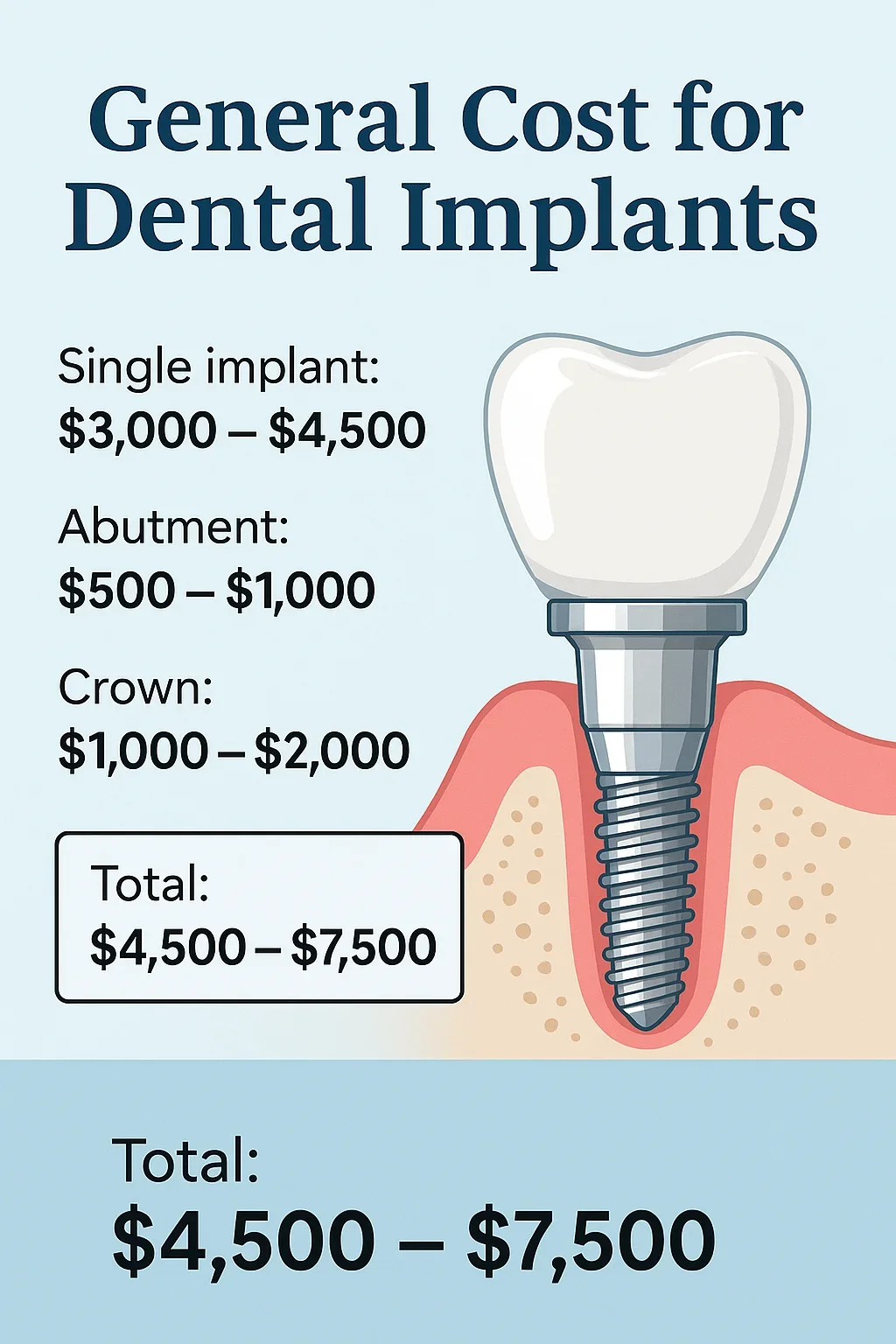
The general cost for dental implants refers to the combined price of several components: the titanium or zirconia implant post, the abutment, and the dental crown. But beyond these basic elements lies a full spectrum of clinical procedures that influence cost—diagnostic imaging, implant planning, surgeon expertise, bone health, and even the clinic’s geographic location. To fully satisfy patient search intent, it’s important to explore each layer in depth and explain why implant fees are not a one-size-fits-all figure.
Before diving deeper, it’s worth noting that implants are not simply “expensive teeth.” They are medical-grade devices surgically integrated into the jawbone using advanced technology. This not only ensures strong chewing ability but also prevents bone loss—something dentures and bridges cannot achieve. Because of this, the general cost for dental implants covers far more than just a prosthetic tooth; it represents a long-term investment in oral health, functionality, and confidence.
Most patients discover that pricing varies between clinics, cities, and countries. For example, North America typically has the highest fees compared to Europe or Turkey, where medical travel for dental implants has become increasingly popular due to modern facilities and competitive pricing. Patients seeking personalized cost assessments often contact clinics directly, and for those planning treatment in Turkey, the Redent Klinik Contact Page is a reliable place to start.
The general cost for dental implants also changes depending on the complexity of your case. If the jawbone has shrunk over time, bone grafting or sinus lifting may be required, adding additional charges. If multiple implants are needed, clinics may offer package pricing. If a full-mouth reconstruction is planned—such as “All-on-4” or “All-on-6”—costs differ significantly because of the number of implants, surgical steps, and prosthetic materials used.
Research-based resources such as the American Dental Association offer valuable information on standards, materials, and procedural guidelines, helping patients understand why dental implant fees remain higher than conventional restorations. While searching online, many patients also encounter semantically related terms like “implant price range” or “cost of tooth implants,” which refer to the same concept. These related phrases help broaden your understanding, ensuring you compare treatments accurately.
Patients also often ask whether implant fees include follow-up visits, x-rays, or maintenance. This is essential because dental implants require long-term professional checkups to ensure stability and gum health. Some clinics include these costs in their overall packages, while others price them separately. Being fully informed helps prevent unexpected bills later. That’s why understanding the general cost for dental implants is more than just looking at a number—it involves reviewing the treatment process from start to finish.
Below is a typical price range block based on widely available public research from international dental tourism platforms and dental associations. These are approximate 2025 figures and may vary by clinic, surgeon, and country:
Estimated Global Implant Cost Range (2025)
------------------------------------------
• United States: $3,500 – $6,000 per implant
• Canada: $3,000 – $5,500 per implant
• United Kingdom: £2,000 – £3,500 per implant
• Germany: €2,000 – €4,000 per implant
• Turkey: $800 – $1,500 per implant
• Australia: AUD $4,000 – $6,500 per implant
While the cost may seem high, the value comes from durability. Dental implants can last 25+ years or even a lifetime when properly maintained. This makes them far more cost-effective long-term than dentures or bridges, which require replacement every 5–10 years. This longevity is one of the major reasons why so many patients are shifting toward implants despite the initial investment.
In summary, the general cost for dental implants is best understood by evaluating materials, technology, surgical procedures, case complexity, and regional pricing differences. When you evaluate implants through this comprehensive lens, it becomes clear why costs vary and how to identify the best value—not just the lowest price. This foundation will help you as you explore the next sections, where we break down implant pricing even more deeply and compare global treatment options.
Average Pricing Breakdown for Dental Implants in 2025
Understanding the full general cost for dental implants requires examining each component of the treatment. Many patients begin their research expecting a simple price tag, but dental implants involve a series of steps, materials, and clinical assessments that together form the final fee. To make this section fully comprehensive and accurate, we will break down every element involved in implant pricing for 2025 and explain how each part contributes to the overall cost. This ensures you understand exactly what you are paying for and why implant prices differ between clinics. 😊
Base Implant Components and Their Costs
The general cost for dental implants always includes three essential parts: the implant post, the abutment, and the dental crown. These components may vary based on brand, material, and manufacturer precision.
1. The Implant Post
This is a biocompatible titanium or zirconia screw inserted into the jawbone. It functions as the artificial tooth root, providing stability and long-term support. Titanium posts are slightly more affordable, while zirconia posts tend to be pricier due to their metal-free and aesthetic advantages. This single component can make up 40–50% of the general cost for dental implants, mainly because it must meet high medical and structural standards.
2. The Abutment
The abutment connects the implant post to the dental crown. Custom abutments are more expensive than standard prefabricated versions, particularly for front teeth where aesthetics matter more. Although small, this piece contributes meaningfully to the overall general cost for dental implants because it is engineered with high precision.
3. The Dental Crown
The crown is the visible part of the implant. Materials range from porcelain-fused-to-metal to full zirconia. Zirconia crowns—known for their strength and natural appearance—typically cost more. Because the crown directly influences your smile and bite, this portion significantly affects the final treatment pricing.
Diagnostic Imaging and Technical Planning
Modern implant dentistry relies on digital imaging and 3D planning. Cone Beam Computed Tomography (CBCT) scans are now standard in most clinics because they ensure precision and safety. CBCT imaging allows the surgeon to evaluate bone density, nerve pathways, and anatomical structures before placing the implant.
These diagnostic procedures typically contribute 10–15% to the general cost for dental implants. Although patients sometimes question why imaging is priced separately, it is essential for accurate treatment planning. Poor diagnostics increase the risk of complications and implant failure, which is why reputable clinics always include thorough imaging in their procedural workflow.
Bone Grafting and Additional Surgical Procedures
If your jawbone has shrunk due to tooth loss, bone grafting may be required. This is a common step and one of the largest contributors to extra costs. Bone grafts rebuild the foundation needed to support an implant securely. Synthetic grafts, autografts (your own bone), and xenografts (from bovine sources) each come at different price points.
In cases where the upper jaw requires reinforcement, a sinus lift may be necessary. These procedures can significantly increase the general cost for dental implants, but they ensure long-term stability and success. While it may seem like an additional expense, bone grafting is actually an investment in implant longevity.
Laboratory and Prosthetic Fabrication Costs
Creating a natural-looking implant crown or bridge requires advanced laboratory technology. High-quality labs use CAD/CAM systems, digital impressions, and premium materials like multilayer zirconia. These processes guarantee strength, durability, and lifelike aesthetics.
Part of the general cost for dental implants goes toward skilled dental technicians who design and manufacture these prosthetics. The quality of lab work influences the final aesthetic result, gum fit, and overall comfort of the implant restoration.
Surgeon Expertise and Clinical Experience
The dentist’s experience plays a major role in determining the overall price. Surgeons with advanced implant training, international certifications, or extensive portfolios typically charge more. Their expertise reduces the risk of complications, enhances aesthetic outcomes, and improves surgical precision.
This is why the general cost for dental implants often reflects the quality of both the clinic and the dentist. While budget clinics may advertise low prices, choosing an experienced implantologist increases long-term success and satisfaction.
Regional and International Price Variations
Implant pricing varies significantly across countries and even within the same city. For instance, implant costs in the United States can be four to five times higher than in Turkey or parts of Eastern Europe. This is due to differences in operating expenses, labor costs, insurance systems, and government regulations.
Patients frequently compare international options to reduce the general cost for dental implants while maintaining quality. Clinics offering dental tourism often provide package deals that include transportation, accommodation, and full treatment planning. Many patients researching implant pricing eventually contact clinics like Redent Klinik for detailed cost assessments, using the Redent Klinik Contact Page to plan their consultation.
Global Average Pricing Block (Based on 2025 research)
Single Dental Implant (Including Crown):
---------------------------------------
• United States: $3,500 – $6,000
• United Kingdom: £2,000 – £3,500
• Germany: €2,000 – €4,000
• Turkey: $800 – $1,500
• Canada: $3,000 – $5,500
These figures help patients compare options more accurately. When evaluating the general cost for dental implants, it’s essential to remember that quality, expertise, and materials matter just as much as price. Choosing the cheapest option is rarely the best approach—value, safety, and long-term durability should always guide your decision.
Finally, professional associations such as the American Dental Association offer guidelines that shape global implant standards. Following these guidelines helps ensure high-quality, long-lasting implant treatment—regardless of where you receive care.
Factors That Influence the General Cost for Dental Implants
Many patients begin their treatment journey by asking why the general cost for dental implants varies so widely across regions, clinics, and even between individuals. Although dental implants follow a standardized scientific approach, no two patient cases are exactly alike. Each person’s oral health situation, bone structure, medical history, and treatment needs directly affect the final price. This section explores every factor—both major and subtle—that influences implant pricing, ensuring you receive a complete, transparent, and expert-level explanation. 😊
Implant Material Quality and Brand Selection
Implants are manufactured in different grades and by various global brands. Premium brands such as Straumann, Nobel Biocare, and Zimmer Biomet undergo extensive research, long-term clinical testing, and advanced surface modifications. As a result, they typically cost more.
Budget-friendly implant brands, while still effective, may offer fewer long-term clinical studies and different warranty structures. Your dentist may recommend certain brands based on jawbone density, medical conditions, or aesthetic expectations. This selection plays a major role in determining the general cost for dental implants.
Surface Technology and Integration Rates
Premium implants feature specialized coatings and nano-surface engineering to speed up osseointegration—the process where the implant fuses with the jawbone. Better integration rates contribute to higher success rates, which is one reason clinics may charge more for top-tier implant systems.
Surgeon Experience and Clinical Expertise
Just like any surgical procedure, the cost increases with practitioner expertise. Implantology requires advanced training, precision, and hands-on surgical skill. A highly experienced implantologist usually offers:
- Higher surgical accuracy
- Lower complication risks
- More predictable long-term outcomes
- Personalized treatment planning
Because of these advantages, surgeons with extensive experience or international certifications may influence the general cost for dental implants, especially in complex cases.
Bone Density, Sinus Position, and Jaw Health
One of the most overlooked price-influencing factors is jawbone quality. The implant cannot be placed successfully unless the bone is strong and thick enough to support it. This is why some patients require additional surgical procedures. These added treatments increase the final general cost for dental implants, but they are essential for long-term durability.
Bone Grafting Requirements
If bone has deteriorated due to tooth loss, trauma, or periodontal disease, grafting may be recommended. Grafts can be taken from synthetic materials, animal sources, or your own body. Each option comes with different pricing.
Sinus Lift Procedures
For upper jaw implants, sinus anatomy may block implant placement. A sinus lift elevates the membrane and adds bone material, allowing secure implant insertion later. This greatly affects cost, especially in back upper molar areas.
Number of Implants Needed
Whether you need a single implant or a full-mouth reconstruction significantly changes the overall cost. A single tooth implant is typically straightforward, while multiple implants require extensive planning and multiple surgical sites.
The general cost for dental implants is therefore not linear—getting four implants does not simply cost “four times the price.” Full-mouth systems such as All-on-4 or All-on-6 involve advanced prosthetic fabrication and special surgical techniques, so the pricing structure is different.
Crown Material and Aesthetic Expectations
Implant crowns come in several varieties: porcelain-fused-to-metal, monolithic zirconia, layered zirconia, or E-max ceramic. Each type has different advantages in durability and aesthetics.
Patients who desire natural translucency and lifelike shine often opt for premium zirconia or ceramic restorations. These high-end prosthetic materials influence the general cost for dental implants due to advanced lab fabrication processes.
Diagnostic Tools and Digital Workflow
Clinics equipped with advanced technology may charge more because their workflows improve precision and patient comfort. These tools include:
- CBCT 3D imaging
- Digital intraoral scanners
- CAD/CAM prosthetic design
- Guided-surgery implant templates
Digital workflows drastically reduce human error, improve implant placement accuracy, and shorten recovery time. These benefits are often reflected in the final general cost for dental implants.
Geographical Location and Clinic Operating Costs
Location-based differences can be dramatic. Clinics in major metropolitan cities—New York, London, Dubai—may have higher operating costs, directly impacting the price patients pay. Conversely, countries like Turkey, Poland, and Hungary offer lower-cost yet high-quality implant services, making them popular dental tourism destinations.
Patients often compare options internationally to reduce the general cost for dental implants without sacrificing quality. Many reach out to well-known clinics using links like the Redent Klinik Contact Page for detailed breakdowns and package options.
Additional Treatment Complexity
Other factors that influence pricing include gum disease treatment, tooth extractions, temporary crowns, and sedation options. While these treatments support implant success, each adds to the total general cost for dental implants.
Regulatory Standards and Professional Guidelines
Clinics following rigorous international standards may charge more because they adhere to strict sterilization, documentation, and patient safety protocols. Reputable organizations such as the American Dental Association help guide clinical standards globally, which indirectly affects treatment pricing in many countries.
In summary, the general cost for dental implants is shaped by a combination of surgical needs, materials, clinical expertise, and regional factors. Understanding each component ensures you make informed decisions while evaluating treatment options.
Cost Differences Between Single, Multiple, and Full-Mouth Implants
When researching the general cost for dental implants, one of the most important distinctions patients must understand is how pricing varies depending on whether you need a single implant, multiple implants, or a full-mouth reconstruction. These three categories differ not only in the number of implants used but also in the surgical approach, diagnostic requirements, healing timelines, and prosthetic materials. Each treatment level has its own cost structure, influencing the final amount patients pay. This section breaks down every relevant detail in a clear, accurate, and comprehensive manner so you can confidently interpret implant pricing. 😊
Understanding Single-Tooth Implant Costs
A single-tooth implant is the most common and straightforward procedure. It involves replacing one missing tooth with a titanium or zirconia post, an abutment, and a custom-made crown. The general cost for dental implants in single-tooth cases tends to be the most predictable because fewer variables are involved. There is usually only one surgical site, one crown, and minimal prosthetic fabrication compared to larger restorations.
What Influences the Cost of a Single Implant?
- Position of the tooth: Front teeth often require highly aesthetic crowns, which cost more.
- Jawbone density: If bone grafting is needed, the price increases.
- Material choice: Zirconia crowns and premium implant brands may raise the total cost.
Because single implants require only one post and one crown, the cost can seem high compared to a simple dental bridge. However, implants last significantly longer, do not damage neighboring teeth, and preserve bone structure. This long-term value is an essential part of why the general cost for dental implants remains a worthwhile investment.
Cost of Multiple Dental Implants
When patients need two or more implants, pricing becomes more complex. Unlike single-tooth implants, multiple implants require wider treatment planning, more imaging, and integrated prosthetic design. The general cost for dental implants increases, but not always in a linear fashion—meaning two implants do not necessarily cost exactly double the price of one.
Why Multiple Implants Don’t Scale Linearly in Price
Although surgical placement is doubled or tripled, some expenses are shared across all implants, such as:
- Diagnostic evaluations
- CBCT imaging
- Surgical setup and sterilization
- Local or IV sedation costs
Additionally, dentists often provide discounts or package pricing for patients needing more than one implant. However, the final price largely depends on bone quality, tooth position, and the complexity of restoring multiple adjacent teeth. These factors all influence the general cost for dental implants in multi-implant cases.
Full-Mouth Implant Reconstruction Costs
Full-mouth implant treatments such as All-on-4, All-on-6, or complete arch restorations are among the most transformative—and most expensive—dental procedures. Instead of placing one implant for each missing tooth, modern techniques allow an entire arch to be restored with a fixed prosthesis supported by as few as four implants.
The general cost for dental implants in full-mouth procedures is considerably higher than single or multiple implants because the treatment involves advanced planning, multiple surgeries, high-end prosthetic fabrication, and longer clinical chair time.
What Makes Full-Mouth Reconstructions More Expensive?
- Number of implants: Typically 4–8 per arch.
- Surgical expertise: Requires highly advanced training.
- Temporary prosthesis: A provisional set of teeth is provided during healing.
- Final bridge: Usually crafted from premium zirconia or hybrid acrylic materials.
- Anesthesia: Many full-mouth procedures use IV sedation or general anesthesia.
Patients also benefit from a dramatic improvement in oral health, facial aesthetics, chewing ability, and confidence. This holistic outcome is one of the main reasons the general cost for dental implants for full-mouth restorations is often seen as a life-changing investment rather than a simple dental procedure.
Comparing Long-Term Value Across the Three Categories
When evaluating price differences, it’s important to compare long-term value—not just initial cost. Implants last significantly longer than bridges or dentures, which often require replacements every 5–10 years. This means that the general cost for dental implants becomes more affordable when measured over decades.
Longevity and Maintenance Costs
- Single implants: Minimal maintenance once integrated.
- Multiple implants: Similar maintenance to natural teeth with routine dental visits.
- Full-mouth systems: May require adjustments over time, but still far more stable than removable dentures.
Additionally, many clinics provide warranties or guarantees that cover implant failure or prosthetic damage within specific time frames. This coverage helps patients feel more secure about the general cost for dental implants, especially when planning full-mouth treatments.
Global Price Comparison for Each Category (Approximate 2025 Data)
Single-tooth Implant:
----------------------
• U.S.: $3,500–$6,000
• U.K.: £2,000–£3,500
• Turkey: $800–$1,500

Multiple Implants (2–4 Implants):
----------------------------------
• U.S.: $7,000–$15,000
• U.K.: £4,000–£9,000
• Turkey: $2,000–$4,500

Full-Mouth Implants (All-on-4 / All-on-6):
-------------------------------------------
• U.S.: $22,000–$50,000 per arch
• U.K.: £15,000–£30,000 per arch
• Turkey: $4,000–$10,000 per arch
These ranges illustrate how significantly the general cost for dental implants differs depending on the scope of treatment. Full-mouth restorations carry higher initial costs but deliver the most comprehensive functional and aesthetic improvements.
For personalized pricing, patients often contact reputable clinics using the Redent Klinik Contact Page. Consulting experienced professionals ensures your treatment plan is tailored to your needs. As always, clinical guidelines provided by organizations like the American Dental Association help maintain global standards of safety and quality in implant care.
Comparing Dental Implant Materials and Their Price Impact
The materials used in dental implants play a major role in determining the general cost for dental implants. Implant systems are engineered using advanced biocompatible materials designed to support long-term stability, aesthetic excellence, and functional strength. Because each material comes with unique benefits and manufacturing processes, the final price can vary significantly. In this section, we break down titanium, zirconia, hybrid systems, and prosthetic materials in clear detail—helping you understand how material selection influences overall implant pricing. 😊
Titanium Implants: The Global Standard
Titanium implants have been the leading choice for decades, primarily due to their exceptional durability, biocompatibility, and predictability. Their long-term success rate—often quoted as above 95%—makes them a preferred option worldwide. Titanium integrates seamlessly with the jawbone, a biological process known as osseointegration.
Why Titanium Impacts Cost
- Extensive research: Titanium implants are supported by decades of clinical evidence.
- High strength: They withstand heavy chewing forces and rarely fracture.
- Brand variability: Premium titanium brands like Straumann or Nobel Biocare increase the general cost for dental implants.
- Versatility: Suitable for most jawbone types, reducing the need for additional procedures.
Titanium is typically more affordable than zirconia, making it a popular choice for patients who want reliable results without significantly elevating the general cost for dental implants. However, not all titanium implants are equal. Differences in surface treatment, threading design, and manufacturing quality can dramatically influence both performance and price.
Zirconia Implants: The Metal-Free Alternative
Zirconia implants, also known as ceramic implants, are a newer innovation designed to meet the needs of patients seeking metal-free dentistry. They offer superior aesthetics due to their tooth-colored appearance and are particularly appealing for upper front teeth, where thin gum tissue may expose darker titanium tones.
What Makes Zirconia More Expensive?
Zirconia implants often raise the general cost for dental implants for several reasons:
- Advanced manufacturing: Zirconia is difficult to produce at medical-grade strength.
- Limited long-term research: Fewer clinical studies compared to titanium.
- Enhanced aesthetics: Ideal for highly visible smile zones.
- Biocompatibility: Suitable for patients with metal sensitivity.
Because zirconia implants must be crafted with precision and processed under extreme heat using digital milling technology, production costs are high. This directly affects the general cost for dental implants in cases where zirconia is selected. Still, many patients value the natural-looking outcome enough to justify the additional investment.
Hybrid Implant Materials and Variation in Price
Some implant systems combine titanium and zirconia elements for optimal strength and aesthetics. These hybrid systems attempt to deliver the best of both worlds—titanium-level durability with zirconia-level appearance.
How Hybrid Systems Influence Costs
- Two-phase manufacturing: Combining materials increases production complexity.
- Specialized connections: The abutment and post require precise engineering.
- Limited availability: Fewer manufacturers produce hybrid systems.
Hybrid systems contribute to a moderate increase in the general cost for dental implants but offer aesthetic and functional benefits that appeal to modern dental patients.
The Cost of Abutment Materials
The abutment—the connector piece between the implant post and the crown—can significantly influence pricing. Abutments come in two main categories: stock and custom.
Stock Abutments
These are prefabricated and more affordable. They fit well in straightforward implant cases but may not provide ideal aesthetics in visible areas.
Custom Abutments
Custom abutments are digitally designed to match your gum line and tooth structure. They provide superior comfort, a more natural look, and better long-term stability.
However, because they require specialized digital design and milling, they increase the general cost for dental implants.
Prosthetic Materials: Crowns, Bridges, and Full-Arch Restorations
The prosthetic component—the crown, bridge, or full-mouth restorative arch—plays a huge role in determining the final implant cost. These prosthetic materials vary widely in strength, polishability, translucency, and price.
Common Crown and Bridge Materials
- Porcelain-fused-to-metal (PFM): Durable but less aesthetic.
- Full zirconia: Extremely strong and natural looking.
- E-max ceramic: Offers premium translucency for front teeth.
Premium materials like multilayer zirconia and E-max often elevate the general cost for dental implants because they involve digital scanning, 3D printing, and CAD/CAM design processes.
How Material Selection Affects Long-Term Value
While certain materials may increase initial costs, they can provide improved strength, aesthetics, and longevity. Choosing the right material impacts how long your implants last, how natural they look, and how comfortable they feel.
Balancing Budget and Aesthetic Needs
Patients seeking the lowest price may opt for titanium with porcelain crowns, while those prioritizing aesthetics may choose zirconia implants paired with multilayer crowns. The ideal choice depends on your goals and clinical needs.
Global Example: Material-Based Price Variation (Approx. 2025)
Titanium Implant + Zirconia Crown:
----------------------------------
• U.S.: $4,000–$6,500
• U.K.: £2,200–£3,800
• Turkey: $1,000–$1,600

Full Zirconia Implant System:
------------------------------
• U.S.: $5,000–$8,000
• U.K.: £3,000–£5,000
• Turkey: $1,500–$2,200
These examples illustrate how material selection directly influences the general cost for dental implants. Patients wanting personalized material recommendations often contact clinics through resources such as the Redent Klinik Contact Page. Additionally, global standards published by the American Dental Association guide dentists in selecting safe and effective materials.
By understanding how each implant material affects cost, durability, and aesthetic outcome, you can make a fully informed decision and choose the best long-term solution for your smile.
Hidden Expenses to Know Before Paying for Dental Implants
When planning for dental implant treatment, many patients focus solely on the visible price of the implant, abutment, and crown. However, the general cost for dental implants often includes several additional elements that are not always clearly advertised. These hidden expenses may significantly affect the final bill, especially for individuals who require advanced surgical procedures or customized prosthetic work. Understanding these costs helps patients avoid surprises and ensures a fully transparent treatment journey. This section breaks down every potential added cost so you can make educated and confident decisions. 😊
Diagnostic Scans and Pre-Treatment Evaluations
High-quality implant dentistry begins with proper diagnostics. Before an implant can be placed, dentists require detailed imaging to evaluate bone density, nerve pathways, sinus anatomy, and soft tissue structure. These diagnostic services, although essential, are not always included in initial quotes. They contribute noticeably to the general cost for dental implants, especially in regions with advanced imaging technologies.
CBCT (Cone Beam Computed Tomography) Scans
A CBCT scan provides a 3D map of your oral and facial structure. These scans help:
- Identify suitable implant placement sites
- Evaluate bone thickness and density
- Prevent nerve or sinus complications
- Design guided-surgery templates
CBCT scans are often priced separately from the surgical fee. Depending on the clinic’s location, this may add anywhere from $100 to $400 to the general cost for dental implants.
Digital Impression Scans
High-end clinics use digital scanners rather than traditional impression molds. They offer increased comfort and accuracy, but this cutting-edge technology comes with an added fee unless included in the clinic’s treatment package.
Tooth Extraction Costs
If a damaged or decayed tooth must be removed before an implant can be placed, extraction fees apply. While simple extractions are relatively affordable, complex surgical extractions—such as removing fractured roots or impacted teeth—can significantly increase the general cost for dental implants.
Types of Extractions
- Simple extraction: Typically lower cost, minimal complexity.
- Surgical extraction: Required when roots are fractured, decayed, or trapped.
- Wisdom tooth extraction: Occasionally needed when implants are placed in crowded areas.
Many clinics do not include extraction fees in their implant pricing, so patients should ask clearly during consultation.
Bone Grafting and Sinus Lifts: Major Hidden Costs
Bone loss is extremely common after tooth extraction. If the remaining bone structure is insufficient, bone grafting is required. This procedure adds a significant amount to the general cost for dental implants because it involves additional biomaterials, surgical steps, and healing time.
Bone Graft Types
- Synthetic grafts: More affordable and widely used.
- Xenografts: Derived from animal bone and typically priced higher.
- Autografts: Bone harvested from your own body, increasing surgical complexity.
Sinus lifting is another major hidden cost, especially for upper molar implants where sinus cavities limit available bone height. This highly specialized surgery can add several hundred to several thousand dollars depending on complexity.
Temporary Restorations and Healing Aids
While your implant heals, you may need temporary solutions to maintain function and aesthetics. These are often billed separately and can impact the final general cost for dental implants.
Types of Temporaries
- Temporary crowns to protect implant sites
- Removable partial dentures for missing front teeth
- Flippers or immediate provisionals for aesthetic areas
Some clinics include temporaries in their packages, but many bill them as optional add-ons.
Sedation and Anesthesia Fees
Local anesthesia is typically included in implant pricing, but more advanced sedation options incur extra charges. Many patients prefer IV sedation or oral sedation for comfort, especially during multiple implant placements or full-mouth restorations.
Sedation Options
- Oral sedation: An affordable option with moderate relaxation.
- IV sedation: More advanced, significantly more expensive.
- General anesthesia: Used for extensive cases, often in a hospital setting.
These sedation methods can add $150 to over $1,500 to the general cost for dental implants.
Post-Surgical Maintenance and Check-Up Costs
Implants require follow-up visits to monitor healing and ensure osseointegration. While some clinics offer free follow-up appointments, others charge for:
- Implant stability tests
- Post-surgical x-rays
- Cleaning around implants
- Soft tissue adjustments
These expenses, though minor individually, contribute over time to the overall general cost for dental implants.
Laboratory Customization Fees
Premium aesthetic results require custom lab work. This includes digitally designed crowns, layered ceramics, gum-colored porcelain, and high-translucency zirconia. Custom work improves the natural appearance of dental implants but adds to the cost.
In countries where dental tourism is common, clinics often offer package pricing that includes lab work. Patients researching implant care abroad frequently contact international clinics via the Redent Klinik Contact Page to request pricing transparency and confirm which add-on fees apply.
Global Guidelines and Quality Standards
The American Dental Association and similar international organizations provide clinical guidelines ensuring implant safety and effectiveness. Clinics that adhere to strict quality standards may have higher initial costs, but these standards minimize the likelihood of complications, which helps patients save money long-term.
In summary, the general cost for dental implants includes many hidden elements beyond the implant itself. By understanding diagnostic, surgical, aesthetic, and maintenance-related add-ons, patients can anticipate expenses more accurately and choose clinics that prioritize transparency, safety, and long-term implant success.
Insurance Coverage and Payment Options for Implant Procedures
When evaluating the general cost for dental implants, one of the most crucial aspects patients must consider is how insurance coverage and payment plans affect the final out-of-pocket expense. Because dental implants are categorized differently by insurance companies around the world, understanding coverage terms can significantly reduce financial stress. This section offers a deep, accurate, and comprehensive explanation of how insurance, installment options, financing programs, and alternative payment solutions can help make dental implants more affordable. 😊
Why Implant Insurance Coverage Varies Widely
Insurance providers classify dental implants differently depending on the country, insurance policy type, and the patient’s overall oral health condition. In some nations, implants are viewed as strictly cosmetic; in others, they may be considered medically necessary, especially when missing teeth affect speech, chewing, or overall health. This classification directly impacts the general cost for dental implants and how much insurance companies are willing to cover.
Cosmetic vs. Medically Necessary Categorization
- Cosmetic treatment: Many dental insurance policies exclude implants for aesthetic reasons.
- Functional or medically essential: Coverage increases when missing teeth affect health or cause bone loss.
- Accident-related tooth loss: Some medical insurance plans offer partial reimbursement.
The classification determines how much you pay out of pocket and how the general cost for dental implants fits into your financial plan.
Typical Insurance Coverage Breakdown
Although not universal, many insurance policies offer partial coverage for the diagnostic and prosthetic stages of implant treatment. For example:
- Consultation and X-rays: Often partially covered.
- CBCT scans: Sometimes covered, depending on medical justification.
- Tooth extraction: Usually covered.
- The dental crown: Frequently reimbursed up to 50% depending on policy.
However, the implant post and surgical placement are often excluded, increasing the patient’s personal contribution to the general cost for dental implants.
Employer-Sponsored Dental Plans
Many employers include dental insurance in their benefits packages. These plans may offer better implant coverage than individual policies. Employers often negotiate broader dental benefits, allowing employees to reduce their total expenses.
Patients should carefully review:
- Annual maximums
- Coverage percentages
- Waiting periods
- Pre-authorization requirements
Because some dental plans cap annual benefits at $1,000–$2,000, many patients still pay a large portion of the general cost for dental implants out of pocket—but employer plans can still meaningfully reduce total expense.
Medical Insurance and Implant Coverage
In certain situations, medical insurance—not dental insurance—may cover part of the implant treatment. These cases typically include:
- Tooth loss due to traumatic injury (falls, sports accidents, vehicle accidents)
- Congenital defects affecting tooth development
- Jawbone deterioration affecting overall function
- Procedures affecting airway or facial structure
When medically justified, some medical plans can reduce the general cost for dental implants substantially, especially in full-mouth reconstruction cases.
Government and Public Health Programs
Some countries offer partial coverage for dental implants through public healthcare systems. Although these programs rarely cover full implant treatment, they may help with:
- Surgical extractions
- Bone grafting related to trauma
- Medically necessary procedures
- Basic diagnostics
Patients should always verify eligibility, as coverage rules differ widely among countries and regions.
Flexible Payment Plans and Installment Options
Because many patients pay for implants themselves, clinics worldwide have adopted flexible payment structures. These plans help reduce the burden of the general cost for dental implants by spreading payments over time.
In-House Payment Plans
- No third-party lenders required
- Interest-free options available in many clinics
- Monthly or biweekly installment schedules
These programs are especially helpful for single or multiple implant cases.
Third-Party Financing Companies
Companies such as CareCredit, LendingClub, and other medical lenders offer structured financing with:
- 0% interest short-term plans
- Long-term financing up to 60 months
- Credit-based approval
These financing plans can significantly ease the general cost for dental implants, particularly for full-mouth procedures.
Dental Tourism and International Cost Advantages
Patients often explore dental tourism options to reduce implant costs. Countries like Turkey, Mexico, Hungary, and Thailand offer world-class care at competitive prices. For many individuals, traveling abroad reduces their total bill by 50–70% compared to treatments in the U.S., U.K., or Canada.
Dental tourism often includes:
- All-inclusive packages
- Free consultations
- Hotel and transport support
- Warranty-backed implant systems
For patients evaluating dental tourism, contacting clinics directly is essential. Many begin by using links like the
Redent Klinik Contact Page to request official treatment plans and confirm cost transparency.
Discount Programs, Membership Plans, and Clinic Promotions
Many clinics now offer private membership plans that reduce the general cost for dental implants by providing discounted fees on selected services. These plans often include:
- 10–20% discounts on implant components
- Free annual cleanings and exams
- Reduced emergency visit costs
Seasonal promotions may also be available for patients willing to schedule during off-peak months.
Guidelines and Ethical Billing Practices
Reputable clinics follow international billing standards to protect patients from hidden fees. Organizations like the American Dental Association emphasize transparency, informed consent, and ethical price reporting—ensuring patients understand every component of their treatment.
In summary, insurance policies, financing options, government support, and third-party lenders can all play significant roles in reducing the general cost for dental implants. Understanding these solutions helps patients plan confidently, avoid unexpected expenses, and choose payment strategies aligned with their financial comfort.
Country-by-Country Implant Cost Comparison for 2025
One of the most effective ways to understand the general cost for dental implants is to compare pricing across different countries. Because implant procedures vary widely in price depending on geographic region, economic structure, clinic standards, and material costs, many patients consider international treatment as a way to save money. This detailed 2025 cost comparison covers the world’s most popular dental implant destinations, helping you evaluate affordability, quality, and overall value before making a decision. 😊
Why Implant Prices Vary Internationally
Every country has its own healthcare regulations, labor costs, dental material imports, and cost-of-living factors. These variables greatly influence the general cost for dental implants. For example, the cost of maintaining a dental clinic in New York or London is much higher than in Istanbul or Budapest. Additionally, taxes, sterilization standards, implant brand pricing, and currency strength all affect the final price patients pay.
Key Global Cost Drivers
- Labor costs: Highly trained specialists command different wage scales.
- Technology investments: Clinics with advanced digital systems price their services differently.
- Government regulations: Some countries impose heavy medical compliance costs.
- Location-based overhead: Urban clinics vary significantly from rural practices.
These factors combined explain why the general cost for dental implants can differ drastically—even when the materials and techniques used are nearly identical.
United States: High Cost, High Standards
The U.S. maintains some of the highest implant prices in the world. This is primarily due to high operational costs, strict regulatory environments, and premium material usage.
Average U.S. Implant Costs (2025):
---------------------------------
Single implant: $3,500 – $6,000
Full arch (All-on-4): $22,000 – $50,000
Despite premium pricing, many patients appreciate the strict clinical standards promoted by the American Dental Association, ensuring safety and predictable outcomes. However, the general cost for dental implants in the U.S. often drives patients to consider more affordable international options.
United Kingdom: Moderate to High Pricing
Implant treatment in the U.K. is also known for premium fees, primarily influenced by high labor and clinic operating costs.
Average U.K. Implant Costs (2025):
---------------------------------
Single implant: £2,000 – £3,500
Full arch restoration: £12,000 – £25,000
While the U.K. offers excellent clinical expertise, many patients still seek treatment abroad due to limited insurance coverage and rising dental fees. This contributes to the growing interest in international pricing comparisons to reduce the general cost for dental implants.
Germany: Precision and Engineering Quality
Germany is globally recognized for advanced engineering and high-quality dental technology. Implant brands such as Camlog and ANKYLOS originate here, raising domestic implant prices.
Average Germany Implant Costs (2025):
-------------------------------------
Single implant: €2,000 – €4,000
Full arch replacement: €15,000 – €30,000
German clinics are respected for strict sterilization and surgical precision. However, the general cost for dental implants remains high due to engineering quality and premium standards.
Canada: Comparable to U.S. Pricing
Canada’s implant costs are similar to the United States, primarily due to high clinic overhead, material costs, and limited insurance coverage.
Average Canada Implant Costs (2025):
------------------------------------
Single implant: $3,000 – $5,500
Full arch (All-on-4): $18,000 – $40,000
As a result, many Canadian patients explore overseas treatment to lower the general cost for dental implants while maintaining quality.
Australia: Premium Pricing with Strict Regulations
Australia combines strong medical standards with high living costs, resulting in premium implant pricing.
Average Australia Implant Costs (2025):
---------------------------------------
Single implant: AUD $4,000 – $6,500
Full arch reconstruction: AUD $18,000 – $35,000
The stringent regulatory environment ensures safety but drives up the general cost for dental implants in comparison to global averages.
Turkey: World Leader in Affordable, High-Quality Implants
Turkey has rapidly become a top international destination for dental implants due to its combination of low pricing, high-quality materials, and internationally accredited clinics.
Average Turkey Implant Costs (2025):
------------------------------------
Single implant: $800 – $1,500
Full arch (All-on-4): $4,000 – $10,000
Patients choose Turkey not only for cost savings but also for advanced technology and skilled surgeons. Many international patients seek consultations using pages like the Redent Klinik Contact Page to confirm treatment plans and receive personalized quotes. This significantly decreases the overall general cost for dental implants without compromising quality.
Hungary: Europe’s Budget-Friendly Implant Hub
Hungary is another popular dental tourism hotspot, offering advanced implant treatments at reasonable prices.
Average Hungary Implant Costs (2025):
-------------------------------------
Single implant: €900 – €1,800
Full arch restoration: €6,000 – €14,000
Hungarian clinics often cater to European patients from the U.K., France, and Germany, who aim to lower the general cost for dental implants while receiving reputable care.
Mexico: Top Destination for U.S. and Canadian Patients
Mexico offers competitive implant pricing with convenient travel access for North American patients.
Average Mexico Implant Costs (2025):
------------------------------------
Single implant: $800 – $1,800
Full arch reconstruction: $5,000 – $12,000
Because Mexico combines affordability and proximity, it significantly reduces the general cost for dental implants for travelers seeking value without long-haul travel.
Conclusion: Choosing the Best Country for Your Needs
Evaluating the general cost for dental implants across countries helps patients make informed choices based on budget, quality expectations, travel preferences, and clinical trust. For many individuals, international destinations like Turkey, Hungary, and Mexico offer world-class treatment at a fraction of Western prices.
By comparing global costs, researching clinics thoroughly, and requesting detailed treatment plans, you can find the ideal combination of affordability, expertise, and long-term implant success.
How to Reduce the General Cost for Dental Implants Safely
Managing the general cost for dental implants can feel overwhelming, especially when patients first learn about the number of components, procedures, and materials involved. However, there are many safe and effective ways to lower implant expenses without compromising quality or long-term results. This section provides a comprehensive guide to cost-saving strategies approved by dental experts—ensuring that every patient can achieve a healthy, functional, and aesthetically pleasing smile while staying within budget. 😊
Choose the Right Country and Clinic
The country in which you receive treatment plays a major role in determining the general cost for dental implants. Prices vary widely across regions due to economic differences, labor costs, material expenses, and clinical regulations. By choosing a country known for affordable but high-quality dental care, patients can significantly reduce expenses.
Popular Affordable Implant Destinations
- Turkey: Combines cutting-edge technology with lower operational costs.
- Hungary: Known for medical tourism and experienced implantologists.
- Mexico: Convenient for U.S. and Canadian patients seeking lower pricing.
Many international clinics offer comprehensive packages that reduce the general cost for dental implants, making treatment accessible to patients who might otherwise struggle with high domestic prices. Patients often begin by requesting a personalized quote through the Redent Klinik Contact Page to determine the most cost-effective options.
Consider Alternative Implant Brands
While premium implant brands such as Straumann and Nobel Biocare are widely trusted, more affordable brands also deliver excellent performance when used in the correct clinical scenarios. The implant brand you choose can significantly affect the general cost for dental implants, especially for multi-implant or full-mouth cases.
Quality vs. Brand Recognition
- Premium brands: Offer long-term data and advanced surface technology.
- Mid-range brands: Provide strong clinical outcomes at reduced prices.
- Budget brands: Suitable for straightforward cases with strong bone density.
Your dentist can recommend brands based on your jaw structure, aesthetic expectations, and budget needs. Choosing an alternative brand may reduce overall treatment costs without sacrificing quality.
Seek All-Inclusive Implant Packages
All-inclusive implant plans bundle essential services into one predictable price. These packages are increasingly common in international clinics and are designed to reduce unexpected fees that inflate the general cost for dental implants.
What All-Inclusive Packages May Include
- Consultations and digital x-rays
- CBCT scans
- Implant placement and abutment
- Temporary restorations
- Final zirconia crowns or bridges
- Airport transfers and hotel support (for dental tourism cases)
These packages can offer excellent value compared to separate à la carte pricing.
Ask About Seasonal Promotions and Membership Plans
Many clinics offer discounts during specific months or slow seasons. Others provide private membership programs that reduce the general cost for dental implants by providing ongoing discounts for implant-related services.
Common Membership Benefits
- Reduced implant component fees
- Discounted follow-up cleanings
- Lower emergency visit costs
- Priority scheduling
Memberships are particularly helpful for long-term treatment plans requiring multiple visits.
Evaluate Payment Plans and Third-Party Financing
Most patients cannot pay the entire general cost for dental implants upfront. Flexible financing options—both in-house and through external lenders—are crucial in making treatment accessible.
Types of Payment Solutions
- In-house installment plans: Often interest-free.
- Medical loan providers: Offer long-term payment flexibility.
- Zero-interest periods: Useful for short-term budgeting.
These payment tools help patients manage costs responsibly while receiving high-quality care.
Avoid Unnecessary Add-On Procedures
Some clinics recommend additional procedures that may not be medically required. Always request clear justification for treatments like sinus lifts or bone grafts, as they can dramatically raise the general cost for dental implants.
How to Verify Medical Necessity
- Request CBCT-based evidence of bone loss.
- Seek a second opinion from another implantologist.
- Ask for alternative implant placement strategies.
In many cases, short implants or angled implants can be used to avoid unnecessary bone grafting.
Choose Materials Wisely Based on Clinical Needs
Material selection significantly influences the general cost for dental implants. While zirconia implants and layered ceramic crowns are premium choices, they are not always medically necessary. Titanium implants and monolithic zirconia crowns may provide equal longevity at a lower price.
Cost-Effective Material Combinations
- Titanium implant + full zirconia crown
- Mid-range implant brand + custom zirconia abutment
- Titanium implant + porcelain-fused-to-metal crown
Your dental provider can help you balance aesthetics, durability, and budget during material selection.
Reduce Travel Expenses When Choosing Dental Tourism
Travel represents a hidden portion of the general cost for dental implants for international patients. Strategic planning can significantly lower these costs.
Money-Saving Travel Tips
- Book flights during off-season months.
- Choose clinics offering accommodation support.
- Avoid peak travel holidays.
- Stay in mid-range hotels near the clinic.
Well-planned travel can reduce costs by hundreds or even thousands of dollars.
Ask Direct Questions to Ensure Transparency
The most effective way to avoid unnecessary expenses is to ask clear, direct questions. Thoroughly review each line in the treatment plan to ensure that the general cost for dental implants is fully transparent.
Important Questions to Ask
- Is bone grafting definitely required?
- Is the abutment included in the implant price?
- Are temporary crowns part of the package?
- What implant brand will be used?
- Are follow-up visits included?
Asking these questions eliminates hidden fees and helps patients make confident choices. Ethical clinics—especially those adhering to global guidelines from organizations like the American Dental Association—provide clear, honest information about treatment costs.
By using these strategies, patients can significantly lower the general cost for dental implants without sacrificing safety, quality, or long-term results. With the right planning, implant treatment becomes a practical and cost-effective investment.
Expert Tips for Choosing the Best Value Implant Clinic
Finding a trustworthy and cost-effective clinic is one of the most important steps when evaluating the general cost for dental implants. Implant treatment is a long-term investment that affects your oral health, facial structure, occlusion, and overall quality of life. Because clinic standards, implant brands, surgeon expertise, and diagnostic technology vary dramatically across providers, choosing wisely can help you achieve excellent results while keeping expenses under control. This section provides a detailed, comprehensive, and highly practical guide to selecting the best value implant clinic—without compromising safety or long-term success. 😊
Evaluate the Implantologist’s Qualifications and Experience
The experience level of the implant surgeon is one of the strongest predictors of treatment success. Inexperienced dentists may charge less, but they can increase the risk of complications such as implant failure, nerve injury, improper angulation, and poor aesthetics. These errors often lead to additional procedures, raising the general cost for dental implants over time.
What to Look for in a Skilled Implant Surgeon
- Advanced implant certifications: Completed through international academies or boards.
- Years of experience: Ideally 7–10+ years in implant dentistry.
- Portfolio of case studies: Verified before-after examples of real patients.
- Specialization: Oral surgeons or periodontists often have additional surgical training.
A highly qualified surgeon may slightly increase the general cost for dental implants, but it dramatically reduces long-term risks and ensures more predictable outcomes.
Check the Clinic’s Technology and Diagnostic Tools
Modern implant dentistry relies heavily on digital tools, which enhance accuracy and reduce complications. Clinics using older, outdated equipment may offer lower prices, but they also present higher risks.
Essential Diagnostic Technology to Look For
- CBCT 3D imaging: Provides precise bone measurements.
- Digital intraoral scanners: Replace traditional impressions for improved accuracy.
- Guided-surgery systems: Use 3D-printed surgical guides for exact placement.
- CAD/CAM milling units: Create high-strength zirconia crowns and bridges.
These technologies may influence the general cost for dental implants, but they also prevent surgical errors, shorten healing time, and improve long-term implant survival.
Assess Implant Brands and Materials Used
Not all implant brands are created equal. Some clinics use budget-friendly implants, while others rely on premium systems with decades of scientific research. Understanding what brand your clinic uses is essential for evaluating value relative to the general cost for dental implants.
Categories of Implant Brands
- Premium brands: Straumann, Nobel Biocare, Zimmer Biomet.
- Mid-range brands: Osstem, Neodent, MIS Implants.
- Budget brands: Lower-cost systems with fewer long-term studies.
Premium brands generally offer higher stability and longevity, but mid-range brands provide excellent performance at a lower cost. A well-balanced clinic offers multiple options to match various budgets and medical needs.
Review Real Patient Feedback and Success Rates
Patient reviews reveal more than just satisfaction—they highlight the clinic’s reliability, transparency, and post-treatment care quality. When assessing the general cost for dental implants, reviews help determine whether you will receive good value for your investment.
Important Types of Feedback to Look For
- Implant success stories over 3–5+ years.
- Comments about surgeon communication and professionalism.
- Complaints about hidden fees or unexpected costs.
- Experiences with after-care and follow-up appointments.
Authentic, consistent reviews across multiple platforms are signs of a trustworthy clinic.
Examine Before-After Photos and Treatment Plans
Before-after images demonstrate the clinic’s aesthetic and functional capabilities. A high-quality clinic should openly provide detailed cases showcasing implant placement angles, soft-tissue management, and prosthetic design.
Evaluating Treatment Plans Correctly
- Compare the proposed implant number with your bone structure.
- Ensure the plan includes abutments, crowns, and follow-up visits.
- Look for transparency in material selection and costs.
Accurate treatment planning reduces the general cost for dental implants by preventing unnecessary procedures or revisions.
Avoid Clinics Offering Unrealistically Low Prices
While affordability is important, extremely cheap implant deals can signal poor material quality, low experience, improper sterilization, or hidden costs. These clinics often increase long-term expenses by causing implant failure, requiring expensive revision surgeries.
Warning Signs of Low-Quality Clinics
- No CBCT scan before placing implants.
- Unclear pricing structures or missing cost breakdowns.
- No details about implant brands or materials.
- Limited or generic before-after photos.
Always remember: the lowest offer is rarely the safest or most cost-effective option when considering the general cost for dental implants.
Look for Transparent Pricing and No Hidden Fees
A reputable clinic should provide a clear breakdown that includes every component of treatment. Transparency prevents unpleasant surprises and helps you accurately evaluate the general cost for dental implants.
Key Elements a Price Quote Should Include
- Implant post
- Abutment
- Crown or prosthetic bridge
- CBCT scans
- Extraction fees (if needed)
- Temporary restorations
- Bone grafting costs
- Follow-ups and after-care appointments
Clinics that follow international guidelines—such as those supported by the American Dental Association—usually offer superior transparency and patient-centered communication.
Consider Dental Tourism for Better Value
For many patients, traveling abroad dramatically reduces the general cost for dental implants. Countries such as Turkey, Hungary, and Mexico are known for affordable, high-quality implant services. Many clinics even offer package deals covering accommodation, transportation, CBCT scans, and the full implant procedure.
If exploring this option, begin by obtaining official quotes through resources like the
Redent Klinik Contact Page, which provides direct access to experienced clinical coordinators.
Evaluate After-Care Quality and Implant Maintenance Policies
Long-term success depends heavily on proper after-care. A clinic that offers thorough follow-up schedules, hygiene recommendations, and implant warranty programs provides better overall value than one that only focuses on placement.
After-Care Features to Look For
- Regular post-surgery check-ups
- Free or discounted follow-ups
- Clear implant warranty policies
- Easy access to remote consulting for international patients
These services reduce the long-term general cost for dental implants by helping maintain implant health for decades.
In summary, choosing the best value implant clinic requires careful evaluation of expertise, technology, materials, transparency, and after-care. With the right approach, you can significantly reduce the general cost for dental implants while ensuring optimal functional and aesthetic outcomes for a lifetime.