
If you are searching for gum disease treatment cost, the short answer is that there is no single price that applies to everyone. The final cost depends on several important factors, including the stage of gum disease, the number of teeth affected, whether non-surgical or surgical treatment is recommended, your oral health history, and the complexity of your personalized treatment plan. While many people hope to find one fixed number online, dental professionals determine gum disease treatment cost only after a clinical examination, periodontal measurements, and, when necessary, dental X-rays or other diagnostic imaging. This approach helps ensure that treatment recommendations are appropriate for your specific needs rather than based on assumptions.
Understanding gum disease treatment cost is about much more than comparing prices. It is also about understanding what you are paying for and why early treatment often leads to a simpler treatment plan. Mild gum inflammation may respond well to professional cleaning and improved home care, while moderate or advanced periodontal disease may require deep cleaning procedures, multiple appointments, ongoing maintenance visits, or periodontal surgery. Because every patient’s condition is different, the overall gum disease treatment cost varies from one person to another.
If you have noticed bleeding gums, persistent bad breath, gum tenderness, swollen gums, loose teeth, gum recession, or discomfort while brushing, it is worth scheduling a dental examination rather than relying on online estimates alone. These symptoms do not automatically mean that advanced gum disease is present, but they do indicate that a professional evaluation is appropriate. Waiting too long may allow the condition to progress, potentially increasing both the complexity of treatment and the eventual gum disease treatment cost.
One of the biggest misconceptions is that all gum disease treatments are identical. In reality, treatment may include professional dental cleaning, scaling and root planing, localized antimicrobial therapy, periodontal maintenance appointments, surgical periodontal procedures, bone grafting, gum grafting, or a combination of these approaches. Since each option involves different techniques, appointment lengths, materials, and clinical goals, the overall gum disease treatment cost can vary considerably. A personalized treatment plan allows your dentist or periodontist to recommend only the procedures that are appropriate for your condition.
Another important point is that the cheapest option is not always the most suitable one. Choosing treatment based only on price may overlook important factors such as clinical experience, diagnostic accuracy, long-term maintenance, and follow-up care. When evaluating gum disease treatment cost, consider the overall quality of care, the explanation provided by the dental team, the transparency of the treatment plan, and whether you understand each recommended procedure. A good consultation should help you understand both your current oral health and the reasons behind every recommended step.
It is also helpful to remember that gum disease is often a progressive condition. Early intervention may reduce inflammation before permanent damage develops, whereas advanced periodontal disease may require more extensive care over a longer period. This does not mean that everyone will need complex treatment, but it does explain why delaying an examination can sometimes increase future gum disease treatment cost. A professional evaluation helps determine whether your condition is mild, moderate, or advanced and what treatment options are available.
Many patients also ask whether dental insurance or financing options can help with gum disease treatment cost. The answer depends on your individual insurance policy, your country, and the specific procedures recommended. Some preventive or periodontal treatments may receive partial coverage under certain dental plans, while others may involve out-of-pocket expenses. Because policies differ significantly, it is always advisable to confirm benefits directly with your insurance provider and discuss available payment options with your dental clinic before treatment begins.
Reliable information is another essential part of making a confident decision. Organizations such as the
American Dental Association
provide educational resources about periodontal health, prevention, and the importance of regular dental care. Combining trustworthy educational information with an in-person clinical examination gives you a much clearer understanding of your oral health than online price estimates alone.
If you are comparing clinics, ask what is included in the proposed treatment plan rather than focusing only on the quoted gum disease treatment cost. Questions about diagnostics, follow-up visits, maintenance recommendations, expected appointment schedule, and possible additional procedures can help you compare treatment plans more accurately. Transparent communication allows you to understand the value of the recommended care instead of considering only the initial figure.
At Redent Klinik, every patient is evaluated individually because no two periodontal cases are exactly alike. Rather than providing generalized promises, the clinical team focuses on understanding your oral condition, discussing appropriate treatment options, and explaining the factors that influence gum disease treatment cost. If you would like a personalized assessment or have questions about your symptoms, you can arrange a consultation through the
Redent Klinik Contact Page.
Next step: If you are experiencing bleeding gums, persistent bad breath, gum recession, loose teeth, or ongoing gum discomfort, schedule a professional periodontal examination before making decisions based solely on online pricing. A personalized diagnosis is the most reliable way to understand your treatment options, what influences your individual gum disease treatment cost, and whether treatment is recommended now or continued monitoring is appropriate.
What Does Gum Disease Treatment Cost and What Affects the Final Price?
Many people begin researching gum disease treatment cost because they want to know how much they should budget before scheduling a dental appointment. While this is a reasonable question, the most accurate answer is that the final cost depends on your individual oral health rather than a single fixed price. Every case of gum disease is different, and treatment recommendations are based on clinical findings such as the severity of inflammation, the depth of periodontal pockets, the amount of bone support around the teeth, and whether treatment is preventive, non-surgical, or surgical. Understanding these factors helps you make a more informed decision instead of choosing a clinic based only on an advertised price.
Rather than asking only, “What is the gum disease treatment cost?”, it is often more useful to ask, “What treatment do I actually need?” A personalized examination provides this answer and allows your dentist to explain which procedures are appropriate, why they are recommended, and how they contribute to improving your periodontal health. This approach helps you compare treatment plans more effectively because you understand exactly what is included.
Why There Is No Single Gum Disease Treatment Cost
Unlike routine dental cleanings, periodontal treatment is highly individualized. Some patients have mild gingivitis that may improve with professional cleaning and better home care, while others have periodontitis that requires multiple appointments and long-term maintenance. Because treatment plans vary, the overall gum disease treatment cost also varies.
A clinic that advertises a low starting price may not include diagnostic imaging, periodontal charting, follow-up appointments, maintenance visits, localized medication, or additional procedures that become necessary after examination. This is why comparing treatment plans rather than numbers alone is usually the better decision.
Major Factors That Influence Gum Disease Treatment Cost
Severity of Gum Disease
The stage of periodontal disease is one of the biggest factors affecting gum disease treatment cost. Early gum inflammation generally requires less extensive treatment than advanced disease involving deep periodontal pockets, gum recession, or bone loss. Early diagnosis may allow treatment before more complex procedures become necessary, although every patient’s situation is unique.
Type of Treatment Recommended
Treatment recommendations may include one or several procedures depending on your examination. These may involve:
- Professional dental cleaning
- Scaling and root planing (deep cleaning)
- Periodontal maintenance appointments
- Localized antimicrobial therapy
- Laser-assisted periodontal procedures where appropriate
- Periodontal surgery
- Bone grafting or regenerative procedures in selected cases
- Soft tissue grafting if gum recession requires treatment
Each procedure requires different clinical techniques, appointment times, equipment, and follow-up care, all of which influence gum disease treatment cost.
Number of Areas Being Treated
Treatment may involve only one localized area or multiple quadrants throughout the mouth. The more extensive the affected areas, the more appointments and clinical work may be required. Because of this, two patients with similar symptoms may still receive different treatment plans and different estimates for gum disease treatment cost.
Diagnostic Procedures
Accurate diagnosis is an important part of periodontal care. Your dentist may recommend periodontal measurements, digital X-rays, photographs, or additional imaging before treatment begins. These evaluations help identify the extent of disease and ensure that treatment planning is based on clinical findings rather than assumptions.
Why Choosing Only the Lowest Price May Not Be the Best Decision
When comparing clinics, it can be tempting to focus exclusively on gum disease treatment cost. However, treatment quality depends on many additional factors, including clinical experience, diagnostic methods, communication, follow-up care, infection control protocols, and long-term periodontal maintenance.
A treatment plan that initially appears more expensive may include services that another clinic charges separately. Asking exactly what is included helps you make a fair comparison. Consider requesting clarification about:
- Initial consultation and examination
- Periodontal charting
- Diagnostic imaging
- Professional cleaning or deep cleaning procedures
- Local anesthesia if required
- Follow-up appointments
- Maintenance visits
- Possible future evaluations
Understanding these details often provides a more realistic picture of the overall gum disease treatment cost.
Can Early Treatment Help Reduce Future Costs?
Although every patient’s condition is different, early professional evaluation may reduce the likelihood that gum disease progresses before treatment begins. Mild gum inflammation is often easier to manage than advanced periodontal destruction. Delaying care may allow symptoms to worsen, potentially increasing treatment complexity and affecting the eventual gum disease treatment cost. This is one reason why regular dental examinations remain an important part of preventive oral healthcare.
Questions Worth Asking During Your Consultation
Before agreeing to treatment, consider discussing these questions with your dentist:
- What stage of gum disease do I currently have?
- Which procedures are recommended and why?
- Are there alternative treatment options?
- How many appointments are likely to be required?
- What follow-up maintenance will I need?
- What factors influence my individual gum disease treatment cost?
- Will delaying treatment change the recommended plan?
These questions encourage a collaborative discussion and help you understand the reasoning behind the proposed treatment instead of focusing only on the financial aspect.
Choosing a Clinic That Prioritizes Personalized Care
An individualized treatment plan is one of the most valuable aspects of periodontal care. At Redent Klinik, treatment recommendations are based on a comprehensive clinical examination rather than standardized pricing. Patients receive an explanation of their oral health findings, available treatment options, and the factors that influence gum disease treatment cost. This allows them to make informed decisions based on their own needs instead of generalized online estimates. If you would like to arrange an evaluation or discuss your symptoms, you can visit the Redent Klinik Contact Page.
For additional educational information about periodontal health and preventive dental care, the American Dental Association offers evidence-based resources that can help you better understand gum disease and available treatment approaches.
What to check next: Before comparing clinics by price alone, ask what services are included in the proposed treatment plan, whether diagnostic examinations have been completed, and which procedures are actually necessary for your condition. If you notice persistent bleeding gums, gum recession, loose teeth, swelling, or ongoing bad breath, request a professional periodontal evaluation so your individual gum disease treatment cost can be estimated based on a complete clinical assessment rather than assumptions.
Who Needs Gum Disease Treatment and When Should You See a Dentist?
Many people assume that gum disease only affects individuals with severe dental problems, but periodontal disease can develop gradually and sometimes progresses without causing significant pain in its early stages. Understanding who may benefit from treatment is just as important as understanding gum disease treatment cost. Before comparing prices or treatment plans, it is essential to determine whether professional periodontal care is actually needed. A dental examination allows your dentist to identify the stage of gum disease, explain the condition of your gums, and recommend the most appropriate treatment approach based on clinical findings rather than symptoms alone.
The question is not simply whether you need treatment today, but whether delaying an examination could allow the condition to become more complex over time. Because the severity of periodontal disease directly influences gum disease treatment cost, early evaluation often provides greater clarity about both treatment options and potential future needs. Every patient is different, so recommendations should always be based on a personalized clinical assessment.
Common Signs That May Indicate You Need Professional Evaluation
Healthy gums generally do not bleed during routine brushing or flossing. If you notice repeated bleeding, persistent swelling, or ongoing discomfort, it may be time to schedule a dental appointment. While these symptoms do not automatically confirm advanced periodontal disease, they should not be ignored.
Some of the most common signs that may indicate the need for professional evaluation include:
- Bleeding during brushing or flossing
- Red, swollen, or tender gums
- Persistent bad breath
- Receding gums
- Teeth that appear longer than before
- Loose or shifting teeth
- Sensitivity around the gum line
- Pain while chewing in certain areas
- Pus or unusual discharge around the gums
If one or more of these symptoms continue despite maintaining good oral hygiene, arranging a professional examination is advisable. Waiting until symptoms become severe may increase treatment complexity, which can also influence the eventual gum disease treatment cost.
Who Is More Likely to Develop Gum Disease?
Although gum disease can affect almost anyone, certain individuals have a higher likelihood of developing periodontal problems. Understanding your personal risk factors helps determine how urgently you should seek an evaluation rather than focusing only on gum disease treatment cost.
People With Inconsistent Oral Hygiene
Plaque and tartar accumulation are major contributors to gum inflammation. Regular brushing, flossing, and professional cleanings help reduce these deposits, but inconsistent oral hygiene may increase the likelihood of gingivitis and periodontitis.
Smokers and Tobacco Users
Smoking is widely recognized as an important risk factor for periodontal disease. Tobacco use may affect blood circulation within the gums, reduce healing capacity, and make early symptoms less noticeable. Smokers often require careful periodontal monitoring because gum disease may progress without obvious warning signs.
People With Certain Medical Conditions
Some systemic health conditions may influence gum health. Diabetes, for example, may affect healing and increase susceptibility to periodontal disease when blood sugar is not well controlled. Other medical conditions or medications may also influence gum health, making regular dental evaluations especially important.
Individuals With a Family History of Gum Disease
Genetics may influence susceptibility to periodontal disease in some individuals. Having close family members with gum disease does not guarantee that you will develop it, but it may justify more frequent professional examinations and preventive care.
Why Early Consultation Matters
Many patients postpone visiting the dentist because they believe the symptoms are minor or because they are concerned about gum disease treatment cost. However, delaying professional care may allow inflammation to progress from reversible gingivitis to more advanced periodontal disease involving deeper pockets and bone loss.
An early examination allows your dentist to determine:
- Whether gum disease is present
- The severity of inflammation
- Whether bone support has been affected
- Which treatment options are appropriate
- Whether ongoing periodontal maintenance is recommended
This information provides a realistic understanding of your oral health before treatment decisions are made. It also allows the dental team to explain the factors affecting your individual gum disease treatment cost rather than relying on general online estimates.
What Happens During a Periodontal Evaluation?
A comprehensive periodontal examination usually involves more than simply looking at your teeth. Your dentist or periodontist may perform several diagnostic steps, including:
- Reviewing your medical and dental history
- Examining gum color and texture
- Measuring periodontal pocket depths
- Checking for gum recession
- Assessing tooth mobility
- Evaluating plaque and tartar accumulation
- Taking digital X-rays when appropriate
- Discussing your oral hygiene routine
Based on these findings, the dentist can recommend a personalized treatment plan and explain the factors contributing to your expected gum disease treatment cost. This individualized approach helps avoid unnecessary procedures while ensuring that important periodontal problems are not overlooked.
Should You Wait Until You Feel Pain?
Pain is not always an early symptom of gum disease. In fact, many people experience bleeding or mild gum inflammation for months before significant discomfort develops. Waiting until pain appears may allow the disease to progress further, making treatment more extensive. While this does not necessarily mean treatment will become dramatically more expensive, advanced disease often requires more comprehensive care than early-stage inflammation, which may affect overall gum disease treatment cost.
Choosing Professional Guidance Instead of Guesswork
Online information can help you understand general treatment options, but it cannot determine whether you personally need periodontal therapy. Clinics that emphasize individualized assessment rather than standardized pricing often provide a clearer understanding of both diagnosis and treatment recommendations. At Redent Klinik, every periodontal evaluation is based on your clinical findings, allowing the dental team to explain available treatment options, expected procedures, and the factors that influence gum disease treatment cost. If you would like a personalized consultation, you can arrange an appointment through the Redent Klinik Contact Page.
For additional educational resources about gum disease prevention and oral health, the American Dental Association provides evidence-based information that can help you better understand periodontal care and the importance of regular dental examinations.
What to check next: If you experience recurring bleeding gums, persistent bad breath, gum recession, loose teeth, swelling, or discomfort that does not improve with regular oral hygiene, schedule a professional periodontal evaluation. Ask your dentist about the stage of your gum disease, the recommended treatment options, expected maintenance requirements, and the factors that may influence your individual gum disease treatment cost. A personalized assessment is the most reliable way to decide when treatment is appropriate.
How Is Gum Disease Treated? Step-by-Step Treatment Process
Understanding the treatment process can make it much easier to evaluate gum disease treatment cost and decide whether treatment is appropriate for your situation. Many patients worry about the procedure itself or assume that every case requires surgery, but this is not accurate. Gum disease treatment is tailored to the severity of the condition, your oral health, and your long-term goals. Some people only need professional cleaning and improved oral hygiene, while others may benefit from deep cleaning, periodontal maintenance, or surgical procedures. Because every treatment plan is individualized, gum disease treatment cost is determined after a complete examination rather than from a standard price list.
The goal of periodontal treatment is to reduce harmful bacteria, control inflammation, protect the supporting tissues around the teeth, and help preserve natural teeth whenever possible. Your dentist or periodontist will recommend only the procedures that are appropriate for your condition. Understanding each stage of treatment allows you to make a more informed decision instead of focusing only on the estimated gum disease treatment cost.
Step 1: Comprehensive Periodontal Examination
Every treatment plan begins with a detailed assessment of your oral health. This first appointment helps determine whether gum disease is present and how advanced it has become. Without an accurate diagnosis, it is impossible to estimate gum disease treatment cost responsibly because treatment requirements vary significantly between patients.
What the Examination May Include
- Review of your medical and dental history
- Visual examination of the gums
- Periodontal pocket measurements
- Assessment of gum recession
- Evaluation of tooth mobility
- Digital X-rays when clinically appropriate
- Assessment of plaque and tartar accumulation
- Discussion of symptoms and oral hygiene habits
These findings help your dentist determine whether the condition is limited to gingivitis or has progressed to periodontitis. They also provide the foundation for explaining your personalized gum disease treatment cost.
Step 2: Initial Professional Cleaning
If gum inflammation is mild, professional cleaning may be the first recommended step. This removes plaque and tartar that regular brushing cannot eliminate. In some patients with early gingivitis, improving oral hygiene together with professional cleaning may significantly reduce inflammation.
For patients whose gum disease is more advanced, additional treatment is often necessary. Your dentist will explain whether a routine cleaning is sufficient or whether deeper periodontal therapy is recommended. Since treatment requirements differ, the final gum disease treatment cost also differs from one patient to another.
Step 3: Scaling and Root Planing (Deep Cleaning)
Scaling and root planing is one of the most common non-surgical periodontal treatments. During this procedure, plaque, tartar, and bacterial deposits are carefully removed from below the gum line, and the root surfaces are smoothed to encourage healing and reduce bacterial accumulation.
Deep cleaning is often performed under local anesthesia for patient comfort and may require multiple appointments depending on how many areas need treatment. Because the number of treated teeth or quadrants varies, this stage is one of the major factors influencing gum disease treatment cost.
Step 4: Re-evaluation After Initial Therapy
Following deep cleaning, your dentist will usually schedule a follow-up appointment to evaluate healing. During this visit, periodontal pocket depths may be measured again, inflammation assessed, and oral hygiene reviewed.
Some patients respond well to non-surgical treatment and require only ongoing maintenance. Others may still have deep pockets or persistent inflammation that warrants additional therapy. The purpose of this review is to determine the next appropriate step rather than automatically recommending more extensive procedures.
Step 5: Additional Periodontal Treatment if Needed
Localized Antimicrobial Therapy
In selected situations, localized antimicrobial medication may be recommended to help reduce bacterial activity within periodontal pockets. This decision depends on your clinical findings and is not necessary for every patient.
Periodontal Surgery
If deep periodontal pockets remain after non-surgical treatment, periodontal surgery may be discussed. Surgical procedures allow improved access to infected areas and may help create conditions that are easier to keep clean over the long term. Whether surgery is appropriate depends entirely on the severity of your periodontal disease.
Regenerative Procedures
Some patients with bone loss may be candidates for regenerative procedures such as bone grafting or guided tissue regeneration. These treatments are only recommended in selected cases after careful evaluation and are not routinely required for every individual with gum disease.
Since surgical and regenerative procedures involve different techniques and materials, they may influence overall gum disease treatment cost. Your dentist should explain why a specific procedure is recommended and whether alternative approaches exist.
Step 6: Long-Term Periodontal Maintenance
Successful periodontal care does not end after the initial treatment. Regular periodontal maintenance appointments play an important role in monitoring gum health and helping reduce the likelihood of disease progression. These visits generally include professional cleaning, periodontal evaluation, and reinforcement of home-care techniques.
The recommended maintenance interval varies depending on your oral health, risk factors, and previous response to treatment. Long-term maintenance should be viewed as part of preserving periodontal health rather than an unexpected additional expense. It is therefore helpful to discuss ongoing maintenance when considering overall gum disease treatment cost.
How to Decide Which Treatment Is Right for You
Choosing the right treatment involves more than comparing prices. During your consultation, consider asking:
- What stage of gum disease do I have?
- Is non-surgical treatment likely to be appropriate?
- Why are certain procedures recommended?
- Are there alternative treatment options?
- How many appointments should I expect?
- Will I require long-term periodontal maintenance?
- What factors influence my individual gum disease treatment cost?
These discussions help ensure that you understand both the clinical reasons for treatment and the practical considerations involved in planning your care.
Personalized Treatment Planning
At Redent Klinik, periodontal treatment plans are developed after a comprehensive examination rather than based on generalized assumptions. The dental team evaluates your gum health, discusses appropriate treatment options, and explains the factors that influence gum disease treatment cost so that you can make an informed decision. If you would like to arrange a consultation or receive a personalized assessment, you can visit the Redent Klinik Contact Page.
For additional information about periodontal disease, oral hygiene, and preventive dental care, the American Dental Association provides reliable educational resources for patients.
What to check next: Before beginning treatment, ask your dentist which stage of gum disease you have, which procedures are recommended, whether non-surgical therapy is appropriate, how often maintenance visits may be needed, and which factors contribute to your personalized gum disease treatment cost. If you have persistent bleeding gums, gum recession, loose teeth, or ongoing inflammation, request a professional periodontal evaluation rather than relying solely on online estimates.
Risks of Delaying Treatment and How Costs May Increase Over Time
Many people postpone visiting a dentist because they hope their symptoms will improve on their own or because they are concerned about gum disease treatment cost. While these concerns are understandable, delaying a professional evaluation may allow periodontal disease to progress. Gum disease often develops gradually, and early stages may cause only mild symptoms such as occasional bleeding during brushing or slight gum tenderness. Because discomfort is not always severe in the beginning, some patients assume that treatment is unnecessary. However, postponing care may lead to more extensive treatment needs in the future, which can influence both the complexity of care and the overall gum disease treatment cost.
The purpose of understanding these risks is not to create unnecessary concern but to help you make an informed decision. Early diagnosis allows your dentist to determine whether your condition involves reversible gum inflammation or more advanced periodontal disease affecting the supporting structures around your teeth. The sooner this assessment takes place, the sooner an appropriate treatment plan can be discussed.
Why Gum Disease Usually Does Not Improve Without Professional Care
Gum disease is primarily caused by bacterial plaque that accumulates around the teeth and below the gum line. Daily brushing and flossing are essential for maintaining oral health, but once hardened tartar develops beneath the gums, it cannot usually be removed with home care alone. Professional treatment is often necessary to eliminate these deposits and reduce inflammation.
If plaque and tartar remain undisturbed for extended periods, bacteria may continue to irritate the gums and gradually damage the tissues supporting the teeth. As the disease progresses, treatment may become more involved, which is one reason why delaying care can affect gum disease treatment cost.
How Gum Disease May Progress Over Time
Stage One: Gingivitis
The earliest stage of gum disease is gingivitis. Common symptoms include redness, swelling, and bleeding during brushing or flossing. At this stage, the supporting bone has generally not been permanently damaged, and professional cleaning combined with improved oral hygiene may be sufficient for many patients.
Because treatment is often less extensive during this stage, early intervention may reduce the need for more complex procedures later. Every patient’s condition is different, so individual recommendations should always be based on a clinical examination rather than assumptions.
Stage Two: Periodontitis
If gingivitis is not managed appropriately, inflammation may progress to periodontitis. In this stage, deeper periodontal pockets can develop as bacteria spread beneath the gums. Bone supporting the teeth may gradually be affected, and treatment commonly requires more than routine cleaning.
Scaling and root planing, periodontal maintenance, antimicrobial therapy, or surgical procedures may become appropriate depending on the severity of the disease. As treatment becomes more comprehensive, the associated gum disease treatment cost may also change because additional appointments and specialized procedures may be necessary.
Advanced Periodontal Disease
In more advanced situations, patients may experience significant gum recession, increased tooth mobility, changes in their bite, or even tooth loss. Not every patient will progress to this stage, but delaying professional care increases the possibility that more extensive treatment could eventually be recommended.
Advanced periodontal therapy often requires careful treatment planning and long-term maintenance. Because of the increased complexity, advanced cases frequently involve a different level of gum disease treatment cost than early-stage disease.
How Delaying Treatment May Influence Costs
One of the most important reasons to seek timely care is that treatment recommendations often become more involved as periodontal disease progresses. While no dentist can predict exactly how an individual condition will change, delaying treatment may result in additional procedures becoming necessary.
Possible reasons that gum disease treatment cost may increase over time include:
- More areas of the mouth requiring treatment
- Need for multiple deep cleaning appointments
- Additional periodontal evaluations
- Long-term maintenance visits
- Possible surgical treatment when appropriate
- Management of complications associated with advanced disease
- Replacement of teeth if tooth loss eventually occurs
These possibilities do not occur in every patient, but they illustrate why early diagnosis is generally encouraged in periodontal care.
Why Some People Delay Treatment
Patients postpone dental visits for many different reasons, including:
- Concern about gum disease treatment cost
- Fear of dental procedures
- Busy schedules
- Assumption that bleeding gums are normal
- Lack of pain despite ongoing inflammation
- Uncertainty about whether treatment is actually necessary
Fortunately, many of these concerns can be addressed during an initial consultation. Your dentist can explain your diagnosis, discuss treatment options, answer questions about procedures, and provide an individualized estimate based on your examination.
The Benefits of Early Professional Assessment
Seeking professional advice early offers several practical advantages:
- More accurate diagnosis
- Personalized treatment planning
- Opportunity to discuss alternatives
- Clear explanation of recommended procedures
- Better understanding of expected maintenance
- Individualized estimate of gum disease treatment cost
Rather than relying on general online information, a clinical examination provides recommendations based on your own oral health. This helps you make decisions with greater confidence and understand whether treatment is needed immediately or whether monitoring is appropriate.
Making an Informed Decision Instead of Waiting
Choosing whether to begin periodontal treatment should involve balancing oral health needs, personal priorities, and practical considerations. Although every patient’s situation is different, postponing evaluation simply because you are uncertain about gum disease treatment cost may leave important questions unanswered. A consultation gives you the opportunity to understand your diagnosis before deciding how to proceed.
At Redent Klinik, periodontal care begins with a comprehensive assessment rather than assumptions. The dental team evaluates your gum health, explains available treatment options, and discusses the factors influencing gum disease treatment cost so that you can make an informed decision based on your individual condition. If you would like to schedule an evaluation, you can visit the Redent Klinik Contact Page.
For additional evidence-based educational information about gum disease prevention and oral health, the American Dental Association offers reliable patient resources that explain periodontal disease and the importance of regular dental care.
What to check next: If your gums bleed regularly, appear swollen, are receding, or if you notice loose teeth, persistent bad breath, or discomfort while chewing, arrange a professional periodontal examination instead of waiting for symptoms to worsen. During your consultation, ask which stage of gum disease you have, what treatment options are recommended, whether delaying treatment could affect your oral health, and which factors are likely to influence your individual gum disease treatment cost. A personalized assessment is the most reliable basis for making your next decision.
Gum Disease Treatment Alternatives and Which Option May Be Right for You?
When researching gum disease treatment cost, many patients also ask whether there are alternative treatment options. The answer depends on the stage of the disease, your overall oral health, and the clinical findings from a professional examination. There is no single treatment that suits every patient, and there is rarely one universal alternative that replaces all periodontal procedures. Instead, dentists select the most appropriate approach based on how much gum inflammation is present, whether bone support has been affected, and your long-term oral health goals. Understanding the available options allows you to evaluate gum disease treatment cost in the context of treatment value rather than focusing only on the initial expense.
It is important to remember that alternatives should not be viewed simply as “cheaper” or “more expensive.” The most suitable treatment is the one that addresses your individual condition effectively while supporting long-term periodontal health. A comprehensive consultation helps determine which option is appropriate and explains why certain procedures may be recommended while others are unnecessary.
Option 1: Professional Dental Cleaning for Early Gum Inflammation
Patients with mild gingivitis may only require a professional dental cleaning together with improvements in daily oral hygiene. At this early stage, inflammation is generally limited to the gums, and permanent damage to supporting bone has usually not occurred.
When It May Be Appropriate
- Mild gum inflammation
- Bleeding during brushing without deep periodontal pockets
- No significant bone loss visible during examination
- Good overall oral health
Because treatment is relatively straightforward, this option often involves a different gum disease treatment cost than more advanced periodontal therapy. However, only a professional examination can determine whether routine cleaning is sufficient.
Option 2: Scaling and Root Planing (Deep Cleaning)
When plaque and tartar have accumulated below the gum line, scaling and root planing is frequently recommended. This non-surgical treatment removes bacterial deposits from the root surfaces and helps create an environment that supports gum healing.
Who May Benefit
- Patients with early or moderate periodontitis
- Individuals with measurable periodontal pockets
- Patients experiencing persistent gum inflammation despite routine cleaning
Although this treatment is more involved than a standard cleaning, it may help control periodontal disease without surgery in many cases. The exact gum disease treatment cost depends on how many areas require treatment, the complexity of the procedure, and the follow-up care recommended by your dentist.
Option 3: Periodontal Maintenance Programs
After active treatment has been completed, many patients benefit from regular periodontal maintenance appointments. These visits are designed to monitor gum health, remove bacterial deposits, and identify any early signs of recurring disease before they become more serious.
Maintenance schedules vary depending on each patient’s risk factors and previous periodontal history. While maintenance involves ongoing care, it may help support long-term oral health by allowing your dentist to monitor changes over time.
When evaluating overall gum disease treatment cost, it is helpful to ask whether periodontal maintenance visits are expected as part of your long-term treatment plan.
Option 4: Surgical Periodontal Treatment
For some patients with advanced periodontal disease, non-surgical treatment alone may not provide sufficient access to deep periodontal pockets. In these situations, periodontal surgery may be considered after careful evaluation.
Situations Where Surgery May Be Discussed
- Persistent deep periodontal pockets
- Advanced bone loss
- Areas that remain difficult to clean after non-surgical treatment
- Need for improved access to affected root surfaces
Surgery is not recommended for every patient with gum disease. Whether it is appropriate depends entirely on clinical findings. Because surgical procedures involve additional planning, equipment, and follow-up care, they may influence gum disease treatment cost differently than non-surgical therapies.
Option 5: Regenerative and Soft Tissue Procedures
In selected cases involving significant tissue or bone loss, regenerative procedures such as bone grafting, guided tissue regeneration, or gum grafting may be discussed. These treatments aim to improve periodontal support in carefully selected situations and are considered only after a detailed clinical assessment.
These procedures are not routine components of every periodontal treatment plan. If they are recommended, your dentist should explain the clinical reasons, expected goals, possible alternatives, and how they may influence overall gum disease treatment cost.
Can Home Remedies Replace Professional Treatment?
Many people search for natural remedies before scheduling a dental appointment. While consistent brushing, flossing, antimicrobial mouth rinses recommended by your dentist, and healthy lifestyle habits play an important role in oral health, they cannot remove hardened tartar beneath the gums. Once periodontal disease has progressed beyond simple gingivitis, professional treatment is usually necessary.
Home care should therefore be viewed as an essential part of preventing disease progression and supporting professional treatment rather than replacing it. Relying exclusively on home remedies without obtaining a diagnosis may delay appropriate care and affect future gum disease treatment cost.
How to Choose the Most Appropriate Option
Choosing between treatment options should involve more than comparing prices. During your consultation, consider asking your dentist:
- What stage of gum disease do I currently have?
- Which treatment option is most appropriate for my condition?
- Are there reasonable alternatives?
- What are the advantages and limitations of each option?
- Will additional maintenance appointments be necessary?
- How does each option influence my expected gum disease treatment cost?
These questions encourage shared decision-making and help you understand the reasoning behind your treatment plan rather than focusing only on short-term expenses.
Personalized Care Supports Better Decisions
Because no two periodontal cases are identical, individualized treatment planning remains one of the most important aspects of periodontal care. At Redent Klinik, treatment recommendations are based on detailed clinical findings rather than standardized packages. The dental team evaluates your gum health, explains appropriate alternatives, and discusses the factors that influence gum disease treatment cost so you can make an informed decision. If you would like to arrange a consultation, you can visit the Redent Klinik Contact Page.
For additional evidence-based information about periodontal disease and oral health, the American Dental Association offers educational resources that explain prevention, treatment, and long-term dental care.
What to check next: Before deciding on any treatment, ask your dentist which stage of gum disease you have, whether routine cleaning, deep cleaning, maintenance therapy, or surgical treatment is appropriate, and why those recommendations fit your condition. Also discuss possible alternatives, expected follow-up care, and the factors that influence your individual gum disease treatment cost. If your symptoms include bleeding gums, gum recession, persistent bad breath, or loose teeth, a professional periodontal evaluation is the most reliable way to identify the right treatment path.
Payment Plans, Insurance, and Ways to Manage Gum Disease Treatment Cost
For many patients, deciding to begin periodontal treatment is influenced not only by clinical recommendations but also by financial planning. Understanding gum disease treatment cost includes knowing how treatment may be paid for, whether dental insurance can help, and what financing options may be available. While every country, insurance provider, and dental clinic has different policies, learning about these possibilities allows you to make informed decisions without delaying necessary care simply because you are uncertain about expenses.
One of the most common misconceptions is that all periodontal treatment must be paid for entirely out of pocket. In reality, some insurance plans contribute toward specific periodontal procedures, while many dental clinics also offer structured payment solutions. Since coverage and financing vary widely, the best approach is to discuss your treatment plan with both your dental provider and your insurance company before making assumptions about your individual gum disease treatment cost.
Does Dental Insurance Cover Gum Disease Treatment?
Dental insurance often provides some level of support for preventive or periodontal care, but the amount of coverage depends entirely on your individual policy. Some plans include benefits for periodontal examinations, scaling and root planing, periodontal maintenance, or certain surgical procedures, while others may have waiting periods, annual maximums, or exclusions.
Because insurance policies differ significantly, no clinic can accurately predict your reimbursement without reviewing your individual plan. This is why your dentist may provide a treatment estimate while advising you to confirm benefits directly with your insurance provider.
Questions to Ask Your Insurance Provider
- Which periodontal procedures are covered?
- Is a referral required?
- Do annual benefit limits apply?
- Are pre-authorizations necessary?
- What percentage of treatment is eligible for reimbursement?
- Are periodontal maintenance visits included?
The answers to these questions will help you better understand your expected out-of-pocket gum disease treatment cost before treatment begins.
Understanding Treatment Estimates
A treatment estimate should be viewed as a planning tool rather than a guaranteed final invoice. Following a clinical examination, your dentist prepares a personalized treatment plan based on your periodontal condition. The estimate generally reflects the procedures that appear appropriate at that time.
In some situations, additional findings may become apparent during treatment or healing may progress differently than expected. When this happens, your dentist will usually discuss any recommended changes before additional procedures are considered. Transparent communication allows you to understand how your personalized gum disease treatment cost is determined and why adjustments may occasionally be necessary.
Can Payment Plans Make Treatment More Manageable?
Many dental clinics recognize that periodontal treatment may involve several appointments, particularly when multiple areas require care. For this reason, some practices provide payment plans or financing arrangements that allow eligible patients to spread treatment expenses over time.
Possible Financing Options
- Monthly payment plans offered by the clinic
- Third-party healthcare financing services
- Credit card installment programs where available
- Employer-supported healthcare benefits in some regions
- Flexible spending or health savings accounts where applicable
Availability depends on the clinic and local financial regulations. During your consultation, ask whether payment arrangements are available and what conditions apply before making assumptions about gum disease treatment cost.
Why Delaying Treatment for Financial Reasons May Not Always Save Money
It is understandable that some patients postpone treatment while trying to organize their finances. However, delaying care may allow periodontal disease to progress, potentially resulting in additional procedures becoming necessary in the future. Although this does not happen in every case, more advanced disease often requires more comprehensive treatment than early-stage inflammation.
Rather than postponing your appointment indefinitely, consider scheduling an examination first. Even if treatment is not started immediately, understanding your diagnosis allows you to discuss priorities, available alternatives, and practical payment options. This approach often provides greater clarity about your expected gum disease treatment cost.
Comparing Clinics Beyond Price Alone
When reviewing treatment estimates from different providers, avoid comparing only the total figure. Instead, ask exactly what each treatment plan includes. Two clinics may quote different amounts because one includes additional diagnostics, maintenance appointments, or follow-up evaluations while another charges separately for those services.
Useful Questions to Ask During Consultation
- Does the estimate include diagnostic imaging?
- Are periodontal measurements included?
- How many appointments are anticipated?
- Will follow-up visits be required?
- Are maintenance appointments included?
- What additional procedures might become necessary based on healing?
These discussions help you compare treatment plans fairly and understand the complete picture of gum disease treatment cost rather than focusing only on the initial number.
Planning for Long-Term Periodontal Health
Periodontal treatment is not simply a one-time procedure. Many patients benefit from ongoing periodontal maintenance designed to monitor gum health after active treatment has been completed. Your dentist will recommend an appropriate recall schedule based on your individual risk factors and clinical findings.
Including future maintenance appointments in your financial planning helps you better understand the long-term aspects of gum disease treatment cost. Preventive maintenance may also support continued monitoring and allow your dental team to identify changes before they become more extensive.
Working With a Clinic That Explains Every Step
Financial decisions are often easier when treatment recommendations are explained clearly. At Redent Klinik, every periodontal treatment plan begins with a comprehensive evaluation, followed by a detailed discussion of the recommended procedures, possible alternatives, expected maintenance, and the factors influencing gum disease treatment cost. This transparent approach allows patients to understand both the clinical and financial aspects of treatment before making a decision. If you would like to arrange an assessment, you can visit the Redent Klinik Contact Page.
For reliable educational information about periodontal disease and preventive oral care, the American Dental Association provides evidence-based resources that can help patients better understand treatment options and oral health maintenance.
What to check next: Before beginning treatment, contact your insurance provider to verify periodontal benefits, ask your dental clinic whether payment plans or financing options are available, and request a detailed explanation of what is included in your treatment estimate. If you have persistent bleeding gums, gum recession, loose teeth, or ongoing inflammation, schedule a professional periodontal consultation so your personalized gum disease treatment cost can be discussed based on your individual diagnosis rather than general online estimates.
Frequently Asked Questions About Gum Disease Treatment Cost
When researching gum disease treatment cost, patients often have similar questions regardless of where they live or which dental clinic they plan to visit. Many people are not only interested in the financial aspect of treatment but also want to understand what influences pricing, whether treatment is urgent, how long it takes, and whether alternatives are available. This section answers some of the most frequently asked questions to help you make an informed decision before scheduling a consultation. Keep in mind that while these answers provide general guidance, your individual gum disease treatment cost can only be estimated after a professional periodontal examination.
Is There a Standard Gum Disease Treatment Cost?
No. There is no universal or fixed gum disease treatment cost because periodontal disease varies significantly from one patient to another. Factors such as the severity of gum disease, the number of teeth involved, the type of treatment recommended, the need for follow-up care, and the complexity of the clinical situation all influence the final treatment plan.
A personalized consultation allows your dentist to evaluate these factors and explain which procedures are appropriate for your specific condition rather than relying on generalized online price estimates.
Can I Receive an Accurate Price Before an Examination?
Most reputable dental clinics avoid providing exact treatment fees before performing an examination because doing so could be misleading. Without assessing your gums, periodontal pocket depths, bone support, and overall oral health, it is impossible to know which procedures are actually necessary.
Instead of searching for a universal gum disease treatment cost, consider arranging a professional evaluation so that recommendations are based on clinical findings rather than assumptions.
Does Every Patient Need Deep Cleaning?
No. Some patients only require a professional dental cleaning and improvements in daily oral hygiene, while others benefit from scaling and root planing, periodontal maintenance, or additional periodontal procedures.
The most appropriate treatment depends on the stage of gum disease identified during your examination. Since treatment recommendations differ between patients, gum disease treatment cost also varies accordingly.
Will Gum Disease Heal Without Professional Treatment?
Early gingivitis may improve with professional cleaning and consistent oral hygiene if managed promptly. However, once hardened tartar forms beneath the gum line or periodontal disease progresses into periodontitis, home care alone is generally not sufficient to remove the bacterial deposits responsible for ongoing inflammation.
Seeking professional advice allows your dentist to determine whether preventive care is appropriate or whether more advanced periodontal treatment should be considered.
Does Early Treatment Affect Gum Disease Treatment Cost?
Although every patient’s situation is unique, early diagnosis often means treatment begins before periodontal disease becomes more extensive. More advanced disease may involve additional procedures, more appointments, and longer-term maintenance requirements.
This does not mean that delaying treatment always results in significantly higher expenses, but earlier intervention frequently allows treatment decisions to be made before further progression occurs. Your dentist can explain how your clinical findings influence your individual gum disease treatment cost.
Can Dental Insurance Reduce Gum Disease Treatment Cost?
Many dental insurance policies provide benefits for certain periodontal procedures, but coverage depends entirely on your individual insurance plan. Some policies contribute toward periodontal examinations, deep cleaning, maintenance visits, or surgical treatment, while others have annual limits, exclusions, or waiting periods.
Before beginning treatment, ask both your dental clinic and your insurance provider about expected coverage so you have a clearer understanding of your anticipated out-of-pocket gum disease treatment cost.
How Long Does Gum Disease Treatment Usually Take?
Treatment duration varies depending on the severity of periodontal disease and the procedures recommended. Mild cases may require only one or two appointments, while more advanced cases often involve several treatment sessions followed by periodic maintenance visits.
During your consultation, your dentist can explain the expected appointment schedule and discuss whether ongoing periodontal maintenance is likely to be recommended after active treatment is completed.
Can I Compare Clinics Using Price Alone?
Comparing only the advertised gum disease treatment cost rarely provides the complete picture. Different clinics may include different services within their treatment estimates. One practice may include diagnostic imaging, periodontal measurements, follow-up visits, and maintenance appointments, while another may charge separately for these services.
Questions Worth Asking Before Comparing Estimates
- Does the estimate include the examination?
- Are digital X-rays included?
- How many treatment appointments are expected?
- Will periodontal maintenance be necessary?
- Are follow-up visits included?
- What additional procedures might become necessary?
Understanding these details allows you to compare treatment plans more accurately rather than focusing only on the final number.
What Should I Do Before My Consultation?
Preparing for your appointment can help you make better decisions about both treatment and financial planning. Consider bringing:
- Your dental insurance information
- A list of medications you currently take
- Your medical history
- A list of current symptoms
- Questions about treatment alternatives
- Questions regarding expected gum disease treatment cost
Being prepared encourages productive discussion with your dentist and helps ensure that you fully understand the proposed treatment plan before making any decisions.
Where Can You Find Reliable Information?
The internet contains a wide range of information about periodontal disease, but not every source is equally reliable. Educational resources from recognized professional organizations provide balanced, evidence-based information that can help you better understand treatment options before your consultation.
The American Dental Association offers patient-friendly guidance on oral health, periodontal disease prevention, and professional dental care. Reviewing trustworthy educational material alongside a personalized clinical examination gives you a much stronger basis for making informed decisions.
Getting Answers Based on Your Individual Situation
Every patient has unique periodontal needs, which is why generalized answers cannot replace professional evaluation. At Redent Klinik, treatment planning begins with a comprehensive assessment of your oral health, followed by a detailed explanation of recommended procedures, available alternatives, expected maintenance, and the factors influencing gum disease treatment cost. This personalized approach helps patients understand their options clearly before deciding how to proceed. If you would like to arrange an examination or discuss your concerns, you can visit the Redent Klinik Contact Page.
What to check next: Before making decisions based on online estimates, schedule a periodontal examination if you experience bleeding gums, gum recession, persistent bad breath, loose teeth, or ongoing gum discomfort. During your consultation, ask which stage of gum disease you have, which treatment options are appropriate, whether maintenance care will be needed, and which clinical factors determine your personalized gum disease treatment cost. A professional evaluation remains the most reliable way to receive recommendations tailored to your individual oral health.
How to Choose the Right Dental Clinic for Periodontal Care
Choosing a dental clinic is one of the most important decisions you will make after researching gum disease treatment cost. While many patients begin by comparing prices, the quality of diagnosis, communication, treatment planning, and long-term periodontal care often have an even greater impact on the overall treatment experience. A well-qualified dental team should not only explain the estimated gum disease treatment cost but also help you understand your diagnosis, available treatment options, expected outcomes, and long-term maintenance requirements. This allows you to make a confident decision based on your oral health needs rather than price alone.
Every patient’s periodontal condition is different. For this reason, reputable clinics avoid providing identical treatment plans or guaranteed pricing before a clinical examination. Instead, they evaluate your gum health carefully and explain how the recommended procedures relate to your individual situation. This personalized approach helps ensure that treatment recommendations are appropriate and that your estimated gum disease treatment cost reflects your actual clinical needs.
Look for a Comprehensive Examination First
A reliable periodontal treatment plan begins with a detailed examination rather than an immediate discussion about fees. Before recommending any procedure, your dentist should collect enough clinical information to understand the condition of your gums and supporting bone.
A Comprehensive Evaluation May Include:
- Medical and dental history review
- Visual examination of the gums
- Periodontal pocket measurements
- Assessment of gum recession
- Evaluation of tooth mobility
- Digital X-rays or other diagnostic imaging when appropriate
- Review of oral hygiene habits
- Discussion of symptoms and treatment goals
Only after gathering this information can your dentist responsibly explain your treatment options and discuss your expected gum disease treatment cost.
Choose a Clinic That Explains Every Recommendation
Patients should understand why each procedure has been recommended. If your treatment plan includes scaling and root planing, periodontal maintenance, antimicrobial therapy, or surgical procedures, your dentist should explain:
- Why the procedure is appropriate
- Whether alternatives exist
- Expected appointment schedule
- Possible benefits and limitations
- Recommended follow-up care
Clear communication makes it easier to evaluate gum disease treatment cost because you understand exactly what each part of the treatment plan involves.
Compare Treatment Plans Instead of Advertised Prices
One of the most common mistakes patients make is comparing clinics based solely on advertised prices. However, identical numbers rarely represent identical treatment plans. One clinic may include diagnostic imaging, periodontal charting, follow-up visits, and maintenance appointments, while another may charge separately for these services.
Questions to Ask Before Comparing Estimates
- Does the estimate include the initial consultation?
- Are periodontal measurements included?
- Is diagnostic imaging part of the quoted fee?
- How many treatment appointments are expected?
- Will periodontal maintenance visits be necessary?
- What services might involve additional fees?
Comparing complete treatment plans rather than isolated prices provides a much more accurate understanding of your anticipated gum disease treatment cost.
Evaluate the Clinic’s Approach to Patient Education
A good dental clinic should encourage questions rather than rushing patients into decisions. During your consultation, you should feel comfortable asking about diagnosis, treatment options, oral hygiene recommendations, maintenance schedules, and financial planning.
Patient education is especially important because understanding periodontal disease helps you participate actively in maintaining your oral health after treatment. A clinic that invests time in education often supports better long-term decision-making beyond simply discussing gum disease treatment cost.
Consider Long-Term Periodontal Maintenance
Periodontal care usually extends beyond the initial treatment phase. Many patients require regular maintenance appointments to monitor gum health and reduce the likelihood of disease progression. When selecting a clinic, ask how maintenance is managed and whether your future care will be coordinated by the same dental team.
Long-term continuity allows your dentist to monitor changes over time and adjust recommendations if necessary. It also provides a more realistic understanding of your overall gum disease treatment cost rather than focusing only on the first appointment.
Transparency Matters
Financial transparency is an important characteristic of a trustworthy dental practice. Your dentist should explain:
- Which procedures are recommended
- Why they are recommended
- Which treatments are optional
- Whether alternative approaches exist
- How payment options work
- Whether insurance documentation can be provided when applicable
Open communication reduces uncertainty and helps patients understand how their personalized gum disease treatment cost has been calculated.
Read Reviews Carefully but Keep Them in Perspective
Online reviews can provide useful insights into patient experiences, communication, appointment scheduling, and overall satisfaction. However, reviews should not replace a professional consultation. Every patient’s periodontal condition is different, and treatment recommendations that were appropriate for one person may not apply to another.
Instead of relying exclusively on reviews, combine patient feedback with your own consultation experience. Pay attention to whether the dentist answers your questions thoroughly, explains treatment clearly, and provides individualized recommendations regarding gum disease treatment cost.
Why Personalized Care Makes a Difference
At Redent Klinik, periodontal treatment begins with an individualized assessment rather than standardized treatment packages. Each patient’s gum health is evaluated carefully before recommendations are made, allowing the dental team to explain available treatment options, expected maintenance, and the factors influencing gum disease treatment cost. This patient-centered approach supports informed decision-making and helps ensure that treatment recommendations match your specific clinical needs. If you would like to schedule a consultation or discuss your concerns, you can visit the Redent Klinik Contact Page.
For additional evidence-based information about periodontal disease, oral hygiene, and preventive dental care, the American Dental Association offers educational resources that can help patients understand gum health and professional treatment options.
Making a Confident Decision
Choosing the right clinic is about finding a dental team that combines accurate diagnosis, transparent communication, individualized treatment planning, and ongoing support. While gum disease treatment cost remains an important consideration, it should be evaluated alongside the quality of care, the thoroughness of the examination, and the clarity of the proposed treatment plan. Taking time to ask questions and understand your options often leads to greater confidence in your final decision.
What to check next: Before selecting a dental clinic, confirm that a comprehensive periodontal examination will be performed, ask what services are included in the proposed treatment plan, discuss possible maintenance requirements, and request a clear explanation of the factors influencing your individual gum disease treatment cost. If you have persistent gum bleeding, recession, swelling, loose teeth, or ongoing bad breath, seek professional periodontal advice rather than relying only on online comparisons or advertised prices.
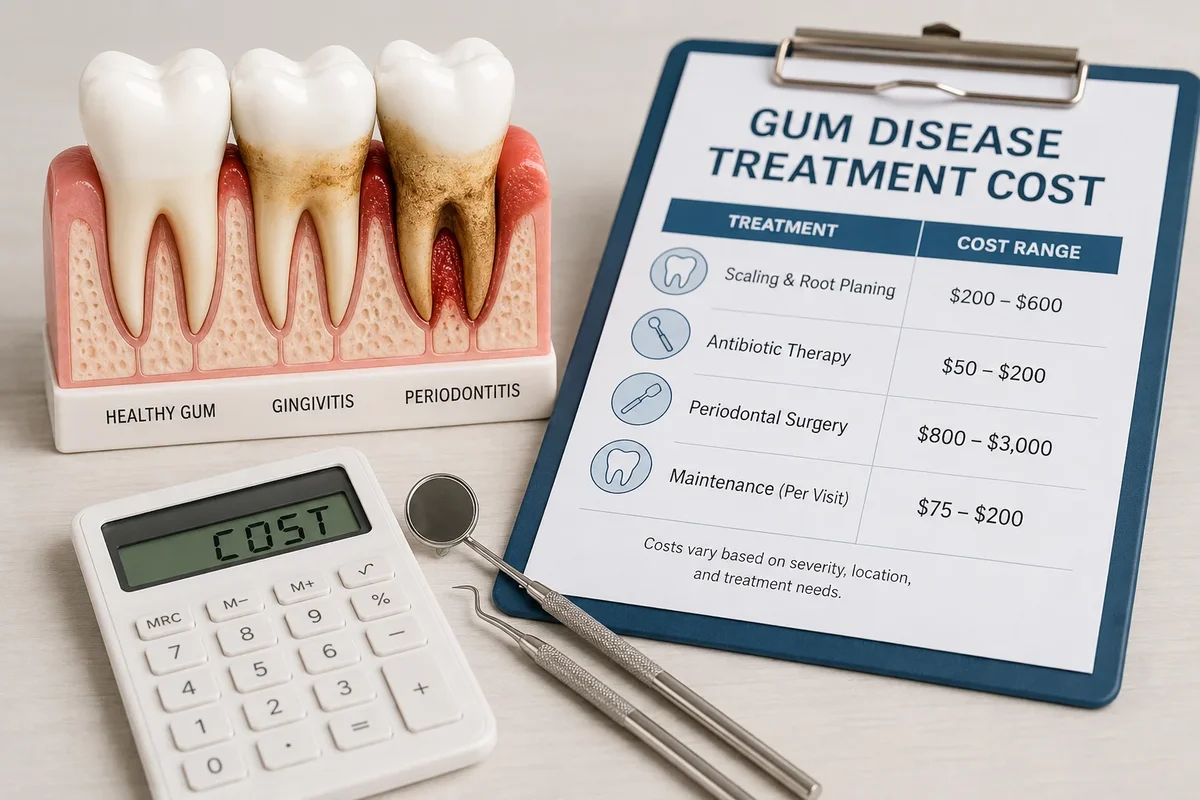
Your Next Step: Getting a Personalized Gum Disease Treatment Plan
After learning about gum disease treatment cost, treatment options, insurance considerations, and the factors that influence pricing, the final step is deciding what to do next. While online research can provide valuable background information, it cannot determine the condition of your gums or identify the treatment that is most appropriate for your individual needs. A personalized periodontal evaluation remains the most reliable way to understand your oral health, receive tailored recommendations, and obtain an estimate based on your specific clinical findings rather than generalized information.
Many patients spend weeks comparing prices before scheduling an appointment. However, comparing figures without first understanding your diagnosis often creates more confusion than clarity. The same advertised gum disease treatment cost may represent completely different treatment plans depending on the clinic, the severity of the disease, and the services included. A professional consultation allows you to move beyond estimates and begin making decisions based on your own oral health.
Why a Personalized Examination Is Essential
Every case of gum disease is unique. Some patients have early gingivitis that responds well to professional cleaning and improved home care, while others may have moderate or advanced periodontitis requiring a more comprehensive treatment approach. Because these situations differ significantly, there is no universal gum disease treatment cost that accurately applies to everyone.
A detailed examination allows your dentist to identify:
- The stage of your gum disease
- The extent of gum inflammation
- Whether periodontal pockets are present
- Signs of gum recession
- The condition of the supporting bone
- The procedures that are appropriate for your situation
- The expected maintenance requirements after treatment
These findings become the basis for a personalized treatment plan and help explain the factors influencing your individual gum disease treatment cost.
Preparing for Your Consultation
Arriving prepared helps you gain the greatest benefit from your appointment. Consider bringing information that allows your dentist to evaluate your oral health more effectively and answer your questions in detail.
Items Worth Bringing
- Your medical history
- A list of current medications
- Your dental insurance information, if applicable
- Previous dental records or X-rays if available
- A list of current symptoms
- Questions about treatment options and maintenance
Preparing these details before your visit allows the consultation to focus on developing the most appropriate treatment plan rather than collecting missing information later.
Questions to Ask During the Appointment
A consultation should be an opportunity for discussion rather than simply receiving a treatment estimate. Understanding the reasoning behind each recommendation will help you evaluate both the clinical and financial aspects of care.
Useful Questions Include:
- What stage of gum disease do I currently have?
- Which treatment options are appropriate for my condition?
- Why are these procedures recommended?
- Are there reasonable alternatives?
- How many appointments are likely to be required?
- Will long-term periodontal maintenance be necessary?
- What factors determine my personalized gum disease treatment cost?
- How can I help maintain my gum health after treatment?
These questions encourage shared decision-making and help ensure that you understand every aspect of your recommended treatment plan.
How to Compare Treatment Plans Responsibly
If you receive estimates from multiple clinics, compare more than just the total amount. A lower initial figure may not necessarily include the same services as another clinic’s estimate.
Review whether each treatment plan includes:
- Comprehensive examination
- Periodontal measurements
- Diagnostic imaging
- Professional cleaning or deep cleaning
- Follow-up appointments
- Periodontal maintenance visits
- Oral hygiene instruction
- Additional procedures if clinically required
Evaluating complete treatment plans provides a much more meaningful comparison than focusing only on advertised gum disease treatment cost.
Supporting Long-Term Gum Health
Successful periodontal treatment depends not only on professional care but also on daily home maintenance. Brushing twice a day, cleaning between the teeth, attending recommended maintenance appointments, and following your dentist’s advice all contribute to preserving periodontal health over time.
Even after active treatment has been completed, regular monitoring remains valuable because periodontal disease can recur if plaque accumulates again. Ongoing maintenance should therefore be viewed as an important part of protecting your oral health rather than simply an additional expense related to gum disease treatment cost.
When Should You Schedule an Appointment?
Rather than waiting until symptoms become severe, consider arranging an evaluation if you notice:
- Bleeding during brushing or flossing
- Persistent bad breath
- Swollen or tender gums
- Gum recession
- Loose teeth
- Changes in your bite
- Ongoing gum discomfort
These symptoms do not automatically indicate advanced periodontal disease, but they do justify professional assessment. Early diagnosis allows your dentist to recommend appropriate treatment before making assumptions about your expected gum disease treatment cost.
Working With a Trusted Dental Team
Choosing a clinic that emphasizes individualized care, transparent communication, and evidence-based treatment planning helps you make decisions with greater confidence. At Redent Klinik, every patient receives a comprehensive periodontal assessment before treatment recommendations are made. The dental team explains your diagnosis, discusses suitable treatment options, reviews expected maintenance requirements, and outlines the factors influencing gum disease treatment cost. This personalized approach allows you to understand both the clinical and practical aspects of your treatment plan. If you are ready to arrange an evaluation or would like to discuss your symptoms, you can contact the clinic through the Redent Klinik Contact Page.
For additional patient education regarding periodontal disease, preventive oral care, and maintaining healthy gums, the American Dental Association provides evidence-based resources that complement professional dental advice.
Final Thoughts
Researching gum disease treatment cost is an excellent first step, but making a confident decision requires more than comparing numbers. Understanding your diagnosis, asking informed questions, reviewing available treatment options, and selecting a clinic that provides individualized care will help you make choices that are appropriate for your oral health. Every patient has different periodontal needs, and personalized assessment remains the most reliable way to determine both the recommended treatment and the associated costs.
What to check next: Schedule a professional periodontal examination if you have persistent bleeding gums, gum recession, bad breath, loose teeth, or ongoing gum discomfort. During your consultation, ask about your diagnosis, recommended treatment options, expected maintenance schedule, available payment arrangements, and the clinical factors that determine your individual gum disease treatment cost. A personalized evaluation provides the clearest foundation for deciding on your next step with confidence.
Disclosure: this page may contain affiliate links. We may earn a commission if you use them, at no extra cost to you.