
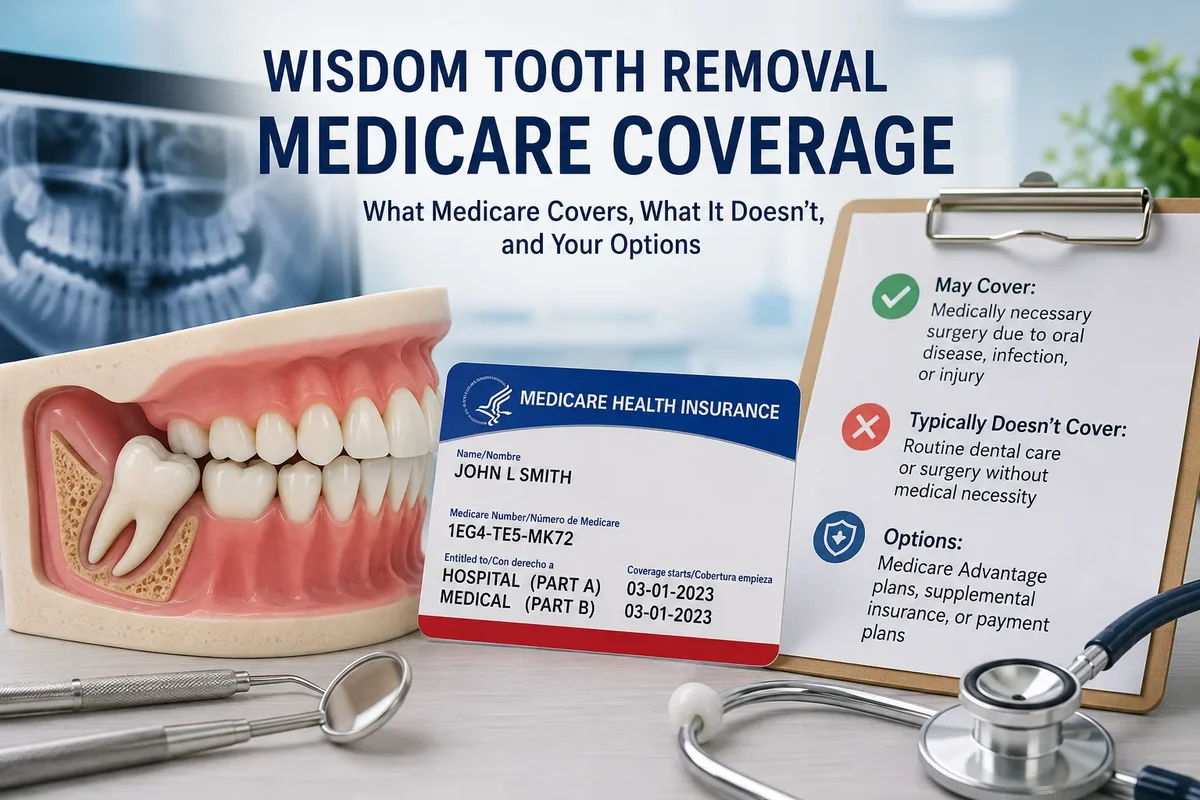
Many people searching for wisdom tooth removal medicare coverage want a simple answer before deciding whether to book a dental appointment. The short answer is that wisdom tooth removal medicare coverage depends on the reason for the procedure, the type of Medicare plan you have, and whether the treatment is considered medically necessary rather than routine dental care. Original Medicare generally does not cover most routine dental services, including standard tooth extractions performed solely for dental reasons. However, there are situations where Medicare may contribute to costs if the extraction is closely connected to a covered medical service or takes place as part of a medically necessary hospital treatment. Because every situation is different, it is important to understand how your individual circumstances may affect wisdom tooth removal medicare coverage before making treatment decisions.
For many patients, wisdom teeth never become a problem. Others experience pain, swelling, repeated infections, gum disease around partially erupted teeth, damage to neighboring teeth, or cyst formation. In these situations, delaying care simply because you are unsure about wisdom tooth removal medicare coverage may allow the condition to worsen. Instead of focusing only on insurance first, it is often more helpful to determine whether the wisdom teeth actually require removal. A dental examination, clinical assessment, and appropriate imaging provide the information needed to discuss both treatment recommendations and possible insurance considerations.
One of the biggest misconceptions surrounding wisdom tooth removal medicare coverage is that every tooth extraction is automatically excluded. In reality, Medicare rules can be more nuanced. While routine dental treatment is generally outside the scope of Original Medicare, certain medically related procedures may qualify for limited coverage depending on the circumstances. For example, if a tooth extraction is required before certain medically necessary surgeries or as part of treatment for another covered medical condition, Medicare may cover some related services. These situations are exceptions rather than the rule, which is why personalized advice is essential.
If you are enrolled in a Medicare Advantage plan, your situation may be different. Many Medicare Advantage plans include additional dental benefits that Original Medicare does not provide. These benefits vary significantly between insurers and policies. Some plans may include preventive dental care, while others offer benefits toward extractions, oral surgery, or specialist treatment under specific conditions. Reading your plan documents carefully or contacting your insurance provider can help clarify how wisdom tooth removal medicare coverage applies in your particular case.
Your own dental symptoms also play an important role in deciding what to do next. Persistent jaw pain, swollen gums, repeated infections, difficulty opening the mouth, bad taste caused by trapped bacteria, or pressure against neighboring teeth may indicate that professional evaluation should not be postponed. Even if you are uncertain about wisdom tooth removal medicare coverage, identifying the actual dental problem early allows your dentist to explain appropriate treatment options and whether removal is currently recommended or whether monitoring is a reasonable alternative.
During an initial consultation, a dentist or oral surgeon will usually review your medical history, discuss your symptoms, perform a clinical examination, and evaluate dental X-rays or panoramic imaging if necessary. This assessment helps determine whether the wisdom teeth are fully erupted, partially impacted, completely impacted, infected, or affecting adjacent teeth. These findings not only influence treatment planning but may also affect discussions about wisdom tooth removal medicare coverage, particularly when medical necessity becomes part of the overall evaluation.
Cost is naturally another concern. Patients often search for wisdom tooth removal medicare coverage because they want to estimate what they might pay. It is important to remember that no responsible dental professional can guarantee the final cost before an examination. Expenses may vary depending on factors such as the number of teeth requiring removal, the complexity of the extraction, whether sedation is appropriate, the need for imaging, your geographic location, and your insurance benefits. A personalized treatment plan provides a much more reliable estimate than general online figures.
Choosing where to receive treatment is equally important. Look for a dental provider who explains both the clinical reasons for treatment and the financial aspects in clear language. Patients benefit from understanding not only whether wisdom tooth removal medicare coverage may apply, but also why removal is recommended, what alternatives exist, and what recovery typically involves. Transparent communication helps patients make informed decisions instead of relying on assumptions about insurance coverage alone.
If you are considering treatment internationally or exploring options at clinics experienced in comprehensive dental care, providers such as Redent Klinik can explain the diagnostic process, discuss suitable treatment pathways, and help you understand what information you should obtain from your insurance provider before proceeding. You can request an individual consultation through the
Redent Klinik Contact Page.
Educational resources from the
American Dental Association
can also help you better understand wisdom teeth, oral health, and general dental treatment recommendations.
The most practical next step is not to assume that wisdom tooth removal medicare coverage automatically applies—or that it never does. Instead, arrange a professional dental examination if you have symptoms or if your dentist has previously recommended monitoring your wisdom teeth. After receiving a diagnosis, review your Medicare benefits or Medicare Advantage plan with your provider, ask whether any medically necessary circumstances may influence coverage, and request a personalized treatment estimate. Making decisions based on your clinical condition as well as your insurance information gives you the best opportunity to choose appropriate care at the right time.
Does Wisdom Tooth Removal Medicare Coverage Apply? A Quick Answer
If you are researching wisdom tooth removal medicare coverage, you are probably trying to answer two important questions at the same time: “Will I need my wisdom teeth removed?” and “Will Medicare help pay for the treatment?” The quick answer is that wisdom tooth removal medicare coverage depends on several factors, including why the extraction is needed, the type of Medicare plan you have, where the procedure is performed, and whether the treatment is considered medically necessary. While many routine dental procedures are generally not covered under Original Medicare, certain medically related situations may qualify for limited benefits. Understanding these differences can help you make better decisions before scheduling treatment.
Why Medicare Coverage Is Not Always Simple
Many patients assume that insurance coverage follows the same rules for every tooth extraction. In reality, wisdom tooth removal medicare coverage can vary because Medicare distinguishes between routine dental care and medical treatment. Routine dental extractions that are performed to maintain oral health alone are commonly excluded from Original Medicare benefits. However, if a wisdom tooth must be removed as part of treatment connected to another covered medical condition or medically necessary hospital procedure, portions of the care may qualify under Medicare rules.
This distinction is one reason why searching online often produces conflicting answers. One website may correctly explain that routine dental care is generally excluded, while another describes situations where Medicare contributes toward treatment. Both statements can be accurate because they refer to different clinical circumstances. Instead of assuming that wisdom tooth removal medicare coverage always applies—or never applies—it is better to evaluate your own diagnosis first.
Original Medicare Versus Medicare Advantage
Original Medicare
Original Medicare generally focuses on medically necessary healthcare rather than routine dental treatment. This means many standard wisdom tooth extractions performed in a dental office are not automatically covered. However, there are exceptions when oral surgery is directly connected to covered medical treatment. These situations require individual assessment and should never be assumed without confirmation.
Medicare Advantage Plans
Medicare Advantage plans frequently include dental benefits that differ from Original Medicare. Some plans may contribute toward examinations, X-rays, oral surgery, or extractions under certain benefit limits. Since every insurer designs its own benefits, wisdom tooth removal medicare coverage under Medicare Advantage may differ significantly from one policy to another. Reading your policy documents carefully or contacting your insurance provider is often the best way to understand your available benefits before beginning treatment.
Medical Necessity Matters
Whether wisdom tooth removal medicare coverage may apply often depends on why the tooth needs to be removed. A dentist or oral surgeon may recommend extraction when wisdom teeth cause repeated infections, significant pain, damage to neighboring teeth, cyst formation, advanced decay, or periodontal complications. In some situations, removal may also be recommended before other medical procedures if keeping the tooth creates unnecessary health risks.
Medical necessity does not automatically guarantee Medicare coverage, but it is an important factor during treatment planning. A proper diagnosis supported by clinical examination and imaging provides the information needed to discuss both treatment recommendations and possible insurance considerations.
Should You Delay Treatment Until You Know Your Coverage?
Many people postpone appointments because they are uncertain about wisdom tooth removal medicare coverage. While understanding insurance benefits is sensible, delaying evaluation simply because coverage is unclear may not always be the best decision. Wisdom teeth that are infected, impacted, or damaging nearby teeth may gradually become more difficult to manage if treatment is postponed.
On the other hand, not every wisdom tooth requires immediate extraction. Some remain healthy, fully erupted, functional, and easy to clean throughout life. This is why professional evaluation is more valuable than assuming removal is always necessary. A dentist can determine whether monitoring the tooth or proceeding with extraction is the more appropriate option for your specific situation.
Questions Worth Asking During Your Consultation
- Are my wisdom teeth currently causing disease or damage?
- Are they likely to create future problems?
- Is monitoring an appropriate alternative to removal?
- Could my medical history influence treatment recommendations?
- Does my clinical situation affect possible wisdom tooth removal medicare coverage?
- Will additional imaging or specialist evaluation be required?
Asking these questions allows you to understand both the clinical and financial aspects of treatment. Instead of focusing exclusively on insurance, you gain a clearer picture of why removal may—or may not—be recommended.
Making an Informed Decision
Choosing whether to proceed with treatment should involve more than simply checking insurance benefits. Your symptoms, age, oral health, medical history, X-ray findings, and long-term prognosis all contribute to the decision. Even if wisdom tooth removal medicare coverage is limited under your plan, delaying clinically necessary treatment may sometimes increase the complexity of future care. Conversely, removing healthy wisdom teeth without a clear clinical reason may not always be appropriate.
During a comprehensive consultation, providers such as Redent Klinik can evaluate your oral condition, explain whether removal appears appropriate, discuss possible alternatives when suitable, and help you understand which questions to ask your insurance provider regarding wisdom tooth removal medicare coverage. If you would like personalized guidance, you can request an appointment through the
Redent Klinik Contact Page.
For additional educational information about oral health and wisdom teeth, the
American Dental Association
also provides reliable patient resources.
What You Should Check Before Moving Forward
Before deciding on treatment, verify whether your Medicare plan is Original Medicare or a Medicare Advantage plan, review your available dental benefits, obtain a professional dental examination with appropriate imaging, and ask whether your condition may involve medical necessity. If you have persistent pain, swelling, infection, difficulty opening your mouth, repeated gum problems around wisdom teeth, or your dentist recommends further evaluation, scheduling a professional consultation is advisable. A personalized diagnosis provides the most reliable foundation for understanding both your treatment options and how wisdom tooth removal medicare coverage may relate to your individual situation.
Understanding When Wisdom Tooth Removal Medicare Coverage May Be Available
One of the most common questions patients ask is not simply whether wisdom tooth removal medicare coverage exists, but when it may actually apply. The answer is rarely a simple yes or no because Medicare evaluates treatment based on medical necessity, the type of Medicare plan, and the relationship between the dental procedure and an eligible medical condition. Understanding these factors before scheduling treatment can help you avoid unexpected costs while ensuring that important dental problems are not left untreated. Instead of assuming that wisdom tooth removal medicare coverage automatically applies or is always unavailable, it is more useful to understand the situations that may influence eligibility.
Why Coverage Depends on the Reason for Treatment
Medicare generally separates routine dental care from medically necessary healthcare. Routine wisdom tooth extraction performed solely to improve oral health is commonly treated differently from an extraction that is directly connected to a covered medical service. Because of this distinction, wisdom tooth removal medicare coverage is often determined by the clinical reason for the procedure rather than by the extraction itself.
For example, some patients seek treatment because of occasional discomfort, while others experience severe infection, facial swelling, or complications that affect overall health. In addition, a wisdom tooth may require removal before certain medically necessary procedures if it could interfere with treatment or increase the risk of complications. These situations are evaluated individually, which is why a professional examination is essential before making assumptions about coverage.
Situations That May Influence Medicare Consideration
Hospital-Based Medical Treatment
In certain circumstances, oral surgery may be performed as part of treatment that is closely connected to another covered medical service. Depending on the specific clinical situation, Medicare may contribute toward some hospital-related services while routine dental components may still follow different rules. This distinction highlights why wisdom tooth removal medicare coverage should always be reviewed based on the complete medical picture rather than on the tooth extraction alone.
Medically Necessary Oral Surgery
If a wisdom tooth contributes to significant medical complications, your healthcare providers may determine that removal forms part of broader medical treatment. Documentation from both medical and dental professionals may be important when evaluating whether wisdom tooth removal medicare coverage could apply. Every case is assessed individually, and similar symptoms do not always produce identical coverage decisions.
Routine Preventive Removal
Many wisdom teeth are removed before they cause major problems, particularly when dentists believe future complications are likely. Although preventive removal may be clinically appropriate in some individuals, routine preventive extractions do not automatically qualify for Medicare benefits. Patients should therefore discuss both treatment recommendations and insurance considerations before scheduling surgery.
How Medicare Advantage Plans Can Be Different
Medicare Advantage plans frequently provide dental benefits that extend beyond Original Medicare. However, there is no universal benefit package. One insurer may offer annual allowances for dental treatment, another may provide limited oral surgery benefits, while a different plan may require referrals, network providers, waiting periods, or prior authorization. This means wisdom tooth removal medicare coverage under Medicare Advantage depends largely on the details of your specific policy.
Before arranging treatment, review your Evidence of Coverage documents and ask your insurance provider specific questions regarding deductibles, annual benefit limits, specialist requirements, preauthorization rules, and whether your dentist or oral surgeon participates in the plan’s network. These practical steps often provide clearer answers than relying solely on general online information.
Clinical Findings That Influence Treatment Decisions
Insurance is only one part of the decision-making process. Your dentist must first determine whether removal is appropriate. During your consultation, the evaluation commonly includes:
- A review of your current symptoms.
- An assessment of your medical history.
- A clinical examination of the gums and surrounding tissues.
- Dental X-rays or panoramic imaging.
- An evaluation of the position of the wisdom teeth.
- A discussion of potential risks if treatment is delayed.
These findings help determine whether observation, monitoring, or extraction is the most suitable approach. Even if wisdom tooth removal medicare coverage is uncertain, understanding your actual oral condition allows you to make decisions based on health needs rather than insurance assumptions alone.
Questions to Ask Before Scheduling Surgery
Before moving forward with treatment, consider asking both your dental provider and your insurance company several practical questions. You may wish to ask whether your wisdom teeth are currently infected or impacted, whether postponing treatment is likely to increase future complexity, whether the planned procedure has any medically necessary components, and how your individual Medicare plan interprets those circumstances. Asking these questions early often reduces confusion about wisdom tooth removal medicare coverage and helps you prepare financially if out-of-pocket expenses are expected.
Balancing Health Needs and Financial Planning
Patients sometimes focus entirely on insurance approval while overlooking their dental condition. Although financial planning is important, untreated wisdom teeth can occasionally lead to recurring infections, gum disease, damage to neighboring teeth, cyst formation, or increasing discomfort. At the same time, not every wisdom tooth requires immediate extraction. A balanced approach considers both the clinical findings and the available insurance benefits before deciding on treatment.
A comprehensive consultation also gives you the opportunity to discuss alternatives, expected recovery, treatment timing, and estimated costs. Final treatment expenses cannot be determined without an examination because factors such as tooth position, surgical complexity, sedation requirements, imaging, and your overall treatment plan all influence the final estimate.
Personalized Guidance Can Make the Decision Easier
If you are uncertain whether wisdom tooth removal medicare coverage may apply to your situation, obtaining a professional assessment is often the most effective first step. Experienced dental providers can explain whether removal appears clinically appropriate, discuss alternative management when suitable, and help you understand which documentation may be useful when communicating with your insurance provider. At Redent Klinik, patients receive individualized evaluations based on their oral health needs rather than assumptions about insurance alone. If you would like to arrange a consultation, you can visit the Redent Klinik Contact Page. For additional patient education about oral health and dental care, the American Dental Association offers reliable evidence-based resources.
What You Should Check Before Seeking Professional Advice
Before your appointment, review whether you have Original Medicare or a Medicare Advantage plan, gather any previous dental X-rays if available, make a list of your symptoms, and contact your insurance provider to ask about dental and oral surgery benefits. If you experience persistent pain, swelling, repeated infections, difficulty chewing, or your dentist has recommended further evaluation, it is appropriate to request a professional consultation. A personalized examination provides the most accurate basis for deciding whether treatment is advisable and how wisdom tooth removal medicare coverage may relate to your individual circumstances.
Cost Factors and What Can Affect Your Out-of-Pocket Expenses
Understanding treatment costs is one of the main reasons people search for wisdom tooth removal medicare coverage. Even when a dentist recommends extraction, patients naturally want to know how much they may need to pay themselves. The reality is that there is no single cost for wisdom tooth removal because every treatment plan is unique. The final expense depends on the complexity of the extraction, the number of teeth involved, the type of anesthesia or sedation required, diagnostic imaging, your location, the experience of the treating professional, and whether any part of your insurance benefits applies. For this reason, the best way to estimate your financial responsibility is to combine a professional examination with a review of your Medicare or Medicare Advantage benefits.
Why Costs Can Vary So Much
It is common to see wide price ranges on the internet, but these figures should only be viewed as general references rather than guaranteed treatment costs. A simple extraction of a fully erupted wisdom tooth usually differs significantly from the surgical removal of a deeply impacted tooth located close to important nerves or sinus structures. Because every patient’s anatomy is different, no responsible dental provider can accurately predict treatment expenses before examining the teeth and reviewing diagnostic images.
This is why wisdom tooth removal medicare coverage should never be evaluated without considering the clinical complexity of the procedure. Insurance benefits may influence the final amount you pay, but the treatment plan itself is the starting point for every cost estimate.
Main Factors That Influence Treatment Costs
Number of Wisdom Teeth Requiring Removal
Some patients require removal of only one problematic wisdom tooth, while others need two, three, or all four extracted. Naturally, the scope of treatment affects both clinical planning and total expenses. During your consultation, your dentist will determine whether every wisdom tooth requires removal or whether some healthy teeth can simply be monitored over time.
Simple Extraction Versus Surgical Extraction
Fully erupted wisdom teeth that are easy to access are generally less complex to remove than impacted teeth hidden beneath the gums or jawbone. Surgical extractions often require additional planning, specialized techniques, and longer treatment times. As a result, procedural complexity can influence overall costs regardless of wisdom tooth removal medicare coverage.
Diagnostic Imaging
Before recommending treatment, dentists frequently obtain panoramic X-rays or other imaging to evaluate tooth position, surrounding bone, neighboring teeth, and nearby anatomical structures. These diagnostic steps are an important part of safe treatment planning and may represent a separate component of the overall cost.
Sedation or Anesthesia
Not every patient requires the same level of anesthesia. Some wisdom teeth can be removed comfortably using local anesthesia alone, while others may benefit from additional sedation depending on treatment complexity, anxiety levels, and medical history. The type of anesthesia selected may influence the overall treatment estimate.
How Medicare May Affect Your Financial Responsibility
Patients often focus exclusively on wisdom tooth removal medicare coverage, expecting a straightforward answer regarding payment. However, Medicare benefits are only one part of the financial picture. Original Medicare generally does not provide routine dental benefits, although medically necessary circumstances connected to covered medical services may sometimes affect eligibility. Medicare Advantage plans may include additional dental benefits, but those benefits vary considerably between insurance providers.
Even when some benefits are available, patients should still ask about deductibles, annual benefit limits, coinsurance requirements, network restrictions, referral requirements, and preauthorization policies. These details can influence the amount you may ultimately pay yourself.
Questions Worth Asking Before Accepting a Treatment Plan
- How many wisdom teeth actually require removal?
- Will the extraction be simple or surgical?
- Will additional imaging be necessary?
- Is sedation recommended, and if so, why?
- What services are included in the treatment estimate?
- How does my insurance plan interpret wisdom tooth removal medicare coverage?
- Will I need a referral or preauthorization?
Asking these questions allows you to compare treatment options more confidently and helps reduce unexpected financial surprises after treatment has already been scheduled.
Planning Ahead Can Reduce Stress
Waiting until severe pain develops may limit your treatment options and leave little time to review insurance benefits or compare providers. If your dentist has already recommended monitoring impacted wisdom teeth, scheduling regular follow-up examinations allows you to plan treatment more calmly if removal eventually becomes necessary. Early planning also gives you time to verify wisdom tooth removal medicare coverage with your insurer and understand any documentation they may require.
It is equally important to avoid making decisions based solely on price. The least expensive treatment is not always the most appropriate choice, especially if your wisdom teeth are positioned close to important anatomical structures or require surgical management. Choosing a qualified provider who explains both the clinical and financial aspects of care often leads to a more informed decision.
Balancing Cost With Long-Term Oral Health
Cost is naturally an important consideration, but it should be evaluated alongside your oral health needs. Repeated infections, ongoing pain, damage to neighboring teeth, or gum disease may eventually require more extensive treatment if left unaddressed. Conversely, healthy wisdom teeth that remain stable and symptom-free may simply require periodic observation rather than immediate removal. A personalized clinical assessment helps determine which approach is most appropriate.
At Redent Klinik, treatment recommendations are based on comprehensive examination findings rather than assumptions. Patients receive individualized explanations regarding diagnosis, treatment options, expected recovery, and practical guidance for discussing wisdom tooth removal medicare coverage with their insurance provider. If you would like to arrange a consultation, you can visit the Redent Klinik Contact Page. For additional patient education regarding oral health and dental procedures, the American Dental Association provides trusted educational resources.
What You Should Check Before Requesting Professional Advice
Before committing to treatment, ask your dentist for a personalized treatment plan, request a written cost estimate based on your examination, review your Medicare or Medicare Advantage benefits carefully, and confirm whether referrals or preauthorization are required by your insurance provider. If you have persistent pain, swelling, recurrent infections, difficulty chewing, or concerns about impacted wisdom teeth, arranging a professional dental consultation is advisable. A thorough clinical evaluation provides the most reliable information about both your treatment needs and how wisdom tooth removal medicare coverage may affect your individual financial planning.
Who Is a Good Candidate for Wisdom Tooth Removal and When Should You Act?
Deciding whether to remove wisdom teeth is not based on age alone. While many people search for wisdom tooth removal medicare coverage because they are planning for treatment costs, the first question should always be whether extraction is clinically appropriate. Some wisdom teeth remain healthy throughout life and never require removal, while others cause repeated infections, pain, damage to neighboring teeth, or other complications that make extraction the more suitable option. Understanding who is a good candidate for wisdom tooth removal helps you make an informed decision and ensures that discussions about wisdom tooth removal medicare coverage are based on your actual treatment needs rather than assumptions.
Not Every Wisdom Tooth Needs to Be Removed
A common misconception is that all wisdom teeth should be extracted as soon as they appear. Modern dental care takes a more individualized approach. If wisdom teeth are fully erupted, properly aligned, easy to clean, free from decay, and not causing damage to surrounding tissues, your dentist may recommend regular monitoring instead of immediate removal. In these situations, understanding wisdom tooth removal medicare coverage can still be useful for future planning, but surgery may not be necessary at the present time.
Regular dental examinations allow changes to be identified early. If symptoms develop later, your dentist can reassess whether extraction has become the more appropriate choice.
Signs That Wisdom Tooth Removal May Be Recommended
Repeated Infections Around the Wisdom Tooth
Partially erupted wisdom teeth often create spaces where bacteria and food particles accumulate. This may lead to repeated inflammation of the surrounding gum tissue, discomfort during chewing, swelling, unpleasant taste, or difficulty cleaning the area effectively. If infections continue to return despite good oral hygiene, your dentist may recommend extraction after a comprehensive evaluation.
Persistent Pain or Pressure
Ongoing discomfort in the back of the jaw should never be ignored. Pain may result from impaction, pressure against neighboring teeth, gum inflammation, or other dental conditions. Because similar symptoms can have different causes, professional diagnosis is essential before deciding whether removal is necessary. If extraction becomes the recommended treatment, discussions about wisdom tooth removal medicare coverage can then take place with accurate clinical information.
Damage to Adjacent Teeth
Impacted wisdom teeth sometimes push against nearby molars. Over time, this pressure may contribute to tooth damage, gum problems, or areas that are difficult to clean. Early identification through dental imaging allows your dentist to recommend monitoring or removal before more extensive treatment becomes necessary.
Cysts or Other Complications
Although relatively uncommon, cyst formation or other complications associated with impacted wisdom teeth may require surgical evaluation. Diagnostic imaging plays an important role in identifying these conditions and determining the most appropriate treatment plan.
When Monitoring May Be the Better Option
Choosing not to remove wisdom teeth immediately does not necessarily mean ignoring them. In many patients, careful observation is an appropriate approach. Your dentist may recommend regular examinations if the wisdom teeth remain symptom-free, are easy to clean, show no signs of decay, and do not threaten neighboring teeth or surrounding bone.
During these follow-up visits, clinical examinations and occasional imaging help detect any changes that may require future treatment. Even if you are currently researching wisdom tooth removal medicare coverage, monitoring may be the most suitable recommendation if no active disease is present.
Factors That Influence the Timing of Treatment
Timing should be based on clinical findings rather than convenience alone. Your dentist may consider several important factors before recommending removal, including:
- Your age and overall health.
- The position of the wisdom teeth.
- The presence or absence of symptoms.
- The likelihood of future complications.
- Your ability to maintain good oral hygiene around the teeth.
- Medical conditions that could influence treatment planning.
These considerations help determine whether immediate extraction, scheduled treatment, or continued observation is the most appropriate course of action. Once the clinical recommendation has been established, you can then evaluate wisdom tooth removal medicare coverage within the context of your individual treatment plan.
Age Alone Should Not Determine Your Decision
Although wisdom teeth are often removed during early adulthood, older adults may also require extraction if problems develop later in life. Likewise, some younger adults never need surgery because their wisdom teeth remain healthy and functional. Rather than making decisions based solely on age, dentists evaluate each patient’s oral condition, symptoms, medical history, and imaging findings.
Patients enrolled in Medicare frequently ask whether advancing age automatically changes wisdom tooth removal medicare coverage. While age influences overall healthcare planning, Medicare eligibility for dental-related treatment generally depends more on the clinical circumstances and the specific insurance plan than on age itself.
Balancing Oral Health and Financial Planning
It is understandable to think about insurance before scheduling surgery, but treatment decisions should begin with an accurate diagnosis. Removing healthy wisdom teeth without a clinical reason may not always be appropriate, while delaying treatment for teeth causing repeated infection or damage may increase future complexity. A professional examination provides the information needed to weigh oral health needs against financial considerations, including any questions regarding wisdom tooth removal medicare coverage.
During a consultation at Redent Klinik, your dentist can evaluate whether extraction appears appropriate, explain why removal is or is not recommended, discuss reasonable alternatives when suitable, and help you prepare the information you may need when speaking with your insurance provider. If you would like an individualized assessment, you can arrange an appointment through the Redent Klinik Contact Page. Additional educational guidance regarding wisdom teeth and oral health is also available from the American Dental Association.
What You Should Check Before Requesting Professional Advice
Before deciding on treatment, consider whether your wisdom teeth are causing pain, repeated infections, swelling, difficulty cleaning, or damage to neighboring teeth. Review any previous dental X-rays if available, make a note of your symptoms, and verify the details of your Medicare or Medicare Advantage plan if you have questions about wisdom tooth removal medicare coverage. If symptoms are persistent, worsening, or your dentist has recommended further evaluation, scheduling a professional consultation is the most appropriate next step to determine whether monitoring or extraction best suits your individual situation.
How the Wisdom Tooth Removal Procedure Works from Consultation to Recovery
Understanding the treatment process can make the decision to proceed with wisdom tooth extraction much less stressful. While many patients initially search for wisdom tooth removal medicare coverage, knowing what actually happens before, during, and after the procedure is equally important. The extraction process is carefully planned to match each patient’s individual oral health needs. Some people require only a straightforward removal of a fully erupted tooth, while others need a more complex surgical procedure because the wisdom tooth is impacted or positioned close to important anatomical structures. Before discussing wisdom tooth removal medicare coverage in detail, your dentist or oral surgeon must first determine exactly what type of treatment is appropriate.
The Initial Consultation
Every treatment journey begins with a comprehensive consultation. During this appointment, the dental team gathers information that helps determine whether extraction is necessary and how the procedure should be performed. A consultation typically includes a review of your symptoms, medical history, medications, allergies, and previous dental treatments. Your dentist will also ask about pain, swelling, difficulty chewing, recurring infections, or any previous problems involving the wisdom teeth.
Clinical examination alone is rarely enough to make a final decision. Diagnostic imaging, usually with panoramic X-rays and occasionally additional imaging when indicated, allows the dentist to evaluate the position of the wisdom teeth, surrounding bone, neighboring teeth, and nearby nerves or sinus structures. These findings form the basis of both treatment planning and discussions regarding wisdom tooth removal medicare coverage, particularly if medical necessity becomes relevant.
Creating an Individualized Treatment Plan
Evaluating the Position of the Wisdom Teeth
Wisdom teeth can appear in several different positions. Some are fully erupted and relatively easy to remove, while others remain partially or completely impacted beneath the gum or bone. The exact position influences the surgical approach, expected treatment time, recovery planning, and overall complexity.
Choosing the Most Appropriate Technique
Your dentist or oral surgeon will determine whether a simple extraction or a surgical extraction is the more suitable option. This recommendation depends on clinical findings rather than patient preference alone. Because every treatment plan is unique, understanding the proposed procedure also helps when reviewing possible wisdom tooth removal medicare coverage under your individual insurance plan.
Preparing for the Procedure
Once treatment has been recommended, your dental team will explain how to prepare for surgery. Preparation instructions vary depending on whether local anesthesia, sedation, or another form of anesthesia is planned. Patients may receive guidance regarding eating, drinking, medications, transportation arrangements, and postoperative care.
Good preparation contributes to a smoother treatment experience. It also provides an opportunity to discuss estimated treatment costs, ask questions regarding wisdom tooth removal medicare coverage, review insurance documentation, and clarify any administrative requirements before the appointment takes place.
What Happens During Wisdom Tooth Removal?
Although every procedure is different, most wisdom tooth removals follow a similar sequence. After anesthesia has taken effect, the dentist or oral surgeon carefully accesses the tooth. Fully erupted teeth may be removed using conventional extraction techniques, while impacted teeth sometimes require a small incision in the gum and, in some cases, the careful removal of a limited amount of surrounding bone to allow safe extraction.
In more complex cases, the tooth may be divided into smaller sections before removal to minimize unnecessary pressure on surrounding tissues. After the tooth has been removed, the area is cleaned thoroughly, and sutures may be placed when appropriate. Throughout the procedure, patient safety and preservation of surrounding structures remain primary priorities.
The Recovery Process
The First 24 Hours
Mild bleeding, swelling, and discomfort are common after wisdom tooth removal. Patients are generally advised to follow postoperative instructions carefully, which may include resting, avoiding vigorous rinsing during the first day, and using prescribed or recommended medications exactly as directed by their treating clinician.
The Following Days
During the first several days, many patients gradually return to normal daily activities. Recovery speed varies depending on the complexity of the procedure, the number of teeth removed, individual healing responses, and overall health. Soft foods, careful oral hygiene, and attendance at recommended follow-up appointments contribute to successful healing.
Although many recover without significant difficulty, patients should remain alert for increasing pain, persistent swelling, fever, unusual bleeding, or other concerns that warrant professional review. Recovery instructions should always be individualized by your treating dental professional.
How the Procedure Relates to Medicare Planning
Patients often postpone treatment while trying to understand wisdom tooth removal medicare coverage. However, treatment planning should begin with diagnosis rather than insurance assumptions. Once your dentist determines whether extraction is necessary and how complex the procedure will be, you can discuss insurance benefits more accurately with your Medicare provider or Medicare Advantage insurer.
Understanding the planned procedure also allows you to ask practical questions regarding referrals, prior authorization requirements, hospital involvement if applicable, and any documentation your insurance company may request. Taking these steps before surgery helps reduce uncertainty about wisdom tooth removal medicare coverage and improves overall treatment planning.
Making a Well-Informed Decision
Every patient deserves treatment recommendations based on clinical findings rather than generalized advice found online. At Redent Klinik, comprehensive consultations are designed to evaluate your oral health, explain every stage of the procedure, discuss expected recovery, and answer practical questions about treatment planning, including guidance on how to approach discussions regarding wisdom tooth removal medicare coverage with your insurance provider. If you would like an individualized consultation, you can arrange one through the Redent Klinik Contact Page. You can also learn more about oral health and dental procedures through the educational resources provided by the American Dental Association.
What You Should Check Before Requesting Professional Advice
Before scheduling treatment, review your symptoms, gather any previous dental records or X-rays, prepare a list of medications and medical conditions, and verify whether your Medicare or Medicare Advantage plan has any referral or authorization requirements related to wisdom tooth removal medicare coverage. If you experience ongoing pain, swelling, repeated infections, difficulty opening your mouth, or your dentist recommends further assessment, arranging a professional consultation is the most appropriate next step. A personalized examination provides the clearest understanding of both your treatment options and the factors that may influence your insurance benefits.
Risks, Recovery Expectations, and How to Reduce Complications
Every surgical procedure carries potential risks, and wisdom tooth extraction is no exception. Although many patients recover without significant problems, understanding possible complications helps you make informed decisions before treatment. People researching wisdom tooth removal medicare coverage often focus primarily on insurance benefits, but it is equally important to understand the recovery process and the factors that contribute to successful healing. Knowing what to expect before surgery allows you to prepare appropriately, follow postoperative instructions carefully, and recognize when professional advice should be sought. A discussion about wisdom tooth removal medicare coverage should therefore be combined with a clear understanding of the procedure’s benefits, limitations, and recovery expectations.
What Is a Typical Recovery Like?
Recovery varies from one patient to another because every wisdom tooth has a different position and level of complexity. Some patients undergo a relatively straightforward extraction of a fully erupted tooth, while others require surgical removal of impacted teeth located beneath the gum or jawbone. As a result, recovery time is influenced by the difficulty of the procedure, the number of teeth removed, overall health, age, smoking status, and how closely postoperative instructions are followed.
Most patients experience gradual improvement over the days following surgery. Mild discomfort, swelling, limited jaw opening, and temporary difficulty chewing are common during the early healing period. These reactions do not necessarily indicate a complication but should gradually improve as healing progresses.
Common Temporary Effects After Wisdom Tooth Removal
Swelling
Swelling is one of the most frequently reported postoperative symptoms. It usually develops during the first few days after surgery before gradually decreasing. The degree of swelling depends on the complexity of the extraction and individual healing characteristics.
Mild Discomfort
Some soreness around the extraction site is expected following surgery. Your dental professional will explain appropriate pain management options based on your individual medical history and treatment plan.
Minor Bleeding
Slight oozing immediately after extraction is common. Patients receive detailed instructions regarding how to manage this during the initial healing period. Persistent or excessive bleeding should always be discussed with the treating dentist or oral surgeon.
Potential Complications That Require Attention
Although serious complications are relatively uncommon, patients should understand which symptoms deserve professional evaluation. Learning about these possibilities does not mean they will occur, but it helps you recognize when additional care may be appropriate. This knowledge is just as valuable as understanding wisdom tooth removal medicare coverage because timely follow-up can support better treatment outcomes.
Dry Socket
One possible complication following extraction is dry socket, which occurs when the protective blood clot at the extraction site becomes dislodged or fails to develop properly. This may result in increasing pain several days after surgery. Your dentist will explain preventive measures and provide instructions that support normal healing.
Infection
While modern surgical techniques and postoperative care reduce infection risk, it remains important to monitor healing. Increasing swelling, persistent pain, fever, unpleasant discharge, or worsening symptoms should prompt contact with your dental provider for further evaluation.
Nerve-Related Concerns
Certain lower wisdom teeth are located close to important nerves. Diagnostic imaging performed before surgery allows your dentist or oral surgeon to assess these anatomical relationships carefully. If additional risk factors are identified, they will be discussed during treatment planning so you can make an informed decision.
How You Can Support Better Healing
Patients play an important role in their own recovery. Carefully following postoperative instructions helps reduce unnecessary complications and supports comfortable healing. Recommendations vary depending on the individual procedure, but your dental team may advise you regarding:
- Maintaining appropriate oral hygiene without disturbing the surgical site.
- Eating foods that are suitable during the early recovery period.
- Avoiding activities that may interfere with normal healing.
- Taking medications exactly as prescribed or recommended.
- Attending scheduled follow-up appointments.
- Contacting the clinic if symptoms worsen rather than improve.
These simple measures often contribute significantly to a smoother recovery regardless of your insurance situation or wisdom tooth removal medicare coverage.
How Recovery Relates to Treatment Planning
Understanding recovery expectations also helps patients plan work schedules, family responsibilities, and follow-up care. Individuals researching wisdom tooth removal medicare coverage should remember that financial planning and recovery planning go hand in hand. Asking about expected healing time, activity restrictions, and follow-up appointments before surgery allows you to prepare more effectively for the days after treatment.
It is equally important to understand that healing times differ among patients. Online stories describing exceptionally fast or unusually slow recovery should not be used to predict your own experience. Your dentist will provide guidance based on your specific clinical situation.
Balancing Benefits and Potential Risks
Every treatment decision involves balancing potential benefits against possible risks. Leaving a problematic wisdom tooth untreated may increase the likelihood of repeated infections, gum disease, damage to neighboring teeth, or other complications. At the same time, extracting a symptom-free wisdom tooth without an appropriate clinical reason may not always be necessary. This balanced assessment is why comprehensive examination and individualized treatment planning remain essential before making decisions based solely on wisdom tooth removal medicare coverage.
Why Professional Follow-Up Matters
Follow-up appointments allow your dental provider to evaluate healing, answer questions, and identify any concerns before they become more significant. At Redent Klinik, patients receive personalized postoperative guidance based on the complexity of their treatment, medical history, and recovery progress. The clinical team can also explain practical considerations related to wisdom tooth removal medicare coverage when discussing your treatment plan and documentation. If you would like to arrange a consultation, you can visit the Redent Klinik Contact Page. For additional evidence-based information about oral surgery and oral health, the American Dental Association provides educational resources for patients.
What You Should Check Before Requesting Professional Advice
Before surgery, discuss expected recovery time, possible risks based on your individual anatomy, postoperative care instructions, medication recommendations, and follow-up appointments with your dental provider. If you experience increasing pain after initial improvement, persistent bleeding, significant swelling, fever, unusual discharge, numbness that concerns you, or any unexpected symptoms after treatment, contact your dentist promptly for professional assessment. Reviewing your Medicare or Medicare Advantage plan before treatment can also help clarify how wisdom tooth removal medicare coverage may relate to your procedure, allowing you to prepare both medically and financially for your care.
Alternatives to Wisdom Tooth Removal and When They May Be Appropriate
Although many people researching wisdom tooth removal medicare coverage expect extraction to be the only solution, that is not always the case. Modern dentistry emphasizes individualized treatment planning, meaning that wisdom tooth removal is recommended only when the expected benefits outweigh the potential risks. Some wisdom teeth remain healthy and functional for many years without requiring surgery, while others cause ongoing problems that make extraction the most appropriate option. Understanding the available alternatives helps you make a well-informed decision based on your oral health rather than assumptions about wisdom tooth removal medicare coverage alone.
Why Removal Is Not Automatically Necessary
Years ago, preventive removal of wisdom teeth was recommended more frequently than it is today. Current dental practice generally favors evaluating each patient individually. Dentists consider your symptoms, oral hygiene, X-ray findings, medical history, age, and the likelihood of future complications before recommending surgery.
If your wisdom teeth are healthy, fully erupted, properly aligned, and easy to clean, continued observation may be a reasonable option. In these situations, understanding wisdom tooth removal medicare coverage remains useful for future planning, but immediate extraction may not provide additional benefit.
Alternative 1: Active Monitoring
Who May Benefit?
Active monitoring is often appropriate for patients whose wisdom teeth show no signs of infection, decay, gum disease, cyst formation, or damage to neighboring teeth. Instead of removing the tooth immediately, your dentist schedules regular examinations to monitor any changes over time.
Monitoring usually includes routine clinical examinations and periodic dental imaging when indicated. This allows potential problems to be detected before they become more serious while avoiding unnecessary surgery if the wisdom teeth remain healthy.
Advantages of Monitoring
- Avoids surgery when no clear clinical indication exists.
- Allows ongoing assessment of changes over time.
- Supports individualized treatment decisions.
- Provides flexibility if future symptoms develop.
Patients choosing observation should still attend regular dental appointments because symptom-free wisdom teeth can occasionally change over time.
Alternative 2: Managing Mild Gum Inflammation
In some patients, discomfort originates primarily from inflammation around a partially erupted wisdom tooth rather than from the tooth itself. Depending on the clinical findings, your dentist may recommend improved oral hygiene techniques, professional cleaning around the affected area, or short-term management strategies before considering extraction.
If inflammation repeatedly returns despite appropriate care, removal may eventually become the preferred treatment. At that stage, questions regarding wisdom tooth removal medicare coverage become more relevant because the treatment recommendation is supported by ongoing clinical findings rather than isolated symptoms.
Alternative 3: Periodic Clinical Review
Some wisdom teeth remain impacted for years without causing active disease. In these cases, your dentist may recommend scheduled reviews instead of immediate surgery. During each visit, the tooth is reassessed for changes involving neighboring teeth, bone levels, gum health, and overall oral function.
This conservative approach allows treatment decisions to evolve as your oral health changes. It also gives patients additional time to review insurance benefits, including any questions regarding wisdom tooth removal medicare coverage, before surgery becomes necessary.
When Alternatives May No Longer Be Appropriate
Recurring Infection
Repeated infections around a wisdom tooth often indicate that conservative management is no longer providing lasting results. Persistent inflammation may increase discomfort and affect surrounding tissues, making extraction a more reasonable option after professional evaluation.
Damage to Nearby Teeth
If imaging demonstrates that a wisdom tooth is damaging the adjacent molar or creating areas that are difficult to clean effectively, continued observation may no longer be the most appropriate strategy.
Persistent Symptoms
Ongoing pain, swelling, difficulty chewing, or repeated episodes of gum irritation should be evaluated carefully. While these symptoms do not automatically require surgery, they often justify a comprehensive reassessment of treatment options.
How Insurance Considerations Fit Into the Decision
It is understandable that patients researching wisdom tooth removal medicare coverage want to know whether insurance will influence their decision. However, insurance should support clinical decision-making rather than replace it. The first question should always be whether removal is medically appropriate based on examination findings.
Once your dentist determines the recommended course of action, you can then review Medicare or Medicare Advantage benefits with a clearer understanding of your actual treatment needs. This sequence helps avoid delaying necessary care solely because insurance details remain uncertain.
Questions That Can Help You Decide
- Are my wisdom teeth currently causing disease or damage?
- Can they be cleaned effectively at home?
- Have I experienced repeated infections or swelling?
- Would monitoring be a safe option in my case?
- How often should follow-up examinations be scheduled?
- How might wisdom tooth removal medicare coverage relate to my treatment recommendation?
Asking these questions encourages shared decision-making between you and your dental provider. Rather than focusing exclusively on extraction or insurance, the discussion centers on preserving your long-term oral health.
Making a Personalized Decision
Every patient has different priorities, medical conditions, and oral health needs. At Redent Klinik, treatment recommendations are based on comprehensive examinations, diagnostic imaging, and careful discussion of the available options. Whether continued monitoring, conservative management, or extraction is recommended, patients receive clear explanations that support informed decision-making. The team can also help you understand which questions to ask your insurance provider regarding wisdom tooth removal medicare coverage as part of your overall treatment planning. If you would like an individualized consultation, you can visit the Redent Klinik Contact Page. Additional educational information regarding wisdom teeth and oral health is available from the American Dental Association.
What You Should Check Before Requesting Professional Advice
Before deciding between monitoring and extraction, review your current symptoms, ask whether your wisdom teeth show signs of active disease, determine how effectively you can keep the area clean, and discuss the likelihood of future complications with your dentist. If you experience repeated infections, increasing pain, swelling, damage to neighboring teeth, or uncertainty about the best course of action, a professional dental consultation is recommended. Once your treatment plan has been established, reviewing your Medicare or Medicare Advantage benefits will help you better understand how wisdom tooth removal medicare coverage may apply to your individual situation.
Financing Options and Planning Treatment if Medicare Does Not Cover the Procedure
One of the biggest concerns for patients researching wisdom tooth removal medicare coverage is what happens if Medicare does not pay for the procedure. While understanding your insurance benefits is an important part of treatment planning, it should not be the only factor that determines whether you receive necessary dental care. If your dentist recommends wisdom tooth removal because of infection, pain, damage to neighboring teeth, or another clinical reason, it is worthwhile to explore alternative payment options rather than delaying treatment indefinitely. A well-organized financial plan allows you to balance your oral health needs with your budget while making informed decisions about wisdom tooth removal medicare coverage.
Start by Confirming Your Actual Medicare Benefits
Before assuming that you must pay the entire cost yourself, verify exactly what type of Medicare coverage you have. Original Medicare and Medicare Advantage plans often provide different benefits, and Medicare Advantage policies vary significantly between insurance providers.
Contact your insurance company and ask specific questions about your individual policy rather than relying solely on general online information. Clarifying your benefits before treatment helps you understand whether any aspect of wisdom tooth removal medicare coverage may apply to your situation.
Questions to Ask Your Insurance Provider
- Does my plan include any dental benefits?
- Are oral surgery procedures included?
- Do I need prior authorization?
- Must I use an in-network provider?
- Is there an annual maximum benefit?
- Are diagnostic X-rays included?
- Are there deductibles or coinsurance requirements?
- How does my plan interpret wisdom tooth removal medicare coverage?
Obtaining clear answers to these questions allows you to estimate your potential financial responsibility more accurately before treatment begins.
Request a Personalized Treatment Estimate
Why an Examination Comes First
A written treatment estimate should always be based on a professional examination rather than general internet pricing. The number of wisdom teeth involved, the complexity of the extraction, imaging requirements, anesthesia choices, and any additional procedures all influence the overall treatment plan.
Because every patient presents with different clinical findings, no dentist can responsibly promise a fixed treatment cost before completing an examination. This is also why wisdom tooth removal medicare coverage should be reviewed together with your personalized treatment plan instead of relying on average online estimates.
Understanding What Is Included
When reviewing a treatment estimate, ask your dental provider which services are included. Depending on your individual case, the estimate may include consultation, diagnostic imaging, anesthesia, extraction, postoperative care, and follow-up appointments. Knowing exactly what is included allows you to compare treatment plans more effectively.
Common Financing Options
Clinic Payment Plans
Some dental clinics offer structured payment arrangements that allow eligible patients to spread treatment costs over time. Availability varies between providers, and eligibility requirements differ from one clinic to another. If financial flexibility is important to you, ask about available payment options during your consultation.
Third-Party Healthcare Financing
Depending on your location, independent healthcare financing companies may provide payment solutions for dental treatment. These arrangements are separate from Medicare and are subject to the lender’s own approval criteria and terms. Before accepting financing, carefully review repayment conditions and ensure you understand the total financial commitment.
Health Savings and Personal Budget Planning
Some patients prefer to prepare gradually for planned dental treatment by setting aside funds over time. If your wisdom teeth are currently being monitored rather than requiring urgent extraction, this approach may provide additional flexibility while allowing you to continue attending regular dental reviews.
Should You Delay Treatment Because of Cost?
Financial concerns are understandable, particularly when wisdom tooth removal medicare coverage appears uncertain. However, delaying clinically necessary treatment may sometimes allow existing dental problems to become more complicated. Recurrent infections, progressive damage to neighboring teeth, or ongoing inflammation can occasionally require more extensive care in the future.
On the other hand, not every wisdom tooth requires immediate removal. If your dentist recommends continued observation because the tooth is healthy and symptom-free, postponing surgery may be entirely appropriate. The correct timing depends on your clinical condition rather than insurance status alone.
Balancing Cost and Long-Term Oral Health
The most affordable option is not always the best long-term decision. Choosing treatment solely because of price may overlook important factors such as provider experience, diagnostic evaluation, communication, postoperative care, and individualized planning. Likewise, assuming that wisdom tooth removal medicare coverage will automatically eliminate all expenses may lead to unrealistic expectations.
A balanced approach considers both your oral health and your financial situation. Begin with a professional diagnosis, obtain a written treatment estimate, review your insurance benefits carefully, and compare available payment options if needed.
Working With Your Dental Provider
Open communication with your dental team often makes financial planning much easier. At Redent Klinik, patients receive individualized treatment recommendations together with clear explanations regarding procedure planning, expected recovery, and estimated treatment costs based on clinical findings. The team can also help you identify which questions to ask your insurance provider about wisdom tooth removal medicare coverage, allowing you to prepare more confidently before scheduling treatment. If you would like a personalized consultation, you can visit the Redent Klinik Contact Page. Reliable educational information regarding oral health and dental treatment is also available through the American Dental Association.
What You Should Check Before Requesting Professional Advice
Before making a treatment decision, verify whether you have Original Medicare or a Medicare Advantage plan, request a personalized treatment estimate after a clinical examination, review available payment options if insurance benefits are limited, and ask whether referrals or prior authorization are required. If you are experiencing persistent pain, repeated infections, swelling, difficulty chewing, or your dentist has advised further evaluation, arranging a professional consultation is recommended. A personalized assessment provides the most reliable foundation for understanding your treatment needs and how wisdom tooth removal medicare coverage may affect your individual financial planning.
Your Next Step: How to Make the Right Treatment and Coverage Decision
After learning about symptoms, treatment options, recovery, costs, and insurance considerations, the final question becomes: What should you do next? Many patients spend weeks researching wisdom tooth removal medicare coverage, comparing websites, reading personal experiences, and trying to predict whether Medicare will contribute to treatment costs. While gathering information is helpful, online research should never replace an individualized professional assessment. The best decision is based on your oral health condition, your medical history, your insurance benefits, and the advice of qualified dental professionals. Understanding wisdom tooth removal medicare coverage is valuable, but it is only one part of making the right treatment decision.
Step 1: Identify Whether You Actually Need Treatment
The first and most important step is determining whether your wisdom teeth require removal at all. Some wisdom teeth remain healthy throughout life and never create significant problems. Others become impacted, repeatedly infected, difficult to clean, or begin affecting neighboring teeth and surrounding tissues.
A professional examination allows your dentist to determine whether observation, continued monitoring, or extraction is the most appropriate option. Beginning with an accurate diagnosis prevents unnecessary treatment while ensuring that genuine dental problems are not overlooked.
Step 2: Understand Your Individual Insurance Situation
Review Your Medicare Plan
Once your treatment needs have been identified, the next step is understanding your insurance coverage. Patients often discover that wisdom tooth removal medicare coverage differs depending on whether they have Original Medicare or a Medicare Advantage plan. Since Medicare Advantage plans vary among insurance providers, reviewing your own policy documents is essential.
Contact your insurance company before scheduling surgery and ask about referrals, network requirements, prior authorization, annual benefit limits, deductibles, and any oral surgery benefits that may apply to your individual policy.
Keep Documentation Organized
Maintaining copies of your dental examination, treatment recommendations, diagnostic images, and insurance correspondence can make future discussions with your provider much easier. Organized documentation also helps clarify questions relating to wisdom tooth removal medicare coverage if additional information is requested.
Step 3: Compare Treatment Recommendations Carefully
If more than one treatment option is available, ask your dentist to explain the advantages and limitations of each approach. Depending on your clinical findings, possible options may include:
- Continued observation with regular follow-up appointments.
- Improved oral hygiene and monitoring.
- Removal of only the problematic wisdom tooth.
- Removal of multiple wisdom teeth when clinically appropriate.
- Referral to an oral surgeon for complex cases.
Understanding why one recommendation is preferred over another allows you to make decisions confidently instead of relying on assumptions about wisdom tooth removal medicare coverage alone.
Step 4: Consider Long-Term Oral Health
Financial planning is important, but long-term oral health deserves equal attention. Repeated infections, untreated gum disease around wisdom teeth, or progressive damage to neighboring molars may eventually require more extensive treatment than early intervention. Conversely, healthy wisdom teeth that remain stable may simply require periodic observation.
The goal is not to remove every wisdom tooth automatically but to choose the treatment that best supports your long-term oral health. This balanced approach is more valuable than making decisions based solely on short-term financial considerations or wisdom tooth removal medicare coverage.
Step 5: Prepare Before Your Appointment
A little preparation can make your consultation far more productive. Before your visit, consider bringing:
- Your Medicare or Medicare Advantage insurance information.
- A list of current medications.
- Your medical history.
- Copies of previous dental X-rays if available.
- A written list of your symptoms and concerns.
- Questions regarding wisdom tooth removal medicare coverage and expected treatment costs.
Arriving prepared allows your dental team to provide more personalized recommendations and helps ensure that important questions are answered during the consultation.
Questions Worth Asking Your Dentist
- Do my wisdom teeth currently require removal?
- Could monitoring be a reasonable alternative?
- How complex is my procedure expected to be?
- What recovery should I realistically expect?
- What documentation should I provide to my insurance company?
- How should I verify wisdom tooth removal medicare coverage before treatment?
- What follow-up appointments will be required?
Making a Confident Decision
Confidence comes from understanding your diagnosis, knowing your available treatment options, and having realistic expectations regarding costs and recovery. While no online article can determine whether your wisdom teeth should be removed, it can help you ask better questions and prepare for an informed discussion with your dental provider.
At Redent Klinik, every treatment recommendation begins with a detailed examination rather than assumptions. Patients receive individualized explanations about their oral health, appropriate treatment options, expected recovery, and practical guidance for discussing wisdom tooth removal medicare coverage with their insurance provider. If you would like a personalized consultation, you can request an appointment through the Redent Klinik Contact Page. Additional educational information about oral health, dental procedures, and patient care is available from the American Dental Association.
What You Should Check Before Requesting Professional Advice
Before making your final decision, confirm whether your wisdom teeth are currently causing symptoms, review any diagnostic imaging with your dentist, verify your Medicare or Medicare Advantage benefits, and request a personalized treatment estimate based on your examination. If you have ongoing pain, repeated infections, swelling, difficulty chewing, damage to neighboring teeth, or uncertainty about the best course of action, schedule a professional dental consultation. An individualized assessment provides the most reliable guidance regarding treatment timing, suitable alternatives, and how wisdom tooth removal medicare coverage may apply to your specific clinical and financial circumstances.
Disclosure: this page may contain affiliate links. We may earn a commission if you use them, at no extra cost to you.