
If you are considering replacing a missing tooth, one of the first questions that naturally comes to mind is: how long for dental implants? Understanding the full treatment timeline helps you plan your schedule, manage expectations, and feel confident about the procedure. Dental implants are not a one-day solution in most cases, but they are one of the most durable and natural-looking tooth replacement options available today 😊.
So, how long for dental implants from consultation to final crown? In general, the complete process can take anywhere from 3 to 9 months. However, the exact answer to how long for dental implants depends on several factors, including your oral health, bone quality, whether bone grafting is needed, and how quickly your body heals.
Let’s break it down step by step so you can clearly understand how long for dental implants in realistic terms.
1. Initial Consultation and Planning (1–2 Weeks)
The journey begins with a detailed consultation. Your dentist will evaluate your gums, jawbone density, and overall oral health using X-rays or 3D imaging. During this stage, your treatment plan is customized. If you are asking how long for dental implants overall, remember that proper planning is essential and directly affects long-term success.
2. Preparatory Procedures (If Needed)
Not every patient requires additional treatment, but some do. If you have insufficient bone volume, bone grafting may be necessary. This can add 3 to 6 months before implant placement. In such cases, how long for dental implants becomes longer because your jaw needs time to regenerate strong bone tissue. Healthy bone is crucial for implant stability and long-term success.
3. Implant Placement Surgery (1 Day)
The actual surgical placement of the implant usually takes 1–2 hours per implant. Many patients are surprised that this part is relatively quick. However, when people ask how long for dental implants, they are usually referring to the healing period rather than the surgical appointment itself.
4. Osseointegration (3–6 Months)
This is the most critical stage. After the titanium implant is placed into the jawbone, your body begins a biological process called osseointegration. During this time, the bone fuses with the implant, creating a stable foundation. This phase largely determines how long for dental implants because it cannot be rushed safely. Depending on your healing capacity, this may take 3 to 6 months.
5. Abutment and Crown Placement (2–4 Weeks)
Once healing is complete, an abutment is attached to the implant. Then, a custom-made dental crown is fabricated and secured. At this stage, your smile is fully restored 🎉.
When evaluating how long for dental implants, it is important to understand that every patient heals differently. Smokers, individuals with diabetes, or those with gum disease may experience longer healing periods. On the other hand, healthy non-smokers with good bone density may complete treatment closer to the 3–4 month range.
According to the American Dental Association, dental implants have a high success rate when properly planned and maintained. That is why understanding how long for dental implants also means understanding the importance of patience and professional care.
If you are still wondering how long for dental implants in your specific case, the best approach is a personalized consultation. Every jawbone, medical history, and oral condition is unique. At Redent Klinik, we provide individualized assessments and detailed treatment timelines. You can reach out directly through our Redent Klinik Contact Page to receive a tailored plan.
Another common variation of this question is “how much time do dental implants take” or “dental implant treatment duration.” While these are phrased differently, they all point to the same concern: how long for dental implants until you can smile confidently again? The reassuring news is that although the process takes several months, the results can last 20 years or more with proper care.
In summary, how long for dental implants depends on preparation needs, healing speed, and the complexity of your case. On average, you should expect 3–9 months from start to finish. While this may seem lengthy, remember that dental implants are designed as a permanent solution, not a temporary fix. Taking the necessary time ensures durability, comfort, and natural aesthetics.
Ultimately, when patients ask how long for dental implants, they are really asking how soon they can return to normal eating, speaking, and smiling. The good news is that most patients resume daily activities within a few days after surgery. The visible transformation, however, becomes complete once healing is fully achieved. Patience during this phase guarantees long-term satisfaction and a healthy, confident smile 😊.
How Long for Dental Implants from Start to Finish?
One of the most common and important questions patients ask is how long for dental implants from start to finish? While many people focus on the surgery itself, the full treatment timeline includes several carefully planned stages. Understanding each phase helps you set realistic expectations and feel confident about your investment in long-term oral health 😊.
In general, how long for dental implants from the initial consultation to the final crown placement ranges between 3 and 9 months. However, some cases may be shorter, while more complex treatments can extend beyond this range. The total time depends on bone quality, healing speed, and whether additional procedures such as bone grafting are required.
Step 1: Initial Consultation and Diagnostic Planning
The first stage in determining how long for dental implants is a comprehensive consultation. During this visit, your dentist performs a detailed clinical examination, evaluates your gums, and assesses bone density using digital X-rays or 3D CBCT scans. This planning phase usually takes 1 to 2 weeks, including imaging and treatment plan preparation.
This step is essential because accurate planning directly affects how long for dental implants overall. A properly designed surgical guide ensures precise placement, which improves healing time and long-term success rates.
Step 2: Preparatory Treatments (If Needed)
Not every patient can proceed directly to implant placement. If you have gum disease, infected teeth, or insufficient bone volume, additional treatment will be required first. These procedures influence how long for dental implants significantly.
Tooth Extraction Healing Time
If a damaged tooth must be removed before implant placement, the extraction site may need 6 to 8 weeks of healing. In some cases, immediate implant placement is possible, but this depends on infection levels and bone stability.
Bone Grafting Timeline
If the jawbone lacks sufficient thickness or density, bone grafting may be necessary. This procedure can add 3 to 6 months before implant placement. When patients ask how long for dental implants in grafting cases, the answer extends because bone regeneration cannot be rushed safely. The jaw must develop strong, stable bone tissue to support the titanium implant.
Step 3: Implant Placement Surgery
The surgical placement itself is relatively quick compared to the entire timeline. Each implant usually takes 1 to 2 hours. Many patients are surprised that the surgery is completed in a single appointment.
However, when discussing how long for dental implants, the surgery day is only a small portion of the process. What truly determines the overall timeline is healing.
Step 4: Osseointegration – The Critical Healing Phase
After placement, the implant undergoes a biological process called osseointegration. This is when the bone fuses with the titanium implant surface. This stage is the main reason why how long for dental implants often averages 3 to 6 months.
During osseointegration:
- The bone cells grow around the implant surface
- The implant becomes stable and secure
- The risk of movement or failure decreases significantly
Patients with excellent bone quality may heal closer to the 3-month mark. Smokers, individuals with diabetes, or those with lower bone density may require closer to 6 months.
Step 5: Abutment Placement and Final Crown
Once healing is confirmed, the dentist attaches an abutment to connect the implant to the crown. After that, impressions are taken to fabricate a custom crown that matches your natural teeth. This stage typically takes 2 to 4 weeks.
At this point, the journey of how long for dental implants reaches its final milestone: a fully restored, functional, and aesthetic tooth 🎉.
Average Total Timeline Overview
To summarize how long for dental implants from start to finish:
- Consultation and planning: 1–2 weeks
- Extraction healing (if needed): 6–8 weeks
- Bone graft healing (if needed): 3–6 months
- Implant placement surgery: 1 day
- Osseointegration: 3–6 months
- Crown fabrication: 2–4 weeks
For straightforward cases without grafting, how long for dental implants is typically around 3 to 4 months. For more complex cases, the total duration may extend to 8 or 9 months.
Can the Timeline Be Shorter?
Some clinics offer immediate loading implants, where a temporary crown is placed on the same day as surgery. While this can reduce visible treatment time, it does not eliminate the biological healing process. Even in these cases, patients still need several months for full osseointegration.
Therefore, when evaluating how long for dental implants, it is important to distinguish between aesthetic restoration and complete biological integration.
Why Patience Matters
Dental implants are designed to last decades. According to the American Dental Association, implants have high long-term success rates when properly planned and maintained. Rushing the process can compromise stability and longevity.
If you are considering treatment and want a personalized answer to how long for dental implants in your case, you can consult with our specialists through the Redent Klinik Contact Page. A customized evaluation ensures you receive an accurate, safe timeline.
Ultimately, how long for dental implants depends on your individual oral health, but understanding the full step-by-step process makes the journey clearer and less stressful. While the treatment requires patience, the result—a strong, natural-looking, permanent smile—is worth the time investment 😊.
Average Healing Time After Dental Implant Surgery
After implant placement, most patients immediately begin asking a very important question: how long for dental implants to fully heal? While the surgical procedure itself may only take a few hours, the real timeline depends on biological healing. Understanding the average healing time helps you prepare physically and mentally for the recovery process 😊.
In straightforward cases, how long for dental implants to heal properly ranges between 3 and 6 months. However, healing occurs in stages, and each phase plays a critical role in the overall success of the implant. Let’s explore these stages in detail so you clearly understand how long for dental implants from a healing perspective.
Immediate Post-Surgery Recovery (First 7–10 Days)
The first stage of healing happens right after surgery. Many patients confuse this early recovery period with the full healing timeline. In reality, when asking how long for dental implants, the first week only represents soft tissue recovery.
What to Expect in the First 48 Hours
During the first two days, mild swelling, slight bleeding, and discomfort are normal. Your dentist may prescribe pain medication or recommend over-the-counter anti-inflammatory drugs. Ice packs and rest help minimize swelling. Most patients return to normal daily activities within 2–3 days.
Soft Tissue Healing
Within 7 to 10 days, the gum tissue around the implant begins closing and stabilizing. Sutures, if placed, are usually removed after one week. At this stage, some patients mistakenly believe the implant is fully healed. However, when discussing how long for dental implants, true healing extends much deeper than the gum surface.
Bone Healing and Osseointegration (3–6 Months)
The most critical factor influencing how long for dental implants is osseointegration. This biological process allows the jawbone to fuse with the titanium implant. Without proper integration, the implant cannot support chewing forces safely.
During osseointegration:
- Bone cells attach directly to the implant surface
- Stability gradually increases over time
- The implant becomes functionally similar to a natural tooth root
For most healthy adults, this stage takes approximately 3 months in the lower jaw and 4 to 6 months in the upper jaw. The upper jaw typically requires more time because the bone is softer and less dense. Therefore, when evaluating how long for dental implants, jaw location matters significantly.
Factors That Influence Healing Duration
Although average healing time is predictable, individual differences play a major role in determining how long for dental implants in your specific case.
Bone Density and Quality
Patients with strong, dense jawbone often experience faster integration. Those with reduced bone density may require longer healing or even additional procedures.
Overall Health Conditions
Chronic conditions such as uncontrolled diabetes can slow healing. Smoking also significantly affects blood circulation, which directly impacts how long for dental implants to stabilize. Smokers may face prolonged healing times or higher complication risks.
Oral Hygiene
Maintaining excellent oral hygiene is essential. Infection around the implant (peri-implantitis) can delay healing and compromise integration. Gentle brushing, antimicrobial mouth rinses, and professional follow-ups help protect your investment.
When Is the Implant Ready for the Crown?
Patients often ask how long for dental implants before the final crown is placed. Your dentist evaluates implant stability through clinical tests and sometimes digital imaging. Only when osseointegration is fully complete can the abutment and crown be safely attached.
Rushing this stage increases the risk of implant failure. That is why understanding how long for dental implants ensures realistic expectations and long-term success.
Can Healing Be Faster?
Some advanced techniques, such as immediate loading, allow temporary crowns to be placed on the same day as surgery. However, even in these cases, biological healing still takes several months. The visible tooth may appear complete, but internally, osseointegration continues.
Therefore, when discussing how long for dental implants, it is important to separate cosmetic restoration from full structural healing.
Long-Term Stability and Success
According to the American Dental Association, dental implants have high long-term success rates when proper healing is allowed and professional guidelines are followed. Healing time is not a delay—it is an essential biological process that ensures durability.
If you would like a personalized evaluation of how long for dental implants in your situation, our team is ready to assist. You can reach us directly via the Redent Klinik Contact Page to schedule a detailed consultation.
Final Thoughts on Healing Time
In summary, how long for dental implants to fully heal depends on both soft tissue recovery and deep bone integration. While initial discomfort improves within days, complete biological stability typically requires 3 to 6 months. Patience during this period guarantees strength, safety, and longevity.
Understanding how long for dental implants helps reduce anxiety and allows you to plan confidently. With proper care, follow-up visits, and professional monitoring, your implant can provide decades of reliable function and a confident smile 😊.
How Long for Dental Implants with Bone Grafting?
When patients are told they need a bone graft before receiving implants, their next question is almost always: how long for dental implants if bone grafting is required? This is a very important concern because bone grafting adds an additional healing phase before implant placement can even begin. While it may extend the overall timeline, it significantly increases the long-term success and stability of your dental implants 😊.
In cases where bone grafting is necessary, how long for dental implants can extend from the typical 3–6 months to anywhere between 6 and 12 months in total. The exact duration depends on the type of graft used, the amount of bone regeneration needed, and how well your body heals.
Why Bone Grafting Is Sometimes Necessary
Before determining how long for dental implants, your dentist must evaluate whether your jawbone has enough volume and density to support an implant. Bone loss can occur due to:
- Long-term missing teeth
- Advanced gum disease (periodontitis)
- Infection or trauma
- Natural bone resorption over time
If there is insufficient bone, placing an implant immediately may result in failure. Bone grafting rebuilds the foundation so that the implant can integrate securely.
Types of Bone Grafting Procedures
The type of graft performed directly influences how long for dental implants in your specific case.
Minor Bone Grafts (Socket Preservation)
After a tooth extraction, a small bone graft may be placed into the socket to preserve bone volume. Healing typically takes 8–12 weeks. In such cases, how long for dental implants may only be extended by 2–3 months before implant placement is possible.
Major Bone Augmentation
For patients with significant bone loss, larger grafting procedures are required. These may involve synthetic materials, donor bone, or autogenous bone (from your own body). Healing can take 4–6 months before implants can be safely inserted.
Sinus Lift Procedures
In the upper jaw, especially near the molars, a sinus lift may be necessary. This procedure raises the sinus membrane and places bone material underneath. Healing usually requires 6 months before implant placement. Therefore, how long for dental implants becomes longer in upper jaw cases involving sinus augmentation.
Healing Timeline with Bone Grafting
To better understand how long for dental implants with grafting, let’s review the stages:
- Bone graft placement: 1 surgical visit
- Bone healing and integration: 3–6 months (sometimes longer)
- Implant placement surgery: 1 day
- Osseointegration of implant: 3–6 months
- Crown placement: 2–4 weeks
When combined, how long for dental implants with grafting may range from 6 months in mild cases to nearly 12 months in more complex situations.
Can Bone Grafting and Implant Placement Be Done Together?
In some moderate cases, dentists can place the implant simultaneously with the bone graft. This shortens the overall timeline. If primary stability is achievable, this combined approach can reduce how long for dental implants by several months.
However, not every patient qualifies for this method. Your dentist will determine whether simultaneous placement is safe based on bone thickness and implant stability.
Factors That Affect Bone Healing Time
Patient Health and Lifestyle
Smoking, uncontrolled diabetes, and poor nutrition can delay bone regeneration. These factors directly influence how long for dental implants after grafting. Healthy patients typically heal faster.
Size of the Graft
Small grafts integrate more quickly than extensive reconstruction procedures. The greater the bone deficiency, the longer how long for dental implants will extend.
Location in the Jaw
The lower jaw generally heals faster than the upper jaw due to denser bone structure. This difference can slightly reduce how long for dental implants in mandibular cases.
Is Bone Grafting Worth the Extra Time?
While bone grafting increases how long for dental implants overall, it dramatically improves implant stability and long-term durability. Skipping grafting when it is needed can compromise the implant’s success.
According to the American Dental Association, proper case selection and bone support are essential factors in implant success rates. Taking extra time to rebuild bone ensures your implant functions like a natural tooth root for decades.
Cost Considerations
Bone grafting may increase treatment cost. In the United States, minor grafts can range between $300–$800 per site, while sinus lift procedures may cost between $1,500–$3,000. These costs vary by region and clinic. However, investing in proper bone support reduces long-term risks and protects your overall treatment outcome.
Personalized Treatment Planning
If you are concerned about how long for dental implants with bone grafting in your specific case, a detailed evaluation is necessary. At our clinic, we provide personalized timelines after digital imaging and clinical examination. You can contact us through the Redent Klinik Contact Page to receive a tailored consultation.
In conclusion, how long for dental implants when bone grafting is involved depends on the severity of bone loss and healing capacity. Although the process may take several additional months, this step ensures strength, safety, and long-term success. Patience during bone regeneration leads to a stable, confident, and long-lasting smile 😊.
Immediate vs Traditional Implants: Time Differences
When patients research treatment options, one of the most common comparisons they make is between immediate and traditional implant procedures. Naturally, the key concern becomes: how long for dental implants with each method? Understanding the time differences between these two approaches helps you choose the right solution based on your oral health, expectations, and lifestyle 😊.
In general, how long for dental implants depends heavily on whether you qualify for immediate loading or require the conventional staged approach. While both methods aim to provide long-term stability and aesthetics, the visible timeline and biological healing process can differ significantly.
What Are Traditional Dental Implants?
The traditional implant protocol follows a staged approach. After implant placement, a healing period of several months is allowed before attaching the final crown. When evaluating how long for dental implants using the conventional method, the total duration typically ranges from 3 to 6 months without grafting and longer if additional procedures are required.
Traditional Timeline Breakdown
- Consultation and imaging: 1–2 weeks
- Implant placement: 1 surgical visit
- Osseointegration: 3–6 months
- Abutment and crown placement: 2–4 weeks
With this approach, how long for dental implants largely depends on how quickly the bone integrates with the titanium implant. The advantage of this method is its predictability and high long-term success rate.
What Are Immediate Dental Implants?
Immediate implants involve placing a temporary crown on the same day as implant surgery. In some cases, the implant is even inserted directly after tooth extraction. This technique is often called “same-day implants” or “immediate loading.”
Patients often assume that immediate loading dramatically reduces how long for dental implants, and in terms of visible restoration, that is true. However, the biological healing process still takes place beneath the surface.
Immediate Implant Timeline
- Extraction (if needed) and implant placement: Same day
- Temporary crown placement: Same day
- Osseointegration: 3–6 months
- Permanent crown replacement: After healing completes
Although the patient leaves with a tooth on the same day, how long for dental implants to fully integrate with the bone remains similar to the traditional method.
Main Differences in Treatment Duration
To fully understand how long for dental implants with each method, it is important to compare visible and biological timelines separately.
Visible Results
Immediate implants offer instant aesthetic restoration. Patients do not have to wait months with a missing tooth. If appearance is your primary concern, this method shortens how long for dental implants in terms of visible smile restoration.
Biological Healing
Regardless of method, osseointegration still requires 3–6 months. This means how long for dental implants to become fully stable internally does not significantly change. The difference lies in whether you wear a temporary crown during healing.
Who Qualifies for Immediate Implants?
Not all patients are suitable candidates. Immediate loading requires:
- Strong bone density
- No active infection
- Good overall oral health
- Strong primary implant stability at placement
If these conditions are not met, choosing immediate implants may increase complications and ultimately extend how long for dental implants due to potential failures.
Risk and Success Rate Comparison
Traditional implants are often considered the gold standard due to their long-term predictability. Immediate implants also show high success rates when performed under ideal conditions. According to the American Dental Association, proper case selection is the most critical factor in implant success.
If immediate implants fail due to poor stability, the overall timeline for how long for dental implants may become longer than initially planned. Therefore, careful evaluation is essential.
Comfort and Recovery Differences
Both methods involve similar surgical recovery. Mild swelling and discomfort are common for a few days. Immediate implants may require stricter dietary restrictions during early healing to protect the temporary crown.
Regardless of approach, how long for dental implants to feel completely natural may take several weeks as the surrounding tissues adapt.
Cost Considerations
Immediate implants may sometimes involve slightly higher costs due to temporary crown fabrication and advanced surgical planning. In the United States, single dental implants typically range from $3,000 to $5,000 per tooth. Immediate loading may add laboratory costs depending on the case complexity.
While cost is important, choosing the right protocol based on health and bone quality is far more critical than focusing solely on how long for dental implants.
Which Option Is Right for You?
If your primary concern is how long for dental implants before you can smile confidently again, immediate implants may offer psychological and cosmetic benefits. However, if your bone density or oral health conditions are not ideal, the traditional method may provide greater long-term stability.
For a personalized assessment of how long for dental implants in your situation, our specialists can provide a detailed evaluation. You can contact us directly through the Redent Klinik Contact Page.
In conclusion, how long for dental implants depends not only on the technique chosen but also on your biological healing capacity. Immediate implants shorten the visible waiting time, while traditional implants emphasize gradual stability. Both methods can provide excellent, long-lasting results when carefully planned and professionally executed 😊.
What Affects How Long for Dental Implants?
When patients ask how long for dental implants, the most accurate answer is: it depends. While general timelines provide a helpful guideline, every individual heals differently. Several biological, medical, and procedural factors directly influence how long for dental implants in your specific case. Understanding these variables helps you set realistic expectations and actively support your healing process 😊.
On average, how long for dental implants ranges from 3 to 6 months in straightforward cases. However, certain conditions may shorten or extend that period. Let’s examine the most important factors that determine how long for dental implants from start to final restoration.
Bone Quality and Density
One of the most critical elements influencing how long for dental implants is the condition of your jawbone. Dental implants rely on strong bone support for stability.
Dense vs Soft Bone
The lower jaw typically has denser bone compared to the upper jaw. Denser bone allows faster osseointegration, meaning how long for dental implants may be closer to the 3-month range. In contrast, softer bone in the upper jaw may require 4 to 6 months for full integration.
Bone Volume and Thickness
If bone loss has occurred due to missing teeth or periodontal disease, additional procedures like bone grafting may be required. This naturally increases how long for dental implants, sometimes extending treatment by several months.
Overall Health Conditions
Your general health plays a major role in determining how long for dental implants. The body’s ability to heal efficiently affects both soft tissue recovery and bone integration.
Diabetes and Healing
Uncontrolled diabetes can slow wound healing and increase infection risk. Patients with well-managed diabetes may still qualify for implants, but how long for dental implants might be slightly extended compared to healthy individuals.
Immune System Strength
Autoimmune disorders or medications that suppress the immune system can delay healing. In such cases, your dentist may monitor integration more carefully before proceeding to the final crown.
Smoking and Lifestyle Habits
Smoking is one of the most significant lifestyle factors influencing how long for dental implants. Nicotine reduces blood flow, which slows healing and bone regeneration.
Smokers often experience longer osseointegration periods and slightly higher failure rates. Quitting smoking before and after surgery can significantly improve healing speed and reduce how long for dental implants overall.
Oral Hygiene and Aftercare
Proper oral hygiene is essential for successful implant healing. Poor hygiene can lead to infection around the implant (peri-implantitis), which may delay integration or require additional treatment.
Post-Surgical Care
- Following prescribed medication instructions
- Avoiding hard or crunchy foods during early healing
- Maintaining gentle brushing around the surgical area
- Attending follow-up appointments
Patients who carefully follow instructions often experience smoother healing, which positively affects how long for dental implants.
Number of Implants Placed
The complexity of your treatment also impacts how long for dental implants. A single implant typically heals faster than multiple implants placed for full-mouth restoration.
Single Tooth Implant
In a straightforward single-tooth case, how long for dental implants may be around 3 to 4 months.
Full Mouth Implants
Full arch restorations may require staged procedures, additional grafting, or sinus lifts. These factors can extend how long for dental implants to 6 months or longer.
Surgical Technique and Technology
Advanced digital planning and guided implant surgery can improve precision and reduce trauma to surrounding tissues. Minimally invasive techniques may shorten recovery time and positively influence how long for dental implants.
Clinics using 3D imaging and computer-guided placement often achieve higher predictability and smoother healing outcomes.
Age Considerations
While age alone does not disqualify someone from receiving implants, healing capacity can vary slightly with age. Healthy older adults often heal similarly to younger patients. However, systemic health conditions associated with aging may influence how long for dental implants.
Professional Expertise and Follow-Up
The experience of your implant dentist plays a vital role in minimizing complications and optimizing healing time. According to the American Dental Association, proper case planning and professional monitoring significantly improve implant success rates.
Regular follow-up visits allow early detection of potential issues, preventing delays that could extend how long for dental implants.
Patient Commitment and Patience
Finally, one of the most underestimated factors affecting how long for dental implants is patient patience. Attempting to rush crown placement before complete osseointegration can compromise stability.
Dental implants are designed as a long-term solution that can last decades. Allowing sufficient healing time ensures strength, comfort, and durability.
Personalized Timeline Evaluation
If you are wondering how long for dental implants in your specific situation, a detailed consultation is essential. At our clinic, we assess bone density, medical history, and lifestyle factors to provide an individualized timeline. You can schedule a consultation through our Redent Klinik Contact Page.
In conclusion, how long for dental implants depends on multiple interconnected factors, including bone quality, overall health, lifestyle habits, and surgical technique. While the average healing period is 3 to 6 months, individual variations are normal. By understanding and managing these factors, you can support faster healing and enjoy a stable, confident smile for years to come 😊.
How Long Does Osseointegration Really Take?
When discussing how long for dental implants, the most critical biological stage to understand is osseointegration. This scientific term refers to the process by which the jawbone fuses with the titanium implant surface. Without successful osseointegration, an implant cannot function as a stable, long-term replacement for a natural tooth root. Therefore, if you truly want to understand how long for dental implants, you must understand how long osseointegration takes and what influences it 😊.
On average, osseointegration requires 3 to 6 months. However, this timeframe may vary depending on bone quality, implant location, systemic health, and surgical precision. Let’s explore this process in detail so you can clearly understand how long for dental implants at the biological level.
What Is Osseointegration?
Osseointegration is a natural healing process in which living bone cells attach directly to the titanium implant surface. Titanium is biocompatible, meaning the body accepts it without triggering rejection. Over time, the bone grows around microscopic implant threads, locking it firmly into place.
This stage is the primary reason why how long for dental implants cannot be reduced to just a few weeks. While gum tissue may heal quickly, bone remodeling requires more time.
Typical Osseointegration Timeline
Lower Jaw (Mandible)
The lower jaw has denser, more compact bone. Because of this, osseointegration in the mandible typically takes about 3 months. In these cases, how long for dental implants may fall at the shorter end of the average timeline.
Upper Jaw (Maxilla)
The upper jaw contains softer, more porous bone. This means integration may require 4 to 6 months. Therefore, how long for dental implants often depends on whether the implant is placed in the upper or lower jaw.
Stages of Bone Healing Around the Implant
Understanding the phases of bone healing helps clarify how long for dental implants in biological terms.
1. Initial Blood Clot Formation (First Week)
Immediately after surgery, a blood clot forms around the implant. This clot protects the surgical site and begins the healing cascade.
2. Early Bone Formation (Weeks 2–6)
New bone cells begin forming around the implant surface. At this stage, the implant is not yet fully stable. Excessive pressure can disrupt integration, which is why dentists recommend soft foods.
3. Bone Remodeling and Strengthening (Months 2–6)
Bone density gradually increases, and the implant becomes firmly anchored. This remodeling phase determines how long for dental implants before the final crown can safely be attached.
Factors That Influence Osseointegration Time
Bone Density and Volume
Strong, healthy bone integrates faster. Patients with bone grafts may require additional healing time, extending how long for dental implants overall.
Implant Surface Technology
Modern implants often feature textured or treated surfaces that promote faster bone attachment. Advanced implant designs may slightly reduce how long for dental implants compared to older implant systems.
Patient Health and Lifestyle
Smoking, uncontrolled diabetes, and certain medications can slow bone healing. These factors directly influence how long for dental implants during the integration phase.
Can Osseointegration Be Accelerated?
While some advanced techniques aim to enhance healing, true bone fusion cannot be rushed without risking implant stability. Immediate loading protocols may allow temporary crowns sooner, but the internal healing still requires several months.
This is why dentists emphasize patience when discussing how long for dental implants. The visible tooth restoration does not mean integration is complete.
How Dentists Confirm Successful Integration
Before placing the final crown, dentists perform clinical stability tests. In some cases, digital imaging or resonance frequency analysis is used to measure implant stability. Only when integration is fully confirmed can treatment proceed safely.
Rushing this stage may compromise the entire procedure and increase how long for dental implants if corrective treatment becomes necessary.
Long-Term Success and Osseointegration
According to the American Dental Association, successful osseointegration is the foundation of high implant survival rates. When bone properly fuses to the implant, it can last decades with proper care.
Understanding how long for dental implants at this biological level reinforces the importance of allowing adequate healing time. Implants are designed as permanent solutions, and strong bone integration ensures durability.
What Happens If Integration Fails?
In rare cases, osseointegration does not occur successfully. Factors such as infection, premature loading, or poor bone quality can interfere with healing. If failure occurs, the implant may need to be removed and replaced after additional healing, which increases how long for dental implants significantly.
However, when performed by experienced professionals and supported by good patient care, success rates remain very high.
Personalized Healing Timeline
If you are wondering how long for dental implants in your specific situation, a detailed consultation is essential. Our specialists evaluate bone density, medical history, and lifestyle habits to provide an accurate healing estimate. You can contact us through the Redent Klinik Contact Page for a personalized assessment.
In conclusion, how long for dental implants largely depends on the time required for osseointegration. While soft tissues heal within weeks, true bone fusion typically takes 3 to 6 months. Allowing this process to complete naturally ensures long-term strength, stability, and a confident smile that can last for many years 😊.
How Long for Dental Implants Before Getting the Crown?
One of the most anticipated milestones in implant treatment is receiving the final crown. Patients frequently ask, how long for dental implants before the permanent crown is attached? While implant placement is a major step, the visible transformation truly feels complete once the custom crown is secured in place 😊.
On average, how long for dental implants before getting the crown ranges between 3 and 6 months after implant placement. However, this timeline varies depending on bone healing, gum condition, and whether additional procedures were performed. Let’s explore each stage in detail so you fully understand how long for dental implants until your smile is fully restored.
Stage 1: Implant Placement Surgery
The journey begins with surgically inserting the titanium implant into the jawbone. Although the procedure itself is completed in one visit, the implant is not immediately ready to support a permanent crown.
When patients ask how long for dental implants before crown placement, it is important to explain that the implant must first undergo osseointegration. This biological process ensures stability and long-term durability.
Stage 2: Osseointegration Period
Why Waiting Is Necessary
Osseointegration typically takes 3 to 6 months. During this period, the bone gradually fuses to the implant surface. If a crown were placed too early, movement could disrupt integration and compromise the entire procedure.
This healing phase is the primary reason why how long for dental implants cannot be shortened beyond safe biological limits. Even if the gum appears healed externally, the bone continues strengthening internally.
Upper vs Lower Jaw Healing
The lower jaw often heals faster due to denser bone, meaning how long for dental implants may be closer to 3 months. In contrast, the upper jaw typically requires 4 to 6 months before the crown can safely be attached.
Stage 3: Abutment Placement
Once osseointegration is complete, the dentist attaches a small connector called an abutment to the implant. The abutment acts as a bridge between the implant and the crown.
In some cases, the abutment is placed during the initial surgery. In others, it is added after healing. This minor procedure usually requires 1 to 2 weeks of gum healing before impressions for the crown are taken. This step slightly influences how long for dental implants before final restoration.
Stage 4: Crown Fabrication
Digital Impressions and Design
After the abutment is secured, your dentist takes digital or traditional impressions to design a custom crown that matches your natural teeth in color, size, and shape.
Laboratory Production Time
The dental laboratory typically requires 1 to 3 weeks to fabricate the final crown. Once completed, the crown is permanently attached. At this stage, the answer to how long for dental implants reaches its visible conclusion.
Immediate Temporary Crowns vs Permanent Crowns
Some patients receive temporary crowns on the same day as implant placement. While this may reduce the visible waiting period, the internal healing process still requires several months. Therefore, even with immediate loading, how long for dental implants until permanent crown placement remains biologically similar.
Factors That May Extend Crown Placement Time
Bone Grafting
If bone grafting was required, healing time before implant placement adds several months. This directly extends how long for dental implants before crown delivery.
Gum Tissue Shaping
In some cases, minor gum contouring is needed to achieve ideal aesthetics. This may add a few weeks before final impressions can be taken.
Medical Conditions
Conditions such as diabetes or smoking habits may slow healing and slightly increase how long for dental implants before crown placement.
What Happens During the Crown Appointment?
During the final visit, your dentist carefully checks the crown’s fit, bite alignment, and aesthetic appearance. Adjustments are made to ensure comfort and functionality. Once secured, your implant restoration is complete 🎉.
At this stage, how long for dental implants transitions from a healing concern to long-term maintenance. With proper care, implants can last decades.
Why Patience Ensures Long-Term Success
According to the American Dental Association, allowing sufficient healing time significantly improves implant success rates. Attempting to rush crown placement may lead to implant instability and future complications.
Understanding how long for dental implants before getting the crown ensures realistic expectations and reduces anxiety during the process.
Personalized Timeline Assessment
If you would like to know exactly how long for dental implants in your specific case, a detailed consultation is essential. Our team provides customized treatment plans based on bone density, oral health, and aesthetic goals. You can contact us directly through the Redent Klinik Contact Page to schedule your evaluation.
In summary, how long for dental implants before receiving the crown typically ranges from 3 to 6 months after implant placement. While the wait may seem lengthy, it guarantees stability, durability, and a natural-looking result. By allowing proper healing, you ensure that your new smile remains strong and beautiful for many years to come 😊.
Full Mouth Dental Implants: Total Treatment Timeline
For patients missing most or all of their teeth, the question becomes even more important: how long for dental implants when restoring the entire mouth? Full mouth dental implants are a comprehensive solution designed to replace a full arch of teeth using multiple implants. Because the procedure is more complex than a single implant, understanding the complete timeline helps set clear and realistic expectations 😊.
In general, how long for dental implants in full mouth cases ranges between 4 and 12 months, depending on bone condition, overall health, and whether additional procedures such as extractions or bone grafting are required. However, many patients can receive temporary teeth much sooner, allowing them to smile and function comfortably during healing.
Initial Consultation and Comprehensive Planning
The first step in determining how long for dental implants for a full mouth restoration is an in-depth consultation. Digital X-rays, 3D CBCT scans, and oral examinations are used to evaluate bone density, sinus position, and nerve location.
This diagnostic phase usually takes 1 to 2 weeks. Proper planning is essential because full arch implants require precise placement to evenly distribute chewing forces. Accurate planning directly influences how long for dental implants and reduces the risk of complications.
Tooth Extractions and Healing Phase
Simultaneous Extraction and Implant Placement
In some cases, remaining damaged teeth can be extracted and implants placed during the same appointment. This approach may shorten how long for dental implants by eliminating a separate healing period.
Delayed Implant Placement
If infection or severe bone loss is present, extractions may be performed first, followed by 6–8 weeks of healing before implant placement. This extends how long for dental implants but ensures a healthier foundation.
Bone Grafting and Sinus Lift Considerations
Full mouth restorations often involve areas of significant bone loss. If grafting is necessary, healing may require 3 to 6 additional months before implants can be placed. In upper jaw cases, sinus lift procedures may further extend how long for dental implants.
Although grafting increases treatment duration, it greatly improves implant stability and long-term durability.
Implant Placement Surgery
For full arch restorations, typically 4 to 6 implants are placed per jaw using techniques such as All-on-4 or All-on-6. The surgery usually takes several hours but is completed in a single visit.
When patients ask how long for dental implants in full mouth cases, they often assume the surgery is the longest part. In reality, the healing period that follows determines the majority of the timeline.
Immediate Temporary Teeth vs Delayed Loading
Immediate Load (Same-Day Teeth)
Many full mouth treatments allow temporary fixed teeth to be attached on the same day as implant placement. This means you leave the clinic with a complete smile. While this shortens the visible timeline, how long for dental implants to fully integrate with bone remains 3 to 6 months.
Traditional Delayed Approach
In cases with lower bone stability, dentists may wait for osseointegration before attaching prosthetic teeth. This slightly extends how long for dental implants but ensures optimal long-term success.
Osseointegration in Full Mouth Cases
Just like single implants, full arch implants require 3 to 6 months for bone fusion. Because multiple implants are placed, healing may vary slightly between areas. Dentists carefully monitor integration before moving to the final prosthetic phase.
This biological process is the main reason how long for dental implants cannot be drastically shortened without compromising safety.
Final Prosthesis Fabrication
After complete healing, impressions are taken to design the final full-arch prosthesis. This process typically takes 2 to 4 weeks. The final teeth are stronger, more durable, and more precisely fitted than temporary restorations.
At this stage, how long for dental implants reaches completion, and patients can enjoy fully restored chewing function and aesthetics 🎉.
Total Timeline Overview
- Consultation and planning: 1–2 weeks
- Extractions (if needed): 6–8 weeks healing
- Bone grafting (if needed): 3–6 months
- Implant placement: 1 day
- Osseointegration: 3–6 months
- Final prosthesis fabrication: 2–4 weeks
Depending on complexity, how long for dental implants in full mouth treatments typically ranges from 6 months in ideal cases to 12 months in advanced cases involving grafting.
Cost Considerations
In the United States, full mouth dental implants may range between $20,000 and $50,000 per arch depending on technique and materials used. While this represents a significant investment, it offers a long-lasting solution that can improve quality of life for decades.
Long-Term Benefits and Success Rates
According to the American Dental Association, implant-supported full arch restorations demonstrate high success rates when proper healing time is respected. Allowing sufficient time ensures strength, comfort, and durability.
Personalized Evaluation
If you are considering a full mouth restoration and wondering how long for dental implants in your case, a personalized assessment is essential. Our team provides detailed treatment plans and realistic timelines tailored to your oral condition. You can schedule your consultation through the Redent Klinik Contact Page.
In summary, how long for dental implants in full mouth cases depends on bone health, healing speed, and treatment complexity. While the process may take several months, the result is a stable, natural-looking, and long-lasting smile that restores confidence and function 😊.
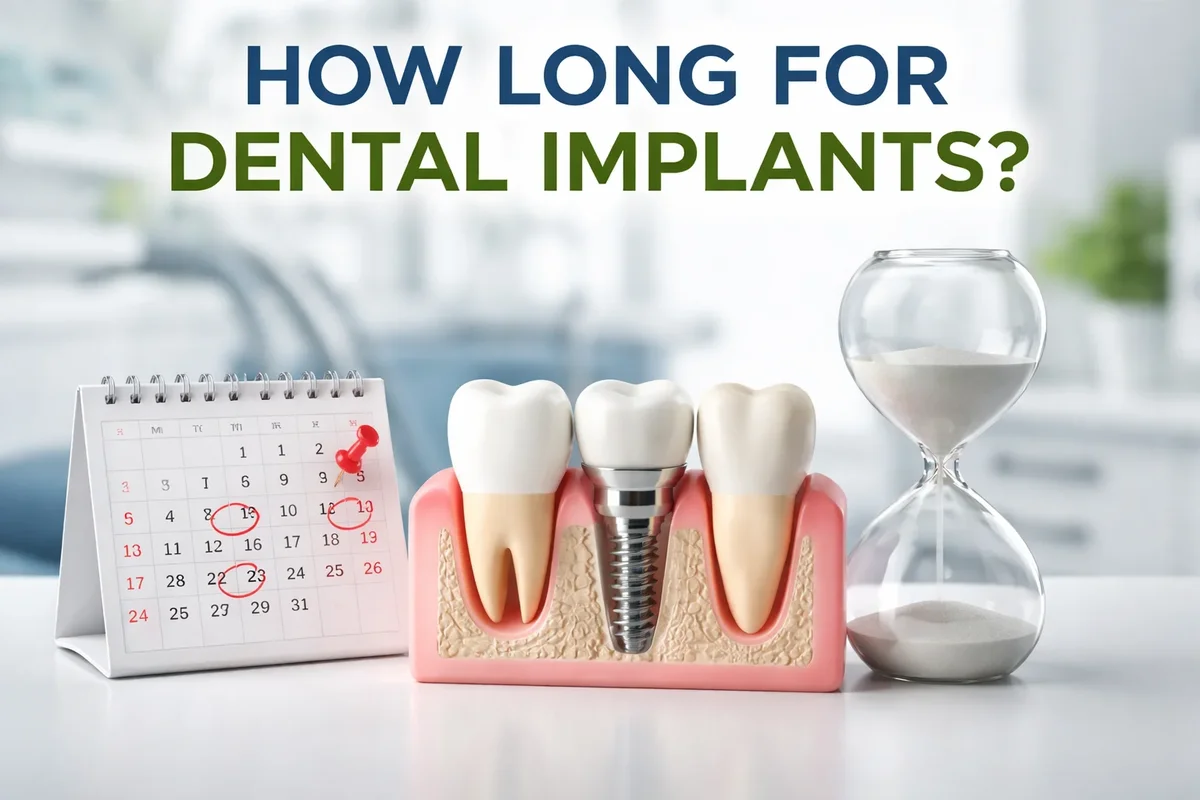
Tips to Speed Up Dental Implant Healing Safely
After learning how long for dental implants typically takes, many patients naturally ask whether there is anything they can do to speed up the process. While the biological phases of healing—especially osseointegration—cannot be rushed beyond safe limits, there are several proven strategies that can support faster, smoother recovery. Understanding these practical steps helps optimize how long for dental implants in your specific case without compromising safety 😊.
On average, how long for dental implants remains between 3 and 6 months for complete bone integration. However, patients who follow proper aftercare instructions often experience fewer complications and more predictable healing. Let’s explore evidence-based tips that may positively influence how long for dental implants while maintaining long-term success.
Follow Post-Surgical Instructions Carefully
The first and most important factor influencing how long for dental implants is strict adherence to your dentist’s instructions immediately after surgery.
Control Swelling and Inflammation
Applying ice packs during the first 24–48 hours reduces swelling and improves comfort. Managing inflammation helps create an optimal environment for healing, indirectly supporting how long for dental implants by preventing unnecessary delays.
Take Prescribed Medications as Directed
If antibiotics or anti-inflammatory medications are prescribed, completing the full course helps prevent infection. Infection around the implant can significantly extend how long for dental implants or even jeopardize the procedure.
Maintain Excellent Oral Hygiene
Good oral hygiene plays a direct role in how long for dental implants. Keeping the surgical area clean reduces bacterial accumulation and lowers the risk of peri-implantitis.
Gentle Brushing Technique
Use a soft-bristled toothbrush and avoid aggressive brushing near the implant site during early healing. After the initial recovery phase, maintaining consistent brushing and flossing supports healthy gum tissue around the implant.
Antimicrobial Rinses
Your dentist may recommend a chlorhexidine rinse during early recovery. This reduces bacterial load and protects the implant, supporting a smoother healing timeline.
Adopt a Healing-Friendly Diet
Your diet can influence how long for dental implants by affecting inflammation, bone regeneration, and tissue repair.
Soft Foods During Early Healing
During the first weeks, choose soft foods such as yogurt, eggs, mashed vegetables, and smoothies. Avoid hard, crunchy, or sticky foods that may stress the implant site.
Bone-Supporting Nutrients
Calcium, vitamin D, and protein play essential roles in bone formation. A balanced diet rich in leafy greens, dairy, fish, and lean meats can positively influence how long for dental implants by supporting osseointegration.
Avoid Smoking and Alcohol
Smoking is one of the strongest negative factors affecting how long for dental implants. Nicotine restricts blood flow, slowing tissue repair and bone healing.
Reducing or eliminating smoking during the healing period significantly improves implant stability and reduces complications. Alcohol should also be limited, especially during early healing stages.
Manage Underlying Health Conditions
Systemic health plays a key role in determining how long for dental implants. Patients with diabetes should maintain stable blood sugar levels, as uncontrolled diabetes can slow healing.
Regular medical follow-ups and good overall health management help ensure that how long for dental implants stays within the expected timeframe.
Attend All Follow-Up Appointments
Regular check-ups allow your dentist to monitor implant stability and detect potential issues early. Early detection prevents complications that could extend how long for dental implants unnecessarily.
Professional monitoring ensures osseointegration progresses as expected and confirms when it is safe to proceed with crown placement.
Consider Advanced Treatment Technologies
Guided Implant Surgery
Computer-guided surgery reduces trauma to surrounding tissues. Minimally invasive placement may improve healing comfort and reduce swelling, indirectly supporting how long for dental implants.
High-Quality Implant Surfaces
Modern implants feature surface treatments designed to encourage faster bone attachment. These innovations may slightly optimize how long for dental implants while maintaining safety.
Stress Management and Rest
Healing is a biological process that benefits from proper rest. High stress levels can negatively impact immune function. Prioritizing sleep and reducing stress may contribute to smoother recovery.
When to Contact Your Dentist
Understanding warning signs is crucial. Persistent pain, swelling beyond expected levels, or unusual discharge should be reported immediately. Addressing complications early prevents prolonging how long for dental implants due to infection or instability.
According to the American Dental Association, proper aftercare and professional monitoring are key components of implant success.
Personalized Guidance for Optimal Healing
If you would like personalized advice on how long for dental implants in your situation and how to optimize healing safely, our team is ready to assist. You can contact us through the Redent Klinik Contact Page to schedule a consultation.
In conclusion, while how long for dental implants is largely determined by biological processes like osseointegration, patients can actively support faster, healthier recovery through proper hygiene, nutrition, lifestyle choices, and professional follow-up. By following these guidelines carefully, you can protect your investment and enjoy a strong, confident smile for many years 😊.