
One of the most common questions patients ask before starting treatment is simple yet important: how long are dental implants? If you are considering replacing a missing tooth, you are probably looking for a solution that is durable, reliable, and worth your investment. Dental implants are widely regarded as the gold standard for tooth replacement, but understanding their lifespan requires a closer look at materials, biology, oral hygiene, and lifestyle factors.
So, how long are dental implants in real-world conditions? In most cases, the titanium implant post that is surgically placed into the jawbone can last 20 years or more. In fact, many patients keep their implants for a lifetime. However, the crown (the visible tooth on top of the implant) may need replacement after 10–15 years due to normal wear and tear. When people ask how long do dental implants last, the honest answer depends on both the implant fixture and the prosthetic crown.
To better understand how long are dental implants, it helps to know how they work. A dental implant consists of three main parts: the titanium screw placed in the bone, the abutment that connects the screw to the crown, and the custom-made crown that looks like a natural tooth. The titanium post integrates with the jawbone in a process called osseointegration. Once fully healed, the implant becomes as stable as a natural tooth root. This stability is one of the main reasons why the answer to how long are dental implants is often measured in decades rather than years. 😊
Scientific research consistently supports the long-term success of implants. According to clinical data referenced by the American Dental Association, dental implants have a success rate of over 95% when placed in healthy patients. This high success rate directly influences how long are dental implants likely to function without complications. When properly planned and maintained, implants are one of the most predictable treatments in modern dentistry.
However, the question how long are dental implants cannot be answered without considering patient-specific factors. Age alone does not usually affect implant longevity, but bone density, gum health, smoking habits, and chronic conditions such as diabetes can influence outcomes. For example, a patient who maintains excellent oral hygiene and attends regular dental check-ups may experience a much longer implant lifespan compared to someone who neglects oral care.
Another important aspect when discussing how long are dental implants is daily care. Dental implants do not decay like natural teeth, but they can develop peri-implantitis, an inflammatory condition affecting the surrounding gum and bone. Without proper brushing, flossing, and professional cleanings, even a well-placed implant may fail prematurely. That is why dentists emphasize preventive care when patients ask how long are dental implants expected to last.
Cost is also part of the conversation. Although implants may seem more expensive initially compared to bridges or removable dentures, their longevity often makes them more cost-effective over time. In countries like the United States, a single dental implant can range from $3,000 to $5,000 depending on complexity. Because how long are dental implants often translates into 20+ years of function, many patients consider this a long-term investment rather than a short-term expense.
Another reason why people frequently search for how long are dental implants is the desire for permanence. Unlike dentures that may shift or require adhesives, implants are fixed in place. They allow patients to eat, speak, and smile confidently. When patients understand how long are dental implants designed to last, they often feel reassured about choosing this advanced solution.
It is also worth mentioning that technological advancements have improved implant durability over the years. Modern surface treatments enhance bone integration, and digital planning ensures precise placement. These innovations positively impact how long are dental implants expected to perform under normal chewing forces.
If you are considering treatment and still wondering how long are dental implants in your specific case, a personalized consultation is essential. Every mouth is different, and a comprehensive examination including digital imaging can determine your bone health and overall suitability for implants. For tailored advice, you can always reach out through the Redent Klinik Contact Page to discuss your situation with experienced dental professionals.
In summary, when patients ask how long are dental implants, the general answer is decades—often 20 years or more, and sometimes a lifetime with proper care. Their durability, stability, and high success rate make them one of the most reliable tooth replacement options available today. By maintaining excellent oral hygiene, attending regular dental visits, and following professional recommendations, you can significantly influence how long dental implants last and enjoy a healthy, confident smile for many years to come. 😁
What Determines How Long Are Dental Implants?
When patients ask how long are dental implants, they often expect a simple number. However, the true answer depends on several biological, mechanical, and behavioral factors. While dental implants are designed to be a long-term solution, understanding what determines how long are dental implants can help you protect your investment and maintain your oral health for decades. 😊
In general, modern implants are made of medical-grade titanium and are engineered to integrate with the jawbone. This integration process is one of the most critical elements influencing how long are dental implants. But materials alone do not guarantee success. The patient’s bone condition, oral hygiene habits, lifestyle choices, and even the dentist’s expertise all play essential roles.
Quality of the Implant Material
The first factor affecting how long are dental implants is the quality of the material used. Most implants are made from high-grade titanium because it is biocompatible and resistant to corrosion. Titanium bonds naturally with bone in a process called osseointegration. When this fusion is successful, the implant becomes as stable as a natural tooth root.
Premium implant systems undergo strict clinical testing and long-term research studies. According to information supported by the American Dental Association, properly manufactured and placed implants have very high success rates. High-quality materials significantly increase how long are dental implants expected to function without mechanical failure.
Cheaper, lower-quality systems may compromise durability. This can directly influence how long are dental implants, especially if the implant surface does not promote optimal bone attachment. Therefore, choosing an experienced clinic that uses trusted implant brands is critical.
Bone Density and Jawbone Health
Another major factor in determining how long are dental implants is the condition of the jawbone. Dental implants rely on strong, healthy bone for support. If bone density is insufficient, the implant may not integrate properly or may fail over time.
Patients who have experienced bone loss due to gum disease or long-term tooth absence may require bone grafting before implant placement. Proper bone preparation increases stability and positively impacts how long are dental implants likely to last. Without adequate bone support, even the highest-quality implant may not achieve long-term success.
Impact of Bone Grafting on Longevity
Bone grafting strengthens the implant site by rebuilding lost bone volume. When successful, it enhances implant stability and helps improve how long are dental implants expected to function. Although grafting adds time to the treatment process, it significantly increases long-term predictability and durability.
Oral Hygiene and Maintenance
One of the most underestimated factors influencing how long are dental implants is daily oral hygiene. While implants do not develop cavities, they are still vulnerable to peri-implantitis, an inflammatory condition affecting the surrounding gum and bone.
Poor oral hygiene can lead to bacterial accumulation around the implant. Over time, this infection can weaken bone support and shorten how long are dental implants. Regular brushing, flossing, and professional cleanings are essential for long-term success.
Routine dental visits allow early detection of inflammation or mechanical issues. Patients who attend regular check-ups often experience longer implant lifespans because problems are treated early, preserving how long are dental implants in optimal condition.
Lifestyle Habits and Systemic Health
Lifestyle choices significantly influence how long are dental implants. Smoking, for example, reduces blood flow to the gums and delays healing. Smokers statistically have higher implant failure rates, which can directly affect how long are dental implants remain stable.
Chronic medical conditions such as uncontrolled diabetes can also impair healing and increase infection risk. Proper management of systemic conditions supports bone health and helps extend how long are dental implants perform effectively.
Teeth Grinding and Mechanical Stress
Bruxism (teeth grinding) places excessive pressure on implants. Continuous mechanical stress can damage the crown or even compromise the implant structure. Using a custom night guard can significantly improve how long are dental implants last in patients who grind their teeth.
The Skill and Experience of the Dentist
The dentist’s expertise is another crucial determinant of how long are dental implants. Accurate placement ensures proper load distribution and optimal bone contact. Digital imaging, 3D planning, and guided surgery techniques increase precision and improve long-term outcomes.
Poor placement can create uneven stress or insufficient bone contact, reducing how long are dental implants function successfully. Choosing a qualified and experienced implant specialist greatly enhances treatment predictability.
If you are considering implant treatment and want personalized advice about how long are dental implants may last in your case, you can consult directly through the Redent Klinik Contact Page. A professional evaluation can assess your bone health, lifestyle factors, and overall suitability.
In conclusion, how long are dental implants depends on a combination of high-quality materials, healthy bone structure, excellent oral hygiene, responsible lifestyle habits, and professional placement. While many implants last 20 years or more, these determining factors ultimately influence whether they function for decades or even a lifetime. By understanding and managing these elements, patients can significantly extend how long dental implants last and enjoy a confident, healthy smile for years to come. 😁
How Long Are Dental Implants Expected to Last on Average?
One of the most searched questions in modern dentistry is simple: how long are dental implants expected to last on average? Patients want a clear timeline before committing to treatment. While individual results vary, clinical studies and decades of data provide a reliable estimate. In most healthy patients, dental implants can last 20 years or more, and in many cases, they function for a lifetime. 😊
However, when evaluating how long are dental implants, it is important to distinguish between the implant post and the crown. The titanium implant embedded in the jawbone often lasts significantly longer than the visible crown. Understanding this difference helps set realistic expectations about how long are dental implants truly designed to function.
Average Lifespan of the Implant Post
The titanium implant post is the foundation of the restoration. Once it successfully integrates with the bone through osseointegration, it becomes extremely stable. Research consistently shows survival rates above 90–95% even after 15–20 years. This data strongly supports the idea that how long are dental implants can often be measured in decades rather than just years.
Long-term studies referenced by organizations such as the American Dental Association confirm that implants are among the most predictable procedures in dentistry. With proper care, the implant screw itself may never need replacement. Therefore, when patients ask how long are dental implants, the implant fixture alone frequently lasts a lifetime.
Average Lifespan of the Dental Crown
While the implant post is extremely durable, the crown attached to it is subject to daily chewing forces. On average, implant crowns last between 10 and 15 years before requiring replacement due to wear, chipping, or cosmetic reasons.
This distinction is crucial when discussing how long are dental implants. Even if the crown needs replacement, the implant underneath typically remains stable. Replacing a crown is a simpler and less invasive procedure compared to replacing the entire implant. Therefore, overall treatment longevity still supports the strong reputation regarding how long are dental implants.
Factors That May Shorten the Average Lifespan
Although averages suggest long-term durability, certain factors can shorten how long are dental implants. Poor oral hygiene, smoking, uncontrolled diabetes, and excessive bite force can increase the risk of complications. Infections such as peri-implantitis may lead to bone loss, which can affect implant stability.
Mechanical stress is another consideration. Patients who grind their teeth may reduce how long are dental implants remain in optimal condition unless protective measures like night guards are used.
How Long Are Dental Implants Compared Across Age Groups?
Age alone is not a major determinant of how long are dental implants. Younger adults with strong bone density often experience excellent long-term results. Older adults can also achieve similar success rates, provided they maintain good oral and systemic health.
Interestingly, implants placed in middle-aged patients often demonstrate outstanding longevity because bone metabolism remains stable. Therefore, when asking how long are dental implants, overall health matters more than chronological age.
Long-Term Survival Rates Over 25 Years
Several long-term studies have followed patients for 20 to 25 years. Many of these studies report survival rates above 85–90% even after two decades. This evidence strongly reinforces the long-lasting reputation associated with how long are dental implants.
Technological advancements in implant surfaces and digital placement have further improved outcomes. Modern techniques enhance bone integration and reduce surgical complications, positively influencing how long are dental implants can reliably function.
Financial Perspective on Longevity
When considering the financial aspect, patients often weigh cost against lifespan. In the United States, a single implant typically ranges between $3,000 and $5,000 depending on complexity and additional procedures. Although the initial cost may seem significant, understanding how long are dental implants helps justify the investment.
If an implant lasts 20 years or more, the annual cost becomes relatively low compared to alternatives like bridges, which may require replacement every 7–10 years. This long-term value is one of the strongest arguments supporting the durability of dental implants.
Why Longevity Matters for Patients
For many patients, confidence and quality of life are closely linked to treatment longevity. Knowing how long are dental implants provides peace of mind. Unlike removable dentures, implants feel natural and stable. They allow patients to chew, speak, and smile without hesitation.
If you are considering implant treatment and want personalized insight into how long are dental implants may last in your specific situation, you can schedule a consultation through the Redent Klinik Contact Page. A professional evaluation will assess bone density, oral health, and lifestyle factors to give a more precise estimate.
In conclusion, when evaluating how long are dental implants expected to last on average, clinical data suggests 20 years or more, with many lasting a lifetime under proper care. While crowns may need replacement after 10–15 years, the implant foundation often remains stable for decades. With good oral hygiene, healthy habits, and professional maintenance, dental implants represent one of the most durable and reliable solutions in modern dentistry. 😁
How Long Are Dental Implants Compared to Bridges and Dentures?
When patients evaluate tooth replacement options, one of the first comparisons they make is durability. Naturally, the question arises: how long are dental implants compared to traditional bridges or removable dentures? Understanding these differences is essential for making an informed decision. While all three options can restore function and appearance, their longevity, maintenance requirements, and long-term value vary significantly. 😊
In general, how long are dental implants tends to surpass both bridges and dentures. Dental implants are surgically placed into the jawbone, where they fuse with the bone structure. Bridges and dentures, on the other hand, rely on surrounding teeth or gum tissue for support. This fundamental structural difference plays a major role in determining how long are dental implants compared to other treatments.
Longevity of Dental Implants
Clinical research consistently shows that how long are dental implants can often be measured in decades. With proper care, the titanium implant post can last 20 years or more, and in many cases, a lifetime. The crown attached to the implant may require replacement after 10–15 years, but the foundation usually remains stable.
According to data supported by the American Dental Association, dental implants demonstrate success rates exceeding 95% in healthy individuals. This high predictability strongly influences how long are dental implants compared to other restorative solutions.
How Long Do Dental Bridges Last?
Dental bridges are a fixed solution supported by adjacent natural teeth. On average, bridges last between 7 and 15 years. While they restore chewing ability and aesthetics, they require the preparation and reduction of neighboring healthy teeth.
When comparing durability, how long are dental implants typically exceeds the lifespan of bridges. Bridges are more vulnerable to decay around the supporting teeth. If one of those teeth develops a cavity or fracture, the entire bridge may need replacement. This structural dependency often limits their longevity compared to implants.
Structural Limitations of Bridges
Unlike implants, bridges do not replace the tooth root. As a result, the jawbone beneath the missing tooth may gradually shrink due to lack of stimulation. Bone loss can compromise long-term stability and affect facial structure. This is a major reason why how long are dental implants often proves superior—they actively preserve bone health.
How Long Do Dentures Last?
Removable dentures are typically the most affordable option initially, but they require more frequent adjustments and replacements. On average, dentures last 5 to 8 years before needing significant modification or replacement.
When patients compare how long are dental implants with dentures, the difference becomes clear. Dentures rest on the gums and do not integrate with bone. Over time, jawbone resorption changes the fit, causing looseness and discomfort. Frequent relining or remaking is often necessary.
Comfort and Functional Stability
Functionally, implants provide greater chewing efficiency and speech stability. Dentures may slip or require adhesives, while implants function like natural teeth. This enhanced stability contributes to the long-term satisfaction associated with how long are dental implants as a reliable solution.
Cost Comparison Over Time
Financial considerations are also important. A single dental implant in the United States typically ranges from $3,000 to $5,000 depending on complexity. A bridge may cost between $2,000 and $4,000 for a three-unit restoration, while dentures can range from $1,000 to $3,000 per arch.
Although implants have a higher initial cost, evaluating how long are dental implants often reveals greater long-term value. Bridges and dentures usually require replacement more frequently, which increases cumulative expenses over time. In contrast, implants may only require crown replacement rather than full reconstruction.
Bone Preservation and Long-Term Health
One of the strongest advantages influencing how long are dental implants is their ability to preserve jawbone density. Because implants stimulate the bone similarly to natural roots, they prevent resorption. Bridges and dentures cannot provide this biological benefit.
Bone preservation directly impacts facial structure and overall oral health. Over time, patients with implants often maintain stronger bone support compared to those using dentures. This biological advantage plays a major role in why how long are dental implants frequently exceeds alternative treatments.
Which Option Is Most Durable?
When directly comparing all three options, the evidence consistently favors implants for long-term durability. Bridges and dentures remain effective solutions for certain patients, but their lifespan is generally shorter. Therefore, when patients ask how long are dental implants compared to other treatments, the answer is clear: implants usually offer the longest-lasting result.
If you are unsure which solution suits your needs and want a personalized evaluation of how long are dental implants in your case, you can consult directly through the Redent Klinik Contact Page. A comprehensive assessment will consider bone health, budget, and lifestyle factors.
In conclusion, when comparing options, how long are dental implants generally surpasses bridges and dentures in terms of durability, bone preservation, and long-term value. While initial costs may be higher, their longevity and stability make implants one of the most reliable tooth replacement solutions available today. With proper care, dental implants can provide decades of confident smiles and functional comfort. 😁
Do Lifestyle Habits Affect How Long Are Dental Implants?
Many patients assume that once an implant is placed, its lifespan is fixed. However, lifestyle habits play a significant role in determining how long are dental implants likely to last. While modern implant technology is highly advanced, long-term success is strongly influenced by daily behaviors, general health, and preventive care routines. Understanding these factors can dramatically improve how long are dental implants remain functional and stable. 😊
Although implants are made from durable titanium and designed to integrate with bone, they are still surrounded by living tissues. The health of these tissues directly affects how long are dental implants can perform without complications. Lifestyle choices such as smoking, oral hygiene habits, nutrition, and stress management all influence implant longevity.
Smoking and Its Impact on Implant Longevity
Smoking is one of the most significant risk factors affecting how long are dental implants. Nicotine restricts blood flow to the gums and jawbone, reducing oxygen supply and slowing healing. This can compromise the osseointegration process, which is essential for implant stability.
Studies consistently show higher failure rates in smokers compared to non-smokers. When patients ask how long are dental implants in smokers, the answer is often less predictable. Smoking increases the risk of peri-implantitis, an inflammatory condition that can cause bone loss around the implant.
Can Quitting Smoking Improve Implant Success?
Yes. Patients who stop smoking before and after implant surgery significantly improve their outcomes. Quitting enhances circulation and supports bone healing, positively influencing how long are dental implants remain secure. Dentists strongly recommend smoking cessation as part of implant treatment planning.
Oral Hygiene Habits and Daily Care
Another critical factor influencing how long are dental implants is oral hygiene. Although implants do not decay like natural teeth, plaque and bacteria can accumulate around them. Without proper brushing and flossing, inflammation can develop in the surrounding gums.
Peri-implantitis is a major threat to implant longevity. If left untreated, it can lead to bone loss and implant failure. Maintaining excellent oral hygiene significantly increases how long are dental implants function successfully. Dentists recommend brushing twice daily, flossing carefully around the implant, and using antimicrobial mouth rinses when advised.
Regular professional cleanings are equally important. Dental check-ups allow early detection of minor issues before they become serious complications. Patients who attend routine visits often experience longer outcomes regarding how long are dental implants.
Diet and Nutrition
Nutrition also affects how long are dental implants. A balanced diet rich in calcium, vitamin D, and protein supports bone health and immune function. These nutrients are essential for maintaining strong jawbone support around the implant.
Excessive sugar consumption increases the risk of gum inflammation, which can negatively influence how long are dental implants. Additionally, chewing extremely hard foods frequently may place unnecessary stress on the implant crown.
Hydration and Oral Health
Proper hydration helps maintain saliva production. Saliva protects oral tissues by neutralizing acids and washing away bacteria. Adequate saliva flow indirectly supports how long are dental implants by reducing infection risk.
Teeth Grinding and Stress Management
Bruxism, or teeth grinding, is another lifestyle factor that can affect how long are dental implants. Excessive grinding places repeated mechanical stress on the implant and crown. Over time, this pressure may lead to crown fractures or loosening of components.
Patients who grind their teeth are often advised to wear a custom night guard. This protective device reduces stress and helps extend how long are dental implants remain structurally sound.
Systemic Health and Chronic Conditions
Overall health conditions also influence how long are dental implants. Uncontrolled diabetes, autoimmune disorders, and osteoporosis can impair healing and increase infection risk. Proper medical management of chronic conditions significantly improves implant outcomes.
According to information supported by the American Dental Association, maintaining good systemic health enhances long-term implant success. This connection highlights how lifestyle and health management directly affect how long are dental implants can last.
Alcohol Consumption
Excessive alcohol use may interfere with healing and immune function. While moderate consumption is generally not harmful, heavy drinking can compromise bone integration and influence how long are dental implants remain stable over time.
Long-Term Commitment to Maintenance
Ultimately, lifestyle habits reflect a patient’s commitment to oral care. Dental implants are a long-term investment, often costing between $3,000 and $5,000 per implant in the United States. Protecting that investment requires responsible daily habits.
If you are concerned about how your lifestyle may impact how long are dental implants in your case, a professional consultation can provide personalized guidance. You can reach out through the Redent Klinik Contact Page for an individualized evaluation.
In conclusion, lifestyle habits play a decisive role in determining how long are dental implants. Smoking, oral hygiene, diet, stress, and overall health all contribute to implant longevity. By maintaining healthy routines and attending regular dental visits, patients can significantly extend how long dental implants last and enjoy stable, confident smiles for many years. 😁
How Long Are Dental Implants With Proper Oral Hygiene?
When patients ask how long are dental implants, one of the most important influencing factors is proper oral hygiene. Even though dental implants are made of titanium and cannot develop cavities like natural teeth, the surrounding gum and bone tissues are still vulnerable to infection. The way you care for your mouth every day has a direct and measurable impact on how long are dental implants likely to last.
In fact, consistent oral hygiene is often the deciding factor between an implant that lasts 10 years and one that lasts 30 years or more. Clinical evidence shows that patients who maintain excellent home care and attend regular dental visits significantly improve how long are dental implants remain stable and functional. 😊
Why Oral Hygiene Matters for Implant Longevity
Unlike natural teeth, implants do not have periodontal ligaments. Instead, they are directly fused to the bone. While this provides strength, it also means infections can spread more quickly if plaque accumulates. When bacteria build up around the implant, inflammation can occur in the gum tissue. This condition, known as peri-implant mucositis, is reversible if treated early. However, if left untreated, it may progress to peri-implantitis.
Peri-implantitis causes bone loss around the implant and is one of the leading reasons why how long are dental implants may be shortened. Proper daily cleaning dramatically reduces this risk and supports the long-term stability that patients expect when asking how long are dental implants.
Daily Brushing Techniques
Brushing at least twice daily is essential for maximizing how long are dental implants. A soft-bristled toothbrush is recommended to clean both the implant crown and the surrounding gum tissue without causing irritation. Electric toothbrushes can also be highly effective in removing plaque around implant restorations.
It is important to brush gently along the gumline where bacteria tend to accumulate. Thorough brushing supports gum health and directly influences how long are dental implants can function without inflammatory complications.
Choosing the Right Toothpaste
Non-abrasive toothpaste is ideal for implants. Highly abrasive products may scratch the crown surface over time. While this does not directly affect the titanium post, maintaining the crown’s integrity supports overall hygiene and helps extend how long are dental implants remain aesthetically and functionally sound.
Flossing and Interdental Cleaning
Flossing plays a crucial role in determining how long are dental implants. Traditional floss, implant-specific floss, or interdental brushes can be used to clean around the implant abutment. These tools remove plaque in areas that brushing alone cannot reach.
Neglecting flossing increases bacterial buildup and raises the risk of gum inflammation. Regular interdental cleaning strengthens gum attachment and enhances how long are dental implants remain secure in the jawbone.
Professional Dental Check-Ups
Even with excellent home care, professional maintenance is essential for maximizing how long are dental implants. Dentists use specialized instruments designed for implants to remove hardened plaque (calculus) without damaging the surface.
Routine check-ups also allow early detection of minor issues such as bite imbalances or small signs of inflammation. Early intervention significantly improves how long are dental implants last in the long term.
According to guidance supported by the American Dental Association, patients with implants should maintain regular dental visits just as they would with natural teeth. Preventive care is the foundation of long-term success.
Role of Antibacterial Mouth Rinses
Antimicrobial mouth rinses may be recommended in certain cases, especially during the healing phase after implant placement. These rinses reduce bacterial load and support tissue healing, positively influencing how long are dental implants integrate and remain healthy.
Healing Phase and Early Maintenance
The first few months after surgery are critical for osseointegration. Gentle cleaning and careful adherence to post-operative instructions directly impact how long are dental implants will ultimately last. Proper early maintenance sets the foundation for decades of stability.
Long-Term Outcomes With Excellent Hygiene
Patients who consistently practice excellent oral hygiene often experience implants that last 25 years or longer. In many cases, the titanium post remains stable for life, while only the crown may need occasional replacement due to normal wear.
Given that a single implant can cost between $3,000 and $5,000 in the United States, protecting that investment through daily care makes financial sense. Maintaining hygiene is one of the most effective ways to maximize how long are dental implants provide value.
If you would like personalized guidance on maintaining your implants and extending how long are dental implants in your specific case, you can schedule a consultation through the Redent Klinik Contact Page.
In conclusion, proper oral hygiene is one of the strongest determinants of how long are dental implants. Daily brushing, flossing, professional cleanings, and early management of inflammation all contribute to long-term success. By committing to consistent care, patients can significantly extend how long dental implants last and enjoy a healthy, confident smile for decades. 😁
Can Bone Quality Influence How Long Are Dental Implants?
When discussing how long are dental implants, one of the most critical biological factors to consider is bone quality. Dental implants depend entirely on the jawbone for stability and long-term function. Without strong and healthy bone support, even the highest-quality implant system may fail prematurely. This is why bone density and volume play a central role in determining how long are dental implants can truly last.
Dental implants are designed to integrate with the jawbone through a biological process called osseointegration. During this process, bone cells grow around the titanium implant surface, creating a secure and stable foundation. The strength and density of the bone directly affect how long are dental implants remain stable under chewing forces. 😊
Understanding Bone Density and Implant Stability
Bone density refers to the strength and compactness of the jawbone. Denser bone provides better primary stability during implant placement. When the implant is firmly anchored from the beginning, it increases the likelihood of successful osseointegration and improves how long are dental implants expected to function.
Patients with strong bone density often experience excellent long-term results. In contrast, patients with softer or weaker bone may require additional procedures to ensure implant stability. Without sufficient density, the question of how long are dental implants becomes more complex because inadequate support may increase the risk of movement or failure.
Types of Jawbone Quality
Jawbone quality is typically categorized into four types, ranging from very dense to very soft bone. Implants placed in dense bone often achieve higher initial stability, positively influencing how long are dental implants. Softer bone may still support implants successfully, but careful surgical planning and sometimes longer healing times are necessary.
Bone Volume and Its Importance
In addition to density, bone volume is equally important. After tooth loss, the jawbone gradually shrinks due to lack of stimulation. This bone resorption can compromise the foundation needed for implant placement. Reduced bone volume may affect how long are dental implants remain secure if not addressed properly.
When bone volume is insufficient, dentists may recommend bone grafting. This procedure rebuilds lost bone and creates a stronger base for implant placement. By restoring adequate bone structure, patients significantly improve how long are dental implants can perform reliably over the years.
How Bone Loss Develops After Tooth Extraction
Bone loss begins soon after a tooth is removed. Within the first year, significant reduction in bone height and width can occur. Over time, this shrinkage may alter facial structure and reduce available support for implants.
Early intervention after tooth loss can preserve bone and enhance how long are dental implants. Immediate implant placement in certain cases may help maintain bone structure and improve long-term stability.
Systemic Conditions Affecting Bone Health
Conditions such as osteoporosis can influence bone density. While osteoporosis does not automatically prevent implant placement, it may require additional evaluation. Proper medical management and careful treatment planning help protect how long are dental implants remain stable in patients with systemic bone conditions.
Advanced Imaging and Treatment Planning
Modern dentistry uses 3D imaging technology to assess bone structure accurately. Cone beam computed tomography (CBCT) scans allow dentists to measure bone density and volume before surgery. This detailed planning greatly improves surgical precision and positively impacts how long are dental implants will function.
According to professional guidelines supported by the American Dental Association, comprehensive evaluation and planning significantly increase implant success rates. Proper assessment of bone health is one of the strongest predictors of how long are dental implants last.
The Role of Bone Grafting in Longevity
Bone grafting strengthens areas with insufficient support. Once healed, grafted bone can provide a stable environment similar to natural bone. This enhancement directly improves how long are dental implants are expected to last.
Although grafting adds time to the treatment process, it increases long-term predictability. Patients who undergo successful grafting often achieve comparable outcomes to those with naturally dense bone, reinforcing positive expectations about how long are dental implants.
Financial and Long-Term Considerations
Dental implants in the United States typically cost between $3,000 and $5,000 per implant. Bone grafting procedures may add additional cost depending on complexity. However, investing in proper bone preparation significantly improves how long are dental implants provide reliable function.
Long-term durability often outweighs the initial expense. Strengthening the bone foundation protects the implant investment and ensures stable chewing, speech, and aesthetics for decades.
If you are unsure about your bone condition and want to understand how long are dental implants may last in your specific case, you can request a personalized consultation through the Redent Klinik Contact Page.
In conclusion, bone quality is one of the most influential factors determining how long are dental implants. Strong bone density, sufficient volume, proper medical management, and advanced treatment planning all contribute to long-term implant stability. By ensuring optimal bone support before placement, patients can significantly extend how long dental implants last and enjoy durable, confident smiles for many years. 😁
How Long Are Dental Implants After Bone Grafting?
Patients who require additional procedures before implant placement often wonder: how long are dental implants after bone grafting? This is a very important and practical concern. Bone grafting is commonly recommended when there is insufficient jawbone density or volume to securely support an implant. The good news is that, when performed correctly, bone grafting does not reduce longevity. In fact, it can significantly improve how long are dental implants are expected to last by creating a stronger and more stable foundation. 😊
To fully understand how long are dental implants after bone grafting, it is essential to explore why grafting is needed, how it works, and what long-term outcomes typically look like. When bone is rebuilt properly and allowed to heal completely, implant success rates remain very high and often comparable to implants placed in natural, healthy bone.
Why Bone Grafting Is Necessary Before Implants
After tooth loss, the jawbone naturally begins to shrink due to lack of stimulation. Over time, this bone resorption can reduce both height and width of the jaw. Without adequate bone support, implant placement becomes risky. In such cases, dentists recommend grafting to ensure how long are dental implants will not be compromised by weak structural support.
Bone grafting involves placing bone material—either from the patient, a donor source, or synthetic material—into the deficient area. Over several months, the body regenerates new bone cells around the graft. Once healing is complete, the strengthened site significantly improves how long are dental implants can function successfully.
Types of Bone Grafts
There are several types of grafts, including autografts (from the patient), allografts (donor bone), xenografts (animal-derived), and synthetic graft materials. Each option is selected based on the patient’s specific needs. The quality of graft integration directly influences how long are dental implants after placement.
Healing Time Before Implant Placement
Bone grafts typically require 3 to 6 months of healing before implants can be placed. In more complex cases, healing may take longer. Although this extends the treatment timeline, it greatly enhances stability and positively affects how long are dental implants are expected to last.
Once the grafted bone has matured and integrated with the natural jawbone, the implant can be placed just as it would in native bone. Clinical studies show that implants placed in successfully grafted bone often achieve survival rates similar to implants placed without grafting. This means that how long are dental implants after bone grafting can still reach 20 years or more with proper care.
Does Bone Grafting Reduce Implant Longevity?
Many patients worry that grafting might weaken long-term results. However, when performed correctly by experienced professionals, grafting actually enhances the foundation. Stronger bone support increases implant stability and improves how long are dental implants can withstand chewing forces.
According to research supported by the American Dental Association, implants placed in grafted sites demonstrate high success rates when appropriate case selection and surgical protocols are followed. Therefore, bone grafting does not inherently reduce how long are dental implants; rather, it helps ensure their longevity.
Factors That Influence Success After Grafting
Several factors determine how long are dental implants after bone grafting:
- Proper healing time before implant placement
- Good oral hygiene during healing
- Non-smoking status
- Controlled systemic health conditions
- Accurate implant positioning
Patients who carefully follow post-operative instructions significantly improve how long are dental implants remain stable after grafting.
Long-Term Outlook After Combined Procedures
When bone grafting and implant placement are both successful, patients often enjoy decades of reliable function. The titanium implant integrates with the newly regenerated bone just as it would with natural bone. This strong integration supports excellent chewing performance and aesthetic stability.
Financially, implants in the United States typically cost between $3,000 and $5,000 per implant, while bone grafting procedures may add additional cost depending on complexity. Although this increases the initial investment, improving bone support greatly enhances how long are dental implants provide lasting value.
Importance of Professional Evaluation
Before determining how long are dental implants after bone grafting in your specific case, a detailed examination is essential. Advanced 3D imaging allows dentists to evaluate bone quality and monitor graft healing. Proper planning ensures predictable outcomes and maximizes longevity.
If you are considering implants and have been told you need a graft, you can request a personalized consultation through the Redent Klinik Contact Page. A professional assessment will clarify your bone condition and expected implant lifespan.
In conclusion, how long are dental implants after bone grafting largely depends on successful healing and proper care. When grafting is performed correctly and followed by precise implant placement, longevity can match or even exceed implants placed in natural bone. With healthy habits, regular dental visits, and careful maintenance, patients can expect dental implants to last 20 years or more—even after bone grafting procedures. 😁
Signs That Affect How Long Are Dental Implants Over Time
Even though dental implants are designed to be a long-term solution, certain warning signs can influence how long are dental implants remain stable and functional. Recognizing early symptoms of complications is essential for protecting your investment and maintaining oral health. While many patients enjoy decades of reliable performance, ignoring minor problems can shorten how long are dental implants last.
Dental implants integrate directly with the jawbone, which makes them strong and durable. However, the surrounding gum tissue and bone must remain healthy for optimal longevity. Monitoring changes in your mouth is one of the most effective ways to preserve how long are dental implants function without interruption. 😊
Persistent Gum Inflammation
One of the earliest warning signs that may impact how long are dental implants is gum inflammation. Redness, swelling, tenderness, or bleeding around the implant site can indicate peri-implant mucositis. This condition is reversible if treated early, but if left untreated, it may progress to peri-implantitis.
Peri-implantitis involves bone loss around the implant and is one of the most serious complications affecting how long are dental implants. Early professional intervention can stop the progression and protect the surrounding bone.
Bleeding During Brushing
If you notice bleeding when brushing or flossing near your implant, it should not be ignored. Healthy implants typically do not bleed. Persistent bleeding may signal infection, which can influence how long are dental implants remain stable over time.
Loose Implant or Crown
A properly integrated implant should feel as stable as a natural tooth. If you experience movement, either in the crown or the implant itself, this can directly affect how long are dental implants. Sometimes the issue is simply a loose abutment screw, which can be tightened easily. However, if the implant fixture itself becomes mobile, it may indicate bone loss.
Addressing looseness early greatly improves outcomes and helps preserve how long are dental implants are expected to last.
Pain or Discomfort After Healing
Mild discomfort during the initial healing phase is normal. However, persistent pain months or years after placement may signal a problem. Ongoing discomfort could indicate infection, nerve irritation, or mechanical stress.
Ignoring chronic pain may reduce how long are dental implants continue to function successfully. Early diagnosis and treatment are critical for maintaining long-term stability.
Bite Misalignment
If your bite feels uneven or uncomfortable, excessive pressure may be placed on the implant crown. Over time, this mechanical stress can influence how long are dental implants withstand daily chewing forces. Dentists can adjust the bite to evenly distribute pressure and protect the implant.
Bone Loss Visible on X-Rays
Routine dental check-ups include radiographic evaluations to monitor bone levels. Gradual bone loss around the implant is a key factor affecting how long are dental implants. While minimal bone remodeling is normal, progressive bone reduction requires attention.
According to clinical guidance supported by the American Dental Association, regular monitoring significantly improves implant survival rates. Early detection of bone changes allows timely intervention and protects how long are dental implants.
Bad Taste or Persistent Odor
A persistent bad taste or unpleasant odor around the implant site may indicate bacterial accumulation or infection. This can negatively affect how long are dental implants if not treated promptly.
Maintaining proper oral hygiene and attending regular professional cleanings reduces the risk of bacterial buildup and supports how long are dental implants last.
Excessive Teeth Grinding
Bruxism places repeated stress on implant restorations. If left unmanaged, grinding can damage the crown or create micro-movements that impact how long are dental implants remain stable.
A custom night guard protects the implant from excessive force, helping extend how long are dental implants function under mechanical pressure.
Importance of Early Intervention
The most important factor in protecting how long are dental implants is early intervention. Most complications begin as minor issues that are easily treatable. Regular dental visits allow professionals to identify warning signs before they become serious problems.
Considering that dental implants typically cost between $3,000 and $5,000 per implant in the United States, preserving their longevity is both a health and financial priority. Addressing early symptoms ensures that how long are dental implants remains measured in decades rather than years.
If you notice any of these warning signs and want professional guidance about how long are dental implants in your case, you can schedule an evaluation through the Redent Klinik Contact Page.
In conclusion, recognizing early warning signs plays a crucial role in determining how long are dental implants. Gum inflammation, looseness, pain, bone loss, and mechanical stress can all influence implant longevity. With proactive monitoring, timely treatment, and consistent maintenance, patients can significantly extend how long dental implants last and continue enjoying a healthy, confident smile for many years. 😁
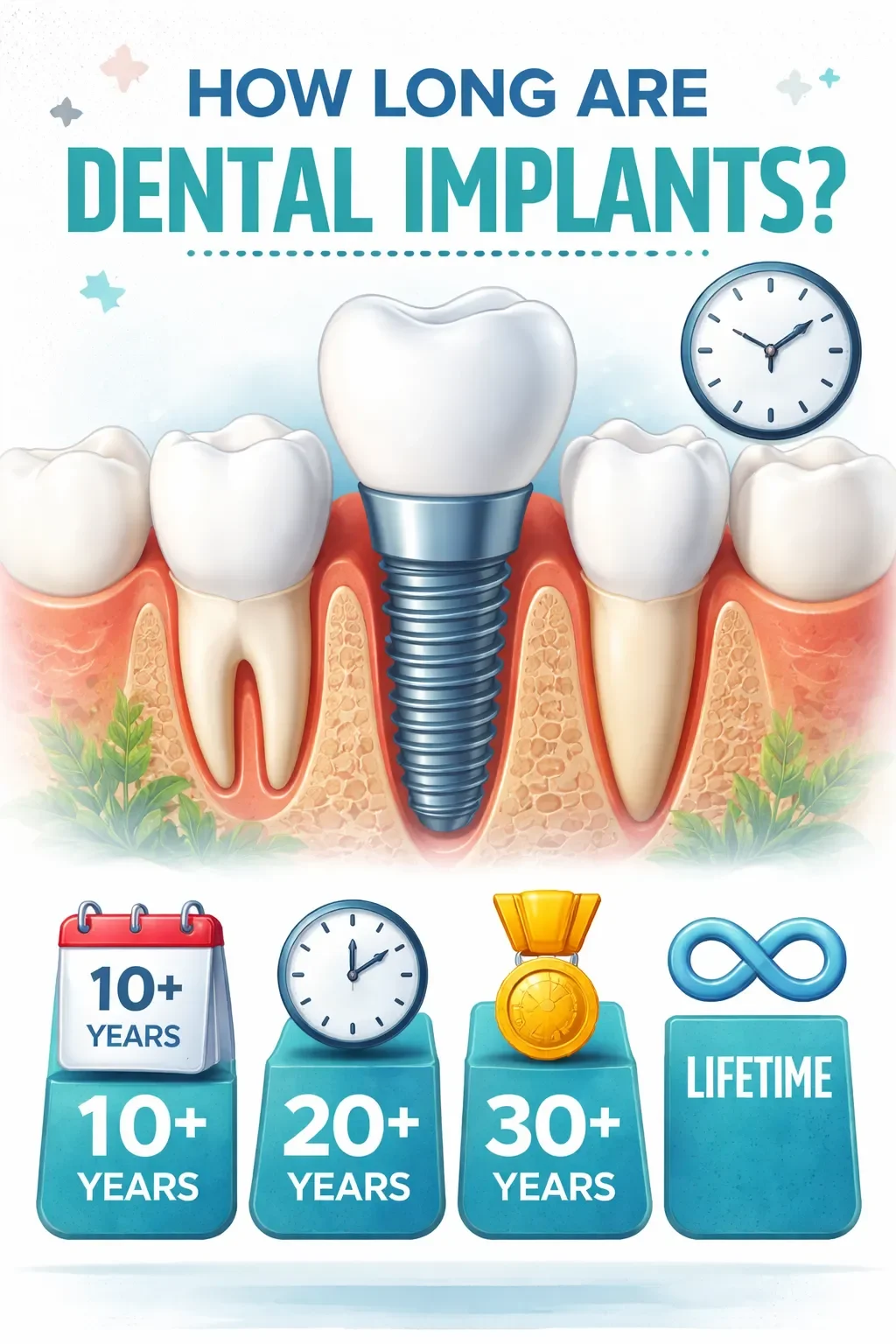
How to Maximize How Long Are Dental Implants for a Lifetime
By now, you understand that how long are dental implants depends on many factors, including bone quality, lifestyle habits, and oral hygiene. However, the most empowering part of this discussion is that patients can actively influence how long are dental implants last. With the right preventive strategies and professional care, many implants remain stable for 20, 30 years or even a lifetime. 😊
If your goal is to extend how long are dental implants as much as possible, a proactive approach is essential. Dental implants are a long-term investment in both health and confidence, and protecting that investment requires consistency and awareness.
Commit to Excellent Daily Oral Hygiene
The foundation for maximizing how long are dental implants is daily oral care. Brush at least twice a day using a soft-bristled toothbrush and non-abrasive toothpaste. Pay special attention to the gumline around the implant crown where plaque tends to accumulate.
Flossing or using interdental brushes is equally important. These tools clean areas that brushing alone cannot reach. Proper plaque control directly influences how long are dental implants remain free from inflammatory complications such as peri-implantitis.
Consider Advanced Cleaning Tools
Water flossers and antimicrobial mouth rinses can provide additional protection. These tools reduce bacterial buildup and enhance gum health, positively impacting how long are dental implants function without infection.
Schedule Regular Professional Check-Ups
Routine dental visits are critical for preserving how long are dental implants. Professional cleanings remove hardened plaque that cannot be eliminated at home. Dentists also check bite alignment, crown condition, and bone levels through digital imaging.
According to recommendations supported by the American Dental Association, preventive dental care is key to maintaining long-term oral health. Early detection of minor issues significantly increases how long are dental implants can last.
Protect Implants From Excessive Force
Mechanical stress is a major factor that can influence how long are dental implants. If you grind your teeth at night, wearing a custom night guard helps distribute pressure evenly and protect the implant structure.
Avoid chewing extremely hard objects such as ice or hard candies. Excessive force may damage the crown or abutment and potentially reduce how long are dental implants remain structurally sound.
Maintain Balanced Bite Alignment
An uneven bite can place excessive pressure on specific implants. Regular evaluations ensure proper occlusion, which directly supports how long are dental implants function without overload-related complications.
Maintain a Healthy Lifestyle
Healthy lifestyle habits significantly extend how long are dental implants. Avoid smoking, as nicotine restricts blood flow and impairs gum health. Balanced nutrition rich in calcium and vitamin D supports bone density, which strengthens implant stability.
Managing chronic conditions such as diabetes is equally important. Controlled systemic health enhances immune function and positively affects how long are dental implants remain secure.
Address Problems Early
Ignoring early warning signs can shorten how long are dental implants. If you notice gum swelling, bleeding, discomfort, or looseness, seek professional care immediately. Most implant-related issues begin as minor and treatable conditions.
Prompt treatment preserves bone support and significantly improves how long are dental implants maintain their long-term success.
Understand the Financial Perspective
In the United States, a single dental implant typically costs between $3,000 and $5,000, depending on complexity and additional procedures. Given this investment, maximizing how long are dental implants makes both medical and financial sense.
While crowns may need replacement after 10–15 years due to normal wear, the implant post itself can last decades with proper care. By protecting the surrounding tissues, patients ensure that how long are dental implants remains a long-term success story.
Personalized Care and Long-Term Planning
Every patient is unique. Bone quality, bite dynamics, and oral hygiene habits vary from person to person. A personalized maintenance plan tailored to your needs is the most effective way to maximize how long are dental implants.
If you would like a professional evaluation to understand how to extend how long are dental implants in your specific case, you can schedule a consultation through the Redent Klinik Contact Page. A comprehensive assessment will provide individualized recommendations.
In conclusion, how long are dental implants can often be measured in decades, and in many cases, a lifetime. By maintaining excellent oral hygiene, attending regular dental visits, protecting against mechanical stress, and living a healthy lifestyle, you can significantly extend how long dental implants last. With proper care and professional guidance, your dental implants can provide strength, stability, and confidence for many years to come. 😁