
When people consider replacing missing teeth, one of the first questions they ask is surprisingly simple: how long have dental implants been around? Understanding the history of this dental innovation helps patients feel more confident about the procedure. Dental implants may seem like a modern medical advancement, but the truth is that the concept of replacing missing teeth with artificial roots has existed for thousands of years. Today, dental implants are considered one of the most reliable and long-lasting solutions for tooth loss, but their journey began long before modern dentistry existed.
The question how long have dental implants been around actually leads us deep into ancient history. Archaeological discoveries show that early civilizations experimented with replacing missing teeth as far back as 2000 BCE. Ancient cultures were incredibly innovative when it came to dental restoration. For example, ancient Egyptians reportedly attempted to stabilize loose teeth using gold wires. Meanwhile, the Mayan civilization is famous for using pieces of seashell shaped like teeth that were inserted into the jawbone. Surprisingly, modern research shows that these shells fused partially with the bone, demonstrating an early version of what dentists today call osseointegration.
Understanding how long have dental implants been around also requires recognizing how the idea evolved across different civilizations. Ancient Chinese texts from around 2000 years ago describe the use of carved bamboo pegs inserted into the jaw to replace missing teeth. Similarly, archaeological findings from Central America reveal skulls where carved shell or stone pieces were placed into tooth sockets. While these early attempts were primitive compared to modern procedures, they show that humans have long searched for permanent tooth replacement solutions.
Despite these early innovations, the modern understanding of how long have dental implants been around truly begins in the 20th century. The biggest breakthrough came in the 1950s when Swedish orthopedic surgeon Dr. Per-Ingvar Brånemark accidentally discovered a biological process called osseointegration. During an experiment studying bone healing, he observed that titanium could fuse permanently with living bone tissue. This discovery revolutionized dentistry because it provided the scientific foundation needed for stable dental implants.
Once scientists understood osseointegration, dental professionals began exploring implant treatments in a controlled and predictable way. By the 1960s and 1970s, titanium dental implants were being placed in patients with increasing success rates. This period is critical when discussing how long have dental implants been around, because it marks the transition from experimental procedures to reliable clinical treatments.
Today, dental implants are considered the gold standard for replacing missing teeth. Millions of implants are placed every year around the world. Organizations like the American Dental Association recognize implant dentistry as a safe and highly effective treatment when performed by qualified professionals. Modern implants are typically made from biocompatible titanium or zirconia and are designed to integrate seamlessly with the jawbone.
Patients often ask how long have dental implants been around because they want reassurance that the procedure is safe and proven. Fortunately, modern implant dentistry now has more than 60 years of scientific research supporting it. Clinical studies show that dental implants have success rates exceeding 95% in healthy patients. With proper oral hygiene and regular dental checkups, implants can last decades and often even a lifetime.
Another important reason people ask how long have dental implants been around is because they want to understand whether the technology is stable and well-tested. Over the years, implant design has evolved significantly. Early implants were relatively simple metal screws, but modern systems feature advanced surface treatments, digital planning technology, and precision surgical guides. These improvements make the procedure safer, faster, and more predictable for patients.
For individuals considering implants, understanding how long have dental implants been around can also help reduce anxiety about the procedure. Dental implant surgery today is minimally invasive and typically performed with local anesthesia or sedation. Most patients report far less discomfort than they expected. In fact, many say the recovery process feels similar to having a routine tooth extraction.
Another advantage of dental implants is that they protect overall oral health. Unlike traditional dentures or bridges, implants stimulate the jawbone just like natural tooth roots. This stimulation prevents bone loss, which often occurs after tooth loss. As a result, implants help maintain facial structure and prevent the sunken appearance sometimes associated with missing teeth.
If you are exploring treatment options and wondering how long have dental implants been around, speaking with an experienced dental clinic can help you understand whether implants are right for you. Every patient’s oral health situation is different, and a personalized evaluation is essential for successful treatment. If you would like professional guidance or a consultation about dental implant solutions, you can reach out through the Redent Klinik Contact Page.
In summary, the answer to how long have dental implants been around is both fascinating and reassuring. While ancient civilizations experimented with primitive tooth replacements thousands of years ago, modern dental implants as we know them today have been safely used since the mid-20th century. Thanks to decades of scientific research, technological innovation, and clinical experience, dental implants are now one of the most trusted solutions for restoring missing teeth and improving quality of life. 😊
The Origins: How Long Have Dental Implants Been Around in Early Civilizations?
When exploring the question how long have dental implants been around, the answer takes us much further back in history than many people expect. Although modern dental implant procedures rely on advanced technology and surgical precision, the basic idea of replacing missing teeth with artificial structures has existed for thousands of years. Early civilizations were surprisingly resourceful when it came to solving dental problems, and archaeological discoveries reveal that people experimented with tooth replacement long before modern dentistry was established.
The curiosity surrounding how long have dental implants been around often begins with ancient cultures that tried to restore missing teeth using the materials available to them. While these early solutions were primitive compared to today’s titanium implants, they demonstrate that the desire for permanent tooth replacement is not a modern concept. Humans have always valued healthy teeth not only for chewing but also for appearance, communication, and social confidence.
Ancient Civilizations and Early Tooth Replacement Attempts
To truly understand how long have dental implants been around, we must examine evidence from ancient societies. Archaeologists have discovered several fascinating examples of early tooth replacements across different regions of the world. These early procedures may not meet modern surgical standards, but they clearly demonstrate an early understanding that missing teeth could be replaced with artificial substitutes.
One of the most famous discoveries related to how long have dental implants been around comes from the Mayan civilization. Researchers found a skull dating back to approximately 600 AD that contained pieces of carved seashell inserted into the jawbone where teeth were missing. Remarkably, modern analysis showed that the shell fragments had partially fused with the bone, suggesting an early form of biological integration. This finding indicates that ancient people may have unintentionally discovered principles similar to modern implant integration.
Another interesting historical example related to how long have dental implants been around comes from ancient Egypt. Although Egyptians did not place implants inside the jawbone the way modern dentistry does, they attempted to stabilize loose teeth by binding them with gold wire. These procedures show that dental practitioners in ancient cultures were already trying to restore both function and aesthetics.
Materials Used in Early Dental Implant Experiments
One of the most fascinating aspects of studying how long have dental implants been around is examining the materials ancient cultures used for tooth replacements. Without access to modern biocompatible metals or ceramics, early societies experimented with organic and natural materials. Archaeological evidence suggests that ancient practitioners used substances such as shells, stones, carved ivory, bamboo pegs, and even animal bones.
For example, early Chinese civilizations reportedly used bamboo pegs inserted into the jawbone to replace missing teeth. Although these primitive implants were not sterile and lacked surgical planning, they represent a remarkable attempt to recreate natural tooth roots. These discoveries are important when discussing how long have dental implants been around because they highlight how long humanity has been searching for permanent tooth replacement solutions.
Similarly, in parts of ancient Europe and the Middle East, some cultures experimented with carved bone or metal fragments placed into tooth sockets. While many of these attempts were unsuccessful due to infection or rejection, they laid the conceptual groundwork for what would eventually become modern dental implants.
Why Ancient Implant Attempts Were Often Unsuccessful
Even though history reveals fascinating examples when asking how long have dental implants been around, it is important to understand that many early procedures did not succeed. Ancient practitioners lacked the knowledge of bacteria, sterile surgical techniques, and bone biology that modern dentists rely on today. As a result, infections, inflammation, and implant failure were common.
Another limitation affecting early implant success was the lack of suitable materials. Modern dental implants are usually made from titanium because it integrates naturally with bone through a process known as osseointegration. Ancient materials like stone, shell, or wood did not consistently bond with the jawbone, which meant implants often became loose or were rejected by the body.
Nevertheless, these early experiments still play a crucial role in answering how long have dental implants been around. They show that humans have been attempting to replace missing teeth for millennia. Even when early procedures failed, each attempt contributed to the long historical journey that eventually led to modern implant dentistry.
The Turning Point Toward Scientific Implant Dentistry
The long history behind how long have dental implants been around eventually led researchers to explore more reliable methods of tooth replacement. By the 19th and early 20th centuries, dentists began experimenting with metals such as gold, platinum, and iridium. While these materials sometimes worked better than earlier substances, they still lacked the biological compatibility needed for predictable results.
The true scientific breakthrough would not occur until the mid-20th century, when researchers discovered that titanium could bond directly with bone tissue. This discovery transformed the answer to how long have dental implants been around from a story of experimentation into a modern medical success. Today’s implants are designed with precise engineering, digital imaging, and surgical planning that allow dentists to place implants safely and effectively.
For patients researching treatment options and wondering how long have dental implants been around, this long history provides reassurance that the concept has been studied and improved for generations. Modern implant dentistry is supported by decades of clinical research and is widely recognized as a reliable solution for missing teeth.
If you are considering implant treatment or want expert advice about replacing missing teeth, consulting a professional dental clinic is the best first step. You can learn more about treatment options and schedule a consultation through the Redent Klinik Contact Page. Trusted organizations like the American Dental Association also provide valuable information about dental health and implant safety.
Ultimately, when we ask how long have dental implants been around, the answer stretches from ancient civilizations experimenting with shells and bamboo to today’s sophisticated titanium implants that restore smiles worldwide. This remarkable journey demonstrates humanity’s long-standing determination to restore oral health, improve quality of life, and maintain confident smiles across generations. 😊
Ancient Dental Innovations That Led to Modern Dental Implants
Understanding how long have dental implants been around requires more than simply identifying when the first implant was placed. It also involves exploring the remarkable dental innovations that ancient civilizations developed long before modern implant dentistry existed. Throughout history, people have consistently searched for ways to replace missing teeth, improve oral function, and maintain a healthy smile. These early experiments laid the foundation for modern dental implant technology and ultimately shaped the answer to the question how long have dental implants been around.
Although modern dental implants rely on advanced surgical techniques and biocompatible materials, the underlying concept of replacing a missing tooth root with an artificial structure has been explored for thousands of years. The historical timeline behind how long have dental implants been around includes many fascinating examples of creativity, experimentation, and gradual improvement in dental care.
Early Attempts to Replace Missing Teeth
When historians investigate how long have dental implants been around, they often begin by examining early methods used to restore lost teeth. Tooth loss has always been a common health problem caused by injury, decay, infection, or aging. Ancient communities quickly realized that missing teeth could affect eating, speaking, and social interaction, which encouraged them to experiment with different replacement techniques.
One of the most notable discoveries related to how long have dental implants been around comes from archaeological findings in Central America. Researchers discovered a Mayan skull dating back approximately 1,400 years that contained three shell fragments placed in the lower jaw where teeth were missing. Modern analysis revealed that the surrounding bone had grown around the shell pieces, suggesting partial integration. This discovery indicates that ancient people unknowingly created an early form of implant stabilization.
In addition to the Mayans, other cultures also experimented with tooth replacement. For example, ancient Egyptian dental texts describe techniques for stabilizing teeth using gold wires or bands. While these methods were not implants in the modern sense, they demonstrate that ancient practitioners understood the importance of maintaining oral function. Such discoveries contribute significantly to the broader historical narrative explaining how long have dental implants been around.
Materials Used by Ancient Dental Practitioners
Exploring the materials used in early dental treatments provides deeper insight into how long have dental implants been around. Without access to modern dental materials like titanium or zirconia, ancient practitioners relied on resources found in nature. Archaeologists have documented several materials used in early tooth replacement experiments.
Some of the most commonly discovered materials include:
- Seashell fragments shaped to resemble teeth
- Carved animal bone or ivory
- Small stones or jade pieces
- Bamboo pegs used in early Chinese dental treatments
- Metal wires made from gold or silver
Each of these materials represents an early attempt to answer the same problem that modern dentists address today. Although ancient practitioners did not understand the biological mechanisms involved in implant integration, their innovations still contribute to the long timeline explaining how long have dental implants been around.
Limitations of Early Implant Techniques
While these ancient dental innovations are impressive, they also highlight why modern implant dentistry took centuries to develop. Many early procedures failed due to infection, inflammation, or material incompatibility. Understanding these limitations helps clarify the full historical context behind how long have dental implants been around.
Ancient dentists did not have access to sterile surgical environments, antibiotics, or modern anesthesia. As a result, placing foreign materials into the jawbone often caused complications. In addition, early implant materials did not bond well with bone tissue. Without proper integration, these replacements frequently loosened or fell out.
Despite these challenges, early experimentation remained essential in the long journey toward modern dental implants. Each attempt contributed knowledge and experience that gradually improved dental treatments. This historical progression is key to answering how long have dental implants been around and understanding how dentistry evolved into the advanced medical field we know today.
The Transition Toward Scientific Implant Dentistry
By the 18th and 19th centuries, dentistry began to develop as a recognized medical profession. Researchers and dental practitioners started studying oral anatomy, bone structure, and surgical techniques more systematically. These advancements marked an important turning point in the story of how long have dental implants been around.
During this period, dentists experimented with different metal implants, including gold, platinum, and iridium. While some of these materials performed better than earlier natural substances, they still lacked the ability to integrate fully with the jawbone. As a result, implant success remained unpredictable.
Nevertheless, these experiments were critical in advancing dental knowledge. They encouraged researchers to explore the biological relationship between bone and artificial materials. This scientific curiosity eventually led to one of the most important discoveries in dental history: osseointegration.
The Role of Osseointegration in Implant Development
The modern understanding of how long have dental implants been around changed dramatically in the 1950s with the discovery of osseointegration. Swedish researcher Dr. Per-Ingvar Brånemark observed that titanium could fuse directly with bone tissue without rejection. This discovery provided the scientific foundation needed for modern dental implant procedures.
Once dentists understood how titanium interacts with bone, implant dentistry became far more predictable and successful. The discovery of osseointegration transformed implant treatments from experimental procedures into reliable clinical solutions. Today, this process remains the cornerstone of modern dental implants.
Organizations such as the American Dental Association recognize implant dentistry as one of the most effective methods for replacing missing teeth. Modern implants are designed to mimic natural tooth roots and support crowns, bridges, or dentures with exceptional stability.
Patients who are researching treatment options and wondering how long have dental implants been around often feel reassured by this long history of innovation. Implant dentistry has evolved through centuries of experimentation, scientific discovery, and technological improvement.
If you are considering dental implants and want professional guidance about your treatment options, speaking with an experienced dental clinic is essential. You can schedule a consultation or ask questions about implant procedures through the Redent Klinik Contact Page. A personalized evaluation helps determine whether implants are the best solution for restoring your smile.
Ultimately, the story behind how long have dental implants been around reflects humanity’s ongoing effort to improve oral health and quality of life. From ancient shell implants to modern titanium technology, the evolution of dental implants demonstrates how innovation, science, and determination can transform healthcare and restore confident smiles around the world. 😊
When Modern Implant Dentistry Began: The Discovery of Osseointegration
When discussing how long have dental implants been around, ancient civilizations provide fascinating clues, but the real turning point in dental history occurred in the mid-20th century. The discovery of a biological process known as osseointegration transformed experimental tooth replacements into the reliable dental implants used today. Before this discovery, many attempts to place artificial tooth roots inside the jawbone failed due to rejection, infection, or poor stability. Once scientists understood how bone could naturally fuse with certain materials, modern implant dentistry was born.
The question how long have dental implants been around is therefore closely connected to the moment when dental science discovered how implants could permanently integrate with bone. This breakthrough changed dentistry forever and provided the scientific foundation for today’s successful implant procedures.
The Accidental Discovery That Changed Dentistry
The modern chapter of the story behind how long have dental implants been around began in the 1950s with Swedish orthopedic surgeon Dr. Per-Ingvar Brånemark. While studying how bone heals after injury, Brånemark conducted experiments using titanium chambers placed inside animal bones. These chambers allowed him to observe bone regeneration through a microscope.
When the experiment ended, Brånemark attempted to remove the titanium devices from the bone. Surprisingly, he discovered that the metal had fused completely with the surrounding bone tissue. The titanium could not be removed without breaking the bone itself. This unexpected observation revealed an entirely new biological phenomenon.
This discovery became known as osseointegration, a process in which bone grows tightly around a metal implant, creating a stable and permanent connection. The discovery dramatically reshaped the answer to how long have dental implants been around because it made predictable implant dentistry possible for the first time.
Why Titanium Became the Ideal Implant Material
Understanding why titanium works so well helps explain the modern history behind how long have dental implants been around. Titanium possesses several properties that make it ideal for medical implants. It is lightweight, strong, corrosion-resistant, and most importantly, biocompatible with human tissue.
Unlike many metals that trigger immune reactions, titanium is accepted by the body and allows bone cells to attach directly to its surface. This property enables osseointegration and ensures that implants remain stable for decades. Once dentists understood this process, the future of dental implantology became clear.
The discovery of titanium’s compatibility with bone provided the missing scientific link that earlier civilizations lacked when experimenting with tooth replacement. As a result, discussions about how long have dental implants been around often highlight this breakthrough as the true birth of modern implant dentistry.
The First Modern Dental Implant Procedure
After recognizing the potential of osseointegration, Dr. Brånemark began exploring how titanium implants could be used to replace missing teeth. In 1965, he placed the first successful modern dental implant into a human patient. The patient had severe jaw deformities and struggled with conventional dentures.
The titanium implants were inserted into the jawbone and later used to support prosthetic teeth. Remarkably, these implants remained stable for many years, proving that the technique could work reliably in clinical practice. This milestone dramatically influenced the modern understanding of how long have dental implants been around.
Following this successful case, Brånemark and his research team spent years refining implant designs, surgical techniques, and patient selection methods. Their work gradually convinced the dental community that implants could become a mainstream treatment for tooth loss.
Scientific Acceptance of Implant Dentistry
Despite the success of early implants, it took several decades for implant dentistry to gain widespread acceptance. Many dental professionals initially questioned whether implants could remain stable long-term. Researchers conducted numerous clinical studies to confirm the safety and effectiveness of titanium implants.
By the 1980s, the evidence became overwhelming. Studies demonstrated success rates exceeding 90 percent, and dental implants began to be recognized as a reliable treatment option. This era further clarified the modern interpretation of how long have dental implants been around, showing that implants have been scientifically validated for more than half a century.
Professional organizations such as the American Dental Association now recognize implant dentistry as one of the most predictable solutions for replacing missing teeth. Modern dental implants are used worldwide to support crowns, bridges, and full-arch restorations.
How Implant Dentistry Continues to Evolve
Although the discovery of osseointegration answered many questions about how long have dental implants been around, implant technology continues to evolve today. Modern implants feature advanced surface treatments that encourage faster bone integration. Digital imaging technologies such as 3D scans allow dentists to plan implant placement with exceptional accuracy.
Computer-guided surgery, minimally invasive techniques, and improved implant materials have made procedures safer and more comfortable for patients. These advancements show how far implant dentistry has progressed since the original discovery in the 1950s.
Today, millions of dental implants are placed every year around the world. Success rates frequently exceed 95 percent when implants are placed by experienced professionals and patients maintain proper oral hygiene.
For patients researching treatment options and wondering how long have dental implants been around, this history provides strong reassurance. Modern implants are backed by decades of research, technological innovation, and clinical success.
If you are interested in learning whether implants are suitable for your dental needs, professional guidance can help you make an informed decision. You can ask questions or schedule a consultation through the Redent Klinik Contact Page. Experienced dental specialists can evaluate your oral health and recommend the best treatment plan for restoring your smile.
In summary, while the idea of replacing missing teeth dates back thousands of years, the modern answer to how long have dental implants been around truly begins with the discovery of osseointegration in the 1950s. This breakthrough transformed dentistry, enabling implants to become one of the most successful and long-lasting treatments for tooth replacement available today. 😊
How Long Have Dental Implants Been Around in Modern Dentistry?
When people ask how long have dental implants been around, they are often surprised to learn that while the concept dates back thousands of years, modern dental implants have been successfully used in clinical dentistry for more than six decades. Since the discovery of osseointegration in the 1950s, dental implants have transformed from experimental procedures into one of the most reliable treatments for replacing missing teeth. Today, implant dentistry is a cornerstone of restorative dental care, providing long-lasting and natural-looking solutions for patients worldwide.
Understanding how long have dental implants been around in modern dentistry requires looking at the timeline of scientific development, technological advancements, and clinical adoption. Over the past 60 years, dental implants have evolved significantly, benefiting from improved materials, surgical techniques, and digital treatment planning. These improvements have dramatically increased implant success rates and patient satisfaction.
The Early Years of Modern Implant Dentistry
The modern era that answers the question how long have dental implants been around began after the discovery of osseointegration by Dr. Per-Ingvar Brånemark. Once researchers confirmed that titanium could bond directly with bone tissue, dental scientists started developing implant systems designed specifically for tooth replacement.
In the 1960s and 1970s, early titanium implants were introduced into clinical practice. These implants were relatively simple in design compared to today’s systems, but they demonstrated remarkable stability once integrated with the jawbone. Early patients who received these implants often kept them for decades, proving that implant dentistry could be both durable and effective.
This period is crucial when discussing how long have dental implants been around because it represents the moment when dental implants transitioned from laboratory experiments into real-world treatments. Dentists and oral surgeons gradually adopted implant procedures, and research studies began documenting their success rates.
Growing Acceptance in the Dental Community
During the early years of implant dentistry, many dental professionals were cautious about adopting the new technology. However, as clinical studies continued to confirm the effectiveness of implants, confidence grew within the dental community. Researchers demonstrated that when implants properly fused with the bone, they could remain stable for many years.
By the 1980s, dental implants had become more widely accepted. Scientific conferences, training programs, and academic publications helped educate dentists about implant techniques. These developments further clarified how long have dental implants been around as a mainstream dental treatment.
Organizations such as the American Dental Association began recognizing implant dentistry as a predictable treatment option when performed by trained professionals. As a result, more dental clinics started offering implant procedures to patients who had lost one or more teeth.
Technological Advancements in Implant Dentistry
As technology improved, the answer to how long have dental implants been around expanded beyond simply counting years. Implant systems themselves evolved rapidly. Modern implants now include sophisticated surface treatments that enhance bone integration and reduce healing time.
Some of the most significant technological improvements include:
- Roughened implant surfaces that promote faster bone attachment
- Advanced titanium alloys with superior strength
- Digital imaging such as 3D cone-beam CT scans
- Computer-guided implant placement systems
- Custom prosthetic crowns created using CAD/CAM technology
These advancements allow dentists to plan implant procedures with incredible precision. Today, dentists can evaluate bone density, determine the optimal implant angle, and minimize surgical trauma. These improvements demonstrate how implant dentistry continues to evolve even decades after the initial discovery that answered how long have dental implants been around.
Modern Implant Materials
Another important development in implant dentistry involves the materials used to manufacture implants. Titanium remains the most widely used material because of its exceptional biocompatibility and strength. However, modern dentistry has also introduced zirconia implants as an alternative option for certain patients.
Zirconia implants are ceramic-based and offer excellent aesthetic results because their white color blends naturally with surrounding teeth and gum tissue. While titanium implants still dominate the field, zirconia technology represents another step forward in the ongoing evolution that defines how long have dental implants been around in modern practice.
Why Dental Implants Are Now the Gold Standard
Today, dental implants are widely considered the gold standard for replacing missing teeth. When patients research how long have dental implants been around, they often want reassurance that the treatment is safe and proven. Modern implant dentistry offers exactly that.
Clinical research consistently shows that dental implants have success rates of approximately 95% or higher when placed in healthy patients with sufficient bone density. With proper oral hygiene and regular dental checkups, implants can last decades or even a lifetime.
Unlike traditional dentures or bridges, implants replace the entire tooth structure, including the root. This allows implants to stimulate the jawbone and prevent bone loss, which commonly occurs after tooth extraction. As a result, implants help preserve facial structure and maintain long-term oral health.
Another reason patients appreciate implants is their natural appearance and functionality. Once fully healed, dental implants feel and function very much like natural teeth. Patients can eat, speak, and smile confidently without worrying about loose dentures or removable appliances.
Modern Dental Implant Treatment Process
The modern implant procedure is highly structured and carefully planned. Dentists typically begin by performing a comprehensive evaluation, including digital imaging and a detailed oral examination. These steps help determine whether a patient is a suitable candidate for implants.
If you are exploring treatment options and wondering how long have dental implants been around, consulting a professional dental clinic can provide valuable guidance. An experienced dentist can assess your oral health, explain the implant procedure, and create a personalized treatment plan.
You can also reach out to experienced professionals through the Redent Klinik Contact Page to learn more about implant dentistry and schedule a consultation.
Ultimately, modern dentistry provides a reassuring answer to the question how long have dental implants been around. Although the concept of replacing teeth dates back thousands of years, the reliable implant procedures used today have been refined and perfected over more than 60 years of scientific research and clinical experience. This long history, combined with ongoing technological innovation, makes dental implants one of the most trusted and effective solutions for restoring missing teeth and improving quality of life. 😊
The Evolution of Dental Implant Materials and Technology
When people research how long have dental implants been around, they often focus on the timeline of implant dentistry. However, an equally important part of the story is how implant materials and technologies have evolved over time. Dental implants have undergone remarkable improvements since their early development in the mid-20th century. Today’s implants are safer, stronger, and more predictable than ever before, thanks to continuous innovation in materials science, digital dentistry, and surgical techniques.
The evolution of implant materials plays a central role in understanding how long have dental implants been around. Early implant experiments used materials such as gold, stainless steel, and cobalt-chromium alloys. While some of these materials showed temporary success, they often failed because they did not integrate properly with bone tissue. The breakthrough came with titanium, a metal that revolutionized implant dentistry due to its unique compatibility with human bone.
Why Titanium Became the Standard Implant Material
The discovery that titanium could integrate with bone was a turning point in answering the question how long have dental implants been around in modern dentistry. Titanium offers several properties that make it ideal for dental implants. It is lightweight yet extremely strong, resistant to corrosion, and highly biocompatible with human tissues.
Most importantly, titanium supports the biological process known as osseointegration. During this process, bone cells grow directly onto the surface of the implant, creating a stable connection between the implant and the jawbone. This fusion allows dental implants to function similarly to natural tooth roots. Because of these advantages, titanium quickly became the gold standard material used in dental implant manufacturing.
Over the decades, manufacturers have continued refining titanium implant designs. Engineers have developed different shapes, thread patterns, and surface textures to improve stability and healing. These improvements demonstrate how implant technology has evolved since researchers first began exploring how long have dental implants been around in clinical dentistry.
Surface Technology Improvements
One of the most important technological advancements in implant dentistry involves surface treatment. Early titanium implants had relatively smooth surfaces, which sometimes slowed the integration process with bone. Modern implants now feature specially treated surfaces designed to encourage faster and stronger bone attachment.
Surface treatments used today include sandblasting, acid etching, plasma spraying, and laser modification. These processes create microscopic textures on the implant surface, allowing bone cells to attach more effectively. As a result, implants can integrate more quickly and achieve higher long-term success rates.
These innovations are an important part of the ongoing story behind how long have dental implants been around. They illustrate how implant technology continues improving decades after the original discovery of osseointegration.
The Introduction of Zirconia Dental Implants
Although titanium remains the most widely used implant material, recent developments have introduced another option: zirconia implants. Zirconia is a ceramic material known for its excellent strength and aesthetic qualities. Unlike titanium, which has a metallic color, zirconia implants are white and blend more naturally with surrounding teeth and gums.
The introduction of zirconia implants represents another chapter in the history of how long have dental implants been around. These implants are particularly attractive for patients seeking metal-free dental restorations or those with sensitivities to certain metals.
While zirconia implants are still relatively new compared to titanium systems, research continues to evaluate their long-term performance. Early studies suggest that zirconia implants can achieve successful osseointegration and provide durable support for crowns and bridges.
Advantages of Modern Implant Materials
The advancements in implant materials have provided several key benefits for patients and dentists alike. These improvements contribute to the high success rates seen in modern implant dentistry.
- Improved biocompatibility with surrounding bone and gum tissue
- Enhanced stability due to optimized implant design
- Faster healing thanks to advanced surface treatments
- Greater aesthetic results with modern materials like zirconia
- Long-term durability that can last decades
These benefits help explain why dental implants have become such a popular treatment option. When patients ask how long have dental implants been around, they are often reassured to learn that modern implants are the result of decades of research and technological improvement.
The Role of Digital Technology in Implant Dentistry
Another significant advancement in implant dentistry involves the integration of digital technology. Digital tools now allow dentists to diagnose, plan, and place implants with incredible precision. These innovations represent the latest stage in the evolving history behind how long have dental implants been around.
Some of the most important digital technologies used in implant dentistry today include:
- 3D cone-beam computed tomography (CBCT) scans
- Digital intraoral scanners
- Computer-guided implant surgery
- CAD/CAM technology for custom crowns
These technologies allow dentists to visualize the patient’s jawbone structure in three dimensions before surgery. Using specialized software, clinicians can determine the optimal implant position, angle, and depth. This level of precision reduces surgical risks and improves treatment outcomes.
Patients who are curious about how long have dental implants been around often find it reassuring that modern implant procedures benefit from these advanced technologies. Digital planning ensures that implants are placed accurately while minimizing discomfort and recovery time.
Implant Longevity and Clinical Success
The combination of advanced materials and digital technology has significantly improved implant success rates. Clinical studies consistently show that modern dental implants have success rates of approximately 95% or higher. In many cases, implants can last 20 years or more, and some patients keep their implants for a lifetime with proper oral care.
Professional organizations such as the American Dental Association recognize dental implants as one of the most reliable treatments for tooth replacement. This recognition further supports the modern understanding of how long have dental implants been around as a proven and trusted dental solution.
If you are considering dental implants and want to learn whether they are suitable for your situation, speaking with an experienced dental team is the best first step. You can ask questions or schedule a consultation through the Redent Klinik Contact Page. Professional guidance helps ensure that your treatment plan is tailored to your specific needs.
In conclusion, the evolution of implant materials and technologies has played a crucial role in shaping the modern answer to how long have dental implants been around. From early experimental materials to today’s sophisticated titanium and zirconia implants supported by digital planning tools, implant dentistry continues to advance. These innovations ensure that dental implants remain one of the most effective, durable, and life-changing treatments available in modern dentistry. 😊
Success Rates and Longevity: Why Dental Implants Became the Gold Standard
One of the most common reasons people research how long have dental implants been around is because they want reassurance that the treatment is reliable and long-lasting. Dental implants have become the gold standard for tooth replacement largely because of their exceptional success rates and longevity. Compared to traditional dental bridges or removable dentures, implants offer a stable, durable, and biologically integrated solution for missing teeth.
The question how long have dental implants been around is closely connected to their clinical performance over time. Since modern implant dentistry began in the 1960s, decades of research and patient outcomes have demonstrated that implants can last many years—often decades—when placed correctly and maintained properly. This long-term success is one of the main reasons dentists recommend implants as the most advanced solution for restoring missing teeth.
Clinical Success Rates of Dental Implants
When examining how long have dental implants been around, clinical studies provide important insights into their effectiveness. Modern dental implants consistently show success rates between 95% and 98%, depending on factors such as patient health, bone quality, and proper oral hygiene.
Several factors contribute to these impressive success rates:
- Biocompatible implant materials such as titanium
- The biological process of osseointegration
- Advanced surgical planning and digital imaging
- Improved implant surface technology
- Better patient screening and treatment protocols
These elements work together to create a stable foundation that allows implants to function similarly to natural tooth roots. Because implants integrate directly with the jawbone, they offer unmatched stability compared to removable prosthetic options.
Patients researching how long have dental implants been around often find reassurance in the extensive clinical evidence supporting implant success. Long-term studies show that implants can remain functional for more than 20 years, and in many cases they last a lifetime.
Long-Term Clinical Studies
Long-term research plays a critical role in answering the question how long have dental implants been around. Many implant studies track patient outcomes for decades after treatment. These studies consistently demonstrate that well-placed implants maintain their stability and function for extended periods.
For example, some patients who received implants during the early years of modern implant dentistry in the 1960s still have functioning implants today. This remarkable durability confirms that dental implants are one of the most reliable restorative treatments in modern dentistry.
Organizations such as the American Dental Association recognize implant dentistry as a predictable treatment option supported by strong scientific evidence.
Why Dental Implants Last So Long
The durability of dental implants is another reason people frequently ask how long have dental implants been around. Unlike dentures or bridges that rely on surrounding teeth or removable appliances, implants replace the entire tooth structure, including the root.
This root replacement is essential for long-term success because it allows implants to integrate with the jawbone. The integration process creates a stable anchor that can withstand normal chewing forces.
Several key factors contribute to the long lifespan of dental implants:
- Strong integration with bone through osseointegration
- High-quality implant materials resistant to corrosion
- Proper surgical placement by trained dental professionals
- Consistent oral hygiene and regular dental checkups
When these conditions are met, dental implants can perform exceptionally well over long periods. Many dentists report patients maintaining implants for 30 years or longer.
Patient Care and Maintenance
Even though dental implants are highly durable, proper care is essential for maximizing their lifespan. Understanding how long have dental implants been around also means recognizing the importance of ongoing oral health maintenance.
Patients with implants should follow standard oral hygiene practices, including:
- Brushing teeth twice daily with fluoride toothpaste
- Flossing regularly to remove plaque around the implant
- Scheduling routine dental checkups and professional cleanings
- Avoiding smoking, which can impair healing and bone health
These habits help protect both the implant and surrounding gum tissue, reducing the risk of complications such as peri-implantitis, a condition similar to gum disease that can affect implants.
Comparison With Other Tooth Replacement Options
Another reason dental implants have become so popular relates to how they compare with other tooth replacement methods. Patients researching how long have dental implants been around often want to know how implants differ from traditional dentures or bridges.
Here are some key differences:
- Dental bridges: Typically last 10–15 years and require grinding down adjacent teeth for support.
- Removable dentures: Usually need replacement every 5–10 years and may become loose over time.
- Dental implants: Can last decades and preserve surrounding teeth and jawbone structure.
Because implants function like natural tooth roots, they prevent bone loss in the jaw. This benefit is especially important because bone deterioration can change facial appearance and cause long-term oral health problems.
The ability of implants to preserve bone structure further strengthens the modern understanding of how long have dental implants been around as a treatment with lasting health benefits.
Patient Confidence and Quality of Life
Beyond clinical success, dental implants significantly improve quality of life for many patients. People who lose teeth often experience difficulties with eating, speaking, and self-confidence. Dental implants restore both function and aesthetics, allowing patients to enjoy a natural-looking smile.
Patients frequently report improved comfort and confidence after implant treatment. Unlike removable dentures, implants remain securely fixed in the mouth, allowing individuals to eat a wide variety of foods without discomfort or fear of slippage.
If you are researching how long have dental implants been around and considering treatment for missing teeth, consulting an experienced dental professional is the best next step. A personalized consultation can determine whether implants are the right solution for your specific oral health needs.
You can learn more about implant treatment options or schedule a consultation through the Redent Klinik Contact Page. Professional evaluation ensures that your treatment plan is tailored to your individual situation.
In summary, the long history behind how long have dental implants been around is supported by decades of clinical success and patient satisfaction. Their exceptional durability, high success rates, and ability to restore both function and aesthetics make dental implants one of the most trusted treatments in modern dentistry. As implant technology continues to evolve, patients can expect even better outcomes and longer-lasting results in the future. 😊
How Dental Implant Procedures Have Improved Over the Years
When patients ask how long have dental implants been around, they are often surprised not only by the history but also by how dramatically the procedure has improved over time. Modern dental implant treatment is far more advanced, precise, and comfortable than the early procedures developed in the mid-20th century. Over the decades, improvements in surgical techniques, diagnostic technology, implant design, and patient care have transformed implant dentistry into one of the most predictable treatments in modern medicine.
Understanding how long have dental implants been around also means recognizing how much innovation has occurred since the first successful titanium implants were placed. Early procedures required longer healing periods, less precise imaging, and more invasive surgical techniques. Today, dental implant treatment benefits from digital planning, minimally invasive surgery, and highly refined materials that significantly improve outcomes for patients.
The Evolution of Dental Implant Surgery Techniques
In the early years of implant dentistry, surgeons relied primarily on traditional X-rays and manual surgical planning. Although these techniques were effective, they lacked the precision available today. Over time, advances in surgical protocols have dramatically improved implant placement accuracy and patient comfort.
These advancements help explain why the modern understanding of how long have dental implants been around includes not only the timeline of implants themselves but also the evolution of the procedures used to place them.
Key improvements in surgical techniques include:
- More precise surgical guides for implant placement
- Minimally invasive techniques that reduce tissue trauma
- Improved anesthesia and sedation methods
- Better infection control and sterilization standards
- Advanced training programs for implant specialists
These improvements have made dental implant surgery safer and more predictable. Patients who once worried about discomfort during implant placement now often find the procedure surprisingly comfortable.
Minimally Invasive Implant Surgery
One of the most important improvements in implant dentistry involves minimally invasive surgical techniques. In earlier implant procedures, larger incisions were often required to expose the jawbone fully. Today, many implants can be placed using smaller incisions or even flapless techniques.
This development is an important part of the story behind how long have dental implants been around, because it demonstrates how patient-centered modern implant dentistry has become.
Benefits of minimally invasive implant surgery include:
- Reduced surgical trauma
- Less swelling and bleeding
- Faster healing times
- Shorter recovery periods
These advantages make dental implants a much more comfortable experience than many patients expect.
The Role of Digital Imaging and 3D Technology
Another major improvement in implant dentistry involves digital imaging technology. In the past, dentists relied on two-dimensional radiographs to evaluate bone structure before placing implants. Today, advanced imaging tools allow dentists to visualize the jaw in three dimensions.
These technologies have significantly enhanced the answer to the question how long have dental implants been around, because they demonstrate how far implant procedures have progressed since their early development.
Modern diagnostic tools include:
- 3D cone-beam computed tomography (CBCT)
- Digital intraoral scanners
- Computer-guided surgical planning software
- Virtual implant simulation
Using these technologies, dentists can precisely evaluate bone density, nerve location, and sinus cavities before surgery. This detailed planning reduces complications and ensures that implants are placed in the optimal position.
Computer-Guided Implant Placement
Computer-guided implant surgery is one of the most revolutionary advancements in modern dentistry. With digital planning software, dentists can create a virtual model of the patient’s jaw and simulate the implant placement before the procedure even begins.
Special surgical guides are then produced to ensure the implant is placed exactly according to the digital plan. This precision significantly improves outcomes and further strengthens the modern understanding of how long have dental implants been around as a continually evolving field.
Faster Healing and Immediate Implant Techniques
Another major improvement in implant procedures is the reduction in healing time. In the early days of implant dentistry, patients often had to wait several months before receiving their final crown. Today, advances in implant surface technology and surgical protocols allow faster healing and sometimes even same-day tooth replacement.
This progress represents another milestone in the timeline explaining how long have dental implants been around. Modern implants are designed to encourage faster bone integration, allowing dentists to restore function more quickly.
Some advanced implant techniques now include:
- Immediate implant placement after tooth extraction
- Same-day temporary crowns in selected cases
- Accelerated healing protocols
- Advanced bone grafting techniques
These developments significantly improve patient convenience and overall treatment efficiency.
Improved Patient Safety and Treatment Planning
Another reason dental implant procedures have improved so much relates to patient evaluation and treatment planning. Dentists now conduct thorough medical and dental assessments before recommending implants. This careful planning ensures that implants are placed in patients who have adequate bone support and healthy gums.
Modern implant dentistry also includes specialized training programs for dentists and oral surgeons. These educational programs ensure that professionals placing implants understand both the surgical and restorative aspects of implant treatment.
Patients researching how long have dental implants been around often find reassurance in the rigorous clinical standards used today. Implant dentistry is now supported by decades of scientific research and extensive professional training.
Organizations like the American Dental Association emphasize the importance of proper training and patient evaluation to ensure safe and successful implant procedures.
The Patient Experience Today
Modern implant procedures are designed with patient comfort and convenience in mind. Sedation options, precise surgical planning, and improved implant materials all contribute to a more positive treatment experience.
For many patients, dental implant surgery today is comparable to a routine dental extraction in terms of discomfort. Recovery times are typically short, and most individuals return to normal activities within a few days.
If you are researching how long have dental implants been around and considering treatment, consulting a qualified dental clinic can help you understand your options. A personalized evaluation allows your dentist to determine whether implants are the best solution for your oral health needs.
You can ask questions or schedule a consultation through the Redent Klinik Contact Page. Professional guidance ensures that your implant treatment is carefully planned and tailored to your unique situation.
In summary, the improvements in implant procedures over the years demonstrate how far dentistry has progressed since the early days of implant research. While the answer to how long have dental implants been around includes decades of scientific advancement, the technology continues to evolve. These ongoing innovations ensure that dental implants remain one of the most reliable, comfortable, and life-changing solutions for restoring missing teeth. 😊
Comparing Early Dental Implants to Today’s Advanced Implant Systems
When exploring the question how long have dental implants been around, it is helpful to compare the earliest implant experiments with the sophisticated implant systems used in modern dentistry. While ancient civilizations attempted primitive tooth replacements thousands of years ago, today’s implants are the result of decades of scientific research, technological innovation, and clinical refinement. Understanding this comparison not only answers how long have dental implants been around, but also highlights how dramatically implant dentistry has evolved.
Modern dental implants are now considered one of the most advanced restorative treatments available. However, early attempts to replace missing teeth looked very different from the procedures performed today. The journey from ancient shell implants to digitally planned titanium implants represents a fascinating transformation in dental science.
Early Dental Implant Attempts in History
To fully understand how long have dental implants been around, we must first look at the earliest documented attempts to replace missing teeth. Archaeological evidence suggests that ancient civilizations experimented with primitive implants as far back as 2000 years ago. These early procedures often involved inserting natural materials into the jawbone to mimic the function of missing teeth.
For example, researchers discovered a Mayan skull with small shell fragments placed in the jaw where teeth were missing. Surprisingly, bone had grown around the shells, suggesting a primitive form of integration. Although these ancient techniques were not scientifically planned, they show that humans have long searched for permanent tooth replacement solutions.
Ancient cultures used various materials in their experiments, including:
- Carved seashell fragments
- Animal bone or ivory
- Bamboo pegs
- Stone or jade pieces
- Metal wires or bands
These materials reflect early attempts to solve dental problems without the scientific understanding available today. When discussing how long have dental implants been around, these early experiments demonstrate the long history of innovation that eventually led to modern implant technology.
Limitations of Early Implant Methods
Despite their creativity, early dental implant methods had significant limitations. Ancient practitioners did not understand bacteria, bone biology, or sterile surgical techniques. As a result, many early implants failed due to infection, rejection, or poor stability.
Another major challenge was the lack of suitable materials. Modern dental implants are designed to integrate with bone through osseointegration, but ancient materials like stone or shell could not reliably bond with bone tissue. These limitations prevented early implants from achieving consistent long-term success.
Nevertheless, these historical attempts still contribute to answering how long have dental implants been around. They represent the earliest stages of a long journey toward the safe and predictable implant procedures available today.
The Development of Modern Implant Systems
The real breakthrough in implant dentistry occurred during the 1950s when researchers discovered the biological process known as osseointegration. Swedish scientist Dr. Per-Ingvar Brånemark observed that titanium could fuse directly with bone tissue, creating a stable and permanent connection. This discovery transformed implant dentistry and redefined the modern answer to how long have dental implants been around.
Once scientists understood how bone could integrate with titanium, dental implant systems began to develop rapidly. Engineers designed implants with precise shapes, threads, and surface textures to maximize stability and healing. Over time, these improvements significantly increased implant success rates.
Today’s implant systems typically consist of three main components:
- The titanium implant screw that functions as the artificial root
- The abutment that connects the implant to the prosthetic tooth
- The dental crown that restores the visible part of the tooth
This multi-component design allows implants to function very similarly to natural teeth. It also explains why dental implants have become the preferred solution for replacing missing teeth.
Advancements in Implant Design
Modern implant design has evolved significantly since the earliest titanium implants were introduced. Today’s implants are engineered to maximize both stability and long-term success. Manufacturers now offer a wide range of implant shapes, sizes, and surface treatments designed to meet the needs of different patients.
Key improvements in implant design include:
- Threaded implants for improved bone stability
- Surface treatments that accelerate bone integration
- Short implants for patients with limited bone height
- Narrow implants for areas with restricted space
These innovations demonstrate how implant dentistry continues evolving even decades after researchers first began studying how long have dental implants been around in modern clinical practice.
The Role of Digital Dentistry in Modern Implants
Another major difference between early implants and modern systems involves digital technology. Today, dentists use advanced imaging tools to plan implant placement with incredible accuracy. Technologies such as cone-beam CT scanning allow dentists to evaluate bone density, nerve locations, and sinus structures before surgery.
This level of precision was impossible in the early days of implant dentistry. Modern digital tools have significantly improved both safety and success rates, further strengthening the reliability of implant treatment.
Patients researching how long have dental implants been around are often reassured by these technological advancements. Digital planning ensures implants are placed precisely, reducing complications and improving long-term outcomes.
Professional organizations like the American Dental Association recognize dental implants as one of the most predictable restorative treatments available today.
Benefits of Modern Dental Implant Systems
Modern dental implants offer numerous advantages compared to early implant attempts or traditional tooth replacement options. These benefits help explain why implants have become the gold standard in restorative dentistry.
- Exceptional stability and chewing function
- Natural appearance that blends with surrounding teeth
- Prevention of jawbone loss
- Long-lasting durability
- Improved speech and confidence
These advantages make implants an attractive solution for patients who want a permanent and natural-feeling replacement for missing teeth.
If you are researching how long have dental implants been around and considering implant treatment, a professional consultation is the best way to determine whether implants are suitable for your needs. Experienced dental professionals can evaluate your oral health and recommend the most appropriate treatment plan.
You can learn more about implant procedures or schedule a consultation through the Redent Klinik Contact Page.
In summary, comparing early dental implants with modern systems highlights the remarkable progress achieved in implant dentistry. From ancient shell implants to advanced titanium systems guided by digital technology, the history behind how long have dental implants been around reflects centuries of innovation and scientific discovery. Today’s implants are safer, more durable, and more effective than ever before, helping millions of patients restore their smiles and improve their quality of life. 😊
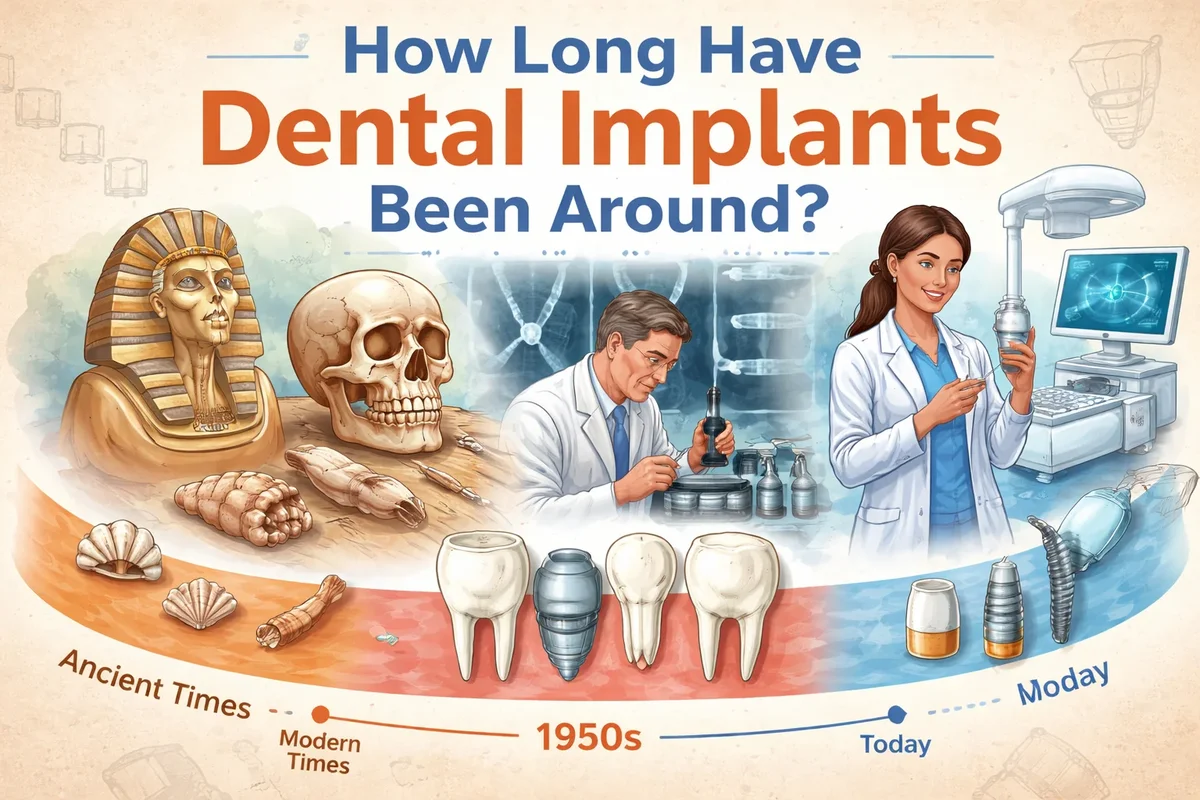
The Future of Dental Implants: What the Next Decades May Bring
When people research how long have dental implants been around, they often focus on history. However, the future of implant dentistry is just as exciting as its past. Dental implants have evolved dramatically over the last several decades, and experts believe that the next generation of implant technology will continue to improve success rates, patient comfort, treatment speed, and long-term oral health outcomes.
Understanding how long have dental implants been around gives valuable context for predicting where the technology is heading. From ancient shell implants to modern titanium systems, dental implants have already experienced remarkable development. The next phase of innovation will likely involve advanced biomaterials, artificial intelligence in treatment planning, regenerative medicine, and faster healing techniques.
Modern implant dentistry continues to grow rapidly due to increasing demand. Millions of implants are placed worldwide every year, and clinical research is constantly improving both the technology and procedures involved. These ongoing advancements help reinforce why discussions about how long have dental implants been around now include not only history but also future possibilities.
Advances in Implant Materials
One of the most promising areas of development in implant dentistry involves new materials that improve integration with bone and soft tissues. While titanium remains the most widely used material, researchers are exploring advanced alloys and ceramic materials that could further enhance implant performance.
These developments may redefine the future of implant dentistry and add another chapter to the story of how long have dental implants been around.
Some promising material innovations include:
- Next-generation titanium alloys with enhanced strength
- Advanced zirconia implants for improved aesthetics
- Bioactive implant coatings that stimulate bone growth
- Antibacterial implant surfaces that reduce infection risk
These innovations aim to make implants even more durable and biologically compatible with human tissues.
Bioactive Implant Surfaces
Researchers are currently studying implant surfaces that actively encourage bone regeneration. Unlike traditional implants that rely solely on osseointegration, bioactive coatings may stimulate bone cells to grow faster and attach more securely.
This technology could significantly shorten healing times and improve success rates. As implant materials evolve, the discussion around how long have dental implants been around will increasingly include these groundbreaking developments.
Artificial Intelligence and Digital Implant Planning
Digital dentistry is already transforming implant treatment, and artificial intelligence (AI) may take this transformation even further. AI-driven software can analyze medical scans, predict treatment outcomes, and help dentists plan implant placement with unprecedented precision.
As these technologies advance, the future of implant dentistry will continue to expand beyond the historical question of how long have dental implants been around. Instead, the focus will shift toward how intelligent technologies can improve patient outcomes.
Potential benefits of AI-assisted implant planning include:
- More accurate implant placement
- Reduced surgical risk
- Faster treatment planning
- Personalized implant designs tailored to each patient
These improvements will likely make implant procedures even safer and more efficient.
3D Printing and Custom Implants
Another exciting innovation in implant dentistry is the use of 3D printing technology. Researchers are exploring ways to produce custom dental implants tailored precisely to each patient’s jaw anatomy.
Instead of selecting from standardized implant sizes, dentists may eventually be able to place implants designed specifically for each individual patient. This personalized approach could dramatically improve treatment outcomes and represent a major advancement in the long timeline behind how long have dental implants been around.
Regenerative Dentistry and Bone Regrowth
One of the biggest challenges in implant dentistry is insufficient bone density. Patients who have experienced significant bone loss may require bone grafting before implants can be placed. However, regenerative medicine may soon provide alternative solutions.
Scientists are researching techniques that stimulate the body to regenerate lost bone tissue naturally. These treatments could include stem cell therapy, growth factors, and advanced biomaterials designed to encourage bone regeneration.
If successful, these technologies could significantly simplify implant procedures and make implants available to a wider range of patients.
As regenerative dentistry progresses, the historical perspective on how long have dental implants been around will continue evolving alongside new scientific breakthroughs.
Faster Healing and Immediate Tooth Replacement
Another promising direction for implant dentistry involves reducing treatment time. Traditionally, patients must wait several months for implants to fully integrate with bone before receiving the final crown. However, modern research is focused on accelerating this healing process.
Future implant systems may allow same-day tooth replacement for a wider range of patients. Immediate loading techniques already exist today, but new materials and technologies could make them more predictable and widely accessible.
These improvements will help redefine the patient experience and further enhance the answer to how long have dental implants been around as a continuously evolving field of dentistry.
Improved Patient Experience
The future of implant dentistry also prioritizes patient comfort and convenience. Innovations such as minimally invasive surgery, advanced anesthesia methods, and digital treatment planning already make implant procedures far more comfortable than they were decades ago.
Future technologies may reduce recovery times even further, allowing patients to return to normal activities more quickly after implant surgery.
Why Dental Implants Will Remain the Leading Solution
Dental implants are already considered the most reliable solution for replacing missing teeth. Their ability to mimic natural tooth roots, preserve jawbone structure, and provide long-term stability makes them superior to many other restorative options.
Organizations such as the American Dental Association recognize dental implants as a safe and predictable treatment when performed by trained professionals.
Patients researching how long have dental implants been around often feel reassured knowing that implants are supported by decades of clinical research and continuous technological improvement.
If you are considering implant treatment and want professional guidance, you can learn more or request a consultation through the Redent Klinik Contact Page. Experienced dental professionals can evaluate your oral health and determine whether implants are the right option for you.
In conclusion, the history behind how long have dental implants been around continues to evolve as new technologies emerge. From ancient civilizations experimenting with tooth replacements to modern digital implant planning and regenerative medicine, implant dentistry has come a long way. The future promises even greater innovations that will make dental implants safer, faster, and more accessible for patients around the world. 😊