
If you are considering dental implants, one of the very first and most important questions you will naturally ask is how long is the process to get dental implants. This is not just a matter of curiosity—it directly affects your daily life, work schedule, travel plans, and overall expectations. Dental implant treatment is not a one-day procedure. It is a carefully planned, step-by-step medical process designed to ensure long-term success, comfort, and durability. Understanding the full timeline helps you prepare mentally, physically, and practically for what lies ahead 😊.
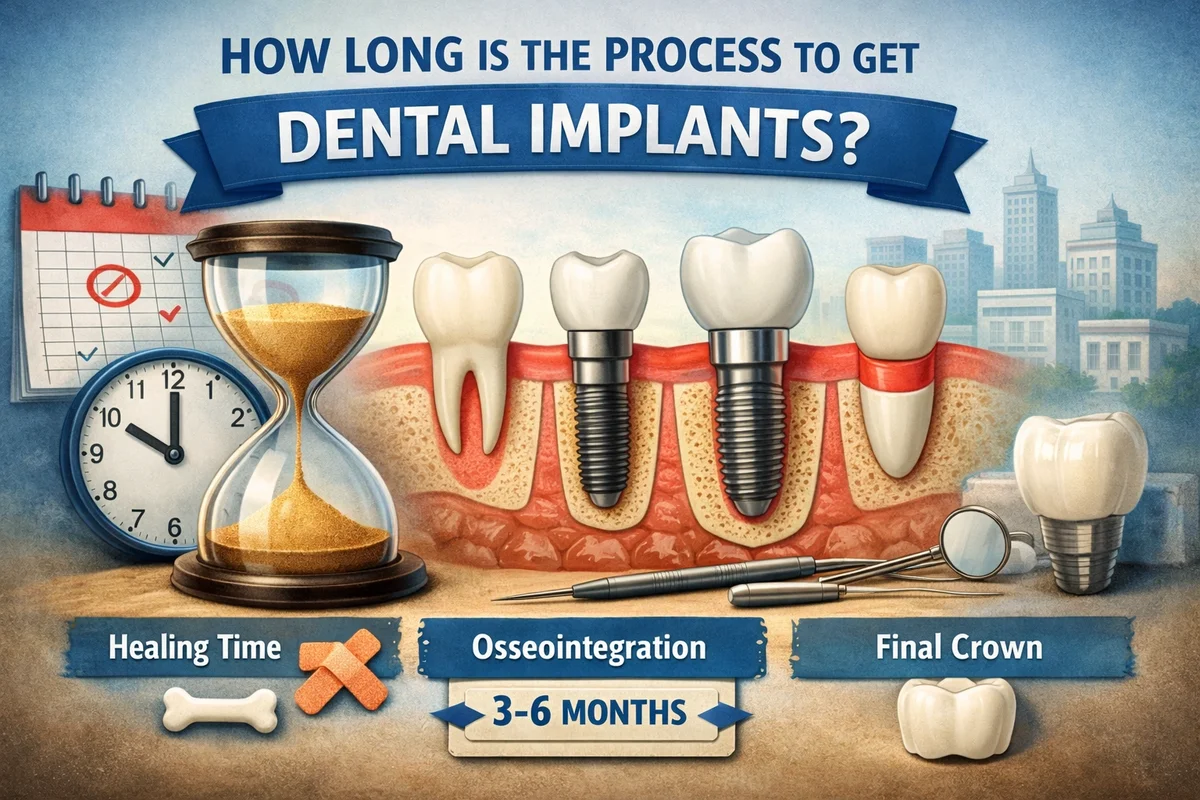
So, how long is the process to get dental implants in real-world terms? For most patients, the complete journey typically ranges between 3 to 9 months. In more complex cases, it can extend up to 12 months. The wide range exists because every mouth is different. Bone quality, gum health, number of implants, and whether additional procedures are needed all play a role in determining exactly how long the process to get dental implants will take.
It is important to understand that this timeline is not “slow” without reason. Dental implants rely on a biological process called osseointegration, where the implant fuses with the jawbone. This fusion is what makes implants strong, stable, and capable of lasting decades. Rushing this step would dramatically reduce success rates. That is why dentists prioritize healing time over speed when answering the question of how long is the process to get dental implants.
Another key reason the process takes several months is safety. Your dentist must ensure that the jawbone can safely support the implant and that the surrounding gums heal properly. Skipping or shortening these steps increases the risk of implant failure, infection, or bone loss. In other words, the length of the process is what protects your investment and your health 🦷.
Patients often compare dental implants to alternatives like bridges or dentures and wonder why implants take longer. The answer is simple: implants replace not just the visible tooth but also the tooth root. This makes them the most natural and long-lasting solution available in modern dentistry. When evaluating how long is the process to get dental implants, it helps to think of it as rebuilding the foundation of a house, not just painting the walls.
The timeline also depends on whether your mouth is already in ideal condition. If you have sufficient jawbone density and healthy gums, the process may be shorter. In contrast, if you need bone grafting, sinus lifting, or tooth extractions, these steps must be completed and healed before the implant can be placed. These preparatory treatments are often the biggest factor influencing how long is the process to get dental implants.
It is also worth noting that modern dental technology has made implant treatment more predictable and efficient than ever before. Digital planning, 3D imaging, and guided surgery can reduce complications and improve healing outcomes. However, even with advanced technology, biology still sets the pace. No technology can override the natural healing time required for successful implant integration.
From a patient perspective, the good news is that most of this time does not involve pain or constant dental visits. Once the implant is placed, you largely continue with your normal life while healing occurs in the background. Many patients are surprised to learn that although how long is the process to get dental implants may sound intimidating, the active treatment days are actually quite limited.
For those seeking professional guidance or personalized treatment planning, it is always best to speak directly with a qualified dental clinic. You can easily reach out through the Redent Klinik Contact Page to receive a tailored timeline based on your specific oral health condition.
Finally, reputable organizations like the American Dental Association emphasize that patience is key when it comes to dental implants. Long-term success rates exceed 95% when proper timelines are respected. So when asking how long is the process to get dental implants, remember that each week of healing contributes directly to a stronger, healthier, and more permanent smile 😄.
In summary, the process may take several months, but the reward is a tooth replacement solution that looks natural, functions like a real tooth, and can last a lifetime. Understanding how long is the process to get dental implants empowers you to make an informed, confident decision about your oral health journey.
Understanding the Full Dental Implant Timeline from Start to Finish
To truly understand how long is the process to get dental implants, it helps to look at the treatment not as a single procedure, but as a carefully structured timeline made up of multiple clinical and biological stages. Many patients initially assume dental implants are similar to getting a filling or a crown, but in reality, implant treatment is a journey that unfolds over several months. Each phase has a specific purpose, and together they create a stable, long-lasting tooth replacement solution 😊.
The full dental implant timeline generally includes consultation, preparation, surgical placement, healing, and final restoration. While this may sound lengthy, each stage plays a vital role in ensuring the implant integrates properly with your jawbone. When patients ask how long is the process to get dental implants, dentists emphasize that skipping or rushing any phase can compromise the final result.
The Big Picture: Why Dental Implants Take Time
The main reason the implant timeline spans several months is biology. Dental implants depend on osseointegration, a natural process where the titanium implant bonds with the jawbone. This bond is what allows the implant to function like a real tooth root. Without sufficient healing time, the implant may fail to integrate properly, leading to instability or loss.
From a clinical standpoint, the timeline also allows dentists to monitor healing, manage gum health, and ensure that bite alignment will be correct once the final crown is placed. All of this contributes to answering the question how long is the process to get dental implants in a way that prioritizes safety and longevity over speed.
Typical Time Range for the Entire Implant Process
For most patients, the complete dental implant process takes approximately 3 to 9 months. However, this is not a fixed rule. Some patients with excellent bone density and healthy gums may complete treatment closer to the lower end of that range. Others, especially those requiring preparatory procedures, may need closer to 9–12 months.
It is important to understand that this time range does not mean constant dental appointments. Much of the timeline involves passive healing. Once the implant is placed, your body does the work while you continue with daily life. This is why how long is the process to get dental implants sounds longer than it actually feels for most patients.
Active Treatment Days vs. Healing Time
One common misconception is that patients will be in the dental chair for months. In reality, the number of active treatment days is surprisingly low. The longest part of the process is healing, not treatment. Surgical visits are usually completed in a few hours, while healing phases may last several weeks or months without requiring frequent appointments.
This distinction is crucial when evaluating how long is the process to get dental implants. Although the calendar timeline is long, the physical and time burden on the patient is relatively light.
How Individual Factors Shape the Implant Timeline
No two implant cases are identical. Several personal and clinical factors directly influence how long is the process to get dental implants. Jawbone density is one of the most significant factors. Patients with sufficient bone volume can often proceed directly to implant placement, while those with bone loss may require grafting first.
Other factors include gum health, smoking habits, systemic health conditions such as diabetes, and the number of implants being placed. A single implant may follow a simpler timeline, while full-mouth restorations naturally require more planning and healing time.
Immediate Implants vs. Traditional Implants
Some patients may qualify for immediate implant placement, where the implant is placed on the same day as tooth extraction. While this approach can shorten visible treatment time, it does not eliminate the healing phase. Even in immediate cases, osseointegration still requires several months, meaning how long is the process to get dental implants remains biologically similar.
Traditional implants, placed after healing from extraction, often offer more predictable outcomes. Dentists choose the approach that best balances speed, safety, and long-term success.
Why a Structured Timeline Leads to Better Results
Dental implants are designed to last decades, often a lifetime. The structured timeline ensures that each component—bone, gum tissue, implant, and crown—works together harmoniously. Patients who respect this process experience higher success rates, fewer complications, and better aesthetic outcomes.
When viewed from this perspective, the question how long is the process to get dental implants becomes less about waiting and more about investing time in a solution that restores confidence, function, and oral health 😄.
In short, the dental implant timeline is not arbitrary. It is the result of decades of clinical research, biological understanding, and patient outcomes. By understanding the full process from start to finish, patients can approach implant treatment with realistic expectations and confidence, knowing that every stage serves a critical purpose.
Initial Consultation and Treatment Planning: What Happens First?
The very first step in determining how long is the process to get dental implants begins with the initial consultation and detailed treatment planning phase. This stage lays the foundation for everything that follows, and its importance cannot be overstated. A well-executed consultation not only ensures safety and predictability but also helps create a realistic timeline tailored specifically to your oral health needs 😊.
Many patients underestimate this phase, assuming it is just a quick check-up. In reality, the consultation is a comprehensive diagnostic appointment where your dentist evaluates whether dental implants are the right solution for you and how long the overall process will take. The accuracy of this step directly affects how long is the process to get dental implants from start to finish.
Comprehensive Oral Examination and Medical Review
During the initial consultation, your dentist performs a full oral examination. This includes checking your gums, remaining teeth, bite alignment, and jaw function. Special attention is given to gum health because untreated periodontal disease can significantly delay implant treatment.
Equally important is your medical history. Conditions such as diabetes, osteoporosis, or immune disorders can influence healing time. Lifestyle factors like smoking are also discussed, as they may extend how long is the process to get dental implants by slowing down bone integration and soft tissue healing.
Advanced Imaging and Bone Assessment
Modern implant planning relies heavily on advanced imaging technologies such as panoramic X-rays and 3D CBCT scans. These scans allow your dentist to assess bone density, bone height, and nerve locations with extreme precision.
This step is critical because insufficient bone volume may require bone grafting before implants can be placed. If grafting is needed, it adds additional healing time, which directly impacts how long is the process to get dental implants. On the other hand, patients with strong, healthy bone structures may move forward more quickly.
Why Bone Quality Matters So Much
Dental implants rely on bone support to function properly. If the bone is too soft or too thin, the implant cannot achieve the stability needed for long-term success. This is why dentists never rush past bone evaluation. A few extra weeks of planning can prevent months of complications later.
Personalized Treatment Plan and Timeline Estimation
Once all diagnostic information is collected, your dentist creates a personalized treatment plan. This plan outlines the number of implants required, whether extractions are needed, and if preparatory procedures such as bone grafts or sinus lifts are necessary.
At this point, patients finally receive a clear answer to how long is the process to get dental implants in their specific case. While no timeline is guaranteed, experienced clinicians can provide a realistic estimate based on clinical data and past outcomes.
Single Implant vs. Multiple Implants
The number of implants significantly affects the timeline. A single implant in a healthy mouth may follow a relatively straightforward path. In contrast, multiple implants or full-arch restorations require more extensive planning, surgical coordination, and healing time. This is another reason why how long is the process to get dental implants varies so widely between patients.
Patient Education and Expectation Management
An often-overlooked part of the consultation phase is patient education. Your dentist will explain each stage of the implant process in detail, including surgery, healing, and final restoration. Understanding what lies ahead reduces anxiety and helps patients commit to the necessary timeline.
This is also the moment when temporary solutions, such as provisional teeth, are discussed. Knowing that you will not be left without teeth during healing reassures many patients who worry about aesthetics and function while waiting.
How This Phase Influences the Overall Implant Timeline
Although the consultation itself may take only one or two appointments, it plays a major role in determining how long is the process to get dental implants. Poor planning can lead to unexpected delays, failed implants, or additional surgeries. Thorough planning, on the other hand, streamlines the entire process.
From a timeline perspective, this phase usually takes one to two weeks, depending on how quickly diagnostic tests are completed. While short compared to the full treatment duration, its impact is enormous.
In conclusion, the initial consultation and treatment planning phase is where clarity begins. It transforms uncertainty into a structured roadmap and provides patients with a realistic understanding of how long is the process to get dental implants. By investing time upfront, both patient and dentist set the stage for a smoother, safer, and more successful implant journey 😄.
Pre-Implant Procedures That Can Affect How Long the Process Takes
When patients ask how long is the process to get dental implants, they often focus only on the implant surgery itself. However, one of the most influential phases happens before the implant is ever placed. Pre-implant procedures are sometimes necessary to prepare the mouth for successful treatment, and these steps can significantly affect the overall timeline. Understanding this phase is essential for setting realistic expectations and avoiding surprises 😊.
Not every patient needs pre-implant procedures, but many do—especially those who have experienced tooth loss for a long time, gum disease, or bone deterioration. These preparatory treatments ensure that the jawbone and gums can properly support dental implants. While they may extend how long is the process to get dental implants, they dramatically increase long-term success rates.
Tooth Extractions and Healing Time
If a damaged or decayed tooth is still present, it often needs to be extracted before an implant can be placed. Tooth extraction itself is a relatively quick procedure, but the healing period afterward plays an important role in the overall timeline.
After extraction, the socket must heal and stabilize. In many cases, this healing phase takes between 6 to 12 weeks. During this time, the bone begins to remodel and the gums close properly. Skipping or rushing this phase can compromise implant stability, which is why dentists carefully factor it into how long is the process to get dental implants.
Immediate Implants After Extraction
In select cases, implants can be placed immediately after tooth extraction. While this approach may appear to shorten the timeline, it is not suitable for everyone. Bone quality, infection risk, and gum condition must all be ideal. Even with immediate placement, healing and osseointegration still require months, meaning how long is the process to get dental implants remains biologically consistent.
Bone Grafting: A Major Timeline Factor
Bone grafting is one of the most common pre-implant procedures and one of the biggest factors influencing how long is the process to get dental implants. When a tooth is lost, the surrounding jawbone begins to shrink over time. If too much bone has been lost, there may not be enough structure to support an implant.
Bone grafting rebuilds this lost bone using natural or synthetic graft material. Once placed, the graft must integrate with your existing bone, a process that typically takes 3 to 6 months. Only after successful integration can implant surgery proceed safely.
Minor vs. Major Bone Grafting
Not all bone grafts are the same. Minor grafts may heal relatively quickly and add only a few extra months to the timeline. Major grafts, especially those involving significant bone loss, can extend how long is the process to get dental implants closer to 9–12 months. Your dentist will explain the type of graft needed and how it affects your individual schedule.
Sinus Lift Procedures for Upper Jaw Implants
For implants placed in the upper back jaw, a sinus lift may be required. This procedure gently raises the sinus membrane to create space for additional bone. Like bone grafting, sinus lift procedures require healing time before implants can be placed.
Healing after a sinus lift typically takes several months. While this adds time, it greatly improves implant stability and safety. Patients often find that extending how long is the process to get dental implants at this stage prevents complications later.
Gum Health and Periodontal Treatment
Healthy gums are just as important as strong bone. If periodontal disease is present, it must be treated before implants are considered. Active gum infection increases the risk of implant failure and prolongs healing.
Periodontal treatment may include deep cleanings, medication, or minor surgical procedures. Although this adds weeks or months to the process, it protects the implant investment and ensures long-term success. This is another reason why how long is the process to get dental implants varies so much from patient to patient.
Why Pre-Implant Procedures Are Worth the Time
From a patient’s perspective, pre-implant treatments can feel like delays. However, these steps are not obstacles—they are safeguards. Each procedure strengthens the foundation for the implant and reduces the risk of failure.
When evaluating how long is the process to get dental implants, it is important to remember that implants are meant to last decades. A few extra months of preparation can mean the difference between a temporary fix and a lifelong solution 😄.
In summary, pre-implant procedures play a crucial role in shaping the overall dental implant timeline. While they may extend how long is the process to get dental implants, they ensure safety, stability, and long-term success. By addressing bone, gum, and structural issues upfront, patients can move forward with confidence, knowing their implant treatment is built on a solid and healthy foundation.
Surgical Placement of Dental Implants: Timing and What to Expect
The surgical placement of the dental implant is the phase most patients think of when asking how long is the process to get dental implants. This is the moment when the implant is physically inserted into the jawbone, and while it is a critical step, it is only one part of the overall timeline. Understanding what happens during implant surgery—and how it affects the total duration—helps patients feel informed, calm, and prepared 😊.
Contrary to common fears, dental implant surgery is usually straightforward and far less intimidating than many expect. In fact, the procedure itself is relatively short. However, what follows the surgery plays a much bigger role in determining how long is the process to get dental implants.
How Long Does Dental Implant Surgery Take?
The actual implant placement procedure typically takes between 30 minutes to 2 hours per implant. The exact time depends on several factors, including the number of implants being placed, the complexity of the case, and whether the procedure is combined with other treatments.
For a single implant, many patients are surprised by how quickly the surgery is completed. Even in cases involving multiple implants, the appointment is usually finished within a single day. From a timing perspective, this means that implant surgery itself contributes very little to how long is the process to get dental implants compared to healing and integration phases.
Local Anesthesia vs. Sedation Options
Dental implant surgery is commonly performed under local anesthesia, which completely numbs the area. Some patients may also choose conscious sedation for added comfort. Regardless of the anesthesia method, the type used does not significantly change how long is the process to get dental implants, but it can greatly influence patient comfort during the procedure.
What Happens During the Implant Placement Procedure?
During surgery, the dentist or oral surgeon makes a small incision in the gum to expose the jawbone. A precise channel is then created in the bone, and the titanium implant is carefully inserted. The gum tissue is repositioned and sutured over or around the implant.
This precision is essential. Accurate placement ensures proper bite alignment, long-term stability, and aesthetic results. While the surgery itself is brief, its accuracy directly affects healing success and, ultimately, how long is the process to get dental implants.
Immediate Post-Surgery Recovery Timeline
After implant surgery, most patients experience mild swelling, tenderness, or discomfort for a few days. These symptoms are usually manageable with prescribed or over-the-counter pain medication. Many people return to normal daily activities within 24 to 48 hours.
This quick recovery often surprises patients who expected a long downtime. However, it is important to distinguish between surface-level recovery and internal healing. Although you may feel fine within days, the deeper healing process continues for months and plays a major role in how long is the process to get dental implants.
Stitches and Short-Term Follow-Up
If stitches are placed, they are often removed or dissolve within 7 to 14 days. A follow-up appointment ensures the gums are healing properly and that there are no signs of infection. These early check-ups are important milestones but do not significantly extend the timeline.
One-Stage vs. Two-Stage Implant Surgery
There are two main surgical approaches to dental implants, and the chosen method can influence how long is the process to get dental implants.
In a one-stage procedure, the implant and healing cap are placed at the same time, allowing the gum to heal around the implant. In a two-stage procedure, the implant is placed beneath the gum, which is later reopened to attach the healing abutment. While the two-stage approach may add a minor additional procedure, it does not drastically change the overall timeline.
Why Surgery Is Not the Longest Part of the Process
It is natural to assume that surgery is the most time-consuming or difficult part of implant treatment. In reality, it is one of the shortest phases. The reason how long is the process to get dental implants extends over several months is not the surgery itself but the biological healing that must follow.
The implant needs time to bond with the jawbone through osseointegration. This process cannot be rushed, regardless of how quick or smooth the surgery was. Successful integration is what allows the implant to function like a natural tooth root for years to come.
Patient Perspective: What This Phase Feels Like
From a patient’s point of view, implant surgery is often easier than expected. Anxiety before the procedure is common, but most patients report minimal discomfort and a surprisingly fast return to normal routines.
Understanding this helps reframe the question how long is the process to get dental implants. While the overall timeline may sound long on paper, the surgical phase is brief, controlled, and highly predictable 😄.
In conclusion, the surgical placement of dental implants is a crucial but time-efficient step in the overall journey. It usually takes only a few hours, involves minimal downtime, and sets the stage for the most important phase: healing and integration. When viewed in context, surgery contributes very little to how long is the process to get dental implants—but it contributes enormously to the strength, stability, and long-term success of your final result.
Osseointegration Phase: Why Healing Time Matters So Much
When patients truly want to understand how long is the process to get dental implants, the osseointegration phase is the most important stage to focus on. This phase is the longest part of the entire implant journey and the main reason why dental implants cannot—and should not—be rushed. Osseointegration is a biological process, not a mechanical one, and your body ultimately controls the pace 😊.
Osseointegration refers to the process by which the titanium implant fuses directly with the surrounding jawbone. This fusion creates a stable, load-bearing foundation that allows the implant to function like a natural tooth root. Without successful osseointegration, the implant cannot safely support a crown. As a result, this phase largely defines how long is the process to get dental implants.
How Long Does Osseointegration Take?
On average, the osseointegration phase takes between 3 and 6 months. In some patients with excellent bone quality, integration may occur closer to the 3-month mark. In others—especially those who required bone grafting—it may take longer.
This healing period is non-negotiable. Even if the implant feels stable early on, microscopic bone remodeling continues beneath the surface. Dentists wait until this process is complete before moving forward because premature loading can lead to implant failure. This is why, when discussing how long is the process to get dental implants, healing time outweighs all other stages combined.
Upper Jaw vs. Lower Jaw Healing Differences
The location of the implant also affects healing duration. Implants placed in the lower jaw often integrate faster because the bone is denser. Upper jaw implants, particularly in the back molar area, usually require more time due to softer bone quality. This anatomical difference is another factor that influences how long is the process to get dental implants.
What Happens During This Healing Phase?
From the patient’s perspective, very little seems to happen during osseointegration. You are not undergoing active treatment, and there are usually no visible changes. However, beneath the gum tissue, bone cells are actively growing and attaching to the implant surface.
This phase is quiet but critical. Your dentist may schedule periodic check-ups or X-rays to monitor progress, but most of the work is done by your body. This is why many patients say the process feels easier than expected, even though how long is the process to get dental implants spans several months.
Temporary Teeth During Osseointegration
A common concern during this phase is aesthetics and function. Fortunately, patients are rarely left without teeth. Temporary crowns, bridges, or removable solutions can be used while healing takes place.
These temporary restorations are carefully designed to avoid placing pressure on the implant. Protecting the implant during this phase is essential, as excessive force can interfere with osseointegration and extend how long is the process to get dental implants.
Why Implants Are Not Loaded Immediately
Some patients ask why the final crown cannot be placed right away. The answer lies in biology. While immediate loading is possible in select cases, it requires ideal bone conditions and strict criteria. For most patients, waiting ensures better long-term outcomes.
Skipping or shortening this phase increases the risk of implant mobility or failure. Dentists prioritize long-term success over speed, even if it means extending how long is the process to get dental implants by a few months.
Factors That Can Speed Up or Slow Down Healing
Several factors influence how quickly osseointegration occurs. Non-smokers with good overall health tend to heal faster. Proper oral hygiene, a balanced diet, and following post-operative instructions all support efficient healing.
On the other hand, smoking, uncontrolled diabetes, poor oral hygiene, or excessive biting forces can slow down integration. These factors may extend how long is the process to get dental implants and increase the risk of complications.
Why Patience Pays Off in the Long Run
It can be tempting to focus on speed, but dental implants are designed to last for decades. The months spent waiting during osseointegration are an investment in stability, comfort, and longevity.
Studies consistently show that implants placed with adequate healing time have significantly higher success rates. This is why dental professionals emphasize patience when discussing how long is the process to get dental implants. A few extra months of healing can mean the difference between a lifetime solution and a costly failure 😄.
In conclusion, the osseointegration phase is the heart of the dental implant process. It is the stage that most strongly defines how long is the process to get dental implants and the one that ensures your implant becomes a permanent part of your body. While it requires time and patience, it is this exact process that makes dental implants the most reliable tooth replacement option available today.
Abutment Placement and Gum Healing Duration Explained
After the long healing period of osseointegration, many patients feel they are finally nearing the end of their journey and again ask how long is the process to get dental implants. This next phase—abutment placement and gum healing—is shorter than previous stages, but it is still a critical step that directly affects comfort, aesthetics, and long-term implant success 😊.
The abutment is the small connector that links the dental implant (inside the bone) to the final crown (the visible tooth). While it may seem like a minor component, the timing and healing around the abutment play an important role in shaping the final outcome. Understanding this stage helps clarify how long is the process to get dental implants from surgery to completion.
What Is an Abutment and Why Is It Important?
An abutment is a precisely engineered piece that emerges through the gum and supports the dental crown. Once osseointegration is confirmed, the dentist attaches the abutment to the implant. This creates a stable platform for the final restoration.
Even though the implant itself is already fused to the bone, the gums now need time to heal and shape themselves naturally around the abutment. This soft tissue healing phase is a key reason why how long is the process to get dental implants does not end immediately after bone integration.
How Long Does Abutment Placement Take?
The abutment placement procedure itself is usually very quick. In most cases, it takes 20 to 45 minutes and is performed under local anesthesia. Patients typically experience minimal discomfort and can return to normal activities the same day or the following day.
From a timeline perspective, this appointment adds very little active treatment time. However, the healing that follows contributes to how long is the process to get dental implants in a meaningful way.
One-Stage vs. Two-Stage Implant Systems
In some implant systems, the abutment is placed at the same time as the implant surgery. In others, it is added later in a separate appointment. While this choice affects the number of visits, it usually does not dramatically change how long is the process to get dental implants, as gum healing is still required either way.
Gum Healing After Abutment Placement
Once the abutment is in place, the gums need time to heal and form a natural seal around it. This process typically takes between 1 and 3 weeks. During this time, the soft tissue adapts, reduces inflammation, and creates a healthy contour that supports the final crown.
This step is essential for both aesthetics and hygiene. Properly healed gums reduce the risk of infection and help the implant blend seamlessly with surrounding natural teeth. Skipping or rushing this phase can negatively impact the final appearance and extend how long is the process to get dental implants due to complications.
Why Gum Health Matters at This Stage
Healthy gums act as a protective barrier around the implant. If the gums do not heal properly, bacteria can enter and cause peri-implant inflammation. This can delay crown placement and increase maintenance needs later.
For this reason, dentists carefully monitor gum healing before moving forward. This attention to detail reinforces why how long is the process to get dental implants depends not just on bone healing, but also on soft tissue health.
What Patients Experience During This Phase
Most patients report very mild discomfort after abutment placement. Slight tenderness or swelling is normal but usually resolves within a few days. Oral hygiene instructions may be adjusted temporarily to protect the healing gums.
From the patient’s perspective, this phase feels like a clear step forward. Visually, the implant finally begins to resemble a tooth again, which often provides reassurance after months of healing. Even so, patience is still required, as this stage contributes to how long is the process to get dental implants.
How This Phase Fits Into the Overall Timeline
Compared to osseointegration, the abutment and gum healing phase is relatively short. However, it serves as a bridge between internal healing and final restoration. Without proper healing here, the final crown cannot be placed safely.
When patients look back and evaluate how long is the process to get dental implants, this stage is often remembered as the moment when everything starts to come together.
Why Dentists Never Skip This Step
Although it may seem tempting to move directly from implant integration to crown placement, doing so increases the risk of gum irritation, poor aesthetics, and long-term complications. Allowing the gums to heal around the abutment ensures a strong biological seal and a natural-looking result.
In conclusion, abutment placement and gum healing represent a short but vital chapter in the dental implant journey. While this phase adds a few weeks to how long is the process to get dental implants, it plays a major role in ensuring comfort, appearance, and long-term implant health 😄. By respecting this stage, patients move one step closer to a fully functional and confident smile.
Final Crown Placement: When Your Implant Is Fully Completed
After months of healing and careful preparation, patients finally reach the stage they have been waiting for: final crown placement. At this point, many people revisit the question how long is the process to get dental implants, because this step marks the completion of the visible and functional part of treatment. While it may feel like the finish line, this phase still requires precision, planning, and attention to detail to ensure long-term success 😊.
The final crown is the custom-made tooth that sits on top of the implant via the abutment. It is the part you see, chew with, and smile with. Although this stage is relatively quick compared to earlier phases, it plays a decisive role in determining whether the long journey of how long is the process to get dental implants truly pays off.
What Happens Before the Final Crown Is Placed?
Before the crown can be attached, your dentist must confirm that the implant is fully integrated and that the gums have healed properly around the abutment. This ensures that the foundation is stable and infection-free.
Once healing is confirmed, impressions or digital scans of your mouth are taken. These scans capture bite alignment, spacing, and gum contours. This step ensures the crown fits perfectly and feels natural. Although impressions only take a short appointment, they are essential to completing how long is the process to get dental implants successfully.
Digital Scanning vs. Traditional Impressions
Modern clinics often use digital scanners instead of traditional impression trays. Digital scans improve accuracy and comfort, and they can slightly shorten turnaround time. However, regardless of the method, crown fabrication still requires time and precision.
How Long Does Crown Fabrication Take?
After impressions are taken, the crown is fabricated in a dental laboratory. This process typically takes 1 to 3 weeks. During this time, skilled technicians design the crown to match the color, shape, and size of your natural teeth.
While waiting for the crown may feel like a small delay, it is an important contributor to how long is the process to get dental implants. Rushing crown fabrication can result in poor fit, bite issues, or aesthetic problems that may require adjustments later.
The Crown Placement Appointment
Once the crown is ready, the placement appointment is usually quick and comfortable. The dentist attaches the crown to the abutment, checks bite alignment, and makes minor adjustments if needed. In most cases, this appointment takes 30 to 60 minutes.
From the patient’s perspective, this is often the most satisfying moment of the entire process. After months of asking how long is the process to get dental implants, you finally leave the clinic with a complete, functional tooth.
Screw-Retained vs. Cemented Crowns
Dental crowns can be attached using screws or dental cement. Screw-retained crowns allow easier removal for maintenance, while cemented crowns may offer slightly better aesthetics in certain cases. The attachment method does not significantly affect how long is the process to get dental implants, but it may influence long-term maintenance.
What to Expect After Crown Placement
After the crown is placed, most patients can eat and speak normally almost immediately. Mild sensitivity or awareness is normal for a short period as your mouth adapts. This typically resolves within days.
Your dentist may recommend avoiding very hard foods for a brief time. Although the implant is strong, allowing a short adjustment period helps protect the crown and surrounding tissues. At this stage, how long is the process to get dental implants officially comes to an end—but care continues.
Why Final Adjustments Matter
Bite alignment is critical for implant longevity. Even small imbalances can place excess force on the implant or nearby teeth. This is why dentists take time to fine-tune the bite during crown placement.
Proper adjustments prevent complications and ensure that the time invested in how long is the process to get dental implants results in a comfortable, durable outcome.
Maintenance After Completion
Although the implant process is complete, long-term success depends on good oral hygiene and regular dental check-ups. Implants do not decay like natural teeth, but the surrounding gums and bone still require care.
Patients who maintain healthy habits often enjoy implant longevity measured in decades. This reinforces the idea that while how long is the process to get dental implants may seem lengthy, the results far outlast the time invested 😄.
Putting the Full Timeline into Perspective
When patients reflect on the entire journey—from consultation to crown placement—they often realize that the most time-consuming parts were also the most important. The final crown placement feels quick because the groundwork has already been laid.
In conclusion, final crown placement is the rewarding conclusion to the dental implant journey. While it adds a few final weeks to how long is the process to get dental implants, it transforms months of healing into a fully functional, natural-looking tooth. This is the moment when patience, planning, and precision come together to deliver a confident, lasting smile.
Factors That Can Shorten or Extend the Dental Implant Process
By this stage, many patients have a solid understanding of how long is the process to get dental implants, yet one important truth remains: no two implant journeys are exactly the same. Even with a well-planned treatment timeline, several individual factors can either shorten or extend the overall duration. Understanding these variables helps patients set realistic expectations and avoid frustration along the way 😊.
Dental implant treatment is a blend of medical science, biology, and personal health. While dentists can plan procedures with precision, the body’s response ultimately determines how long is the process to get dental implants. Some patients move smoothly through each phase, while others require additional time to ensure safety and long-term success.
Bone Quality and Bone Density
One of the most influential factors affecting how long is the process to get dental implants is jawbone quality. Patients with dense, healthy bone often experience faster healing and may not require preparatory procedures such as bone grafting.
In contrast, patients who have experienced bone loss due to long-term tooth loss, gum disease, or aging may need additional treatments. Bone grafting or sinus lift procedures can add several months to the timeline, but they are essential for creating a stable foundation.
Why Strong Bone Can Shorten the Timeline
Strong bone allows the implant to achieve primary stability more quickly. This stability supports efficient osseointegration, reducing the risk of delays or complications. In these cases, how long is the process to get dental implants may fall closer to the shorter end of the typical timeline.
Overall Health and Medical Conditions
Your general health plays a significant role in healing speed. Conditions such as uncontrolled diabetes, autoimmune disorders, or compromised immune systems can slow tissue regeneration and bone healing.
When healing is slower, dentists extend waiting periods to protect the implant. This cautious approach may lengthen how long is the process to get dental implants, but it significantly improves long-term success and reduces failure risk.
Lifestyle Habits and Their Impact
Lifestyle choices can dramatically influence healing. Smoking, for example, restricts blood flow and reduces oxygen delivery to tissues, which can slow down osseointegration and gum healing.
Patients who quit smoking or maintain excellent oral hygiene often experience smoother healing. These habits can positively affect how long is the process to get dental implants and reduce the likelihood of complications.
Oral Hygiene and Implant Success
Consistent brushing, flossing, and professional cleanings help maintain healthy gums around the implant. Poor oral hygiene can lead to inflammation or infection, delaying crown placement and extending the overall process.
Number of Implants and Treatment Complexity
A single implant typically requires less planning and healing than multiple implants or full-arch restorations. Patients receiving several implants may experience longer surgical appointments and extended healing periods.
That said, modern techniques allow multiple implants to heal simultaneously, meaning complexity does not always dramatically increase how long is the process to get dental implants, but it does add planning and monitoring steps.
Immediate vs. Delayed Loading Decisions
Some patients qualify for immediate loading, where a temporary crown is placed shortly after implant surgery. While this may shorten the visible treatment time, it does not eliminate the biological healing phase.
Delayed loading, where the crown is placed after full healing, often results in higher predictability. Dentists choose the safest approach based on your anatomy, which directly affects how long is the process to get dental implants.
Patient Compliance and Follow-Up Care
How closely a patient follows post-operative instructions has a major impact on healing speed. Avoiding hard foods, attending follow-up appointments, and reporting unusual symptoms early all contribute to a smoother process.
Patients who actively participate in their care often avoid setbacks that could extend how long is the process to get dental implants.
Why a Longer Timeline Is Not a Bad Thing
It is natural to want the process completed as quickly as possible. However, when dental professionals extend timelines, it is usually done to protect your health and investment.
Dental implants are designed to last for decades. Adding a few extra weeks or months to ensure proper healing is far better than risking failure. When viewed this way, how long is the process to get dental implants becomes a measure of quality, not inconvenience 😄.
Putting All the Factors Together
In summary, the dental implant timeline is influenced by a combination of bone health, overall health, lifestyle habits, treatment complexity, and patient cooperation. Some factors are beyond control, while others can be improved with guidance and commitment.
Understanding these variables empowers patients to approach treatment with patience and confidence. While how long is the process to get dental implants may vary, the ultimate goal remains the same: a strong, functional, and natural-looking smile that lasts a lifetime.
Is the Dental Implant Timeline Worth It for Long-Term Oral Health?
After learning every stage of treatment, many patients naturally ask one final, big-picture question: how long is the process to get dental implants, and more importantly, is all that time really worth it? This question goes beyond months and appointments. It touches on comfort, confidence, oral health, and quality of life. When viewed from a long-term perspective, the answer for most patients is a confident yes 😊.
Dental implants are not just a cosmetic solution. They are a medical treatment designed to restore function, preserve bone, and protect overall oral health. Understanding why dentists invest so much time helps reframe how long is the process to get dental implants as a strategic investment rather than a delay.
Long-Term Stability Compared to Other Tooth Replacements
Unlike dentures or bridges, dental implants replace the tooth root as well as the visible crown. This root replacement is the key reason implants take longer to complete—and also the reason they outperform other options long term.
Traditional bridges rely on neighboring teeth for support, which can weaken healthy teeth over time. Dentures rest on the gums and underlying bone, often accelerating bone loss. Implants, by contrast, stimulate the jawbone and prevent deterioration. This foundational benefit explains why how long is the process to get dental implants includes extended healing phases.
Bone Preservation and Facial Structure
When a tooth is lost, the jawbone begins to shrink. Over time, this bone loss can affect facial shape, leading to a sunken or aged appearance. Dental implants actively prevent this by maintaining bone stimulation.
This long-term preservation is something no removable or surface-level solution can offer. From this perspective, how long is the process to get dental implants directly correlates with protecting facial aesthetics and oral structure for years to come.
Daily Comfort and Natural Function
One of the most immediate benefits patients notice after completion is comfort. Dental implants feel and function like natural teeth. There is no slipping, clicking, or need for adhesives.
Chewing efficiency is significantly higher with implants compared to dentures. This improves digestion and allows patients to enjoy a wider range of foods. When patients reflect on how long is the process to get dental implants, many say the return to normal eating alone made the wait worthwhile.
Durability and Lifespan of Dental Implants
With proper care, dental implants can last 20 years or more, and often a lifetime. Crowns may need replacement after many years due to normal wear, but the implant itself is designed for permanence.
When you compare this lifespan to the total treatment time, the value becomes clear. Spending several months completing treatment in exchange for decades of stability reframes how long is the process to get dental implants as remarkably efficient.
Cost vs. Long-Term Value
Although implants may appear more expensive upfront, they often cost less over time. Dentures and bridges require replacements, adjustments, and repairs. Implants typically require less maintenance and fewer future procedures.
This long-term value is another reason why dentists emphasize patience when discussing how long is the process to get dental implants.
Oral Health Benefits Beyond the Implant Itself
Dental implants help maintain proper spacing between teeth, preventing shifting and bite problems. They also make oral hygiene easier compared to bridges, as implants can be brushed and flossed like natural teeth.
Healthier oral hygiene reduces the risk of gum disease and secondary tooth loss. In this sense, the time invested in how long is the process to get dental implants helps protect the rest of your mouth as well.
Psychological and Emotional Benefits
Confidence is an often-overlooked benefit. Many patients report improved self-esteem, better social interactions, and reduced anxiety after completing implant treatment.
Knowing your teeth look natural and function reliably removes daily stress. When patients look back and consider how long is the process to get dental implants, emotional relief is frequently mentioned as a major reward 😄.
Why Dentists Recommend Patience
Every stage of implant treatment exists for a reason. Dentists do not extend timelines arbitrarily; they do so to maximize safety, success, and longevity.
Rushing treatment may save weeks but risks years of complications. From a clinical standpoint, respecting how long is the process to get dental implants is what transforms implants into one of the most successful procedures in modern dentistry.
Putting the Timeline Into Perspective
If we compare dental implants to other medical procedures with lifelong benefits—such as joint replacements or corrective surgeries—the timeline is relatively short. A few months of treatment yields decades of function.
In this light, how long is the process to get dental implants becomes less about waiting and more about building a permanent solution.
In conclusion, the dental implant timeline is absolutely worth it for long-term oral health. While the process requires patience, each phase contributes directly to strength, comfort, aesthetics, and durability. When patients weigh months of treatment against a lifetime of confident smiles, healthy bone, and natural function, the answer to whether how long is the process to get dental implants is worth it becomes clear: it truly is.