
If you are considering a career in dentistry, one of the very first questions that comes to mind is: how long would it take to become a dentist? This is a completely valid concern. Dentistry is a respected healthcare profession that requires serious academic commitment, hands-on clinical training, and long-term dedication. Understanding the timeline helps you plan your education, finances, and career goals realistically.
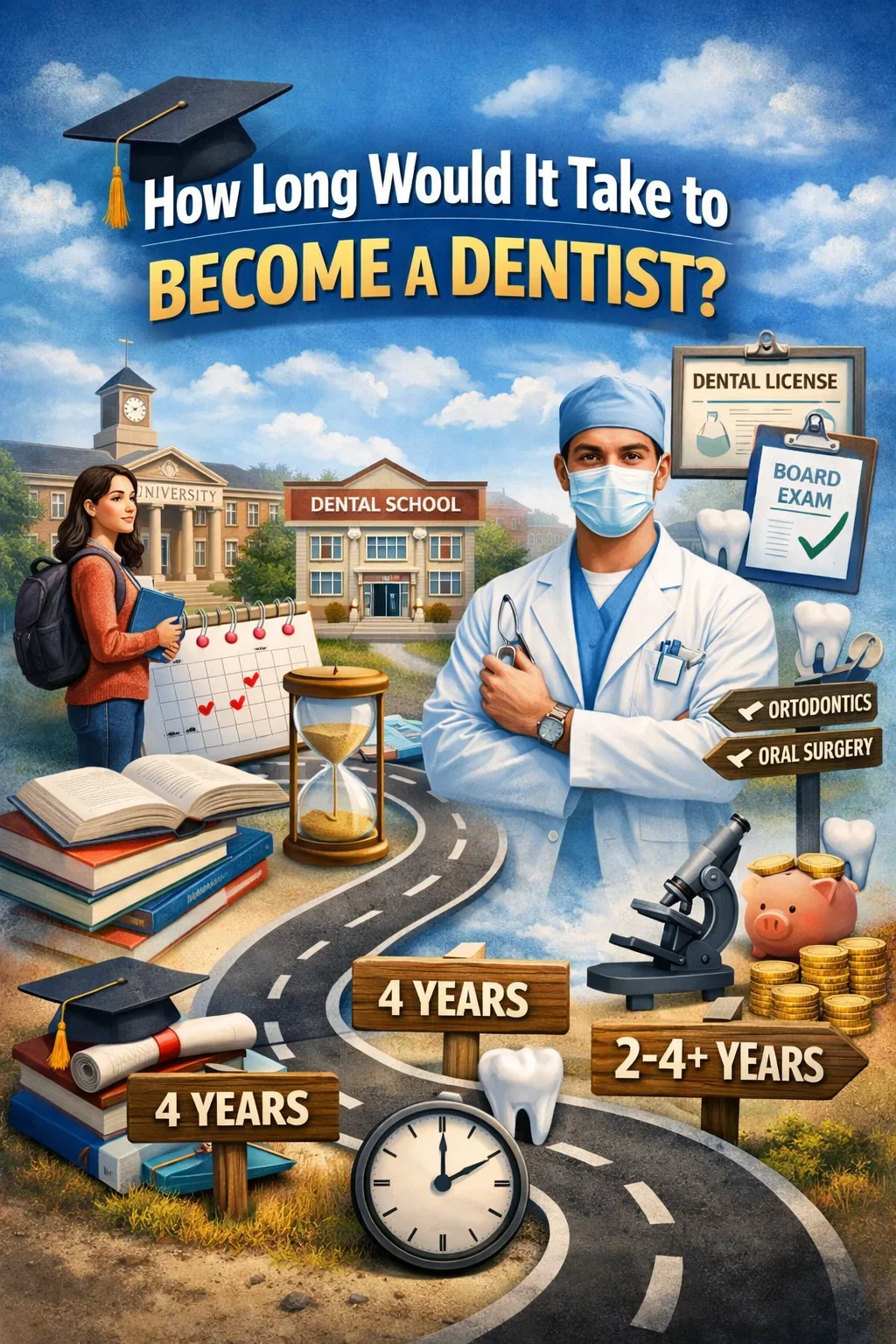
In general, how long would it take to become a dentist depends on the country, your educational pathway, and whether you choose to specialize. However, for most students in the United States and many other countries, the journey typically takes between 8 and 11 years after high school. That includes undergraduate education, dental school, licensing exams, and sometimes additional residency training.
Let’s break this down clearly. When asking how long would it take to become a dentist, you must first consider undergraduate education. Most aspiring dentists complete a four-year bachelor’s degree. While there is no specific “pre-dental” major required, students usually study biology, chemistry, or other science-related fields. These programs prepare you for the Dental Admission Test (DAT) and for the rigorous science-based curriculum in dental school.
After earning a bachelor’s degree, the next step in determining how long would it take to become a dentist is dental school itself. Dental school typically lasts four years. During these four years, students receive both classroom instruction and extensive clinical experience. The first two years usually focus on biomedical sciences, anatomy, physiology, pathology, and dental theory. The final two years are highly clinical, where students treat real patients under supervision.
So far, we are looking at approximately eight years. But is that the final answer to how long would it take to become a dentist? Not necessarily. Some graduates choose to enter practice immediately after earning their DDS (Doctor of Dental Surgery) or DMD (Doctor of Dental Medicine) degree. Others pursue advanced education in general dentistry or a specialty program, which can add 1–6 more years.
For example, if you want to become an orthodontist, oral surgeon, endodontist, or pediatric dentist, your answer to how long would it take to become a dentist will change significantly. Specialization programs often require an additional 2 to 6 years of residency training beyond dental school. Oral and maxillofacial surgery programs can be among the longest, sometimes extending the total timeline to 12 years or more.
Licensing is another essential factor when evaluating how long would it take to become a dentist. After dental school, graduates must pass national written board exams and clinical licensing exams. In the United States, dental professionals must meet the requirements established by state boards and national organizations such as the American Dental Association. Only after completing these requirements can you legally practice dentistry.
In some countries, the pathway may be slightly shorter or longer. In Europe, for example, some dental programs are structured as five- or six-year programs directly after high school, combining undergraduate and professional education into a single track. Therefore, when international students ask how long would it take to become a dentist, the answer can vary depending on the education system.
It is also important to understand that the timeline reflects not just academic study but professional preparation. Dentistry is a hands-on profession that demands precision, patient communication skills, and ethical responsibility. That is why the training period is extensive. The question of how long would it take to become a dentist is not just about counting years — it is about building competence, confidence, and clinical excellence. 🦷
From a broader perspective, the journey to becoming a dental professional is structured to ensure patient safety and high-quality care. While eight years may sound long, it is comparable to other healthcare careers such as medicine or pharmacy. When students ask about the time required to become a dentist, they are often reassured to learn that the structured pathway allows them to gradually develop advanced clinical skills.
Another factor influencing how long would it take to become a dentist is whether you take gap years, pursue research, or complete dual-degree programs. Some students combine dentistry with public health (DDS/MPH) or business administration (DDS/MBA), which can extend the educational timeline slightly but enhance career opportunities.
Ultimately, the clear and realistic answer to how long would it take to become a dentist is: about eight years for general practice, and up to 12 years or more if you choose specialization. While this may seem like a long commitment, dentistry offers strong job stability, professional respect, and the opportunity to improve patients’ quality of life every single day.
If you are inspired by the idea of helping people achieve healthy, confident smiles, the timeline becomes an investment rather than an obstacle. And if you would like to learn more about dental careers or speak with experienced professionals, you can always visit our Redent Klinik Contact Page for guidance and insights.
In conclusion, when evaluating how long would it take to become a dentist, remember that the journey is structured, rigorous, and rewarding. With dedication, strong academic preparation, and passion for patient care, you can successfully navigate this path and build a fulfilling career in dentistry. 😊
1. What Education Is Required to Become a Dentist?
When students seriously start asking how long would it take to become a dentist, the most important factor influencing the answer is education. Dentistry is a highly regulated healthcare profession, which means there is a clearly structured academic pathway that every candidate must follow. The total timeline depends heavily on how efficiently you complete each educational stage.
Understanding the required education helps clarify how long would it take to become a dentist and why the process cannot be rushed. Each academic phase builds the scientific foundation, clinical skills, and ethical responsibility necessary for safe patient care. Let’s break down the educational pathway step by step.
Undergraduate Degree: The First Academic Milestone
The first major step in determining how long would it take to become a dentist is completing a bachelor’s degree. In the United States and many other countries, dental schools require applicants to earn a four-year undergraduate degree before admission.
Although there is no mandatory “pre-dental” major, most students choose science-based programs such as:
- Biology
- Chemistry
- Biochemistry
- Health Sciences
- Biomedical Sciences
These majors prepare students for the rigorous coursework in dental school. Required prerequisite courses typically include:
- General Chemistry (with lab)
- Organic Chemistry (with lab)
- Biology (with lab)
- Physics
- Anatomy and Physiology
- Microbiology
This undergraduate phase alone already answers part of how long would it take to become a dentist: approximately four years after high school. However, this stage is not only about academics. Students are also expected to gain shadowing experience, volunteer in dental clinics, and prepare for the Dental Admission Test (DAT).
The Role of the Dental Admission Test (DAT)
Another key component affecting how long would it take to become a dentist is the DAT. This standardized exam evaluates academic ability, scientific understanding, perceptual ability, and reading comprehension. Preparing for the DAT can take several months of intensive study.
A strong DAT score is essential for admission into competitive dental programs. If a student needs to retake the exam, that could slightly extend the timeline. Therefore, academic preparation during undergraduate years directly influences how efficiently you move forward.
Dental School: Professional Education and Clinical Training
After completing a bachelor’s degree, the next phase in answering how long would it take to become a dentist is dental school. Dental programs in the United States typically last four years and result in either a DDS (Doctor of Dental Surgery) or DMD (Doctor of Dental Medicine) degree. Both degrees are equivalent in terms of training and professional recognition.
The first two years of dental school focus heavily on foundational sciences, including:
- Oral anatomy
- Dental materials
- Pathology
- Pharmacology
- Radiology
- Occlusion
The final two years are primarily clinical. Students treat real patients under the supervision of licensed dentists. They learn restorative procedures, extractions, root canal treatments, prosthodontics, and preventive care. This hands-on experience is essential when calculating how long would it take to become a dentist, because clinical competency cannot be shortened without compromising patient safety. 🦷
Licensing and Board Examinations
Graduating from dental school does not automatically grant the right to practice. Another important element in determining how long would it take to become a dentist is passing licensing examinations. In the United States, candidates must pass national written board exams and a regional or state clinical licensing exam.
Professional standards are overseen by regulatory bodies and supported by organizations such as the American Dental Association. These requirements ensure that every practicing dentist meets high clinical and ethical standards.
Preparation for board exams may require additional months of study, depending on the candidate’s readiness.
Optional Residency and Advanced Training
Although not always mandatory for general dentistry, some graduates choose to complete a residency program. This adds another 1–2 years to the answer of how long would it take to become a dentist. Residency programs provide advanced clinical training in hospital settings or specialized fields.
For those pursuing specialties such as orthodontics, periodontics, pediatric dentistry, or oral surgery, additional years of training are required. In such cases, the total educational journey can extend beyond ten years.
International Education Pathways
If you are asking how long would it take to become a dentist outside the United States, the answer may differ. In some European countries, dental programs are structured as 5- or 6-year direct-entry programs after high school. These combine undergraduate and professional education into one continuous curriculum.
However, if a dentist trained abroad wants to practice in the United States, they may need to complete additional accredited dental education programs, which can extend the timeline further.
Why the Educational Process Is Extensive
The reason how long would it take to become a dentist often results in a long timeline is simple: dentistry combines medicine, surgery, artistry, and patient communication. Dentists must master fine motor skills, understand systemic health conditions, interpret radiographs, and manage complex treatment plans.
The education system is intentionally thorough to protect patient health and maintain professional standards. While eight or more years may seem demanding, the structured process ensures that future dentists are fully prepared to deliver safe and effective care.
In summary, when evaluating how long would it take to become a dentist, education is the core factor. A typical pathway includes four years of undergraduate study, four years of dental school, licensing exams, and potentially additional residency training. Each stage is essential and contributes to building a competent, confident, and ethical dental professional. 😊
2. How Many Years Is Undergraduate Study Before Dental School?
When students begin researching how long would it take to become a dentist, one of the most important stages to understand is undergraduate education. Before even entering dental school, future dentists must complete several years of university-level study. This phase lays the scientific and academic foundation required for success in professional dental programs.
For most students in the United States, the undergraduate portion alone accounts for four full years. That means when calculating how long would it take to become a dentist, nearly half of the journey happens before dental school even begins. However, the timeline can vary depending on academic performance, course load, and personal decisions.
Standard Bachelor’s Degree Timeline
Typically, students complete a four-year bachelor’s degree after high school. This is the standard academic structure at accredited universities. Therefore, if you are asking how long would it take to become a dentist, you must first account for these four undergraduate years.
Most aspiring dentists choose majors such as biology, chemistry, or biomedical sciences because these fields align closely with dental school prerequisites. However, technically, you can major in almost any subject as long as you complete required science courses. This flexibility does not shorten how long would it take to become a dentist, but it allows students to pursue diverse academic interests.
During these four years, students must complete essential courses including:
- General Biology (with laboratory)
- General Chemistry (with laboratory)
- Organic Chemistry (with laboratory)
- Physics
- Biochemistry
- Anatomy and Physiology
- English Composition
These courses are rigorous and designed to prepare students for the scientific depth of dental school. Successfully completing them on time is critical when evaluating how long would it take to become a dentist.
Can You Finish Undergraduate Studies Faster?
Some highly motivated students wonder whether they can reduce how long would it take to become a dentist by graduating early. In certain cases, yes. If a student enters college with Advanced Placement (AP) credits, takes summer courses, or maintains a heavier academic load each semester, it may be possible to graduate in three years instead of four.
However, this approach requires careful planning. Dental schools evaluate GPA very seriously. Rushing through coursework at the expense of academic performance can negatively impact dental school admission. Therefore, while shortening undergraduate study may technically reduce how long would it take to become a dentist, it must be done strategically and responsibly.
The Importance of GPA and Academic Performance
Your undergraduate GPA plays a major role in determining not only admission into dental school but also indirectly influencing how long would it take to become a dentist. If your grades are not competitive, you may need to complete additional coursework, a post-baccalaureate program, or even a master’s degree to strengthen your application.
These additional academic steps can extend the total time required. Therefore, strong academic performance during undergraduate years helps ensure that how long would it take to become a dentist stays within the expected timeline.
Extracurricular Activities and Clinical Experience
Undergraduate education is not only about classroom learning. Dental schools expect applicants to gain shadowing experience with licensed dentists. Many students volunteer in clinics, participate in research projects, or join pre-dental clubs.
Although these activities do not directly add years to how long would it take to become a dentist, they require time and dedication. Balancing coursework with volunteer work and exam preparation demands excellent time management skills. 🦷
Preparing for the Dental Admission Test (DAT)
Another critical factor influencing how long would it take to become a dentist is preparation for the Dental Admission Test (DAT). Most students spend 3 to 6 months studying intensively for this exam. The DAT assesses knowledge in biology, general chemistry, organic chemistry, perceptual ability, quantitative reasoning, and reading comprehension.
If a student does not achieve a competitive score and chooses to retake the DAT, this may slightly extend the application timeline. However, retaking the exam is sometimes necessary to improve acceptance chances. Therefore, effective preparation can help prevent delays in answering how long would it take to become a dentist.
International Undergraduate Pathways
If you are outside the United States, the answer to how long would it take to become a dentist may look different. In some countries, students enter dental school directly after high school through integrated programs lasting 5–6 years. In these systems, undergraduate and professional studies are combined.
However, if an internationally trained student wants to practice in the U.S., they may need to complete additional accredited dental education, which can extend the overall timeline. This is another reason why how long would it take to become a dentist can vary significantly depending on location.
Why Undergraduate Years Are Essential
It is important to understand that undergraduate education is not just a requirement — it is preparation for a demanding healthcare career. Dentistry requires deep understanding of human biology, systemic diseases, infection control, and patient communication.
The question how long would it take to become a dentist should not only focus on counting years, but also on understanding why each stage is necessary. Undergraduate years develop critical thinking skills, scientific literacy, and academic discipline. These qualities are essential for surviving the intensity of dental school.
In summary, undergraduate study typically takes four years and forms a substantial portion of how long would it take to become a dentist. While it may be possible to shorten this phase slightly through advanced credits or accelerated programs, most students complete the standard timeline. Proper academic planning, strong GPA performance, and effective DAT preparation ensure that this stage moves smoothly and keeps your overall dental career path on track. 😊
3. How Long Is Dental School and What Happens There?
After completing undergraduate education, the next major phase in determining how long would it take to become a dentist is dental school itself. For most students in the United States, dental school lasts four years. These four years are intensive, highly structured, and designed to transform students from pre-dental learners into competent healthcare professionals.
If you are seriously evaluating how long would it take to become a dentist, understanding what happens inside dental school is essential. This is not simply classroom learning; it is a comprehensive blend of advanced science, laboratory training, and real patient care. The professional education you receive during these years directly determines your readiness to practice dentistry safely and independently.
Year 1 and Year 2: Foundational Biomedical Sciences
The first two years of dental school focus primarily on biomedical sciences and preclinical training. This stage is academically demanding and forms a significant part of how long would it take to become a dentist. Students must master complex subjects such as:
- Gross anatomy and head & neck anatomy
- Oral histology
- Dental anatomy and occlusion
- Biochemistry
- Microbiology and immunology
- Pharmacology
- Oral pathology
In addition to lectures, students spend many hours in simulation laboratories. They practice procedures on mannequins, learning how to prepare cavities, place fillings, design crowns, and perform root canal treatments in a controlled environment. This stage builds hand skills and precision — critical abilities in dentistry. 🦷
When calculating how long would it take to become a dentist, these foundational years are non-negotiable. They ensure students understand both the medical and technical aspects of oral healthcare before treating real patients.
Preclinical Skill Development
Preclinical labs are often the most challenging part of early dental school. Students must demonstrate technical competence before advancing to patient care. Failing to meet required competencies can delay graduation, which may slightly extend how long would it take to become a dentist. Therefore, consistent performance is crucial.
Year 3 and Year 4: Clinical Patient Care
The final two years of dental school shift heavily toward clinical practice. This is where students begin treating real patients under faculty supervision. Understanding this phase helps clarify how long would it take to become a dentist and why the training is extensive.
Clinical training includes procedures such as:
- Dental examinations and diagnosis
- Fillings and restorative dentistry
- Tooth extractions
- Root canal treatments
- Periodontal therapy
- Prosthodontics (crowns, bridges, dentures)
- Preventive care and patient education
Students are responsible for managing patient cases from start to finish. They learn treatment planning, communication skills, infection control, and ethical decision-making. This hands-on training ensures that when someone asks how long would it take to become a dentist, the answer reflects not just academic study but supervised professional practice.
Clinical Competency Requirements
Before graduation, dental students must complete a specific number of clinical procedures. These competency requirements ensure graduates meet professional standards. If requirements are not completed on time, it may extend how long would it take to become a dentist by requiring additional clinical rotations.
Dental schools follow guidelines supported by regulatory authorities and organizations such as the American Dental Association, which helps maintain consistent standards across accredited programs.
Examinations During Dental School
Another factor influencing how long would it take to become a dentist is examination performance. During dental school, students must pass multiple assessments, including integrated board examinations in many programs. These exams evaluate biomedical knowledge and clinical readiness.
Preparation for board exams requires significant time and discipline. If a student fails an exam, retesting may extend the timeline slightly. However, most students complete these requirements within the standard four-year structure.
Degrees Awarded: DDS vs. DMD
Upon graduation, students earn either a Doctor of Dental Surgery (DDS) or Doctor of Dental Medicine (DMD) degree. Both degrees are academically equivalent and recognized equally. The difference lies only in the title used by the institution.
Regardless of whether the degree is DDS or DMD, the duration remains the same. Therefore, when calculating how long would it take to become a dentist, the professional school phase consistently accounts for four years in most cases.
International Variations in Dental School Length
Outside the United States, the timeline may vary. In some countries, dental programs last five or six years directly after high school. In these systems, undergraduate and professional education are combined into a single curriculum. However, the overall intensity and clinical requirements remain similar.
If an internationally trained dentist wishes to practice in the United States, additional accredited programs may be required, extending how long would it take to become a dentist in that context.
Why Dental School Cannot Be Shortened
Many students hope there might be a shortcut to reduce how long would it take to become a dentist, but professional healthcare training requires strict standards. Dentistry involves surgical procedures, infection control, patient safety protocols, and management of systemic health conditions that affect oral health.
The four-year dental school structure ensures that graduates are not only technically skilled but also medically knowledgeable and ethically responsible. Patient safety depends on thorough training.
In summary, dental school typically lasts four years and represents the most intensive portion of how long would it take to become a dentist. The first two years focus on foundational sciences and laboratory training, while the final two emphasize supervised clinical care. Combined with undergraduate education, this brings the total timeline to approximately eight years for general practice. For those pursuing specialization, additional years may follow. 😊
4. Do You Need Residency After Dental School?
After completing four years of dental school, many students believe they have fully answered the question how long would it take to become a dentist. However, the journey may not end at graduation. One of the most common follow-up questions is whether a residency program is required after earning a DDS or DMD degree.
The short answer is: it depends on your career goals and the country where you plan to practice. For general dentistry in many U.S. states, a residency is not mandatory. However, completing one can enhance clinical skills and sometimes improve employment opportunities. Therefore, residency training can influence how long would it take to become a dentist in both direct and indirect ways.
General Practice Residency (GPR) and AEGD Programs
Many new graduates choose to complete a General Practice Residency (GPR) or an Advanced Education in General Dentistry (AEGD) program. These programs typically last one year, though some extend to two years.
If you include a one-year residency, the total answer to how long would it take to become a dentist increases from eight years to approximately nine years after high school. While not always required, these programs provide advanced hands-on experience in:
- Complex restorative procedures
- Emergency dental care
- Hospital-based dentistry
- Management of medically compromised patients
- Advanced prosthodontics
Residency training allows new dentists to gain confidence in a supervised setting before entering private practice. For many graduates, this additional year strengthens clinical competence and professional readiness. 🦷
When Is Residency Mandatory?
In some U.S. states, completion of a residency program is required for full licensure. Regulations vary by state dental boards. This means that in certain regions, residency is not optional, which directly impacts how long would it take to become a dentist.
Additionally, if a dentist trained internationally wants to practice in the United States, they may need to complete an accredited residency or advanced standing program. In such cases, residency becomes a necessary extension of the timeline.
Specialty Residency Programs
The situation changes significantly if you plan to specialize. Specialization has a major impact on how long would it take to become a dentist. Dental specialties require formal residency programs that range from 2 to 6 additional years beyond dental school.
Recognized specialties include:
- Orthodontics (2–3 years)
- Pediatric Dentistry (2–3 years)
- Periodontics (3 years)
- Endodontics (2–3 years)
- Prosthodontics (3 years)
- Oral and Maxillofacial Surgery (4–6 years)
If you pursue oral and maxillofacial surgery, which can last up to six years and may include a medical degree component, the total answer to how long would it take to become a dentist can extend to 12–14 years after high school.
Why Specialization Takes Longer
Specialists handle more complex cases, surgical procedures, and advanced treatment planning. For example, orthodontists focus on correcting jaw alignment and bite issues, while oral surgeons perform surgical interventions such as impacted wisdom tooth removal and jaw reconstruction.
Because of this complexity, specialization naturally increases how long would it take to become a dentist. The additional years ensure mastery of advanced clinical procedures and comprehensive patient management.
Residency vs. Immediate Practice
Some graduates choose to enter private practice immediately after dental school. In this scenario, how long would it take to become a dentist remains at approximately eight years. However, immediate practice often involves mentorship within established clinics to continue skill development.
Other graduates feel more comfortable completing a residency first. This additional year may seem long, but it provides exposure to complex cases and hospital-based dentistry that might not be encountered in dental school alone.
International Differences in Residency Requirements
In many European countries, dental graduates can begin practicing immediately after completing their university program and passing licensing exams. However, specialization still requires additional residency training.
If you plan to practice internationally, you must research the specific country’s regulatory requirements. These regulations can significantly alter how long would it take to become a dentist depending on licensing standards and credential recognition policies.
Professional Development Beyond Residency
Even after residency, learning does not stop. Dentistry is constantly evolving with new technologies, materials, and treatment techniques. Continuing education courses are mandatory in most regions to maintain licensure.
Although continuing education does not formally extend how long would it take to become a dentist, it highlights that professional growth continues throughout a dentist’s career.
Is Residency Worth the Extra Time?
When evaluating how long would it take to become a dentist, it is important to view residency as an investment rather than a delay. Residency training enhances confidence, broadens clinical exposure, and can improve long-term career satisfaction.
For those pursuing specialization, residency is essential and non-negotiable. For general dentists, it remains a personal and strategic choice.
In summary, residency is not always required for general dentistry but can extend how long would it take to become a dentist by one or more years. For specialists, residency significantly lengthens the timeline but also opens doors to advanced clinical practice and higher earning potential. Ultimately, whether you choose residency depends on your career goals, location, and professional ambitions. 😊
5. Total Timeline: From High School to Licensed Dentist
When students and parents ask how long would it take to become a dentist, they are usually looking for a clear, step-by-step timeline from high school graduation to full professional licensure. While earlier sections explained each phase individually, this section brings everything together into one complete roadmap.
On average, how long would it take to become a dentist in the United States is approximately 8 years after high school for general dentistry. However, depending on specialization, residency, exam timing, and academic progression, this timeline can extend to 10–14 years.
Step 1: Undergraduate Education (4 Years)
The first stage in answering how long would it take to become a dentist begins immediately after high school. Students enroll in a four-year bachelor’s degree program. During this time, they complete science prerequisites, maintain a strong GPA, gain clinical shadowing experience, and prepare for the Dental Admission Test (DAT).
In a standard academic path:
- Year 1–2: Complete general education and introductory science courses
- Year 3: Take advanced science courses and prepare for the DAT
- Year 4: Apply to dental schools and complete remaining requirements
If everything proceeds smoothly, this phase takes four years. This means that half of how long would it take to become a dentist is completed before dental school even begins.
Possible Variations During Undergraduate Years
Some students accelerate their degree using AP credits or summer courses. Others may take gap years to strengthen applications or retake exams. These variations can slightly shorten or extend how long would it take to become a dentist.
Step 2: Dental School (4 Years)
Once accepted into dental school, students begin a structured four-year professional program. This is the most intensive phase in determining how long would it take to become a dentist.
The breakdown typically looks like this:
- Year 1–2: Biomedical sciences and laboratory training
- Year 3–4: Clinical patient care under supervision
By the end of these four years, students earn either a DDS or DMD degree. At this point, the total time invested after high school reaches approximately eight years. 🦷
Board Examinations and Licensing
Graduating from dental school does not immediately complete how long would it take to become a dentist. Students must pass national and regional licensing examinations. In the United States, professional standards are supported by organizations such as the American Dental Association.
Exam preparation may take several months. Once exams are successfully completed and state licensure is granted, a graduate officially becomes a licensed dentist.
Step 3: Optional Residency (1–6 Years)
For general dentists, residency is often optional but recommended in some states. A one-year General Practice Residency (GPR) or Advanced Education in General Dentistry (AEGD) program may extend how long would it take to become a dentist to nine years.
For specialists, residency significantly changes the timeline:
- Orthodontics: +2–3 years
- Pediatric Dentistry: +2–3 years
- Periodontics: +3 years
- Oral and Maxillofacial Surgery: +4–6 years
In these cases, how long would it take to become a dentist can increase to 11–14 years total.
Visualizing the Complete Timeline
To simplify, here is a typical timeline:
- High School Graduation: Age 18
- Bachelor’s Degree Completion: Age 22
- Dental School Graduation: Age 26
- Licensure: Age 26–27
- Specialist Completion (if applicable): Age 29–32+
Of course, ages may vary depending on when you start. But generally speaking, how long would it take to become a dentist aligns with entering professional practice in your mid-to-late twenties for general dentistry.
International Timeline Differences
In some European countries, dental programs last 5–6 years directly after high school. In these systems, undergraduate and dental education are combined. Therefore, outside the U.S., how long would it take to become a dentist may be slightly shorter in total years, though the intensity remains similar.
However, if a foreign-trained dentist wants to practice in the U.S., additional accredited training may be required, which can extend the total time.
Why the Timeline Is Structured This Way
The reason how long would it take to become a dentist spans nearly a decade is patient safety and professional responsibility. Dentistry involves surgical procedures, infection control, diagnosis of systemic health conditions, and precise restorative techniques.
Shortening the timeline could compromise training quality. The structured eight-year pathway ensures graduates are clinically competent and ethically prepared to treat patients independently.
Final Summary of the Total Timeline
To summarize clearly, how long would it take to become a dentist typically includes:
- 4 years undergraduate study
- 4 years dental school
- Licensing exams
- Optional 1–6 years residency (if specializing)
For general dentistry, the answer remains approximately eight years after high school. For specialists, it may exceed a decade. While this may seem like a long journey, it is comparable to other healthcare professions and leads to a stable, respected, and rewarding career.
Ultimately, understanding the full timeline helps you plan academically, financially, and personally. When evaluating how long would it take to become a dentist, remember that each stage builds the expertise required to provide safe, high-quality patient care for decades to come. 😊
6. Factors That Can Extend or Shorten the Journey
By now, you understand the standard pathway when calculating how long would it take to become a dentist. However, not every student follows the exact same timeline. While the traditional route is approximately eight years after high school for general dentistry, several factors can either shorten or extend that journey.
If you are seriously evaluating how long would it take to become a dentist, it is important to understand that academic performance, exam results, specialization choices, and even personal circumstances can influence your timeline. Let’s examine these factors in detail.
Academic Performance and Course Load
Your academic performance during undergraduate studies plays a major role in determining how long would it take to become a dentist. Students who maintain strong GPAs and complete prerequisite courses on time are more likely to be admitted to dental school without delays.
On the other hand, if grades fall below competitive levels, a student may need to:
- Retake science courses
- Complete a post-baccalaureate program
- Pursue a master’s degree to strengthen their application
These additional academic steps can extend how long would it take to become a dentist by one to two years. Therefore, consistency and early planning are essential.
Accelerated Degree Programs
Some universities offer accelerated or combined programs (often called 3+4 programs), where students complete three years of undergraduate study followed by direct entry into dental school. In these cases, how long would it take to become a dentist may be reduced by one year.
However, these programs are highly competitive and require exceptional academic performance from the start.
Dental Admission Test (DAT) Performance
The DAT significantly affects how long would it take to become a dentist. A strong score increases the likelihood of immediate admission to dental school. If a student needs to retake the exam, the application cycle may be delayed by several months or even a full year.
Proper preparation can prevent unnecessary extensions in the timeline. Many students dedicate 3–6 months to focused study in order to avoid repeating the exam.
Dental School Performance
Although dental school is structured as a four-year program, academic or clinical challenges can influence how long would it take to become a dentist. Students must complete required competencies in clinical procedures before graduating.
If clinical requirements are not fulfilled on time, graduation may be postponed. While this situation is not common, it highlights how performance directly impacts the total timeline. 🦷
Board Examinations and Licensing Delays
Licensing examinations are another factor affecting how long would it take to become a dentist. Failing a board exam requires retesting, which may delay full licensure. Preparation is key to staying on schedule.
Professional standards are overseen by regulatory authorities and supported by organizations such as the American Dental Association, ensuring consistency in licensure requirements.
Specialization Decisions
One of the most significant influences on how long would it take to become a dentist is specialization. Choosing to become an orthodontist, oral surgeon, pediatric dentist, or periodontist can add between 2 and 6 additional years of residency training.
For example:
- Orthodontics: +2–3 years
- Pediatric Dentistry: +2–3 years
- Oral and Maxillofacial Surgery: +4–6 years
In these cases, how long would it take to become a dentist may extend beyond a decade. While longer, specialization often leads to advanced clinical expertise and expanded career opportunities.
Gap Years and Personal Choices
Some students choose to take gap years between undergraduate studies and dental school. Reasons may include:
- Gaining additional clinical experience
- Improving academic credentials
- Personal or family circumstances
- Research opportunities
While these decisions may extend how long would it take to become a dentist, they can also strengthen long-term career prospects.
International Education and Credential Recognition
If you complete dental education outside the United States but later wish to practice there, credential recognition requirements may increase how long would it take to become a dentist. Many internationally trained dentists must complete advanced standing programs lasting 2–3 years before obtaining U.S. licensure.
Therefore, geographic mobility plays a significant role in the overall timeline.
Financial and Work Considerations
Some students work part-time during undergraduate or dental school to manage expenses. While this is common, excessive work commitments may affect academic performance and indirectly extend how long would it take to become a dentist.
Effective time management is crucial to avoid unnecessary delays while maintaining financial stability.
Personal Motivation and Discipline
Perhaps the most underestimated factor influencing how long would it take to become a dentist is personal discipline. Students who stay organized, meet deadlines, and seek mentorship often progress smoothly through each stage.
Those who procrastinate or lack structured planning may experience delays. Dentistry is academically demanding, and consistent effort is essential from the first year of undergraduate study to final licensure.
Final Thoughts on Timeline Flexibility
While the standard answer to how long would it take to become a dentist remains approximately eight years for general dentistry, individual circumstances can shift this timeline slightly in either direction. Accelerated programs may shorten the path, while specialization, exam retakes, or additional degrees may extend it.
Understanding these influencing factors allows future dental professionals to plan strategically. By maintaining strong academic performance, preparing thoroughly for exams, and clearly defining career goals, you can navigate the journey efficiently and confidently.
Ultimately, how long would it take to become a dentist is not only about counting years — it is about progressing steadily through each milestone while building the knowledge and clinical expertise required to serve patients safely and effectively. 😊
7. Specializations: Does Becoming a Specialist Take Longer?
When evaluating how long would it take to become a dentist, many students initially think about general dentistry. However, a large number of dental graduates eventually pursue specialization. This decision significantly impacts the timeline and can add several years to the educational journey.
If you are asking how long would it take to become a dentist and you are considering a specialty, the answer becomes more complex. Specialization requires formal residency training beyond dental school. These programs are intensive, competitive, and focused on mastering advanced clinical procedures.
Recognized Dental Specialties
In the United States, there are several recognized dental specialties. Each specialty has its own accredited residency program and duration. Understanding these options helps clarify how specialization affects how long would it take to become a dentist.
- Orthodontics
- Pediatric Dentistry
- Periodontics
- Endodontics
- Prosthodontics
- Oral and Maxillofacial Surgery
- Dental Public Health
- Oral Pathology
Each of these fields requires additional years of structured training after earning a DDS or DMD degree. 🦷
Orthodontics (2–3 Additional Years)
Orthodontists specialize in correcting misaligned teeth and jaw irregularities. After dental school, orthodontic residency programs typically last 2 to 3 years.
If you choose orthodontics, how long would it take to become a dentist becomes approximately 10 to 11 years after high school (4 years undergraduate + 4 years dental school + 2–3 years residency).
Orthodontic training includes advanced biomechanics, growth and development studies, and treatment planning for braces and clear aligners.
Pediatric Dentistry (2–3 Additional Years)
Pediatric dentists focus on treating children and adolescents. Residency programs last 2 to 3 years and include training in child psychology, behavior management, and hospital-based pediatric care.
For those pursuing pediatric dentistry, how long would it take to become a dentist typically extends to 10 or 11 years total.
Periodontics and Endodontics (2–3 Additional Years)
Periodontists treat gum disease and perform procedures such as gum grafting and implant placement. Endodontists specialize in root canal treatments and complex tooth preservation.
Both specialties usually require 2 to 3 years of additional training. As a result, how long would it take to become a dentist in these specialties generally reaches 10 to 11 years.
Prosthodontics (3 Additional Years)
Prosthodontists focus on advanced restorative treatments such as full-mouth reconstruction, complex crown and bridge cases, and implant-supported prosthetics.
Residency programs typically last 3 years, bringing how long would it take to become a dentist to approximately 11 years after high school.
Oral and Maxillofacial Surgery (4–6 Additional Years)
Oral and maxillofacial surgery is one of the longest and most demanding specialties. Programs last between 4 and 6 years. Some programs include earning a medical degree (MD) as part of the training.
If you pursue this path, how long would it take to become a dentist can extend to 12 to 14 years in total. This specialty involves complex surgical procedures such as jaw reconstruction, facial trauma repair, and impacted tooth removal.
Why Surgical Specialties Require More Time
Oral surgeons must master advanced anesthesia techniques, hospital-based patient management, and complex surgical protocols. The extended timeline ensures comprehensive medical and surgical competence.
Because of this intensity, how long would it take to become a dentist in surgical fields is significantly longer than for general practice.
Competitiveness of Specialty Programs
Specialty programs are highly competitive. Admission often requires:
- High dental school GPA
- Strong board exam performance
- Letters of recommendation
- Research experience
- Clinical excellence
If a candidate does not match into a specialty program on the first attempt, they may reapply the following year. This can further extend how long would it take to become a dentist.
Is Specialization Worth the Extra Time?
Although specialization adds years to how long would it take to become a dentist, it often leads to:
- Higher earning potential
- Advanced clinical expertise
- Focused patient care
- Professional distinction
However, specialization also involves greater responsibility and often higher educational debt.
Professional standards and specialty accreditation are supported by organizations such as the American Dental Association, ensuring consistent training quality across programs.
General Dentist vs. Specialist Timeline Comparison
To summarize clearly:
- General Dentist: ~8 years after high school
- Specialist: 10–14 years after high school
This comparison makes it easier to understand how specialization influences how long would it take to become a dentist. The decision ultimately depends on career goals, professional interests, and willingness to commit to additional training.
In conclusion, specialization unquestionably extends how long would it take to become a dentist, sometimes by several years. However, for those passionate about advanced procedures and focused clinical practice, the additional time is an investment in expertise and long-term professional fulfillment. 😊
8. Costs and Financial Investment in Becoming a Dentist
When evaluating how long would it take to become a dentist, time is only one part of the equation. The financial investment required to complete undergraduate education, dental school, and possibly residency training is substantial. Understanding the costs involved helps future dentists prepare strategically and avoid unexpected financial stress.
Although the primary question is how long would it take to become a dentist, it is equally important to understand how much that journey may cost. Tuition fees, living expenses, exam fees, and educational materials all contribute to the total investment.
Undergraduate Education Costs
The first financial stage in determining how long would it take to become a dentist begins with a bachelor’s degree. In the United States, annual undergraduate tuition varies significantly depending on whether you attend a public or private institution.
Average Undergraduate Tuition (United States)
- Public university (in-state): $10,000 – $15,000 per year
- Public university (out-of-state): $25,000 – $40,000 per year
- Private university: $35,000 – $55,000 per year
Over four years, undergraduate education may cost between $40,000 and $200,000, excluding housing and personal expenses. While this does not directly change how long would it take to become a dentist, financial constraints can influence whether students need to work part-time, potentially affecting academic performance.
Dental School Tuition and Expenses
The most significant financial component affecting how long would it take to become a dentist is dental school tuition. Dental programs are among the most expensive professional degrees in healthcare.
Average Dental School Tuition (United States)
- Public dental school (in-state): $35,000 – $55,000 per year
- Public dental school (out-of-state): $50,000 – $70,000 per year
- Private dental school: $60,000 – $90,000 per year
Over four years, tuition alone may range from $150,000 to $360,000. When adding housing, instruments, books, and clinical supplies, the total cost of dental school can exceed $400,000.
While these figures do not directly alter how long would it take to become a dentist, financial pressure may influence decisions such as pursuing specialization or entering practice immediately after graduation. 🦷
Licensing and Examination Fees
Another financial factor related to how long would it take to become a dentist includes board examination and licensing costs. These may include:
- Dental Admission Test (DAT): Approximately $500
- Integrated National Board Exam: $600–$700
- Regional clinical licensing exam: $2,000–$3,000
- State licensure application fees: $300–$800
Although relatively small compared to tuition, these expenses are mandatory steps before practicing professionally.
Residency and Specialization Costs
If you pursue specialization, the financial impact may extend both the cost and how long would it take to become a dentist. Some residency programs provide stipends, while others require tuition payments.
For example:
- Orthodontic residency tuition: $20,000 – $60,000 per year (in some programs)
- Oral surgery programs may offer hospital-based salaries but require extended years of training
Therefore, specialization not only increases how long would it take to become a dentist but can also increase financial investment.
Student Loan Debt
According to recent national data, the average dental school graduate in the United States may carry student loan debt exceeding $250,000 to $300,000. This financial reality plays a significant role when evaluating how long would it take to become a dentist, because loan repayment may continue for 10–20 years after graduation.
However, dentistry remains one of the higher-paying healthcare professions, allowing graduates to manage debt effectively with proper financial planning.
Income Potential After Graduation
While the financial investment is significant, it is important to balance this with earning potential. The median annual salary for general dentists in the United States typically ranges from $150,000 to $200,000+, depending on experience and location.
Specialists often earn higher incomes. For example:
- Orthodontists: $200,000 – $300,000+
- Oral surgeons: $250,000 – $400,000+
Although specialization increases how long would it take to become a dentist, it may also enhance long-term earning potential.
International Cost Variations
In some European countries, public university tuition is significantly lower, sometimes ranging from €1,000 to €10,000 per year. This reduces the financial burden but does not necessarily change how long would it take to become a dentist in terms of academic years.
Before choosing a dental school abroad, it is essential to verify accreditation standards, often guided by professional organizations such as the American Dental Association if planning to practice in the United States.
Is the Investment Worth It?
When considering how long would it take to become a dentist, financial investment should be viewed alongside career stability, job demand, and professional satisfaction. Dentistry offers:
- High job security
- Flexible work schedules
- Opportunities for private practice ownership
- Long-term earning growth
While the educational journey requires both time and money, it leads to a respected healthcare career with strong financial prospects.
In conclusion, the cost of becoming a dentist is substantial, often exceeding several hundred thousand dollars. However, this investment supports the education required for safe and effective patient care. When evaluating how long would it take to become a dentist, it is essential to consider not only the years of study but also the financial planning necessary to complete the journey successfully. 😊
9. Is the Time Investment Worth It? Career Outlook and Rewards
After exploring every stage of education, residency, and financial commitment, the final and most personal question remains: is it truly worth it? When students repeatedly ask how long would it take to become a dentist, they are often trying to determine whether the years of study and training will ultimately pay off — professionally, financially, and personally.
The honest answer is that how long would it take to become a dentist represents a significant commitment, typically around eight years for general dentistry and potentially more than a decade for specialists. However, dentistry consistently ranks among the most stable and rewarding healthcare professions worldwide.
Strong Career Stability and Job Demand
One of the most compelling reasons why the answer to how long would it take to become a dentist feels justified is job stability. Oral health is an essential component of overall health. As long as people require preventive care, restorative treatments, and emergency services, skilled dentists will remain in demand.
Population growth, aging demographics, and increased awareness of oral hygiene contribute to steady demand. Even during economic downturns, essential dental care remains necessary. This stability makes the time invested in how long would it take to become a dentist more reassuring.
Global Opportunities
Dentistry also offers international career flexibility. With proper licensing and credential recognition, dentists may practice in various countries. While regulatory requirements differ, the foundational education behind how long would it take to become a dentist prepares professionals for global opportunities. 🦷
Income Potential and Financial Growth
Another key reason many consider how long would it take to become a dentist worthwhile is earning potential. General dentists in the United States commonly earn between $150,000 and $200,000 annually, depending on experience and location. Specialists often earn significantly more.
Although student loan debt can be substantial, consistent income allows many dentists to repay loans within 10 to 20 years. Over a 30–35 year career, the long-term financial return often outweighs the initial educational investment.
Work-Life Balance and Flexibility
Unlike some medical specialties that require overnight hospital shifts, dentistry often offers structured work hours. Many dentists operate private practices or join group practices with predictable schedules. This flexibility adds meaningful value to the time invested in how long would it take to become a dentist.
Dentists may choose part-time schedules, ownership models, or academic careers. This variety of career paths makes the long educational journey more adaptable to personal lifestyle preferences.
Practice Ownership Opportunities
One unique advantage in dentistry is the opportunity to own a private practice. Business ownership can significantly increase income and professional autonomy. While entrepreneurship requires additional management skills, it enhances the long-term rewards connected to how long would it take to become a dentist.
Professional Respect and Patient Impact
Dentists hold respected positions within healthcare communities. They diagnose oral diseases, manage pain, restore function, and improve patient confidence. The emotional reward of transforming someone’s smile or relieving dental pain often outweighs the challenges of how long would it take to become a dentist.
Helping patients regain confidence through restorative or cosmetic procedures creates a direct and visible impact. Few professions offer such immediate results combined with long-term health benefits.
Continuous Learning and Technological Advancement
Dentistry is constantly evolving. Innovations such as digital scanning, 3D printing, implant technology, and minimally invasive techniques keep the profession dynamic. For individuals who enjoy lifelong learning, the extended path of how long would it take to become a dentist becomes an entry point into an intellectually stimulating career.
Professional standards and continuing education requirements are supported by organizations such as the American Dental Association, ensuring ongoing growth and excellence in the field.
Personal Fulfillment and Job Satisfaction
Beyond financial and professional benefits, personal fulfillment plays a major role. Many dentists report high levels of job satisfaction due to patient relationships, problem-solving opportunities, and visible treatment outcomes.
When weighing how long would it take to become a dentist, it is important to consider long-term happiness. A career that combines science, artistry, communication, and healthcare offers a unique blend of daily challenges and achievements.
Challenges to Consider
Of course, no career is without challenges. Dentistry requires:
- Strong manual dexterity
- Patience and precision
- Emotional resilience
- Business management skills (for practice owners)
Understanding these demands ensures that the decision about how long would it take to become a dentist is made with realistic expectations.
Final Evaluation: Is It Worth It?
Ultimately, how long would it take to become a dentist represents an investment of time, effort, and financial resources. For most professionals in the field, the answer is yes — the journey is worth it.
An eight- to ten-year educational commitment leads to decades of professional stability, strong income potential, meaningful patient relationships, and flexible career opportunities. For those pursuing specialization, the extended timeline may offer even greater expertise and earning potential.
In conclusion, while how long would it take to become a dentist may initially seem daunting, the long-term rewards often justify the commitment. With dedication, strong academic preparation, and genuine passion for oral healthcare, dentistry can become not just a profession, but a fulfilling lifelong career. 😊