
One of the most common questions patients ask after losing a tooth is, how much do a bridge cost for teeth? Missing teeth can affect your confidence, chewing ability, speech, and overall oral health. Fortunately, dental bridges offer a reliable and effective solution for replacing one or more missing teeth. However, before proceeding with treatment, most people want a clear understanding of the costs involved.
If you are searching online for how much do a bridge cost for teeth, you will quickly discover that prices vary significantly from one patient to another. The final cost depends on numerous factors, including the type of bridge selected, the materials used, the number of teeth being replaced, the condition of the surrounding teeth, and the location of the dental clinic. Understanding these variables can help you make a more informed decision and plan your budget appropriately.
🦷 A dental bridge is a fixed dental restoration designed to fill the gap left by missing teeth. The replacement tooth, known as a pontic, is supported either by neighboring natural teeth or dental implants. Besides restoring appearance, bridges help maintain proper bite function and prevent nearby teeth from shifting out of position.
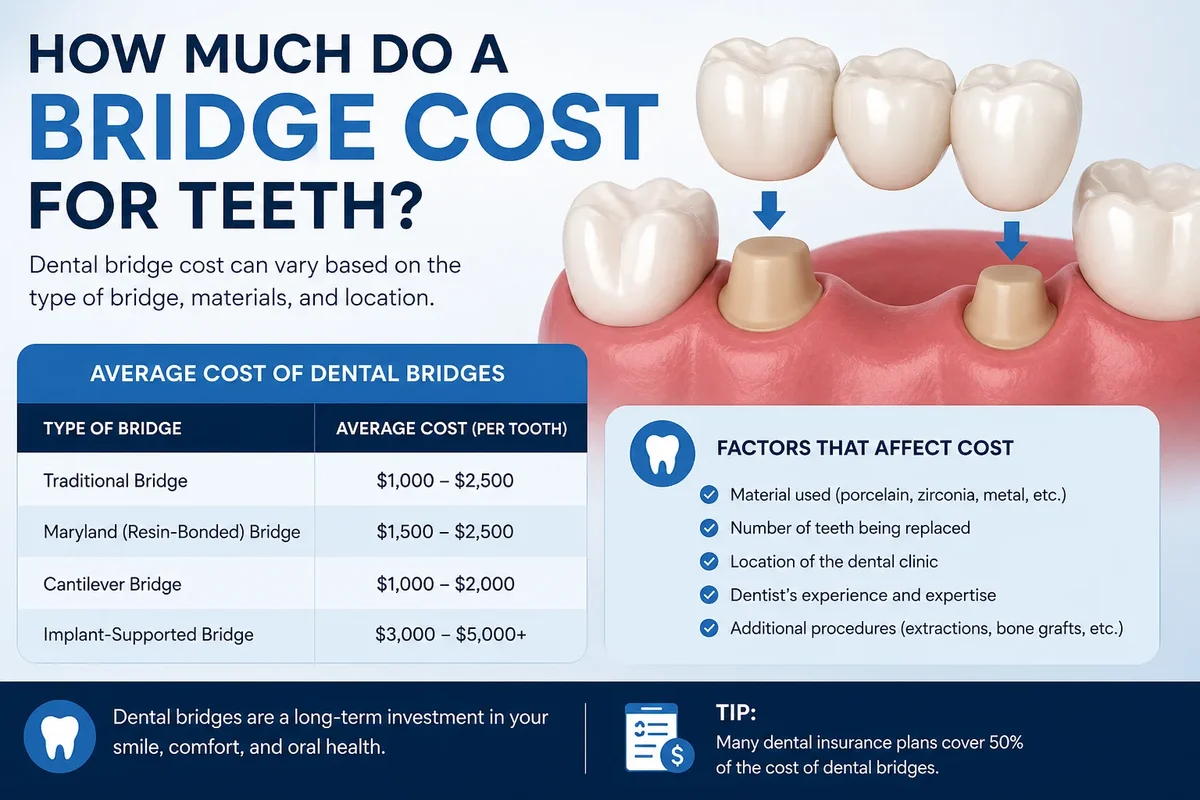
When discussing how much do a bridge cost for teeth, average pricing in 2026 typically falls into the following ranges:
| Bridge Type | Average Cost Range |
|---|---|
| Traditional Bridge | $2,000 – $5,000 |
| Maryland Bridge | $1,500 – $3,000 |
| Cantilever Bridge | $2,000 – $4,500 |
| Implant-Supported Bridge | $5,000 – $15,000+ |
These figures are estimates based on current market trends. The exact answer to how much do a bridge cost for teeth will depend on your individual treatment plan and clinical needs.
A major factor influencing how much do a bridge cost for teeth is the material chosen for the restoration. Modern bridges are available in several options:
- Porcelain-fused-to-metal bridges
- Full ceramic bridges
- Zirconia bridges
- Metal alloy bridges
- Hybrid restorations
Zirconia and premium ceramic bridges generally cost more because they provide excellent aesthetics, durability, and natural-looking results. Patients replacing visible front teeth often prefer these materials because they closely mimic natural tooth enamel.
Another important consideration when evaluating how much do a bridge cost for teeth is the number of teeth involved. Replacing a single missing tooth is typically less expensive than restoring multiple missing teeth with a larger bridge. The more units required, the higher the overall treatment cost.
Many patients are surprised to learn that additional treatments can also influence how much do a bridge cost for teeth. Before placing a bridge, dentists may recommend:
- Dental examinations
- Digital X-rays
- 3D imaging scans
- Tooth extractions
- Root canal therapy
- Gum disease treatment
- Temporary restorations
Although these procedures increase the initial investment, they are often essential for ensuring the bridge functions properly and lasts for many years.
People comparing treatment options frequently ask whether bridges or implants offer better value. While implants often provide superior longevity, bridges usually involve a lower initial investment. Therefore, when asking how much do a bridge cost for teeth, it is important to consider both short-term affordability and long-term maintenance requirements.
Dental insurance can significantly reduce out-of-pocket expenses. Many insurance providers classify bridges as major restorative procedures and may cover a portion of treatment costs. Coverage percentages vary depending on the policy, annual maximums, and waiting periods.
Patients concerned about affordability should ask their dental provider about financing plans. Many modern clinics offer monthly payment options that make treatment more accessible. This flexibility allows patients to restore their smiles without postponing necessary care.
Beyond cost considerations, dental bridges provide numerous benefits:
- Improved chewing efficiency
- Enhanced speech clarity
- Natural smile restoration
- Better facial support
- Prevention of tooth movement
- Increased confidence and self-esteem
These advantages explain why many individuals researching how much do a bridge cost for teeth ultimately decide that treatment is a worthwhile investment in their health and quality of life.
Another aspect affecting how much do a bridge cost for teeth is geographic location. Dental clinics in major urban centers often have higher operating costs, which may be reflected in treatment fees. On the other hand, many patients explore dental tourism opportunities where high-quality treatment is available at more affordable prices.
For those considering treatment abroad, it is essential to evaluate not only pricing but also clinical expertise, technology, patient reviews, warranty policies, and aftercare services. Choosing the cheapest option is not always the best long-term decision.
If you are still wondering how much do a bridge cost for teeth, the most accurate answer can only be provided after a professional consultation. Every patient’s oral health situation is unique, and a personalized assessment allows the dentist to create a treatment plan tailored to your specific needs.
At Redent Klinik, patients receive customized treatment recommendations, transparent pricing, and advanced diagnostic evaluations. To schedule a consultation or request a personalized treatment estimate, visit the Redent Klinik Contact Page.
For additional information about oral health, dental restorations, and patient education resources, visit the American Dental Association.
In summary, the answer to how much do a bridge cost for teeth depends on multiple factors including bridge type, materials, number of missing teeth, supporting structures, and any preparatory treatments required. While average costs often range from $2,000 to $5,000 for traditional bridges and considerably more for implant-supported options, the benefits of restored function, improved appearance, and enhanced confidence often make the investment worthwhile. By understanding the factors that influence pricing, patients can make informed decisions and choose the most suitable tooth replacement solution for their needs.
How Much Do a Bridge Cost for Teeth in 2026?
One of the most frequently searched dental questions today is how much do a bridge cost for teeth. As more people seek reliable solutions for missing teeth, understanding current pricing trends has become increasingly important. In 2026, dental bridges remain one of the most popular restorative treatments because they provide a fixed, natural-looking replacement for missing teeth without requiring removable appliances.
If you are researching how much do a bridge cost for teeth, it is essential to understand that there is no single price that applies to every patient. The final cost depends on multiple variables, including the type of bridge selected, the number of missing teeth, the materials used, and whether additional treatments are necessary before bridge placement.
Average Cost of Dental Bridges in 2026
The first thing patients want to know when asking how much do a bridge cost for teeth is the average market price. Based on current dental industry estimates, most patients can expect the following cost ranges:
| Bridge Type | Estimated Cost Range |
|---|---|
| Traditional Dental Bridge | $2,000 – $5,000 |
| Maryland Dental Bridge | $1,500 – $3,000 |
| Cantilever Dental Bridge | $2,000 – $4,500 |
| Implant-Supported Bridge | $5,000 – $15,000+ |
These prices generally include the bridge fabrication, clinical appointments, and laboratory fees. However, every dental practice structures pricing differently, which is why patients should always request a detailed treatment estimate.
When considering how much do a bridge cost for teeth, remember that lower prices do not always indicate better value. The experience of the dentist, quality of materials, and long-term durability should also be considered.
Why Dental Bridge Prices Vary So Much
A common source of confusion when researching how much do a bridge cost for teeth is the wide range of prices found online. This variation exists because every patient has unique dental needs.
For example, replacing a single missing tooth usually costs less than restoring multiple missing teeth. Similarly, a straightforward case requiring minimal preparation will generally cost less than a complex treatment plan involving additional procedures.
The answer to how much do a bridge cost for teeth may also differ depending on whether the bridge is supported by natural teeth or dental implants. Implant-supported bridges typically involve surgical placement and advanced planning, which increases the overall investment.
Geographic Location Matters
One often overlooked factor affecting how much do a bridge cost for teeth is location. Dental clinics in major cities often have higher operational expenses, which can result in higher treatment fees.
For example, treatment costs in New York, Los Angeles, London, or Sydney may be significantly higher than in smaller cities. Some patients even travel internationally to obtain quality dental treatment at a more affordable price.
Dental tourism destinations have become increasingly popular because patients can often receive high-quality care while spending less than they would in their home countries.
Bridge Materials and Their Impact on Cost
Another major factor influencing how much do a bridge cost for teeth is the material selected for the restoration.
Modern bridges can be fabricated from:
- Porcelain-fused-to-metal (PFM)
- Full ceramic
- Zirconia
- Gold alloys
- Metal alloys
Each material offers different advantages regarding strength, aesthetics, and longevity.
Patients concerned primarily with appearance often choose zirconia or all-ceramic bridges because they closely resemble natural teeth. While these premium options may increase how much do a bridge cost for teeth, many patients believe the superior aesthetics justify the investment.
Additional Costs Patients Should Expect
Many online articles discussing how much do a bridge cost for teeth focus only on the bridge itself. However, the total treatment cost often includes additional services.
These may include:
- Initial consultation
- Comprehensive oral examination
- Digital X-rays
- CBCT scans
- Tooth preparation
- Temporary bridge placement
- Gum treatments if necessary
- Root canal therapy when required
Patients should always ask whether these services are included in the quoted price.
Maintenance Costs Over Time
When evaluating how much do a bridge cost for teeth, it is also important to think beyond the initial treatment fee.
Like any dental restoration, bridges require proper maintenance. Routine cleanings, examinations, and occasional repairs may be necessary throughout the lifespan of the bridge.
A well-maintained bridge can often last between 10 and 15 years, and in some cases even longer. This longevity makes bridges a cost-effective solution for many patients.
Are Dental Bridges Covered by Insurance?
Insurance coverage is another important consideration when determining how much do a bridge cost for teeth.
Many dental insurance plans classify bridges as major restorative procedures and may cover a portion of treatment expenses. Coverage often ranges between 30% and 80%, depending on the policy.
Patients should contact their insurance provider directly to verify:
- Coverage percentage
- Annual maximum benefits
- Waiting periods
- Preauthorization requirements
Understanding these details can significantly reduce out-of-pocket costs.
Bridge vs Implant: Which Offers Better Value?
Many patients researching how much do a bridge cost for teeth also compare bridges with dental implants.
While implants generally require a larger initial investment, bridges usually offer a lower upfront cost and shorter treatment timeline. Patients seeking a faster solution often prefer bridges, while those prioritizing maximum longevity may choose implants.
The best option depends on individual oral health conditions, treatment goals, and financial considerations.
Final Thoughts on How Much Do a Bridge Cost for Teeth
Ultimately, the answer to how much do a bridge cost for teeth depends on numerous factors, including bridge type, material selection, number of missing teeth, supporting structures, geographic location, and any preparatory procedures required.
Most patients can expect to invest between $2,000 and $5,000 for a conventional bridge, while implant-supported bridges may exceed $15,000. Although the initial investment may seem significant, restoring missing teeth can dramatically improve oral function, appearance, confidence, and overall quality of life.
For patients seeking personalized pricing information, the most reliable approach is a professional consultation and comprehensive examination. Only after evaluating your specific needs can a dentist provide an accurate estimate of how much do a bridge cost for teeth and recommend the most appropriate treatment solution.
Factors That Affect How Much Do a Bridge Cost for Teeth
When patients search online for how much do a bridge cost for teeth, they are often surprised to discover that there is no fixed answer. Dental bridge pricing varies considerably from one patient to another because every treatment plan is unique. While average price ranges can provide a general idea, the final cost depends on several important factors that influence the complexity, materials, laboratory work, and overall treatment process.
Understanding these factors is essential if you want an accurate estimate of how much do a bridge cost for teeth. A bridge that costs $2,000 for one patient could cost $6,000 or more for another, depending on their oral health condition and restorative needs.
🦷 In this section, we will explore the most important factors that determine how much do a bridge cost for teeth and explain why treatment costs can vary so significantly.
Number of Missing Teeth
One of the biggest influences on how much do a bridge cost for teeth is the number of teeth that need replacement.
A bridge replacing a single missing tooth generally requires fewer materials and less laboratory work than a bridge replacing multiple teeth. As the number of missing teeth increases, the size and complexity of the bridge also increase.
For example:
- One missing tooth usually requires a 3-unit bridge.
- Two missing teeth may require a 4-unit bridge.
- Three or more missing teeth often require larger restorations.
Because larger bridges involve additional fabrication costs, the answer to how much do a bridge cost for teeth often depends heavily on the total number of units required.
Type of Dental Bridge
The specific bridge design selected is another major factor affecting how much do a bridge cost for teeth.
Several bridge options are available:
- Traditional bridges
- Maryland bridges
- Cantilever bridges
- Implant-supported bridges
Traditional bridges remain the most common option and generally provide a balance between cost and durability. Maryland bridges are often less expensive because they require less tooth preparation. Implant-supported bridges usually involve the highest investment because they combine surgical and restorative procedures.
As a result, the type of bridge selected can dramatically influence how much do a bridge cost for teeth.
Traditional vs Implant-Supported Bridges
Patients comparing treatment options frequently ask whether implants justify their higher cost.
Traditional bridges typically range between $2,000 and $5,000. Implant-supported bridges often range from $5,000 to $15,000 or more because they require:
- Implant placement surgery
- Healing periods
- Abutment components
- Advanced digital planning
When evaluating how much do a bridge cost for teeth, understanding these differences helps patients choose the option that best aligns with their goals and budget.
Materials Used in the Bridge
The material chosen for the restoration significantly affects how much do a bridge cost for teeth.
Modern bridges can be fabricated from several materials:
- Porcelain-fused-to-metal (PFM)
- Full ceramic
- Zirconia
- Metal alloys
- Gold alloys
Zirconia and premium ceramic bridges typically cost more than traditional porcelain-fused-to-metal options because they provide superior aesthetics and excellent durability.
Patients seeking highly natural-looking restorations often choose zirconia despite the higher cost because of its strength and lifelike appearance.
Therefore, material selection plays a critical role in determining how much do a bridge cost for teeth.
Condition of Supporting Teeth
Healthy support teeth are essential for a successful bridge.
If the neighboring teeth already have large fillings, decay, fractures, or root canal issues, additional treatment may be necessary before bridge placement.
These preparatory procedures can include:
- Dental fillings
- Crown replacements
- Root canal treatment
- Periodontal therapy
Consequently, the condition of the surrounding teeth can directly affect how much do a bridge cost for teeth.
Need for Gum Disease Treatment
Many patients are unaware that gum health influences bridge success.
If periodontal disease is present, dentists often recommend treatment before proceeding with restorative work. Healthy gums provide a stable foundation that helps maximize bridge longevity.
Scaling, root planing, and periodontal maintenance may increase the overall investment associated with how much do a bridge cost for teeth.
Laboratory Quality and Technology
Dental laboratories play a major role in bridge fabrication.
High-end laboratories use advanced CAD/CAM systems, digital scanners, premium materials, and skilled technicians to create highly accurate restorations.
Although premium laboratories often increase how much do a bridge cost for teeth, they frequently provide superior fit, aesthetics, and long-term performance.
Patients should remember that laboratory quality directly affects the final outcome.
Geographic Location of the Clinic
Location is another important variable when discussing how much do a bridge cost for teeth.
Clinics in major cities generally face higher operating expenses, including:
- Rent
- Staff salaries
- Equipment costs
- Insurance expenses
As a result, treatment fees in metropolitan areas are often higher than those in smaller communities.
Some patients explore dental tourism opportunities to reduce treatment costs while still receiving quality care.
Dentist Experience and Expertise
The experience level of the dentist also influences how much do a bridge cost for teeth.
Dentists with extensive restorative experience, advanced certifications, and specialized training may charge more for their services. However, many patients feel that paying for expertise helps reduce complications and improves long-term outcomes.
A well-designed bridge can last more than a decade, making professional skill an important consideration.
Diagnostic and Imaging Requirements
Before treatment begins, dentists typically perform diagnostic evaluations to determine the most appropriate restoration.
These assessments may include:
- Clinical examination
- Digital X-rays
- Intraoral scanning
- CBCT imaging
- Bite analysis
Although these services add to how much do a bridge cost for teeth, they help ensure accurate treatment planning and predictable results.
Long-Term Value Versus Initial Cost
Many patients focus exclusively on the initial price when researching how much do a bridge cost for teeth. However, long-term value is equally important.
A high-quality bridge fabricated with premium materials and supported by excellent oral hygiene may last 10–15 years or longer. Investing in durability often reduces future repair and replacement expenses.
When comparing treatment options, patients should evaluate not only the immediate cost but also the expected lifespan and maintenance requirements of the restoration.
Final Thoughts on Factors Affecting Dental Bridge Costs
The answer to how much do a bridge cost for teeth depends on numerous interconnected factors, including bridge design, materials, number of missing teeth, supporting tooth condition, laboratory quality, dentist expertise, location, and additional treatments required. Understanding these variables allows patients to make informed decisions and avoid unexpected costs during treatment.
Ultimately, the most accurate way to determine how much do a bridge cost for teeth is through a personalized consultation and comprehensive examination. Every smile is unique, and every treatment plan should be customized to achieve the best possible long-term result.
Traditional Dental Bridge Costs Explained
When people begin researching tooth replacement options, one of the most common questions they ask is how much do a bridge cost for teeth. While several types of bridges are available, traditional dental bridges remain the most frequently recommended and widely used solution. They have been successfully restoring smiles for decades and continue to be one of the most cost-effective methods for replacing missing teeth.
Understanding traditional bridge pricing is essential for anyone trying to determine how much do a bridge cost for teeth. Although average costs can provide a general estimate, the final price depends on several factors, including the number of teeth being replaced, the materials selected, laboratory fees, and any additional dental procedures required.
🦷 In this section, we will explore traditional dental bridges in detail, explain how they work, discuss their benefits, and break down the costs associated with this popular restorative treatment.
What Is a Traditional Dental Bridge?
A traditional dental bridge is a fixed restoration used to replace one or more missing teeth. It consists of one or more artificial teeth, called pontics, which are anchored by crowns placed on neighboring natural teeth.
The supporting teeth are commonly referred to as abutment teeth. These teeth are carefully prepared to support the bridge and provide stability during chewing and speaking.
For many patients researching how much do a bridge cost for teeth, traditional bridges are often the most affordable fixed solution because they do not require implant surgery.
The typical structure includes:
- One or more replacement teeth (pontics)
- Two supporting crowns
- A custom-made laboratory fabrication process
- Permanent cementation
This design allows the bridge to function similarly to natural teeth while restoring aesthetics and bite function.
Average Cost of a Traditional Dental Bridge
The average answer to how much do a bridge cost for teeth for a traditional bridge generally falls between $2,000 and $5,000.
However, pricing can vary depending on the number of units included in the bridge.
| Bridge Size | Typical Cost Range |
|---|---|
| 3-Unit Bridge | $2,000 – $5,000 |
| 4-Unit Bridge | $3,000 – $6,500 |
| 5-Unit Bridge | $4,000 – $8,000+ |
Patients often assume all bridges cost roughly the same amount, but the number of units has a major impact on how much do a bridge cost for teeth.
Larger bridges require more materials, additional laboratory work, and greater clinical complexity.
Cost Per Tooth Unit
Some dental clinics calculate fees on a per-unit basis.
Each crown and each pontic counts as a separate unit. Depending on the material and location, costs may range between $700 and $1,500 per unit.
This is one reason why the answer to how much do a bridge cost for teeth can vary considerably between patients.
Materials Used in Traditional Bridges
The material selected significantly influences how much do a bridge cost for teeth.
Several material options are available:
- Porcelain-fused-to-metal (PFM)
- Full ceramic
- Zirconia
- Metal alloy
- Gold alloy
Porcelain-fused-to-metal bridges have traditionally been one of the most common choices because they balance strength and aesthetics.
Full ceramic and zirconia bridges generally cost more but offer a highly natural appearance that many patients prefer.
Because of their durability and cosmetic advantages, zirconia restorations often increase how much do a bridge cost for teeth compared to conventional options.
Clinical Procedures Included in the Cost
Many people searching for how much do a bridge cost for teeth focus only on the restoration itself. However, bridge treatment involves several clinical stages.
These often include:
- Comprehensive consultation
- Oral examination
- Digital X-rays
- Tooth preparation
- Dental impressions or digital scans
- Temporary bridge fabrication
- Final bridge placement
- Follow-up adjustments
Some clinics include all these services in one fee, while others charge separately.
Understanding what is included can help patients more accurately evaluate how much do a bridge cost for teeth.
Laboratory Fees
A significant portion of traditional bridge costs comes from laboratory fabrication.
Highly trained dental technicians use specialized equipment to create custom restorations that fit precisely and look natural.
Premium laboratories often charge higher fees but deliver superior aesthetics and durability.
Consequently, laboratory quality directly affects how much do a bridge cost for teeth.
Additional Treatments That May Increase Cost
Before a traditional bridge can be placed, some patients require additional procedures.
Common examples include:
- Tooth extractions
- Root canal therapy
- Periodontal treatment
- Crown replacement
- Treatment of tooth decay
These services are often necessary to create a healthy foundation for the bridge.
As a result, they can increase the final answer to how much do a bridge cost for teeth.
Advantages of Traditional Bridges
Although cost is important, value should also be considered when evaluating how much do a bridge cost for teeth.
Traditional bridges offer numerous benefits:
- Fixed, non-removable solution
- Natural appearance
- Restored chewing function
- Improved speech
- Prevention of tooth shifting
- Relatively quick treatment timeline
- No surgical procedures required
Many patients appreciate that treatment can often be completed within a few weeks.
This shorter timeline makes traditional bridges attractive for those seeking efficient tooth replacement.
Potential Limitations of Traditional Bridges
While traditional bridges offer many advantages, they are not ideal for every situation.
Potential limitations include:
- Preparation of healthy neighboring teeth
- Risk of decay around supporting crowns
- Possible need for replacement over time
- Less bone preservation compared to implants
These considerations should be discussed with your dentist before deciding which treatment option best meets your needs.
Understanding these factors can provide additional perspective when evaluating how much do a bridge cost for teeth.
Traditional Bridges vs Other Bridge Types
Traditional bridges are often compared with Maryland bridges, cantilever bridges, and implant-supported bridges.
For many patients, traditional bridges offer the ideal balance between affordability, durability, and functionality.
While implant-supported restorations may provide longer-term benefits, traditional bridges usually involve lower upfront costs and faster treatment completion.
This balance explains why traditional bridges remain one of the most common answers to patients asking how much do a bridge cost for teeth.
Final Thoughts on Traditional Dental Bridge Costs
For patients researching how much do a bridge cost for teeth, traditional bridges remain one of the most practical and widely used restorative solutions available today. Average costs typically range between $2,000 and $5,000 for a standard 3-unit bridge, although larger restorations and premium materials can increase treatment fees.
The final cost depends on factors such as bridge size, materials, laboratory quality, geographic location, dentist expertise, and any additional procedures required. By understanding these variables, patients can make informed decisions and choose a treatment option that provides both excellent functionality and long-term value.
How Much Do a Bridge Cost for Teeth Compared to Dental Implants?
One of the most common questions patients ask when replacing missing teeth is not only how much do a bridge cost for teeth, but also how that cost compares to dental implants. Both treatment options are highly effective for restoring function, appearance, and confidence. However, they differ significantly in terms of procedure complexity, longevity, maintenance requirements, and overall investment.
Choosing between a bridge and an implant is not simply about selecting the cheapest option. Instead, patients should evaluate the long-term value, oral health benefits, durability, and future maintenance costs associated with each treatment. Understanding these differences can help answer the broader question of how much do a bridge cost for teeth while determining which restoration best fits your needs.
🦷 Although dental bridges and implants share the same goal—replacing missing teeth—they achieve that goal in very different ways.
Understanding the Difference Between Bridges and Implants
A traditional dental bridge replaces a missing tooth by using neighboring teeth as support. Crowns are placed on the adjacent teeth, and an artificial tooth is suspended between them.
A dental implant, on the other hand, replaces the entire tooth structure. A titanium implant is surgically inserted into the jawbone, where it functions as an artificial tooth root. After healing, a custom crown is attached to the implant.
This fundamental difference greatly influences how much do a bridge cost for teeth compared to implant treatment.
How Each Option Replaces Missing Teeth
- Dental Bridge: Supported by neighboring teeth.
- Dental Implant: Supported directly by the jawbone.
- Bridge: Usually completed faster.
- Implant: Requires surgical placement and healing.
- Bridge: Typically lower initial cost.
- Implant: Often higher upfront investment.
These differences help explain why patients researching how much do a bridge cost for teeth frequently compare both treatment options before making a decision.
Average Cost Comparison
The most obvious difference between bridges and implants is cost.
| Treatment Option | Average Cost Range |
|---|---|
| Traditional Dental Bridge | $2,000 – $5,000 |
| Maryland Bridge | $1,500 – $3,000 |
| Cantilever Bridge | $2,000 – $4,500 |
| Single Dental Implant | $3,000 – $7,000 |
| Implant-Supported Bridge | $5,000 – $15,000+ |
Based on these averages, the answer to how much do a bridge cost for teeth is usually lower than the cost of replacing the same tooth with a dental implant.
For patients working within a limited budget, a bridge often provides a more affordable immediate solution.
Initial Cost Versus Long-Term Value
Although bridges typically cost less initially, long-term value should also be considered.
When evaluating how much do a bridge cost for teeth, patients sometimes focus exclusively on upfront expenses while overlooking future replacement and maintenance needs.
A traditional bridge generally lasts between 10 and 15 years with proper care. Some may last longer, but eventual replacement is common.
Dental implants often last 20 years or more and can sometimes remain functional for a lifetime when properly maintained.
Because of their longevity, implants may offer better value over several decades despite the higher initial investment.
Replacement and Maintenance Costs
Bridges may eventually require:
- Replacement due to wear
- Repair of supporting crowns
- Treatment of decay around abutment teeth
- Adjustments due to bite changes
Implants generally require:
- Routine professional cleanings
- Periodic examinations
- Occasional crown replacement after many years
These long-term considerations play an important role when comparing how much do a bridge cost for teeth to implant treatment.
Impact on Surrounding Teeth
Another major difference between bridges and implants involves neighboring teeth.
Traditional bridges require the preparation of adjacent teeth. These supporting teeth must be reshaped to accommodate crowns.
As a result, healthy tooth structure is permanently removed.
Dental implants do not rely on neighboring teeth for support. This preserves natural tooth structure and often contributes to better long-term oral health.
Patients concerned about preserving healthy teeth often consider this factor when evaluating how much do a bridge cost for teeth.
Bone Preservation Benefits
One advantage implants have over bridges is their ability to preserve jawbone density.
After tooth loss, the jawbone in the missing tooth area gradually shrinks due to lack of stimulation.
Dental implants help prevent this process by transmitting chewing forces directly into the bone.
Traditional bridges do not stimulate the jawbone in the same way.
While this does not directly change how much do a bridge cost for teeth, it can influence long-term oral health outcomes.
Treatment Timeline Comparison
Many patients prefer bridges because treatment can often be completed relatively quickly.
A traditional bridge typically requires:
- Initial consultation
- Tooth preparation
- Temporary bridge placement
- Final bridge delivery
In many cases, treatment is completed within two to four weeks.
Dental implants usually require:
- Surgical implant placement
- Healing period of several months
- Abutment placement
- Final crown fabrication
The longer treatment timeline often influences patient decisions when comparing implants to how much do a bridge cost for teeth.
Who Is a Better Candidate for a Bridge?
Bridges may be ideal for patients who:
- Need a faster solution
- Have healthy adjacent teeth suitable for support
- Prefer avoiding surgery
- Require a lower initial investment
- Have medical conditions limiting implant treatment
For these individuals, the answer to how much do a bridge cost for teeth often represents a practical and affordable treatment path.
Who Is a Better Candidate for Implants?
Implants may be preferable for patients who:
- Have sufficient jawbone volume
- Want maximum longevity
- Wish to preserve adjacent teeth
- Are comfortable with surgical treatment
- Prioritize long-term bone preservation
Although implants cost more initially, many patients value the additional benefits they provide.
Final Thoughts on Bridges vs Implants
When comparing implants and bridges, the answer to how much do a bridge cost for teeth is generally lower than the cost of implant treatment. Traditional bridges typically range from $2,000 to $5,000, while single implants frequently range from $3,000 to $7,000 and implant-supported bridges may exceed $15,000.
However, cost alone should not determine treatment selection. Factors such as longevity, maintenance, oral health impact, treatment timeline, bone preservation, and personal preferences should all be considered. By carefully weighing these elements, patients can choose the tooth replacement solution that delivers the best combination of value, function, aesthetics, and long-term satisfaction.
Cost Differences Between Materials Used for Dental Bridges
When patients begin researching how much do a bridge cost for teeth, they often focus on the type of bridge being used. However, one of the most significant factors influencing the final price is the material chosen for the restoration. Dental bridges can be manufactured from several different materials, each offering unique advantages in terms of aesthetics, strength, longevity, and overall value.
Understanding material options is essential when evaluating how much do a bridge cost for teeth because the same bridge design may vary dramatically in price depending on the material selected. In some cases, choosing a premium material can increase treatment costs by several thousand dollars, while also providing improved appearance and durability.
🦷 Modern dental technology offers patients more choices than ever before, allowing bridges to be customized according to functional requirements, cosmetic goals, and budget considerations.
Why Bridge Material Matters
The material used to fabricate a bridge affects much more than appearance. It directly influences:
- Strength and durability
- Resistance to wear
- Aesthetic quality
- Longevity
- Comfort
- Laboratory costs
- Overall treatment price
As a result, material selection is one of the biggest factors affecting how much do a bridge cost for teeth.
Some patients prioritize aesthetics and want the most natural-looking restoration possible. Others prioritize strength, particularly when replacing molars exposed to heavy chewing forces. The ideal material often depends on the location of the missing tooth and the patient’s expectations.
Porcelain-Fused-to-Metal (PFM) Bridges
Porcelain-fused-to-metal bridges have been widely used for decades and remain one of the most common restorative options available today.
These bridges consist of a strong metal framework covered by tooth-colored porcelain.
Average Cost of PFM Bridges
| Material Type | Average Cost Per Unit |
|---|---|
| Porcelain-Fused-to-Metal | $700 – $1,500 |
Patients researching how much do a bridge cost for teeth often find PFM bridges attractive because they offer a good balance between affordability and functionality.
Advantages include:
- Strong metal support structure
- Natural appearance
- Reliable long-term performance
- Lower cost than premium ceramics
Potential disadvantages include minor porcelain chipping and the possibility of a dark metal margin becoming visible near the gumline over time.
Full Ceramic Bridges
Full ceramic bridges are manufactured entirely from advanced dental ceramics without any metal framework.
Many patients seeking highly aesthetic restorations prefer ceramic bridges because they closely mimic the translucency and color of natural teeth.
Average Cost of Ceramic Bridges
| Material Type | Average Cost Per Unit |
|---|---|
| Full Ceramic | $1,000 – $2,000 |
Because of their superior aesthetics, ceramic restorations often increase how much do a bridge cost for teeth compared to conventional PFM options.
Benefits include:
- Excellent appearance
- No metal components
- Natural translucency
- Biocompatibility
These bridges are particularly popular for replacing front teeth where appearance is a primary concern.
Zirconia Bridges
Zirconia has become one of the most popular restorative materials in modern dentistry.
This advanced ceramic material combines exceptional strength with highly attractive aesthetics.
For many patients, zirconia represents the premium solution when considering how much do a bridge cost for teeth.
Average Cost of Zirconia Bridges
| Material Type | Average Cost Per Unit |
|---|---|
| Zirconia | $1,200 – $2,500+ |
Zirconia bridges generally cost more because they require sophisticated manufacturing processes and specialized laboratory equipment.
Advantages include:
- Exceptional strength
- High fracture resistance
- Excellent aesthetics
- Long lifespan
- Metal-free construction
For patients who prioritize durability and appearance, zirconia often provides excellent value despite increasing how much do a bridge cost for teeth.
Metal Alloy Bridges
Although less common today, metal alloy bridges remain an option in certain situations.
These restorations are usually fabricated from noble or non-precious metal alloys and are primarily used in areas where aesthetics are less important.
Average Cost of Metal Bridges
| Material Type | Average Cost Per Unit |
|---|---|
| Metal Alloy | $600 – $1,200 |
Metal bridges are often among the least expensive options when calculating how much do a bridge cost for teeth.
Benefits include:
- Excellent durability
- Minimal wear
- Lower cost
- Long clinical history
The primary drawback is their metallic appearance, which makes them unsuitable for highly visible areas of the mouth.
Gold Alloy Bridges
Gold restorations have a long history of success in dentistry.
Although they are less common today, some patients still choose gold bridges because of their exceptional longevity and biocompatibility.
Average Cost of Gold Bridges
| Material Type | Average Cost Per Unit |
|---|---|
| Gold Alloy | $1,500 – $3,000+ |
The fluctuating cost of precious metals can significantly influence how much do a bridge cost for teeth when gold alloys are selected.
Advantages include:
- Outstanding longevity
- Excellent fit
- Minimal wear on opposing teeth
- Highly biocompatible
However, aesthetic concerns limit their popularity in modern cosmetic dentistry.
How Material Choice Impacts Long-Term Value
Many patients evaluating how much do a bridge cost for teeth focus solely on initial treatment fees. While cost is important, long-term value should also be considered.
A higher-quality material may:
- Last longer
- Require fewer repairs
- Maintain appearance better
- Provide greater patient satisfaction
For example, a zirconia bridge may cost more initially than a PFM bridge but could potentially offer superior durability and aesthetics over many years.
When viewed over the lifespan of the restoration, premium materials may provide excellent value despite higher upfront costs.
Factors Beyond Material Costs
While material selection strongly influences how much do a bridge cost for teeth, other factors also affect pricing.
These include:
- Dentist expertise
- Laboratory quality
- Digital technology used
- Bridge complexity
- Location of the clinic
- Additional procedures required
Therefore, patients should evaluate the complete treatment plan rather than focusing solely on material prices.
Choosing the Best Material for Your Needs
The ideal bridge material depends on several factors, including the location of the missing tooth, cosmetic expectations, bite forces, budget, and long-term goals.
Patients replacing front teeth often prioritize aesthetics and may prefer ceramic or zirconia. Those restoring molars may prioritize strength and durability.
Understanding these trade-offs helps patients make informed decisions when researching how much do a bridge cost for teeth.
Final Thoughts on Bridge Material Costs
The material used to fabricate a dental bridge plays a major role in determining how much do a bridge cost for teeth. Options range from economical metal alloys to premium zirconia restorations, with each material offering different advantages in strength, appearance, longevity, and cost.
By understanding the differences between PFM, ceramic, zirconia, metal alloy, and gold restorations, patients can choose a solution that balances budget, aesthetics, and long-term value. Ultimately, selecting the right material is one of the most important decisions in achieving a successful and durable dental bridge restoration.
Insurance Coverage and Financing Options for Dental Bridges
For many patients researching how much do a bridge cost for teeth, one of the biggest concerns is not just the total treatment fee but how that cost will be paid. While dental bridges are often more affordable than implant-supported restorations, they can still represent a significant investment. Fortunately, dental insurance plans, financing programs, payment plans, and healthcare financing companies can make treatment much more accessible.
Understanding insurance benefits and financing options is an important part of determining how much do a bridge cost for teeth. Many patients discover that their actual out-of-pocket expense is substantially lower than the full treatment fee once insurance contributions and payment arrangements are considered.
🦷 In this section, we will explore how insurance works for dental bridges, what patients should expect regarding coverage, and the most common financing solutions available in 2026.
Does Dental Insurance Cover Dental Bridges?
One of the first questions patients ask when evaluating how much do a bridge cost for teeth is whether dental insurance covers the procedure.
In many cases, the answer is yes. Most dental insurance providers classify bridges as major restorative treatments. Because replacing missing teeth is considered medically beneficial for oral function, insurance companies frequently contribute toward the cost.
However, coverage levels vary significantly between policies.
Common coverage percentages include:
- 50% coverage of approved treatment costs
- 60% coverage under enhanced plans
- Up to 80% coverage in premium policies
- No coverage under certain basic plans
Because every insurance policy is different, patients should verify benefits directly with their provider before beginning treatment.
Typical Insurance Contribution Example
Consider a traditional bridge costing $4,000.
| Treatment Cost | Insurance Coverage | Patient Pays |
|---|---|---|
| $4,000 | 50% | $2,000 |
| $4,000 | 60% | $1,600 |
| $4,000 | 80% | $800 |
This example demonstrates why insurance can significantly impact the final answer to how much do a bridge cost for teeth.
Annual Maximum Benefits
Even when insurance covers bridges, most plans impose annual maximum benefit limits.
These limits often range between:
- $1,000 per year
- $1,500 per year
- $2,000 per year
- $3,000+ for premium plans
Once the annual maximum is reached, the patient becomes responsible for any additional treatment costs.
Therefore, when evaluating how much do a bridge cost for teeth, it is important to understand both coverage percentages and annual benefit caps.
Waiting Periods for Major Restorative Work
Many insurance providers require waiting periods before major restorative procedures become eligible for coverage.
Common waiting periods include:
- 6 months
- 12 months
- 18 months
This means patients who recently purchased dental insurance may need to wait before receiving benefits for bridge treatment.
Waiting periods can influence the practical answer to how much do a bridge cost for teeth because patients may temporarily bear the full treatment cost themselves.
Pre-Authorization Requirements
Some insurance companies require pre-authorization before bridge treatment begins.
This process allows the insurer to review:
- The patient’s diagnosis
- Clinical findings
- X-rays
- Treatment recommendations
Obtaining pre-authorization can help patients avoid unexpected claim denials and better understand how much insurance will contribute toward how much do a bridge cost for teeth.
Flexible Payment Plans Offered by Dental Clinics
For patients without insurance or those facing substantial out-of-pocket expenses, many dental clinics offer payment plans.
These arrangements allow treatment costs to be spread across several months instead of being paid in one lump sum.
Monthly payment plans often make treatment more accessible for families managing healthcare budgets.
Examples may include:
- 3-month payment plans
- 6-month payment plans
- 12-month payment plans
- 24-month financing programs
Patients researching how much do a bridge cost for teeth should always ask whether financing options are available during their consultation.
Third-Party Healthcare Financing
Many dental offices partner with specialized healthcare financing companies.
These organizations provide financing specifically for medical and dental treatments.
Benefits may include:
- Fast approval processes
- Low monthly payments
- Deferred interest promotions
- Flexible repayment terms
For patients concerned about affordability, healthcare financing can significantly reduce the immediate financial impact of how much do a bridge cost for teeth.
Health Savings Accounts (HSAs) and Flexible Spending Accounts (FSAs)
Patients in certain countries may also use tax-advantaged healthcare accounts to pay for dental treatment.
Examples include:
- Health Savings Accounts (HSAs)
- Flexible Spending Accounts (FSAs)
These programs allow eligible individuals to use pre-tax funds for qualified healthcare expenses.
Because dental bridges are generally considered eligible treatments, these accounts can help reduce the effective cost associated with how much do a bridge cost for teeth.
Combining Insurance and Financing
Many patients successfully combine multiple payment strategies.
For example:
- Insurance covers a portion of treatment.
- The remaining balance is financed through monthly payments.
- HSA or FSA funds are used to offset out-of-pocket expenses.
This approach often makes high-quality restorative treatment much more manageable.
What Patients Should Ask Before Treatment
Before committing to bridge treatment, patients should ask several important financial questions:
- What is the total treatment cost?
- What services are included?
- How much will insurance cover?
- Are financing plans available?
- Is pre-authorization required?
- What happens if additional procedures become necessary?
Having clear answers helps patients accurately estimate how much do a bridge cost for teeth in their specific situation.
Budgeting for Long-Term Maintenance
In addition to the initial treatment fee, patients should consider future maintenance costs.
Routine expenses may include:
- Professional cleanings
- Regular examinations
- Occasional adjustments
- Potential repairs
While these costs are generally modest, including them in long-term financial planning provides a more complete understanding of how much do a bridge cost for teeth over the lifespan of the restoration.
Financial Benefits of Replacing Missing Teeth
Some patients delay treatment because of cost concerns. However, postponing replacement of missing teeth can sometimes lead to additional dental problems.
Potential consequences include:
- Tooth shifting
- Bite changes
- Difficulty chewing
- Increased wear on remaining teeth
- Additional restorative needs
Addressing missing teeth promptly may help avoid more expensive treatment in the future.
Therefore, evaluating how much do a bridge cost for teeth should include consideration of the long-term benefits of restoring oral function.
Final Thoughts on Insurance and Financing
When researching how much do a bridge cost for teeth, insurance coverage and financing options can substantially influence the final amount patients pay out of pocket. Dental insurance may cover 50% to 80% of bridge costs, while financing programs allow expenses to be distributed over manageable monthly payments.
By understanding insurance benefits, annual maximums, waiting periods, financing plans, healthcare credit options, and tax-advantaged accounts, patients can make informed financial decisions. Ultimately, combining available resources often makes dental bridge treatment more affordable and accessible while helping patients restore their oral health and confidence.
How Much Do a Bridge Cost for Teeth for Front Teeth vs Back Teeth?
When patients research how much do a bridge cost for teeth, they often assume that all dental bridges cost roughly the same amount regardless of where the missing tooth is located. In reality, the position of the missing tooth can have a significant impact on both treatment complexity and overall cost. Replacing a front tooth presents different challenges than replacing a back tooth, and these differences often influence the final treatment fee.
The answer to how much do a bridge cost for teeth depends not only on the type of bridge and materials selected but also on whether the restoration is being placed in the anterior (front) region or the posterior (back) region of the mouth. Each area has unique functional and aesthetic requirements that affect treatment planning.
🦷 Understanding these differences can help patients make informed decisions and better understand why bridge costs vary from one case to another.
Why Tooth Location Affects Bridge Cost
The front teeth and back teeth serve very different purposes.
Front teeth are primarily responsible for:
- Smile aesthetics
- Facial appearance
- Speech pronunciation
- Biting into food
Back teeth are primarily responsible for:
- Heavy chewing forces
- Grinding food
- Bite stability
- Overall chewing efficiency
Because of these differences, dentists must consider different treatment objectives when determining how much do a bridge cost for teeth in each area.
Aesthetic Demands Are Higher for Front Teeth
When replacing visible front teeth, appearance becomes a top priority.
Patients usually expect:
- Perfect color matching
- Natural translucency
- Ideal gum contour integration
- Highly aesthetic smile results
Achieving these goals often requires premium materials and advanced laboratory techniques, which can increase how much do a bridge cost for teeth for front-tooth restorations.
Average Cost of Front Tooth Bridges
Front tooth bridges often require a greater emphasis on aesthetics than posterior bridges.
As a result, dentists frequently recommend:
- Full ceramic bridges
- High-translucency zirconia bridges
- Premium cosmetic restorations
These materials closely mimic natural enamel and provide highly attractive results.
| Front Tooth Bridge Type | Typical Cost Range |
|---|---|
| Maryland Bridge | $1,500 – $3,000 |
| Traditional Ceramic Bridge | $2,500 – $5,500 |
| Premium Zirconia Bridge | $3,000 – $7,000+ |
Because aesthetics play such a critical role, front tooth restorations may increase how much do a bridge cost for teeth compared to more basic posterior restorations.
Average Cost of Back Tooth Bridges
Back teeth experience significantly greater chewing forces.
Therefore, strength and durability become primary concerns.
Common material choices for posterior bridges include:
- Porcelain-fused-to-metal (PFM)
- Zirconia
- Metal alloy restorations
These materials provide excellent durability and long-term performance under heavy bite forces.
| Back Tooth Bridge Type | Typical Cost Range |
|---|---|
| PFM Bridge | $2,000 – $5,000 |
| Zirconia Bridge | $3,000 – $6,500 |
| Implant-Supported Posterior Bridge | $5,000 – $15,000+ |
Depending on the material selected, the answer to how much do a bridge cost for teeth for molars can be similar to or even exceed the cost of front tooth restorations.
Chewing Forces Increase Complexity
Molars and premolars absorb tremendous chewing pressure every day.
This means posterior bridges often require:
- Stronger materials
- Additional structural support
- More robust framework designs
- Greater laboratory precision
These factors contribute to variations in how much do a bridge cost for teeth when restoring back teeth.
Front Tooth Bridges and Cosmetic Dentistry
Many front tooth bridge cases overlap with cosmetic dentistry.
Patients frequently request improvements such as:
- Smile enhancement
- Improved symmetry
- Whiter appearance
- Natural translucency
To achieve these outcomes, dentists often collaborate with highly skilled dental laboratories that specialize in cosmetic restorations.
The use of premium cosmetic laboratories may increase how much do a bridge cost for teeth, but it often results in significantly better aesthetic outcomes.
Bone and Gum Considerations
The appearance of the gums is especially important in the front of the mouth.
When replacing front teeth, dentists must carefully evaluate:
- Gum line symmetry
- Soft tissue contours
- Smile line visibility
- Bone support levels
Additional procedures may occasionally be necessary to achieve optimal cosmetic results.
These treatments can affect the final answer to how much do a bridge cost for teeth.
Additional Cosmetic Procedures
Some patients may require:
- Gum contouring
- Soft tissue grafting
- Cosmetic reshaping
- Professional whitening
These services are often optional but can significantly enhance the final appearance of a front tooth bridge.
Bridge Longevity in Different Areas
Front and back tooth bridges may experience different wear patterns.
Front bridges are generally subjected to lower chewing forces but may experience greater aesthetic scrutiny.
Back bridges endure more mechanical stress and therefore require materials capable of resisting long-term wear.
When evaluating how much do a bridge cost for teeth, patients should consider expected lifespan as well as initial treatment cost.
A durable bridge that lasts many years may provide greater value than a lower-cost alternative requiring earlier replacement.
Insurance Coverage Differences
Insurance providers generally do not distinguish significantly between front and back tooth bridges when determining coverage eligibility.
However, purely cosmetic enhancements associated with front tooth restorations may not always be covered.
Patients should verify whether specific cosmetic procedures are included when calculating how much do a bridge cost for teeth.
Patient Expectations Influence Treatment Choices
Patient goals often differ depending on which tooth is missing.
For front teeth, priorities commonly include:
- Natural appearance
- Smile aesthetics
- Confidence
- Speech improvement
For back teeth, priorities often include:
- Chewing efficiency
- Strength
- Durability
- Long-term reliability
These differing objectives influence material selection and ultimately affect how much do a bridge cost for teeth.
Final Thoughts on Front Teeth vs Back Teeth Bridge Costs
The answer to how much do a bridge cost for teeth depends significantly on whether the missing tooth is located in the front or back of the mouth. Front tooth bridges often prioritize aesthetics and may require premium ceramic or zirconia materials, while back tooth bridges emphasize strength and durability to withstand heavy chewing forces.
Although both types of restorations can fall within similar price ranges, cosmetic demands, material selection, laboratory expertise, and functional requirements all influence the final cost. By understanding the unique considerations associated with front and posterior bridges, patients can better evaluate treatment options and choose the solution that provides the best balance of appearance, performance, and long-term value.
Ways to Reduce the Cost of a Dental Bridge Without Sacrificing Quality
Many patients searching for how much do a bridge cost for teeth are concerned about affordability. While dental bridges provide an excellent solution for replacing missing teeth, the cost can sometimes feel overwhelming, especially when multiple teeth require restoration. Fortunately, there are several strategies patients can use to reduce treatment expenses without compromising quality, durability, or long-term success.
Understanding how to manage treatment costs effectively is an important part of evaluating how much do a bridge cost for teeth. The goal should never be to choose the cheapest option available. Instead, patients should focus on maximizing value while ensuring they receive safe, reliable, and aesthetically pleasing dental care.
🦷 In this section, we will explore practical ways to reduce dental bridge costs while maintaining high standards of treatment quality and long-term oral health.
Choose the Right Bridge Type for Your Situation
One of the most effective ways to manage how much do a bridge cost for teeth is selecting the bridge design most appropriate for your specific clinical situation.
Not every patient requires the most advanced or expensive restoration.
Depending on the location of the missing tooth and surrounding support structures, a dentist may recommend:
- Traditional bridges
- Maryland bridges
- Cantilever bridges
- Implant-supported bridges
For some patients, a Maryland bridge may provide an effective and less expensive solution than a traditional bridge or implant-supported restoration.
Choosing the most appropriate treatment option can significantly influence how much do a bridge cost for teeth without negatively affecting outcomes.
Avoid Unnecessary Procedures
Patients should always ask their dentist to explain why specific procedures are recommended.
Necessary treatments should never be skipped, but understanding the purpose of each component helps ensure that treatment remains cost-effective.
A transparent discussion allows patients to better understand how each procedure contributes to how much do a bridge cost for teeth.
Compare Material Options Carefully
The material used in a bridge has a major impact on pricing.
Patients often assume that the most expensive material is always the best choice. However, the ideal material depends on individual needs.
Common bridge materials include:
- Porcelain-fused-to-metal (PFM)
- Full ceramic
- Zirconia
- Metal alloy
For example, a porcelain-fused-to-metal bridge may provide excellent durability and aesthetics at a lower cost than premium zirconia in certain situations.
Discussing material options with your dentist can help optimize how much do a bridge cost for teeth while maintaining excellent functionality and appearance.
Use Dental Insurance Benefits Strategically
Insurance is one of the most powerful tools for reducing out-of-pocket expenses.
Many patients researching how much do a bridge cost for teeth fail to fully utilize available insurance benefits.
To maximize coverage:
- Review annual maximum benefits
- Verify coverage percentages
- Confirm waiting period requirements
- Obtain pre-authorization when necessary
Understanding these details may substantially reduce the final amount paid by the patient.
Split Treatment Across Benefit Years
In some situations, treatment can be strategically scheduled across two insurance benefit years.
For example:
- Preparatory treatment completed late in the year
- Final bridge placement completed early the following year
This approach may allow patients to access two separate annual maximum benefits, reducing the overall financial burden associated with how much do a bridge cost for teeth.
Take Advantage of Financing Plans
Even when insurance does not cover the entire cost, financing options can make treatment significantly more manageable.
Many dental clinics offer:
- Interest-free payment plans
- Extended financing terms
- Monthly payment programs
- Third-party healthcare financing
Although financing does not reduce the actual treatment fee, it can make how much do a bridge cost for teeth easier to manage within a household budget.
Patients should always review financing terms carefully before enrolling.
Address Dental Problems Early
Delaying treatment often increases costs.
Many patients postpone replacing missing teeth because they are worried about how much do a bridge cost for teeth. Unfortunately, delaying treatment can lead to additional complications.
Potential consequences include:
- Tooth shifting
- Bite misalignment
- Additional tooth loss
- Gum disease progression
- Increased restorative needs
By addressing missing teeth promptly, patients may avoid more extensive and expensive treatments later.
Preventive Care Protects Your Investment
Preventive dentistry is one of the most effective ways to maximize bridge longevity.
Regular dental visits help identify small problems before they become major issues.
Recommended preventive measures include:
- Routine dental examinations
- Professional cleanings
- Daily flossing
- Fluoride use
- Excellent oral hygiene habits
Proper maintenance reduces future repair and replacement costs associated with how much do a bridge cost for teeth.
Consider Dental Tourism Carefully
Some patients explore dental tourism opportunities to lower treatment expenses.
In certain regions, high-quality dental care may be available at significantly lower prices than in countries with higher operating costs.
Potential benefits include:
- Lower treatment fees
- Modern technology
- Experienced clinicians
- Comprehensive treatment packages
However, patients should carefully evaluate:
- Clinic reputation
- Dentist qualifications
- Patient reviews
- Warranty policies
- Follow-up care availability
Choosing solely based on price may create additional costs later if complications occur.
Therefore, patients comparing how much do a bridge cost for teeth internationally should prioritize quality as well as affordability.
Request a Detailed Treatment Breakdown
Transparency is essential when evaluating bridge costs.
Patients should request an itemized estimate that includes:
- Consultation fees
- X-rays
- Laboratory charges
- Bridge fabrication
- Temporary restorations
- Follow-up appointments
A detailed breakdown makes it easier to understand exactly what contributes to how much do a bridge cost for teeth.
It also allows patients to compare treatment plans more effectively.
Do Not Choose Based Solely on Price
One of the biggest mistakes patients make is selecting treatment solely because it appears inexpensive.
Extremely low prices may indicate:
- Inferior materials
- Limited laboratory quality
- Outdated technology
- Reduced clinical experience
A poorly fabricated bridge may require repair or replacement sooner, increasing total long-term expenses.
When researching how much do a bridge cost for teeth, patients should focus on overall value rather than simply finding the lowest price available.
Balance Cost and Long-Term Value
The best dental bridge is not necessarily the cheapest or the most expensive option. Instead, it is the restoration that provides the ideal combination of:
- Function
- Aesthetics
- Durability
- Comfort
- Affordability
Patients who balance these factors often achieve the highest level of satisfaction with their treatment.
This approach helps ensure that how much do a bridge cost for teeth translates into a worthwhile long-term investment rather than simply an immediate expense.
Final Thoughts on Reducing Dental Bridge Costs
Patients researching how much do a bridge cost for teeth have several effective ways to control expenses without sacrificing treatment quality. Selecting appropriate materials, maximizing insurance benefits, utilizing financing options, maintaining preventive care, and choosing a reputable dental provider can all contribute to lower overall costs.
Ultimately, the smartest strategy is to focus on long-term value rather than the lowest initial price. A well-designed, professionally fabricated dental bridge can provide many years of reliable function and attractive aesthetics, making it one of the most valuable investments a patient can make in their oral health and quality of life.
Choosing the Right Dental Clinic for a Long-Lasting Dental Bridge
When patients search for how much do a bridge cost for teeth, they often focus primarily on treatment pricing. While cost is certainly important, the quality of the dental clinic providing the treatment can have an even greater impact on the long-term success of the restoration. A well-designed bridge placed by an experienced dental team can last for many years, while a poorly planned restoration may require repairs, adjustments, or premature replacement.
Understanding how to choose the right clinic is therefore a critical part of evaluating how much do a bridge cost for teeth. The true value of a dental bridge is not measured solely by its initial cost but by its durability, appearance, functionality, and ability to improve quality of life over the long term.
🦷 In this final section, we will explore the key factors patients should consider when selecting a dental clinic for bridge treatment and explain why choosing quality care often delivers the best long-term value.
Why Clinic Selection Matters
A dental bridge is not simply a product that can be purchased. It is a highly customized medical restoration that requires careful diagnosis, planning, fabrication, and placement.
The quality of treatment depends on:
- The dentist’s expertise
- The technology used
- The laboratory creating the bridge
- The materials selected
- The clinic’s quality standards
Because of these factors, two patients receiving bridges at different clinics may have dramatically different experiences even if they are paying similar amounts for how much do a bridge cost for teeth.
Quality Often Saves Money Long-Term
Many patients focus exclusively on finding the lowest possible price.
However, choosing treatment based solely on cost may result in:
- Poor fit
- Frequent adjustments
- Early bridge failure
- Additional repair expenses
- Higher long-term costs
When evaluating how much do a bridge cost for teeth, long-term value is often more important than the lowest upfront fee.
Look for Experience in Restorative Dentistry
One of the most important factors when choosing a clinic is the dentist’s experience with restorative procedures.
Experienced clinicians generally have extensive knowledge of:
- Bridge design principles
- Bite mechanics
- Material selection
- Aesthetic planning
- Long-term maintenance strategies
Patients researching how much do a bridge cost for teeth should always consider the qualifications and experience of the dental team rather than focusing only on pricing.
A bridge that functions comfortably for many years often reflects careful planning and skilled execution.
Evaluate the Technology Used by the Clinic
Modern dental technology plays a significant role in treatment quality.
Advanced clinics often utilize:
- Digital X-rays
- Intraoral scanners
- CAD/CAM systems
- 3D imaging technology
- Digital smile design software
These tools improve diagnostic accuracy and enhance the precision of bridge fabrication.
Although advanced technology may sometimes increase how much do a bridge cost for teeth, it often contributes to superior outcomes and greater patient satisfaction.
Benefits of Digital Dentistry
Digital workflows provide numerous advantages:
- More accurate impressions
- Improved comfort
- Better bridge fit
- Reduced adjustment needs
- Enhanced treatment predictability
Many patients find these benefits well worth the investment.
Consider the Dental Laboratory Partnership
The quality of the dental laboratory is often overlooked when evaluating how much do a bridge cost for teeth.
Dental laboratories are responsible for fabricating the actual restoration.
High-quality laboratories typically provide:
- Superior craftsmanship
- Premium materials
- Accurate fit
- Excellent aesthetics
- Consistent quality control
A skilled laboratory technician can make a significant difference in the appearance and longevity of the final bridge.
Review Before-and-After Cases
One of the best ways to evaluate a clinic is by reviewing actual patient cases.
Before-and-after photographs can reveal:
- Aesthetic quality
- Smile design expertise
- Attention to detail
- Consistency of results
Patients concerned about how much do a bridge cost for teeth should also evaluate the quality of outcomes produced by the clinic.
Exceptional results often justify a higher investment.
Patient Testimonials and Reviews
Online reviews provide additional insight into:
- Patient satisfaction
- Communication quality
- Treatment comfort
- Aftercare support
- Overall experience
While reviews should not be the sole deciding factor, they can help patients identify reputable providers.
Ask About Materials and Warranties
When discussing how much do a bridge cost for teeth, patients should ask detailed questions about the materials being used.
Important questions include:
- What material is recommended?
- Why was it selected?
- How long is it expected to last?
- What warranty is provided?
- What maintenance is required?
Transparent answers help patients make informed decisions.
Clinics that stand behind their work often provide warranty programs covering certain types of complications or manufacturing defects.
Evaluate Communication and Treatment Planning
Excellent communication is essential for successful treatment.
A reputable clinic should clearly explain:
- Treatment options
- Advantages and disadvantages
- Expected outcomes
- Potential risks
- Total costs
Patients should never feel pressured into treatment.
Understanding every aspect of how much do a bridge cost for teeth allows patients to make confident and informed decisions.
Importance of Long-Term Maintenance Support
A dental bridge is a long-term restoration that requires ongoing care.
The best clinics provide continued support through:
- Routine examinations
- Professional cleanings
- Periodic evaluations
- Maintenance guidance
- Repair services if needed
Long-term follow-up care helps maximize bridge lifespan and protect the patient’s investment.
This support should be considered when evaluating how much do a bridge cost for teeth.
Preventive Care Extends Bridge Lifespan
Patients who maintain excellent oral hygiene often enjoy significantly longer bridge longevity.
Recommended habits include:
- Brushing twice daily
- Using floss threaders
- Regular dental visits
- Professional cleanings
- Avoiding harmful chewing habits
Proper maintenance helps ensure that the bridge continues functioning effectively for many years.
Balancing Cost and Quality
The lowest treatment fee does not always represent the best value.
When researching how much do a bridge cost for teeth, patients should consider:
- Dentist expertise
- Technology
- Laboratory quality
- Materials
- Warranty protection
- Long-term support
A slightly higher investment in quality treatment may ultimately reduce future expenses and improve satisfaction.
Final Thoughts on Choosing the Right Dental Clinic
For patients evaluating how much do a bridge cost for teeth, selecting the right clinic is one of the most important decisions in the entire treatment process. While pricing is a significant consideration, true value comes from receiving a durable, comfortable, and aesthetically pleasing restoration that performs reliably for many years.
By choosing an experienced dental team, utilizing modern technology, working with high-quality laboratories, and maintaining ongoing preventive care, patients can maximize the return on their investment. Ultimately, the best dental bridge is not simply the least expensive option—it is the restoration that delivers the ideal combination of function, appearance, longevity, and patient satisfaction.
Disclosure: this page may contain affiliate links. We may earn a commission if you use them, at no extra cost to you.