
One of the first questions people ask when considering clear aligner treatment is how much do dental aligners cost. The popularity of dental aligners has increased dramatically over the last decade because they offer a discreet, comfortable, and highly effective alternative to traditional metal braces. Whether you are dealing with crowded teeth, gaps between teeth, mild bite issues, or simply want a more attractive smile, understanding how much do dental aligners cost is an important part of planning your treatment journey.
Clear aligners use a series of custom-made transparent trays that gradually move teeth into their desired positions. Unlike conventional braces, aligners can be removed while eating, drinking, brushing, and flossing. This convenience, combined with their nearly invisible appearance, has made them a preferred orthodontic option for adults and teenagers alike. However, because every patient has unique dental needs, the answer to how much do dental aligners cost can vary significantly.
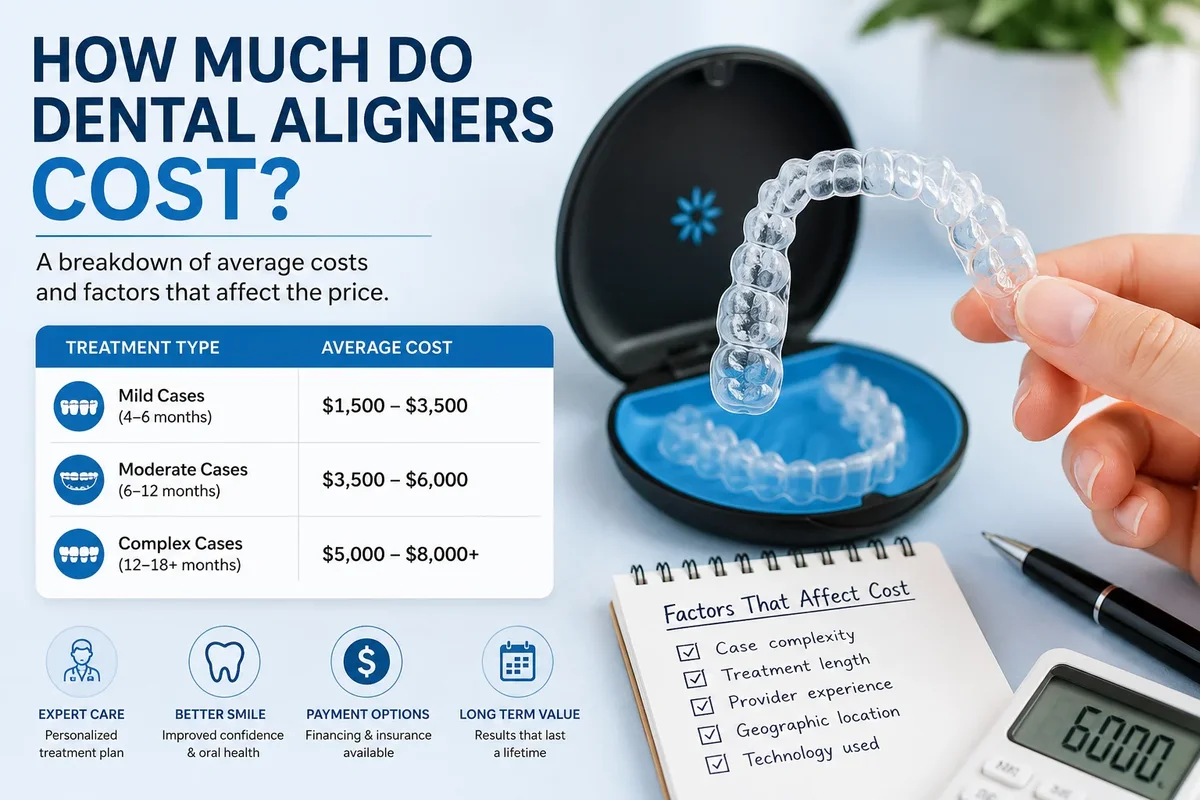
In most countries, the average cost of clear aligner treatment ranges between $1,500 and $8,000. The final price depends on numerous factors, including treatment complexity, the number of aligners required, the experience of the provider, and the location of the dental clinic. Patients often search for how much do dental aligners cost expecting a simple answer, but the reality is that orthodontic treatment is highly personalized.
For patients with minor cosmetic concerns, treatment may require only a few months and a limited number of aligner trays. In such cases, costs often fall within the lower end of the pricing spectrum. On the other hand, patients with severe crowding, spacing problems, or bite abnormalities may require longer treatment plans and more aligners, increasing the overall investment. This is one reason why how much do dental aligners cost can differ so dramatically from one patient to another.
Many treatment plans include much more than the aligners themselves. A comprehensive package may cover:
- Initial consultation and oral examination
- Digital X-rays and imaging
- 3D intraoral scanning
- Personalized treatment planning
- Custom-manufactured aligners
- Regular progress evaluations
- Refinement aligners if adjustments are needed
- Post-treatment retainers
When researching how much do dental aligners cost, patients should always ask exactly what services are included in the quoted price. A lower advertised fee may not include retainers, refinements, or follow-up appointments, resulting in additional expenses later.
Another major factor affecting how much do dental aligners cost is the aligner system being used. Some globally recognized aligner brands invest heavily in research, technology, and treatment planning software. These advanced systems often provide highly predictable outcomes but may come with higher treatment fees. Other aligner systems may offer a more affordable solution while still delivering excellent results when supervised by experienced dental professionals.
Location also plays a significant role in determining how much do dental aligners cost. For example, treatment in major cities across the United States, Canada, or Western Europe is often more expensive than treatment in countries known for dental tourism. Many patients travel internationally to receive quality dental care at lower prices while benefiting from modern facilities and experienced specialists.
Below is a general overview of typical aligner treatment costs:
| Treatment Type | Estimated Cost |
|---|---|
| Mild Cases | $1,500 – $3,000 |
| Moderate Cases | $3,000 – $5,500 |
| Complex Cases | $5,500 – $8,000+ |
It is important to understand that these figures represent general estimates and may vary depending on individual circumstances. The most accurate way to determine how much do dental aligners cost for your specific needs is through a professional consultation and treatment assessment.
Many patients are pleasantly surprised to learn that flexible financing options are available. Monthly payment plans can make treatment significantly more affordable by spreading costs over an extended period. Some dental insurance policies may also provide partial orthodontic coverage, helping reduce the overall expense. Therefore, when evaluating how much do dental aligners cost, it is wise to consider available payment solutions rather than focusing solely on the total treatment fee.
Besides improving appearance, clear aligners can provide important oral health benefits. Properly aligned teeth are often easier to clean, reducing the risk of plaque buildup, cavities, and gum disease. Improved bite function can also decrease uneven tooth wear and reduce strain on the jaw joints. These long-term benefits add substantial value when considering how much do dental aligners cost compared with the lasting improvements they can provide.
Patients interested in receiving a personalized evaluation can visit the Redent Klinik Contact Page to discuss their treatment options with qualified professionals. Additionally, educational resources from the American Dental Association can help patients better understand orthodontic treatment and oral health care.
Ultimately, the answer to how much do dental aligners cost depends on the complexity of your case, the provider you choose, the aligner system used, and the services included in your treatment plan. While cost is certainly an important factor, quality, experience, and long-term results should also play a significant role in your decision-making process. By understanding all aspects of treatment pricing, patients can confidently choose a solution that fits both their dental needs and their budget while working toward a healthier, more attractive smile.
What Factors Affect How Much Dental Aligners Cost?
When patients begin researching how much do dental aligners cost, they often discover that prices can vary significantly from one provider to another. This variation can sometimes be confusing, especially when two clinics appear to offer similar treatments but quote very different fees. The reality is that several important factors influence how much do dental aligners cost, and understanding these variables can help patients make informed decisions about their orthodontic care.
Clear aligner treatment is highly customized. Unlike products with fixed retail prices, aligners are designed specifically for each patient’s dental condition. As a result, the answer to how much do dental aligners cost depends on the complexity of treatment, the technology used, the expertise of the provider, and many other considerations. Understanding these factors can help patients evaluate treatment proposals more accurately and avoid focusing solely on the lowest price.
Treatment Complexity Plays a Major Role
The most important factor affecting how much do dental aligners cost is the complexity of the orthodontic case. Patients with mild crowding, small gaps, or minor cosmetic concerns generally require fewer aligners and shorter treatment periods. This often results in lower overall costs.
However, more complicated cases may involve:
- Severe crowding
- Large spaces between teeth
- Overbite correction
- Underbite treatment
- Crossbite correction
- Open bite adjustment
- Multiple tooth rotations
These conditions require more detailed treatment planning and a larger number of aligners. Consequently, patients with complex orthodontic needs will typically pay more when determining how much do dental aligners cost.
Length of Treatment Influences Pricing
Treatment duration is closely connected to overall cost. A patient who only needs six months of treatment will generally require fewer aligner trays than someone undergoing treatment for eighteen to twenty-four months.
The longer the treatment period, the more resources are required, including:
- Additional aligner sets
- More monitoring appointments
- Potential treatment refinements
- Additional digital planning updates
This is one of the key reasons why how much do dental aligners cost can vary substantially among patients even when using the same aligner system.
The Experience of the Dental Provider
The qualifications and experience of the orthodontist or dentist significantly impact how much do dental aligners cost. Providers who have treated thousands of aligner cases often charge higher fees because they bring extensive expertise, advanced treatment planning skills, and predictable outcomes.
Experienced providers may offer:
- More accurate treatment planning
- Improved case management
- Better handling of complex cases
- Reduced risk of complications
- Higher treatment success rates
While choosing an experienced specialist may increase the initial investment, many patients consider the added expertise worthwhile because it can improve both treatment efficiency and final results.
Type of Aligner System Used
Not all clear aligner systems are identical. One important consideration when evaluating how much do dental aligners cost is the brand and technology behind the treatment.
Premium aligner systems often invest heavily in:
- Advanced digital treatment software
- Artificial intelligence treatment planning
- Research and development
- Material innovations
- Clinical testing and validation
These advanced technologies may increase treatment fees but can also enhance predictability and comfort. Patients comparing prices should carefully evaluate what each aligner system offers rather than focusing solely on cost.
Digital Technology and 3D Planning
Modern aligner treatment often includes sophisticated digital scanning and 3D simulation technology. Clinics that invest in advanced intraoral scanners and treatment planning software may charge slightly higher fees because of the improved accuracy these systems provide.
Digital technologies allow patients to preview their expected smile transformation before treatment even begins. This additional level of customization contributes to overall treatment quality and can affect how much do dental aligners cost.
Geographic Location and Local Market Conditions
Location remains one of the biggest variables affecting how much do dental aligners cost. Treatment fees in large metropolitan areas are often higher due to increased operating expenses, including rent, staff salaries, and equipment costs.
For example, patients may encounter higher aligner prices in:
- New York City
- London
- Toronto
- Sydney
- Los Angeles
Meanwhile, many dental tourism destinations offer lower treatment costs while maintaining high standards of care. This is one reason international patients frequently compare global pricing when researching how much do dental aligners cost.
Additional Services Included in Treatment
Another factor influencing how much do dental aligners cost is the range of services included within the treatment package.
Some clinics provide comprehensive packages that include:
- Initial consultation
- Diagnostic imaging
- 3D scans
- All aligner trays
- Regular follow-up visits
- Treatment refinements
- Final retainers
Other providers may charge separately for certain services. Patients should always request a detailed breakdown to fully understand what is included in the quoted fee.
Refinements and Retainers
Many patients overlook post-treatment expenses when asking how much do dental aligners cost. After the initial aligner series is completed, some patients require refinement aligners to achieve optimal results.
Additionally, retainers are necessary to maintain the new tooth positions after treatment concludes. Depending on the clinic, these costs may or may not be included in the original treatment fee.
Typical Cost Breakdown
| Factor | Impact on Cost |
|---|---|
| Mild Case | Lower Cost |
| Complex Case | Higher Cost |
| Short Treatment | Lower Cost |
| Long Treatment | Higher Cost |
| Experienced Specialist | Higher Cost |
| Premium Aligner Brand | Higher Cost |
| Advanced Technology | Moderate to Higher Cost |
| Inclusive Treatment Package | Greater Value |
Ultimately, the answer to how much do dental aligners cost depends on multiple interconnected factors. Treatment complexity, provider experience, aligner technology, treatment duration, geographic location, and included services all contribute to the final price. Rather than focusing solely on finding the cheapest option, patients should evaluate overall value, treatment quality, and long-term results. A personalized consultation remains the most accurate way to determine costs while ensuring the chosen treatment plan meets both clinical needs and budget expectations.
Dental Aligners vs Traditional Braces: Cost Comparison
One of the most important considerations for patients exploring orthodontic treatment is whether clear aligners or traditional braces provide better value for money. While many people initially focus on how much do dental aligners cost, comparing aligners with conventional braces provides a broader perspective on overall treatment costs, benefits, convenience, and long-term outcomes. Both treatment methods are designed to straighten teeth and improve bite function, but they differ significantly in appearance, comfort, maintenance, and pricing structures.
Understanding the relationship between braces and aligner pricing helps answer the common question, how much do dental aligners cost, while also helping patients determine whether the additional investment associated with clear aligners is justified by the benefits they provide.
Understanding Traditional Braces
Traditional braces have been used successfully for decades to correct a wide range of orthodontic issues. Metal brackets are attached to the teeth and connected by wires that gradually move teeth into their desired positions. Because braces are fixed to the teeth, they work continuously throughout treatment without relying on patient compliance.
Traditional braces are often recommended for:
- Severe crowding
- Significant bite problems
- Complex orthodontic cases
- Major tooth rotations
- Cases requiring precise tooth movement
While braces remain highly effective, many patients considering how much do dental aligners cost are attracted to aligners because of their discreet appearance and increased comfort.
Understanding Clear Dental Aligners
Clear aligners use a series of custom-made transparent trays that gradually reposition teeth. These trays are removable, allowing patients to eat, brush, and floss without many of the restrictions associated with traditional braces.
When patients ask how much do dental aligners cost, they are often interested in understanding whether the additional convenience and aesthetics justify the investment. For many adults and professionals, the nearly invisible appearance of aligners is one of their biggest advantages.
Clear aligners are commonly used to treat:
- Mild to moderate crowding
- Spacing issues
- Certain bite irregularities
- Cosmetic alignment concerns
- Relapse after previous orthodontic treatment
Average Cost Comparison
The answer to how much do dental aligners cost becomes more meaningful when compared directly with traditional braces. While exact fees vary by location and provider, average treatment costs often fall within the following ranges:
| Treatment Type | Average Cost Range |
|---|---|
| Traditional Metal Braces | $3,000 – $7,000 |
| Ceramic Braces | $4,000 – $8,500 |
| Clear Dental Aligners | $1,500 – $8,000+ |
| Complex Aligner Cases | $5,000 – $9,000+ |
As this comparison shows, how much do dental aligners cost often overlaps significantly with the cost of braces. In many moderate treatment cases, aligners and braces may have very similar pricing.
Factors That Make Aligners More Expensive
Patients frequently wonder why how much do dental aligners cost can sometimes exceed the price of traditional braces. Several factors contribute to this difference.
- Advanced 3D treatment planning
- Digital smile simulations
- Custom-manufactured aligner trays
- Sophisticated software systems
- Premium aligner materials
- Additional refinement aligners
These technologies improve precision and patient experience but can increase overall treatment costs.
Technology Investment
Modern aligner systems rely heavily on digital technology. Clinics often invest in intraoral scanners, treatment-planning software, and advanced manufacturing processes. These investments partially explain why how much do dental aligners cost may sometimes be higher than traditional braces.
Factors That Make Braces More Expensive
Although aligners are often viewed as the premium option, traditional braces are not always less expensive. In complex cases, braces may require:
- Frequent adjustment visits
- Additional appliances
- Extended treatment times
- Emergency repairs
- Bracket replacements
These additional requirements can significantly increase treatment costs. Therefore, when evaluating how much do dental aligners cost, patients should compare total treatment expenses rather than focusing solely on initial fees.
Comfort and Lifestyle Considerations
Cost is only one aspect of treatment selection. Many patients researching how much do dental aligners cost are equally concerned about comfort and daily convenience.
Clear aligners offer several advantages:
- Removable during meals
- Easier oral hygiene maintenance
- No food restrictions
- Reduced irritation from wires and brackets
- More discreet appearance
Traditional braces, however, offer the advantage of continuous treatment because they remain attached to the teeth. This can be particularly beneficial for younger patients who may struggle with wearing aligners consistently.
Treatment Duration Comparison
Another important factor influencing perceptions of how much do dental aligners cost is treatment duration. Depending on the case, both braces and aligners may require anywhere from six months to two years or longer.
In straightforward cases, aligners may complete treatment more quickly. In highly complex situations, braces may provide greater efficiency and control. Therefore, the best treatment option depends on individual clinical needs rather than cost alone.
Long-Term Value Assessment
When evaluating how much do dental aligners cost, patients should also consider long-term value. Successful orthodontic treatment can provide:
- Improved smile aesthetics
- Better oral hygiene
- Reduced risk of tooth wear
- Enhanced bite function
- Greater confidence
- Long-lasting results
Whether achieved through aligners or braces, these benefits often outweigh the initial treatment investment.
Which Option Offers Better Value?
There is no universal answer to whether aligners or braces offer better value. For some patients, the convenience and appearance advantages of aligners fully justify the cost. Others may benefit more from traditional braces due to the complexity of their orthodontic needs.
Ultimately, the question should not only be how much do dental aligners cost but also what treatment provides the best combination of effectiveness, comfort, convenience, and long-term oral health benefits. A personalized orthodontic consultation remains the most reliable way to determine which option is best suited to an individual’s goals, budget, and clinical requirements. By comparing both treatment methods carefully, patients can make informed decisions that support both their smile and their overall oral health for years to come.
Why Do Clear Aligner Prices Vary Between Clinics?
Many patients researching orthodontic treatment are surprised to discover that prices can differ dramatically from one dental clinic to another. While the basic treatment goal remains the same, the answer to how much do dental aligners cost often depends on numerous variables that are not immediately visible to patients. It is common to receive two treatment quotes that differ by thousands of dollars, even when both clinics appear to offer clear aligners. Understanding why these price differences exist can help patients make informed decisions and avoid choosing a provider based solely on cost.
When evaluating how much do dental aligners cost, it is important to understand that aligner treatment is not a standardized product. Instead, it is a customized medical service that combines professional expertise, digital technology, treatment planning, ongoing monitoring, and patient support. Each clinic structures these services differently, which directly affects overall pricing.
Provider Experience and Qualifications
One of the most significant factors influencing how much do dental aligners cost is the experience level of the treating dentist or orthodontist. Providers with extensive orthodontic training and years of aligner experience often charge higher fees because they bring specialized expertise to every case.
Experienced providers typically offer:
- More accurate diagnoses
- Advanced treatment planning
- Better management of complex cases
- Higher predictability of results
- Reduced likelihood of complications
Although these professionals may charge more, many patients consider the additional investment worthwhile because treatment quality often improves significantly when managed by an experienced specialist.
Technology and Equipment Investments
Modern orthodontic treatment relies heavily on advanced technology. Clinics that invest in cutting-edge equipment often have higher operating expenses, which can affect how much do dental aligners cost.
Examples of advanced technologies include:
- Digital intraoral scanners
- 3D treatment simulation software
- Artificial intelligence treatment planning
- Digital smile design systems
- Cone beam CT imaging
These technologies improve diagnostic accuracy and treatment precision. While they may increase treatment costs, they can also enhance patient comfort and treatment outcomes.
Benefits of Digital Scanning Technology
Traditional dental impressions can be uncomfortable and less precise. Modern digital scanners create highly accurate three-dimensional models of the teeth within minutes. This technology helps create better-fitting aligners and can improve treatment predictability, contributing to differences in how much do dental aligners cost between clinics.
The Aligner Brand Used by the Clinic
Another important factor affecting how much do dental aligners cost is the specific aligner system used. Different manufacturers have varying levels of research, development, technology, and brand recognition.
Premium aligner systems often include:
- Advanced treatment algorithms
- Extensive clinical research
- High-quality aligner materials
- Predictable tooth movement technology
- Comprehensive support systems
Because of these features, some aligner brands carry higher laboratory and licensing costs, which are reflected in patient pricing.
Complexity of Cases Accepted
Not every clinic treats the same types of orthodontic cases. Some providers focus primarily on simple cosmetic alignment, while others routinely manage complex bite corrections and severe crowding cases.
Clinics that handle more advanced orthodontic challenges may charge higher fees because these treatments require:
- More extensive planning
- Longer treatment durations
- Additional monitoring
- Greater professional expertise
- More aligner refinements
This difference contributes significantly to variations in how much do dental aligners cost across providers.
Location and Local Operating Costs
Geographic location remains one of the most obvious reasons why how much do dental aligners cost varies from clinic to clinic. Dental practices in major cities often face substantially higher operating expenses than clinics in smaller communities.
Higher costs may include:
- Office rent
- Staff salaries
- Equipment maintenance
- Insurance expenses
- Administrative costs
As a result, clinics located in large metropolitan areas frequently charge more for aligner treatment than practices in regions with lower overhead expenses.
Dental Tourism and International Pricing
Many international patients compare global treatment costs when researching how much do dental aligners cost. Countries known for dental tourism often provide high-quality care at lower prices because operating costs are lower while maintaining modern facilities and experienced professionals.
This has made international treatment an increasingly popular option for patients seeking value without compromising quality.
Services Included in the Treatment Package
Perhaps one of the most overlooked factors affecting how much do dental aligners cost is what is actually included in the quoted price.
Some clinics offer comprehensive packages that include:
- Consultation and diagnosis
- Digital scans and imaging
- All aligner trays
- Progress monitoring visits
- Refinement aligners
- Retainers
- Post-treatment evaluations
Other providers may quote a lower initial fee but charge separately for refinements, retainers, or additional appointments. Therefore, comparing treatment packages carefully is essential.
Frequency of Monitoring Appointments
Regular monitoring is critical to successful aligner treatment. Some clinics schedule frequent in-person appointments, while others utilize remote monitoring technologies.
More comprehensive monitoring programs may increase how much do dental aligners cost, but they can also improve treatment outcomes by allowing providers to identify and correct issues early.
Customization and Personalization Levels
Every smile is unique. Clinics that offer highly personalized treatment planning may spend significantly more time developing customized solutions for each patient.
Personalized treatment may include:
- Detailed smile analysis
- Facial aesthetic evaluations
- Bite optimization planning
- Individualized tooth movement strategies
- Customized retention protocols
These additional services can affect how much do dental aligners cost, but they often contribute to superior long-term results.
Comparing Clinic Pricing Factors
| Factor | Effect on Cost |
|---|---|
| Provider Experience | Higher Expertise May Increase Cost |
| Advanced Technology | Often Increases Cost |
| Premium Aligner Brands | Higher Treatment Fees |
| Complex Case Management | Higher Cost |
| Comprehensive Packages | Higher Initial Fee, Better Value |
| Major City Locations | Higher Operating Costs |
| Personalized Planning | May Increase Cost |
Ultimately, when asking how much do dental aligners cost, patients should remember that pricing reflects far more than the aligners themselves. Provider expertise, treatment quality, technology, included services, clinic location, and customization all contribute to the final fee. Choosing the lowest-priced option is not always the best decision. Instead, patients should focus on overall value, treatment quality, and long-term results. By understanding why aligner prices vary between clinics, individuals can make confident decisions that support both their oral health and their investment in a healthier, straighter smile.
Are At-Home Aligners Cheaper Than In-Office Treatment?
As clear aligner therapy becomes increasingly popular, many patients begin exploring alternatives to traditional in-office orthodontic care. One of the most common questions people ask after researching how much do dental aligners cost is whether at-home aligner systems provide a more affordable solution. At first glance, direct-to-consumer aligners often appear significantly less expensive than professionally supervised treatment. However, understanding the true differences between these options is essential before making a decision based solely on price.
When comparing treatment methods, patients should consider not only how much do dental aligners cost but also the level of professional supervision, treatment predictability, safety, long-term outcomes, and potential hidden expenses. While at-home aligners may offer lower initial prices, they are not always the most cost-effective solution in the long run.
What Are At-Home Dental Aligners?
At-home aligners are clear aligner systems designed to allow patients to begin treatment without regular in-person visits to a dentist or orthodontist. Instead of attending multiple appointments, patients typically receive impression kits or digital scanning instructions and communicate remotely with treatment providers.
Most at-home aligner systems follow a process that includes:
- Online eligibility assessment
- Home impression kit or partner scanning center visit
- Remote treatment planning
- Shipment of aligners directly to the patient
- Virtual progress monitoring
Because these systems reduce the need for physical office visits, they often advertise lower prices than traditional orthodontic treatment. This naturally attracts patients researching how much do dental aligners cost and looking for the most affordable option available.
What Is In-Office Aligner Treatment?
In-office aligner treatment is supervised directly by a licensed dentist or orthodontist. Patients receive comprehensive evaluations, diagnostic imaging, bite assessments, and ongoing monitoring throughout treatment.
Professional treatment commonly includes:
- Comprehensive oral examination
- Digital X-rays
- 3D intraoral scanning
- Detailed treatment planning
- Regular progress reviews
- Adjustments when necessary
- Refinement aligners
- Retainer planning
Because of the additional professional involvement, in-office treatment generally costs more when evaluating how much do dental aligners cost. However, the higher fee often reflects increased supervision and greater treatment precision.
Cost Comparison Between At-Home and In-Office Aligners
One of the biggest reasons patients investigate at-home treatment is affordability. Average pricing often differs considerably between the two options.
| Treatment Type | Typical Cost Range |
|---|---|
| At-Home Aligners | $1,000 – $3,000 |
| In-Office Aligners | $3,000 – $8,000+ |
At first glance, the difference appears substantial. Patients comparing how much do dental aligners cost may understandably be tempted by lower-priced direct-to-consumer options. However, price alone does not provide the full picture.
Why Are At-Home Aligners Cheaper?
Several factors contribute to lower costs:
- Reduced office overhead
- Fewer clinical appointments
- Limited diagnostic procedures
- Remote monitoring systems
- Simplified treatment planning
Because these services are minimized, providers can offer lower prices. However, these reductions may also limit treatment capabilities and oversight.
Advantages of At-Home Aligners
Patients researching how much do dental aligners cost often appreciate the affordability and convenience of at-home systems.
Potential benefits include:
- Lower initial treatment costs
- Fewer office visits
- Convenient remote communication
- Flexible scheduling
- Accessibility for busy individuals
For very mild alignment issues, at-home systems may provide acceptable results for selected candidates.
Limitations and Risks of At-Home Aligners
While affordability is attractive, patients should understand the limitations before deciding based solely on how much do dental aligners cost.
Potential concerns include:
- Lack of comprehensive dental examinations
- Limited ability to detect oral health problems
- Reduced monitoring during treatment
- Difficulty managing complications
- Limited suitability for complex cases
Certain orthodontic problems require detailed evaluation that may not be possible through remote-only treatment models.
Hidden Costs Can Affect Overall Value
One reason patients should look beyond how much do dental aligners cost is the possibility of additional expenses. If treatment results are unsatisfactory or complications arise, corrective orthodontic treatment may ultimately increase total costs.
Possible additional expenses may include:
- Refinement aligners
- Additional consultations
- Corrective orthodontic treatment
- Replacement aligners
- Retainer adjustments
These costs may reduce the initial savings associated with direct-to-consumer systems.
Benefits of Professional Supervision
When evaluating how much do dental aligners cost, professional supervision remains one of the most valuable aspects of in-office treatment.
Experienced providers can:
- Monitor tooth movement accurately
- Identify complications early
- Adjust treatment when necessary
- Manage bite corrections effectively
- Improve treatment predictability
For moderate and complex cases, professional oversight often contributes significantly to treatment success.
Who May Be a Candidate for At-Home Aligners?
Some individuals may be suitable candidates for direct-to-consumer treatment. These typically include patients with:
- Minor spacing issues
- Very mild crowding
- Previous orthodontic relapse
- Generally healthy teeth and gums
However, a professional evaluation remains important because many patients underestimate the complexity of their orthodontic needs when researching how much do dental aligners cost.
Which Option Provides Better Long-Term Value?
The answer depends on individual circumstances. Patients with straightforward cosmetic concerns may find at-home treatment appealing. However, individuals with more complex orthodontic issues often benefit from professional supervision.
When considering how much do dental aligners cost, long-term value should be evaluated alongside initial pricing. Successful treatment requires more than simply receiving aligners; it involves accurate diagnosis, personalized planning, ongoing monitoring, and effective retention after treatment completion.
Ultimately, although at-home aligners are often less expensive initially, the best choice depends on each patient’s oral health, treatment goals, and clinical needs. A comprehensive consultation with an experienced dental professional remains the safest and most reliable way to determine the most appropriate treatment path. By looking beyond simple price comparisons and understanding the full scope of care involved, patients can make informed decisions that support both their budget and their long-term oral health.
Does Insurance Cover Dental Aligner Treatment Costs?
For many patients researching how much do dental aligners cost, one of the most important questions is whether dental insurance can help reduce the overall expense. Clear aligners have become a mainstream orthodontic treatment option, and as their popularity has increased, many insurance providers have expanded orthodontic coverage options. However, insurance benefits for aligners can vary significantly depending on the provider, policy type, age restrictions, and treatment requirements.
Understanding insurance coverage is essential because it can dramatically affect the final answer to how much do dental aligners cost. While some patients may receive substantial financial assistance through their insurance plans, others may need to rely on payment plans, health savings accounts, or flexible financing options to manage treatment expenses.
How Orthodontic Insurance Coverage Works
Dental aligners are generally classified as orthodontic treatment. Many dental insurance policies include orthodontic benefits, although the extent of coverage varies widely between plans.
Orthodontic coverage may include:
- Traditional metal braces
- Ceramic braces
- Lingual braces
- Clear aligner therapy
- Retainers following treatment
When patients ask how much do dental aligners cost, insurance benefits often play a major role in determining out-of-pocket expenses. Some plans provide a fixed dollar contribution, while others cover a percentage of treatment costs up to a maximum lifetime limit.
Do Most Insurance Plans Cover Clear Aligners?
The answer depends on the specific insurance policy. In recent years, many insurers have begun treating clear aligners similarly to traditional braces. As a result, aligner therapy may qualify for orthodontic benefits under many plans.
However, coverage often depends on:
- The type of insurance plan
- The patient’s age
- Medical necessity requirements
- The provider network
- Annual or lifetime benefit limits
Before beginning treatment, patients should verify coverage details directly with their insurance provider to better understand how much do dental aligners cost after benefits are applied.
Insurance Coverage for Children vs Adults
Many insurance policies offer more generous orthodontic coverage for children and teenagers than for adults. Historically, orthodontic treatment was viewed primarily as a pediatric service, although this trend is gradually changing.
Some policies may:
- Cover orthodontics only for dependents under 18
- Provide reduced benefits for adults
- Exclude adult orthodontic treatment entirely
- Offer optional orthodontic riders for adults
This distinction can significantly influence how much do dental aligners cost for adult patients.
Common Types of Orthodontic Insurance Benefits
Insurance companies typically structure orthodontic coverage using one of several approaches.
Percentage-Based Coverage
Some insurance plans pay a percentage of treatment costs, commonly ranging from 25% to 50%. For example, if aligner treatment costs $5,000 and the policy covers 50%, the patient may only be responsible for $2,500, subject to plan limits.
In these situations, the effective answer to how much do dental aligners cost can be substantially lower than the original treatment fee.
Lifetime Orthodontic Maximums
Many insurance plans establish a lifetime orthodontic benefit limit. Common maximums include:
- $1,000
- $1,500
- $2,000
- $2,500
- $3,000
Once the maximum benefit has been used, no additional orthodontic coverage is available. Patients should carefully review these limits when calculating how much do dental aligners cost after insurance reimbursement.
What Costs May Not Be Covered?
Even when orthodontic benefits are available, not every treatment-related expense may qualify for reimbursement.
Potential exclusions include:
- Replacement aligners
- Additional refinement aligners
- Cosmetic-only procedures
- Retainer replacements
- Missed appointment fees
- Optional upgrades
Understanding these exclusions is important because they can affect the true answer to how much do dental aligners cost over the entire course of treatment.
Health Savings Accounts and Flexible Spending Accounts
Patients without orthodontic insurance may still have options to reduce treatment expenses through tax-advantaged healthcare accounts.
Many individuals use:
- Health Savings Accounts (HSAs)
- Flexible Spending Accounts (FSAs)
- Employer-sponsored healthcare benefits
Because clear aligners are considered a qualified medical expense in many jurisdictions, these accounts may be used to pay for treatment using pre-tax funds. This can effectively reduce the overall cost for patients researching how much do dental aligners cost.
How to Verify Insurance Coverage
Before beginning treatment, patients should take several steps to confirm available benefits.
- Contact the insurance provider directly.
- Request orthodontic benefit details.
- Ask whether clear aligners are covered.
- Verify age-related restrictions.
- Confirm lifetime maximum benefits.
- Determine whether pre-authorization is required.
Many dental clinics can also assist patients by performing benefit verification before treatment begins.
Questions to Ask Your Insurance Provider
- Does my policy cover clear aligners?
- What percentage of treatment is covered?
- What is my remaining orthodontic maximum?
- Are there age limitations?
- Do I need pre-approval before treatment?
- Are retainers covered?
These questions can help clarify exactly how much do dental aligners cost after insurance contributions are applied.
Typical Insurance Contribution Examples
| Total Treatment Cost | Insurance Contribution | Patient Responsibility |
|---|---|---|
| $3,000 | $1,000 | $2,000 |
| $5,000 | $1,500 | $3,500 |
| $6,500 | $2,000 | $4,500 |
| $8,000 | $2,500 | $5,500 |
These examples are illustrative only and actual benefits vary by insurance provider and policy terms.
Can Insurance Make Dental Aligners Affordable?
For many patients, insurance significantly reduces treatment costs and makes orthodontic care more accessible. While insurance may not cover the full amount, partial reimbursement can lower the financial barrier associated with clear aligner treatment.
Ultimately, when evaluating how much do dental aligners cost, insurance benefits should always be considered as part of the overall financial picture. Combining insurance coverage with financing options, HSAs, FSAs, and clinic payment plans can make treatment much more affordable than many patients initially expect. By thoroughly reviewing available benefits and understanding coverage limitations, individuals can make informed decisions and move forward confidently toward achieving a healthier, straighter smile.
Additional Expenses Associated With Dental Aligners
When researching how much do dental aligners cost, many patients focus primarily on the advertised treatment price. However, the initial quote does not always represent the total financial investment required throughout the orthodontic journey. Clear aligner treatment can involve several additional expenses that may affect the final amount a patient pays. Understanding these potential costs is essential for creating realistic expectations and avoiding unexpected financial surprises.
The answer to how much do dental aligners cost extends beyond the aligners themselves. Depending on the patient’s oral health condition, treatment complexity, provider policies, and post-treatment requirements, various supplementary expenses may arise before, during, or after treatment. Patients who understand these possibilities are better prepared to evaluate treatment proposals and compare providers accurately.
Initial Consultation Fees
Some dental clinics offer complimentary consultations, while others charge a fee for the initial evaluation. This consultation often includes:
- Oral examination
- Treatment discussion
- Smile assessment
- Preliminary treatment recommendations
- Cost estimate preparation
Consultation fees can range from $50 to several hundred dollars depending on the provider and region. When calculating how much do dental aligners cost, patients should ask whether consultation charges are included in the treatment package or billed separately.
Diagnostic Imaging and X-Rays
Before aligner treatment begins, dentists often require diagnostic records to evaluate tooth positions, jaw relationships, bone levels, and overall oral health.
Common diagnostic procedures include:
- Panoramic X-rays
- Cephalometric X-rays
- Digital photographs
- Cone Beam CT scans
- Intraoral imaging
These records help create a safe and effective treatment plan but may add to the overall answer of how much do dental aligners cost.
Why Diagnostic Records Matter
Skipping diagnostic procedures can increase treatment risks. Proper imaging helps identify hidden issues such as bone loss, impacted teeth, root abnormalities, or periodontal concerns that could affect treatment success. Although these procedures increase costs, they contribute significantly to treatment safety and predictability.
Professional Dental Cleaning Before Treatment
Many patients require a professional cleaning before beginning aligner therapy. Healthy gums and teeth are essential for successful orthodontic treatment.
A dental cleaning may be recommended if:
- Plaque buildup is present
- Tartar accumulation is significant
- Gingivitis is detected
- Routine maintenance is overdue
This additional expense may not always be included when discussing how much do dental aligners cost, but it is often an important part of treatment preparation.
Cavity Treatment and Restorative Care
Orthodontic treatment should not begin until existing dental problems have been addressed. If a patient has untreated cavities, broken teeth, or defective restorations, these issues usually require treatment first.
Common pre-treatment procedures include:
- Dental fillings
- Crown replacement
- Tooth repairs
- Root canal treatment
- Periodontal therapy
While these costs are not directly part of aligner therapy, they can influence the total amount patients spend when evaluating how much do dental aligners cost.
Tooth Extractions and Interproximal Reduction
Some orthodontic cases require additional procedures to create sufficient space for tooth movement.
Examples include:
- Tooth extractions
- Interproximal reduction (IPR)
- Minor enamel reshaping
These procedures may add to overall treatment costs depending on case complexity and provider fees.
When Space Creation Is Necessary
Patients with severe crowding often require additional space before teeth can be aligned properly. These procedures can improve treatment outcomes but may influence the final answer to how much do dental aligners cost.
Refinement Aligners
Even with careful planning, some patients require additional aligners after completing their initial series. These are commonly known as refinement aligners.
Refinements may be necessary when:
- Tooth movement differs from projections
- Additional cosmetic improvements are desired
- Bite adjustments remain necessary
- Patient compliance has been inconsistent
Some providers include refinements in the treatment fee, while others charge separately. Therefore, patients should clarify this detail when asking how much do dental aligners cost.
Lost or Damaged Aligners
Clear aligners are removable, making them more vulnerable to loss or accidental damage than fixed braces.
Common situations include:
- Aligners accidentally discarded
- Pets damaging aligners
- Cracked aligner trays
- Misplaced aligners during travel
Replacement aligners may involve additional fees that are not always included in the original treatment quote.
Retainers After Treatment
One of the most frequently overlooked expenses associated with how much do dental aligners cost is retention. Once treatment is complete, retainers are necessary to prevent teeth from shifting back toward their original positions.
Retainers may include:
- Clear removable retainers
- Hawley retainers
- Fixed bonded retainers
Some clinics include retainers in their treatment packages, while others charge separately.
Why Retainers Are Essential
Without retainers, orthodontic relapse can occur. Teeth naturally tend to move over time, making retention a critical component of long-term treatment success. Patients evaluating how much do dental aligners cost should always confirm whether retainers are included.
Follow-Up and Maintenance Visits
After treatment completion, some patients require periodic follow-up visits to monitor stability and retainer fit.
These appointments may involve:
- Retainer evaluations
- Bite assessments
- Retention monitoring
- Replacement retainer recommendations
While often inexpensive, these visits can contribute to overall long-term treatment costs.
Potential Additional Costs Overview
| Additional Expense | Potential Cost Impact |
|---|---|
| Consultation | Low to Moderate |
| Diagnostic Imaging | Moderate |
| Dental Cleaning | Low to Moderate |
| Cavity Treatment | Variable |
| Extractions | Moderate |
| Refinement Aligners | Moderate |
| Replacement Aligners | Low to Moderate |
| Retainers | Moderate |
| Follow-Up Visits | Low |
Understanding the Full Financial Picture
When determining how much do dental aligners cost, patients should look beyond the advertised treatment fee and consider all potential expenses associated with the process. Comprehensive treatment planning, diagnostic records, oral health preparation, refinements, retention, and maintenance can all influence the final investment.
Ultimately, understanding these additional expenses allows patients to budget more accurately and compare treatment options more effectively. By asking detailed questions during consultations and requesting a complete breakdown of included services, individuals can gain a clearer understanding of how much do dental aligners cost and confidently choose a treatment plan that aligns with both their orthodontic goals and financial expectations.
How to Save Money on Dental Aligner Treatment
Many patients who research how much do dental aligners cost are primarily concerned with finding an affordable way to achieve a straighter smile. While clear aligners are often considered a significant investment, there are several practical strategies that can help reduce treatment expenses without sacrificing quality or safety. Understanding how to maximize value while minimizing unnecessary costs can make orthodontic treatment more accessible for individuals and families alike.
When evaluating how much do dental aligners cost, it is important to remember that the cheapest option is not always the best option. Instead, patients should focus on obtaining the highest quality treatment at the most reasonable price. By planning carefully and exploring available savings opportunities, many people can significantly reduce their overall orthodontic expenses.
Compare Multiple Treatment Providers
One of the simplest ways to save money is to obtain consultations from multiple providers before making a final decision. Treatment fees can vary considerably between clinics, even within the same city.
Comparing providers allows patients to evaluate:
- Treatment costs
- Provider experience
- Technology used
- Services included
- Financing options
- Patient reviews
By gathering several opinions, patients gain a clearer understanding of how much do dental aligners cost in their area and can identify providers that offer strong value.
Understand Exactly What Is Included
Not all treatment quotes include the same services. A lower advertised fee may initially seem attractive, but additional charges can quickly increase total expenses.
Patients should ask whether the quoted price includes:
- Consultation
- Digital scans
- Diagnostic imaging
- All aligner trays
- Refinement aligners
- Retainers
- Follow-up appointments
Understanding what is included helps patients accurately compare providers when researching how much do dental aligners cost.
Look Beyond the Lowest Price
Choosing treatment solely based on the lowest fee can sometimes result in higher long-term costs. Experienced providers may charge more initially but often deliver more predictable results, reducing the likelihood of additional corrective treatment later.
Use Dental Insurance Benefits
One of the most effective ways to reduce how much do dental aligners cost is by utilizing available orthodontic insurance benefits. Many dental insurance plans now provide partial coverage for clear aligner therapy.
Patients should:
- Review orthodontic benefits carefully
- Verify aligner coverage
- Confirm lifetime maximums
- Check age restrictions
- Request pre-treatment estimates
Insurance benefits can substantially reduce out-of-pocket expenses and improve treatment affordability.
Take Advantage of Flexible Spending Accounts
Health Savings Accounts (HSAs) and Flexible Spending Accounts (FSAs) provide another valuable opportunity to reduce treatment costs.
These accounts allow patients to:
- Use pre-tax income for treatment
- Lower taxable income
- Increase effective purchasing power
- Reduce overall healthcare expenses
For many patients, these programs make a meaningful difference when considering how much do dental aligners cost.
Consider Payment Plans
Many dental clinics offer financing solutions that spread treatment costs over several months or years. Rather than paying the full amount upfront, patients can make manageable monthly payments.
Common financing options include:
- Interest-free payment plans
- Third-party healthcare financing
- Extended monthly installments
- Customized clinic financing programs
Although financing does not reduce the total cost directly, it often makes treatment more accessible and easier to budget.
Evaluate Financing Terms Carefully
Before accepting a financing agreement, patients should review:
- Interest rates
- Repayment periods
- Monthly payment amounts
- Late payment penalties
- Total repayment obligations
This helps ensure that financing remains a cost-effective solution.
Maintain Excellent Oral Health
Preventive dental care can indirectly reduce how much do dental aligners cost by minimizing the need for additional dental procedures before treatment begins.
Good oral hygiene practices include:
- Regular brushing
- Daily flossing
- Routine dental checkups
- Professional cleanings
- Early cavity treatment
Patients who maintain healthy teeth and gums are less likely to require expensive restorative procedures before starting aligner therapy.
Avoid Lost or Damaged Aligners
Replacement aligners can create unexpected expenses during treatment. Because aligners are removable, they are vulnerable to loss or accidental damage.
Patients can reduce replacement costs by:
- Using designated storage cases
- Keeping aligners away from pets
- Avoiding wrapping aligners in napkins
- Following cleaning instructions carefully
- Transporting aligners safely during travel
These simple habits can help keep treatment costs under control.
Explore Dental Tourism Opportunities
Some patients investigate international treatment options when researching how much do dental aligners cost. Dental tourism destinations often offer lower treatment fees while maintaining modern facilities and experienced providers.
Potential advantages include:
- Lower treatment prices
- Comprehensive treatment packages
- Modern dental technology
- Experienced specialists
However, travel costs, accommodation expenses, and follow-up care requirements should be carefully considered before making a decision.
Questions to Ask Before Traveling
- How many visits are required?
- Are refinements included?
- How will follow-up care be handled?
- Are retainers included?
- What happens if complications occur?
These questions help patients accurately evaluate overall value rather than focusing solely on treatment fees.
Choose the Right Treatment for Your Needs
Not every patient requires the most advanced or expensive aligner system available. Some mild orthodontic cases can be treated effectively using shorter treatment plans that require fewer aligners.
An experienced provider can help determine:
- Treatment complexity
- Expected duration
- Necessary aligner quantity
- Most suitable treatment approach
Selecting an appropriate treatment plan helps avoid unnecessary expenses while still achieving excellent results.
Potential Savings Strategies Overview
| Strategy | Potential Benefit |
|---|---|
| Compare Providers | Find Better Pricing |
| Use Insurance | Reduce Out-of-Pocket Costs |
| Use HSA/FSA Funds | Tax Savings |
| Payment Plans | Improved Affordability |
| Maintain Oral Health | Avoid Additional Procedures |
| Protect Aligners | Avoid Replacement Fees |
| Dental Tourism | Potential Cost Reduction |
Ultimately, when evaluating how much do dental aligners cost, patients should focus on maximizing value rather than simply minimizing expenses. Insurance benefits, flexible spending accounts, payment plans, provider comparisons, and preventive dental care can all help reduce overall treatment costs. By approaching treatment planning strategically and asking detailed questions during consultations, patients can achieve a healthier, straighter smile while maintaining control over their budget and avoiding unnecessary financial surprises.
Is Traveling Abroad for Dental Aligners Worth the Cost?
As the demand for orthodontic treatment continues to grow worldwide, many patients are exploring international options to reduce expenses. One of the most common questions among cost-conscious individuals is whether traveling abroad can significantly lower how much do dental aligners cost. Dental tourism has become a major industry, attracting patients from countries with high healthcare expenses to destinations that offer quality dental care at more affordable prices. While the potential savings can be substantial, there are several factors that should be carefully evaluated before making a decision.
Understanding whether international treatment is worthwhile requires looking beyond the simple question of how much do dental aligners cost. Patients must also consider travel expenses, treatment quality, follow-up care, provider experience, communication, and overall convenience. A comprehensive evaluation helps determine whether traveling abroad represents genuine value or merely appears cheaper at first glance.
What Is Dental Tourism?
Dental tourism refers to traveling to another country to receive dental treatment. This trend has grown significantly because many patients can obtain high-quality care while paying considerably less than they would in their home countries.
Common reasons patients choose dental tourism include:
- Lower treatment costs
- Shorter waiting times
- Access to modern clinics
- Experienced dental specialists
- Comprehensive treatment packages
- Opportunity to combine treatment with travel
For individuals researching how much do dental aligners cost, international treatment may initially appear very attractive due to substantial pricing differences between countries.
How Much Can Patients Save?
The primary motivation for dental tourism is often cost reduction. In countries with high healthcare expenses, orthodontic treatment can be significantly more expensive than in popular dental tourism destinations.
Approximate aligner treatment costs may vary as follows:
| Region | Typical Aligner Cost Range |
|---|---|
| United States | $4,000 – $8,000+ |
| United Kingdom | $3,500 – $7,500+ |
| Canada | $4,000 – $8,000+ |
| Turkey | $1,500 – $4,500 |
| Eastern Europe | $1,500 – $4,000 |
| Thailand | $2,000 – $5,000 |
These differences often encourage patients to investigate international options when asking how much do dental aligners cost.
Potential Financial Benefits
Even after accounting for travel expenses, some patients may still save thousands of dollars by receiving treatment abroad. Depending on the destination and treatment complexity, total savings can be substantial.
Potential financial advantages include:
- Lower treatment fees
- Affordable accommodation
- Lower consultation costs
- Reduced diagnostic expenses
- Comprehensive treatment packages
Factors Beyond Treatment Price
Although treatment fees are important, patients should avoid making decisions based solely on how much do dental aligners cost. The total experience involves many additional considerations.
Important factors include:
- Provider qualifications
- Clinic accreditation
- Treatment technology
- Language communication
- Accessibility of follow-up care
- Travel logistics
Evaluating these factors helps ensure that lower prices do not come at the expense of treatment quality.
Quality of Care Abroad
Many dental tourism destinations have invested heavily in modern healthcare infrastructure. Some international clinics offer technology and expertise comparable to leading practices in North America and Western Europe.
High-quality international clinics may provide:
- Digital smile design
- 3D intraoral scanning
- Advanced aligner systems
- English-speaking staff
- International patient coordinators
- Comprehensive treatment planning
As a result, patients should not assume that lower prices automatically mean lower quality when researching how much do dental aligners cost.
Research Is Essential
Before committing to treatment abroad, patients should carefully investigate:
- Clinic reviews
- Dentist qualifications
- Treatment success rates
- Technology available
- Patient testimonials
- Before-and-after case examples
Thorough research helps reduce risks and improves confidence in treatment decisions.
Travel and Accommodation Expenses
When calculating how much do dental aligners cost, patients must include all associated travel expenses.
Additional costs may include:
- Airfare
- Hotel accommodations
- Local transportation
- Meals
- Travel insurance
- Visa expenses
These costs can partially offset treatment savings, particularly for patients traveling long distances.
Follow-Up Care Considerations
One of the most important aspects of aligner treatment is ongoing monitoring. Unlike procedures completed in a single appointment, orthodontic treatment typically requires months of supervision.
Patients considering treatment abroad should ask:
- How will progress be monitored?
- Are virtual check-ins available?
- Will local dentists assist if needed?
- How are refinements handled?
- What happens if complications occur?
These questions are just as important as understanding how much do dental aligners cost.
Potential Risks of Dental Tourism
While many patients enjoy positive experiences, international treatment is not without potential challenges.
Possible risks include:
- Communication barriers
- Difficulty obtaining follow-up care
- Travel-related disruptions
- Differences in healthcare regulations
- Additional travel requirements for refinements
Understanding these risks allows patients to make balanced and informed decisions.
How to Minimize Risks
Patients can reduce potential problems by:
- Choosing reputable clinics
- Requesting detailed treatment plans
- Confirming follow-up protocols
- Obtaining copies of records
- Verifying provider credentials
These precautions help improve treatment safety and overall satisfaction.
Who Benefits Most from Dental Tourism?
Traveling abroad for aligners may be particularly attractive for:
- Patients facing very high local treatment costs
- Individuals requiring moderate treatment
- People comfortable with international travel
- Patients seeking comprehensive treatment packages
- Those with flexible schedules
For these individuals, the savings associated with how much do dental aligners cost internationally may outweigh the inconvenience of travel.
Final Assessment: Is It Worth It?
The answer depends on each patient’s priorities, budget, treatment needs, and comfort level with international healthcare. For many people, traveling abroad can provide substantial savings while maintaining excellent treatment quality. Others may prefer the convenience and accessibility of receiving care closer to home.
Ultimately, when evaluating how much do dental aligners cost, patients should consider the complete picture rather than focusing exclusively on treatment fees. Travel expenses, provider qualifications, technology, follow-up care, and overall treatment quality all contribute to the true value of orthodontic treatment. By carefully weighing both financial and clinical factors, patients can determine whether dental tourism offers the right balance of affordability, convenience, and long-term success for their individual circumstances.
Choosing the Right Dental Aligner Provider for Long-Term Value
After exploring treatment options, comparing technologies, reviewing insurance coverage, and researching how much do dental aligners cost, patients eventually face one of the most important decisions in their orthodontic journey: selecting the right provider. While cost is undeniably important, choosing a provider based solely on the lowest price can sometimes lead to disappointing results. Long-term value comes from balancing affordability with clinical expertise, treatment quality, patient support, and lasting outcomes.
Many individuals searching for how much do dental aligners cost focus exclusively on treatment fees during the early stages of research. However, the provider’s experience and treatment approach often have a greater influence on overall satisfaction than the initial price alone. A successful aligner experience depends on careful planning, accurate diagnosis, ongoing monitoring, and effective retention after treatment completion.
Why Provider Selection Matters
Clear aligners may appear simple because they consist of transparent trays that gradually move teeth. However, behind every successful treatment plan is a significant amount of professional expertise.
Choosing the right provider affects:
- Treatment accuracy
- Smile aesthetics
- Bite function
- Treatment duration
- Patient comfort
- Long-term stability
This is why the question should not only be how much do dental aligners cost but also who is providing the treatment and how experienced they are in managing orthodontic cases.
Look for Experience With Clear Aligners
Not all dental professionals have the same level of experience with aligner therapy. Some providers focus heavily on orthodontic treatment and manage hundreds or even thousands of aligner cases each year.
Experienced providers often offer:
- More accurate treatment planning
- Improved predictability
- Better management of complex cases
- Greater ability to handle complications
- Higher overall treatment success rates
When evaluating how much do dental aligners cost, patients should consider whether slightly higher fees may reflect a higher level of expertise and clinical experience.
Questions to Ask About Experience
- How many aligner cases have you completed?
- Do you treat complex orthodontic cases?
- Can I see before-and-after photos?
- What is your typical treatment success rate?
- How often do patients require refinements?
These questions can help patients identify providers with strong aligner treatment backgrounds.
Evaluate Technology and Treatment Planning
Modern orthodontic treatment relies heavily on digital technology. Advanced diagnostic tools can improve treatment precision and patient outcomes.
Technologies that may enhance treatment quality include:
- Digital intraoral scanning
- 3D smile simulation
- Digital treatment planning software
- Artificial intelligence-assisted analysis
- Cone Beam CT imaging
Providers who invest in modern technology may charge more, influencing how much do dental aligners cost, but these tools often improve treatment predictability and efficiency.
Understand What Is Included in the Fee
One of the most important aspects of comparing providers is understanding exactly what is included in the treatment quote.
Comprehensive treatment packages may include:
- Initial consultation
- Diagnostic records
- Digital scans
- All aligner trays
- Progress appointments
- Refinement aligners
- Final retainers
- Post-treatment evaluations
Patients researching how much do dental aligners cost should always request a detailed treatment breakdown before making a final decision.
Beware of Incomplete Pricing
Some providers advertise low initial fees that exclude important services. Additional charges for refinements, retainers, or follow-up visits can increase total costs significantly.
A transparent treatment plan should clearly explain:
- Included services
- Potential additional costs
- Payment schedules
- Refinement policies
- Retention protocols
Review Patient Testimonials and Reviews
Patient feedback can provide valuable insights into treatment quality and overall satisfaction. Online reviews often reveal information that may not be obvious during consultations.
Look for comments regarding:
- Treatment outcomes
- Provider communication
- Office professionalism
- Scheduling efficiency
- Follow-up care quality
- Patient support during treatment
Reviews can help patients understand whether a provider offers strong value beyond simply answering how much do dental aligners cost.
Consider Long-Term Support
Orthodontic treatment does not end when the final aligner tray is removed. Retention and long-term monitoring are critical components of maintaining results.
Quality providers typically offer:
- Retainer guidance
- Post-treatment evaluations
- Replacement retainer options
- Long-term maintenance recommendations
- Continued patient support
These services contribute significantly to long-term value and should be considered when comparing treatment options.
Financing and Payment Flexibility
Even when patients understand how much do dental aligners cost, affordability may still be a concern. Many providers offer financing options that make treatment more accessible.
Common payment solutions include:
- Monthly payment plans
- Interest-free financing
- Third-party healthcare financing
- Flexible deposit requirements
- Customized payment arrangements
Flexible payment structures can make higher-quality treatment providers more accessible to patients working within specific budgets.
Balancing Cost and Value
The lowest-priced treatment is not always the most economical choice. A provider offering comprehensive care, advanced technology, experienced supervision, and long-term support may provide substantially better value even if the initial fee is higher.
When considering how much do dental aligners cost, patients should evaluate the complete treatment experience rather than focusing exclusively on the advertised price.
Red Flags to Watch For
Patients should exercise caution if they encounter providers who:
- Offer unusually low prices without explanation
- Avoid discussing treatment limitations
- Provide incomplete pricing information
- Do not perform comprehensive examinations
- Cannot provide examples of previous cases
- Offer limited follow-up care
Identifying these warning signs can help patients avoid costly mistakes and ensure a positive treatment experience.
Key Factors to Compare When Choosing a Provider
| Factor | Why It Matters |
|---|---|
| Provider Experience | Improves Treatment Predictability |
| Technology Used | Enhances Accuracy |
| Treatment Inclusions | Prevents Unexpected Costs |
| Patient Reviews | Reflects Real Experiences |
| Refinement Policy | Supports Optimal Results |
| Retention Support | Maintains Long-Term Outcomes |
| Financing Options | Improves Affordability |
Final Thoughts
Ultimately, choosing the right provider involves much more than determining how much do dental aligners cost. While treatment fees are important, true value comes from receiving high-quality care, personalized treatment planning, professional supervision, and lasting results. Patients should compare providers carefully, review credentials, ask detailed questions, and evaluate all aspects of the treatment experience before making a final decision.
A well-chosen provider can help ensure that the investment in clear aligner therapy delivers excellent aesthetic improvements, better oral health, enhanced confidence, and stable long-term outcomes. By focusing on value rather than price alone, patients can make informed decisions that support both their smile goals and their financial priorities for years to come.