
Quick answer: how much does it cost for a molar implant cannot be answered safely with one universal figure. A complete estimate may include examination, imaging, extraction, bone or sinus procedures, implant body, healing components, abutment, definitive crown, anesthesia, temporary tooth, laboratory work and maintenance. The upper or lower molar site, bone, gums, bite, medical history, material choices and insurance terms all affect the final plan.
When patients ask how much does it cost for a molar implant, the first task is to define what the advertised number includes. A “single implant” can mean only the fixture placed in bone. A complete restored tooth usually involves an implant body, one or more connecting components, an abutment and a crown, plus diagnostic, surgical, laboratory and follow-up stages. An unusually low headline may exclude the crown or clinically necessary site preparation.
A molar also carries site-specific considerations. Upper molars may be close to the maxillary sinus. Lower molars may be close to the nerve canal. The missing-tooth space, bone width and height, neighboring roots, opposing teeth, gum health and bite forces influence planning. A photograph cannot measure these features reliably, and a generic online price should remain provisional.
This guide explains how to compare itemized proposals without promising a diagnosis, fixed fee or outcome. Your final cost depends on examination, current clinical findings, a treatment plan and informed consent. Preserving a restorable natural molar or choosing a bridge, removable appliance, space monitoring or another option may sometimes be more appropriate than an implant.
1. How much does it cost for a molar implant with every stage included?
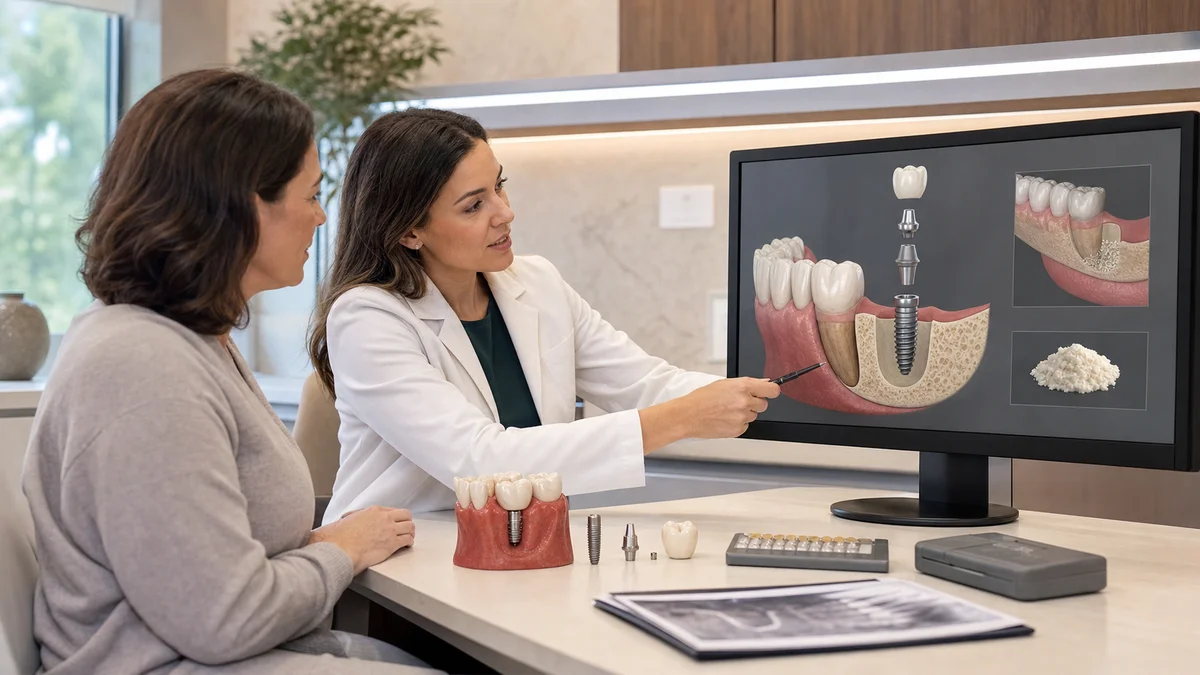
A complete single-molar replacement normally crosses three connected areas: diagnosis, surgery and restoration. The FDA explains that a dental implant system consists of an implant body and abutment, may include an abutment fixation screw, and supports an artificial tooth such as a crown. The ADA MouthHealthy implant overview likewise states that a single-tooth implant receives a customized dental crown.
The question how much does it cost for a molar implant is incomplete unless the written proposal says whether all of those components are present. The quote should also state whether it covers one-stage or two-stage surgery, a healing cap, impressions or scans, laboratory fees, bite adjustments and reviews.
Some clinics use one bundled fee. Others divide treatment between an oral surgeon or periodontist and a restorative dentist. Either model can be appropriate, but the patient needs one document that reconciles every stage and identifies who is responsible for complications or plan changes.
2. How much does it cost for a molar implant after diagnosis?
Diagnosis starts with the reason the tooth is missing or proposed for extraction. The clinician should evaluate whether the molar can reasonably be preserved, whether infection or periodontal disease needs treatment, and how replacement fits the whole bite. Medical history, medicines, tobacco or nicotine use, diabetes control, prior radiation, antiresorptive medicines, allergies and healing concerns may influence timing and risk.
Records may include a clinical examination, periodontal assessment, conventional radiographs, photographs, models or intraoral scans. Three-dimensional imaging is used when justified by individual needs. The ITI consensus on CBCT in implant dentistry says the decision should follow a thorough examination and that the field of view and exposure should be limited appropriately.
When comparing how much does it cost for a molar implant, ask which records are included and which might be requested later. More imaging is not automatically better; it should answer a clinical question and follow radiation-protection principles.
3. How much does it cost for a molar implant versus alternatives?
An implant avoids preparing neighboring teeth solely to support a conventional bridge, but it requires surgery and adequate tissues. A bridge, partial denture, orthodontic space closure, preservation of the tooth or no immediate replacement can each have different benefits, limitations and maintenance. The cheapest initial option is not always the lowest lifetime burden, and the most expensive is not automatically best.
| Option | What it involves | Main cost questions | Important trade-offs |
|---|---|---|---|
| Preserve the natural molar | Disease control and an appropriate restoration when prognosis allows | Root canal, core, onlay or crown, periodontal care, reviews | Preserves the tooth but may need future repair or retreatment |
| Single implant crown | Implant body, abutment and crown after diagnosis and healing | Surgery, components, grafting, temporary, laboratory and maintenance | Does not rely on adjacent teeth; requires surgery and hygiene |
| Tooth-supported bridge | Neighboring teeth support a replacement tooth | Preparation, temporary, laboratory, cementation and future replacement | No implant surgery; supporting teeth accept added treatment |
| Removable partial denture | Patient-removable appliance replacing one or more teeth | Design, materials, adjustments, relines and replacement | Less invasive but removable and may feel bulkier |
| Monitor the space | No immediate prosthetic replacement | Reviews and any future treatment | Avoids current intervention; teeth and bite may change |
A fair answer to how much does it cost for a molar implant includes reasonable alternatives and the consequences of waiting. It should never start with irreversible treatment before the diagnosis is understood.
4. How much does it cost for a molar implant: 19 line items
Use this checklist to normalize proposals. Each clinic may group items differently, but the scope should be identifiable:
- Consultation and examination: diagnosis, tooth prognosis and discussion of alternatives.
- Periodontal assessment: gum and bone health around the site and remaining teeth.
- Radiographs: conventional imaging and interpretation.
- Three-dimensional imaging: CBCT when clinically justified.
- Extraction: removal of the molar if it is still present and cannot be retained.
- Socket preservation: grafting at extraction when included in the plan.
- Site development: later ridge augmentation or bone regeneration if needed.
- Sinus-related procedure: possible for selected upper posterior sites.
- Implant body: brand, model, diameter, length and material.
- Surgical guide: design and manufacturing when planned.
- Anesthesia or sedation: local anesthesia and any separately arranged sedation.
- Healing component: cover screw, healing abutment or related second-stage procedure.
- Temporary tooth: if one is appropriate and requested during healing.
- Definitive abutment: stock or customized connection between implant and crown.
- Definitive crown: specified material, design and retention method.
- Laboratory and digital records: scan or impression, model and manufacturing fees.
- Delivery: screw or cement protocol, bite adjustment and access closure.
- Reviews: surgical and restorative follow-up through completion.
- Maintenance and contingency: professional care, replacement components and complication policy.
If several of these are absent, how much does it cost for a molar implant remains unanswered. Mark each as included, excluded, estimated or not applicable.
5. How much does it cost for a molar implant in the upper jaw?
Upper molars can be close to the maxillary sinus. When vertical bone is limited, the clinician may discuss a sinus floor elevation, bone grafting, a different implant size or another plan. Not every upper molar requires a sinus procedure, and an online photograph cannot decide it. The need follows examination and appropriate imaging.
The timing and restorative plan also matter. The ITI guidance on single-implant loading notes that evidence and recommendations differ by region and conditions; immediate or early loading should not be assumed for every maxillary molar. Primary stability, bone, systemic and local factors, parafunction and the need for sinus elevation are relevant.
Ask how much does it cost for a molar implant if a sinus-related procedure is anticipated, and then request separate fees, materials, expected stages and a contingency if the planned procedure changes during surgery.
6. How much does it cost for a molar implant in the lower jaw?
Lower molar sites may be close to the mandibular canal, which carries a nerve that supplies sensation. The width and height of bone, neighboring tooth roots and the desired crown position must be evaluated. Cross-sectional imaging may be appropriate when it provides information beyond clinical and conventional radiographic assessment.
A surgical guide can be useful in selected anatomy, but guided surgery is not a guarantee and may add a planning and manufacturing fee. The final crown must guide the intended implant position; an implant placed merely where bone looks easiest can create restorative or cleaning problems.
For a lower site, the answer to how much does it cost for a molar implant should identify imaging, guide use if planned and what happens if anatomy requires a different implant or alternative treatment.
7. How much does it cost for a molar implant after extraction?
An implant may be placed at the time of extraction in selected cases, after a period of soft-tissue healing, after bone healing, or later. Immediate placement is not the same as immediate loading with a crown. The choice depends on infection control, socket anatomy, bone, soft tissue, primary stability and restorative requirements.
Extraction difficulty can change fees. A simple removal differs from a fractured root, previous root canal, curved roots, proximity to important anatomy or the need to preserve socket walls. The clinician should also explain whether pathology assessment, graft material, membrane, sutures and postoperative reviews are included.
When asking how much does it cost for a molar implant, clarify whether extraction and socket preservation are part of the same proposal or were quoted by another provider.
8. How much does it cost for a molar implant with bone grafting?
Bone grafting is an umbrella term. It can refer to socket preservation at extraction, a small simultaneous defect graft, ridge augmentation before implant placement or a sinus-related procedure. These differ in materials, complexity, healing time and clinical risk. Not everyone needs grafting.
The European Federation of Periodontology explains that bone regeneration may be required when the site does not provide enough support, and its implant treatment overview separates examination, implant insertion, restoration and grafting stages. This staged structure is why a generic molar package can be misleading.
A graft-inclusive answer to how much does it cost for a molar implant should name the procedure, graft and membrane category, donor-site implications if any, timing, reviews and what happens if the volume gained is insufficient.
9. How much does it cost for a molar implant body and components?
The implant body replaces the root, while the abutment connects it to the crown. Some systems use two-piece components; others have different designs. The quote should list the implant brand, model and size in the final records. The FDA recommends asking what brand and model are used and keeping that information.
Component costs can include a cover screw, healing abutment, impression coping or scan body, definitive abutment, fixation screw and crown. A phrase such as “implant included” does not prove that the definitive abutment is included. Compatible component availability may matter if the patient moves or sees another dentist later.
Therefore, how much does it cost for a molar implant requires a component schedule, not only the name of the implant fixture.
10. How much does it cost for a molar implant crown?
The crown is the visible and functional tooth. Material choices may include zirconia, metal-ceramic or other clinically suitable options. The design must provide adequate strength, appropriate contacts, a cleansable emergence profile and a bite compatible with opposing teeth. A back tooth is not selected only by shade.
The crown may be screw-retained or cement-retained. Each approach has clinical considerations. Customized abutments, premium ceramics, complex shade characterization or a highly specialized laboratory can change fees. A temporary crown may be a different item.
Ask how much does it cost for a molar implant with the definitive crown material, abutment type, retention method, laboratory, adjustments and remake terms written clearly.
11. How much does it cost for a molar implant with temporary teeth?
A posterior space may not always need a visible temporary, and some temporary options should avoid loading the healing implant. Alternatives can include leaving the space, modifying a removable appliance or using another provisional design. Suitability depends on bite, appearance, comfort, healing and the timing of definitive restoration.
A same-day temporary crown is possible only in selected situations with adequate stability and a controlled bite. It is not the same as completing the definitive crown. The patient should understand restrictions, repair terms and what happens if immediate loading is not possible.
When considering how much does it cost for a molar implant, ask whether “temporary tooth” is included, optional or clinically discouraged and whether replacement during healing carries a fee.
12. How much does it cost for a molar implant with anesthesia?
Many single-implant procedures are performed with local anesthesia. Sedation may be discussed for anxiety, complexity or another clinical reason, but it introduces separate assessment, monitoring, escort, fasting and facility requirements. General anesthesia or a hospital setting is not routine for every molar implant.
The proposal should state who provides sedation, where it occurs, which preoperative assessment is needed and whether medicines or facility fees are separate. A cheaper surgical quote can become difficult to compare if anesthesia services are billed independently.
The answer to how much does it cost for a molar implant should separate essential local anesthesia from elective or clinically indicated sedation arrangements.
13. How much does it cost for a molar implant if healing changes?
Healing is biological and cannot be guaranteed. An implant may fail to integrate, an infection may occur, a graft may not provide the expected volume, or the site may need more time. Later issues can include inflammation around the implant, bone loss, screw loosening, crown fracture, cement-related problems or bite changes.
The FDA dental implant guidance lists potential injury, infection, inadequate function, screw loosening, difficulty cleaning, numbness and implant failure among recognized risks. It advises patients to report looseness or pain and attend regular visits. These facts should inform contingency planning, not be used to predict a particular patient’s result.
Before consent, ask how much does it cost for a molar implant if a component fails, a replacement surgery is considered or a temporary solution is needed. Review warranty exclusions carefully; a commercial warranty is not a biological guarantee.
14. How much does it cost for a molar implant over its lifetime?
Implants are not maintenance-free. Daily cleaning around the crown and neighboring teeth, professional assessments and radiographs when clinically indicated remain important. Peri-implant inflammation and bone loss can threaten support. The crown or screw may need repair or replacement even when the implant body remains integrated.
Long-term costs can include professional cleaning, removal and re-tightening of components, replacement screws, crown repair, night guard, treatment of gum disease or management of complications. No provider can promise that one payment covers every future event.
- Ask for a demonstration of cleaning around the crown.
- Confirm an individualized recall and professional hygiene schedule.
- Keep the implant brand, model, size and component records.
- Report pain, swelling, bleeding, looseness or a changed bite promptly.
- Avoid tobacco and follow advice relevant to general and periodontal health.
- Discuss grinding or clenching and whether a protective appliance is appropriate.
A lifetime view changes the meaning of how much does it cost for a molar implant from purchase price to maintainable care.
15. How much does it cost for a molar implant with insurance?
Coverage varies by country, employer, insurer, plan year, waiting period, network, annual maximum, missing-tooth clause and definition of medical necessity. Implant body, abutment and crown may be reviewed as separate benefits. Bone grafting, CBCT, anesthesia and temporary restorations can have different coverage rules.
In the United States, CMS states that Original Medicare generally excludes routine dental care and replacement of teeth, while limited dental services may be covered when inextricably linked to specified Medicare-covered medical services. Some Medicare Advantage plans may offer additional dental benefits under their terms. Current plan documents and a written response from the insurer are essential.
Do not subtract an assumed benefit when asking how much does it cost for a molar implant. Obtain an itemized pre-treatment estimate and remember that preauthorization or an estimate of benefits may not guarantee payment.
- Ask which procedure codes and supporting records the insurer requires.
- Confirm whether the implant, abutment and crown are assessed separately.
- Check deductibles, coinsurance, annual limits and waiting periods.
- Clarify network and overseas-treatment restrictions.
- Keep invoices, clinical records and proof of payment.
16. How much does it cost for a molar implant abroad?
Dental travel can change professional and laboratory fees, but the total includes flights, accommodation, time away from work, companion needs, more than one visit and the possibility of returning for care. A compressed itinerary should not override healing or staged treatment requirements.
Confirm the treating clinician’s registration, implant system, laboratory, consent process, urgent contact route and maintenance plan at home. Ask how local dentists will obtain compatible parts and who pays if the crown, abutment or implant needs attention after travel.
Patients considering treatment in Türkiye can review the Redent Klinik English website and use the Redent Klinik contact page to request an individualized assessment. Existing scans and photographs may support preliminary discussion, but how much does it cost for a molar implant can be finalized only after appropriate evaluation and confirmation of scope.
17. How much does it cost for a molar implant in two quotes?
Place the proposals side by side and compare scope before totals. Confirm that both describe the same tooth, timing and clinical assumptions. Mark every item as included, excluded, estimated or not applicable. If one estimate assumes no graft and the other includes a sinus procedure, they are not competing prices for the same plan.
Compare:
- diagnosis, imaging and natural-tooth prognosis;
- extraction and socket management;
- bone or sinus procedures and materials;
- implant body, healing parts and surgical guide;
- definitive abutment, crown and laboratory;
- temporary replacement during healing;
- anesthesia, medicines and facility fees;
- reviews, maintenance and complication terms;
- clinician responsibility at every stage;
- insurance assumptions and payment schedule.
Only after normalization can how much does it cost for a molar implant become a fair comparison.
Red flags when asking how much does it cost for a molar implant
Pause when an offer:
- does not say whether the abutment and definitive crown are included;
- guarantees suitability, painlessness, immediate loading or permanent success from photographs;
- recommends extraction without explaining whether the molar can be preserved;
- uses “bone graft included” without naming the type, purpose or timing;
- omits implant brand and model records;
- offers a lifetime guarantee with unclear maintenance exclusions;
- pressures immediate payment before examination and informed consent;
- has no accessible clinician or complication pathway.
A trustworthy team should explain uncertainty. If essential details remain vague, seek another opinion before deciding how much does it cost for a molar implant is good value.
Consultation questions about how much does it cost for a molar implant
Useful questions include:
- Can this molar be preserved, and what is its prognosis?
- What alternatives are reasonable if I do not choose an implant?
- Which records and imaging are clinically necessary?
- Is extraction included, and when would the implant be placed?
- Do I need grafting or a sinus-related procedure, and why?
- Which implant body, abutment and crown are specified?
- Will I have a temporary tooth, and may it load the implant?
- Who performs surgery and who delivers the crown?
- What happens if the implant does not integrate or the plan changes?
- Which reviews, maintenance and replacement components are included?
Ask for the diagnosis, alternatives, risks and itemized estimate in writing. That is the safest route from how much does it cost for a molar implant to informed consent.
Frequently asked questions
How much does it cost for a molar implant with the crown?
There is no universal figure. Confirm that the estimate includes the implant body, healing component, definitive abutment, crown, laboratory records, delivery and reviews. Extraction, grafting, imaging, temporary teeth and anesthesia may be separate. The final cost follows examination and a site-specific plan.
How much does it cost for a molar implant without bone grafting?
A quote can omit grafting only when the clinician determines it is not needed for the planned site and implant. Even then, diagnostic, surgical, component, crown and maintenance costs remain. Ask whether the no-graft assumption is final or could change after imaging or surgery and how a change would be consented and priced.
How much does it cost for a molar implant after extraction?
Extraction can be a separate service, and timing affects the pathway. The proposal should identify removal difficulty, socket preservation, graft materials, temporary replacement, implant timing and reviews. Immediate placement is not automatically possible and is not the same as receiving a definitive crown on the same day.
How much does it cost for a molar implant in the upper jaw?
The upper posterior jaw may require assessment of sinus position and bone height. Some patients need no sinus procedure; others may need augmentation or a different plan. A final estimate therefore depends on examination and appropriate imaging. Ask for any sinus-related procedure, graft, materials and extra healing stages to be itemized.
How much does it cost for a molar implant in the lower jaw?
Lower-molar planning considers bone and the nearby nerve canal. Imaging and a guide may be recommended according to anatomy, but neither should be added automatically. Request separate prices for diagnostic records, the implant system, surgery, abutment, crown and any contingency if the original position cannot be used.
How much does it cost for a molar implant with insurance?
Coverage depends on the plan and may treat the implant, abutment, crown, grafting and imaging separately. Request a written pre-treatment estimate and check deductibles, annual maximums, waiting periods, network rules and exclusions. An insurer’s estimate or preauthorization is not always a guarantee of final payment.
How much does it cost for a molar implant if it fails?
Policies vary. Costs may involve examination, imaging, removal, grafting, healing, replacement surgery, temporary teeth and a new crown or components. Ask which events the clinic or manufacturer policy covers, which are excluded and whether required maintenance affects coverage. No warranty can guarantee biological healing.
How much does it cost for a molar implant with sedation?
Local anesthesia is common, while sedation may add clinician, monitoring and facility fees plus preoperative requirements. The price depends on the method, duration, setting and provider. Ask whether sedation is clinically indicated or optional and obtain a separate written estimate rather than assuming it is included in surgery.
How much does it cost for a molar implant and temporary tooth?
A temporary may be removable, attached elsewhere or, in selected cases, connected to the implant. Suitability depends on stability, bite and healing. Ask what material is proposed, whether it loads the implant, how long it is intended to serve and whether adjustments or replacements during healing are included.
How much does it cost for a molar implant compared with a bridge?
The two plans have different components and maintenance. A bridge may avoid implant surgery but usually treats supporting teeth; an implant requires surgery, components and healing but does not rely on adjacent teeth. Compare diagnosis, expected maintenance, repair, future replacement and effects on neighboring teeth—not only the initial totals.
Final answer: how much does it cost for a molar implant?
The reliable answer is an itemized, diagnosis-based proposal rather than a fixed online number. How much does it cost for a molar implant depends on the tooth’s prognosis, upper or lower site, imaging, extraction timing, bone and soft tissue, sinus or nerve anatomy, implant system, abutment, crown, temporary, anesthesia, laboratory and maintenance.
Compare clinically equivalent scopes, preserve reasonable alternatives and ask who manages every stage. A complete written plan should state assumptions and contingency costs before irreversible care begins. The goal is not merely buying an implant fixture; it is obtaining a cleansable, functional replacement with traceable components and accessible follow-up.
Sources
- US Food and Drug Administration: Dental implants—what you should know
- ADA MouthHealthy: Dental implants
- European Federation of Periodontology: Dental implants explained
- Guy’s and St Thomas’ NHS Foundation Trust: Having a dental implant
- International Team for Implantology: CBCT in implant dentistry
- International Team for Implantology: Loading single-implant crowns
- Centers for Medicare & Medicaid Services: Medicare dental coverage
- American Dental Association
- World Health Organization: Oral health fact sheet