
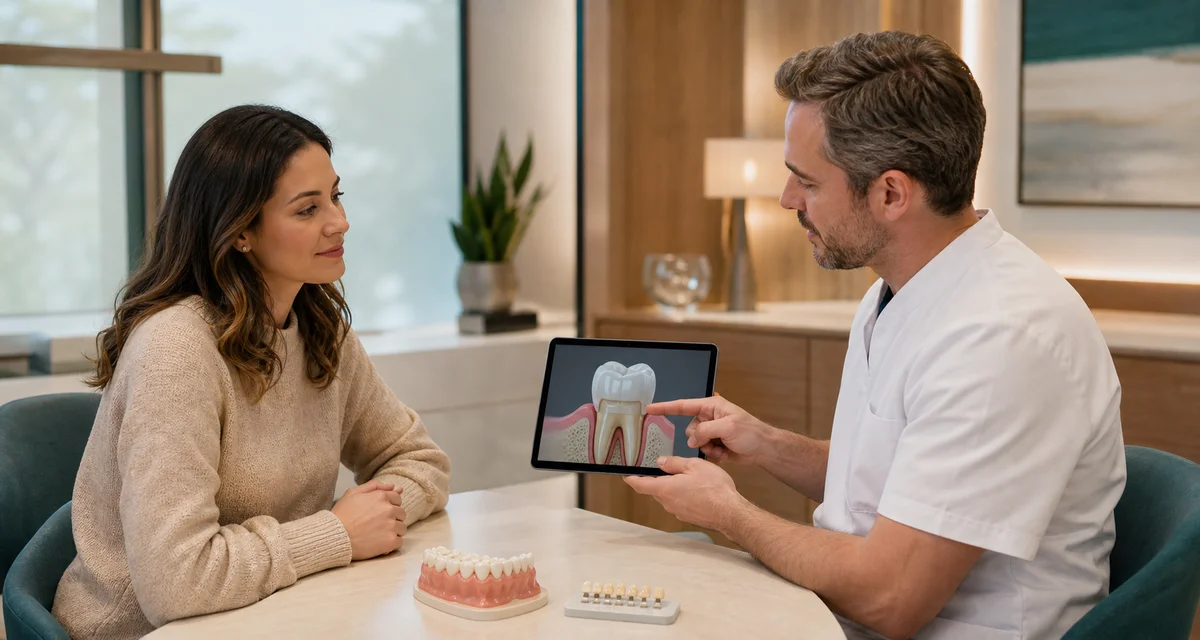
How much is it for a crown tooth is a sensible budgeting question, but a safe answer is not one universal price. The amount depends on what is wrong with the tooth, which records are needed, whether decay must be removed or the tooth rebuilt, whether root-canal or gum treatment is required, the crown material and laboratory method, the clinician, the location, and the terms of any dental benefit plan. A written estimate after examination is more reliable than a headline fee.
Quick answer: How much is it for a crown tooth depends on the examination, X-rays, tooth buildup, possible root-canal or gum care, crown material, laboratory or same-day workflow, temporary crown, fitting, follow-up and insurance rules. Ask for an itemized estimate covering the entire treatment path, not only the crown, after the dentist confirms that the tooth can be restored.
This guide explains how to compare quotes without diagnosing your tooth online, naming a fixed fee or promising how long a restoration will last. A crown is irreversible because the tooth is shaped to receive it. The decision should follow an assessment of remaining tooth structure, decay, fractures, pulp and gum health, bite, medical history and alternatives. Pain, swelling, trauma or a loose restoration deserves timely professional advice rather than price shopping alone.
1. What is included when asking how much is it for a crown tooth?
A dental crown is a fixed cap that covers a prepared natural tooth. The American Dental Association’s patient resource explains that a crown can strengthen a tooth with a large filling, protect a weak tooth, restore a broken tooth, support a bridge, improve the appearance of a badly shaped or discoloured tooth, or cover a dental implant. The reason matters because the work needed beneath the crown can be different in every case.
The NHS describes crowns as restorations commonly made from metal, ceramic or porcelain fused to metal. A conventional workflow often includes shaping the tooth, providing a temporary crown and having the definitive restoration prepared by a laboratory. Other practices may offer a digital same-day workflow for selected cases. Neither route is automatically appropriate or cheaper for every patient. That is why how much is it for a crown tooth must be tied to a defined workflow.
When someone asks how much is it for a crown tooth, the figure may refer only to preparation and the definitive crown. It may exclude the consultation, X-rays, decay removal, core buildup, post, root-canal treatment, gum surgery, sedation, temporary repair or urgent visit. Confirm the boundaries before comparing two offers.
2. How much is it for a crown tooth after a clinical examination?
A dentist normally begins with the history of the tooth and the patient’s goals. The examination may assess an existing filling or crown, decay, cracks, remaining walls, tenderness, bite, gum condition, mobility and nearby teeth. Relevant health conditions, allergies, medicines, tobacco use and previous dental treatment can influence planning and healing. An online photograph cannot show all of these factors.
Clinically justified X-rays may help evaluate decay, root form, bone support and previous root-canal treatment. Additional records can include photographs, an intraoral scan, impressions or a bite analysis. The dentist should explain why each record is needed and whether recent diagnostic-quality records can be transferred. Records are part of the answer to how much is it for a crown tooth, but unnecessary duplication should not be treated as a package requirement.
The most important question is whether the tooth is predictably restorable. A crown cannot repair every deep crack, replace missing periodontal support or cure an untreated infection. If the prognosis is uncertain, a second opinion or specialist assessment may be appropriate before irreversible preparation. Paying for a careful diagnosis can prevent a misleading crown-only estimate when asking how much is it for a crown tooth.
3. Decision table for how much is it for a crown tooth
| Starting situation | Likely assessment focus | Possible separate services | Question to ask |
|---|---|---|---|
| Large filling but no current symptoms | Remaining walls, decay, cracks and bite | Core buildup, crown, temporary and fitting | Is the buildup included or separately coded? |
| Deep decay or prolonged pain | Pulp condition and restorability | Urgent care, root-canal treatment, buildup and crown | What changes if endodontic care is required? |
| Broken tooth below the gumline | Fracture depth, bone support and cleanable margin | Crown lengthening or orthodontic extrusion | Has the full periodontal-restorative path been quoted? |
| Old crown that is loose or leaking | Decay, fracture, core and previous root treatment | Removal, temporary repair, new buildup or retreatment | What is payable if the tooth cannot be restored? |
| Implant already integrated | Implant position, tissue, abutment and bite | Abutment, implant crown and component fees | Does “crown” include the abutment and genuine components? |
| Front tooth with an aesthetic concern | Colour, translucency, gumline and neighbouring teeth | Wax-up, provisional, custom shade or gum treatment | Which aesthetic steps and remakes are included? |
This table is for quote comparison, not self-diagnosis. Two patients who both need a “crown” may have different underlying conditions and treatment sequences. A meaningful response to how much is it for a crown tooth identifies the starting situation and all planned stages.
4. Decay removal, buildup and posts can change the total
A damaged tooth may not have enough sound structure to support the planned crown immediately. The dentist may first remove decay and replace missing structure with a core buildup. The condition of the tooth is sometimes clearer only after an old filling or crown is removed. A responsible estimate should explain whether the buildup is confirmed, anticipated or charged only if required.
A post may be considered in selected root-filled teeth when additional retention for the core is needed. It does not strengthen every tooth and should not be sold as an automatic crown add-on. The type of post, removal of an existing post or repair of a failed core can create separate clinical work. Ask why the post is recommended and what alternative exists, because the answer changes how much is it for a crown tooth.
When comparing how much is it for a crown tooth, look for a contingency plan. Does the clinic pause and obtain consent if deeper decay is found? Is a temporary restoration available while prognosis is reviewed? What portion of the fee is due if the tooth proves non-restorable? These questions are more useful than assuming the lowest crown line covers every foundation procedure.
5. Root-canal treatment and how much is it for a crown tooth
Some teeth need root-canal treatment before a crown because the pulp is irreversibly inflamed or infected. Other crowned teeth do not. Symptoms alone cannot reliably decide the issue; the dentist uses the history, examination and appropriate tests. Root-canal treatment should not be added simply because a crown is planned, and a crown should not be expected to resolve pulpal disease.
Endodontic fees can vary by tooth anatomy, number and shape of canals, whether treatment is new or a retreatment, removal of old materials, imaging and whether a specialist is involved. The endodontic procedure, core and crown are often separate services. A patient with an emergency may also have an initial pain-relief appointment before definitive care.
Therefore, a root-canal scenario changes how much is it for a crown tooth into a treatment-path question. Request written estimates for the endodontic and restorative stages, their order, expected temporary protection and what happens if a crack or poor prognosis is discovered. No clinician should guarantee that a root-treated tooth or crown will last for life.
6. Gum health, crown lengthening and margin access
Healthy, maintainable gum tissue matters around a crown. Active periodontal disease, bleeding, deep decay or a fracture extending below the gumline may need attention before the final restoration. Selected teeth may require crown-lengthening surgery or orthodontic extrusion to expose sound structure. These are separate procedures with their own risks, healing and fees.
Crown lengthening can involve gum tissue alone or gum and supporting bone. It must be coordinated with the future restoration because changing the margin can affect support, sensitivity and appearance. Orthodontic extrusion uses a different method and timeline. Extraction may be discussed if the tooth cannot be restored predictably. None of these options is automatically best from a photo, and each changes how much is it for a crown tooth.
A quote addressing how much is it for a crown tooth should state whether periodontal care is included, excluded or still under assessment. It should also identify who provides that care, the expected review pathway and when the definitive impression or scan is planned. A rush schedule should not override tissue health.
7. Crown material, laboratory work and design
Crowns can be made from different ceramics, metal alloys, porcelain fused to metal and other dental materials. Selection depends on tooth position, available space, bite forces, opposing teeth, appearance, allergies or sensitivities, remaining tooth structure and the clinician’s judgement. “Porcelain,” “zirconia” or “premium ceramic” is not enough detail to compare two quotes.
Laboratory fees may reflect digital or conventional design, technician time, material, shade communication, quality checks and local production arrangements. Front teeth can require additional shade records or a custom shade appointment. Complex implant crowns may need an abutment or components that do not apply to a natural tooth. Ask for the restoration and supporting components to be named accurately when comparing how much is it for a crown tooth.
Material affects how much is it for a crown tooth, but the most expensive option is not automatically the safest. A good material used for the wrong bite or an inadequately prepared foundation can still fail. The dentist should explain the clinical reason for the recommendation, expected limitations, maintenance and how repair or replacement would be handled.
8. Conventional laboratory versus same-day crown workflows
In a conventional pathway, the tooth is prepared, an impression or digital scan is recorded, and a temporary crown may protect it while a laboratory fabricates the definitive restoration. A later visit is used to evaluate fit, contacts, bite and appearance before bonding or cementation. Temporary recementation or adjustment may sometimes be needed between visits.
A same-day workflow may scan, design and mill a restoration in the practice for a suitable case. It can reduce the need for a temporary and a second routine appointment, but equipment availability does not determine suitability. Material selection, finishing, aesthetics, subgingival margins and clinical complexity still matter. A laboratory route can be preferable when detailed technician input is valuable, so the workflow must be stated in any answer to how much is it for a crown tooth.
Appointment count alone does not answer how much is it for a crown tooth. Compare what is actually included: provisional care, laboratory or milling, shade work, adjustments, urgent support and follow-up. Same-day should describe a workflow, not imply a guaranteed result or shorter biological healing where other treatment is required.
9. Dentist, specialist, location and facility costs
Professional fees can reflect the clinician’s time, training, team, sterilisation, equipment, records, regulated materials, premises, emergency readiness and professional obligations. A general dentist may coordinate the entire case, while an endodontist, periodontist, prosthodontist or oral surgeon may contribute when the diagnosis or procedure requires specialist expertise.
Regional operating costs, laboratory relationships and taxes can vary. Sedation, if clinically appropriate, adds assessment, monitoring, trained staff and sometimes a separate facility or anaesthesia provider. Local anaesthesia is different and may be included in the restorative fee. Ask who delivers each service and where it occurs before comparing how much is it for a crown tooth.
Provider and location are therefore part of how much is it for a crown tooth, but fee alone does not measure quality. Verify professional registration, obtain a diagnosis, understand the material and laboratory, and assess continuity of care. A lower remote estimate may omit services that another practice has already itemised.
10. Insurance and how much is it for a crown tooth
Dental benefit plans may classify crowns as major restorative care. Your share can be affected by the deductible, coinsurance, annual maximum, waiting period, network status, allowed amount, missing-tooth or replacement rules, frequency limits and whether a less costly alternative provision applies. Coverage for the crown does not necessarily mean coverage for every preparatory service.
Ask the clinic for the proposed procedure codes, tooth number, narrative and diagnostic records that the insurer may request. Then ask the plan whether the dentist and laboratory arrangement are in network, how much annual maximum remains, and how buildup, post, root canal, periodontal work and crown are processed. A pre-treatment estimate is useful, but it is commonly not a payment guarantee for how much is it for a crown tooth.
The clearest insurance answer to how much is it for a crown tooth separates the clinic’s fee, the plan’s estimated allowed amount, expected plan payment and estimated patient balance. Keep in mind that eligibility or remaining benefits can change before the claim is processed. Obtain the plan’s current terms directly.
- Is the crown covered for this tooth and clinical reason?
- Does a deductible apply before coinsurance?
- How much annual maximum remains today?
- Is there a waiting period or replacement-frequency rule?
- Are buildup, post, temporary crown and laboratory included or separate?
- Are root-canal and periodontal services under different benefits?
- Is prior authorisation required, and is the response binding?
- What changes when a provider or laboratory is out of network?
11. Medicare, Medicaid and Marketplace dental coverage
In the United States, Original Medicare generally excludes items and services connected with the care, filling, removal or replacement of teeth and structures directly supporting teeth. The Centers for Medicare & Medicaid Services describes limited exceptions when dental care is inextricably linked to specified Medicare-covered medical treatment. Those exceptions do not create routine crown coverage. Some Medicare Advantage plans offer added dental benefits, so current plan documents matter.
Adult Medicaid dental benefits vary by state because states have flexibility and there is no federal minimum adult dental benefit. A state programme or managed-care plan may apply covered-service lists, medical-necessity rules, authorisation, limits and network requirements. Verify the actual tooth and planned procedures with the current programme rather than assuming one general answer to how much is it for a crown tooth.
HealthCare.gov states that adult dental coverage is not an essential health benefit for Marketplace plans. Dental may be embedded in a health plan or offered separately, and a stand-alone plan can have a waiting period. Public-programme rules can materially change how much is it for a crown tooth, but only the relevant administrator can determine an individual benefit.
12. How to compare an itemized crown estimate
An itemized quote should identify the diagnosis or treatment rationale, tooth number, natural-tooth crown or implant crown, confirmed services, possible additions and billing currency. It should explain how long the estimate is valid, when payments are due, what a deposit covers and what happens if the plan changes after an old restoration is removed. This document is the practical answer to how much is it for a crown tooth.
Use this checklist when asking how much is it for a crown tooth:
- Consultation and problem-focused or comprehensive examination.
- Clinically necessary X-rays, photographs, scans or impressions.
- Removal of an old crown, filling or decay, if applicable.
- Core buildup and post only when clinically indicated.
- Root-canal assessment, treatment or specialist referral.
- Gum treatment, crown lengthening or orthodontic extrusion.
- Named crown material and laboratory or chairside workflow.
- Temporary crown, provisional repairs and recementation terms.
- Definitive fitting, bite adjustment and planned review.
- Implant abutment and components when the crown is implant-supported.
- Sedation, facility and prescription charges, when applicable.
- Estimated insurance payment and the remaining estimated balance.
- Remake, adjustment and cancellation conditions in writing.
Do not compare an “all-in” statement with an itemized plan until exclusions are clear. The first may leave major services unstated; the second may look higher only because it is complete. Transparent scope is the safest basis for comparing how much is it for a crown tooth.
13. Dental travel and the true crown budget
Travelling for dentistry can add transport, accommodation, meals, time away from work, document transfer, companion costs and contingency visits. A remote coordinator can gather information, but cannot confirm decay depth, crack extent, pulp status, bite or restorability. Treat any quote before examination as provisional.
Ask how many visits are expected, whether a temporary is needed, who makes the crown, how fit and shade are checked, and who handles pain or a loose temporary after you return home. Complex root-canal or periodontal care may create healing intervals that should not be compressed to suit flights. Confirm whether follow-up can safely occur locally and how records will be shared, because those logistics alter how much is it for a crown tooth.
At Redent Klinik, crown planning is individualized rather than based on a one-price promise. The English contact page can be used to ask which existing records may support preliminary planning and how an estimate is structured. Travel coordination does not replace examination, informed consent or emergency planning.
14. Alternatives that affect how much is it for a crown tooth
A crown may not be the only clinically acceptable choice. Depending on diagnosis, alternatives can include a direct filling, inlay or onlay, monitoring, root-canal treatment with a different restoration, orthodontic extrusion, crown lengthening, extraction and replacement, or no treatment. Each option has different biological costs, appointments, maintenance and financial implications.
Extraction may appear less expensive initially, but leaving a space or replacing a tooth leads to separate decisions about function and long-term care. An implant crown involves an implant and abutment pathway, not simply a crown on a natural tooth. A bridge involves neighbouring teeth. A removable option has different comfort and maintenance considerations. The total pathway matters more than one procedure fee.
Ask the dentist to explain reasonable alternatives, risks of deferring care and the prognosis of the tooth. A second opinion can be valuable when the plan is complex, elective or financially significant. This wider comparison makes how much is it for a crown tooth a health decision rather than a product purchase.
15. Maintenance, complications and future costs
A crown cannot decay, but the natural tooth at its margin can. Gum inflammation, recurrent decay, a chipped restoration, loose cement, wear, bite changes or a fracture of the supporting tooth can require review. Daily plaque control, appropriate interdental cleaning, risk-based dental visits and management of habits such as grinding may influence maintenance.
No crown has a guaranteed lifetime. Longevity varies with diagnosis, remaining tooth structure, material, fit, bite, hygiene, diet, dry mouth, tobacco use, medical factors and accidents. A night guard may be discussed for selected patients, but it is another clinical decision and may be a separate fee. Marketing should not substitute a warranty for clinical limitations when explaining how much is it for a crown tooth.
When evaluating how much is it for a crown tooth, ask what routine adjustments are included, what constitutes a laboratory remake, and who pays when the underlying tooth needs new treatment. A clear aftercare policy is helpful, yet it cannot eliminate biological uncertainty or replace maintenance.
16. Frequently asked questions about how much is it for a crown tooth
Can how much is it for a crown tooth be answered from a photo?
No final fee should be based on a photo alone. Images cannot reliably show hidden decay, root condition, bone support, pulpal health, cracks, bite or remaining sound structure. A clinic may explain consultation fees and possible scenarios, but the treatment scope should remain provisional until examination and appropriate records are complete.
Does how much is it for a crown tooth include the buildup?
Not always. Some estimates separate the core buildup because it is required only when missing tooth structure must be replaced. Ask whether it is confirmed, anticipated or charged only if needed after an old restoration is removed. A post, when clinically indicated, may also be separate.
Does how much is it for a crown tooth include root-canal treatment?
Usually root-canal treatment is a separate service, and many crowned teeth do not need it. If symptoms, tests or X-rays indicate pulpal disease, request a separate endodontic estimate and sequence. Do not assume that a crown will cure infection or that root-canal treatment is automatic.
Why do crown quotes vary between materials?
Materials differ in composition, manufacture, laboratory steps, appearance and suitability for a particular bite or tooth position. Technician involvement and custom shade work can also vary. The dentist should explain the reason for the proposed material rather than presenting “premium” as proof that it is clinically best.
Is a same-day crown always cheaper?
No. It may reduce temporary care and a routine second visit in suitable cases, but equipment, material, finishing and clinical complexity still influence fees. A laboratory crown may be preferable for some margins, materials or aesthetic demands. Compare the complete scope and suitability, not appointment count alone.
Will insurance answer how much is it for a crown tooth?
The insurer can estimate benefits after receiving the plan and codes, but the response may not guarantee payment. Deductible, coinsurance, annual maximum, network status, waiting periods and frequency rules can change the patient balance. Ask the clinic and insurer to show their assumptions separately.
Is an implant crown priced like a crown on a natural tooth?
Not necessarily. An implant-supported crown may involve an abutment, components, screw or cement retention, implant-specific records and a different laboratory process. The implant placement and healing are separate stages. Confirm whether “implant crown” includes the abutment and all required components.
What if the tooth cannot be saved after the old crown is removed?
Ask about this possibility before treatment. The clinic should explain how consent is obtained for a revised plan, what temporary protection is possible, which completed services remain payable and which replacement options can be assessed. A contingency protects decision-making when hidden decay or fracture is found.
When should a crown problem be treated urgently?
Seek prompt dental advice for increasing pain, swelling, fever, facial swelling, trauma, uncontrolled bleeding, a crown that leaves a sharp or unstable tooth, or difficulty eating. Severe swelling with breathing or swallowing difficulty and other medical emergencies require urgent emergency care. Do not delay these concerns solely to compare prices.
Can a clinic guarantee the crown for life?
No ethical estimate can guarantee a biological tooth or restoration for life. A clinic may define a limited adjustment or remake policy, but decay, fracture, gum disease, trauma, bite and patient maintenance remain relevant. Ask for policy terms while keeping the clinical limitations separate.
17. Patient-safe takeaway
The reliable answer to how much is it for a crown tooth begins with diagnosis and restorability. Align the tooth number, preparation, foundation, pulp and gum care, material, laboratory, temporary, fitting, review and insurance assumptions. Two prices are comparable only when those elements match.
Request a written, itemized and time-limited estimate for the complete pathway. Ask what is confirmed, what remains uncertain and what happens if deeper decay, a crack or infection changes the plan. The best value is a maintainable restoration selected with informed consent—not simply the lowest crown headline.
Authoritative sources
- American Dental Association — professional standards and oral-health information.
- American Dental Association MouthHealthy: Crowns — common purposes of crowns on natural teeth and implants.
- American Dental Association MouthHealthy: Anaesthesia and sedation — patient context for anaesthesia and active participation in care.
- NHS: Dental treatments — crown definition, materials, tooth preparation, laboratory and temporary-crown context.
- Centers for Medicare & Medicaid Services: Medicare dental coverage — current general dental exclusion and limited medically linked circumstances.
- Medicaid.gov: Dental care — state flexibility in adult dental benefits.
- HealthCare.gov: Dental coverage — Marketplace adult dental benefits and possible stand-alone-plan waiting periods.
- World Health Organization: Oral health — global oral-disease, prevention and access-to-care context.
Clinical and U.S. coverage sources were checked on 23 August 2026. Treatment recommendations, benefit rules and plan terms can change; confirm current details with the relevant authority, insurer and treating clinicians.