
If you’ve been researching how to use HSA for dental implants, you’re already ahead of many patients who still aren’t aware that these tax-advantaged accounts can significantly reduce the real cost of implant treatment. In 2025, HSAs have become one of the most powerful financial tools for managing major dental procedures, especially permanent tooth replacements. In this guide, we will break down exactly how an HSA works, why it’s allowed for implant expenses, and how you can strategically maximize your savings before treatment. 🦷💡
A Health Savings Account (HSA) allows you to set aside pre-tax money for qualified medical expenses — including dental care deemed medically necessary. Because dental implants replace missing teeth and restore oral function, they are generally considered an eligible expense. That means every dollar you use from your HSA for dental implants is tax-free. For many patients, this can translate into hundreds or even thousands of dollars saved, depending on yearly contribution limits, income level, and the overall treatment plan. The IRS classifies HSAs under Section 223, and implants typically fall into the allowable categories when supporting diagnostic, surgical, and restorative recovery.
Using your HSA for dental implants is particularly beneficial because implant treatment is rarely “cheap,” and costs can increase when bone grafting, sinus lifting, abutments, or full-mouth implant options are included. Since HSA funds roll over each year, patients often accumulate several years’ worth of pre-tax savings, allowing them to cover a significant portion of total implant expenses. And since contribution limits rise periodically, the potential tax-free savings grow with each adjustment.
One of the greatest advantages of using an HSA is flexibility. You control when you contribute money, when you spend it, and which provider you choose. Unlike an FSA, you won’t lose unused funds at the end of the year. This makes HSAs ideal for large, timeline-dependent treatments like multi-step implant surgery. If you are planning implant placement at a dental clinic, you can even ask your treatment coordinator whether they accept direct HSA card payments or prefer reimbursement. Many modern dental clinics, including full-mouth rehabilitation centers, now work seamlessly with HSA accounts.
When researching HSA for dental implants, many patients also ask whether cosmetic upgrades are included. The IRS typically excludes purely cosmetic dentistry. However, implants are not categorized as cosmetic because they restore chewing function, prevent jawbone loss, maintain facial structure, and support long-term oral health. Even aesthetic components — such as an implant crown that must match the surrounding teeth — are considered medically necessary because they complete the functional restoration. For authoritative clarification, you may review guidelines published by the
American Dental Association, which explain how medically necessary restorative dentistry is defined in modern clinical care.
In some cases, patients combine HSA benefits with dental insurance coverage, payment plans, or financing. Insurance may pay for part of the surgery, especially extraction or bone grafting, while the HSA covers remaining out-of-pocket costs. This layered approach makes implants more affordable without compromising quality. If you need help coordinating financial arrangements or planning a long-term implant roadmap, you can also consult our clinic directly through the
Redent Klinik Contact Page.
Another lesser-known advantage of using an HSA for dental implants is the long-term value it creates. Implants often last decades — sometimes a lifetime — which means they offer one of the highest returns on investment among all dental treatments. Temporary solutions like dentures or bridges require ongoing replacement and maintenance costs, whereas implants minimize future spending. By pairing long-term treatment with long-term tax savings, patients effectively reduce lifetime dental expenditures.
Some patients also explore HSA strategies such as “front-loading” yearly contributions, coordinating surgery near the start of a calendar year, or combining multiple family members’ HSAs when planning full-mouth rehabilitation. These methods stretch savings further and ensure adequate funds for multi-step phases including implant placement, healing abutment installation, and final restorations.
Ultimately, using an HSA for dental implants is one of the smartest financial decisions patients can make when seeking durable, natural-looking tooth replacement. It minimizes financial stress, increases accessibility to high-quality implant care, and leverages tax benefits built directly into federal law. This alone makes HSAs a powerful solution for anyone prioritizing long-term oral health and modern restorative dentistry.
How an HSA Works for Dental Implant Costs
Understanding how an HSA functions can make a dramatic difference in how you plan, budget, and pay for your dental implant treatment. Many patients don’t realize that an HSA is one of the most efficient ways to reduce the total out-of-pocket cost of implants — especially given rising healthcare expenses. When structured properly, using an HSA for dental implants can significantly increase affordability by combining tax savings with flexibility and long-term financial planning. This section explains everything in detail, including contribution rules, IRS regulations, qualified implant procedures, and common patient scenarios. 🦷💳
What Makes Dental Implants Eligible for HSA Use?
For a medical or dental expense to qualify under HSA rules, it must be considered a “qualified medical expense” under Section 213(d) of the Internal Revenue Code. Dental implants fall under this definition because they restore oral function, replace missing teeth, and prevent bone loss — all essential components of health, not cosmetics. This is why using an HSA for dental implants is allowed in nearly all medically necessary implant cases, including single implants, implant-supported bridges, and full-mouth reconstructions. Procedures such as bone grafts, sinus lifts, CT scans, anesthesia, and follow-up visits are also typically eligible because they support the implant treatment plan.
In rare situations where a patient requests implants solely for cosmetic enhancement without medical necessity, HSA eligibility could be questioned. However, because implants inherently restore chewing ability and prevent structural deterioration, they are overwhelmingly approved as medically essential by the IRS and by dental authorities like the
American Dental Association.
How HSA Contributions Help Reduce Implant Costs
One of the biggest advantages of using your HSA for dental implants is tax reduction. Contributions to an HSA are tax-deductible, grow tax-free, and can be withdrawn tax-free for qualified medical expenses. This “triple tax benefit” is unique among savings vehicles. Depending on your income bracket, using pre-tax dollars for treatments can save you roughly 20–37% compared to paying cash.
For example, if your implant treatment costs $5,000 and you pay with post-tax income, you might need to earn $6,500–$7,000 before taxes. But if you use your HSA, the entire $5,000 comes from pre-tax funds — meaning you retain thousands of dollars that would otherwise go to federal taxes. Patients undergoing full-mouth implant treatments frequently save even more because the higher the expense, the greater the tax benefit.
Timeline: When HSA Funds Can Be Used for Implants
Another common question is whether funds must be accumulated before starting treatment. The answer: you can only spend HSA funds that already exist in your account. Unlike insurance, HSAs don’t “advance” the yearly limit. Therefore, patients planning multi-step implant treatments often schedule their phases around contribution periods.
This makes planning crucial, especially when using an HSA for dental implants in multi-phase cases where surgery, healing, and restoration take several months. You may contribute throughout the year and pay for each phase as funds become available. Many patients time their contributions strategically at the end of one year and the start of the next, letting them double up available funds for a large procedure.
Using Past Years’ HSA Savings for Current Implant Treatment
Unused HSA funds roll over indefinitely. This allows individuals who have saved over multiple years to apply accumulated funds toward dental implants — a major advantage compared to FSAs, which often require spending within a year. Long-term savers can sometimes cover 50–100% of their implant costs using their HSA balance alone.
Paying Your Dental Clinic Directly with Your HSA
Most dental clinics accept HSA payments through either an HSA debit card or reimbursement. If using a card, you simply pay at the time of service, and the transaction is recorded automatically. If the provider does not accept HSA cards directly, you can pay normally, retain itemized receipts, and request reimbursement from your HSA account. Both methods are acceptable under IRS rules.
Always ensure that your dental clinic provides a detailed invoice listing each procedure, especially if it includes implants, bone grafts, abutments, or crowns. This documentation protects you in the rare event of an IRS inquiry about qualified expenses related to your HSA for dental implants.
Expenses That Are Fully Covered vs. Partially Covered
Most components of implant treatment are fully eligible for HSA use. This typically includes:
- Implant post placement surgery
- Bone grafts and sinus lift procedures
- Temporary and final implant crowns
- Implant abutments
- Diagnostic exams (X-rays, 3D scans, intraoral imaging)
- Anesthesia or sedation fees
- Follow-up visits
Elements not typically eligible include cosmetic-only procedures such as whitening, gum reshaping for aesthetics, or veneers placed for appearance only. However, these rarely influence implant-related HSA usage.
Combining HSA Funds with Other Payment Options
Many patients coordinate their HSA funds with additional financing tools such as payment plans, credit-based financing, or supplemental dental insurance. This layered strategy is especially beneficial for individuals planning full-arch implants or All-on-4 treatments. HSAs can cover out-of-pocket surgical expenses, while financing can help manage the remainder.
For guidance tailored to your specific treatment plan, you can reach out anytime through the
Redent Klinik Contact Page. We help patients plan contributions, estimate implant phases, and understand the best timing for financial advantages.
Why HSAs Offer Long-Term Financial Protection
Because HSA funds roll over and grow tax-free, they function similarly to an investment account. This means that choosing an HSA for dental implants doesn’t just reduce the immediate cost — it also provides long-term financial flexibility. Unlike loans or credit cards, there is no interest, no repayment schedule, and no penalties when used correctly.
Patients who plan ahead can build up enough savings to cover significant portions of their dental implant journey without straining their monthly budget. Over a lifetime, this can reduce total dental care spending dramatically, especially for those who require multiple implants or full-arch treatments.
In summary, using your HSA for dental implants is one of the most strategic financial decisions you can make in 2025. It maximizes tax-free savings, enhances treatment affordability, and gives you complete control over your dental restoration investment. By understanding how contribution cycles work, how clinics process HSA payments, and how to manage documentation, you position yourself for a smooth, stress-free implant experience.
Eligible Dental Implant Procedures You Can Pay with an HSA
When patients begin exploring how to use an HSA for dental implants, one of the first questions they ask is: “Which parts of the treatment are actually eligible?” Fortunately, the majority of implant-related procedures qualify as HSA-approved medical expenses because they restore oral function, prevent jawbone deterioration, and help maintain long-term dental health. In this section, we will break down each eligible stage in detail — from diagnostics to final restorations — so you can confidently plan your treatment and your financial strategy. 🦷💳
Why Most Implant Procedures Qualify for HSA Use
The IRS defines a qualified medical expense as one that is necessary to prevent or treat a physical condition. Since missing teeth lead to impaired chewing, bone resorption, speech issues, gum damage, and shifting of surrounding teeth, implants are considered medically necessary for both function and health. As a result, using an HSA for dental implants is widely accepted, and most foundational procedures associated with implants are covered.
Semantically related terms like “HSA dental eligibility” and “medical savings for implant care” further reinforce how these accounts are designed to support functional restorative dentistry. Cosmetic-only procedures are not eligible, but implants clearly provide essential structural support, making them an exception to typical cosmetic restrictions.
Diagnostic Procedures Covered Before Implant Treatment
Before implants can be placed, a dentist or oral surgeon must perform diagnostic evaluations to assess bone volume, gum health, nerve location, and the overall integrity of the oral cavity. All these diagnostic steps are qualified HSA expenses because they directly support medical treatment. These include:
- Digital X-rays
- 3D CBCT (cone beam computed tomography) scans
- Intraoral photographs and impressions
- Comprehensive oral examinations
- Periodontal measurements and gum evaluations
These assessments are essential for safe implant placement, which is why they are fully compatible with using your HSA for dental implants. Additionally, diagnostic imaging may detect conditions such as infections, cysts, or sinus complications, further validating its medical necessity.
Surgical Procedures Eligible for HSA Funding
The surgical phase of dental implant treatment is one of the largest cost components, and fortunately, it is also fully eligible for HSA use. Surgical procedures directly tied to implant placement are always considered medically necessary. These include:
- Implant fixture placement (titanium or zirconia)
- Bone grafts for volume restoration
- Sinus lift or sinus augmentation
- Guided implant surgery
- Soft tissue grafts
- Membrane placement to support healing
- Surgical extractions of damaged teeth
Every one of these procedures is essential for long-term implant stability, and the ability to pay for them using an HSA for dental implants greatly reduces the financial burden on patients. Surgical fees often represent the highest portion of implant treatment costs, making HSA tax savings particularly valuable.
Bone Grafting and Sinus Lifts: Essential and HSA-Approved
Many patients require bone grafting or a sinus lift to ensure that implants integrate securely with the jawbone. These are not cosmetic upgrades — they are necessary for structural support. HSAs fully recognize these procedures as valid medical expenses. Without sufficient bone density, implants cannot achieve long-term success, which is why these supportive treatments qualify.
Restorative Components Covered by Your HSA
Once the implant post heals inside the bone — a process called osseointegration — the restorative phase begins. These restorative components are also eligible HSA expenses because they complete the functional restoration of the tooth. Covered restorative elements include:
- Abutments (the connector between implant and crown)
- Healing abutments
- Implant-supported crowns
- Implant-supported bridges
- Implant-supported dentures
- Full-arch All-on-4 or All-on-6 restorations
Many patients are surprised to learn that even final crowns — which are tooth-colored and aesthetic — are considered medically necessary because they complete the functional restoration. Therefore, they are fully eligible when using an HSA for dental implants.
Anesthesia, Sedation & Pain Management Eligibility
Oral surgery often requires sedation or anesthesia, and these services are recognized as essential medical expenses. This includes:
- Local anesthesia
- Oral sedation (medication-based)
- IV sedation
- General anesthesia (when clinically required)
- Post-operative prescriptions (antibiotics, analgesics, anti-inflammatory medication)
All of these costs qualify under HSA rules because they are necessary to protect patient comfort and surgical safety.
Follow-Up Appointments and Implant Maintenance
Implant success depends heavily on follow-up evaluations and proper healing. Routine check-ups after implant placement are essential medical tasks. These visits verify bone integration, gum health, and crown fit, and they are also HSA-eligible. This is particularly helpful for multi-stage treatments that may extend across several months.
Procedures Not Eligible for HSA Use
While most implant-related procedures qualify, a few non-essential cosmetic treatments do not. These include:
- Teeth whitening
- Cosmetic gum reshaping not tied to implants
- Veneers placed solely for aesthetics
These exclusions follow IRS guidelines and do not affect your ability to use your HSA for dental implants for the medically necessary components of treatment.
How to Confirm Eligibility with Your Provider
Most reputable dental clinics will provide you with a clear treatment plan that outlines which procedures qualify for HSA use. If you need further assistance or documentation, you can always contact our team through the
Redent Klinik Contact Page. We guide patients step-by-step, ensuring no eligible expense is overlooked.
In conclusion, nearly every diagnostic, surgical, and restorative step of implant treatment qualifies for HSA funding, making an HSA for dental implants a highly efficient and financially strategic option. The ability to apply tax-free dollars to such a transformative and long-lasting treatment empowers patients to protect both their health and their savings. With the broad range of eligible procedures, HSAs remain one of the best ways to manage implant costs in 2025 and beyond.
Comparing HSA vs FSA for Dental Implant Financing
When planning for major dental procedures such as implants, understanding the difference between an HSA and an FSA is essential. Both accounts help reduce treatment costs by allowing you to use tax-advantaged funds for qualified medical expenses. However, they operate under entirely different rules. Knowing these distinctions helps you decide whether using an HSA for dental implants or an FSA provides the most strategic financial advantage. In this in-depth breakdown, we’ll examine contributions, rollover policies, spending rules, long-term savings implications, and which account gives you the highest value for implant treatment. 🦷💰
What Is the Core Difference Between HSAs and FSAs?
Although HSAs (Health Savings Accounts) and FSAs (Flexible Spending Accounts) appear similar at first glance, they serve different financial purposes. HSAs are tied to High Deductible Health Plans (HDHPs), while FSAs are employer-owned accounts with a “use it or lose it” restriction. When comparing them for dental implant financing, HSAs typically come out ahead because they offer rollover, investment growth, and much higher long-term savings. This is why many patients prefer using an HSA for dental implants — it gives them more flexibility, more control, and far more financial protection.
FSAs, on the other hand, provide a predictable summary of funds for the year but must be used within the plan year or grace period. They can still help cover implant-related costs, but patients must manage their timing very carefully to avoid losing funds.
Contribution Limits: HSA vs FSA for Implant Costs
Both account types have annual contribution limits, and these limits affect how effectively you can plan for dental implants — which often involve multi-stage treatment and high costs. The IRS adjusts the limits each year.
HSA Contribution Advantages
HSAs typically allow higher annual contributions. Funds can also be accumulated over many years, which is ideal for patients who need to prepare for full-mouth implants or multi-implant restorations. Because contributions are pre-tax and withdrawals are tax-free for qualified medical expenses, using an HSA for dental implants maximizes the amount of money that actually goes toward treatment.
FSA Contribution Limitations
FSAs have significantly lower contribution limits. While useful for smaller procedures, they don’t offer enough savings potential for full-mouth implant work unless combined with other financing tools. Patients relying solely on FSAs must often pay a larger remaining balance out of pocket compared to those using HSAs, where accumulated savings reduce overall cost.
Rollover Rules: A Critical Factor for Implant Planning
Dental implants typically take several months to complete due to healing and staging requirements. The ability to roll over unused funds becomes a major factor when comparing account types.
HSA Rollovers Provide Long-Term Flexibility
One of the strongest reasons to use an HSA for dental implants is the rollover feature. Any remaining balance stays in your account indefinitely. There is no deadline for using the money. This allows patients to save over multiple years and coordinate implant treatment at the ideal time.
FSAs Offer Limited or No Rollover
FSAs usually follow a “use it or lose it” rule. Some employers offer a small rollover (often around $500–$610), but this amount is rarely enough to cover implant surgery. Patients must spend their FSA funds within the plan year or risk losing them, which creates pressure to schedule treatment even when timing is not ideal.
Control and Ownership of Funds
HSAs and FSAs differ significantly in terms of who owns the money and how it can be used.
- HSA: The account belongs entirely to you. You keep it even if you change jobs, retire, switch insurance, or relocate.
- FSA: The employer technically owns the account. If you change jobs mid-year, you may lose remaining funds unless special rules apply.
This distinction matters because implant treatment is often multi-phase, and using an HSA for dental implants ensures long-term financial continuity across all treatment stages.
Eligibility Requirements: HSAs vs FSAs
HSAs require enrollment in a High Deductible Health Plan (HDHP), while FSAs do not. Patients already using HDHPs find HSAs particularly advantageous. Those with traditional insurance may only have access to FSAs unless they switch to an HDHP.
For individuals planning implants in the future, switching to a qualifying HDHP can give them access to the greater tax advantages and rollover power of an HSA, allowing them to use an HSA for dental implants after several years of savings.
Tax Benefits: Which Gives You the Biggest Return?
HSAs deliver a “triple tax benefit”: tax-deductible contributions, tax-free growth, and tax-free withdrawals for qualified expenses. FSAs provide tax-free contributions and withdrawals but do not offer investment growth.
For high-cost procedures like implants, the difference in long-term tax savings is substantial, making HSAs the superior choice. FSAs still play an important role for those who cannot enroll in an HSA-qualified plan, but their long-term savings potential is limited.
Investment Growth in HSAs
Many HSAs allow unused funds to be invested in stocks, bonds, or mutual funds. This means your account could grow year after year, adding additional value. This feature does not exist with FSAs.
Which Account Is Best for Dental Implants?
For most patients, an HSA is the stronger financial tool for implants due to rollover, investment potential, ownership, and long-term planning benefits. FSAs still offer immediate tax benefits and can supplement expenses, especially when paired with an HSA in certain family situations.
If you need guidance on coordinating HSA or FSA funds with your specific implant plan, you can always reach us through the
Redent Klinik Contact Page. Our team regularly assists patients in structuring the most cost-effective financial approach possible.
Ultimately, using an HSA for dental implants gives you the greatest combination of freedom, tax benefits, and long-term savings — attributes that make a major difference when planning life-changing dental treatment. By understanding the comparison between HSAs and FSAs, you can confidently choose the best tool for your oral health and financial well-being.
Maximizing Your HSA Contributions Before Implant Treatment
Effective planning can dramatically reduce the financial burden of implant treatment, and one of the most strategic approaches is maximizing your HSA contributions ahead of time. Many patients are surprised by how much money they can save simply by organizing their contributions in advance and understanding how to leverage the tax benefits of an HSA. When used correctly, an HSA for dental implants can reduce total treatment costs by 20–37% depending on your tax bracket, making implants far more affordable and accessible. In this comprehensive guide, we will explore timing strategies, contribution schedules, IRS limits, investment growth, and contribution optimization for individuals and families. 🦷📈
Understanding HSA Contribution Limits and Rules
Every year, the IRS sets specific contribution limits for Health Savings Accounts. These limits determine how much pre-tax money you can set aside to pay for qualified medical expenses — including implant procedures. Because dental implants tend to be high-cost treatments, maximizing contributions becomes essential.
Using your HSA for dental implants falls under IRS guidelines for qualified medical expenses, meaning the more you contribute up front, the more tax-free funds you can apply to your treatment. For individuals planning implant surgery, understanding these limits allows you to make the most of every contribution period.
Why Contribution Maxing Is Important for Implant Financing
Dental implants often require multiple phases separated by weeks or months. This natural treatment timeline creates opportunities to build your HSA balance between phases. Patients who plan early can set aside money for implant placement, healing abutments, restorations, and follow-up care — all while avoiding unnecessary tax burdens.
Maxing out contributions over multiple years allows for substantial savings, especially for full-mouth restoration candidates. Even single-implant patients can benefit greatly from optimizing contributions, as every pre-tax dollar used for treatment reduces overall financial pressure.
Timing Your Contributions for Maximum Savings
The timing of HSA contributions is a powerful planning tool. Unlike FSAs, HSAs allow contributions throughout the year and provide immediate access to deposited funds. This flexibility creates opportunities to fund implant treatment at the right moments without financial strain.
End-of-Year and Beginning-of-Year Contribution Strategy
Many patients choose to contribute the maximum amount toward the end of the calendar year and again at the beginning of the next year. This technique effectively doubles the available HSA funds within a short period and is especially beneficial for multi-stage implant treatments.
This approach works particularly well for those using an HSA for dental implants in combination with full-arch or All-on-4 restorations, which can involve multiple payments spread across 6–12 months. By increasing contributions around both ends of the calendar year, patients maximize funds available at each treatment stage.
Monthly Contribution Scheduling
Consistent monthly contributions are ideal for patients planning implant surgery several months in advance. This strategy builds savings gradually and predictably while ensuring tax benefits accumulate evenly. Patients who set up automated monthly contributions often find it easier to reach maximum annual limits without feeling pressured at the end of the year.
Using HSA Investments to Grow Your Implant Budget
Some HSA providers offer investment options such as mutual funds or index funds once your account reaches a certain balance. Investing unused HSA funds can produce long-term growth, potentially increasing the amount of money you have available for treatment.
For patients planning implant treatment 1–3 years in advance, investment growth can be a powerful tool. Instead of leaving funds idle, investing allows your HSA for dental implants to expand at a faster rate. Even modest growth helps offset future dental expenses.
Long-Term Implant Planning Through HSA Investments
Because implants often last a lifetime, long-term financial planning makes sense. Patients who invest early may grow significant HSA balances capable of covering not only initial implant placement but also future maintenance, restorations, and upgrades. Investment growth also supports patients who expect multiple implants or full-mouth reconstruction in the future.
Coordinating HSA Contributions with Family Accounts
If you have a spouse or dependents, you may benefit from family HSA contribution limits, which are significantly higher than individual limits. When planning dental implants, family-level contributions allow for more pre-tax savings.
Family HSA rules can be especially beneficial for households where more than one member needs dental implants or other major dental procedures. Coordinated contributions help ensure there are enough funds to support multiple phases of treatment.
Spousal Contribution Strategies for Maximum Savings
In households with two working adults, spousal participation in HSA contribution planning can significantly increase available funds. Depending on employer policies, both partners may contribute to separate HSAs, effectively doubling tax-advantaged savings.
This is particularly useful for families undergoing multi-implant cases or full-arch restorations, where treatment can exceed annual individual contribution limits. Using your HSA for dental implants becomes even more powerful when multiple accounts support the same overall treatment plan.
Combining HSA Contributions with Other Financial Tools
Maximizing HSA contributions does not mean you must pay for the entire procedure with HSA funds. Many patients use a hybrid approach that includes:
- Dental insurance reimbursements
- In-house payment plans
- Low-interest financing options
- Credit-based medical financing
By combining these tools, your HSA for dental implants can cover large out-of-pocket expenses while other financial methods handle the remainder. This layered strategy is especially helpful for full-mouth reconstruction or high-complexity cases.
Using Documentation to Support Your HSA Contributions
To protect your tax benefits, always store receipts, treatment plans, and invoices related to dental implant procedures. These documents serve as proof in the event of IRS review. Most reputable clinics provide detailed breakdowns, which you can use to justify contributions and withdrawals.
If you need help documenting your expenses or planning a contribution schedule, our team at Redent Klinik is here to support you. You can contact us anytime through the
Redent Klinik Contact Page.
In summary, maximizing contributions to your HSA for dental implants is one of the most effective ways to reduce total treatment costs while benefiting from powerful tax advantages. Whether you are planning a single implant or a full-mouth reconstruction, smart contribution strategies ensure you have the funds available when you need them most — without financial stress or last-minute strain.
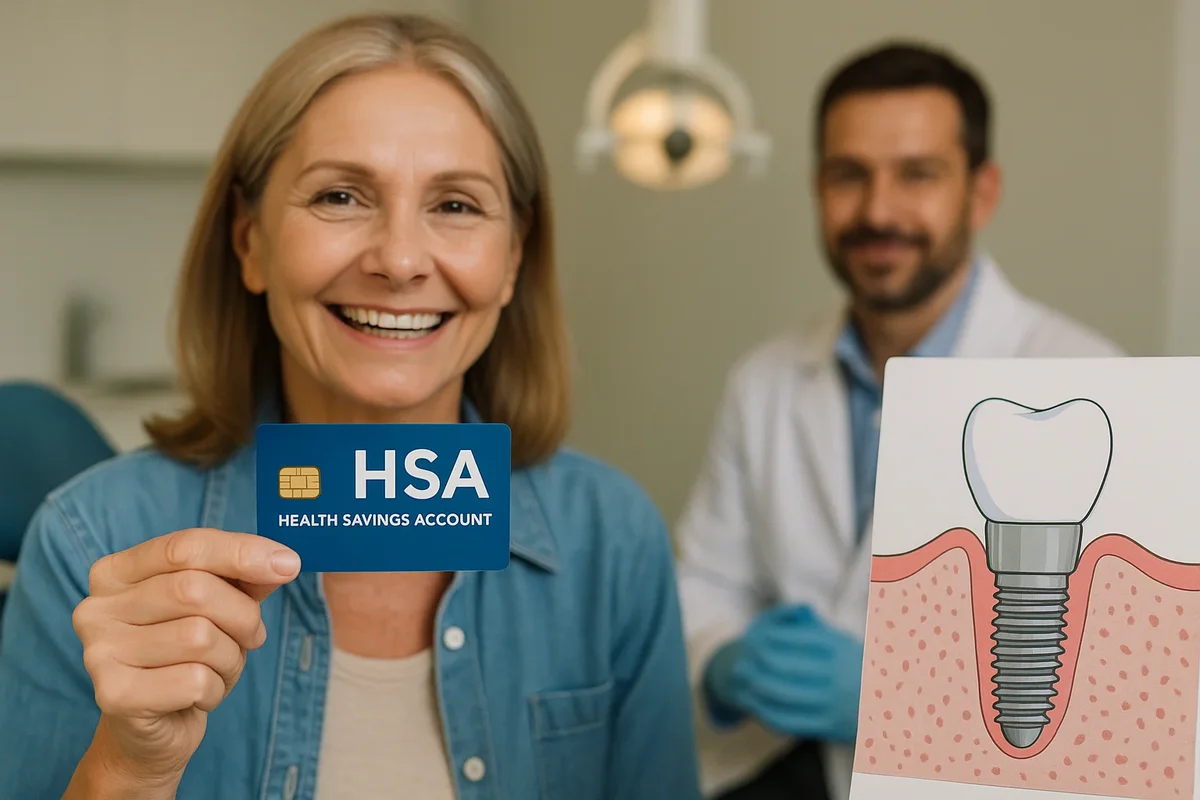
Tax Advantages of Using an HSA for Dental Implants
One of the most powerful reasons patients choose to use an HSA for dental implants is the significant tax savings these accounts offer. Dental implants are considered medically necessary because they restore chewing function, prevent jawbone loss, improve oral health, and support long-term stability of the bite. Since HSAs were specifically designed to help people manage qualified medical expenses tax-free, implant treatment becomes far more affordable when patients understand how to leverage every tax advantage available. This section explains each tax benefit in detail — from deductions to triple tax advantages, IRS guidelines, long-term savings strategies, contribution timing, and how to structure payments for maximum financial impact. 🦷💸
The Triple Tax Benefit: Why HSAs Are the Smartest Way to Save
Unlike traditional savings accounts or even FSAs, HSAs offer a rare financial structure known as the “triple tax advantage.” This advantage significantly lowers the real cost of dental implants.
Here’s how it works:
- 1. Tax-deductible contributions – Every dollar you deposit into your HSA reduces your taxable income.
- 2. Tax-free growth – The balance grows tax-free through interest or investments.
- 3. Tax-free withdrawals – When you use your HSA funds for qualified medical expenses such as implants, you pay no tax on withdrawals.
This makes using an HSA for dental implants one of the most strategically beneficial tax moves you can make. Patients in higher tax brackets often save thousands by paying for implant procedures entirely with pre-tax dollars.
How Tax-Deductible Contributions Reduce Implant Costs
Every contribution you make to your HSA directly lowers your taxable income. For example, if you contribute $4,000 toward your implant costs and you are in a 25% tax bracket, you effectively reduce your tax bill by $1,000. This means the real cost of your implant treatment is automatically lower without changing anything about your dental plan.
Many patients who strategically use an HSA for dental implants also plan their contributions around high-cost phases of treatment, ensuring that their tax reductions align with large payments such as implant placement, bone grafting, or final restorations.
Year-End Contributions for Maximum Tax Impact
Contributing the maximum allowable amount before the end of the tax year allows patients to reduce their taxable income for that year immediately. This is especially beneficial for people undergoing implant surgery early the following year, as it increases the amount of tax-free money available for that phase of treatment.
Using Tax-Free Growth to Build a Larger Implant Budget
Another significant advantage of HSAs is that the funds grow tax-free. Many HSA providers allow account holders to invest their balances in mutual funds, index funds, or other financial tools. This means your HSA balance can grow even if you’re not adding new contributions.
If you plan implant treatment months or years ahead, this investment growth can cover a substantial portion of the eventual cost. When the time comes to pay for your implants, withdrawing the money remains tax-free — making your HSA for dental implants an incredibly efficient financial vehicle.
How Compound Growth Supports Future Implant Needs
Dental implants can last decades, but some components — such as abutments or crowns — may need replacement later in life due to normal wear. By maintaining an HSA investment strategy, your account can grow enough to cover future implant maintenance or upgrades completely tax-free.
Tax-Free Withdrawals for Qualified Implant Procedures
HSAs allow tax-free withdrawals for all medically necessary procedures — and dental implants fall squarely into this category. This is one of the strongest financial advantages to using HSAs over traditional savings accounts.
Eligible expenses include:
- Implant placement surgery
- Bone grafting or sinus lift procedures
- Implant abutments and final crowns
- CT scans and diagnostic imaging
- Anesthesia or sedation
- Post-operative medications
- Follow-up appointments
Because all these expenses can be paid with tax-free funds, your HSA for dental implants gives you far more value than traditional financing or out-of-pocket payment.
Avoiding Penalties: What You Must Know
While HSAs provide enormous tax benefits, improper use can trigger IRS penalties. Fortunately, staying compliant is simple.
Here’s what to avoid:
- Withdrawing HSA funds for cosmetic-only dental procedures (e.g., whitening)
- Using HSA money without proper documentation
- Not keeping itemized invoices from your dental clinic
By ensuring every withdrawal is linked to a medically necessary treatment and supported by documentation, you keep your HSA for dental implants penalty-free and fully tax-advantaged.
Documentation That Protects Your Tax Benefits
You should always keep:
- Itemized treatment plans
- Receipts for each phase of implant treatment
- Invoices showing medical necessity
- Records of diagnostic imaging
For additional guidance, you may contact us directly through the
Redent Klinik Contact Page.
Why HSAs Provide the Strongest Long-Term Savings for Implants
Because of their tax structure, HSAs allow patients to save money for both present and future dental needs. Many people treat HSAs as secondary retirement accounts because the tax benefits accumulate over time, and unused funds roll over indefinitely.
This makes an HSA for dental implants not only a powerful tool for today’s treatment but also an excellent long-term financial safety net for future dental procedures or implant upgrades.
In summary, the tax advantages of using an HSA are unmatched. Between deductible contributions, tax-free investment growth, and penalty-free withdrawals, HSAs drastically reduce the real cost of implant treatment. For anyone seeking a financially intelligent strategy for oral health restoration, an HSA is one of the best tools available — offering unparalleled savings and long-term benefits.
Planning a Full-Mouth Restoration Using Your HSA Funds
Full-mouth restoration is one of the most life-changing treatments in modern dentistry, often involving multiple implants, advanced surgical techniques, and a carefully phased treatment timeline. Because this type of rehabilitation can be a significant financial investment, many patients turn to their Health Savings Account (HSA) to reduce out-of-pocket costs. Using an HSA for dental implants throughout a full-mouth restoration not only lowers the total financial burden, but it also allows patients to take advantage of long-term tax savings, comprehensive coverage of medically necessary procedures, and strategic payment planning across multiple stages of care. In this detailed guide, you’ll learn exactly how to prepare, structure, and maximize HSA benefits for full-mouth implant treatment from start to finish. 🦷💼
Why Full-Mouth Restoration Qualifies for HSA Funding
Full-mouth implant rehabilitation is not merely cosmetic — it restores essential oral functions, corrects severe structural damage, prevents jawbone loss, and improves overall oral health. Because of this, each stage of the treatment is classified as medically necessary. Whether the plan involves All-on-4 implants, All-on-6 implants, implant-supported dentures, or multiple single implants, every phase qualifies as a legitimate medical expense.
This means patients can confidently use their HSA for dental implants to cover diagnostics, surgical procedures, prosthetics, and follow-up visits. The IRS recognizes implant-supported restorations as functional, medically justified treatments, making them fully compatible with HSA rules for qualified medical spending.
Diagnostic Evaluations Included Under HSA Coverage
Full-mouth implant planning requires comprehensive assessments such as:
- 3D CBCT imaging
- Digital oral scans
- Panoramic X-rays
- Periodontal evaluations
- Bite force and occlusion analysis
Since these diagnostics are essential in determining your eligibility for implants and designing your treatment roadmap, they are eligible HSA expenses.
The Multi-Phase Nature of Full-Mouth Implant Treatment
Unlike single-tooth implants, full-mouth restoration typically takes place across several carefully planned phases. Understanding the timeline helps you schedule contributions and withdrawals strategically.
Phase 1: Extractions, Bone Grafting & Preparatory Surgery
Many patients require extractions of failing teeth, sinus lifts, or bone grafting before implants can be placed. These procedures rebuild the foundation needed for long-lasting results. Fortunately, every preparatory procedure qualifies as a valid HSA expense.
Phase 2: Implant Placement Surgery
During this phase, titanium or zirconia implants are surgically inserted into the jawbone. Since this is the core of the restoration process, using your HSA for dental implants is not only allowed but encouraged due to its substantial cost-saving benefits.
Phase 3: Temporary Prosthetics
Many clinics provide temporary full-arch bridges or provisional teeth immediately after implant placement. These temporaries help with chewing, speaking, and aesthetics during healing. All temporary prosthetics that support implant healing qualify for HSA reimbursement.
Phase 4: Final Full-Arch Restorations
Once your implants have integrated with the bone, you’ll receive your final prosthetic teeth. These may include:
- Fixed zirconia full-arch bridges
- Implant-supported hybrid dentures
- Custom porcelain or ceramic restorations
All final restorations complete the functional rehabilitation process and are fully eligible under IRS rules for HSA use.
Strategic HSA Planning for Full-Mouth Rehabilitation
Full-mouth implant treatment can span months or even a full year. This extended timeline presents an ideal opportunity to maximize HSA contributions. Many patients use a strategic combination of year-end and next-year contributions to increase available funds before large treatment phases.
Example Strategy: Two-Year Contribution Accumulation
If therapy begins in late December, you can:
- Max out your HSA contributions before December 31
- Then contribute again starting January 1 of the next year
This effectively doubles your tax-advantaged savings for major implant phases such as implant placement surgery and final restorative work.
Coordinating Insurance, HSA Funds, and Payment Plans
Another advantage of full-mouth restoration is that you can combine multiple financial tools. Dental insurance may cover portions such as extractions or grafting, while your HSA for dental implants covers the remaining qualified expenses. Many patients also use clinic financing or staged payment plans for high-cost phases.
This “layered financing model” allows patients to minimize stress while fully maximizing HSA tax benefits. Your clinic coordinator can help you structure payments in a way that aligns with upcoming HSA contribution periods.
Maintaining Documentation for IRS Compliance
For all HSA withdrawals, keep:
- Itemized receipts
- Treatment plans
- Procedure codes
- Diagnostic imaging reports
If you need additional documentation or guidance, you can always contact us through the
Redent Klinik Contact Page.
Why HSAs Are the Best Long-Term Tool for Full-Mouth Implant Care
Full-mouth restoration is a long-term investment in your health and quality of life. Because unused HSA funds roll over indefinitely and may even grow through investments, your HSA becomes an ongoing financial resource not just for the initial treatment, but for future maintenance, replacement of prosthetics, and long-term oral care.
Using an HSA for dental implants gives patients unmatched financial flexibility, substantial tax benefits, and the ability to fund life-changing restorative dentistry in the smartest way possible.
Step-by-Step Guide: Paying Your Implant Provider with an HSA
Paying your dental clinic using an HSA for dental implants is a straightforward process when you understand the exact steps involved. Many patients are surprised by how simple it is to use their HSA card or reimbursement system to cover implant-related expenses. This section provides a fully detailed, step-by-step guide explaining how to prepare, document, and complete every stage of payment—whether you’re covering diagnostics, surgery, abutments, crowns, or full-mouth rehabilitation. By following these guidelines, you ensure IRS compliance, avoid unnecessary penalties, and make the most of your tax-free healthcare funds. 🦷💳
Step 1: Verify That Your Implant Procedures Are HSA-Eligible
The first step is confirming that every procedure your dentist recommends is considered medically necessary under IRS rules. Fortunately, almost all diagnostic, surgical, and restorative implant procedures qualify. This includes:
- X-rays and 3D CBCT scans
- Extractions and bone grafts
- Sinus lifts
- Implant fixture placement
- Abutments and healing screws
- Implant-supported crowns or bridges
- Temporary prosthetics
These services meet the requirements for HSA eligibility because they restore oral function and address essential medical needs. This makes using your HSA for dental implants an efficient and IRS-approved financial strategy.
Step 2: Ask Your Clinic About Accepted HSA Payment Methods
Different clinics accept different payment methods. The two standard types of HSA payment methods are:
- Direct HSA debit card payments at the clinic
- Reimbursement method where you pay first, then submit receipts
Most implant clinics today accept HSA cards directly, but if yours does not, reimbursement is equally effective. Both methods are legally valid for covering treatment with an HSA for dental implants.
Direct Debit Card Payment
If the clinic accepts HSA cards, you will simply:
- Swipe or insert your HSA card at checkout
- Sign the receipt (digital or paper)
- Receive an itemized invoice automatically
This method is fast, seamless, and instantly recorded in your HSA system.
Reimbursement Method
If your dentist does not accept HSA cards, do the following:
- Pay using another payment method (credit, debit, or bank transfer)
- Request an itemized receipt showing each implant-related procedure
- Submit the receipt to your HSA portal for tax-free reimbursement
Reimbursement ensures you still receive the full tax advantage of using your HSA for dental implants even if the provider doesn’t support HSA cards during checkout.
Step 3: Collect Itemized Documentation
The IRS requires proof that each expense was medically necessary. Your dental clinic should provide an itemized invoice listing:
- Procedure codes (CDT codes)
- Detailed descriptions
- Dates of service
- Provider information
- Diagnostic imaging charges
- Surgical steps and restorative components
These documents are essential for protecting your tax benefits and ensuring your HSA for dental implants is used correctly.
Why Itemized Receipts Matter
If the IRS ever audits your HSA spending, these receipts prove that your expenses qualify as medical care rather than cosmetic care. Always save digital and physical copies in your records.
Step 4: Schedule Payments According to Treatment Phases
Implant treatment is typically completed in phases. This makes HSAs especially convenient, as you can align your payment schedule with your contribution timeline.
Typical Implant Phases Include:
- Initial consultation and imaging
- Preparation (extractions, grafts, sinus lift)
- Implant placement surgery
- Healing period with temporary prosthetics
- Final abutment and crown placement
Each phase is billable separately, giving you time to add new HSA contributions between appointments. Patients frequently use a strategic year-end contribution combined with the next year’s contribution to double the available funds for their HSA for dental implants.
Step 5: Submit Payments or Reimbursement Requests Promptly
Submitting reimbursement requests as soon as possible ensures your HSA documentation stays organized. Many HSA systems allow you to upload receipts electronically, categorize the expense, and track your medical spending over the year.
What to Include in a Reimbursement Submission:
- Itemized invoice
- Proof of payment
- Date of service
- Provider contact information
- Description of medically necessary procedures
Once approved, reimbursement funds are transferred back to your bank account tax-free.
Step 6: Keep and Store Your Records for IRS Safety
While HSA accounts are incredibly flexible, the IRS requires proof of medical necessity if you are ever audited. For anyone using an HSA for dental implants, we strongly recommend keeping:
- Receipts
- Scans and imaging reports
- Treatment plans
- Credit card statements (for reimbursement)
- Signed consent forms
These documents protect your tax-free withdrawal status for life.
Step 7: Contact Your Clinic for Assistance
If you ever feel unsure about which documents you need or how to submit them, your dental clinic can help. We routinely guide patients through HSA documentation and payment steps. You can always reach us directly through the
Redent Klinik Contact Page.
In summary, paying your dentist using an HSA for dental implants is a simple, organized, and IRS-approved process. By following these steps, you ensure smooth payments, maximize your tax benefits, and create a streamlined experience throughout your dental implant journey.
Avoiding IRS Mistakes When Using HSA Funds for Implants
Using an HSA for dental implants is one of the smartest ways to lower out-of-pocket costs, leverage tax-free funds, and manage major dental expenses efficiently. However, HSAs are governed by specific IRS rules, and misunderstanding these rules can lead to penalties, audits, or unexpected tax obligations. To ensure your implant treatment remains fully compliant, it is essential to understand the most common HSA-related mistakes patients make—and how to avoid them. This detailed section outlines every IRS requirement, documentation rule, and eligibility guideline to protect your financial benefits while ensuring your implant investment remains 100% tax-free. 🦷📘
Understanding IRS Rules for Qualified Medical Expenses
The IRS strictly defines which medical expenses qualify for HSA use. Fortunately, dental implants fall under the category of medically necessary treatments because they restore function, prevent bone loss, and improve oral health. However, the mistake many patients make is assuming that all dental services automatically qualify. This confusion often leads to improper withdrawals or miscategorized expenses that can trigger IRS scrutiny.
When using your HSA for dental implants, it is crucial to differentiate between functional procedures (covered) and cosmetic treatments (not covered). For example, while implant surgery, crowns, abutments, bone grafts, and diagnostic imaging qualify, purely cosmetic whitening or elective gum contouring does not.
Common Mistake #1: Paying for Non-Qualified Cosmetic Procedures
Some dental treatments improve appearance without contributing to oral function. These procedures are not eligible for HSA reimbursement. Paying for them with HSA funds may result in penalties.
Examples of Non-Qualified Cosmetic Procedures:
- Teeth whitening
- Elective veneer placement
- Cosmetic gum reshaping not tied to implants
- Elective aesthetic enhancements
The key rule: if it doesn’t support medical function, do not use your HSA for it. Stick strictly to medically necessary implant-related procedures when using your HSA for dental implants.
Common Mistake #2: Failing to Keep Itemized Documentation
One of the most common issues patients face during IRS reviews is missing documentation. The IRS requires proof that each medical expense was qualified and medically necessary. Without proper documents, even valid implant procedures may be flagged.
Always keep detailed invoices showing:
- Procedure descriptions
- CDT or procedure codes
- Dates of service
- Provider information
- Breakdowns of surgical and restorative phases
Because dental implants involve multiple stages, maintaining records for each step is essential when using your HSA for dental implants.
Common Mistake #3: Mixing Cosmetic and Medical Treatments on One Invoice
Some dental offices combine cosmetic upgrades and medical treatments on a single invoice. This can cause IRS confusion and complicate reimbursement.
To avoid problems:
- Ask your clinic to separate cosmetic services onto a different receipt.
- Ensure implant-related procedures are itemized clearly.
- Confirm the invoice states medical necessity when applicable.
Clear separation ensures the IRS has no reason to question your implant-related withdrawals.
Common Mistake #4: Using HSA Funds Before They Are Contributed
HSAs work differently from FSAs. You can only spend funds that have already been deposited into your HSA. With multi-phase implant treatment, patients sometimes assume future contributions can cover current expenses. This is an IRS violation.
When using your HSA for dental implants, always align treatment phases with available deposits. If your procedure is scheduled months out, plan contributions ahead of time.
Safe Planning Strategy:
- Use early-in-the-year and late-in-the-year contributions strategically.
- Build your HSA balance before implant placement.
- Use payment plans when needed until funds become available.
Common Mistake #5: Losing Track of Reimbursement Receipts
If your clinic does not accept HSA cards directly, you will need to pay out of pocket and request reimbursement later. Many patients forget to submit receipts or lose important paperwork. The IRS requires reimbursement claims to be supported by clear documentation.
Always store copies of:
- Bank statements or credit card transactions
- Paid invoices from the clinic
- Confirmation emails for reimbursement
Submitting complete documentation ensures your HSA for dental implants remains fully compliant and audit-proof.
Common Mistake #6: Confusing Insurance Adjustments with HSA Eligibility
Another mistake is assuming that if insurance partially covers a treatment, the remaining balance automatically qualifies for HSA use. While it often does, some insurance adjustments categorize portions of the treatment differently.
To avoid complications:
- Review your Explanation of Benefits (EOB) document.
- Verify that remaining balances correspond to medically necessary procedures.
- Ask your provider to confirm which components are HSA-eligible.
This prevents accidental misuse of your HSA for dental implants.
Common Mistake #7: Not Consulting with Your Dental Clinic
Many implant clinics, including ours, have extensive experience working with HSAs. Patients who fail to ask questions often miss out on financial advantages or misunderstand the timing of contributions.
If you need help organizing your HSA payments, verifying IRS documentation requirements, or planning multi-phase treatment expenses, you can always reach us through the
Redent Klinik Contact Page.
Why Careful Compliance Protects Your Financial Benefits
The IRS penalizes non-qualified HSA withdrawals with income tax plus an additional penalty, making compliance essential. Fortunately, avoiding these mistakes is easy with proper documentation and clear communication with your clinic.
Using your HSA for dental implants correctly will always remain one of the most tax-efficient ways to pay for implant treatment—only if managed with care, organization, and attention to detail.
How to Combine HSA Savings with Payment Plans for Implants
Patients undergoing implant treatment often look for the smartest ways to manage costs without compromising on quality. One of the most effective strategies is combining HSA savings with clinic-based payment plans. When you use an HSA for dental implants alongside structured financing, you gain both tax advantages and financial flexibility. This powerful combination allows you to complete implant treatment on schedule—even if your HSA balance is still growing—while minimizing out-of-pocket strain. In this section, you’ll learn how to pair HSA funds with payment arrangements in the most strategic, IRS-compliant, and cost-effective way possible. 🦷💳
Why Combining HSA Funds with Payment Plans Is So Effective
Dental implants often involve multiple phases, which naturally creates several billing points throughout the treatment journey. Because HSA contributions must already be deposited before they can be used, many patients worry that they won’t have enough funds available at every treatment stage. Payment plans fill this gap perfectly. By spreading costs out over time, you can align payments with your HSA contribution schedule while keeping the entire process financially manageable.
This makes combining payment plans with your HSA for dental implants ideal for patients who:
- Need multi-phase implant treatment
- Expect to max out contributions later in the year
- Want to preserve cash flow
- Prefer to minimize immediate financial pressure
- Are planning full-mouth restorations
Because implant treatment is medically necessary and fully eligible under IRS rules, pairing an HSA with structured financing creates a smooth, tax-friendly payment pathway.
Common Types of Payment Plans That Work with HSAs
Dental clinics typically provide several financing options that integrate seamlessly with HSA payments. Below are the most commonly used options:
- In-house payment plans with 0–low interest rates
- Monthly installment plans spread across phases
- Medical financing lenders (e.g., CareCredit, LendingPoint)
- Split-phase payments aligned with implant stages
Regardless of the method you choose, all these options can work hand-in-hand with your HSA for dental implants by allowing you to pay portions of your bill over time, then use HSA funds to cover medically necessary treatments as contributions become available.
In-House Payment Plans
Many implant clinics offer their own payment plans, which may include flexible scheduling, low admin fees, or zero interest. These plans work extremely well with HSA contributions because they break down your total cost into small, manageable monthly payments.
Third-Party Medical Financing
Medical lenders provide instant credit approval and allow patients to start treatment right away—even if the HSA balance is insufficient. As you contribute to your HSA throughout the year, you can use those new funds to pay off the medical lender while still benefitting from tax savings.
Timing Your HSA Contributions to Match Payment Installments
The key to maximizing your financial benefits is aligning your HSA deposits with the timeline of your payment plan. Because implant treatment is usually completed in stages—diagnostics, surgery, healing, and final restorations—each stage creates a natural point for additional contributions.
Here’s how strategic timing works when integrating your HSA for dental implants with a payment plan:
- Before implant surgery — Make as many contributions as possible to reduce taxable income.
- During healing — Continue monthly HSA contributions while paying small financing installments.
- Before final restoration — Use year-end and new-year contributions to cover final high-cost segments.
This approach helps maximize your tax-free savings and ensures you have the funds needed at each phase.
Using HSA Funds to Pay Off Financing Balances
One of the biggest advantages of combining an HSA with financing is the ability to use tax-free funds later to pay down your payment plan balance. This is especially beneficial when:
- Your implant treatment begins before your HSA is fully funded
- You want to reduce taxable income over two calendar years
- You need to manage cash flow while still starting treatment immediately
As long as the financed procedures are medically necessary—and implant procedures always are—HSA withdrawals remain tax-free.
Important Note on IRS Timing Rules
HSA withdrawals must be used for expenses incurred after the HSA was established. This means you can use HSA funds to pay off financing installments as long as:
- The implant services were provided after your HSA start date
- You have proper receipts documenting the service dates
Following these rules ensures every withdrawal remains compliant.
Coordinating HSA and Payment Plans in Full-Mouth Restorations
Full-mouth implant cases often exceed annual HSA contribution limits. Payment plans help bridge this gap by splitting the total cost over time. Meanwhile, you can use your HSA for dental implants each time new contributions become available, particularly around year-end and the beginning of the next year.
This dual-approach strategy is highly effective for patients undergoing All-on-4, All-on-6, or full-arch implant solutions.
Getting Help from Your Dental Clinic
Most clinics, including ours, are familiar with coordinating HSAs and payment plans. Your treatment coordinator can help you determine:
- The ideal timing of contributions
- The best payment plan structure
- Which procedures are eligible for HSA use
- How to document each expense correctly
If you need assistance organizing your payment strategy, you can always reach us through the
Redent Klinik Contact Page.
In conclusion, combining an HSA for dental implants with a flexible payment plan creates one of the most manageable, tax-advantaged, and patient-friendly financial approaches available. The method gives you immediate access to treatment while maximizing your long-term savings and preserving your cash flow—making it a smart choice for single-implant patients and full-mouth rehabilitation candidates alike.