
Access to quality dental care should never depend solely on a person’s financial situation. Unfortunately, millions of individuals and families delay or avoid dental treatment because of cost concerns. This is where an income based dentist can make a significant difference. An income based dentist provides dental services using a sliding fee scale, reduced-cost treatment options, or special financial assistance programs designed to help low-income patients receive the oral healthcare they need.
Whether you need a routine dental examination, a professional cleaning, cavity treatment, tooth extraction, or preventive care, an income based dentist can help make these services more affordable. These dental professionals understand that oral health is directly connected to overall health and work to remove financial barriers that prevent patients from seeking treatment.
Many people mistakenly believe that affordable dental care means lower-quality treatment. In reality, an income based dentist often provides the same professional standards, modern technology, and patient-centered care found in traditional private practices. The primary difference is that payment structures are adjusted according to a patient’s income level and financial circumstances.
🦷 Dental health plays a crucial role in daily life. Healthy teeth and gums help people eat comfortably, speak clearly, smile confidently, and avoid serious infections. When oral health issues go untreated, they can lead to complications such as severe pain, gum disease, tooth loss, and even systemic health problems affecting the heart and other organs.
An income based dentist typically works through community health centers, nonprofit dental clinics, public health programs, university dental schools, charitable organizations, or specialized affordable-care dental practices. These programs are designed to ensure that everyone has access to essential dental care regardless of income.
How Does an Income Based Dentist Work?
The process is generally straightforward. When patients contact an income based dentist, they may be asked to provide documentation regarding household income, employment status, family size, or participation in government assistance programs. Based on this information, the clinic determines eligibility for reduced fees.
Many clinics use a sliding fee scale. This means that treatment costs are adjusted according to income levels. Patients with lower incomes may receive substantial discounts, while those with moderate incomes may still qualify for reduced rates compared to standard private dental practices.
For example, a routine dental examination that might normally cost between $75 and $200 at a traditional clinic may be available for significantly less through an income based dentist program.
Common Services Offered
Most income based dentist programs provide a wide range of dental services, including:
- ✅ Comprehensive oral examinations
- ✅ Digital dental X-rays
- ✅ Professional cleanings
- ✅ Fluoride treatments
- ✅ Dental fillings
- ✅ Tooth extractions
- ✅ Gum disease treatment
- ✅ Preventive dental education
- ✅ Emergency dental care
- ✅ Pediatric dental services
Some clinics may also offer advanced procedures such as root canals, crowns, dentures, and cosmetic dentistry at discounted rates. Availability varies depending on the specific income based dentist program and geographic location.
Who Benefits Most from an Income Based Dentist?
An income based dentist can benefit a wide range of individuals, including:
- Families with limited income
- Uninsured patients
- Part-time workers without dental benefits
- Students on tight budgets
- Retirees living on fixed incomes
- Individuals facing temporary financial hardship
- People receiving government assistance programs
Many patients discover that delaying treatment due to cost often leads to larger dental problems later. Seeking care from an income based dentist early can help prevent expensive procedures and maintain long-term oral health.
The Importance of Preventive Dental Care
One of the biggest advantages of visiting an income based dentist is access to preventive care. Regular examinations and cleanings allow dental professionals to identify potential issues before they become serious problems.
Preventive dentistry may help reduce the risk of:
- Tooth decay
- Gingivitis
- Periodontal disease
- Dental infections
- Tooth loss
- Emergency dental situations
🪥 Prevention is often far less expensive than restorative treatment. A simple cleaning today may prevent the need for extensive dental work in the future.
Affordable Dental Care and Community Health
The role of an income based dentist extends beyond individual treatment. Affordable dental programs contribute to healthier communities by increasing access to oral healthcare services. When more people receive routine dental care, communities experience lower rates of untreated dental disease and improved overall health outcomes.
Organizations such as the American Dental Association continue to promote better access to dental care and advocate for programs that support underserved populations.
If you are searching for affordable dental treatment options, speaking with an experienced dental team can help you understand available solutions. Patients looking for personalized guidance can also reach out through the Redent Klinik Contact Page to explore suitable treatment options and financing possibilities.
Why Choosing an Income Based Dentist Matters
Choosing an income based dentist is not simply about saving money. It is about ensuring access to professional oral healthcare, preventing future dental complications, and protecting overall well-being. Financial limitations should never force individuals to live with dental pain or avoid necessary treatment.
By making dental services more accessible, an income based dentist helps patients maintain healthy smiles, improve confidence, and enjoy a better quality of life. As awareness of affordable dental care programs continues to grow, more individuals are discovering that quality oral healthcare can be both accessible and affordable.
What Is an Income Based Dentist and How Does It Work?
For many individuals and families, the cost of dental care can be a major obstacle to maintaining good oral health. Dental examinations, cleanings, fillings, crowns, and emergency treatments can quickly become expensive, especially for people without dental insurance. This is where an income based dentist can provide a valuable solution. An income based dentist offers affordable dental services that are designed to match a patient’s financial situation, helping ensure that essential oral healthcare remains accessible to everyone.
An income based dentist is a dental professional or clinic that uses flexible pricing models, sliding fee scales, community assistance programs, or subsidized healthcare funding to reduce treatment costs for eligible patients. Instead of charging the same fee to every patient regardless of income, an income based dentist adjusts costs based on factors such as household income, family size, employment status, and financial need.
🦷 The primary goal of an income based dentist is simple: to eliminate financial barriers that prevent people from receiving necessary dental treatment and preventive care.
Understanding the Concept of an Income Based Dentist
Traditional dental practices typically have fixed treatment fees. Whether a patient earns a high salary or struggles to meet basic living expenses, the cost of treatment remains the same. Unfortunately, this pricing structure often forces lower-income individuals to postpone important dental care.
An income based dentist takes a different approach. By offering reduced fees according to a patient’s financial circumstances, these clinics make dental services more affordable and accessible. Many income-based dental programs operate through:
- Community health centers
- Public healthcare facilities
- Nonprofit organizations
- University dental schools
- Government-supported clinics
- Charitable dental programs
- Affordable private dental practices
The services provided by an income based dentist often mirror those offered by traditional dental clinics. Patients can typically receive examinations, cleanings, X-rays, fillings, extractions, and preventive treatments without sacrificing quality of care.
How an Income Based Dentist Determines Eligibility
One of the most common questions patients ask is how an income based dentist decides who qualifies for reduced fees. While eligibility requirements vary between clinics and programs, most providers evaluate several financial factors.
Household Income Assessment
Many clinics ask patients to provide proof of income, such as:
- Recent pay stubs
- Tax returns
- Employment verification letters
- Government assistance documentation
- Social security benefit statements
The income based dentist uses this information to determine which fee category the patient falls into.
Family Size Consideration
Household size often plays an important role. A family of five earning a moderate income may face significantly different financial challenges than a single individual earning the same amount. Therefore, an income based dentist may consider the number of dependents when calculating treatment discounts.
Participation in Assistance Programs
Patients enrolled in programs such as Medicaid or other public assistance initiatives may automatically qualify for certain reduced-cost dental services. Some clinics specifically partner with government healthcare programs to increase access to affordable care.
How Sliding Fee Scales Work
A sliding fee scale is one of the most common pricing methods used by an income based dentist. Under this system, treatment fees decrease as income levels decrease.
For example:
| Income Level | Potential Patient Contribution |
|---|---|
| Very Low Income | 20%–30% of standard fees |
| Low Income | 40%–60% of standard fees |
| Moderate Income | 70%–90% of standard fees |
| Higher Income | Standard fees may apply |
This structure allows an income based dentist to serve a wide range of patients while ensuring that financial limitations do not prevent access to care.
Services Commonly Offered by an Income Based Dentist
Many people assume affordable dental clinics only offer basic services. However, an income based dentist often provides comprehensive treatment options, including:
- Dental examinations
- Digital X-rays
- Professional teeth cleanings
- Fluoride treatments
- Sealants for children
- Cavity fillings
- Tooth extractions
- Gum disease treatment
- Emergency dental care
- Root canal therapy
- Dentures and partial dentures
- Preventive oral health education
Some clinics may even offer specialized services through referral programs or partnerships with local dental specialists.
Benefits of Choosing an Income Based Dentist
Improved Access to Dental Care
The most obvious benefit of an income based dentist is affordability. Reduced treatment costs encourage patients to seek care earlier rather than waiting until dental problems become severe.
Focus on Prevention
Preventive care is often emphasized in income-based programs. Regular cleanings and examinations help detect issues before they require costly treatment.
Reduced Financial Stress
Knowing that treatment costs are adjusted according to financial circumstances can significantly reduce anxiety and encourage patients to prioritize oral health.
Healthier Communities
By increasing access to dental services, every income based dentist contributes to improved public health outcomes. Communities benefit when fewer people suffer from untreated tooth decay, gum disease, and dental infections.
Why Affordable Dentistry Matters
Oral health affects much more than just teeth. Untreated dental disease can impact nutrition, speech, confidence, and overall quality of life. Research has also linked poor oral health to conditions such as heart disease, diabetes complications, and systemic infections.
Because of these connections, an income based dentist plays an essential role in healthcare accessibility. Affordable dentistry helps patients maintain healthy smiles while reducing the risk of more serious health complications in the future.
😊 For many families, finding an income based dentist can be the difference between postponing treatment indefinitely and receiving timely, professional care that protects both oral and overall health.
Ultimately, an income based dentist represents a practical and compassionate approach to modern dental care. By tailoring treatment costs to individual financial situations, these programs help ensure that quality dental services remain available to everyone, regardless of income level. Whether you need preventive care, restorative treatment, or emergency assistance, an income based dentist can provide a pathway toward better oral health without creating overwhelming financial burdens.
Who Qualifies for an Income Based Dentist Program?
One of the most common questions patients ask when searching for affordable dental care is whether they qualify for assistance through an income based dentist program. While eligibility requirements vary depending on the clinic, community health center, nonprofit organization, or government-supported facility, most programs are designed to help individuals and families who may struggle to afford traditional dental care.
An income based dentist aims to make oral healthcare accessible to people from various financial backgrounds. Rather than offering the same pricing structure to every patient, these programs evaluate financial circumstances and provide discounted treatment options when appropriate. This approach helps ensure that essential dental care remains available to those who need it most.
🦷 Understanding the qualification process can help patients determine whether an income based dentist program is the right solution for their oral healthcare needs.
Why Income Based Dentist Programs Have Eligibility Requirements
The primary goal of an income based dentist program is to allocate resources fairly and efficiently. Since many affordable dental clinics operate with limited funding, grants, charitable contributions, or government support, eligibility criteria help prioritize patients who face the greatest financial challenges.
By assessing income levels and other factors, an income based dentist can offer reduced treatment costs while continuing to provide high-quality care to a larger number of patients.
Income Requirements for an Income Based Dentist Program
Income is typically the most important factor used to determine eligibility. Most income based dentist programs use household income guidelines based on federal poverty levels, local economic conditions, or clinic-specific policies.
Low-Income Households
Individuals and families with lower household incomes often qualify for the largest discounts. In some cases, patients may receive services at a significantly reduced cost or even free preventive care through an income based dentist program.
Moderate-Income Families
Not all assistance programs are limited to extremely low-income patients. Many clinics recognize that moderate-income households may still face financial challenges, especially when managing housing expenses, childcare costs, education expenses, and healthcare bills.
As a result, an income based dentist may provide partial discounts to middle-income families who would otherwise struggle to afford necessary dental treatment.
Temporary Financial Hardship
Some patients experience temporary economic difficulties due to job loss, medical emergencies, unexpected expenses, or changes in family circumstances. Certain income based dentist programs consider these situations and may offer short-term financial assistance.
Household Size and Family Composition
Household size often plays an important role when determining eligibility. An income based dentist understands that financial resources must be stretched further in larger households.
For example, a family of six earning a specific annual income may face greater financial pressure than a single individual earning the same amount. Because of this, many clinics consider:
- Number of adults in the household
- Number of dependent children
- Elderly family members requiring support
- Total household expenses
This broader evaluation allows an income based dentist to create a more accurate picture of a patient’s financial situation.
Government Assistance Programs That May Qualify Patients
Many patients who participate in public assistance programs automatically qualify for services through an income based dentist. These programs often serve as evidence of financial need.
Common Qualifying Programs
- Medicaid
- Children’s Health Insurance Program (CHIP)
- Supplemental Nutrition Assistance Program (SNAP)
- Temporary Assistance for Needy Families (TANF)
- Supplemental Security Income (SSI)
- Housing assistance programs
If a patient is enrolled in one or more of these programs, an income based dentist may offer reduced fees or direct coverage for certain treatments.
Documentation Required by an Income Based Dentist
To verify eligibility, most clinics request supporting documentation. Patients should prepare the necessary paperwork before scheduling an appointment with an income based dentist.
Proof of Income
Common income verification documents include:
- Recent pay stubs
- Tax returns
- Employer verification letters
- Bank statements
- Benefit award letters
Proof of Residency
Some clinics serve specific geographic areas. Therefore, an income based dentist may request proof of local residency through utility bills, lease agreements, or government-issued identification.
Identification Documents
Patients are often required to provide photo identification to confirm eligibility and complete registration processes.
Special Groups That Frequently Qualify
Certain populations are commonly served by an income based dentist program because they face increased barriers to healthcare access.
- Senior citizens on fixed incomes
- College students with limited financial resources
- Veterans
- Single-parent households
- Individuals with disabilities
- Uninsured adults
- Children from low-income families
Many clinics actively prioritize these groups to help address healthcare disparities and improve community oral health outcomes.
Can Uninsured Patients Qualify?
Absolutely. In fact, uninsured individuals are among the most common patients served by an income based dentist. Without dental insurance, even routine preventive care can become financially burdensome.
An income based dentist provides an alternative pathway to affordable treatment, helping uninsured patients access examinations, cleanings, fillings, and emergency services without facing overwhelming costs.
Do Employment Status and Age Matter?
Employment status may influence eligibility, but it is rarely the sole determining factor. Full-time workers, part-time employees, self-employed individuals, retirees, and unemployed patients may all qualify for assistance through an income based dentist program if their financial circumstances meet established guidelines.
Similarly, age alone does not determine eligibility. Children, adults, and seniors may all benefit from programs offered by an income based dentist, provided they meet the clinic’s requirements.
What If You Do Not Meet Qualification Requirements?
Even if a patient does not qualify for maximum assistance, many affordable clinics still offer reduced-cost services, payment plans, or financing options. An income based dentist often works with patients to find practical solutions that make treatment more manageable.
Additionally, dental schools, nonprofit organizations, and community health centers may provide alternative programs for patients who exceed income thresholds but still require affordable care.
Final Thoughts on Eligibility
Determining eligibility for an income based dentist program is usually a straightforward process designed to connect affordable dental care with those who need it most. While income remains the primary consideration, factors such as household size, participation in assistance programs, insurance status, and financial hardship may also influence qualification.
😊 Ultimately, an income based dentist exists to expand access to quality oral healthcare. Whether you are uninsured, supporting a family on a limited income, living on retirement benefits, or facing temporary financial challenges, exploring eligibility for an income based dentist program may help you receive the dental care necessary to maintain a healthy smile and improve your overall well-being.
Benefits of Choosing an Income Based Dentist for Your Family
Finding quality dental care that fits within a household budget can be challenging, especially for families managing multiple financial responsibilities. From routine checkups and preventive treatments to emergency procedures and restorative care, dental expenses can quickly add up. This is one of the main reasons many families turn to an income based dentist for affordable and accessible oral healthcare.
An income based dentist helps families receive essential dental treatment without the financial burden often associated with traditional dental practices. By offering reduced fees, flexible payment options, and sliding-scale pricing structures, an income based dentist makes it possible for more people to maintain healthy smiles and prevent serious oral health problems.
👨👩👧👦 For families, the advantages extend far beyond affordability. Choosing an income based dentist can contribute to better long-term health, reduced stress, improved confidence, and greater access to preventive care for every family member.
Affordable Dental Care for Every Member of the Family
One of the biggest advantages of working with an income based dentist is the ability to obtain dental care for the entire household. Many families postpone treatment because covering dental costs for multiple people at once can feel overwhelming.
With an income based dentist, treatment costs are often adjusted according to household income and financial circumstances. This allows parents to schedule regular dental visits not only for themselves but also for their children and other dependents.
Affordable access to dental care helps ensure that everyone in the family receives the attention they need before small problems become major health concerns.
Supporting Families with Limited Budgets
Many households face competing financial priorities, including:
- Housing expenses
- Food costs
- Transportation expenses
- Utility bills
- Education costs
- Medical expenses
- Childcare services
An income based dentist recognizes these challenges and works to make oral healthcare more manageable for families operating within tight budgets.
Access to Preventive Care and Early Treatment
Preventive dentistry is one of the most valuable services offered by an income based dentist. Regular examinations and professional cleanings help identify dental problems before they become painful or expensive to treat.
When families can afford preventive appointments, they reduce the likelihood of developing serious issues such as:
- Tooth decay
- Advanced cavities
- Gum disease
- Dental infections
- Tooth loss
- Costly emergency procedures
An income based dentist encourages routine care because prevention is often the most effective and affordable approach to maintaining oral health.
Benefits for Children
Children benefit significantly from preventive dental visits. Early access to an income based dentist helps establish healthy oral hygiene habits and allows dental professionals to monitor proper tooth development.
Routine care may include:
- Dental cleanings
- Fluoride treatments
- Dental sealants
- Growth monitoring
- Oral hygiene education
These services can reduce the risk of future dental complications and promote lifelong oral health.
Reduced Financial Stress for Parents
Unexpected dental expenses can place significant strain on household finances. A severe toothache, broken tooth, or dental infection may require immediate treatment, leaving families concerned about how they will pay for care.
An income based dentist helps alleviate these concerns by providing affordable treatment options and transparent pricing structures. Knowing that dental care is available at a reduced cost allows parents to focus on their family’s health rather than worrying about overwhelming bills.
😊 Financial peace of mind is one of the most appreciated benefits reported by patients who regularly visit an income based dentist.
Improved Overall Health Outcomes
Oral health is closely connected to overall health. Untreated dental problems can affect much more than teeth and gums. Research has shown links between poor oral health and various medical conditions, including:
- Heart disease
- Diabetes complications
- Respiratory infections
- Pregnancy-related health concerns
- Chronic inflammation
By making dental care accessible, an income based dentist supports not only oral wellness but also broader health outcomes for entire families.
Encouraging Consistent Healthcare Habits
Families who visit an income based dentist regularly are often more likely to maintain consistent healthcare routines overall. Regular dental visits encourage preventive thinking and help establish a proactive approach to personal wellness.
Access to Essential and Emergency Dental Services
Another major benefit of choosing an income based dentist is access to necessary treatments when emergencies occur. Dental emergencies can happen unexpectedly and may require immediate attention.
Common emergency situations include:
- Severe toothaches
- Broken teeth
- Dental abscesses
- Lost fillings or crowns
- Sports-related dental injuries
- Gum infections
Many income based dentist programs provide emergency care options that are more affordable than traditional urgent dental services.
Flexible Payment Options
In addition to reduced fees, an income based dentist may offer flexible payment arrangements designed to help families spread treatment costs over time.
Common Financial Solutions
- Monthly payment plans
- Sliding-scale fees
- Community assistance programs
- Charitable funding support
- Discount programs for uninsured patients
These options make it easier for families to proceed with necessary treatment instead of delaying care because of financial concerns.
Building Long-Term Relationships with Dental Providers
Families often benefit from developing ongoing relationships with a trusted income based dentist. Consistent care allows dental professionals to monitor oral health over time, identify changes early, and provide personalized treatment recommendations.
Children who grow up seeing the same dental team may feel more comfortable during appointments, reducing anxiety and promoting positive dental experiences.
A trusted income based dentist can become an important healthcare partner who supports a family’s oral health journey for many years.
Greater Confidence and Quality of Life
Healthy teeth contribute significantly to confidence, self-esteem, and overall quality of life. Dental problems can affect speaking, eating, smiling, and social interactions.
By providing affordable access to treatment, an income based dentist helps patients restore oral function and improve appearance when needed. Whether through preventive care, restorative treatment, or emergency services, the goal is to help patients feel healthier and more confident.
Why More Families Are Choosing an Income Based Dentist
As dental costs continue to rise in many regions, more families are exploring alternatives that offer quality care without excessive financial strain. An income based dentist provides an effective solution by combining affordability with professional dental services.
Families gain access to preventive care, emergency treatment, flexible payment options, and long-term oral health support while staying within their financial means.
⭐ Ultimately, choosing an income based dentist can help families protect their oral health, reduce future dental expenses, and ensure that every household member receives the care necessary for a healthy and confident smile. For many patients, an income based dentist is not simply an affordable option—it is an essential resource that makes quality dental care achievable for the entire family.
Types of Dental Treatments Available Through Income Based Dentist Services
Many people assume that affordable dental programs only provide basic checkups or emergency tooth extractions. In reality, an income based dentist often offers a surprisingly wide range of dental treatments designed to meet the needs of children, adults, seniors, and families. Depending on the clinic, funding sources, and available resources, patients can access preventive, restorative, emergency, and sometimes even specialized dental services at reduced costs.
The primary goal of an income based dentist is not simply to lower treatment costs. These programs aim to ensure that every patient receives the essential oral healthcare needed to maintain healthy teeth, gums, and overall well-being. By making treatment more affordable, an income based dentist helps patients address dental issues before they become severe and expensive to treat.
🦷 Understanding the types of services available can help patients make informed decisions and take full advantage of affordable dental care opportunities.
Preventive Dental Care Services
Preventive care is one of the most important services offered by an income based dentist. Prevention focuses on maintaining oral health and identifying problems early before more extensive treatment becomes necessary.
Regular preventive visits can help patients avoid pain, infection, tooth loss, and costly restorative procedures.
Dental Examinations
Routine dental examinations allow an income based dentist to evaluate the health of teeth, gums, jaw structures, and oral tissues. During an exam, dentists look for signs of:
- Tooth decay
- Gum disease
- Oral infections
- Jaw problems
- Oral cancer symptoms
- Developmental concerns
Early detection significantly improves treatment outcomes and reduces future expenses.
Professional Dental Cleanings
Professional cleanings remove plaque and tartar buildup that cannot be eliminated through brushing and flossing alone. An income based dentist often recommends cleanings every six months to support long-term oral health.
Fluoride Treatments and Sealants
Many income based dentist programs offer preventive treatments such as fluoride applications and dental sealants, especially for children. These services help protect teeth from decay and strengthen enamel.
Diagnostic Services
Accurate diagnosis is essential for effective treatment planning. Most clinics operated by an income based dentist provide diagnostic services to identify underlying dental conditions.
Dental X-Rays
Digital dental X-rays allow dentists to detect problems that may not be visible during a routine examination. These images help identify:
- Hidden cavities
- Bone loss
- Impacted teeth
- Root infections
- Jaw abnormalities
Many affordable clinics include X-rays as part of comprehensive dental evaluations.
Restorative Dental Treatments
When dental problems occur, an income based dentist often provides restorative services designed to repair damage and restore oral function.
Dental Fillings
One of the most common procedures performed by an income based dentist is cavity treatment using dental fillings. Fillings help stop decay progression while preserving natural tooth structure.
Depending on clinic resources, patients may have access to:
- Composite fillings
- Amalgam fillings
- Temporary restorations
Crowns and Bridges
Some income based dentist programs provide crowns and bridges to restore damaged or missing teeth. Availability varies by clinic and funding structure, but many patients can access these services at reduced rates.
Dentures and Partial Dentures
For patients experiencing tooth loss, an income based dentist may offer complete or partial dentures. These restorations improve chewing ability, speech, appearance, and confidence.
Periodontal (Gum Disease) Treatment
Healthy gums are essential for maintaining strong teeth. Gum disease affects millions of adults and can lead to tooth loss if left untreated.
An income based dentist may provide periodontal services such as:
- Deep cleanings
- Scaling and root planing
- Gum health assessments
- Maintenance appointments
Early treatment of gum disease helps prevent more serious oral health complications.
Emergency Dental Care Services
Dental emergencies can happen unexpectedly and often require immediate attention. Fortunately, many clinics operating as an income based dentist provide emergency treatment options for urgent situations.
Common Dental Emergencies Treated
- Severe toothaches
- Broken teeth
- Dental abscesses
- Lost fillings
- Knocked-out teeth
- Swollen gums
- Oral injuries
Prompt treatment from an income based dentist can help reduce pain, prevent infection, and minimize long-term damage.
Tooth Extraction Services
While preserving natural teeth is always the preferred approach, extractions are sometimes necessary. An income based dentist may recommend tooth removal when:
- A tooth is severely decayed
- An infection cannot be repaired
- Advanced gum disease is present
- Overcrowding affects oral health
- Wisdom teeth create complications
Affordable extraction services help patients address painful conditions before they worsen.
Pediatric Dental Care
Children often receive specialized attention through an income based dentist program. Early dental care supports healthy development and establishes positive oral hygiene habits.
Common Pediatric Services
- Dental examinations
- Preventive cleanings
- Fluoride treatments
- Sealants
- Cavity treatment
- Oral health education
Many affordable dental programs prioritize children because preventive care during childhood can significantly reduce future treatment needs.
Specialized Services Available at Some Clinics
Depending on location and available funding, an income based dentist may also provide access to more advanced services.
Potential Specialized Treatments
- Root canal therapy
- Oral surgery referrals
- Orthodontic evaluations
- Dental implant consultations
- Cosmetic dentistry options
Not every clinic offers these procedures directly, but many maintain referral networks that connect patients with specialists at reduced rates.
Benefits of Comprehensive Treatment Availability
The broad range of services available through an income based dentist means patients can often receive most of their dental care in one location. This improves continuity of care and makes treatment more convenient for families.
Rather than delaying treatment because of financial concerns, patients can address dental problems promptly and maintain healthier smiles.
Why These Services Matter
Affordable access to preventive, restorative, emergency, and specialized dental treatments helps improve quality of life for countless individuals. An income based dentist provides more than discounted care; these programs create opportunities for better health outcomes and long-term oral wellness.
😊 Whether a patient needs a simple cleaning, cavity treatment, emergency extraction, gum disease therapy, or denture services, an income based dentist can often provide an affordable pathway to treatment. By offering a wide variety of dental services, an income based dentist ensures that financial limitations do not prevent patients from receiving the care they need to maintain healthy teeth, strong gums, and confident smiles.
How to Find a Trusted Income Based Dentist Near You
Finding affordable dental care is important, but finding affordable care from a qualified and trustworthy provider is even more important. While many patients begin their search simply by looking for an income based dentist online, choosing the right clinic requires careful research and evaluation. Dental treatment directly affects your oral health, comfort, confidence, and overall well-being, making it essential to find a provider that combines affordability with professional standards of care.
An income based dentist can help patients receive necessary dental treatment without overwhelming financial strain. However, not all affordable dental programs operate the same way. Some clinics specialize in preventive care, while others offer comprehensive services that include restorative treatments, emergency care, dentures, and referrals to specialists.
🦷 Understanding how to identify a reputable income based dentist can help you make informed decisions and ensure you receive high-quality care at a reasonable cost.
Start Your Search Online
The internet is often the first place people begin looking for an income based dentist. A simple search can reveal community health centers, nonprofit dental clinics, public health facilities, university dental schools, and private practices that offer income-based pricing programs.
When reviewing potential providers, focus on information such as:
- Services offered
- Patient reviews
- Clinic credentials
- Years of experience
- Treatment options
- Financial assistance programs
- Office location and accessibility
Taking time to compare several providers can help you identify the most suitable income based dentist for your specific needs.
Check Community Health Centers
Community health centers are among the most common places to find an income based dentist. These facilities often receive government funding and are specifically designed to provide affordable healthcare services to underserved populations.
Many community dental clinics offer:
- Routine examinations
- Professional cleanings
- Dental X-rays
- Fillings
- Extractions
- Preventive services
- Emergency dental care
An income based dentist working in a community health setting often has extensive experience treating patients from diverse financial backgrounds.
Advantages of Community Clinics
- Affordable pricing structures
- Sliding fee scales
- Comprehensive dental services
- Access to additional healthcare resources
- Support for uninsured patients
Explore Dental Schools and University Clinics
Dental schools are another excellent resource for finding an income based dentist. Many universities operate teaching clinics where supervised dental students provide treatment at reduced rates.
These programs allow patients to receive quality care while helping students gain valuable clinical experience.
What to Expect at a Dental School Clinic
Treatment is typically performed by advanced dental students under the close supervision of licensed faculty members. Services often include:
- Preventive care
- Restorative treatment
- Periodontal services
- Dentures
- Oral health evaluations
Although appointments may take longer than those at a traditional office, many patients find that a dental school provides access to an excellent income based dentist option.
Read Patient Reviews and Testimonials
Patient feedback can provide valuable insight into the quality of care offered by an income based dentist. Online reviews often reveal important details about:
- Professionalism
- Communication skills
- Wait times
- Treatment quality
- Office cleanliness
- Staff friendliness
- Billing transparency
While no clinic will have perfect reviews, consistently positive feedback is usually a strong indicator that the income based dentist provides reliable and patient-centered care.
Verify Credentials and Licensing
Affordability should never come at the expense of professional standards. Before scheduling an appointment with an income based dentist, verify that the provider holds the necessary licenses and credentials required by local regulatory authorities.
Qualified dentists should maintain current professional certifications and adhere to accepted clinical guidelines.
Questions to Ask
- Is the dentist licensed?
- How many years of experience do they have?
- Do they offer continuing education training?
- Are specialists available through referrals?
- What infection control protocols are followed?
These questions can help ensure that the income based dentist maintains high professional standards.
Evaluate Available Services
Not every income based dentist offers the same range of treatments. Before selecting a provider, determine whether the clinic can meet your current and future dental needs.
Some patients require only preventive care, while others may need:
- Fillings
- Crowns
- Root canals
- Dentures
- Gum disease treatment
- Emergency dental services
- Pediatric care
Choosing an income based dentist with comprehensive treatment capabilities can reduce the need for referrals and simplify long-term care.
Understand Financial Assistance Options
Before committing to treatment, ask detailed questions about the financial policies offered by the income based dentist. Understanding costs in advance helps prevent surprises and allows patients to plan effectively.
Important Financial Questions
- How is eligibility determined?
- What documentation is required?
- Are payment plans available?
- Do fees vary based on income?
- Are emergency services covered?
- What happens if treatment requires multiple visits?
A trustworthy income based dentist should provide clear answers regarding costs, eligibility requirements, and available payment arrangements.
Consider Accessibility and Convenience
Convenience is another important factor when selecting an income based dentist. Patients are more likely to attend regular appointments when the clinic is easy to access.
Factors to evaluate include:
- Location
- Parking availability
- Public transportation access
- Office hours
- Emergency appointment availability
- Language support services
Choosing a conveniently located income based dentist can improve treatment consistency and support long-term oral health maintenance.
Watch for Warning Signs
While many affordable dental clinics provide excellent care, patients should remain cautious of potential red flags.
Possible Concerns
- Unclear pricing policies
- Lack of proper licensing information
- Poor patient communication
- Excessive treatment recommendations without explanation
- Consistently negative reviews
- Unsanitary facilities
A reputable income based dentist prioritizes transparency, professionalism, patient education, and ethical treatment planning.
Building a Long-Term Relationship with Your Dentist
Once you find a trustworthy income based dentist, maintaining a long-term relationship can offer significant benefits. Regular visits allow the dental team to monitor changes in your oral health, provide preventive care, and develop personalized treatment strategies.
Long-term care also helps patients feel more comfortable during appointments and encourages consistent oral hygiene habits.
Final Thoughts on Finding the Right Income Based Dentist
Finding a reliable income based dentist involves more than simply searching for the lowest price. Patients should evaluate qualifications, services, reviews, financial assistance programs, and overall quality of care before making a decision.
😊 A trusted income based dentist can provide affordable treatment while helping patients maintain healthy teeth and gums for years to come. By carefully researching available options and asking the right questions, individuals and families can confidently choose an income based dentist who delivers both value and professional dental care. The right provider can make a lasting difference in oral health, financial peace of mind, and overall quality of life.
Income Based Dentist Costs and Payment Options Explained
One of the primary reasons patients search for an income based dentist is concern about treatment costs. Dental care is essential for maintaining oral and overall health, yet many individuals and families delay treatment because they fear they cannot afford it. Fortunately, an income based dentist helps make dental services more accessible by offering reduced fees, flexible payment arrangements, and financial assistance programs designed to meet the needs of patients with varying income levels.
Understanding how pricing works at an income based dentist clinic can help patients make informed decisions and feel more confident about seeking care. While costs vary depending on location, clinic funding, and treatment type, most programs share a common goal: making professional dental care available to people who might otherwise struggle to afford it.
💰 By learning about treatment costs, eligibility requirements, and payment options, patients can better prepare for their dental care journey and avoid unnecessary financial stress.
How Pricing Works at an Income Based Dentist
Unlike traditional dental practices that typically charge fixed rates for all patients, an income based dentist often uses a sliding fee scale. This system adjusts treatment costs according to a patient’s financial circumstances.
Factors commonly considered include:
- Household income
- Family size
- Employment status
- Participation in assistance programs
- Insurance coverage status
- Local economic guidelines
The purpose of this approach is to ensure that patients receive necessary care without facing excessive financial hardship.
What Is a Sliding Fee Scale?
A sliding fee scale allows an income based dentist to charge different fees based on a patient’s ability to pay. Individuals with lower incomes may qualify for substantial discounts, while those with moderate incomes may receive partial reductions.
This structure helps expand access to dental services while ensuring that clinics can continue serving their communities effectively.
Average Costs of Common Dental Procedures
The actual price of treatment through an income based dentist varies significantly depending on the clinic and the patient’s eligibility level. However, many services are available at considerably lower rates than those charged by traditional private dental offices.
Illustrative Cost Comparison
| Dental Service | Traditional Clinic Average | Income Based Dentist Range |
|---|---|---|
| Dental Examination | $75–$200 | $20–$80 |
| Professional Cleaning | $100–$300 | $30–$120 |
| Dental X-Rays | $50–$250 | $15–$100 |
| Tooth Filling | $150–$400 | $50–$200 |
| Simple Extraction | $100–$400 | $40–$200 |
These figures are approximate and may vary depending on geographic location, treatment complexity, and available funding programs. An income based dentist can provide specific pricing information after reviewing a patient’s eligibility.
Financial Assistance Programs Available Through an Income Based Dentist
Many clinics work with community organizations, nonprofit foundations, and government agencies to help patients reduce treatment expenses.
An income based dentist may participate in programs that provide:
- Free preventive services
- Reduced-cost examinations
- Discounted restorative care
- Subsidized emergency treatment
- Children’s dental assistance programs
- Senior oral health initiatives
These resources help ensure that cost does not become a barrier to essential dental care.
Government-Supported Programs
Some patients qualify for assistance through public healthcare programs. In these situations, an income based dentist may coordinate treatment through Medicaid or other government-funded initiatives, depending on local regulations and coverage availability.
Payment Plans Offered by an Income Based Dentist
Even with reduced fees, some treatments may still require financial planning. To make care more manageable, many income based dentist programs offer flexible payment arrangements.
Monthly Payment Plans
Payment plans allow patients to spread treatment costs over several months rather than paying the entire amount upfront. This option is particularly helpful for procedures that require multiple visits or more extensive care.
Common treatments that may qualify include:
- Crowns
- Dentures
- Root canal therapy
- Periodontal treatment
- Multiple restorations
An income based dentist can explain available financing options during the consultation process.
Interest-Free Arrangements
Some clinics and nonprofit organizations offer interest-free payment programs to eligible patients. These arrangements help reduce the financial burden while ensuring that necessary treatment is not delayed.
Dental Insurance and Income Based Dentist Services
Many people assume that an income based dentist only serves uninsured patients. While uninsured individuals frequently benefit from these programs, insured patients may also qualify for reduced fees in certain situations.
Some clinics accept:
- Private dental insurance
- Medicaid plans
- Children’s healthcare programs
- Supplemental dental coverage
When insurance coverage is limited, an income based dentist may provide additional financial assistance to help reduce out-of-pocket expenses.
What If You Cannot Afford Treatment?
Patients who face severe financial hardship should not assume that treatment is impossible. Many income based dentist programs actively work with patients to identify affordable solutions.
Possible options may include:
- Community grants
- Charitable dental funds
- Emergency assistance programs
- Reduced treatment plans
- Alternative care pathways
An experienced income based dentist often helps patients prioritize urgent treatment needs while creating a manageable long-term care plan.
Why Affordable Payment Options Matter
Financial barriers frequently prevent patients from receiving preventive care. Unfortunately, delaying treatment often leads to more serious and expensive problems later.
For example:
- A small cavity may eventually require a crown.
- Untreated gum disease may lead to tooth loss.
- A minor infection may become a painful dental emergency.
By offering flexible payment solutions, an income based dentist helps patients seek treatment earlier, reducing long-term costs and improving oral health outcomes.
Questions to Ask About Costs Before Treatment
Before beginning care, patients should discuss financial details with their income based dentist. Important questions include:
- How is eligibility determined?
- What documents are required?
- Are payment plans available?
- What services are discounted?
- Are emergency visits covered?
- Will additional costs arise during treatment?
Transparent communication helps patients understand their financial responsibilities and avoid unexpected expenses.
Final Thoughts on Income Based Dentist Costs
Affordable dental care should be accessible to everyone, regardless of financial circumstances. An income based dentist makes this possible by offering sliding fee scales, reduced treatment costs, community assistance programs, and flexible payment options tailored to individual needs.
😊 Whether you require a routine examination, preventive cleaning, restorative procedure, or emergency dental care, an income based dentist can provide practical financial solutions that make treatment achievable. By understanding available payment options and discussing costs openly with your provider, you can receive the care you need while protecting both your oral health and your budget. For many families, an income based dentist represents an essential bridge between quality dental care and financial affordability.
Income Based Dentist vs Traditional Dental Clinics
When searching for affordable oral healthcare, many patients wonder whether they should choose an income based dentist or visit a traditional dental clinic. While both options aim to improve oral health and provide professional dental treatment, they differ in several important ways, particularly regarding pricing, accessibility, payment flexibility, and patient eligibility.
Understanding these differences can help individuals and families make informed decisions about their dental care. An income based dentist focuses on increasing access to treatment for patients with financial limitations, while traditional dental clinics generally operate using standard fee structures regardless of income level.
🦷 Both options can provide high-quality dental care, but the right choice often depends on a patient’s financial situation, treatment needs, insurance coverage, and personal preferences.
What Is a Traditional Dental Clinic?
A traditional dental clinic is a private dental practice that charges fixed fees for services. Patients pay standard rates for examinations, cleanings, fillings, crowns, extractions, and other procedures. These clinics often accept private dental insurance and may offer financing options, but treatment costs are typically not adjusted according to household income.
Traditional dental practices usually focus on:
- Routine preventive care
- Restorative dentistry
- Cosmetic dentistry
- Orthodontics
- Dental implants
- Advanced treatment options
While many traditional clinics provide excellent care, costs can be challenging for uninsured patients or families with limited financial resources.
What Makes an Income Based Dentist Different?
An income based dentist operates with affordability as a core objective. Instead of charging identical rates to every patient, these programs often adjust fees according to financial circumstances.
An income based dentist may work through:
- Community health centers
- Public health programs
- Nonprofit organizations
- University dental clinics
- Government-supported facilities
- Affordable private dental practices
The primary mission of an income based dentist is to remove financial barriers that prevent patients from receiving essential dental care.
Comparing Treatment Costs
One of the most significant differences between an income based dentist and a traditional clinic is pricing.
Traditional Clinic Pricing
At a traditional dental office, treatment fees are generally fixed. The cost of a procedure remains the same regardless of a patient’s income level.
For example, patients may pay standard rates for:
- Dental examinations
- Professional cleanings
- Fillings
- Crowns
- Root canal therapy
- Extractions
Income-Based Pricing
An income based dentist often uses sliding fee scales that adjust treatment costs according to household income, family size, and financial need.
This structure allows patients with limited resources to access necessary care at significantly reduced rates.
Accessibility and Patient Eligibility
Accessibility is another area where an income based dentist differs from a traditional dental practice.
Traditional Clinics
Traditional practices generally accept all patients who can pay standard fees or have insurance coverage. Income level is rarely considered when determining treatment costs.
Income Based Dentist Programs
Many income based dentist programs prioritize patients who:
- Have low household incomes
- Lack dental insurance
- Participate in assistance programs
- Face temporary financial hardship
- Need affordable preventive care
Eligibility requirements vary by clinic, but the objective remains consistent: expanding access to dental services for underserved populations.
Range of Services Offered
Some people mistakenly assume that an income based dentist only provides basic care. In reality, many affordable clinics offer comprehensive treatment options.
Services Commonly Available Through an Income Based Dentist
- Dental examinations
- Professional cleanings
- Dental X-rays
- Fillings
- Extractions
- Periodontal treatment
- Dentures
- Emergency dental care
Depending on resources and funding, an income based dentist may also provide access to advanced procedures through referral networks.
Services Commonly Available at Traditional Clinics
- Cosmetic dentistry
- Dental implants
- Orthodontics
- Advanced oral surgery
- Complex restorative procedures
Traditional clinics often have broader access to specialized treatment technologies, although this usually comes at a higher cost.
Payment Flexibility
Financial flexibility is one of the strongest advantages offered by an income based dentist.
Payment Solutions Often Available
- Sliding fee scales
- Monthly payment plans
- Community assistance funding
- Reduced fees for uninsured patients
- Government-supported programs
While traditional practices may also provide financing, an income based dentist is generally more focused on helping patients overcome financial barriers to treatment.
Quality of Care Comparison
A common misconception is that lower costs mean lower-quality care. However, an income based dentist is typically held to the same professional licensing and regulatory standards as any traditional dental provider.
Patients can generally expect:
- Licensed dental professionals
- Proper infection control procedures
- Evidence-based treatment protocols
- Professional diagnostic tools
- Patient-centered care
Both traditional clinics and an income based dentist can provide excellent treatment when operated by qualified professionals.
Wait Times and Appointment Availability
One potential difference involves appointment scheduling.
Traditional Practices
Private dental clinics often have greater flexibility in scheduling appointments and may offer shorter waiting periods for routine services.
Income Based Dentist Programs
Because demand is often high, an income based dentist may experience longer wait times for non-emergency procedures. However, many clinics prioritize urgent dental issues and preventive care.
Patients seeking affordable treatment should schedule appointments early whenever possible.
Which Option Is Best for Families?
Families frequently choose an income based dentist because of affordability and accessibility. Parents can often receive treatment for multiple household members while staying within budget.
For households with comprehensive dental insurance and greater financial flexibility, traditional clinics may offer additional convenience and access to certain specialized procedures.
Ultimately, the best option depends on individual circumstances.
Advantages of Choosing an Income Based Dentist
- Lower treatment costs
- Greater accessibility for uninsured patients
- Flexible payment arrangements
- Preventive care emphasis
- Community-focused services
- Support for financially vulnerable populations
These benefits make an income based dentist an attractive option for many patients seeking affordable oral healthcare.
Final Thoughts on Income Based Dentist vs Traditional Clinics
Both traditional dental clinics and an income based dentist play important roles in delivering oral healthcare. Traditional practices often provide broad treatment options and scheduling flexibility, while an income based dentist focuses on affordability and expanding access to care for patients facing financial challenges.
😊 For many individuals and families, an income based dentist offers the perfect balance between quality treatment and manageable costs. By understanding the differences between these two care models, patients can choose the solution that best supports their oral health goals, financial situation, and long-term well-being. Whether seeking preventive services, restorative treatment, or emergency care, both options can contribute to healthier smiles when selected thoughtfully and appropriately.
Common Questions About Income Based Dentist Programs
Many people who are interested in affordable dental care have questions about how an income based dentist program works. While these programs have become increasingly popular due to rising healthcare costs, misconceptions and uncertainties still prevent some individuals from seeking the care they need. Understanding the facts can help patients feel more confident when exploring affordable dental treatment options.
An income based dentist is designed to make quality oral healthcare accessible to people who may struggle with traditional dental costs. However, every clinic operates differently, which naturally leads to questions about eligibility, treatment quality, costs, insurance, and available services.
🦷 This section answers some of the most frequently asked questions about an income based dentist program and provides practical information to help patients make informed decisions.
What Exactly Is an Income Based Dentist?
An income based dentist is a dental provider or clinic that adjusts treatment fees according to a patient’s financial situation. Instead of charging identical rates to all patients, these programs use factors such as household income, family size, and financial need to determine affordable pricing.
The goal of an income based dentist is to remove financial barriers and increase access to essential oral healthcare services.
How Is It Different From Traditional Dentistry?
The primary difference is pricing. A traditional dental office generally charges fixed fees, while an income based dentist often uses sliding fee scales or financial assistance programs to reduce treatment costs for eligible patients.
Who Can Use an Income Based Dentist Program?
Eligibility requirements vary depending on the clinic, but many income based dentist programs are available to:
- Low-income families
- Uninsured individuals
- Senior citizens
- Students
- People receiving public assistance
- Patients facing temporary financial hardship
Some programs also serve moderate-income households that may not qualify for traditional assistance programs but still struggle with healthcare expenses.
Do I Need Proof of Income?
Most income based dentist programs require documentation to verify eligibility. Common documents include pay stubs, tax returns, benefit statements, or other forms of income verification.
Is the Quality of Care Lower at an Income Based Dentist?
No. This is one of the most common misconceptions about affordable dental care.
An income based dentist is generally required to meet the same professional licensing and clinical standards as any traditional dental provider. Dentists working in these programs are licensed professionals who follow established treatment guidelines and safety protocols.
Patients can typically expect:
- Professional examinations
- Modern diagnostic tools
- Evidence-based treatments
- Infection control procedures
- Patient-centered care
Choosing an income based dentist does not mean sacrificing quality.
What Services Are Usually Available?
The services offered by an income based dentist vary by location and funding, but many clinics provide comprehensive care.
Common Services Include:
- Dental examinations
- Professional cleanings
- Digital X-rays
- Fillings
- Tooth extractions
- Gum disease treatment
- Emergency dental care
- Dentures
- Preventive services
Some income based dentist programs also offer referrals for advanced procedures such as oral surgery, orthodontics, or dental implants.
How Much Does Treatment Cost?
There is no universal pricing structure because every income based dentist program operates differently. Costs depend on:
- Household income
- Family size
- Treatment type
- Clinic funding
- Geographic location
Patients with lower incomes often receive larger discounts, while others may qualify for partial reductions.
Are Payment Plans Available?
Many clinics offer flexible payment options. An income based dentist may allow patients to spread treatment costs over time through monthly payment arrangements or financial assistance programs.
Can I Visit an Income Based Dentist Without Insurance?
Yes. In fact, many patients who use an income based dentist program do not have dental insurance.
Affordable dental clinics are specifically designed to serve uninsured individuals who might otherwise postpone treatment because of cost concerns.
An income based dentist often provides one of the most practical solutions for patients seeking affordable care without insurance coverage.
Do Income Based Dentist Programs Accept Insurance?
Many programs accept insurance while also offering reduced fees when necessary.
Depending on the clinic, accepted coverage may include:
- Private dental insurance
- Medicaid
- Children’s health programs
- Supplemental coverage plans
An income based dentist can help patients understand how insurance benefits interact with available financial assistance programs.
How Long Are Wait Times?
Because demand for affordable dental services is often high, some income based dentist programs may experience longer wait times for routine appointments.
However, many clinics prioritize:
- Emergency dental situations
- Severe pain
- Infections
- Urgent treatment needs
Patients are encouraged to schedule appointments as early as possible to secure convenient treatment times.
What If I Need Specialized Treatment?
Not every income based dentist clinic offers advanced specialty services on-site. However, many programs maintain referral networks with specialists who may provide treatment at reduced rates.
Common Referral Services
- Oral surgery
- Endodontics
- Orthodontics
- Periodontics
- Prosthodontics
Your income based dentist can help coordinate referrals when specialized care is necessary.
How Do I Apply for an Income Based Dentist Program?
The application process is generally simple. Most clinics ask patients to:
- Contact the clinic.
- Schedule an eligibility appointment.
- Provide required documentation.
- Complete financial assessment forms.
- Receive fee determination information.
After approval, patients can begin receiving services through the income based dentist program.
Can Children Receive Care Through an Income Based Dentist?
Absolutely. Many affordable dental clinics place a strong emphasis on pediatric oral healthcare.
Children may receive:
- Routine examinations
- Dental cleanings
- Fluoride treatments
- Sealants
- Cavity treatment
- Preventive education
An income based dentist can play a crucial role in helping children establish healthy oral habits early in life.
Why Are Income Based Dentist Programs Important?
Without affordable care options, many individuals would delay treatment until dental problems become severe. An income based dentist helps address this challenge by making preventive and restorative care accessible to more people.
Benefits include:
- Earlier treatment
- Reduced emergency visits
- Improved oral health outcomes
- Lower long-term treatment costs
- Better overall health
These programs contribute significantly to healthier communities and improved quality of life.
Final Thoughts About Income Based Dentist Programs
An income based dentist program provides an essential pathway to affordable dental care for individuals and families who may otherwise struggle to access treatment. Whether you are uninsured, managing a limited budget, or simply exploring lower-cost dental options, these programs can offer valuable support.
😊 By understanding how an income based dentist works, what services are available, and how eligibility is determined, patients can make confident decisions about their oral healthcare. For many people, an income based dentist represents more than just an affordable dental option—it is an opportunity to maintain a healthy smile, prevent serious dental problems, and improve overall well-being without excessive financial burden.
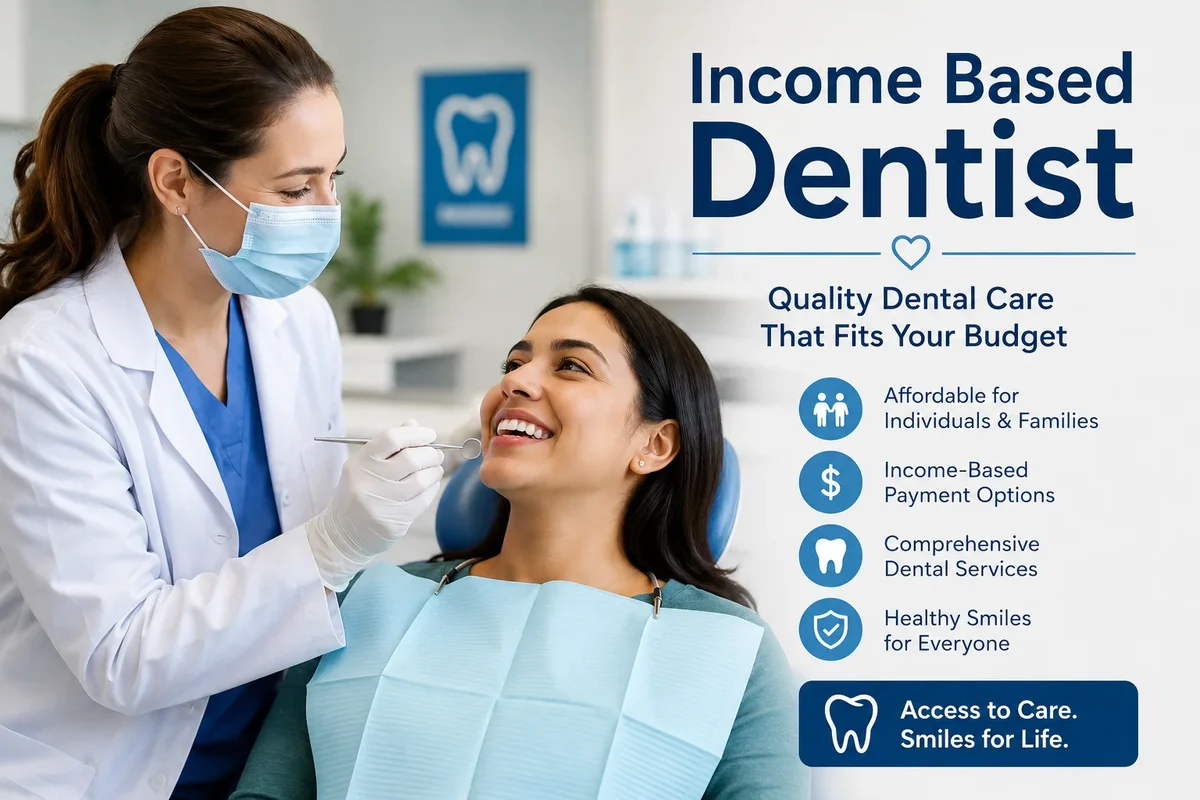
Why Affordable Dental Care Matters for Long-Term Oral Health
Affordable dental care is much more than a financial convenience—it is a critical component of maintaining long-term oral and overall health. Unfortunately, many individuals postpone or completely avoid dental treatment because of cost concerns. When preventive care and routine checkups are delayed, small dental issues can quickly develop into serious conditions that require more extensive and expensive treatment. This is one of the reasons why an income based dentist plays such an important role in modern healthcare.
An income based dentist helps bridge the gap between essential oral healthcare and financial accessibility. By providing affordable treatment options, these programs encourage patients to seek care early, maintain healthy habits, and prevent problems before they become severe. The result is not only healthier teeth and gums but also improved overall well-being and quality of life.
🦷 Understanding the long-term value of affordable dental care can help patients recognize why regular visits to an income based dentist are an investment in both present and future health.
The Connection Between Oral Health and Overall Health
Many people think of dental care as something separate from general healthcare. In reality, oral health is closely linked to the health of the entire body. Problems that begin in the mouth can affect other systems and contribute to broader health concerns.
Research has identified connections between poor oral health and conditions such as:
- Heart disease
- Diabetes complications
- Respiratory infections
- Pregnancy-related complications
- Chronic inflammation
- Nutritional deficiencies
By making preventive care more accessible, an income based dentist helps patients reduce the risk of oral health issues that may contribute to systemic health problems.
Why Prevention Matters
Many serious dental conditions begin as minor concerns. A small cavity may initially cause no discomfort, but without treatment it can grow, damage deeper tooth structures, and eventually require a root canal or extraction.
Regular visits to an income based dentist help detect these issues early when treatment is simpler, less invasive, and more affordable.
The Cost of Delaying Dental Care
One of the biggest challenges in oral healthcare is delayed treatment. Many patients postpone appointments because they worry about costs, only to face larger expenses later.
An income based dentist helps address this issue by providing affordable access to preventive and restorative services before problems become emergencies.
Examples of Delayed Treatment Consequences
- Untreated cavities becoming severe infections
- Early gum disease progressing to tooth loss
- Minor cracks developing into broken teeth
- Simple fillings turning into costly crown procedures
- Dental pain leading to emergency treatment needs
Affordable care through an income based dentist encourages patients to seek help sooner, often reducing both discomfort and long-term treatment costs.
The Role of Preventive Dentistry in Long-Term Health
Preventive dentistry forms the foundation of long-term oral wellness. Most income based dentist programs place a strong emphasis on prevention because it offers the greatest health benefits at the lowest overall cost.
Common Preventive Services
- Routine dental examinations
- Professional cleanings
- Digital X-rays
- Fluoride treatments
- Dental sealants
- Oral hygiene education
These services help patients maintain healthy teeth and gums while minimizing the risk of future complications.
An income based dentist often encourages regular checkups because preventive care is one of the most effective ways to preserve oral health throughout life.
Benefits for Children and Adolescents
Affordable dental care is especially important during childhood. Early dental experiences influence lifelong oral health habits and attitudes toward healthcare.
Children who receive regular treatment from an income based dentist are more likely to:
- Develop proper brushing habits
- Receive cavity prevention treatments
- Maintain healthier teeth into adulthood
- Experience fewer dental emergencies
- Build positive attitudes toward dental care
These benefits can continue throughout life, reducing future treatment needs and healthcare expenses.
Supporting Adults Through Every Stage of Life
Adults face unique oral health challenges, including gum disease, tooth wear, stress-related dental issues, and age-related changes. An income based dentist helps ensure that cost does not become a barrier to maintaining oral health throughout adulthood.
Common Adult Dental Concerns
- Cavities
- Periodontal disease
- Tooth sensitivity
- Broken restorations
- Missing teeth
- Oral infections
Consistent access to an income based dentist allows adults to address these concerns early and preserve their natural teeth whenever possible.
Affordable Care Improves Quality of Life
Healthy teeth contribute to much more than physical health. Oral health affects daily comfort, social confidence, communication, and emotional well-being.
Patients who receive care through an income based dentist often experience improvements in:
- Eating ability
- Speech clarity
- Self-confidence
- Professional appearance
- Social interactions
- Overall comfort
Affordable treatment can dramatically improve quality of life by helping patients maintain healthy, functional smiles.
The Community Impact of Affordable Dental Care
The benefits of an income based dentist extend beyond individual patients. Communities also benefit when more residents have access to preventive and restorative dental care.
Community-Level Benefits
- Reduced emergency room visits for dental pain
- Lower rates of untreated dental disease
- Improved workforce productivity
- Healthier school-age children
- Greater public health awareness
By increasing access to treatment, an income based dentist contributes to healthier communities and stronger healthcare outcomes overall.
Long-Term Financial Benefits of Affordable Care
Many patients focus only on the immediate cost of treatment. However, preventive care often leads to significant long-term savings.
For example:
- A routine cleaning costs far less than treating advanced gum disease.
- A simple filling is less expensive than a crown or root canal.
- Regular examinations help prevent emergency dental visits.
An income based dentist helps patients access these cost-saving opportunities by making preventive care affordable and accessible.
Why an Income Based Dentist Supports Long-Term Wellness
The value of an income based dentist goes far beyond reduced fees. These programs help patients establish consistent oral healthcare routines that support lifelong wellness.
Affordable care encourages:
- Regular dental visits
- Early diagnosis
- Preventive treatment
- Improved oral hygiene habits
- Better treatment outcomes
- Reduced healthcare costs over time
As a result, patients are better positioned to maintain healthy smiles throughout their lives.
Final Thoughts on Affordable Dental Care and Oral Health
Affordable dental care is a fundamental part of maintaining long-term oral health and overall well-being. Without access to preventive services and timely treatment, many patients face avoidable pain, infection, tooth loss, and expensive dental procedures. An income based dentist helps eliminate these barriers by providing accessible and affordable care tailored to individual financial circumstances.
😊 Whether you are seeking preventive care, restorative treatment, emergency services, or ongoing oral health support, an income based dentist can help you protect your smile for years to come. By prioritizing affordability and accessibility, an income based dentist empowers patients to take control of their oral health, improve their quality of life, and enjoy the long-term benefits of consistent dental care.