
Many people complete their orthodontic journey with traditional metal braces, only to realize later that their teeth have slightly shifted or they want an even more refined smile. This is where Invisalign after braces comes in — a modern, comfortable, and almost invisible solution for perfecting alignment without the hassle of wires and brackets. 🦷✨
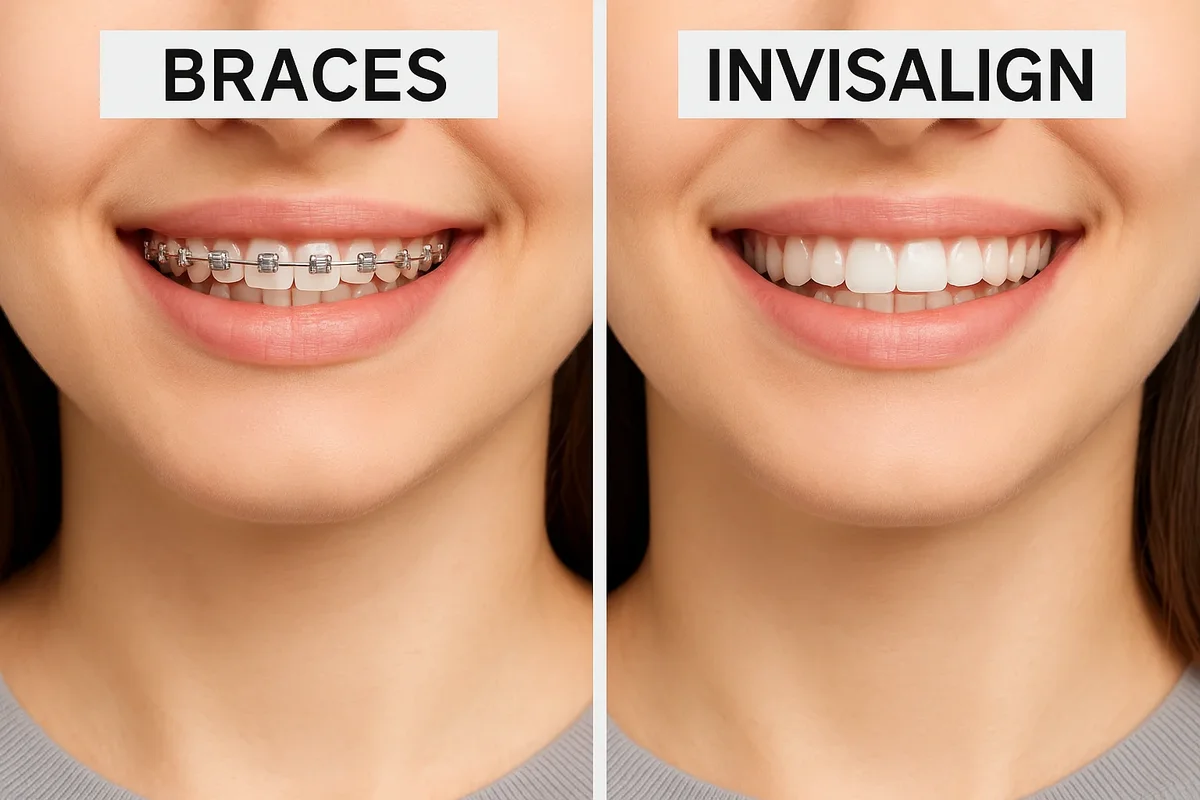
Invisalign is an advanced system that uses a series of clear, removable aligners custom-made for your teeth. Unlike traditional braces, which use metal wires to pull teeth into position, Invisalign applies gentle pressure through precisely designed trays that gradually move your teeth over time. The result? A perfectly aligned smile — and a process that’s both discreet and convenient. 😁
Many patients wonder why they might need Invisalign after braces if they’ve already completed orthodontic treatment. The answer is simple: even after braces, teeth can shift slightly due to natural movement, aging, or not wearing retainers as prescribed. Invisalign helps re-align those small imperfections and maintain the results you worked so hard to achieve. This treatment acts like a fine-tuning mechanism for your smile. 🔍
Whether you had braces during your teenage years or adulthood, using Invisalign after braces offers numerous benefits. It’s comfortable, easy to maintain, and, most importantly, invisible. This makes it ideal for professionals, students, and anyone who prefers a more aesthetic orthodontic option. The aligners are made from BPA-free SmartTrack material, ensuring durability and comfort while being nearly undetectable when worn. 🌟
One of the biggest advantages of Invisalign after braces is that it gives you freedom. You can remove the aligners while eating, drinking, brushing, or flossing — something impossible with traditional braces. This not only enhances oral hygiene but also allows you to enjoy your favorite foods without restrictions. 🍎🥤 Maintaining your dental health becomes easier since you can brush and floss normally, reducing the risk of plaque buildup and gum inflammation that sometimes accompany braces.
Another key benefit lies in precision. Invisalign uses 3D digital imaging to map out your treatment plan from start to finish. This technology shows exactly how your teeth will move at each stage, providing a visual roadmap of your progress. Patients who had braces in the past appreciate this transparency, as they can clearly see the improvements being made to their smile. 📈
When considering Invisalign after braces, it’s essential to understand that the process is not one-size-fits-all. Your dentist or orthodontist will evaluate your current alignment, bite, and gum health before creating a custom plan. In some cases, only minor refinements are needed; in others, more detailed adjustments might be required. However, Invisalign can effectively address mild to moderate alignment issues, crowding, or gaps that remain after braces. 🩺
Patients often ask about the comfort level of using Invisalign after braces. Most find it far gentler than their previous metal braces experience. Since the trays are smooth and molded precisely for your teeth, there are no sharp edges or wires causing irritation. You may feel mild pressure during the first few days of each new aligner set — a sign that the treatment is working — but this discomfort usually subsides quickly. 💫
Additionally, commitment plays a crucial role in achieving the best results with Invisalign after braces. You’ll need to wear your aligners for 20–22 hours per day and switch to a new set approximately every two weeks, as advised by your dental professional. Skipping wear time or delaying tray changes can extend treatment duration. Consistency ensures faster and more predictable outcomes. ⏰
Maintaining communication with your dental provider is vital throughout the process. At Redent Klinik Contact Page, patients can easily schedule follow-up visits and receive expert advice on optimizing their treatment plan. Regular monitoring helps track progress and make necessary adjustments, ensuring a perfect final result. 🏥
It’s also worth noting that the American Dental Association supports clear aligner systems as effective orthodontic tools when properly prescribed by licensed professionals. This adds further credibility and assurance for patients considering Invisalign after braces as a reliable follow-up treatment. 🧑⚕️
Ultimately, Invisalign after braces represents the perfect balance between modern aesthetics and orthodontic precision. It allows patients to refine their smile, improve oral health, and boost confidence — all without the inconvenience of visible hardware. If you’ve completed braces but still crave that flawless finish, Invisalign may be the next step toward achieving your ideal smile. 🌈
In summary, this treatment offers a second chance to enhance your smile’s beauty and functionality in the most discreet way possible. With professional guidance, consistent use, and proper care, Invisalign after braces can help you maintain lasting alignment and ensure your smile stays picture-perfect for years to come. 📸
What Is Invisalign and How Does It Work After Braces?
The concept of Invisalign after braces has become increasingly popular among adults and teens who have completed orthodontic treatment but still desire minor adjustments or improvements to their smile. This modern aligner system provides a seamless, discreet, and comfortable way to correct residual misalignments after braces — without the inconvenience of metal wires and brackets. 😁
Even after completing traditional braces, some patients experience slight shifts in their teeth over time. This may occur due to natural movement, aging, or inconsistent retainer use. Invisalign offers a second opportunity to refine your smile using state-of-the-art digital technology and customized aligners. It’s essentially a finishing touch for your orthodontic journey, helping you maintain or perfect the results achieved earlier. 🦷
How Invisalign Works After Braces
Invisalign uses a series of clear, removable aligners designed through 3D computer imaging technology. Each aligner is custom-fitted to your teeth and gently shifts them into the ideal position over time. When used as Invisalign after braces, the process typically requires fewer aligners since your teeth have already been mostly aligned by previous orthodontic work. However, it’s still essential to follow your dentist’s personalized treatment plan to achieve precise results. 🧭
The aligners are crafted from a patented SmartTrack material — a medical-grade, BPA-free thermoplastic that provides both flexibility and durability. Each set of aligners is worn for about 1–2 weeks before moving to the next one in the series. Over the course of treatment, the gradual pressure applied by the aligners gently guides your teeth into their new positions. Most patients wear Invisalign for 20–22 hours daily to ensure consistent progress. ⏱️
Digital Precision and Treatment Customization
Before starting Invisalign after braces, your dentist takes digital scans or 3D impressions of your teeth using an advanced intraoral scanner. This technology eliminates the need for messy molds and provides a highly accurate map of your mouth. Using these images, the Invisalign software generates a virtual treatment simulation that shows exactly how your teeth will move over time and what your final smile will look like. 📸
This precision planning means there are no surprises during the treatment. The aligners are designed to fit perfectly and deliver controlled, predictable movement. Each stage of the plan corresponds to a new aligner, with small, calculated adjustments that create a smooth and efficient path toward your desired results. This process is what makes Invisalign after braces so appealing — you can visualize your end goal from the start. 🌟
Comfort and Aesthetic Advantages
One of the main reasons patients love Invisalign after braces is its comfort level. Traditional braces involve wires and brackets that can irritate cheeks and gums. Invisalign aligners, on the other hand, are smooth and fit snugly against your teeth. They can be easily removed before meals, which allows you to enjoy any food you like — popcorn, nuts, or sticky candies are no longer off-limits! 🍿
Additionally, because they are nearly invisible, Invisalign aligners are perfect for adults who want a professional appearance while improving their smile. You can smile confidently in meetings, take photos without hesitation, and speak naturally without metal interference. This balance between effectiveness and aesthetics has made Invisalign the preferred choice for post-braces refinement. 💼
The Science Behind Invisalign Movement
Every aligner in the Invisalign after braces system is engineered to apply gentle but consistent pressure on specific teeth. This controlled pressure stimulates bone remodeling — a natural biological process where bone tissue breaks down and reforms around the tooth’s new position. 🧬
As the aligner exerts pressure, osteoclasts (cells that break down bone) create space on one side of the tooth, while osteoblasts (cells that build bone) fill in space on the opposite side. This orchestrated movement is what makes the process safe and effective. Because Invisalign uses precise digital modeling, the pressure applied is evenly distributed, minimizing discomfort while maximizing results. 🔬
Duration and Expectations
When using Invisalign after braces, treatment duration is typically shorter than a full orthodontic cycle. On average, mild corrections can be completed in as little as 3–6 months, while moderate adjustments may take up to 12 months. The timeline depends on factors such as alignment complexity, bite correction needs, and how consistently you wear your aligners. ⏳
Your dentist will schedule regular check-ins — often every 6–8 weeks — to monitor progress and provide new sets of aligners. Many clinics, including Redent Klinik Contact Page, use digital monitoring tools that allow remote tracking of progress for added convenience. These technologies ensure your Invisalign after braces treatment stays on track without requiring frequent in-office visits. 🏥
Benefits Beyond Straight Teeth
Using Invisalign after braces not only improves appearance but also contributes to better oral health. Properly aligned teeth are easier to clean, reducing the risk of gum disease, cavities, and uneven wear. By addressing minor shifts or bite irregularities, Invisalign enhances functionality as much as aesthetics. A well-aligned bite also alleviates strain on jaw muscles and joints, reducing headaches or discomfort caused by misalignment. 💪
Invisalign users also report increased self-confidence, especially when transitioning from braces. The transparency of the aligners helps patients maintain a professional image while refining their smiles. This combination of practicality and beauty embodies the future of orthodontics. ✨
Professional Backing and Reliability
According to the American Dental Association, clear aligner therapy is a proven and effective orthodontic solution when supervised by certified dental professionals. This endorsement underscores the safety and reliability of systems like Invisalign after braces. Patients should always consult a qualified provider to ensure the treatment plan aligns with their dental health needs. 🧑⚕️
In conclusion, Invisalign after braces combines cutting-edge digital design with patient comfort and convenience. Whether your teeth have slightly shifted or you simply desire that picture-perfect smile, Invisalign offers a tailored, transparent, and scientifically backed solution to help you achieve long-lasting results. By working closely with your dental specialist and committing to consistent use, you can enjoy the confidence of a refined, healthy smile that truly reflects your best self. 🌈
Why Choose Invisalign After Traditional Braces Treatment?
After completing orthodontic treatment with metal braces, many patients believe their journey to a perfect smile has ended. However, over time, minor tooth movements can occur, or patients may feel that their teeth could look even better. This is where Invisalign after braces becomes an ideal solution — providing a modern, nearly invisible method to fine-tune and maintain perfect alignment. 🌟
Choosing Invisalign after traditional braces isn’t just about aesthetics; it’s about long-term stability, comfort, and achieving an optimal bite that supports overall oral health. It is also a great opportunity to correct small imperfections without the hassle of restarting traditional orthodontics. 🦷
Understanding the Need for Invisalign After Braces
Even after braces, teeth can shift slightly due to several factors such as aging, loss of bone density, or inconsistent retainer use. These shifts might be subtle but can impact bite alignment and appearance. The Invisalign after braces system helps to restore these subtle changes using transparent aligners that fit your current dental condition perfectly. 🧩
Invisalign aligners apply gentle pressure to guide your teeth back into their ideal positions. They act as a refinement stage, ensuring that every angle, rotation, and spacing issue is corrected to perfection. This makes it possible to maintain the results you achieved with braces and even improve upon them — especially for those whose original orthodontic treatment occurred years ago. ⏳
Key Benefits of Invisalign After Braces
There are several reasons why people choose Invisalign after braces instead of opting for another round of traditional orthodontics. Here are the main advantages:
1. Enhanced Comfort and Convenience
Unlike braces, which rely on brackets and wires, Invisalign aligners are smooth and comfortable to wear. There are no metal parts to irritate your cheeks or gums. You can remove them before eating, brushing, or special occasions — giving you flexibility and control over your treatment. 🧼
2. Discreet Appearance for Everyday Confidence
The aligners are virtually invisible, making Invisalign after braces perfect for professionals, students, or anyone who prefers a natural look. Whether you’re at a job interview, a wedding, or simply taking photos, no one will notice you’re undergoing treatment. This subtlety is one of the most valued aspects of Invisalign among adults. 📸
3. Easier Maintenance and Oral Hygiene
Since Invisalign aligners are removable, maintaining your oral hygiene becomes significantly easier than it was with braces. You can brush and floss normally, reducing plaque buildup and the risk of gum inflammation. This also prevents discoloration and ensures that your smile stays bright throughout treatment. ✨
4. Shorter and More Predictable Treatment Time
Because Invisalign after braces usually focuses on minor corrections, the overall treatment time is shorter. With digital 3D modeling, your orthodontist can create a precise timeline and visualize how your teeth will move at each stage. Many patients complete treatment within 4–9 months, depending on the degree of adjustment needed. ⏱️
Ideal Candidates for Invisalign After Braces
While almost anyone can benefit from Invisalign, it’s particularly effective for individuals who previously had braces and want to address:
- Minor crowding or overlapping teeth
- Slight gaps or spacing issues
- Small rotations or misalignments
- Bite refinements such as overbite, underbite, or crossbite corrections
If your teeth have shifted slightly but you don’t want to wear braces again, Invisalign after braces is an excellent solution. However, if significant misalignment has occurred, your orthodontist may combine Invisalign with other methods to achieve optimal results. 🧠
Invisalign vs. Retainers: What’s the Difference?
Some patients confuse Invisalign aligners with retainers, but the two serve different purposes. Retainers maintain the position of your teeth after treatment, while Invisalign actively moves them into better alignment. Think of Invisalign as a continuation of your orthodontic improvement — a dynamic process rather than a static one. 🔄
Many orthodontists recommend transitioning to Invisalign after braces when retainers alone aren’t sufficient to correct slight tooth movements. Once Invisalign completes the realignment, new retainers are created to preserve the refined results. This approach ensures your smile remains perfectly aligned long term. 🦷
Professional Monitoring and Precision Adjustments
At clinics like Redent Klinik Contact Page, dental professionals closely monitor your progress using digital tracking tools and in-person checkups. Adjustments are made as needed to ensure your treatment stays on schedule. Such personalized care helps guarantee optimal results from your Invisalign after braces journey. 🏥
Why Modern Adults Prefer Invisalign After Braces
Today’s adults want dental solutions that are fast, effective, and visually unobtrusive. Invisalign meets all these demands while being compatible with a busy lifestyle. You can remove the aligners during meals, business meetings, or sports activities without interrupting your progress. This flexibility explains why so many adults who once wore braces now choose Invisalign for refinement. 🧑💼
Furthermore, the system’s digital precision ensures better predictability than ever before. Using AI-assisted modeling, orthodontists can simulate tooth movements and outcomes before treatment even begins. Patients can visualize their future smiles — something traditional braces never offered. 🤖
Expert and Scientific Validation
According to the American Dental Association, clear aligners like Invisalign are clinically proven to effectively correct mild to moderate misalignments when guided by certified professionals. This recognition underscores the safety and reliability of using Invisalign after braces for long-term smile maintenance. 🧑⚕️
In summary, choosing Invisalign after braces means investing in the future of your smile. You’ll benefit from advanced technology, minimal discomfort, and the ability to maintain daily routines without interruption. It’s a smart, aesthetic, and science-backed decision for anyone looking to perfect their smile after braces — one aligner at a time. 🌈
Who Is the Best Candidate for Invisalign After Braces?
Not everyone who has completed orthodontic treatment needs further alignment, but for many individuals, Invisalign after braces offers an excellent opportunity to perfect and maintain their smile. This treatment is especially suitable for those who have experienced minor shifting, uneven spacing, or bite irregularities after braces. Understanding who makes the best candidate ensures the treatment delivers the most effective and lasting results. 🦷
The effectiveness of Invisalign largely depends on the condition of your teeth and your level of commitment. Since these clear aligners rely on consistent daily wear, they’re ideal for motivated patients seeking subtle but significant improvements. Let’s explore the characteristics that define a great candidate for Invisalign after braces. 🌟
1. People Experiencing Teeth Shifting After Braces
Even after successful orthodontic treatment, teeth can slowly shift back toward their original positions if retainers are not worn consistently. This natural movement, called relapse, can occur over months or years. Invisalign after braces is specifically designed to correct these minor post-braces shifts without restarting the full metal-bracket process. 🔄
For instance, if you notice small gaps between your front teeth or overlapping incisors returning, Invisalign can effectively bring them back into alignment. Since it applies gentle, controlled pressure, it’s perfect for patients seeking subtle correction rather than full-scale repositioning. 🪞
2. Adults and Teenagers Seeking Refinement
Adults and older teens are among the most common candidates for Invisalign after braces. Adults often want a professional look while fine-tuning their smile, while teenagers may have finished braces and need a second phase of refinement. Because Invisalign is virtually invisible, both groups appreciate its aesthetic advantage. 😄
Adults also tend to be more disciplined with wearing aligners 20–22 hours per day, which directly impacts treatment success. For teens, Invisalign Teen — a version of the aligners with wear indicators — helps track compliance and ensure steady progress. 📅
3. Patients with Minor to Moderate Alignment Issues
Invisalign after braces is most effective for patients with mild to moderate alignment concerns. These may include slight crowding, gaps, or rotations. If your braces already achieved major structural correction, Invisalign can serve as a precision tool for aesthetic and functional refinements. 🧭
For more complex orthodontic issues, a dentist might combine Invisalign with other treatments like bonding, contouring, or retainers. The key is customization — Invisalign aligners are individually tailored to your teeth, allowing even fine-tuned movement control. 🪄
Common Post-Braces Problems Invisalign Can Fix
- Minor crowding or relapse between front teeth
- Uneven arch symmetry after retainer loss
- Small open bites caused by tongue habits
- Spacing from previous orthodontic extractions
- Minor overbite or underbite issues
Each of these conditions can be effectively managed with Invisalign after braces, resulting in a smoother and more symmetrical smile. 🪩
4. Patients Who Lost or Stopped Wearing Their Retainers
One of the most common reasons people seek Invisalign after braces is losing their retainers or discontinuing their use. Retainers are crucial for maintaining results, but they can be misplaced or damaged over time. Invisalign aligners serve a dual role in such cases — they correct the relapse and function as retainers once treatment concludes. 🧠
After realignment, your dental professional can provide a new set of custom retainers to preserve your refreshed results permanently. Many patients at Redent Klinik Contact Page report improved motivation to maintain their smiles after completing Invisalign, since the convenience and comfort make follow-up retention easier. 🏥
5. Those Looking for a Discreet and Flexible Option
For individuals who want to enhance their smile without drawing attention to their treatment, Invisalign after braces offers unmatched discretion. The transparent aligners blend seamlessly with your teeth, letting you smile confidently during social or professional interactions. 🌐
The removable nature of Invisalign also makes it a favorite among people with busy lifestyles. You can take them out during meals, business presentations, or special occasions, making it one of the most adaptable orthodontic systems available. 🍽️
Why Compliance Matters
To achieve the expected results, aligners must be worn consistently. Patients who are self-disciplined and proactive about oral care make the best candidates for Invisalign after braces. Those who follow instructions, attend checkups, and clean their aligners daily are likely to see excellent results in a shorter timeframe. ⏰
6. People Concerned About Oral Health and Comfort
Metal braces, while effective, can sometimes cause irritation, gum inflammation, or difficulty cleaning between teeth. Invisalign after braces eliminates these challenges. The aligners are smooth, custom-fit, and remove easily for brushing and flossing. As a result, your gums remain healthy, and your enamel stays cleaner throughout the treatment. 🧼
Additionally, since Invisalign trays are made from SmartTrack material — a patented, BPA-free plastic — they are biocompatible and comfortable to wear for extended hours. The absence of sharp metal edges makes this method ideal for patients with sensitive mouths or gum tissues. 💫
7. The Importance of Professional Evaluation
Before starting Invisalign after braces, a professional assessment by an orthodontist or experienced dentist is essential. They will analyze your bite alignment, dental health, and previous orthodontic history to determine your suitability. In some cases, they may recommend scanning your current dental structure to create a precise digital model of your mouth. 📊
Trusted institutions such as the American Dental Association emphasize that orthodontic treatments, including Invisalign, should always be supervised by certified dental professionals. Proper evaluation ensures safety, accuracy, and optimal results for every patient. 🧑⚕️
8. When Invisalign Might Not Be Ideal
While Invisalign after braces is versatile, it may not suit everyone. Patients with severe bite discrepancies, large gaps, or dental implants may require other corrective solutions. Additionally, those who struggle to commit to wearing aligners regularly might achieve better results with fixed retainers or hybrid treatments. 🚫
9. Conclusion: Is Invisalign Right for You?
If you’ve completed orthodontic treatment but desire enhanced precision, Invisalign offers a gentle and aesthetic path to perfection. By addressing post-braces shifts and improving symmetry, Invisalign after braces ensures your smile remains aligned and beautiful for years to come. 🌈
Consulting with a qualified provider like Redent Klinik Contact Page can help you discover whether you’re the ideal candidate and guide you toward a confident, lasting smile. With consistency, expert guidance, and a touch of modern innovation, Invisalign could be the final step toward the smile of your dreams. 💖
Step-by-Step Process: Getting Invisalign After Braces
Beginning the journey of Invisalign after braces is a strategic and personalized process that combines advanced dental technology with professional guidance to ensure optimal alignment and comfort. While many patients think of Invisalign as a simple set of transparent trays, the truth is that it involves multiple carefully planned stages. Each step builds upon the previous one to achieve a beautifully refined smile. 🦷
Understanding what happens at each stage helps patients stay informed and confident throughout their treatment. Below, you’ll find a detailed breakdown of how Invisalign after braces works — from the initial consultation to the moment you achieve your final results. 🌟
1. Initial Consultation and Dental Assessment
The first step of any Invisalign after braces journey begins with a comprehensive dental evaluation. Your orthodontist or dentist will examine your teeth, bite, and overall oral health to determine whether you’re a suitable candidate for the treatment. This includes assessing any post-braces relapse, such as shifting, spacing, or crowding. 🧠
During this appointment, your dental provider may also review your orthodontic history and discuss your goals. If you’ve previously worn braces, they’ll evaluate how much your teeth have moved since your last treatment. In some cases, X-rays and digital scans are taken to provide a complete picture of your oral structure. 🖥️
What to Expect During the Evaluation
- Examination of teeth alignment and bite position
- Digital impressions or 3D scans using an intraoral scanner
- Evaluation of gum health and bone support
- Discussion of treatment goals and potential outcomes
This step ensures that the Invisalign after braces plan is safe, efficient, and tailored to your individual dental needs. Clinics like Redent Klinik Contact Page emphasize detailed evaluations before starting, allowing patients to understand the entire process before committing. 🏥
2. Digital Scanning and Treatment Planning
After your eligibility is confirmed, the next phase involves capturing precise digital images of your teeth using advanced scanning technology. These high-resolution 3D models are sent to Invisalign’s design software, where a digital roadmap of your treatment is created. 📊
This simulation outlines every stage of your tooth movement, showing exactly how your smile will change week by week. The visual representation allows both you and your dentist to see your expected final result before treatment even begins. This transparency makes Invisalign after braces a highly predictable and motivating process. 🌈
Customized Treatment Plan
Every Invisalign case is different. Some patients may need only minor corrections lasting a few months, while others may require longer treatment. Your dentist will determine the number of aligner sets needed, the frequency of changes, and whether additional attachments or interproximal reduction (IPR) are required. 📅
Attachments are small tooth-colored bumps that help the aligners apply more targeted pressure for complex movements. They are discreet, temporary, and essential for achieving accurate alignment in certain cases. 🧩
3. Fabrication of Custom Aligners
Once your treatment plan is finalized, Invisalign’s laboratory fabricates a series of clear aligners using medical-grade SmartTrack material. Each aligner is custom-molded to fit your teeth precisely, ensuring optimal comfort and efficiency. 🪄
The number of aligners varies depending on your case. Typically, patients undergoing Invisalign after braces may receive between 10 and 20 trays, with each tray representing a new phase in your tooth movement. The aligners are shipped directly to your dentist’s office, where you’ll receive your first set along with detailed instructions. 📦
4. Wearing and Caring for Aligners
After receiving your first set, you’ll need to wear them for 20–22 hours daily, removing them only for eating, drinking, and oral hygiene. Consistency is crucial — wearing them less can slow progress or alter the planned results. ⏱️
Essential Care Tips
- Clean aligners daily using a soft brush and lukewarm water (avoid hot water).
- Store them in their protective case when not in use.
- Brush and floss after meals before reinserting aligners to maintain hygiene.
- Follow your dentist’s schedule for changing aligners (usually every 1–2 weeks).
Proper care ensures that your Invisalign after braces trays remain clear, odor-free, and effective throughout your treatment. 🧼
5. Regular Checkups and Progress Monitoring
Throughout your Invisalign journey, you’ll attend regular checkups — typically every 6–8 weeks — to ensure that everything is progressing as planned. Your dentist will monitor your progress, make adjustments if necessary, and provide new sets of aligners. 🩺
Some modern clinics use remote monitoring tools, allowing patients to upload photos or scans of their teeth between visits. This digital follow-up minimizes in-person appointments while maintaining accuracy. Such advancements make Invisalign after braces one of the most convenient orthodontic solutions available today. 💻
6. Completion and Retention Phase
Once the final set of aligners has been worn and your teeth have reached their desired positions, you’ll move to the retention phase. This step is vital — it prevents your teeth from shifting back into their old positions. 🌐
Custom retainers are created, often using the same digital models as your Invisalign trays. These retainers are usually worn at night and help preserve the alignment achieved through your Invisalign after braces treatment. 💤
Why Retention Matters
Without retention, even the most perfectly aligned teeth can slowly drift back. Retainers ensure that the newly positioned teeth are stabilized as bone and tissue adapt. Most orthodontists recommend lifelong nighttime retainer use for maintaining the best results. 🦷
7. Long-Term Benefits and Maintenance
Completing Invisalign after braces provides more than just visual improvement — it strengthens oral health and boosts confidence. Straighter teeth are easier to clean, reducing the risk of cavities, gum disease, and enamel wear. Moreover, correcting bite alignment minimizes stress on the jaw and prevents headaches or TMJ discomfort. 💪
Patients are encouraged to maintain regular dental visits, practice good oral hygiene, and replace retainers as needed. The effort invested during treatment translates into a lifetime of benefits. 🌟
8. Professional Support and Trusted Expertise
Choosing a certified Invisalign provider ensures that each stage of your treatment is carefully monitored for safety and precision. At reputable clinics like Redent Klinik Contact Page, experts use digital diagnostics and patient-specific analysis to tailor every aligner sequence. 🧑⚕️
Additionally, according to the American Dental Association, clear aligner systems such as Invisalign are recognized as effective tools for correcting post-braces alignment when supervised by professionals. Their endorsement guarantees patients that this modern approach meets high standards of safety and clinical success. ✅
9. Final Thoughts: The Path to a Perfect Smile
Embarking on Invisalign after braces is a proactive decision to protect and enhance the smile you worked hard to achieve. The treatment’s step-by-step approach ensures predictable, comfortable, and aesthetic results. Whether you’re refining minor imperfections or addressing small relapses, Invisalign provides a scientifically advanced way to achieve lasting perfection — one clear tray at a time. 🌈
With professional supervision, digital precision, and consistent use, you can expect results that go beyond cosmetic beauty — fostering confidence, health, and satisfaction every time you smile. 😁
Common Mistakes to Avoid When Switching to Invisalign After Braces
While Invisalign after braces offers one of the most effective and discreet ways to refine your smile, achieving the best results requires understanding what to do—and what not to do. Many patients who previously wore braces assume that their experience has prepared them for Invisalign, but there are unique challenges that can affect outcomes. Being aware of the most common mistakes helps ensure a smooth, efficient, and rewarding treatment process. 🦷✨
1. Ignoring the Importance of Consistent Wear
One of the biggest errors patients make with Invisalign after braces is inconsistent aligner use. Unlike traditional braces, which are fixed, Invisalign depends entirely on patient discipline. Aligners should be worn for 20–22 hours per day — only removed during meals or brushing. ⏱️
Failing to meet the daily wear time slows down progress, leading to teeth moving unpredictably. This can cause discomfort and extend your overall treatment timeline. Think of each aligner as a carefully calculated step; skipping wear time is like missing rungs on a ladder — it throws off the entire process. 🚫
Pro Tip:
Use phone alarms or apps to remind yourself to reinsert aligners after eating. The first 48 hours of a new aligner set are critical — wearing them diligently during this period ensures your teeth adapt properly. 💡
2. Skipping Regular Dental Checkups
Although Invisalign requires fewer in-person visits than braces, follow-up appointments remain essential. Some patients mistakenly believe that once they start Invisalign after braces, they can go months without supervision. In reality, dentists monitor progress closely to make adjustments and ensure each tray is working correctly. 🧑⚕️
Skipping checkups can lead to undetected problems such as aligner misfit, gum irritation, or incomplete tooth movement. Regular visits—usually every 6–8 weeks—help maintain proper treatment flow. At clinics like Redent Klinik Contact Page, digital progress tracking also allows remote evaluations to prevent delays. 📅
3. Poor Aligner Hygiene and Maintenance
Another common issue when transitioning to Invisalign after braces is neglecting aligner cleanliness. Because the trays are transparent, even a small buildup of plaque or food residue becomes visible. This not only affects appearance but also promotes bacterial growth, leading to bad breath and potential tooth decay. 🦠
Proper Cleaning Routine:
- Rinse aligners under lukewarm water every time you remove them.
- Use a soft-bristled toothbrush and clear, mild soap to clean them daily.
- Avoid using toothpaste—it can scratch and cloud the plastic.
- Store aligners in their protective case when not in use to prevent contamination.
Maintaining hygiene ensures your Invisalign after braces trays stay invisible, odor-free, and effective throughout your treatment period. 🧼
4. Eating or Drinking with Aligners In
Patients who previously wore braces might recall being able to eat freely with them on. Invisalign, however, requires removal during meals and snacks. Eating with aligners can stain or warp the plastic, reducing their effectiveness. Hot drinks, especially coffee and tea, can also distort the material and cause discoloration. ☕🚫
It’s essential to always remove your aligners before consuming anything other than water. After eating, brush and rinse thoroughly before reinserting them. This habit maintains both your aligners’ transparency and your oral health. 🍎
5. Not Replacing Lost or Damaged Aligners Promptly
Accidents happen — aligners can be lost, broken, or thrown away accidentally. A major mistake patients make during Invisalign after braces treatment is delaying replacement. Since each aligner represents a step in the progression, skipping or postponing one can reverse your progress and cause relapse. 🔄
If an aligner is lost, contact your dentist immediately. In some cases, they may instruct you to move to the next set early or temporarily revert to the previous one. Acting quickly helps keep your treatment on schedule. 🩺
6. Failing to Clean Teeth Before Reinserting Aligners
Unlike braces, Invisalign trays trap any residue left on teeth. Reinserting aligners without brushing after eating can cause food particles to press against enamel for hours, leading to decay, staining, or gum irritation. To prevent this, always brush and floss before placing aligners back in your mouth. 🪥
Developing this hygiene habit not only protects your teeth but also ensures your Invisalign after braces experience remains comfortable and effective. Clean teeth mean clean aligners — and a healthier smile overall. 🌿
7. Not Using Retainers After Invisalign
Completing Invisalign after braces doesn’t mean your teeth are permanently fixed in place. One of the most overlooked steps is the retention phase. Without retainers, your teeth may shift again, undoing months of progress. 🦷
Your dentist will provide custom retainers to wear at night. This keeps your teeth stable while surrounding bone and tissue adapt to their new positions. Long-term success depends on making retainer use a lifelong habit. 💫
Key Reminder:
Even a few weeks without retainers can cause noticeable relapse. If your retainers no longer fit comfortably, contact your dentist right away for a replacement. ⏰
8. Expecting Instant Results
Another frequent misconception about Invisalign after braces is expecting dramatic results within weeks. While Invisalign is faster for minor corrections, it still requires patience. Teeth move gradually to prevent bone damage and maintain stability. On average, post-braces Invisalign treatment takes between 4–12 months, depending on complexity. 📆
Setting realistic expectations ensures you stay motivated throughout the journey. Every aligner contributes to visible progress, and consistency guarantees lasting results. 🌈
9. Overlooking Professional Guidance
Some patients attempt to self-manage their aligners, ordering generic trays online. This is risky and often leads to complications. Professional oversight ensures accurate movement, comfort, and safety. The American Dental Association strongly recommends that all orthodontic treatments, including Invisalign after braces, be conducted under the supervision of licensed professionals. 🧑⚕️
By trusting an experienced clinic like Redent Klinik Contact Page, you’ll receive personalized treatment plans, expert monitoring, and customized retainers — all crucial for long-term success. 🏥
10. Neglecting Post-Treatment Care
Finally, the biggest mistake is thinking your smile will remain perfect without effort. Post-treatment maintenance includes good oral hygiene, wearing retainers, and regular dental visits. Avoid habits that can damage alignment, such as nail-biting or chewing hard objects. With proper care, your Invisalign after braces results can last a lifetime. 🌟
Conclusion: A Mindful Approach to a Lasting Smile
Success with Invisalign after braces depends on responsibility, discipline, and partnership with your dental expert. Avoiding these common mistakes ensures you enjoy the full benefits of this advanced orthodontic system — a confident, healthy, and beautifully aligned smile that endures for years to come. 😁
How Long Does Invisalign Take After Braces?
One of the most frequently asked questions by patients considering Invisalign after braces is: “How long will it take?” While Invisalign is generally faster than traditional orthodontic treatments, the exact duration varies based on individual dental conditions, treatment goals, and consistency of wear. Understanding these factors will help you set realistic expectations and stay motivated throughout your smile refinement journey. ⏳
Typically, Invisalign after braces treatment takes between 3 to 12 months. However, the timeline can differ depending on the complexity of your post-braces adjustments, such as minor shifts or bite irregularities. Let’s explore the details that determine how long your Invisalign treatment may take and what you can do to speed up the process safely. 🦷✨
1. Key Factors That Affect Invisalign Duration
Several variables influence how long Invisalign after braces treatment will take. These include the extent of tooth movement required, patient compliance, bone density, and the use of supportive tools like attachments or elastics. 🧠
a. Degree of Misalignment
If your teeth have only slightly shifted after braces — for example, small rotations or minor crowding — Invisalign may take as little as 3 to 6 months. However, if multiple teeth have moved significantly, you might require 9–12 months to achieve optimal results. Each aligner stage typically moves teeth about 0.25 mm, so more severe shifts need additional trays and time. 🔄
b. Age and Bone Density
Age plays a subtle but important role in determining how long Invisalign after braces takes. Younger patients often experience faster tooth movement because their bone tissue regenerates more rapidly. Adults, on the other hand, may notice slower progress due to denser bone structure. Nonetheless, consistent aligner wear ensures steady results at any age. 🧓👩🦱
c. Aligner Wear Consistency
Since Invisalign relies on patient discipline, wearing aligners for less than 20–22 hours per day can delay progress. Every hour they’re out of your mouth gives your teeth a chance to shift backward slightly. Maintaining proper wear time is crucial for finishing your Invisalign after braces on schedule. 🕒
d. Treatment Complexity and Attachments
Some patients need small tooth-colored attachments bonded to specific teeth. These help aligners apply more targeted pressure, enabling complex movements like rotation or vertical adjustment. While they slightly extend treatment time, they also improve accuracy. 🧩
2. Average Invisalign Timeline After Braces
Although everyone’s treatment is unique, here’s a general overview of what a typical Invisalign after braces timeline looks like:
- 3–6 months: For minor crowding, small gaps, or alignment touch-ups.
- 6–9 months: For moderate spacing or overlapping corrections.
- 9–12 months: For multiple teeth requiring rotation or bite refinement.
In some complex post-braces cases, treatment might last slightly longer, but this is uncommon. Digital scanning and smart aligner sequencing help shorten the overall duration compared to traditional orthodontics. 🌟
3. Step-by-Step Breakdown of Treatment Progress
Initial Stage (Weeks 1–4)
The first few weeks of Invisalign after braces focus on adaptation and small initial movements. Patients may experience mild pressure as teeth begin to adjust to the new aligners. Each aligner is typically worn for 7–14 days, depending on your provider’s instructions. 🔬
Mid Stage (Months 2–6)
During this stage, noticeable improvements become visible. Crowded teeth begin aligning, and bite irregularities start correcting. Regular checkups—usually every 6–8 weeks—allow your dentist to verify progress and make any necessary refinements. 📈
Final Stage (Months 6–12)
By this point, teeth reach their final alignment positions. The last few aligners fine-tune details such as rotation and spacing. Consistency is vital here; skipping wear time can cause delays during this precision phase. 🧭
4. Retention Phase After Invisalign
Once you complete your Invisalign after braces journey, you’ll transition into the retention phase. This is one of the most critical steps to ensure your results last. Retainers, often made of similar transparent material, prevent teeth from drifting back into their previous positions. 💤
Typically, retainers are worn full-time for the first few months, then only at night. Consistent use during this phase is essential for maintaining alignment achieved through Invisalign. Neglecting retainers may cause relapse, undoing months of progress. ⏰
5. Tips to Speed Up Invisalign Results
While you can’t rush biology, there are ways to make your Invisalign after braces treatment more efficient:
- Wear aligners as instructed — ideally 22 hours daily.
- Use acceleration devices such as vibration tools (when recommended).
- Maintain excellent oral hygiene to prevent interruptions due to dental issues.
- Attend all checkups — early detection of misfit trays saves time later.
- Store aligners properly to prevent loss or damage that can delay treatment.
By following these guidelines, many patients complete Invisalign after braces faster than estimated. 💪
6. Why Invisalign Is Often Faster Than Traditional Braces
Invisalign uses advanced digital mapping to plan tooth movements in detail. Each aligner is precision-engineered to shift specific teeth efficiently, often reducing the overall treatment time. Additionally, since there are no broken brackets or emergency adjustments, the process runs more smoothly. 🚀
With traditional braces, unplanned wire adjustments or loose brackets can extend treatment by months. With Invisalign after braces, patients typically experience fewer disruptions and a more predictable timeline. 🧮
7. The Role of Professional Supervision
Choosing a certified provider significantly impacts how long your Invisalign after braces treatment takes. Clinics like Redent Klinik Contact Page use advanced tracking systems to monitor progress and make timely adjustments. This ensures maximum efficiency and accuracy throughout your treatment. 🏥
The American Dental Association also emphasizes that clear aligner therapies should always be conducted under the supervision of licensed dental professionals to maintain safety and effectiveness. 🧑⚕️
8. Setting Realistic Expectations
While Invisalign can deliver results faster than braces, patience is still key. The goal isn’t just speed — it’s achieving a stable, functional, and aesthetic smile that lasts. By wearing aligners consistently and following professional advice, your results can often exceed expectations. 🌈
9. Conclusion: Time Well Spent for a Lifetime Smile
Ultimately, Invisalign after braces offers an efficient, predictable, and patient-friendly approach to fine-tuning your smile. Treatment length depends on factors like misalignment severity and compliance, but the process is designed to be comfortable and rewarding. Whether your treatment lasts three months or a full year, the result — a confident, healthy, and perfectly aligned smile — is well worth the time investment. 😁
Invisalign After Braces Cost and Maintenance Tips
For many people who have already invested in orthodontic treatment, the idea of additional expenses can feel daunting. However, the cost of Invisalign after braces is often much lower than the cost of a full treatment from scratch — primarily because it typically focuses on refinement rather than complete alignment correction. In this section, we’ll examine the detailed cost structure, influencing factors, and practical maintenance tips to help you protect your investment and enjoy lasting results. 💰🦷
1. Understanding the Cost of Invisalign After Braces
The price of Invisalign after braces can vary widely depending on several key factors, including the complexity of your case, geographic location, and your dentist’s expertise. In general, patients can expect to pay anywhere from $1,200 to $4,500 for post-braces Invisalign treatment. This cost includes consultations, digital scans, aligner production, and follow-up visits. 📊
Cost Range Breakdown:
- Minor Adjustments (3–6 months): $1,200 – $2,000
- Moderate Corrections (6–9 months): $2,000 – $3,500
- Comprehensive Refinement (9–12 months): $3,500 – $4,500
Patients who have already undergone braces usually fall into the “minor to moderate” category. Because much of the heavy orthodontic work has already been done, the Invisalign after braces process is often shorter, simpler, and less costly. 🌟
2. Factors That Influence Invisalign Pricing
Several variables determine the total cost of treatment. Understanding these helps you make informed financial decisions before committing. 💡
a. Complexity of Tooth Movement
If your teeth have only shifted slightly since braces, you’ll likely require fewer aligners, which reduces the cost. However, if multiple teeth need rotation, vertical adjustment, or spacing corrections, the price may be higher due to the additional trays and monitoring required. 🧩
b. Geographic Location and Clinic Expertise
Dental treatment costs vary depending on your region. Urban clinics and those with advanced technologies or highly experienced orthodontists tend to charge slightly more. That said, reputable providers like Redent Klinik Contact Page offer detailed consultations and transparent pricing so patients understand every aspect before starting. 🏙️
c. Retainers and Post-Treatment Care
The total cost of Invisalign after braces also includes post-treatment retainers. Custom-made retainers are essential to maintain your new alignment and prevent relapse. The average price for retainers ranges between $200 and $600 per set. Investing in them ensures your hard-earned results last a lifetime. 🔒
3. Financing and Insurance Options
Many dental offices offer flexible payment plans for Invisalign after braces. Monthly installment options help spread costs over several months, making treatment more affordable. Some insurance plans also cover partial costs, especially if the treatment is medically necessary. 💳
Patients should always check with their insurance providers to confirm eligibility. Some plans classify Invisalign as orthodontic care, while others categorize it as cosmetic. Knowing this distinction upfront prevents unexpected out-of-pocket expenses. 🧾
Popular Financing Options Include:
- Zero-interest payment plans through dental clinics
- Healthcare credit cards (CareCredit, Alphaeon)
- Employer-provided health savings accounts (HSA/FSA)
When combined with professional supervision, these options make Invisalign after braces a financially accessible choice for many adults and teens. 🌈
4. Invisalign Maintenance: Protecting Your Investment
Once your aligners arrive, maintaining them properly is essential for both effectiveness and hygiene. Clear aligners require more care than metal braces since they can stain, warp, or harbor bacteria if not cleaned correctly. 🧼
Daily Cleaning Routine
- Rinse aligners under lukewarm water each time you remove them.
- Use clear antibacterial soap and a soft toothbrush to gently scrub them.
- Avoid hot water—it can deform the aligners.
- Soak aligners once daily in an Invisalign cleaning crystal solution or mild retainer cleaner.
Consistency in this routine keeps your Invisalign after braces trays crystal clear, fresh-smelling, and long-lasting. 🫧
5. Tips for Maintaining Oral Health During Treatment
Because Invisalign is removable, it allows you to maintain excellent oral hygiene throughout your treatment. However, it’s easy to get complacent, so here are some reminders to keep your teeth healthy while using Invisalign after braces: 🪥
- Brush and floss after every meal before reinserting aligners.
- Avoid sugary drinks and snacks while wearing aligners.
- Schedule professional cleanings every 4–6 months.
- Use fluoride toothpaste to strengthen enamel.
Failing to clean your teeth properly before wearing aligners can lead to plaque buildup, enamel erosion, and gum irritation. Maintaining a disciplined hygiene routine ensures a healthy, radiant smile that complements your new alignment. 🌿
6. Long-Term Maintenance: Retainers and Checkups
After completing Invisalign after braces, the next critical step is wearing retainers. Retainers prevent your teeth from slowly shifting back to their pre-treatment positions. They’re typically worn nightly for the first 6–12 months, then gradually reduced to several nights per week. 💤
At follow-up visits, your dentist checks for proper alignment and evaluates retainer fit. If retainers become loose or uncomfortable, they may need replacement. Retainer upkeep is the most cost-effective way to preserve your beautiful results for life. 🔁
7. How to Avoid Additional Costs
To avoid unnecessary expenses during or after your Invisalign after braces treatment, follow these practical steps:
- Always store aligners in their case to prevent loss or damage.
- Stick to scheduled checkups to avoid delays or refinements.
- Don’t skip wearing retainers after treatment ends.
- Address tooth sensitivity or discomfort early to prevent complications.
Small precautions save time, money, and effort — ensuring you get the most from your Invisalign experience. 💎
8. Professional Care and Guidance
Working with a qualified provider is the best way to optimize both the cost and success of your Invisalign after braces treatment. Clinics such as Redent Klinik Contact Page provide in-depth consultations, transparent pricing, and expert guidance for maintaining oral health throughout your journey. 🏥
Furthermore, the American Dental Association supports the use of clear aligner therapy under professional supervision, confirming that it is both safe and effective when properly managed. 🧑⚕️
9. Conclusion: Investing Wisely in Your Smile
When evaluating the cost of Invisalign after braces, remember that you’re not just paying for aligners — you’re investing in precision technology, dental expertise, and long-term oral stability. With consistent maintenance and proper professional care, Invisalign offers a reliable, discreet, and cost-effective solution for perfecting your smile. 💖
By balancing affordability with high-quality care, patients can achieve not only beautifully aligned teeth but also confidence that lasts a lifetime. Whether you choose Invisalign for refinement or full correction, your smile will thank you for the investment. 😁
Before and After Results of Invisalign After Braces
The transformative power of Invisalign after braces lies not only in its subtle appearance but also in its ability to perfect smiles that have already undergone orthodontic treatment. Many patients who have worn braces in the past may notice minor misalignments over time, often due to inconsistent retainer use or natural shifting. Invisalign offers a second chance to restore precision alignment — refining what braces started. 🦷✨
In this section, we’ll explore what you can expect before, during, and after treatment. We’ll also examine real-world results, what influences them, and how to maintain your perfect smile long after completing Invisalign after braces. 🌟
1. The “Before” Phase: Recognizing the Need for Refinement
Before starting Invisalign after braces, many patients report noticing subtle but frustrating issues — such as small gaps, overlapping front teeth, or uneven bite pressure. These shifts can develop over months or years, often due to lost or neglected retainers. 👀
Common Pre-Treatment Concerns:
- Minor crowding in lower front teeth
- Uneven midline alignment
- Small gaps reappearing between teeth
- Relapse of bite irregularities
- Rotated canines or incisors
These imperfections may not justify a full orthodontic procedure, but they can affect aesthetics and bite comfort. That’s why many choose Invisalign after braces — to perfect, not repeat, their orthodontic journey. 💫
2. The “During” Phase: Visible Progress and Subtle Refinement
As treatment progresses, patients often experience gradual yet noticeable improvements. With each new set of aligners, teeth shift slightly toward their ideal positions. By the midpoint, many people already see visible alignment changes, especially in the front teeth. 📈
Progress Indicators:
- Reduced crowding or overlapping of teeth
- Improved arch symmetry
- Balanced spacing between teeth
- Enhanced smile curvature (“smile arc”)
Each step of the Invisalign after braces journey is designed for precision. The aligners apply gentle, calculated pressure, ensuring your teeth move predictably and safely. Because they are removable, patients can maintain daily hygiene routines and enjoy meals without restrictions — a major improvement over traditional braces. 🍎
3. The “After” Phase: Achieving Long-Lasting Perfection
After completing Invisalign after braces, the difference is often striking. Smiles appear more even, brighter, and naturally balanced. Patients typically report not only aesthetic improvements but also enhanced bite comfort and easier oral hygiene. 🌈
Post-Treatment Results Include:
- Perfectly aligned front teeth and midline balance
- Smoother bite transitions when chewing
- Improved facial harmony and lip support
- Greater confidence in photos and professional settings
High-resolution before-and-after comparisons often reveal subtle but impactful transformations — the kind that make your smile look naturally flawless rather than artificially altered. 🪞
4. Example Case Studies
To better understand the outcomes of Invisalign after braces, let’s look at real examples of patients who benefited from it:
Case 1: Minor Relapse Correction (6 months)
A 29-year-old patient who completed braces five years earlier noticed her lower teeth crowding again. After six months of Invisalign refinement, her teeth returned to their ideal alignment. She now wears nighttime retainers and maintains a stable, polished smile. 🦷
Case 2: Bite Refinement and Arch Enhancement (9 months)
A 35-year-old patient had braces in adolescence but experienced mild overbite relapse. Through Invisalign after braces, the dentist adjusted her bite and smile arc, achieving improved balance between upper and lower teeth. 🪄
Case 3: Post-Orthodontic Aesthetic Touch-Up (4 months)
A young professional sought minor aesthetic improvement before her wedding. In just four months, Invisalign refined her smile alignment, producing an elegant and confident result — a perfect example of subtle yet powerful transformation. 💍
5. Professional Guidance for Optimal Results
Achieving the best outcome from Invisalign after braces requires a personalized approach guided by experienced dental professionals. Digital 3D scans map tooth positions precisely, allowing dentists to predict and adjust movement at every stage. 🧑⚕️
Institutions like the American Dental Association recommend regular supervision during clear aligner treatment to ensure safety and accuracy. At clinics such as Redent Klinik Contact Page, advanced imaging and treatment tracking software allow for customized adjustments throughout the process. 🏥
6. Retention: The Key to Maintaining Results
Even after successful completion of Invisalign after braces, retention remains crucial. Teeth have a natural tendency to shift back toward their original positions, especially in the first year. To preserve results, patients must wear custom retainers nightly for the prescribed duration. 🌙
Best Practices for Retention:
- Wear retainers full-time for the first 3–6 months, then nightly thereafter.
- Clean retainers daily with a soft brush and mild soap.
- Store retainers in a protective case when not in use.
- Replace them every 1–2 years or as recommended by your dentist.
Retainers are the unsung heroes of Invisalign after braces. Without them, even perfect results can gradually diminish. Regular follow-ups with your provider help ensure your new smile stays exactly as you envisioned it. 💪
7. Lifestyle Benefits of the Final Outcome
After finishing Invisalign after braces, patients report multiple advantages beyond aesthetics. These include improved speech clarity, easier flossing, and less tension in the jaw. Many also experience a boost in confidence, especially during social and professional interactions. 😁
The comfort and cleanliness of removable aligners contribute to long-term dental wellness. When combined with diligent maintenance, Invisalign results can last for decades — offering a lasting return on your investment. 🦷
8. Comparing Before and After Photos
Before-and-after comparisons visually demonstrate the precision and success of Invisalign after braces. Photos reveal smoother alignment, improved bite coordination, and enhanced symmetry. The key difference often lies in refinement — Invisalign perfects what braces initiated, leading to an exceptional final result. 📸
9. Conclusion: A Smile Worth the Journey
The journey through Invisalign after braces represents the finishing touch to your orthodontic story. From subtle corrections to complete smile harmonization, it delivers long-lasting results that feel natural, comfortable, and empowering. Whether you seek to restore alignment or enhance aesthetics, Invisalign ensures your smile reflects both confidence and care. 🌟
With professional guidance from trusted clinics like Redent Klinik Contact Page, you can expect precision, predictability, and a radiant smile that lasts a lifetime. Invisalign doesn’t just fix smiles — it perfects them. 💖
Choosing the Right Dentist for Invisalign After Braces
Selecting the right dental professional for your Invisalign after braces treatment is one of the most critical steps toward achieving a flawless, long-lasting smile. Although Invisalign is a technologically advanced system, its success depends heavily on the skill, precision, and experience of the dentist or orthodontist overseeing your care. 🦷✨
In this section, we’ll explore how to identify the best Invisalign provider, what qualifications to look for, why experience matters, and how to ensure that your treatment is both efficient and safe. Choosing wisely ensures you receive a customized plan that enhances both your smile and oral health. 💎
1. Why Dentist Selection Matters for Invisalign After Braces
Even though Invisalign after braces may seem like a simple refinement process, it still involves complex biomechanical movements. Teeth, gums, and bone structures all respond differently to pressure. A qualified dentist must carefully evaluate your orthodontic history, analyze your current tooth alignment, and plan precise movements to prevent relapse or overcorrection. 🧠
Inexperienced practitioners may overlook subtle details—such as root positioning or bite pressure distribution—that can affect long-term results. An expert provider ensures that your aligners are designed for both aesthetic and functional perfection. 🎯
2. Qualifications to Look for in an Invisalign Provider
When researching professionals for Invisalign after braces, it’s essential to verify credentials. Not every dentist is trained or certified to provide Invisalign treatment. Below are the qualifications you should confirm before starting your journey. 📋
a. Invisalign Certification
Invisalign providers must undergo official certification and continuing education from Align Technology. Certification levels — such as Bronze, Silver, Gold, Platinum, and Diamond — reflect the number of successful Invisalign cases completed. A Platinum or Diamond provider usually has the most experience handling complex post-braces adjustments. 🏆
b. Orthodontic or Cosmetic Dentistry Expertise
While general dentists can administer Invisalign, those with orthodontic specialization or cosmetic dentistry backgrounds bring deeper expertise in bite mechanics and aesthetic harmony. Such specialists can balance both the technical and artistic aspects of your Invisalign after braces treatment. 🎨
c. Professional Affiliations and Continuing Education
Membership in reputable organizations like the American Dental Association or international orthodontic societies demonstrates commitment to up-to-date techniques and ethical standards. Continuous learning ensures your provider uses the latest materials, software, and scanning technologies for best outcomes. 🧑⚕️
3. Questions to Ask Before Starting Treatment
Consultations are your opportunity to evaluate the provider’s expertise and transparency. When meeting with a potential Invisalign dentist, ask questions such as:
- How many Invisalign after braces cases have you successfully completed?
- Can I see before-and-after photos of patients with similar cases?
- Do you use digital scanning technology instead of traditional impressions?
- What is your approach to retention after treatment?
- Are refinements included in the total cost, or charged separately?
These questions help ensure that your dentist can deliver not just visible improvements but also functional, stable, and lasting results. 🦷
4. Technology and Tools That Make a Difference
Modern dental clinics use digital tools that revolutionize how Invisalign after braces is planned and monitored. 3D scanning, digital treatment simulations, and progress-tracking software improve precision while minimizing treatment time. 💻
a. iTero Digital Scanning
This advanced scanner replaces traditional dental molds, offering accurate 3D models of your teeth in minutes. The digital map ensures that every aligner is custom-fitted for maximum comfort and efficiency. 📸
b. ClinCheck Software
ClinCheck, Invisalign’s proprietary planning software, lets both you and your dentist visualize how your teeth will move during treatment. It provides a virtual “before and after” simulation, allowing adjustments before manufacturing begins. 🧩
c. SmartTrack and SmartForce Technology
Certified providers use aligners made from SmartTrack material, which ensures consistent pressure and predictable results. SmartForce attachments can also be placed strategically for complex tooth movements. ⚙️
5. Benefits of Choosing an Experienced Provider
Choosing an experienced professional for your Invisalign after braces ensures that every stage of treatment runs smoothly and efficiently. Expert providers can handle minor complications, accelerate progress with refinements, and optimize aligner wear time. 🕒
Advantages of Experienced Providers:
- Fewer unexpected refinements or delays
- Customized treatment duration estimates
- Advanced knowledge of retention strategies
- Stronger aesthetic and functional results
Additionally, skilled dentists collaborate with labs that produce the highest quality aligners and retainers, ensuring a comfortable fit and a seamless process. 🌟
6. Warning Signs of Inexperienced or Unqualified Providers
While there are many excellent Invisalign practitioners, some offer aligner treatments with minimal oversight. Avoid “DIY” or mail-order systems that promise cheap results without in-person monitoring. These can cause permanent bite problems and even bone loss. ⚠️
Signs to watch for include:
- No initial 3D scan or professional examination
- Vague or unrealistic promises (“perfect smile in weeks!”)
- Lack of transparent pricing or retention plan
- Absence of regular follow-up visits
For the safest and most predictable results, always choose a certified clinic such as Redent Klinik Contact Page, where experienced professionals supervise every phase of your Invisalign after braces journey. 🏥
7. The Role of Communication and Trust
Trust and open communication are key components of a successful dental experience. The best Invisalign providers take time to explain each step, address your concerns, and tailor treatment to your lifestyle. Regular updates and digital progress photos help you stay engaged and motivated. 📲
Many patients find that the relationship they build with their dentist during Invisalign after braces treatment is what makes the entire process smooth, reassuring, and enjoyable. 💬
8. Post-Treatment Follow-Up and Retainer Care
An excellent Invisalign provider doesn’t disappear once your aligners are done. They guide you through the retention phase — helping you select the right retainer, schedule follow-ups, and ensure your smile remains perfect for life. 💤
Retention is the final, crucial step of Invisalign after braces. Regular checkups, typically every 6–12 months, allow your provider to monitor long-term stability and make quick adjustments if needed. 🔄
9. Choosing Confidence and Quality Over Cost
While it may be tempting to choose the cheapest option, remember that Invisalign after braces is a specialized medical treatment — not just a cosmetic enhancement. Prioritize expertise and precision over discounts. Inexperienced providers can lead to costly corrections later on. 💰
10. Conclusion: The Right Dentist Makes All the Difference
In the end, your Invisalign after braces experience will only be as good as the professional guiding it. By choosing a certified, experienced, and transparent provider, you’re ensuring that your smile is not only straight but also healthy, balanced, and built to last. 🌈
Clinics like Redent Klinik Contact Page combine advanced technology with patient-centered care, offering a trusted path to refinement and confidence. When it comes to perfecting your post-braces smile, the right dentist isn’t just a choice — it’s your foundation for lifelong results. 💖