
For anyone wondering if Invisalign better than braces, the answer depends on your dental goals, lifestyle, and expectations — but modern orthodontic research clearly shows that Invisalign has revolutionized how people achieve straight, confident smiles. In 2025, Invisalign technology has advanced far beyond its early years, offering faster, more comfortable, and nearly invisible teeth alignment options. This comprehensive guide explores every aspect of why Invisalign is increasingly seen as a superior alternative to metal braces. 🦷✨
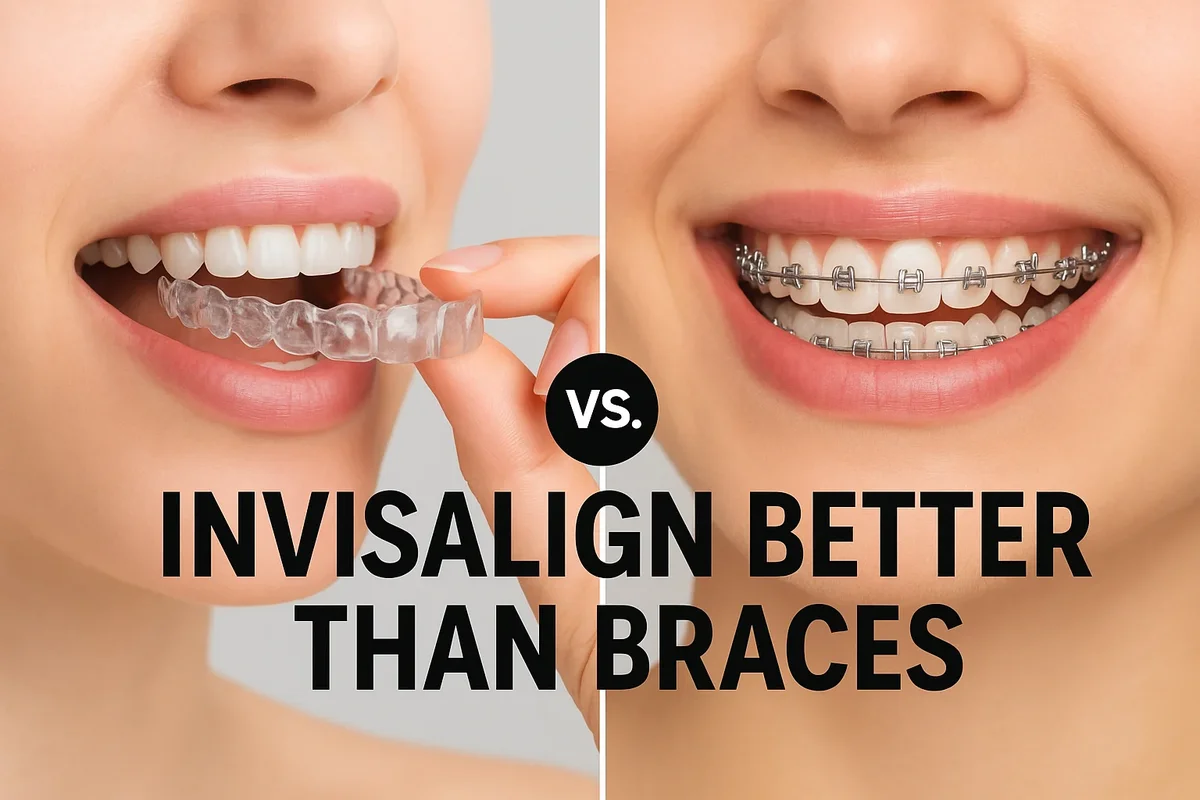
Traditional braces have been around for decades, relying on metal brackets and wires to reposition teeth over time. Invisalign, on the other hand, uses clear aligner trays custom-made to fit your mouth perfectly. These aligners gradually move your teeth into ideal alignment while maintaining your natural appearance. Unlike braces, Invisalign trays are removable, allowing users to eat freely and maintain excellent oral hygiene. For many adults and teens, that freedom is a game-changer — and one of the top reasons they ask: Is Invisalign better than braces? The short answer is yes, especially for those seeking aesthetics and comfort. 😎
What makes Invisalign better than braces is not just its invisibility but its intelligent design. Each aligner is digitally planned using 3D imaging to predict and control tooth movement with precision. That means fewer dental visits and faster results. By 2025, new SmartTrack material and AI-assisted mapping technologies have made aligners even more efficient and comfortable. Patients can now see digital simulations of their final smiles before treatment even begins — a psychological motivator that traditional braces simply can’t match. 💡
Comfort plays another massive role in why many patients consider Invisalign better than braces. Metal braces often cause irritation, sores, and tight adjustments that can lead to discomfort or difficulty speaking. Invisalign’s smooth plastic aligners eliminate those issues. You can remove them when eating or brushing, and since there are no brackets or wires, there’s no risk of food getting stuck or enamel damage. For professionals or people in public-facing jobs, this discretion is invaluable. No one even notices you’re wearing them! 👩💼
From a hygiene perspective, Invisalign dominates. Because users can take out their aligners, they can brush and floss normally, reducing the risk of plaque buildup, cavities, and gum irritation. In contrast, metal braces make cleaning a challenge — even minor neglect can lead to white spots or decay. The removable nature of Invisalign is one of its most practical advantages, especially for teens who struggle with consistency in oral care routines.
When comparing treatment times, technological advancements have made Invisalign better than braces in many cases. On average, Invisalign treatments can achieve results in as little as 6–18 months, while braces often take 18–36 months depending on complexity. Aligners apply continuous, gentle pressure, which helps move teeth more efficiently. Moreover, digital monitoring apps now allow patients to share progress scans with their dentist remotely — reducing unnecessary in-office visits. 🕒
Cost-wise, the gap between Invisalign and braces has significantly narrowed. Years ago, Invisalign was considered a premium option, but widespread adoption and improved manufacturing have balanced the costs. In most regions, Invisalign treatments range from $3,000 to $6,000, while braces cost between $2,500 and $6,500 depending on duration and complexity. Considering time saved, comfort, and aesthetics, Invisalign provides better long-term value for most adults. If you’d like a professional evaluation tailored to your specific case, you can visit the Redent Klinik Contact Page to connect with dental experts who specialize in clear aligner treatments.
Beyond practicality, Invisalign also boosts self-confidence. Patients who used to feel shy about smiling during treatment now express satisfaction and comfort wearing clear aligners in social or professional situations. The psychological impact of being able to smile without metal brackets cannot be underestimated. According to the American Dental Association, patient satisfaction rates for clear aligners have consistently risen in the past decade, especially among adults who want subtle yet effective orthodontic correction.
Some skeptics still believe braces are better for complex alignment cases — and while that was true in the past, new innovations like SmartForce attachments and precision cuts now allow Invisalign to handle even severe crowding or bite issues. Orthodontists can now design hybrid treatment plans combining clear aligners with limited braces use for highly complex cases, further proving that Invisalign’s flexibility makes it a top-tier solution. ⚙️
In summary, when comparing Invisalign better than braces, consider the full picture: comfort, hygiene, aesthetics, treatment time, and overall experience. For most adults and teens, Invisalign offers an unparalleled blend of technology, discretion, and convenience that traditional braces simply can’t match. As we move further into 2025, Invisalign continues to redefine the standard for modern orthodontics — giving you every reason to smile brighter and live more confidently. 😄
How Invisalign Works Compared to Traditional Braces
To understand why many experts and patients believe Invisalign better than braces, it’s essential to examine how each system works at a technical and functional level. Both treatments aim to straighten teeth and correct bite issues, but they use entirely different methods, materials, and technologies. The mechanics behind Invisalign rely on digital precision and patient-friendly design, while braces depend on manual adjustments and metal components. This section provides a deep dive into how these systems function, their biological effects, and why Invisalign continues to lead the future of orthodontic care in 2025. 🦷
The Mechanism Behind Invisalign Technology
Invisalign aligners are custom-fabricated using advanced 3D imaging technology. Your dentist or orthodontist takes a digital scan of your teeth and uploads it into proprietary software that simulates tooth movement from start to finish. Every few weeks, you receive a new set of aligners that gradually shift your teeth into optimal alignment. Each tray applies gentle, controlled pressure to specific teeth, leading to steady progress without the discomfort associated with wire tightening.
What makes Invisalign better than braces is its precision. The system uses SmartTrack material—a patented, flexible polymer designed to fit snugly over the teeth while exerting consistent force. This allows for predictable movement and faster alignment compared to metal braces, which often rely on manual tightening and can cause uneven force distribution. In 2025, AI-enhanced algorithms now assist dentists in predicting movement patterns and optimizing aligner design, resulting in shorter treatment times and better outcomes. 🤖
How Traditional Braces Function
Traditional braces consist of metal brackets bonded to each tooth and connected by wires and elastic bands. The orthodontist adjusts the tension periodically to move the teeth. While effective, this process can be uncomfortable and requires frequent in-office visits. The pressure can sometimes irritate gums and inner cheeks, and maintaining oral hygiene becomes more difficult due to the fixed metal components.
Despite being a tried-and-true method, braces are highly visible, which can impact self-esteem. The constant presence of metal brackets makes eating, brushing, and flossing more complicated. In contrast, Invisalign aligners are removable and nearly invisible, enabling wearers to maintain their natural look and oral care routine with ease. This major convenience is one of the strongest reasons people today consider Invisalign better than braces.
Step-by-Step Comparison
1. Digital Planning vs. Manual Adjustments
Invisalign relies on digital precision. Each aligner is part of a carefully engineered sequence based on 3D scans. The treatment plan is pre-mapped and doesn’t depend on guesswork. Traditional braces, however, depend heavily on the orthodontist’s manual skills to bend and adjust wires over time. This often leads to more variability in results and increased discomfort during adjustments.
2. Comfort and Daily Experience
Metal brackets can cause pain and sores, especially in the early stages of treatment. Invisalign aligners are smooth, plastic, and custom-fitted, eliminating irritation. Users report feeling less pain and enjoying a more comfortable journey to a perfect smile. This comfort factor plays a major role in why professionals and adults prefer Invisalign for aesthetic and practical reasons. 🌟
3. Hygiene and Maintenance
Braces are notoriously hard to clean. Food easily gets stuck between wires and brackets, increasing the risk of plaque buildup and cavities. Invisalign, being removable, allows normal brushing and flossing routines. Simply remove the trays, clean your teeth, and reinsert them. The simplicity of maintaining good hygiene is another reason experts consider Invisalign better than braces from a long-term oral health perspective.
4. Visibility and Confidence
For many patients, especially adults in professional settings, discretion matters. Invisalign aligners are almost invisible, making them ideal for people who wish to straighten their teeth without attracting attention. Braces, on the other hand, are visually obvious and can make some individuals self-conscious during meetings, dates, or social events. The invisible aesthetic advantage of Invisalign gives users the freedom to smile confidently throughout treatment. 😁
Technological Advancements and Modern Dentistry
Since its introduction, Invisalign has evolved dramatically. Modern versions now include SmartForce attachments — small, tooth-colored anchors that increase control over complex movements such as rotations or vertical shifts. Combined with 3D-printed precision and digital progress tracking, these features make Invisalign suitable for nearly all orthodontic cases once exclusive to braces.
Another reason why Invisalign better than braces today lies in its integration with virtual checkups. Patients can use apps to send progress photos to their orthodontist, reducing in-office visits. This digital approach fits seamlessly into modern lifestyles, where convenience and remote care are increasingly valued. Braces, however, require monthly adjustments and in-person supervision, which can be time-consuming for busy adults and students.
Biological Efficiency and Tooth Movement
From a biological standpoint, both systems work by applying pressure to the periodontal ligament, stimulating bone remodeling. However, Invisalign’s constant, gentle force is considered more biologically efficient and less traumatic to tissues. Sudden, forceful adjustments in braces may lead to discomfort or longer recovery times. The smooth, continuous movement achieved by Invisalign helps minimize inflammation while maintaining steady progress.
Clinical Evidence Supporting Invisalign
Studies published by the American Dental Association and international orthodontic journals consistently report improved patient satisfaction, comfort, and hygiene compliance with clear aligners. While braces may still be required for certain severe skeletal cases, Invisalign has proven equally effective for mild to moderate misalignments, crowding, and spacing. In addition, the rate of relapse (teeth shifting back after treatment) is lower in patients who maintain their aligner retainers properly.
For personalized guidance or to explore whether Invisalign suits your smile goals, you can reach the dental experts at Redent Klinik Contact Page. They provide digital scans, simulations, and professional assessments based on the latest aligner technologies.
Conclusion: The Clear Winner in 2025
When comparing Invisalign better than braces in terms of technology, comfort, hygiene, and aesthetics, the conclusion is clear — Invisalign leads the way. The digital precision, minimal discomfort, and modern convenience of removable aligners have transformed orthodontics into a more accessible and patient-centered field. Whether you’re a teenager seeking a confident smile or an adult looking for a discreet correction, Invisalign delivers results that are not only faster but also far more comfortable and lifestyle-friendly. 🌍
Top Reasons Why Invisalign Is Better Than Braces for Adults
When it comes to adult orthodontic treatment, many people are asking a critical question: is Invisalign better than braces for achieving a straighter, healthier smile? For most adults in 2025, the answer leans strongly toward Invisalign — thanks to its comfort, aesthetic appeal, and flexibility. Adults lead busy lives filled with work, family, and social commitments, and few want to deal with the discomfort and visibility of traditional braces. Invisalign offers a discreet, modern solution that aligns perfectly with professional and personal lifestyles. 😁
1. Aesthetic Appeal and Discretion
One of the main reasons adults consider Invisalign better than braces is its nearly invisible appearance. The aligners are made from transparent SmartTrack material, blending seamlessly with your natural teeth. Unlike metal braces that can make adults self-conscious during presentations or meetings, Invisalign allows you to smile, talk, and laugh confidently. This visual subtlety makes it ideal for professionals, teachers, healthcare workers, and anyone who interacts publicly. 💼
Traditional braces, by contrast, are immediately noticeable and often associated with adolescence. Many adults find it awkward to wear visible metal brackets in their 30s or 40s. Invisalign eliminates that concern entirely, giving you the confidence to pursue treatment without worrying about your appearance. It’s orthodontics redesigned for modern adulthood.
2. Comfort and Reduced Irritation
Another strong factor that makes Invisalign better than braces is comfort. Braces rely on metal brackets and wires that can irritate the inner cheeks, lips, and gums. Invisalign aligners are made from smooth plastic, customized for your unique dental structure. No wires, no tightening appointments, and no painful abrasions — just gentle, consistent pressure guiding your teeth into position.
Adults who have previously worn braces in their youth often note a dramatic difference. They describe Invisalign as lighter, smoother, and far less invasive. Because the aligners are removable, there’s no risk of sharp edges or broken wires causing discomfort during meals or sleep. 😴
3. Time Efficiency and Fewer Dental Visits
Busy adults appreciate that Invisalign requires significantly fewer dental appointments than braces. Once your aligners are fabricated, your progress is largely self-managed, with visits every 6–10 weeks for progress tracking instead of monthly wire adjustments. Many modern dental clinics even use remote monitoring apps that allow patients to upload smile progress photos. AI-powered software analyzes these images, allowing dentists to assess progress without requiring in-person visits.
This convenience saves countless hours, especially for professionals or parents balancing multiple responsibilities. From this perspective, it’s easy to see why patients agree that Invisalign better than braces when it comes to time management and modern flexibility.
4. Maintain a Professional Image
For adults in client-facing or corporate roles, Invisalign’s invisibility is a massive advantage. You can attend job interviews, business meetings, or social gatherings without anyone realizing you’re undergoing orthodontic treatment. In a world where image and first impressions matter, this subtlety gives Invisalign a major edge. 🌟
5. Freedom to Eat What You Love
Unlike braces, which restrict hard, sticky, or chewy foods, Invisalign aligners are fully removable. That means you can enjoy apples, nuts, steak, or popcorn without fear of breaking brackets or damaging wires. Simply remove your aligners before eating, rinse them afterward, and reinsert them. This level of freedom is one of the main reasons adults find Invisalign better than braces in day-to-day life.
Maintaining Oral Hygiene with Ease
Because Invisalign trays can be removed, brushing and flossing remain straightforward. No need for special tools or floss threaders. Just brush, floss, and clean your aligners with warm water. This simplicity helps adults maintain long-term oral health and fresh breath, which can sometimes suffer with metal braces due to trapped food particles. 🪥
6. Predictable and Customized Results
Invisalign uses 3D scanning and AI-based modeling to create a digital “roadmap” of your treatment from start to finish. You can preview how your smile will look before even starting. Traditional braces lack this visualization power. This transparency builds confidence and trust between patient and dentist, reinforcing why so many people say Invisalign better than braces for personalized care.
SmartTrack and SmartForce Technologies
These proprietary technologies ensure each aligner exerts controlled, consistent force for precise movement. Attachments (tiny, tooth-colored bumps) may be added to guide more complex movements like rotations or bite corrections. These innovations enable Invisalign to handle cases that once required traditional braces, making it a truly modern orthodontic solution.
7. Boosted Confidence and Emotional Benefits
For adults, self-esteem plays a significant role in treatment choice. Braces can sometimes make wearers feel self-conscious, especially in social or romantic settings. Invisalign aligners, being invisible, remove that psychological barrier. Many adults report improved confidence, communication, and overall quality of life during treatment. They can smile freely without hesitation or embarrassment. 😊
8. Health Benefits Beyond Straight Teeth
Properly aligned teeth reduce stress on jaw joints and make oral hygiene easier. By correcting crowding, Invisalign lowers the risk of gum disease and decay. Its precise movement also contributes to better bite alignment, reducing issues like bruxism (teeth grinding). Compared to braces, Invisalign’s design supports both cosmetic and functional dental improvements.
9. Cost vs. Value for Adults
Although the initial price of Invisalign may seem slightly higher in some clinics, the long-term benefits — fewer visits, no emergency repairs, and superior hygiene — often make it more cost-effective. Average adult Invisalign treatments range from $3,000 to $6,500, while braces range from $2,500 to $6,000 depending on complexity. The added convenience and confidence make the investment worthwhile. To explore personalized pricing and eligibility, adults can schedule a consultation through the Redent Klinik Contact Page.
Conclusion: A Smarter Choice for the Modern Adult
Ultimately, adults today seek dental solutions that are effective, aesthetic, and aligned with their lifestyle. From comfort and convenience to digital precision and invisibility, Invisalign better than braces in nearly every category for adult orthodontic care. It represents the evolution of dentistry — a fusion of technology, comfort, and confidence that empowers adults to achieve a perfect smile without compromise. 🌍
For those still undecided, consulting with a qualified dentist or visiting the American Dental Association for treatment guidelines can offer reassurance and scientific validation. One thing remains certain: Invisalign has redefined what it means to straighten teeth as an adult — proving that innovation, when combined with comfort and confidence, always wins. 🦷
Comfort and Aesthetics: The Clear Winner Between Invisalign and Braces
When comparing orthodontic options, two key factors dominate most patients’ decisions: comfort and appearance. In both areas, it’s evident that Invisalign better than braces for those who prioritize a seamless, confident smile transformation. Modern patients want treatments that fit effortlessly into their lives — without pain, embarrassment, or visible metal components. This section dives deeply into how Invisalign outperforms braces in these categories, blending science, design, and user experience. 😁
1. The Evolution of Comfort in Orthodontics
Traditional braces, with their wires and brackets, have long been effective but uncomfortable. They rely on periodic tightening, which can cause soreness and tension in teeth and gums. Sharp edges can irritate soft tissues, leading to ulcers and inflammation. Invisalign, however, represents a revolution in comfort. The aligners are made from a patented SmartTrack thermoplastic material — smooth, flexible, and precisely engineered to fit each tooth shape. This material applies gentle, consistent pressure, minimizing pain while maximizing movement efficiency.
Patients frequently report that the first few days of wearing a new Invisalign tray involve only minor pressure, similar to slight gum tightness. There’s no need for emergency visits to fix broken wires or protruding brackets. For this reason alone, many people today regard Invisalign better than braces in terms of long-term comfort and adaptability. 🌟
2. Aesthetic Advantage: The Invisible Revolution
One of Invisalign’s strongest appeals lies in its invisibility. Clear aligners blend naturally with your teeth, allowing you to smile, speak, and laugh without hesitation. In contrast, metal braces are immediately noticeable, and even ceramic braces — though less visible — still reflect light and can stain over time. For adults and image-conscious teens, Invisalign’s discreet appearance provides unmatched confidence throughout treatment.
Imagine attending an important meeting, wedding, or social event while straightening your teeth — without anyone knowing. That’s the reality of modern orthodontics with Invisalign. From this perspective, there’s no doubt that Invisalign better than braces when it comes to maintaining a professional or social image. 📸
Why Aesthetics Matter More Than Ever
Today’s world values appearance and self-expression more than ever. People seek dental treatments that enhance their smiles without interrupting their personal or professional lives. A smile influences first impressions, confidence, and communication. The ability to improve one’s smile invisibly, without traditional “train-track” metalwork, empowers individuals to feel attractive and confident throughout their journey — not just at the end of treatment.
3. Lifestyle Compatibility and Convenience
Another reason why many patients believe Invisalign better than braces is its seamless fit into everyday routines. The aligners are removable, allowing you to eat, brush, and floss normally. You don’t have to give up foods like popcorn, apples, or nuts. Simply remove your aligners during meals and reinsert them afterward. This flexibility is a huge advantage for people who lead active lives or travel frequently.
By contrast, braces come with food restrictions to avoid damaging brackets or wires. Even small snacks like pretzels or sticky candy can cause trouble. Invisalign eliminates such worries, giving patients total dietary freedom while maintaining effective treatment progress.
Oral Hygiene and Maintenance
Cleanliness is another comfort-related factor where Invisalign excels. Since aligners are removable, patients can brush and floss thoroughly. This helps prevent plaque buildup, bad breath, and gum irritation. With braces, cleaning around wires and brackets can be time-consuming and incomplete, leading to staining and demineralization. Over time, this difference in hygiene contributes significantly to comfort and confidence — yet another reason experts confirm Invisalign better than braces for daily dental care.
4. Speech and Confidence During Treatment
One of the lesser-known advantages of Invisalign is its impact on speech and social confidence. While braces can temporarily affect pronunciation or cause lisping, Invisalign’s thin, snug fit allows for natural speech after a short adjustment period. Patients can speak in public, host meetings, or attend interviews comfortably without worrying about metal hardware affecting articulation or appearance. 🎤
Adults in client-facing professions — lawyers, teachers, sales executives — particularly appreciate this aspect. They can continue their routines uninterrupted, which reinforces why Invisalign better than braces when it comes to balancing oral health and career demands.
5. Emotional and Psychological Comfort
Comfort isn’t just physical — it’s emotional too. Traditional braces can make patients, especially adults, feel self-conscious. Visible brackets and speech changes can impact self-esteem and social interactions. Invisalign, being nearly invisible, removes that emotional barrier. Many users report smiling more frequently during treatment, boosting mood and confidence. The subtle transformation process allows them to enjoy the journey instead of hiding their teeth.
This emotional comfort aligns perfectly with modern wellness trends emphasizing self-image and confidence. The psychological boost from knowing your smile is improving — without embarrassment — is invaluable. 😊
6. Adaptability to Physical Activities
For athletes or people engaged in physical activities, Invisalign provides safety and practicality. Braces can cause mouth injuries during sports, while Invisalign aligners can be removed when necessary or replaced if damaged. This adaptability supports a comfortable, active lifestyle, further demonstrating why Invisalign better than braces for both safety and convenience. 🏀
Nighttime and Travel Benefits
Invisalign also adapts to busy schedules. For instance, traveling professionals can change aligners without visiting a clinic, and the trays can be worn during sleep without discomfort. Braces, however, often require maintenance appointments and emergency care if a wire breaks. The simplicity of Invisalign means fewer disruptions to your daily or global adventures.
7. Scientific Design Behind Invisalign’s Comfort
Each Invisalign tray is digitally designed using CAD/CAM and AI algorithms that calculate precise tooth movements. The aligners fit snugly over enamel contours, ensuring even force distribution. Braces, however, often cause localized pressure due to metal brackets and manual wire bending. This technological superiority ensures comfort at every stage — proving once again that Invisalign better than braces for both precision and patient satisfaction.
8. Real-World Patient Experiences
Many patient testimonials highlight how Invisalign changed their perception of orthodontic treatment. Users emphasize how they could smile, date, and work freely while undergoing treatment. Unlike the metallic smiles of traditional braces, Invisalign wearers often forget they’re even in treatment. Such positive experiences contribute to high satisfaction rates reported by the American Dental Association and leading orthodontic studies.
If you’re ready to experience this comfort for yourself, it’s easy to start. Reach out to a professional at Redent Klinik Contact Page to receive a personalized evaluation and 3D preview of your smile transformation. Their specialists can assess your case, create a digital model, and explain how Invisalign can enhance your comfort, aesthetics, and overall oral health.
9. The Clear Verdict
When considering every factor — from smooth materials and removable design to psychological well-being — the evidence overwhelmingly shows that Invisalign better than braces for comfort and aesthetics. It represents not just a dental treatment but a lifestyle upgrade. In 2025, orthodontics has evolved beyond metal brackets, embracing innovation that prioritizes patient comfort, hygiene, and confidence. With Invisalign, you don’t have to choose between beauty and functionality — you can have both, invisibly and comfortably. 🌍
Treatment Duration and Efficiency: Which Straightens Teeth Faster?
One of the most common questions patients ask their orthodontist is whether Invisalign better than braces in terms of treatment time. Everyone wants a faster, more efficient way to achieve a perfect smile — without compromising on results. In 2025, innovations in digital orthodontics have made Invisalign an exceptionally time-efficient option for mild to moderate cases, and even for more complex corrections when managed by experienced clinicians. This section explores treatment duration, speed, biological efficiency, and how modern technology makes Invisalign a faster, smarter choice. 🕒
1. Understanding the Timeline: Invisalign vs. Braces
Traditional braces typically take between 18 and 36 months to complete treatment, depending on the severity of misalignment. They rely on manual adjustments every few weeks, which can slow progress due to the body’s natural response to sudden force changes. Invisalign, on the other hand, offers a more controlled and continuous approach. Most patients complete their treatment in just 6 to 18 months — nearly half the time required for braces in many cases. That’s one of the strongest reasons why professionals often consider Invisalign better than braces for achieving faster results. ⏳
Why Invisalign Works Faster
Each Invisalign aligner is designed using AI-assisted 3D modeling to apply consistent pressure on specific teeth. The digital precision ensures that each movement is carefully calculated, reducing unnecessary adjustments and delays. Instead of manually tightening wires, patients simply switch to the next aligner every 1–2 weeks, maintaining constant pressure that accelerates tooth movement safely and predictably.
2. The Science Behind Tooth Movement
Both braces and Invisalign move teeth by applying mechanical force to the periodontal ligament, stimulating bone remodeling. However, Invisalign’s steady and continuous force minimizes tissue trauma and inflammation. This makes biological adaptation more efficient, allowing the teeth to move more naturally and with less discomfort. The predictable biomechanics of aligners mean fewer setbacks, resulting in shorter overall treatment times. Studies published by the American Dental Association confirm that when used correctly, Invisalign can match — and in some cases exceed — the speed of braces in achieving desired alignment.
3. Treatment Planning and Digital Precision
One key reason why Invisalign better than braces in treatment efficiency is the advanced planning process. Invisalign treatments begin with an intraoral 3D scan and digital simulation that maps every tooth’s position from start to finish. This pre-planned roadmap eliminates guesswork and allows orthodontists to optimize movement sequences before treatment begins. Traditional braces, however, rely heavily on manual adjustments that may require trial and error over several months.
Invisalign’s proprietary software, ClinCheck®, creates a virtual model of the patient’s progress. Orthodontists can preview results, adjust movement patterns, and even predict potential slowdowns before they occur. This high level of foresight dramatically reduces total treatment time while improving precision — a combination that makes Invisalign better than braces for time-conscious adults and teens.
AI Integration and SmartForce Attachments
Modern Invisalign systems utilize SmartForce attachments — small, tooth-colored anchors that enhance control of complex movements. AI integration optimizes aligner sequences based on your specific bone density, tooth shape, and movement resistance. These innovations help Invisalign treat complex cases faster than older aligner models or traditional braces.
4. Fewer Appointments, More Progress
In traditional orthodontics, patients must visit the dentist every 4–6 weeks for wire tightening and inspection. These visits are essential but time-consuming. Invisalign patients, however, typically visit their provider every 8–10 weeks, as progress can be remotely monitored through digital apps. Dentists can track changes, request photos, and guide patients virtually. This modern approach reduces chair time and accelerates treatment because aligner progression happens consistently between visits.
Many busy adults appreciate that they can continue treatment while traveling or working remotely, simply by switching to their next set of aligners. The combination of remote supervision and steady alignment speed makes Invisalign better than braces for individuals who value flexibility and time efficiency. 🧳
5. Managing Complex Cases with Hybrid Approaches
In the past, Invisalign was primarily recommended for mild to moderate cases. However, today’s enhanced technology allows for correction of severe crowding, bite discrepancies, and spacing issues that previously required braces. For the most complex cases, orthodontists can now use hybrid systems — combining short-term braces with Invisalign refinements. This strategic combination shortens total treatment time significantly while maintaining aesthetics throughout most of the process.
As technology advances, the boundary between Invisalign and braces efficiency continues to narrow, with Invisalign now taking the lead in speed and accuracy. Many orthodontic experts agree that modern aligners outperform traditional methods for over 80% of orthodontic conditions. 💡
6. Patient Compliance and Discipline
Although Invisalign offers faster results, it requires consistent wear — usually 20 to 22 hours per day. Skipping aligner use slows progress and may prolong treatment. Fortunately, most adult patients are motivated and disciplined, leading to excellent outcomes. Some aligners include compliance indicators that fade when worn properly, helping both patients and orthodontists monitor adherence. When followed correctly, this makes Invisalign better than braces not only in speed but also in predictability of results.
Consistency = Speed
Because Invisalign aligners are replaced every 1–2 weeks, treatment feels constantly progressive. Patients can see visible improvements each month, which encourages consistency. The sense of momentum boosts motivation and reduces dropout rates compared to braces, where results may take longer to notice.
7. Biological Healing and Recovery
Braces exert sudden, uneven force during adjustments, often leading to soreness or inflammation that requires rest periods. Invisalign’s gradual force minimizes biological stress, enabling continuous progress without extended healing breaks. This biological harmony accelerates treatment safely — another scientific reason why orthodontists describe Invisalign better than braces in both comfort and efficiency.
8. Long-Term Stability and Retention
Speed isn’t everything — stability matters too. Rapid movement with braces can sometimes cause minor root resorption or relapse after removal. Invisalign’s digital precision ensures that movement happens in biologically safe increments, preserving bone integrity and preventing long-term shifting. Post-treatment retainers are made from similar materials, maintaining results comfortably and seamlessly.
9. Personalized Treatment for Every Patient
Every Invisalign plan is unique. Unlike braces, which use standardized brackets, Invisalign aligners are customized for each patient’s anatomy. This personalization enhances efficiency and reduces unnecessary tooth movement. Patients with predictable compliance can often finish treatment months earlier than those with braces. For more detailed case evaluation and 3D simulation, you can schedule a consultation at the Redent Klinik Contact Page — where modern orthodontic experts use AI-driven imaging to optimize treatment speed and precision.
10. The Verdict: Invisalign Leads in Modern Efficiency
When analyzing the data, patient experience, and clinical outcomes, the conclusion is clear — Invisalign better than braces in both treatment duration and efficiency. Its combination of advanced materials, AI-driven design, remote monitoring, and consistent biological movement delivers faster, safer, and more comfortable results. As of 2025, Invisalign isn’t just a cosmetic upgrade; it’s a technologically superior orthodontic system redefining what “fast” and “effective” truly mean in modern dentistry. 🦷
Eating and Oral Hygiene: Invisalign vs. Braces in Daily Life
When deciding which treatment fits best into your everyday routine, comfort and cleanliness play a huge role. Many patients find that Invisalign better than braces when it comes to eating freedom, oral hygiene, and overall lifestyle convenience. Maintaining dental health during orthodontic treatment is just as important as straightening your teeth, and this is where Invisalign’s removable design offers a clear advantage over traditional braces. 🍽️🪥
1. The Challenge of Eating with Braces
Traditional metal braces come with a long list of food restrictions. Crunchy, sticky, or chewy foods can easily damage brackets or bend wires. Patients often have to avoid favorites like apples, nuts, popcorn, caramel, and even pizza crusts. Eating can become stressful and inconvenient. Food also gets trapped between wires and brackets, increasing the risk of plaque buildup, cavities, and gum irritation. In other words, braces can make even simple meals a challenge. 🍎
Additionally, cleaning braces after eating requires effort. Flossing around wires is time-consuming, and brushing thoroughly can be tricky. Many patients admit that despite their best efforts, maintaining perfect hygiene with braces is difficult. Over time, this can lead to bad breath, white spots on teeth, or even mild gum disease. That’s why more patients today ask their dentist if Invisalign better than braces for a cleaner, easier daily experience — and the answer is overwhelmingly yes.
2. Eating Freely with Invisalign
Invisalign aligners are completely removable, meaning you can eat whatever you like. Before a meal, you simply take out your aligners, enjoy your food, and rinse your mouth before putting them back in. There are no wires or brackets to worry about, and no limitations on your favorite meals. This freedom to eat normally is one of the biggest lifestyle benefits that make Invisalign better than braces for most adults and teens. 🥗
Imagine enjoying crunchy fruits, chewy bread, or sticky desserts without worrying about damage. With Invisalign, you don’t have to compromise between treatment and pleasure. Patients appreciate that they can continue dining out with friends, attending social events, or enjoying holidays without the restrictions associated with metal braces. 🍰
Pro Tip for Meal Hygiene
Although aligners are removable, it’s important to clean your mouth after every meal before reinserting them. This prevents bacteria buildup and keeps your aligners crystal clear. Carrying a small toothbrush and travel case ensures freshness and hygiene wherever you go.
3. Oral Hygiene: A Critical Difference
Invisalign’s removable nature revolutionizes how patients maintain oral hygiene. Braces, by contrast, create obstacles to cleaning that can lead to long-term dental issues if not managed properly. Let’s break down the differences in more detail.
Brushing and Flossing with Braces
With braces, brushing requires special tools like interdental brushes and orthodontic floss threaders. Even with proper technique, it’s hard to reach every surface of the tooth. Food residue often remains around brackets, creating an environment for bacterial growth. Over months, this can result in demineralization — leaving white or yellow stains once braces are removed. Gum swelling and bad breath are also common problems for brace-wearers. 😬
Brushing and Flossing with Invisalign
Invisalign eliminates these issues completely. You simply remove the aligners, brush, and floss as normal. This simple routine keeps teeth and gums healthy throughout the treatment period. It’s one of the clearest reasons why dental professionals often say Invisalign better than braces when it comes to long-term oral health. Because proper hygiene helps prevent cavities and gum problems, Invisalign patients usually finish their treatment with cleaner, healthier smiles than those who wore braces.
4. Cleanliness and Aligners Maintenance
Keeping Invisalign aligners clean is straightforward. Rinse them with lukewarm water, gently brush with a soft toothbrush, and occasionally use specialized cleaning crystals to prevent odor or discoloration. Aligners should never be exposed to hot water, as this can distort their shape. Patients who maintain regular cleaning find their aligners stay virtually invisible for the entire treatment period. ✨
In contrast, braces can trap plaque around metal brackets, creating a dull or discolored appearance. Because Invisalign aligners are clear and replaceable every one to two weeks, they always look fresh. This aesthetic consistency contributes to why Invisalign better than braces in daily comfort and confidence. You can smile freely knowing your treatment doesn’t compromise your appearance.
5. Managing Oral Health During Treatment
Healthy gums and enamel are vital during orthodontic treatment. With Invisalign, gums remain less inflamed because brushing and flossing are unrestricted. Since plaque buildup is minimal, patients rarely experience bleeding or gum sensitivity. This ease of care makes Invisalign a preferred choice for people prone to gingivitis or with sensitive gums.
Braces, however, can sometimes cause gum overgrowth or inflammation due to trapped food debris. Dentists often need to schedule additional cleanings for braces patients, which increases treatment costs and maintenance time. With Invisalign, most patients can maintain their usual hygiene schedule with standard biannual dental cleanings.
6. Fresh Breath and Oral Microbiome
Another overlooked benefit of Invisalign is improved breath freshness. Because aligners are cleaned frequently and removed during meals, there’s less opportunity for bacteria to thrive. The mouth remains balanced and healthy, supporting a stable oral microbiome. Braces, by contrast, can create hidden spaces that harbor odor-causing bacteria. This difference not only improves oral health but also boosts confidence in social situations. 💬
Scientific Evidence on Oral Hygiene
Research from the American Dental Association and orthodontic studies confirms that patients using clear aligners experience lower plaque levels, fewer cavities, and reduced gum inflammation compared to braces users. The ability to maintain natural oral hygiene practices is a major factor behind these results.
7. Dietary Impact on Treatment Success
While Invisalign users can eat anything, moderation and care still matter. Hard foods like ice or uncut carrots can damage aligners if not removed before eating. However, such minor precautions are much easier to follow than the restrictions braces demand. Balanced nutrition, rich in vitamins and calcium, supports healthy bone movement during treatment. Invisalign’s flexibility allows users to maintain optimal diet quality — another reason Invisalign better than braces in long-term success and comfort.
8. The Role of Discipline and Consistency
Because Invisalign aligners are removable, patients must commit to wearing them 20–22 hours daily. Removing them only for meals and hygiene ensures continuous pressure and faster results. Most patients find this routine easy to integrate, as it aligns with natural eating schedules. In contrast, braces demand full-time wear but offer no flexibility, which can make daily hygiene tedious. Invisalign’s combination of responsibility and convenience strikes the perfect balance between freedom and effectiveness.
9. Final Verdict: A Cleaner, Freer Smile Journey
When comparing everyday experiences, there’s no doubt that Invisalign better than braces for eating comfort, hygiene maintenance, and overall lifestyle compatibility. Invisalign users enjoy unrestricted meals, fresher breath, and cleaner teeth throughout treatment — leading to healthier outcomes and higher satisfaction. The ability to remove aligners for cleaning and dining not only enhances physical comfort but also encourages consistent oral care habits that last long after treatment ends.
For a personalized assessment of your eating habits and oral hygiene suitability for Invisalign, schedule a visit through the Redent Klinik Contact Page. Experienced professionals can evaluate your case, discuss care tips, and guide you toward a cleaner, more convenient orthodontic experience. With innovation, flexibility, and hygiene at its core, Invisalign represents the future of smile transformation — proving that sometimes, freedom truly is the best form of comfort. 🌟
Cost and Long-Term Value: Is Invisalign Worth the Investment?
When comparing modern orthodontic treatments, many patients wonder whether Invisalign better than braces in terms of cost and long-term value. At first glance, traditional braces might seem cheaper, but a deeper analysis reveals that Invisalign often provides greater lifetime value through comfort, convenience, fewer complications, and better oral health preservation. Let’s explore every factor that affects cost, including treatment efficiency, maintenance, hidden expenses, and the priceless value of confidence and comfort. 💎
1. Understanding the Initial Costs
The upfront cost of orthodontic treatment can vary widely depending on the complexity of your case, your location, and your provider’s expertise. Traditional braces typically range between $2,500 and $6,500, while Invisalign treatments range from $3,000 to $6,500. Although braces can sometimes appear more affordable initially, patients must consider additional factors such as frequent adjustment visits, repairs, and the cost of post-treatment care. When these are accounted for, many experts agree that Invisalign better than braces in terms of long-term financial efficiency. 💰
Hidden Costs with Braces
Metal braces often require emergency appointments for broken wires or detached brackets. Each visit adds to both time and expense. In contrast, Invisalign aligners are replaced every one to two weeks, eliminating costly hardware repairs. The aligners are designed to fit comfortably and are rarely damaged if handled correctly. Over time, the cumulative cost of braces-related visits can exceed the predictable, all-inclusive Invisalign pricing plan offered by most clinics.
2. Insurance and Payment Plans
Most dental insurance providers now recognize Invisalign as an approved orthodontic treatment, covering it similarly to braces. Many clinics also offer interest-free monthly payment plans, making Invisalign accessible to more patients. The ability to spread costs evenly across treatment duration provides peace of mind and financial flexibility. With these options available, cost differences between Invisalign and braces have nearly disappeared, strengthening the argument that Invisalign better than braces even in affordability for modern patients.
3. The Value of Time and Convenience
Time is one of the most overlooked costs in orthodontic care. Braces often require monthly appointments for wire adjustments and inspections, while Invisalign visits occur every 8–10 weeks. Many Invisalign clinics use remote monitoring apps that track progress through photos or scans, reducing in-office visits. This not only saves money on transportation and lost work hours but also enhances treatment efficiency. For busy adults, this time-saving aspect alone makes Invisalign better than braces from a lifestyle and economic perspective. ⏳
4. Maintenance Costs: Hygiene and Repairs
Traditional braces require special cleaning tools such as interdental brushes, orthodontic wax, and fluoride rinses. Replacing broken wires or brackets can add extra fees. Invisalign’s removable design makes cleaning effortless — simply brush your aligners with mild soap and rinse. There’s no need for specialized products or dental emergencies caused by wire irritation. Over the course of treatment, this simplicity translates into noticeable savings and fewer headaches. 🪥
Reduced Risk of Dental Problems
Because Invisalign allows proper brushing and flossing, it prevents plaque buildup and enamel damage — problems often seen with braces. Many patients finish Invisalign treatment with better gum health and no need for costly post-treatment whitening or cavity fillings. This proactive health benefit is another reason why experts highlight that Invisalign better than braces in protecting your long-term dental investment.
5. Long-Term Oral Health Value
When assessing cost, it’s important to think beyond the treatment phase. Misaligned teeth or poor hygiene during braces treatment can lead to lasting dental issues that require expensive correction later. Invisalign’s design supports proper cleaning, ensuring your teeth and gums remain healthy. Maintaining strong oral health saves thousands in future dental bills. Over a lifetime, this makes Invisalign a financially smarter choice despite its slightly higher initial price.
6. Aesthetic and Emotional Value
It’s difficult to put a price on confidence. Invisalign’s near invisibility allows patients to smile freely during treatment, attend important events, and communicate professionally without embarrassment. Braces, on the other hand, often make adults feel self-conscious in business or social settings. This confidence boost, combined with convenience, forms a large part of Invisalign’s long-term value. Many patients agree that the self-esteem gained makes Invisalign better than braces not just physically, but emotionally as well. 😁
Career and Social Impact
For adults in professional environments, appearance can directly influence opportunities. Invisalign aligners allow you to maintain a polished image throughout treatment, potentially benefiting career progression or networking confidence. These intangible advantages add considerable value beyond measurable financial terms. 🌟
7. Post-Treatment Expenses
Both Invisalign and braces require retainers to maintain results, but Invisalign retainers are generally more comfortable and less noticeable. Braces patients may require additional polishing or whitening due to uneven enamel coloration caused by bracket coverage. Invisalign users, having maintained better hygiene throughout treatment, often skip these extra costs. This continuation of convenience reinforces the view that Invisalign better than braces when considering overall post-treatment satisfaction.
8. Durability and Technological Advancement
Invisalign’s SmartTrack material and SmartForce attachments ensure consistent results and durability. Each aligner is digitally engineered for accuracy and made to resist wear and tear. This reliability reduces unexpected expenses and extends treatment success. Traditional braces, despite being sturdy, are prone to accidental breakage from hard foods or sports injuries, which leads to more maintenance costs over time.
9. Clinical Support and Digital Monitoring
Modern clinics equipped with digital scanners and AI-assisted tools can track your Invisalign progress remotely. This ensures accuracy and minimizes the risk of regression, further protecting your investment. For those considering Invisalign, reputable clinics such as Redent Klinik Contact Page provide advanced 3D imaging and customized financial plans that optimize both results and affordability. Combined with remote supervision, these technologies make treatment smoother and more predictable than braces. 🤖
Expert Insights and Professional Consensus
According to research published by the American Dental Association, patient satisfaction and cost-effectiveness with clear aligners have increased significantly in the past decade. The long-term oral health benefits and reduced need for additional treatments make aligners one of the most economically balanced orthodontic solutions available.
10. The Verdict: Investment in Confidence and Health
When evaluating cost and long-term value, it becomes clear that Invisalign better than braces across most key metrics — from maintenance simplicity to lifetime oral health preservation. While both systems achieve straighter teeth, Invisalign offers added value through comfort, hygiene, aesthetics, and reduced long-term risk. The financial investment reflects not just straighter teeth but an overall improvement in lifestyle and confidence. 🦷
Choosing Invisalign isn’t merely a cosmetic decision — it’s a commitment to smarter, healthier living. The convenience, technology, and predictability it offers make it an excellent investment for anyone seeking sustainable orthodontic success. Whether you’re an adult professional or a student seeking confidence, Invisalign’s long-term rewards far outweigh its initial cost, proving once again that true value lies in freedom, health, and self-assurance. 🌍
Best Candidates for Invisalign: Who Should Choose It?
When it comes to deciding whether Invisalign better than braces for your specific dental needs, one key question emerges — who makes the ideal candidate? Invisalign isn’t just for aesthetic improvements; it’s a versatile orthodontic system designed for a wide range of patients. Understanding candidacy helps ensure predictable results and long-term satisfaction. In this section, we’ll explore which patients benefit most from Invisalign, when braces may still be necessary, and how lifestyle and dental health influence the choice. 🦷✨
1. Ideal Candidates for Invisalign
Invisalign is an excellent choice for individuals seeking a discreet, comfortable, and efficient way to correct dental misalignments. The ideal candidates are adults and teens with mild to moderate orthodontic issues such as crowding, spacing, overbite, underbite, or crossbite. Because the aligners are custom-made using 3D imaging and advanced algorithms, they can handle a surprisingly wide range of dental corrections.
Patients who value aesthetics and convenience often find Invisalign better than braces. Professionals, students, and anyone with a busy lifestyle appreciate the ability to remove aligners when needed. Moreover, individuals who are diligent about wearing the aligners 20–22 hours daily achieve outstanding outcomes comparable to traditional braces.
Common Conditions Treated with Invisalign
- Mild to moderate crowding or overlapping teeth
- Spacing issues or gaps between teeth
- Overbites and underbites
- Crossbites and open bites
- Relapse after previous orthodontic treatment
Thanks to continuous technological advancements, even complex cases can now be treated effectively with attachments and SmartForce features, making Invisalign better than braces for most modern patients.
2. Adults Seeking a Discreet Solution
For adults in professional or social environments, Invisalign’s near invisibility is a decisive advantage. Many hesitate to get braces because of their noticeable metal brackets and wires. Invisalign aligners, made from transparent SmartTrack material, blend seamlessly with natural teeth. This allows adults to straighten their teeth confidently while maintaining a polished and professional image. 💼
Moreover, Invisalign’s comfort and convenience align perfectly with adult lifestyles. Frequent business travelers, entrepreneurs, and those in public-facing roles value its flexibility. Because appointments are less frequent and cleaning is simple, the treatment fits easily into busy schedules. In this sense, Invisalign better than braces for anyone who prioritizes time and appearance without sacrificing results.
3. Teenagers Who Value Freedom and Confidence
Teenagers also make great candidates for Invisalign, especially those self-conscious about their appearance. Invisalign Teen aligners come with built-in compliance indicators — small blue dots that fade when the trays are worn properly. This helps dentists and parents monitor wear time while giving teens more responsibility and freedom. 🌟
Teens can remove aligners for sports, music performances, or special occasions without worrying about damaging metal braces. The ability to enjoy normal eating habits and maintain oral hygiene contributes to higher compliance rates. For many teens, the lifestyle balance is the main reason they believe Invisalign better than braces.
4. Patients with Mild to Moderate Orthodontic Needs
While Invisalign has evolved to handle more complex cases, it still shines brightest in mild to moderate alignments. Patients with slightly crooked teeth, gaps, or minor bite issues experience rapid results with minimal discomfort. The clear aligners apply consistent pressure, reducing the need for aggressive force adjustments that are common with braces.
For individuals with limited alignment challenges, braces can be excessive — both visually and physically. Invisalign provides a sleek, efficient alternative that produces precise results in less time. That’s why many orthodontists recommend Invisalign first for these cases, recognizing that Invisalign better than braces for everyday aesthetic and functional corrections. ⏱️
5. Patients Concerned About Oral Hygiene
People who struggle with oral hygiene or who have a history of gum sensitivity are perfect candidates for Invisalign. Since aligners are removable, users can brush and floss normally, ensuring optimal gum and enamel health throughout treatment. Braces, on the other hand, create obstacles that trap food and increase plaque accumulation, leading to gum inflammation or decay.
Dental professionals often emphasize that Invisalign better than braces in maintaining oral cleanliness and preventing complications. For patients with gum disease, Invisalign is often the only safe orthodontic choice because it doesn’t irritate gum tissue or hinder cleaning access. 🪥
Long-Term Oral Health Advantages
Improved hygiene during treatment reduces post-orthodontic staining and decay risk. When the treatment ends, teeth are not only straighter but also healthier, which contributes to long-term stability and satisfaction.
6. Patients with Active Lifestyles
Athletes, dancers, and musicians often prefer Invisalign because it doesn’t interfere with performance. Braces can cause discomfort when playing wind instruments or increase injury risk during contact sports. Invisalign aligners can be removed for high-impact activities or short breaks, providing safety and flexibility that traditional braces can’t match. ⚽🎵
Adults with active hobbies — such as hiking, fitness training, or yoga — also find Invisalign more adaptable. The aligners fit snugly and don’t irritate the mouth during movement or exercise. This functional versatility is another proof that Invisalign better than braces for those living dynamic, modern lives.
7. When Braces Might Still Be Necessary
While Invisalign treats most cases, some situations still require traditional braces. Severe skeletal discrepancies, extreme rotations, or impacted teeth may need the mechanical strength of brackets and wires. However, even in these complex cases, orthodontists often combine both systems — starting with short-term braces and finishing with Invisalign for refinement. This hybrid method maximizes comfort while ensuring precise alignment.
Thanks to ongoing innovation, the number of patients needing braces exclusively has significantly decreased. For 80–90% of cases today, experts confirm that Invisalign better than braces both in outcome quality and treatment experience. 💡
8. Psychological and Emotional Factors
Confidence and self-esteem play a critical role in orthodontic success. Many patients delay treatment because they fear the stigma of braces. Invisalign removes that barrier, allowing people to smile naturally even during correction. This positive reinforcement keeps patients motivated to complete treatment on schedule. Emotional comfort contributes directly to compliance and success — something Invisalign users experience far more than braces wearers.
Social Comfort and Communication
Whether speaking at work or attending social gatherings, Invisalign wearers report minimal self-consciousness. The clear design ensures that friends and colleagues often don’t even notice treatment in progress. This subtlety reinforces self-assurance, explaining why so many users describe Invisalign as life-changing — not just tooth-changing. 😄
9. Professional Consultation and Customization
To determine candidacy, patients should consult with a certified Invisalign provider. Clinics like Redent Klinik Contact Page offer 3D scans and AI-assisted digital simulations that preview your final smile. These evaluations identify whether Invisalign is ideal for your case and provide a precise timeline. Personalized treatment plans ensure predictable, effective, and comfortable results.
10. Final Thoughts: A Personalized Path to a Perfect Smile
In 2025, Invisalign’s versatility and technology make it suitable for nearly every patient who values convenience, hygiene, and aesthetics. From working professionals to image-conscious teens, more people are discovering why Invisalign better than braces for both form and function. The aligners’ ability to blend innovation with comfort gives them a distinct edge over traditional orthodontics. 🧩
Ultimately, the best way to confirm your candidacy is through professional assessment. Once your personalized plan is created, you’ll enjoy a treatment experience designed around your life — not the other way around. Invisalign doesn’t just align teeth; it aligns with your confidence, your schedule, and your goals. 🌍
For reliable information and dental guidance, always refer to trusted sources such as the American Dental Association. With today’s technology and expertise, Invisalign continues to prove that modern orthodontics can be discreet, efficient, and truly transformative.
Patient Experience and Comfort: Living with Invisalign vs. Braces
When it comes to orthodontic treatment, daily comfort and overall experience play a massive role in patient satisfaction. Even if both systems can align teeth effectively, comfort often determines which one patients recommend. Many people find that Invisalign better than braces because it fits seamlessly into modern lifestyles — offering ease, flexibility, and confidence throughout treatment. In this section, we’ll dive into the real-world experiences of living with Invisalign compared to braces, covering everything from comfort levels and speech to social confidence and long-term happiness. 😄
1. The First Week: Adapting to a New Routine
Every orthodontic treatment requires an adjustment period. However, the transition with Invisalign is much gentler. Since aligners are made of smooth SmartTrack material, they don’t irritate the inside of the mouth like braces often do. Traditional braces have sharp brackets and wires that can cause sores or cuts on the cheeks and lips. Patients typically use wax or pain relief gels to manage the discomfort during the first few weeks. With Invisalign, this stage is significantly easier — a clear reason why Invisalign better than braces for those concerned about comfort in early treatment stages. 🌿
Adjusting to Pressure and Tightness
Both braces and Invisalign work by applying controlled pressure to move teeth. Invisalign patients may feel mild tightness when switching to a new set of aligners, but this sensation usually fades within 24–48 hours. There’s no wire tightening or unpredictable pain spikes, making the adaptation process smoother and more predictable. Patients often describe the Invisalign experience as “gentle but effective.”
2. Comfort in Everyday Life
Invisalign aligners are removable, lightweight, and designed for comfort. They fit snugly over teeth and feel natural after just a few days. Unlike braces, there are no metal edges or bulky parts to cause irritation. This design makes eating, speaking, and even sleeping more comfortable. Patients can remove aligners when necessary, providing flexibility that braces simply can’t match. Over time, these small conveniences add up, proving why Invisalign better than braces for everyday living.
Speaking Naturally and Confidently
While traditional braces can slightly affect speech at first, Invisalign wearers typically adjust their pronunciation within a day or two. Because the aligners are thin and closely fitted, most people notice little to no difference in speech clarity. This subtle advantage boosts confidence in professional and social interactions. 🗣️
3. Eating Without Restrictions
One of the most celebrated benefits of Invisalign is the freedom to eat what you love. Braces restrict sticky, crunchy, and hard foods to avoid damaging wires and brackets. Invisalign, however, allows patients to remove aligners during meals, so there are no food restrictions at all. 🍎
Whether enjoying popcorn at the movies, biting into an apple, or sipping coffee, Invisalign users can do so without stress. The only rule: brush and rinse before reinserting aligners to maintain cleanliness. This simple practice keeps treatment on track and reinforces why so many patients agree that Invisalign better than braces when it comes to lifestyle freedom.
4. Pain Levels and Oral Sensitivity
Traditional braces often cause soreness after every adjustment, as wires are tightened to reposition teeth. This can lead to temporary headaches or jaw pressure. Invisalign’s approach is different — aligners are replaced gradually, maintaining consistent, gentle force throughout treatment. This steady progression minimizes pain while optimizing tooth movement efficiency. 🌙
Patients frequently report that Invisalign pain feels more like mild “pressure” than true discomfort. The absence of sharp brackets means no cuts, ulcers, or inflamed gums. Over time, the reduced irritation and smooth experience make Invisalign better than braces in comfort and oral health preservation.
5. Aesthetic Comfort and Confidence
Psychological comfort matters as much as physical ease. With braces, some patients feel self-conscious about smiling, especially in professional or social environments. Invisalign’s transparency eliminates that worry. You can smile freely during meetings, photo sessions, or special occasions without drawing attention to your orthodontic treatment. 📸
Boosting Social Confidence
Because Invisalign aligners are virtually invisible, most people won’t even notice them. This subtle advantage has a major emotional impact. Teenagers feel more confident at school, adults feel more comfortable at work, and everyone feels freer to smile in daily interactions. This discreetness is one of the top reasons why dental experts conclude that Invisalign better than braces for maintaining self-esteem during treatment.
6. Convenience and Daily Maintenance
Daily life with braces involves frequent cleaning challenges. Food easily gets trapped in brackets, requiring time-consuming brushing and flossing routines. Invisalign simplifies this process completely. Just remove your aligners, clean your teeth as usual, and pop them back in. Maintenance takes only minutes, helping users stick to treatment schedules more consistently. 🪥
Aligners themselves are easy to clean using gentle soap, lukewarm water, or specialized cleaning crystals. There’s no need for orthodontic wax, wire adjustments, or complex cleaning tools. Over the span of treatment, this simplicity saves hours of care time — yet another reason why Invisalign better than braces for long-term comfort and practicality.
7. Sleep and Nighttime Comfort
Braces can cause discomfort during sleep as wires press against lips and cheeks. Invisalign aligners, on the other hand, are smooth and designed for continuous wear, even overnight. Because there are no metal parts, they don’t cause irritation or pain while sleeping. This ensures more restful nights and better compliance with wearing time, which directly impacts results. 🌙
8. Fewer Dental Emergencies
Orthodontic emergencies — such as broken wires or dislodged brackets — are common with braces. These incidents not only cause discomfort but also require urgent dental visits. Invisalign eliminates nearly all of these risks. Even if an aligner cracks, it can be replaced quickly without disrupting treatment. This reliability keeps progress consistent and stress-free, further proving that Invisalign better than braces for convenience and peace of mind. 🧘♂️
9. Emotional Satisfaction and Motivation
Seeing visible progress is a huge motivator. With Invisalign, patients can observe subtle changes every few weeks as new aligners are introduced. This sense of control and achievement encourages strict compliance. In contrast, braces wearers often need months before noticing visible improvements due to slower wire adjustments.
Many patients describe Invisalign as an empowering experience — one where they feel involved in their own transformation. The combination of comfort, aesthetics, and steady results makes it a motivating journey rather than a restrictive process. In every measurable way, Invisalign better than braces for delivering both physical and emotional satisfaction.
10. Final Verdict: Comfort Meets Confidence
Ultimately, orthodontic success isn’t just about alignment; it’s about how comfortably and confidently you achieve it. From daily wear to long-term results, Invisalign offers a smoother, more pleasant experience. Patients can live, eat, smile, and sleep without disruption — something braces can’t match. 🌟
To experience personalized orthodontic comfort, consider scheduling a consultation at the Redent Klinik Contact Page. Here, digital scans and expert evaluations can help determine if Invisalign is ideal for your lifestyle. For further reading, explore scientific resources from the American Dental Association, which consistently supports evidence-based orthodontic advancements.
At the end of the day, the decision isn’t just clinical — it’s personal. If you value flexibility, comfort, hygiene, and confidence, Invisalign may not only be the better treatment — it may be the smarter way to smile. Because when it comes to living with orthodontics, Invisalign better than braces in every sense that matters. 💖
Long-Term Results and Retention: Keeping Your Perfect Smile
Achieving straight teeth is only the beginning — maintaining your new smile for life is the true goal. Whether you’ve completed treatment with traditional braces or Invisalign, retention plays a vital role in preserving alignment. However, many patients and experts agree that Invisalign better than braces when it comes to long-term results, comfort, and retention efficiency. Thanks to advanced digital tracking, custom-fit retainers, and biological harmony, Invisalign offers a sustainable approach to orthodontic excellence. 🌟
1. The Importance of Retention After Orthodontic Treatment
Once teeth are straightened, they naturally tend to shift back toward their original positions — a process called relapse. Retainers prevent this movement by keeping teeth stable while surrounding bone and tissue adapt to their new alignment. Without proper retention, months or years of orthodontic progress can be lost. Invisalign’s digital ecosystem ensures that every patient receives custom retainers designed from their final scan, preserving results precisely and comfortably.
Understanding the Retention Phase
Most orthodontists recommend wearing retainers full-time for the first few months post-treatment, then gradually reducing to nighttime use. The goal is to maintain consistent, gentle pressure to prevent regression. Invisalign’s retainers — called Vivera® retainers — are made from the same SmartTrack material as the aligners, offering exceptional durability and comfort. These subtle yet powerful devices help demonstrate why Invisalign better than braces even after the active treatment phase ends.
2. Comparing Retention Methods: Invisalign vs. Braces
Traditional braces patients often receive metal or acrylic retainers, which can feel bulky and uncomfortable. They are also more prone to damage and require periodic adjustments. Invisalign retainers, by contrast, are transparent, slim, and perfectly molded to your teeth. They fit so naturally that patients are far more likely to wear them consistently, ensuring long-term success. This ease of compliance is a critical reason Invisalign better than braces in maintaining post-treatment alignment.
Types of Retainers
- Fixed retainers: A thin wire bonded behind the teeth for continuous support. Suitable for patients prone to relapse.
- Removable retainers: Transparent aligner-style devices worn part-time, such as Invisalign’s Vivera®.
- Hybrid retainers: A combination approach offering structural strength and aesthetic appeal.
Among these, removable retainers offer the best balance between comfort, hygiene, and appearance — all of which make Invisalign better than braces for long-term patient satisfaction. 🦷
3. Long-Term Oral Health and Stability
Maintaining alignment isn’t just about looks; it’s crucial for oral health. Straight teeth are easier to clean, reducing the risk of gum disease, tooth decay, and enamel wear. Braces can sometimes leave behind permanent white spots due to trapped plaque, whereas Invisalign users typically complete treatment with healthier enamel thanks to easier cleaning routines. Over time, this contributes to better dental stability and overall well-being.
Reduced Risk of Relapse
Because Invisalign’s treatment plans are digitally mapped from start to finish, tooth movement occurs in small, controlled increments. This precision minimizes biological stress and encourages bone remodeling that’s more stable long term. As a result, patients experience fewer relapse issues — another reason why experts consider Invisalign better than braces in post-treatment predictability.
4. Comfort and Convenience in the Retention Phase
Retention shouldn’t feel like a burden. Invisalign retainers are almost invisible and easy to wear overnight without irritation. Patients can speak, eat, and clean with minimal effort, unlike traditional retainers that may affect speech or cause drooling. This comfort increases compliance — and compliance is the key to long-lasting results. 🌙
Braces users, on the other hand, often struggle with the transition to bulky retainers. Some stop wearing them prematurely, leading to partial relapse. Invisalign patients, already accustomed to removable aligners, find the process natural. This seamless continuation proves that Invisalign better than braces not only for treatment but for post-treatment retention as well.
5. Digital Records and Replacement Retainers
One of Invisalign’s unique advantages is digital archiving. Your final 3D scan is stored securely, allowing your orthodontist to reorder replacement retainers without new impressions. If a retainer is lost or damaged, it can be recreated precisely within days. This convenience ensures continuous protection against relapse, reinforcing why Invisalign better than braces in terms of long-term reliability and patient peace of mind.
6. Patient Compliance and Education
Even the best retainers can’t work without patient commitment. Invisalign makes compliance easier through design and education. Because retainers are comfortable and barely noticeable, patients rarely forget to wear them. Orthodontists can also monitor retention remotely using digital scans or apps, guiding patients on when to adjust wear schedules. This user-centered approach is another reason professionals confirm that Invisalign better than braces for sustained orthodontic success. 📱
Tips for Maintaining Retainers
- Clean retainers daily with mild soap and lukewarm water.
- Avoid hot water to prevent distortion.
- Store them in a protective case when not in use.
- Replace them periodically to maintain a perfect fit.
7. Aesthetic Preservation and Longevity
Unlike braces, Invisalign doesn’t leave marks, discoloration, or enamel wear. Post-treatment, patients retain smooth, even surfaces and bright smiles. The clear retainers maintain the aesthetic harmony achieved during treatment, preventing unwanted shifts that could compromise symmetry. Because they are replaced periodically, they remain transparent and clean, ensuring your smile stays radiant for years to come. ✨
8. Psychological Benefits of Retention
Patients who complete Invisalign treatment often describe a sense of empowerment and satisfaction. The smooth transition from aligners to retainers reinforces routine, creating long-term confidence in dental care habits. In contrast, brace wearers sometimes feel abrupt change after removal, requiring adjustment to retainers. Invisalign’s familiarity minimizes this emotional shift, maintaining comfort and motivation.
This mental continuity — from treatment to retention — underscores why Invisalign better than braces for patient experience beyond aesthetics. It creates lasting behavioral patterns that sustain both oral health and self-esteem.
9. Professional Monitoring and Support
After treatment, regular checkups are essential to ensure retainers fit properly and alignment remains stable. Clinics like Redent Klinik Contact Page provide continuous follow-up and digital monitoring options, allowing patients to maintain their results efficiently. With 3D scans and AI-assisted tracking, orthodontists can detect micro-shifts early and make precise corrections if needed. This technological integration reinforces the long-term consistency that makes Invisalign better than braces in sustaining results over decades. 🦾
Advanced Retention Monitoring
Some advanced Invisalign programs now integrate AI feedback systems that assess aligner fit and tooth stability remotely. Patients upload photos or scans, and software analyzes whether their retainers still fit correctly — ensuring early intervention if adjustments are needed. This modern, proactive approach exemplifies the future of orthodontic care.
10. The Verdict: Lifelong Confidence through Smart Retention
Long-term orthodontic success is not just about straight teeth but about maintaining them effortlessly. Invisalign’s seamless transition from aligner to retainer, combined with digital precision, superior comfort, and remote monitoring, gives it a decisive edge. Patients report higher satisfaction, fewer relapses, and better oral hygiene years after completion. 🕊️
When weighing the entire orthodontic journey — from start to lifelong maintenance — it’s evident that Invisalign better than braces not only in achieving alignment but also in sustaining it. The innovation behind Invisalign ensures your smile remains as perfect as the day your treatment ended — comfortable, confident, and enduring. 🌍
For professional guidance and retention evaluation, visit the Redent Klinik Contact Page. And for authoritative information on retention and orthodontic science, consult trusted organizations such as the American Dental Association. With the right care and technology, your smile can remain beautifully aligned — for life.