
Many people who want a straighter smile begin their research by searching for the invisalign minimum cost. Understanding the invisalign minimum cost is important because treatment fees can vary significantly depending on the complexity of your case, your location, your dentist’s expertise, and the length of treatment. While Invisalign is often viewed as a premium orthodontic solution, there are situations where patients may qualify for treatment at the lower end of the pricing spectrum.
The invisalign minimum cost generally applies to mild orthodontic cases that require fewer aligners and shorter treatment times. Patients with minor crowding, small gaps, or slight tooth movement often qualify for less expensive Invisalign packages. In many countries, the invisalign minimum cost can start between $1,500 and $3,000, although prices may vary depending on the provider and region. More comprehensive cases involving severe crowding or bite correction can exceed $7,000 or more.
One reason people actively search for the invisalign minimum cost is that Invisalign offers several advantages compared to traditional braces. The clear aligners are nearly invisible, removable for eating and brushing, and generally more comfortable than metal brackets and wires. For adults and professionals who prefer a discreet orthodontic solution, understanding the invisalign minimum cost can help determine whether this modern treatment fits their budget.
😀 Invisalign treatment begins with a digital consultation and 3D scan of your teeth. During this process, your dentist or orthodontist evaluates whether you are a candidate for Invisalign and estimates the total cost of treatment. The invisalign minimum cost is usually reserved for Invisalign Express or Invisalign Lite plans, which are designed for simpler cases requiring fewer aligners. These limited-treatment options can significantly reduce expenses while still delivering excellent results.
Patients should understand that the invisalign minimum cost often includes essential treatment components such as:
- Initial consultation and examination
- Digital smile assessment
- Custom aligner fabrication
- Treatment monitoring appointments
- Basic refinements when necessary
- Final retention planning
However, every clinic structures pricing differently. While one provider may advertise a very low invisalign minimum cost, additional fees could apply later. This is why it is important to request a detailed treatment breakdown before beginning care. Transparent pricing helps patients avoid surprises and compare treatment options more effectively.
The following table provides a general overview of Invisalign pricing categories commonly found in dental clinics:
| Treatment Type | Estimated Cost (USD) | Suitable For |
|---|---|---|
| Invisalign Express | $1,500 – $3,000 | Minor tooth movement |
| Invisalign Lite | $3,000 – $5,000 | Mild to moderate corrections |
| Invisalign Comprehensive | $5,000 – $8,500+ | Complex orthodontic cases |
When researching the invisalign minimum cost, it is also important to consider treatment value rather than focusing solely on price. A lower fee may seem attractive, but treatment quality, provider experience, and long-term outcomes should play a major role in your decision. Choosing an experienced Invisalign provider can help reduce treatment complications and improve overall satisfaction.
Another factor affecting the invisalign minimum cost is geographic location. Clinics in major metropolitan areas often charge more than practices located in smaller cities. Additionally, countries with lower operational costs may offer more affordable orthodontic services. For this reason, some patients explore dental tourism opportunities to access a lower invisalign minimum cost without compromising quality.
💡 Many dental clinics now provide flexible financing plans that make Invisalign more accessible. Even if the total treatment fee exceeds the advertised invisalign minimum cost, monthly installment options can help patients manage expenses comfortably. Financing programs often allow patients to spread payments across several months or years, reducing the immediate financial burden.
Insurance coverage may also influence the final amount you pay. Certain dental insurance plans contribute toward orthodontic treatment, lowering out-of-pocket expenses. If your insurance policy includes orthodontic benefits, the effective invisalign minimum cost could become significantly lower than the clinic’s standard fee. Always verify your coverage details before beginning treatment.
The terms “lowest Invisalign price,” “affordable Invisalign treatment,” and “budget-friendly clear aligners” are frequently associated with the invisalign minimum cost. While these phrases may sound appealing, patients should carefully evaluate what is included in each treatment package. A comprehensive consultation remains the best way to determine the true cost of achieving your ideal smile.
At reputable clinics such as Redent Klinik Contact Page, patients can receive personalized treatment plans and transparent pricing information tailored to their specific orthodontic needs. Professional assessment ensures that cost estimates accurately reflect treatment complexity and expected outcomes.
For additional information regarding oral health standards and orthodontic care, patients can consult the American Dental Association, which provides educational resources about dental treatments and patient care.
✅ In summary, the invisalign minimum cost is typically associated with simple cases requiring limited tooth movement and fewer aligners. While entry-level treatment may begin around $1,500 to $3,000, actual costs depend on numerous factors including case complexity, provider expertise, location, insurance coverage, and treatment duration. Understanding these variables allows patients to make informed decisions and find the most appropriate Invisalign solution for both their smile goals and budget.
What Is the Invisalign Minimum Cost in 2026?
As Invisalign continues to grow in popularity worldwide, one of the most common questions patients ask is: “What is the invisalign minimum cost in 2026?” Understanding the invisalign minimum cost is essential for anyone considering clear aligner treatment because prices can vary significantly depending on treatment complexity, location, provider expertise, and the specific Invisalign package recommended by the dentist or orthodontist.
In 2026, the invisalign minimum cost generally starts between $1,500 and $3,000 for mild orthodontic cases. These lower-priced treatment plans are typically designed for patients who require only minor tooth movements, such as correcting small gaps, slight crowding, or minor alignment issues. However, while this range represents the typical invisalign minimum cost, actual pricing can differ based on individual circumstances.
Why Does the Invisalign Minimum Cost Vary?
Many patients assume that Invisalign has a fixed price, but this is not the case. The invisalign minimum cost depends on multiple factors that influence treatment planning and aligner production. Invisalign treatment is customized for each patient, meaning costs are calculated according to specific orthodontic needs rather than a standard fee.
Several variables influence the invisalign minimum cost:
- Severity of tooth misalignment
- Number of aligners required
- Treatment duration
- Orthodontist or dentist experience
- Geographic location
- Additional refinement trays
- Retention requirements after treatment
For example, a patient who only needs six to ten aligners may qualify for the lowest invisalign minimum cost, while someone requiring twenty or more aligners will likely need a more comprehensive treatment package.
Typical Invisalign Pricing Categories in 2026
To better understand the invisalign minimum cost, it is helpful to examine the various Invisalign treatment categories available in 2026.
| Invisalign Package | Estimated Cost | Best For |
|---|---|---|
| Invisalign Express | $1,500 – $3,000 | Minor corrections |
| Invisalign Lite | $3,000 – $5,000 | Mild to moderate alignment issues |
| Invisalign Moderate | $4,000 – $6,000 | Moderate orthodontic cases |
| Invisalign Comprehensive | $5,000 – $8,500+ | Complex corrections |
As shown above, the invisalign minimum cost is usually associated with Invisalign Express treatment. This option is often suitable for patients who have previously undergone orthodontic treatment and only need minor adjustments.
Invisalign Express and the Lowest Treatment Costs
Invisalign Express is frequently advertised as the package closest to the invisalign minimum cost. It includes a limited number of aligners and shorter treatment timelines. Most Express cases can be completed within three to six months, making them both time-efficient and budget-friendly.
Patients who qualify for Invisalign Express often have:
- Slight crowding
- Small gaps between teeth
- Minor tooth rotation
- Relapse after previous braces treatment
Because fewer aligners are manufactured, the overall invisalign minimum cost remains significantly lower than comprehensive treatment plans.
What Is Usually Included in the Invisalign Minimum Cost?
When researching the invisalign minimum cost, patients should understand what services are included in the quoted price. A reputable clinic typically includes several essential treatment components.
- Initial consultation
- Clinical examination
- Digital intraoral scanning
- Customized treatment planning
- Manufacturing of aligners
- Progress monitoring appointments
- Basic refinements if necessary
However, some clinics advertise an attractive invisalign minimum cost while excluding certain services that generate additional expenses later. Therefore, patients should always request a detailed treatment estimate before committing.
Global Comparison of Invisalign Costs
The invisalign minimum cost can vary considerably from one country to another. Dental clinics in regions with lower operating costs often provide more affordable treatment options.
| Country | Estimated Invisalign Minimum Cost |
|---|---|
| United States | $2,500 – $3,500 |
| United Kingdom | $2,000 – $3,500 |
| Canada | $2,500 – $4,000 |
| Turkey | $1,500 – $3,000 |
| Mexico | $1,800 – $3,200 |
This variation explains why some patients travel internationally to obtain treatment closer to the lower end of the invisalign minimum cost range. Dental tourism has become increasingly popular among individuals seeking quality care at competitive prices.
Can Insurance Reduce the Invisalign Minimum Cost?
Yes. Dental insurance can significantly impact the final amount patients pay. Many orthodontic insurance plans provide partial reimbursement for clear aligner therapy. Depending on the policy, coverage may reduce the effective invisalign minimum cost by hundreds or even thousands of dollars.
Patients should contact their insurance provider before treatment begins to determine:
- Orthodontic coverage limits
- Lifetime orthodontic benefits
- Age restrictions
- Network provider requirements
Combining insurance benefits with promotional offers may lower the practical invisalign minimum cost substantially.
Is Choosing the Lowest Price Always Best?
Not necessarily. While finding an attractive invisalign minimum cost is important, treatment quality should never be overlooked. An experienced Invisalign provider can accurately diagnose orthodontic issues, create effective treatment plans, and minimize complications.
😷 Choosing treatment solely based on price may result in:
- Longer treatment duration
- Additional refinement costs
- Unsatisfactory results
- Need for retreatment
For this reason, patients should evaluate both affordability and provider credentials when comparing Invisalign options.
2026 Outlook for Invisalign Pricing
As digital dentistry continues to advance, Invisalign treatment has become more accessible than ever before. Increased competition among providers and improvements in treatment technology have helped stabilize pricing in many markets. While inflation and operational costs may influence fees, the average invisalign minimum cost remains relatively competitive compared to previous years.
✨ Ultimately, the invisalign minimum cost in 2026 generally ranges from $1,500 to $3,000 for straightforward cases, though actual costs depend on numerous clinical and geographic factors. Patients who understand what affects pricing are better equipped to make informed decisions and select a treatment plan that aligns with both their smile goals and financial expectations.
Factors That Affect Invisalign Minimum Cost
When patients research the invisalign minimum cost, they often expect a single fixed price. However, Invisalign treatment is highly customized, which means the final cost can vary significantly from one patient to another. Understanding the factors that influence the invisalign minimum cost can help you make informed decisions and avoid unexpected expenses during your orthodontic journey.
While some individuals may qualify for treatment near the lower end of the pricing spectrum, others may require more extensive care that increases the total investment. The invisalign minimum cost is determined by a combination of clinical, geographic, and provider-related factors. Knowing what affects pricing allows patients to compare treatment plans more effectively and understand why quotes can differ between clinics.
Case Complexity Is the Biggest Cost Factor
The most important factor influencing the invisalign minimum cost is the complexity of the orthodontic problem being treated. Invisalign aligners are designed to move teeth gradually into their ideal positions. The more movement required, the more aligners and treatment time are needed.
Patients with minor issues such as small gaps or slight crowding often qualify for the lowest invisalign minimum cost. These cases require fewer aligners and shorter treatment durations. Conversely, patients with severe crowding, bite problems, or significant tooth rotations typically require comprehensive treatment plans that cost considerably more.
Examples of Mild Cases That May Qualify for Lower Costs
- Minor spacing between teeth
- Slight crowding
- Small orthodontic relapse after braces
- Minimal tooth rotation
- Cosmetic alignment improvements
These situations are often associated with the lowest invisalign minimum cost because fewer aligners are necessary to achieve successful results.
Number of Aligners Required
Every Invisalign treatment plan includes a series of custom-made aligners. The total number of aligners directly affects the invisalign minimum cost. More aligners require additional manufacturing, planning, and monitoring.
For example, Invisalign Express cases may involve as few as five to ten aligners, while comprehensive treatment plans can require thirty or more aligners. Since production costs increase with the number of trays, patients requiring fewer aligners generally benefit from a lower invisalign minimum cost.
| Number of Aligners | Typical Cost Range | Case Type |
|---|---|---|
| 5–10 | $1,500–$3,000 | Minor Corrections |
| 10–20 | $3,000–$5,000 | Mild to Moderate Cases |
| 20–40+ | $5,000–$8,500+ | Complex Cases |
Treatment Duration and Cost
Treatment length also plays a major role in determining the invisalign minimum cost. Patients who complete treatment in three to six months generally incur lower costs than those requiring treatment for eighteen to twenty-four months.
Longer treatment durations require:
- Additional follow-up appointments
- More treatment monitoring
- Possible refinements
- Additional aligner production
As treatment complexity increases, the relationship between treatment duration and the invisalign minimum cost becomes more noticeable.
Provider Experience and Qualifications
Not all Invisalign providers have the same level of experience. Highly trained orthodontists and Invisalign-certified dentists often charge more because of their expertise, advanced technology, and proven track record.
Although choosing the lowest-priced provider may seem attractive, treatment quality should always be considered alongside the invisalign minimum cost. Experienced professionals are often better equipped to manage complex cases and achieve predictable outcomes.
😊 Patients frequently discover that investing in a skilled provider can reduce complications and lead to a more efficient treatment experience.
Geographic Location and Regional Pricing
The location of the dental clinic significantly influences the invisalign minimum cost. Dental practices in major cities generally face higher operating expenses, including rent, staffing, and equipment costs. These expenses are often reflected in treatment pricing.
For example, the invisalign minimum cost in New York, London, or Toronto may be substantially higher than in smaller cities or regions with lower operating costs.
Average Regional Cost Differences
| Location | Estimated Invisalign Minimum Cost |
|---|---|
| Major Metropolitan Areas | $2,500–$4,000 |
| Mid-Sized Cities | $2,000–$3,500 |
| Dental Tourism Destinations | $1,500–$3,000 |
This pricing variation explains why many international patients seek treatment abroad to obtain a lower invisalign minimum cost while maintaining high standards of care.
Technology and Diagnostic Tools
Modern dental clinics invest heavily in advanced technology. Digital scanners, 3D imaging systems, and computer-assisted treatment planning improve accuracy and patient comfort. However, these investments can influence the invisalign minimum cost.
Clinics using advanced diagnostic equipment often provide:
- More accurate treatment planning
- Better aligner fit
- Improved treatment predictability
- Enhanced patient experience
While technology may slightly increase the invisalign minimum cost, it often contributes to better overall outcomes.
Refinements and Additional Aligners
Even after completing the original series of aligners, some patients require refinements. Refinement aligners are additional trays designed to make final adjustments and perfect the treatment result.
Whether refinements are included can affect the overall invisalign minimum cost. Some providers include refinements within the original treatment fee, while others charge separately.
Patients should always ask:
- Are refinements included?
- How many refinement aligners are covered?
- Will additional costs apply if treatment takes longer than expected?
Retention and Post-Treatment Costs
Many patients focus exclusively on the invisalign minimum cost and overlook retention expenses. Once Invisalign treatment is complete, retainers are essential for maintaining results and preventing teeth from shifting back to their original positions.
Retention costs may include:
- Custom retainers
- Replacement retainers
- Follow-up evaluations
- Long-term monitoring appointments
Because retention is a critical component of orthodontic success, patients should determine whether these services are included in the quoted invisalign minimum cost.
Insurance and Financing Options
Insurance coverage can substantially reduce the effective invisalign minimum cost. Many dental insurance plans now offer orthodontic benefits that partially cover Invisalign treatment.
Additionally, clinics frequently provide financing options that allow patients to spread costs over several months or years. These payment plans can make treatment more accessible without requiring a large upfront payment.
💡 Flexible financing is one reason why many patients can begin treatment even when the quoted invisalign minimum cost initially appears beyond their budget.
Final Thoughts on Invisalign Pricing Factors
The invisalign minimum cost is influenced by numerous interconnected factors, including treatment complexity, aligner quantity, treatment duration, provider expertise, clinic location, technology, refinements, retention needs, and insurance coverage. No two patients receive exactly the same treatment plan, which is why pricing can vary considerably.
Ultimately, understanding these variables helps patients evaluate treatment proposals more effectively and avoid making decisions based solely on price. The best Invisalign experience combines affordability, clinical expertise, advanced technology, and long-term value. By considering all of these factors, patients can identify an Invisalign solution that aligns with both their oral health goals and financial expectations.
Invisalign Minimum Cost vs Traditional Braces
When comparing orthodontic treatment options, one of the most common questions patients ask is whether the invisalign minimum cost is higher or lower than the cost of traditional braces. While both treatments are designed to straighten teeth and improve oral health, they differ significantly in appearance, comfort, maintenance requirements, treatment flexibility, and overall pricing. Understanding these differences can help patients determine which option provides the best value for their individual needs.
The invisalign minimum cost is often associated with mild orthodontic cases and can start at approximately $1,500 to $3,000. Traditional braces, on the other hand, typically range from $3,000 to $7,000 depending on the complexity of treatment. Although the invisalign minimum cost may initially appear competitive, patients should evaluate the complete treatment experience rather than focusing solely on price.
Understanding the Basic Differences
Before comparing costs, it is important to understand how Invisalign and traditional braces work.
Invisalign uses a series of custom-made clear aligners that gradually move teeth into their desired positions. These aligners are removable and nearly invisible when worn.
Traditional braces use metal brackets attached to the teeth along with wires and elastic bands. These components apply continuous pressure to reposition teeth over time.
While both systems can effectively straighten teeth, the treatment experience differs considerably, which often influences how patients perceive the value of the invisalign minimum cost.
Cost Comparison Between Invisalign and Braces
One of the biggest deciding factors for many patients is price. The following table provides a general comparison of treatment costs.
| Treatment Option | Typical Cost Range | Treatment Complexity |
|---|---|---|
| Invisalign Express | $1,500 – $3,000 | Minor Cases |
| Invisalign Lite | $3,000 – $5,000 | Mild to Moderate Cases |
| Invisalign Comprehensive | $5,000 – $8,500+ | Complex Cases |
| Traditional Metal Braces | $3,000 – $7,000 | Moderate to Complex Cases |
As this comparison shows, the invisalign minimum cost may actually be lower than traditional braces for certain minor orthodontic corrections. However, for more complex cases, Invisalign treatment may become comparable to or even exceed the cost of braces.
Aesthetic Advantages of Invisalign
One reason many adults are willing to pay the invisalign minimum cost is the nearly invisible appearance of the aligners. Unlike braces, Invisalign trays are made from transparent medical-grade plastic and are difficult for others to notice.
This aesthetic advantage is especially important for:
- Working professionals
- Public speakers
- Business executives
- University students
- Adults concerned about appearance
For these individuals, the value of the invisalign minimum cost extends beyond simple tooth movement. The ability to maintain confidence during treatment often becomes a significant benefit.
Why Adults Often Prefer Invisalign
Many adult patients avoided orthodontic treatment earlier in life because they did not want visible metal braces. Invisalign provides a discreet alternative that allows patients to improve their smile without dramatically changing their appearance during treatment.
😊 This is one of the primary reasons Invisalign has become one of the most popular orthodontic solutions worldwide.
Comfort and Daily Convenience
Comfort is another major factor when comparing braces to the invisalign minimum cost. Traditional braces contain brackets and wires that can occasionally irritate the cheeks, lips, and gums.
Invisalign aligners feature smooth edges and are custom-fitted to the patient’s teeth, reducing the likelihood of soft tissue irritation.
Benefits of Invisalign comfort include:
- No metal brackets
- No wire adjustments
- Less mouth irritation
- Predictable pressure distribution
- Easier adaptation period
For many patients, this increased comfort helps justify the invisalign minimum cost when compared with traditional orthodontic options.
Eating and Dietary Restrictions
One significant advantage of Invisalign is the ability to remove aligners before eating. Traditional braces require patients to avoid certain foods that can damage brackets or wires.
Foods commonly restricted with braces include:
- Popcorn
- Hard candies
- Chewing gum
- Sticky caramel
- Hard nuts
- Crunchy snacks
Patients paying the invisalign minimum cost can typically continue enjoying their normal diet by simply removing their aligners before meals.
Oral Hygiene Differences
Maintaining oral hygiene is often easier with Invisalign than with traditional braces. Since aligners are removable, patients can brush and floss normally.
With braces, cleaning around brackets and wires can be more challenging and time-consuming.
The oral hygiene advantages associated with the invisalign minimum cost include:
- Easier brushing
- Normal flossing routines
- Reduced plaque accumulation
- Lower risk of staining around brackets
- Improved gum health during treatment
Effectiveness for Complex Cases
Although Invisalign technology has advanced dramatically, traditional braces may still be recommended for certain highly complex orthodontic conditions.
Examples include:
- Severe jaw discrepancies
- Extreme crowding
- Complex bite problems
- Significant tooth rotations
- Major skeletal issues
In these situations, braces may offer greater mechanical control. Therefore, the lowest invisalign minimum cost is generally associated with mild cases rather than highly complicated orthodontic corrections.
Treatment Time Comparison
Treatment duration varies depending on case complexity. However, patients eligible for the invisalign minimum cost often complete treatment more quickly than individuals undergoing comprehensive braces treatment.
| Treatment Type | Average Duration |
|---|---|
| Invisalign Express | 3–6 Months |
| Invisalign Lite | 6–12 Months |
| Traditional Braces | 18–24 Months |
Because minor Invisalign cases often require fewer adjustments and appointments, the overall treatment process can be significantly shorter.
Long-Term Value Beyond Initial Cost
When evaluating the invisalign minimum cost, patients should consider more than the initial financial investment. Value includes convenience, comfort, aesthetics, oral hygiene benefits, and lifestyle flexibility.
Many individuals find that Invisalign provides:
- Greater confidence during treatment
- Improved social comfort
- Reduced dietary restrictions
- Better oral hygiene management
- Fewer emergency visits for broken appliances
These benefits often influence whether patients view the invisalign minimum cost as worthwhile compared to traditional braces.
Which Option Is Right for You?
Choosing between Invisalign and traditional braces ultimately depends on your orthodontic needs, budget, lifestyle, and personal preferences. Patients with mild alignment concerns may qualify for the lowest invisalign minimum cost while enjoying the advantages of a nearly invisible treatment system. Those with more complex orthodontic conditions may benefit from either comprehensive Invisalign treatment or traditional braces, depending on their dentist’s recommendation.
✨ In summary, the invisalign minimum cost can sometimes be comparable to or even lower than braces for simple cases. However, the true comparison extends beyond price alone. Factors such as aesthetics, comfort, convenience, oral hygiene, treatment duration, and overall patient experience all contribute to the value of Invisalign. Understanding these differences allows patients to make a well-informed decision that supports both their oral health and long-term satisfaction.
Average Invisalign Pricing Around the World
One of the most important considerations for patients researching the invisalign minimum cost is understanding how pricing varies from country to country. Invisalign is a globally recognized orthodontic treatment, but the amount patients pay can differ dramatically depending on geographic location, local economic conditions, healthcare systems, provider expertise, and clinic operating expenses. While the quality of Invisalign treatment remains consistent because the aligners are manufactured according to standardized protocols, the invisalign minimum cost can fluctuate significantly around the world.
For many patients, especially those comparing local treatment options with international alternatives, understanding global Invisalign pricing helps identify opportunities for savings without sacrificing quality. In some countries, patients can access the invisalign minimum cost at a much lower rate than in others, which has contributed to the growth of dental tourism over the past decade.
Why Invisalign Prices Differ Between Countries
Although Invisalign uses the same fundamental technology worldwide, local market conditions have a major impact on the invisalign minimum cost. Dental clinics must account for expenses such as office rent, staff salaries, equipment investments, taxes, and operational costs.
Several factors influence international Invisalign pricing:
- Cost of living in the country
- Local healthcare regulations
- Provider competition
- Currency exchange rates
- Orthodontic demand
- Clinic overhead expenses
- Professional training requirements
As a result, the invisalign minimum cost in one country may be thousands of dollars lower than in another, even when the treatment itself is very similar.
Average Invisalign Pricing by Country
The following table provides a general overview of average Invisalign pricing in several popular markets. These figures represent estimated entry-level treatment plans and may vary based on case complexity.
| Country | Estimated Invisalign Minimum Cost | Typical Full Treatment Range |
|---|---|---|
| United States | $2,500 – $3,500 | $5,000 – $8,500+ |
| Canada | $2,500 – $4,000 | $5,000 – $8,000+ |
| United Kingdom | $2,000 – $3,500 | $4,500 – $7,500+ |
| Australia | $2,500 – $4,000 | $5,000 – $8,500+ |
| Germany | $2,000 – $3,500 | $4,500 – $8,000+ |
| Turkey | $1,500 – $3,000 | $3,500 – $6,000+ |
| Mexico | $1,800 – $3,200 | $4,000 – $6,500+ |
| Thailand | $1,800 – $3,500 | $4,000 – $7,000+ |
This comparison clearly shows that the invisalign minimum cost is often lower in countries with reduced operating expenses and competitive dental markets.
North America: Higher Costs but Extensive Provider Networks
The United States and Canada remain among the largest Invisalign markets globally. Patients benefit from access to highly trained providers, advanced technology, and comprehensive treatment options. However, these advantages often come with a higher invisalign minimum cost.
In major metropolitan areas such as New York, Los Angeles, Toronto, and Vancouver, Invisalign pricing may exceed national averages due to increased clinic overhead and demand. While insurance plans sometimes help offset expenses, many patients still pay a substantial amount out of pocket.
Who May Benefit from North American Treatment?
- Patients with comprehensive insurance coverage
- Individuals seeking local follow-up care
- Complex orthodontic cases requiring specialized treatment
- Patients preferring treatment close to home
Although the invisalign minimum cost is generally higher in North America, many patients value the convenience and accessibility of local treatment.
Europe: Moderate Pricing and High Standards
European countries generally offer Invisalign treatment at moderate price levels. Nations such as Germany, Spain, France, and the United Kingdom maintain strict healthcare standards while offering competitive orthodontic services.
The invisalign minimum cost in Europe often falls between North American and dental tourism destinations. Many patients appreciate the balance between affordability and clinical quality.
European providers frequently utilize advanced digital scanning technologies and evidence-based treatment protocols, ensuring consistent treatment outcomes.
Turkey and Dental Tourism Opportunities
Turkey has emerged as one of the world’s leading destinations for dental tourism. Many international patients travel to Turkish clinics because the invisalign minimum cost is often significantly lower than in Western Europe or North America.
Several factors contribute to Turkey’s competitive pricing:
- Lower operating expenses
- Favorable exchange rates
- Large number of experienced dentists
- Modern dental facilities
- Strong competition among providers
Because of these advantages, patients can often access high-quality treatment while paying closer to the global invisalign minimum cost range.
😊 Many patients combine Invisalign treatment with tourism activities, making Turkey a particularly attractive destination for international visitors.
Asia’s Growing Invisalign Market
Countries such as Thailand, South Korea, Singapore, and Malaysia have experienced rapid growth in Invisalign demand. While pricing varies throughout the region, the invisalign minimum cost is often lower than in North America but higher than some dental tourism destinations.
Modern clinics throughout Asia increasingly invest in:
- 3D digital scanning systems
- Advanced treatment planning software
- Internationally trained dentists
- Premium patient experiences
These investments support treatment quality while helping maintain competitive pricing structures.
How Currency Exchange Rates Affect Invisalign Costs
An often-overlooked factor affecting the invisalign minimum cost is currency exchange. Patients traveling internationally may benefit from favorable exchange rates that reduce their overall treatment expenses.
For example, a patient from a country with a strong currency may find that Invisalign treatment abroad costs substantially less when converted into their local currency. This advantage is one reason why dental tourism continues to expand globally.
Additional Travel Costs to Consider
Although a lower invisalign minimum cost can be attractive, patients should also account for:
- Flights
- Accommodation
- Transportation
- Follow-up visits
- Potential emergency appointments
A complete cost analysis should include all travel-related expenses rather than focusing solely on the treatment fee.
Quality Should Always Be a Priority
While comparing the invisalign minimum cost worldwide is useful, choosing treatment based solely on price can be risky. The provider’s qualifications, experience, technology, and treatment planning expertise remain critical factors in achieving successful orthodontic outcomes.
Patients should evaluate:
- Dentist credentials
- Invisalign certification level
- Patient reviews
- Technology used by the clinic
- Treatment transparency
- Included services and refinements
The lowest invisalign minimum cost does not always represent the best overall value. Comprehensive care and predictable results should remain top priorities.
Global Trends for Invisalign Pricing
As Invisalign technology becomes more widespread, pricing is gradually becoming more competitive in many regions. Increased provider participation, improved digital workflows, and growing consumer demand have helped stabilize costs. While inflation and local economic conditions continue to influence fees, patients today have more options than ever when searching for the best invisalign minimum cost.
✨ Ultimately, the invisalign minimum cost varies considerably across the globe, with treatment costs ranging from approximately $1,500 to over $4,000 for entry-level cases depending on location. Understanding these international differences helps patients make informed decisions, compare treatment options effectively, and identify the best combination of affordability, quality, and convenience for their orthodontic needs.
Can You Get Invisalign at the Minimum Cost?
Many prospective patients wonder whether it is actually possible to receive Invisalign treatment at the invisalign minimum cost advertised by dental clinics. The simple answer is yes—but only under specific circumstances. While promotional advertisements often highlight the invisalign minimum cost, not every patient qualifies for treatment at the lowest price point. Invisalign pricing is based on individual orthodontic needs, meaning the final cost depends on factors such as case complexity, treatment duration, and the number of aligners required.
Understanding who qualifies for the invisalign minimum cost and what limitations may apply can help patients set realistic expectations. Instead of focusing solely on obtaining the absolute lowest price, patients should aim to find the best balance between affordability, treatment quality, and long-term results.
Who Typically Qualifies for the Invisalign Minimum Cost?
The invisalign minimum cost is usually reserved for patients with very mild orthodontic concerns. These individuals require limited tooth movement and fewer aligners compared to patients with more complex cases.
Common examples include:
- Minor spacing between teeth
- Slight crowding
- Small cosmetic adjustments
- Relapse after previous braces treatment
- Minor tooth rotation
- Touch-up orthodontic corrections
Patients who fall into these categories are often candidates for Invisalign Express or Invisalign Lite treatment plans, which are specifically designed to address simpler alignment issues at a lower overall cost.
Because these treatments require fewer resources, they are most closely associated with the invisalign minimum cost.
Why Most Patients Do Not Receive the Lowest Price
While advertisements may promote the invisalign minimum cost, many patients ultimately require more comprehensive treatment. During the consultation process, the dentist evaluates several aspects of the patient’s oral condition.
These assessments typically include:
- Tooth alignment
- Bite relationship
- Jaw positioning
- Amount of crowding
- Spacing issues
- Previous orthodontic history
If the evaluation reveals moderate or severe orthodontic problems, additional aligners and a longer treatment duration will likely be required. In such cases, the final fee will exceed the advertised invisalign minimum cost.
This is why a professional consultation is essential before making assumptions about treatment pricing.
Invisalign Express: The Closest Option to the Minimum Cost
Among Invisalign treatment categories, Invisalign Express is generally the package most closely associated with the invisalign minimum cost. This treatment option is specifically designed for minor tooth movements and typically includes a limited number of aligners.
Typical Invisalign Express Features
- Short treatment duration
- Limited number of aligners
- Suitable for minor corrections
- Lower overall treatment costs
- Fewer follow-up visits
Patients who qualify for Invisalign Express often complete treatment within three to six months. Because fewer aligners are manufactured and less clinical monitoring is required, the treatment can remain close to the invisalign minimum cost.
How Clinics Advertise Invisalign Minimum Cost
Many dental practices advertise the invisalign minimum cost as a starting price. While these advertisements are often legitimate, patients should understand that the quoted figure usually represents the lowest possible treatment scenario.
For example, a clinic may advertise:
| Advertising Statement | Meaning |
|---|---|
| Invisalign from $1,500 | Starting price for simple cases |
| Affordable Invisalign packages | Multiple treatment tiers available |
| Low-cost clear aligners | Limited-treatment cases only |
Patients should always request a personalized consultation to determine whether they genuinely qualify for the advertised invisalign minimum cost.
Can Promotions and Discounts Reduce Costs?
Yes. Promotional offers may help some patients achieve a final treatment fee close to the invisalign minimum cost. Dental clinics periodically run marketing campaigns that include discounts or special incentives.
Common promotional opportunities include:
- Seasonal discounts
- New patient offers
- Complimentary consultations
- Free digital scans
- Reduced financing rates
- Package pricing promotions
Although these promotions may lower expenses, patients should carefully review what is included in the treatment package. A discounted invisalign minimum cost is only valuable if the treatment remains comprehensive and professionally managed.
How Insurance Can Help You Reach the Minimum Cost
Dental insurance can play an important role in reducing treatment expenses. In some cases, insurance benefits may lower a patient’s out-of-pocket payment to a level close to the advertised invisalign minimum cost.
Orthodontic insurance plans may contribute:
- Fixed orthodontic allowances
- Percentage-based reimbursements
- Lifetime orthodontic benefits
- Employer-sponsored coverage assistance
Before beginning treatment, patients should verify their coverage details with both their insurer and dental provider.
Dental Tourism and Lower Invisalign Costs
Another way patients pursue the invisalign minimum cost is through dental tourism. Countries with lower operating expenses often provide Invisalign treatment at significantly reduced prices compared to major Western markets.
Popular destinations include:
- Turkey
- Mexico
- Thailand
- Hungary
- Poland
These destinations may offer treatment pricing much closer to the global invisalign minimum cost. However, patients should carefully evaluate provider qualifications, clinic reputation, and follow-up care arrangements before making travel decisions.
Questions to Ask Before Choosing Treatment Abroad
- Is the provider Invisalign certified?
- What happens if refinements are needed?
- How are follow-up appointments managed?
- Are retainers included?
- What additional travel expenses apply?
Considering these factors helps ensure that a lower invisalign minimum cost does not result in unexpected complications later.
Risks of Focusing Only on Price
While obtaining the invisalign minimum cost may be appealing, choosing treatment based solely on price can be problematic. Orthodontic treatment affects both oral health and aesthetics, making provider expertise extremely important.
Potential risks of prioritizing price over quality include:
- Inaccurate treatment planning
- Poor aligner fit
- Extended treatment duration
- Additional refinement costs
- Unsatisfactory results
😷 Patients should view the invisalign minimum cost as one consideration among many rather than the sole deciding factor.
How to Determine Your Actual Invisalign Cost
The only reliable way to determine whether you qualify for the invisalign minimum cost is through a professional consultation. During the appointment, the dentist will perform a comprehensive assessment and create a personalized treatment plan.
Most consultations include:
- Clinical examination
- Digital scanning
- Photographic analysis
- Treatment simulation
- Cost estimate
- Financing discussion
This evaluation provides a realistic understanding of your treatment requirements and whether your case falls within the range typically associated with the invisalign minimum cost.
Final Thoughts
✨ Yes, it is possible to obtain Invisalign treatment at the invisalign minimum cost, but eligibility largely depends on the complexity of your orthodontic needs. Patients with mild alignment concerns, minimal tooth movement requirements, and shorter treatment durations are the most likely candidates for lower-cost Invisalign options. However, treatment quality, provider expertise, included services, and long-term outcomes should always take priority over price alone. By approaching treatment decisions thoughtfully and seeking professional guidance, patients can find an Invisalign solution that delivers both excellent results and exceptional value.
Hidden Fees Beyond Invisalign Minimum Cost
When researching the invisalign minimum cost, many patients focus on the advertised starting price without realizing that additional expenses may arise during or after treatment. While promotional pricing can be attractive, the actual amount you pay may be higher than the initial quote depending on your individual treatment needs and the policies of your chosen dental clinic.
Understanding the hidden fees that can exist beyond the invisalign minimum cost is essential for budgeting accurately and avoiding unexpected financial surprises. A comprehensive understanding of all potential costs allows patients to compare providers fairly and make informed treatment decisions.
Although many reputable Invisalign providers offer transparent pricing, some treatment plans may include services that are billed separately. Therefore, asking detailed questions before beginning treatment can help you determine whether the quoted invisalign minimum cost truly reflects the total investment required.
Why Hidden Costs Occur in Invisalign Treatment
The invisalign minimum cost is often based on ideal treatment scenarios involving minor tooth movement and straightforward orthodontic corrections. However, every patient’s case is unique. As treatment progresses, additional procedures, refinements, or maintenance services may become necessary.
Some clinics include these services within the initial treatment package, while others charge separately. This variation explains why two providers advertising a similar invisalign minimum cost may ultimately produce very different final invoices.
Patients should never assume that all services are included. Instead, they should request a detailed treatment proposal outlining every possible charge.
Initial Consultation Fees
One of the first potential expenses beyond the invisalign minimum cost is the consultation fee. Some clinics provide free consultations as part of their marketing strategy, while others charge for the dentist’s professional assessment.
Consultation fees may include:
- Clinical examination
- Medical history review
- Smile assessment
- Orthodontic evaluation
- Treatment recommendations
Typical consultation costs may range from $50 to $300 depending on the clinic and geographic location. Patients should verify whether this fee is included in the quoted invisalign minimum cost.
Digital Scanning and Diagnostic Imaging
Modern Invisalign treatment relies heavily on digital technology. Before aligners can be manufactured, detailed scans and images of the patient’s teeth must be collected.
Common Diagnostic Services
- 3D intraoral scanning
- Digital photographs
- Panoramic X-rays
- Cephalometric imaging
- Bite analysis
Some clinics include these services within the invisalign minimum cost, while others bill them separately. Depending on the technology used, diagnostic expenses may range from $100 to $500 or more.
Advanced digital imaging contributes significantly to treatment accuracy, but patients should understand whether these costs are already included in their treatment estimate.
Refinement Aligners and Additional Trays
One of the most common hidden expenses beyond the invisalign minimum cost involves refinement aligners. Refinements are additional trays created after the original treatment plan if further tooth movement is needed.
Even when patients follow instructions carefully, small adjustments may still be required to achieve optimal results.
Refinement costs vary considerably:
| Refinement Type | Estimated Additional Cost |
|---|---|
| Minor Refinements | $100 – $500 |
| Moderate Refinements | $500 – $1,000 |
| Extensive Refinements | $1,000+ |
Patients should specifically ask whether refinement aligners are covered within the quoted invisalign minimum cost.
Replacement Aligners
Since Invisalign aligners are removable, they can occasionally be lost, damaged, or accidentally discarded. When this occurs, replacement trays may be necessary.
Replacement aligner fees vary depending on:
- Number of aligners replaced
- Treatment stage
- Clinic policy
- Manufacturer charges
Although individual replacement costs may seem modest, multiple lost aligners can significantly increase expenses beyond the original invisalign minimum cost.
😷 Patients can reduce this risk by always storing aligners in their protective case when not in use.
Retainers After Treatment
Many patients mistakenly believe that treatment ends once the final aligner is completed. In reality, retainers are a critical component of long-term orthodontic success.
Retainers help prevent teeth from shifting back toward their original positions after treatment.
Typical Retainer Costs
| Retainer Type | Estimated Cost |
|---|---|
| Essix Retainer | $150 – $500 |
| Vivera Retainers | $400 – $1,000+ |
| Fixed Retainers | $250 – $700 |
Some providers include retainers within the invisalign minimum cost, while others charge separately. Patients should clarify this detail before starting treatment.
Emergency and Additional Appointments
Unexpected situations sometimes require extra appointments beyond the standard treatment schedule. These visits may occur due to:
- Lost aligners
- Broken attachments
- Poor aligner fit
- Treatment modifications
- Additional monitoring needs
Although many clinics include routine follow-up visits within the invisalign minimum cost, additional appointments may incur separate charges depending on the provider’s policy.
Attachment Placement and Removal Fees
Many Invisalign cases require small tooth-colored attachments that help aligners apply specific forces. These attachments improve treatment efficiency and precision.
While most comprehensive Invisalign packages include attachment placement and removal, some lower-cost treatment plans may not.
Patients should ask:
- Are attachments included?
- Are removal fees separate?
- Are replacement attachments covered?
Understanding these details helps determine the true value of the advertised invisalign minimum cost.
Travel and Accommodation Expenses
Patients seeking a lower invisalign minimum cost through dental tourism should also consider travel-related expenses. While treatment abroad may be less expensive, associated costs can sometimes offset savings.
Potential travel expenses include:
- Flights
- Hotels
- Ground transportation
- Meals
- Follow-up visits
- Emergency travel requirements
A comprehensive financial comparison should account for both treatment costs and travel expenses when evaluating international options.
Questions to Ask Before Starting Treatment
To avoid unexpected expenses beyond the invisalign minimum cost, patients should ask providers several important questions before committing to treatment.
- Does the quoted price include digital scans?
- Are X-rays included?
- How many refinement aligners are covered?
- Are retainers included?
- Will replacement aligners cost extra?
- Are emergency appointments covered?
- Are attachments included in the treatment fee?
These questions can help patients obtain a more accurate understanding of the total investment required.
How to Evaluate True Treatment Value
The lowest advertised invisalign minimum cost is not always the most economical option. A provider offering a slightly higher upfront fee may include numerous services that would otherwise generate additional costs later.
💡 For example, a clinic that includes diagnostics, refinements, retainers, and follow-up care within a comprehensive package may ultimately provide better value than a provider advertising a lower invisalign minimum cost but charging separately for these services.
Patients should compare complete treatment packages rather than focusing exclusively on the starting price.
Final Thoughts
✨ While the advertised invisalign minimum cost can be an excellent starting point for researching treatment options, it rarely tells the complete financial story. Hidden fees related to consultations, diagnostics, refinement aligners, replacement trays, retainers, emergency visits, attachments, and travel expenses can all affect the final cost of treatment. By asking detailed questions and reviewing treatment agreements carefully, patients can better understand the true cost of Invisalign and make confident decisions that align with both their orthodontic goals and budget.
Insurance Coverage and Invisalign Treatment Costs
For many patients researching the invisalign minimum cost, one of the most important questions is whether dental insurance can help reduce the overall expense of treatment. Invisalign is often viewed as a premium orthodontic solution, but insurance benefits can significantly lower out-of-pocket costs and make treatment more accessible. Understanding how insurance works with Invisalign is essential for anyone trying to achieve a straighter smile while staying within budget.
The invisalign minimum cost advertised by clinics usually reflects the starting treatment price before insurance benefits are applied. Depending on the policy, some patients may ultimately pay far less than the quoted amount. However, coverage varies considerably between insurance providers, making it important to review policy details carefully before beginning treatment.
Does Dental Insurance Cover Invisalign?
The answer depends on the specific insurance plan. Some dental insurance policies provide orthodontic benefits that can be applied toward Invisalign treatment, while others exclude orthodontic procedures entirely.
In many cases, insurers treat Invisalign similarly to traditional braces. If orthodontic coverage exists within the policy, it may help reduce the final amount paid by the patient and effectively lower the practical invisalign minimum cost.
Coverage levels often vary according to:
- Insurance provider
- Plan type
- Patient age
- Orthodontic benefit limits
- Network participation requirements
- Employer-sponsored coverage options
Because policies differ so widely, patients should never assume that Invisalign is automatically covered.
Common Types of Orthodontic Coverage
Insurance companies typically use one of several methods to contribute toward orthodontic treatment. Understanding these structures can help patients estimate how much their coverage may reduce the invisalign minimum cost.
Lifetime Orthodontic Benefit
Many plans provide a fixed lifetime orthodontic allowance. Once the benefit is used, no additional orthodontic reimbursement is available.
| Benefit Type | Typical Coverage Amount |
|---|---|
| Basic Orthodontic Benefit | $500 – $1,000 |
| Standard Orthodontic Benefit | $1,000 – $2,000 |
| Premium Orthodontic Benefit | $2,000 – $3,500+ |
When applied effectively, these benefits can substantially reduce the patient’s actual invisalign minimum cost.
Percentage-Based Coverage
Some insurance plans reimburse a percentage of orthodontic expenses rather than providing a fixed amount. Common reimbursement rates include:
- 25% coverage
- 50% coverage
- Up to a specified annual maximum
For example, if treatment costs $4,000 and the policy covers 50%, the patient’s effective invisalign minimum cost may be reduced to approximately $2,000.
Age Restrictions and Coverage Limitations
One of the most overlooked factors affecting the invisalign minimum cost is age-related insurance eligibility. Many orthodontic plans were originally designed for children and teenagers.
Some policies:
- Cover patients under age 18 only
- Offer reduced benefits for adults
- Exclude adult orthodontics entirely
- Provide equal coverage regardless of age
Because adult Invisalign treatment continues to grow in popularity, more insurance providers have expanded orthodontic coverage. However, restrictions still exist in many plans.
Patients should verify age eligibility before assuming their insurance will lower the invisalign minimum cost.
How In-Network Providers Affect Costs
Many insurance companies maintain networks of approved dental professionals. Choosing an in-network provider may help reduce treatment costs because participating dentists agree to negotiated fee structures.
Benefits of using an in-network provider may include:
- Lower treatment fees
- Reduced out-of-pocket expenses
- Simplified insurance claims
- Faster reimbursement processing
In some situations, selecting an in-network Invisalign provider can significantly reduce the practical invisalign minimum cost compared with treatment from an out-of-network clinic.
What Insurance Usually Does Not Cover
Although insurance may help reduce the invisalign minimum cost, coverage is rarely unlimited. Many policies exclude certain treatment-related expenses.
Potential exclusions include:
- Cosmetic-only treatment requests
- Replacement aligners
- Lost aligners
- Additional refinements
- Retainer replacements
- Elective treatment upgrades
Understanding these exclusions helps patients develop a more accurate estimate of their total treatment costs.
Flexible Spending Accounts (FSA) and Health Savings Accounts (HSA)
Even if traditional insurance coverage is limited, many patients use tax-advantaged healthcare accounts to offset orthodontic expenses. Flexible Spending Accounts (FSAs) and Health Savings Accounts (HSAs) often allow funds to be used for Invisalign treatment.
Advantages include:
- Pre-tax contributions
- Lower effective treatment cost
- Flexible payment options
- Reduced financial burden
Using these accounts can make the effective invisalign minimum cost significantly more manageable.
Combining Insurance with Financing Options
Many dental clinics offer financing plans that work alongside insurance benefits. This combination can make Invisalign treatment accessible even for patients who cannot pay the full amount upfront.
Typical financing arrangements may include:
- Monthly payment plans
- Interest-free promotional periods
- Extended repayment schedules
- Low-down-payment options
When insurance benefits are applied first, financing can further reduce the financial impact of the remaining balance, helping patients approach the lowest possible invisalign minimum cost.
😊 This flexibility is one reason why many patients who initially believed Invisalign was unaffordable eventually decide to proceed with treatment.
Questions to Ask Your Insurance Provider
Before starting Invisalign treatment, patients should contact their insurance company and ask several important questions.
- Does my plan include orthodontic coverage?
- Is Invisalign covered similarly to braces?
- What is my lifetime orthodontic maximum?
- Are there age restrictions?
- Must I use an in-network provider?
- How much of the treatment cost will be reimbursed?
- Are retainers covered?
Obtaining clear answers to these questions can help patients estimate their true invisalign minimum cost and avoid unexpected expenses later.
Real-World Cost Scenarios
The following examples demonstrate how insurance may influence treatment expenses.
| Treatment Cost | Insurance Benefit | Estimated Patient Cost |
|---|---|---|
| $3,000 | $1,000 | $2,000 |
| $4,500 | $1,500 | $3,000 |
| $6,000 | $2,000 | $4,000 |
These examples illustrate how insurance can substantially reduce the effective invisalign minimum cost for eligible patients.
Why Insurance Knowledge Matters
Many patients focus exclusively on the advertised invisalign minimum cost without exploring available insurance benefits. As a result, they may overestimate the true expense of treatment and postpone care unnecessarily.
A thorough understanding of insurance coverage allows patients to:
- Create realistic budgets
- Compare treatment providers more effectively
- Maximize available benefits
- Reduce financial stress
- Access treatment sooner
This proactive approach can make a significant difference in treatment affordability.
Final Thoughts
✨ Insurance can play a major role in reducing the invisalign minimum cost and making clear aligner treatment more affordable. While coverage varies depending on the provider, policy structure, age requirements, and network participation rules, many patients qualify for meaningful financial assistance. By reviewing insurance benefits carefully, utilizing FSA or HSA funds, and exploring financing options when necessary, patients can dramatically reduce their out-of-pocket expenses and move closer to achieving a healthier, more confident smile.
Ways to Reduce Your Invisalign Minimum Cost
For many patients, achieving a straighter smile is a worthwhile investment, but affordability remains a major concern. Fortunately, there are several practical strategies that can help reduce the invisalign minimum cost without sacrificing treatment quality. While not everyone will qualify for the absolute lowest treatment fee, understanding how pricing works can help patients maximize savings and make Invisalign more financially accessible.
The invisalign minimum cost depends on factors such as treatment complexity, provider expertise, location, insurance coverage, and treatment duration. Although some of these variables cannot be controlled, many others can be managed through careful planning and informed decision-making.
Patients who take the time to research their options often discover that Invisalign treatment is more affordable than they initially expected. By combining multiple cost-saving strategies, it may be possible to significantly lower the overall expense and move closer to the advertised invisalign minimum cost.
Choose Treatment Early Before Problems Worsen
One of the most effective ways to reduce the invisalign minimum cost is to begin treatment as soon as orthodontic issues are identified. Minor alignment problems are generally easier and less expensive to correct than severe orthodontic conditions.
When treatment is delayed, problems may worsen over time, leading to:
- Increased crowding
- More significant spacing issues
- Bite complications
- Additional tooth movement requirements
- Longer treatment durations
Patients who seek care early are more likely to qualify for limited-treatment Invisalign plans that remain closer to the invisalign minimum cost.
Compare Multiple Invisalign Providers
Not all Invisalign providers charge the same fees. Obtaining consultations from multiple clinics allows patients to compare treatment recommendations, service inclusions, and pricing structures.
When evaluating providers, compare:
- Total treatment cost
- Consultation fees
- Refinement policies
- Retainer inclusion
- Financing options
- Provider experience
A clinic advertising the lowest invisalign minimum cost may not always offer the best overall value. Some providers include services that other clinics charge separately, making comprehensive comparisons essential.
Questions to Ask During Consultations
- How many aligners are included?
- Are refinements covered?
- Do retainers cost extra?
- What financing options are available?
- Are follow-up visits included?
These questions help determine whether the quoted invisalign minimum cost reflects the true cost of treatment.
Take Advantage of Insurance Benefits
Insurance remains one of the most effective tools for lowering the practical invisalign minimum cost. Many dental insurance plans provide orthodontic benefits that can substantially reduce out-of-pocket expenses.
Patients should:
- Review policy details carefully
- Verify Invisalign eligibility
- Confirm orthodontic maximums
- Check age restrictions
- Use in-network providers when possible
Even a modest insurance contribution can significantly reduce the final amount paid for treatment.
😊 Some patients discover that their insurance lowers the effective invisalign minimum cost by several hundred or even several thousand dollars.
Use Flexible Spending Accounts (FSA) or Health Savings Accounts (HSA)
Tax-advantaged healthcare accounts provide another excellent opportunity to reduce the financial burden of Invisalign treatment.
FSA and HSA funds can often be used for:
- Aligners
- Consultations
- Orthodontic evaluations
- Retainers
- Related treatment expenses
Because these accounts use pre-tax dollars, they effectively lower the real-world invisalign minimum cost by reducing taxable income.
Look for Seasonal Promotions and Special Offers
Many dental clinics offer promotional pricing throughout the year. Taking advantage of these opportunities can help patients secure treatment closer to the invisalign minimum cost.
Common promotions include:
- Free consultations
- Complimentary digital scans
- Discounted treatment packages
- Holiday promotions
- Back-to-school specials
- New patient incentives
Patients should monitor clinic websites and social media pages for announcements regarding limited-time offers.
Evaluate Promotions Carefully
While discounts can be valuable, patients should always confirm:
- What services are included
- Whether retainers are covered
- If refinements cost extra
- Whether additional fees may apply
A seemingly attractive invisalign minimum cost can lose its appeal if important services are excluded.
Consider Dental Tourism Carefully
Some patients reduce the invisalign minimum cost by traveling to countries with lower treatment fees. Popular destinations include Turkey, Mexico, Thailand, and several Eastern European countries.
Potential advantages include:
- Lower treatment prices
- Modern dental facilities
- Experienced providers
- Short waiting times
However, patients should also evaluate:
- Travel expenses
- Accommodation costs
- Follow-up visit requirements
- Emergency treatment access
Dental tourism can lower the invisalign minimum cost, but total expenses should be calculated carefully before making a decision.
Follow Treatment Instructions Carefully
One often-overlooked way to reduce the invisalign minimum cost is simply following treatment instructions exactly as prescribed.
Patients are generally instructed to wear aligners:
- 20–22 hours per day
- Only removing them for meals
- Maintaining proper oral hygiene
- Changing trays according to schedule
Failure to follow instructions may lead to:
- Treatment delays
- Additional aligners
- Extra appointments
- Increased refinement requirements
Proper compliance helps keep treatment on track and minimizes costs beyond the original invisalign minimum cost.
Avoid Losing or Damaging Aligners
Replacement aligners can create unexpected expenses. Because Invisalign trays are removable, they may occasionally be misplaced or damaged.
To prevent unnecessary costs:
- Store aligners in their case
- Avoid wrapping them in napkins
- Keep them away from pets
- Clean them properly
- Handle them carefully
Preventing aligner replacement fees helps maintain a treatment budget closer to the anticipated invisalign minimum cost.
Choose an Experienced Invisalign Provider
Although it may seem counterintuitive, selecting a highly experienced provider can sometimes reduce the overall invisalign minimum cost in the long run.
Experienced providers often deliver:
- More accurate treatment planning
- Fewer complications
- Reduced refinement requirements
- More predictable outcomes
- Efficient treatment timelines
These advantages can prevent costly corrections and help patients achieve their desired results more efficiently.
Understand Everything Included in the Quote
Before committing to treatment, patients should request a detailed written estimate outlining every included service.
Items to verify include:
- Digital scans
- X-rays
- Aligners
- Refinements
- Retainers
- Follow-up appointments
- Emergency visits
A comprehensive quote provides a clearer understanding of the actual invisalign minimum cost and helps avoid unexpected expenses later.
Final Thoughts
✨ Reducing the invisalign minimum cost is often possible through a combination of smart planning, early intervention, insurance utilization, promotional opportunities, proper treatment compliance, and careful provider selection. While no single strategy guarantees the absolute lowest treatment price, patients who take a proactive approach can significantly reduce expenses while still receiving high-quality orthodontic care. Ultimately, the goal should not simply be finding the cheapest Invisalign treatment, but securing the best overall value and long-term smile results.
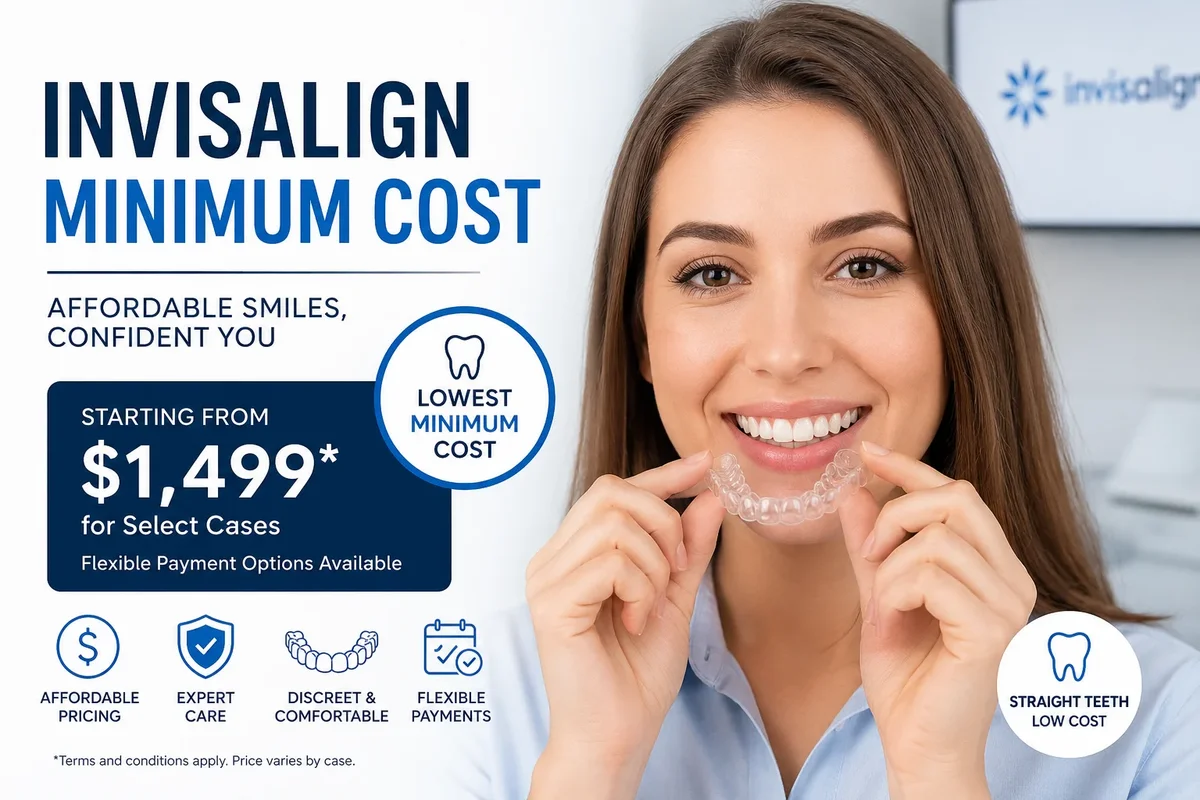
Is Invisalign Worth the Cost for Your Smile?
One of the most important questions patients ask after researching the invisalign minimum cost is whether Invisalign is actually worth the investment. While cost is naturally a significant factor in any healthcare decision, evaluating Invisalign purely based on price may not provide the complete picture. Orthodontic treatment affects appearance, oral health, confidence, comfort, and long-term dental function. Therefore, determining whether Invisalign is worth the invisalign minimum cost requires a broader assessment of both financial and personal benefits.
For many individuals, Invisalign represents much more than a cosmetic enhancement. Proper tooth alignment can improve oral hygiene, reduce dental complications, enhance chewing efficiency, and contribute to long-term oral health. When viewed from this perspective, the value of Invisalign often extends well beyond the initial invisalign minimum cost.
Understanding Value Beyond Price
When patients focus exclusively on the invisalign minimum cost, they may overlook the broader benefits associated with treatment. A lower price does not automatically mean better value, just as a higher fee does not necessarily indicate superior care.
Value is typically determined by a combination of factors:
- Treatment effectiveness
- Aesthetic benefits
- Comfort during treatment
- Convenience and flexibility
- Long-term oral health improvements
- Patient satisfaction
The true worth of Invisalign depends on how these benefits align with an individual’s goals and expectations.
The Cosmetic Benefits of Invisalign
One of the primary reasons patients are willing to pay the invisalign minimum cost is the treatment’s discreet appearance. Unlike traditional braces, Invisalign aligners are made from clear, nearly invisible material.
This allows patients to straighten their teeth without drawing attention to their orthodontic treatment.
Cosmetic advantages include:
- Nearly invisible appearance
- Improved smile aesthetics
- Greater confidence in social settings
- Professional appearance during treatment
- Reduced self-consciousness
For adults and professionals, these benefits often make the invisalign minimum cost feel like a worthwhile investment.
Confidence Can Have Lasting Value
Many patients report significant improvements in self-confidence after completing Invisalign treatment. A straighter smile can positively influence:
- Personal relationships
- Professional interactions
- Public speaking confidence
- Social engagement
- Overall self-image
Although these benefits are difficult to assign a monetary value to, they are often cited as reasons why patients feel the invisalign minimum cost was money well spent.
Oral Health Improvements
Invisalign is not solely a cosmetic treatment. Properly aligned teeth are generally easier to clean and maintain, which can contribute to improved oral health over time.
Potential oral health benefits include:
- Reduced plaque accumulation
- Improved gum health
- Lower risk of tooth decay
- More effective brushing and flossing
- Reduced food trapping between teeth
When considering the invisalign minimum cost, these preventive health advantages can be an important part of the overall value equation.
Comfort Compared to Traditional Braces
Another reason many patients believe Invisalign is worth the invisalign minimum cost is the enhanced comfort it offers compared to conventional braces.
Because Invisalign aligners are custom-made from smooth plastic, they typically cause less irritation to the cheeks and gums than metal brackets and wires.
Comfort-related advantages include:
- No metal components
- Fewer mouth sores
- Less irritation
- Predictable tooth movement
- Easier adaptation period
These benefits can significantly improve the treatment experience and contribute to overall patient satisfaction.
Convenience and Lifestyle Flexibility
One feature that distinguishes Invisalign from traditional orthodontic options is its removability. Patients can remove aligners during meals and oral hygiene routines.
This flexibility offers several advantages:
- No food restrictions
- Normal brushing habits
- Normal flossing routines
- Greater convenience for special events
- Reduced dietary limitations
For many patients, this convenience alone justifies the invisalign minimum cost.
😊 Being able to enjoy favorite foods without worrying about damaging brackets is a benefit frequently mentioned by Invisalign users.
Long-Term Financial Benefits
Although the invisalign minimum cost may initially seem substantial, properly aligned teeth can potentially reduce future dental expenses.
Improved alignment may help decrease:
- Excessive tooth wear
- Gum problems
- Difficulty cleaning teeth
- Plaque accumulation
- Certain orthodontic complications
While Invisalign is not a guarantee against future dental issues, better alignment often contributes to easier oral health maintenance over time.
When Invisalign May Not Be the Best Value
Despite its many benefits, Invisalign is not necessarily the ideal solution for every patient. Some individuals may achieve better results with alternative orthodontic treatments.
Factors that may affect value include:
- Severe orthodontic problems
- Poor compliance with aligner wear
- Complex jaw discrepancies
- Difficulty maintaining treatment schedules
- Preference for fixed appliances
Patients who do not wear aligners consistently may struggle to achieve optimal results, reducing the overall value of the invisalign minimum cost.
Comparing Cost and Benefits
The following table summarizes key considerations when evaluating whether Invisalign is worth the investment.
| Benefit Category | Potential Value |
|---|---|
| Appearance | Highly attractive and discreet treatment |
| Comfort | Generally greater than braces |
| Convenience | Removable aligners offer flexibility |
| Oral Hygiene | Easier brushing and flossing |
| Confidence | Improved smile and self-esteem |
| Long-Term Health | Potential oral health improvements |
For many patients, these combined advantages make the invisalign minimum cost a worthwhile investment rather than merely an expense.
Patient Satisfaction and Real-World Outcomes
Patient satisfaction rates for Invisalign treatment are generally high. Many individuals report positive experiences due to the treatment’s discreet appearance, comfort, and effectiveness.
Patients commonly cite:
- Improved smile aesthetics
- Greater self-confidence
- Convenient daily wear
- Positive social experiences
- Enhanced oral health habits
These outcomes contribute significantly to perceptions of value and help explain why so many people choose Invisalign despite the associated costs.
Value Depends on Individual Priorities
Ultimately, whether the invisalign minimum cost is worth paying depends on personal priorities. Some patients prioritize aesthetics, while others focus on oral health, convenience, or confidence.
The most satisfied patients are often those who clearly understand their goals and select treatment based on long-term benefits rather than solely on price.
Final Thoughts
✨ For many patients, the invisalign minimum cost represents a worthwhile investment in both oral health and quality of life. Invisalign offers a unique combination of aesthetics, comfort, convenience, and effectiveness that appeals to adults and teenagers alike. While the financial commitment should be carefully considered, the long-term benefits of a healthier, straighter, and more confident smile often outweigh the initial expense. By evaluating both the tangible and intangible advantages of treatment, patients can determine whether Invisalign provides the right value for their individual needs and smile goals.