
🦷 Invisalign treatment has transformed modern orthodontics by offering patients a nearly invisible way to straighten their teeth comfortably and effectively. One of the most important concepts patients may hear during treatment is invisalign overcorrection. Although the term may sound confusing at first, invisalign overcorrection is actually a strategic orthodontic technique designed to improve final treatment accuracy and long-term alignment stability.
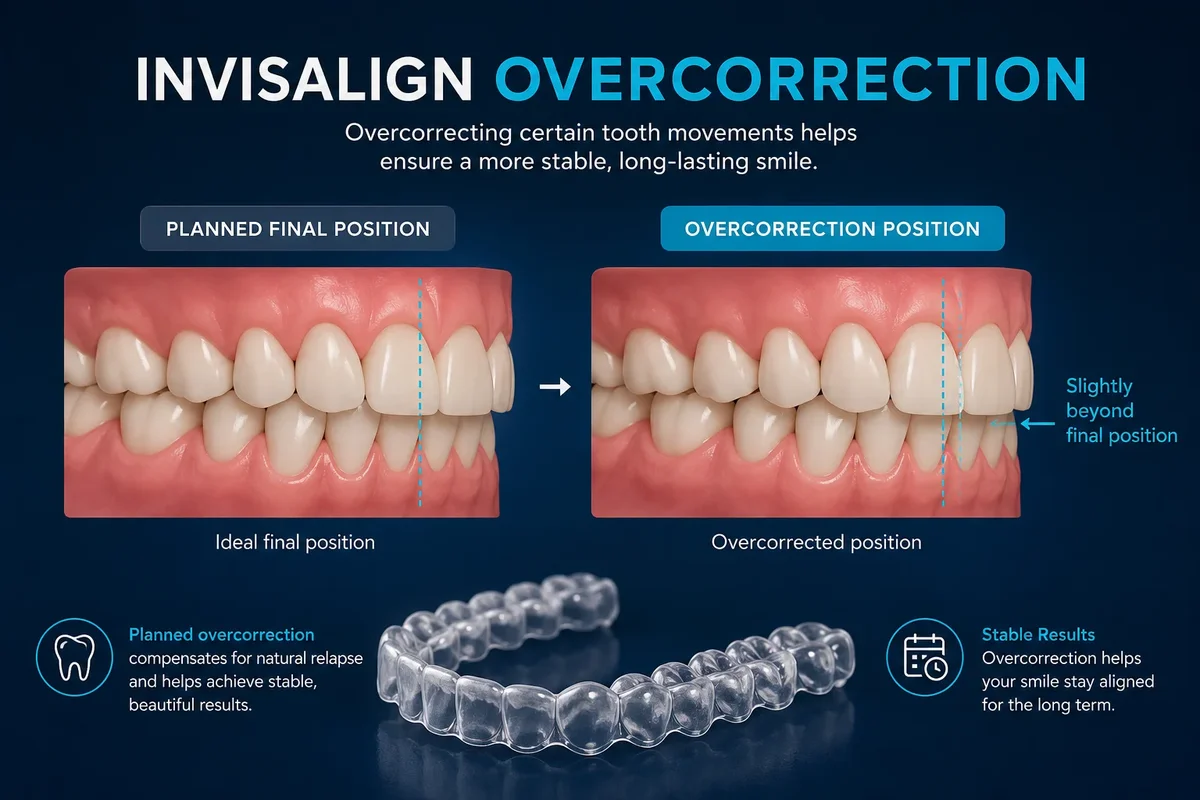
Invisalign overcorrection refers to intentionally moving teeth slightly beyond their ideal final position during aligner therapy. Orthodontists use invisalign overcorrection because teeth naturally tend to shift back slightly after movement. By planning a small extra movement, the dentist can compensate for this natural rebound and achieve more predictable final results.
For many patients, invisalign overcorrection becomes especially important when treating rotated teeth, crowded teeth, gaps, bite problems, or stubborn tooth movements. Some teeth resist movement more than others due to bone density, root shape, or chewing forces. In these situations, invisalign overcorrection helps ensure that the teeth settle into the desired alignment after treatment is completed.
Modern clear aligner systems rely heavily on digital treatment planning. Before starting treatment, orthodontists create a computerized 3D simulation showing how the teeth will move over time. During this process, invisalign overcorrection may be programmed into specific stages of treatment to improve precision and treatment success.
Patients often notice that during invisalign overcorrection, their teeth may temporarily appear slightly “overmoved” or not perfectly straight. This is usually intentional and carefully monitored by the dentist. The goal is not to create a permanent incorrect position, but rather to account for the biological tendency of teeth to settle naturally after orthodontic force is removed.
😊 One major benefit of invisalign overcorrection is reducing the likelihood of refinement trays. Refinements are additional aligners needed when teeth do not track perfectly according to the original plan. Since some tooth movements are less predictable, invisalign overcorrection gives orthodontists a better chance of achieving ideal alignment within the planned treatment timeline.
Patients who experience invisalign overcorrection are often surprised at how detailed and scientific modern orthodontics has become. Orthodontists today use advanced biomechanics, attachment systems, digital scanning technology, and precise force calculations to control even very small tooth movements. Invisalign overcorrection is part of this highly customized process.
Another reason invisalign overcorrection is commonly used involves elastic memory within the periodontal ligament. After teeth move, surrounding tissues may try to pull them back toward their original position. This phenomenon is completely natural. Invisalign overcorrection helps counteract these biological forces and supports more stable results after treatment.
Clear aligner therapy is highly popular because it allows patients to maintain confidence during treatment. However, many people mistakenly assume aligners simply “push” teeth into place. In reality, successful orthodontic movement involves continuous adaptation of bone tissue, ligaments, and surrounding structures. Invisalign overcorrection acknowledges these biological realities and improves treatment predictability.
Some of the most common situations where invisalign overcorrection may be recommended include:
- Rotated front teeth
- Deep bite correction
- Open bite treatment
- Minor relapse after braces
- Crowded lower incisors
- Crossbite correction
- Teeth with strong muscle pressure
- Complex bite alignment issues
Invisalign overcorrection is usually very subtle. Most patients will not notice dramatic changes, but orthodontists carefully monitor every aligner stage to ensure teeth are moving safely and effectively. Regular appointments allow adjustments if needed.
⏳ Treatment duration involving invisalign overcorrection depends on case complexity. Mild cosmetic cases may require only a few months, while comprehensive orthodontic corrections can take 12–24 months or longer. The dentist evaluates how the teeth respond throughout treatment and may modify the plan accordingly.
Comfort is another common concern. During invisalign overcorrection, patients may feel temporary pressure when switching to a new aligner tray. Mild soreness is considered normal because the aligners are applying controlled orthodontic force. Most discomfort disappears within a few days.
Maintaining excellent compliance is extremely important during invisalign overcorrection. Aligners should usually be worn 20–22 hours daily for the treatment to work effectively. Skipping wear time can reduce tracking accuracy and increase the need for refinements.
Patients should also understand that retainers play a critical role after invisalign overcorrection is complete. Retainers help preserve the final tooth position and prevent orthodontic relapse. Without retention, teeth may gradually shift over time regardless of how successful the original treatment was.
According to the American Dental Association, maintaining proper orthodontic care and follow-up visits is essential for long-term oral health and alignment stability.
💡 The cost of invisalign overcorrection is usually included within the overall Invisalign treatment plan rather than charged separately. However, total Invisalign treatment costs may vary depending on complexity, geographic location, and treatment duration. Typical Invisalign pricing ranges include:
Estimated Invisalign Treatment Costs
- Mild cosmetic correction: $2,000 – $4,000
- Moderate orthodontic cases: $4,000 – $6,500
- Complex bite correction: $6,500 – $9,000+
Patients considering invisalign overcorrection should choose an experienced orthodontic provider who understands advanced aligner biomechanics. Successful outcomes depend heavily on treatment planning accuracy and patient compliance.
At professional clinics, digital monitoring and regular evaluations help ensure invisalign overcorrection is progressing safely. If patients notice unusual pain, poor aligner fit, or unexpected tooth movement, they should immediately contact their orthodontist.
📌 Ultimately, invisalign overcorrection is not a mistake or complication. Instead, it is an advanced orthodontic strategy designed to improve treatment precision, minimize relapse, and create a healthier, more stable smile. Understanding invisalign overcorrection helps patients feel more confident and informed throughout their clear aligner journey.
If you are considering Invisalign treatment or have questions about invisalign overcorrection, you can contact experienced dental professionals through the Redent Klinik Contact Page.
What Is Invisalign Overcorrection and Why Is It Used?
🦷 Understanding invisalign overcorrection is essential for patients who want realistic expectations and successful orthodontic results. Many people beginning Invisalign treatment assume their teeth will move directly into perfect alignment and remain there permanently. However, teeth are influenced by bone remodeling, gum tissue pressure, bite forces, tongue movement, and muscle activity. Because of these natural biological factors, orthodontists often use invisalign overcorrection as a strategic method to achieve more stable and accurate final results.
Invisalign overcorrection refers to the intentional movement of teeth slightly beyond their ideal final position during aligner treatment. This extra movement is carefully planned by orthodontists using advanced digital software and orthodontic biomechanics. The reason invisalign overcorrection is used is simple: teeth often rebound slightly after active movement stops. By planning a controlled “over-movement,” orthodontists compensate for this tendency and improve long-term alignment.
How Invisalign Overcorrection Works
Modern Invisalign treatment relies on 3D digital scans and customized aligners. Every aligner is designed to apply gentle force to specific teeth at carefully calculated angles. During invisalign overcorrection, the treatment software intentionally positions certain teeth slightly beyond the desired endpoint.
For example, if a rotated tooth naturally tends to rebound backward after treatment, the orthodontist may slightly over-rotate it during invisalign overcorrection. Once the aligners are finished and the tooth settles naturally, it often lands exactly where it should.
😊 This technique is particularly helpful for difficult tooth movements that are known to relapse easily. Invisalign overcorrection helps improve treatment predictability and reduces the need for additional refinement aligners later.
Why Teeth Tend to Shift Back
Many patients wonder why invisalign overcorrection is necessary at all. The answer lies in the biology of tooth movement. Teeth are held in place by ligaments and surrounded by bone tissue. During orthodontic treatment, these supporting structures must adapt as teeth move.
After aligners apply force, the periodontal ligament becomes compressed on one side and stretched on the other. Bone tissue then remodels gradually to support the new tooth position. However, these tissues have memory and elasticity, meaning they naturally attempt to return teeth toward their original alignment.
This phenomenon is called orthodontic relapse. Invisalign overcorrection helps minimize relapse by accounting for these rebound forces before treatment is complete.
Common Biological Factors Behind Tooth Relapse
- Elastic gum tissue memory
- Jaw muscle pressure
- Tongue habits
- Bone remodeling delays
- Chewing forces
- Night grinding or clenching
- Crowding pressure from nearby teeth
Because every patient’s biology is different, invisalign overcorrection must always be customized individually.
Cases That Commonly Require Invisalign Overcorrection
Not every Invisalign patient requires major invisalign overcorrection. However, certain orthodontic problems are far more likely to benefit from this approach.
Some of the most common situations include:
- Rotated canine teeth
- Crowded lower front teeth
- Deep bite correction
- Open bite treatment
- Spacing issues
- Crossbite correction
- Relapse after braces
- Minor jaw alignment irregularities
Teeth with rounded shapes or short crowns are often more difficult to control precisely. Invisalign overcorrection provides additional movement to help compensate for tracking challenges.
The Role of Digital Orthodontic Planning
💻 One reason invisalign overcorrection is highly successful today is because of advanced digital technology. Orthodontists use computer simulations to map every stage of treatment before the patient even receives the first aligner tray.
This planning software allows orthodontists to identify teeth likely to resist movement or relapse later. Invisalign overcorrection can then be built directly into the treatment plan from the beginning.
Digital treatment planning also allows orthodontists to monitor:
- Tooth rotation accuracy
- Bite relationships
- Jaw alignment
- Tracking precision
- Attachment effectiveness
- Movement predictability
Because invisalign overcorrection is digitally controlled, the process is usually very precise and safe when supervised by an experienced provider.
Does Invisalign Overcorrection Mean Something Went Wrong?
One of the biggest misconceptions about invisalign overcorrection is that it represents a treatment mistake. In reality, invisalign overcorrection is often a sign of advanced orthodontic planning.
Patients sometimes notice that certain teeth temporarily appear slightly over-rotated or uneven during later aligner stages. This can feel alarming without proper explanation. However, orthodontists intentionally design these movements to improve the final smile outcome.
Invisalign overcorrection is not random tooth movement. It is a carefully calculated orthodontic strategy supported by years of clinical experience and biomechanical research.
Benefits of Invisalign Overcorrection
✨ There are several important advantages associated with invisalign overcorrection:
- Improved final tooth alignment
- Reduced orthodontic relapse risk
- Better bite stability
- Fewer refinement trays
- Enhanced smile symmetry
- More predictable treatment outcomes
- Higher patient satisfaction
Orthodontists often prefer invisalign overcorrection because it improves long-term treatment stability, especially in moderate and complex orthodontic cases.
Patient Compliance During Invisalign Overcorrection
Patient cooperation is critical for successful invisalign overcorrection. Aligners must usually be worn 20–22 hours daily to achieve accurate tooth movement. Poor compliance increases the likelihood of incomplete tracking and treatment delays.
Patients should also attend regular orthodontic appointments so the provider can monitor invisalign overcorrection carefully. Small adjustments may occasionally be necessary depending on how the teeth respond biologically.
According to the American Dental Association, maintaining proper orthodontic follow-up appointments helps improve treatment success and long-term oral health outcomes.
How Retainers Support Invisalign Overcorrection Results
📌 After invisalign overcorrection is complete, retainers become essential for maintaining results. Retainers stabilize the teeth while bone and surrounding tissues continue adapting to their final position.
Without retainers, even perfectly completed invisalign overcorrection cases may experience relapse over time. Orthodontists typically recommend wearing retainers nightly after treatment to preserve alignment.
Patients who consistently wear retainers usually maintain their smile results far longer than those who neglect post-treatment care.
Cost Considerations for Invisalign Overcorrection
In most situations, invisalign overcorrection is included within the total Invisalign treatment cost rather than billed separately. Treatment pricing depends on case complexity, duration, and provider expertise.
Average Invisalign Treatment Costs
- Mild alignment cases: $2,000–$4,000
- Moderate orthodontic correction: $4,000–$6,500
- Complex bite correction: $6,500–$9,000+
If you want professional guidance regarding invisalign overcorrection, aligner treatment, or smile design options, you can contact experienced dental professionals through the Redent Klinik Contact Page.
✅ Ultimately, invisalign overcorrection is one of the most valuable tools in modern clear aligner therapy. By intentionally compensating for natural tooth rebound and biological relapse tendencies, orthodontists can achieve more precise, stable, and aesthetically pleasing results. Understanding invisalign overcorrection allows patients to feel more confident and informed throughout every stage of their Invisalign journey.
How Invisalign Overcorrection Improves Teeth Alignment
🦷 One of the most important advantages of invisalign overcorrection is its ability to improve overall teeth alignment accuracy. Modern orthodontic treatment is not simply about moving teeth into straighter positions temporarily. The true goal is achieving stable, healthy, and long-lasting alignment that remains consistent after treatment is completed. Invisalign overcorrection plays a major role in helping orthodontists achieve this objective.
During Invisalign treatment, teeth are constantly responding to pressure from aligners, chewing forces, muscles, bone remodeling, and gum tissue adaptation. Because of these biological factors, teeth do not always move exactly as predicted. Invisalign overcorrection allows orthodontists to compensate for these natural inconsistencies and improve the final positioning of teeth.
In simple terms, invisalign overcorrection intentionally moves selected teeth slightly beyond their ideal endpoint. This extra movement may sound unusual, but it is carefully calculated using advanced digital planning systems. Once treatment ends and teeth settle naturally, the final alignment often becomes much more accurate.
The Science Behind Invisalign Overcorrection
Teeth are not fixed rigidly inside the jawbone. They are supported by periodontal ligaments, bone tissue, nerves, blood vessels, and surrounding gum structures. When aligners apply pressure, these tissues must gradually adapt. However, after tooth movement occurs, the tissues often attempt to pull teeth back toward their original position.
This biological response is known as orthodontic relapse. Invisalign overcorrection helps minimize this problem by anticipating rebound movement before it happens.
😊 Orthodontists have learned through years of clinical experience that certain tooth movements are more likely to relapse than others. Rotated teeth, crowded lower incisors, and bite corrections are especially prone to shifting after treatment. Invisalign overcorrection improves treatment precision by accounting for these tendencies in advance.
Why Some Teeth Resist Movement More Than Others
Not all teeth move with the same level of predictability. Several factors influence how teeth respond during invisalign overcorrection:
- Root shape and size
- Bone density differences
- Gum tissue elasticity
- Tooth rotation severity
- Jaw muscle pressure
- Bite force distribution
- Patient compliance with aligners
Because every patient has unique anatomy, invisalign overcorrection must always be customized individually.
How Invisalign Overcorrection Enhances Final Smile Results
✨ One of the biggest reasons orthodontists use invisalign overcorrection is to improve smile symmetry and final aesthetic balance. Even tiny alignment errors can become noticeable once treatment ends. A tooth rotated only a few degrees incorrectly may affect smile appearance significantly.
Invisalign overcorrection helps reduce these small inaccuracies. By slightly “over-moving” teeth that are likely to rebound, orthodontists increase the chances that the teeth will settle into ideal positions naturally.
This process can improve:
- Smile symmetry
- Tooth spacing balance
- Bite alignment
- Midline positioning
- Arch coordination
- Overall facial aesthetics
Patients often appreciate that invisalign overcorrection focuses not only on cosmetic improvement but also on long-term function and oral health.
Digital Planning and Invisalign Overcorrection
💻 Advanced digital technology has dramatically improved the effectiveness of invisalign overcorrection. Modern Invisalign treatment uses sophisticated 3D software that allows orthodontists to simulate every stage of tooth movement before treatment even begins.
These digital simulations help orthodontists identify which teeth are most likely to experience tracking problems or relapse. Invisalign overcorrection can then be programmed into specific aligner stages to improve movement accuracy.
Digital treatment planning allows orthodontists to evaluate:
- Tooth rotation angles
- Bite relationships
- Crowding severity
- Jaw alignment
- Attachment placement
- Movement predictability
Because invisalign overcorrection is digitally controlled, the process is highly precise when supervised by experienced professionals.
Reducing Refinement Trays with Invisalign Overcorrection
One major benefit of invisalign overcorrection is reducing the need for refinement aligners. Refinements are additional trays required when teeth fail to track exactly according to the original plan.
Although refinements are common in aligner therapy, excessive refinements can increase treatment time and patient frustration. Invisalign overcorrection helps improve the likelihood that teeth will finish closer to their desired final positions during the first treatment cycle.
📌 Orthodontists often use invisalign overcorrection proactively to improve treatment efficiency and minimize unexpected delays.
Patient Compliance and Treatment Accuracy
Even the most carefully designed invisalign overcorrection plan will not succeed without proper patient compliance. Aligners must usually be worn 20–22 hours daily for optimal results.
When patients remove aligners too frequently or fail to switch trays on schedule, teeth may stop tracking correctly. This can reduce the effectiveness of invisalign overcorrection and increase the risk of refinements later.
Important Habits During Invisalign Overcorrection
- Wear aligners consistently
- Clean trays regularly
- Attend scheduled appointments
- Use chewies if recommended
- Follow tray change schedules carefully
- Report poor aligner fit immediately
Good compliance significantly improves the success of invisalign overcorrection and helps maintain smoother treatment progress.
How Invisalign Overcorrection Improves Bite Function
🦷 Invisalign overcorrection is not only about cosmetic appearance. It also improves bite functionality and oral health. Poor bite alignment may contribute to:
- Jaw discomfort
- Uneven tooth wear
- Chewing difficulty
- Speech problems
- Tooth sensitivity
- TMJ strain
By improving bite precision, invisalign overcorrection helps create healthier long-term function. Orthodontists carefully monitor how upper and lower teeth fit together throughout treatment.
In many cases, proper bite alignment achieved through invisalign overcorrection can improve overall oral comfort and reduce abnormal pressure on teeth and jaw joints.
The Importance of Retainers After Invisalign Overcorrection
🔒 Retainers are essential after invisalign overcorrection is completed. Even perfectly aligned teeth remain vulnerable to relapse if retention is neglected.
After active tooth movement ends, surrounding tissues continue adapting for several months. Retainers stabilize the teeth while bone remodeling finishes.
Orthodontists often recommend nightly retainer use long term to preserve invisalign overcorrection results and maintain smile stability.
Patients who stop wearing retainers too early may experience gradual shifting even after successful treatment.
Estimated Invisalign Treatment Costs
Invisalign overcorrection is typically included within the overall Invisalign treatment plan rather than charged separately. Treatment costs depend on complexity, duration, and provider experience.
Estimated Invisalign Pricing
- Mild cosmetic alignment: $2,000–$4,000
- Moderate correction cases: $4,000–$6,500
- Complex orthodontic treatment: $6,500–$9,000+
According to the American Dental Association, regular orthodontic follow-up care is essential for maintaining oral health and stable treatment outcomes.
If you are considering Invisalign treatment and want professional guidance regarding invisalign overcorrection, aligner therapy, or smile improvement options, you can contact experienced dental professionals through the Redent Klinik Contact Page.
✅ Ultimately, invisalign overcorrection improves teeth alignment by compensating for natural tooth rebound, increasing treatment precision, reducing relapse risk, and enhancing final smile aesthetics. Modern orthodontic planning combines digital technology, biological understanding, and customized aligner therapy to achieve more predictable and stable results. Patients who understand invisalign overcorrection are often more confident throughout treatment because they recognize that these planned movements are designed to create healthier, more accurate long-term outcomes.
Common Cases That Require Invisalign Overcorrection
🦷 Not every Invisalign patient will require extensive invisalign overcorrection, but many orthodontic situations benefit greatly from this advanced treatment strategy. Orthodontists use invisalign overcorrection when certain tooth movements are known to be difficult, unstable, or more likely to relapse after treatment. By intentionally moving specific teeth slightly beyond their ideal position, orthodontists improve final alignment accuracy and long-term stability.
Modern orthodontics recognizes that tooth movement is not always perfectly predictable. Teeth respond differently depending on root shape, bone density, bite pressure, gum elasticity, muscle habits, and patient compliance. Invisalign overcorrection helps compensate for these variables and allows orthodontists to create more reliable treatment outcomes.
Understanding the most common cases that require invisalign overcorrection can help patients feel more comfortable during treatment and better understand why their aligners may sometimes appear to “overmove” certain teeth temporarily.
Rotated Teeth and Invisalign Overcorrection
One of the most common reasons orthodontists use invisalign overcorrection involves rotated teeth. Teeth that are twisted or turned inside the dental arch are notoriously difficult to correct completely because they naturally tend to rotate back toward their original position.
Rotated canine teeth and premolars are especially resistant to stable movement. During invisalign overcorrection, orthodontists may intentionally rotate these teeth slightly beyond the ideal alignment point so they can settle naturally into the correct final position.
😊 Rotational corrections are among the most biomechanically challenging movements in clear aligner therapy. Invisalign overcorrection significantly improves the chances of achieving ideal smile symmetry in these cases.
Why Rotated Teeth Relapse Easily
- Strong gum fiber memory
- Rounded tooth anatomy
- Uneven biting pressure
- Limited aligner grip
- Bone remodeling delays
Because of these factors, invisalign overcorrection is often essential for achieving predictable rotational correction.
Crowded Lower Front Teeth
Lower incisor crowding is another common situation where invisalign overcorrection becomes extremely helpful. The lower front teeth are naturally prone to crowding because they occupy a very small area and experience constant pressure from lips, tongue movement, and chewing forces.
Even after successful alignment, crowded lower teeth often attempt to shift back toward their original positions. Invisalign overcorrection helps orthodontists compensate for this tendency before treatment ends.
📌 Mild crowding may only require subtle invisalign overcorrection, while severe crowding cases may need more extensive planning and long-term retention afterward.
Deep Bite Correction
A deep bite occurs when the upper front teeth excessively overlap the lower front teeth. This condition can contribute to:
- Tooth wear
- Jaw discomfort
- Gum irritation
- Bite instability
- Speech changes
Deep bite cases frequently require invisalign overcorrection because bite forces naturally push the teeth back toward their original relationship after treatment.
Orthodontists often overcorrect vertical tooth positioning slightly to improve long-term bite stability. Without invisalign overcorrection, deep bite relapse is more likely to occur over time.
Open Bite Cases
🦷 Open bite treatment is another orthodontic situation where invisalign overcorrection is commonly used. An open bite occurs when the upper and lower front teeth fail to touch properly when the mouth closes.
Open bites may develop due to:
- Tongue thrusting habits
- Thumb sucking
- Jaw growth patterns
- Skeletal discrepancies
- Muscle imbalance
Because tongue pressure and muscle habits often continue after treatment, invisalign overcorrection helps improve the stability of open bite correction.
Orthodontists may intentionally create slight overclosure during treatment to compensate for future rebound tendencies.
Spacing Problems and Invisalign Overcorrection
Spacing issues may appear easier to treat than crowding, but gaps between teeth can also relapse after treatment ends. Teeth naturally drift due to bite pressure, tongue movement, and gum tissue forces.
Invisalign overcorrection is sometimes used to slightly over-close spaces so the teeth settle into ideal contact naturally.
Common Causes of Tooth Spacing
- Missing teeth
- Small tooth size
- Tongue habits
- Periodontal disease
- Jaw size discrepancies
Patients with spacing issues often require careful retainer use after invisalign overcorrection to maintain long-term stability.
Crossbite Correction Cases
Crossbite cases involve teeth that bite incorrectly either toward the tongue or cheek side. These cases are often more complex biomechanically and may require invisalign overcorrection to improve final bite coordination.
Crossbite correction may involve:
- Single tooth crossbites
- Posterior crossbites
- Anterior crossbites
- Functional jaw shifts
Because crossbite correction changes both tooth position and bite relationships, invisalign overcorrection helps improve long-term stability and reduce relapse risk.
Relapse After Previous Braces
😬 Many adults seek Invisalign treatment because their teeth shifted years after traditional braces. In these relapse cases, invisalign overcorrection becomes especially valuable because the teeth have already demonstrated a tendency to move back.
Orthodontists understand that previously relapsed teeth may be biologically more prone to future movement. Invisalign overcorrection helps compensate for this increased relapse tendency.
Patients with prior orthodontic relapse are usually advised to wear retainers consistently after treatment to preserve alignment.
Complex Bite Alignment Problems
Complex bite discrepancies often require advanced invisalign overcorrection planning. Cases involving multiple movement types at the same time are less predictable and require highly customized aligner sequencing.
Examples include:
- Combination crowding and deep bite
- Crossbite with rotations
- Spacing with jaw discrepancies
- Asymmetrical tooth movement
Modern Invisalign software allows orthodontists to strategically apply invisalign overcorrection only where needed while maintaining overall bite balance.
How Orthodontists Identify the Need for Invisalign Overcorrection
💻 Orthodontists use digital scans, bite analysis, facial evaluations, and orthodontic experience to determine when invisalign overcorrection is necessary.
Factors influencing treatment planning include:
- Tooth anatomy
- Age of the patient
- Bite force patterns
- Bone support quality
- Muscle habits
- Previous orthodontic history
Every invisalign overcorrection plan is individualized because no two orthodontic cases are identical.
Patient Compliance Matters
⏳ Even carefully planned invisalign overcorrection cannot succeed without excellent patient cooperation. Aligners must be worn consistently for teeth to track properly.
Poor compliance increases the risk of:
- Tracking problems
- Treatment delays
- Refinement aligners
- Incomplete corrections
- Bite instability
According to the American Dental Association, proper orthodontic monitoring and patient compliance are essential for maintaining healthy and stable treatment outcomes.
Estimated Invisalign Treatment Costs
The cost of invisalign overcorrection is generally included within the overall Invisalign treatment plan. Pricing varies depending on complexity and treatment duration.
Estimated Invisalign Pricing
- Minor alignment treatment: $2,000–$4,000
- Moderate correction cases: $4,000–$6,500
- Complex orthodontic treatment: $6,500–$9,000+
If you would like professional guidance regarding invisalign overcorrection or personalized orthodontic treatment planning, you can contact experienced dental professionals through the Redent Klinik Contact Page.
✅ Ultimately, invisalign overcorrection is commonly used in cases involving rotated teeth, deep bites, spacing problems, crowding, crossbites, open bites, and orthodontic relapse. These situations often involve biological challenges that increase the risk of tooth rebound after treatment. By strategically overcorrecting certain movements, orthodontists can improve treatment precision, reduce relapse risk, and create healthier long-term smile stability.
How Long Invisalign Overcorrection Usually Lasts
🦷 One of the most common questions patients ask during treatment is how long invisalign overcorrection usually lasts. Since invisalign overcorrection intentionally moves teeth slightly beyond their ideal final position, many patients become curious or concerned when they notice temporary alignment changes near the end of treatment. Understanding the timeline of invisalign overcorrection helps patients feel more confident and reduces unnecessary anxiety during the orthodontic process.
The duration of invisalign overcorrection varies depending on several factors, including treatment complexity, tooth movement type, patient compliance, bone response, and the overall orthodontic plan. In many cases, invisalign overcorrection may only last a few weeks. However, more complex cases may require several months of carefully controlled overcorrection before the teeth stabilize properly.
Orthodontists design invisalign overcorrection strategically to improve long-term treatment accuracy and reduce the risk of orthodontic relapse. Although temporary overcorrection may appear unusual visually, it is often an important part of achieving ideal final alignment.
Average Timeline of Invisalign Overcorrection
In most Invisalign treatment plans, invisalign overcorrection occurs near the later stages of aligner therapy. Orthodontists typically reserve overcorrection movements for the final trays because they need to evaluate how the teeth respond throughout earlier stages first.
😊 Mild invisalign overcorrection may last:
- 2–4 weeks for minor tooth rotations
- 4–8 weeks for moderate crowding cases
- 2–3 months for complex bite corrections
- Several months in severe orthodontic cases
The timeline depends heavily on how quickly the surrounding bone and gum tissues adapt to the new tooth positions.
Why Invisalign Overcorrection Takes Time
Teeth do not move instantly through bone. Invisalign overcorrection relies on gradual biological adaptation involving:
- Bone remodeling
- Ligament stretching
- Gum tissue adjustment
- Jaw muscle adaptation
- Bite force redistribution
These biological processes occur slowly and require careful orthodontic control. Even after the teeth appear visually straight, the surrounding tissues may still be adjusting internally.
📌 Invisalign overcorrection is designed to account for this delayed biological adaptation. Orthodontists understand that teeth may shift slightly backward once active aligner force stops, so the overcorrection phase helps compensate for these natural rebound forces.
Factors That Affect Invisalign Overcorrection Duration
Several important variables influence how long invisalign overcorrection lasts for each patient.
Case Complexity
Simple cosmetic cases often require minimal invisalign overcorrection because the tooth movements are relatively straightforward. However, severe bite problems or rotated teeth usually require longer overcorrection phases.
More complicated cases involve greater biological resistance and often need additional stabilization time.
Patient Age
Younger patients typically experience faster tissue adaptation and bone remodeling compared to older adults. As a result, invisalign overcorrection may progress more quickly in younger individuals.
Older patients may require longer treatment timelines because bone metabolism slows with age.
Tooth Movement Type
Certain tooth movements are more difficult than others. Invisalign overcorrection often lasts longer when treating:
- Rotated canine teeth
- Deep bites
- Crossbites
- Open bites
- Severe crowding
These movements are naturally more prone to relapse and require additional stabilization.
Patient Compliance
⏳ Consistent aligner wear is critical for successful invisalign overcorrection. Patients who wear aligners less than the recommended 20–22 hours daily may experience delayed tooth movement and prolonged treatment.
Skipping trays or inconsistent wear can also increase the need for refinement aligners.
What Patients Experience During Invisalign Overcorrection
During invisalign overcorrection, patients may temporarily notice that certain teeth appear slightly over-rotated, angled differently, or positioned beyond what looks perfectly straight.
This can feel surprising if the patient is not informed beforehand. However, orthodontists intentionally create these movements to improve the final result after natural settling occurs.
😊 Common patient experiences during invisalign overcorrection include:
- Mild pressure when changing trays
- Temporary bite changes
- Slightly unusual tooth positioning
- Minor soreness for a few days
- Improved aligner tightness
Most discomfort is temporary and generally mild.
How Orthodontists Monitor Invisalign Overcorrection
Orthodontists carefully monitor invisalign overcorrection throughout treatment using digital scans, clinical evaluations, and bite analysis.
Regular appointments help determine:
- Whether teeth are tracking correctly
- If the overcorrection is progressing safely
- Whether refinements are needed
- How the bite is adapting
- When retention should begin
💻 Advanced digital technology allows orthodontists to compare actual tooth movement with the original treatment simulation and make adjustments if necessary.
Does Invisalign Overcorrection Continue After Aligners End?
Even after invisalign overcorrection is completed, the teeth continue settling naturally for several weeks or months. This settling phase is completely normal.
Once active aligner force stops, the surrounding tissues gradually stabilize around the new tooth positions. This is why retainers become extremely important after invisalign overcorrection.
Without proper retention, the teeth may continue shifting beyond the intended final result.
The Importance of Retainers
Retainers help stabilize:
- Bone remodeling
- Gum tissue adaptation
- Bite alignment
- Tooth positioning
- Smile symmetry
Most orthodontists recommend wearing retainers nightly after invisalign overcorrection to preserve long-term results.
Can Invisalign Overcorrection Shorten Overall Treatment Time?
📌 In some cases, invisalign overcorrection may actually reduce overall treatment time by minimizing the need for refinements later.
Refinement trays are commonly required when teeth do not finish exactly according to plan. By proactively compensating for relapse tendencies, invisalign overcorrection often improves treatment efficiency and reduces the likelihood of major corrections afterward.
However, patients should understand that every orthodontic case responds differently. Some cases still require refinements despite careful invisalign overcorrection planning.
Estimated Invisalign Treatment Costs
The cost of invisalign overcorrection is usually included within the full Invisalign treatment plan rather than billed separately. Total treatment pricing varies based on case complexity and duration.
Estimated Invisalign Treatment Costs
- Minor cosmetic correction: $2,000–$4,000
- Moderate orthodontic cases: $4,000–$6,500
- Complex bite treatment: $6,500–$9,000+
According to the American Dental Association, regular orthodontic monitoring and proper retainer use are essential for maintaining stable treatment outcomes and long-term oral health.
If you would like professional guidance regarding invisalign overcorrection, treatment timelines, or aligner therapy options, you can contact experienced dental professionals through the Redent Klinik Contact Page.
✅ Ultimately, invisalign overcorrection usually lasts anywhere from a few weeks to several months depending on case complexity and biological response. The process is carefully planned to improve alignment precision, reduce relapse risk, and create more stable long-term smile results. Understanding the duration of invisalign overcorrection helps patients remain patient and confident throughout the final stages of Invisalign treatment.
Signs Your Invisalign Overcorrection Is Working Properly
🦷 Many patients feel uncertain during invisalign overcorrection because the treatment process may temporarily make some teeth appear slightly over-rotated, uneven, or positioned differently than expected. While this can seem alarming at first, these temporary changes are often completely intentional. Understanding the signs that invisalign overcorrection is working properly helps patients remain confident and avoid unnecessary stress during the final stages of treatment.
Orthodontists use invisalign overcorrection strategically to improve long-term alignment stability and reduce the chance of orthodontic relapse. Since teeth naturally tend to rebound slightly after movement, invisalign overcorrection helps compensate for these biological forces before treatment ends.
When invisalign overcorrection is progressing correctly, patients usually notice gradual improvements in tooth alignment, bite balance, and smile symmetry over time. The process may feel unusual temporarily, but several key signs indicate the treatment is functioning as intended.
Aligners Fit Tightly and Consistently
One of the strongest indicators that invisalign overcorrection is working properly is aligners fitting snugly against the teeth. Invisalign trays are designed to apply controlled orthodontic force during every treatment stage.
😊 When invisalign overcorrection progresses correctly, patients usually notice:
- A firm fit when inserting new trays
- Light pressure for the first few days
- Gradual loosening before the next tray change
- Minimal visible gaps between teeth and aligners
This pattern suggests the teeth are tracking according to the treatment plan.
If trays become extremely loose immediately or fail to seat properly against the teeth, orthodontic tracking problems may be developing.
Teeth Gradually Move Into Better Alignment
Even though invisalign overcorrection may temporarily move certain teeth slightly beyond their ideal final position, the overall smile should gradually improve throughout treatment.
Patients often notice:
- Improved smile symmetry
- Reduced crowding
- Smaller spacing gaps
- Straighter front teeth
- Better bite balance
- Smoother tooth alignment
📌 Invisalign overcorrection is designed to improve final positioning accuracy, not create permanent misalignment.
Orthodontists intentionally create small over-movements so the teeth can settle naturally into their ideal positions later.
Mild Pressure and Soreness Are Temporary
Mild discomfort is another sign that invisalign overcorrection is actively working. Clear aligners function by applying continuous controlled pressure to the teeth. This pressure stimulates bone remodeling and tooth movement.
During invisalign overcorrection, patients commonly experience:
- Light soreness for 1–3 days after tray changes
- Pressure when biting down
- Mild tooth sensitivity
- Temporary tightness
💡 These symptoms are generally considered normal and often indicate the aligners are successfully guiding the teeth.
However, severe pain, intense swelling, or sharp discomfort should always be evaluated by the orthodontist immediately.
Normal vs Abnormal Symptoms
Usually Normal:
- Mild pressure
- Temporary soreness
- Slight bite changes
- Tight trays
Potential Warning Signs:
- Severe pain
- Bleeding gums
- Large aligner gaps
- Cracked trays
- Sudden tooth instability
Attachments Remain Secure
Many Invisalign patients have small composite attachments bonded to certain teeth. These attachments help the aligners grip teeth more effectively during complex movements involved in invisalign overcorrection.
When invisalign overcorrection is functioning properly:
- Attachments remain firmly bonded
- Aligners engage attachments correctly
- Tooth movement appears controlled
Attachments are especially important for:
- Rotated teeth
- Vertical movements
- Bite correction
- Root torque control
If multiple attachments fall off, invisalign overcorrection may become less predictable and require orthodontic adjustment.
Bite Changes Improve Gradually
🦷 Invisalign overcorrection often improves not only cosmetic alignment but also bite functionality. During treatment, patients may notice temporary bite changes as the teeth reposition.
Positive bite improvements may include:
- More even chewing pressure
- Reduced jaw strain
- Improved tooth contact
- Better speech clarity
- Reduced clenching discomfort
Temporary bite imbalances are common during invisalign overcorrection because teeth are moving continuously. Orthodontists monitor these changes carefully during follow-up visits.
Regular Orthodontic Monitoring Shows Progress
💻 Modern Invisalign treatment uses digital scans and orthodontic evaluations to monitor invisalign overcorrection accurately.
At follow-up appointments, orthodontists evaluate:
- Tooth tracking accuracy
- Bite relationships
- Rotation correction
- Spacing closure
- Smile symmetry
- Aligner fit
When scans confirm that the teeth are following the planned digital simulation, invisalign overcorrection is usually progressing successfully.
Orthodontists may occasionally adjust the treatment plan or provide refinement trays if minor deviations occur.
Refinement Needs Are Minimal
One important goal of invisalign overcorrection is reducing the need for excessive refinement trays later. Refinements are additional aligners used to correct teeth that did not move exactly as expected.
📌 If invisalign overcorrection is working effectively, patients may require fewer refinements because the treatment already compensates for natural tooth rebound and movement unpredictability.
Although refinements are still common in orthodontics, effective invisalign overcorrection often improves overall treatment efficiency.
Retainers Fit Properly After Treatment
🔒 Another sign that invisalign overcorrection worked successfully appears after treatment when retainers fit comfortably and the teeth remain stable.
Retainers help preserve:
- Final tooth alignment
- Bite balance
- Smile symmetry
- Bone stabilization
- Gum tissue adaptation
If retainers fit accurately and the teeth remain stable over time, the invisalign overcorrection process likely achieved its intended goal.
Patient Compliance Strongly Influences Success
⏳ Even perfectly designed invisalign overcorrection cannot succeed without consistent aligner wear. Patients should generally wear aligners 20–22 hours daily.
Good compliance supports:
- Accurate tooth tracking
- Stable bite correction
- Reduced relapse risk
- Improved treatment speed
- More predictable results
Poor compliance may cause delayed movement and increase the likelihood of refinements.
Estimated Invisalign Treatment Costs
The cost of invisalign overcorrection is usually included within the total Invisalign treatment plan. Pricing varies based on complexity and treatment duration.
Estimated Invisalign Costs
- Minor cosmetic cases: $2,000–$4,000
- Moderate orthodontic correction: $4,000–$6,500
- Complex bite treatment: $6,500–$9,000+
According to the American Dental Association, regular orthodontic supervision and proper retainer use are essential for maintaining long-term oral health and treatment stability.
If you have concerns about invisalign overcorrection or want professional guidance regarding your aligner treatment progress, you can contact experienced dental professionals through the Redent Klinik Contact Page.
✅ Ultimately, signs that invisalign overcorrection is working properly include consistent aligner fit, gradual alignment improvement, manageable pressure, stable attachments, improved bite function, and successful orthodontic tracking. Understanding these signs helps patients feel reassured during treatment and recognize that temporary overcorrection is often a planned and beneficial part of achieving stable long-term smile results.
Potential Side Effects of Invisalign Overcorrection
🦷 While invisalign overcorrection is a highly effective orthodontic strategy designed to improve final tooth alignment and reduce relapse, patients should understand that it may also involve temporary side effects during treatment. Most side effects associated with invisalign overcorrection are mild, expected, and carefully monitored by orthodontists. In the vast majority of cases, these effects are temporary and disappear once the teeth settle into their final positions.
Understanding the possible side effects of invisalign overcorrection helps patients feel more prepared throughout treatment. It also allows them to distinguish between normal orthodontic changes and situations that may require professional evaluation.
Because invisalign overcorrection intentionally moves certain teeth slightly beyond their ideal endpoint, temporary bite changes, pressure sensations, and visual alignment differences are often part of the planned treatment process.
Mild Tooth Soreness and Pressure
The most common side effect of invisalign overcorrection is temporary tooth soreness. Invisalign aligners work by applying controlled pressure to the teeth. During invisalign overcorrection, some movements may be slightly more noticeable because the teeth are being guided beyond their expected final position.
😊 Patients often experience:
- Mild soreness when switching trays
- Pressure while chewing
- Temporary tooth sensitivity
- Tightness around specific teeth
These symptoms typically last between one and three days after inserting a new aligner and gradually improve as the teeth adapt.
Mild discomfort is usually considered a positive sign that invisalign overcorrection is actively moving the teeth according to the treatment plan.
Temporary Bite Changes
One of the most noticeable side effects of invisalign overcorrection is a temporary change in how the teeth come together.
During treatment, patients may feel:
- Uneven biting pressure
- Different tooth contacts
- Changes when chewing food
- A sensation that the bite feels “off”
📌 These bite changes are often expected because invisalign overcorrection intentionally alters tooth positioning before the final settling phase occurs.
Orthodontists carefully monitor bite relationships throughout treatment to ensure these temporary changes remain within acceptable limits.
Why Bite Changes Occur
Bite changes develop because:
- Teeth are continuously moving
- Jaw muscles are adapting
- Certain teeth are intentionally overcorrected
- Bone remodeling is occurring
- Tooth contacts are changing gradually
Once treatment is complete and retention begins, the bite usually becomes more stable.
Teeth May Look Slightly Over-Moved
😬 Some patients become concerned when they notice that a tooth appears slightly over-rotated or positioned beyond what seems ideal.
However, this visual appearance is often the exact purpose of invisalign overcorrection.
Orthodontists intentionally create these temporary movements because they understand that many teeth naturally rebound after aligner force is removed.
Common examples include:
- Rotated canines appearing slightly over-rotated
- Spaces appearing slightly overclosed
- Crowded teeth appearing temporarily shifted
- Bite corrections looking exaggerated
Patients should remember that invisalign overcorrection is usually a planned stage rather than a treatment error.
Increased Tooth Sensitivity
Some patients experience temporary sensitivity during invisalign overcorrection. This sensitivity typically occurs because orthodontic movement affects the tissues surrounding the tooth roots.
Common triggers include:
- Cold beverages
- Hot foods
- Biting firm foods
- Pressure from chewing
💡 Tooth sensitivity during invisalign overcorrection is generally mild and temporary. It often improves as the surrounding bone and periodontal ligament adapt to the new tooth positions.
Persistent or severe sensitivity should always be evaluated by a dental professional.
Minor Gum Irritation
Gum irritation occasionally occurs during invisalign overcorrection. As teeth move, the surrounding soft tissues must adapt to changing positions.
Patients may notice:
- Mild gum tenderness
- Temporary redness
- Slight inflammation around moving teeth
- Sensitivity during brushing
Good oral hygiene is extremely important throughout invisalign overcorrection because healthy gums respond more effectively to orthodontic movement.
Reducing Gum Irritation
- Brush gently twice daily
- Use soft-bristle toothbrushes
- Floss consistently
- Clean aligners regularly
- Attend routine dental checkups
Speech Changes During Treatment
🗣️ Some patients notice slight speech adjustments during invisalign overcorrection. Because aligners cover the teeth, the tongue may need time to adapt to speaking with them in place.
Temporary speech changes may include:
- Minor lisping
- Altered pronunciation
- Increased saliva production
These effects are usually most noticeable during the first few days after starting a new aligner stage.
Most patients adapt quickly and regain normal speech patterns without difficulty.
Tracking Issues Can Occasionally Develop
Although invisalign overcorrection improves treatment accuracy, tracking problems can still occur in some cases.
Tracking issues happen when the teeth fail to follow the programmed movement sequence exactly.
Possible signs include:
- Visible gaps between teeth and aligners
- Poor tray fit
- Unexpected tooth movement
- Attachment engagement problems
💻 Orthodontists use digital monitoring and regular appointments to identify tracking problems early and make adjustments if necessary.
Emotional Concerns During Invisalign Overcorrection
Many side effects of invisalign overcorrection are psychological rather than physical. Patients sometimes worry when teeth appear temporarily less straight during later treatment stages.
This concern is understandable, especially when patients are unfamiliar with the purpose of invisalign overcorrection.
Common emotional reactions include:
- Anxiety about treatment progress
- Concern over temporary appearance changes
- Fear of treatment failure
- Impatience near treatment completion
Orthodontic education and communication help patients understand that these temporary changes are often signs that invisalign overcorrection is functioning properly.
When Side Effects Require Professional Evaluation
📌 While most side effects are normal, some symptoms should be reported immediately.
Contact your orthodontist if you experience:
- Severe pain
- Persistent swelling
- Loose teeth beyond expected movement
- Broken aligners
- Large aligner gaps
- Significant bite dysfunction
Early intervention helps prevent treatment delays and protects long-term results.
Estimated Invisalign Treatment Costs
Invisalign overcorrection is generally included within the overall Invisalign treatment fee. Treatment costs vary depending on complexity and treatment duration.
Estimated Invisalign Costs
- Mild cosmetic treatment: $2,000–$4,000
- Moderate orthodontic correction: $4,000–$6,500
- Complex bite treatment: $6,500–$9,000+
According to the American Dental Association, regular orthodontic supervision is essential for identifying treatment concerns early and maintaining optimal oral health.
If you have concerns regarding invisalign overcorrection or are experiencing unexpected symptoms during treatment, you can contact experienced dental professionals through the Redent Klinik Contact Page.
✅ Ultimately, most side effects associated with invisalign overcorrection are mild, temporary, and expected parts of the orthodontic process. Tooth soreness, temporary bite changes, visual overcorrection, sensitivity, and minor gum irritation are common signs that the teeth are actively moving. Understanding these potential side effects helps patients remain confident throughout treatment and better appreciate the long-term benefits of invisalign overcorrection.
Tips for Managing Discomfort During Invisalign Overcorrection
🦷 While invisalign overcorrection is an important part of many successful Invisalign treatment plans, some patients experience temporary discomfort as their teeth move into new positions. Fortunately, most discomfort associated with invisalign overcorrection is mild, manageable, and short-lived. Understanding how to minimize soreness and adapt comfortably to treatment can make the entire orthodontic experience significantly easier.
Invisalign aligners work by applying controlled pressure to gradually move teeth. During invisalign overcorrection, certain teeth may be intentionally moved slightly beyond their ideal final position to compensate for future rebound and improve long-term alignment stability. Because of these additional movements, patients may occasionally notice pressure, sensitivity, or mild bite changes.
Fortunately, orthodontists have developed numerous strategies that help patients manage discomfort effectively while maintaining treatment progress.
Understand That Mild Discomfort Is Normal
One of the most important tips during invisalign overcorrection is understanding that some discomfort is expected. Many patients become worried when they feel pressure after switching to a new aligner tray.
😊 In reality, mild soreness usually indicates that the aligners are actively guiding the teeth according to the treatment plan.
Common sensations during invisalign overcorrection include:
- Light pressure on teeth
- Mild soreness when chewing
- Temporary tooth sensitivity
- Tightness around certain teeth
- Minor bite changes
These symptoms generally improve within a few days as the teeth adapt to the new aligner stage.
Recognizing that these sensations are often normal can significantly reduce treatment-related anxiety.
Switch Aligners Before Bedtime
🌙 A simple but highly effective strategy is changing aligners before going to sleep.
Many orthodontists recommend starting new trays at night because the initial period of increased pressure occurs while the patient is asleep.
Benefits of nighttime tray changes include:
- Reduced awareness of pressure
- More comfortable adaptation
- Less disruption during daily activities
- Improved patient compliance
When beginning a new stage of invisalign overcorrection, switching trays before bedtime often makes the adjustment period much easier.
Wear Aligners Consistently
One of the most common causes of unnecessary discomfort during invisalign overcorrection is inconsistent aligner wear.
Patients should generally wear aligners for 20–22 hours daily unless instructed otherwise by their orthodontist.
📌 Removing aligners for extended periods allows teeth to begin shifting back toward their previous positions. When the trays are reinserted, significantly greater pressure may occur.
Consistent wear helps maintain smooth tooth movement and often reduces discomfort overall.
Benefits of Consistent Wear
- Improved treatment efficiency
- Better tooth tracking
- Reduced soreness
- Fewer refinements
- More predictable invisalign overcorrection
Choose Softer Foods During Sensitive Periods
🍲 Some patients experience chewing discomfort immediately after beginning a new invisalign overcorrection stage.
During these periods, softer foods may help reduce pressure on sensitive teeth.
Examples include:
- Yogurt
- Mashed potatoes
- Smoothies
- Soup
- Soft pasta
- Scrambled eggs
- Oatmeal
After a few days, most patients can comfortably return to their normal eating habits.
Choosing softer foods temporarily allows the periodontal ligament and surrounding bone tissue to adapt more comfortably during invisalign overcorrection.
Stay Hydrated Throughout Treatment
💧 Proper hydration is often overlooked but can improve comfort during invisalign overcorrection.
Drinking water regularly helps:
- Reduce dry mouth
- Maintain oral tissue health
- Improve overall comfort
- Support oral hygiene
- Prevent plaque accumulation
Hydration also encourages healthy saliva production, which naturally protects the teeth and gums throughout orthodontic treatment.
Use Orthodontic Chewies If Recommended
Many orthodontists recommend chewies during invisalign overcorrection. Chewies are small, soft cylinders that help seat aligners more securely against the teeth.
Proper aligner seating is important because gaps between the aligner and tooth surface can reduce treatment accuracy.
Benefits of chewies include:
- Improved tray fit
- Better tooth tracking
- Reduced aligner gaps
- Enhanced movement precision
🦷 Consistent use of chewies can improve the effectiveness of invisalign overcorrection while minimizing complications.
Maintain Excellent Oral Hygiene
Oral hygiene becomes especially important during invisalign overcorrection because healthy gums and tissues respond more effectively to orthodontic movement.
Patients should:
- Brush twice daily
- Floss regularly
- Clean aligners properly
- Attend routine dental cleanings
- Monitor gum health
Poor oral hygiene may contribute to inflammation, gum irritation, and increased treatment discomfort.
Signs of Healthy Gum Tissue
- Pink appearance
- Minimal bleeding
- Firm texture
- Comfort during brushing
Healthy tissues help support successful invisalign overcorrection and long-term orthodontic stability.
Monitor Your Bite Without Panic
😬 Many patients become concerned when their bite feels different during invisalign overcorrection. Temporary bite changes are common because the teeth are continuously moving.
Patients may notice:
- Different chewing contacts
- Temporary uneven pressure
- Changes in tooth positioning
- Altered bite sensation
These changes often represent normal treatment progression rather than a problem.
Orthodontists carefully monitor bite relationships throughout invisalign overcorrection to ensure the treatment remains on track.
Attend Every Scheduled Appointment
💻 Regular orthodontic appointments play a critical role in managing discomfort and ensuring invisalign overcorrection progresses correctly.
During follow-up visits, orthodontists evaluate:
- Tooth movement accuracy
- Aligner fit
- Bite development
- Attachment performance
- Patient comfort
Early identification of potential issues often prevents more significant discomfort later.
Know When to Contact Your Orthodontist
While most discomfort is normal, certain symptoms require professional attention.
Contact your orthodontist if you experience:
- Severe pain
- Significant swelling
- Broken aligners
- Loose attachments
- Large tray gaps
- Persistent bite problems
📌 Early communication helps protect treatment progress and improves overall patient comfort.
Estimated Invisalign Treatment Costs
The cost of invisalign overcorrection is usually included within the overall Invisalign treatment fee. Pricing varies depending on treatment complexity and duration.
Estimated Invisalign Costs
- Minor alignment treatment: $2,000–$4,000
- Moderate orthodontic correction: $4,000–$6,500
- Complex bite treatment: $6,500–$9,000+
According to the American Dental Association, proper orthodontic follow-up care and good oral hygiene are essential for maintaining healthy teeth and successful treatment outcomes.
If you have questions about invisalign overcorrection or need professional guidance regarding aligner therapy, you can contact experienced dental professionals through the Redent Klinik Contact Page.
✅ Ultimately, managing discomfort during invisalign overcorrection involves understanding normal treatment sensations, wearing aligners consistently, maintaining excellent oral hygiene, using orthodontic accessories properly, and attending regular follow-up appointments. Most discomfort is temporary and reflects the biological process of creating a healthier, straighter, and more stable smile.
Invisalign Overcorrection vs Traditional Orthodontic Adjustments
🦷 Modern orthodontics offers multiple approaches to achieving straighter teeth and healthier bite alignment. One concept that often surprises patients undergoing clear aligner therapy is invisalign overcorrection. While traditional braces and Invisalign both aim to create ideal tooth positioning, the methods used to achieve and maintain these results can differ significantly. Understanding the differences between invisalign overcorrection and traditional orthodontic adjustments helps patients make informed treatment decisions and better appreciate the science behind modern orthodontics.
Both Invisalign and conventional braces rely on controlled tooth movement through bone remodeling and periodontal ligament adaptation. However, the way orthodontists plan, monitor, and correct tooth movement varies between these treatment systems. Invisalign overcorrection represents a highly digital, proactive strategy, whereas traditional orthodontic adjustments often involve reactive modifications throughout treatment.
What Is Invisalign Overcorrection?
Invisalign overcorrection involves intentionally moving certain teeth slightly beyond their ideal final position during treatment. Orthodontists use invisalign overcorrection because many teeth naturally experience minor rebound or relapse after active orthodontic force ends.
😊 By accounting for these biological tendencies in advance, invisalign overcorrection helps improve treatment accuracy and long-term stability.
The process is incorporated into the digital treatment plan before aligner therapy even begins. Advanced software allows orthodontists to predict which teeth may be prone to relapse and design strategic overcorrection movements accordingly.
This proactive planning approach is one of the major advantages of modern clear aligner therapy.
What Are Traditional Orthodontic Adjustments?
Traditional braces use brackets, wires, elastics, springs, and other mechanical components to move teeth gradually. Throughout treatment, orthodontists perform periodic adjustments to maintain progress and address movement challenges.
Common traditional orthodontic adjustments include:
- Wire changes
- Bracket repositioning
- Elastic modifications
- Spring activation
- Torque adjustments
- Archwire progression
📌 Unlike invisalign overcorrection, many traditional adjustments occur reactively after the orthodontist observes how the teeth are responding to treatment.
This difference highlights one of the key distinctions between digital aligner planning and conventional orthodontic mechanics.
Treatment Planning Differences
💻 One of the biggest contrasts between invisalign overcorrection and traditional orthodontic adjustments involves treatment planning.
Invisalign Treatment Planning
With Invisalign, orthodontists create a comprehensive digital simulation before treatment begins. The software predicts:
- Tooth movement sequences
- Bite changes
- Attachment placement
- Rotation correction
- Potential relapse tendencies
- Overcorrection requirements
Invisalign overcorrection can be programmed directly into specific stages of treatment long before the patient receives their first aligner.
Traditional Braces Planning
Traditional braces also involve detailed planning, but many adjustments are made dynamically throughout treatment. Orthodontists frequently modify mechanics based on how teeth actually respond.
This allows flexibility but often requires more in-office adjustments over time.
Precision and Predictability
Many orthodontists appreciate invisalign overcorrection because of its high level of precision. Digital software allows extremely detailed control of individual tooth movements.
Benefits of invisalign overcorrection include:
- Advanced movement prediction
- Digital visualization
- Customized tooth positioning
- Targeted relapse prevention
- Reduced treatment uncertainty
🦷 Traditional braces remain highly effective, especially for complex cases, but they rely more heavily on continuous mechanical adjustments throughout treatment.
Both approaches can achieve excellent results when managed properly by experienced orthodontists.
Patient Comfort Comparison
Comfort is another area where invisalign overcorrection and traditional orthodontic adjustments differ.
Many Invisalign patients report:
- Less soft tissue irritation
- Fewer emergency appointments
- Improved eating comfort
- Easier oral hygiene
Because invisalign overcorrection uses removable aligners, there are no brackets or wires rubbing against the cheeks and lips.
Traditional braces may occasionally cause:
- Bracket irritation
- Wire discomfort
- Ulcer formation
- Emergency repairs
However, modern braces have also become significantly more comfortable than earlier orthodontic systems.
Effectiveness for Complex Cases
😬 Both invisalign overcorrection and traditional orthodontic adjustments can successfully treat complex orthodontic problems, but certain cases may favor one system over another.
Traditional braces often provide advantages for:
- Severe skeletal discrepancies
- Major tooth rotations
- Impacted teeth
- Complex jaw relationships
- Significant vertical corrections
Meanwhile, invisalign overcorrection has become increasingly effective for:
- Crowding correction
- Spacing closure
- Moderate bite correction
- Relapse treatment
- Cosmetic smile enhancement
Advancements in attachments, aligner materials, and digital planning continue expanding the capabilities of invisalign overcorrection every year.
Monitoring Treatment Progress
Both treatment systems require regular orthodontic supervision.
With invisalign overcorrection, orthodontists commonly monitor:
- Aligner fit
- Tracking accuracy
- Attachment integrity
- Digital scan progress
- Bite development
💻 Traditional braces monitoring often focuses on:
- Wire activation
- Bracket positioning
- Elastic compliance
- Arch coordination
- Mechanical force adjustments
Regardless of treatment type, regular follow-up appointments remain essential for achieving optimal outcomes.
Relapse Prevention Strategies
One of the main reasons invisalign overcorrection exists is relapse prevention. Orthodontists understand that teeth naturally tend to shift after active movement stops.
Invisalign overcorrection proactively compensates for this tendency before treatment ends.
Traditional braces often address relapse prevention through:
- Retention protocols
- Final wire adjustments
- Extended finishing phases
- Post-treatment monitoring
📌 Both systems ultimately depend on retainer use for long-term stability.
Even perfectly completed invisalign overcorrection or traditional orthodontic treatment can relapse if retainers are neglected.
Treatment Costs Comparison
The cost of invisalign overcorrection is generally included within the total Invisalign treatment fee. Traditional braces and Invisalign pricing often overlap depending on complexity.
Estimated Orthodontic Costs
- Traditional braces: $3,000–$8,000+
- Invisalign treatment: $2,000–$9,000+
- Complex orthodontic correction: $6,500–$10,000+
Actual treatment costs vary based on geographic location, provider expertise, and case complexity.
Choosing the Right Treatment Option
🦷 The decision between invisalign overcorrection-based treatment and traditional orthodontic adjustments should always be made in consultation with an experienced orthodontic provider.
Factors influencing treatment selection include:
- Case complexity
- Aesthetic preferences
- Lifestyle considerations
- Compliance ability
- Treatment goals
- Budget considerations
According to the American Dental Association, individualized treatment planning is essential for achieving successful orthodontic outcomes and maintaining long-term oral health.
If you would like professional guidance regarding invisalign overcorrection, orthodontic treatment options, or smile improvement solutions, you can contact experienced dental professionals through the Redent Klinik Contact Page.
✅ Ultimately, invisalign overcorrection and traditional orthodontic adjustments share the same goal: creating healthy, stable, and attractive smiles. However, invisalign overcorrection relies heavily on digital planning and proactive relapse prevention, while traditional braces often utilize ongoing mechanical adjustments throughout treatment. Both approaches can deliver excellent results when properly managed, and the best option depends on each patient’s unique orthodontic needs.
When to Contact Your Dentist About Invisalign Overcorrection
🦷 While invisalign overcorrection is a normal and often beneficial part of many Invisalign treatment plans, patients should understand that there are situations where professional guidance becomes necessary. Most stages of invisalign overcorrection progress smoothly, and temporary pressure, bite changes, or slight over-movement of certain teeth are often expected. However, recognizing the difference between normal treatment effects and potential complications is important for maintaining both treatment success and oral health.
Orthodontists carefully design invisalign overcorrection to improve final alignment accuracy and reduce orthodontic relapse. Yet every patient responds differently to tooth movement. Biological factors, aligner compliance, oral habits, and individual anatomy can influence treatment progress. Knowing when to contact your dentist about invisalign overcorrection helps ensure that any concerns are addressed early before they affect the final outcome.
Severe Pain Is Not Normal
One of the clearest signs that you should contact your dentist during invisalign overcorrection is severe or persistent pain.
😊 Mild soreness is common when switching aligners because the teeth are responding to orthodontic pressure. Most patients experience:
- Light pressure
- Temporary sensitivity
- Mild chewing discomfort
- Soreness lasting one to three days
These symptoms are usually normal parts of invisalign overcorrection.
However, severe pain that interferes with eating, sleeping, or daily activities should never be ignored.
Examples of Concerning Pain
- Sharp tooth pain
- Throbbing discomfort
- Pain lasting longer than a week
- Pain that worsens over time
- Pain accompanied by swelling
These symptoms may indicate issues unrelated to invisalign overcorrection, such as infection, excessive force, or other dental problems.
Aligners No Longer Fit Properly
📌 Invisalign overcorrection relies on precise aligner fit. When the aligners no longer seat correctly on the teeth, treatment accuracy may be compromised.
Patients should contact their orthodontist if they notice:
- Large gaps between aligners and teeth
- Aligners lifting off the teeth
- Persistent looseness
- Difficulty inserting trays
- Sudden changes in fit
These signs may indicate tracking problems, meaning the teeth are no longer following the programmed movement sequence.
Early intervention often prevents more significant treatment delays.
Attachments Become Loose or Fall Off
Many Invisalign patients have composite attachments bonded to their teeth. These small tooth-colored shapes help aligners apply force more effectively during invisalign overcorrection.
Attachments are especially important for:
- Rotational correction
- Vertical tooth movement
- Root positioning
- Bite correction
- Complex alignment changes
🦷 If one or more attachments fall off, patients should notify their orthodontist promptly.
Although treatment may continue temporarily, prolonged attachment loss can reduce the effectiveness of invisalign overcorrection and affect final results.
Unexpected Tooth Movement Occurs
Patients occasionally notice that teeth appear different during invisalign overcorrection. Some temporary over-movement is completely intentional.
However, unexpected tooth movement may require professional evaluation.
Examples include:
- Teeth moving in the wrong direction
- New gaps appearing unexpectedly
- Significant tooth tilting
- Sudden spacing changes
- Major bite shifts
💻 Orthodontists use digital treatment planning to predict movement patterns. If actual movement differs significantly from expectations, adjustments may be necessary.
Persistent Bite Problems Develop
Temporary bite changes are common during invisalign overcorrection because teeth are actively moving.
However, patients should seek professional guidance if they experience:
- Difficulty chewing
- Jaw locking
- Significant bite imbalance
- Persistent inability to close properly
- Worsening jaw discomfort
Although minor bite fluctuations are expected, severe or prolonged bite dysfunction deserves professional attention.
Why Bite Monitoring Matters
Bite problems may affect:
- Chewing efficiency
- Tooth wear patterns
- Jaw joint health
- Speech quality
- Long-term treatment stability
Proper orthodontic monitoring ensures invisalign overcorrection remains beneficial rather than problematic.
Gum Swelling or Bleeding Increases
Healthy gum tissue is essential for successful invisalign overcorrection. Mild gum sensitivity may occasionally occur as teeth move, but significant swelling or bleeding should be evaluated.
Patients should contact their dentist if they notice:
- Persistent gum swelling
- Excessive bleeding
- Pus formation
- Localized gum pain
- Signs of infection
🪥 Maintaining excellent oral hygiene during invisalign overcorrection helps reduce these risks.
Regular brushing, flossing, and aligner cleaning are critical throughout treatment.
Aligners Become Damaged
Cracked or broken aligners can interfere with invisalign overcorrection because the trays may no longer apply force correctly.
Contact your orthodontist if:
- An aligner cracks
- A tray breaks completely
- The aligner becomes distorted
- The tray no longer fits securely
Depending on the situation, your orthodontist may recommend wearing the previous tray, moving to the next tray, or ordering a replacement aligner.
Speech or Jaw Problems Persist
🗣️ Temporary speech changes are normal when adapting to aligners. Most patients adjust quickly within a few days.
However, professional evaluation may be necessary if:
- Speech difficulties worsen
- Jaw pain increases
- Clicking becomes severe
- Mouth opening becomes restricted
Although these issues are uncommon during invisalign overcorrection, they should not be ignored if they persist.
Refinement Discussions Become Necessary
Not every Invisalign case finishes exactly according to the original treatment simulation. Even with carefully planned invisalign overcorrection, some patients require refinement aligners.
Signs refinements may be needed include:
- Minor residual crowding
- Incomplete rotations
- Remaining bite discrepancies
- Small spacing issues
📌 Refinements are common in orthodontics and should not be viewed as treatment failure. They often help optimize final results.
Regular Follow-Up Appointments Remain Essential
💻 One of the best ways to avoid complications during invisalign overcorrection is attending every scheduled appointment.
Orthodontists monitor:
- Tooth movement accuracy
- Bite development
- Aligner fit
- Attachment integrity
- Overall oral health
Routine monitoring helps identify potential concerns before they become significant problems.
Estimated Invisalign Treatment Costs
The cost of invisalign overcorrection is typically included within the total Invisalign treatment fee. Overall treatment costs vary depending on complexity and treatment duration.
Estimated Invisalign Costs
- Minor cosmetic correction: $2,000–$4,000
- Moderate orthodontic treatment: $4,000–$6,500
- Complex bite correction: $6,500–$9,000+
According to the American Dental Association, maintaining regular dental evaluations during orthodontic treatment is essential for preserving oral health and ensuring successful treatment outcomes.
If you have concerns regarding invisalign overcorrection, aligner fit, bite changes, or overall treatment progress, you can contact experienced dental professionals through the Redent Klinik Contact Page.
✅ Ultimately, invisalign overcorrection is a carefully planned orthodontic strategy that usually progresses without major problems. However, severe pain, aligner fit issues, attachment loss, unexpected tooth movement, persistent bite dysfunction, gum problems, or damaged aligners are all situations where professional guidance is important. Recognizing these warning signs helps patients protect their treatment investment and achieve the healthiest, most stable long-term smile results possible.