
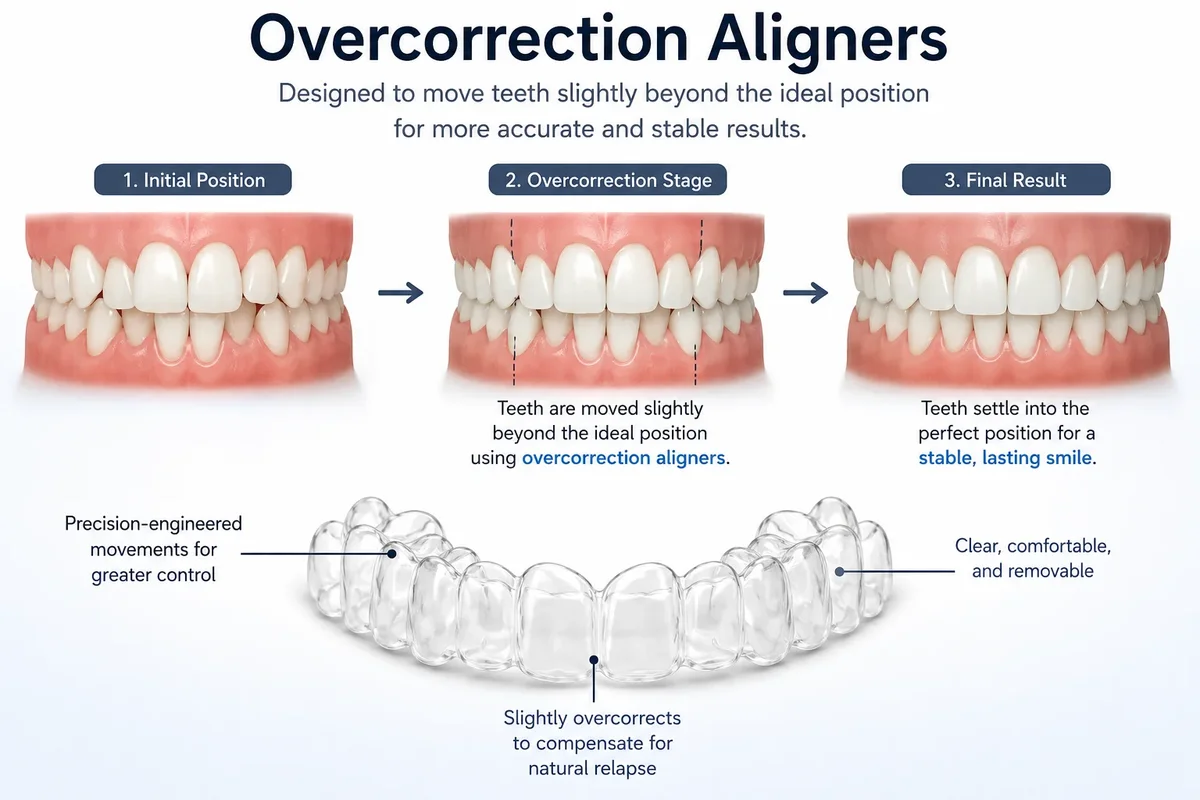
Overcorrection aligners have become an increasingly important part of modern clear aligner treatment. While many patients focus on the visible stages of tooth movement, orthodontists often plan treatment beyond the ideal final position. This strategy is known as overcorrection, and it is designed to compensate for the natural tendency of teeth to resist movement or slightly rebound after treatment. Overcorrection aligners are specialized aligners that intentionally move selected teeth slightly past their ideal position so that they settle into the desired alignment once treatment is complete.
Understanding overcorrection aligners is important for anyone considering clear aligner therapy. Whether you are researching treatment options, comparing different orthodontic systems, or currently undergoing aligner treatment, learning how overcorrection aligners work can help you better understand the treatment process and achieve realistic expectations. In many cases, overcorrection aligners play a significant role in improving treatment predictability and enhancing long-term outcomes.
🦷 The primary purpose of overcorrection aligners is to address the biological limitations of tooth movement. Teeth do not always move exactly as digital treatment plans predict. Factors such as bone density, root anatomy, patient compliance, chewing habits, and aligner fit can influence treatment results. Because of these variables, orthodontists may incorporate overcorrection aligners into the treatment plan to compensate for movements that are historically more difficult to achieve.
One common example involves tooth rotations. Rotated teeth, especially premolars and canines, can be challenging to move precisely. Even after significant correction, these teeth may have a tendency to rotate back toward their original position. Overcorrection aligners can move the tooth slightly beyond the ideal alignment so that when minor relapse occurs, the final position remains correct. This approach can improve overall treatment efficiency and reduce the need for additional refinement aligners.
Another area where overcorrection aligners are frequently used is the correction of spacing issues. Small gaps between teeth may appear closed during treatment simulations, but actual biological responses can vary. By utilizing overcorrection aligners, orthodontists can encourage complete closure and improve contact between teeth. Similarly, overcorrection aligners may be beneficial when correcting mild crowding, bite discrepancies, or certain types of arch asymmetry.
Patients often wonder whether overcorrection aligners are different from standard clear aligners. In terms of appearance, the answer is generally no. Overcorrection aligners look very similar to other stages in a clear aligner series. The difference lies in the programmed tooth movements contained within the aligner. The aligner is designed to continue moving specific teeth slightly beyond the intended final position based on the orthodontist’s treatment objectives.
Many orthodontic professionals view overcorrection aligners as a proactive measure rather than a corrective measure. Instead of waiting to see whether treatment goals are fully achieved, they plan for known biological tendencies from the beginning. This strategic approach can increase treatment accuracy and reduce the likelihood of unexpected outcomes. As digital orthodontics continues to advance, the use of overcorrection aligners has become more refined and personalized.
📈 One of the biggest advantages of overcorrection aligners is improved predictability. Clear aligner therapy relies heavily on computer-generated treatment planning. Although digital technology has dramatically improved treatment accuracy, biological systems remain complex. Overcorrection aligners help bridge the gap between virtual simulations and real-world tooth movement. This can lead to a more stable and satisfactory result for many patients.
It is important to understand that not every patient requires overcorrection aligners. The decision depends on multiple clinical factors, including the severity of malocclusion, tooth anatomy, previous orthodontic history, and treatment objectives. An experienced orthodontist evaluates these factors carefully when designing a customized treatment plan. For some patients, traditional aligner stages may be sufficient. For others, overcorrection aligners may provide a valuable advantage.
Patient compliance remains essential throughout treatment. Even the most carefully designed overcorrection aligners cannot achieve optimal results if they are not worn as instructed. Most providers recommend wearing aligners for approximately 20 to 22 hours per day. Consistent wear allows the programmed forces within overcorrection aligners to guide tooth movement effectively and predictably.
Many patients also ask whether overcorrection aligners increase discomfort. In most situations, the experience is very similar to wearing standard aligners. Some pressure or mild soreness may occur when transitioning to a new aligner stage, but this is typically temporary. The sensation generally indicates that the aligners are actively guiding teeth toward their planned positions.
When considering clear aligner treatment, consulting with a qualified dental professional is essential. Resources such as the American Dental Association can provide valuable information regarding oral health and orthodontic care. Patients seeking personalized guidance can also contact experienced providers through the Redent Klinik Contact Page to discuss treatment options and determine whether overcorrection aligners may be appropriate for their individual needs.
✅ Ultimately, overcorrection aligners represent a sophisticated advancement in modern orthodontics. By accounting for natural tooth movement tendencies, they help improve treatment precision, support long-term stability, and enhance overall patient satisfaction. As clear aligner technology continues to evolve, overcorrection aligners are expected to remain an important tool for achieving highly predictable orthodontic outcomes. Patients who understand the role of overcorrection aligners are often better prepared for treatment and more confident throughout their smile transformation journey.
How Overcorrection Aligners Improve Final Tooth Positioning
Achieving an ideal smile is not simply about moving teeth into a straight line. Successful orthodontic treatment requires precise control over tooth position, bite relationships, root alignment, and long-term stability. One of the most effective strategies used in modern clear aligner therapy to improve treatment accuracy is the use of overcorrection aligners. These specialized aligners are designed to compensate for the biological realities of tooth movement and help patients reach a more predictable final result.
Many patients are surprised to learn that teeth do not always move exactly as they appear in a digital treatment simulation. While advanced orthodontic software has significantly improved planning accuracy, real-life tooth movement remains influenced by numerous factors. This is where overcorrection aligners become valuable. By intentionally moving specific teeth slightly beyond their ideal target position, orthodontists can improve the likelihood that the teeth will ultimately settle into the correct alignment.
Why Teeth Do Not Always Follow the Digital Plan Perfectly
Every patient responds differently to orthodontic treatment. Even when wearing aligners exactly as instructed, small variations in tooth movement can occur. Teeth are supported by periodontal ligaments, surrounded by bone, and influenced by chewing forces, tongue pressure, and muscle activity. These biological factors create natural resistance to movement.
Because of this resistance, certain tooth movements may not fully track according to the treatment simulation. Orthodontists often anticipate these challenges during planning. Rather than waiting for treatment deficiencies to appear, they may incorporate overcorrection aligners to proactively compensate for expected movement limitations.
This strategy allows clinicians to improve predictability and reduce the need for extensive refinements later in treatment.
The Concept of Overcorrection in Orthodontics
Overcorrection is not a new concept. Traditional orthodontics has used overcorrection principles for decades. Braces frequently move teeth slightly beyond their final intended position to account for future settling and minor relapse tendencies. Modern clear aligner systems have adapted this concept through digital treatment planning.
When overcorrection aligners are prescribed, the orthodontist intentionally programs additional movement into the final aligner stages. This does not mean the treatment plan is inaccurate. Instead, it reflects a sophisticated understanding of how teeth behave biologically.
For example, if a tooth tends to rebound slightly after rotation correction, overcorrection aligners may rotate it slightly further than the ideal position. Once natural settling occurs, the tooth often ends up exactly where it should be.
Understanding Tooth Memory
Many orthodontic professionals refer to a phenomenon known as “tooth memory.” After remaining in one position for years, teeth often have a tendency to return toward their previous alignment. This tendency is particularly noticeable in rotated teeth.
Overcorrection aligners help counteract this effect by strategically moving teeth beyond the target position before retention begins. This approach can significantly improve long-term stability and treatment success.
Common Situations Where Overcorrection Aligners Are Used
Not every orthodontic case requires overcorrection aligners, but they are especially valuable in situations involving complex or historically difficult tooth movements.
Rotated Teeth
Rotational corrections are among the most common reasons for using overcorrection aligners. Teeth that have been rotated for many years often resist movement and may partially relapse after correction. Additional rotational movement built into overcorrection aligners can help compensate for this tendency.
Closing Spaces
Small gaps between teeth can sometimes reopen after treatment due to soft tissue pressure or incomplete closure. Orthodontists may use overcorrection aligners to slightly over-close these spaces before retention begins.
Anterior Tooth Positioning
The front teeth have a significant impact on smile aesthetics. Even minor positional discrepancies can affect the final cosmetic outcome. In some cases, overcorrection aligners help optimize incisor positioning for a more attractive and stable result.
Bite Refinement
Correcting bite relationships often requires highly controlled tooth movements. Orthodontists may use overcorrection aligners to improve the final fit between upper and lower teeth, enhancing both function and appearance.
How Overcorrection Aligners Reduce Refinement Needs
One of the major benefits of overcorrection aligners is their ability to reduce the need for additional treatment stages. Refinement aligners are commonly prescribed when certain teeth fail to reach their planned positions.
While refinements are sometimes necessary, excessive refinements can increase treatment duration and patient frustration. By proactively accounting for expected movement limitations, overcorrection aligners often help patients achieve desired outcomes more efficiently.
This improved predictability benefits both patients and clinicians by streamlining the treatment process and reducing unnecessary delays.
The Relationship Between Overcorrection Aligners and Long-Term Stability
Long-term stability is one of the most important goals of orthodontic treatment. Straight teeth are valuable, but maintaining alignment for many years is even more important.
Overcorrection aligners contribute to stability by helping teeth settle into positions that are more resistant to relapse. When properly combined with retainers and post-treatment monitoring, overcorrection aligners can support long-lasting results.
Patients should understand that no orthodontic treatment can completely eliminate the possibility of future tooth movement. However, strategic use of overcorrection aligners can significantly improve the chances of maintaining excellent alignment over time.
Patient Compliance Remains Essential
Even the most carefully designed overcorrection aligners depend on patient cooperation. Aligners must typically be worn for 20 to 22 hours per day to achieve optimal results. Failure to follow wear instructions may reduce treatment effectiveness and compromise final positioning.
Patients who consistently wear their aligners, attend follow-up appointments, and follow retention protocols generally experience the greatest benefits from overcorrection aligners.
Final Thoughts on Treatment Precision
Modern orthodontics increasingly relies on advanced technology to deliver precise outcomes, but biological variability remains an important factor. Overcorrection aligners provide an intelligent solution by anticipating how teeth actually behave during treatment rather than relying solely on digital predictions.
Through careful planning, strategic tooth movement, and enhanced treatment predictability, overcorrection aligners help clinicians achieve highly accurate final tooth positioning. Whether correcting rotations, closing spaces, refining bites, or improving smile aesthetics, overcorrection aligners represent a valuable tool for maximizing treatment success and delivering results that are both beautiful and stable for years to come. 😁
The Science Behind Overcorrection Aligners in Modern Orthodontics
Modern orthodontics combines advanced digital technology, biomechanics, material science, and human biology to achieve highly predictable tooth movement. One of the most sophisticated strategies used within clear aligner therapy is the implementation of overcorrection aligners. While many patients focus primarily on the visible aesthetic improvements created by aligners, the scientific principles behind treatment planning are often what determine whether the final outcome is merely good or truly exceptional.
Overcorrection aligners are based on decades of orthodontic research demonstrating that teeth do not always respond perfectly to planned movements. Even with state-of-the-art digital treatment software, biological variables influence how teeth move through bone. For this reason, orthodontists frequently incorporate overcorrection aligners into treatment plans to compensate for anticipated discrepancies and improve final treatment accuracy.
Understanding the Biology of Tooth Movement
To appreciate the purpose of overcorrection aligners, it is important to understand how teeth move. Teeth are not directly fused to the jawbone. Instead, they are suspended within the bone by a specialized connective tissue called the periodontal ligament.
When orthodontic forces are applied through aligners, gentle pressure is transmitted to the periodontal ligament. This pressure stimulates a biological response in which bone is removed from one side of the tooth and rebuilt on the opposite side. This process, known as bone remodeling, allows the tooth to gradually move into a new position.
Although modern orthodontics can accurately predict general movement patterns, each person’s biological response is unique. Factors such as age, bone density, genetics, oral health, and treatment compliance can all influence the speed and accuracy of tooth movement.
Because these variables cannot be completely controlled, orthodontists often use overcorrection aligners to account for predictable biological limitations.
Why Perfect Tooth Tracking Is Difficult
Digital treatment planning creates the impression that teeth move exactly according to a computer simulation. In reality, tooth movement is considerably more complex.
Every aligner is designed to apply carefully calculated forces to specific teeth. However, several factors may prevent ideal tracking:
- Variations in bone density
- Differences in root anatomy
- Patient wear-time compliance
- Attachment effectiveness
- Complex rotational movements
- Individual healing responses
- Occlusal forces during chewing
These factors can cause minor deviations from the planned tooth movement sequence. While such deviations are often small, they can accumulate over time and influence final treatment results. This is one of the primary reasons why overcorrection aligners have become an important component of many modern orthodontic protocols.
The Biomechanics of Overcorrection Aligners
The scientific principle behind overcorrection aligners is relatively straightforward. Rather than aiming solely for the ideal final position, the treatment plan intentionally moves selected teeth slightly beyond that position.
This strategy accounts for known tendencies of certain teeth to underperform during treatment or partially relapse afterward. By planning additional movement, orthodontists improve the likelihood that the final resting position will match the intended treatment objective.
Controlled Force Application
Clear aligners work best when they apply consistent, controlled forces. Excessive force can cause discomfort and reduce movement efficiency, while insufficient force may fail to produce the desired change.
Overcorrection aligners are carefully designed to maintain biologically appropriate force levels while extending movement slightly beyond the target position. This approach helps maximize predictability without compromising patient comfort.
Strategic Compensation
Orthodontists do not use overcorrection randomly. Instead, they identify movements that historically demonstrate lower predictability and strategically apply additional correction where needed. This evidence-based approach has significantly improved treatment outcomes across many aligner systems.
Rotational Movements and Overcorrection
One of the most researched applications of overcorrection aligners involves rotational corrections. Rotated teeth often present unique challenges because circular movement is more difficult to achieve than simple tipping or translation.
Teeth that have remained rotated for years may develop strong biological tendencies to return toward their original positions. Even after successful correction, slight rebound can occur.
To compensate for this phenomenon, orthodontists frequently utilize overcorrection aligners to rotate teeth slightly beyond their ideal final alignment. Once natural settling occurs, the teeth often stabilize in the desired position.
The Role of Digital Treatment Planning
Advances in digital orthodontics have greatly enhanced the effectiveness of overcorrection aligners. Modern treatment software allows orthodontists to simulate tooth movement with remarkable precision.
Three-dimensional scans provide detailed information regarding:
- Tooth anatomy
- Arch form
- Occlusal relationships
- Interproximal spacing
- Root positioning
- Overall treatment objectives
Using this information, clinicians can determine where overcorrection may be beneficial and incorporate specific movement adjustments directly into the treatment plan.
The result is a highly customized orthodontic strategy tailored to the patient’s individual needs.
How Material Science Supports Overcorrection Aligners
The success of overcorrection aligners also depends heavily on aligner material technology. Modern aligners are manufactured using advanced thermoplastic materials that maintain force consistency throughout the wear period.
These materials provide several advantages:
- Improved elasticity
- More predictable force delivery
- Enhanced fit and retention
- Greater patient comfort
- Reduced force degradation over time
Because force delivery remains more consistent, orthodontists can implement overcorrection strategies with greater confidence and accuracy than ever before.
Scientific Evidence Supporting Overcorrection
Numerous orthodontic studies have demonstrated that certain tooth movements consistently exhibit lower predictability than others. Rotations, extrusion movements, and some root-control movements are among the most challenging.
Research suggests that strategic overcorrection can improve treatment efficiency and reduce the need for extensive refinements. While not every case requires overcorrection aligners, evidence increasingly supports their use in situations where movement predictability may be compromised.
This scientific foundation explains why many experienced orthodontists routinely integrate overcorrection aligners into complex treatment plans.
The Future of Overcorrection Aligners
As artificial intelligence, digital modeling, and orthodontic materials continue to evolve, the effectiveness of overcorrection aligners is expected to improve further. Future treatment systems may incorporate real-time monitoring, predictive analytics, and enhanced biomechanical modeling to create even more personalized overcorrection protocols.
These innovations could reduce treatment time, improve stability, and increase overall patient satisfaction.
Conclusion
🦷 The science behind overcorrection aligners reflects the sophisticated integration of biology, biomechanics, digital technology, and clinical experience. Rather than relying solely on theoretical treatment simulations, orthodontists use overcorrection aligners to anticipate real-world tooth behavior and compensate for predictable movement limitations.
By accounting for biological variability, improving rotational correction, enhancing treatment precision, and supporting long-term stability, overcorrection aligners have become a valuable tool in modern orthodontics. Their continued development highlights how scientific innovation continues to improve the effectiveness and predictability of clear aligner therapy for patients around the world.
Who Is a Good Candidate for Overcorrection Aligners?
One of the most common questions patients ask when researching clear aligner treatment is whether they are suitable candidates for overcorrection aligners. While many people benefit from modern aligner therapy, not every orthodontic case requires overcorrection techniques. The decision to incorporate overcorrection aligners into a treatment plan depends on multiple clinical factors, including the type of tooth movement required, the complexity of the case, the patient’s oral health, and the orthodontist’s treatment objectives.
Overcorrection aligners are not considered a separate orthodontic treatment. Instead, they are an advanced planning strategy used within clear aligner therapy. Their purpose is to help compensate for predictable biological limitations and improve the likelihood of achieving the desired final tooth position. Understanding who may benefit most from overcorrection aligners can help patients better understand the treatment process and the reasons behind certain clinical recommendations.
Understanding the Purpose of Patient Selection
Orthodontic treatment is highly individualized. Two patients with seemingly similar alignment problems may require very different treatment approaches. This is because tooth movement is influenced by anatomy, bone structure, bite relationships, compliance habits, and many other variables.
Before recommending overcorrection aligners, orthodontists perform a comprehensive evaluation that often includes:
- Digital scans of the teeth
- Photographs of the smile and bite
- X-rays and diagnostic imaging
- Bite analysis
- Medical and dental history review
- Assessment of oral health conditions
Using this information, the clinician determines whether certain tooth movements may benefit from planned overcorrection.
Patients with Rotated Teeth
One of the most common groups of patients who benefit from overcorrection aligners includes individuals with significantly rotated teeth.
Rotated teeth often present unique orthodontic challenges because they tend to resist movement and may partially relapse after treatment. The periodontal fibers surrounding rotated teeth can retain a biological memory of the previous position, creating a tendency for the tooth to rotate back over time.
To address this issue, orthodontists frequently utilize overcorrection aligners to rotate the affected tooth slightly beyond its ideal final position. This extra correction helps compensate for potential rebound and improves long-term stability.
Common Rotational Cases
- Rotated canine teeth
- Twisted premolars
- Crowded lower front teeth
- Misaligned upper lateral incisors
Patients presenting with these conditions are often excellent candidates for overcorrection aligners.
Patients with Mild to Moderate Crowding
Dental crowding occurs when there is insufficient space within the dental arch to accommodate all teeth properly. Mild and moderate crowding cases frequently respond very well to aligner treatment.
However, some crowded teeth may demonstrate slower or less predictable movement patterns. In these situations, overcorrection aligners can help ensure that final alignment objectives are fully achieved.
By accounting for expected movement limitations, orthodontists can create more accurate treatment outcomes and reduce the likelihood of residual crowding after treatment completion.
Patients Requiring Space Closure
Individuals with gaps between teeth may also be good candidates for overcorrection aligners. While space closure often appears straightforward, maintaining complete closure can sometimes be challenging.
Small spaces may reopen due to soft tissue pressure, tongue habits, or natural biological adaptation. To compensate for this possibility, orthodontists may use overcorrection aligners to close spaces slightly beyond the ideal endpoint before retention begins.
This strategy improves the chances that teeth will remain fully aligned after treatment.
Patients with Relapse Following Previous Orthodontic Treatment
Many adults seek orthodontic treatment because their teeth have shifted following braces or previous aligner therapy. Relapse is relatively common when retainers are not worn consistently or when natural age-related changes occur.
Patients who have experienced orthodontic relapse are often strong candidates for overcorrection aligners. Since these individuals have already demonstrated a tendency toward tooth movement, orthodontists may proactively incorporate additional correction to improve long-term stability.
In many cases, overcorrection strategies are combined with carefully designed retention protocols to maximize treatment success.
Patients with Complex Tooth Movements
Certain types of tooth movement are inherently less predictable than others. These movements may include:
- Rotational correction
- Extrusion movements
- Root torque adjustments
- Arch coordination corrections
- Minor bite refinements
When these treatment objectives are present, overcorrection aligners may improve movement predictability and help achieve more precise results.
Orthodontists often rely on clinical experience and digital treatment planning software to determine where overcorrection may provide the greatest benefit.
Patients Who Demonstrate Excellent Compliance
One of the most important requirements for successful treatment with overcorrection aligners is patient compliance.
Aligners generally need to be worn between 20 and 22 hours per day. Patients who consistently follow instructions are significantly more likely to achieve the intended treatment outcome.
Even the most advanced treatment plan cannot compensate for inadequate aligner wear. Therefore, individuals who demonstrate strong commitment to their treatment are often ideal candidates for overcorrection aligners.
Characteristics of Highly Compliant Patients
- Consistent aligner wear
- Regular appointment attendance
- Proper aligner maintenance
- Good oral hygiene habits
- Commitment to retainer use after treatment
These behaviors greatly improve treatment predictability and maximize the benefits of overcorrection strategies.
Who May Not Need Overcorrection Aligners?
Although overcorrection aligners provide valuable benefits, not every patient requires them.
Individuals with straightforward tooth movements and highly predictable treatment objectives may achieve excellent results without additional overcorrection stages. Similarly, some minor cosmetic cases can often be completed successfully using conventional aligner sequences alone.
The decision to use overcorrection aligners should always be based on professional clinical judgment rather than patient preference alone.
The Importance of Professional Assessment
Determining candidacy for overcorrection aligners requires careful evaluation by a qualified orthodontic professional. Every patient presents unique anatomical characteristics and treatment goals that influence the planning process.
Through comprehensive examination, digital treatment planning, and biomechanical analysis, orthodontists can identify whether overcorrection strategies are likely to improve treatment outcomes.
Patients should remember that the goal of overcorrection aligners is not to move teeth excessively. Instead, these aligners are carefully designed to compensate for known biological tendencies and improve the likelihood of achieving ideal final positioning.
Conclusion
😁 Overcorrection aligners can be highly beneficial for patients with rotated teeth, spacing issues, mild to moderate crowding, previous orthodontic relapse, and complex tooth movements. They are particularly valuable when treatment predictability and long-term stability are primary concerns.
By strategically compensating for expected biological responses, overcorrection aligners help orthodontists deliver more accurate and stable results. While not every patient requires this advanced approach, those who do may benefit significantly from improved treatment precision, reduced refinement needs, and greater confidence in their final smile outcome. A professional consultation remains the best way to determine whether overcorrection aligners are appropriate for a specific orthodontic case.
Common Tooth Movements Achieved with Overcorrection Aligners
Modern clear aligner therapy has transformed orthodontics by allowing patients to straighten their teeth using removable, nearly invisible appliances. However, successful treatment depends on more than simply moving teeth from one position to another. Certain tooth movements are inherently more challenging and less predictable than others. This is where overcorrection aligners play a significant role. By intentionally planning specific teeth to move slightly beyond their ideal final positions, orthodontists can compensate for biological limitations and improve overall treatment accuracy.
Understanding the types of movements commonly achieved with overcorrection aligners helps patients appreciate the sophistication of modern orthodontic treatment planning. These aligners are frequently incorporated into cases involving rotations, spacing corrections, bite adjustments, root control, and other movements that historically demonstrate reduced predictability.
Why Certain Tooth Movements Require Overcorrection
Not all tooth movements respond equally to orthodontic forces. Some movements occur relatively easily, while others face greater biological resistance. Factors such as root shape, surrounding bone density, periodontal ligament characteristics, and tooth anatomy all influence movement predictability.
Orthodontists use overcorrection aligners when experience and research indicate that a particular movement may not fully achieve its intended result through conventional aligner stages alone. Instead of waiting for imperfections to appear at the end of treatment, clinicians proactively incorporate additional correction into the treatment plan.
This approach improves efficiency, reduces the likelihood of refinements, and helps produce more stable outcomes.
Rotational Corrections
One of the most common applications of overcorrection aligners involves tooth rotation. Rotated teeth are often among the most challenging orthodontic movements to achieve successfully.
When a tooth has remained twisted or rotated for many years, the surrounding periodontal fibers develop a memory of that position. Even after correction, these fibers can encourage the tooth to rotate back toward its original orientation.
Why Rotations Are Difficult
- Strong periodontal fiber resistance
- Complex force requirements
- Variable patient biology
- Greater tendency for relapse
To overcome these challenges, orthodontists frequently utilize overcorrection aligners to rotate teeth slightly beyond the ideal endpoint. This additional movement compensates for expected rebound and helps achieve long-term alignment stability.
Canines, premolars, and lower incisors are particularly common candidates for rotational overcorrection.
Closing Spaces Between Teeth
Another common use of overcorrection aligners involves the closure of gaps or spaces between teeth. While spacing may appear simple to correct, maintaining complete closure can sometimes be challenging.
After treatment, soft tissues, tongue pressure, and natural biological adaptation may cause small spaces to reopen. Even tiny gaps can affect aesthetics and patient satisfaction.
How Overcorrection Helps Space Closure
Orthodontists may use overcorrection aligners to slightly over-close spaces before retention begins. This creates additional assurance that teeth will settle into a fully closed position.
Common spacing situations include:
- Diastema closure between front teeth
- Generalized spacing throughout the arch
- Spaces created after tooth extractions
- Minor residual gaps after orthodontic treatment
By anticipating natural settling patterns, overcorrection aligners help improve long-term stability and aesthetic outcomes.
Correction of Mild and Moderate Crowding
Dental crowding occurs when there is insufficient room for teeth to align properly within the dental arch. Crowding often results in overlapping, rotated, or displaced teeth.
Many crowding cases respond very well to aligner therapy. However, certain crowded teeth may not move exactly as planned. In these situations, overcorrection aligners can provide additional precision.
By incorporating slight extra movement into the final aligner stages, orthodontists improve the likelihood that crowded teeth will fully reach their intended positions.
This strategy is particularly beneficial when treating lower anterior crowding, where relapse tendencies are often greater.
Anterior Tooth Position Adjustments
The upper and lower front teeth play a major role in smile aesthetics. Small positional inaccuracies can significantly affect overall treatment satisfaction.
Because aesthetic expectations are often high, orthodontists may utilize overcorrection aligners when refining anterior tooth positioning.
Examples of Anterior Adjustments
- Minor rotations of incisors
- Alignment of lateral incisors
- Correction of small asymmetries
- Refinement of smile arc appearance
- Optimization of tooth angulation
These refinements help create a more harmonious smile and improve the precision of the final orthodontic result.
Bite Relationship Improvements
Orthodontic treatment is not solely about straightening teeth. Proper bite relationships are equally important for oral function, comfort, and long-term stability.
In some cases, overcorrection aligners are incorporated to improve bite coordination between the upper and lower arches.
Common Bite Corrections
- Minor overbite adjustments
- Overjet refinement
- Posterior bite settling
- Crossbite improvements
- Midline corrections
Because bite corrections often involve multiple teeth moving simultaneously, small inaccuracies can affect the final result. Overcorrection aligners help compensate for these challenges and improve treatment predictability.
Root Position Control
Although patients primarily notice the visible crowns of their teeth, orthodontists must also consider root positioning. Proper root alignment contributes significantly to treatment stability and periodontal health.
Certain root movements are biologically demanding and may be less predictable during aligner treatment. As a result, some clinicians incorporate overcorrection aligners when additional root control is desired.
By planning subtle extra movement, orthodontists can improve the likelihood that roots ultimately achieve their intended positions.
Arch Coordination and Symmetry
Smile aesthetics depend heavily on symmetry and balanced arch relationships. Even minor discrepancies between the left and right sides of the dental arch can affect the final appearance.
Orthodontists may use overcorrection aligners to refine arch coordination and improve symmetry. This is especially valuable in cases where one side of the mouth responds differently than the other during treatment.
These small adjustments often have a significant impact on overall treatment quality.
Refinement of Difficult Tooth Movements
Not all treatment challenges fit neatly into a single category. Some patients present with unique combinations of crowding, spacing, rotations, and bite discrepancies.
In these situations, overcorrection aligners serve as a versatile tool for enhancing treatment precision. By strategically addressing movements that demonstrate lower predictability, orthodontists can improve the overall accuracy of the treatment plan.
This proactive approach often reduces the need for extensive refinement aligners later in treatment.
Long-Term Benefits of Overcorrected Movements
The ultimate goal of orthodontic treatment is not merely straight teeth on the day treatment ends. The objective is achieving a stable, healthy, and attractive result that lasts for many years.
Many of the movements addressed through overcorrection aligners are specifically selected because they carry higher risks of relapse or incomplete correction. By compensating for these tendencies, orthodontists improve long-term treatment stability.
When combined with proper retainer use and good oral hygiene, overcorrection aligners contribute significantly to maintaining treatment results over time.
Conclusion
😁 Overcorrection aligners are commonly used to improve the predictability of rotational corrections, space closure, crowding resolution, bite refinement, root control, and smile symmetry. These movements often present unique biological challenges that may limit treatment accuracy when conventional aligner stages are used alone.
By strategically incorporating additional planned movement, overcorrection aligners help orthodontists achieve more precise outcomes and reduce the likelihood of relapse or incomplete correction. Their role in modern aligner therapy highlights the growing sophistication of orthodontic treatment planning and the ongoing effort to deliver highly predictable, long-lasting smile transformations.
Benefits and Potential Limitations of Overcorrection Aligners
As clear aligner technology continues to evolve, orthodontists have gained access to increasingly sophisticated treatment planning tools. Among the most valuable of these tools are overcorrection aligners, which are designed to improve treatment precision by accounting for predictable biological behaviors during tooth movement. While overcorrection aligners offer numerous advantages, they also have limitations that patients should understand before beginning treatment.
A realistic understanding of both the benefits and challenges associated with overcorrection aligners allows patients to develop appropriate expectations and appreciate the clinical reasoning behind their orthodontic treatment plan. Like any advanced orthodontic technique, overcorrection aligners are most effective when used appropriately and under the supervision of an experienced orthodontic professional.
What Makes Overcorrection Aligners Different?
Unlike standard aligners that aim directly for the final tooth position, overcorrection aligners intentionally move selected teeth slightly beyond their ideal target. This planned extra movement compensates for natural biological tendencies that may otherwise prevent teeth from reaching or maintaining their desired positions.
The concept is based on decades of orthodontic experience showing that certain tooth movements, particularly rotations and space closures, may not track perfectly according to digital treatment simulations. By anticipating these challenges, orthodontists can improve treatment outcomes and reduce the risk of incomplete corrections.
Major Benefits of Overcorrection Aligners
The growing popularity of overcorrection aligners is largely due to the significant clinical advantages they provide. These benefits can positively impact both treatment efficiency and long-term stability.
Improved Treatment Predictability
One of the most important advantages of overcorrection aligners is enhanced predictability. Orthodontic treatment is influenced by numerous biological variables that cannot be perfectly controlled.
Factors such as:
- Bone density variations
- Root anatomy differences
- Patient compliance levels
- Periodontal ligament responses
- Individual healing rates
can all affect tooth movement. Overcorrection aligners help compensate for these variables by strategically planning additional movement where needed.
This proactive approach often increases the likelihood of achieving the desired final result.
Reduced Need for Refinement Aligners
Many patients undergoing aligner treatment eventually require refinement stages to correct minor discrepancies that remain after the initial treatment sequence.
Because overcorrection aligners anticipate potential treatment limitations, they often reduce the need for extensive refinements. This can save time, improve patient satisfaction, and help streamline the treatment process.
Although refinements may still be necessary in some cases, patients treated with overcorrection aligners frequently experience fewer corrective stages.
Better Rotational Correction
Rotated teeth are among the most challenging orthodontic movements. The surrounding periodontal fibers often create resistance that encourages teeth to return toward their original positions.
Orthodontists commonly use overcorrection aligners to address this challenge. By rotating teeth slightly beyond their ideal alignment, clinicians can compensate for expected rebound and improve treatment stability.
This technique is especially useful when treating:
- Canines
- Premolars
- Lower incisors
- Severely rotated teeth
The result is often a more precise and lasting correction.
Enhanced Space Closure
Small gaps between teeth may appear completely closed during treatment simulations but can reopen slightly after treatment due to biological adaptation.
Overcorrection aligners help address this concern by slightly over-closing spaces before retention begins. This strategy increases the probability that teeth will remain fully aligned over time.
Patients with spacing issues frequently benefit from this additional level of precision.
Improved Long-Term Stability
One of the ultimate goals of orthodontic treatment is maintaining alignment long after active treatment ends.
By compensating for relapse tendencies and biological settling patterns, overcorrection aligners can contribute to improved long-term stability.
When combined with consistent retainer use, overcorrection strategies may help preserve treatment results for many years.
Potential Limitations of Overcorrection Aligners
While the advantages of overcorrection aligners are significant, it is important to recognize that they are not a perfect solution for every orthodontic challenge.
Understanding their limitations helps patients maintain realistic expectations.
Dependence on Patient Compliance
No orthodontic system can compensate for inadequate patient cooperation.
Overcorrection aligners rely on consistent wear to deliver the intended forces. Patients who fail to wear their aligners for the recommended 20 to 22 hours per day may experience incomplete movements and less predictable outcomes.
Compliance remains one of the most important factors influencing treatment success.
Biological Variability Cannot Be Eliminated
Although overcorrection aligners help account for biological unpredictability, they cannot eliminate it entirely.
Every patient responds differently to orthodontic forces. Some individuals may achieve movements more quickly than expected, while others may require additional refinement despite careful planning.
Orthodontic treatment remains a biological process rather than an exact mechanical procedure.
Not Every Case Requires Overcorrection
Some patients mistakenly assume that more correction automatically produces better results. In reality, overcorrection should only be applied when clinically appropriate.
Simple orthodontic cases often achieve excellent outcomes without overcorrection aligners. Using unnecessary overcorrection could potentially complicate treatment rather than improve it.
This is why individualized treatment planning is essential.
Additional Monitoring May Be Needed
Patients using overcorrection aligners may require careful monitoring throughout treatment to ensure that movements are progressing as expected.
Regular appointments allow orthodontists to evaluate:
- Tooth tracking
- Attachment effectiveness
- Bite relationships
- Space closure progress
- Overall treatment response
These evaluations help determine whether the overcorrection strategy is producing the desired effect.
Patient Experience with Overcorrection Aligners
Many patients wonder whether overcorrection aligners feel different from standard aligners. In most situations, the experience is very similar.
Patients may notice mild pressure when transitioning into an overcorrection stage, but this sensation is generally temporary and comparable to previous aligner changes.
Most individuals adapt quickly and continue treatment without significant discomfort.
The Role of Orthodontic Expertise
The success of overcorrection aligners depends heavily on accurate diagnosis and treatment planning.
Experienced orthodontists understand which movements are most likely to benefit from overcorrection and how much additional movement should be incorporated into the treatment plan.
This clinical expertise is critical because excessive or insufficient overcorrection may reduce effectiveness.
Modern digital planning software provides valuable support, but professional judgment remains essential.
Balancing Benefits and Risks
The decision to use overcorrection aligners always involves balancing potential benefits against the specific needs of the patient.
For many individuals, the advantages—including greater predictability, improved stability, enhanced rotational correction, and reduced refinements—far outweigh any limitations.
However, orthodontists carefully evaluate each case before determining whether overcorrection is appropriate.
Conclusion
😁 Overcorrection aligners represent a highly effective advancement in modern clear aligner therapy. Their ability to improve treatment predictability, enhance rotational corrections, reduce refinement requirements, and support long-term stability makes them an invaluable tool for many orthodontic cases.
At the same time, patients should understand that overcorrection aligners are not a universal solution. Their success depends on proper case selection, accurate treatment planning, patient compliance, and ongoing professional supervision. When these factors are combined, overcorrection aligners can significantly improve orthodontic outcomes and help patients achieve healthier, more stable, and more attractive smiles.
Overcorrection Aligners vs Traditional Clear Aligner Treatment
Clear aligner therapy has revolutionized orthodontics by providing patients with a discreet and convenient alternative to traditional braces. Over the past two decades, advancements in digital treatment planning and aligner materials have significantly improved the effectiveness of orthodontic care. One of the most notable developments within this field is the use of overcorrection aligners. While traditional clear aligner treatment remains highly successful for many patients, overcorrection aligners offer an additional level of precision designed to address specific biological challenges associated with tooth movement.
Understanding the differences between standard aligner treatment and overcorrection aligners can help patients appreciate how modern orthodontic planning continues to evolve. Although both approaches share many similarities, their treatment philosophies and objectives differ in important ways.
What Is Traditional Clear Aligner Treatment?
Traditional clear aligner treatment uses a series of custom-made transparent trays that gradually move teeth into their desired positions. Each aligner is worn for a specified period before being replaced by the next aligner in the sequence.
The treatment plan is based on digital scans and sophisticated software that predicts tooth movement from the initial position to the intended final result.
The primary goals of traditional aligner therapy include:
- Straightening crooked teeth
- Closing gaps between teeth
- Correcting crowding
- Improving bite relationships
- Enhancing smile aesthetics
For many patients, standard aligner treatment successfully achieves these objectives without requiring additional correction strategies.
What Makes Overcorrection Aligners Different?
While traditional aligners focus on moving teeth directly to their intended final positions, overcorrection aligners incorporate a strategic adjustment into the treatment plan.
Rather than stopping precisely at the desired endpoint, overcorrection aligners intentionally move selected teeth slightly beyond their ideal positions. This extra movement compensates for known biological tendencies that may prevent teeth from fully reaching or maintaining their planned locations.
The difference is subtle but clinically significant. Overcorrection aligners are designed to anticipate real-world biological behavior rather than relying solely on theoretical digital predictions.
The Philosophy Behind Each Approach
Traditional Treatment Philosophy
Traditional aligner therapy assumes that teeth will follow the digital treatment plan closely enough to achieve acceptable clinical results. The approach is highly effective for many straightforward cases and remains the foundation of modern aligner treatment.
However, certain tooth movements have historically demonstrated lower predictability.
Overcorrection Philosophy
The philosophy behind overcorrection aligners acknowledges that some teeth do not always behave exactly as predicted.
By proactively compensating for these anticipated discrepancies, orthodontists can improve treatment precision and reduce the risk of incomplete correction.
This strategy reflects a deeper understanding of orthodontic biomechanics and biological variability.
Treatment Predictability Comparison
One of the biggest differences between traditional aligners and overcorrection aligners involves treatment predictability.
Although digital orthodontic software has become remarkably advanced, tooth movement remains a biological process influenced by many variables.
Examples include:
- Bone density differences
- Root anatomy variations
- Patient compliance
- Periodontal ligament responses
- Occlusal forces
Traditional treatment may occasionally produce small deviations from the planned outcome. Overcorrection aligners are specifically designed to address these challenges by incorporating additional corrective movement where necessary.
As a result, many orthodontists find that overcorrection aligners improve the predictability of difficult tooth movements.
Rotational Correction Performance
Rotated teeth represent one of the most challenging orthodontic movements.
Traditional aligners can successfully correct many rotations, but some teeth may partially relapse or fail to achieve complete rotational correction.
This is where overcorrection aligners often provide a distinct advantage.
Traditional Rotation Correction
- Effective for mild rotations
- May require refinements in complex cases
- Higher risk of minor rebound
Rotation Correction with Overcorrection Aligners
- Compensates for biological rebound
- Improves rotational accuracy
- Enhances long-term stability
- Reduces the likelihood of residual rotation
For patients with significant rotational problems, overcorrection aligners may offer superior results.
Refinement Requirements
Many patients require refinement aligners after completing their initial treatment sequence. Refinements are additional aligners designed to address residual discrepancies.
Traditional aligner treatment may occasionally require more refinements because it relies heavily on ideal tracking throughout the treatment process.
Since overcorrection aligners anticipate potential movement limitations, they often reduce the need for extensive refinement stages.
This can shorten overall treatment duration and improve patient satisfaction.
Long-Term Stability Comparison
Orthodontic treatment success is not measured solely by how teeth look on the final day of treatment. Long-term stability is equally important.
Traditional aligner treatment can produce highly stable results when combined with proper retainer use. However, some tooth movements remain more susceptible to relapse.
Overcorrection aligners specifically target these high-risk movements by compensating for predictable rebound tendencies.
This approach may contribute to improved stability in selected cases.
Patient Experience and Comfort
Many patients wonder whether overcorrection aligners feel different from traditional aligners.
In most situations, the patient experience is very similar.
Both treatment methods offer:
- Removable appliances
- Transparent appearance
- Improved oral hygiene access
- Minimal dietary restrictions
- Gradual tooth movement
Some patients may notice slightly increased pressure during certain overcorrection stages, but this is generally temporary and comparable to standard aligner transitions.
Case Selection Differences
Not every patient requires overcorrection aligners.
Traditional clear aligner treatment remains highly effective for many simple orthodontic cases involving straightforward movements and predictable treatment responses.
However, overcorrection aligners are often beneficial for:
- Rotated teeth
- Spacing corrections
- Orthodontic relapse cases
- Complex crowding situations
- Bite refinements
- High-risk movements
Orthodontists evaluate each patient individually before determining whether overcorrection strategies are appropriate.
The Role of Clinical Expertise
The effectiveness of both traditional aligners and overcorrection aligners depends heavily on professional treatment planning.
Experienced orthodontists understand when standard treatment is sufficient and when additional corrective strategies may improve outcomes.
Advanced digital tools provide valuable support, but clinical judgment remains essential for achieving optimal results.
The decision to incorporate overcorrection aligners should always be based on careful analysis of the patient’s specific needs and treatment objectives.
Conclusion
😁 Traditional clear aligner treatment and overcorrection aligners share the same overall goal: creating healthier, straighter, and more attractive smiles. However, overcorrection aligners take treatment planning one step further by accounting for biological variability and anticipated movement limitations.
While traditional aligners remain highly effective for many orthodontic cases, overcorrection aligners can improve predictability, enhance rotational corrections, reduce refinement needs, and support long-term stability in selected patients. Understanding the differences between these approaches allows patients to appreciate the sophistication of modern orthodontic treatment and the advanced planning techniques that contribute to successful outcomes.
What to Expect During Treatment with Overcorrection Aligners
For patients beginning clear aligner therapy, understanding the treatment journey can significantly reduce uncertainty and improve confidence. When overcorrection aligners are included in a treatment plan, many patients naturally wonder how the process differs from conventional aligner treatment. While the overall experience remains very similar, there are several important aspects that patients should understand regarding treatment progression, monitoring, comfort, and final results.
Overcorrection aligners are designed to improve treatment predictability by accounting for expected biological responses during tooth movement. Rather than representing a separate type of orthodontic treatment, they are an advanced planning strategy incorporated into a customized aligner sequence. Knowing what to expect during treatment with overcorrection aligners can help patients remain motivated and committed throughout their smile transformation journey.
The Initial Consultation and Assessment
The process begins long before the first aligner is delivered. Every successful treatment plan starts with a comprehensive orthodontic evaluation.
During the consultation, the orthodontist typically performs:
- Digital intraoral scanning
- Photographic documentation
- X-ray analysis
- Bite assessment
- Evaluation of tooth positioning
- Review of oral health status
These records allow the clinician to identify movements that may benefit from overcorrection aligners. Rotated teeth, spacing issues, bite discrepancies, and relapse-prone movements are among the most common reasons for incorporating overcorrection strategies.
At this stage, patients often receive a digital simulation demonstrating the anticipated treatment outcome.
Receiving Your First Aligners
Once the treatment plan is finalized, the aligners are manufactured and delivered.
Most patients begin with standard aligners during the early stages of treatment. In many cases, overcorrection aligners are incorporated toward the latter portion of the aligner sequence, after the majority of planned movements have already occurred.
The orthodontist will explain:
- How to insert and remove aligners
- Recommended wear schedules
- Cleaning procedures
- Dietary guidelines
- Appointment schedules
Although treatment protocols vary, aligners are typically worn for 20 to 22 hours per day.
The First Few Weeks of Treatment
During the initial weeks, patients often experience mild pressure as the aligners begin moving teeth.
This sensation is generally considered normal and indicates that orthodontic forces are being applied successfully. Most patients adapt quickly within several days.
Common Early Experiences
- Mild tenderness
- Temporary speech adjustments
- Increased saliva production
- Slight pressure when changing aligners
These effects are usually temporary and diminish as patients become accustomed to wearing aligners.
Whether treatment includes overcorrection aligners or standard aligners, the early stages are generally very similar.
Monitoring Progress Throughout Treatment
Regular monitoring appointments are essential during orthodontic treatment.
At these visits, the orthodontist evaluates:
- Tooth tracking accuracy
- Attachment performance
- Bite development
- Overall treatment progress
- Patient compliance
Because overcorrection aligners are designed to compensate for expected movement limitations, monitoring becomes especially important. The orthodontist may compare actual tooth movement with the digital treatment plan and make adjustments if necessary.
Fortunately, modern digital technologies allow clinicians to track progress with remarkable accuracy.
When Overcorrection Aligners Are Introduced
Many patients do not realize exactly when they begin wearing overcorrection aligners because these aligners often look identical to previous stages.
The primary difference lies in the programmed tooth movements rather than the physical appearance of the aligner.
Typically, overcorrection aligners are introduced during the final phase of active treatment when the orthodontist wants to:
- Improve rotational accuracy
- Refine bite relationships
- Ensure complete space closure
- Enhance tooth positioning precision
- Compensate for anticipated relapse tendencies
The patient experience remains largely unchanged, but the aligners are delivering carefully calculated movements beyond the standard treatment endpoint.
How Overcorrection Aligners Feel
One of the most frequently asked questions concerns comfort.
Most patients report that overcorrection aligners feel very similar to conventional aligners. However, because these aligners often involve additional tooth movement, some individuals may notice slightly increased pressure during certain stages.
Typical Sensations
- Mild tightness
- Temporary soreness
- Pressure during insertion
- Increased awareness of specific teeth
These sensations are generally short-lived and indicate that the aligners are functioning as intended.
Severe pain is uncommon and should always be discussed with the treating orthodontist.
The Importance of Compliance
The effectiveness of overcorrection aligners depends heavily on patient cooperation.
Because these aligners are designed to achieve highly precise movements, inconsistent wear can compromise treatment outcomes.
Patients are typically advised to:
- Wear aligners 20–22 hours daily
- Remove them only for eating and drinking
- Clean aligners regularly
- Follow replacement schedules exactly
- Attend all scheduled appointments
Patients who consistently follow these recommendations generally achieve the most predictable results with overcorrection aligners.
Potential Refinements After Overcorrection
Although overcorrection aligners are intended to reduce the need for refinements, some patients may still require minor adjustments at the end of treatment.
This does not necessarily indicate treatment failure. Orthodontics remains a biological process influenced by many factors beyond the clinician’s control.
When refinements are necessary, they are usually smaller and more targeted than those required after conventional treatment plans without overcorrection strategies.
Transitioning to Retainers
Once active treatment is complete, retention becomes the next critical phase.
Even after successful treatment with overcorrection aligners, teeth remain susceptible to movement if retainers are not worn appropriately.
Retainers help stabilize the newly achieved tooth positions while surrounding tissues adapt to the changes.
Common Retention Options
- Clear removable retainers
- Fixed bonded retainers
- Combination retention approaches
The orthodontist will recommend the most appropriate retention strategy based on the patient’s specific situation.
Long-Term Expectations
Patients often wonder whether treatment results achieved with overcorrection aligners are permanent.
While no orthodontic treatment can completely eliminate future tooth movement, overcorrection strategies are specifically designed to improve long-term stability by compensating for known relapse tendencies.
Combined with proper retainer use, good oral hygiene, and regular dental care, overcorrection aligners can contribute to highly stable treatment outcomes that last for many years.
Conclusion
😁 Treatment with overcorrection aligners closely resembles traditional clear aligner therapy while offering additional precision and predictability. From the initial consultation through retention, patients can expect a carefully planned process designed to account for biological variability and maximize treatment success.
By understanding each stage of treatment, maintaining excellent compliance, and following professional guidance, patients can fully benefit from the advantages of overcorrection aligners. These advanced orthodontic tools help improve final tooth positioning, reduce refinement needs, and support long-term smile stability, making them an increasingly valuable component of modern orthodontic care.
Tips for Maximizing Results with Overcorrection Aligners
Successful orthodontic treatment requires more than advanced technology and carefully designed treatment plans. Even though overcorrection aligners are specifically engineered to improve treatment precision and compensate for biological variability, patient cooperation remains one of the most important factors influencing the final outcome. Understanding how to maximize the effectiveness of overcorrection aligners can help patients achieve more predictable results, reduce treatment delays, and maintain long-term smile stability.
Orthodontists design overcorrection aligners to address tooth movements that may be difficult to achieve through standard aligner treatment alone. However, these sophisticated aligners can only perform as intended when patients consistently follow treatment instructions. By adopting certain habits and best practices throughout the treatment process, patients can significantly improve their chances of achieving optimal results.
Wear Overcorrection Aligners as Directed
The most important recommendation for any aligner patient is consistent wear.
Most orthodontists recommend wearing overcorrection aligners for approximately 20 to 22 hours per day. This schedule allows the aligners to deliver continuous and controlled orthodontic forces to the teeth.
Every hour that aligners are not worn can reduce treatment efficiency. Because overcorrection aligners often involve highly precise movements, inconsistent wear may have an even greater impact on treatment outcomes.
Common Reasons for Poor Compliance
- Forgetting to reinsert aligners after meals
- Removing aligners for extended social events
- Inconsistent daily routines
- Failure to follow replacement schedules
Patients who maintain excellent compliance generally experience more predictable movement and better final positioning.
Follow the Prescribed Aligner Change Schedule
Each aligner in a treatment sequence is designed to perform a specific stage of tooth movement.
Changing overcorrection aligners too early may prevent teeth from completing the intended movement. Waiting excessively long between aligners may unnecessarily prolong treatment.
The orthodontist determines the optimal replacement schedule based on factors such as:
- Case complexity
- Age
- Biological response
- Movement type
- Overall treatment goals
Following the prescribed schedule ensures that overcorrection aligners can function exactly as intended.
Maintain Excellent Oral Hygiene
Healthy teeth and gums respond more effectively to orthodontic treatment.
Poor oral hygiene can increase the risk of inflammation, gum disease, and other complications that may interfere with treatment progress.
Patients wearing overcorrection aligners should establish a thorough oral hygiene routine that includes:
- Brushing after meals
- Daily flossing
- Using fluoride toothpaste
- Regular professional cleanings
- Routine dental examinations
Healthy periodontal tissues support more predictable tooth movement and contribute to overall treatment success.
Keep Aligners Clean
Proper aligner hygiene is often overlooked but plays an important role in treatment effectiveness.
Dirty aligners can accumulate bacteria, develop odors, and lose transparency. In some cases, buildup may affect aligner fit and comfort.
Best Practices for Cleaning Overcorrection Aligners
- Rinse aligners when removed
- Brush gently with a soft toothbrush
- Use approved aligner cleaning products
- Avoid hot water that may distort plastic
- Store aligners properly when not in use
Maintaining clean overcorrection aligners promotes comfort, oral health, and treatment compliance.
Attend All Scheduled Orthodontic Appointments
Regular monitoring appointments allow orthodontists to verify that treatment is progressing according to plan.
Although modern aligner systems are highly advanced, orthodontic treatment remains a biological process that requires professional supervision.
During follow-up visits, clinicians evaluate:
- Tooth tracking accuracy
- Attachment retention
- Bite development
- Space closure progress
- Effectiveness of overcorrection aligners
These evaluations help identify potential issues before they become significant problems.
Use Attachments and Accessories Properly
Many aligner treatment plans incorporate small composite attachments that improve force delivery.
Attachments are particularly important when using overcorrection aligners because precise tooth movement often requires enhanced control.
Patients should avoid behaviors that increase the risk of attachment loss and should immediately notify their orthodontist if an attachment becomes detached.
Additional Accessories
Depending on the treatment plan, patients may also use:
- Elastics
- Precision cuts
- Bite ramps
- Auxiliary appliances
Using these accessories exactly as prescribed can significantly improve treatment efficiency.
Monitor Tooth Tracking Carefully
One of the most valuable habits patients can develop is monitoring how their teeth fit within the aligners.
Proper tracking occurs when teeth remain fully seated within the aligner trays.
Signs of potential tracking issues include:
- Visible gaps between teeth and aligners
- Persistent looseness
- Incomplete seating
- Unexpected discomfort
If any of these signs appear, patients should contact their orthodontist promptly. Early intervention can help preserve the effectiveness of overcorrection aligners.
Be Patient with the Process
Many patients become eager to see immediate results after beginning treatment. While modern aligner therapy can produce remarkable improvements, tooth movement occurs gradually.
Overcorrection aligners are designed to create highly precise outcomes, and precision often requires patience.
Small daily changes accumulate over time to produce significant transformations. Trusting the treatment process and following professional guidance are essential for achieving the desired result.
Prioritize Retention After Treatment
Completing active treatment does not mark the end of orthodontic care.
Even after successful treatment with overcorrection aligners, teeth remain susceptible to movement if retainers are not worn consistently.
Retention is especially important because the biological structures surrounding the teeth require time to stabilize.
Common Retention Recommendations
- Nighttime retainer wear
- Long-term follow-up evaluations
- Replacement of damaged retainers
- Consistent retention routines
Patients who follow retention instructions closely are more likely to preserve their treatment results for many years.
Adopt Healthy Lifestyle Habits
Overall health can influence orthodontic treatment outcomes.
Patients using overcorrection aligners may benefit from maintaining habits that support oral and systemic health.
Helpful practices include:
- Balanced nutrition
- Adequate hydration
- Avoidance of tobacco products
- Stress management
- Regular exercise
These habits contribute to healthier tissues and may support more efficient biological responses during treatment.
Communicate Openly with Your Orthodontist
Successful treatment is a partnership between the patient and the orthodontic team.
Patients should feel comfortable discussing concerns, asking questions, and reporting any unusual experiences during treatment with overcorrection aligners.
Open communication allows clinicians to make timely adjustments and provide guidance that supports optimal outcomes.
Conclusion
😁 Maximizing the benefits of overcorrection aligners requires a combination of professional treatment planning and patient commitment. Consistent wear, excellent oral hygiene, proper aligner maintenance, regular monitoring, and adherence to retention protocols all play essential roles in treatment success.
While overcorrection aligners provide advanced solutions for improving treatment predictability and long-term stability, their effectiveness ultimately depends on how well patients follow instructions throughout the orthodontic journey. By adopting these best practices, patients can significantly increase their chances of achieving a healthy, attractive, and lasting smile that fully reflects the benefits of modern orthodontic technology.
Frequently Asked Questions About Overcorrection Aligners
As the popularity of clear aligner therapy continues to grow, more patients are becoming aware of advanced treatment planning techniques such as overcorrection aligners. While orthodontists have used overcorrection principles for many years, many patients are unfamiliar with how these specialized aligners work and why they may be included in a treatment plan. This section answers some of the most frequently asked questions about overcorrection aligners, helping patients gain a deeper understanding of their purpose, benefits, limitations, and role in modern orthodontics.
What Are Overcorrection Aligners?
Overcorrection aligners are clear aligners specifically designed to move certain teeth slightly beyond their ideal final positions. This additional movement compensates for predictable biological tendencies that may prevent teeth from fully reaching or maintaining their desired alignment.
The concept is based on extensive orthodontic experience showing that some tooth movements are less predictable than others. By incorporating strategic overcorrection, orthodontists can improve treatment accuracy and long-term stability.
Importantly, overcorrection aligners do not represent a separate orthodontic system. They are simply a specialized component of an individualized treatment plan.
Why Are Overcorrection Aligners Necessary?
Teeth do not always move exactly according to computer-generated treatment simulations. Biological factors such as bone density, periodontal ligament response, root anatomy, and patient compliance can all influence treatment outcomes.
Orthodontists use overcorrection aligners to compensate for these variables. Rather than waiting for treatment deficiencies to appear, they proactively plan additional movement where necessary.
This approach often improves predictability and reduces the need for extensive refinements later in treatment.
Do All Patients Need Overcorrection Aligners?
No. Not every orthodontic case requires overcorrection aligners.
Many patients achieve excellent results using standard aligner treatment alone. Overcorrection strategies are typically reserved for situations where certain movements have a higher likelihood of underperforming or relapsing.
Examples include:
- Rotated teeth
- Space closure cases
- Orthodontic relapse treatment
- Complex crowding corrections
- Bite refinement procedures
The decision to use overcorrection aligners is based on professional evaluation and individualized treatment planning.
Are Overcorrection Aligners Different from Regular Aligners?
From a patient’s perspective, overcorrection aligners often look identical to conventional aligners.
The difference lies in the programmed tooth movements rather than the physical appearance of the aligner itself.
These aligners contain carefully calculated instructions that move selected teeth slightly beyond their ideal positions. Once natural settling occurs, the teeth are more likely to stabilize in the desired alignment.
Most patients cannot visually distinguish overcorrection aligners from other aligners in their treatment sequence.
Do Overcorrection Aligners Hurt More?
This is one of the most common concerns among patients.
In most cases, overcorrection aligners do not cause significantly more discomfort than standard aligners. Patients may experience mild pressure or temporary soreness when transitioning into a new aligner stage, but this sensation is generally expected during any orthodontic treatment.
Typical Experiences Include:
- Mild tightness
- Temporary pressure
- Short-term soreness
- Minor sensitivity when chewing
These symptoms usually diminish within a few days as the teeth adapt to the new aligner.
How Long Are Overcorrection Aligners Worn?
The duration varies depending on the treatment plan.
Like standard aligners, overcorrection aligners are generally worn according to a schedule determined by the orthodontist. Some patients may wear them for one to two weeks per stage, while others may follow slightly different protocols.
The total treatment time depends on:
- Case complexity
- Treatment objectives
- Patient compliance
- Biological response
- Need for refinements
Orthodontists tailor these recommendations to each individual patient.
Can Overcorrection Aligners Prevent Relapse?
Overcorrection aligners can help reduce the risk of relapse, but they cannot completely eliminate it.
Orthodontic relapse is influenced by many factors, including genetics, tissue memory, aging, and retainer compliance. Overcorrection strategies compensate for predictable relapse tendencies by slightly overcorrecting selected tooth movements.
However, long-term stability still depends heavily on proper retention.
The Importance of Retainers
Even after successful treatment with overcorrection aligners, retainers remain essential.
Retainers help maintain tooth positions while surrounding tissues adapt to the new alignment. Patients who neglect retainer use may still experience unwanted tooth movement over time.
Can Overcorrection Aligners Reduce Refinement Needs?
Yes, in many cases they can.
One of the primary advantages of overcorrection aligners is their ability to address movement limitations proactively. By accounting for expected biological responses during treatment planning, orthodontists often reduce the need for additional refinement aligners.
While refinements may still be necessary in some cases, overcorrection strategies frequently improve treatment efficiency and overall predictability.
Are Overcorrection Aligners Safe?
When prescribed and monitored by qualified orthodontic professionals, overcorrection aligners are considered safe.
These aligners use the same general principles and materials as conventional aligner therapy. The difference lies in the treatment planning strategy rather than the safety profile.
Orthodontists carefully evaluate each patient before incorporating overcorrection into the treatment plan to ensure that the approach is clinically appropriate.
How Do Orthodontists Decide When to Use Overcorrection Aligners?
The decision involves a combination of clinical experience, digital treatment planning, and biomechanical analysis.
Orthodontists evaluate factors such as:
- Type of tooth movement required
- Historical movement predictability
- Risk of relapse
- Patient compliance history
- Overall treatment goals
Using this information, they determine whether overcorrection aligners are likely to improve treatment outcomes.
Can Adults Benefit from Overcorrection Aligners?
Absolutely.
Many adult orthodontic patients are excellent candidates for overcorrection aligners, particularly those seeking correction of relapse following previous orthodontic treatment.
Adults often present with:
- Rotated teeth
- Crowding recurrence
- Spacing relapse
- Bite discrepancies
- Long-standing misalignment
In these situations, overcorrection aligners can provide valuable assistance in achieving stable and predictable outcomes.
What Happens After Overcorrection Aligners?
After the active treatment phase is complete, patients typically transition into retention.
The orthodontist evaluates the final result and determines whether any refinements are needed. Once treatment objectives have been achieved, retainers are provided to help preserve the corrected tooth positions.
Even after successful treatment with overcorrection aligners, long-term retention remains one of the most important factors influencing stability.
Are Overcorrection Aligners Worth It?
For many patients, the answer is yes.
The ability of overcorrection aligners to improve predictability, enhance rotational corrections, reduce refinement requirements, and support long-term stability makes them a valuable addition to modern orthodontic treatment planning.
Although not every patient requires them, those who do may benefit significantly from the added precision they provide.
Final Thoughts
😁 Overcorrection aligners represent one of the most advanced developments in contemporary clear aligner therapy. By addressing the natural biological limitations of tooth movement, they help orthodontists achieve more accurate and stable results.
Patients who understand the purpose and function of overcorrection aligners are often better prepared for treatment and more confident in the orthodontic process. Whether correcting rotations, closing spaces, improving bite relationships, or preventing relapse, overcorrection aligners continue to play an increasingly important role in delivering predictable and long-lasting smile transformations.