
Are you curious about how the Invisalign process transforms your smile without the discomfort and visibility of traditional braces? 🦷 You’re not alone. Millions of people worldwide have chosen Invisalign as a modern, discreet, and effective solution to achieve perfectly aligned teeth. This comprehensive guide explains every detail of the Invisalign process, from your very first consultation to the final reveal of your confident new smile. Whether you’re considering treatment for cosmetic reasons or to improve your bite and oral health, understanding how Invisalign works is the key to making the right decision.
The Invisalign process begins with a digital consultation where advanced 3D imaging technology maps out your unique dental structure. This technology allows your dentist to create a personalized treatment plan that predicts every tooth movement before the aligners are even made. Unlike traditional braces, which use metal brackets and wires, Invisalign uses a series of clear aligners made from BPA-free thermoplastic material. These aligners are custom-designed to fit your teeth precisely, applying gentle pressure to gradually move them into the correct position. Each set of aligners is worn for about 1–2 weeks before switching to the next stage in the sequence.
What makes the Invisalign process so popular is its combination of convenience, aesthetics, and precision. The aligners are nearly invisible, making them ideal for professionals, students, or anyone who prefers a subtle approach to orthodontic treatment. Moreover, they are removable, allowing you to enjoy your favorite foods and maintain your oral hygiene with ease. 🪥 You can eat, brush, and floss normally — something that traditional braces make difficult.
Another significant advantage of the Invisalign process is its predictability. Thanks to advanced computer simulations, both the dentist and patient can preview the expected results before the treatment starts. You’ll know exactly how long your treatment will take and what your final smile will look like. Most treatments last between 6 to 18 months, depending on the complexity of your case. During this period, you’ll visit your dentist approximately every 6–8 weeks for progress checks and to receive your next sets of aligners.
The comfort level during the Invisalign process is much higher compared to traditional orthodontics. While you may experience slight pressure or tightness during the first few days of wearing a new aligner, this sensation typically means the aligners are working correctly. There are no sharp brackets, no painful wire adjustments, and no irritation to your cheeks or gums. Many patients report that after just a few days, they barely notice the aligners at all. 😄
Hygiene is another key factor in the success of the Invisalign process. Since the aligners are removable, you can maintain optimal oral health throughout the treatment. It’s essential to brush your teeth and clean your aligners regularly to avoid bacteria buildup or staining. Using lukewarm water and a soft toothbrush is recommended — never use hot water as it can distort the plastic. The transparency of the aligners depends on your care routine, and clean aligners also ensure better comfort and performance.
Patients who undergo the Invisalign process often describe it as a confidence-boosting journey. As your teeth gradually move into alignment, you’ll notice small but significant changes every few weeks. By the time the process is complete, you’ll not only have a more beautiful smile but also a healthier bite and improved oral function. Straight teeth are easier to clean and less prone to cavities or gum problems. Therefore, the Invisalign process is not just cosmetic — it’s a long-term investment in your oral health.
When you’re ready to start, your first step is to schedule an appointment with a certified Invisalign provider. You can easily contact professionals through the Redent Klinik Contact Page to begin your journey. At Redent Klinik, specialists will examine your dental health, discuss your goals, and design a treatment plan tailored specifically for your needs. During the consultation, your dentist will also explain all costs, financing options, and the expected treatment timeline so that you’re fully informed before making your decision.
For additional guidance on orthodontic standards and best practices, you can also explore trusted sources like the American Dental Association. They provide educational resources and recommendations to ensure your treatment aligns with the highest dental care standards.
Ultimately, the Invisalign process is more than a cosmetic improvement — it’s a journey toward self-confidence, health, and comfort. With discipline, proper maintenance, and the guidance of an experienced dentist, the results can be life-changing. 🌟 Whether you’re addressing crowding, gaps, or bite issues, Invisalign offers a modern, reliable, and aesthetically pleasing solution to achieve your dream smile.
In the following sections, we’ll explore each stage of the Invisalign process in greater detail — from your first consultation to the post-treatment care that ensures your smile stays flawless for years to come.
1. What Is the Invisalign Process and How Does It Work?
The Invisalign process is a revolutionary orthodontic treatment that uses a series of custom-made, clear aligners to gradually move your teeth into their desired position. Unlike traditional metal braces, Invisalign aligners are made from smooth, transparent thermoplastic material, making them nearly invisible and far more comfortable. 🌟 This innovative approach offers both aesthetic and functional benefits, allowing patients to achieve a beautifully aligned smile without compromising comfort or appearance.
Understanding the Science Behind the Invisalign Process
At its core, the Invisalign process works by applying controlled pressure to specific teeth over a set period. Each aligner is designed to move teeth slightly — typically by about 0.25 mm — before being replaced with the next set in the series. Over time, these micro-adjustments result in perfectly aligned teeth. This method is powered by advanced 3D imaging and computer-assisted design (CAD) technology, ensuring precise control over tooth movement and treatment duration.
Before the Invisalign process begins, your dentist takes a digital scan or impression of your teeth using intraoral scanners. These high-resolution scans are uploaded to Invisalign’s proprietary software, where a virtual 3D model of your teeth is created. This model helps the orthodontist map out every stage of the movement, ensuring accuracy and predictability. You’ll even get to see a digital preview of your final smile before treatment starts — a motivating glimpse into your future results. 😁
Custom Aligners Tailored for Every Patient
Once your treatment plan is finalized, the data is sent to a specialized laboratory where your aligners are fabricated. Each aligner is custom-cut and trimmed to fit snugly over your gum line, enhancing comfort and minimizing irritation. The aligners are made from a patented material known as SmartTrack®, which was developed specifically for Invisalign to provide gentle yet consistent force during tooth movement. The result is an experience that’s more comfortable, predictable, and efficient than traditional braces.
The Invisalign process typically involves changing aligners every one to two weeks. Most patients wear their aligners for 20–22 hours a day, removing them only for eating, drinking (except water), brushing, and flossing. Skipping aligner wear or wearing them less than recommended can delay progress, so consistency is key to success.
Key Benefits of the Invisalign Process
- Discreet Appearance: The clear, nearly invisible aligners let you smile confidently throughout treatment.
- Comfort and Safety: No metal wires or brackets mean fewer mouth sores or gum irritation.
- Removable Design: You can remove them during meals and for cleaning, making oral hygiene effortless.
- Predictable Results: Digital planning ensures you know your expected timeline and final outcome from the start.
- Fewer Dental Visits: Unlike braces, you won’t need frequent adjustments — just routine check-ins every 6–8 weeks.
According to the American Dental Association, orthodontic treatments like Invisalign not only enhance your smile but also improve oral health by correcting bite issues, reducing strain on the jaw, and making it easier to clean your teeth properly.
Step-by-Step Overview of How the Invisalign Process Works
Step 1: Consultation and Assessment
The journey begins with a comprehensive dental evaluation at a certified clinic, such as Redent Klinik Contact Page. Your dentist reviews your dental health, discusses your goals, and determines if Invisalign is the right choice for you. During this visit, your questions about cost, duration, and expected results are answered clearly.
Step 2: Digital Imaging and Treatment Planning
Using advanced 3D scanning technology, your dentist captures precise images of your teeth. These images are uploaded to Invisalign’s software, which simulates the entire tooth movement process. This customized treatment plan outlines how long the Invisalign process will take and what your smile will look like at each stage.
Step 3: Fabrication of Aligners
Once approved, your aligners are custom-manufactured. Each tray is uniquely shaped to guide your teeth to their next position. You will receive several sets of aligners at once, so you can progress without needing to visit the dentist frequently.
Step 4: Wearing and Switching Aligners
Every one to two weeks, you’ll switch to a new aligner set. The aligners should be worn 20–22 hours daily, only removed for meals or cleaning. If used correctly, the Invisalign process gradually shifts teeth until they reach optimal alignment.
Step 5: Monitoring and Adjustments
Regular check-ups ensure your teeth are moving according to plan. Adjustments or refinements may be made if needed, particularly for complex cases. These visits are crucial for maintaining the progress and efficiency of your treatment.
Common Conditions Treated with the Invisalign Process
The Invisalign process is suitable for a wide range of dental issues, including:
- Overcrowded teeth
- Gaps between teeth
- Overbites and underbites
- Crossbites and open bites
- Mild to moderate malocclusions
However, for severe orthodontic problems or skeletal misalignments, traditional braces or combined treatment approaches may still be recommended. The decision always depends on the complexity of the case and the dentist’s evaluation.
Expected Duration and Results
On average, the Invisalign process takes between 6 to 18 months. Minor corrections may require less time, while complex realignments might take longer. Patients must follow their dentist’s guidance carefully — consistency ensures faster, more accurate results. After completing the process, patients usually receive a retainer to maintain the achieved alignment and prevent teeth from shifting back.
Conclusion: Why the Invisalign Process Stands Out
What truly distinguishes the Invisalign process is its ability to combine beauty, precision, and comfort. It represents a new era in orthodontics where you no longer have to choose between effectiveness and aesthetics. With digital planning, personalized aligners, and predictable results, Invisalign offers a smooth and satisfying journey toward a healthier, more confident smile. 😃
If you’re ready to begin your own transformation, start with a consultation today. The Invisalign process could be the easiest and most rewarding step you’ll ever take toward achieving the smile you’ve always wanted.
2. Step 1 – Your Initial Invisalign Consultation
The first and most essential stage of the Invisalign process begins with an in-depth consultation with a certified Invisalign provider. 🦷 This initial appointment sets the foundation for your entire treatment. It’s where your goals, dental health, and suitability for Invisalign are evaluated in detail. Think of it as your roadmap session — where science meets aesthetics to create a perfectly aligned smile plan tailored just for you. The Invisalign process relies heavily on precision and personalization, and that begins right here during the consultation phase.
Understanding the Purpose of the Initial Consultation
The consultation phase is not just a casual conversation — it’s a thorough dental assessment. The main goal is to determine whether your teeth alignment, bite condition, and overall oral health make you a good candidate for Invisalign. Not every dental case can be treated with aligners; therefore, this step ensures you are guided toward the most effective treatment option for your unique needs. The dentist will examine issues such as crowding, gaps, crossbites, or overbites, and explain how the Invisalign process can correct each one efficiently.
During this meeting, your dentist or orthodontist will also discuss your aesthetic goals. Do you want to close gaps? Straighten overlapping teeth? Improve your bite function? All these details help in customizing your aligner design and treatment timeline. 🗓️ Since the Invisalign process uses cutting-edge digital modeling, the information gathered in this consultation will directly shape the aligners that guide your teeth into alignment.
What Happens During the First Visit
1. Comprehensive Dental Examination
The Invisalign process starts with a visual and digital examination of your mouth. Your dentist checks your gums, teeth, and jaw alignment to ensure they’re healthy enough for treatment. X-rays may be taken to analyze bone density and root structure — critical factors in predicting tooth movement success.
2. Digital 3D Scanning or Impressions
After the examination, a 3D scan or digital impression of your teeth is captured using intraoral scanners. These scanners replace the uncomfortable molds used in traditional dentistry. The scan creates a detailed, three-dimensional model of your mouth, allowing for exact visualization of your current tooth positions. This digital model becomes the blueprint for your personalized aligner design and treatment simulation.
3. Simulation of Your Future Smile
One of the most exciting moments of the Invisalign process consultation is the digital smile preview. Using advanced software, your dentist can show you an animated simulation of how your teeth will move at each stage and what your final smile will look like. Seeing the before-and-after transformation boosts confidence and helps you fully understand the commitment and outcome of the treatment.
Evaluating Your Suitability for Invisalign
While the Invisalign process works for most mild to moderate orthodontic issues, it might not be suitable for everyone. Patients with severe bite misalignment, missing teeth, or complex jaw discrepancies might require alternative or combination treatments. During your consultation, the dentist carefully evaluates these factors to determine the best approach. If Invisalign is suitable, your customized plan is created immediately after your scan.
In some cases, the dentist may recommend preliminary treatments such as professional cleaning, cavity fillings, or gum therapy before starting the Invisalign process. These steps ensure that your mouth is healthy and ready for consistent tooth movement without complications.
Discussing Costs and Payment Options
Financial transparency is an essential part of the consultation. Invisalign can be a significant investment, but most clinics offer flexible payment plans. On average, the cost of the Invisalign process ranges between $3,000 and $7,000, depending on complexity and location. Below is a general price breakdown to give you an idea:
Estimated Invisalign Cost (USD):
Mild Alignment (6–9 months): $3,000 – $4,000
Moderate Alignment (9–15 months): $4,000 – $6,000
Complex Alignment (15–24 months): $6,000 – $7,500
*Prices may vary depending on dentist expertise and region.
During the first consultation, your dentist explains these pricing factors in detail, including what’s covered in your plan. You’ll also learn about insurance options and installment schedules. This level of clarity ensures that there are no surprises later in the treatment journey.
Why Choosing the Right Clinic Matters
The experience and expertise of your provider play a crucial role in the success of the Invisalign process. Clinics like Redent Klinik focus on personalized care and precision-based treatment planning. Choosing a trusted clinic ensures that your case is handled by certified professionals who understand the nuances of tooth movement and aligner optimization. A well-qualified provider can identify potential challenges early and design strategies to avoid delays or discomfort during treatment.
Redent Klinik’s Patient-Centered Approach
At Redent Klinik, every patient’s journey starts with a warm, informative consultation. The dental team prioritizes transparency, comfort, and technology integration at every step. Using cutting-edge imaging tools and artificial intelligence–powered alignment mapping, the clinic guarantees precision in every stage of the Invisalign process. You’ll also receive expert guidance on oral hygiene habits, aligner care, and post-treatment retainers.
Questions to Ask During Your Invisalign Consultation
To make the most of your first visit, it’s helpful to prepare questions such as:
- How long will my treatment take?
- Am I a good candidate for the Invisalign process?
- How often will I need to visit for check-ups?
- What should I do if I lose or damage an aligner?
- Will I need attachments or refinements?
Getting these answers upfront helps you understand every aspect of the process and sets clear expectations for your treatment timeline.
The Importance of Commitment and Discipline
Remember that the success of the Invisalign process heavily depends on your consistency. Aligners must be worn for 20–22 hours daily to ensure steady progress. Your dentist will emphasize this during your consultation, reminding you that discipline is just as important as technology. Invisalign gives you flexibility, but with that freedom comes responsibility.
Conclusion: The Consultation as the Cornerstone of Success
In summary, the initial consultation is more than just an introduction — it’s the strategic foundation of your entire Invisalign process. This phase combines technology, diagnostics, and personalized planning to design the smile you’ve always wanted. 🦷 By choosing the right provider and engaging actively in this stage, you’re setting yourself up for predictable, comfortable, and stunning results. If you’re ready to start your journey toward a confident new smile, schedule your consultation today — your dream smile begins with that first step!
3. Step 2 – 3D Scanning and Custom Treatment Planning
Once you’ve completed your initial consultation, the next step in the Invisalign process is the advanced 3D scanning and customized treatment planning phase. This is where technology and precision merge to create a blueprint for your new smile. 🦷 The Invisalign process uses cutting-edge digital imaging systems to capture every contour of your teeth and gums, ensuring that your aligners are tailored specifically for your mouth. This step is critical because the accuracy of your scan directly determines the comfort, effectiveness, and final results of your treatment.
Understanding the Importance of 3D Digital Scanning
Traditional orthodontic methods relied on messy putty impressions to capture the shape of your teeth. The Invisalign process, however, revolutionized this approach with the introduction of high-precision digital scanning technology. Using devices such as the iTero Element® scanner, your dentist can take thousands of images per second to create an exact 3D representation of your teeth. This process is fast, non-invasive, and highly accurate — eliminating the discomfort and inaccuracies often associated with physical molds.
These digital scans allow your dentist to view your teeth from every possible angle in real time. This precision ensures that your aligners will fit perfectly, reducing the chances of irritation, slippage, or ineffective movement. Once your scan is complete, the data is uploaded to Invisalign’s proprietary ClinCheck® software, where the magic truly begins.
How the Invisalign Software Designs Your Treatment Plan
In this stage of the Invisalign process, advanced artificial intelligence and dental algorithms come into play. The ClinCheck® system analyzes the digital model of your teeth and predicts the optimal movement path for each tooth. It divides the treatment into a series of micro-movements — typically around 0.25 millimeters per aligner — ensuring that every shift is gentle and biologically safe. The dentist can fine-tune these digital simulations to achieve the perfect balance between speed and comfort.
Each patient’s smile is unique, so your treatment plan will specify how many aligners you’ll need, how long you’ll wear each set, and what attachments (if any) will be required. Attachments are small, tooth-colored dots made from dental resin that help aligners grip and move specific teeth more effectively. Not everyone requires them, but when they are used, they enhance the precision of the Invisalign process.
Visualizing Your Future Smile
One of the most motivating features of the Invisalign process is the ability to preview your future smile through 3D simulations. Before your aligners are even produced, your dentist will show you a digital “before and after” model of your expected results. This simulation not only builds excitement but also provides reassurance that your treatment plan is based on scientific precision rather than guesswork. 😁 Patients often find this visualization incredibly inspiring — seeing how their smile will gradually transform keeps them motivated to stay consistent throughout treatment.
Customization: The Heart of the Invisalign Process
Every aligner is custom-fabricated based on your 3D model. The aligners are made from SmartTrack® material — a patented, flexible thermoplastic that offers controlled force application. This ensures that your teeth move predictably and comfortably at every stage. The Invisalign process thrives on personalization; no two aligner sets are identical because no two smiles are the same.
Key Advantages of Personalized Treatment Planning
- Precision Movement: Each tooth’s movement is planned down to fractions of a millimeter.
- Predictable Timeline: You’ll know exactly how long the treatment will take before it starts.
- Comfort Optimization: Aligners are trimmed to follow your gum line for a perfect fit and reduced irritation.
- Real-Time Adjustments: Your dentist can modify your treatment plan mid-process if needed.
- Enhanced Aesthetics: The transparent design allows you to maintain confidence throughout your journey.
How Long Does the 3D Planning Stage Take?
Typically, the scanning and treatment planning phase of the Invisalign process takes about one to two weeks. The scan itself usually lasts no longer than 10–20 minutes. Once the data is transmitted to the Invisalign laboratory, technicians and dental engineers collaborate with your orthodontist to finalize your aligner design. After final approval, production begins immediately. Within a few weeks, you’ll receive your first set of aligners, ready to begin your smile transformation.
Collaborative Role Between Dentist and Technology
Another unique aspect of the Invisalign process is its synergy between human expertise and machine precision. While the technology provides exact measurements and simulations, your dentist’s clinical judgment ensures the treatment aligns with your specific oral health needs. For example, if your gums are inflamed or if you have slight bone loss, your dentist can adjust the aligner force levels or plan additional refinements to avoid discomfort.
Data Accuracy and Long-Term Success
Digital planning doesn’t just improve comfort; it also contributes to long-term success. Studies published by the American Dental Association have confirmed that digital orthodontic planning increases treatment accuracy and reduces the risk of post-treatment relapse. Because every step of the Invisalign process is mapped in advance, the likelihood of unpredictable outcomes is significantly minimized.
What Happens After Treatment Planning?
Once your aligners are manufactured, you’ll receive them along with clear instructions on how to wear and maintain them. Your dentist will explain how to switch aligners, how long to wear each one, and what to expect in the first few days of adjustment. You’ll also schedule your first follow-up appointment, typically within six weeks of receiving your aligners, to ensure that your Invisalign process is progressing as planned.
Tips for a Successful 3D Planning Phase
- Ensure your teeth and gums are healthy before scanning — clean teeth produce more accurate 3D images.
- Discuss your expectations openly with your dentist — the more information you share, the better your plan will be tailored.
- Ask for a digital simulation preview — it helps you stay motivated and committed to your treatment.
- Confirm that your clinic uses certified Invisalign technology like the iTero scanner for top accuracy.
Conclusion: The Power of Precision in the Invisalign Process
The 3D scanning and treatment planning stage is truly the technological heart of the Invisalign process. It’s where science, artistry, and innovation come together to map your journey toward a perfect smile. Every detail — from the digital scans to the aligner design — is engineered with precision to ensure your treatment is as effective and comfortable as possible. 🌟 By the time this phase is complete, your custom aligners will be ready to begin moving your teeth gently and predictably toward their ideal positions, marking the start of your transformation into a confident, radiant smile.
If you’re ready to take this next step, contact a certified Invisalign provider like Redent Klinik to start your 3D digital planning today and see your future smile before it becomes reality.
4. Step 3 – Receiving Your First Set of Aligners
After completing the digital scans and treatment planning stage, the next major step in the Invisalign process is receiving your very first set of aligners. 🎉 This is an exciting milestone — the moment when your journey toward a straighter, healthier smile truly begins. During this phase, your dentist ensures that each aligner fits perfectly, provides detailed usage instructions, and prepares you for what to expect over the coming months. The Invisalign process is designed to be smooth and predictable, but understanding this stage in detail helps maximize your comfort and success.
Understanding What Happens When You Receive Your First Aligners
When your custom aligners arrive from the Invisalign laboratory, your dentist will schedule an appointment to ensure they fit accurately and comfortably. These aligners are crafted from Invisalign’s patented SmartTrack® material — a flexible, medical-grade thermoplastic that gently applies pressure to guide your teeth into their ideal positions. Each set of aligners in the Invisalign process represents a specific stage of your treatment plan, with subtle differences in shape that gradually move your teeth.
During this first appointment, your dentist will:
- Verify the fit of your aligners on both upper and lower teeth.
- Check that the aligners align perfectly with your gumline and bite.
- Apply any necessary attachments (small, tooth-colored bumps) to enhance tooth movement efficiency.
- Demonstrate how to insert and remove your aligners properly.
- Provide guidance on cleaning and maintaining your aligners.
How to Wear Your First Aligners Correctly
The key to success in the Invisalign process is consistency. You’ll need to wear your aligners for 20–22 hours per day, removing them only for eating, drinking (except water), and oral hygiene. Failing to wear them for the recommended duration can delay tooth movement and extend treatment time. 🕒
Getting Used to the Feeling
When you first put on your aligners, you may feel a slight tightness or pressure — this is completely normal. It means your aligners are doing their job! The sensation typically subsides within a few days as your teeth begin to adapt. The Invisalign process is designed to minimize discomfort while maintaining steady, controlled movement. Unlike braces, there are no metal wires or brackets to irritate your cheeks or tongue.
Speech and Adjustment Period
It’s common to experience minor changes in your speech for the first few days. Some people may have a slight lisp, but this quickly improves as your tongue adapts to the aligners. Practicing reading aloud or speaking slowly can help you adjust faster. The Invisalign process prioritizes both comfort and discretion, so within a week, you’ll likely forget you’re even wearing them.
Attachments, Elastics, and Refinements
Not every patient requires attachments, but many do. These small, composite bumps are bonded temporarily to certain teeth to give the aligners better grip and control. They are completely safe, tooth-colored, and barely visible. In some cases, your dentist may also provide elastics (tiny rubber bands) to correct bite issues such as overbites or crossbites. Both of these components enhance the effectiveness of the Invisalign process.
As your treatment progresses, your dentist may make refinements — small adjustments or new aligner sets — to ensure your teeth are moving according to plan. This flexibility is what makes the Invisalign process superior to traditional orthodontic methods.
Maintaining Oral Hygiene with Invisalign Aligners
Cleanliness is crucial during this phase. Because aligners are removable, maintaining good hygiene is much easier than with braces — but it still requires diligence. Here are essential cleaning guidelines:
- Always brush your teeth after eating and before reinserting your aligners to prevent staining or odor.
- Clean your aligners gently using a soft toothbrush and lukewarm water — never hot water, as it can warp the plastic.
- Avoid using toothpaste on your aligners; it can cause micro-scratches that harbor bacteria.
- Use Invisalign Cleaning Crystals or mild soap if needed to maintain transparency and freshness.
Practicing these habits keeps your aligners clear, comfortable, and effective throughout the Invisalign process. Regular oral hygiene also helps prevent gum irritation, plaque buildup, and cavities during treatment.
Eating and Drinking Guidelines
One of the biggest advantages of the Invisalign process is freedom of choice when it comes to food. Unlike braces, there are no dietary restrictions. You simply remove your aligners before meals, eat normally, and clean your teeth before putting them back in. However, it’s vital to avoid drinking hot beverages while wearing them — heat can distort the aligner shape. Similarly, colored drinks like coffee, tea, or red wine may stain them if not removed first.
Hydration Tip 💧
Always keep your aligners in a protective case when not in use. Losing or misplacing them is one of the most common issues patients face during the Invisalign process. If you do lose a set, contact your dentist immediately to determine whether to move to the next set or order a replacement.
Managing Discomfort and First-Week Care
Mild tenderness or pressure is typical when starting your first aligners. You can manage this easily with over-the-counter pain relievers if necessary. Some patients also find comfort in switching aligners at night, allowing them to sleep through the initial adjustment. If any sharp edges cause irritation, your dentist can polish or trim them slightly for better comfort. The Invisalign process is designed for minimal disruption to your daily life, so any discomfort usually fades within days.
Monitoring Progress During the First Weeks
In most cases, your dentist will schedule your first follow-up visit within six to eight weeks. During this check-up, they’ll evaluate your progress and ensure that your teeth are tracking correctly according to your digital treatment plan. You may also receive your next few sets of aligners during this visit. This efficient approach minimizes dental appointments while keeping your Invisalign process on track.
Common Mistakes to Avoid with Your First Aligners
- Not wearing your aligners for the required 20–22 hours daily.
- Forgetting to clean aligners properly, leading to odors or discoloration.
- Leaving aligners out in open air or wrapped in napkins (a common way they get lost).
- Skipping follow-up appointments or ignoring discomfort instead of consulting your dentist.
Conclusion: Embracing the Start of Your Invisalign Journey
Receiving your first aligners marks the official start of your transformation. 🎯 It’s the stage where patience, discipline, and excitement combine. The Invisalign process is designed to make your experience smooth, comfortable, and rewarding. By following your dentist’s instructions, maintaining excellent hygiene, and wearing your aligners consistently, you’ll soon start to notice visible improvements in your smile. Each aligner brings you one step closer to the confident, radiant smile you’ve always wanted. For expert guidance and a personalized Invisalign experience, reach out to Redent Klinik today — your perfect smile begins with the first aligner!
5. Step 4 – Tracking Progress and Regular Check-Ups
Once your aligners are in use, the next crucial phase of the Invisalign process begins: tracking your progress and attending regular check-ups. This stage ensures that your teeth are moving according to the digital treatment plan designed in the earlier steps. The beauty of the Invisalign process lies in its precision and predictability — but regular monitoring is what guarantees the results. 🦷 Your dentist plays a key role during this phase, making small yet important adjustments that help keep your journey on track and efficient.
The Importance of Tracking Progress
The Invisalign process is designed to move your teeth in controlled, calculated increments. However, even with the most advanced 3D planning, real-world factors like jaw movement, oral habits, and aligner wear time can affect the pace of progress. Regular check-ups allow your dentist to verify that everything is progressing exactly as planned. These appointments are typically scheduled every 6–8 weeks, during which your dentist reviews tooth alignment, checks for gum health, and determines whether it’s time to move on to the next set of aligners.
At each visit, your dentist will evaluate how well your teeth are “tracking” — a term used to describe how closely your teeth follow the movement predicted by the treatment software. If minor discrepancies occur, they can be corrected early, ensuring that your Invisalign process remains efficient and precise.
What Happens During a Progress Check Appointment
Each follow-up appointment during the Invisalign process is quick, usually taking no more than 15–30 minutes. However, these visits are vital for maintaining treatment success. Here’s what typically happens:
- Fit Assessment: The dentist checks that your current aligners fit snugly and are not warped or damaged.
- Tooth Tracking: They compare your actual tooth movement to the digital model from your treatment plan.
- Attachment Review: If you have attachments, the dentist ensures they remain secure and effective.
- Oral Health Check: Your gums, enamel, and bite alignment are evaluated to ensure no irritation or unexpected wear is occurring.
- Next Aligners Distribution: You’ll receive your next few sets of aligners, along with usage instructions and reminders about hygiene and wear time.
Using Technology to Track the Invisalign Process
Modern clinics like Redent Klinik use digital tools to enhance tracking accuracy. For instance, 3D progress scans can be performed periodically to compare your real-time results against your virtual plan. This digital monitoring ensures that your Invisalign process stays efficient and that any necessary refinements can be identified early.
Virtual Monitoring and Smartphone Apps 📱
In addition to in-office check-ups, Invisalign offers an app called My Invisalign, which lets you log wear time, receive reminders to switch aligners, and upload progress photos. These tools give your dentist remote visibility into your progress, especially if you travel or live far from the clinic. Virtual tracking has become an integral part of the modern Invisalign process, making it more convenient and accessible for patients everywhere.
Common Adjustments During Check-Ups
Even with perfect compliance, some teeth may move slower than expected. In such cases, your dentist might recommend a refinement. Refinements are additional sets of aligners that fine-tune specific areas to achieve perfect alignment. They are a normal part of the Invisalign process and ensure that your results meet the precision standards defined at the start of your treatment.
Other minor adjustments may include reapplying attachments that have loosened, providing new elastics for bite correction, or polishing areas that cause discomfort. These small refinements contribute significantly to your final smile outcome.
Ensuring Proper Wear and Compliance
Patient compliance remains the most important factor during this stage of the Invisalign process. Wearing your aligners for 20–22 hours per day is non-negotiable. Failure to do so can cause your teeth to “fall behind” in their predicted movements. If this happens, your dentist may need to extend your treatment or reorder new aligners. To stay disciplined:
- Set reminders on your phone to reinsert aligners after meals.
- Carry a travel case to prevent losing or damaging them.
- Never skip a scheduled check-up, even if your progress seems fine.
How to Know Your Invisalign Process Is Working
There are clear signs that your Invisalign process is progressing correctly:
- Your aligners fit snugly with minimal gaps.
- You feel mild pressure or tightness when switching to a new set — this indicates active tooth movement.
- Visible changes begin appearing after the first 6–8 weeks.
- Your dentist confirms that your teeth are tracking properly based on your digital scans.
Patients often find it motivating to take photos every two weeks to visualize progress. Comparing before-and-after images reinforces consistency and helps you appreciate how effective the Invisalign process truly is.
Potential Issues Detected During Monitoring
While complications are rare, routine check-ups allow your dentist to identify and address issues early. Common findings might include:
- Minor aligner distortion due to hot water exposure.
- Attachments that have detached or lost their shape.
- Gum sensitivity from improper cleaning habits.
- Slight tracking deviations requiring refinement trays.
By addressing these promptly, your dentist ensures that your Invisalign process continues smoothly, minimizing delays or discomfort.
ADA Recommendations
According to the American Dental Association, consistent dental monitoring is essential for successful orthodontic treatments. Regular check-ups help prevent gum disease, cavities, and improper movement that could affect long-term stability. The ADA emphasizes that patient compliance and professional oversight go hand in hand for achieving optimal results in aligner therapy.
Tips to Maximize Progress Between Appointments
- Rinse your aligners with water before reinserting them to prevent bacteria buildup.
- Brush and floss after every meal to keep aligners and teeth clean.
- Store aligners in their protective case to avoid contamination or loss.
- Replace your aligners according to the schedule provided by your dentist — usually every 1–2 weeks.
Conclusion: The Role of Consistency in Invisalign Success
The monitoring and check-up phase is the backbone of the Invisalign process. It’s where technology, expertise, and discipline come together to ensure your treatment proceeds as planned. Every visit gives your dentist the opportunity to refine, adjust, and perfect your progress — ensuring that the end result matches your envisioned smile. 🌟 By attending your scheduled appointments, following instructions carefully, and maintaining excellent oral hygiene, you’ll move steadily closer to your final goal: a confident, radiant, and perfectly aligned smile.
If you want a seamless, well-tracked Invisalign experience, consider partnering with experienced professionals at Redent Klinik, where every step of your journey is guided by precision and care.
6. Step 5 – Managing Discomfort and Daily Care Tips
Even though the Invisalign process is known for its comfort and convenience, minor discomfort and daily maintenance are part of the journey. 🦷 This stage is about adapting to your aligners and developing healthy daily care habits that keep your mouth fresh and your aligners crystal clear. The Invisalign process is designed with patient comfort in mind, but understanding what’s normal — and how to manage it — will make your experience smooth, predictable, and rewarding.
Understanding Normal Discomfort During the Invisalign Process
When you start wearing a new set of aligners, it’s natural to feel mild soreness or pressure on your teeth. This feeling is a sign that your aligners are working effectively. Each new aligner in the Invisalign process is slightly tighter than the previous one, guiding your teeth toward the next stage of alignment. The first 48–72 hours after switching aligners are usually when you’ll notice the most tension, but it subsides quickly as your teeth adjust.
Patients often describe this sensation as “tight” rather than painful. You might feel it most while biting or chewing. Using your aligners as prescribed is crucial; wearing them for the full 20–22 hours daily helps your teeth adjust faster, shortening the discomfort period. In contrast, inconsistent wear can cause renewed soreness each time you reinsert the aligners.
Tips to Reduce Soreness and Tenderness
- Switch Aligners at Night: Changing to a new set before bedtime allows you to sleep through the initial tightness.
- Use Cold Compresses: Applying a soft ice pack to the jaw for 10 minutes can help ease pressure and inflammation.
- Stay Hydrated: Drinking plenty of water prevents dryness and reduces gum irritation during the Invisalign process.
- Over-the-Counter Relief: Mild discomfort can be managed with non-prescription pain relievers like ibuprofen, if needed.
- Chewies: These small, soft cylinders help seat your aligners properly and relieve pressure when chewed gently.
Remember, discomfort is temporary — it’s simply an indicator that your teeth are moving correctly. If pain persists for more than a few days, contact your dentist to ensure the aligners fit properly. Clinics like Redent Klinik specialize in providing comfort adjustments and can polish or trim edges if necessary to eliminate irritation.
Daily Care Tips for Invisalign Aligners
Keeping your aligners clean and odor-free is essential for both hygiene and aesthetics. Because the Invisalign process involves wearing your aligners for most of the day, they can accumulate saliva, plaque, and food residue if not cared for properly. Here’s how to ensure they stay spotless and transparent:
Morning and Night Cleaning Routine
- Rinse your aligners thoroughly when you wake up and before bed.
- Use a soft toothbrush and lukewarm water to remove buildup. Avoid hot water as it can warp the aligners.
- For deeper cleaning, use Invisalign Cleaning Crystals or a mild, fragrance-free soap.
- Always brush and floss your teeth before reinserting aligners to prevent trapping food particles and bacteria.
This routine not only keeps your aligners fresh but also protects your gums from infection or irritation. The Invisalign process is built on maintaining a balance between effective tooth movement and oral hygiene — neglecting either can slow your results.
Eating and Drinking with Invisalign Aligners
One of the biggest advantages of the Invisalign process is dietary freedom. Unlike braces, there are no restrictions on what you can eat. You simply remove your aligners before meals and enjoy your food as usual. However, there are best practices to ensure you don’t damage or stain your aligners:
- Never eat or drink hot beverages while wearing aligners — heat can deform the material.
- Avoid colored drinks like coffee, tea, or soda unless you remove your aligners first.
- Rinse your mouth with water before reinserting aligners after eating to wash away residue.
- Carry a toothbrush and travel case for on-the-go hygiene after meals.
Bonus Tip 🍎
If you snack frequently throughout the day, try to minimize it. Removing your aligners too often can disrupt the consistency of the Invisalign process. Instead, aim for three structured meals and one snack to maintain optimal wear time.
Maintaining Fresh Breath and Oral Health
Because aligners cover your teeth most of the day, it’s vital to keep your mouth clean and your breath fresh. Here’s how to ensure your oral health remains excellent throughout the Invisalign process:
- Brush at least twice a day and floss once daily.
- Use alcohol-free mouthwash to avoid drying out your gums.
- Drink plenty of water — hydration supports saliva flow, which naturally cleanses your mouth.
- Avoid smoking or vaping; nicotine can discolor the aligners and harm your gums.
According to the American Dental Association, maintaining oral hygiene during orthodontic treatment prevents long-term issues such as gum inflammation and enamel erosion. The ADA also recommends using fluoride toothpaste to strengthen enamel during realignment treatments like the Invisalign process.
Handling and Storing Your Aligners Properly
Proper handling prevents contamination and damage to your aligners. Always wash your hands before touching them, and store them in a ventilated case when not in use. Never wrap aligners in tissue or napkins — they can easily be thrown away by accident. Many patients lose their aligners this way, which can delay their Invisalign process by several days while waiting for replacements.
What to Do If an Aligner Breaks or Cracks
If you notice a crack, don’t panic. Minor cracks may not affect performance, but if the aligner feels loose or uncomfortable, contact your dentist immediately. In some cases, they may instruct you to move to the next set earlier or request a replacement. Always consult your provider before making any unsupervised adjustments to your Invisalign process.
Nighttime Care and Retainer Habits
As you advance through your treatment, you’ll develop a routine that becomes second nature. Each night, clean your aligners, brush thoroughly, and store them safely. Keeping a backup travel case near your bed helps ensure you never misplace them. This nightly ritual supports a consistent, healthy Invisalign process that delivers beautiful results without setbacks.
Psychological Comfort and Motivation
Adjusting to daily aligner wear also involves mindset. During the first few weeks, it’s normal to be self-conscious or impatient about the process. However, most patients report noticeable improvements within two months, which serves as motivation to stay consistent. Tracking your progress through photos or dental app updates can help you visualize your evolving smile. 😁
Conclusion: Mastering Comfort and Care in the Invisalign Process
Managing minor discomfort and maintaining proper aligner hygiene are essential aspects of the Invisalign process. The combination of discipline, patience, and daily care ensures that your treatment remains efficient and enjoyable. By following the best practices outlined above — from managing tenderness to cleaning aligners effectively — you’ll experience minimal inconvenience and maximum results. 🌟 Remember, small daily efforts add up to a lifetime of confident smiles. For professional assistance and ongoing care throughout your Invisalign journey, connect with the experts at Redent Klinik today.
7. Step 6 – Switching Aligners and Staying on Schedule
One of the defining features of the Invisalign process is its systematic approach to gradually moving your teeth into perfect alignment. Each set of aligners represents a specific stage in your treatment plan, and switching them correctly — at the right time — is critical to success. This phase focuses on consistency, discipline, and understanding how aligner transitions work. When done properly, this step ensures that your smile transformation remains smooth, efficient, and predictable. ⏱️
Understanding the Timeline of the Invisalign Process
The Invisalign process typically requires changing aligners every 1–2 weeks, depending on your treatment plan and your dentist’s recommendations. Each new set of aligners applies gentle, targeted pressure to specific teeth, moving them a fraction of a millimeter closer to their final position. Over time, these micro-movements add up to dramatic improvements in alignment, bite function, and overall appearance.
Staying on schedule is crucial. If you switch aligners too early, your teeth might not have fully adjusted to the previous stage, leading to discomfort or tracking issues. On the other hand, if you delay switching, progress slows down and prolongs the Invisalign process. That’s why most clinics, including Redent Klinik, provide detailed instructions and reminders to help patients remain on track.
How to Know When to Switch Aligners
Your dentist will create a custom wear schedule that outlines when each aligner should be replaced. However, several indicators can help confirm it’s time for the next stage:
- Your current aligners fit snugly without gaps or looseness.
- You’ve worn them consistently for at least 20–22 hours a day over 7–14 days.
- You no longer feel tightness or pressure when wearing them.
- Your dentist has confirmed you’re ready to proceed during a check-up or via digital monitoring.
Many patients use the My Invisalign App to track their wear time and receive notifications when it’s time to switch. These digital reminders reduce the chances of missing transitions, ensuring your Invisalign process flows seamlessly.
Best Practices When Switching Aligners
Transitioning between aligners is a delicate part of the Invisalign process. Each new tray is slightly tighter, meaning your teeth are entering the next movement stage. To make this transition as comfortable as possible, follow these expert-approved tips:
1. Switch Before Bedtime 💤
Changing to your new set at night allows you to sleep through the first several hours of tightness. Most initial discomfort occurs within the first 8–10 hours, so this strategy makes the adjustment period easier.
2. Massage Your Gums and Cheeks
After switching aligners, gently massage your jaw muscles, cheeks, and gums. This increases blood flow and helps relieve tension, making your Invisalign process more comfortable.
3. Use Chewies to Seat the Aligners
Chewies are small foam cylinders that help seat your aligners fully over your teeth. Bite on them for 5–10 minutes after inserting new aligners to ensure a perfect fit. This also minimizes tracking issues and accelerates progress.
4. Keep the Previous Set
Always keep your previous aligners in case the new ones feel too tight or break. If a replacement is needed, your dentist might ask you to wear the last set temporarily to prevent relapse while waiting for the new trays. Losing a set can disrupt the Invisalign process, so having backups ensures no interruption in progress.
Managing Tightness and Pressure
Feeling mild pressure after switching aligners is completely normal. It’s a sign that your teeth are actively moving. However, if discomfort persists or aligners don’t seat properly after a few days, contact your dentist. Sometimes, small “refinements” or additional aligners are needed to fine-tune movement — a standard part of the Invisalign process.
To ease tightness naturally, drink cold water, use chewies, or gently apply a cold compress. Avoid using heat; it can deform the aligner material. Remember, the pressure will diminish within 48 hours as your teeth adapt to their new position.
Tracking Your Progress and Motivation
Monitoring your progress is key to maintaining motivation. Many patients notice visible improvements after just a few aligner changes. Keeping a weekly photo log helps visualize your transformation and encourages adherence to the schedule. Apps and digital tracking systems make this process simple and engaging. 📱
Some clinics also provide digital progress reports or 3D visual updates, showing how far along you are in your Invisalign process. These tools make the experience more interactive and rewarding, helping patients stay excited about their results.
Common Mistakes When Switching Aligners
- Inconsistent Wear: Removing aligners too often slows movement and delays switching schedules.
- Skipping Ahead: Never move to the next aligner without dentist approval — it can cause tracking errors.
- Improper Cleaning: Failing to clean aligners between sets can lead to odor and plaque buildup.
- Neglecting Old Sets: Discarding previous aligners too soon eliminates backup options in case of loss or damage.
How Dentists Monitor Schedule Adherence
At each check-up, your dentist will compare your tooth position to your original 3D plan. If progress aligns with the projected timeline, you’ll receive your next sets of aligners. Some patients receive multiple stages in advance, while others prefer in-person monitoring every few weeks. This structured approach ensures that the Invisalign process remains precise and efficient.
According to the American Dental Association, consistent dental supervision during orthodontic treatments like Invisalign improves outcomes and minimizes the risk of misalignment relapse. Regularly following your dentist’s schedule ensures the most effective tooth movement with minimal side effects.
Adapting Your Lifestyle to Stay on Schedule
Commitment is key during this stage of the Invisalign process. Create routines that make aligner management effortless:
- Set alarms to remind yourself when it’s time to switch aligners.
- Prepare a small “aligner kit” with your case, toothbrush, and floss for when you’re on the go.
- Wear your aligners even during workouts or travel — consistency prevents treatment delays.
- Use tracking apps or note systems to stay organized.
Conclusion: Consistency Is the Secret to Invisalign Success
Switching aligners on time is the backbone of the Invisalign process. Each set brings you closer to your dream smile, but only if worn diligently and replaced on schedule. By following your dentist’s guidance, using digital tools, and maintaining proper care habits, you’ll keep your treatment efficient, comfortable, and effective. 🌟
The Invisalign process thrives on precision, and your consistency makes that precision possible. Every new aligner marks measurable progress toward the confident smile you’ve always wanted. For expert supervision, personalized schedules, and smooth treatment transitions, reach out to the specialists at Redent Klinik — where your perfect smile is engineered one aligner at a time.
8. Step 7 – Refinement and Mid-Treatment Adjustments
As your smile transforms, there comes a point in the Invisalign process where small adjustments are needed to achieve perfection — this is known as the refinement stage. Refinement is a normal and important part of clear aligner treatment, designed to fine-tune your results, correct any teeth that may not have tracked perfectly, and ensure your final smile meets your expectations. 😁 While some patients complete their treatment without refinements, many benefit greatly from this additional phase that enhances precision and aesthetic harmony.
What Is Refinement in the Invisalign Process?
Refinement is essentially a continuation of your treatment, using new sets of aligners that make minor corrections to your tooth positioning. These refinements may be recommended if your teeth haven’t fully followed the original plan — a normal occurrence in orthodontics. The Invisalign process is built on adaptability; digital monitoring allows your dentist to identify any deviations early and create updated aligners to guide your teeth into their final, ideal positions.
For example, if one or two teeth lag behind, or if small bite imbalances appear, your dentist may take new 3D scans and request a new batch of aligners. These refined trays target precise areas, ensuring your smile outcome matches the predicted digital model. The refinement phase ensures that the Invisalign process delivers not just alignment, but balance and long-term stability.
When Does the Refinement Phase Occur?
Typically, refinement occurs toward the end of your initial aligner series. Once you’ve completed your prescribed sets, your dentist evaluates your progress using a combination of clinical observation and digital imaging. If minor misalignments remain, refinement aligners are ordered to perfect the final details. Some patients may require multiple refinement stages, depending on their biological response and treatment goals.
It’s important to understand that refinements do not mean your treatment “failed.” On the contrary, they show that your Invisalign process is being personalized to your unique dental anatomy. Every smile is different — refinements ensure your results are as close to ideal as possible.
Reasons Refinements Are Needed
Several factors may lead your dentist to recommend refinements during the Invisalign process:
- Teeth not tracking properly: Sometimes, teeth don’t move as fast or as accurately as predicted by the software.
- Attachment loss: Small composite attachments may detach, reducing control over tooth movement.
- Gaps or rotations remaining: Tiny spaces or rotations might persist even after your main aligner series.
- Patient compliance issues: Inconsistent wear can delay progress, requiring new trays to realign the plan.
- Final aesthetic improvement: Refinements can make subtle cosmetic adjustments for a perfectly symmetrical result.
Example of a Common Refinement
Imagine your front teeth align beautifully, but one canine remains slightly rotated or a small gap remains between two molars. Your dentist will perform a quick rescan, update your digital model, and order new aligners that specifically target these minor imperfections. This targeted correction phase is what makes the Invisalign process so advanced — it’s designed for flexibility and precision.
How Refinement Aligners Differ from the Original Sets
Refinement aligners look and feel identical to your initial trays but are programmed to deliver micro-adjustments. Because these aligners target fine details, the movements are smaller, making them often more comfortable than earlier sets. You’ll continue to wear them for 20–22 hours a day, typically changing every 1–2 weeks, just like before. The total duration of refinement varies — some patients only need a few weeks, while others may continue for several months to perfect their results.
Your dentist may also add or modify attachments during this stage to enhance precision. These tiny, tooth-colored bumps give aligners extra grip and control. Maintaining your hygiene routine and follow-up visits during this period is just as important as during the main Invisalign process.
Digital Rescanning and Planning
During refinements, a new 3D digital scan (often using the iTero or similar scanner) is performed. This scan captures your teeth’s current position, allowing the Invisalign software to map the remaining movements accurately. The updated treatment plan will display how many refinement aligners are needed and how long they’ll take to complete. This process ensures your smile outcome remains data-driven and highly personalized.
Clinics like Redent Klinik use advanced 3D imaging to provide patients with side-by-side comparisons of their initial and refinement phases — a motivating visual that highlights how close they are to completion.
Virtual Progress Tracking 📸
Modern tools like the My Invisalign app allow you to upload photos periodically, so your dentist can monitor your progress remotely. These updates make the refinement stage smoother and help identify any issues early. The integration of technology and care is one of the hallmarks of the modern Invisalign process.
How to Ensure Refinements Are Effective
To get the most out of your refinement stage, follow these guidelines:
- Wear aligners consistently: Continue wearing them for 20–22 hours daily without skipping days.
- Maintain hygiene: Clean aligners regularly to avoid discoloration or bacterial buildup.
- Attend check-ups: Your dentist will monitor progress closely to ensure refinements are tracking properly.
- Store old sets safely: Always keep your previous aligners as backups in case of loss or damage.
- Communicate changes: Report any looseness, discomfort, or irregular pressure to your dentist immediately.
According to the American Dental Association, patient compliance during refinements is one of the biggest predictors of success in orthodontic aligner treatments. The ADA emphasizes that regular dental supervision ensures that refinements lead to optimal tooth positioning and long-term stability.
Common Misconceptions About Refinements
- “Refinement means failure.” ❌ Not at all — it’s a normal, planned part of fine-tuning your results.
- “It will restart my treatment.” ⚙️ Refinements don’t restart your treatment; they continue from your current progress point.
- “I’ll need braces if refinement doesn’t work.” In most cases, additional aligners resolve any issues without the need for braces.
Psychological Benefits of Refinements
Many patients find refinements motivating rather than discouraging. They demonstrate that your dentist is committed to achieving perfection, not just completion. Seeing those final tweaks unfold reinforces trust in the Invisalign process and builds anticipation for your final results. 🌟
Conclusion: Refinement – The Fine Art of Smile Perfection
The refinement phase is where precision meets artistry in the Invisalign process. It ensures that every tooth is perfectly positioned, every angle refined, and every detail optimized for function and beauty. Refinements reflect the personalized, data-driven approach that makes Invisalign one of the most advanced orthodontic solutions available. By staying consistent, maintaining hygiene, and following your dentist’s guidance, you can ensure your smile outcome exceeds expectations. For tailored refinement plans and expert Invisalign care, connect with the professionals at Redent Klinik — where technology and expertise align to perfect your smile.
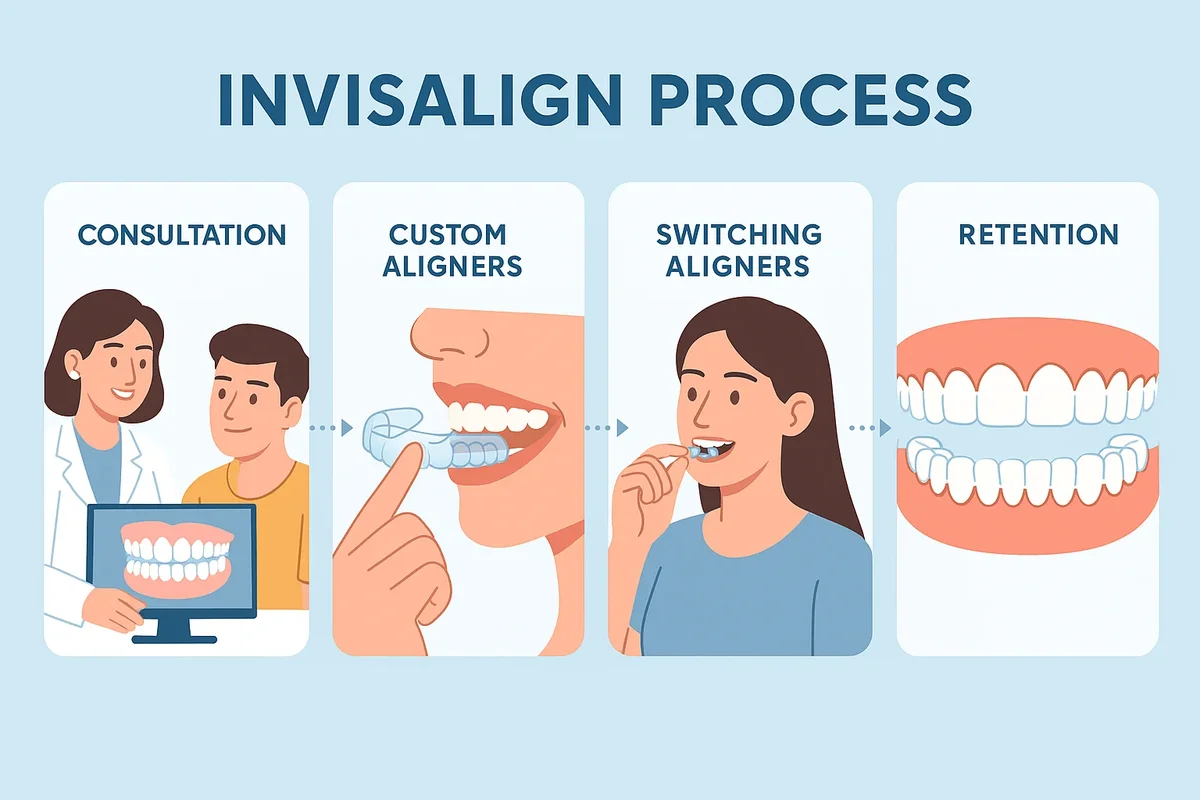
9. Step 8 – Finishing the Invisalign Process and Long-Term Retention
Completing the Invisalign process is an incredibly rewarding milestone 🎉. After months — or in some cases, years — of dedication, you finally see the beautifully aligned smile you’ve been working toward. However, this stage isn’t the end of your journey; it’s the transition into maintaining your results for life. The final stage of the Invisalign process focuses on two key aspects: confirming that your teeth have achieved optimal alignment and implementing a long-term retention plan to ensure they stay in place. Without proper retention, teeth can slowly drift back to their previous positions, undoing months of progress. In this comprehensive guide, we’ll explore exactly what happens when the active treatment phase ends and how to preserve your new, confident smile permanently.
The Final Assessment: Confirming Treatment Completion
As you approach the last set of aligners, your dentist will schedule a detailed evaluation to determine if your teeth have fully reached their desired positions. Using 3D scans and physical examination, your provider checks your bite, alignment, and symmetry. If everything aligns perfectly with your digital treatment plan, you’ll officially complete the active stage of the Invisalign process. 😁
However, if slight discrepancies remain — perhaps a small rotation or gap — a few additional refinement aligners may be prescribed. This is entirely normal. The goal is perfection, not approximation. Once both you and your dentist are satisfied with the results, your treatment officially transitions to the retention phase.
Why Retention Is Crucial After Invisalign
After your aligners are removed, your teeth are in their ideal position, but the supporting bone and gums need time to stabilize. During this period, the risk of relapse — where teeth slowly shift back — is highest. Retainers play a vital role in locking in your new alignment while your body adjusts. Without them, even the most successful Invisalign process can regress within months.
How Retainers Work 🦷
Retainers maintain your tooth positions by applying gentle, consistent pressure that keeps them anchored. Think of them as the “maintenance phase” of the Invisalign process. As your body rebuilds bone density around your newly aligned teeth, retainers ensure they stay firmly in place. Your dentist will provide detailed wear instructions based on your unique needs and lifestyle.
Types of Retainers After Invisalign Treatment
There are two main types of retainers used after completing the Invisalign process: removable and fixed. Each has distinct advantages depending on your smile goals and maintenance habits.
1. Removable Retainers
These clear retainers look similar to Invisalign trays but are designed for long-term use. They are easy to clean, discreet, and convenient. You’ll typically wear them full-time for the first 3–6 months, then transition to nighttime wear indefinitely. Consistency is key — skipping nights can lead to gradual shifting.
- Pros: Easy to clean, comfortable, and nearly invisible.
- Cons: Can be misplaced or damaged if not stored properly.
2. Fixed (Bonded) Retainers
Fixed retainers consist of a thin wire bonded to the back of your teeth (usually the lower front six). They are permanent, invisible, and ideal for maintaining front-tooth alignment. Because they are non-removable, they provide continuous stability without requiring daily effort.
- Pros: Low maintenance and ensures long-term alignment.
- Cons: Requires meticulous flossing and hygiene care.
Many patients use a combination — a fixed retainer on the lower teeth and a removable one for the upper — ensuring maximum stability after the Invisalign process.
Post-Treatment Care and Maintenance
Your post-treatment phase is about maintaining both your smile and your oral health. Here are some essential tips to follow:
- Wear your retainers as instructed: Consistency ensures your teeth remain stable.
- Clean retainers daily: Use lukewarm water and mild soap; avoid hot water and toothpaste to prevent warping or scratching.
- Schedule regular dental check-ups: Even after completing the Invisalign process, monitoring your gums, enamel, and alignment is crucial.
- Store retainers safely: Always use a ventilated case when not in use.
Maintaining Oral Hygiene After Invisalign
Now that your aligners are gone, maintaining your teeth becomes easier — but consistency is still vital. Brush twice daily, floss once a day, and use fluoride mouthwash to strengthen enamel. Your gums may be slightly sensitive after treatment, but this will normalize quickly with proper care.
Diet and Lifestyle Adjustments After Treatment
Unlike during treatment, you can now fully enjoy your favorite foods without restrictions. Still, it’s wise to maintain habits that support long-term oral health:
- Limit sugary or acidic drinks that can weaken enamel.
- Stay hydrated to maintain healthy saliva flow.
- Avoid using teeth as tools — e.g., opening packages — as new alignments need protection from strain.
These minor adjustments will help preserve your results for decades, ensuring the Invisalign process leaves you with a smile that lasts a lifetime. 🌟
Emotional and Aesthetic Rewards of Completing the Invisalign Process
Beyond physical transformation, finishing the Invisalign process has profound emotional benefits. Many patients report increased confidence, improved speech clarity, and greater motivation to maintain oral hygiene. The alignment not only enhances your appearance but also promotes a healthier bite, reducing wear and strain on teeth.
Boost in Confidence and Quality of Life 💫
Studies show that patients who complete orthodontic treatments like Invisalign experience improved self-esteem and social confidence. Smiling more frequently can even positively impact mental health. Completing this journey marks not just a dental success but a personal one — a new chapter of self-assurance begins.
Professional Whitening and Finishing Touches
After completing the Invisalign process, many patients choose to enhance their new smile further with professional teeth whitening. Since teeth are now perfectly aligned, whitening results appear more uniform and natural. Your dentist may also perform polishing or minor cosmetic contouring to perfect your final look. These finishing touches add brilliance to your Invisalign results, leaving your smile picture-perfect for years to come.
Long-Term Retention and Monitoring
Even after treatment, regular follow-ups ensure stability. Your dentist may schedule annual visits to check retainer fit and evaluate gum and bone health. With proper care, your retainers can last several years, though replacements are occasionally necessary due to wear. Long-term commitment is the final step that completes the Invisalign process — ensuring your beautiful results stand the test of time.
Conclusion: The Journey from Alignment to Lifelong Confidence
Finishing the Invisalign process is more than just straightening teeth — it’s a full-circle transformation that blends aesthetics, function, and confidence. Retention, care, and ongoing dental support are the pillars that protect your investment. Whether you’re admiring your new smile in the mirror or sharing it proudly with the world, remember that every step — from your first aligner to your final retainer — has been worth it. 🌍
To ensure your long-term success, partner with experienced dental professionals like Redent Klinik. Their ongoing support, advanced monitoring, and patient-focused care help you maintain your smile for life. With dedication and guidance, the Invisalign process ends not with the last aligner — but with the start of a lifetime of confident smiles.