
Many patients begin clear aligner treatment expecting a perfectly straight smile after their first series of trays. However, some people discover they need additional aligners, corrections, or treatment adjustments before achieving the final result they want. This is where understanding invisalign revision cost becomes extremely important. Patients often search for detailed information about invisalign revision cost because they want to know whether revisions are included in their original treatment plan or whether they will face unexpected expenses later.
The truth is that invisalign revision cost can vary significantly depending on several factors, including the dental clinic, the complexity of tooth movement, the length of treatment, and whether the patient completed the original aligner plan properly. Some patients may never need revisions, while others require additional refinement trays to perfect their smile. Understanding every aspect of invisalign revision cost helps patients make smarter financial and dental decisions before starting treatment.
Invisalign revisions are sometimes called “refinements” or “touch-up aligners.” These additional aligners are designed to improve tooth positioning if the teeth did not move exactly as expected during the first phase of treatment. Teeth can behave unpredictably due to biological differences, poor aligner compliance, missed wear time, or complex orthodontic conditions. Because of these variables, many orthodontists discuss invisalign revision cost with patients before treatment even begins.
One of the most common questions patients ask is whether invisalign revision cost is already included in the original package price. In many comprehensive Invisalign plans, limited revisions are included for a certain period. For example, some providers include refinement trays for up to five years, while others charge separately after the initial aligners are completed. Patients should always ask their clinic for written clarification regarding invisalign revision cost before signing any treatment agreement.
Typical invisalign revision cost ranges between $300 and $2500 depending on the complexity of the correction. Minor refinements involving only a few teeth usually cost less, while major bite corrections or additional long-term aligner treatment may cost significantly more. In countries with lower dental treatment expenses, international patients may find more affordable solutions for invisalign revision cost compared to clinics in the United States or the United Kingdom.
Estimated Invisalign Revision Cost 💰
- Minor refinement trays: $300 – $800
- Moderate Invisalign revision treatment: $800 – $1500
- Complex Invisalign revision cases: $1500 – $2500+
- Replacement retainers after revisions: $150 – $600
Patients should also understand that invisalign revision cost may increase if treatment delays occur. For example, if a patient stops wearing aligners consistently for several months, the teeth may shift backward. In such situations, dentists often need to rescan the teeth and produce an entirely new aligner series. This can increase overall invisalign revision cost because the treatment essentially restarts from a new stage.
Another factor influencing invisalign revision cost is the dentist’s experience level. Highly experienced Invisalign providers may charge more because they use advanced digital planning techniques and detailed monitoring systems that improve accuracy. Although some patients focus only on finding the cheapest invisalign revision cost, choosing an experienced orthodontic provider can reduce the risk of needing extensive corrections later.
Many clinics now use 3D intraoral scanners and artificial intelligence-powered tracking systems to monitor treatment progress. These technologies help detect problems early, potentially reducing long-term invisalign revision cost. Patients who attend regular checkups and follow instructions carefully are less likely to require expensive refinements.
There are also psychological reasons why understanding invisalign revision cost matters. Some patients become discouraged when they hear they need additional aligners after already completing months of treatment. However, revisions are actually very common in clear aligner therapy. Teeth move differently for every individual, and small adjustments are often necessary to create a balanced, healthy bite and attractive smile. In many cases, the final refinement phase dramatically improves treatment results.
Patients researching invisalign revision cost should compare not only prices but also what each package includes. Some clinics include retainers, follow-up scans, and additional consultations within the revision fee, while others charge separately for every service. Reading patient reviews and consulting experienced providers can help avoid unexpected expenses.
It is also important to compare Invisalign with other clear aligner systems. Some alternative aligner brands advertise lower initial prices, but they may charge higher fees later for adjustments. Therefore, the overall invisalign revision cost may sometimes provide better long-term value because Invisalign has advanced technology, extensive clinical research, and broad orthodontic support worldwide.
For reliable oral health guidance and orthodontic information, patients can visit the American Dental Association. Patients interested in personalized consultation options can also contact the Redent Klinik Contact Page for more information about clear aligner treatment planning and smile correction procedures.
Ultimately, understanding invisalign revision cost allows patients to prepare financially, ask better questions during consultations, and avoid unnecessary surprises during treatment. While revisions may initially seem frustrating, they often represent the final step toward achieving a healthier, straighter, and more confident smile 😀. Careful planning, experienced providers, and proper aligner compliance can significantly reduce overall invisalign revision cost while improving treatment success.
What Is Invisalign Revision Cost and Why Does It Matter?
Understanding invisalign revision cost is essential for anyone considering clear aligner treatment or already undergoing Invisalign therapy. Many patients assume that once they finish their original aligner series, their treatment is complete. However, teeth do not always move exactly according to digital treatment simulations. This is why additional aligners, correction trays, or treatment refinements are sometimes necessary. The financial aspect of these extra stages is known as invisalign revision cost, and it can significantly affect the total price of orthodontic treatment.
For many patients, learning about invisalign revision cost early helps avoid stress and confusion later. Invisalign treatment is highly personalized, and every patient responds differently to tooth movement. While some individuals achieve ideal alignment during the first set of aligners, others require additional adjustments to improve aesthetics, bite alignment, or tooth positioning. These additional stages may involve new digital scans, updated treatment planning, and manufacturing of extra aligners.
Why Patients Need Invisalign Revisions
There are several reasons why patients may need revisions after their initial Invisalign treatment. The most common reason is incomplete tooth movement. Even though Invisalign uses advanced 3D planning technology, teeth are biological structures that do not always respond predictably. Some teeth move slower than expected, while others may rotate or shift differently during treatment.
Patients who do not wear aligners for the recommended 20 to 22 hours daily are more likely to require refinements, increasing overall invisalign revision cost. Missed aligner wear, skipped trays, or delayed tray changes can reduce treatment effectiveness. In some situations, patients accidentally damage or lose aligners, which may also increase invisalign revision cost because replacement trays or additional appointments become necessary.
Common Reasons for Additional Invisalign Aligners
- Teeth not tracking properly during treatment
- Unexpected tooth rotation or spacing
- Bite alignment issues after initial trays
- Patient non-compliance with aligner wear time
- Lost or broken aligners
- Changes in treatment goals
- Need for cosmetic perfection after treatment
Because of these possibilities, experienced orthodontists often discuss invisalign revision cost during the first consultation. Transparent communication helps patients understand that minor corrections are common and sometimes necessary to achieve ideal results.
Does Invisalign Revision Cost Mean Treatment Failed?
Many patients mistakenly believe that needing revisions means Invisalign treatment failed. In reality, this is not true. Revisions are a normal part of modern orthodontic care. Orthodontists frequently use refinement aligners to improve final tooth positioning and optimize smile aesthetics. In fact, additional aligners often help create the polished, symmetrical smile patients expect from clear aligner treatment.
Understanding invisalign revision cost also helps patients set realistic expectations. Digital simulations are highly advanced, but biological tooth movement still contains variables that cannot always be predicted perfectly. Minor corrections are common even in successful orthodontic cases.
Some Invisalign plans already include limited refinements for a specific period. For example, comprehensive Invisalign packages may include multiple refinements for up to five years. Other clinics charge separately for every additional aligner stage, making invisalign revision cost an important topic to discuss before starting treatment.
Average Invisalign Revision Cost Explained
The average invisalign revision cost depends on how extensive the additional treatment is. Minor refinements involving only a few aligners may cost several hundred dollars, while complex revisions requiring new scans and months of additional treatment may cost significantly more.
Typical Invisalign Revision Cost Ranges 💵
| Revision Type | Estimated Cost |
|---|---|
| Minor cosmetic refinements | $300 – $800 |
| Moderate treatment adjustments | $800 – $1500 |
| Complex bite corrections | $1500 – $2500+ |
These numbers are general estimates, and the exact invisalign revision cost depends heavily on the provider’s experience, clinic location, treatment duration, and the patient’s orthodontic condition. Clinics in major cities or high-cost countries may charge more than international dental clinics offering affordable smile correction packages.
Factors That Influence Invisalign Revision Cost
Several important factors determine final invisalign revision cost. The first is treatment complexity. Patients with severe crowding, overbite, underbite, or rotated teeth may require more extensive adjustments. Longer treatment durations generally increase invisalign revision cost because more aligners, appointments, and monitoring are necessary.
Another major factor is provider expertise. Experienced Invisalign providers often charge higher fees, but they may also reduce long-term complications through better treatment planning. Advanced clinics using digital scanners and artificial intelligence tracking systems may improve treatment precision and lower the likelihood of expensive revisions.
How to Reduce Invisalign Revision Cost
Patients can often reduce invisalign revision cost by following treatment instructions carefully. Consistent aligner wear is the most important factor. Wearing aligners for the recommended number of hours daily helps teeth move according to plan, reducing the need for major corrections.
- Wear aligners 20–22 hours daily
- Attend all scheduled appointments
- Change trays on time
- Use retainers properly after treatment
- Report tracking problems early
- Avoid losing or damaging trays
Choosing a reputable dental clinic is equally important. Patients interested in personalized treatment planning and smile correction options can visit the Redent Klinik Contact Page for additional information about Invisalign procedures and orthodontic consultations.
For trusted oral health information, patients can also explore resources from the American Dental Association. These resources help patients better understand orthodontic treatment expectations and oral care recommendations.
Ultimately, understanding invisalign revision cost allows patients to prepare both financially and emotionally for the possibility of additional treatment stages. While revisions may initially sound concerning, they are often part of achieving the best possible smile outcome 😀. Careful provider selection, proper aligner compliance, and realistic expectations can significantly improve treatment success while minimizing overall invisalign revision cost.
Average Invisalign Revision Cost in Different Countries
The average invisalign revision cost varies greatly depending on the country where treatment is performed. Many patients researching clear aligner therapy are surprised to learn that geographical location can significantly affect both initial Invisalign prices and later refinement expenses. Understanding international differences in invisalign revision cost helps patients compare treatment options more accurately and make informed financial decisions before starting orthodontic care.
In some countries, dental treatment costs are considerably higher because of laboratory expenses, clinic overhead, insurance systems, and orthodontist fees. In other regions, patients may find lower invisalign revision cost without compromising treatment quality. This is one reason why dental tourism has become increasingly popular among patients seeking affordable smile correction solutions.
Why Invisalign Revision Cost Changes by Country
Several factors influence how much invisalign revision cost patients pay in different parts of the world. Labor costs are one of the biggest reasons. Orthodontic specialists in countries with higher living expenses generally charge more for consultations, monitoring appointments, and treatment planning.
Another factor affecting invisalign revision cost is local demand for cosmetic dentistry. In countries where Invisalign treatment is extremely popular, clinics may charge premium prices because of strong market demand. Import taxes, aligner manufacturing logistics, and healthcare regulations also contribute to price differences.
Currency exchange rates can additionally influence invisalign revision cost for international patients. Some people travel abroad for dental treatment because they can receive comprehensive orthodontic care at significantly lower prices compared to their home country.
Main Factors Behind Global Price Differences
- Orthodontist experience and specialization
- Clinic location and operating expenses
- Local healthcare systems
- Import taxes and manufacturing fees
- Cost of living in each country
- Technology and digital scanning systems
- Demand for cosmetic dentistry
Patients should remember that the lowest invisalign revision cost is not always the best option. Treatment quality, dentist expertise, communication, and aftercare are equally important when comparing clinics internationally.
Average Invisalign Revision Cost in the United States
The United States is one of the most expensive countries for Invisalign treatment and revisions. The average invisalign revision cost in the U.S. often ranges between $800 and $2500 depending on treatment complexity. Comprehensive orthodontic clinics may include limited refinements within the original Invisalign package, but additional aligners beyond those limits usually involve separate fees.
American orthodontic clinics often use advanced digital systems and detailed monitoring technologies, which contribute to higher overall invisalign revision cost. However, these clinics also frequently provide extensive follow-up care and customized treatment planning.
Average Invisalign Revision Cost in the United Kingdom
Patients in the United Kingdom also face relatively high invisalign revision cost. Revision expenses commonly range between £600 and £2000 depending on the provider and treatment requirements. London clinics generally charge higher fees than clinics located in smaller cities because of higher operational expenses.
Some UK clinics offer Invisalign packages that include refinements for a specific duration, helping reduce unexpected invisalign revision cost later. Patients should carefully review treatment agreements before beginning aligner therapy.
Average Invisalign Revision Cost in Turkey
Turkey has become one of the leading destinations for affordable cosmetic dentistry and orthodontic treatment. Many international patients choose Turkish clinics because invisalign revision cost is often significantly lower than in Western Europe or North America.
In Turkey, average invisalign revision cost may range between $300 and $1200 depending on the complexity of the correction. Many modern Turkish dental clinics use advanced digital scanning systems, experienced orthodontists, and multilingual patient coordinators while still maintaining lower prices due to reduced operational costs.
This balance between affordability and quality has made Turkey increasingly popular for dental tourism 😀. Patients often combine treatment with travel opportunities while reducing total orthodontic expenses.
Estimated Invisalign Revision Cost by Country 🌍
| Country | Estimated Revision Cost |
|---|---|
| United States | $800 – $2500+ |
| United Kingdom | £600 – £2000 |
| Turkey | $300 – $1200 |
| Germany | €700 – €2200 |
| Canada | CAD 900 – CAD 2500 |
Are Cheaper Invisalign Revision Costs Always Better?
Patients comparing international treatment prices should understand that extremely cheap invisalign revision cost can sometimes indicate lower-quality care or limited aftercare services. Orthodontic treatment requires careful planning, precise digital modeling, and ongoing supervision. Choosing a clinic solely based on the lowest price may increase the risk of needing additional corrections later.
Experienced Invisalign providers typically invest in advanced equipment, staff training, and patient monitoring systems. While these factors may increase invisalign revision cost, they can also improve treatment accuracy and reduce long-term complications.
Important Questions to Ask Before Treatment
- Are refinement aligners included in the package?
- How many revisions are covered?
- What happens if treatment takes longer than expected?
- Will retainers cost extra?
- How often are follow-up scans required?
- Are emergency appointments included?
Patients should always request detailed treatment information before accepting any Invisalign plan. Understanding these details can prevent confusion regarding future invisalign revision cost.
Dental Tourism and Invisalign Revision Cost
Dental tourism has become a growing trend among patients looking to reduce invisalign revision cost. Countries like Turkey, Hungary, and Thailand attract international patients because they offer modern clinics with competitive pricing.
However, patients considering treatment abroad should also think about travel expenses, accommodation, and follow-up logistics. If future revisions are needed after returning home, local orthodontists may charge additional fees for continuing care. Therefore, total invisalign revision cost should include long-term maintenance and future treatment possibilities.
Patients seeking professional consultations and orthodontic guidance can visit the Redent Klinik Contact Page to learn more about Invisalign treatment options and revision planning.
For additional information about orthodontic standards and oral healthcare recommendations, patients can review educational resources from the American Dental Association.
Ultimately, understanding international differences in invisalign revision cost allows patients to make smarter treatment decisions based not only on price but also on quality, expertise, and long-term value. While affordable treatment options can save money, choosing experienced providers and reliable clinics remains essential for achieving a healthy, stable, and attractive smile 😁.
Factors That Affect Invisalign Revision Cost After Treatment
Many patients researching invisalign revision cost are surprised to learn that the final price can vary dramatically from one person to another. Invisalign revisions are not priced using a single fixed formula because every orthodontic case is unique. Some patients only require a few additional aligners for minor corrections, while others may need extensive refinements involving new scans, updated treatment plans, and several more months of aligner therapy. Understanding the factors that influence invisalign revision cost can help patients prepare financially and avoid unexpected expenses during treatment.
One of the biggest misconceptions about invisalign revision cost is that revisions occur only when treatment fails. In reality, refinements are often part of achieving ideal tooth alignment and bite balance. Teeth move differently in every patient because orthodontic treatment depends on bone structure, gum health, tooth anatomy, and patient compliance. Even highly accurate digital treatment plans cannot perfectly predict every biological response.
Treatment Complexity and Invisalign Revision Cost
The complexity of the orthodontic problem is one of the most important factors affecting invisalign revision cost. Patients with mild spacing issues or slight crowding generally require fewer additional aligners if revisions become necessary. However, patients with severe bite problems, rotated teeth, overbites, underbites, or crossbites may need much more advanced correction stages.
Complex tooth movement requires more aligners, additional digital planning, and more frequent orthodontic supervision. This naturally increases overall invisalign revision cost. In difficult cases, orthodontists sometimes combine Invisalign with attachments, elastics, or other techniques to improve tooth control during revisions.
Examples of Complex Cases That Increase Costs
- Severe crowding or spacing
- Large overbite or underbite corrections
- Tooth rotation requiring multiple aligners
- Jaw alignment complications
- Relapsed orthodontic cases
- Missing teeth affecting bite balance
Patients with more complicated dental conditions should expect higher invisalign revision cost because their treatment requires additional time, precision, and monitoring.
Patient Compliance and Invisalign Revision Cost
One of the most preventable causes of increased invisalign revision cost is poor patient compliance. Invisalign aligners must typically be worn for 20 to 22 hours per day to achieve planned tooth movement. Patients who frequently remove aligners, forget to wear them overnight, or skip tray changes often experience tracking problems.
When teeth fail to track properly, orthodontists may need to perform rescans and order new aligners. These extra stages can significantly increase invisalign revision cost. In some situations, patients who repeatedly fail to follow instructions may need to restart treatment entirely.
Compliance is especially important during the final stages of treatment. Many patients become less disciplined near the end because their smile already looks improved. However, incomplete final tooth movement is one of the main reasons why additional refinement trays are required.
How to Avoid Higher Invisalign Revision Cost
- Wear aligners consistently every day
- Switch trays according to schedule
- Attend all follow-up appointments
- Use chewies if recommended
- Report loose or poorly fitting trays early
- Store aligners safely to avoid loss or damage
Simple daily habits can greatly reduce the likelihood of needing expensive additional treatment.
Provider Experience and Invisalign Revision Cost
The orthodontist’s experience level also plays a major role in determining invisalign revision cost. Experienced Invisalign providers often create more accurate treatment plans from the beginning, reducing the chance of major refinements later.
Highly trained orthodontists understand how teeth move biologically and can anticipate potential tracking issues before they become serious problems. While expert providers may initially charge higher fees, they may actually reduce long-term invisalign revision cost by improving treatment precision.
Clinics using advanced digital scanners, artificial intelligence monitoring, and detailed treatment simulations may also achieve better outcomes. These technologies improve accuracy and allow orthodontists to detect problems earlier during treatment.
Factors That Can Increase Invisalign Revision Cost 📈
| Factor | Impact on Cost |
|---|---|
| Severe bite correction | High |
| Poor aligner compliance | High |
| Lost or broken trays | Moderate |
| Long treatment duration | Moderate to High |
| Advanced orthodontic monitoring | Moderate |
Length of Treatment and Invisalign Revision Cost
The duration of orthodontic treatment strongly affects invisalign revision cost. Longer treatments usually involve more appointments, additional aligners, and greater clinical supervision. Patients requiring treatment for more than 18 months are more likely to need refinements compared to patients with short-term cosmetic corrections.
Extended treatment periods also increase the possibility of aligner wear problems, patient fatigue, or shifting treatment goals. All of these factors may increase total invisalign revision cost.
Retainers and Post-Treatment Stability
Many patients underestimate the importance of retainers after Invisalign treatment. Failure to wear retainers properly can allow teeth to shift back toward their original positions. In these situations, orthodontists may need to create additional aligners to correct relapse, increasing overall invisalign revision cost.
Retainer compliance is one of the easiest ways to protect orthodontic investment and maintain long-term smile stability 😀. Patients should follow all post-treatment instructions carefully to avoid unnecessary future expenses.
Questions Patients Should Ask About Invisalign Revision Cost
- How many refinements are included?
- What happens if treatment takes longer than expected?
- Are replacement trays included?
- Will retainers cost extra?
- Does the package include digital rescans?
- Are emergency appointments covered?
Understanding these details before treatment starts can help patients avoid confusion regarding future invisalign revision cost.
Patients seeking personalized orthodontic consultations and treatment planning can explore the Redent Klinik Contact Page for additional information about Invisalign procedures and revision options.
For trusted oral healthcare resources and orthodontic education, patients can also review materials provided by the American Dental Association.
Ultimately, several interconnected factors determine total invisalign revision cost, including treatment complexity, patient habits, provider expertise, and long-term retainer use. Patients who understand these factors early can reduce risks, improve treatment success, and protect their investment in a healthier and more confident smile 😁.
Does Invisalign Revision Cost Include New Aligners?
One of the most common questions patients ask before beginning clear aligner treatment is whether invisalign revision cost already includes additional aligners if corrections become necessary later. This is an extremely important topic because many people assume every Invisalign package automatically covers unlimited refinements. In reality, the answer depends on the specific treatment plan, the provider’s policies, and the type of Invisalign package selected at the beginning of treatment.
Understanding how new aligners relate to invisalign revision cost helps patients avoid unexpected expenses and prepare for the possibility of future refinements. Invisalign treatment is highly personalized, and additional aligners are often needed to improve final tooth positioning, bite alignment, or cosmetic appearance. Some patients require only one small refinement stage, while others may need multiple rounds of additional aligners over several months.
Why Additional Aligners May Be Needed
Teeth do not always move exactly according to digital treatment simulations. Even with advanced Invisalign technology, biological differences affect how teeth respond to pressure and movement. Some teeth move faster, slower, or differently than expected. Because of this, orthodontists sometimes order additional aligners to perfect treatment results.
Patients who do not wear aligners consistently are especially likely to require extra trays, increasing total invisalign revision cost. In some situations, even highly compliant patients need refinements because of natural tooth movement variations.
Common Reasons for New Invisalign Aligners
- Teeth not tracking properly
- Incomplete bite correction
- Remaining gaps or crowding
- Rotated teeth needing extra movement
- Changes in cosmetic goals
- Relapse after inconsistent retainer use
- Damaged or lost aligners
These situations are relatively common and do not necessarily mean the treatment failed. However, they can influence total invisalign revision cost depending on the provider’s pricing structure.
Different Invisalign Packages and Revision Policies
Not all Invisalign packages are the same. Invisalign offers several treatment tiers designed for different levels of orthodontic complexity. Some plans include multiple refinement stages, while others provide only a limited number of aligners.
For example, Invisalign Comprehensive plans often include refinements for several years after treatment begins. This means patients may receive additional aligners without paying significant extra invisalign revision cost during the covered period. On the other hand, Invisalign Lite or Express packages usually include fewer aligners and limited refinement options.
Patients choosing lower-cost Invisalign packages should understand that future invisalign revision cost may become higher if extensive corrections are needed later.
Typical Invisalign Package Coverage 📦
| Package Type | Refinement Coverage |
|---|---|
| Invisalign Express | Limited or no revisions |
| Invisalign Lite | Limited refinements |
| Invisalign Moderate | Some revisions included |
| Invisalign Comprehensive | Multiple refinements often included |
When Invisalign Revision Cost May Increase
Even if a treatment plan initially includes revisions, there are situations where additional invisalign revision cost may still apply. Some clinics charge extra fees for rescans, replacement trays, emergency appointments, or extended treatment durations.
If a patient stops wearing aligners for a long period, loses several trays, or delays appointments repeatedly, the provider may classify the situation as a new treatment phase instead of a standard refinement. This can significantly increase invisalign revision cost.
Similarly, if the patient changes cosmetic goals midway through treatment, additional aligners may not be covered under the original agreement. For example, a patient who initially wanted minor straightening but later requests major bite correction could face additional fees.
Questions Patients Should Ask About Invisalign Revision Cost
- How many refinement stages are included?
- Are replacement trays covered?
- What happens if treatment exceeds the estimated timeline?
- Will digital rescans cost extra?
- Are retainer adjustments included?
- Does the clinic charge for emergency visits?
These questions help patients understand their financial responsibilities before beginning treatment. Transparent communication reduces confusion regarding future invisalign revision cost.
How Experienced Providers Reduce Revision Problems
Experienced Invisalign providers often reduce long-term invisalign revision cost through accurate treatment planning and careful patient monitoring. Orthodontists with advanced Invisalign training can identify potential tracking issues earlier and make adjustments before major problems develop.
Many modern clinics now use 3D intraoral scanners and AI-powered monitoring systems to improve precision. These technologies help orthodontists monitor tooth movement remotely and reduce the need for extensive revisions later.
Although experienced providers may initially charge higher fees, they may help patients save money overall by minimizing major corrective treatment stages.
Retainers and Long-Term Invisalign Revision Cost
Retainers are another important factor influencing future invisalign revision cost. After Invisalign treatment ends, patients must wear retainers regularly to maintain their results. Teeth naturally tend to shift back toward their original positions over time.
Patients who stop wearing retainers may eventually require additional aligners to correct relapse. In these situations, orthodontists may charge new invisalign revision cost fees because the teeth have moved significantly after treatment.
Long-term retainer compliance is one of the most effective ways to avoid future orthodontic expenses 😀. Simple daily habits can protect the patient’s investment and preserve smile stability for many years.
Patients interested in professional consultations regarding Invisalign refinements and aligner treatment can visit the Redent Klinik Contact Page for more information about orthodontic procedures and smile planning.
For trusted oral healthcare education and orthodontic recommendations, patients can also review resources from the American Dental Association.
Ultimately, whether new aligners are included in invisalign revision cost depends on the treatment package, provider policies, patient compliance, and treatment complexity. Patients who fully understand their Invisalign agreement and follow instructions carefully are more likely to reduce additional expenses while achieving a healthy, attractive, and stable smile 😁.
Invisalign Refinements vs Invisalign Revisions Explained
Many patients researching invisalign revision cost become confused when they hear terms like “refinements,” “revisions,” “touch-up aligners,” or “additional trays.” These terms are often used interchangeably, but they can have slightly different meanings depending on the orthodontist and the type of Invisalign treatment plan. Understanding the difference between refinements and revisions is extremely important because it directly affects treatment expectations, timelines, and total invisalign revision cost.
Although both refinements and revisions involve additional aligners after the original series, they are not always considered the same type of treatment adjustment. In many clinics, refinements refer to small cosmetic improvements made near the end of treatment, while revisions describe more significant corrections involving updated treatment planning or major bite adjustments. However, terminology can vary from one provider to another.
What Are Invisalign Refinements?
Invisalign refinements are additional aligners used to perfect minor tooth positioning after the original aligner series is completed. These refinements are extremely common and are often considered a normal part of Invisalign treatment rather than a sign of failure.
For example, a patient may complete their original aligners and notice that one front tooth is still slightly rotated or a small gap remains between teeth. In this situation, the orthodontist may order a short series of refinement aligners to improve final aesthetics. Depending on the treatment package, these refinements may or may not increase invisalign revision cost.
Common Reasons for Invisalign Refinements
- Small spacing remaining after treatment
- Minor tooth rotation
- Slight bite imbalance
- Cosmetic smile adjustments
- Final polishing of tooth alignment
Refinements usually involve fewer aligners and shorter treatment times compared to major revisions. Some patients may only wear refinement trays for a few weeks, while others require several months of additional treatment.
What Are Invisalign Revisions?
Invisalign revisions are generally more extensive than refinements. A revision often means the orthodontist must reevaluate the entire treatment plan because teeth did not move according to expectations. Revisions may require new digital scans, updated treatment simulations, and a completely new aligner sequence.
Major tracking problems, poor patient compliance, significant bite issues, or orthodontic relapse can all increase invisalign revision cost because the treatment becomes more complicated. In some situations, revisions are treated almost like a new orthodontic case.
For example, if a patient stops wearing aligners consistently for several months and the teeth shift backward, the orthodontist may need to restart treatment from an earlier stage. This type of correction typically increases total invisalign revision cost more than a simple refinement.
Situations That May Require Full Invisalign Revisions
- Severe tracking failures
- Major bite correction problems
- Long periods without aligner wear
- Orthodontic relapse after treatment
- Lost aligners causing treatment disruption
- Unexpected tooth movement patterns
Understanding this difference helps patients better estimate potential future invisalign revision cost during orthodontic treatment.
Refinements vs Revisions Comparison 🔍
| Feature | Refinements | Revisions |
|---|---|---|
| Treatment Complexity | Minor | Moderate to Major |
| Treatment Length | Short | Longer |
| Need for New Scans | Sometimes | Usually |
| Impact on Invisalign Revision Cost | Lower | Higher |
How Invisalign Packages Affect Refinements and Revisions
The type of Invisalign package chosen at the beginning of treatment strongly influences future invisalign revision cost. Comprehensive Invisalign plans often include multiple refinements for several years. This means patients may receive additional trays without major extra charges.
However, limited Invisalign plans such as Invisalign Express or Invisalign Lite may only include a small number of aligners and fewer refinement options. If treatment becomes more complicated than originally expected, patients may face higher invisalign revision cost later.
This is why patients should carefully review treatment contracts before starting orthodontic care. Understanding how refinements and revisions are covered financially helps prevent future misunderstandings.
Why Experienced Orthodontists Matter
Experienced Invisalign providers play an important role in reducing both refinements and overall invisalign revision cost. Orthodontists with advanced Invisalign experience can better predict tooth movement patterns and design more accurate treatment plans.
Modern clinics also use advanced technology such as 3D intraoral scanning and AI-powered monitoring systems. These tools allow providers to identify tracking problems early before they become serious enough to require major revisions.
Although experienced providers may initially charge higher fees, they may actually lower long-term invisalign revision cost by improving treatment precision and minimizing complications.
Ways Patients Can Reduce Invisalign Revision Cost
- Wear aligners consistently every day
- Follow tray change schedules carefully
- Attend regular checkups
- Use retainers properly after treatment
- Report tracking problems early
- Avoid losing or damaging aligners
Patient cooperation is one of the most important factors in preventing expensive treatment revisions.
Psychological Impact of Invisalign Revisions
Some patients feel discouraged when they hear they need additional aligners after months of orthodontic treatment. However, refinements and revisions are actually very common in clear aligner therapy. Teeth respond differently in every individual, and small adjustments are often necessary to achieve optimal results.
Rather than viewing revisions negatively, patients should understand that these additional stages often create the final improvements that make the smile look balanced, natural, and aesthetically attractive 😀. The ultimate goal is not simply straight teeth but also a healthy bite and long-term stability.
Patients interested in personalized orthodontic planning and clear aligner consultations can visit the Redent Klinik Contact Page to learn more about treatment options and Invisalign procedures.
For additional oral healthcare guidance and orthodontic education, patients can also review information from the American Dental Association.
Ultimately, understanding the difference between refinements and revisions helps patients better manage expectations regarding invisalign revision cost. Refinements are often small cosmetic improvements, while revisions involve more extensive treatment corrections. Knowing these differences allows patients to make informed decisions, reduce anxiety, and achieve better orthodontic outcomes with long-term smile stability 😁.
How Dentists Calculate Invisalign Revision Cost for Complex Cases
Many patients assume that invisalign revision cost is calculated using a simple fixed price. However, orthodontists actually evaluate numerous clinical and technical factors before determining how much additional treatment will cost. Complex Invisalign revisions require detailed analysis, digital treatment planning, additional aligners, and sometimes extended orthodontic supervision. Understanding how dentists calculate invisalign revision cost for difficult cases helps patients better understand why some revisions are relatively affordable while others become significantly more expensive.
Every patient’s teeth move differently, which means no two Invisalign revisions are identical. Orthodontists evaluate tooth alignment, bite function, jaw balance, patient compliance, and long-term stability before recommending additional aligners. In many cases, complex revisions require entirely new treatment simulations and updated orthodontic strategies.
Initial Evaluation Before Calculating Invisalign Revision Cost
Before estimating invisalign revision cost, orthodontists first perform a complete reevaluation of the patient’s mouth. This process may include digital scans, photographs, X-rays, bite analysis, and aligner tracking assessments. The goal is to determine exactly why the original treatment did not achieve ideal results.
Sometimes the issue is relatively minor, such as one tooth rotating slightly slower than expected. In other cases, the entire bite relationship may require correction. Complex bite imbalances can greatly increase invisalign revision cost because they involve more advanced orthodontic movement.
Common Diagnostic Tools Used During Revisions
- 3D intraoral digital scanning
- Panoramic dental X-rays
- Bite alignment analysis
- Smile symmetry evaluation
- Tracking assessment of previous aligners
- Jaw movement examination
These evaluations help orthodontists understand whether the problem resulted from biological tooth movement, poor aligner wear, treatment limitations, or other orthodontic factors.
Tooth Movement Complexity and Invisalign Revision Cost
The complexity of required tooth movement is one of the biggest factors affecting invisalign revision cost. Some teeth are much more difficult to move than others. Rotated teeth, vertically misaligned teeth, and molars requiring bite adjustments often demand additional aligners and longer treatment times.
For example, correcting mild front tooth spacing may require only a few refinement trays. However, treating posterior bite collapse or major crowding may involve several months of new aligners, elastics, attachments, and extensive monitoring. These situations naturally increase overall invisalign revision cost.
Orthodontists also evaluate whether tooth roots have moved properly. In some situations, the visible crown appears aligned while the root position remains incorrect. Correcting root alignment can significantly increase treatment complexity.
Tooth Movements That Increase Invisalign Revision Cost
- Large tooth rotations
- Intrusion or extrusion movements
- Posterior bite corrections
- Crossbite treatment
- Midline corrections
- Root torque adjustments
These advanced orthodontic movements often require highly detailed digital planning and more clinical supervision.
Number of Additional Aligners Required
Another major factor influencing invisalign revision cost is the number of new aligners needed. Minor cosmetic refinements may involve only 5 to 10 additional trays. More complicated revisions can require 20 or more aligners over several months.
The more aligners a patient needs, the higher the production, planning, and monitoring costs become. Each aligner series must be digitally designed, manufactured, and carefully supervised by the orthodontist.
Estimated Invisalign Revision Cost by Complexity 💰
| Revision Type | Aligner Count | Estimated Cost |
|---|---|---|
| Minor refinement | 5–10 trays | $300 – $800 |
| Moderate correction | 10–20 trays | $800 – $1500 |
| Complex revision | 20+ trays | $1500 – $3000+ |
Patient Compliance and Invisalign Revision Cost
Orthodontists also consider patient compliance when calculating invisalign revision cost. If treatment problems occurred because the patient did not wear aligners consistently, additional treatment may not be included in the original package.
Patients who frequently remove aligners, miss appointments, or lose trays may face higher invisalign revision cost because the orthodontist must spend more time correcting preventable issues.
Compliance affects treatment efficiency significantly. Patients who follow instructions carefully often require fewer revisions and shorter treatment durations.
Habits That Can Increase Invisalign Revision Cost
- Wearing aligners less than recommended
- Skipping aligner stages
- Losing trays repeatedly
- Missing appointments
- Not using retainers properly
- Ignoring tracking problems
Orthodontists usually explain these risks during consultations because patient cooperation strongly affects final treatment outcomes.
Technology and Advanced Monitoring Systems
Modern orthodontic clinics increasingly use advanced technology to reduce invisalign revision cost and improve treatment accuracy. AI-powered tracking systems, remote monitoring apps, and 3D digital scans help orthodontists identify problems before they become severe.
Clinics investing in advanced technology may charge slightly higher fees initially, but they often reduce long-term treatment complications. Early detection of aligner tracking problems can prevent the need for extensive revisions later.
Highly experienced Invisalign providers also use digital treatment simulations to anticipate difficult tooth movements and reduce unnecessary aligner adjustments.
Retainers and Long-Term Stability
Orthodontists also consider long-term stability when planning revisions. Teeth naturally attempt to shift back toward their original positions after orthodontic treatment. If patients fail to wear retainers properly, additional correction may eventually become necessary.
Relapse treatment can significantly increase invisalign revision cost because orthodontists may need to restart portions of treatment. This is why retainer compliance remains extremely important after Invisalign therapy ends 😀.
Patients should understand that maintaining orthodontic results is a lifelong responsibility. Proper retainer use helps protect both smile stability and financial investment.
Questions Patients Should Ask Their Orthodontist
- How complex is my revision case?
- How many additional aligners will I need?
- Are rescans included in the fee?
- Will attachments or elastics be necessary?
- How long will the revision take?
- What can I do to reduce future revisions?
Clear communication with the orthodontist helps patients better understand their expected invisalign revision cost and overall treatment process.
Patients seeking personalized Invisalign consultations and orthodontic guidance can visit the Redent Klinik Contact Page for additional information about aligner treatment and smile correction options.
For trusted oral healthcare resources and orthodontic education, patients can also review information provided by the American Dental Association.
Ultimately, dentists calculate invisalign revision cost by analyzing treatment complexity, aligner quantity, patient compliance, and long-term orthodontic stability. Every revision case is unique, and careful planning is essential for achieving a healthy, functional, and aesthetically balanced smile 😁.
Ways to Reduce Invisalign Revision Cost Without Sacrificing Quality
Many patients worry about invisalign revision cost because orthodontic treatment can already represent a major financial investment. While revisions are common in clear aligner therapy, there are several effective ways to reduce overall invisalign revision cost without compromising treatment quality or long-term smile results. Patients who understand how Invisalign treatment works and follow professional recommendations carefully can often avoid unnecessary expenses while still achieving excellent orthodontic outcomes.
Reducing invisalign revision cost does not mean choosing the cheapest clinic or avoiding professional care. In fact, selecting high-quality treatment from the beginning often helps minimize future corrections. The goal is to improve treatment efficiency, prevent avoidable complications, and maintain long-term smile stability.
Choose an Experienced Invisalign Provider
One of the most important ways to reduce invisalign revision cost is to choose an experienced Invisalign provider from the beginning. Orthodontists and dentists with extensive Invisalign experience are generally better at predicting tooth movement patterns and planning accurate aligner sequences.
Experienced providers can identify difficult tooth movements early and make adjustments before major complications develop. Although highly trained Invisalign providers may initially charge slightly more, they often reduce the likelihood of expensive revisions later.
Many top orthodontic clinics also use advanced digital technology such as 3D intraoral scanners, AI monitoring systems, and detailed bite analysis software. These tools improve treatment precision and lower the risk of tracking problems that may increase invisalign revision cost.
Benefits of Experienced Invisalign Providers
- More accurate treatment planning
- Earlier detection of tracking issues
- Better bite correction strategies
- Reduced need for major revisions
- Improved long-term smile stability
Investing in provider quality early often saves money over the full course of treatment.
Wear Aligners Correctly Every Day
Patient compliance is one of the biggest factors influencing invisalign revision cost. Invisalign aligners typically need to be worn for 20 to 22 hours daily to achieve proper tooth movement. Patients who remove aligners too frequently or fail to wear them consistently are much more likely to require refinements or complete revisions.
When aligners are not worn correctly, teeth may stop tracking according to the treatment plan. This can force orthodontists to rescan the teeth and order additional aligners, increasing total invisalign revision cost.
Patients should understand that even missing a few hours of wear time repeatedly can affect treatment accuracy over several months. Consistency is critical for successful clear aligner therapy.
Daily Habits That Reduce Invisalign Revision Cost
- Wear aligners at least 20–22 hours daily
- Switch aligners on schedule
- Clean trays properly
- Store aligners safely when removed
- Avoid skipping trays
- Use chewies if recommended
Simple discipline throughout treatment can dramatically lower overall invisalign revision cost.
Attend All Orthodontic Appointments
Regular monitoring appointments help orthodontists identify problems before they become severe. Patients who skip appointments may not realize that teeth are no longer tracking properly until major corrections become necessary.
Early intervention can prevent expensive revisions and lower total invisalign revision cost. During checkups, orthodontists evaluate aligner fit, bite progression, and tooth movement accuracy.
Some clinics now offer remote digital monitoring systems that allow patients to upload progress photos between appointments. These systems can improve treatment supervision and reduce unexpected complications.
How Patients Can Reduce Invisalign Revision Cost 💡
| Action | Potential Benefit |
|---|---|
| Wear aligners consistently | Lower risk of revisions |
| Attend appointments regularly | Early problem detection |
| Choose experienced providers | Better treatment planning |
| Use retainers properly | Prevents relapse |
| Protect aligners from damage | Avoids replacement costs |
Protect Aligners from Loss or Damage
Lost or damaged aligners are another common reason patients experience higher invisalign revision cost. Replacing trays may involve additional fees, treatment delays, or tracking complications.
Patients should always store aligners in their protective case when eating or brushing. Wrapping aligners in napkins or placing them loosely in bags increases the risk of accidental disposal or breakage.
Aligners can also become damaged by hot water, aggressive cleaning chemicals, or pets. Even minor tray distortion may affect tooth movement accuracy and increase the likelihood of revisions.
Wear Retainers After Treatment
One of the most overlooked ways to reduce future invisalign revision cost is proper retainer use after treatment ends. Teeth naturally attempt to shift back toward their original positions over time. Without retainers, orthodontic relapse can occur gradually.
Patients who stop wearing retainers may eventually require additional aligners to correct new tooth movement. In these situations, orthodontists often charge new invisalign revision cost fees because relapse treatment may involve extensive corrections.
Retainers are essential for protecting long-term orthodontic investment 😀. Wearing retainers consistently is usually far less expensive than paying for future revisions.
Signs You May Need a Revision
- Aligners no longer fit properly
- Teeth appear to shift backward
- Bite feels uneven
- Gaps reopen between teeth
- Retainers become difficult to insert
Patients noticing these symptoms should contact their orthodontist quickly before problems worsen and increase invisalign revision cost.
Understand Your Invisalign Package
Patients should always carefully review their treatment agreement before starting Invisalign. Some comprehensive Invisalign plans already include multiple refinements, while smaller packages may provide limited correction options.
Understanding what is included helps patients avoid surprise invisalign revision cost later. Important details include the number of refinement stages covered, replacement tray policies, retainer fees, and emergency appointment charges.
Patients interested in professional Invisalign consultations and smile correction planning can visit the Redent Klinik Contact Page for additional information about orthodontic treatment options.
For trusted oral healthcare education and orthodontic guidance, patients can also review resources from the American Dental Association.
Ultimately, reducing invisalign revision cost depends on a combination of provider expertise, patient compliance, regular monitoring, and proper long-term retainer use. Patients who follow professional instructions carefully are far more likely to achieve a stable, healthy, and beautiful smile while minimizing unnecessary orthodontic expenses 😁.
Insurance Coverage and Payment Plans for Invisalign Revision Cost
Many patients considering clear aligner treatment worry not only about the initial orthodontic expense but also about potential invisalign revision cost later in the process. Since revisions and refinements are relatively common during Invisalign treatment, understanding insurance coverage and available payment plans is extremely important. Patients who fully understand financing options for invisalign revision cost can better prepare financially and reduce stress throughout treatment.
Orthodontic treatment is a major investment in oral health, smile aesthetics, and long-term confidence. However, the financial burden of additional aligners or revisions can feel overwhelming if patients are not properly informed in advance. Fortunately, many clinics now offer flexible payment structures, monthly financing plans, and insurance assistance programs designed to make invisalign revision cost more manageable.
Does Dental Insurance Cover Invisalign Revision Cost?
Whether insurance covers invisalign revision cost depends on the specific dental insurance plan, the patient’s age, and the type of orthodontic treatment originally approved. Some insurance providers include orthodontic benefits that partially cover Invisalign treatment and later refinements, while others exclude cosmetic aligner therapy completely.
In many cases, insurance companies treat Invisalign revisions similarly to standard orthodontic corrections. If the additional treatment is considered medically necessary for bite correction or oral health improvement, partial coverage may be available. However, cosmetic refinements designed only for smile appearance may not always qualify.
Patients should remember that insurance policies vary widely between providers and countries. Before beginning treatment, it is important to contact the insurance company directly and ask specific questions regarding invisalign revision cost.
Important Insurance Questions to Ask
- Does the policy cover Invisalign treatment?
- Are refinements included under orthodontic benefits?
- Is there a lifetime orthodontic maximum?
- Will additional scans or retainers be covered?
- Does the plan cover adults or only children?
- Is pre-authorization required?
Clear answers to these questions can help patients avoid unexpected expenses later during treatment.
Lifetime Orthodontic Maximums
One important factor affecting insurance support for invisalign revision cost is the orthodontic lifetime maximum. Many dental insurance plans place a maximum limit on orthodontic benefits. For example, an insurance policy may provide up to $1500 or $2500 total toward orthodontic treatment during the patient’s lifetime.
If the initial Invisalign treatment already uses most of this allowance, there may be little or no remaining coverage for future invisalign revision cost. Patients should carefully review how much orthodontic coverage remains available before beginning refinements or revisions.
Some patients mistakenly believe insurance resets every year for orthodontics. In reality, many orthodontic lifetime maximums are fixed and do not renew annually.
Flexible Payment Plans for Invisalign Revision Cost
Because orthodontic treatment can be expensive, many dental clinics now offer flexible financing plans for invisalign revision cost. These payment options help patients spread treatment expenses over several months or years instead of paying the full amount upfront.
Monthly installment plans are especially common for Invisalign treatment. Depending on the clinic, patients may qualify for interest-free financing or low-interest payment arrangements.
Some providers also partner with third-party medical financing companies that specialize in healthcare payment solutions. These financing systems allow patients to begin treatment immediately while managing invisalign revision cost gradually over time.
Common Payment Options for Invisalign Revision Cost 💳
| Payment Method | Advantages |
|---|---|
| Monthly installment plans | Lower immediate financial burden |
| Interest-free financing | Affordable scheduled payments |
| Health savings accounts (HSA) | Tax advantages in some countries |
| Dental financing companies | Flexible approval options |
| Clinic-specific promotions | Discounted treatment packages |
Can Invisalign Comprehensive Plans Reduce Revision Costs?
Many orthodontists recommend Invisalign Comprehensive plans because they often include multiple refinement stages. Although these plans may initially cost more, they can sometimes reduce long-term invisalign revision cost.
Comprehensive plans usually provide additional aligners over several years if treatment adjustments become necessary. Patients with complicated orthodontic cases often benefit from this flexibility because refinements are more likely to occur.
Choosing a limited Invisalign package to save money initially may actually increase future invisalign revision cost if major corrections are later required.
Advantages of Comprehensive Invisalign Packages
- More refinement aligners included
- Longer treatment flexibility
- Better support for complex cases
- Lower risk of additional fees later
- Improved long-term treatment stability
Patients should discuss package differences carefully with their orthodontist before starting treatment.
Hidden Costs Patients Should Watch For
Some patients focus only on base Invisalign pricing and forget to ask about extra fees associated with invisalign revision cost. Hidden costs can include replacement aligners, rescans, retainers, emergency appointments, and additional consultations.
For example, if a patient repeatedly loses aligners or stops wearing retainers after treatment, orthodontic relapse may occur. Correcting relapse often requires new aligners and additional fees.
Patients should always request detailed written treatment information outlining exactly what is included in the quoted price.
How to Minimize Future Invisalign Revision Cost
One of the best ways to control future invisalign revision cost is proper patient compliance. Wearing aligners consistently, attending follow-up appointments, and using retainers correctly significantly reduce the likelihood of expensive revisions.
Patients should also choose experienced Invisalign providers who use advanced digital planning systems. High-quality treatment planning often reduces unnecessary refinements and improves overall treatment accuracy.
Maintaining good oral hygiene and protecting aligners from damage can also lower future orthodontic expenses 😀.
Simple Habits That Save Money
- Wear aligners 20–22 hours daily
- Store trays safely
- Use retainers after treatment
- Attend all appointments
- Report fit problems early
- Follow orthodontist instructions carefully
These small habits can dramatically reduce long-term invisalign revision cost.
Patients interested in Invisalign consultations and financing information can visit the Redent Klinik Contact Page for more details about treatment planning and orthodontic procedures.
For trusted oral healthcare guidance and orthodontic information, patients can also review educational resources from the American Dental Association.
Ultimately, understanding insurance policies, financing options, and package details allows patients to manage invisalign revision cost more effectively. Careful financial planning combined with good treatment compliance can help patients achieve a healthy, attractive smile without unnecessary orthodontic expenses 😁.
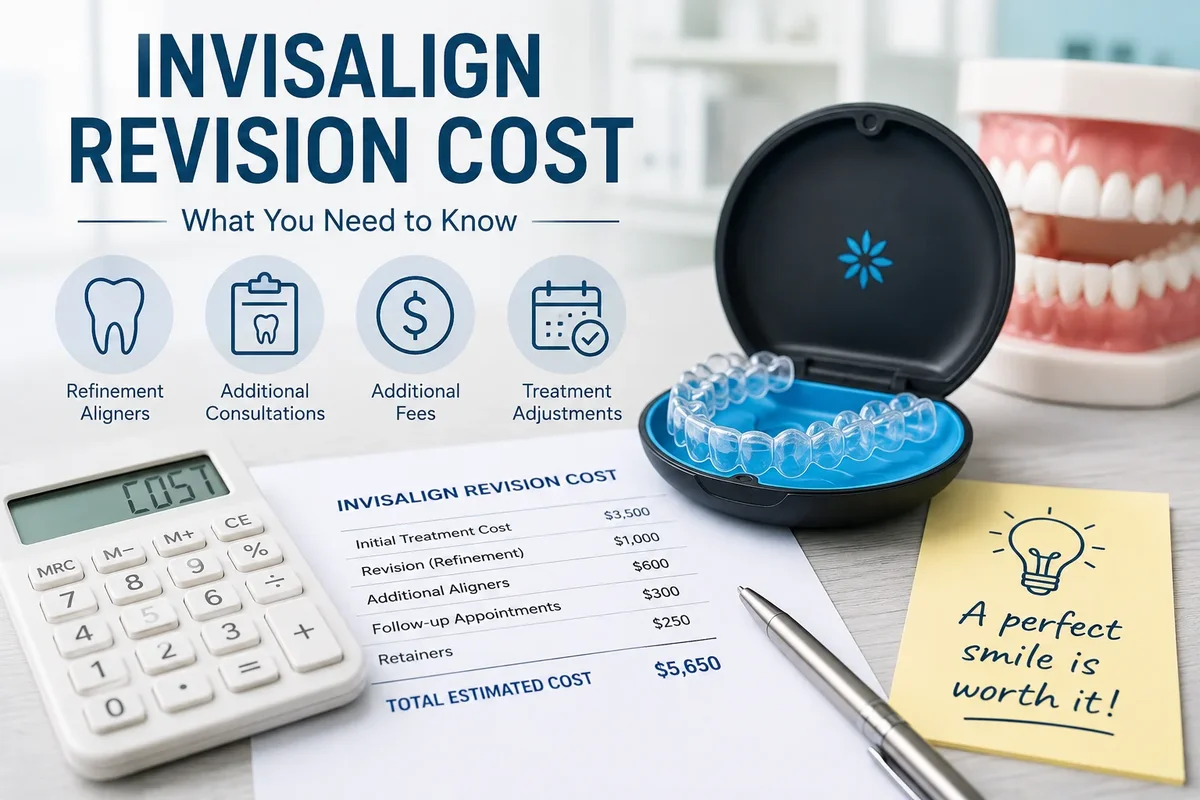
When to Contact a Dentist About Invisalign Revision Cost
Many patients are unsure about the right time to contact their orthodontist regarding invisalign revision cost. Some people wait too long before reporting problems, while others become anxious about minor treatment changes that are actually normal during clear aligner therapy. Understanding when to seek professional advice about invisalign revision cost is extremely important because early intervention can often prevent more serious orthodontic complications and reduce overall treatment expenses.
Invisalign treatment works gradually, and small adjustments in tooth movement are common throughout the process. However, certain warning signs may indicate that teeth are no longer tracking properly or that additional aligners may be necessary. Patients who recognize these signs early often experience lower invisalign revision cost because orthodontists can correct problems before they become severe.
Signs That Invisalign Treatment May Need Revision
One of the most important reasons to contact a dentist about invisalign revision cost is poor aligner fit. Invisalign trays should fit snugly over the teeth with minimal gaps. If the aligners suddenly feel loose, uneven, or difficult to insert, this may indicate that the teeth are not moving according to the treatment plan.
Patients should also monitor bite comfort throughout treatment. If the bite begins to feel uneven or chewing becomes uncomfortable, orthodontic adjustments may be necessary. Early evaluation can often reduce overall invisalign revision cost by allowing orthodontists to make smaller corrections instead of major revisions later.
Warning Signs That Require Orthodontic Evaluation
- Aligners no longer fit properly
- Visible gaps between teeth and trays
- Pain during chewing or biting
- Teeth shifting unexpectedly
- Bite feeling uneven
- Attachments becoming loose
- Retainers no longer fitting after treatment
Patients experiencing any of these symptoms should contact their provider quickly instead of waiting for the next scheduled appointment.
Why Early Action Reduces Invisalign Revision Cost
Delaying orthodontic evaluation often increases total invisalign revision cost. Small tracking problems can gradually become more serious if left untreated. For example, one tooth moving incorrectly may eventually affect the alignment of multiple surrounding teeth.
When orthodontists identify issues early, they may only need minor refinements or small aligner adjustments. However, severe tracking failures can require complete rescans, new treatment plans, and extensive additional aligners, significantly increasing invisalign revision cost.
Many modern orthodontic clinics now use remote monitoring technology that allows patients to upload progress photos between appointments. These systems help dentists detect problems sooner and reduce the need for major revisions.
When Retainers Become a Problem
Retainer issues are another important reason to contact an orthodontist regarding invisalign revision cost. After Invisalign treatment ends, retainers are essential for maintaining tooth alignment. If retainers suddenly become tight or difficult to wear, this may indicate that the teeth are beginning to shift backward.
Orthodontic relapse can increase invisalign revision cost substantially if ignored for too long. In mild cases, new retainers may solve the issue. However, significant relapse often requires additional aligners or partial retreatment.
Patients who stop wearing retainers regularly are especially likely to experience tooth movement after treatment. Even minor relapse can worsen gradually over time.
Common Situations That May Increase Invisalign Revision Cost ⚠️
| Situation | Potential Impact |
|---|---|
| Ignoring poor aligner fit | Major revisions may become necessary |
| Skipping appointments | Delayed problem detection |
| Not wearing retainers | Orthodontic relapse |
| Losing multiple aligners | Treatment disruption |
| Waiting too long for evaluation | Higher treatment complexity |
How Orthodontists Evaluate Revision Needs
When patients contact their dentist about invisalign revision cost, the orthodontist usually performs a detailed treatment evaluation. This may include digital scans, photographs, bite analysis, and review of aligner tracking.
The provider will determine whether the issue can be corrected with small refinements or whether more extensive revisions are necessary. Factors such as patient compliance, tooth movement patterns, and overall bite balance all influence final invisalign revision cost.
Orthodontists also evaluate whether the original Invisalign package already includes refinements. Comprehensive Invisalign plans often provide more flexibility for additional aligners compared to limited treatment packages.
Questions Patients Should Ask During a Consultation
- Is my treatment progressing normally?
- Will I need additional aligners?
- Are revisions included in my package?
- How long will refinements take?
- Can this issue worsen if untreated?
- How can I reduce future revision risks?
Open communication with the orthodontist helps patients better understand potential future invisalign revision cost and treatment expectations.
The Emotional Side of Invisalign Revisions
Some patients feel discouraged or frustrated when they realize additional aligners may be necessary. However, it is important to understand that refinements and revisions are very common during clear aligner therapy. Teeth move biologically, and no digital treatment simulation can predict every detail perfectly.
In many cases, small revisions actually produce the final cosmetic improvements that make the smile look symmetrical, balanced, and natural 😀. Orthodontists often use refinements to perfect tiny details that patients notice most in their final smile.
Rather than viewing revisions negatively, patients should see them as part of achieving the best possible orthodontic result.
How Patients Can Reduce Future Invisalign Revision Cost
Patients can minimize future invisalign revision cost by following all treatment instructions carefully. Wearing aligners consistently, attending appointments regularly, and using retainers after treatment are the most effective ways to reduce orthodontic complications.
Protecting aligners from damage and reporting fit problems early can also prevent larger treatment issues later. Many orthodontists emphasize that patient cooperation plays one of the biggest roles in overall treatment success.
Patients interested in Invisalign consultations and smile correction planning can visit the Redent Klinik Contact Page for additional information about orthodontic procedures and aligner treatment options.
For trusted oral healthcare education and orthodontic guidance, patients can also review resources from the American Dental Association.
Ultimately, knowing when to contact a dentist about invisalign revision cost helps patients protect both their smile and their financial investment. Early action, regular monitoring, and proper retainer use can significantly reduce treatment complications while improving long-term orthodontic stability and smile confidence 😁.