
Starting your first invisalign week can feel exciting, stressful, and slightly overwhelming at the same time. Many patients wonder what their teeth will feel like, whether eating will become difficult, and how long it will take to adjust to clear aligners. The good news is that most people adapt surprisingly quickly during their first invisalign week. Understanding what happens during this stage can help you stay comfortable and confident throughout your treatment journey. 😊
The first invisalign week is one of the most important stages of the aligner process because your mouth begins adapting to gentle orthodontic pressure. Invisalign aligners are designed to gradually move your teeth into better positions using custom-made transparent trays. During the first few days of an invisalign week, mild pressure and tightness are completely normal. These sensations are actually signs that the aligners are working correctly.
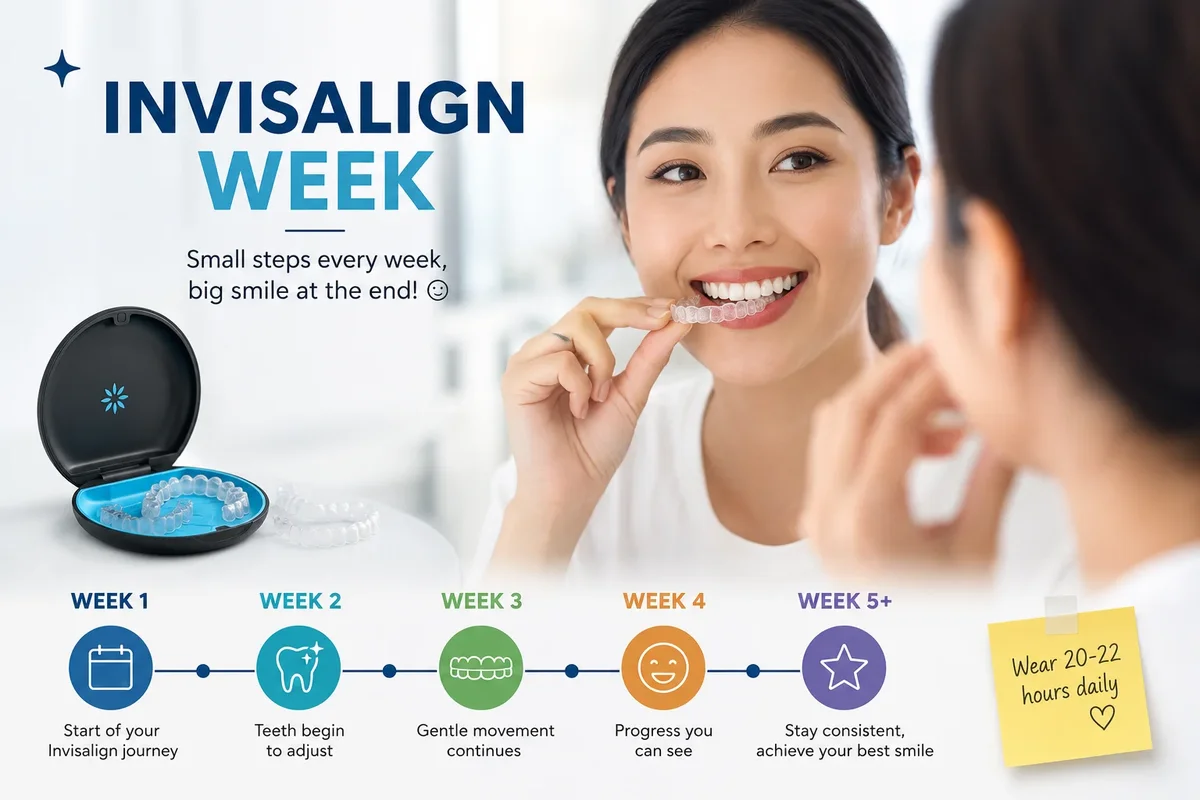
Most dental professionals recommend wearing aligners for 20–22 hours per day during every invisalign week. Removing the trays too often may delay progress and extend the overall treatment time. Patients who stay consistent usually experience smoother transitions from one tray set to another. During your first invisalign week, building this discipline is extremely important for long-term success.
One of the most common concerns during an invisalign week is discomfort while eating. Since aligners must be removed before meals, patients quickly learn new habits involving oral hygiene and meal timing. It may feel inconvenient initially, but many people eventually appreciate how Invisalign encourages healthier snacking habits. During an invisalign week, drinking plenty of water also helps reduce dry mouth and improves comfort.
Speech changes are another temporary issue some patients notice during their first invisalign week. Certain words may sound slightly different because the tongue needs time to adjust to the aligners. Thankfully, this adjustment period usually lasts only a few days. Reading aloud and speaking regularly can help improve pronunciation faster during an invisalign week.
Oral hygiene becomes especially important throughout every invisalign week. Because aligners fit tightly over the teeth, food particles and bacteria can become trapped if brushing is neglected. Patients should brush and floss carefully after meals before placing trays back into the mouth. Maintaining proper hygiene during an invisalign week helps prevent plaque buildup, staining, and unpleasant odors.
Many patients ask whether pain during an invisalign week is normal. In most cases, the discomfort is mild compared to traditional braces. The pressure is usually strongest during the first two or three days after switching to a new aligner tray. Orthodontists often recommend changing trays before bedtime so patients sleep through the initial adjustment period. Using cold water or orthodontic chewies may also improve comfort during an invisalign week.
Another important part of an invisalign week involves tracking progress carefully. Some patients become discouraged if they do not see immediate changes after only one week. However, Invisalign treatment works gradually and consistently over time. Even subtle movements occurring during an invisalign week contribute to the final smile transformation. Taking weekly photos can help patients recognize small improvements they might otherwise miss.
The average cost of Invisalign treatment varies depending on the complexity of the case and the clinic location. In the United States, prices often range between $3,000 and $8,000. Some clinics provide payment plans to make treatment more affordable. During your consultation, your dentist may explain how long each invisalign week contributes to the total treatment timeline and cost structure.
Estimated Invisalign Treatment Costs
- Mild cases: $3,000 – $4,500
- Moderate cases: $4,500 – $6,000
- Complex cases: $6,000 – $8,000+
- Retainers after treatment: $200 – $600
During an invisalign week, patients often compare clear aligners with traditional braces. One major advantage of Invisalign is appearance. The nearly invisible trays allow adults and teenagers to smile confidently throughout treatment. Another advantage is convenience because the trays are removable for eating and brushing. However, successful results depend heavily on patient discipline during every invisalign week.
Clear aligners may also improve confidence during social and professional interactions. Many adults choose Invisalign specifically because they prefer a discreet orthodontic option. By following dentist instructions carefully during each invisalign week, patients often experience smoother and faster treatment outcomes.
Some patients experience minor irritation inside the cheeks or lips during the first invisalign week. Orthodontic wax can sometimes help reduce friction points. Fortunately, the mouth usually adapts quickly. If sharp pain or severe discomfort occurs during an invisalign week, contacting your dental provider is recommended immediately.
Regular dental checkups remain important throughout Invisalign treatment. Dentists monitor tooth movement and ensure every invisalign week progresses correctly. These visits also help identify attachment issues, tray fit problems, or oral health concerns before they become serious.
For patients interested in learning more about professional dental care and Invisalign treatment planning, visiting the Redent Klinik Contact Page can help you schedule a consultation with experienced dental professionals.
It is also beneficial to review trusted oral health information from organizations like the American Dental Association, which provides educational resources about orthodontics, oral hygiene, and preventive care.
At the end of your first invisalign week, most discomfort usually decreases significantly. Patients often feel more comfortable inserting and removing trays, speaking clearly, and maintaining their routine. The beginning of an invisalign week may feel challenging, but consistency and patience are key to achieving excellent results. Over time, every successful invisalign week brings you closer to a straighter, healthier, and more confident smile. 😁
What Happens During Your First Invisalign Week?
The first invisalign week is often the most important adjustment period for new aligner patients. During this time, your mouth, teeth, and daily routine begin adapting to clear aligner treatment. Many people start their first invisalign week feeling excited but also slightly nervous because they are unsure what to expect. Understanding the changes that occur during this early stage can help patients feel more confident and prepared throughout the treatment process. 😊
At the beginning of an invisalign week, patients usually receive their first custom aligner trays from the dentist or orthodontist. These trays are specifically designed to apply gentle pressure to the teeth in order to move them gradually into better alignment. Since the aligners fit tightly over the teeth, the first few days of an invisalign week may feel unusual. Mild pressure, tightness, and tenderness are extremely common and are signs that the aligners are actively working.
Why Teeth Feel Tight During an Invisalign Week
One of the most frequently discussed experiences during an invisalign week is tooth pressure. Invisalign works by applying controlled force to move teeth slowly over time. During the first 48 hours of an invisalign week, patients often notice soreness when chewing or removing trays. This discomfort is generally mild compared to traditional braces, but it can still feel noticeable for first-time users.
The pressure usually decreases after a few days as the teeth begin adapting to the aligners. Many orthodontists recommend changing aligner trays at night so patients sleep through the strongest adjustment period. Drinking cold water and eating softer foods can also improve comfort during an invisalign week.
Common Symptoms During an Invisalign Week
- Mild pressure around the teeth
- Slight gum sensitivity
- Temporary speech changes
- Increased saliva production
- Minor irritation inside cheeks or lips
- Difficulty removing trays initially
Most of these symptoms disappear naturally as patients continue through their invisalign week. If severe pain occurs, contacting your dental provider is recommended.
Eating Habits During an Invisalign Week
Another major adjustment during an invisalign week involves eating habits. Since aligners must be removed before meals, patients often become more aware of their snacking routines. Many people discover that constant snacking becomes inconvenient because trays must be removed, teeth cleaned, and aligners reinserted afterward.
During an invisalign week, dentists usually recommend avoiding sugary beverages while wearing trays. Drinks like soda, coffee, and juice can become trapped under the aligners and increase the risk of cavities or staining. Water is considered the safest drink throughout an invisalign week.
Soft foods are especially helpful during the first days of an invisalign week. Foods such as soup, yogurt, mashed potatoes, eggs, pasta, and smoothies are easier to chew while teeth feel sensitive. As discomfort decreases, patients can gradually return to their normal diet.
Speech Changes During an Invisalign Week
Many new Invisalign users notice slight speech changes during their first invisalign week. Some words may sound different because the tongue needs time to adapt to the aligners. A temporary lisp is completely normal during an invisalign week and usually disappears after several days.
Practicing speech by reading aloud can help improve pronunciation faster. Most patients become comfortable speaking naturally before the end of their first invisalign week. Since Invisalign trays are clear and discreet, many people feel more confident socially compared to wearing traditional braces.
Oral Hygiene Importance During an Invisalign Week
Good oral hygiene becomes even more important during every invisalign week. Food particles trapped under aligners may increase the risk of plaque buildup and bad breath if cleaning routines are ignored. Patients should brush and floss carefully after every meal before reinserting trays.
Cleaning aligners daily is equally important during an invisalign week. Lukewarm water and gentle cleaning crystals or mild soap are commonly recommended. Hot water should always be avoided because it may warp the plastic trays.
Best Hygiene Practices for an Invisalign Week
- Brush teeth after every meal
- Floss daily to remove trapped debris
- Clean aligners every morning and night
- Carry a travel toothbrush when outside
- Store trays safely when eating
Following these habits consistently during an invisalign week helps maintain healthy gums and cleaner aligners throughout treatment.
Emotional Adjustment During an Invisalign Week
Beyond physical changes, the first invisalign week also involves emotional adjustment. Some patients initially worry about appearance, discomfort, or long treatment times. However, many people quickly feel motivated once they understand the benefits of clear aligner therapy.
Taking progress photos during each invisalign week can help patients stay encouraged. Small changes may not always be visible daily, but comparing photos over several weeks often reveals impressive improvements. This motivation helps patients remain disciplined with aligner wear.
Patients who wear trays for the recommended 20–22 hours daily generally experience better results during every invisalign week. Consistency is one of the biggest factors influencing treatment success.
How Long Does an Invisalign Week Last Before Feeling Normal?
Most people adjust to Invisalign surprisingly quickly. Although the first few days of an invisalign week may feel unusual, the majority of patients become comfortable within one week. Removing and inserting trays becomes easier, speech improves, and soreness decreases significantly.
As treatment progresses, future aligner changes often feel less dramatic than the very first invisalign week. The mouth gradually adapts to the routine, making each new tray transition smoother and more manageable.
If you experience severe discomfort, damaged trays, or unusual symptoms during an invisalign week, scheduling a professional dental consultation is important. Patients can also learn more about aligner treatment and dental care through the Redent Klinik Contact Page.
For additional oral health guidance, the American Dental Association provides educational resources related to orthodontics, dental hygiene, and preventive dental care.
Ultimately, every successful invisalign week brings patients closer to straighter teeth and improved confidence. While the first week may require patience and adaptation, most people quickly realize that the process becomes easier with consistency, discipline, and proper dental care. 😁
How to Eat Comfortably During an Invisalign Week
Learning how to eat comfortably during an invisalign week is one of the biggest adjustments for new aligner patients. Since Invisalign trays must be removed before every meal or snack, many people quickly realize that their daily eating habits need to change. During an invisalign week, understanding which foods feel comfortable, how to protect the aligners, and how to maintain oral hygiene can make the treatment process much easier and more enjoyable. 😊
The first few days of an invisalign week are usually the most sensitive because the aligners are actively applying pressure to the teeth. This pressure can cause temporary soreness when chewing hard foods. Patients often feel mild tenderness, especially when biting into crunchy or chewy meals. Fortunately, these symptoms usually improve as the mouth adapts throughout the invisalign week.
Why Eating Feels Different During an Invisalign Week
During an invisalign week, teeth are slowly shifting into new positions. Because of this movement, even normal chewing can sometimes feel uncomfortable. The pressure created by clear aligners affects the roots and surrounding tissues, which may lead to temporary sensitivity. This sensation is especially noticeable during the first 48 hours of a new tray cycle.
Unlike traditional braces, Invisalign trays are removable, which means patients can continue eating most foods. However, this flexibility also requires responsibility. Patients must remove aligners before eating and clean their teeth carefully before placing the trays back in. Developing this habit early during an invisalign week is essential for successful treatment.
Common Eating Challenges During an Invisalign Week
- Tooth sensitivity while chewing
- Difficulty biting hard foods
- Increased meal planning
- Reduced snacking frequency
- Need for frequent brushing and flossing
- Temporary gum tenderness
Although these adjustments may feel inconvenient initially, many patients eventually appreciate the healthier eating structure created during an invisalign week.
Best Foods to Eat During an Invisalign Week
Choosing soft and easy-to-chew foods can significantly improve comfort during an invisalign week. Patients often feel less discomfort when eating meals that do not require strong biting pressure. Soft foods are especially recommended during the first few days after switching to a new aligner tray.
Examples of comfortable foods during an invisalign week include:
- Soup and broth
- Mashed potatoes
- Scrambled eggs
- Yogurt
- Smoothies
- Pasta
- Rice dishes
- Soft fruits like bananas
- Oatmeal
- Steamed vegetables
Cold foods can also help reduce inflammation during an invisalign week. Many patients enjoy smoothies, chilled yogurt, or soft fruit because cool temperatures may soothe sore teeth and gums.
Foods to Avoid During an Invisalign Week
Some foods can increase discomfort or create unnecessary pressure during an invisalign week. Hard, sticky, or crunchy foods may feel difficult to chew when teeth are sensitive. Although Invisalign trays are removable, protecting the teeth and attachments remains important throughout treatment.
Foods That May Cause Discomfort
- Hard candies
- Ice cubes
- Crunchy chips
- Tough steak
- Sticky caramel
- Chewy bagels
- Hard nuts
- Very crunchy vegetables
Avoiding these foods during an invisalign week can help reduce soreness and prevent unnecessary stress on moving teeth.
Drinking Habits During an Invisalign Week
Hydration is extremely important during every invisalign week. Water helps keep the mouth clean, reduces dry mouth, and prevents bacteria buildup around the aligners. Most orthodontists recommend drinking only water while wearing Invisalign trays.
Hot beverages like coffee or tea may warp the aligners if consumed while trays are in place. Sugary drinks such as soda, sports drinks, or juice can also become trapped under the aligners, increasing the risk of cavities. During an invisalign week, patients should remove trays before drinking anything other than water.
If patients consume staining beverages like coffee, red wine, or dark tea, brushing teeth before reinserting aligners is strongly recommended. This habit helps keep trays clear and clean throughout the invisalign week.
Meal Timing During an Invisalign Week
One unexpected benefit of an invisalign week is improved meal discipline. Because removing and cleaning trays takes effort, many patients naturally reduce unnecessary snacking. This routine often encourages healthier eating patterns and better oral hygiene.
Most dental professionals recommend wearing aligners for 20–22 hours daily during every invisalign week. To achieve this goal, patients should plan meals efficiently and avoid leaving trays out for long periods.
Tips for Better Meal Management
- Eat meals at scheduled times
- Avoid constant snacking
- Carry a toothbrush when traveling
- Use aligner cases instead of napkins
- Drink water regularly
- Clean trays after meals
Following these habits consistently during an invisalign week helps patients stay on track with treatment goals.
Managing Pain While Eating During an Invisalign Week
Some discomfort while eating is normal during an invisalign week, especially immediately after changing trays. However, several simple strategies can help reduce soreness and improve comfort.
Patients often find relief by chewing slowly and using both sides of the mouth evenly. Over-the-counter pain relief medications may also help during the first days of an invisalign week, although patients should always follow professional dental guidance.
Cold compresses and chilled foods may reduce inflammation and tenderness during an invisalign week. In many cases, soreness becomes much less noticeable after three or four days.
Social Eating and Confidence During an Invisalign Week
Many patients worry about eating in public during an invisalign week. Fortunately, Invisalign trays are removable and nearly invisible, making social meals far easier compared to traditional braces. Most people quickly develop a comfortable routine for discreetly removing aligners before eating.
Travel-sized oral hygiene kits are especially helpful during an invisalign week. Carrying a toothbrush, toothpaste, floss, and aligner case allows patients to maintain good hygiene even while dining outside the home.
Patients who stay disciplined during every invisalign week often experience smoother progress and better long-term results. For additional support regarding aligner treatment and dental care, patients may visit the Redent Klinik Contact Page.
Trusted oral health resources are also available through the American Dental Association, which provides information about orthodontic care, oral hygiene, and preventive dentistry.
Overall, eating comfortably during an invisalign week becomes easier with practice, patience, and proper planning. Although the first week may require adjustments, most patients quickly adapt and develop routines that support both oral health and successful Invisalign treatment. 😁
Invisalign Week Pain, Pressure, and Adjustment Tips
Experiencing mild discomfort during an invisalign week is one of the most common concerns among new aligner patients. Many people begin treatment wondering whether Invisalign hurts and how long the soreness will last. Fortunately, most discomfort during an invisalign week is temporary, manageable, and significantly milder than traditional braces. Understanding why this pressure happens and learning practical adjustment tips can help patients feel far more comfortable throughout treatment. 😊
During every invisalign week, aligners apply controlled pressure to the teeth to guide them into new positions gradually. This movement affects the ligaments and tissues around the teeth, which naturally creates temporary sensitivity. Although the sensation can feel uncomfortable initially, it is actually a positive sign that the aligners are working correctly.
Why Teeth Hurt During an Invisalign Week
The main reason patients feel soreness during an invisalign week is tooth movement. Invisalign trays are carefully designed to shift teeth little by little over time. Every new aligner tray slightly changes the pressure points on the teeth, especially during the first few days after switching trays.
For most patients, the discomfort during an invisalign week feels more like pressure than severe pain. Teeth may feel tender while chewing, biting, or removing aligners. The intensity usually decreases after two or three days as the mouth adjusts to the trays.
Common Sensations During an Invisalign Week
- Tightness around the teeth
- Mild gum soreness
- Pressure when chewing food
- Sensitivity while removing trays
- Minor irritation inside cheeks or lips
- Temporary jaw fatigue
These symptoms are extremely common during an invisalign week and are generally considered normal parts of the orthodontic process.
How Long Does Invisalign Week Pain Last?
The discomfort experienced during an invisalign week is usually strongest within the first 24 to 48 hours after inserting a new aligner set. As the teeth begin adapting, soreness gradually fades. Most patients report that the pain becomes much more manageable by the third or fourth day of an invisalign week.
Interestingly, the first invisalign week is often the most noticeable because patients are completely new to aligner pressure. After several tray changes, many people become more familiar with the sensation and adapt faster during future weeks.
If severe pain continues throughout an entire invisalign week, or if trays do not fit correctly, patients should contact their dentist or orthodontist for evaluation.
Best Ways to Reduce Invisalign Week Discomfort
Fortunately, there are several effective ways to reduce soreness during an invisalign week. Many of these strategies are simple and can significantly improve daily comfort.
Helpful Pain Relief Tips
- Switch to new trays before bedtime
- Drink cold water regularly
- Eat soft foods during the first days
- Use orthodontic chewies
- Avoid hard or crunchy foods
- Wear aligners consistently
- Use dentist-approved pain relievers if necessary
One of the best strategies during an invisalign week is wearing aligners exactly as instructed. Removing trays too often may actually increase discomfort because the teeth repeatedly shift back slightly before being forced into alignment again.
Chewing Difficulties During an Invisalign Week
Some patients notice chewing discomfort during an invisalign week, especially when eating hard foods. Since teeth are actively moving, biting pressure can temporarily feel stronger than usual. This sensitivity often surprises first-time Invisalign users.
Soft meals are generally recommended during the beginning of an invisalign week. Foods such as soup, yogurt, pasta, mashed potatoes, oatmeal, and smoothies are easier on sensitive teeth. As discomfort decreases, patients usually return to normal eating habits.
Many patients also notice that their teeth feel slightly loose during an invisalign week. This sensation can feel strange but is often a normal part of orthodontic movement.
Gum and Cheek Irritation During an Invisalign Week
Beyond tooth soreness, some patients experience mild irritation inside the mouth during an invisalign week. The edges of the aligners may rub against the cheeks, lips, or tongue while the mouth adjusts. This irritation is usually temporary and becomes less noticeable over time.
Ways to Prevent Mouth Irritation
- Use orthodontic wax if needed
- Keep aligners clean and smooth
- Drink enough water to avoid dryness
- Avoid constantly touching trays with the tongue
- Follow dentist instructions carefully
Most mouth irritation during an invisalign week improves naturally as oral tissues adapt to the aligners.
Emotional Adjustment During an Invisalign Week
The first invisalign week can also involve emotional adjustment. Some patients initially worry that they made the wrong decision because of soreness or temporary inconvenience. However, these feelings are very common and usually disappear once patients adapt to the routine.
Many people become more confident after completing their first successful invisalign week. They learn how to remove trays more easily, maintain oral hygiene efficiently, and manage meals comfortably. This growing confidence often motivates patients to remain disciplined throughout treatment.
Importance of Consistency During an Invisalign Week
Consistency is one of the most important factors during every invisalign week. Aligners should generally be worn for 20–22 hours daily to achieve proper results. Patients who frequently remove trays for long periods may experience slower tooth movement and additional discomfort.
Developing strong habits during the first invisalign week often leads to smoother treatment overall. Carrying a travel toothbrush, aligner case, and floss can help patients stay consistent even while outside the home.
When to Contact a Dentist During an Invisalign Week
Although mild soreness is normal during an invisalign week, some symptoms may require professional attention. Patients should contact their dental provider if they experience:
- Severe or sharp pain
- Broken or cracked aligners
- Bleeding gums that do not improve
- Trays that no longer fit correctly
- Persistent swelling
- Extreme jaw discomfort
Professional monitoring ensures every invisalign week progresses safely and effectively.
Patients interested in professional Invisalign guidance can learn more through the Redent Klinik Contact Page, where experienced dental teams provide personalized treatment support.
Additional oral health information related to orthodontics and preventive care is also available through the American Dental Association.
Overall, discomfort during an invisalign week is usually temporary and manageable. With patience, proper care, and consistent aligner wear, most patients adjust quickly and begin noticing positive changes in both comfort and confidence. Every completed invisalign week is another important step toward achieving a healthier and straighter smile. 😁
Daily Cleaning Routine for a Successful Invisalign Week
Maintaining a proper cleaning routine during an invisalign week is one of the most important factors for successful aligner treatment. Many patients focus mainly on straightening their teeth but underestimate how critical oral hygiene becomes while wearing clear aligners. Because Invisalign trays cover the teeth for most of the day, bacteria, food particles, and plaque can easily become trapped if proper cleaning habits are ignored. Developing a consistent hygiene routine during every invisalign week helps protect both your teeth and your aligners while supporting healthier treatment results. 😊
Unlike traditional braces, Invisalign trays are removable, which gives patients more flexibility when brushing and flossing. However, this convenience also creates responsibility. During an invisalign week, patients must clean not only their teeth but also the aligner trays themselves multiple times daily. Failing to do this properly may lead to unpleasant odors, staining, plaque buildup, gum irritation, or cavities.
Why Cleaning Matters During an Invisalign Week
During an invisalign week, aligners remain in the mouth for approximately 20–22 hours every day. Since the trays fit tightly over the teeth, any leftover food debris or bacteria can become trapped underneath them. This creates an environment where plaque and harmful bacteria may multiply more easily.
Good oral hygiene during an invisalign week not only protects dental health but also keeps the aligners transparent and visually appealing. Dirty trays can quickly develop discoloration and unpleasant smells, reducing the cosmetic advantages of clear aligners.
Common Problems Caused by Poor Cleaning
- Bad breath
- Cloudy or stained aligners
- Plaque buildup
- Increased cavity risk
- Gum inflammation
- Bacterial growth
- Unpleasant tray odor
Preventing these issues during an invisalign week requires consistency and attention to daily hygiene habits.
Best Brushing Routine During an Invisalign Week
Brushing after every meal is strongly recommended during every invisalign week. Before placing aligners back into the mouth, teeth should be free from food particles and sugar residue. This habit helps reduce bacterial growth and lowers the risk of decay.
Many dental professionals recommend using a soft-bristled toothbrush and fluoride toothpaste during an invisalign week. Brushing too aggressively may irritate sensitive gums, especially during the first days after changing trays.
Ideal Brushing Steps
- Remove aligners carefully
- Rinse the trays with lukewarm water
- Brush teeth for at least two minutes
- Clean along the gumline gently
- Brush the tongue to reduce bacteria
- Floss thoroughly before reinserting trays
Following this routine consistently throughout an invisalign week supports cleaner teeth and healthier gums.
How to Clean Invisalign Trays Properly
Cleaning aligners correctly during an invisalign week is just as important as brushing the teeth. Since trays are transparent, even small amounts of plaque or staining become noticeable quickly. Patients should rinse aligners every time they remove them to prevent saliva and bacteria from drying onto the plastic.
Lukewarm water is generally recommended during an invisalign week. Hot water should always be avoided because heat can warp the plastic trays and affect their fit.
Safe Cleaning Methods for Invisalign Trays
- Gentle clear antibacterial soap
- Invisalign cleaning crystals
- Soft toothbrush cleaning
- Lukewarm water rinsing
- Denture cleaning tablets approved by dentists
Many orthodontists advise avoiding colored mouthwash or harsh toothpaste during an invisalign week because some products may scratch or discolor the aligners.
Flossing Importance During an Invisalign Week
Flossing becomes especially important during an invisalign week. Food particles trapped between teeth can remain sealed under the aligners for hours if flossing is skipped. This may increase the risk of cavities and gum inflammation over time.
Patients who floss consistently during every invisalign week often notice fresher breath and healthier gums throughout treatment. Flossing also helps remove plaque from areas that toothbrushes cannot fully reach.
Travel floss picks are especially useful during an invisalign week because they make cleaning easier after meals outside the home.
How to Prevent Bad Breath During an Invisalign Week
Bad breath can become a concern during an invisalign week if oral hygiene routines are inconsistent. Since aligners cover the teeth for most of the day, bacteria can multiply quickly when food particles remain trapped.
Tips for Fresher Breath
- Brush after every meal
- Floss daily
- Clean aligners twice daily
- Drink plenty of water
- Avoid sugary drinks with trays in
- Brush the tongue regularly
Hydration is especially important during an invisalign week. Drinking enough water helps wash away bacteria and reduces dry mouth, which is often associated with unpleasant breath.
Travel Hygiene Tips During an Invisalign Week
Many patients worry about maintaining oral hygiene while traveling or eating outside during an invisalign week. Fortunately, carrying a small dental care kit can make the process much easier.
A travel hygiene kit for an invisalign week may include:
- Travel toothbrush
- Mini toothpaste
- Dental floss
- Aligner storage case
- Cleaning wipes
- Mouth rinse
Having these items available allows patients to maintain healthy routines even during busy schedules.
Nighttime Cleaning Routine During an Invisalign Week
The nighttime routine during an invisalign week is particularly important because aligners are worn continuously for several hours during sleep. Before bed, patients should thoroughly brush and floss their teeth while also cleaning the trays carefully.
Some orthodontists recommend soaking aligners for a few minutes before bedtime during an invisalign week. This may help remove bacteria and maintain tray clarity.
Patients who establish strong nighttime habits early in treatment often experience fewer oral hygiene problems throughout every invisalign week.
Professional Support During an Invisalign Week
Regular dental checkups remain important throughout every invisalign week. Dentists monitor oral health, check tray fit, and ensure treatment progresses properly. Professional cleanings may also help maintain healthy gums and cleaner teeth during long-term aligner use.
Patients seeking additional support for Invisalign care can contact experienced professionals through the Redent Klinik Contact Page.
Educational resources about oral hygiene and orthodontic care are also available from the American Dental Association.
Overall, maintaining a strong cleaning routine during every invisalign week plays a major role in achieving successful results. Proper brushing, flossing, aligner cleaning, and hydration help patients protect their oral health while keeping their trays fresh, clear, and comfortable throughout treatment. 😁
Speech Changes and Confidence During Invisalign Week
One of the most surprising experiences for many patients during an invisalign week is the temporary effect aligners can have on speech. Since Invisalign trays sit directly over the teeth, the tongue must adapt to a slightly different mouth structure. During the first few days of an invisalign week, some patients notice small pronunciation differences, slight lisps, or changes in the way certain words sound. Fortunately, these speech changes are usually temporary and improve quickly as the mouth adjusts to the aligners. 😊
At the same time, many patients also experience emotional changes during an invisalign week. While some people initially feel self-conscious about speaking with aligners, others feel more confident because Invisalign is nearly invisible compared to traditional braces. Understanding how speech and confidence evolve throughout an invisalign week can help patients feel more relaxed and prepared during treatment.
Why Speech Changes Happen During an Invisalign Week
Speech relies heavily on tongue positioning and airflow inside the mouth. During an invisalign week, the aligners create a thin layer of plastic over the teeth, slightly altering the tongue’s natural movement patterns. Certain sounds, especially “s,” “sh,” “z,” or “th” sounds, may temporarily feel different.
For most patients, these speech changes during an invisalign week are minor and only noticeable to the patient themselves. Friends, family members, and coworkers often do not even recognize the difference.
Common Speech Experiences During an Invisalign Week
- Slight lisp during certain words
- Extra saliva production initially
- Difficulty pronouncing “s” sounds
- Tongue adjusting to aligner edges
- Minor speaking hesitation
- Temporary mouth dryness
These symptoms usually improve naturally within several days of an invisalign week as speech muscles adapt.
How Long Do Speech Changes Last During an Invisalign Week?
For most patients, speech changes during an invisalign week are temporary and mild. Many people notice significant improvement within the first three to seven days. The brain and tongue adapt quickly to the aligners, allowing speech to return to normal naturally.
Interestingly, patients who wear their aligners consistently during an invisalign week often adjust faster than those who frequently remove them. Constantly taking trays out may delay the tongue’s adaptation process.
After several aligner changes, many patients barely notice their trays at all during future stages of treatment. The first invisalign week is usually the most noticeable adjustment period.
Tips to Improve Speech During an Invisalign Week
There are several simple techniques that can help improve pronunciation and speaking comfort during an invisalign week. Practicing speech regularly allows the tongue and mouth muscles to adapt more quickly.
Helpful Speech Improvement Strategies
- Read aloud for 10–15 minutes daily
- Speak slowly during the first days
- Practice difficult words repeatedly
- Stay hydrated throughout the day
- Wear aligners consistently
- Avoid removing trays excessively
Many Invisalign patients discover that reading books, speaking on phone calls, or practicing conversations helps speed up adjustment during an invisalign week. Confidence usually grows naturally as speaking becomes easier.
Social Confidence During an Invisalign Week
Although some patients initially worry about speech changes during an invisalign week, many also feel increased confidence because Invisalign trays are nearly invisible. Compared to traditional braces with metal brackets and wires, clear aligners provide a much more discreet orthodontic experience.
Adults especially appreciate the professional appearance of Invisalign during an invisalign week. Many people feel comfortable attending meetings, social events, or presentations without drawing attention to their orthodontic treatment.
Teenagers also often prefer Invisalign because the trays are difficult to notice in photos and conversations. This cosmetic advantage helps many patients feel more relaxed and confident during every invisalign week.
Managing Anxiety During an Invisalign Week
Some patients feel nervous during their first invisalign week because they worry about speaking publicly or sounding different. However, these concerns are extremely common and usually disappear quickly once patients gain experience wearing aligners.
One helpful strategy during an invisalign week is remembering that speech changes are temporary. Most people adapt much faster than expected. Practicing conversations with friends or family can also help build confidence.
Ways to Feel More Comfortable Socially
- Practice speaking at home
- Smile confidently with aligners
- Focus on long-term smile goals
- Remember that aligners are nearly invisible
- Stay patient during the adjustment period
Patients who stay positive during an invisalign week often adapt emotionally much faster.
Professional Life During an Invisalign Week
Many working professionals choose Invisalign specifically because of its discreet appearance. During an invisalign week, patients can usually continue normal business meetings, presentations, and workplace conversations without major issues.
Because Invisalign trays are transparent, most coworkers may not even realize someone is undergoing orthodontic treatment. This subtle appearance is one of the biggest reasons many adults prefer Invisalign over braces.
Even if minor speech changes occur during an invisalign week, they typically become less noticeable with daily speaking practice.
Psychological Benefits of Invisalign Week Progress
Completing each successful invisalign week often creates a sense of achievement and motivation. As patients begin noticing small improvements in tooth alignment, confidence tends to increase naturally.
Taking progress photos during every invisalign week can help patients stay encouraged throughout treatment. Even small tooth movements may become visible when comparing photos over time.
Many patients report feeling more optimistic and self-assured after adjusting to their first invisalign week. The combination of improved dental appearance and successful adaptation often boosts emotional confidence significantly.
Maintaining Healthy Communication Habits During an Invisalign Week
Clear communication remains important throughout every invisalign week. Patients should not feel embarrassed about temporary speech adjustments because they are completely normal during orthodontic treatment.
Open communication with dental professionals can also improve comfort during an invisalign week. Dentists may provide personalized tips for speech adaptation, aligner fit, or oral comfort if needed.
Patients seeking professional Invisalign support and guidance may visit the Redent Klinik Contact Page for additional treatment information.
Trusted oral health education regarding orthodontics and dental care is also available through the American Dental Association.
Overall, speech changes during an invisalign week are usually temporary, mild, and manageable. With patience, consistent aligner wear, and regular speaking practice, most patients quickly regain natural speech patterns and develop stronger confidence throughout their Invisalign journey. Every completed invisalign week is another step toward a healthier, straighter, and more confident smile. 😁
Best Foods and Drinks to Choose in an Invisalign Week
Choosing the right foods and drinks during an invisalign week can make a major difference in both comfort and treatment success. Since Invisalign aligners gently move the teeth throughout the week, many patients experience temporary sensitivity, especially during the first few days after switching trays. The foods and beverages selected during an invisalign week can either reduce discomfort and support oral health or increase soreness and create unnecessary dental problems. 😊
Many first-time Invisalign users quickly realize that eating habits become more structured during an invisalign week. Because the aligners must be removed before meals and cleaned carefully afterward, patients often become more mindful about food choices and snacking frequency. Developing healthier eating routines during every invisalign week not only improves comfort but may also support better long-term oral health.
Why Food Choices Matter During an Invisalign Week
During an invisalign week, teeth are gradually shifting positions under gentle orthodontic pressure. This movement can make the teeth temporarily sensitive while chewing. Hard, sticky, or crunchy foods may create additional discomfort or stress on sensitive teeth during this adjustment period.
Invisalign trays themselves are also an important reason why food selection matters during an invisalign week. Since the aligners fit tightly over the teeth, leftover food particles and sugary residue can become trapped if oral hygiene is neglected. This environment may increase the risk of cavities, gum irritation, or bad breath.
Goals of a Good Invisalign Week Diet
- Reduce chewing discomfort
- Protect sensitive teeth
- Prevent aligner staining
- Maintain healthy gums
- Reduce cavity risk
- Support easier oral hygiene
Following smart nutritional habits during an invisalign week helps patients feel more comfortable while protecting their dental health.
Best Foods to Eat During an Invisalign Week
Soft foods are usually the best option during the early days of an invisalign week. Because teeth may feel tender after changing trays, softer textures reduce pressure while chewing and allow patients to eat more comfortably.
Recommended Soft Foods
- Mashed potatoes
- Scrambled eggs
- Soup and broth
- Yogurt
- Pasta dishes
- Oatmeal
- Smoothies
- Rice meals
- Soft fruits like bananas
- Steamed vegetables
These foods are especially helpful during the first few days of an invisalign week when aligner pressure feels strongest. Cold foods may also provide temporary relief for sore teeth and gums.
Protein-rich foods are another excellent choice during an invisalign week because they support overall oral tissue health. Eggs, fish, yogurt, and soft chicken dishes are often easier to chew while still providing important nutrients.
Foods to Avoid During an Invisalign Week
Although Invisalign aligners are removable, some foods may still create unnecessary discomfort during an invisalign week. Hard foods can place additional pressure on already sensitive teeth, while sticky foods may become difficult to clean from attachments and teeth.
Foods Commonly Avoided During an Invisalign Week
- Hard candy
- Chewy caramel
- Ice cubes
- Crunchy chips
- Very hard bread
- Tough meats
- Sticky gum
- Hard nuts
These foods can make eating uncomfortable during an invisalign week, especially after inserting new trays. Patients often find that avoiding these items reduces soreness significantly.
Best Drinks During an Invisalign Week
Water is considered the safest and healthiest drink throughout every invisalign week. Since Invisalign trays stay in the mouth for most of the day, sugary or acidic beverages can become trapped underneath the aligners and increase the risk of tooth decay.
Staying hydrated during an invisalign week also helps reduce dry mouth, supports fresher breath, and improves overall oral comfort. Many patients notice increased thirst or saliva production when first starting Invisalign treatment.
Recommended Drinks During an Invisalign Week
- Plain water
- Cold water with lemon after tray removal
- Milk
- Sugar-free electrolyte drinks (without trays)
- Protein shakes after brushing
Most orthodontists recommend removing aligners before drinking anything except water during an invisalign week.
Drinks That May Stain Aligners During an Invisalign Week
Certain beverages can discolor Invisalign trays or increase cavity risk during an invisalign week. Dark-colored drinks may stain the transparent aligners, reducing their invisible appearance.
Drinks Commonly Avoided With Aligners In
- Coffee
- Tea
- Red wine
- Soda
- Energy drinks
- Colored sports drinks
- Fruit juice
Patients who consume these drinks during an invisalign week should remove their trays first and brush their teeth before reinserting them whenever possible.
Healthy Eating Habits During an Invisalign Week
One unexpected advantage of an invisalign week is improved meal discipline. Because aligners require removal and cleaning before and after meals, many patients naturally reduce unnecessary snacking. This structure often encourages healthier eating patterns and better oral hygiene habits.
Meal planning becomes especially important during an invisalign week. Patients who organize meal times efficiently are more likely to achieve the recommended 20–22 hours of aligner wear daily.
Helpful Eating Routine Tips
- Eat meals at scheduled times
- Avoid frequent snacking
- Carry a travel toothbrush
- Drink water regularly
- Clean teeth before reinserting trays
- Store aligners safely while eating
These habits help patients maintain treatment consistency throughout every invisalign week.
Restaurant and Social Eating Tips During an Invisalign Week
Many people worry about social dining during an invisalign week, especially when eating in public settings. Fortunately, Invisalign trays are removable and discreet, making restaurant meals much easier than traditional braces.
Patients often feel more confident socially during an invisalign week because the aligners are nearly invisible. Carrying a small oral hygiene kit can make dining outside far more convenient.
A travel kit for an invisalign week may include:
- Toothbrush
- Mini toothpaste
- Floss
- Aligner case
- Mouth rinse
These simple tools help patients maintain good oral hygiene no matter where they eat.
Professional Support for Invisalign Week Nutrition
Patients who experience severe discomfort while eating during an invisalign week should consult their dental provider. Orthodontists can recommend personalized dietary strategies or evaluate whether aligners fit properly.
Individuals seeking additional guidance regarding Invisalign treatment may contact experienced dental professionals through the Redent Klinik Contact Page.
Additional educational resources about orthodontic care and oral health are also available through the American Dental Association.
Overall, choosing the right foods and drinks during an invisalign week can dramatically improve comfort, oral hygiene, and treatment success. With proper nutrition, smart meal planning, and consistent dental care, patients can navigate every invisalign week more comfortably while progressing toward a healthier and more confident smile. 😁
How Often You Should Change Trays Each Invisalign Week
Understanding how often to change aligner trays during an invisalign week is one of the most important parts of successful Invisalign treatment. Many patients begin treatment feeling unsure about tray schedules, timing, and how long each aligner should be worn. Since Invisalign works by gradually shifting teeth through a series of custom-made trays, following the correct replacement schedule during every invisalign week is essential for achieving safe and effective results. 😊
Each aligner set is carefully designed to move the teeth slightly closer to their ideal positions. During an invisalign week, the trays apply gentle pressure to specific teeth according to the treatment plan created by the dentist or orthodontist. If trays are changed too early or worn inconsistently, the teeth may not move correctly, potentially slowing progress or causing discomfort.
Standard Tray Change Schedule During an Invisalign Week
For many patients, trays are typically changed every one to two weeks during Invisalign treatment. However, the exact timing depends on several factors, including the complexity of the case, tooth movement speed, patient age, and dentist recommendations.
During a standard invisalign week, most orthodontists recommend wearing aligners for approximately 20–22 hours per day. This consistent wear allows the trays to apply steady pressure on the teeth. Patients who frequently remove their aligners may need longer treatment times because the teeth are not receiving enough continuous movement.
Typical Invisalign Tray Schedule
- Simple cases: Tray changes every 7 days
- Moderate cases: Tray changes every 10–14 days
- Complex cases: Longer wear periods may be required
- Night-only aligner use: Usually requires extended treatment time
Every invisalign week is carefully calculated to balance tooth movement and patient comfort.
Why Wearing Trays Consistently Matters During an Invisalign Week
Consistency is one of the biggest success factors during an invisalign week. Aligners work best when worn nearly all day except during meals, brushing, and flossing. If trays are left out too long, the teeth may begin shifting backward slightly, which can make the aligners feel tighter and more uncomfortable when reinserted.
Patients who stay disciplined throughout every invisalign week often experience smoother transitions between trays and better overall treatment results.
Risks of Inconsistent Tray Wear
- Delayed tooth movement
- Longer treatment duration
- Poor aligner fit
- Increased discomfort
- Higher risk of needing refinements
- Less predictable final results
Following the recommended wear schedule during an invisalign week helps ensure that teeth continue moving according to the original treatment plan.
What Happens When You Switch Trays During an Invisalign Week?
Switching to a new tray during an invisalign week often creates temporary pressure and soreness. This happens because each aligner set is slightly different and designed to continue the tooth movement process.
Most patients notice the strongest pressure during the first 24–48 hours after starting a new tray in an invisalign week. The sensation is usually described as tightness rather than severe pain. This pressure gradually decreases as the teeth begin adjusting to the new aligners.
Many orthodontists recommend changing trays before bedtime during an invisalign week. Sleeping through the initial adjustment period often makes the transition feel easier and more comfortable.
Signs You Are Ready for the Next Invisalign Week Tray
Patients often wonder how to know if they are ready to switch trays during an invisalign week. In most cases, the dentist provides a precise schedule that should be followed carefully. However, there are also several signs that indicate the current trays are fitting properly and treatment is progressing well.
Signs of Successful Tray Progression
- Aligners fit snugly without large gaps
- Pressure decreases by the end of the week
- Teeth feel stable inside the trays
- Attachments remain secure
- No major pain or severe irritation
If aligners still feel extremely tight near the end of an invisalign week, patients should avoid changing trays early without professional guidance.
What Happens If You Forget to Wear Aligners During an Invisalign Week?
Missing aligner wear time during an invisalign week can affect treatment progress significantly. Teeth may begin shifting back toward their previous positions surprisingly quickly if aligners are left out for extended periods.
If patients forget to wear trays for only a short time during an invisalign week, reinserting the aligners may feel slightly tighter than usual. However, long periods without trays may create fit problems or discomfort.
Tips for Staying Consistent
- Set phone reminders
- Use Invisalign tracking apps
- Carry aligners everywhere
- Store trays safely during meals
- Build a daily wear routine
Creating strong habits during every invisalign week improves treatment success and reduces the risk of delays.
Can You Change Trays Faster During an Invisalign Week?
Some patients ask whether they can switch trays earlier during an invisalign week to finish treatment faster. However, changing trays too quickly without professional approval can create problems. Teeth need time to adapt to each stage of movement safely.
Moving teeth too aggressively during an invisalign week may increase discomfort and potentially affect gum or bone health. Orthodontists carefully calculate aligner schedules to create controlled and healthy tooth movement.
Patients should always follow professional instructions regarding every invisalign week tray schedule.
How Orthodontists Monitor Invisalign Week Progress
Throughout treatment, dentists monitor progress during each invisalign week to ensure teeth are moving correctly. Follow-up appointments allow orthodontists to evaluate aligner fit, attachment stability, and overall treatment progress.
Digital scans and progress photos may also be used to compare tooth movement between every invisalign week. If necessary, adjustments can be made to improve results.
Professional Monitoring May Include
- Checking tray fit
- Monitoring tooth movement
- Evaluating gum health
- Replacing lost attachments
- Adjusting treatment timelines
Regular dental supervision helps keep every invisalign week safe and effective.
Long-Term Success Through Every Invisalign Week
Completing each successful invisalign week brings patients closer to straighter teeth and improved oral health. Although aligner schedules may feel strict initially, most patients quickly adapt to the routine.
Patients seeking professional Invisalign guidance and personalized treatment support can contact experienced dental providers through the Redent Klinik Contact Page.
Additional educational resources about orthodontic treatment and oral health are also available from the American Dental Association.
Overall, following the correct tray replacement schedule during every invisalign week is one of the most important factors for achieving excellent Invisalign results. With patience, consistency, and proper professional guidance, patients can progress smoothly through each aligner stage while building a healthier and more confident smile. 😁
Tracking Progress and Results During Every Invisalign Week
Tracking progress during every invisalign week is one of the most motivating and important parts of the Invisalign journey. Many patients begin treatment expecting dramatic overnight changes, but Invisalign works gradually and systematically over time. Small improvements occur during each invisalign week, and these tiny movements eventually create significant smile transformations. Understanding how to monitor progress correctly can help patients stay motivated, consistent, and confident throughout treatment. 😊
One of the biggest advantages of Invisalign is that patients can often see gradual changes more clearly than with traditional braces. Because the aligners are removable and transparent, it becomes easier to observe how the teeth shift during every invisalign week. Taking progress photos, comparing aligner trays, and attending regular dental checkups all help patients understand how treatment is progressing.
Why Tracking Invisalign Week Progress Matters
Tracking results during an invisalign week provides both practical and emotional benefits. On a practical level, monitoring tooth movement helps patients recognize whether their aligners are fitting correctly and whether treatment is staying on schedule. Emotionally, seeing gradual improvement can increase motivation and treatment confidence.
Many patients feel discouraged during the first invisalign week because changes may seem subtle initially. However, comparing weekly progress photos often reveals movement that is difficult to notice in the mirror day by day.
Main Benefits of Monitoring Invisalign Week Results
- Increased treatment motivation
- Better aligner wear consistency
- Early identification of fit problems
- Improved communication with dentists
- Clear understanding of smile transformation
- Greater emotional confidence
Patients who actively monitor each invisalign week often feel more connected to the treatment process and more committed to wearing their aligners properly.
What Changes to Expect During an Invisalign Week
Most Invisalign movements are gradual, which means patients may not notice dramatic differences during a single invisalign week. However, even small movements are important because Invisalign treatment depends on continuous and controlled adjustments.
Some of the earliest improvements during an invisalign week may include:
- Slightly straighter front teeth
- Reduced crowding
- Better aligner fit
- Improved bite positioning
- More symmetrical spacing
These changes often become more noticeable after several consecutive weeks of treatment. Every successful invisalign week contributes to the overall alignment process.
How to Take Progress Photos During an Invisalign Week
Progress photos are one of the most effective ways to monitor results during every invisalign week. Since changes occur gradually, weekly photos allow patients to compare their smiles over time more accurately.
Tips for Better Invisalign Week Progress Photos
- Take photos in the same lighting
- Use the same camera angle each week
- Smile naturally
- Take close-up images of the teeth
- Photograph both front and side views
- Save photos in chronological order
Patients who document their progress throughout each invisalign week often feel more motivated because they can visually track improvements that may otherwise go unnoticed.
Signs Your Invisalign Week Is Progressing Correctly
There are several signs that indicate successful progress during an invisalign week. One of the most important indicators is aligner fit. The trays should fit snugly over the teeth without large gaps or excessive looseness.
Patients may also notice that pressure decreases gradually throughout an invisalign week. This reduction in tightness often means the teeth are adapting to the aligners successfully.
Positive Signs During an Invisalign Week
- Aligners fit securely
- Pressure decreases after several days
- Teeth appear slightly straighter
- Attachments remain intact
- Speech improves over time
- Oral hygiene becomes easier to maintain
Experiencing these signs during an invisalign week usually indicates that treatment is progressing normally.
When Invisalign Week Progress Feels Slow
Some patients feel frustrated when they do not notice major visual changes during an invisalign week. However, Invisalign treatment is intentionally designed to move teeth slowly and safely. Rapid tooth movement could damage gums, roots, or surrounding bone structures.
Patience is essential throughout every invisalign week. Many orthodontists explain that even tiny movements are biologically important and contribute to long-term stability.
Patients who remain consistent during every invisalign week usually achieve better final outcomes compared to those who become discouraged and wear trays inconsistently.
How Dentists Track Invisalign Week Progress
Professional monitoring is another key part of evaluating progress during every invisalign week. Dentists and orthodontists use digital scans, photographs, and aligner fit evaluations to ensure treatment is moving correctly.
Professional Progress Checks May Include
- Evaluating tray fit
- Comparing tooth movement to digital plans
- Checking gum health
- Monitoring bite alignment
- Assessing attachment stability
- Reviewing oral hygiene habits
These appointments help identify any problems early during an invisalign week and allow dentists to make adjustments if necessary.
Common Reasons Invisalign Week Progress Slows Down
Several factors may interfere with proper movement during an invisalign week. One of the most common reasons is inconsistent aligner wear. Invisalign trays must usually be worn for 20–22 hours daily to maintain continuous tooth movement.
Factors That Can Delay Invisalign Week Progress
- Leaving trays out too long
- Skipping aligner changes
- Poor oral hygiene
- Damaged trays
- Ignoring dentist instructions
- Smoking or excessive sugary drinks
Avoiding these habits during every invisalign week supports more predictable treatment results.
Emotional Motivation During Every Invisalign Week
Tracking visible improvements during each invisalign week often creates emotional motivation and excitement. Many patients feel more confident socially once they begin noticing alignment improvements in photos and mirrors.
Celebrating small progress milestones during an invisalign week can help maintain long-term discipline and positivity throughout treatment.
Patients seeking professional Invisalign evaluations and personalized treatment support may visit the Redent Klinik Contact Page.
Educational resources regarding orthodontic treatment and oral health are also available through the American Dental Association.
Overall, carefully tracking progress during every invisalign week helps patients stay informed, motivated, and confident throughout their Invisalign journey. Even small weekly improvements contribute to major long-term smile transformations, making consistency and patience essential for successful results. 😁
When to Contact Your Dentist During an Invisalign Week
Knowing when to contact your dentist during an invisalign week is an important part of maintaining safe and successful orthodontic treatment. While most Invisalign experiences involve only mild pressure and temporary adjustments, certain symptoms or problems may require professional attention. Many patients feel unsure about what is considered normal during an invisalign week and what could indicate a more serious issue. Understanding the warning signs can help patients avoid unnecessary complications while protecting their oral health. 😊
Invisalign treatment is carefully designed to move teeth gradually and safely. Mild soreness, pressure, and temporary speech changes are extremely common during an invisalign week. However, severe pain, broken trays, unusual swelling, or aligners that no longer fit properly may require immediate dental evaluation.
Normal Symptoms During an Invisalign Week
Before discussing warning signs, it is important to understand what is considered normal during an invisalign week. Since aligners apply controlled pressure to move teeth, some temporary discomfort is expected.
Common Normal Experiences During an Invisalign Week
- Mild pressure on teeth
- Temporary soreness while chewing
- Slight speech changes
- Minor gum sensitivity
- Temporary increase in saliva
- Mild tray tightness after switching aligners
These symptoms usually improve within several days of an invisalign week. Most patients adapt quickly as their mouths become more familiar with the aligners.
Severe Pain During an Invisalign Week
Although mild discomfort is common during an invisalign week, severe or sharp pain is not typical. If patients experience intense pain that interferes with eating, sleeping, or daily activities, contacting a dentist is recommended.
Extreme discomfort during an invisalign week could indicate that the aligners are not fitting correctly or that the teeth are not moving according to the treatment plan. Occasionally, attachments or tray edges may create pressure points that irritate oral tissues.
Signs Pain May Require Professional Attention
- Sharp stabbing pain
- Bleeding gums that worsen
- Swelling around teeth or gums
- Pain lasting longer than several days
- Difficulty fully seating aligners
- Pain that prevents normal eating
Patients should never ignore severe discomfort during an invisalign week, especially if symptoms continue worsening over time.
Broken or Cracked Aligners During an Invisalign Week
Sometimes aligners become damaged during an invisalign week. Cracks, tears, or broken sections can affect how pressure is distributed across the teeth. Wearing damaged aligners may reduce treatment effectiveness or cause additional irritation.
If trays crack during an invisalign week, patients should contact their dental provider as soon as possible. Dentists may recommend switching to the next set of aligners, returning to the previous tray temporarily, or ordering replacements depending on the situation.
Common Causes of Tray Damage
- Using hot water to clean trays
- Accidentally dropping aligners
- Biting down incorrectly
- Forcing trays into place
- Chewing hard foods with aligners in
Handling aligners carefully during every invisalign week helps reduce the risk of damage.
Aligners Not Fitting Properly During an Invisalign Week
Proper tray fit is extremely important during an invisalign week. Aligners should sit snugly against the teeth with minimal gaps. Small spaces may occasionally appear during treatment, but large gaps or trays that no longer seat fully could indicate tracking problems.
Tracking problems happen when the teeth are not moving exactly as planned during an invisalign week. This issue may occur if aligners are not worn consistently enough or if certain teeth are responding differently to treatment.
Signs of Poor Tray Fit
- Large visible gaps between teeth and trays
- Aligners lifting off the teeth
- Difficulty inserting trays fully
- Sudden looseness without explanation
- Persistent discomfort in one area
If these symptoms occur during an invisalign week, a dental evaluation may help prevent future treatment delays.
Gum Problems During an Invisalign Week
Healthy gums are essential throughout every invisalign week. While mild irritation can happen initially, significant gum problems should not be ignored. Swollen, bleeding, or painful gums may indicate poor oral hygiene, excessive pressure, or other dental concerns.
Maintaining strong brushing and flossing habits during an invisalign week helps reduce the risk of gum inflammation and plaque buildup.
When Gum Symptoms Become Concerning
- Persistent bleeding
- Severe swelling
- Pus or unusual discharge
- Strong bad breath despite cleaning
- Gum recession around teeth
Patients experiencing these symptoms during an invisalign week should schedule a dental appointment promptly.
Lost Attachments During an Invisalign Week
Many Invisalign patients have small tooth-colored attachments bonded to their teeth. These attachments help guide certain movements during treatment. Occasionally, attachments may fall off during an invisalign week.
Although losing an attachment may not always require emergency care, patients should still notify their dentist. Missing attachments can affect how efficiently teeth move during an invisalign week.
Persistent Bad Breath During an Invisalign Week
Temporary breath changes may occur during an invisalign week, especially if oral hygiene routines are inconsistent. However, persistent bad breath despite regular cleaning could indicate bacterial buildup, cavities, or gum issues.
Ways to Reduce Bad Breath During an Invisalign Week
- Brush after every meal
- Floss daily
- Clean aligners properly
- Drink more water
- Avoid sugary beverages with trays in
- Brush the tongue regularly
If unpleasant odors continue during an invisalign week, a dental evaluation may help identify underlying causes.
Emergency Situations During an Invisalign Week
Although rare, some situations during an invisalign week require immediate dental attention. Severe swelling, signs of infection, allergic reactions, or major trauma should never be ignored.
Emergency Warning Signs
- Difficulty breathing
- Rapid swelling
- Fever with oral pain
- Severe bleeding
- Trauma to the mouth or teeth
These situations go beyond routine invisalign week discomfort and require urgent professional care.
Building a Good Relationship With Your Dentist During an Invisalign Week
Open communication with dental professionals is one of the best ways to ensure successful progress during every invisalign week. Patients should feel comfortable asking questions about aligner fit, soreness, oral hygiene, or treatment timelines.
Regular monitoring allows dentists to identify potential problems early and make adjustments when necessary during an invisalign week.
Patients seeking professional Invisalign support and personalized treatment guidance can contact experienced dental providers through the Redent Klinik Contact Page.
Additional educational information regarding orthodontic care and oral health is available through the American Dental Association.
Overall, understanding when to contact your dentist during an invisalign week helps protect both treatment progress and oral health. While most Invisalign experiences involve only temporary adjustments, recognizing serious warning signs early allows patients to receive professional care before small issues become larger complications. Every carefully managed invisalign week brings patients one step closer to a healthier and more confident smile. 😁