
Are you searching for Invisalign that takes insurance? You’re not alone! Many people dream of having perfectly straight teeth without the hassle of traditional braces, and Invisalign has made that dream a reality. However, the cost of Invisalign can be a major concern. The good news is that several dental insurance plans cover Invisalign—sometimes up to 50% of the treatment cost. 🦷💎
In this comprehensive guide, we’ll help you understand how to find Invisalign that takes insurance, how to make the most of your dental coverage, and ways to reduce your out-of-pocket expenses. Whether you’re exploring this for yourself, your child, or a family member, understanding how insurance applies to Invisalign can save you hundreds or even thousands of dollars. Let’s dive deep into how you can get your dream smile affordably. 😁
What Is Invisalign and Why Do People Prefer It?
Invisalign is a revolutionary orthodontic treatment that uses clear, custom-made aligners to gradually straighten your teeth. Unlike metal braces, Invisalign aligners are removable, nearly invisible, and much more comfortable. People love Invisalign because it blends seamlessly into everyday life—you can remove it while eating, brushing, or for special occasions. No wires, no brackets, no food restrictions, and fewer dental visits! 🍏
However, this convenience and advanced technology come with a cost. Invisalign treatment can range between $3,000 and $7,500 depending on the complexity of your case. That’s where dental insurance comes in. Finding Invisalign that takes insurance can dramatically reduce these costs, making it accessible to more people. Some dental plans even treat Invisalign like traditional braces, covering part of the treatment as an orthodontic benefit.
Why Insurance Coverage for Invisalign Matters
The biggest reason people hesitate to start Invisalign is the price. But what many don’t realize is that insurance coverage can significantly ease the burden. Dental insurance plans that cover orthodontic treatments often include Invisalign, even if it’s not explicitly mentioned. The trick is knowing how to read your policy and ask the right questions. 🧾
For example, if your plan covers orthodontic work for adults or children, Invisalign may qualify under that clause. Some policies specify a lifetime orthodontic maximum (e.g., $1,500–$3,000), which can be applied to Invisalign. So, if your plan pays 50% of orthodontic costs up to $2,000, that’s $1,000 off your Invisalign treatment right away!
To get started, contact your insurance provider and ask directly: “Does my plan cover Invisalign that takes insurance?” If your provider says yes, request a pre-treatment estimate. This helps you understand exactly how much the insurer will pay before starting treatment.
How to Find Clinics That Accept Invisalign Insurance
Finding a dental clinic that offers Invisalign that takes insurance is easier than you might think. Many orthodontists and dentists are partnered with major insurance companies such as Delta Dental, Cigna, MetLife, Aetna, and UnitedHealthcare. You can call your insurance company and ask for a list of approved Invisalign providers near you, or simply check the provider directory on their website.
At Redent Klinik Contact Page, for example, you can easily reach a specialist who will help you determine if your insurance covers Invisalign and explain your financing options. Having an expert review your insurance details ensures there are no surprises later.
Remember that each dental clinic sets its own pricing and payment structure, so comparing quotes from different providers is a smart move. Some clinics even help you submit insurance claims directly, saving you time and paperwork.
Tips to Maximize Your Invisalign Insurance Coverage
Here are a few insider tips to help you get the most out of your plan:
- 🧾 Ask for pre-authorization: This helps confirm coverage before you start treatment.
- 💰 Use HSA or FSA funds: Health Savings Accounts (HSA) and Flexible Spending Accounts (FSA) can cover your portion of Invisalign costs tax-free.
- 🦷 Choose an in-network provider: Dentists in your network often have lower rates and easier claims processing.
- ⏰ Check coverage renewal dates: If your plan resets yearly, you might split the cost across two plan years to save more.
Why Invisalign Is Worth the Investment
Besides the aesthetic improvement, Invisalign can also enhance your oral health. Crooked teeth make it harder to clean properly, leading to plaque buildup, gum disease, and tooth decay. Correct alignment improves bite balance, speech clarity, and confidence. Insurance coverage simply makes it easier to afford this long-term benefit.
When choosing Invisalign that takes insurance, you’re investing not just in your smile but also in your health and quality of life. Orthodontic correction can prevent future dental issues that may cost far more to fix later. And with many financing options available, there’s never been a better time to start your journey.
For more information on dental standards and best practices, visit the official American Dental Association website, which provides credible information on orthodontic treatments and oral health care.
In summary: Finding Invisalign that takes insurance is absolutely possible, and it’s the smartest financial step toward achieving your ideal smile. Contact your insurance provider, talk to your dentist, and explore your coverage options today — your perfect smile may be just a call away. 🌟
Understanding Invisalign and Why It’s Worth the Investment
When people think about Invisalign that takes insurance, the first question that comes to mind is: “Is it really worth the cost?” The answer depends on your priorities—both aesthetic and medical. Invisalign isn’t just about a beautiful smile; it’s also about improving your overall oral health. Misaligned teeth can lead to chewing problems, jaw discomfort, and even gum disease. Invisalign solves these issues with advanced, nearly invisible technology that straightens teeth without the discomfort of metal braces. 😁
What Makes Invisalign Different from Traditional Braces?
Traditional braces rely on metal brackets and wires that tighten over time to shift your teeth into alignment. Invisalign, on the other hand, uses a series of clear, removable aligners custom-fitted to your mouth. Every few weeks, you switch to a new set of aligners that gently guide your teeth into the desired position. Because the trays are removable, you can still eat, drink, and brush your teeth normally—something that’s impossible with fixed braces.
Many patients prefer Invisalign because of the freedom it offers. There are no food restrictions, no painful wire adjustments, and no embarrassment about your appearance. Whether you’re at a business meeting, a social event, or a special occasion, your aligners remain discreet. This convenience and comfort explain why more people are actively searching for Invisalign that takes insurance every year.
How Insurance Can Help Cover Invisalign Costs
One of the biggest barriers to getting Invisalign is the cost. On average, treatment can range between $3,000 and $7,500, depending on the complexity of your dental correction. However, insurance coverage can make a huge difference. Many dental plans that include orthodontic benefits also cover Invisalign, even if it’s not specifically named in your policy. 🧾
For instance, if your dental insurance covers 50% of orthodontic treatments up to a maximum of $2,000, that’s an automatic $1,000 discount on your Invisalign cost. The key is to work with a dental provider that understands how to process insurance claims correctly. Clinics experienced with Invisalign that takes insurance can guide you through this process, ensuring you get every possible benefit from your plan.
Tip: Review Your Orthodontic Benefits Carefully
Before beginning treatment, contact your insurance provider and ask detailed questions such as:
- Does my policy cover Invisalign or only traditional braces?
- What is my lifetime orthodontic maximum?
- Do I need a referral or pre-authorization before starting Invisalign?
- Can I use my Health Savings Account (HSA) or Flexible Spending Account (FSA) for this treatment?
Asking these questions upfront can save you time and unexpected costs later. 🕐
Invisalign’s Long-Term Value for Oral Health
When considering Invisalign that takes insurance, it’s essential to think beyond the short-term cost. Crooked or crowded teeth can make it difficult to clean effectively, leading to plaque buildup, gum inflammation, and cavities. Over time, this can result in costly dental procedures such as root canals, gum grafts, or even tooth extractions. By investing in Invisalign now, you may actually save money in the long run. 🦷
Moreover, properly aligned teeth distribute chewing forces evenly, reducing stress on your jaw joints and helping prevent temporomandibular joint (TMJ) problems. This holistic improvement in your oral function enhances both comfort and confidence. It’s not just a cosmetic fix—it’s a health upgrade.
Invisalign Treatment Process: Step-by-Step
If you’re planning to get Invisalign that takes insurance, here’s what the process typically involves:
- Consultation: Your dentist or orthodontist evaluates your teeth using 3D scans to determine if Invisalign is right for you.
- Treatment Plan: A personalized roadmap is created, showing your projected smile transformation.
- Aligner Fabrication: Custom trays are made using advanced computer modeling and sent to your clinic.
- Wearing Aligners: You’ll wear each set for about 20–22 hours a day, switching to new ones every 1–2 weeks.
- Check-ups: Regular visits (every 6–8 weeks) ensure your treatment stays on track.
- Retention: Once your smile is perfected, retainers help keep your teeth in place permanently.
Each stage is designed to deliver measurable progress while maintaining comfort and flexibility in your daily life.
Combining Insurance with Payment Plans
Even with insurance, you might still have an out-of-pocket balance. Fortunately, most dental clinics offer flexible payment plans. You can combine your insurance reimbursement with monthly installments, often interest-free. In addition, many patients use HSA or FSA funds to pay for the remaining amount tax-free. This combination of options makes Invisalign that takes insurance more affordable than ever before.
Some providers also offer seasonal promotions or new-patient discounts. Make sure to ask your dental office about these opportunities. A quick discussion could lead to hundreds of dollars in savings. 💰
Why More Insurance Companies Now Cover Invisalign
As Invisalign technology has evolved, insurance companies have recognized its medical legitimacy. Early on, some insurers labeled it as “cosmetic,” but that’s no longer the case. Modern plans classify Invisalign under orthodontic treatment, meaning your benefits apply just like they would for braces. This shift has increased access to Invisalign that takes insurance across major providers like Cigna, Aetna, Delta Dental, and MetLife.
Final Thoughts: Investing in Confidence and Health
Invisalign is more than just a dental trend—it’s a life-changing solution. Whether you’re fixing bite issues or improving aesthetics, choosing Invisalign that takes insurance gives you both peace of mind and financial relief. When paired with the right insurance plan and professional guidance, Invisalign becomes a smart, long-term investment in your health, confidence, and well-being. 🌟
For trusted guidance on dental health and treatment standards, you can visit the American Dental Association for more details on orthodontic best practices.
Ready to explore your coverage options? Contact your dentist or visit Redent Klinik Contact Page to find expert help in verifying your insurance eligibility for Invisalign. With the right preparation, you can enjoy a straighter smile and keep your budget in check. 🦷✨
Does Dental Insurance Cover Invisalign Treatment?
Many patients looking for Invisalign that takes insurance wonder whether their dental plans actually cover the treatment. The short answer is: yes, most dental insurance plans that include orthodontic benefits can cover Invisalign—either partially or fully. However, the details depend on your specific insurance provider, your plan type, and the reason for your treatment. Let’s explore how coverage works, what you can expect, and how to maximize your benefits. 🦷💡
How Dental Insurance for Orthodontics Works
Most dental insurance policies include a section called orthodontic coverage, which applies to treatments that correct misalignment, crowding, or bite issues. This includes traditional braces, retainers, and increasingly, Invisalign. The difference lies in the reimbursement terms. Some insurance providers cover orthodontics only for children under 18, while others also extend coverage to adults. Therefore, before you start treatment, always confirm the eligibility criteria of your plan.
Typically, orthodontic coverage is not an annual benefit but a lifetime maximum. This means the insurer pays a fixed amount (e.g., $1,500 to $3,000) toward your orthodontic treatment over your lifetime. So if you’re considering Invisalign that takes insurance, it’s important to understand how much of your lifetime benefit you’ve already used and how much remains available.
Example: Understanding Lifetime Orthodontic Maximum
Suppose your dental plan offers 50% coverage for orthodontics with a lifetime maximum of $2,000. If your Invisalign treatment costs $6,000, the insurer will pay $2,000, and you’ll be responsible for the remaining $4,000. This structure helps balance your total costs and can make Invisalign more affordable than you think.
Insurance Companies That Commonly Cover Invisalign
While coverage terms differ, the following insurance providers are well-known for offering plans that include Invisalign:
- Delta Dental: Offers orthodontic benefits that often apply to Invisalign, covering 25–50% of costs up to a lifetime cap.
- Cigna: Includes orthodontic coverage for adults and children, depending on your selected plan tier.
- MetLife: Some policies cover clear aligners when medically necessary, usually requiring pre-authorization.
- Aetna: Covers Invisalign as an orthodontic benefit under many PPO and DHMO plans.
- UnitedHealthcare: Provides flexible coverage options for Invisalign if orthodontic benefits are included in your plan.
Always verify the coverage directly with your provider or ask your dental office to check on your behalf. Most clinics familiar with Invisalign that takes insurance can quickly determine your eligibility and estimate your out-of-pocket cost.
How to Verify Invisalign Coverage in Your Insurance Plan
Confirming your insurance coverage is a simple but crucial step. Here’s how you can do it effectively:
- 📞 Contact your insurer: Call the customer service number on your dental insurance card and ask specifically if Invisalign is covered under orthodontic benefits.
- 🦷 Request a pre-treatment estimate: This written estimate shows the exact amount your plan will pay before you start.
- 💳 Check eligibility limits: Ensure that your orthodontic benefits apply to adults, as some plans only cover minors.
- 📅 Review waiting periods: Some insurance plans require a waiting period (often 6–12 months) before orthodontic benefits begin.
It’s also smart to discuss your options with a dental provider experienced in handling Invisalign that takes insurance. They can submit claim forms and pre-approvals on your behalf, ensuring a smooth process.
What to Do If Your Insurance Doesn’t Cover Invisalign
Even if your current plan doesn’t cover Invisalign directly, don’t lose hope. You still have several options:
- Use your HSA or FSA: Health Savings Accounts and Flexible Spending Accounts let you use pre-tax money for eligible dental expenses, including Invisalign.
- Switch or upgrade your plan: If your employer offers annual open enrollment, consider switching to a dental plan that includes orthodontic coverage.
- Ask for payment plans: Many clinics offer financing that spreads out your payments, sometimes interest-free for 12–24 months.
- Look for dental discount programs: These programs aren’t insurance, but they can provide up to 20–30% discounts on Invisalign treatment.
Alternative Coverage Through Employer Plans
If you have dental insurance through your employer, you may be eligible for additional benefits. Some large corporations and unions include enhanced orthodontic coverage, which automatically includes Invisalign. Don’t hesitate to contact your HR department for plan details. If you’re self-employed, you can explore private insurance policies that list Invisalign under their orthodontic provisions.
Factors That Influence Insurance Reimbursement
Not all Invisalign that takes insurance coverage is the same. Here are some key factors that affect how much your insurer pays:
- Age: Some plans only cover orthodontic treatment for individuals under 18.
- Medical necessity: If Invisalign is required to fix a bite or jaw issue, insurers are more likely to cover it.
- Plan tier: Premium PPO plans often include better orthodontic coverage than basic HMO plans.
- Network status: Choosing an in-network provider can maximize your coverage percentage.
Each of these factors can impact how your insurance handles Invisalign claims. The more documentation your dentist provides (like X-rays or diagnostic scans), the better your approval odds.
Where to Get Help Understanding Your Coverage
If you’re feeling overwhelmed by insurance jargon, you’re not alone. Navigating dental insurance can be confusing. That’s why many patients turn to clinics that specialize in Invisalign that takes insurance. These clinics usually have insurance coordinators who handle all the paperwork and communication with your provider. They can interpret policy language, ensure that claims are submitted correctly, and even follow up if a claim is denied.
For personalized assistance, you can reach out through the Redent Klinik Contact Page. Their team can verify your insurance eligibility, help you estimate your Invisalign cost, and guide you through every step of the process. 🧾✨
Final Thoughts on Insurance Coverage for Invisalign
Insurance can make the difference between delaying and starting your Invisalign journey today. While coverage varies, understanding your benefits and taking proactive steps can help you save thousands. From orthodontic maximums to pre-treatment estimates, every detail counts. The key is to find Invisalign that takes insurance and work with an experienced dental provider who understands how to maximize your plan’s potential. 🦷💙
For trusted, science-based information about dental insurance and orthodontic standards, visit the official American Dental Association website.
Top Insurance Providers That Cover Invisalign in 2025
Finding Invisalign that takes insurance can seem overwhelming, but many major dental insurance companies in 2025 have updated their plans to include clear aligner treatments. As Invisalign has become more widely recognized as a legitimate orthodontic solution, insurers have expanded their orthodontic benefits to include it. The key is understanding which insurance providers offer the best coverage and how to take advantage of their benefits. Below, we break down the leading insurers, their coverage terms, and how you can make the most of them. 💡🦷
1. Delta Dental – One of the Most Comprehensive Invisalign Providers
Delta Dental remains one of the most popular choices for patients looking for Invisalign that takes insurance. Many of their plans include orthodontic coverage for both children and adults. Typically, Delta Dental covers 25%–50% of Invisalign costs, depending on your plan type (PPO or Premier). The lifetime orthodontic maximum usually ranges from $1,500 to $3,500. For instance, if your Invisalign treatment costs $6,000 and your plan covers 50% up to $3,000, you would pay only $3,000 out of pocket.
Delta Dental’s PPO plans often have fewer waiting periods and a broader network of orthodontists experienced with Invisalign. The insurer also provides online cost estimators that allow you to calculate your exact coverage before committing to treatment. 🧾
Pro Tip:
When selecting a Delta Dental plan, choose one that specifies coverage for “clear aligners” under orthodontics—this ensures you’ll qualify for Invisalign that takes insurance without needing additional approval.
2. Cigna – Flexible and Transparent Coverage
Cigna offers clear and transparent Invisalign coverage within many of its dental PPO and DHMO plans. Their orthodontic benefits typically apply to both minors and adults, which is a huge advantage since many other providers restrict coverage to children. Depending on your plan level, Cigna may pay 40–50% of your Invisalign treatment up to a lifetime maximum of $2,000–$3,000.
Cigna’s online member portal makes it easy to verify Invisalign coverage. Many patients appreciate Cigna’s Direct Pay feature, where the insurer pays the dental office directly, reducing paperwork for the patient. This streamlined process makes Cigna one of the best options for individuals seeking Invisalign that takes insurance without delays or confusion. 🪞
3. Aetna – Modern Coverage for Clear Aligner Systems
Aetna has evolved significantly in recent years to meet growing demand for clear aligners. Most Aetna dental PPO plans cover Invisalign under their orthodontic benefits. The average coverage rate is 50% of the treatment cost, up to the plan’s orthodontic maximum, typically between $1,500 and $2,500.
One standout feature of Aetna is its Ortho Pre-Treatment Estimate tool, which allows you to get an exact estimate of how much coverage you’ll receive before beginning treatment. Additionally, Aetna plans often include adult orthodontic benefits, which are crucial for people over 18 searching for Invisalign that takes insurance.
Important Note:
Aetna requires pre-authorization for most orthodontic treatments. This step ensures that your provider is certified for Invisalign and that your claim is correctly processed from the start.
4. MetLife – Trusted for Family and Corporate Coverage
MetLife is another major insurer known for its family and employer-sponsored dental plans. In 2025, most MetLife PPO plans include orthodontic coverage that extends to Invisalign. The reimbursement is generally 25%–50%, with a lifetime maximum of around $1,500 to $3,000. What makes MetLife attractive for Invisalign that takes insurance seekers is its flexible payment coordination—MetLife often works directly with your dental office to simplify the claim process.
MetLife’s plans also tend to include coverage for orthodontic retainers, which you’ll need after Invisalign to maintain your new smile. Since retainer replacement can cost hundreds of dollars, having it covered under insurance adds significant long-term value.
5. UnitedHealthcare – Innovative and Affordable Invisalign Plans
UnitedHealthcare (UHC) offers some of the most flexible dental plans for individuals and families seeking Invisalign treatment. UHC’s orthodontic coverage applies to both adults and children, with coverage typically at 50% of treatment costs up to a lifetime maximum of $2,000. Their plans are highly customizable, and you can often select orthodontic coverage as an add-on benefit.
UHC is also one of the few insurers that offer combined medical and dental policies, which can make overall oral health management easier. If you’re looking for Invisalign that takes insurance and want to streamline all your healthcare under one provider, UHC can be an excellent choice.
Coverage Highlights:
- Orthodontic benefits available for adults and dependents
- Pre-treatment estimate tool available online
- Direct payment option for participating dental offices
6. Guardian Direct – Great for Self-Employed Individuals
If you’re self-employed or don’t have employer-provided dental insurance, Guardian Direct offers one of the best individual dental plans for Invisalign that takes insurance. Their top-tier plans include orthodontic coverage that reimburses 50% of treatment costs, up to a $2,000 lifetime maximum. Guardian Direct also provides coverage for adult orthodontics, which is less common among insurers targeting freelancers and entrepreneurs.
Another advantage of Guardian is that they have one of the largest dental provider networks in the U.S., ensuring you’ll find an Invisalign-certified dentist near you. 🦷
How to Compare These Providers Effectively
When comparing insurance companies, focus on these factors:
- ✔️ The percentage of orthodontic coverage (40–50% is ideal)
- ✔️ Lifetime orthodontic maximum
- ✔️ Whether adult coverage is included
- ✔️ Waiting periods or pre-authorization requirements
- ✔️ Availability of in-network Invisalign-certified dentists
Each provider has unique strengths, so the best insurer for you depends on your budget, age, and treatment goals. For example, families may benefit from MetLife or Delta Dental, while freelancers often find Guardian Direct more flexible.
Contacting Providers and Clinics
Before choosing your insurer, reach out to both the insurance company and your dental clinic. Clinics experienced in Invisalign that takes insurance—like those available through the Redent Klinik Contact Page—can help verify coverage details and even submit claims on your behalf. This dual verification ensures you won’t face unexpected costs later.
For further reading about dental standards, you can visit the American Dental Association, which provides detailed insights on orthodontic treatments and insurance practices.
Final Thoughts: The Future of Invisalign Insurance Coverage
In 2025, the landscape for Invisalign that takes insurance is better than ever. As clear aligners become a mainstream orthodontic option, insurers are continuously expanding their coverage. Whether you’re insured by Delta Dental, Aetna, or another leading provider, you can now achieve your perfect smile without straining your finances. With proper research and consultation, your insurance plan could make Invisalign not just a dream—but an affordable reality. 🌟
How to Check If Your Invisalign Is Covered by Your Plan
Before committing to treatment, it’s essential to verify whether your dental plan supports Invisalign that takes insurance. Many patients assume their plan covers it simply because they have orthodontic benefits, but each insurer has different requirements. By checking coverage properly and confirming details in advance, you can avoid surprises and maximize your savings. In this section, we’ll walk through each step to ensure your Invisalign treatment is financially supported and stress-free. 🦷💳
Step 1: Review Your Dental Insurance Policy Documents
Your first step in confirming Invisalign that takes insurance coverage is to read your policy documents carefully. Most dental plans have a section titled “Orthodontic Coverage” or “Orthodontic Benefits.” Look for key terms such as “clear aligners,” “Invisalign,” or “orthodontic treatment.” If these are mentioned, your plan likely includes partial reimbursement.
Even if “Invisalign” is not explicitly named, don’t assume it’s excluded. Many policies categorize Invisalign under the same umbrella as braces. However, it’s important to confirm whether your plan covers adults as well as children—some only provide orthodontic coverage for dependents under 18.
Pro Tip: Identify the Lifetime Orthodontic Maximum
Most insurance plans set a lifetime maximum for orthodontic treatment rather than an annual one. For example, a plan might cover 50% of costs up to $2,000. If your Invisalign treatment costs $6,000, you’ll receive $2,000 from the insurer and pay $4,000 out of pocket. Knowing this number helps you plan your budget more effectively.
Step 2: Contact Your Insurance Provider Directly
Once you’ve reviewed your policy, the next step is to contact your insurance company. When calling, have your plan ID and member number ready. Ask specifically: “Does my dental insurance cover Invisalign that takes insurance?” and “Are there any age limits or waiting periods?”
Here’s a checklist of useful questions to ask:
- What percentage of orthodontic treatment costs does my plan cover?
- Does coverage apply to clear aligners like Invisalign?
- Is there a waiting period before orthodontic benefits begin?
- Do I need pre-authorization or a referral from a dentist?
- What is my lifetime orthodontic benefit maximum?
It’s also wise to ask if your provider offers an online pre-treatment estimate tool. Many modern insurers—including Delta Dental, Aetna, and Cigna—let you calculate your exact out-of-pocket costs digitally.
Step 3: Ask Your Dentist or Orthodontist to Verify Coverage
Dentists and orthodontists who regularly offer Invisalign that takes insurance can often check your coverage directly. Most dental offices use electronic verification systems that instantly confirm how much your plan covers. These systems can also reveal whether pre-authorization is required before treatment begins.
When visiting your dentist, bring your insurance card and ask them to:
- Submit a pre-treatment estimate (also known as a pre-determination of benefits).
- Confirm your lifetime orthodontic maximum and how much has already been used.
- Check whether Invisalign aligners are considered equivalent to traditional braces under your plan.
If you’re unsure where to start, you can reach out to Redent Klinik Contact Page to get assistance verifying your Invisalign eligibility. Their experienced coordinators can help confirm your coverage and guide you on financing options. 🧾✨
Step 4: Understand Pre-Authorization Requirements
Some insurers require a pre-authorization before beginning Invisalign treatment. This means your dentist must submit documentation—such as X-rays, photos, and treatment plans—to prove that the procedure is medically necessary. Once approved, you’ll receive written confirmation from the insurer outlining how much they will cover.
Why Pre-Authorization Matters
Skipping pre-authorization can lead to denied claims later. Even if your plan includes orthodontic benefits, the insurer might reject the claim if proper documentation isn’t filed in advance. So always confirm with your provider whether pre-approval is mandatory before you start.
Step 5: Calculate Your Estimated Out-of-Pocket Cost
After verifying coverage, calculate your total expected cost. Let’s break it down with an example:
Example: Invisalign treatment = $6,000
Insurance covers 50% up to $2,000
Out-of-pocket = $4,000
Using FSA funds ($2,000) reduces taxable income
Final cost after insurance and FSA = $2,000
This shows how combining insurance benefits with financial tools like FSAs (Flexible Spending Accounts) or HSAs (Health Savings Accounts) can reduce your expenses significantly. Many clinics that offer Invisalign that takes insurance also help you set up payment plans for the remaining balance.
Step 6: Verify the Provider Network
Your coverage may depend on whether your dentist is in-network. In-network providers have pre-negotiated rates with insurers, which means lower overall costs. Out-of-network providers may still offer Invisalign, but you’ll likely pay more upfront and get reimbursed later.
Before scheduling treatment, confirm that your dentist is an in-network provider with your insurance company. If not, ask whether switching to another dentist within the network could save you money.
Step 7: Keep Documentation for Reimbursement
Always save copies of your treatment plan, receipts, and insurer correspondence. If your plan requires claim submissions, you’ll need these documents to receive reimbursement. Most modern dental offices that handle Invisalign that takes insurance file claims electronically, speeding up processing times.
Step 8: Follow Up After Claim Submission
Once your treatment starts, monitor your insurance statements (EOB – Explanation of Benefits). These show what your insurer paid and what remains your responsibility. If any part of the claim is denied, contact both your dentist and insurer promptly to resolve the issue.
Final Thoughts: Confirming Invisalign Coverage Brings Peace of Mind
Verifying whether your plan includes Invisalign that takes insurance may take a bit of effort, but it’s worth it. Once you’ve confirmed coverage, you can move forward confidently, knowing exactly what your costs will be. Most importantly, you’ll avoid unpleasant billing surprises and enjoy your journey toward a healthier, more beautiful smile. 🌟
For reliable information about dental insurance terms and coverage standards, visit the official American Dental Association website.
Average Cost of Invisalign With and Without Insurance
Understanding the true cost of Invisalign that takes insurance is one of the most important steps before beginning treatment. While Invisalign offers a nearly invisible and comfortable solution for teeth alignment, it’s also a significant financial investment. Fortunately, dental insurance and flexible financing options can reduce your out-of-pocket expenses dramatically. In this section, we’ll break down the average Invisalign cost in 2025, what affects pricing, how much you can expect to pay with and without insurance, and how to get the best value for your money. 💰🦷
The National Average Cost of Invisalign in 2025
The price of Invisalign varies based on the complexity of your case, your location, and your provider’s expertise. However, as of 2025, the national average for Invisalign treatment ranges between $3,000 and $7,500. The average adult patient typically pays around $5,000 for full treatment, while teens or minor adjustments may cost as little as $2,800.
When you opt for Invisalign that takes insurance, you could potentially save 25%–50% of this cost, depending on your policy’s orthodontic benefits. For example, if your dental plan includes a lifetime orthodontic maximum of $2,000 and covers 50% of orthodontic treatment, your out-of-pocket expense could be reduced to approximately $3,000.
Cost Breakdown: With vs. Without Insurance
| Scenario | Average Invisalign Cost | Insurance Coverage | Estimated Out-of-Pocket |
|---|---|---|---|
| Without Insurance | $5,500 | $0 | $5,500 |
| With 50% Insurance Coverage (Up to $2,000) | $5,500 | $2,000 | $3,500 |
| With 40% Coverage and FSA/HSA Assistance | $5,500 | $2,200 | $3,300 (before tax savings) |
This example shows how Invisalign that takes insurance can significantly reduce your overall expenses. Adding tax-free payment options like FSA or HSA accounts can bring the effective cost down even further.
Factors That Influence Invisalign Pricing
Several factors affect how much your Invisalign treatment costs. Understanding these helps you plan your budget more accurately:
- Complexity of your case: More severe misalignment or bite correction requires longer treatment and more aligners, increasing costs.
- Geographic location: Invisalign tends to be more expensive in large urban areas than in smaller cities or towns.
- Provider experience: Orthodontists or dentists with elite Invisalign certification may charge higher fees due to their expertise and track record.
- Treatment duration: Typical Invisalign treatment lasts 12–18 months, but shorter “Express” options cost less.
- Retainers and follow-ups: Most treatments include retainers after completion, which may add $300–$600 to the total.
Important Note:
Always ask your provider for a complete cost breakdown upfront. This includes aligners, attachments, retainers, and follow-up visits. Clinics specializing in Invisalign that takes insurance are usually transparent about total costs and can provide a written estimate before treatment begins.
How Insurance Coverage Reduces Invisalign Costs
Insurance can dramatically lower your financial burden if used correctly. Most plans that include orthodontic coverage apply the same benefit percentage to Invisalign as they do to traditional braces. Typically, this means coverage of 25%–50% of treatment costs up to a fixed lifetime maximum (commonly $1,500–$3,000).
For example:
Case Example: You have a PPO dental plan with 50% orthodontic coverage up to $2,500.
Invisalign treatment cost = $6,000
Insurance pays = $2,500 (maximum benefit)
You pay = $3,500 out of pocket
This kind of savings makes a huge difference for families and adults seeking Invisalign that takes insurance. It’s one of the main reasons many patients now choose providers who accept and process insurance claims directly.
Additional Ways to Lower Invisalign Costs
If your insurance plan doesn’t fully cover Invisalign, there are still several ways to make treatment more affordable:
- 💳 Use Flexible Spending Accounts (FSA) or Health Savings Accounts (HSA): These allow you to pay pre-tax dollars for medical and dental expenses, including Invisalign.
- 📆 Ask for in-office financing plans: Many dental clinics offer monthly payment plans with 0% interest.
- 🧾 Look for seasonal promotions: Some clinics offer discounts or free consultations during Invisalign awareness campaigns.
- 👨⚕️ Choose in-network providers: In-network dentists have pre-negotiated rates, ensuring lower total costs.
- 💎 Combine discounts with insurance: Even after your insurer pays, you can sometimes apply new-patient or cash-pay discounts for additional savings.
Example of Cost Optimization
Let’s say your Invisalign treatment costs $5,800. With a $2,000 insurance reimbursement and $1,000 from your FSA, you’ll owe only $2,800—less than half the full cost. Clinics that offer Invisalign that takes insurance can help you calculate and structure these payment layers efficiently.
Regional Invisalign Cost Comparison
Depending on where you live, Invisalign costs can vary significantly:
- United States (Average): $3,000–$7,500
- United Kingdom: £2,500–£4,500
- Canada: CAD $4,500–$7,000
- Europe (General): €3,000–€5,000
These prices highlight why it’s important to find a local provider offering Invisalign that takes insurance. The savings from insurance, combined with regional differences, can make a big impact on your total cost.
Get a Personalized Cost Estimate
The most accurate way to determine your Invisalign cost is by scheduling a consultation with an experienced provider. Most dental clinics now offer complimentary or low-cost consultations. At Redent Klinik Contact Page, specialists can help verify your insurance coverage and provide a detailed estimate tailored to your specific dental condition.
Final Thoughts: Balancing Cost and Quality
Invisalign is an investment in your confidence and oral health. When you choose Invisalign that takes insurance, you benefit from cutting-edge orthodontic care while keeping your costs manageable. By combining insurance coverage, flexible payment options, and expert guidance, you can achieve your dream smile without financial stress. 🌟
For further information about orthodontic care standards and pricing ethics, you can refer to the American Dental Association, which provides official resources on fair dental pricing and treatment transparency.
Payment Plans, Financing, and HSA/FSA Options for Invisalign
Even with Invisalign that takes insurance, many patients still look for flexible ways to cover the remaining balance of their treatment. Dental insurance rarely covers 100% of the cost, so understanding payment plans, financing solutions, and tax-advantaged accounts like HSA and FSA can make a significant difference. This section breaks down each payment option in detail so you can plan your Invisalign journey with confidence and financial ease. 💳🦷
Understanding Invisalign Payment Options
The price of Invisalign can feel overwhelming at first, but there are numerous payment strategies that make it affordable for almost every budget. On average, the out-of-pocket cost for Invisalign that takes insurance ranges between $2,000 and $4,000 after insurance reimbursement. The remaining amount can easily be spread across monthly payments, financed through third-party lenders, or paid with pre-tax medical funds.
Why Flexible Payment Options Matter
Invisalign treatment usually lasts 12–18 months, so clinics design payment plans that match the duration of your treatment. This approach allows you to pay gradually instead of all at once. Some providers even offer 0% interest plans when automatic monthly payments are set up. Others give discounts for upfront payments or early payoff. 🌟
1. In-Office Monthly Payment Plans
Many dental clinics that offer Invisalign that takes insurance also provide in-house financing. This means the clinic allows you to pay for your treatment over time with no third-party involvement. These plans often require a small down payment (e.g., 20%) followed by monthly payments over 12 to 24 months.
- ✅ Interest-Free Periods: Most in-office plans don’t charge interest if you pay on schedule.
- 📅 Custom Durations: Payment terms are typically aligned with your treatment length.
- 💰 Flexible Down Payments: You can choose how much you want to pay upfront.
These arrangements are convenient because they’re managed directly by your dental provider. However, availability depends on the clinic’s policy, so be sure to ask your dentist if they provide in-house payment options for Invisalign.
2. Third-Party Dental Financing Companies
If your clinic doesn’t offer direct financing, you can use third-party lenders specializing in healthcare financing. Popular options include:
- CareCredit: One of the most widely accepted medical financing cards in the U.S. It offers short-term (6–24 month) 0% APR options and long-term low-interest plans.
- LendingClub Patient Solutions: Provides competitive interest rates and flexible repayment terms for dental procedures, including Invisalign that takes insurance.
- Alphaeon Credit: Designed for healthcare expenses, offering tailored credit lines for orthodontic treatments.
These financing solutions are especially helpful for patients who want to begin treatment immediately but prefer spreading payments over time. The approval process is typically quick, and once approved, you can start Invisalign treatment right away.
Credit Score Considerations
Most financing programs check your credit score, but even if your score isn’t perfect, some lenders still approve applicants with adjusted terms. You can also apply with a co-signer to improve your chances of approval and qualify for better rates.
3. Using Your HSA (Health Savings Account)
If you’re enrolled in a high-deductible health plan (HDHP), you likely have a Health Savings Account (HSA). HSAs allow you to use pre-tax dollars to pay for eligible medical and dental expenses, including Invisalign that takes insurance. This means you can save around 20–30% in taxes by paying for your Invisalign with HSA funds.
- 💸 Contributions are tax-deductible.
- 🧾 Withdrawals for medical expenses are tax-free.
- 📈 Funds roll over each year and grow tax-free.
Using your HSA is a smart way to reduce the financial impact of Invisalign. Simply pay your provider directly with your HSA debit card or reimburse yourself later after submitting your receipts.
4. Using Your FSA (Flexible Spending Account)
For those with employer-sponsored dental benefits, the Flexible Spending Account (FSA) is another excellent way to cover part of your Invisalign treatment. FSAs let you contribute pre-tax income that can be used for qualified dental expenses. However, unlike HSA funds, FSA balances usually must be used within the plan year, so careful timing is essential.
Example of Tax Savings
Let’s say you earn $70,000 annually and contribute $2,500 to your FSA for the year. You’ll save roughly $600–$800 in taxes while using that $2,500 for your Invisalign that takes insurance treatment. Pairing insurance reimbursement with FSA funds can significantly reduce your net payment.
5. Employer-Sponsored Dental Coverage and Flex Accounts
Some employers offer combination benefits that include both dental insurance and FSA or HSA options. This setup allows you to stack savings—using insurance to cover a portion of the cost and your FSA/HSA to pay for the remainder. It’s one of the most efficient strategies for lowering your Invisalign expenses.
Ask your HR department these questions:
- Does my dental insurance plan cover clear aligners like Invisalign?
- Can I combine FSA or HSA funds with insurance coverage?
- Are there any annual contribution limits or expiration rules I should know about?
6. Discounts and Promotions from Dental Clinics
Many clinics offering Invisalign that takes insurance provide seasonal promotions, referral discounts, or new-patient specials. Common offers include:
- 🦷 Free initial consultation and 3D scan
- 💰 $500–$1,000 off full Invisalign treatment
- 👨👩👧👦 Family or group discounts
- 🎁 Retainers included at no additional cost
Always ask if your dental provider has active promotions or partnerships with insurance companies that can further reduce your costs. You might be surprised how much you can save with the right timing.
7. Combining All Options for Maximum Savings
The smartest financial strategy is to combine multiple benefits for maximum impact:
- Use your insurance coverage first to pay a portion of your treatment.
- Apply HSA or FSA funds to cover part of the balance.
- Finance any remaining amount with an interest-free payment plan.
By layering these options, patients have successfully reduced their total Invisalign cost by up to 60%. Clinics that specialize in Invisalign that takes insurance can help structure these methods efficiently so you don’t overpay.
Final Thoughts: Achieving an Affordable Smile
Invisalign is not just for those with perfect finances—it’s for anyone who wants a confident smile and improved oral health. Between insurance reimbursements, flexible financing, and tax-free medical accounts, there are plenty of ways to make it affordable. The key is to plan ahead and work with a provider who understands every available option.
For professional help verifying your coverage and setting up a personalized payment plan, you can contact Redent Klinik Contact Page. And for additional insights on dental financial policies, visit the American Dental Association website, which offers detailed information on payment transparency and patient rights. 🌟
Comparing Invisalign to Braces – Which One Saves You More?
When deciding between Invisalign and traditional braces, many patients wonder which option is more cost-effective, especially when considering Invisalign that takes insurance. Both treatments aim to align your teeth and improve your smile, but their cost structures, comfort levels, and insurance coverage options differ significantly. Understanding these differences helps you make an informed decision that balances affordability and long-term dental health. 😁
Understanding the Fundamental Differences
Traditional braces use metal or ceramic brackets bonded to the teeth and connected by wires, while Invisalign uses a series of clear, removable aligners. Both achieve similar results, but Invisalign provides a more aesthetic and lifestyle-friendly experience. The question is: does that comfort come at a higher price, or can Invisalign that takes insurance make it equally affordable?
Braces vs. Invisalign at a Glance
| Feature | Traditional Braces | Invisalign (That Takes Insurance) |
|---|---|---|
| Average Cost (2025) | $3,000 – $6,000 | $3,000 – $7,500 |
| Treatment Duration | 18 – 24 months | 12 – 18 months |
| Appearance | Visible brackets and wires | Nearly invisible aligners |
| Comfort | Can cause irritation | Smooth and comfortable |
| Removability | Fixed to teeth | Removable for eating and brushing |
| Insurance Coverage | Commonly covered | Covered under orthodontic benefits (if plan allows) |
Cost Comparison: Which Is More Affordable?
In most cases, traditional braces appear slightly cheaper at first glance, but when factoring in time, maintenance, and insurance benefits, the total expense difference is often minimal. The typical cost for Invisalign that takes insurance after insurance reimbursement ranges from $2,500 to $4,000, while braces with similar coverage usually cost between $2,000 and $3,500.
However, Invisalign often requires fewer dental visits and adjustments, saving you time and potential additional appointment costs. Moreover, Invisalign aligners are removable, which helps maintain better oral hygiene and reduces the risk of cavities and gum irritation, a common issue with braces.
Hidden Costs to Consider
- 💸 Retainers: Both treatments require post-treatment retainers, usually costing $300–$600.
- 🧾 Maintenance visits: Braces typically need monthly tightening; Invisalign visits are spaced every 6–8 weeks.
- 🪥 Dental cleaning costs: Invisalign allows normal brushing, which can reduce extra hygiene appointments.
While Invisalign’s upfront cost can seem higher, its reduced maintenance and hygiene-related expenses may offset the difference over time.
Insurance Coverage: Invisalign vs. Braces
When it comes to insurance, both options are typically covered under orthodontic benefits. However, more dental insurers are now offering specific plans for Invisalign that takes insurance. The key is whether your insurer categorizes clear aligners as an “eligible orthodontic treatment.”
For instance, if your plan covers 50% of orthodontic costs up to $2,000, the same benefit applies to both braces and Invisalign. This means your financial responsibility for Invisalign may not be as large as you expect.
Tip: Ask for a Pre-Treatment Estimate
Before committing, ask your provider to submit a pre-determination of benefits to your insurance company. This document outlines how much your plan will pay toward Invisalign that takes insurance, ensuring transparency before you begin treatment.
Comfort and Lifestyle Considerations
Cost is not the only factor—comfort and convenience matter too. Invisalign’s biggest advantage is its removability and discreet appearance. Patients can eat, brush, and floss without restrictions. In contrast, braces often lead to food restrictions and discomfort from wires or brackets.
Additionally, Invisalign’s smooth edges prevent gum irritation, making it particularly suitable for adults and professionals who prioritize aesthetics. Many patients find that the confidence and ease of wearing clear aligners outweigh any minor cost difference.
Oral Hygiene Impact
Invisalign aligners make oral hygiene simpler since you can remove them to brush and floss. Braces, on the other hand, can trap food particles and make cleaning more difficult, increasing the risk of plaque buildup and gum inflammation. In this sense, Invisalign that takes insurance also saves on future dental repair costs.
Long-Term Value: Durability and Satisfaction
Beyond initial costs, Invisalign may provide better long-term value. The treatment process uses 3D imaging to map out the entire tooth movement, resulting in highly precise alignment and fewer unexpected adjustments. Patients also experience less enamel wear due to the absence of brackets and wires.
From a financial perspective, preventing dental complications saves thousands over time. This makes Invisalign that takes insurance not only an aesthetic choice but also a preventive health investment.
Who Should Choose Which Option?
Choosing between Invisalign and braces depends on your specific dental needs and lifestyle preferences. Here’s a quick guide:
- Invisalign: Ideal for mild to moderate misalignments, adults, and professionals who prefer an invisible, comfortable treatment option.
- Braces: Better suited for complex cases, severe bite corrections, or patients who may not comply with aligner wear time.
If you qualify for Invisalign that takes insurance, it’s often worth choosing for its balance of aesthetics, comfort, and convenience.
Real-World Example: Cost Efficiency in Action
Case Example: A 30-year-old adult with moderate crowding chooses Invisalign. The total treatment cost is $6,000. Her insurance covers 50% up to $2,000, and she uses $1,000 from her HSA. Total out-of-pocket cost: $3,000. A similar case with braces costs $5,000, but the patient has 24 months of monthly tightening visits and post-treatment whitening expenses. The overall difference in final cost is less than $300—making Invisalign the smarter long-term choice.
Final Thoughts: Value Beyond the Price Tag
When comparing Invisalign and braces, the decision shouldn’t be based solely on upfront cost. Invisalign that takes insurance offers a modern, comfortable, and efficient solution that fits seamlessly into busy lifestyles. Thanks to insurance coverage, flexible financing, and long-term oral health benefits, it’s now more accessible than ever.
For personalized cost assessments and insurance verification, visit the Redent Klinik Contact Page. For official guidelines on orthodontic care and insurance standards, check the American Dental Association resources on orthodontic coverage. 🦷💡
Finding a Dentist or Orthodontist Offering Invisalign That Takes Insurance
One of the most important steps in your smile transformation journey is finding a professional who offers Invisalign that takes insurance. Not every dental clinic or orthodontist accepts insurance plans that cover Invisalign, so choosing the right provider can make a big difference in both cost and quality of care. This detailed guide will help you locate trusted Invisalign providers, understand how insurance verification works, and ensure your experience is as smooth and affordable as possible. 🦷💎
Why Choosing the Right Invisalign Provider Matters
Invisalign treatment is not just about clear aligners—it’s about precision, expertise, and proper follow-up. A dentist or orthodontist experienced in Invisalign that takes insurance understands both the technical and financial aspects of treatment. These professionals can help you maximize your insurance benefits, avoid unnecessary costs, and deliver optimal results through advanced digital planning and personalized care.
Certified Invisalign providers are categorized by Invisalign itself based on the number of successful cases they’ve completed. These include designations like Silver, Gold, Platinum, and Diamond providers. The higher the tier, the more experience the professional has with complex cases.
Invisalign Provider Levels Explained
- Silver Provider: Handles 10–20 Invisalign cases per year; ideal for mild cases.
- Gold Provider: Completes around 25–50 cases annually, suitable for moderate alignments.
- Platinum Provider: Manages 60+ cases each year, offering advanced treatment planning.
- Diamond Provider: Treats over 200 Invisalign cases yearly—top-tier expertise and experience.
Choosing a higher-tier provider ensures you’re working with someone who understands the nuances of Invisalign that takes insurance and can help you achieve faster, more accurate results.
How to Find Invisalign Providers That Accept Insurance
Finding a dentist or orthodontist who accepts insurance for Invisalign is easier than ever, thanks to online tools and verification systems. Follow these steps to locate the best options in your area:
- 🔍 Use the Invisalign Doctor Locator: Visit the official Invisalign website and enter your zip code. Filter results by “accepts insurance” or contact offices directly to confirm their insurance partnerships.
- 💳 Contact Your Insurance Company: Call your provider and ask for a list of in-network orthodontists who offer Invisalign. This guarantees maximum coverage and lower out-of-pocket costs.
- 📋 Ask for Pre-Authorization Assistance: Many clinics will handle insurance paperwork and pre-authorization for you, especially those specializing in Invisalign that takes insurance.
- 📞 Request a Consultation: Before scheduling treatment, book a consultation to discuss your goals, pricing, and insurance benefits in detail.
Tip: Check Online Reviews and Credentials
Always verify that your chosen provider is a licensed orthodontist or general dentist certified to provide Invisalign. Read reviews, browse before-and-after photos, and ask about their experience with patients whose insurance covered Invisalign. Transparency is a hallmark of reputable providers.
Verifying Insurance Coverage Before Starting Treatment
Once you find a dentist offering Invisalign that takes insurance, the next step is confirming your coverage. Your provider can assist by contacting your insurance company and obtaining a pre-treatment estimate. This document specifies:
- How much your insurance will cover
- Your deductible and co-pay responsibilities
- Lifetime orthodontic maximum benefits
- Any age or waiting period restrictions
Understanding this information before treatment starts prevents billing surprises and ensures you know your exact out-of-pocket cost. Experienced Invisalign providers typically include these verifications in their consultation process.
In-Network vs. Out-of-Network Invisalign Providers
The difference between in-network and out-of-network providers affects how much you pay and how your claims are processed:
- In-Network Providers: Have pre-negotiated pricing with insurance companies. You’ll usually pay less upfront, and claims are submitted automatically.
- Out-of-Network Providers: May still accept insurance, but reimbursement is handled manually, and coverage percentages might be lower.
It’s always best to choose an in-network dentist or orthodontist who provides Invisalign that takes insurance, as this ensures both convenience and maximum financial benefit.
What to Expect During the First Consultation
Your initial consultation typically includes an oral examination, digital 3D scan, and discussion of your treatment goals. Here’s what you can expect:
- ✅ A digital smile preview showing projected results
- 🧾 A detailed breakdown of treatment costs with insurance adjustments
- 💬 Discussion of payment plans, financing, or HSA/FSA options
- 📄 Insurance verification and pre-authorization submission
Clinics familiar with Invisalign that takes insurance will automatically integrate your policy benefits into the pricing plan and often handle claim submissions for you.
Important Questions to Ask Your Dentist
- Is Invisalign covered under my current dental insurance plan?
- Do you process insurance claims directly?
- Are you an in-network provider for my insurer?
- Can I combine insurance coverage with an FSA or HSA account?
- What’s the estimated treatment duration and total cost after insurance?
Getting clear answers ensures that both your medical and financial aspects of treatment are fully understood from the start.
Red Flags to Watch Out For
While searching for Invisalign that takes insurance, be cautious of clinics that:
- ❌ Refuse to provide a written cost estimate or insurance breakdown
- ❌ Ask for full payment upfront without verifying your coverage
- ❌ Lack official Invisalign certification or credentials
- ❌ Offer prices that seem “too good to be true” (they often exclude key services)
Legitimate providers always provide transparency, detailed treatment plans, and clear insurance handling. Don’t hesitate to request documentation or ask for second opinions if something feels unclear.
Using Redent Klinik for Invisalign Insurance Guidance
If you’re unsure where to start, Redent Klinik Contact Page is an excellent place to get expert advice. Their patient coordinators are experienced in helping international and local patients navigate insurance policies for Invisalign. They also collaborate directly with insurers to confirm eligibility and estimate coverage before you begin treatment.
Final Thoughts: Finding the Right Invisalign Partner
Finding a dentist or orthodontist who offers Invisalign that takes insurance is the key to achieving your perfect smile affordably. The ideal provider combines clinical expertise with transparent billing practices and strong insurance partnerships. By researching providers, confirming coverage, and asking the right questions, you can ensure a smooth treatment journey from consultation to your final, confident smile. 🌟
For official information on licensed dental professionals and insurance guidelines, visit the American Dental Association website, which lists accredited orthodontists and their compliance with dental care standards.
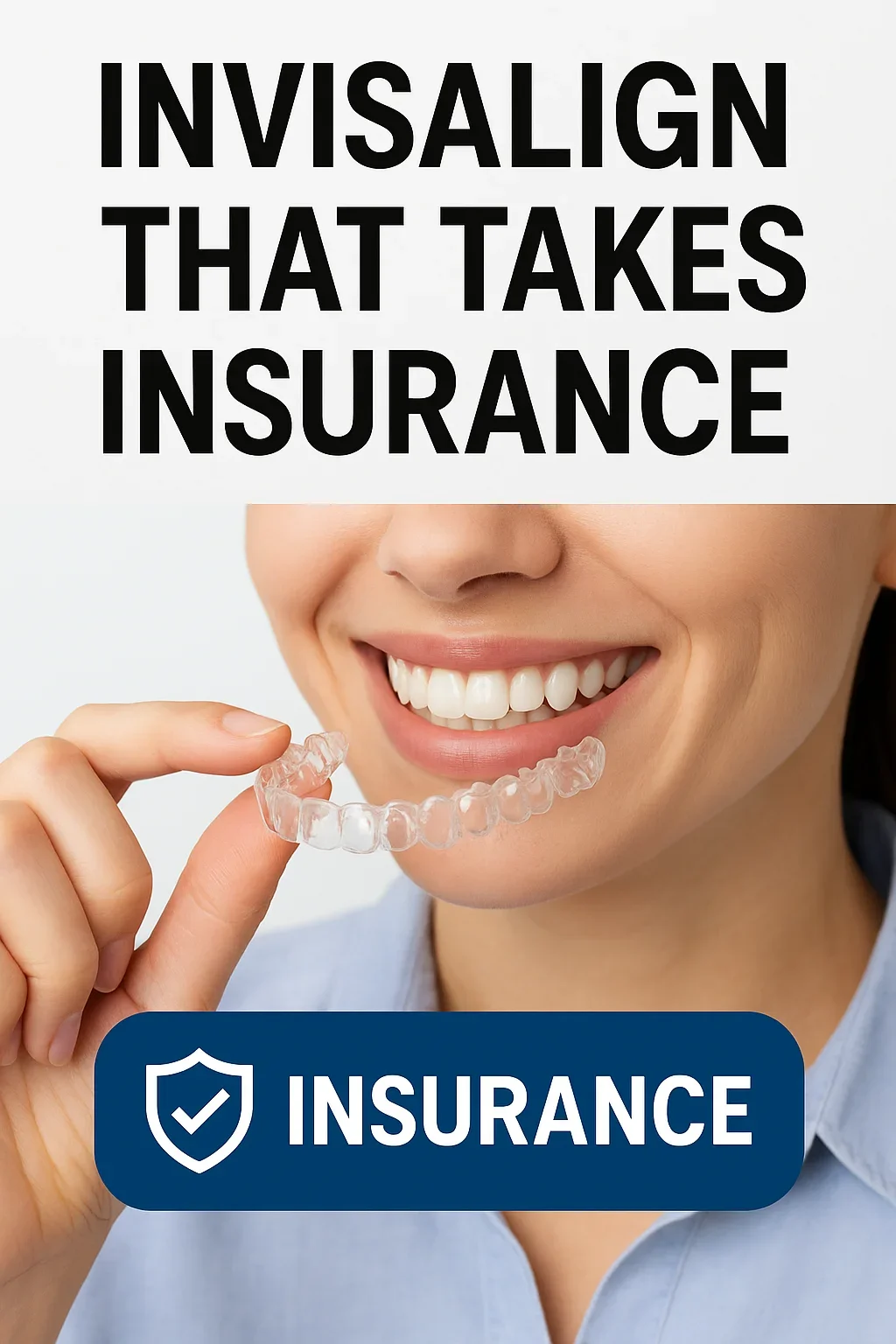
Tips to Maximize Your Dental Insurance Benefits for Invisalign
Getting Invisalign that takes insurance is a great way to make your orthodontic treatment more affordable, but many patients fail to use their insurance to its fullest potential. With a bit of planning, communication, and strategic timing, you can significantly reduce your out-of-pocket costs and even unlock hidden savings your insurer may not automatically offer. In this detailed guide, we’ll explore practical tips to help you get the maximum benefit from your dental insurance for Invisalign. 💰🦷
1. Review Your Insurance Policy Thoroughly
The first and most critical step in maximizing your benefits is understanding your insurance policy inside and out. Many people assume all orthodontic coverage automatically includes Invisalign, but this isn’t always the case. Carefully read your plan’s “Orthodontic Benefits” section and look for specific mentions of “clear aligners,” “Invisalign,” or “adult orthodontics.”
Plans that include Invisalign that takes insurance usually offer 25–50% coverage, up to a lifetime maximum of around $1,500–$3,000. If Invisalign isn’t named but “orthodontic treatment” is covered, it’s worth calling your insurer to clarify—many plans treat Invisalign the same as traditional braces.
What to Check in Your Policy:
- ✅ Is Invisalign considered a covered orthodontic procedure?
- ✅ What percentage of treatment costs will insurance cover?
- ✅ Is there a lifetime orthodontic maximum, and how much is it?
- ✅ Are there any age limits or waiting periods?
- ✅ Do you need pre-authorization before starting treatment?
Understanding these details allows you to plan strategically and avoid any claim rejections later.
2. Get a Pre-Treatment Estimate Before Starting
Most insurance providers allow your dentist or orthodontist to submit a pre-treatment estimate, also called a pre-determination of benefits. This is a detailed projection showing exactly how much your insurer will cover for your Invisalign that takes insurance and how much you’ll owe out-of-pocket. It’s the best way to avoid surprises.
The estimate typically includes:
- Total Invisalign cost
- Insurance coverage percentage
- Lifetime maximum applied
- Remaining deductible (if applicable)
- Any pre-authorization notes
Once approved, this estimate guarantees that your insurer will pay the stated amount, as long as you complete treatment as prescribed. This step is essential for peace of mind and financial clarity.
3. Choose an In-Network Invisalign Provider
Insurance companies often have networks of approved dental providers who offer pre-negotiated rates. Choosing an in-network dentist or orthodontist that provides Invisalign that takes insurance can reduce your treatment cost by 10–25%. These providers handle claims directly, minimizing paperwork and ensuring faster reimbursements.
To find an in-network Invisalign provider:
- 🧭 Visit your insurer’s website and search for orthodontists under your plan.
- 📞 Call customer service and ask for “Invisalign-certified providers in-network.”
- 💬 Confirm with the dentist’s office whether they handle insurance claims for Invisalign.
Choosing an in-network provider is one of the easiest and most effective ways to maximize your insurance benefits without extra effort.
4. Use Flexible Spending (FSA) and Health Savings Accounts (HSA)
Many people overlook how FSA or HSA funds can supplement their Invisalign that takes insurance. These accounts let you use pre-tax dollars for qualified medical and dental expenses—including Invisalign. Combining insurance reimbursement with FSA/HSA payments can reduce your total costs by 20–30%.
Example:
If your Invisalign costs $6,000, and your insurance covers $2,000, you can use $2,000 from your FSA/HSA to pay the remaining balance. After tax savings, your effective out-of-pocket may be as low as $2,800. That’s a substantial reduction without additional effort!
5. Time Your Treatment Strategically
Some insurance plans reset annually. If your policy includes a yearly orthodontic maximum, starting treatment at the end of one calendar year and continuing into the next may allow you to use two benefit periods for a single course of treatment.
For example, if your plan covers $1,500 per year and your Invisalign treatment spans 18 months, starting in November could qualify you for $3,000 total coverage ($1,500 from each year). Clinics that specialize in Invisalign that takes insurance can help you plan your start date to maximize benefits efficiently.
6. Confirm Retainer Coverage
Most insurance plans that cover orthodontics also include post-treatment retainers, but some don’t. Always ask your insurer if retainer costs are included in your Invisalign benefit. Otherwise, you might face an unexpected $300–$600 expense after treatment.
Reputable providers usually include retainers in the quoted Invisalign package. Still, verifying coverage upfront helps you prepare accurately for the full financial commitment.
7. Ask About Secondary or Dual Coverage
If you have access to two dental plans—such as one through your employer and another through a spouse’s plan—you may be eligible for dual insurance coverage. This can significantly increase savings on Invisalign that takes insurance.
In dual coverage situations:
- The “primary” insurer pays first according to your benefits.
- The “secondary” insurer covers remaining eligible costs, up to its limits.
This approach can sometimes cover 70–80% of your treatment, leaving a small fraction for you to pay out-of-pocket.
8. Keep Every Receipt and Document
Insurance claims for orthodontic procedures can sometimes take months to process. Keeping digital and printed copies of receipts, invoices, treatment plans, and EOB (Explanation of Benefits) forms ensures you have the evidence needed for follow-up or resubmission if necessary. Clinics offering Invisalign that takes insurance typically help file claims electronically, but maintaining your records is still wise.
9. Schedule a Consultation for Personalized Guidance
Insurance policies vary widely, so there’s no universal formula for maximizing benefits. That’s why consulting with a clinic experienced in Invisalign that takes insurance is crucial. These offices understand how to navigate coverage restrictions, pre-approvals, and payment layering (insurance + FSA/HSA + financing).
For example, Redent Klinik Contact Page offers free insurance verification and can estimate your total cost before you begin. Their financial coordinators ensure no benefit goes unused, helping you save every possible dollar.
10. Regularly Reassess Your Insurance Plan
Finally, don’t forget to review your dental insurance policy each year. Insurers often update orthodontic coverage terms, add new benefits, or expand eligibility for treatments like Invisalign. Switching to a plan that specifically lists Invisalign that takes insurance can lead to better savings in future treatment stages or for family members who may need aligners.
Final Thoughts: Plan Smart, Save Big
Maximizing your insurance benefits for Invisalign requires preparation, timing, and collaboration with an experienced provider. By understanding your policy, securing pre-authorization, and combining financial tools like FSA or HSA accounts, you can cut your total cost by thousands. The secret isn’t just finding Invisalign that takes insurance—it’s learning how to make every dollar of your benefit count toward your perfect smile. 🌟
For reliable guidance on dental insurance management, orthodontic coverage, and transparent dental care, visit the American Dental Association website. You can also reach out to trusted clinics like Redent Klinik Contact Page for personalized assistance and free coverage verification.