
Imagine achieving a straighter, more confident smile without the discomfort or appearance of traditional braces 😁. That’s the power of invisible aligners — a revolutionary orthodontic solution that has transformed the way people correct their teeth alignment. Designed using cutting-edge 3D scanning and dental modeling technology, invisible aligners are transparent trays that gently shift your teeth into proper alignment over time. Unlike metal braces, they are almost unnoticeable, comfortable to wear, and easy to remove for eating or brushing. Whether you’re an adult seeking a discreet orthodontic fix or a teenager avoiding metal brackets, invisible aligners could be the perfect answer for your smile goals.
The concept behind invisible aligners is based on the principle of gradual movement. Each custom-made tray applies a small amount of pressure on specific teeth, moving them toward the desired position. You’ll typically receive a series of aligners, each slightly adjusted from the previous one, guiding your teeth step by step. Most treatments last between 6 to 18 months, depending on the complexity of the case and how consistently the aligners are worn. The flexibility of removing them during meals and oral hygiene routines adds incredible convenience compared to fixed braces.
One of the most significant advantages of invisible aligners is aesthetics. They are made of clear, medical-grade thermoplastic material, which fits snugly over your teeth. This makes them virtually invisible — hence the name. Professionals, students, and anyone concerned about appearance can undergo orthodontic treatment confidently without feeling self-conscious in social or work environments. Beyond looks, invisible aligners also minimize gum irritation and mouth sores that are common with wires and brackets.
Maintaining good oral hygiene is much easier with invisible aligners. Since they are removable, you can brush and floss normally, ensuring that your teeth and gums remain healthy throughout your treatment. This reduces the risk of plaque buildup, cavities, and gum disease — problems often associated with fixed braces. Additionally, because there are no metal parts, you won’t have to deal with emergency visits for broken brackets or poking wires. This makes invisible aligners not only comfortable but also time-efficient for busy individuals.
In terms of precision, modern invisible aligner systems use digital scanning and AI-assisted design to create a personalized treatment plan. Each step of your treatment is pre-planned by your dentist or orthodontist using 3D simulation software. This allows you to visualize your expected results even before you start. You can see how your teeth will gradually move week by week, which enhances motivation and commitment to wearing the aligners as prescribed.
It’s important to note that invisible aligners aren’t a one-size-fits-all solution. While they work wonders for mild to moderate alignment issues — such as crowding, spacing, or minor bite corrections — severe cases may still require traditional orthodontic treatment. That’s why the first step is always a professional consultation. At clinics like Redent Klinik Contact Page, dental professionals evaluate your teeth using 3D scans, X-rays, and digital impressions to determine if invisible aligners are right for you. They then design a personalized plan tailored to your dental structure and goals.
From a comfort perspective, most users describe the experience of wearing invisible aligners as smooth and painless. You may feel slight pressure when switching to a new set of trays, which is a positive sign — it means your teeth are moving as intended! To ensure the best results, dentists usually recommend wearing the aligners for 20 to 22 hours daily. Skipping or reducing wear time can delay progress and extend your overall treatment duration.
When it comes to cost, the price of invisible aligners can vary depending on the brand, country, and treatment complexity. On average, in 2025, the global price range is as follows:
Average Invisible Aligner Cost (2025):
• Basic treatment: $1,800 – $2,800
• Moderate treatment: $3,000 – $4,500
• Complex full treatment: $5,000 – $6,500
Note: Prices may vary based on your dentist’s experience and local market conditions.
For anyone considering orthodontic treatment, invisible aligners represent a perfect blend of innovation, comfort, and effectiveness. They align your teeth without compromising your lifestyle — no food restrictions, no painful wire adjustments, and no awkward smiles. Plus, research by the American Dental Association supports the safety and efficiency of clear aligner systems when used under professional supervision. Regular checkups every 4 to 6 weeks ensure your progress stays on track and that your teeth are moving exactly as planned.
Ultimately, invisible aligners are more than just an orthodontic solution — they are a confidence booster. They allow you to smile naturally during treatment and achieve life-changing results in a subtle, sophisticated way 🌟. Whether you’re aiming to correct misalignment, close gaps, or simply enhance your appearance, investing in invisible aligners is an investment in yourself. With consistent use, proper care, and professional guidance, your dream smile is just a few months away!
What Are Invisible Aligners and How Do They Work?
Invisible aligners are clear, removable orthodontic trays that help straighten teeth without the use of metal brackets or wires. They represent one of the most advanced and patient-friendly developments in modern dentistry 🦷. Designed with precision through 3D imaging technology, these aligners gradually move your teeth into the ideal position over a defined period. Patients love them because they’re transparent, comfortable, and effective — offering a discreet path to a confident smile. But to truly appreciate how they work, it’s important to understand their components, mechanism, and scientific foundation.
The Concept Behind Invisible Aligners
Traditional braces rely on metal wires and brackets to pull teeth into place, but invisible aligners use gentle, calculated pressure applied through custom-made plastic trays. Each set of aligners is designed based on a digital 3D scan of your mouth. These scans are analyzed by orthodontic software to simulate tooth movement and determine how each aligner will contribute to your progress. Every one to two weeks, you’ll switch to a new set, each slightly adjusted to continue guiding your teeth toward the desired alignment.
Because the aligners are transparent and molded to your teeth, they are nearly invisible when worn — hence the name. This makes them an ideal choice for professionals, students, and adults who want to correct their smile discreetly. Plus, since the trays can be removed for eating, drinking, and brushing, they offer flexibility unmatched by traditional braces. The effectiveness of invisible aligners depends on consistency: they must be worn for 20–22 hours daily to achieve optimal results.
How Invisible Aligners Are Made
The creation of invisible aligners is a technologically sophisticated process that combines dental expertise and computer-aided design (CAD) systems. The journey starts with an intraoral 3D scan of your teeth — no messy impressions required. This scan is uploaded into advanced orthodontic software that models your teeth’s current and desired positions. Using algorithms, the software maps out the sequence of movements needed to align your teeth properly.
Once the treatment plan is approved by your dentist or orthodontist, a series of aligners are fabricated using BPA-free, medical-grade thermoplastic. Each aligner is slightly different, engineered to apply precise pressure on specific teeth. This process not only ensures accuracy but also allows patients to see a virtual preview of their smile transformation before treatment even begins. 🖥️
Key Components of the Aligner System
- Custom-fit trays: Crafted individually for your mouth using 3D printing or thermoforming technology.
- Attachments: Small tooth-colored bumps that may be bonded to certain teeth to assist in complex movements.
- Elastics (if needed): Rubber bands occasionally used for bite correction.
- Retainers: Used after treatment to maintain your results.
The Biomechanics of Tooth Movement
The science behind invisible aligners involves controlled biomechanical forces. Each aligner exerts gentle, sustained pressure on the teeth, stimulating bone remodeling. The bone tissue around the tooth root softens on one side (resorption) and rebuilds on the other side (deposition), allowing the tooth to move gradually. Because the force applied is constant yet mild, the process is more comfortable than traditional braces, which often require manual tightening and can cause temporary soreness.
Modern aligner systems rely heavily on AI-assisted algorithms to predict how teeth will respond to different types of force. This ensures that movements occur efficiently and safely, minimizing the risk of root damage or gum irritation. Thanks to this technology, invisible aligners can now treat mild to moderate cases of crowding, spacing, and even minor bite misalignments.
Daily Use and Maintenance of Invisible Aligners
Using invisible aligners correctly is key to success. Here’s what a typical day looks like for patients:
- Wear your aligners for at least 20–22 hours daily.
- Remove them only while eating, drinking (except water), or brushing.
- Rinse and clean them gently with lukewarm water and a soft toothbrush.
- Avoid exposing aligners to heat or hot liquids, as this may deform the trays.
- Always store them in their protective case when not in use.
Since invisible aligners are removable, maintaining oral hygiene is much easier than with braces. You can brush and floss normally without worrying about trapped food or plaque. Dentists often recommend brushing after every meal before reinserting the trays to avoid discoloration and bad breath. Keeping the aligners clean not only ensures hygiene but also maintains their transparency.
Benefits of the Aligner Technology
The innovation behind invisible aligners goes beyond aesthetics — it represents a paradigm shift in dental care. Patients report higher comfort levels, better oral hygiene, and greater satisfaction throughout treatment. Here are the standout advantages:
- Virtually invisible — perfect for adults and teens who want discretion.
- Custom-tailored to your unique dental anatomy.
- Predictable results using 3D simulation.
- No food restrictions — eat what you love 🍎🍕.
- Minimal dental visits — fewer adjustments required.
Studies published by the American Dental Association confirm that clear aligner systems like Invisalign and ClearCorrect are safe and effective when used under professional supervision. Patients achieve comparable results to traditional orthodontics with significantly less discomfort and aesthetic compromise.
When to See a Dentist for Aligner Consultation
If you’re wondering whether invisible aligners are suitable for you, it’s best to start with a professional consultation. Clinics such as Redent Klinik Contact Page offer digital assessments to determine eligibility. During your appointment, a dentist will evaluate your bite, gum health, and alignment issues. From there, a personalized treatment plan is designed to achieve your desired smile in the shortest time possible.
Ultimately, invisible aligners work through a perfect combination of technology, biology, and patient commitment. Their discreet nature, precision design, and comfort make them one of the most innovative dental solutions available today. Whether you’re looking to fix mild crowding, close gaps, or enhance your overall smile aesthetics, invisible aligners provide a smart, modern, and confidence-boosting approach to achieving a beautiful smile that lasts a lifetime 🌟.
The Key Benefits of Choosing Invisible Aligners Over Braces
Invisible aligners have completely transformed the way people approach orthodontic treatment. Gone are the days when metal brackets and wires were the only option for achieving a straight, beautiful smile. Today, thanks to clear aligner technology, patients can enjoy effective tooth alignment without compromising comfort or aesthetics. This innovative method offers numerous advantages — from improved hygiene and comfort to aesthetic appeal and lifestyle flexibility — that make it the preferred choice for both adults and teens. Let’s explore in detail why invisible aligners are often considered superior to traditional braces. 😄
1. Aesthetic Appeal and Confidence Boost
Perhaps the most obvious benefit of invisible aligners is their discreet appearance. Made from transparent, medical-grade thermoplastic, these aligners are virtually invisible when worn. Unlike metal braces, they don’t attract unwanted attention or cause self-consciousness during conversations, meetings, or social gatherings. You can smile, talk, and laugh freely without anyone noticing that you’re undergoing orthodontic treatment.
For many adults and working professionals, this confidence factor is a game-changer. Studies show that patients wearing clear aligners experience less anxiety about appearance and are more likely to complete treatment successfully. The psychological comfort of looking natural while your teeth gradually move into alignment is one of the reasons why invisible aligners are considered a modern symbol of self-care and confidence 🌟.
2. Superior Comfort and Reduced Irritation
Traditional braces can cause discomfort due to metal wires and brackets that rub against the cheeks and gums. In contrast, invisible aligners are smooth and carefully molded to your dental anatomy, minimizing irritation. Since there are no sharp components, patients rarely experience mouth sores or ulcers. The aligners apply gentle, consistent pressure, making tooth movement more predictable and less painful.
When switching to a new set of aligners, patients might feel mild tightness for a day or two — a natural sign that teeth are shifting as planned. However, the overall experience is far more comfortable than with braces that require periodic wire tightening. This comfort level encourages better treatment adherence and a more positive orthodontic journey overall.
3. Easier Oral Hygiene and Healthier Gums
One of the biggest challenges with metal braces is maintaining oral hygiene. Food particles can easily get trapped between brackets and wires, leading to plaque buildup, cavities, and gum inflammation. With invisible aligners, you can simply remove the trays to brush and floss as usual. This ensures that your gums stay healthy and your teeth remain bright and clean throughout the treatment process.
In fact, clinical research has demonstrated that patients using invisible aligners experience fewer gum problems compared to those with traditional braces. Because you can maintain your regular oral care routine, the risk of bad breath and tooth discoloration is also reduced. It’s an easier, cleaner, and healthier way to align your teeth 🪥.
4. No Dietary Restrictions
Anyone who has worn braces knows the frustration of having to avoid certain foods — popcorn, hard candies, gum, or even crunchy fruits. These items can easily damage brackets or get stuck in wires. Fortunately, with invisible aligners, you can eat whatever you like! Simply remove the trays before meals and enjoy your food without worry.
Once you’re done eating, just rinse your mouth, brush your teeth, and reinsert the aligners. This freedom allows patients to maintain a balanced diet without giving up their favorite meals, contributing to better overall satisfaction with treatment. 🍎🍕
5. Fewer Dental Visits and More Convenience
Traditional orthodontic treatment requires frequent visits to adjust wires and replace brackets. On the other hand, invisible aligners are designed for simplicity and convenience. After your initial consultation and digital fitting, you’ll receive a series of aligners to change at home every one to two weeks. Most patients only need to visit their dentist every 6–8 weeks for progress checks, which is ideal for busy individuals.
Moreover, because the entire treatment plan is digitally predesigned, dentists can monitor your progress remotely. Some clinics even use digital apps to track compliance and provide virtual updates — a feature highly appreciated by tech-savvy patients and frequent travelers.
6. Predictable and Customized Results
With invisible aligners, there are no surprises. Advanced 3D scanning technology and computer-aided design (CAD) software allow dentists to create a highly precise treatment plan. You can actually preview your expected results through a digital simulation before treatment begins. This level of predictability helps ensure accuracy and increases patient motivation to stay consistent.
Because each aligner is specifically tailored to your unique dental structure, the forces applied are distributed evenly, ensuring gradual, controlled movement. This precision translates to faster results and lower chances of unwanted side effects such as root resorption or misalignment relapse.
7. Reduced Risk of Dental Emergencies
Another major benefit of invisible aligners is the lack of orthodontic emergencies. With braces, wires can snap or brackets can detach, causing pain and requiring immediate dental attention. Clear aligners eliminate these risks. Even if you lose or damage a tray, your dentist can easily replace it using your digital model, saving both time and stress.
This reliability makes invisible aligners especially practical for patients with busy schedules or those living far from dental clinics. They minimize unplanned interruptions and ensure smoother treatment progress.
8. Enhanced Safety and Biocompatibility
The materials used in invisible aligners are FDA-approved and free from harmful substances like BPA and latex. This ensures maximum safety for long-term wear. Their smooth texture also prevents enamel damage and gum irritation, which can sometimes occur with metal braces. Additionally, the non-porous nature of the plastic reduces bacterial accumulation, supporting better oral health.
Scientific Validation and Dentist Recommendation
Numerous clinical studies, including those cited by the American Dental Association, confirm that clear aligner therapy delivers comparable — and sometimes superior — results to traditional orthodontics when administered correctly. Expert dentists and orthodontists frequently recommend them for adult and teenage patients seeking aesthetic and functional results with minimal inconvenience.
9. Psychological and Lifestyle Advantages
Choosing invisible aligners is not just about dental correction — it’s about lifestyle. Patients report feeling more motivated and self-assured during treatment. The ability to remove aligners for special occasions, photo sessions, or public speaking boosts emotional well-being and social comfort. For teenagers, this can even translate to improved self-esteem and better cooperation throughout treatment.
In essence, invisible aligners blend medical precision with lifestyle flexibility. They enable you to improve your smile without compromising your appearance, health, or daily routine. Whether you’re a busy professional or a student preparing for life’s big moments, invisible aligners give you the freedom to look and feel your best while transforming your smile for the better. For a consultation or personalized plan, visit Redent Klinik Contact Page and begin your journey toward a healthier, more radiant smile today! 😁
The Step-by-Step Process of Getting Invisible Aligners
The journey to a perfectly aligned smile with invisible aligners is a blend of digital innovation, professional supervision, and patient consistency. This orthodontic transformation doesn’t happen overnight — it’s a carefully structured process designed to ensure comfort, precision, and predictable results. Understanding each phase of the treatment can help you prepare mentally and practically for what lies ahead. Below, we break down every stage of the invisible aligner process in detail so you know exactly what to expect from consultation to completion 🦷.
1. Initial Consultation and Evaluation
Your journey with invisible aligners begins with a comprehensive dental consultation. During this first appointment, your dentist or orthodontist assesses your overall oral health, teeth alignment, and bite structure. They will also discuss your goals — whether it’s fixing crowding, closing gaps, or improving bite symmetry. This step is crucial because not every case is suitable for aligner therapy. Patients with severe skeletal discrepancies may require alternative orthodontic methods.
Most modern clinics, such as Redent Klinik Contact Page, use state-of-the-art 3D scanners instead of traditional dental impressions. These scanners create a digital model of your teeth with high precision and comfort — no messy putty involved! The digital scan forms the foundation for your treatment plan and ensures that your invisible aligners will fit your teeth perfectly.
2. 3D Scanning and Digital Treatment Planning
Once your scans and X-rays are taken, your orthodontist uploads them into specialized software. This powerful program uses computer-aided design (CAD) and artificial intelligence to map out the entire tooth movement process. The software creates a visual simulation showing how your teeth will gradually shift week by week until they reach their optimal positions.
This visualization allows both you and your dentist to review the expected outcome before production begins. Adjustments can be made at this stage to ensure accuracy. Once the plan is approved, a full series of invisible aligners is fabricated — each set designed to move your teeth a little closer to their final position. Typically, you’ll receive several sets at once, and you’ll change to a new one every 1–2 weeks.
Digital Precision in Every Step
- 3D scans replace traditional molds for better comfort and accuracy.
- AI-assisted modeling ensures efficient tooth movement.
- Simulation previews help patients visualize the end result.
3. Custom Aligner Fabrication
Each set of invisible aligners is custom-made using BPA-free, medical-grade thermoplastic. The trays are manufactured through a combination of 3D printing and vacuum-forming technology. Every aligner in the sequence is slightly different from the previous one — this difference represents incremental movement, usually between 0.25 mm to 0.33 mm per stage.
Before receiving your first set, your dentist will verify that the aligners fit perfectly and feel comfortable. You may also receive small attachments — tooth-colored resin bumps — that help the trays grip and apply more effective pressure on certain teeth. These attachments are subtle and blend seamlessly with your natural teeth.
4. Beginning the Treatment
Once you start wearing your invisible aligners, consistency becomes your best friend. For the aligners to work effectively, they must be worn for 20 to 22 hours per day. You can remove them only for meals, brushing, or special occasions. Most patients adapt quickly, and after a few days, speaking and eating with the aligners feels completely natural.
At this stage, your dentist will schedule follow-up visits every 4–6 weeks to monitor progress. Some clinics even use smartphone apps that allow you to upload photos for virtual check-ins, reducing the need for frequent in-person visits. 🖥️
5. Switching to New Aligner Sets
During your invisible aligner treatment, you’ll switch to a new set of trays approximately every one or two weeks. Each set continues where the previous one left off, gradually moving your teeth closer to their target alignment. It’s normal to feel a little tightness or mild pressure for a day or two when you switch — this indicates the aligners are actively working.
Your orthodontist will provide clear instructions about when to switch trays and how to store your previous ones safely. Consistency in following these directions ensures that your results stay on track and your smile transformation progresses smoothly.
6. Maintaining Oral Hygiene During Treatment
Because invisible aligners are removable, maintaining good oral hygiene is easier than with braces. Brush and floss after every meal before putting the aligners back in to prevent staining and bacterial buildup. It’s also important to clean the aligners daily using lukewarm water and a gentle brush — avoid toothpaste, which can scratch the plastic surface. Many patients use specialized cleaning tablets to keep their trays fresh and odor-free.
Failure to clean aligners properly can lead to cloudy trays and bad breath, so developing a cleaning routine is essential. Most importantly, never expose the aligners to hot water — it can warp the thermoplastic and affect their fit.
7. Regular Dental Checkups and Adjustments
Throughout your treatment, your dentist will monitor your progress and make necessary adjustments. Some patients may need refinements — additional sets of invisible aligners — to perfect their smile alignment at the end of the process. These refinements are common and ensure every tooth reaches its ideal position.
Professional supervision is critical because it ensures your tooth movement remains safe and efficient. Skipping appointments or wearing aligners inconsistently may lead to suboptimal results or prolonged treatment time.
8. Completion and Retainer Phase
After completing all sets of invisible aligners, your treatment doesn’t end there — the retention phase begins. Teeth have a natural tendency to shift back, so wearing retainers is essential for maintaining your new alignment. Your dentist will provide custom-made retainers that you’ll wear at night or part-time, depending on your case.
Retainers are usually clear, similar to aligners, and designed for long-term use. Most patients wear them nightly for several months, then gradually reduce usage over time. Skipping this phase may cause teeth to revert to their previous positions, undoing months of progress.
Retention Care Tips
- Wear retainers as directed by your dentist.
- Store them in a case to prevent damage or loss.
- Clean retainers with the same care as your aligners.
9. Final Results and Smile Maintenance
By the end of your invisible aligner treatment, you’ll enjoy a straighter, more harmonious smile — one that enhances both aesthetics and oral health. Most patients report improved confidence, better bite function, and easier cleaning routines. To keep your smile radiant, continue seeing your dentist for regular checkups and cleanings, and follow post-treatment instructions carefully.
The entire process, from consultation to completion, typically takes 6 to 18 months, depending on your case complexity and adherence. With modern aligner technology and professional supervision, the path to your dream smile is now smoother, faster, and more comfortable than ever.
For expert consultation or digital scanning appointments, you can contact Redent Klinik to begin your personalized journey with invisible aligners. Your perfect smile is just a few steps away — and it all starts with one consultation. 🌟
How Long Does It Take to See Results with Invisible Aligners?
One of the most common questions patients ask before beginning treatment with invisible aligners is: “How long will it take to see results?” The answer varies depending on multiple factors such as the complexity of your dental alignment, your level of commitment, and the precision of the treatment plan. In general, clear aligner therapy is known for being faster and more comfortable than traditional braces, but timing depends on the individual case. Let’s explore the different phases, timelines, and what you can do to ensure that your journey toward a perfect smile stays on schedule ⏳.
1. Average Treatment Duration
Most patients begin to notice subtle changes within the first few weeks of wearing invisible aligners. Teeth start to shift gradually, and by the third or fourth aligner set, visible improvements become noticeable. However, complete results typically take between 6 and 18 months. Mild alignment issues, such as small gaps or minor crowding, can sometimes be corrected in as little as 4 to 6 months, while more complex cases involving bite corrections may take up to 2 years.
The good news is that modern orthodontic planning allows dentists to predict your timeline with remarkable accuracy. Advanced 3D modeling software simulates how your teeth will move over time, giving you a digital preview of your future smile before you even begin treatment. As long as you wear your invisible aligners consistently for 20–22 hours a day, you can expect your smile transformation to stay on track 🦷.
2. Key Factors Influencing Treatment Time
Several factors determine how long it will take for your invisible aligners to work effectively. Understanding these helps set realistic expectations and encourages you to follow your treatment plan precisely.
1. Case Complexity
The more severe your misalignment, the longer the treatment. Patients with minor spacing or crowding can often finish treatment in under a year. However, those with crossbites, overbites, or rotations may need additional aligner sets or refinements.
2. Patient Compliance
Consistency is critical for success with invisible aligners. Dentists recommend wearing the trays for at least 20–22 hours daily. Removing them too often or forgetting to wear them overnight can delay progress and extend your overall treatment duration. The more disciplined you are, the faster you’ll see results.
3. Age and Biological Factors
While invisible aligners work for both teens and adults, age can slightly influence the timeline. Younger patients typically experience quicker results due to more responsive bone remodeling, while adults may notice slower tooth movement. However, modern aligner systems use optimized force distribution to ensure predictable progress across all age groups.
4. Attachments and Refinements
Attachments — small, tooth-colored bumps applied by your dentist — play a vital role in complex movements. They enhance grip and control, helping aligners move teeth more precisely. In some cases, refinements (extra sets of aligners) may be necessary near the end of treatment to perfect the final alignment. These adjustments add a few weeks or months but ensure the best long-term outcome.
3. Typical Timeline Breakdown
To give you a better understanding, here’s a general timeline of what to expect during invisible aligner treatment:
- Week 1–4: You begin wearing your first few sets of aligners. You may feel tightness or mild discomfort as your teeth start to move. Visible changes are minimal at this stage, but movement is happening internally.
- Month 2–3: You’ll start noticing visible differences — gaps closing, teeth straightening, and improved alignment when you smile.
- Month 4–6: For mild cases, teeth may already be close to their final positions. Most patients experience significant improvements by now.
- Month 6–12: Moderate cases continue to adjust. Attachments or elastics might be used to refine bite correction.
- Month 12–18: Complex cases reach completion, followed by the transition into retainers to maintain results.
4. Accelerated Aligner Options
Some advanced aligner systems now offer accelerated treatment plans using high-frequency vibration devices or specialized aligner materials. These innovations stimulate faster tooth movement while maintaining comfort. For example, combining invisible aligners with gentle vibrational therapy for 5–10 minutes a day can improve cellular response and speed up bone remodeling, helping you complete treatment weeks earlier than expected.
Technological Enhancements
- SmartTrack™ Materials: Provide consistent force for efficient movement.
- Digital Monitoring Apps: Allow remote progress tracking with your dentist.
- AI-driven Adjustments: Optimize aligner sequencing for quicker, safer outcomes.
These features, along with personalized dental oversight, make today’s invisible aligners far more efficient than early versions of clear aligner technology.
5. How to Speed Up Your Results
If you’re eager to complete your invisible aligner treatment faster, consider the following expert tips:
- Wear your aligners diligently for at least 22 hours a day.
- Switch to your next set only when directed by your dentist — never early.
- Maintain excellent oral hygiene to prevent inflammation or delays.
- Avoid hot liquids while wearing aligners to prevent warping.
- Schedule all progress checkups — missed appointments can extend your timeline.
Some patients also benefit from compliance trackers built into their aligners, which help dentists monitor how consistently the trays are being worn. Following these steps ensures your invisible aligners deliver timely, predictable results.
6. The Retention and Stabilization Phase
After your final aligner set, you’ll transition to wearing retainers. This stage is crucial to prevent your teeth from shifting back to their original positions. Most dentists recommend wearing retainers full-time for the first few months and then nightly thereafter. Retainers ensure that the time and effort invested in your invisible aligners continue to pay off for years to come.
7. Patient Testimonials and Realistic Expectations
Most patients report visible improvements with invisible aligners within the first 8–10 weeks. The psychological boost of seeing early changes helps them stay motivated. However, it’s essential to remember that every smile is unique — some move faster, others slower. Patience, consistency, and professional supervision remain the keys to long-term success.
For accurate guidance, you can always schedule a professional evaluation at Redent Klinik, where dental experts will analyze your case and create a personalized timeline tailored to your dental structure. And remember, according to the American Dental Association, clear aligners are clinically proven to deliver safe, predictable, and efficient results when used correctly. ⏱️
In conclusion, while the duration of invisible aligners treatment depends on several variables, most patients find it to be significantly faster and more comfortable than traditional braces. With proper wear, routine monitoring, and good oral hygiene, you can expect to see life-changing results — a straight, confident, and healthy smile — in less time than you might think. 🌟
Common Mistakes to Avoid During Invisible Aligner Treatment
Embarking on a journey with invisible aligners is an exciting step toward achieving a straighter, more confident smile 😁. However, despite their convenience and effectiveness, success with clear aligners largely depends on how well you follow your treatment plan. Even small mistakes — like inconsistent wear or poor cleaning habits — can delay your results, compromise oral health, or even reverse your progress. To help you achieve the best possible outcome, this guide highlights the most common mistakes patients make during their invisible aligner treatment and provides professional tips on how to avoid them.
1. Not Wearing Aligners for the Recommended Time
One of the biggest reasons for delayed progress in invisible aligner treatment is inadequate wear time. To be effective, aligners must be worn for 20 to 22 hours per day. Removing them too frequently or leaving them out for extended periods can cause teeth to move unpredictably. This disrupts the carefully planned movement sequence and may require new aligners to correct the deviation.
Forgetting to wear aligners overnight is especially harmful because most tooth movement occurs while you sleep. Dentists recommend developing a daily routine — such as reinserting aligners immediately after meals or brushing — to maintain consistency. Setting reminders on your phone can also help prevent unintentional lapses ⏰.
Pro Tip:
Every time you remove your aligners, store them in their protective case to avoid loss or damage. Never wrap them in a napkin — they can easily get thrown away by mistake!
2. Eating or Drinking with Aligners On
Another common mistake patients make is eating or drinking (other than water) while wearing invisible aligners. This habit can stain, warp, or even crack the trays. The aligners are made from heat-sensitive, medical-grade thermoplastic, which can deform under high temperatures from hot drinks like coffee or tea ☕.
Additionally, consuming sugary or colored drinks while wearing aligners allows liquid to get trapped between the tray and your teeth, promoting decay, plaque buildup, and discoloration. The best practice is to remove your aligners before eating or drinking anything except water, rinse your mouth, and brush your teeth before reinserting them.
3. Poor Cleaning and Maintenance Habits
Keeping your invisible aligners clean is essential for both oral hygiene and aesthetics. Some users make the mistake of cleaning their trays with toothpaste, which can scratch the smooth plastic surface and cause cloudiness. Others use hot water, which can alter the fit of the aligners. Instead, always use lukewarm water and a soft toothbrush or aligner cleaning solution.
Failing to clean aligners regularly can lead to bacteria buildup, bad breath, and a yellowish tint. A good cleaning routine includes brushing your trays gently twice a day and soaking them in a specialized cleaning solution at least once daily. You can also use cleaning tablets designed specifically for aligners to keep them fresh and odor-free 🧼.
Pro Tip:
Always clean your aligners before placing them back in your mouth after eating. This prevents trapping food particles or sugar residues that could harm your enamel.
4. Skipping Dental Appointments or Check-ins
Although invisible aligners require fewer in-person visits than traditional braces, regular checkups are still crucial. Skipping or delaying follow-up appointments can cause unnoticed issues such as improper tooth movement, gum irritation, or aligner fit problems. These appointments also allow your dentist to make necessary refinements or adjustments to keep your progress on schedule.
Many clinics now offer virtual monitoring, allowing patients to submit photos through apps for review. However, this should not replace professional in-office evaluations entirely. Consistent communication with your orthodontist ensures that your invisible aligner treatment stays on the right path.
5. Advancing Too Quickly Through Aligner Sets
Some patients mistakenly believe that switching to a new set of invisible aligners earlier will speed up results. This is a serious error. Each aligner is designed to move your teeth gradually — about 0.25 to 0.33 mm per stage. Advancing too quickly can cause pain, gum inflammation, and unstable tooth movement, potentially compromising your entire treatment.
Always follow your dentist’s instructions regarding when to switch to the next set. In most cases, this happens every 7 to 14 days, depending on the brand and complexity of your plan. If an aligner feels too loose or too tight, consult your provider before making any changes.
6. Neglecting Oral Hygiene
Just because your aligners are removable doesn’t mean oral hygiene can be neglected. Failing to brush and floss properly can lead to cavities, gum disease, and bad breath. Wearing aligners over unclean teeth traps bacteria, accelerating tooth decay and plaque formation. Maintaining excellent hygiene ensures both your smile and your invisible aligners remain clean and healthy throughout treatment.
Brush your teeth after every meal, floss daily, and rinse your mouth before putting your aligners back in. Using an antibacterial mouthwash once a day can also help reduce microbial buildup.
Recommended Cleaning Tools:
- Soft-bristled toothbrush (for both teeth and aligners)
- Clear, unscented antibacterial soap
- Aligner cleaning tablets (once a day)
- Mild mouth rinse or diluted hydrogen peroxide
7. Ignoring Damaged or Lost Aligners
It’s not uncommon for aligners to get misplaced or accidentally damaged, especially if they’re removed frequently during meals. However, many patients underestimate how critical this can be. Wearing a cracked aligner or skipping to the next one without consulting your dentist can disrupt tooth movement and cause discomfort.
If your invisible aligners become damaged, contact your dentist immediately. Depending on your progress, they may instruct you to use the previous set or order a replacement. Never attempt to repair aligners yourself with glue or hot water, as this can be dangerous and ineffective.
8. Failing to Wear Retainers After Treatment
One of the most common long-term mistakes patients make is neglecting retainers after completing their invisible aligner treatment. Teeth have a natural tendency to shift back into their old positions — a process known as relapse. Retainers are essential to maintain your new alignment and protect your investment.
Typically, retainers are worn full-time for the first few months and then only at night. Skipping this step can undo months of hard work and progress. To ensure longevity, always clean and store your retainers properly, just as you did with your aligners.
9. Expecting Overnight Results
Patience is a virtue when it comes to invisible aligners. While aligners are more efficient than braces, they still require time for safe and steady tooth movement. Expecting rapid results often leads to disappointment and inconsistent compliance. It’s important to trust the process, follow your treatment plan, and allow your teeth the time they need to adapt naturally.
Every small movement brings you one step closer to your dream smile. Remember, steady progress ensures stability and long-lasting results. For professional support throughout your journey, contact Redent Klinik for expert guidance and care.
Final Advice
According to the American Dental Association, proper compliance and hygiene are key to successful outcomes with invisible aligners. Avoiding these common mistakes ensures your treatment stays efficient, comfortable, and safe. By wearing your aligners as prescribed, keeping them clean, and staying in touch with your dentist, you’ll achieve the perfect smile you’ve always wanted — faster and with confidence 🌟.
In summary, invisible aligners offer a modern, flexible solution to straighten your teeth, but their success depends entirely on responsible usage. By understanding and avoiding these common pitfalls, you can enjoy a smooth, rewarding, and life-changing orthodontic experience — one that ends with the radiant, perfectly aligned smile you deserve. 😁
The Cost of Invisible Aligners: What You Should Know
When considering orthodontic treatment, one of the first questions that comes to mind is cost. The price of invisible aligners can vary greatly depending on several factors such as the complexity of your case, the brand you choose, and the dental clinic’s location. Unlike traditional braces, clear aligners are customized for each patient using advanced 3D scanning technology and precision fabrication methods. This personalized approach, combined with their comfort and aesthetic benefits, contributes to their cost. However, understanding what you’re paying for — and how to make it more affordable — can help you make an informed decision and invest wisely in your smile 😁.
1. Understanding What You’re Paying For
Invisible aligners are not just pieces of plastic. They represent the integration of advanced orthodontic science, computer-aided design (CAD), and professional supervision. Each set of aligners is designed to apply a specific force to move your teeth gradually and safely into alignment. The overall cost includes not only the materials but also:
- Initial consultation and oral examination – where your dentist evaluates your suitability for aligners.
- 3D scanning and imaging – used to create a digital map of your teeth and gums.
- Customized treatment planning – each step of your treatment is digitally designed for predictable results.
- Fabrication and materials – medical-grade thermoplastic aligners are produced with precision engineering.
- Regular progress checkups – follow-up appointments to ensure your teeth are moving correctly.
- Retainers post-treatment – to maintain your final smile once the treatment is complete.
These elements ensure that the investment in invisible aligners yields safe, effective, and long-term results. It’s a process that combines high technology with personalized dental care.
2. Average Price Range Around the World
The cost of invisible aligners differs by region and brand. As of 2025, here’s a general overview of global pricing averages:
Average Invisible Aligner Cost (2025):
• United States: $3,000 – $6,500
• United Kingdom: £2,000 – £4,500
• Europe (including Turkey): €1,800 – €3,800
• Australia: AUD 3,000 – AUD 6,000
• Asia (including India): $1,200 – $2,800
*These prices depend on case complexity, brand, and dentist expertise.
In Turkey, clinics such as Redent Klinik often provide high-quality invisible aligner treatments at more affordable rates than Western countries — while maintaining international standards and dentist supervision. This makes Turkey an increasingly popular destination for dental tourism 🌍.
3. Factors That Influence the Total Cost
1. Complexity of the Case
The severity of misalignment is the biggest cost factor. Mild crowding or spacing issues may only need a few sets of aligners, reducing costs. More complex bite corrections, however, require more aligner sets and longer treatment times, increasing the total price.
2. Brand of Aligner
Different brands of invisible aligners offer varying levels of technology, precision, and service. For instance, Invisalign is one of the most recognized brands and often comes at a premium due to its advanced SmartTrack™ material and AI-assisted planning. Other brands like ClearCorrect, SmileDirectClub, or Angel Aligner may offer similar outcomes at a lower price, but with fewer customization options.
3. Dentist’s Experience and Clinic Location
Highly experienced orthodontists or clinics in major cities typically charge more, reflecting their expertise and equipment quality. However, the value of professional supervision cannot be overstated — correct treatment monitoring ensures safety and effectiveness. Choosing the cheapest option without professional guidance can lead to ineffective or even harmful results.
4. Treatment Duration and Refinements
Longer treatments naturally involve more aligner sets and follow-up appointments. Refinements (extra sets for final adjustments) may also increase the overall cost slightly but are crucial for achieving precise alignment and a lasting smile.
5. Retainers and Aftercare
Once you finish your invisible aligner treatment, you’ll need retainers to keep your teeth in their new positions. Retainers usually cost between $150 and $500, depending on the type (fixed or removable). This post-treatment phase is just as important as the alignment itself.
4. Insurance and Payment Options
Some dental insurance plans cover a portion of orthodontic treatments, including invisible aligners. It’s essential to check your policy or ask your provider for details. Many clinics also offer installment plans or 0% financing options, allowing patients to spread the cost over several months.
For example, a clinic might offer a payment plan like:
• Initial consultation: Free or low-cost
• Deposit: $500 – $800
• Monthly installments: $150 – $300 for 12–18 months
These flexible plans make it easier for patients to begin treatment without a large upfront payment. Clinics such as Redent Klinik often provide financing and tailored packages that include scans, aligners, and retainers under one comprehensive price.
5. Cost Comparison: Invisible Aligners vs. Braces
At first glance, invisible aligners may seem more expensive than traditional metal braces. However, when you factor in comfort, appearance, and fewer dental visits, they often offer better overall value. Here’s a quick comparison:
| Feature | Invisible Aligners | Traditional Braces |
|---|---|---|
| Aesthetic Appearance | Virtually invisible | Visible metal brackets |
| Comfort | Smooth, no wires or irritation | Possible gum or cheek irritation |
| Oral Hygiene | Removable for easy cleaning | Difficult to brush and floss around |
| Treatment Duration | 6–18 months (average) | 18–30 months |
| Average Cost | $2,000 – $6,000 | $2,500 – $5,000 |
When you weigh the convenience, shorter duration, and aesthetic benefits, many patients find that invisible aligners are worth the extra investment.
6. Are There Cheaper Alternatives?
Some companies now offer at-home aligner kits that promise straighter teeth at a fraction of the price. While appealing, these DIY treatments often lack dentist supervision and can pose risks if used incorrectly. Misaligned bites or over-movement can lead to jaw pain, gum recession, or root damage. The American Dental Association strongly advises patients to undergo aligner treatment only under professional monitoring to ensure safety and long-term success.
7. How to Get the Best Value
Getting the most out of your investment in invisible aligners involves balancing quality with affordability. Here are some expert tips:
- Request multiple consultations to compare treatment plans and prices.
- Choose a clinic with certified orthodontists who specialize in clear aligners.
- Ensure the cost includes follow-up visits and retainers.
- Ask about warranty or replacement policies for lost or damaged trays.
- Maintain consistent wear time to avoid delays — which can increase costs.
Ultimately, the cost of invisible aligners should be viewed as a long-term investment in your oral health, confidence, and quality of life. A well-aligned smile improves not only aesthetics but also function — making brushing and speaking easier, reducing jaw strain, and preventing dental issues in the future.
For personalized pricing and flexible payment plans, you can contact Redent Klinik, where experts provide detailed consultations and transparent cost breakdowns. Investing in invisible aligners today means investing in a healthier, more confident tomorrow 🌟.
Comparing Invisible Aligners Brands: Invisalign, ClearCorrect, and More
As the popularity of invisible aligners continues to grow, several brands have entered the market, each offering unique features, materials, and pricing. While they all share the same goal — to straighten teeth discreetly — not all aligner systems are created equal. The differences lie in technology, comfort, treatment predictability, and dentist supervision. Whether you’re considering Invisalign, ClearCorrect, or other alternatives, understanding their pros and cons can help you make a well-informed decision for your orthodontic journey. 🦷
1. Invisalign: The Pioneer in Clear Aligner Technology
Invisalign is the original and most recognized brand in the world of invisible aligners. Introduced in the late 1990s by Align Technology, Invisalign revolutionized orthodontics by replacing metal braces with clear, removable trays. Its success lies in its advanced SmartTrack™ material and AI-powered treatment planning software.
Key Features of Invisalign
- Material: Made from patented SmartTrack™ thermoplastic for superior flexibility and comfort.
- Technology: Uses proprietary software to simulate precise tooth movement before treatment begins.
- Attachments: Small, tooth-colored bumps that allow for complex tooth rotations and movements.
- Treatment Range: Suitable for mild, moderate, and complex orthodontic cases.
- Monitoring: Fully supervised by certified Invisalign-trained dentists or orthodontists.
Invisalign also offers specialized versions such as Invisalign Teen (for growing patients) and Invisalign Lite (for minor corrections). The trays fit comfortably and are known for their durability and clarity. However, Invisalign is often one of the most expensive options, with costs ranging from $3,000 to $7,000 depending on the region and complexity of treatment.
2. ClearCorrect: The Affordable Alternative
ClearCorrect, founded in the United States in 2006 and later acquired by Straumann Group, is another major player in the invisible aligner industry. It offers a comparable treatment experience to Invisalign but generally at a lower price point. ClearCorrect aligners are made from ClearQuartz™ material, which is thinner and slightly more flexible than some competitors, offering comfort and transparency.
Advantages of ClearCorrect
- Typically 15–20% cheaper than Invisalign, making it an attractive budget-friendly option.
- Effective for a wide range of cases, from mild spacing to moderate crowding and bite correction.
- Offers two plan options: Flex (pay-per-aligner) and Unlimited (one-time cost for all aligners needed).
- Provides digital 3D modeling for treatment accuracy and predictable outcomes.
While ClearCorrect aligners are effective, some users report that they may feel slightly thinner and less snug than Invisalign trays. However, with regular wear and proper dental supervision, ClearCorrect provides excellent results at a more affordable price. For patients who prioritize value and quality, it’s a strong contender among invisible aligners.
3. SmileDirectClub: The Direct-to-Consumer Option
SmileDirectClub popularized the concept of at-home orthodontics by offering invisible aligners without requiring in-person dental visits. Patients can order a DIY impression kit or visit a local SmileShop for 3D scans, after which aligners are shipped directly to their homes. This approach drastically reduces costs, with average prices between $1,800 and $2,200.
Pros and Cons of SmileDirectClub
- Pros: Affordable, convenient, and eliminates the need for frequent office visits.
- Cons: Limited dentist supervision and not suitable for complex alignment issues.
While this model appeals to patients with mild alignment needs and busy schedules, it’s not ideal for everyone. The American Dental Association has cautioned against unsupervised orthodontic treatment due to potential complications such as poor bite correction or gum damage. Professional oversight remains essential for safe and effective outcomes.
4. Other Emerging Brands: Byte, Candid, and SureSmile
In recent years, several new brands have entered the invisible aligner market, each bringing innovative features to enhance comfort and speed. Let’s look at some of them:
Byte
- Offers HyperByte™ — a high-frequency vibration device to accelerate tooth movement.
- Treatment time averages 3–6 months, faster than many competitors.
- Includes lifetime guarantee and free retainers.
Candid
- Focuses on hybrid care — combining remote monitoring with in-person dentist partnerships.
- Uses specialized CandidMonitoring™ technology for real-time progress tracking.
SureSmile
- Developed by Dentsply Sirona, known for precise 3D mapping and clinician customization.
- Highly regarded for its comfort and accuracy, with cases ranging from simple to complex.
These brands make the invisible aligner market more competitive and accessible. While Byte and Candid are more geared toward tech-savvy consumers, SureSmile is often preferred in professional dental clinics for precision cases.
5. Key Comparison Overview
| Brand | Supervision | Price Range | Average Duration | Best For |
|---|---|---|---|---|
| Invisalign | In-office dentist supervision | $3,000 – $7,000 | 6–18 months | Comprehensive treatment and complex cases |
| ClearCorrect | In-office dentist supervision | $2,000 – $5,500 | 6–18 months | Moderate crowding or spacing |
| SmileDirectClub | Remote monitoring only | $1,800 – $2,200 | 4–8 months | Mild alignment issues |
| Byte | Hybrid model (remote) | $2,000 – $2,700 | 3–6 months | Faster treatment seekers |
| Candid | Hybrid with professional oversight | $2,500 – $3,500 | 6–12 months | Balanced remote and supervised care |
| SureSmile | In-office dentist supervision | $2,800 – $5,000 | 6–18 months | Precision and customization |
6. Which Option Is Right for You?
Choosing the best invisible aligners depends on your goals, budget, and dental condition. If you have complex bite issues or want guaranteed precision, Invisalign or SureSmile under dentist supervision is ideal. For mild to moderate corrections with affordability in mind, ClearCorrect offers excellent value. If convenience and speed are top priorities, Byte or Candid may be suitable — provided you maintain compliance and regular virtual check-ins.
However, always remember that clear aligner treatment is most effective when guided by a licensed dental professional. At clinics like Redent Klinik, experts evaluate your teeth, discuss brand options, and create a fully customized treatment plan tailored to your needs. This ensures not only aesthetic success but also long-term oral health stability.
7. Final Thoughts
The growing variety of invisible aligners empowers patients to choose based on their personal preferences and lifestyles. While all major brands offer proven results, their success depends on correct diagnosis, consistent wear, and professional monitoring. According to the American Dental Association, aligner therapy achieves the best outcomes when managed by a qualified dentist or orthodontist who can adjust treatment as needed.
Ultimately, your choice of aligner should balance technology, safety, and support. Whether you opt for Invisalign’s precision, ClearCorrect’s affordability, or Byte’s speed, the goal remains the same — a healthy, confident, and beautifully aligned smile that lasts a lifetime 🌟.
Invisible Aligners vs. Traditional Braces: Which Is Better for You?
When it comes to straightening your teeth, choosing between invisible aligners and traditional braces can feel overwhelming. Both methods are proven to effectively correct misalignment, crowding, and bite issues, but they differ significantly in comfort, aesthetics, maintenance, and lifestyle impact. To help you decide which orthodontic option best fits your needs, let’s break down a detailed comparison covering every critical aspect — from treatment effectiveness and duration to cost, convenience, and long-term results 🦷.
1. Overview: The Evolution of Orthodontic Treatments
Orthodontics has evolved dramatically over the past few decades. Traditional metal braces, once the only choice for alignment correction, have now been joined by advanced clear aligner systems that use digital technology for precision treatment. Invisible aligners have become particularly popular among adults and teens who prefer a discreet, comfortable, and removable solution.
While braces remain a reliable and powerful treatment method for complex cases, clear aligners have redefined what patients expect — combining aesthetics with cutting-edge technology for faster, more predictable results. But which one is right for you? Let’s compare them side by side.
2. How They Work: The Science Behind Each System
Traditional Braces
Traditional braces consist of metal or ceramic brackets attached to each tooth, connected by a wire and secured with elastic bands. The dentist adjusts the wire tension during follow-up appointments, gradually moving teeth into alignment. Braces can correct nearly all orthodontic issues — including severe bite problems, rotations, and vertical discrepancies — because they apply constant mechanical pressure across multiple axes.
Invisible Aligners
Invisible aligners use a series of clear, removable plastic trays that fit snugly over your teeth. Each tray applies gentle, targeted pressure to move teeth slightly with each stage. Patients switch to a new aligner set every one to two weeks, progressing through the treatment plan until optimal alignment is achieved. Aligners are designed using 3D digital scans and computer modeling, ensuring precision and customization for every patient.
Both systems use controlled force to reposition teeth, but invisible aligners offer more flexibility and comfort without wires or brackets.
3. Comfort and Aesthetics
Comfort and appearance are two of the biggest reasons patients choose invisible aligners over traditional braces. The smooth plastic trays minimize gum and cheek irritation, unlike metal braces, which can sometimes cause sores or abrasions. Moreover, clear aligners are nearly invisible, allowing patients to smile confidently throughout treatment 😁.
On the other hand, braces are more noticeable, even when using ceramic or “clear” brackets. They can make patients feel self-conscious, especially during social or professional interactions. However, some patients — particularly teenagers — view braces as a rite of passage and don’t mind the visibility.
Verdict:
Invisible aligners win in terms of comfort, aesthetics, and convenience for image-conscious individuals or working professionals.
4. Treatment Duration and Effectiveness
The duration of orthodontic treatment depends on case complexity and patient compliance. Traditional braces typically require 18 to 30 months, while invisible aligners average 6 to 18 months. However, aligner treatment speed depends heavily on consistent wear — at least 20–22 hours daily. Skipping days or removing aligners frequently can extend treatment time.
In severe cases involving significant rotation, jaw misalignment, or vertical movement, braces still have the upper hand because they allow more forceful and precise adjustments. For mild to moderate cases, invisible aligners deliver equally effective results with much greater comfort and flexibility.
Verdict:
Braces are better for very complex orthodontic problems, but invisible aligners excel for most alignment and spacing corrections when patients are compliant.
5. Maintenance and Oral Hygiene
Cleaning around brackets and wires can be challenging with braces. Food particles often get trapped, increasing the risk of plaque buildup, gum inflammation, and tooth discoloration. Special brushes, floss threaders, and water flossers are necessary for effective cleaning.
By contrast, invisible aligners are removable, allowing patients to brush and floss as usual. You can take out your trays during meals and reinsert them after brushing. This convenience promotes better oral hygiene and reduces the risk of decay and staining. However, aligners themselves need regular cleaning to prevent bacteria accumulation and odor.
Verdict:
For hygiene and maintenance, invisible aligners offer a clear advantage due to their removability and ease of cleaning.
6. Diet and Lifestyle Flexibility
Wearing braces often means saying goodbye to sticky, hard, or chewy foods like caramel, popcorn, and nuts. These can damage wires and brackets or make cleaning difficult. In contrast, invisible aligners impose virtually no dietary restrictions — simply remove them before eating and enjoy any food you like 🍎.
Aligners also offer greater lifestyle freedom. Whether you’re attending a meeting, wedding, or photoshoot, you can temporarily remove them for special occasions without affecting long-term results — as long as you maintain the recommended wear time.
Verdict:
For people who value flexibility and convenience, invisible aligners clearly outperform braces.
7. Cost Comparison
In terms of cost, invisible aligners typically range from $2,000 to $6,000, depending on brand and case complexity. Traditional braces usually fall between $2,500 and $5,000. While braces may appear slightly cheaper initially, aligners often save time and additional dental costs due to fewer appointments and easier maintenance.
Additionally, clinics like Redent Klinik offer transparent pricing and flexible payment plans for both treatment options, making them accessible to a wider range of patients. For international patients, Turkey provides high-quality orthodontic care at more affordable rates compared to Western countries 🌍.
Verdict:
Both options can fit different budgets, but invisible aligners provide better value when considering comfort, convenience, and lifestyle benefits.
8. Long-Term Maintenance and Results
After completing treatment, both braces and invisible aligners patients need retainers to maintain results. Teeth naturally shift over time, and retainers prevent relapse. However, aligner-based retention systems are typically more comfortable and less intrusive.
Traditional braces can sometimes leave minor marks or enamel discoloration, especially if oral hygiene wasn’t optimal during treatment. Aligners, being removable and gentle, avoid such side effects. Furthermore, aligner wearers often report better long-term satisfaction due to less gum irritation and improved bite alignment.
Verdict:
Invisible aligners provide a more seamless transition to post-treatment retention and are associated with higher long-term satisfaction among adult patients.
9. Summary Table: Key Differences
| Aspect | Invisible Aligners | Traditional Braces |
|---|---|---|
| Appearance | Virtually invisible | Visible metal or ceramic brackets |
| Comfort | Smooth and irritation-free | Can cause soreness or abrasions |
| Treatment Duration | 6–18 months (average) | 18–30 months |
| Maintenance | Removable for easy cleaning | Difficult to brush/floss around |
| Food Restrictions | No restrictions (remove before eating) | Many restrictions (avoid sticky foods) |
| Cost | $2,000 – $6,000 | $2,500 – $5,000 |
| Supervision | Requires dentist oversight | Regular orthodontic visits |
10. Final Thoughts
Ultimately, the choice between braces and invisible aligners depends on your dental needs, budget, and lifestyle preferences. For mild to moderate alignment issues, aligners provide an excellent blend of aesthetics, comfort, and convenience. However, for severe cases requiring intricate movements, braces may still be the more effective option.
The best way to decide is through a professional consultation. Experienced clinics like Redent Klinik perform detailed 3D scans and bite analyses to determine the most suitable treatment plan for each patient. According to the American Dental Association, both methods are safe and clinically effective when guided by licensed professionals.
Whichever path you choose, both braces and invisible aligners can deliver stunning, long-lasting results — improving your oral health, facial symmetry, and confidence. The journey may differ, but the destination is the same: a radiant, perfectly aligned smile that lasts a lifetime 🌟.
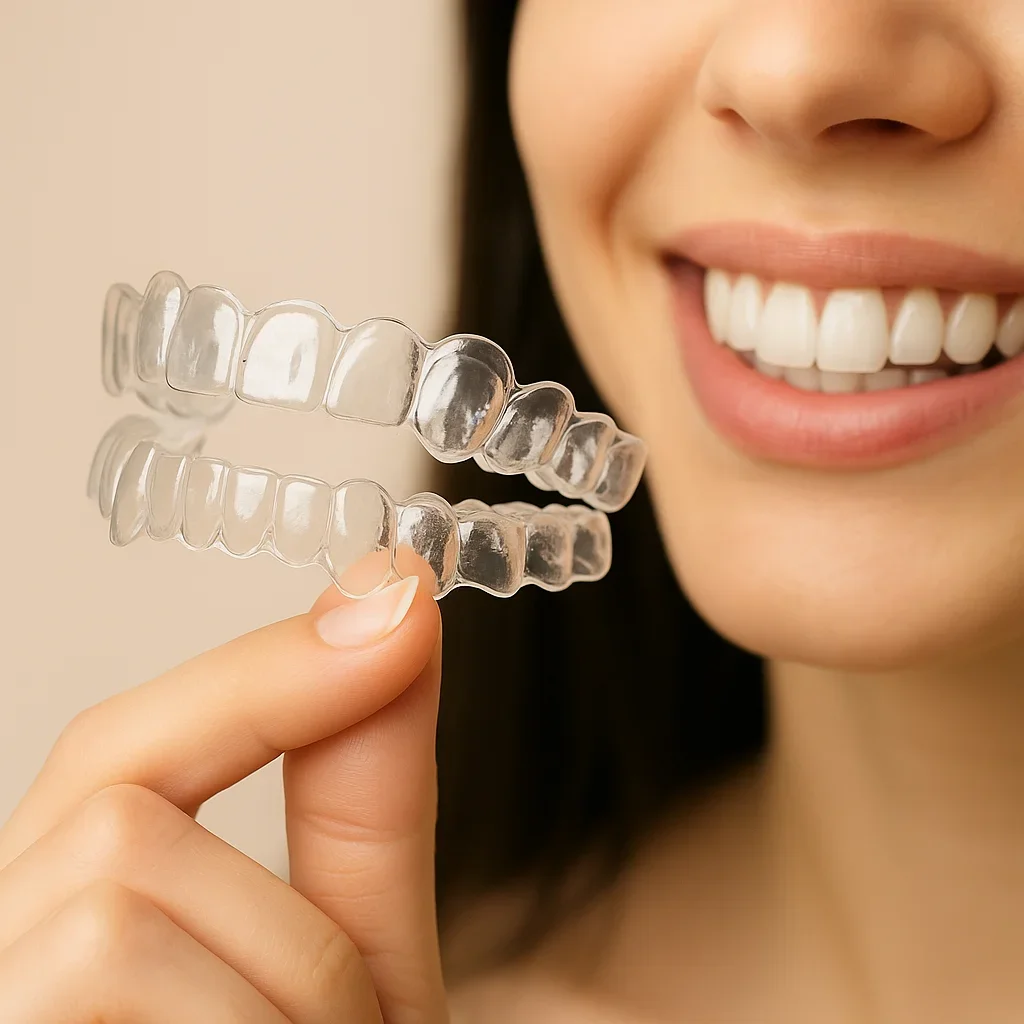
Post-Treatment Care: Maintaining Your Smile After Invisible Aligners
Completing your journey with invisible aligners is a major achievement — your teeth are now beautifully aligned, your bite is balanced, and your confidence has soared 😁. However, your orthodontic transformation doesn’t end the moment you remove your last set of aligners. Maintaining those results requires consistent post-treatment care, including proper retainer use, oral hygiene, and periodic dental checkups. Without maintenance, teeth can shift back to their previous positions — a process known as “relapse.” This detailed guide explains how to protect your new smile, what retainers to use, and the habits that keep your teeth perfectly aligned for life.
1. The Importance of Post-Treatment Retainers
After completing treatment with invisible aligners, retainers are essential to hold your teeth in place while your bone and gums stabilize. When teeth move during aligner therapy, the surrounding bone and ligaments need time to solidify around their new positions. Without retainers, the natural tension in those tissues can cause teeth to gradually drift back.
Most orthodontists recommend wearing retainers full-time for the first 3 to 6 months post-treatment, followed by nightly wear indefinitely. While this may sound long-term, it’s far less demanding than aligner wear, and it ensures your investment lasts for decades.
Types of Retainers
- Removable Retainers (Essix or Vivera): These clear, plastic retainers look similar to invisible aligners and are worn over the teeth. They’re comfortable, discreet, and easy to clean. However, they require daily wear and proper care to prevent breakage.
- Fixed (Bonded) Retainers: These consist of a thin wire bonded to the back of your front teeth. They provide constant support without requiring user compliance, making them ideal for patients who might forget nightly wear. However, cleaning around them requires extra attention.
Choosing between these types depends on your lifestyle, preferences, and the complexity of your alignment. Many dentists recommend using both — a fixed retainer on the lower teeth and a removable one for the upper — to ensure maximum stability.
2. Cleaning and Maintenance Tips
Just like your invisible aligners, retainers need regular cleaning to prevent plaque buildup, discoloration, and odor. Poor hygiene can lead to bacteria accumulation, bad breath, and even gum inflammation. Follow these tips for proper care:
Daily Cleaning Routine
- Rinse your retainers with lukewarm water every time you remove them.
- Brush gently using a soft toothbrush and clear antibacterial soap — never toothpaste, as it can scratch the surface.
- Soak your retainers in a specialized cleaning solution once a day to keep them odor-free and hygienic.
- Store them in their protective case when not in use to prevent loss or damage.
Avoid using hot water, alcohol-based mouthwash, or harsh chemicals, as these can warp or weaken the material. Regular cleaning not only extends the life of your retainers but also ensures that your post-aligner smile stays sparkling clean 🌟.
3. Monitoring and Follow-Up Appointments
Your orthodontic care doesn’t stop when your invisible aligners come off. Regular dental checkups allow your dentist to monitor the stability of your results, inspect retainer fit, and ensure your bite remains healthy. Most professionals recommend follow-ups at:
- 1 month post-treatment — to confirm proper stabilization.
- 6 months post-treatment — to review long-term retainer adaptation.
- Yearly checkups — to maintain alignment and overall oral health.
During these visits, your dentist might also perform digital scans to ensure your teeth haven’t shifted. If minor movement has occurred, short-term corrective aligners can quickly restore perfect alignment before it becomes noticeable.
4. Managing Relapse: What If Teeth Shift Back?
Relapse is one of the biggest post-treatment challenges. Even a small shift can alter your bite or change the aesthetics of your smile. Thankfully, with prompt attention, it’s usually reversible.
Common Causes of Relapse
- Not wearing retainers as instructed.
- Natural changes in bone density or gum tissue over time.
- Tooth grinding (bruxism) or clenching, especially at night.
- Wisdom tooth eruption causing crowding.
If you notice your retainers feeling tight or uncomfortable, it could be a sign that your teeth are starting to move. Contact your dentist immediately — early correction often requires only minor adjustments or a short “refinement” series of invisible aligners instead of starting full treatment again.
5. Oral Health After Invisible Aligners
Good oral hygiene remains essential after your alignment treatment. Straight teeth are easier to clean, but neglecting daily care can lead to gum disease, decay, or staining. Here’s how to maintain long-term dental health:
- Brush twice daily using fluoride toothpaste and a soft-bristled brush.
- Floss or use interdental brushes to remove plaque between teeth.
- Use an alcohol-free mouthwash to reduce bacteria and freshen breath.
- Avoid excessive sugar intake and acidic beverages that erode enamel.
Patients who complete invisible aligner treatment often experience boosted motivation to maintain oral hygiene, since their efforts directly affect the beauty and health of their smile.
6. Diet and Lifestyle Adjustments
After aligner therapy, maintaining your results isn’t just about retainers — your diet and lifestyle also play a role. Avoid habits that put unnecessary pressure on teeth, such as chewing ice or biting nails. Limit foods that stain enamel, including coffee, tea, and red wine ☕🍷. Staying hydrated and eating a calcium-rich diet supports strong, healthy teeth and bone structure.
Smoking and vaping can also discolor your retainers and cause gum inflammation, so quitting is highly recommended for long-term success.
7. Whitening and Aesthetic Enhancements
Once your invisible aligners treatment is complete, you may consider whitening your teeth to enhance your new smile. Many clinics, including Redent Klinik, offer professional whitening treatments that are safe and effective for post-aligner patients. It’s best to wait at least two weeks after finishing aligner therapy before whitening to allow enamel to remineralize.
For some patients, minor cosmetic bonding or contouring may also help refine the final smile line — creating perfect symmetry and polish. Consult your dentist before any aesthetic procedure to ensure it complements your new alignment.
8. Retainer Replacement and Longevity
Even with great care, retainers eventually wear out or lose their shape. Most clear retainers last about 1–2 years before requiring replacement. If your retainers start to feel loose, cracked, or discolored, contact your dentist promptly for a new set. Never attempt to heat or bend retainers back into shape yourself — doing so can compromise their fit and effectiveness.
Clinics that specialize in invisible aligners often keep your digital scan records, making retainer replacement easy without new impressions. This ensures fast service and consistent fit, preserving your results effortlessly.
9. Psychological Benefits of Post-Treatment Care
Maintaining your smile after invisible aligner therapy isn’t just about aesthetics — it’s also about confidence and mental well-being. Patients frequently report higher self-esteem, improved social interactions, and greater motivation to smile. Continuing proper care reinforces those positive feelings and helps maintain the joy of a transformed appearance.
10. Final Advice from Dental Professionals
According to the American Dental Association, consistent post-treatment maintenance is the key to preserving orthodontic results. Wearing retainers as directed, keeping up with dental checkups, and maintaining excellent hygiene ensure that your smile remains stable and healthy for decades. Neglecting these steps, however, may undo months of effort and investment.
In summary, finishing your invisible aligners treatment is not the end of your orthodontic journey — it’s the beginning of lifelong smile care. With proper post-treatment habits, your perfectly aligned teeth will continue to shine bright, reflect your confidence, and stay healthy for years to come. 🌟
For personalized post-treatment guidance, professional cleaning, or retainer replacement, visit the experts at Redent Klinik Contact Page. They can help you maintain your new, radiant smile with tailored care and ongoing dental support.