
Quick answer: For most people with active gum disease, treatment is worth considering because it can control infection, reduce inflammation, protect the bone supporting the teeth, and lower the chance of future tooth loss. The benefit is usually greater when care begins early. However, the appropriate procedure, likely outcome, and total cost depend on a dental examination, disease severity, general health, and long-term home care. In practical terms, is gum disease treatment worth it is a choice between managing the problem now and accepting the risk of more complicated care later.
Is gum disease treatment worth it for early-stage symptoms? Your answer depends first on the stage of the condition. Gingivitis is the earlier form and may cause bleeding, redness, swelling, tenderness, or persistent bad breath. It can often be managed with professional cleaning and consistent plaque control at home. Periodontitis is more advanced and may involve deep gum pockets, recession, bone loss, loose teeth, or changes in your bite. When deposits are present below the gumline, brushing alone cannot reliably remove them. In that situation, is gum disease treatment worth it usually means deciding how quickly to start and which level of care matches the clinical findings.
The strongest reason to proceed is preservation. Treatment cannot guarantee that every affected tooth will be saved, but appropriate periodontal care may slow or stop further tissue damage when combined with effective daily cleaning and regular maintenance appointments. It may also reduce bleeding, improve breath, ease tenderness, and make the mouth easier to keep clean. When asking is gum disease treatment worth it, compare those possible benefits with the consequences of delay, such as additional bone loss, extraction, tooth-replacement expenses, and more complicated restorative work.
Is gum disease treatment worth it when budget is a concern? Cost is an important part of the decision, but there is no dependable universal price. Mild inflammation may require professional cleaning and home-care improvements, while deeper periodontal pockets may require scaling and root planing, medication in selected cases, periodontal surgery, or specialist care. The number of areas treated, diagnostic imaging, comfort options, clinician recommendations, and follow-up schedule can all affect fees. Final costs should be based on an examination and personalized treatment planning rather than a guaranteed online quotation. To judge is gum disease treatment worth it, request a written plan explaining each recommended procedure, available alternatives, estimated fees, maintenance needs, and the likely effects of postponing care.
Is gum disease treatment worth it when symptoms seem minor? A professional assessment often is, because gum disease can progress with limited pain. Repeated bleeding during brushing should not be ignored when it continues despite careful cleaning. Gum recession, loose or shifting teeth, pain while chewing, pus around the gums, increasing spaces, or known bone loss make evaluation more important. If you smoke, have diabetes, are pregnant, take medicines that affect the gums or saliva, or are planning implants, crowns, or bridges, is gum disease treatment worth it should be discussed with a dentist because these factors may influence your risks and treatment plan.
A professional dental consultation is needed when symptoms persist, repeatedly return, or include tooth mobility, swelling, discharge, or significant discomfort. Seek urgent dental care for rapidly increasing facial swelling, fever accompanied by dental symptoms, difficulty swallowing, difficulty breathing, or signs that an infection may be spreading. During a periodontal evaluation, a clinician may measure gum-pocket depths, check bleeding and tooth stability, review your medical history, and take X-rays when appropriate. These findings provide the most reliable answer to is gum disease treatment worth it for your own mouth rather than for an average patient described online.
Your willingness to maintain the result also affects the value of treatment. Professional care generally works best when supported by twice-daily brushing with an appropriate technique, daily cleaning between the teeth, smoking cessation where relevant, management of health conditions, and maintenance appointments at the interval recommended for you. If those steps currently feel difficult, discuss this honestly with your dentist. Care can sometimes be staged and prioritized around your needs. The answer to is gum disease treatment worth it becomes clearer when you understand both the initial procedure and the ongoing routine required to help keep the gums stable.
Is gum disease treatment worth it if extraction seems simpler? Some people delay periodontal care because they fear discomfort or assume removing an affected tooth will be easier. Gum treatment can often be completed in stages, with local anaesthesia and suitable comfort options discussed beforehand. Extraction may be necessary when a tooth has a poor prognosis, but removing one tooth does not treat active disease around the remaining teeth. Replacing a missing tooth may also involve additional procedures, expenses, and long-term maintenance. Therefore, is gum disease treatment worth it should be compared with realistic alternatives, including the health and financial consequences of doing nothing.
For general oral-health education, you can visit the American Dental Association. However, online information cannot measure periodontal pockets, assess bone levels, identify all contributing factors, or provide a personal prognosis. A tailored evaluation at Redent Klinik can help you review your diagnosis, suitable treatment options, limitations, timing, and estimated costs without assuming that every patient requires the same approach. You can request an assessment through the Redent Klinik Contact Page. Ultimately, is gum disease treatment worth it depends on disease severity, the condition of each tooth, likely progression, affordability, and your goal of preserving comfortable function.
Practical next steps: Arrange a dental examination if you have persistent bleeding, gum recession, bad breath, swelling, loose teeth, discomfort when chewing, or a history of periodontal problems. Ask the dentist to explain your diagnosis, pocket measurements, relevant X-ray findings, treatment choices, estimated fees, maintenance schedule, and the risks of waiting. Improve brushing and interdental cleaning immediately, but do not treat home care as a replacement for professional assessment when symptoms continue. After reviewing the evidence, decide is gum disease treatment worth it by weighing the likely benefits, limitations, cost, timing, maintenance commitment, and possible consequences of delay.
Is Gum Disease Treatment Worth It Based on Cost?
For many patients, the answer to is gum disease treatment worth it depends less on finding the lowest fee and more on understanding what the treatment may prevent. Early gum care is often simpler than treatment for advanced periodontal damage, but no clinic can give a reliable final price without examining your gums, measuring periodontal pockets, reviewing X-rays when needed, and identifying how many areas require care. The practical decision is to compare the proposed treatment cost with the likely cost, discomfort, and complexity of allowing the condition to progress. Viewed this way, is gum disease treatment worth it becomes a question of long-term value rather than the price of a single appointment.
Is Gum Disease Treatment Worth It for Early Gum Problems?
When inflammation is limited to gingivitis, care may involve a professional cleaning, improvements to brushing and interdental cleaning, and a follow-up review. In this situation, is gum disease treatment worth it is usually easier to answer because the goal is to control inflammation before it develops into deeper periodontal problems. The total fee may be influenced by the amount of plaque and tartar, the time required for cleaning, whether diagnostic images are appropriate, and how frequently maintenance visits are recommended.
Do not judge value only by whether your gums hurt. Early gum disease may cause bleeding, redness, swelling, or bad breath without significant pain. If a dentist explains that the problem appears reversible at the gingivitis stage, acting promptly may reduce the likelihood that you will need more involved treatment later. However, the result still depends on consistent home care. When deciding is gum disease treatment worth it, ask whether your daily routine is likely to support the professional treatment and whether the clinic will show you how to clean the areas that are currently being missed.
Is Gum Disease Treatment Worth It for Advanced Periodontitis?
More advanced gum disease can require scaling and root planing, treatment over several appointments, local medication in selected cases, periodontal surgery, or referral to a specialist. The fee may rise because the clinician needs more time, more areas require treatment, and ongoing periodontal maintenance may be necessary. Even so, is gum disease treatment worth it should be evaluated against realistic alternatives. Delaying care may allow further bone and attachment loss, which can make teeth harder to preserve and may eventually lead to extraction or tooth-replacement treatment.
That is the practical context for asking is gum disease treatment worth it. It does not mean every tooth can or should be saved at any cost. A tooth with a poor prognosis may not justify extensive treatment, while other teeth may respond more favorably. A responsible plan should separate urgent areas from those that can be monitored and explain which teeth have a reasonable chance of remaining functional. To decide is gum disease treatment worth it, ask for a tooth-by-tooth explanation rather than accepting a general statement that all treatment is equally necessary.
Is Gum Disease Treatment Worth It When Several Procedures Are Recommended?
A treatment estimate may include examination fees, periodontal charting, X-rays, professional cleaning, deep cleaning by quadrant, anaesthesia, medication, surgery, follow-up visits, and maintenance appointments. Not every patient needs every item. Ask the dentist which parts are essential now, which are optional, and which may be postponed safely. This helps you understand whether is gum disease treatment worth it for the full plan or whether a staged approach would better match your health needs and budget.
Staging treatment can sometimes make costs more manageable, but it should be based on clinical priorities rather than price alone. For example, areas with active infection, deeper pockets, or rapid deterioration may need attention before stable areas. A phased plan should also explain the risks of waiting between stages. If you are comparing clinics, make sure the estimates cover similar services. A lower quote may exclude diagnostic imaging, follow-up care, or maintenance, while a higher quote may include them. The clearest answer to is gum disease treatment worth it comes from comparing complete plans rather than headline prices. When asking is gum disease treatment worth it, confirm that each estimate covers the same diagnosis, treatment area, follow-up schedule, and maintenance expectations.
Which Factors Change the Final Cost?
The final cost can vary according to disease severity, the number of teeth and mouth areas involved, the type of procedure, whether a general dentist or periodontist provides care, the need for imaging or laboratory work, the number of appointments, and the maintenance schedule. Your medical history, smoking status, diabetes control, medications, and previous dental treatment may also affect planning. These factors do not automatically make treatment unsuitable, but they can change the expected benefits and the amount of monitoring required. This is why is gum disease treatment worth it cannot be answered accurately from a price list alone.
How to Compare Cost With the Risk of Waiting
To evaluate is gum disease treatment worth it, consider three questions. First, what is likely to happen if you begin treatment now? Second, what may happen if you delay for six or twelve months? Third, what alternatives would be available if the condition worsens? The dentist should explain these possibilities without promising a guaranteed outcome. For some patients, timely treatment may help stabilize the gums and preserve natural teeth. For others, a limited or palliative approach may be more appropriate because of overall health, prognosis, or personal priorities. In either case, is gum disease treatment worth it should be answered through informed comparison, not pressure.
Ultimately, is gum disease treatment worth it depends on whether the proposed benefits are proportionate to the cost, treatment burden, prognosis, and risks of waiting. Before agreeing to care, request a written treatment plan with the diagnosis, recommended procedures, estimated fees, number of visits, likely maintenance needs, and alternatives. Ask whether the estimate includes reviews and whether additional treatment could become necessary after the gums are reassessed. Final costs depend on examination findings and treatment planning, so avoid relying on guaranteed online prices. For a personalized evaluation, you can contact the clinic through the Redent Klinik Contact Page.
What to check next: confirm the stage of gum disease, ask which teeth have the best prognosis, compare the cost of immediate care with the likely consequences of delay, and review what ongoing maintenance will cost. Request professional advice promptly if you have persistent bleeding, gum recession, swelling, pus, loose teeth, changes in your bite, or pain when chewing. Once you have a written plan and a clear explanation of alternatives, you will be in a stronger position to decide is gum disease treatment worth it for your health, budget, and long-term priorities.
Is Gum Disease Treatment Worth It for Your Situation?
Direct answer: For most people with active gingivitis or periodontitis, treatment is worth considering because controlling inflammation may help protect the gums, supporting bone, and natural teeth. However, the right answer is personal. Is gum disease treatment worth it for you depends on the stage of disease, the condition of individual teeth, your general health, your ability to maintain the result, and what may happen if care is delayed. Suitability is not determined by age or pain alone. It should be judged through an examination, periodontal measurements, and a discussion of realistic benefits, limitations, and alternatives.
Is Gum Disease Treatment Worth It When Symptoms Are Mild?
Mild bleeding, tenderness, persistent bad breath, or swollen gums can be easy to dismiss when there is little pain. Yet pain is not a reliable measure of gum health. If the problem is limited to gingivitis, professional cleaning and improved home care may control it before deeper tissue damage develops. In this situation, is gum disease treatment worth it is often best answered by considering timing: early care is generally less complex than managing established periodontitis.
You may be suitable for early treatment if your gums bleed repeatedly, tartar is difficult to control, or inflammation continues despite careful brushing and interdental cleaning. A dentist should confirm the cause because bleeding can also be influenced by brushing technique, medication, or hormonal changes. Do not assume every episode means advanced disease, but do not rely on home care alone when symptoms persist. The question is gum disease treatment worth it should be answered after a consultation clarifies whether you need preventive cleaning, deeper periodontal treatment, or continued monitoring.
Is Gum Disease Treatment Worth It for Advanced Periodontitis?
When gum pockets are deeper, bone support has been reduced, or teeth have started to shift or loosen, treatment decisions require more detail. Is gum disease treatment worth it at this stage depends partly on which teeth still have a reasonable prognosis. Some teeth may respond to non-surgical periodontal therapy and maintenance, while others may need surgery, specialist care, or extraction. It is rarely helpful to treat every tooth as though it has the same outlook.
Ask the dentist to explain the prognosis tooth by tooth. Find out which areas are active, which are stable, and whether treatment is intended to preserve teeth, improve comfort, or prepare for restorative work. When deciding is gum disease treatment worth it, compare the expected benefit with the number of appointments, maintenance needs, possible discomfort, and the consequences of doing nothing. Treatment cannot guarantee that every tooth will be saved, but a clear plan can help you avoid procedures that offer limited value.
Is Gum Disease Treatment Worth It With Other Health Conditions?
Diabetes, smoking, pregnancy, immune-related conditions, dry mouth, and certain medicines may influence inflammation, healing, or recurrence. These factors do not automatically rule out care. Instead, they may require closer coordination, more frequent maintenance, or adjusted expectations. Is gum disease treatment worth it in these circumstances is best discussed with a dentist who understands your medical history and can consult your physician when appropriate.
Tell the dental team about prescribed medicines, non-prescription products, allergies, previous reactions to anaesthesia, and any conditions affecting healing or bleeding. If you smoke or vape, explain how often. This information helps the clinician plan realistic care rather than make assumptions about your suitability. Pregnant patients should not simply ignore urgent dental problems; timing and treatment options should be discussed with the dentist and obstetric clinician when needed.
Is Gum Disease Treatment Worth It If Maintenance Is Difficult?
Professional treatment is only one part of periodontal care. Long-term value also depends on daily plaque removal and recommended maintenance visits. If cleaning between the teeth is difficult because of limited dexterity, crowded teeth, sensitivity, or existing dental work, ask about interdental brushes, suitable flossing aids, water flossing guidance, or a simpler routine. Is gum disease treatment worth it becomes harder to answer positively when the causes of recurring inflammation are not addressed.
You do not need perfect habits before receiving care, but the treatment plan should be realistic. A supportive dental team can identify barriers, demonstrate cleaning techniques, and help you set manageable priorities. When asking is gum disease treatment worth it, consider whether you can attend maintenance appointments and follow the recommended home-care routine. If appointments are difficult because of work, travel, anxiety, or budget, discuss this before treatment begins. Care may sometimes be staged so urgent areas are addressed first. The number of visits and final fees must depend on examination findings and individualized planning rather than a guaranteed quotation.
Is Gum Disease Treatment Worth It Compared With Alternatives?
Alternatives may include monitoring, limited treatment, extraction of teeth with a poor prognosis, or replacement with bridges, dentures, or implants. Monitoring may be appropriate for stable areas, but it is not the same as ignoring active disease. Extraction can remove a tooth that cannot be maintained, yet it does not treat disease around the remaining teeth. Implants also require healthy surrounding tissues, careful cleaning, and long-term professional maintenance. Therefore, is gum disease treatment worth it should be compared with the full cost, healing time, risks, limitations, and maintenance demands of each alternative.
A second opinion can be useful when the proposed plan is extensive, several teeth have uncertain prognoses, or the reason for surgery or extraction is unclear. Ask whether some teeth can be treated conservatively while others require a different approach. Redent Klinik can provide a personalized evaluation based on clinical findings rather than general online assumptions. To request an assessment, visit the Redent Klinik Contact Page. A consultation should explain what requires attention now, what can be reviewed later, and how each option fits your health needs, available time, budget, and personal priorities.
Is Gum Disease Treatment Worth It? What to Check Next
Before deciding, check the diagnosed stage of gum disease, pocket measurements, relevant X-ray findings, tooth mobility, available bone support, medical risk factors, and the prognosis of each affected tooth. Ask what improvement is reasonably expected, what maintenance will be required, which alternatives are available, and what may happen if you delay. Request professional advice if you notice repeated bleeding, gum recession, pus, swelling, loose or shifting teeth, bite changes, or pain when chewing. Seek urgent dental care for rapidly increasing facial swelling, fever with dental symptoms, difficulty swallowing, or difficulty breathing. With a clear diagnosis and a realistic comparison of treatment and alternatives, you can decide whether is gum disease treatment worth it for your health, circumstances, and long-term goals.
Is Gum Disease Treatment Worth It? What the Process Involves
Direct answer: Gum disease treatment is often worth considering when the recommended process is proportionate to the severity of the condition and supported by a realistic maintenance plan. Treatment does not always mean surgery, and it is rarely identical for every patient. The process may range from professional cleaning and home-care instruction to deep cleaning, periodontal surgery, or removal of teeth with a poor prognosis. Understanding each stage helps you decide is gum disease treatment worth it for your health, schedule, comfort expectations, and budget.
A reliable treatment process normally begins with diagnosis rather than immediately performing a procedure. Your dentist needs to determine whether you have gingivitis, periodontitis, or another condition causing similar symptoms. The examination may include measuring gum pockets, checking bleeding, assessing recession and tooth mobility, reviewing your bite, and taking dental X-rays when clinically appropriate. When considering is gum disease treatment worth it, this diagnostic stage matters because the value of treatment depends on whether the proposed care matches the actual problem.
Is Gum Disease Treatment Worth It After the Initial Examination?
Following the examination, the dentist should explain which areas are healthy, which show active inflammation, and whether any bone support has been lost. You should also be told whether the condition appears localized to a few teeth or affects several areas of the mouth. A useful treatment plan separates immediate priorities from procedures that can potentially wait. This makes it easier to answer is gum disease treatment worth it without feeling that you must accept every possible procedure at once.
Ask the clinician to show you the findings whenever possible. Pocket measurements, X-rays, photographs, and visible tartar deposits can help you understand why treatment has been recommended. You may also ask what could happen if you delay for several months and whether a less invasive option is reasonable. No dentist can promise a guaranteed outcome, but the likely benefits, limitations, and risks should be explained clearly enough for you to make an informed choice.
Is Gum Disease Treatment Worth It When Deep Cleaning Is Recommended?
Scaling and root planing, commonly described as deep cleaning, may be recommended when tartar and bacterial deposits extend below the gumline. The procedure usually involves carefully cleaning the affected root surfaces so the surrounding tissues have a better opportunity to heal. Local anaesthesia may be used to improve comfort, and treatment may be divided into separate appointments depending on the number of areas involved.
For a patient with established periodontal pockets, is gum disease treatment worth it often depends on whether deep cleaning can reduce inflammation and help stabilize the condition before more invasive care is considered. Some tenderness, sensitivity, or minor bleeding may occur temporarily after treatment, although individual experiences vary. Ask how many visits are expected, how discomfort will be managed, and whether you will need time to adjust eating or cleaning habits afterward.
The gums are normally reassessed after an appropriate healing period. The dentist may measure the pockets again, check whether bleeding has reduced, and evaluate how well you are controlling plaque at home. This review is an essential part of deciding is gum disease treatment worth it, because it shows whether non-surgical treatment has achieved enough improvement or whether particular areas need further attention.
Is Gum Disease Treatment Worth It If Surgery Is Suggested?
Periodontal surgery is not required for every patient. It may be discussed when deep pockets remain after non-surgical treatment, when access is needed to clean difficult root surfaces, or when the shape of damaged gum and bone tissues makes daily cleaning difficult. Depending on the clinical situation, procedures may involve reducing pockets, reshaping tissues, grafting receded gums, or attempting regenerative treatment in selected defects.
At this stage, is gum disease treatment worth it should be evaluated procedure by procedure. Ask what the surgery is designed to accomplish, how predictable the expected benefit is in your specific case, and whether non-surgical monitoring remains an option. You should also understand the healing period, possible temporary swelling or discomfort, dietary adjustments, follow-up visits, and long-term maintenance requirements. If the recommended surgery is extensive or the prognosis is uncertain, requesting a second opinion from a periodontist may help you compare options.
Is Gum Disease Treatment Worth It During the Maintenance Phase?
Periodontal care does not necessarily end when the initial treatment is completed. Many patients need periodontal maintenance visits at intervals based on their disease history, plaque control, smoking status, medical conditions, and response to treatment. These appointments may include checking pocket depths, monitoring tooth stability, removing new deposits, and reinforcing home-care techniques.
Maintenance is one of the most important factors when answering is gum disease treatment worth it. Initial treatment may have limited long-term value if new plaque and tartar are allowed to accumulate without monitoring. Before proceeding, ask how often maintenance is likely to be required and whether those appointments are included in the original estimate. Final costs cannot be guaranteed before examination and treatment planning, and future fees may vary if your needs change.
Your home routine also affects the value of the process. Brushing twice daily, cleaning between the teeth, following product recommendations, and avoiding tobacco can support periodontal stability. If dexterity, sensitivity, dental anxiety, or a busy schedule makes maintenance difficult, explain this to your dental team. The best plan is not simply the most technically advanced option; it is the one you are reasonably able to complete and maintain.
How to Decide Whether the Treatment Process Is Reasonable
When asking is gum disease treatment worth it, review whether the plan follows a logical sequence: diagnosis, initial cleaning, healing, reassessment, further treatment only where necessary, and continuing maintenance. Be cautious if major procedures are proposed without a clear explanation of the findings, alternatives, or prognosis. A suitable plan should tell you what is urgent, what is optional, and what could change after the gums respond to initial care.
It is also reasonable to ask for a written estimate. The document should identify the proposed procedures, approximate number of appointments, possible additional care, and expected maintenance. The lowest price is not automatically the best value, particularly if follow-up care is excluded. Equally, a more expensive plan is not automatically more appropriate. The answer to is gum disease treatment worth it depends on whether each step has a clear clinical purpose and offers a reasonable benefit compared with its cost, inconvenience, and risks.
A personalized consultation at Redent Klinik can help clarify the likely treatment stages after your gums, teeth, and relevant health factors have been assessed. You can request an evaluation through the Redent Klinik Contact Page. The consultation should give you an opportunity to discuss comfort options, treatment timing, estimated costs, alternatives, and the likely consequences of postponing care.
What to check next: Confirm your diagnosis, ask which treatment stage is necessary first, and find out when the results will be reassessed. Check whether local anaesthesia, follow-up visits, and periodontal maintenance are included in the proposed plan. Request professional advice if your gums bleed repeatedly, you have persistent swelling or bad breath, teeth feel loose, your bite has changed, or you notice pus around the gumline. Seek urgent dental attention for rapidly increasing swelling, fever with dental symptoms, difficulty swallowing, or difficulty breathing. Once the complete process has been explained, you can decide is gum disease treatment worth it based on evidence from your own examination rather than assumptions about a standard treatment.
Is Gum Disease Treatment Worth It Despite the Risks?
Direct answer: For many people with active gum disease, treatment is worth considering because its common side effects are usually temporary, while untreated periodontitis may continue damaging the gums and bone supporting the teeth. No procedure is risk-free, though, and not every tooth has the same outlook. When asking is gum disease treatment worth it, compare the expected benefit with discomfort, recovery, cost, maintenance, and the consequences of delay. A dental examination is essential because your disease stage, medical history, and proposed procedure determine which risks apply to you.
Is Gum Disease Treatment Worth It With Common Side Effects?
After professional cleaning or scaling and root planing, you may experience temporary tenderness, mild bleeding, gum soreness, or sensitivity to hot and cold foods. As swelling decreases, the gums can look lower, the teeth may appear longer, and spaces between teeth may become more visible. These changes do not necessarily mean treatment caused new damage; they may reveal recession that inflammation previously concealed. This context is important when answering is gum disease treatment worth it, because an expected short-term effect is not automatically a treatment complication.
For someone concerned about comfort or appearance, the answer to is gum disease treatment worth it depends partly on knowing what to expect. Ask whether local anaesthesia will be used, whether care can be divided into stages, how long sensitivity may last, and which aftercare products are suitable. Contact the clinic if pain becomes severe, swelling increases, bleeding does not settle as advised, or you develop an unexpected reaction. Do not take medication or antibiotics without confirming that they are appropriate for your health and current prescriptions.
Is Gum Disease Treatment Worth It If Surgery Is Recommended?
Periodontal surgery may be considered when deep pockets remain after non-surgical treatment or when grafting, tissue reshaping, or regenerative care could benefit a specific area. Possible risks include swelling, bruising, bleeding, infection, sensitivity, gum recession, altered appearance, and incomplete improvement. Grafts and regenerative procedures do not provide identical outcomes for every patient.
Therefore, the question is gum disease treatment worth it should be judged procedure by procedure. Ask what the surgery is intended to achieve, whether continued non-surgical maintenance is a reasonable alternative, and what could happen if you postpone it. You should also understand the recovery period, dietary restrictions, follow-up schedule, time away from work, and possibility of additional care.
Check the Prognosis of Each Tooth
When several teeth are affected, one treatment may not offer equal value everywhere. A tooth with adequate remaining support may justify further periodontal care, while another may have a poor prognosis because of extensive bone loss, severe mobility, root damage, or other complications. In this situation, the question is gum disease treatment worth it may have a different answer for each tooth.
Request a tooth-by-tooth explanation. Ask which teeth are likely to remain functional, which have an uncertain outlook, and whether each procedure is intended to preserve a tooth, improve comfort, or prepare for restorative treatment. This helps you avoid treating every area as though it has the same needs or likely benefit.
Is Gum Disease Treatment Worth It If You Have Medical Conditions?
General health can affect bleeding, healing, inflammation, and recurrence. Tell the dental team about diabetes, heart or immune-related conditions, bleeding disorders, allergies, pregnancy, and previous complications after dental treatment. Provide a complete list of medicines and supplements. Blood-thinning medication should not be stopped unless the clinician responsible for it provides appropriate guidance.
Smoking, vaping, dry mouth, and medicines that affect the gums or immune response may also change planning. These factors do not automatically make treatment unsuitable. They mean that answering is gum disease treatment worth it requires an individualized risk assessment. Your dentist may suggest coordination with a physician, adjusted appointment timing, closer monitoring, or a more conservative first stage.
Is Gum Disease Treatment Worth It Without a Guaranteed Result?
Periodontal treatment aims to reduce inflammation and stabilize the supporting tissues, but it cannot guarantee that every tooth will be saved. Results may be affected by the amount of bone already lost, tooth anatomy, smoking, uncontrolled diabetes, plaque accumulation, and missed maintenance visits. Some areas respond well to non-surgical care, while deeper defects may remain difficult to maintain.
This uncertainty does not automatically make treatment poor value. To answer the question is gum disease treatment worth it, ask what realistic success would look like in your case. It may mean less bleeding, shallower pockets, easier cleaning, improved comfort, slower progression, or keeping teeth functional for longer. It may not mean restoring the gums and bone to their original condition.
Ask when results will be reassessed. Pocket measurements, bleeding, plaque control, and tooth stability can be reviewed after initial healing. If improvement is limited, the plan may be adjusted before you commit to more invasive care. This staged process helps answer is gum disease treatment worth it using your actual response rather than assumptions.
Is Gum Disease Treatment Worth It If You Delay Care?
Active periodontitis may continue causing attachment and bone loss if it is not controlled. Teeth can become more mobile, spaces may increase, chewing may become uncomfortable, and extraction may eventually be considered. Later care can also become more complex. However, progression differs between patients, so a dentist should not use fear or certainty to pressure you.
In many cases, is gum disease treatment worth it is best answered by comparing two scenarios: the likely outcome with treatment and the likely outcome if you wait. Ask whether the condition appears active or stable, how long monitoring would be reasonable, and which changes should bring the review forward. Monitoring should include a defined follow-up date rather than ignoring persistent symptoms.
How to Reduce Risks When Asking: Is Gum Disease Treatment Worth It
Choose a clinic that performs a complete periodontal assessment, explains alternatives, and gives written aftercare instructions. Follow advice about brushing, interdental cleaning, smoking, diet, and medication. Attend reassessment and maintenance appointments so areas that are not healing as expected can be identified. When is gum disease treatment worth it is your main concern, check whether the plan begins with the least invasive suitable option and adds further care only when the findings justify it.
Ask for an itemized estimate covering the initial procedure, reviews, possible additional treatment, and maintenance. Final fees cannot be guaranteed before examination and planning because the number of affected areas, disease severity, treatment response, and selected technique may change what is required. The question is gum disease treatment worth it should include these longer-term expenses, since a low initial quote may offer poor value if essential follow-up is excluded.
A consultation at Redent Klinik can help you review the expected benefits, relevant risks, alternatives, and maintenance needs for your condition. You can request an evaluation through the Redent Klinik Contact Page. The visit should help you answer is gum disease treatment worth it for your circumstances rather than assume every patient needs surgery or the same plan.
What to Check When Asking: Is Gum Disease Treatment Worth It
Confirm your diagnosis, disease stage, pocket measurements, bone levels, tooth-by-tooth prognosis, medical risks, expected recovery, and maintenance schedule. Ask which side effects are common, which complications require prompt review, and whom to contact if recovery differs from expectations. Request professional advice when bleeding, swelling, recession, bad breath, or tenderness continues despite careful home cleaning, or when teeth feel loose or your bite changes.
Seek urgent dental care for rapidly increasing facial swelling, fever with dental symptoms, uncontrolled bleeding, difficulty swallowing, or difficulty breathing. Once the findings and alternatives are clear, you can answer is gum disease treatment worth it by comparing the manageable risks of appropriate care with the health, functional, and financial risks of waiting.
Is Gum Disease Treatment Worth It Compared With Alternatives?
Direct answer: For many people with active gum disease, treatment is worth considering because the main alternatives may not stop ongoing inflammation or protect the remaining support around the teeth. However, periodontal treatment is not automatically the right choice for every tooth or every patient. When asking is gum disease treatment worth it, compare it with realistic options such as improved home care, professional monitoring, limited treatment, tooth extraction, or replacement of missing teeth. The best decision depends on disease severity, tooth prognosis, general health, treatment burden, cost, and your willingness to maintain the result.
An alternative should be evaluated by what it can actually achieve. For example, better brushing may reduce plaque, but it cannot reliably remove hardened tartar from below the gumline. Extraction may solve a problem involving one severely damaged tooth, but it does not control active gum disease around other teeth. Dental implants can replace missing teeth, but they also require healthy surrounding tissues and ongoing maintenance. Therefore, is gum disease treatment worth it should not be answered by comparing treatment with an idealized or incomplete alternative.
Is Gum Disease Treatment Worth It Compared With Home Care Alone?
Home care is essential, but it has limits. Brushing twice a day, cleaning between the teeth, and using products recommended by a dental professional can help control plaque and reduce inflammation. If the condition is limited to very early gingivitis, improved cleaning combined with professional care may be enough to restore healthier gums. Once tartar has formed below the gumline or periodontal pockets have developed, home cleaning alone is unlikely to reach every affected surface.
In this situation, is gum disease treatment worth it usually depends on whether professional cleaning can remove deposits that you cannot safely remove yourself. Trying to scrape tartar with household tools can injure the gums or teeth and should be avoided. If bleeding, swelling, persistent bad breath, or tenderness continues after you improve your routine, request an examination rather than repeatedly changing toothpaste or mouthwash without a diagnosis.
Is Gum Disease Treatment Worth It Compared With Monitoring?
Monitoring can be reasonable when the gums are stable, symptoms are limited, and the dentist does not find evidence of active progression. It may also be used when a patient has medical, financial, or personal reasons for postponing a procedure. However, monitoring should be structured. It should include a review date, repeated periodontal measurements when appropriate, and clear instructions about which changes require earlier attention.
If active periodontitis is present, monitoring without treatment may allow additional attachment or bone loss. For that reason, is gum disease treatment worth it should be discussed in terms of what may happen during the proposed monitoring period. Ask whether the condition appears stable or active, how quickly it may change, and whether a shorter review interval is appropriate. “Wait and see” is a more responsible option when there is a defined plan for what will be checked and when action will be reconsidered.
When Limited Treatment May Be a Practical Alternative
Some patients cannot complete a full treatment plan immediately because of cost, medical treatment, travel, dental anxiety, or time limitations. In selected cases, a dentist may recommend addressing the most urgent or active areas first. This may involve treating one part of the mouth, managing infection, improving comfort, and reassessing before continuing.
A phased approach can make care more manageable, but it should not be confused with leaving the rest of the condition unmonitored. When deciding is gum disease treatment worth it, ask whether limited treatment is expected to stabilize the entire mouth or only reduce risk in priority areas. Confirm which procedures can reasonably wait and what symptoms should bring the next stage forward.
Is Gum Disease Treatment Worth It Compared With Extraction?
Extraction may be recommended when a tooth has extensive loss of support, severe mobility, an untreatable fracture, or another problem that gives it a poor prognosis. In those circumstances, spending significant time and money trying to preserve the tooth may offer limited benefit. However, removing a tooth should not automatically replace periodontal treatment for the rest of the mouth.
When asking is gum disease treatment worth it, request a tooth-by-tooth prognosis. Some teeth may have a reasonable chance of remaining functional with treatment and maintenance, while others may not. Ask why extraction is recommended, whether the tooth is causing pain or infection, whether conservative treatment is possible, and what could happen if the tooth remains temporarily. A second opinion may be useful when several extractions are proposed or when the explanation is unclear.
Extraction also creates a new decision: whether and how to replace the missing tooth. The total comparison should include healing time, replacement costs, additional procedures, appearance, chewing function, and long-term maintenance. The fee for extraction alone may seem lower, but that does not necessarily make it the least expensive overall choice.
Is Gum Disease Treatment Worth It Compared With Implants?
Dental implants can be an effective replacement option for suitable patients, but they are not immune to inflammation or bone loss. Healthy gums, adequate bone, careful cleaning, and professional monitoring remain important. Active periodontal disease should usually be assessed and controlled before implant treatment is planned.
For this reason, is gum disease treatment worth it should not be answered by assuming that extracting teeth and placing implants will eliminate every gum-related concern. Implant treatment may require extraction, healing, bone grafting in selected cases, surgery, a restoration, and continuing maintenance. Final costs vary according to examination findings, the number of teeth involved, available bone, materials, and the selected treatment plan. No responsible estimate should be treated as guaranteed before a clinical evaluation.
If implants are presented as an alternative, ask whether preserving your natural teeth remains reasonable, how long each option may take, and what maintenance both choices require. In some situations, treating natural teeth may be less invasive. In others, replacing a tooth with a poor prognosis may provide a more predictable functional plan. The answer to is gum disease treatment worth it may therefore differ between individual teeth.
Is Gum Disease Treatment Worth It Compared With Dentures or Bridges?
Bridges and removable dentures may replace teeth that cannot be retained, but they do not directly treat gum disease around the remaining teeth. A bridge may place additional cleaning demands around its supporting teeth, while a removable denture can trap plaque if it is not cleaned properly. Remaining teeth and gums still need professional assessment and maintenance.
When considering is gum disease treatment worth it, compare the likely lifespan, comfort, appearance, cleaning requirements, and future repair needs of each option. Ask whether existing gum disease could affect the support for a bridge or denture and whether periodontal treatment is needed before restorative work begins. Choosing a replacement without controlling active inflammation may compromise the wider treatment plan.
Is Gum Disease Treatment Worth It When No Treatment Is Chosen?
Choosing no active treatment is still a decision, and it should be made with a clear understanding of the possible consequences. Gum disease may progress with little pain, so feeling comfortable today does not confirm that the tissues are stable. Possible effects of progression include more recession, deeper pockets, further bone loss, tooth movement, chewing difficulties, and eventual tooth loss.
This does not mean every untreated case will worsen at the same rate. Your dentist should explain uncertainty without using fear or making guarantees. To evaluate is gum disease treatment worth it, ask what the examination suggests about your individual risk, how the condition will be monitored, and which warning signs require prompt attention. If you decline treatment, request a documented review schedule and practical home-care guidance.
How to Compare Your Alternatives Fairly
A useful comparison should cover more than the initial fee. Review the likely benefit, invasiveness, recovery, number of visits, expected longevity, maintenance requirements, and consequences if the option fails. Ask whether treatment can begin conservatively and be reassessed before surgery or extraction is considered. This staged approach can help answer is gum disease treatment worth it based on your actual response to care.
It may also help to obtain a written plan showing which teeth can reasonably be preserved, which have uncertain prognoses, and which alternatives are available. Redent Klinik can assess your periodontal condition and explain suitable options after reviewing your gums, teeth, X-rays when needed, and medical history. You can request a personalized evaluation through the Redent Klinik Contact Page. A consultation should help you compare treatment, monitoring, extraction, and tooth-replacement options without assuming that one approach is appropriate for everyone.
What to Check Before Choosing an Alternative
Confirm whether your gum disease is active or stable, ask for the prognosis of each affected tooth, and find out what every alternative can realistically accomplish. Check the total expected cost, healing time, maintenance schedule, and possibility of needing additional treatment. Request professional advice if bleeding, swelling, recession, bad breath, tenderness, loose teeth, or bite changes persist. Seek urgent dental care for rapidly increasing facial swelling, fever with dental symptoms, difficulty swallowing, difficulty breathing, or uncontrolled bleeding.
Ultimately, is gum disease treatment worth it should be decided by comparing the proposed care with genuine alternatives, not with doing nothing and hoping the condition remains unchanged. A personalized examination can show whether conservative treatment, phased care, extraction, replacement, or monitoring offers the most reasonable balance for your oral health, priorities, and budget.
Is Gum Disease Treatment Worth It With Financing Options?
Direct answer: Financing can make periodontal care easier to start, but it does not automatically make every treatment plan affordable or appropriate. The right question is whether the recommended care has a clear clinical purpose, whether the monthly commitment fits your budget, and whether delaying treatment could lead to more complex needs. When considering is gum disease treatment worth it, compare the full treatment plan, expected maintenance, financing terms, and alternatives rather than focusing only on the smallest monthly payment.
Gum disease treatment costs can vary because patients do not all need the same procedures. One person may need professional cleaning and home-care support, while another may require scaling and root planing, several appointments, surgery, or specialist care. Diagnostic imaging, local anaesthesia, follow-up reviews, and periodontal maintenance can also affect the total. For this reason, is gum disease treatment worth it cannot be judged from an advertised starting price. Final fees should be based on an examination and personalized treatment planning. In practical terms, is gum disease treatment worth it means asking whether the complete plan offers reasonable long-term value for your particular diagnosis.
Is Gum Disease Treatment Worth It If You Need a Payment Plan?
A payment plan may be useful when treatment is clinically appropriate but paying the full amount at once would place too much pressure on your finances. Before agreeing, ask for the total treatment estimate, the amount financed, the payment period, any interest or administrative charges, and the consequences of a late payment. A low monthly figure can appear manageable while hiding a higher overall cost. To decide is gum disease treatment worth it, calculate what you will pay in total rather than evaluating the monthly amount alone.
Also check whether the plan covers the entire course of care. Some arrangements may apply only to the initial procedure and exclude reassessment, medication, surgery, or maintenance appointments. Ask whether fees could change if the gums respond differently than expected. No clinician can promise in advance that additional treatment will never be needed. A responsible answer to is gum disease treatment worth it includes a realistic allowance for follow-up and long-term periodontal maintenance. If those future obligations are unclear, is gum disease treatment worth it cannot be assessed accurately from the financing offer alone.
Is Gum Disease Treatment Worth It When Care Can Be Phased?
Phased treatment may help spread costs while addressing the most urgent areas first. A dentist might begin with diagnosis, professional cleaning, home-care instruction, and non-surgical treatment before reassessing the gums. Further procedures may then be recommended only for areas that remain difficult to manage. This sequence can make is gum disease treatment worth it easier to evaluate because you can review your response before committing to more invasive care.
However, treatment should not be divided purely for financial convenience if delaying a priority area could create a significant clinical risk. Ask which stages are essential now, which can reasonably wait, and how long any delay is considered acceptable. Confirm whether phased care changes the total price or simply changes when payments are due. When asking is gum disease treatment worth it, a staged plan has the most value when it follows clinical priorities and includes a clear review schedule.
Compare Financing With the Cost of Waiting
Postponing treatment may appear to save money in the short term, especially when symptoms are mild. Yet active periodontitis can progress with limited pain. Additional bone loss, tooth mobility, extraction, and tooth-replacement treatment may create greater costs later. This does not mean every case will worsen at the same speed, and a dentist should not use fear to pressure you. Instead, ask what your examination suggests about the likely consequences of waiting.
The practical way to answer is gum disease treatment worth it is to compare two documented scenarios: the estimated cost and expected benefit of treating now, and the likely treatment needs if you delay. Ask whether monitoring is safe, how frequently you should be reviewed, and which symptoms should lead to an earlier appointment. Financing may be reasonable when it allows timely care without compromising essential household expenses, but it should not be accepted without understanding the total obligation.
Is Gum Disease Treatment Worth It With Dental Insurance?
Dental insurance may cover part of an examination, cleaning, periodontal therapy, or maintenance, but benefits depend on the policy. Check annual limits, waiting periods, deductibles, exclusions, required pre-authorization, and whether the clinic is within the insurer’s network. Ask whether coverage is based on the procedure performed or on a fixed allowance. Even when a treatment is clinically recommended, an insurer may not cover the full amount.
When determining is gum disease treatment worth it, do not let insurance coverage become the only measure of value. A covered procedure is not automatically the best option, and an uncovered procedure is not automatically unnecessary. Ask the dentist to explain why each step is recommended and whether a clinically suitable alternative is available. Request a written estimate showing the expected insurance contribution and your likely out-of-pocket responsibility, while recognizing that the insurer makes the final benefit decision. This lets you consider is gum disease treatment worth it using both clinical value and your actual personal cost.
Is Gum Disease Treatment Worth It When Comparing Clinics?
Comparing estimates can be sensible, particularly when the treatment plan is extensive. Make sure the quotations include comparable services. One estimate may cover periodontal charting, X-rays, anaesthesia, reassessment, and maintenance, while another may list only the initial procedure. Ask whether treatment is performed by a general dentist or periodontist, how many visits are anticipated, and what happens if additional areas require care. These details are necessary when deciding is gum disease treatment worth it across different quotations.
The lowest quote is not necessarily the best value, just as the highest quote is not necessarily the most suitable. To decide is gum disease treatment worth it, compare diagnosis, proposed procedures, clinician experience, aftercare, maintenance, and communication as well as cost. Be cautious about guaranteed results, fixed prices offered without examination, or pressure to pay immediately before the findings and alternatives have been explained.
How to Build a Realistic Gum Treatment Budget
Start with an itemized written plan. Separate diagnostic costs, active treatment, medication if prescribed, follow-up reviews, and continuing maintenance. Add practical expenses such as travel, time away from work, or support during recovery if surgery is planned. Then compare the total with your available savings, insurance benefits, payment options, and other financial commitments. At this stage, is gum disease treatment worth it should be answered using the complete financial picture rather than the initial procedure fee.
When asking is gum disease treatment worth it, consider whether a less invasive clinically appropriate option could meet the same immediate goal. You may also ask whether urgent treatment can begin while elective procedures are reviewed later. Do not cancel necessary care solely because the first estimate feels difficult; request an explanation of priorities and alternatives. Equally, do not take on unaffordable debt without understanding the likely benefit, maintenance costs, and risk of further procedures. Your answer to is gum disease treatment worth it should remain realistic after routine living expenses and future dental maintenance are included.
A personalized consultation at Redent Klinik can help you understand which parts of a proposed plan are necessary, which may be phased, and how estimated costs relate to your clinical findings. You can request an evaluation through the Redent Klinik Contact Page. The final cost will depend on the examination, disease severity, number of affected areas, selected procedures, and maintenance needs, so pricing should not be treated as guaranteed before planning is complete. A clinician can help you decide is gum disease treatment worth it only after those personal factors have been reviewed.
What to Check Before Financing Treatment
Before signing any payment agreement, confirm the diagnosis, treatment stages, total estimated fee, deposit, payment period, interest, administrative charges, cancellation terms, refund policy, and what happens if the plan changes. Check whether reviews and periodontal maintenance are included. Ask for professional advice if you are unsure whether a proposed procedure is urgent, whether it can be phased, or whether another clinically suitable option would reduce the financial burden. Before committing, use that advice to decide is gum disease treatment worth it under the actual terms offered.
Request a prompt dental assessment if you have persistent bleeding, gum recession, swelling, pus, loose teeth, bite changes, or pain when chewing. Seek urgent care for rapidly increasing facial swelling, fever with dental symptoms, difficulty swallowing, or difficulty breathing. Ultimately, is gum disease treatment worth it should be decided by balancing clinical need, realistic benefits, total cost, financing obligations, and the consequences of delay—not by choosing the smallest monthly payment without reviewing the complete plan.
Is Gum Disease Treatment Worth It? Frequently Asked Questions
Direct answer: For many patients with active gingivitis or periodontitis, treatment is worth considering because it may reduce inflammation, protect the tissues supporting the teeth, and make the mouth easier to maintain. However, is gum disease treatment worth it cannot be answered from symptoms, age, or price alone. The right decision depends on the stage of the condition, the prognosis of individual teeth, your health history, the proposed procedure, and your ability to continue long-term maintenance. The following questions can help you evaluate a recommendation without assuming that every patient needs the same treatment.
Is Gum Disease Treatment Worth It If My Gums Do Not Hurt?
Yes, treatment may still be worthwhile because gum disease can progress without causing strong pain. Bleeding during brushing, persistent bad breath, redness, swelling, recession, and changes between the teeth may appear before significant discomfort develops. Pain alone cannot show whether the supporting bone is healthy or whether periodontal pockets are becoming deeper.
When asking is gum disease treatment worth it despite having little pain, request an examination that includes gum measurements and X-rays when clinically appropriate. Ask whether the findings indicate gingivitis, active periodontitis, or a stable condition that can be monitored. Professional advice is particularly important when bleeding continues for more than a short period despite careful brushing and interdental cleaning.
Can Gum Disease Be Treated With Brushing Alone?
Improved brushing and interdental cleaning are essential, especially during the early stages of gum inflammation. However, home care cannot reliably remove hardened tartar, particularly when deposits are located below the gumline. If periodontal pockets or bone loss are present, professional treatment may be needed to clean areas that a toothbrush cannot reach effectively.
In this situation, is gum disease treatment worth it depends on whether professional care offers a meaningful advantage over home care alone. Ask the dentist to identify where tartar, bleeding, or deeper pockets are present. You should also request practical instructions for brushing and cleaning between the teeth, because professional treatment usually provides better long-term value when it is supported by a consistent daily routine.
Is Gum Disease Treatment Worth It If I Have Already Lost Bone?
Treatment may still be beneficial even when some bone support has been lost. The goal is not always to restore tissues to their original condition. Depending on the clinical findings, treatment may aim to reduce inflammation, slow additional damage, make the teeth easier to clean, and preserve comfortable function for as long as reasonably possible.
The answer to is gum disease treatment worth it may differ from one tooth to another. A tooth with adequate remaining support may have a more favorable outlook than a tooth with severe mobility or extensive bone loss. Ask for a tooth-by-tooth prognosis, the purpose of each recommended procedure, and an explanation of what could happen if treatment is postponed. Treatment should not be presented as a guarantee that every affected tooth will be retained.
How Long Does Gum Disease Treatment Take?
The timeline depends on the type and extent of care. Early gingivitis may be managed with professional cleaning, improved home care, and a review. Scaling and root planing may be divided into several appointments, followed by a healing period and reassessment. Periodontal surgery, grafting, or restorative treatment may require additional visits and a longer recovery schedule.
When evaluating is gum disease treatment worth it, ask for an estimated sequence rather than only an appointment count. Confirm how long each visit may take, when the gums will be reassessed, and whether treatment can be divided into clinically appropriate stages. The schedule may change according to healing and treatment response, so it should be regarded as a personalized estimate rather than a guaranteed completion date.
Is Gum Disease Treatment Worth It If I Am Nervous About Dental Care?
Dental anxiety does not automatically make periodontal care unsuitable. Tell the clinic about your concerns before treatment begins. Depending on the procedure and your needs, the dental team may discuss local anaesthesia, shorter appointments, staged care, planned breaks, or other suitable comfort measures.
To decide is gum disease treatment worth it, compare your concerns about the procedure with the possible consequences of leaving active disease unmanaged. Ask the clinician to explain what you may feel during and after care, how discomfort is usually managed, and whom to contact if recovery is more difficult than expected. A clear, step-by-step plan can make the decision more manageable without minimizing genuine anxiety.
Will Gum Disease Treatment Save Every Tooth?
No responsible clinician should promise that every tooth will be saved. Outcomes can be influenced by the amount of remaining bone, pocket depth, tooth mobility, root shape, smoking, diabetes control, plaque levels, and attendance at maintenance appointments. Some teeth may respond well, while others may remain uncertain or have a poor prognosis.
This does not necessarily mean treatment has no value. When asking is gum disease treatment worth it, define a realistic successful outcome. Success may mean reduced bleeding, improved comfort, easier cleaning, greater stability, or preserving selected teeth for longer. Ask which results can be measured at the follow-up appointment and what alternatives will be considered if a particular area does not respond as hoped.
Is Gum Disease Treatment Worth It Compared With Tooth Extraction?
Extraction may be appropriate when a tooth cannot be maintained predictably or when preserving it would offer limited functional value. However, removing one tooth does not treat gum disease around the remaining teeth. Extraction may also lead to decisions about implants, bridges, dentures, healing time, and future maintenance.
To determine is gum disease treatment worth it, compare the complete pathways rather than the cost of a single periodontal procedure with the cost of a simple extraction. Ask about the prognosis of the natural tooth, the total cost of replacing it, the expected treatment time, and the maintenance requirements of each option. A second opinion may be helpful when several extractions are recommended or when the alternatives have not been explained clearly.
How Much Does Gum Disease Treatment Cost?
There is no single fee that applies to every patient. Costs may depend on disease severity, the number of affected areas, diagnostic imaging, the type of cleaning or surgery, the clinician providing care, the number of visits, and the maintenance schedule. Some patients require limited non-surgical care, while others need several treatment stages.
When deciding is gum disease treatment worth it, request an itemized estimate after an examination. Check whether the estimate includes anaesthesia, reassessment, X-rays, medication if prescribed, and future maintenance. Final costs cannot be guaranteed before clinical assessment and treatment planning. If financing is available, compare the total payable amount, interest, fees, and payment period rather than evaluating only the monthly installment.
Should I Choose the Cheapest Treatment Quote?
The lowest price is not automatically the best value. Two quotations may cover different services, treatment areas, review appointments, or maintenance plans. One clinic may include periodontal charting and follow-up care, while another may quote only for the initial cleaning.
When comparing is gum disease treatment worth it across clinics, check whether the diagnosis and proposed treatment are genuinely comparable. Ask who will provide the care, what happens if additional treatment is needed, and how progress will be measured. A higher estimate is not automatically better either; every procedure should have a clear clinical purpose.
Can Gum Disease Return After Treatment?
Gum disease can become active again, particularly when plaque control, smoking, medical risk factors, or maintenance attendance remain difficult. Periodontal treatment should therefore be viewed as active care followed by continuing management rather than a permanent one-time cure.
For long-term planning, is gum disease treatment worth it depends partly on whether you can follow the recommended maintenance schedule. Ask how often professional reviews may be needed, which home-care tools are suitable, and what signs could indicate recurrence. If your schedule, budget, dexterity, or anxiety makes maintenance difficult, discuss those barriers before beginning treatment so the plan can be made more realistic.
When Should I Request a Professional Evaluation?
Arrange a dental consultation when you have repeated gum bleeding, persistent bad breath, recession, swelling, tenderness, pus around the gumline, loose or shifting teeth, new spaces, bite changes, or discomfort while chewing. You should also request advice if you have diabetes, smoke, take medication that affects the gums or bleeding, or are planning implants, crowns, bridges, or dentures.
A personalized assessment at Redent Klinik can help you review your periodontal measurements, relevant X-ray findings, treatment options, estimated costs, and likely maintenance needs. You can request an appointment through the Redent Klinik Contact Page. The purpose of the consultation is to determine whether is gum disease treatment worth it for your individual circumstances, not to assume that every symptom requires the same procedure.
What Should You Check Before Making a Decision?
Before proceeding, confirm the diagnosis, disease stage, affected areas, bone levels, tooth-by-tooth prognosis, expected benefits, possible side effects, alternatives, treatment sequence, estimated fees, and maintenance schedule. Ask which procedures are necessary now, which may be phased, and what risks are associated with waiting. Request professional advice whenever the recommendation is unclear, the plan involves surgery or several extractions, or your medical history may affect healing.
Seek urgent dental attention for rapidly increasing facial swelling, fever associated with dental symptoms, uncontrolled bleeding, difficulty swallowing, or difficulty breathing. Ultimately, is gum disease treatment worth it should be answered by comparing the realistic benefits of timely care with its cost, recovery, maintenance responsibilities, and the possible effects of leaving active gum disease untreated.
Is Gum Disease Treatment Worth It? Your Final Next Step
Direct answer: For most people with active gum disease, treatment is worth considering when it has a clear clinical purpose, a realistic chance of improving stability, and a maintenance plan the patient can follow. The final decision should not be based only on pain, fear, or an online price. To answer is gum disease treatment worth it for your own situation, you need to understand the diagnosis, the prognosis of each affected tooth, the proposed treatment stages, the likely consequences of waiting, and the total financial commitment. Your next step should be a personalized periodontal assessment rather than accepting or rejecting treatment based on general information alone.
The most useful way to approach is gum disease treatment worth it is to separate the decision into three parts. First, determine whether the condition is active and needs intervention. Second, establish which treatment option offers a reasonable balance of benefit, risk, recovery, and cost. Third, decide whether you can support the result with daily cleaning and professional maintenance. A treatment plan may be clinically appropriate, but its long-term value can be reduced if the follow-up requirements are unclear or unrealistic for your circumstances.
Start With a Confirmed Periodontal Diagnosis
Bleeding, swelling, bad breath, recession, loose teeth, and discomfort while chewing can be associated with gum disease, but symptoms alone cannot show its stage or severity. A dental professional may need to measure periodontal pockets, check bleeding and mobility, assess gum recession, review your medical history, and take X-rays when clinically appropriate. These findings help distinguish early gingivitis from periodontitis involving loss of supporting tissues.
When considering is gum disease treatment worth it, ask the clinician to explain the evidence behind the diagnosis. You should know which areas are affected, whether the condition appears active or stable, and whether any bone support has been lost. Ask to see relevant X-rays, periodontal measurements, or photographs when available. A clear explanation allows you to judge the recommendation rather than feeling that you must accept treatment without understanding why it is needed.
If the proposed plan is extensive, involves surgery, or includes several extractions, requesting a second professional opinion can be reasonable. This does not mean the first recommendation is incorrect. It can help confirm whether the diagnosis, prognosis, and alternatives have been interpreted consistently. The answer to is gum disease treatment worth it becomes more reliable when it is based on documented findings rather than assumptions.
Is Gum Disease Treatment Worth It for the Teeth You Can Preserve?
Not every affected tooth has the same prognosis. One tooth may have adequate remaining support and respond well to non-surgical periodontal care, while another may have severe mobility, extensive bone loss, root damage, or another condition that limits the likely benefit of treatment. Therefore, is gum disease treatment worth it may have a different answer for different areas of the mouth.
Ask for a tooth-by-tooth prognosis. Find out which teeth have a favorable, uncertain, or poor outlook and what the proposed procedure is intended to achieve for each one. A realistic goal may be to reduce inflammation, improve comfort, make cleaning easier, slow further deterioration, or preserve function for longer. Treatment should not be presented as a guarantee that every tooth will be saved.
When deciding is gum disease treatment worth it, compare periodontal care with the complete alternative pathway. If extraction is suggested, ask whether the missing tooth will need to be replaced and whether the alternatives include an implant, bridge, removable denture, or no replacement. Consider healing time, additional procedures, cleaning requirements, future maintenance, and total estimated cost. Removing a tooth may sometimes be appropriate, but extraction does not treat active disease around the remaining teeth.
Check Whether Conservative Treatment Can Come First
Many periodontal plans begin with professional cleaning, improved home care, and scaling and root planing where indicated. The gums are then reassessed after an appropriate healing period. Additional treatment may be recommended only for areas that remain inflamed or difficult to maintain. This staged approach can help you evaluate is gum disease treatment worth it based on your response before committing to more invasive procedures.
Ask whether the proposed plan begins with the least invasive suitable option. Find out when reassessment will take place and what measurements will be used to judge progress. If surgery is recommended immediately, ask why initial non-surgical care would not be sufficient or appropriate. There may be valid clinical reasons, but those reasons should be explained clearly.
Is Gum Disease Treatment Worth It Before Costs Are Fully Explained?
You should understand the expected financial commitment before beginning non-urgent care. Request an itemized estimate that separates examination, imaging, active treatment, anaesthesia, medication if prescribed, reassessment, surgery if anticipated, and continuing periodontal maintenance. Final costs depend on clinical findings, the number of affected areas, treatment response, and the selected procedures, so they should not be treated as guaranteed before examination and planning are complete.
To answer is gum disease treatment worth it, compare the total cost with the expected benefit and the potential cost of delay. Active periodontitis may lead to more complex treatment, extraction, or tooth replacement if it progresses, although the speed of progression differs between patients. Ask the dentist what is likely to happen if you proceed now, what may happen if you wait, and how long monitoring would be considered reasonable.
If paying the full estimate at once is difficult, ask whether clinically appropriate treatment can be phased. Confirm which areas need prompt attention and which can wait safely. If financing is offered, review the total payable amount, interest, administrative fees, payment period, cancellation terms, and whether follow-up care is included. When considering is gum disease treatment worth it, a manageable monthly payment should not hide an unaffordable total obligation.
Match the Treatment Plan to Your Health and Lifestyle
General health and daily habits can influence healing and recurrence. Tell the dental team about diabetes, pregnancy, immune-related conditions, bleeding disorders, allergies, dry mouth, smoking, vaping, and all medicines or supplements you use. These factors do not automatically make periodontal treatment unsuitable, but they may change the timing, monitoring, expected response, or coordination required with another healthcare professional.
Your ability to maintain the result is equally important. Long-term periodontal care may require twice-daily brushing, cleaning between the teeth, tobacco reduction or cessation, and maintenance appointments at intervals recommended for your risk level. When deciding is gum disease treatment worth it, consider whether the proposed routine is realistic. If dexterity, sensitivity, anxiety, travel, work, or cost may interfere, discuss these barriers before treatment begins.
A suitable plan should adapt to your circumstances where clinically possible. The dental team may be able to demonstrate easier cleaning methods, recommend appropriate interdental tools, divide care into shorter appointments, or prioritize urgent areas first. The purpose is not to expect perfect behavior but to create a plan you can follow consistently enough to support periodontal stability.
Is Gum Disease Treatment Worth It If You Still Feel Uncertain?
Uncertainty is understandable, especially when treatment is expensive, involves surgery, or includes teeth with mixed prognoses. Before deciding, ask the dentist to explain the recommendation in plain language. You should understand what is necessary, what is optional, what can be delayed, and what risks are associated with each choice. A responsible consultation should provide information without pressure or exaggerated promises.
Use a simple decision test when asking is gum disease treatment worth it: Does the diagnosis have clear supporting evidence? Does every proposed procedure have a stated purpose? Are the benefits realistic rather than guaranteed? Have the alternatives and consequences of waiting been explained? Can you manage the treatment and maintenance requirements? Are the estimated fees and possible additional costs clear? If several answers remain uncertain, request further explanation before consenting.
A personalized evaluation at Redent Klinik can help you review your periodontal findings, treatment choices, expected maintenance, and estimated costs. You can request an assessment through the Redent Klinik Contact Page. The purpose of the consultation should be to identify the option that fits your clinical needs and priorities, not to assume that every patient requires the same procedure.
Is Gum Disease Treatment Worth It? Use This Final Checklist
Before making your final decision, check the following:
- Whether the diagnosis is gingivitis, active periodontitis, or a stable condition being monitored.
- Which teeth are affected and what prognosis has been given for each one.
- Whether conservative treatment and reassessment can come before surgery.
- What improvement the treatment is realistically expected to provide.
- What may happen if treatment is postponed or declined.
- Which side effects, limitations, and recovery requirements apply.
- What the complete estimated cost includes and excludes.
- How often periodontal maintenance may be required.
- Whether your medical history or medicines affect treatment planning.
- What alternatives are available if a tooth has a poor prognosis.
Request professional advice when gum bleeding continues despite careful cleaning, bad breath persists, the gums recede or swell, pus appears, teeth become loose or shift, new spaces develop, your bite changes, or chewing becomes uncomfortable. Seek urgent dental attention for rapidly increasing facial swelling, fever accompanied by dental symptoms, uncontrolled bleeding, difficulty swallowing, or difficulty breathing.
Your final answer to is gum disease treatment worth it should come from a documented diagnosis and a realistic comparison of treatment, monitoring, extraction, and replacement options. For many patients, timely care offers greater value than waiting until the condition becomes more difficult to manage. For others, a limited, staged, or alternative plan may be more appropriate. Confirm the findings, review the complete plan, ask unresolved questions, and choose the option that provides a reasonable balance of oral health benefit, affordability, comfort, and long-term maintenance.
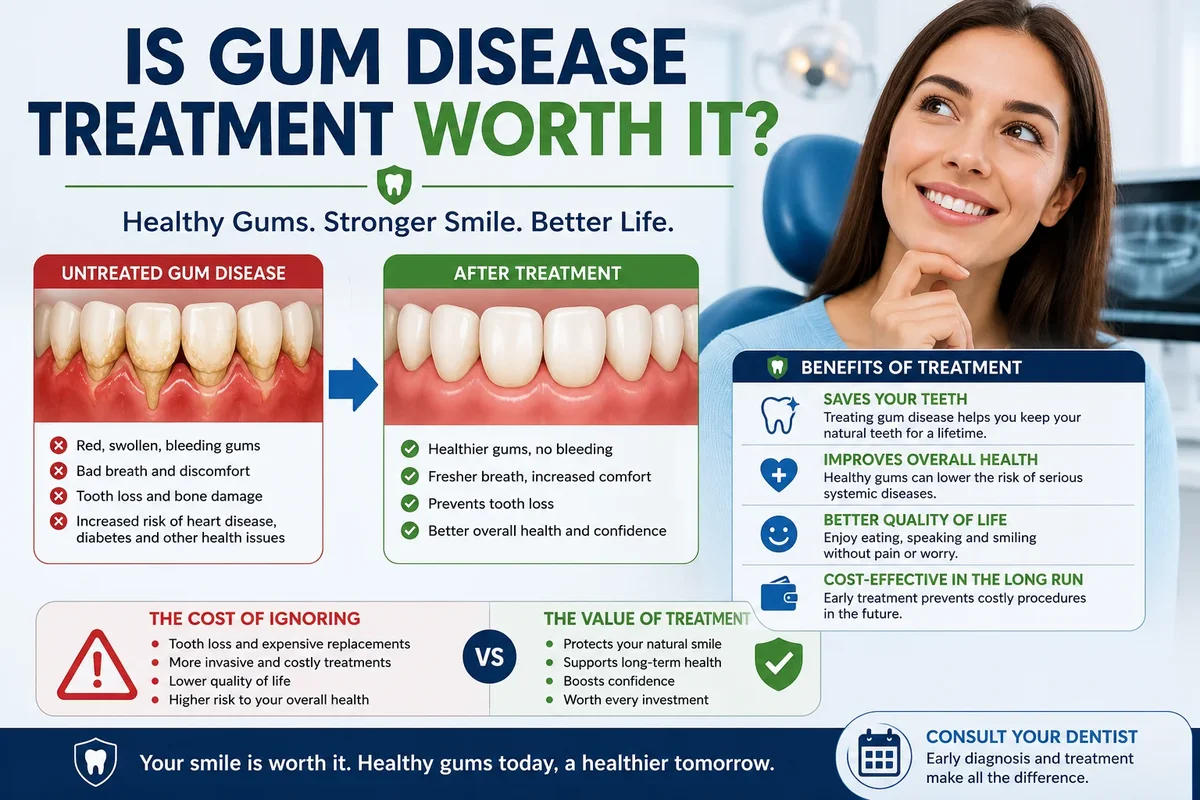
Is Gum Disease Treatment Worth It for Long-Term Results?
Direct answer: Gum disease treatment is often worthwhile over the long term when it controls active inflammation, protects the remaining support around the teeth, and is followed by consistent maintenance. It should not be viewed as a one-time procedure that permanently removes every future risk. When asking is gum disease treatment worth it, compare the likely benefit of healthier, more stable gums with the cost of treatment, ongoing reviews, the possibility of recurrence, and the consequences of allowing active disease to progress.
Long-term value depends on your starting point. Early gingivitis may require professional cleaning, improved plaque control, and follow-up. Periodontitis may require scaling and root planing, reassessment, possible surgery, and more frequent periodontal maintenance. In either case, is gum disease treatment worth it depends on whether the plan matches the diagnosis and whether you can maintain the result at home and through professional appointments.
Is Gum Disease Treatment Worth It If the Condition Can Return?
Gum disease can become active again, particularly when plaque accumulates, maintenance visits are missed, smoking continues, or health conditions affecting healing are not well controlled. Recurrence does not automatically mean the original treatment had no value. Periodontal disease often requires ongoing management, and the aim may be to keep the condition stable rather than promise a permanent cure.
For that reason, is gum disease treatment worth it should be judged by measurable outcomes. Useful signs may include less bleeding, reduced swelling, shallower or stable periodontal pockets, easier cleaning, improved comfort, and teeth that remain functional. Ask your dentist what a realistic successful result would look like in your case and when it will be assessed.
If inflammation repeatedly returns, ask the dental team to investigate possible causes. Difficult tooth positions, rough or overhanging restorations, smoking, dry mouth, diabetes, and ineffective interdental cleaning may all affect stability. Reviewing these factors can change the answer to is gum disease treatment worth it because a better maintenance strategy may improve the value of the care already provided.
How Maintenance Affects Long-Term Value
Periodontal maintenance may involve checking pocket depths, recording bleeding, monitoring tooth movement, removing deposits, and reviewing home-care techniques. The recommended interval varies according to disease severity, plaque levels, smoking status, medical history, and response to treatment. Some patients need closer follow-up than others. This is why the question is gum disease treatment worth it must include the time and cost of professional maintenance, not only the initial procedure.
When deciding is gum disease treatment worth it, ask how often maintenance is likely to be needed and whether those visits are included in the treatment estimate. An initial fee may seem manageable while the continuing costs remain unclear. Final prices cannot be guaranteed before examination and planning, and future needs may change according to your response. A fair decision should include both active treatment and the likely cost of maintaining the result. Without that complete estimate, is gum disease treatment worth it may be judged on an unrealistically low figure.
Make Sure the Plan Fits Your Daily Routine
A technically appropriate treatment may offer limited long-term value if the aftercare is too difficult to follow. Consider whether you can brush effectively, clean between the teeth, attend reviews, and follow relevant advice about tobacco use or medical care. If arthritis, reduced dexterity, sensitivity, anxiety, work, travel, or budget creates a barrier, discuss it before treatment begins. When asking is gum disease treatment worth it, a plan you can maintain is generally more useful than a demanding plan you are unlikely to complete.
This practical point is central to is gum disease treatment worth it. You do not need perfect habits, but you need a routine that is realistic. Ask the dental team to demonstrate suitable interdental brushes, flossing aids, or other tools and confirm that you can use them comfortably. The most expensive product is not automatically the best; consistent and correct use matters more.
Is Gum Disease Treatment Worth It for Preserving Natural Teeth?
Preserving natural teeth can provide important functional value, but treatment should not be continued at any cost when a tooth has a very poor prognosis. One tooth may retain enough support to remain useful after periodontal care, while another may have severe mobility, extensive bone loss, root damage, or another problem that limits the likely benefit. Therefore, is gum disease treatment worth it may have a different answer for each tooth.
Ask for a tooth-by-tooth prognosis. Find out which teeth have a favorable, uncertain, or poor outlook and what each recommended procedure is intended to achieve. A realistic aim may be to reduce inflammation, improve comfort, make cleaning easier, slow further deterioration, or preserve function for longer. Treatment should not be presented as a guarantee that every tooth will be saved. In this context, is gum disease treatment worth it means deciding whether the likely period of useful function justifies the procedure and maintenance required.
If extraction is suggested, compare the complete alternatives rather than only the extraction fee. Implants, bridges, and dentures may involve healing time, additional procedures, ongoing cleaning, repairs, and future maintenance. The answer to is gum disease treatment worth it becomes clearer when the likely lifespan, cost, risks, and maintenance requirements of preserving a tooth are compared with the full replacement pathway.
How to Check Whether Treatment Is Still Providing Value
Do not rely only on whether the gums feel better. Periodontitis can progress with limited pain, and reduced discomfort does not necessarily confirm stability. At reassessment, ask the dentist to compare pocket measurements, bleeding, plaque levels, recession, tooth mobility, and relevant X-ray findings where appropriate. A reliable answer to is gum disease treatment worth it should be supported by these changes rather than by reassurance alone.
When reviewing is gum disease treatment worth it after initial care, check whether the agreed goals are being met. If bleeding has reduced and the tissues are stable, maintenance may offer reasonable value. If several areas remain active, ask why, what further options are available, and whether the prognosis has changed. Additional treatment should have a clear purpose rather than being recommended automatically.
A second opinion may be helpful when repeated procedures are proposed without measurable improvement, when several teeth have uncertain prognoses, or when both surgery and extraction are being considered. This does not guarantee a different answer, but it can help you judge whether is gum disease treatment worth it based on a balanced comparison of likely benefit, cost, recovery, and long-term maintenance.
Is Gum Disease Treatment Worth It at Any Age?
Age alone does not determine whether periodontal care is suitable. Older adults may value comfortable chewing and the preservation of maintainable teeth, while younger patients may benefit from acting before further support is lost. General health, medication, healing capacity, dexterity, and personal priorities often matter more than age by itself.
To decide is gum disease treatment worth it at your stage of life, explain your wider health needs and goals. Comprehensive treatment may be appropriate for some patients. For others, a limited plan focused on comfort, infection control, and teeth that can be maintained may be more suitable. The plan should respect your preferences while clearly explaining the risks of delaying or declining care. This makes is gum disease treatment worth it a personal health decision rather than a decision based on age alone.
What to Check Before Making a Long-Term Commitment
Online guidance cannot measure periodontal pockets, assess bone support, or determine the prognosis of individual teeth. A personalized evaluation at Redent Klinik can help you compare active treatment, maintenance, monitoring, extraction, and replacement options. You can request an assessment through the Redent Klinik Contact Page. Estimated costs should be provided after examination and treatment planning rather than treated as guaranteed figures. This personalized evidence is the safest basis for deciding is gum disease treatment worth it in your circumstances.
Before proceeding, confirm whether the disease is active, what each procedure is expected to achieve, how improvement will be measured, how frequently maintenance may be required, and what could happen if you wait. Check whether the plan fits your health, daily routine, appointment availability, and budget. These questions help you decide is gum disease treatment worth it using information from your own examination rather than a general promise.
Request professional advice if bleeding, swelling, recession, persistent bad breath, loose teeth, new spaces, bite changes, or discomfort while chewing continues. Seek urgent dental care for rapidly increasing facial swelling, fever with dental symptoms, uncontrolled bleeding, difficulty swallowing, or difficulty breathing. Ultimately, is gum disease treatment worth it over the long term when the expected benefits are realistic, the treated teeth have a reasonable prognosis, and the maintenance plan is practical for you.
Disclosure: this page may contain affiliate links. We may earn a commission if you use them, at no extra cost to you.