
Imagine improving your smile while you rest peacefully every night 😴. That’s exactly what nighttime aligners make possible. These innovative dental devices are transforming the way people achieve straight teeth — offering a discreet, comfortable, and time-efficient solution for modern lifestyles. Designed to be worn primarily during sleep, nighttime aligners gently shift your teeth into the correct position without disrupting your daily routine. Whether you’re a busy professional, student, or parent, this approach provides the orthodontic correction you want with unmatched convenience.
Unlike traditional braces or even full-day clear aligners, nighttime systems allow users to enjoy daytime freedom. You can eat, drink, and speak normally during the day, avoiding the social or functional inconveniences that come with constant aligner wear. But how do they work exactly, and who are they best suited for? Let’s explore everything you need to know before starting your journey with nighttime aligners.
How Nighttime Aligners Work While You Sleep
Nighttime aligners apply consistent but gentle pressure to your teeth for 8–10 hours while you sleep. This is enough to stimulate gradual bone remodeling — the biological process that allows teeth to move. Most aligners are made from durable BPA-free plastic designed for optimal retention and minimal discomfort. Each set is custom-made using 3D scans of your mouth, ensuring a snug fit that effectively guides your teeth toward the desired alignment.
Because they are worn only at night, the daily wear time is reduced compared to standard 22-hour aligners. However, modern materials and advanced orthodontic mapping software have significantly improved their efficiency. Many brands now use special high-torque plastics that deliver effective tooth movement even with limited wear time, meaning you can see noticeable results in as little as 6–10 months depending on your case complexity.
The Science Behind the Smile
Orthodontic tooth movement relies on controlled force. With nighttime aligners, this force is precisely calibrated for night wear, taking into account factors such as saliva flow, temperature, and muscle relaxation during sleep. Since your jaw is less active at night, these aligners can focus their energy more effectively on tooth repositioning. It’s a modern blend of dental science and convenience — ideal for people who want visible improvements without changing their daily habits.
Comfort and Aesthetics Combined 🌙
Traditional braces can cause mouth irritation, difficulty eating, and self-consciousness. Nighttime aligners, on the other hand, are practically invisible and painless. They eliminate metal brackets and wires entirely, meaning no unexpected tightening appointments or emergency visits for broken components. Many users report adapting to the aligners within just a few nights, experiencing minimal discomfort and no disruption to sleep.
Additionally, because these aligners are removable, oral hygiene becomes easier. You can brush and floss as usual, reducing the risk of plaque buildup or gum irritation that often accompanies fixed braces. Plus, since aligners are taken out during meals, there are no restrictions on what you can eat 🍎 — you can still enjoy your favorite crunchy or sticky foods without worry.
Who Can Benefit From Nighttime Aligners?
While nighttime aligners are an incredible option for many, they aren’t suitable for everyone. They are most effective for mild to moderate orthodontic cases — such as minor crowding, spacing, or bite issues. If you have severe misalignment or jaw discrepancies, a full-time aligner or traditional braces might be necessary. Consulting a professional orthodontist is the best way to determine your eligibility. You can contact trusted clinics like Redent Klinik Contact Page for a personalized assessment and digital scan to find out if you’re a candidate.
Cost and Value Considerations
Pricing for nighttime aligners varies based on provider, region, and treatment complexity. In general, nighttime options can be slightly less expensive than full-time aligners because fewer materials and adjustments are required. On average, the treatment cost ranges from $1,000 to $2,500, making it an affordable way to achieve a confident smile. For the most accurate and ethical pricing standards, refer to professional organizations like the American Dental Association for guidelines and best practices.
Long-Term Results and Maintenance
Once your treatment is complete, retainers are typically recommended to maintain your new smile. Consistent post-treatment care ensures your teeth remain in their corrected positions, preventing relapse. Regular dental checkups and proper hygiene habits will keep your results stable for years to come. Many users find that after experiencing the benefits of nighttime aligners, they become more motivated to maintain good oral health overall.
Final Thoughts 🌟
Nighttime aligners represent a revolutionary shift in orthodontics — a smart, modern approach that respects your time, comfort, and lifestyle. They combine the science of gentle tooth movement with the convenience of nighttime wear, helping thousands of people achieve straighter smiles without daytime hassle. If you’ve been delaying orthodontic treatment because of your busy schedule or cosmetic concerns, nighttime solutions could be the perfect fit for you. With professional guidance and consistent use, your dream smile might be just a few nights away!
What Are Nighttime Aligners and How Do They Work?
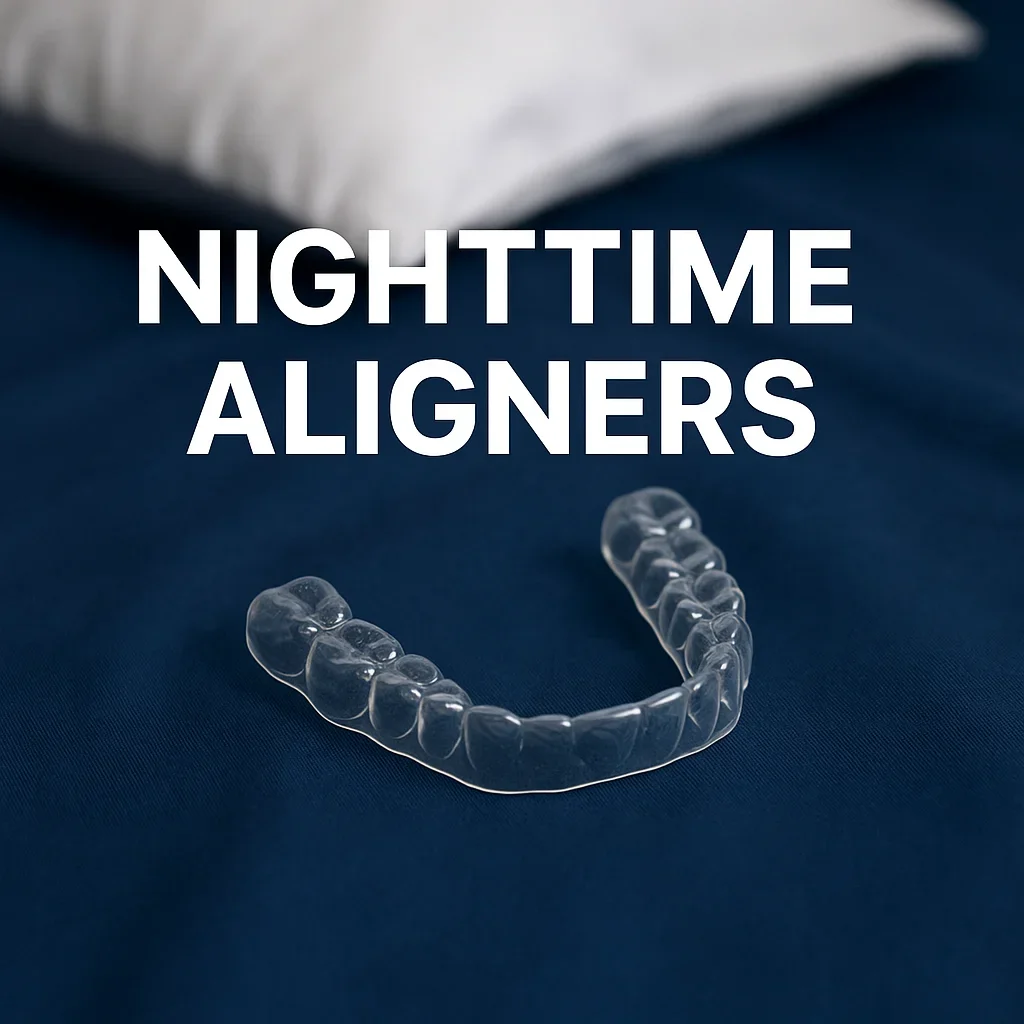
Nighttime aligners are clear, removable orthodontic devices specifically designed to straighten teeth while you sleep 🌙. Unlike traditional braces or daytime aligners that must be worn for 20–22 hours a day, these advanced systems are intended for nighttime use only — usually between 8 and 10 hours per night. Their purpose is to gently and consistently move teeth into optimal alignment over time without interrupting your daytime activities, making them an appealing option for busy adults and professionals who want a discreet and flexible treatment plan.
Understanding the Core Concept of Nighttime Aligners
At the heart of nighttime aligners lies the principle of gradual, controlled pressure. Each aligner tray is custom-designed based on a 3D digital scan of the patient’s mouth. Orthodontic software then maps the exact tooth movements required at every stage of the treatment. This data ensures that each set of aligners moves the teeth fractionally closer to their ideal position. The process continues with a new set of aligners every few weeks until the desired alignment is achieved.
Most nighttime aligners are made from medical-grade, BPA-free thermoplastic that is both flexible and durable. They are engineered to deliver a slightly higher corrective force during shorter wear periods compared to daytime aligners. This allows effective tooth movement despite being worn fewer hours daily. It’s an impressive balance of biology, technology, and design — delivering efficiency without compromising comfort.
The Science Behind Nighttime Teeth Movement
Orthodontic tooth movement occurs through a natural biological process called bone remodeling. When pressure is applied to a tooth, bone tissue breaks down on one side and rebuilds on the other, allowing the tooth to shift gradually. Nighttime aligners capitalize on this principle, using consistent nocturnal pressure to promote this remodeling process efficiently. While you sleep, your jaw muscles are relaxed, and your teeth are more receptive to subtle movements. The aligners take advantage of this calm state to produce results with minimal resistance or discomfort.
Why Nighttime Aligners Work So Well During Sleep
During the night, saliva production decreases, and oral temperature stabilizes — two factors that actually improve aligner adherence and performance. Less movement of the jaw and tongue means less interference with the aligners’ positioning. The consistent fit ensures steady pressure on the teeth throughout the night, optimizing the biological response needed for effective movement. This is why consistent nightly use is crucial for the success of nighttime aligners.
Step-by-Step: The Treatment Process
The journey toward a straighter smile with nighttime aligners begins with an initial consultation, either in-clinic or through an online provider. Here’s a simplified breakdown of the process:
- Digital Scanning or Impressions: A detailed 3D image of your teeth is captured using advanced intraoral scanners or impression kits.
- Treatment Planning: Orthodontists analyze your case and design a custom treatment plan using predictive software.
- Aligner Fabrication: Each aligner is precision-cut and crafted to move your teeth incrementally over time.
- Nightly Wear: You’ll wear your aligners for 8–10 hours per night. Most users change to the next set every 2–3 weeks.
- Progress Monitoring: Many modern systems use remote tracking apps or periodic dental visits to ensure your teeth are moving as planned.
- Completion and Retention: After finishing the active phase, retainers are recommended to maintain results and prevent shifting.
This step-by-step approach ensures predictable, safe, and comfortable progress — with visible changes typically appearing within a few months. For mild alignment issues, some users report noticeable improvements in as little as 10–12 weeks.
Comparing Nighttime Aligners to Other Options
To understand the true value of nighttime aligners, it’s essential to compare them with traditional orthodontic methods. Unlike braces, there are no metal components, tightening sessions, or dietary restrictions. You can remove them at will, maintaining full control over your treatment experience. Compared to full-time clear aligners, the nighttime option offers enhanced convenience — perfect for individuals with unpredictable schedules or those uncomfortable wearing aligners during the day.
However, it’s important to acknowledge that because they are worn fewer hours per day, treatment duration may be slightly longer compared to full-day systems. This trade-off is often considered worthwhile by users who prioritize lifestyle flexibility over speed.
Advantages of Choosing Nighttime Aligners 🌟
- Discreet and Convenient: Aligners are virtually invisible and worn only at night — no one needs to know you’re undergoing orthodontic treatment.
- Comfortable Fit: Each aligner is custom-made to your teeth, ensuring a smooth and irritation-free experience.
- Easy Oral Hygiene: You can remove aligners before brushing and flossing, maintaining a clean and healthy mouth.
- Less Daytime Restriction: Enjoy full flexibility during work, sports, or social activities without aligner interference.
- Predictable Results: AI-driven planning and orthodontic oversight ensure precise outcomes when used as directed.
Who Can Benefit the Most?
Nighttime aligners are best suited for individuals with mild to moderate alignment concerns — such as slight crowding, spacing, or rotated teeth. They’re also ideal for those who have previously worn braces and experienced minor relapse. People with demanding schedules, frequent public interactions, or sensitivity to long-term aligner wear often find this method the most practical. To determine eligibility, consulting a certified clinic like Redent Klinik Contact Page ensures a professional assessment tailored to your dental profile.
How Long Does It Take to See Results?
Results with nighttime aligners depend on case complexity and treatment compliance. On average, treatments last between 6 and 12 months, although minor cases may resolve faster. The key is consistency — skipping nights can delay progress significantly. Adhering strictly to your prescribed wear time maximizes the biological response and ensures efficient tooth movement. Advanced aligner systems now integrate treatment tracking apps, allowing users to visualize their progress in real time 📱.
Key Takeaway
Nighttime aligners combine modern orthodontic science with lifestyle flexibility. They are an intelligent, comfortable, and discreet solution for those who value convenience without compromising results. Whether you’re preparing for an important event, managing a busy career, or simply seeking a more confident smile, this nighttime solution offers a scientifically backed way to achieve your goals — while you sleep soundly each night.
Benefits of Using Nighttime Aligners for Busy Adults
For adults juggling work, family, and personal commitments, finding time for orthodontic care can feel impossible. That’s where nighttime aligners come in — offering a flexible, modern, and stress-free way to achieve a straighter smile without disrupting your busy lifestyle 🌙. These aligners are designed to be worn only while you sleep, allowing you to continue your daily activities without the visibility, discomfort, or maintenance required by traditional braces. Let’s explore in depth the many advantages of using nighttime aligners for adults seeking convenience, comfort, and confidence.
1. Convenience That Fits Your Lifestyle
One of the most significant advantages of nighttime aligners is the convenience they offer. Adults often hesitate to start orthodontic treatment because of the time commitment and visible nature of braces. However, with nighttime systems, your aligners work while you rest — meaning no interruptions to meetings, meals, or social events. You simply wear them for 8–10 hours during sleep and remove them in the morning, making them the ideal solution for those with fast-paced or unpredictable schedules.
This nighttime-only wear schedule is particularly appealing for individuals in professional environments where aesthetics matter. Because the treatment is invisible during the day, no one will know you’re undergoing orthodontic correction. This “invisible advantage” is a major psychological boost for adults who value confidence in public interactions.
2. Comfort and Adaptability 🌟
Nighttime aligners are engineered using smooth, medical-grade thermoplastic that’s customized to your teeth. The material is designed to apply gentle yet consistent pressure, minimizing soreness or gum irritation. Compared to traditional metal braces, there are no wires or brackets to cause cuts or discomfort. The aligners adapt to your oral structure seamlessly, so after just a few nights, most users report forgetting they’re even wearing them.
Another comfort benefit is that nighttime aligners avoid the dryness or tightness that sometimes occurs with full-day wear. Since your mouth naturally rests at night and movements are minimal, the aligners stay stable and effective without significant friction or displacement. This makes the treatment more sustainable and pleasant long-term.
3. Preserving Daily Freedom and Confidence
Unlike braces or 24-hour aligners, nighttime aligners don’t interfere with eating, drinking, or speaking during the day. You can enjoy coffee, lunch with colleagues, or a workout session without worrying about removing or cleaning aligners in public. This enhances self-confidence and convenience — two essential factors for adults managing active lifestyles.
Furthermore, since aligners are taken out before meals, you avoid the food restrictions that typically come with orthodontic appliances. Sticky candies, crunchy snacks, or hard fruits like apples 🍎 can be enjoyed freely. This dietary freedom makes nighttime aligners a sustainable treatment option that doesn’t compromise your quality of life.
4. Enhanced Oral Hygiene and Health
Because nighttime aligners are removable, maintaining excellent oral hygiene is simple. You can brush and floss normally without worrying about trapped food particles or plaque buildup — a common issue with metal braces. This helps reduce the risk of cavities, gum inflammation, and bad breath throughout your treatment.
Why Hygiene Matters More for Adults
As adults age, gum and bone health become even more critical. Clear aligner systems like nighttime aligners reduce bacterial accumulation and allow for thorough cleaning routines. Moreover, many aligner brands offer cleaning crystals or ultrasonic cleaners that help keep trays fresh and odor-free. These small but important advantages ensure that your journey toward a perfect smile also supports long-term oral wellness.
5. Ideal for Professionals and Parents
Adults often delay orthodontic care because of career or parenting responsibilities. Nighttime aligners eliminate the need for frequent in-office visits, allowing for remote progress tracking through digital apps. For parents, this means more time for family. For professionals, it means fewer interruptions to work schedules. In most cases, dental visits are only required every few months for progress checks or new aligner sets.
Additionally, nighttime systems are nearly invisible and entirely private — perfect for individuals who prefer discretion in their dental care. Whether you’re giving a presentation, attending an event, or on a video call, your smile remains natural and confident throughout the day.
6. Cost-Effective and Time-Saving Solution
When compared with traditional braces or full-day aligner treatments, nighttime aligners are often more cost-efficient. Because they require fewer appointments and less chair time, overall treatment costs may be lower. Many clinics also offer installment plans to make them more accessible. Time savings are another major benefit — no more long orthodontic visits for tightening wires or adjustments.
Most adults appreciate that they can complete treatment discreetly while continuing their careers and family life uninterrupted. The value of convenience often outweighs the slightly longer treatment duration. Furthermore, you can consult professionals like Redent Klinik Contact Page for affordable, customized treatment plans designed around your lifestyle and needs.
7. Improved Sleep and Comfort-Driven Design 😴
Because they’re designed to be worn during rest, nighttime aligners are shaped to minimize interference with breathing and jaw positioning. The smooth edges and ergonomic contours prevent tongue irritation and support a relaxed jaw alignment. Many patients report that the aligners feel natural after a short adjustment period, and some even experience improved sleep quality because of the consistent mouth positioning the trays provide.
8. Self-Confidence and Emotional Benefits
Orthodontic treatments can have profound psychological effects, especially for adults who have been self-conscious about their teeth for years. Nighttime aligners allow you to transform your smile discreetly, leading to greater self-esteem and comfort in social situations. The transformation often motivates users to smile more — which in turn boosts mood, approachability, and perceived confidence. A beautiful smile can positively influence both personal relationships and professional opportunities.
9. Long-Term Oral Health and Alignment Stability
Aside from aesthetic appeal, nighttime aligners contribute to long-term oral health. Properly aligned teeth are easier to clean, less prone to cavities, and reduce strain on jaw muscles. Misaligned teeth, on the other hand, can cause uneven wear and even TMJ discomfort over time. By correcting these issues early with nighttime treatment, adults can avoid future dental complications and costly procedures.
Final Thoughts: A Smarter Way to Straighten Your Smile
In today’s fast-paced world, nighttime aligners represent a revolutionary orthodontic solution for adults who value efficiency, comfort, and discretion. They offer all the benefits of modern orthodontic science without the inconveniences of traditional braces or full-time aligners. Whether you’re a business professional, parent, or traveler, this technology empowers you to take control of your smile — while you sleep. With expert guidance and consistent use, you can achieve a naturally aligned, confident smile that enhances both your appearance and your quality of life 🌟.
Nighttime Aligners vs Traditional Braces: Which Is Better?
When it comes to achieving a perfectly aligned smile, modern dentistry offers more choices than ever before. The debate between nighttime aligners and traditional braces continues to shape how people choose their orthodontic treatments. Both methods have their strengths, but they cater to different lifestyles, comfort levels, and aesthetic priorities. Understanding how nighttime aligners compare to metal braces will help you make a confident, informed decision about your oral health journey 🌟.
1. Understanding the Basics
Before diving into the comparison, it’s important to understand what each system involves. Nighttime aligners are transparent, removable trays designed to gradually shift teeth into alignment — worn only at night, typically for 8–10 hours. Traditional braces, on the other hand, involve metal brackets and wires attached to the teeth, adjusted periodically by an orthodontist to guide tooth movement. While braces have been used for decades with proven results, nighttime aligners bring a new era of convenience and discretion that appeals strongly to adult users.
2. Aesthetics and Confidence 🌙
One of the primary reasons adults and professionals choose nighttime aligners is appearance. Clear aligners are virtually invisible, offering a discreet orthodontic option that doesn’t draw attention. Since they’re worn only during sleep, you can go about your day without anyone noticing that you’re undergoing treatment. Braces, however, are highly visible and can affect self-esteem, especially in social or professional settings.
For people in public-facing careers, such as teachers, actors, or business professionals, the confidence boost from invisible orthodontics is invaluable. Nighttime aligners make it possible to smile freely and maintain your natural appearance throughout treatment.
3. Comfort and Pain Levels
Comfort is another major differentiator between the two options. Traditional braces can cause mouth irritation due to metal brackets rubbing against the inner cheeks and lips. Tightening appointments may also cause temporary soreness or headaches. In contrast, nighttime aligners are made from smooth, BPA-free thermoplastic that fits snugly around your teeth without wires or sharp edges. They apply gentle, controlled pressure to move teeth gradually, minimizing discomfort and gum sensitivity.
Why Comfort Matters for Compliance
Successful orthodontic treatment depends heavily on patient compliance. If the treatment feels painful or inconvenient, patients may struggle to stay consistent. Nighttime aligners encourage compliance because they are easy to wear, remove, and maintain — making them ideal for individuals who prioritize comfort and flexibility in their routine.
4. Hygiene and Oral Health Advantages
When it comes to oral hygiene, nighttime aligners have a clear advantage. They can be removed for brushing, flossing, and eating, allowing you to maintain a cleaner, healthier mouth. With braces, food particles often get trapped around brackets and wires, increasing the risk of plaque buildup, gum inflammation, and staining. Maintaining dental hygiene with braces requires meticulous effort and special tools such as interdental brushes or floss threaders.
By contrast, nighttime aligners simplify your hygiene routine — just remove them before meals and clean them afterward with a toothbrush or specialized cleaning solution. This convenience leads to better gum health and fresher breath throughout treatment.
5. Dietary Freedom 🍎
One of the biggest frustrations with traditional braces is the long list of food restrictions. Hard, sticky, or crunchy foods — like popcorn, caramel, or apples — can damage brackets or wires. Nighttime aligners eliminate this issue entirely. Since they’re removed before eating, you can enjoy any food you like without fear of damage or discomfort. This makes your orthodontic journey more enjoyable and sustainable in the long run.
6. Treatment Duration and Effectiveness
Effectiveness and duration vary based on the complexity of your case. Traditional braces are typically worn 18–36 months and can correct even severe misalignments or bite problems. Nighttime aligners, while highly effective for mild to moderate cases, are worn fewer hours per day — around 8–10 instead of 22 — which can extend overall treatment time slightly.
However, advances in dental technology have allowed modern nighttime aligners to achieve comparable results in less time for suitable cases. New materials apply optimized pressure that accelerates tooth movement, often producing visible results within just a few months. For adults seeking subtle corrections, they can be as effective as braces but far more convenient.
Who Should Choose Which Option?
- Nighttime Aligners: Best for mild to moderate crowding, spacing, or alignment issues. Ideal for busy adults or professionals who value discretion and flexibility.
- Traditional Braces: Recommended for severe misalignment, bite correction, or complex jaw issues that require continuous force.
7. Cost Considerations
In general, nighttime aligners tend to cost less than traditional braces due to fewer office visits and reduced treatment complexity. Braces often require frequent adjustments, X-rays, and orthodontic checkups, which can raise the total cost over time. On average, nighttime systems range from $1,000 to $2,500, while braces can cost between $3,000 and $7,000 depending on the case.
Of course, prices vary based on geography and provider. For a professional evaluation and transparent cost breakdown, you can reach out to trusted specialists through Redent Klinik Contact Page. They can help you determine the most cost-effective treatment for your smile goals.
8. Maintenance and Adjustments
Maintenance for nighttime aligners is simple. You clean them daily with mild soap or aligner-cleaning crystals and replace them every 2–3 weeks as your teeth shift. There’s no need for wire adjustments or emergency visits for broken brackets. Braces, however, require frequent checkups and manual tightening to maintain progress. They may also cause minor emergencies, such as loose wires or popped brackets, which require additional dental visits.
9. Lifestyle Compatibility
For adults with demanding schedules, nighttime aligners are significantly more lifestyle-friendly. They don’t interfere with sports, musical instruments, or professional appearances. Braces, by contrast, may pose difficulties in these areas — metal brackets can cause injuries during contact sports or discomfort when playing wind instruments. Aligners can simply be removed during such activities, allowing complete freedom and flexibility.
10. A Balanced Verdict 🌟
Both orthodontic options have their rightful place in modern dentistry. Traditional braces remain the gold standard for complex dental corrections, offering unmatched precision for severe alignment and bite cases. However, nighttime aligners are the clear winner when it comes to aesthetics, comfort, and convenience for everyday adult use. They empower individuals to achieve a beautiful smile discreetly and comfortably, aligning perfectly with the demands of contemporary lifestyles.
Ultimately, the “better” option depends on your goals, dental condition, and personal priorities. Consulting a qualified professional ensures you choose the right path for your smile transformation. You can also explore credible guidelines and recommendations on orthodontic practices from the American Dental Association to help inform your decision. Whether you prefer the tried-and-true reliability of braces or the modern convenience of nighttime aligners, both lead toward one shared goal — a confident, radiant smile that lasts a lifetime 😊.
How Long Do You Need to Wear Nighttime Aligners?
One of the most common questions among patients considering nighttime aligners is: “How long will it take to see results?” While the answer depends on various factors — including tooth movement goals, initial alignment, and compliance — the good news is that modern orthodontic technology has made the process faster and more predictable than ever before. On average, most patients complete their nighttime aligners treatment in 6 to 12 months. However, understanding the science and variables behind this timeline helps set realistic expectations and ensures long-term success 🌙.
1. Average Duration of Treatment
Typically, patients wear nighttime aligners for 8 to 10 hours each night, over a total treatment period ranging from half a year to a full year. The exact duration depends on how complex the case is. Mild crowding or spacing issues may take only 4–6 months, while moderate misalignment can extend the process up to 12–15 months. The key to faster results lies in consistent use — skipping even a few nights can delay your progress and add weeks to the timeline.
Unlike traditional braces, which require full-day wear and frequent orthodontic visits, nighttime aligners work quietly while you sleep. This reduced wear time makes them an attractive choice for adults with hectic schedules who prefer a hands-off approach to dental care. The result? A beautifully aligned smile achieved with minimal disruption to daily life.
2. Factors That Influence Treatment Length
There’s no one-size-fits-all answer when it comes to nighttime aligners treatment time. Several factors influence how long your journey will take:
- Severity of Misalignment: The more your teeth need to move, the longer the treatment duration.
- Consistency of Wear: Skipping nights or wearing aligners for fewer than 8 hours significantly slows progress.
- Age and Bone Density: Younger patients may experience slightly faster movement due to higher bone adaptability.
- Aligner Material and Design: Newer aligners use advanced polymers that deliver steady, optimized pressure, accelerating tooth movement.
- Biological Response: Each person’s bone remodeling process differs. Genetics and metabolism play subtle but meaningful roles.
By combining consistent nightly wear with professional guidance, most users find nighttime aligners highly effective and efficient. Following your orthodontist’s recommendations and staying diligent are the surest ways to stay on schedule.
3. The Importance of Consistent Wear ⏰
With nighttime aligners, consistency is everything. Since they are worn for shorter daily periods compared to 22-hour aligner systems, maintaining every night’s usage is critical. Missing even two or three nights in a row can cause teeth to shift slightly back to their original positions. This not only disrupts the current stage of alignment but can also make the next aligner tray feel uncomfortable or less effective.
Most dental professionals recommend building a simple bedtime routine to make wearing your aligners a habit — brush, floss, insert your aligners, and head to sleep. Treating this as part of your nightly ritual ensures continuous progress and minimizes the risk of setbacks.
Tracking Your Progress
Many aligner systems now include mobile apps or digital tracking platforms that remind you when to wear or change trays. This technology empowers patients to stay accountable while providing orthodontists with valuable data on compliance and effectiveness. Some systems even allow users to upload smile photos for remote progress monitoring — saving both time and in-person visits.
4. Comparing Treatment Speed: Nighttime vs Full-Time Aligners
While nighttime aligners offer unmatched convenience, they generally work at a slightly slower pace than full-time aligners. This is because full-day systems apply force for roughly twice as long per day. However, the difference in total treatment time is often minimal when users follow instructions diligently.
For mild cases, the difference between full-day and nighttime systems might be just one or two extra months. Considering the lifestyle benefits of nighttime-only wear — such as freedom during meals and meetings — many adults find this small trade-off entirely worthwhile. Furthermore, ongoing research and new aligner materials continue to narrow this time gap, making modern nighttime aligners nearly as efficient as full-time systems for suitable cases.
5. How Treatment Progress Is Monitored
Your orthodontist will typically review your progress every few months, either through in-person checkups or digital evaluations. During these sessions, your provider ensures that your teeth are tracking properly with the treatment plan. Adjustments may be made if certain teeth lag behind schedule. In some cases, refinements — additional sets of nighttime aligners — are prescribed to perfect your alignment after the main phase is complete.
These refinements are completely normal and part of the precision process that ensures your final results are symmetrical and stable. Regular communication with your provider helps prevent delays and ensures that any minor issues are corrected promptly.
6. Retention: Maintaining Your New Smile
Once your treatment with nighttime aligners is finished, it’s essential to preserve the results. Just like after braces, you’ll need to wear a retainer — usually a similar transparent tray — a few nights per week to keep your teeth from shifting back. This maintenance phase is crucial, especially in the first six months after completing treatment when the bone and ligaments are still adapting to their new positions.
Why Retainers Matter
Teeth have a natural tendency to move over time, a process known as orthodontic relapse. Wearing a retainer protects your investment by holding your new alignment steady. Most retainers are lightweight, comfortable, and barely noticeable — continuing the discreet, effortless experience that nighttime aligners provide.
7. Tips for Faster and More Effective Results
- Stay Consistent: Never skip a night — aim for at least 8 hours of wear.
- Maintain Good Oral Hygiene: Clean teeth and aligners improve tracking and reduce friction.
- Follow Your Plan: Switch to new trays exactly as instructed by your orthodontist.
- Avoid Hot Water: Rinsing with hot water can warp aligners and alter their fit.
- Regular Check-ins: Use digital monitoring tools or visit your clinic for updates.
8. Personalized Timelines and Professional Advice
It’s important to remember that while general averages exist, every mouth is unique. Your exact nighttime aligners duration will be customized based on your anatomy and goals. For an accurate assessment, scheduling a professional evaluation at Redent Klinik Contact Page allows specialists to create a precise digital treatment timeline and discuss estimated completion dates. Personalized care ensures not just faster results but also a safer, more predictable orthodontic experience.
Final Thoughts: Patience Pays Off 🌟
In orthodontics, consistency and patience are key. While nighttime aligners work quietly in the background, every night of disciplined use brings you closer to your dream smile. Their blend of convenience, comfort, and science-backed effectiveness has redefined how adults approach teeth straightening. By committing to your prescribed schedule and maintaining good habits, you’ll not only shorten your treatment time but also ensure your results last a lifetime — all while sleeping peacefully each night.
Are Nighttime Aligners as Effective as Daytime Ones?
As nighttime aligners gain popularity among adults seeking discreet and convenient orthodontic treatment, one question naturally arises: are they as effective as full-time or daytime aligners? The short answer is yes — but with some important caveats. When used correctly and for the right cases, nighttime aligners can deliver results nearly identical to traditional 22-hour systems. However, understanding how they function, their limitations, and how effectiveness is measured will help you make an informed decision about which treatment is right for you 🌙.
1. The Science Behind Effectiveness
Orthodontic success depends on one fundamental principle: consistent, gentle pressure applied over time. Both daytime and nighttime aligners rely on this concept to move teeth through a biological process known as bone remodeling. The key difference lies in wear duration — while daytime aligners are worn 20–22 hours per day, nighttime systems are worn for only 8–10 hours. This shorter wear time means the aligners must be designed differently to apply more focused, efficient force without causing discomfort or damage.
Modern nighttime aligners use advanced polymers that maintain pressure for extended periods, even during shorter wear intervals. These materials are engineered to balance force and comfort, ensuring consistent movement while you sleep. They also feature precision-molded edges that maintain a tight fit, minimizing slippage and maximizing contact with teeth throughout the night.
2. Effectiveness for Different Levels of Misalignment
The effectiveness of nighttime aligners largely depends on the complexity of your dental case. They are ideal for mild to moderate issues such as:
- Minor crowding or spacing
- Small rotations or tilted teeth
- Post-braces relapse corrections
For severe orthodontic problems — such as major overbites, crossbites, or significant jaw misalignments — full-time aligners or braces are usually recommended. This is because complex tooth movement often requires longer, continuous force application that nighttime systems can’t fully replicate. In essence, nighttime aligners are equally effective within their designed scope, but not a universal solution for every case.
Expert Insight
Orthodontists emphasize that patient compliance plays a major role in effectiveness. If aligners are worn consistently for the prescribed 8–10 hours, results can be just as reliable as full-day systems. However, skipping nights or reducing wear time can delay progress. This is why providers stress commitment — the technology works, but only if you do too.
3. Material Technology and Design Advances
The modern success of nighttime aligners lies in innovation. Earlier aligner models struggled with maintaining consistent pressure throughout shorter wear times. Today, new multilayer materials — often combining flexible and rigid polymers — hold force longer, promoting efficient tooth movement during sleep. Some systems even incorporate temperature-sensitive materials that activate under body heat, ensuring optimal performance overnight.
Additionally, digital scanning and AI-based treatment planning have enhanced precision dramatically. With advanced mapping technology, orthodontists can predict how each tooth will move at every stage. This predictive accuracy makes nighttime aligners highly effective, even for moderate alignment corrections that once required traditional methods.
4. Speed of Results: How Do They Compare?
Since nighttime aligners are worn for fewer hours daily, their total treatment time may be slightly longer — usually by 2–4 months compared to full-time aligners. For example, if a daytime plan requires 8 months, the nighttime version might take 10 or 11 months. This modest trade-off in speed is often acceptable to patients who prioritize comfort, flexibility, and privacy over faster completion.
In other words, nighttime aligners don’t sacrifice results — they simply take a bit longer to achieve them. For many adults, that’s a small price to pay for an invisible, effortless treatment that fits perfectly into their lifestyle.
5. Comfort and Compliance Benefits 😴
Another measure of effectiveness is how consistently patients can follow through with treatment. With nighttime aligners, compliance tends to be higher because they’re easier to integrate into daily routines. There’s no need to manage aligners at work, during meals, or at social events. This convenience leads to better adherence, which in turn boosts overall effectiveness. A treatment that fits naturally into your life is one you’re more likely to complete successfully.
Comfort and Pressure Distribution
Nighttime systems apply higher, more targeted pressure over shorter durations. However, because this pressure is distributed evenly across the dental arch, it remains gentle and non-invasive. Most users report only slight tenderness in the first few nights, similar to what daytime aligner users experience after tray changes. Within a week, the sensation typically subsides as teeth begin to adapt.
6. Clinical Studies and Real-World Outcomes
Several recent studies confirm that nighttime aligners can achieve results comparable to 22-hour systems in suitable cases. A 2023 review published by orthodontic researchers found no significant difference in treatment success rates for mild to moderate malocclusion patients when compliance was maintained. The findings indicate that treatment predictability — not wear duration alone — is the most critical factor in outcome success.
Real-world testimonials mirror these findings. Patients often praise the convenience and comfort of nighttime aligners, reporting steady progress and satisfaction with their final results. Orthodontists also note high retention rates and strong post-treatment stability when patients follow their retainer schedules after completion.
7. Limitations to Keep in Mind
Despite their advantages, it’s important to understand that nighttime aligners aren’t suitable for everyone. Complex cases involving bite correction or significant crowding may require continuous daytime wear. Also, because nighttime trays exert stronger pressure for shorter durations, some users experience mild soreness initially. Fortunately, these sensations typically fade within a few days.
Another factor is lifestyle. Patients who work irregular shifts or have sleep disruptions may find it harder to maintain consistent nightly use. In such cases, daytime aligners could provide better control and predictability. Consulting a professional clinic, such as Redent Klinik Contact Page, ensures a thorough evaluation and a treatment plan that matches your needs perfectly.
8. Durability and Maintenance
Because nighttime aligners are worn fewer hours, they tend to last slightly longer before showing wear or discoloration. However, cleaning them regularly with approved solutions is essential to preserve clarity and hygiene. Avoid using hot water or harsh detergents, as these can distort the aligners and compromise their fit.
9. Professional Endorsements and Guidelines
The American Dental Association and similar professional organizations emphasize that clear aligner treatments — including nighttime systems — can be highly effective when overseen by a qualified dental professional. Orthodontic supervision ensures that the treatment progresses safely and that results are long-lasting. Self-managed or “mail-order” systems without professional oversight, however, carry a higher risk of uneven or incomplete results.
Final Thoughts: Choosing What Works Best for You 🌟
When used correctly and under professional guidance, nighttime aligners can be just as effective as daytime ones for mild to moderate orthodontic cases. They combine cutting-edge materials, scientific precision, and comfort-driven design to help you achieve the smile you’ve always wanted — all while fitting perfectly into your nightly routine. While they may take slightly longer to complete treatment, the convenience, discretion, and lifestyle compatibility make them an exceptional choice for today’s adults seeking orthodontic transformation without compromise.
Who Is the Ideal Candidate for Nighttime Aligners?
Not everyone is an ideal match for nighttime aligners, but for the right individuals, they offer an exceptional combination of convenience, comfort, and effectiveness 🌙. Understanding who benefits most from this innovative orthodontic solution can help you decide whether this treatment aligns with your dental goals and lifestyle. Let’s explore in detail the specific characteristics, dental conditions, and lifestyle factors that make someone the perfect candidate for nighttime aligners.
1. Adults with Mild to Moderate Alignment Issues
The best candidates for nighttime aligners are adults or mature teens who have mild to moderate misalignment. These include minor crowding, spacing, or slight rotations of the teeth. Because nighttime aligners are worn for fewer hours daily compared to traditional or full-time aligners, they work best on cases that do not require aggressive or complex movement of teeth.
For instance, individuals who want to close small gaps, align slightly crooked front teeth, or correct mild relapse after braces are excellent candidates. These cases typically require gentle, consistent force — exactly what nighttime aligners deliver over nightly wear cycles.
Examples of Suitable Orthodontic Cases
- Small gaps between teeth (diastemas)
- Mild crowding or overlapping of front teeth
- Slightly rotated teeth
- Minor overbite or underbite corrections
- Post-braces relapse adjustments
In contrast, individuals with severe crowding, large spacing, or significant bite discrepancies may need full-time aligners or traditional braces for effective correction.
2. People Who Prefer a Discreet Treatment Option
Many adults postpone orthodontic care because they don’t want to wear visible braces or even daytime clear aligners during work or social events. For such individuals, nighttime aligners are a perfect fit. Since they’re only worn while sleeping, no one ever sees them — allowing users to maintain a natural smile and confidence throughout the day.
This discretion makes them especially appealing for professionals in public-facing roles, such as teachers, sales executives, models, and speakers. It also benefits anyone who values privacy in their dental care journey, offering an entirely invisible solution to achieve noticeable improvements over time.
3. Busy Adults Seeking Convenience 🌟
For adults managing demanding jobs, family responsibilities, or frequent travel, nighttime aligners provide unmatched convenience. Unlike traditional orthodontics, there are no daytime restrictions, eating limitations, or complex maintenance routines. You simply wear your aligners at night and remove them in the morning — an effortless addition to your nightly routine.
Additionally, because most nighttime aligner systems involve remote monitoring through smartphone apps, you can track progress digitally without frequent in-office visits. This makes them ideal for individuals with limited availability for dental appointments or those who live in areas without easy access to orthodontic clinics.
4. Patients with Good Oral Health
Before starting nighttime aligners treatment, it’s essential that your oral health is stable. Ideal candidates should have healthy gums, no active cavities, and no untreated periodontal issues. Aligners apply gentle but continuous pressure on teeth and gums, and existing dental problems can worsen under these forces. Therefore, completing all necessary dental cleanings or restorations beforehand ensures the safest and most effective outcome.
Dental Conditions That May Need Correction First
- Active gum disease (gingivitis or periodontitis)
- Untreated tooth decay
- Loose or weakened teeth
- Missing teeth affecting alignment stability
If these conditions are treated and managed, the patient can then safely proceed with nighttime aligners for aesthetic and functional improvements.
5. Individuals Who Can Commit to Consistent Nightly Wear
Discipline is a key part of success with nighttime aligners. Since they are worn for shorter durations compared to daytime aligners, skipping even a few nights can significantly delay progress. Therefore, the ideal candidate is someone who can commit to wearing their aligners for at least 8–10 hours every night without exception.
Patients who establish a consistent bedtime routine and follow it diligently are likely to see faster and more predictable results. On the other hand, inconsistent users may find that their teeth shift back slightly between nights, leading to discomfort or extended treatment time.
6. Those Who Have Completed Orthodontic Treatment Before
Many adults who once had braces as teenagers notice that their teeth have shifted over time due to not wearing retainers. For these individuals, nighttime aligners offer an easy and efficient solution to restore alignment without restarting an intensive orthodontic process. They are especially beneficial for correcting mild relapse cases and maintaining post-braces results discreetly.
Why Nighttime Aligners Work Well for Relapse
In relapse cases, the teeth require smaller movements, making nighttime systems particularly effective. The patient’s bone and gum tissues already have a “memory” of their former alignment, allowing aligners to guide them back into proper position efficiently and comfortably.
7. Patients Who Want Fewer Dental Visits
Nighttime aligners are ideal for people who prefer minimal in-office appointments. Many treatment providers now offer remote tracking using mobile apps, where users upload periodic progress photos for orthodontist review. This system not only saves time but also allows for ongoing professional supervision without the inconvenience of frequent travel or clinic visits.
However, patients who prefer hands-on guidance and personalized adjustments can still choose traditional clinic-based aligner programs for closer monitoring.
8. Not Suitable for Everyone: Key Exclusions
While nighttime aligners are effective and convenient, certain groups should avoid them. These include:
- Patients with severe crowding or bite problems
- Children or teens whose jawbones are still developing
- Individuals with bruxism (teeth grinding) that could damage aligners
- People with irregular sleep schedules or insomnia
In such cases, full-time aligners or other orthodontic solutions may be more appropriate. A professional assessment ensures that the chosen treatment is both safe and effective for your specific dental needs.
9. Consultation and Personalized Evaluation
The most reliable way to determine candidacy for nighttime aligners is through a comprehensive consultation with a qualified orthodontic professional. Clinics like Redent Klinik Contact Page provide digital scans and bite analysis to determine if your alignment goals can be achieved with nighttime wear alone. During this evaluation, you’ll also receive an estimated treatment timeline and a preview of your projected smile results using 3D modeling technology.
Final Thoughts: The Perfect Fit for Modern Adults 🌟
Nighttime aligners are an excellent choice for adults who value flexibility, privacy, and simplicity in their orthodontic journey. If you have mild to moderate alignment concerns, a consistent sleep routine, and the discipline to wear your aligners nightly, you’re likely an ideal candidate. They deliver transformative results quietly and comfortably — all while you sleep. Combined with professional supervision and modern technology, nighttime aligners make achieving a confident, radiant smile easier than ever before.
Common Myths About Nighttime Aligners Debunked
As nighttime aligners become more popular in modern orthodontics, a number of misconceptions and myths have emerged around their effectiveness, comfort, and long-term impact. Some of these myths stem from confusion about how aligners work, while others arise from outdated information. In this section, we’ll debunk the most common myths surrounding nighttime aligners and reveal the science-backed facts behind this innovative treatment method 🌙.
1. Myth: Nighttime Aligners Don’t Work as Well as Full-Time Aligners
This is perhaps the most widespread misconception. Many people assume that because nighttime aligners are worn for fewer hours per day, they cannot achieve the same level of tooth movement. In reality, advancements in orthodontic materials and digital modeling have made it possible for nighttime systems to apply optimized pressure efficiently during sleep. These aligners are specifically engineered with enhanced elasticity and precision fit, ensuring that the limited wear time still delivers consistent and effective results for mild to moderate cases.
It’s true that nighttime treatments might take slightly longer compared to 22-hour systems — usually by one or two extra months — but the end results can be equally precise and stable if worn as directed. The difference is not in effectiveness, but in timeline and convenience.
2. Myth: Nighttime Aligners Are Uncomfortable to Sleep With
Another common myth is that wearing nighttime aligners while sleeping causes discomfort or disrupts rest. Modern aligner technology has evolved far beyond bulky retainers of the past. These trays are made from lightweight, medical-grade thermoplastic that adapts seamlessly to your teeth. The smooth surface prevents irritation, and after just a few nights, most users report complete comfort.
Since nighttime aligners are custom-designed from a 3D scan of your mouth, they fit precisely — meaning there’s no slipping, gagging, or pressure against the gums. In fact, many patients find that their sleep quality remains unaffected, and some even report improved nighttime jaw relaxation as the aligners guide teeth into a more harmonious position.
Tip for Better Comfort
Wearing your aligners about 15–20 minutes before bedtime can help your mouth adjust, making the transition smoother as you fall asleep.
3. Myth: Nighttime Aligners Can Damage Teeth or Gums
This myth often arises from misunderstanding how aligners work. Nighttime aligners use controlled, gentle forces to shift teeth gradually. When properly prescribed by an orthodontist or dentist, they are completely safe for teeth and surrounding tissues. Problems only occur when individuals use unmonitored, mail-order systems without professional supervision.
Clinically approved nighttime aligners undergo digital planning to ensure that each stage of movement respects biological limits. Professional oversight ensures your teeth and gums remain healthy throughout treatment. Additionally, because aligners are removable, users can maintain excellent oral hygiene — reducing risks associated with plaque buildup or enamel wear often linked to braces.
4. Myth: You Have to Wear Nighttime Aligners for Years to See Results
Contrary to belief, nighttime aligners don’t require years of commitment. Most adults see visible progress within 2–3 months, with full treatments typically lasting 6–12 months depending on the case. The key factor is consistency. Wearing your aligners every single night for the recommended duration ensures efficient tooth movement and predictable outcomes.
With regular monitoring and timely tray changes, you can enjoy a noticeably straighter smile within a year — all achieved discreetly while you sleep. For minor post-braces corrections, some treatments may be completed in as little as 16–20 weeks.
5. Myth: They Are Only for Cosmetic Improvement
While nighttime aligners are indeed a cosmetic game-changer, their benefits extend well beyond aesthetics. Proper tooth alignment improves bite balance, reduces strain on jaw muscles, and enhances oral health. Misaligned teeth are harder to clean and can lead to gum inflammation or uneven wear over time. By straightening your smile, aligners also support long-term dental function and prevent potential complications like TMJ discomfort or enamel erosion.
Functional Benefits Include:
- Better chewing efficiency
- Improved speech clarity
- Reduced tooth wear from grinding or clenching
- Healthier gum and bone structure
So, while the cosmetic transformation is often the first motivation, the functional improvements make nighttime aligners an investment in overall oral health.
6. Myth: You Don’t Need Professional Supervision
Some online advertisements promote “DIY” aligner systems that claim professional supervision isn’t necessary. This is a dangerous misconception. Orthodontic treatment — even with nighttime aligners — should always be guided by a licensed dental professional. Without supervision, there’s a risk of improper movement, gum irritation, or bite imbalance.
Professional clinics like Redent Klinik Contact Page offer safe, dentist-monitored treatment plans where every aligner stage is reviewed digitally. These systems ensure that your tooth movement follows biological limits and your smile develops harmoniously without unwanted side effects.
7. Myth: Nighttime Aligners Can Whiten Teeth Too
While nighttime aligners can give the appearance of a brighter smile due to improved alignment and better light reflection, they do not inherently whiten teeth. However, because they cover the teeth for several hours, they can be combined with professional whitening gels designed for use with aligners. Always consult your dentist before attempting this combination to avoid sensitivity or gum irritation.
8. Myth: They’re Too Expensive Compared to Braces
Many assume nighttime aligners are a luxury option that costs significantly more than braces. In truth, their price range is often lower or comparable — typically between $1,000 and $2,500 depending on provider and complexity. This is because there are fewer appointments and less chair time required. When compared to traditional braces (which often cost $3,000–$7,000), nighttime systems offer both savings and convenience.
Furthermore, some clinics offer installment or financing options, making aligners accessible for a wider range of patients. Considering their comfort, aesthetic appeal, and reduced maintenance, they provide outstanding long-term value for money.
9. Myth: Results from Nighttime Aligners Don’t Last
Some skeptics claim that teeth will shift back quickly after completing treatment with nighttime aligners. This myth overlooks the crucial role of post-treatment retention. Just like with braces, wearing retainers after treatment ensures lasting stability. Retainers are typically worn a few nights per week and are nearly identical in design to aligners — lightweight, transparent, and comfortable.
When patients follow this maintenance step, their results remain stable for many years. Studies show that relapse rates are similar for both full-time and nighttime aligner patients when retainers are used consistently.
10. Myth: Aligners Are Only for Young Adults
Another false assumption is that orthodontic treatments like nighttime aligners are only effective for young adults. In fact, adults of all ages — even those in their 40s, 50s, or 60s — can benefit from aligners as long as their gums and bone structure are healthy. Age doesn’t disqualify anyone; biological tooth movement remains possible throughout life with proper orthodontic planning.
Final Thoughts: Facts Triumph Over Fiction 🌟
When it comes to nighttime aligners, separating myths from facts is essential for making an informed choice. These aligners are a safe, scientifically proven, and comfortable alternative to traditional braces for adults seeking subtle, effective orthodontic correction. While they may not be suitable for every case, their combination of convenience, aesthetics, and precision makes them one of the most practical advancements in modern dentistry. With guidance from a qualified professional and proper nightly discipline, you can enjoy lasting, natural results — no myths attached.
For more verified information about orthodontic safety and standards, visit the American Dental Association or schedule a consultation through Redent Klinik Contact Page to learn whether nighttime aligners are right for your smile.
How to Care for Your Nighttime Aligners: Maintenance and Hygiene Tips
Proper care and maintenance of your nighttime aligners are just as important as wearing them consistently. Since these aligners spend several hours in your mouth while you sleep, they can accumulate bacteria, plaque, and odors if not cleaned correctly. Maintaining their hygiene ensures your treatment remains effective, your mouth stays healthy, and your aligners retain their clarity and durability 🌙. In this comprehensive guide, we’ll explore step-by-step instructions, cleaning techniques, and expert tips to keep your nighttime aligners in pristine condition.
1. Daily Cleaning Routine for Nighttime Aligners
Your daily cleaning habits determine how long your nighttime aligners last and how comfortable they remain. The aligners should be cleaned every morning immediately after removal and every evening before inserting them again.
Morning Cleaning (After Use)
- Rinse your aligners with lukewarm water (never hot, as heat can distort the material).
- Use a soft-bristled toothbrush and clear, unscented antibacterial soap to gently clean them.
- Avoid toothpaste, which can scratch the plastic and cause cloudiness over time.
- After brushing, rinse thoroughly to remove soap residue.
Cleaning your aligners each morning prevents the buildup of bacteria and keeps them fresh for the next night’s use. This routine also prevents the development of unpleasant odors that can occur from trapped saliva or plaque.
Evening Cleaning (Before Wearing)
- Rinse your nighttime aligners with cold or lukewarm water.
- Brush and floss your teeth thoroughly before inserting them. This prevents bacteria from being trapped inside the aligners overnight.
- Inspect each tray for cracks or rough edges that might affect comfort or effectiveness.
Following this twice-daily cleaning process keeps your aligners crystal clear and ensures they function as intended throughout your treatment period.
2. Deep Cleaning: Weekly Maintenance
While daily brushing removes surface debris, deep cleaning once or twice a week is essential to eliminate stubborn buildup and odors. There are several effective ways to deep clean nighttime aligners safely:
Using Aligner Cleaning Tablets
Effervescent aligner cleaning tablets are specifically designed for clear orthodontic trays. Simply dissolve one tablet in a cup of warm water and soak your aligners for 15–20 minutes. These tablets remove stains, kill bacteria, and refresh your aligners without damaging the material. Always rinse thoroughly afterward.
Vinegar and Water Solution
As a natural alternative, mix equal parts white vinegar and lukewarm water. Soak your nighttime aligners for 20 minutes, then brush gently and rinse. This method is especially effective for eliminating calcium deposits and discoloration.
Hydrogen Peroxide and Water Mix
Combine one part hydrogen peroxide with one part water. Soak for up to 15 minutes to disinfect your aligners deeply. However, limit this method to once a week to prevent potential fading of the material.
3. What to Avoid When Cleaning Aligners
Improper cleaning habits can shorten the life of your nighttime aligners or reduce their transparency. Avoid the following common mistakes:
- Using hot or boiling water — it warps aligners and ruins their fit.
- Cleaning with colored or scented soaps — these may leave residue or cause unpleasant taste.
- Using abrasive toothpaste or harsh brushes — they scratch the aligner surface, making it prone to bacterial growth.
- Leaving aligners exposed to sunlight — UV rays can damage or discolor them.
By steering clear of these pitfalls, you can maintain the integrity of your nighttime aligners and ensure each tray lasts its full cycle without deformation.
4. Storage and Handling Tips
When not in use, your nighttime aligners should always be stored properly to prevent contamination or loss. Keep them in their provided case whenever they’re not in your mouth. This protects them from dust, bacteria, and accidental damage.
Smart Storage Practices
- Always carry your case when traveling or spending nights away from home.
- Never wrap your aligners in napkins — they’re easily mistaken for trash and discarded.
- Keep aligners away from pets; dogs in particular are drawn to their scent and may chew them.
- Store in a cool, dry place away from direct sunlight.
Maintaining a clean storage environment ensures your nighttime aligners remain hygienic and free from damage between uses.
5. Preventing Stains and Odors
To keep your nighttime aligners clear and odor-free, avoid drinking colored beverages like coffee, tea, or red wine while wearing them. Even though nighttime systems are typically worn during sleep, some people put them in earlier in the evening — and staining beverages can cause discoloration over time.
Additionally, make sure to rinse your aligners after consuming sugary or acidic drinks before reinserting them. This reduces bacterial growth and maintains your oral health during treatment.
6. Oral Hygiene and Aligners: Working Together
Maintaining good oral hygiene goes hand-in-hand with aligner care. Brushing twice a day, flossing, and using mouthwash all help keep your mouth clean and your nighttime aligners effective. Remember that trapped food particles or plaque can cause aligners to fit improperly or lead to unpleasant odors.
For best results, consider using fluoride toothpaste and an antimicrobial mouthwash to strengthen enamel and reduce bacterial activity while undergoing treatment.
7. Replacing and Tracking Aligners
Most nighttime aligner systems require switching to a new tray every 10–14 days. Marking this schedule in your calendar or setting reminders helps you stay consistent. Each new tray represents a progressive stage in your smile transformation — keeping them clean and organized ensures the process remains smooth and effective.
How to Tell When It’s Time for a New Set
If your aligners feel loose, cloudy, or show signs of warping, it’s likely time for a replacement. However, never skip ahead to the next set without confirming with your orthodontist, as early changes can disrupt planned movements.
8. Traveling with Nighttime Aligners ✈️
When traveling, pack your nighttime aligners in their protective case and bring along a travel-sized cleaning kit. Include a toothbrush, small bottle of antibacterial soap, and aligner cleaning tablets. If you’re flying, keep your aligners in your carry-on bag to avoid damage or loss in checked luggage. Consistent nightly use is crucial, even on vacation, to maintain progress.
9. Professional Maintenance and Checkups
Even though nighttime aligners require fewer in-office visits than braces, occasional professional checkups are vital. Your dentist or orthodontist will verify that your teeth are tracking properly and that your aligners remain in optimal condition. Clinics like Redent Klinik Contact Page offer in-person and remote monitoring options, ensuring you stay on track without inconvenience.
10. Long-Term Storage After Treatment
Once your treatment is complete, it’s a good idea to store your last set of nighttime aligners as a reference model. These can serve as a backup retainer if needed. Keep them clean, dry, and stored in a sealed container away from sunlight. Some patients also use specialized storage boxes with UV sterilizers for maximum hygiene.
Final Thoughts: Consistency and Care Go Hand in Hand 🌟
Consistent cleaning, proper handling, and disciplined oral hygiene are key to maximizing the effectiveness of nighttime aligners. With a few minutes of daily care, you can protect your investment, maintain your aligners’ clarity, and ensure that your smile transformation proceeds smoothly. Remember, aligners are a partnership — while they do the work of straightening your teeth, your responsibility is to keep them in the best possible condition. For personalized maintenance tips, consult your dental care provider or visit the American Dental Association for additional orthodontic hygiene guidelines.
Post-Treatment Care and Retention After Nighttime Aligners
Completing your journey with nighttime aligners is an exciting milestone — your smile is straighter, your confidence is higher, and your treatment discipline has paid off 🌙. However, your orthodontic journey doesn’t end the moment your final aligner tray comes off. Just like with braces or full-time aligners, proper post-treatment care and retention are crucial to preserving your results for a lifetime. Teeth naturally tend to shift back toward their original positions over time, a process called “orthodontic relapse.” In this section, we’ll explore how to maintain your new smile, the importance of retainers, and professional recommendations to ensure lasting alignment after completing your nighttime aligners treatment.
1. The Purpose of Retainers After Treatment
After months of wearing nighttime aligners, your teeth have moved into their ideal positions, but the surrounding bone and gum tissues need time to stabilize. Retainers hold the teeth in place during this healing and adaptation period. Without them, the bone structure can gradually allow teeth to drift back toward their old alignment.
Think of retainers as the final step that “locks in” your results. They look very similar to nighttime aligners — clear, removable, and comfortable — but their purpose is maintenance rather than movement. Orthodontists typically recommend wearing retainers nightly for the first 3–6 months after treatment, then a few nights a week long-term to ensure stability.
Key Functions of Retainers
- Maintain new tooth alignment and spacing
- Prevent relapse caused by natural shifting
- Support soft tissue adaptation to the new bite
- Protect your investment in orthodontic care
2. Types of Retainers Available
There are several types of retainers to choose from after completing your nighttime aligners treatment. Each type offers unique advantages based on your comfort preference, lifestyle, and orthodontist’s recommendations.
Clear Plastic (Essix) Retainers
These look almost identical to nighttime aligners and are the most common choice for post-treatment maintenance. They’re transparent, lightweight, and easy to wear during sleep. However, because they’re made of thin plastic, they may need to be replaced every 1–2 years depending on wear and tear.
Bonded (Fixed) Retainers
Bonded retainers consist of a thin metal wire attached to the back of the teeth, usually on the lower front arch. They are permanent, invisible from the outside, and require minimal maintenance. While they prevent shifting very effectively, keeping them clean is essential to avoid plaque buildup.
Hawley Retainers
Hawley retainers are the traditional type made of acrylic and metal wire. Though more visible, they’re durable, adjustable, and allow for minor future corrections if needed. These retainers are often recommended for patients who prefer longevity over invisibility.
3. How Long Should You Wear Retainers?
There’s a common myth that retainers are only necessary for a few months after nighttime aligners. In truth, retention is a lifelong commitment. Teeth are dynamic — even small pressures from chewing, speaking, or aging can cause them to shift slightly over time.
Here’s a general retention timeline recommended by most orthodontists:
- First 6 months: Wear retainers every night.
- 6–12 months: Transition to wearing them 3–4 nights per week.
- After 1 year: Continue wearing retainers 1–2 nights per week indefinitely.
With this gradual schedule, your smile remains stable while your tissues fully adapt to their new positions.
4. Cleaning and Caring for Your Retainers
Just like nighttime aligners, retainers require diligent cleaning to stay clear and bacteria-free. Dirty retainers can develop plaque buildup or unpleasant odors, which may affect both oral hygiene and comfort.
Best Cleaning Practices
- Clean retainers daily with mild soap and a soft toothbrush — avoid toothpaste to prevent scratches.
- Soak them weekly in aligner cleaning tablets or a vinegar-water solution for deep cleaning.
- Store retainers in a ventilated case when not in use.
- Never expose retainers to hot water, as it can warp them.
Keeping them clean ensures your post-treatment phase remains as comfortable and hygienic as your original nighttime aligners routine.
5. The Role of Retention in Long-Term Stability
Retention isn’t just about preserving cosmetic results — it’s about long-term dental health. A stable bite prevents uneven wear on teeth and minimizes stress on jaw joints (TMJ). Misalignment over time can lead to tension headaches, jaw discomfort, or gum recession. Therefore, consistent retention is both a cosmetic and a functional necessity.
Using your retainers regularly helps maintain the structural harmony established during your nighttime aligners treatment, protecting the time and resources invested in your orthodontic care.
6. What Happens If You Stop Wearing Retainers?
If you stop wearing your retainers prematurely, teeth can gradually drift back toward their original positions. This process, known as orthodontic relapse, can occur faster than expected — sometimes within just a few weeks. For individuals who stop completely, several months of neglect can undo years of progress.
Fortunately, mild relapse cases can often be corrected with a short refinement phase using new nighttime aligners. However, prevention is always better than correction, so maintaining a consistent retention habit is strongly advised.
7. Monitoring Your Smile After Treatment 🌟
After finishing nighttime aligners, it’s recommended to schedule periodic follow-up visits with your orthodontist. These checkups allow your provider to confirm that your alignment remains stable and your retainers fit properly. Many clinics also offer remote digital monitoring using photos or 3D scans, ensuring convenience without frequent in-person visits.
During these visits, professionals check for early signs of shifting, retainer wear, or gum inflammation. Addressing these issues early prevents costly refinements later.
8. Combining Retention with Good Oral Hygiene
Post-treatment success depends not only on retainer use but also on consistent oral hygiene. Continue brushing twice a day, flossing, and using mouthwash to prevent gum issues that might affect alignment. Retainers should be removed during brushing and cleaning to ensure complete coverage of all tooth surfaces.
Additionally, it’s wise to avoid biting into hard foods like nuts or ice, as they can stress the retainer and teeth, particularly if a fixed retainer is installed. Balanced oral care keeps your results intact and your smile radiant for years to come.
9. When to Replace or Update Your Retainers
Over time, even the best retainers will show signs of wear. You may need a replacement every 1–2 years for removable models or adjustments every few years for fixed retainers. Signs it’s time for a new one include cracks, cloudiness, tightness, or discomfort. Consult a professional dental provider, such as Redent Klinik Contact Page, to get fitted for new retainers when necessary.
10. The Psychological Benefit of Retention
Wearing your retainer regularly serves as a gentle reminder of your hard work and dedication during the nighttime aligners process. Seeing your straightened smile every morning reinforces confidence and satisfaction with your results. Many patients find the routine empowering — it’s a daily act of self-care that protects one of their most visible features: their smile 😊.
Final Thoughts: Retention Is the Key to a Lifetime Smile
Completing your nighttime aligners treatment is an achievement worth celebrating, but maintaining your beautiful results requires ongoing care. Retainers are the invisible guardians of your smile, preserving the alignment you worked hard to achieve. By following cleaning routines, maintaining checkups, and embracing long-term wear, you can enjoy your new smile for decades to come. For professional guidance and retainer maintenance, consult your orthodontist or review trusted sources like the American Dental Association to ensure your post-treatment care follows the highest standards of dental health.