
Understanding the orthodontia meaning is essential for anyone who cares about long-term oral health, a confident smile, and proper jaw function. Many people hear the term “orthodontia” when visiting a dental clinic, but they are not always sure what it truly involves. In simple terms, orthodontia meaning refers to the branch of dentistry that focuses on diagnosing, preventing, and correcting misaligned teeth and jaws. However, this definition only scratches the surface. 😊
To fully grasp the orthodontia meaning, it helps to think beyond braces alone. Orthodontia is not just about straightening teeth for cosmetic reasons; it is about creating balance between teeth, jawbones, muscles, and facial structure. When these elements work together correctly, chewing becomes easier, speech improves, and oral hygiene is easier to maintain. This is why orthodontia meaning is closely connected to both health and aesthetics.
From a medical perspective, the orthodontia meaning includes the evaluation of how teeth erupt, how jaws grow, and how bite relationships develop over time. Crowded teeth, gaps, overbites, underbites, and crossbites are all conditions addressed under orthodontia. If left untreated, these problems can lead to tooth wear, gum disease, jaw pain, headaches, and even digestive issues due to inefficient chewing. Understanding the orthodontia meaning helps patients see that orthodontic care is preventive as well as corrective.
Another important aspect of orthodontia meaning is timing. Orthodontia can be applied to children, teenagers, and adults, but the goals may differ depending on age. In children, orthodontia often focuses on guiding jaw growth and creating space for permanent teeth. In adults, orthodontia meaning shifts more toward correcting long-standing alignment problems and improving bite function. Regardless of age, the core orthodontia meaning remains the same: achieving harmony between teeth and jaws.
Many patients mistakenly believe orthodontia meaning is purely cosmetic. While a straight smile is certainly a benefit 😁, orthodontia also plays a vital role in oral health. Properly aligned teeth are easier to clean, which reduces the risk of cavities and gum disease. Correct bite alignment also distributes chewing forces evenly, protecting teeth from excessive stress and fractures. This functional side of orthodontia meaning is often overlooked but is one of its most important benefits.
The orthodontia meaning is also closely tied to overall well-being. Misaligned jaws can contribute to temporomandibular joint (TMJ) disorders, facial pain, and chronic discomfort. Orthodontic treatment aims to improve how the upper and lower jaws fit together, which can relieve tension in the jaw muscles and joints. In this way, orthodontia meaning extends beyond the mouth and affects daily comfort and quality of life.
From a patient’s point of view, understanding orthodontia meaning empowers better decision-making. When patients know why treatment is recommended, they are more likely to commit to the process and follow professional advice. Orthodontic treatment often requires time, consistency, and patience ⏳, but the long-term benefits usually outweigh the temporary inconvenience. Knowing the full orthodontia meaning helps set realistic expectations and reduces anxiety about treatment.
It is also important to clarify that orthodontia meaning does not refer to a single treatment method. Instead, it encompasses a wide range of techniques and tools used to correct dental alignment. These may include traditional braces, clear aligners, retainers, and other appliances designed to guide tooth movement. The specific method chosen depends on the individual’s dental structure, goals, and lifestyle, but all fall under the same orthodontia meaning.
In summary, the orthodontia meaning represents much more than straight teeth. It is a comprehensive dental discipline focused on balance, function, health, and aesthetics. By understanding the orthodontia meaning in depth, patients can better appreciate why orthodontic care is often recommended and how it contributes to a healthier, more confident smile. 🌟 Whether you are considering treatment for yourself or a family member, knowing the true orthodontia meaning is the first step toward informed and successful dental care.
What Is the True Orthodontia Meaning in Modern Dentistry?
To truly understand the orthodontia meaning in modern dentistry, it is important to look beyond outdated assumptions and simplified explanations. Today, orthodontia is a highly specialized and evidence-based field that plays a crucial role in both preventive and corrective dental care. The orthodontia meaning now reflects a holistic approach that combines medical science, facial aesthetics, biomechanics, and long-term oral health planning. 🦷
In modern dentistry, the orthodontia meaning centers on the idea of harmony. This harmony involves the alignment of teeth, the relationship between the upper and lower jaws, and the balance of facial muscles. Dentists and orthodontists no longer focus solely on straightening teeth; instead, they aim to create a functional bite that supports chewing efficiency, clear speech, and jaw comfort. This expanded orthodontia meaning reflects how far dental science has evolved.
Orthodontia Meaning as a Medical and Functional Discipline
From a clinical standpoint, the orthodontia meaning refers to the diagnosis and treatment of malocclusion, which is the improper alignment of teeth and jaws. Malocclusion can take many forms, such as crowding, spacing, overbite, underbite, and crossbite. Each of these conditions affects how the teeth come together and how force is distributed during chewing. Modern orthodontia meaning emphasizes correcting these issues to prevent long-term damage to teeth and supporting structures.
Another key part of the orthodontia meaning is prevention. Early orthodontic evaluations allow dentists to identify potential problems before they become severe. For example, guiding jaw growth in children can reduce the need for more complex treatments later in life. In this sense, orthodontia meaning includes interceptive care, which aims to minimize future dental complications through timely intervention. 🧠
How Technology Has Shaped the Orthodontia Meaning
Advances in dental technology have significantly expanded the orthodontia meaning. Digital imaging, 3D scans, and computer-assisted treatment planning allow orthodontists to predict tooth movement with remarkable accuracy. These tools help create personalized treatment plans that are more efficient and comfortable for patients. As a result, the orthodontia meaning today includes precision, predictability, and patient-centered care.
Modern orthodontic appliances have also transformed how patients experience treatment. While traditional braces are still widely used, clear aligners and discreet systems have become popular alternatives. These innovations support the modern orthodontia meaning by making treatment more accessible and appealing to adults who may have avoided orthodontic care in the past. 😌
Orthodontia Meaning Beyond Aesthetics
One of the most misunderstood aspects of orthodontia meaning is its relationship with appearance. While improving the look of a smile is a visible outcome, it is not the primary purpose. A well-aligned bite reduces excessive wear on teeth, lowers the risk of gum disease, and helps maintain jaw joint health. This functional focus is at the core of the orthodontia meaning in contemporary dental practice.
Additionally, orthodontia meaning is closely linked to oral hygiene. Crowded or overlapping teeth can trap food and plaque, making proper cleaning difficult. By aligning teeth correctly, orthodontic treatment supports healthier gums and reduces the likelihood of cavities. This preventive benefit highlights why orthodontia meaning is essential for long-term dental health, not just short-term cosmetic improvement.
Patient-Centered Care and the Modern Orthodontia Meaning
Today’s orthodontia meaning also reflects a strong emphasis on patient experience. Treatment plans are designed around individual needs, lifestyles, and expectations. Orthodontists consider factors such as age, facial structure, oral habits, and even psychological comfort when recommending treatment options. This personalized approach ensures that orthodontic care is not only effective but also sustainable for the patient.
Education plays a vital role in reinforcing the orthodontia meaning for patients. When individuals understand why treatment is necessary and how it works, they are more likely to follow instructions and maintain results after treatment. Retainers, follow-up visits, and long-term monitoring are all part of the orthodontia meaning, emphasizing that orthodontic care does not end when appliances are removed. 🔁
In conclusion, the orthodontia meaning in modern dentistry represents a comprehensive, science-driven, and patient-focused discipline. It integrates function, prevention, technology, and aesthetics into a single treatment philosophy. By understanding the true orthodontia meaning, patients can better appreciate the value of orthodontic care and make informed decisions that support lifelong oral health and confidence. 🌟
Why Understanding the Orthodontia Meaning Matters for Oral Health
Understanding the orthodontia meaning is far more important than many patients realize, especially when it comes to protecting long-term oral health. Many people associate orthodontic care only with straight teeth or an attractive smile, but the orthodontia meaning goes much deeper. It directly relates to how well your teeth, jaws, and muscles function together on a daily basis. When these elements are not aligned properly, oral health problems can gradually develop, often without obvious early symptoms. 🦷
At its core, orthodontia meaning focuses on achieving balance within the mouth. Teeth that are properly aligned are easier to clean, less likely to trap food, and more resistant to decay. When teeth are crowded, rotated, or misaligned, brushing and flossing become less effective, increasing the risk of cavities and gum disease. By understanding the orthodontia meaning, patients can better appreciate why alignment is not just cosmetic, but preventive.
The Connection Between Orthodontia Meaning and Gum Health
One critical aspect of orthodontia meaning is its strong connection to periodontal, or gum, health. Misaligned teeth can create uneven pressure on the gums, leading to inflammation, recession, and even bone loss over time. In crowded areas, plaque and bacteria are more likely to accumulate, increasing the risk of gingivitis and periodontitis. Orthodontic treatment helps reposition teeth so that gums can fit more securely around them, supporting healthier tissues.
When patients understand the orthodontia meaning in this context, they begin to see orthodontic care as a protective measure. Healthier gums mean stronger support for teeth, reduced risk of tooth loss, and better overall oral stability. This is especially important for adults, who may already have mild gum issues that can worsen without proper alignment. 🧠
Orthodontia Meaning and Bite Function
Another essential reason why orthodontia meaning matters is its impact on bite function. A misaligned bite can place excessive stress on certain teeth, causing uneven wear, cracks, or sensitivity. Over time, this imbalance can weaken tooth structure and lead to the need for restorative treatments such as crowns or fillings. The orthodontia meaning includes correcting how the upper and lower teeth meet, ensuring that chewing forces are evenly distributed.
Proper bite alignment also supports jaw joint health. When the bite is off, the temporomandibular joints (TMJ) may compensate, leading to jaw pain, clicking sounds, headaches, or facial discomfort. Understanding the orthodontia meaning helps patients recognize that orthodontic treatment can reduce these symptoms by restoring proper jaw alignment and muscle balance. 😌
How Orthodontia Meaning Supports Long-Term Tooth Preservation
The orthodontia meaning is closely linked to preserving natural teeth for as long as possible. Teeth that experience uneven pressure or excessive wear are more likely to fracture or fail over time. By aligning teeth correctly, orthodontic care reduces unnecessary stress and extends the lifespan of the natural dentition. This preventive benefit is often overlooked but is a key reason why orthodontia meaning is so important for oral health.
In addition, properly aligned teeth reduce the need for complex dental procedures later in life. When alignment issues are addressed early, patients may avoid problems such as severe wear, gum recession, or bite collapse. This proactive approach highlights the true orthodontia meaning as an investment in long-term oral stability rather than a short-term cosmetic fix. ⏳
Orthodontia Meaning and Daily Oral Hygiene
Daily oral hygiene routines are significantly influenced by tooth alignment. When teeth overlap or are spaced irregularly, cleaning becomes more difficult, even for patients with good habits. Understanding the orthodontia meaning helps patients see how orthodontic treatment can simplify brushing and flossing, making it easier to maintain a clean and healthy mouth.
Aligned teeth allow toothbrush bristles and dental floss to reach all surfaces effectively. This reduces plaque buildup and lowers the risk of decay and gum disease. From this perspective, orthodontia meaning directly supports everyday oral care and empowers patients to take better control of their dental health. 🌟
In summary, understanding the orthodontia meaning is essential because it directly affects oral health, comfort, and long-term outcomes. It explains why orthodontic care is recommended not only to improve appearance but also to protect teeth, gums, and jaw function. By recognizing the full orthodontia meaning, patients can make informed decisions that support a healthier, more functional smile for life.
Orthodontia Meaning vs Orthodontics: Are They the Same?
One of the most common questions patients ask is whether orthodontia meaning is the same as orthodontics. At first glance, these terms appear interchangeable, and in everyday conversation they are often used as if they mean the same thing. However, when examined more closely, there are subtle but important distinctions that help clarify how each term is used in modern dentistry. Understanding this difference helps patients communicate more clearly with dental professionals and better understand their treatment journey. 🦷
To simplify, orthodontia meaning refers to the concept, philosophy, and scope of correcting dental and jaw alignment, while orthodontics is the clinical specialty that applies this knowledge in practice. In other words, orthodontia meaning describes the “what” and “why,” whereas orthodontics describes the “how.” This distinction may seem minor, but it plays a role in understanding dental terminology and treatment planning.
Defining Orthodontia Meaning in Theoretical Terms
From a conceptual standpoint, orthodontia meaning represents the scientific and medical principles behind tooth movement and jaw alignment. It encompasses the study of how teeth develop, how jaws grow, and how improper alignment affects oral and overall health. This broader orthodontia meaning includes research, diagnosis, prevention, and long-term stability of dental alignment.
When dental literature or educational resources discuss orthodontia meaning, they often focus on the goals of treatment rather than the tools used. These goals include balanced facial structure, efficient chewing, healthy jaw joints, and long-term oral stability. In this sense, orthodontia meaning is more philosophical and academic, guiding how orthodontic treatments are designed and evaluated. 🧠
What Orthodontics Represents in Clinical Practice
Orthodontics, on the other hand, is the specialized branch of dentistry that puts orthodontia meaning into action. Orthodontists are trained professionals who use braces, aligners, retainers, and other appliances to correct misalignment. Their work is the practical application of orthodontia meaning in real-world patient care.
While orthodontics focuses on treatment execution, it is always guided by the underlying orthodontia meaning. Every wire adjustment, aligner tray, or retainer prescription is based on principles such as controlled tooth movement, bone remodeling, and bite balance. Without understanding orthodontia meaning, orthodontic treatment would lack direction and predictability.
Why Patients Often Confuse Orthodontia Meaning and Orthodontics
The confusion between orthodontia meaning and orthodontics largely comes from how language evolves in everyday use. Many patients hear the term orthodontics more frequently because it refers to a recognized dental specialty. Meanwhile, orthodontia meaning is often discussed in educational or explanatory contexts rather than casual conversation.
Additionally, marketing and online content often simplify terminology for clarity, using orthodontics to describe both the concept and the treatment. While this is convenient, it can blur the distinction and make patients unaware of the deeper orthodontia meaning behind their care. 😌
Why the Difference Still Matters for Patients
Understanding the difference between orthodontia meaning and orthodontics empowers patients to ask better questions and engage more actively in their treatment. When patients recognize that orthodontia meaning involves long-term goals such as stability and function, they are more likely to follow retention plans and post-treatment care instructions.
For example, many patients assume treatment ends when braces are removed. However, orthodontia meaning includes long-term maintenance and prevention of relapse. This is why retainers are essential and follow-up visits are recommended. Knowing the full orthodontia meaning helps patients see orthodontic care as an ongoing process rather than a one-time procedure. 🔁
Another benefit of understanding orthodontia meaning is setting realistic expectations. Orthodontic treatment takes time because teeth move gradually within the bone. This slow movement is a fundamental part of orthodontia meaning, ensuring that changes are safe, stable, and biologically sound. Patients who understand this are often more patient and satisfied with their results.
In conclusion, while orthodontia meaning and orthodontics are closely related, they are not exactly the same. Orthodontia meaning refers to the principles, goals, and scientific foundation of dental alignment, while orthodontics is the clinical practice that applies those principles. By understanding this distinction, patients gain a clearer picture of their treatment and the long-term value of orthodontic care. 🌟
The History Behind the Orthodontia Meaning
To fully understand the orthodontia meaning, it is helpful to explore its historical roots and how it has evolved over centuries. Orthodontia did not emerge overnight as a modern dental specialty; instead, it developed gradually as humans began to recognize the importance of tooth alignment, bite function, and facial balance. By looking at history, patients can better appreciate why the orthodontia meaning today is grounded in science, anatomy, and long-term health. 🦷
The orthodontia meaning originally came from ancient observations rather than advanced technology. Early civilizations noticed that misaligned teeth affected chewing, speech, and appearance. Although treatments were primitive, the underlying goal was the same as today: to improve the position of teeth for better function and comfort. This shows that the core orthodontia meaning has remained consistent, even as techniques have advanced dramatically.
Early Civilizations and the Origins of Orthodontia Meaning
Historical evidence suggests that attempts to straighten teeth date back thousands of years. Archaeological findings from ancient Egypt show metal bands wrapped around teeth, believed to be early orthodontic devices. Similarly, ancient Greek and Roman writings reference dental irregularities and efforts to correct them. In these early stages, orthodontia meaning was closely tied to basic functionality, such as chewing efficiency and jaw comfort.
At this time, orthodontia meaning was not a formal concept but rather a practical response to dental problems. There was no clear distinction between general dentistry and orthodontic care. Still, these early efforts laid the foundation for understanding that tooth position matters for overall oral health. 🧠
The Development of Orthodontia Meaning in Scientific Dentistry
The orthodontia meaning began to take a more structured form during the 18th and 19th centuries, when dentistry started to develop as a scientific discipline. Dental professionals began studying tooth movement, jaw growth, and facial anatomy more systematically. This period marked a shift from trial-and-error approaches to more predictable methods based on observation and research.
As dental education expanded, orthodontia meaning evolved to include prevention and long-term stability. Dentists recognized that simply moving teeth was not enough; maintaining results required an understanding of bone remodeling, muscle forces, and growth patterns. These discoveries helped shape orthodontia meaning into a comprehensive approach rather than a purely mechanical one.
The Rise of Orthodontia as a Defined Specialty
In the late 19th and early 20th centuries, orthodontia became recognized as a distinct field within dentistry. During this time, standardized appliances, such as early braces, were introduced. These innovations allowed for more controlled and precise tooth movement. As a result, orthodontia meaning expanded to include accuracy, safety, and reproducibility in treatment.
Professional organizations and formal training programs further refined orthodontia meaning. Orthodontists began focusing not only on straight teeth but also on facial harmony, bite relationships, and long-term oral health. This marked a turning point where orthodontia meaning clearly separated itself from general dental care. 😌
Modern Advances and the Current Orthodontia Meaning
In recent decades, technological advancements have reshaped the orthodontia meaning once again. Digital imaging, computer modeling, and advanced materials have made treatments more efficient and comfortable. Today, orthodontia meaning includes personalization, precision, and patient-centered care, reflecting a deeper understanding of biology and biomechanics.
Modern orthodontia meaning also emphasizes collaboration between dental specialties. Orthodontic treatment is often coordinated with restorative dentistry, oral surgery, and periodontal care to achieve optimal results. This integrated approach highlights how orthodontia meaning has grown into a comprehensive healthcare concept rather than a standalone procedure.
In conclusion, the orthodontia meaning has evolved from simple attempts to straighten teeth into a sophisticated dental discipline grounded in science and patient care. By understanding its historical development, patients can better appreciate the value of orthodontic treatment today. The long journey of orthodontia meaning reflects a constant commitment to improving function, health, and quality of life—principles that remain just as relevant now as they were centuries ago. 🌟
How Dentists and Orthodontists Define Orthodontia Meaning
When dental professionals talk about the orthodontia meaning, they refer to a precise, medically grounded definition shaped by education, clinical experience, and scientific research. Dentists and orthodontists do not view orthodontia as a single treatment or appliance; instead, they define it as a comprehensive discipline focused on alignment, function, and long-term oral stability. Understanding how professionals define orthodontia meaning helps patients trust recommendations and better understand the goals behind treatment plans. 🦷
From a professional standpoint, orthodontia meaning begins with diagnosis. Before any treatment is considered, dentists and orthodontists carefully evaluate tooth position, jaw relationships, facial structure, and bite mechanics. This diagnostic process may include clinical exams, X-rays, digital scans, and bite analysis. The orthodontia meaning, therefore, starts with understanding how the mouth functions as a system rather than focusing on isolated teeth.
The Clinical Definition of Orthodontia Meaning
Clinically, orthodontia meaning is defined as the branch of dentistry concerned with the prevention, diagnosis, and correction of malocclusion. Malocclusion refers to improper alignment of teeth and jaws, which can interfere with normal function. Dentists recognize that these alignment issues are not merely cosmetic; they often contribute to decay, gum disease, abnormal tooth wear, and jaw joint disorders.
For orthodontists, the orthodontia meaning also includes long-term stability. Moving teeth into ideal positions is only part of the process. Ensuring that those teeth remain stable over time is equally important. This is why retention strategies, such as retainers and follow-up care, are considered an essential part of orthodontia meaning in professional practice. 🔁
Differences Between General Dentists and Orthodontists in Defining Orthodontia Meaning
While both general dentists and orthodontists understand orthodontia meaning, their perspectives may differ slightly due to their training. General dentists often view orthodontia meaning in terms of early detection and referral. They identify alignment issues during routine check-ups and determine when a patient may benefit from orthodontic evaluation.
Orthodontists, on the other hand, have specialized training that allows them to define orthodontia meaning at a more advanced level. They focus on biomechanics, growth patterns, and controlled tooth movement. Their definition of orthodontia meaning includes not only correcting existing problems but also predicting how the teeth and jaws will change over time. 🧠
The Role of Evidence-Based Practice in Orthodontia Meaning
Modern dentistry relies heavily on evidence-based practice, and orthodontia meaning is no exception. Dentists and orthodontists base their decisions on scientific research, clinical studies, and established treatment protocols. This evidence-based approach ensures that orthodontic treatments are safe, effective, and tailored to individual patient needs.
As research continues to evolve, the orthodontia meaning is refined and updated. New materials, improved techniques, and better understanding of biology all influence how professionals define and apply orthodontia principles. This dynamic nature of orthodontia meaning reflects dentistry’s commitment to continuous improvement and patient safety. 😊
How Professional Definitions of Orthodontia Meaning Affect Patients
The way dentists and orthodontists define orthodontia meaning directly impacts patient care. A professional definition emphasizes function, health, and longevity rather than quick cosmetic fixes. This is why patients are often advised to commit to full treatment plans and long-term follow-up rather than seeking shortcuts.
When patients understand orthodontia meaning from a professional perspective, they are more likely to appreciate recommendations such as treatment timing, appliance choice, and retention. This shared understanding builds trust and improves treatment outcomes. Patients who grasp the orthodontia meaning are also better prepared for the responsibilities that come with orthodontic care, such as maintaining oral hygiene and wearing retainers as instructed. 🌟
In summary, dentists and orthodontists define orthodontia meaning as a comprehensive, science-based discipline focused on alignment, function, prevention, and stability. It is not limited to straight teeth but encompasses the health of the entire oral system. By understanding how professionals define orthodontia meaning, patients can approach orthodontic treatment with confidence, clarity, and realistic expectations.
Common Dental Problems Explained Through Orthodontia Meaning
To truly appreciate the orthodontia meaning, it is essential to understand the common dental problems it addresses. Many oral health issues develop gradually and may seem minor at first, but over time they can affect chewing efficiency, jaw comfort, and even overall dental stability. Orthodontia meaning provides a framework for explaining why these problems occur and how they can be corrected in a structured, medically sound way. 🦷
At its foundation, orthodontia meaning focuses on the relationship between teeth, jaws, and surrounding structures. When this relationship is disrupted, various alignment and bite issues can arise. These problems are not random; they often result from genetics, early tooth loss, habits such as thumb sucking, or improper jaw development. Understanding orthodontia meaning helps patients recognize that these conditions are treatable and, in many cases, preventable.
Crowded Teeth and the Orthodontia Meaning
One of the most common problems explained through orthodontia meaning is dental crowding. Crowding occurs when there is not enough space in the jaw for all teeth to align properly. As a result, teeth may overlap, rotate, or erupt in abnormal positions. Orthodontia meaning explains crowding as a space imbalance between tooth size and jaw size.
From an oral health perspective, crowded teeth are more difficult to clean effectively. This increases the risk of cavities and gum disease. Orthodontic treatment addresses this issue by creating space and guiding teeth into proper alignment, reinforcing the orthodontia meaning as both corrective and preventive care. 🧠
Spacing and Gaps Explained by Orthodontia Meaning
While some patients have crowded teeth, others experience excessive spacing or gaps. According to orthodontia meaning, spacing issues may result from missing teeth, small tooth size, or jaw discrepancies. Gaps can affect appearance, but they may also impact bite function and speech in certain cases.
Orthodontia meaning views spacing as a functional concern as well as an aesthetic one. Proper tooth contact helps distribute chewing forces evenly and supports stable bite relationships. By closing gaps and aligning teeth correctly, orthodontic care restores balance and supports long-term oral health. 😊
Overbite, Underbite, and Crossbite in Orthodontia Meaning
Bite problems are another major category explained through orthodontia meaning. An overbite occurs when the upper teeth excessively overlap the lower teeth, while an underbite involves the lower teeth extending beyond the upper teeth. A crossbite happens when some upper teeth bite inside the lower teeth instead of outside.
Orthodontia meaning explains these conditions as jaw alignment issues rather than isolated tooth problems. These bite discrepancies can lead to uneven tooth wear, jaw strain, and facial imbalance. Orthodontic treatment aims to correct how the jaws relate to each other, reinforcing the orthodontia meaning as a comprehensive approach to oral function rather than a surface-level fix.
Jaw Pain and TMJ Issues Through the Lens of Orthodontia Meaning
Jaw discomfort and temporomandibular joint (TMJ) problems are often misunderstood, but orthodontia meaning helps clarify their connection to alignment. When the bite is uneven, jaw muscles may overwork to compensate, leading to pain, clicking sounds, or limited jaw movement.
Orthodontia meaning recognizes that correcting bite alignment can reduce stress on the jaw joints and muscles. While not all TMJ issues require orthodontic treatment, proper alignment can play a significant role in relieving symptoms for many patients. 😌
In conclusion, common dental problems such as crowding, spacing, bite issues, and jaw discomfort are all clearly explained through orthodontia meaning. Rather than viewing these issues as isolated flaws, orthodontia meaning frames them as interconnected conditions affecting the entire oral system. By understanding these problems through the lens of orthodontia meaning, patients gain clarity, confidence, and a deeper appreciation for the role orthodontic care plays in maintaining lifelong oral health. 🌟
Orthodontia Meaning in Daily Life: Function, Aesthetics, and Confidence
When people hear the term orthodontia meaning, they often think of clinical definitions and dental offices. However, orthodontia meaning extends far beyond professional settings and directly influences daily life. From how comfortably you chew your food to how confidently you smile in social situations, orthodontia meaning plays a subtle yet powerful role in everyday experiences. Understanding this real-life impact helps patients see orthodontic care as a quality-of-life investment rather than a purely medical decision. 😊
In daily life, orthodontia meaning is closely tied to function. Teeth and jaws are used constantly for eating, speaking, and facial expression. When alignment is off, these routine activities can become uncomfortable or inefficient. Proper orthodontic alignment supports smoother chewing, clearer speech, and reduced strain on facial muscles. This functional aspect of orthodontia meaning often becomes most noticeable after treatment, when patients realize how much easier everyday tasks feel.
Orthodontia Meaning and Chewing Efficiency
One of the most practical ways orthodontia meaning affects daily life is through chewing. Misaligned teeth may not meet evenly, forcing certain teeth to do more work than others. This imbalance can lead to jaw fatigue, tooth sensitivity, and even digestive issues due to insufficiently chewed food.
Orthodontia meaning emphasizes creating a balanced bite where chewing forces are evenly distributed. When teeth align properly, the jaw works more efficiently, reducing strain and discomfort. Over time, this improved function supports better digestion and overall comfort during meals. 🍎
Speech and Communication Through the Lens of Orthodontia Meaning
Speech clarity is another daily-life factor influenced by orthodontia meaning. The position of teeth and jaws affects how sounds are formed, particularly consonants such as “s,” “f,” and “th.” Significant misalignment or bite problems can contribute to speech difficulties or unclear pronunciation.
Orthodontia meaning includes addressing these functional concerns by aligning teeth and jaws to support natural speech patterns. While not every orthodontic patient has speech issues, those who do often notice improvements as alignment is corrected. This highlights how orthodontia meaning contributes to effective communication and social interaction. 🗣️
Aesthetic Impact and the Orthodontia Meaning
Aesthetics are one of the most visible aspects of orthodontia meaning in daily life. A well-aligned smile is often associated with health, youth, and confidence. While orthodontia meaning is not solely about appearance, the aesthetic benefits can significantly influence how individuals feel about themselves.
Patients who undergo orthodontic treatment frequently report increased self-esteem and willingness to smile. This emotional and psychological impact is an important part of orthodontia meaning, even though it is not always discussed in clinical terms. Feeling confident about one’s smile can positively affect personal relationships, career interactions, and overall self-image. 😁
Orthodontia Meaning and Social Confidence
Social confidence is deeply connected to orthodontia meaning. People who feel self-conscious about their teeth may avoid smiling, speaking, or being photographed. Over time, this can affect social behavior and emotional well-being.
By improving alignment and bite function, orthodontic care supports greater confidence in social settings. Orthodontia meaning, in this context, is about enabling individuals to express themselves freely without worrying about their appearance or discomfort. This psychological benefit often becomes one of the most valued outcomes of treatment. 🌟
Orthodontia meaning also influences daily habits such as oral hygiene. Properly aligned teeth are easier to brush and floss, making it simpler to maintain a clean mouth. This reduces daily frustration and supports long-term dental health. Patients often find that after orthodontic treatment, their oral care routine becomes more efficient and effective.
In summary, orthodontia meaning is deeply woven into everyday life through improved function, enhanced aesthetics, and increased confidence. It affects how people eat, speak, smile, and interact with others on a daily basis. By understanding orthodontia meaning in this practical context, patients can better appreciate how orthodontic care contributes not only to oral health but also to comfort, self-assurance, and overall quality of life. 🌈
Orthodontia Meaning and Modern Treatment Options
In today’s dental world, the orthodontia meaning is closely connected to the wide range of modern treatment options available to patients. Advances in technology, materials, and clinical knowledge have transformed orthodontic care, making it more comfortable, precise, and accessible than ever before. Understanding how modern treatments align with the orthodontia meaning helps patients choose the most suitable option for their needs and expectations. 🦷
At its core, orthodontia meaning remains focused on correcting misaligned teeth and jaws to improve function, health, and appearance. What has changed is how these goals are achieved. Modern orthodontic treatments are designed to be more patient-friendly while still respecting the biological principles behind safe tooth movement. This evolution reflects how orthodontia meaning adapts to innovation without losing its fundamental purpose.
Traditional Braces and the Orthodontia Meaning
Traditional braces are one of the most well-known treatment methods associated with orthodontia meaning. They consist of brackets, wires, and elastics that apply controlled pressure to move teeth into proper alignment. Despite being considered “traditional,” braces remain highly effective and are often recommended for complex alignment or bite issues.
From the perspective of orthodontia meaning, braces represent precision and control. Orthodontists can adjust force levels carefully, guiding teeth and jaws into optimal positions over time. While braces are more visible than some modern alternatives, they continue to play a vital role in achieving long-term functional stability. 🧠
Clear Aligners and the Modern Orthodontia Meaning
Clear aligners have become increasingly popular, especially among adults. These removable, transparent trays gradually shift teeth into alignment without the appearance of metal brackets. Clear aligners reflect a modern interpretation of orthodontia meaning by combining effectiveness with aesthetics and convenience.
Orthodontia meaning in this context emphasizes patient comfort and lifestyle compatibility. Aligners can be removed for eating and cleaning, making oral hygiene easier during treatment. However, they still rely on the same biological principles of tooth movement, reinforcing that orthodontia meaning is about function and health, regardless of the appliance used. 😊
Retainers and Long-Term Orthodontia Meaning
Retainers are a crucial yet often underestimated part of orthodontic care. According to orthodontia meaning, treatment does not truly end when teeth are aligned; maintaining results is just as important. Retainers help stabilize teeth in their new positions while the surrounding bone and tissues adapt.
This long-term perspective is central to orthodontia meaning. Without proper retention, teeth may shift back toward their original positions. Dentists and orthodontists stress that wearing retainers as prescribed is essential for preserving the benefits of orthodontic treatment. 🔁
Personalized Treatment Planning and Orthodontia Meaning
One of the defining features of modern orthodontic care is personalization. Today’s orthodontia meaning includes tailoring treatment plans to each patient’s unique dental structure, age, and lifestyle. Digital scans, 3D models, and predictive software allow orthodontists to plan treatments with remarkable accuracy.
This individualized approach ensures that orthodontic care is both effective and efficient. It also aligns with the broader orthodontia meaning of patient-centered care, where comfort, expectations, and long-term outcomes are carefully considered. 🌟
For patients considering orthodontic treatment, professional guidance is essential. Reputable dental organizations, such as the American Dental Association, emphasize the importance of evidence-based orthodontic care and proper diagnosis. Consulting qualified professionals ensures that treatment decisions align with the true orthodontia meaning rather than short-term trends.
If you are exploring orthodontic options or want a personalized evaluation, reaching out to a trusted dental clinic is an important first step. You can contact experienced professionals through the Redent Klinik Contact Page to receive guidance tailored to your needs.
In conclusion, orthodontia meaning and modern treatment options are deeply interconnected. Whether through traditional braces, clear aligners, or long-term retention strategies, modern orthodontic care remains focused on health, function, and stability. By understanding orthodontia meaning in the context of today’s treatment choices, patients can make informed decisions that support a healthier smile and lasting confidence. 😁
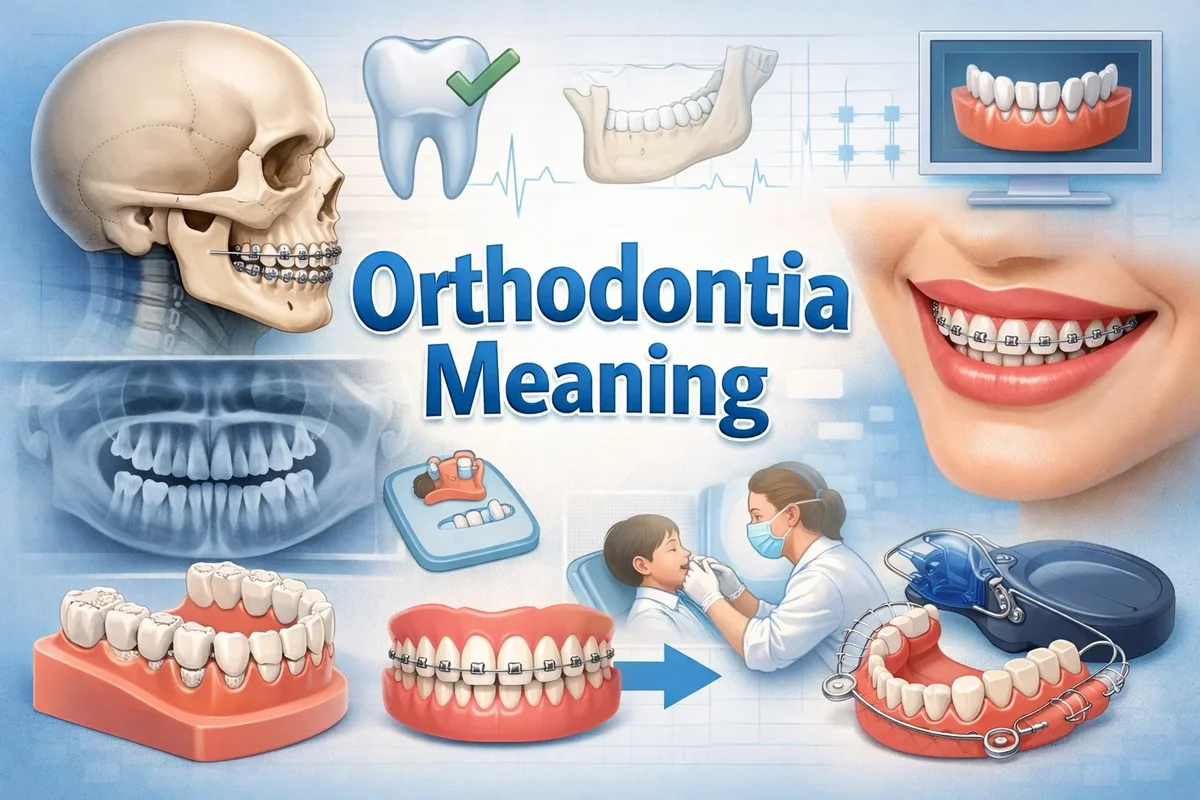
When Should You Care About the Orthodontia Meaning?
Many people assume that the orthodontia meaning only becomes relevant when a dentist recommends braces or aligners. In reality, orthodontia meaning is something individuals should care about much earlier and more broadly. It applies at different stages of life and in many everyday situations related to oral health, comfort, and long-term well-being. Understanding when orthodontia meaning truly matters can help patients take timely action and avoid more complex problems later on. 🦷
Orthodontia meaning becomes important whenever tooth alignment, jaw position, or bite function begins to affect daily life or future oral health. These signs are not always obvious, which is why many people delay seeking orthodontic evaluation. By recognizing when orthodontia meaning should be taken seriously, patients can make proactive decisions rather than reactive ones.
Orthodontia Meaning in Childhood and Early Development
One of the earliest times orthodontia meaning should be considered is during childhood. As children grow, their jaws and teeth develop rapidly. Early orthodontic evaluations allow dentists to identify potential alignment or bite issues before they fully develop. According to orthodontia meaning, early intervention is not always about immediate treatment but about monitoring growth patterns and preventing future complications.
Crowded baby teeth, early tooth loss, thumb sucking, or difficulty chewing can all signal the need to pay attention to orthodontia meaning. Addressing these issues early can reduce the need for more extensive treatment during adolescence. This preventive approach highlights how orthodontia meaning supports long-term oral health rather than short-term fixes. 🧠
Teenage Years and the Growing Importance of Orthodontia Meaning
Adolescence is a critical period when orthodontia meaning often becomes more visible. Most permanent teeth have erupted, and jaw growth is still ongoing, making this an ideal time for orthodontic treatment if needed. During this stage, orthodontia meaning focuses on correcting misalignment while the body is still adaptable.
For teenagers, orthodontia meaning is not only about oral health but also about confidence and social comfort. Misaligned teeth can affect self-esteem during formative years. Understanding orthodontia meaning helps families see orthodontic care as both a health-related and emotional investment. 😌
Orthodontia Meaning for Adults: It’s Never Too Late
A common misconception is that orthodontia meaning only applies to children and teenagers. In reality, adults of all ages can benefit from orthodontic care. Adult orthodontia meaning often centers on correcting long-standing alignment issues, improving bite function, and supporting overall dental health.
Many adults seek orthodontic treatment after experiencing problems such as tooth wear, jaw pain, or gum disease linked to misalignment. Orthodontia meaning, in this context, becomes a tool for preventing further damage and preserving natural teeth. Modern treatment options also make orthodontic care more discreet and compatible with adult lifestyles. 🌟
Daily Warning Signs That Highlight Orthodontia Meaning
There are several everyday signs that indicate it may be time to care about orthodontia meaning. These include difficulty chewing, frequent jaw discomfort, teeth grinding, uneven tooth wear, or recurring dental issues despite good hygiene. These symptoms often point to underlying alignment or bite problems.
Understanding orthodontia meaning helps patients connect these daily discomforts to their root cause rather than treating symptoms alone. Addressing alignment issues can improve comfort, reduce strain on teeth and jaws, and enhance overall quality of life. 😊
Orthodontia meaning also becomes especially important before major dental procedures. If a patient is considering implants, crowns, or veneers, proper alignment is essential for long-term success. Orthodontic evaluation ensures that restorative work is supported by a stable and balanced bite, reinforcing the importance of orthodontia meaning in comprehensive dental care.
In conclusion, orthodontia meaning should be cared about at multiple stages of life and in various situations, from early childhood development to adult oral health concerns. It is not limited to visible misalignment but includes functional, preventive, and long-term considerations. By understanding when orthodontia meaning truly matters, patients can take informed, timely steps toward a healthier mouth, improved comfort, and lasting confidence. 🌈