
🦷 Dental implants have revolutionized modern dentistry by providing a long-term, natural-looking solution for missing teeth. The process of dental implants is not just a single visit to the dentist — it is a carefully planned, multi-stage treatment that ensures your new smile feels and functions like real teeth. This comprehensive guide explains each phase in detail, helping you understand what to expect before, during, and after your implant journey.
The process of dental implants begins with a detailed consultation, where your dentist evaluates your oral health, bone density, and gum condition. Advanced 3D imaging, X-rays, and digital scans are used to determine the ideal placement for your implants. If you have bone loss in the jaw, a grafting procedure might be necessary to strengthen the area before implant placement. Every step is designed to achieve maximum precision, stability, and long-term success.
💡 Implants are small titanium screws that act as artificial tooth roots. Once placed in the jawbone, they provide a sturdy foundation for the replacement crown. Over time, the bone naturally fuses with the titanium through a biological process called osseointegration. This fusion is the key reason why implants feel and function like natural teeth. Unlike dentures or bridges, dental implants prevent bone resorption — the gradual loss of bone that occurs when teeth are missing — maintaining your facial structure and youthful appearance.
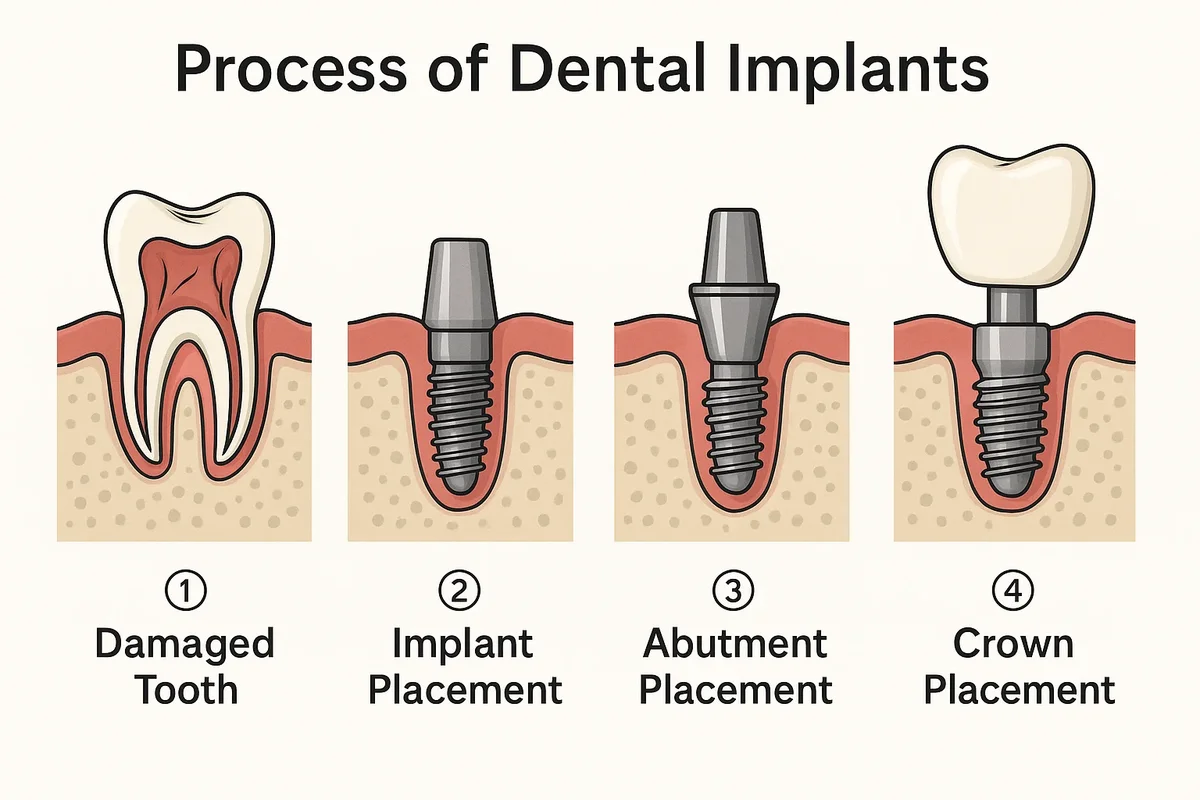
During the process of dental implants, patients can expect several distinct stages. First is the assessment and planning phase, where your dentist creates a personalized treatment plan. Second is the surgical placement of the implant under local anesthesia or mild sedation. The procedure is typically painless and takes about an hour per implant. After surgery, the healing period begins — this can range from a few weeks to a few months, depending on your bone health and the type of implant used.
🧬 The integration period is crucial. As the implant and bone bond together, the stability increases, allowing for the next step: placing the abutment. The abutment connects the implant screw to the dental crown. Once the gum has healed around the abutment, a customized crown — matched in color and shape to your natural teeth — is attached. The result is a strong, beautiful smile that looks and feels authentic.
One reason the process of dental implants has such a high success rate (over 95%) is the use of advanced technology. Modern dental practices utilize digital planning software, 3D-printed guides, and biocompatible materials. These innovations ensure precise placement, faster healing, and superior aesthetic results. Furthermore, when patients follow proper oral hygiene and regular dental check-ups, implants can last a lifetime.
🌿 After the final crown is placed, maintaining your implants is simple — brush and floss daily, avoid smoking, and schedule professional cleanings. Implants do not decay like natural teeth, but gum health remains vital. Regular check-ups allow your dentist to monitor bone levels and ensure long-term stability. If you ever feel discomfort or looseness, early professional attention prevents complications.
Patients often ask how the process of dental implants compares with other options such as dentures or bridges. Unlike removable dentures that can slip or cause irritation, implants are fixed permanently in your jawbone. They restore full chewing ability and preserve jawbone integrity. Bridges, on the other hand, require grinding down healthy teeth to anchor the prosthesis — something implants eliminate entirely. This makes implants the most natural and conservative solution for tooth replacement.
✨ The process of dental implants not only restores your smile but also boosts confidence, improves speech, and enhances your overall quality of life. Whether you are replacing a single tooth, multiple teeth, or a full arch, implants provide a stable and aesthetic outcome. For complex cases, digital surgical guides and computer-assisted navigation make the treatment even more predictable and minimally invasive.
To learn more about personalized implant options or to book a consultation, visit the Redent Klinik Contact Page. The dental experts there specialize in advanced implant techniques and provide individualized care tailored to your unique oral health needs. Additionally, you can find professional resources about dental implant standards and safety at the American Dental Association website.
💬 In summary, the process of dental implants involves multiple stages — from diagnosis and planning to healing and restoration — each carefully executed to ensure long-term functionality and aesthetics. With proper planning, advanced materials, and skilled professionals, dental implants remain the most effective, durable, and natural-looking tooth replacement option available today. 🌟
Understanding What the Process of Dental Implants Involves
🦷 The process of dental implants is more than just a surgical procedure—it’s a carefully structured treatment plan that replaces missing teeth with durable, natural-looking artificial ones. Understanding this process helps patients feel confident, informed, and prepared before starting their journey toward a complete smile. This section explores every step involved, from the initial consultation to the final crown placement, and clarifies what makes dental implants such a remarkable advancement in modern dentistry.
What Are Dental Implants and How Do They Work?
Dental implants are small, biocompatible titanium posts that serve as artificial tooth roots. During the process of dental implants, these posts are surgically placed into the jawbone beneath the gum line. Over time, the bone fuses with the implant through a process known as osseointegration. This fusion provides unmatched stability, allowing the dentist to mount a crown or bridge on top that functions like a natural tooth. The result is a restoration that looks, feels, and performs just like real teeth, ensuring long-term durability and comfort for patients. 🦷✨
Stages of the Process of Dental Implants
The process of dental implants generally consists of four primary stages:
- Consultation and Evaluation: The dentist assesses your oral health, bone density, and gum condition using X-rays or 3D imaging. This stage determines whether you’re a suitable candidate for implants.
- Surgical Placement: The titanium post is inserted into the jawbone. It acts as a stable foundation for the future prosthetic tooth.
- Healing and Osseointegration: Over the next several months, the bone integrates with the implant, ensuring stability and long-term success.
- Abutment and Crown Placement: Once the implant has healed, a connector called an abutment is attached, followed by a custom-made dental crown that completes the restoration.
Each of these stages is essential, and skipping any step can compromise the overall success rate of the process of dental implants. Therefore, proper planning and patient cooperation are key.
Who Is a Good Candidate for Dental Implants?
Not everyone is immediately eligible for implants. Ideal candidates for the process of dental implants are individuals with healthy gums, adequate bone density, and good overall health. People who smoke heavily, suffer from uncontrolled diabetes, or have certain autoimmune diseases may need additional evaluation before undergoing treatment. Bone grafting might be required if there’s insufficient jawbone support, ensuring the implant has a strong base for integration. 🧬
Assessing Bone Density and Gum Health
During the initial phase of the process of dental implants, your dentist will examine your jawbone structure. If your bone has deteriorated due to tooth loss or gum disease, bone grafting will help rebuild the area. Similarly, healthy gums are vital because they provide the necessary seal and protection around the implant, preventing infection and ensuring longevity.
Technology in the Process of Dental Implants
Modern technology plays a vital role in making the process of dental implants more efficient, precise, and comfortable for patients. 3D cone-beam computed tomography (CBCT) scans, digital impressions, and computer-aided design tools allow dentists to plan implant placement with millimeter accuracy. This minimizes complications, shortens surgery time, and ensures optimal results. Many clinics also use guided surgery techniques, where custom templates guide the dentist’s hand during the operation for perfect positioning. 💻
Biocompatible Materials and Their Benefits
The success of the process of dental implants relies heavily on the materials used. Titanium remains the gold standard due to its strength, light weight, and ability to bond with bone. However, zirconia implants are also becoming popular for patients seeking a metal-free alternative. Both materials are safe, corrosion-resistant, and hypoallergenic, providing long-lasting results and excellent aesthetic appeal.
Benefits of Understanding the Implant Process
Having a clear understanding of the process of dental implants empowers patients to make informed decisions and reduces anxiety about the procedure. Key benefits include:
- Improved confidence knowing what each stage involves.
- Better preparation for recovery and healing time.
- Realistic expectations for final results.
- Enhanced communication with your dentist throughout the treatment.
Understanding the step-by-step process also helps patients adhere to post-surgical care guidelines, which significantly improves long-term implant success rates.
Potential Risks and How to Minimize Them
While the process of dental implants is highly successful—boasting a success rate of around 95%—some risks still exist, such as infection, nerve damage, or implant failure. These can usually be prevented through proper hygiene, avoiding tobacco, and attending regular check-ups. Experienced professionals follow strict sterilization protocols and utilize advanced imaging to minimize risks during each phase.
Longevity and Maintenance of Dental Implants
Proper maintenance is vital after completing the process of dental implants. Brushing twice daily, flossing, and using antibacterial mouthwash help prevent gum inflammation around the implant. Routine dental visits are equally important for checking bone stability and ensuring the crown remains intact. When cared for properly, implants can last for decades — often a lifetime — making them one of the most cost-effective tooth replacement options available.
For patients seeking trusted dental care and detailed guidance on each step of the implant journey, it’s recommended to consult professionals like those at Redent Klinik Contact Page. Additionally, more technical and professional resources about implant standards can be found at the American Dental Association website.
🌟 In conclusion, understanding the process of dental implants means realizing that it’s not just a surgery but a holistic treatment involving medical precision, biological healing, and long-term care. By grasping the stages, technology, and aftercare, patients can approach the procedure with full confidence, knowing they are investing in a healthier, more beautiful smile that can last a lifetime. 😁
Why Dental Implants Are the Gold Standard for Tooth Replacement
💎 When it comes to restoring missing teeth, no other solution compares to the process of dental implants. Dental implants have become the gold standard for tooth replacement because they combine durability, functionality, and aesthetics in a way that no other method can match. This section explores why implants are considered superior to bridges and dentures, how they work at a biological level, and what makes them a life-changing investment in oral health.
The Biological Advantage: How Implants Mimic Natural Teeth
The most remarkable aspect of the process of dental implants lies in their ability to replicate the structure of a natural tooth. Each implant consists of three key parts — the titanium post, the abutment, and the crown. The titanium post acts as the root, integrating with the jawbone through a natural process known as osseointegration. This fusion provides unmatched stability, ensuring that your new tooth feels just as strong as a natural one. Unlike removable dentures that rest on the gum surface, implants stimulate the bone directly, preventing bone loss and gum recession over time.
Osseointegration and Long-Term Stability
During the process of dental implants, osseointegration is the biological miracle that ensures permanence. The body naturally accepts titanium because it’s biocompatible. Over several months, bone cells grow around the implant surface, locking it firmly in place. Once fully integrated, the implant becomes part of the jawbone, capable of supporting chewing forces without shifting or discomfort. This bond makes implants last decades — often a lifetime with proper care.
Comparing Implants with Dentures and Bridges
Before the introduction of the process of dental implants, tooth replacement relied mainly on dentures or fixed bridges. While both options restore appearance and partial function, they come with significant drawbacks. Dentures can slip, cause sore spots, and limit your ability to enjoy certain foods. Bridges, meanwhile, require grinding down adjacent healthy teeth to anchor the prosthetic. Dental implants solve both problems by standing independently, preserving surrounding teeth and providing full bite strength. 🍎
Benefits Over Traditional Options
- Longevity: Implants can last 25+ years or even a lifetime, while dentures and bridges usually need replacement after 5–10 years.
- Comfort: Since implants integrate with bone, they feel natural and eliminate the discomfort of removable prosthetics.
- Functionality: The process of dental implants restores up to 95% of normal chewing ability, far superior to dentures.
- Bone Preservation: Implants stimulate the jawbone, preventing bone deterioration and facial sagging.
- Aesthetics: Implant crowns are custom-designed to perfectly match your natural teeth in shape and color.
The Aesthetic and Psychological Impact
The process of dental implants doesn’t only improve physical function — it profoundly boosts self-confidence. Patients who undergo implant treatment report feeling more comfortable smiling, speaking, and eating in public. Because the crown is fixed and lifelike, there’s no risk of embarrassment from slipping dentures or noticeable metal clasps. The restored smile looks completely natural, helping patients regain both beauty and confidence. 😁
Customized for Every Patient
Each implant procedure is tailored to the individual’s facial structure, bone density, and cosmetic preferences. Through advanced digital imaging and 3D modeling, dentists design crowns that harmonize with the patient’s facial symmetry. This customization makes the process of dental implants not only restorative but also artistic, blending precision with aesthetics.
Durability and Long-Term Value
While the initial investment in the process of dental implants may be higher than alternatives, their longevity makes them cost-effective in the long run. Bridges and dentures often require periodic replacement or adjustment, leading to additional expenses. In contrast, dental implants — when cared for properly — rarely need replacement. Over a lifetime, implants prove to be a far more economical and reliable choice for maintaining oral health. 🕒
Maintenance and Daily Care
Caring for dental implants is straightforward. Brushing twice daily, flossing around the implant, and using an antibacterial mouth rinse help maintain gum health. Routine check-ups ensure that both the implant and surrounding bone remain in good condition. The process of dental implants restores not just your teeth but also your dental hygiene routine — bringing back normality to your oral care habits.
Health Benefits Beyond the Smile
The benefits of the process of dental implants extend beyond aesthetics. Implants preserve the integrity of the jawbone by preventing resorption — a condition that causes facial collapse and premature aging. They also improve nutrition, as patients can comfortably chew fibrous foods like fruits, vegetables, and meats. Better chewing leads to improved digestion and overall health. Additionally, implants eliminate speech problems commonly caused by ill-fitting dentures, ensuring clarity and confidence in every conversation.
Scientific Validation and Clinical Success
Clinical studies and organizations such as the American Dental Association confirm that the process of dental implants boasts a success rate of 95% or higher. This exceptional reliability comes from decades of research and innovation in implant design, surface technology, and surgical techniques. Titanium’s compatibility with human bone and advances in digital implant planning make failures increasingly rare when performed by skilled professionals.
Patients seeking trusted expertise can reach out to the Redent Klinik Contact Page to learn more about advanced implant solutions and post-treatment care. Their specialists use world-class technology and personalized treatment plans to ensure every step of the process of dental implants delivers lasting results and natural beauty.
🌟 In conclusion, dental implants are the gold standard in tooth replacement because they restore form, function, and confidence better than any other method. From bone preservation to aesthetic perfection, the process of dental implants transforms lives — offering a permanent, natural, and healthy solution for missing teeth that stands the test of time. 🦷
Consultation and Diagnosis: The First Step Toward a New Smile
🦷 Every successful dental restoration begins with a thorough assessment, and the process of dental implants is no exception. The consultation and diagnosis phase is the foundation of the entire treatment plan. This step allows dental professionals to evaluate your oral health, identify potential challenges, and design a personalized approach tailored to your needs. Without a proper diagnostic phase, the success of the implant could be compromised — which is why this stage deserves detailed attention and careful execution.
The Importance of a Comprehensive Consultation
The initial consultation is where your dental journey begins. During this stage of the process of dental implants, your dentist gathers all relevant medical and dental history to understand any existing health conditions that may affect healing or surgery. Factors such as diabetes, smoking, bone density, and gum health play crucial roles in determining candidacy for implants. A skilled implantologist uses this information to create a safe, efficient, and predictable treatment plan.
Patient Evaluation and Goal Setting
In the early phase of the process of dental implants, the dentist will discuss your goals and expectations. Some patients want to replace a single missing tooth, while others require a full arch restoration. Understanding your specific goals helps the dentist choose the appropriate type of implant — whether it’s a traditional implant, All-on-4 system, or mini-implant. The dentist will also assess your bite alignment and facial symmetry to ensure that the final result enhances both function and aesthetics.
Advanced Diagnostic Imaging Techniques
Modern dentistry relies heavily on technology to plan the process of dental implants accurately. Digital X-rays, panoramic radiographs, and 3D cone-beam computed tomography (CBCT) scans provide a detailed view of your bone structure and nerve pathways. These images help the dentist determine the precise placement angle, depth, and size of the implant. By visualizing your jawbone in three dimensions, potential complications such as nerve interference or sinus perforation can be avoided, ensuring optimal implant stability and patient safety. 💻
Digital Impressions and Computerized Planning
Traditional impressions have largely been replaced by digital scans. In this stage of the process of dental implants, intraoral scanners capture your teeth and gums with pinpoint accuracy, eliminating discomfort and human error. The digital model is then used to design surgical guides that ensure implants are positioned exactly where they should be. This digital workflow reduces surgery time, enhances precision, and provides a predictable outcome that matches the pre-planned smile design. 😁
Assessing Bone Quality and Quantity
The strength and density of your jawbone determine whether the process of dental implants can proceed immediately or if bone grafting is needed first. The dentist uses imaging data to assess bone thickness and quality. If there isn’t enough bone to support an implant, bone augmentation procedures such as sinus lifts or grafts are performed. These treatments rebuild the jaw’s foundation, making it strong enough to hold the implant securely over time.
Types of Bone Grafts
- Autograft: Bone taken from your own body, often from the chin or hip, providing excellent compatibility.
- Allograft: Sterilized donor bone from a tissue bank, used when patient bone is limited.
- Xenograft: Bone derived from animal sources, usually bovine, offering natural structure and slow resorption.
- Synthetic Graft: Man-made materials that stimulate bone regeneration using biocompatible substances.
These techniques enhance the success of the process of dental implants by ensuring sufficient support and stability for long-term function. 🧬
Medical Screening and Health Assessments
Before proceeding with the process of dental implants, your dentist will conduct a full medical screening. Blood tests may be ordered to check for conditions that could slow healing, such as diabetes or vitamin deficiencies. Patients who smoke or take certain medications (like bisphosphonates) must disclose these habits, as they may affect osseointegration. This pre-surgical evaluation is critical to reduce the risk of complications and ensure your body can heal efficiently after surgery.
Customized Treatment Planning
Once diagnostic results are analyzed, your dentist creates a customized treatment plan that outlines every stage of the process of dental implants. This includes the number of implants required, their locations, the timeline for each step, and whether temporary restorations will be placed during healing. Computerized simulations show what the final smile will look like, giving you a realistic preview of the outcome. 🖥️
Virtual Surgical Guides and Precision Mapping
Modern clinics use digital surgical guides, which act like GPS systems during surgery. These guides ensure implants are positioned precisely where the dentist planned them, minimizing tissue trauma and recovery time. The use of this technology during the process of dental implants allows for minimally invasive techniques, faster healing, and near-perfect alignment of the final prosthesis.
Psychological Preparation and Patient Education
The consultation stage also focuses on mental readiness. Many patients have dental anxiety, especially regarding surgery. Dentists take time to explain each phase of the process of dental implants clearly, alleviating fears and setting realistic expectations. Educational videos, 3D models, and visual examples are often used to demonstrate how the implant integrates with the bone and gum tissue. This transparency builds trust and ensures patients feel comfortable moving forward. 🌿
Financial and Logistical Considerations
Finally, during consultation, you’ll receive a detailed cost estimate and timeline. Although implant treatments can vary in price based on complexity and materials, understanding the financial side of the process of dental implants helps patients plan ahead. Some clinics offer payment plans or phased treatment schedules. Additionally, scheduling follow-up appointments and coordinating surgical dates are organized at this point to ensure a smooth experience.
For patients ready to start their journey, contacting experts at Redent Klinik Contact Page is a reliable step toward professional diagnosis and treatment planning. For more clinical standards and implant education, refer to the American Dental Association — a trusted resource in dental care advancements.
🌟 In summary, the consultation and diagnostic phase is the cornerstone of the process of dental implants. It combines advanced imaging, scientific precision, and personalized planning to ensure every patient receives a treatment plan designed for lifelong results. By taking the time to evaluate, prepare, and plan carefully, dentists set the stage for implant success and a radiant, confident smile. 😄
Bone Grafting and Jaw Preparation Before Implant Surgery
🦷 The success of the process of dental implants largely depends on the strength and quality of the jawbone. When bone density is insufficient, bone grafting and jaw preparation become essential to ensure long-term stability and integration of the implant. This stage is not just an optional step — it is often the foundation upon which a durable and functional implant is built. Understanding bone grafting helps patients appreciate why careful preparation is key to achieving a natural and lasting smile.
Why Bone Grafting Is Necessary
When a tooth is lost, the jawbone in that area begins to resorb, or shrink, due to lack of stimulation. This bone loss can occur rapidly — within the first six months — and may continue over time. The process of dental implants requires sufficient bone mass to securely anchor the implant post. If the bone is too thin or soft, the implant may fail to fuse properly during osseointegration. Bone grafting rebuilds and strengthens these areas, providing a stable base for the titanium implant.
Causes of Bone Loss in the Jaw
- Long-term tooth loss without replacement.
- Periodontal (gum) disease leading to bone deterioration.
- Infections or cysts in the jawbone.
- Trauma or injury to the facial structure.
- Ill-fitting dentures that irritate and erode bone over time.
Addressing these factors before starting the process of dental implants ensures greater precision, comfort, and longevity for the final restoration. 🧬
Types of Bone Grafting Procedures
Different bone grafting methods are used depending on the extent of bone loss and the area of the mouth involved. Each technique plays a vital role in strengthening the foundation for the process of dental implants.
1. Socket Preservation
Performed immediately after a tooth extraction, socket preservation involves filling the empty socket with graft material to prevent bone collapse. This method maintains the contour and volume of the jawbone, allowing for smoother implant placement later.
2. Ridge Augmentation
When the jaw ridge has thinned or flattened, ridge augmentation rebuilds its original shape. This is a common preparatory step before the process of dental implants, ensuring there’s enough width and height to support the implant securely.
3. Sinus Lift (Sinus Augmentation)
For upper molar implants, a sinus lift may be needed if bone height beneath the sinus cavity is inadequate. The surgeon gently raises the sinus membrane and fills the space with graft material. This increases vertical bone volume and prevents implant penetration into the sinus area. 🏗️
4. Block Bone Graft
In severe cases of bone deficiency, a small block of bone from another area (often the chin or jaw angle) is transplanted to the deficient region. This method ensures structural reinforcement, critical for patients requiring extensive reconstruction before the process of dental implants.
Graft Materials and Their Biological Function
Several types of graft materials are available, each with specific advantages. The dentist chooses the best one based on your biological needs, medical history, and treatment plan. The main types include:
- Autograft: Bone taken from your own body — the most biocompatible option with fast healing properties.
- Allograft: Processed donor bone that’s sterilized and safe, used when patient bone is limited.
- Xenograft: Bone from animal sources, usually bovine, that acts as a scaffold for new bone growth.
- Alloplastic Graft: Synthetic materials like hydroxyapatite or bioactive glass that stimulate bone regeneration.
These grafts integrate naturally with your existing bone, forming a strong and healthy base for the next stages of the process of dental implants.
The Jaw Preparation Stage
After grafting, the jaw needs time to heal and regenerate. This process can take between three to six months, depending on the size and complexity of the graft. During this period, the body replaces the graft material with new bone tissue through natural regeneration. Dentists monitor healing progress using 3D scans to confirm that the graft has successfully integrated and is ready for implant placement.
Platelet-Rich Plasma (PRP) and Growth Factors
Modern advancements now include using platelet-rich plasma and growth factors to speed up healing after bone grafting. By concentrating your body’s own healing cells, these treatments accelerate tissue regeneration and reduce discomfort during recovery. Such biological enhancements improve the predictability of the process of dental implants and minimize complications.
Minimally Invasive Techniques and Patient Comfort
Today, dentists use less invasive methods for bone grafting, significantly reducing recovery time and pain. Guided bone regeneration (GBR) uses membranes to protect the graft area, ensuring optimal healing without interference from surrounding tissues. Local anesthesia or mild sedation keeps patients relaxed during the procedure, making this stage of the process of dental implants virtually painless and stress-free. 💉
Aftercare and Recovery Following Bone Grafting
Post-procedure care is essential for successful bone healing. Patients are advised to follow soft diets, maintain oral hygiene with gentle rinses, and avoid smoking or vigorous physical activity. Antibiotics and anti-inflammatory medications may be prescribed to prevent infection and discomfort. Regular follow-up visits allow the dentist to track healing progress and determine when the implant can be placed.
Signs of Successful Healing
- Stable and pain-free graft area.
- Healthy gum tissue covering the graft site.
- Visible bone density increase on imaging scans.
These signs indicate that the foundation for the process of dental implants is ready and that the jawbone can now support long-term function.
Risks and How to Avoid Complications
Although bone grafting is a safe procedure, minor risks include infection, graft rejection, or slow healing. Working with an experienced specialist minimizes these risks. Adhering to post-surgery instructions and attending all follow-ups are essential steps in ensuring a successful outcome for the process of dental implants.
For expert evaluation and jawbone preparation, it’s best to consult a professional clinic such as the Redent Klinik Contact Page. For further scientific references and standards in bone grafting and implantology, you can also visit the American Dental Association.
🌟 In conclusion, bone grafting and jaw preparation are indispensable components of the process of dental implants. They transform weak or atrophied bone into a stable, healthy structure capable of supporting a lifetime of function. Through advanced technology, biological materials, and expert surgical precision, patients can confidently progress to the next step of their implant journey — knowing that their new smile has the strongest possible foundation. 😄
Step-by-Step Breakdown of the Implant Placement Procedure
🦷 Once the jawbone is properly prepared, the actual surgical phase of the process of dental implants begins. This stage represents the most critical step, where precision, sterility, and surgical expertise ensure that the implant integrates successfully with the bone. Understanding this step-by-step breakdown not only reduces anxiety for patients but also clarifies what happens during and after the implant surgery. Let’s explore each phase in detail — from anesthesia to sutures — and discover how modern dental technology has made this process predictable, safe, and virtually painless.
Pre-Surgical Preparation and Planning
Before any incision is made, your dentist meticulously plans every aspect of the process of dental implants using digital imaging, CBCT scans, and 3D simulations. These tools help identify the exact implant position, angle, and depth to avoid nerves and sinus cavities. Surgical guides — custom templates created from your digital scans — are used to ensure the implant is placed in the most optimal location. This preoperative step minimizes guesswork and guarantees accuracy down to the millimeter. 💻
Sterilization and Anesthesia
Patient comfort and safety are top priorities during the process of dental implants. Before surgery, the mouth is disinfected, and local anesthesia is administered to numb the area. For patients with dental anxiety, sedation options like oral sedatives or IV sedation are available. The entire environment — tools, gloves, and implants — is kept completely sterile to eliminate infection risk. Once the anesthesia takes effect, the dentist confirms numbness before proceeding.
Creating the Incision and Exposing the Jawbone
The first surgical step in the process of dental implants involves making a small incision in the gum tissue to expose the bone beneath. The dentist carefully folds back the gum flap, allowing access to the precise implant site. Using a specialized dental drill, a pilot hole is made in the bone at a predetermined angle. This hole serves as a guide for the implant screw, ensuring it aligns perfectly with the natural bite and other teeth.
Drilling and Depth Measurement
Next, the pilot hole is gradually widened using larger drills, each one increasing in diameter to match the size of the implant being placed. During this part of the process of dental implants, extreme care is taken to maintain the correct depth and avoid overheating the bone — which could hinder healing. Coolant saline solution is used throughout the drilling process to control temperature and maintain bone vitality.
Placing the Titanium Implant Post
Once the bone socket is prepared, the titanium implant post — the artificial tooth root — is inserted. The dentist gently screws it into place using a torque wrench or mechanical driver. The implant must fit snugly, as this initial stability is crucial for successful osseointegration. Some implants have special surface textures that encourage faster bonding with the bone. Once inserted, a small cover screw (healing cap) may be placed over the implant to protect it during healing.
Types of Implant Placement Techniques
- Single-Stage Placement: The healing abutment is attached immediately after implant insertion, eliminating the need for a second surgery.
- Two-Stage Placement: The implant is covered by gum tissue and left to heal for several months before exposing it later to attach the abutment.
The choice between one-stage and two-stage techniques depends on bone quality, implant position, and the patient’s specific treatment plan within the process of dental implants.
Osseointegration Period
After placement, the implant undergoes osseointegration — the phase where the bone grows around the implant, securing it firmly in place. This is the most crucial biological process in the process of dental implants. Over 3 to 6 months, new bone cells form along the titanium surface, creating a seamless bond. During this time, temporary crowns or bridges can be used to maintain appearance and function while healing completes. 🧬
Healing and Tissue Response
The gums and bone gradually adapt to the implant, forming a tight seal around its base. Patients might experience mild swelling or sensitivity during the first few days, but this subsides quickly with proper care. Cold compresses, soft foods, and prescribed antibiotics help ensure a smooth recovery. Follow-up appointments allow the dentist to monitor integration and check that there are no early complications.
Attaching the Healing Cap and Suturing
After the implant post is secured, the dentist may place a healing cap (a small metal piece) to shape the gum tissue properly. The incision is then closed with dissolvable or removable sutures. This cap remains until the bone has fully integrated with the implant, ensuring the gum line heals naturally around the future abutment. The entire surgical procedure usually takes about 30–90 minutes per implant, depending on the complexity of the case.
Minimally Invasive and Computer-Guided Surgery
Advancements in dental technology have made the process of dental implants minimally invasive. Computer-guided systems allow precise drilling without large incisions, reducing recovery time and swelling. Some advanced clinics even perform flapless surgery, where implants are placed directly through the gum without cutting — resulting in faster healing and less discomfort. This approach, combined with 3D navigation tools, allows for unparalleled precision and patient satisfaction. ⚙️
Immediate Loading Implants
In certain cases, patients can receive a temporary crown on the same day as surgery. This approach, known as immediate loading, allows the patient to leave the clinic with a functioning tooth right after implant placement. However, this method is only recommended if bone density and implant stability meet strict clinical criteria. It represents one of the most exciting advancements in the process of dental implants, combining aesthetics and efficiency in a single visit.
Post-Surgical Instructions and Recovery
After surgery, patients receive detailed aftercare guidelines. Maintaining oral hygiene, avoiding smoking, and sticking to a soft diet for a few days are critical. Pain management typically involves over-the-counter analgesics. Proper care during this stage ensures the implant remains undisturbed, allowing natural healing to proceed efficiently. Dentists may also prescribe antiseptic mouth rinses and schedule follow-ups to check progress.
Patients seeking expert surgical precision can contact the Redent Klinik Contact Page for personalized care. To learn more about international implant standards and clinical safety, refer to the American Dental Association — a trusted authority in dental best practices.
🌟 In conclusion, the surgical stage of the process of dental implants is a meticulously planned, step-by-step procedure that combines science, skill, and technology. From creating the incision to placing the titanium post and ensuring proper osseointegration, each step is designed for precision and long-term success. With today’s digital tools and minimally invasive methods, implant surgery is more efficient and comfortable than ever — offering patients a permanent, confident smile that lasts a lifetime. 😁
Healing and Osseointegration: How Implants Fuse with Your Jawbone
🧬 After the surgical placement of implants, the next and most critical biological phase of the process of dental implants begins — healing and osseointegration. This stage determines the long-term success and stability of the implant. While the surgical step may seem like the highlight, true success happens beneath the surface as bone tissue and the titanium implant unite to form a solid foundation for the new tooth. Let’s explore this remarkable process in depth and understand why patience and proper care are vital during recovery.
What Is Osseointegration and Why Is It So Important?
The term osseointegration refers to the direct structural and functional connection between living bone and the surface of a load-bearing implant. In simpler terms, it’s the biological process that allows the jawbone to grow around and bond with the titanium post placed during the process of dental implants. This fusion creates exceptional stability — so much so that the implant essentially becomes part of your natural bone structure. Without successful osseointegration, the implant would fail to support a crown, bridge, or denture.
The Science Behind Osseointegration
When the titanium implant is inserted, the body responds by initiating a controlled healing reaction. Bone cells called osteoblasts begin to attach to the implant’s surface, gradually forming new bone tissue. The implant surface — often roughened or treated with plasma spray or acid etching — encourages faster bone cell attachment. Over a few weeks, the implant becomes anchored within the jaw, creating the mechanical and biological bond necessary for lifelong support. This process is the cornerstone of the process of dental implants.
Healing Timeline: What to Expect
The healing and integration phase usually spans between 3 to 6 months, though this can vary depending on bone density, implant location, and patient health. The lower jaw (mandible) often heals faster due to its denser bone, while the upper jaw (maxilla) may take slightly longer. During this period, the implant remains protected beneath the gum or under a healing cap, allowing undisturbed bone growth. Patience is essential — rushing this phase can compromise the entire process of dental implants.
Factors Affecting Healing Time
- Bone Quality: Dense bone promotes faster integration, while softer bone takes longer to fuse.
- Implant Material and Design: Modern surface textures and coatings accelerate healing.
- Health Conditions: Diabetes, smoking, or low vitamin D levels can slow osseointegration.
- Aftercare Compliance: Following post-surgery instructions ensures proper healing and reduces complications.
Each of these factors plays a vital role in determining the biological success of the process of dental implants and the longevity of the final restoration.
Bone Remodeling During Healing
During osseointegration, the bone undergoes a natural cycle of resorption and regeneration. Initially, the bone near the implant may experience mild remodeling as old cells are replaced with new ones. Over time, this creates a compact, dense bone structure that holds the implant firmly. This microscopic transformation gives implants their extraordinary durability and mimics the natural tooth root function.
The Role of Blood Supply and Oxygenation
Healthy blood flow is crucial during this stage of the process of dental implants. Oxygen and nutrients carried by blood help new bone cells grow and mature around the implant. That’s why maintaining overall health, hydration, and nutrition during recovery significantly contributes to faster healing. Dentists may recommend supplements such as calcium and vitamin D to support bone regeneration. 🌿
Soft Tissue Healing and Gum Adaptation
While bone is fusing internally, the surrounding soft tissue also heals and forms a protective barrier. The gums begin to shape themselves naturally around the implant site, preventing bacterial invasion. This phase is vital not only for oral health but also for achieving a natural aesthetic appearance. The contour and color of the gums determine how well the final crown blends with existing teeth. Healthy soft tissue supports the biological seal that prevents infection — a key factor in the overall process of dental implants.
Post-Surgical Care to Support Healing
After surgery, patients must adhere to a strict care routine to ensure optimal recovery:
- Avoid hard or crunchy foods for at least two weeks.
- Rinse gently with antiseptic mouthwash or saline solution.
- Maintain oral hygiene but avoid brushing directly over the surgical site for several days.
- Refrain from smoking or consuming alcohol, as they restrict blood flow and slow bone formation.
Following these steps ensures the process of dental implants proceeds smoothly and without complications.
Monitoring Healing Progress
Regular follow-up appointments are essential during the osseointegration period. Dentists perform X-rays or digital scans to evaluate bone density and detect any early issues. Pain, swelling, or implant mobility are signs that need immediate attention. Fortunately, with proper monitoring, complications are rare. When integration is confirmed, the patient can move forward to the next stage — attaching the abutment and crown — completing the process of dental implants.
Advanced Healing Technologies
Some clinics use modern biological enhancements such as platelet-rich fibrin (PRF) therapy or laser-assisted healing to accelerate osseointegration. These methods stimulate natural regeneration, reduce inflammation, and shorten recovery time. PRF, derived from the patient’s own blood, releases growth factors that promote tissue and bone repair. Integrating such technology ensures the process of dental implants achieves optimal biological efficiency and comfort.
Potential Healing Complications and Solutions
Though rare, delayed osseointegration or early implant failure can occur due to infection, poor bone quality, or excessive movement during healing. To prevent this, dentists may recommend temporary restorations that avoid putting pressure on the implant. Antibiotic therapy and routine oral hygiene help maintain a sterile healing environment. With proper care, over 95% of implants heal successfully and remain functional for decades. 💪
For expert post-surgical guidance, patients can contact the Redent Klinik Contact Page for tailored follow-up support. For international standards and biological safety references, visit the American Dental Association.
🌟 In conclusion, healing and osseointegration form the biological heart of the process of dental implants. It’s during this phase that science, nature, and technology combine to transform a titanium post into a functional tooth root. With patience, proper care, and professional follow-up, patients can enjoy the satisfaction of a strong, natural, and enduring smile that stands the test of time. 😁
Attaching the Abutment and Crafting the Final Dental Crown
🦷 After the healing phase and successful bone integration, the next major milestone in the process of dental implants is the attachment of the abutment and fabrication of the final dental crown. This stage marks the transition from surgical healing to aesthetic restoration. The abutment acts as a connector between the implant and the crown, while the crown is the visible part of your new tooth — designed to blend perfectly with your natural smile. Every detail in this stage matters, from the precision of the abutment fit to the artistry of the crown design.
What Is a Dental Abutment?
In the process of dental implants, the abutment serves as a small but critical component that links the titanium implant to the dental crown. It’s typically made from titanium, zirconia, or gold, ensuring strength and biocompatibility. Once the jawbone and implant have successfully fused during osseointegration, the dentist exposes the implant by reopening the gum and carefully attaches the abutment. This piece acts as the support post for the crown and determines the final shape of the gumline. Without a properly positioned abutment, even the best-made crown cannot achieve a natural or stable result. 🌟
Types of Abutments
- Standard Abutments: Prefabricated and used in most straightforward cases with predictable implant alignment.
- Custom Abutments: Designed digitally to match the patient’s unique gum contour and tooth shape for a perfect aesthetic result.
- Angled Abutments: Used when implants are placed at a specific angle due to bone structure or spacing limitations.
Each of these plays a distinct role in the process of dental implants, ensuring both mechanical stability and visual harmony within the mouth.
Abutment Placement Procedure
The abutment placement is typically a minor surgical procedure. The dentist first numbs the area, makes a small incision to uncover the implant, and attaches the abutment using a precision torque driver. This ensures it’s securely fastened at the correct pressure. A small healing cap may be placed over the abutment to allow the gum to form naturally around it. This phase lasts around two weeks and shapes the gum tissue to provide a realistic emergence profile for the future crown. 💉
Healing After Abutment Placement
After the abutment is attached, patients might experience mild swelling or tenderness. The gum tissue begins to adapt and form a natural collar around the abutment, mimicking the way it hugs a real tooth. This healing process is crucial for achieving lifelike aesthetics once the crown is installed. Proper oral hygiene and avoiding hard foods help ensure smooth recovery during this step of the process of dental implants.
The Art and Science of Crown Fabrication
The final crown is more than just a replacement tooth — it’s a meticulously engineered piece of dental art. Using 3D scans or digital impressions, technicians design a custom crown that perfectly matches your natural teeth in shape, size, and color. Depending on the case, the crown can be made from porcelain-fused-to-metal, zirconia, or all-ceramic materials. These materials are chosen for their strength and translucency, closely mimicking real enamel. The precision of this step determines how naturally the crown blends within your smile and how comfortably it functions during chewing.
Types of Dental Crowns in the Implant Process
- Cement-Retained Crowns: The crown is permanently bonded to the abutment with dental cement for a natural appearance.
- Screw-Retained Crowns: The crown is secured using a small internal screw, allowing easy removal for maintenance or adjustments.
- Hybrid Crowns: A modern combination that uses both cement and screw retention for enhanced durability and flexibility.
Each crown type contributes differently to the process of dental implants, depending on aesthetic priorities and clinical needs. Dentists choose the ideal option after assessing bite forces, gum health, and long-term goals.
Digital Technology in Crown Design
Modern clinics employ CAD/CAM (Computer-Aided Design and Manufacturing) systems to create perfectly fitting crowns. This technology scans the abutment digitally and produces the crown within hours. Such precision ensures flawless contact points, bite alignment, and color matching. This digital workflow enhances the accuracy of the process of dental implants and reduces waiting times, offering patients both comfort and convenience. 💻
Shade Matching and Aesthetic Detailing
To achieve a lifelike appearance, technicians use shade guides and digital photography to match the exact hue and translucency of your natural teeth. In some cases, artistic layering techniques are used to replicate subtle enamel textures and light reflections. These details make the final restoration indistinguishable from the surrounding teeth, fulfilling both aesthetic and functional goals of the process of dental implants.
Fitting and Final Adjustments
Once the crown is ready, the dentist places it onto the abutment, checks the bite alignment, and ensures there is no discomfort during chewing. Small adjustments are made to achieve perfect occlusion and symmetry. When everything fits precisely, the crown is permanently secured, completing the restoration. Patients instantly notice improved speech, comfort, and self-confidence — a sign that the process of dental implants has achieved its intended outcome. 😁
Maintenance After Crown Placement
Even though implant crowns are resistant to decay, proper hygiene remains essential. Patients should brush twice daily, floss around the implant, and use an antibacterial mouth rinse. Regular dental visits allow professionals to check the stability of the abutment and the health of surrounding gums. This preventive care ensures the longevity of the crown and the overall success of the process of dental implants.
For high-quality restorative care and advanced crown design, visit the Redent Klinik Contact Page. Their specialists combine digital precision with artistry to deliver impeccable implant restorations. For professional implant guidelines and research standards, consult the American Dental Association website.
🌟 In summary, attaching the abutment and crafting the dental crown represent the final aesthetic phase of the process of dental implants. It’s where biology meets craftsmanship, transforming a titanium base into a natural-looking tooth that restores full function and confidence. Through cutting-edge technology, expert planning, and patient-specific customization, this stage completes the journey — giving patients a radiant smile that feels as strong and beautiful as their natural teeth. 🦷
Common Challenges During the Process of Dental Implants and How to Overcome Them
🦷 While the process of dental implants is known for its high success rate and long-term benefits, it is not entirely free from challenges. Each patient’s anatomy, health status, and healing response can influence the outcome. Understanding potential issues and how to prevent or address them ensures that patients approach treatment with realistic expectations and confidence. This section examines the most common challenges faced during the implant journey — from surgical complications to post-operative care — and offers professional solutions for each.
1. Insufficient Bone Density or Volume
One of the most frequent challenges in the process of dental implants is insufficient bone support. Without enough bone mass, the implant cannot anchor securely, increasing the risk of loosening or failure. This often occurs in patients who have been missing teeth for years, as bone resorption naturally progresses over time.
Solution: Bone Augmentation Procedures
To overcome this, dentists perform bone grafting or ridge augmentation before implant placement. These procedures rebuild bone tissue using graft materials that stimulate new growth. In advanced cases, sinus lift surgeries may be performed for the upper jaw to create vertical bone height. This preparatory work ensures the jaw is strong enough to support implants and increases the overall success rate of the process of dental implants. 🧬
2. Gum Disease and Poor Oral Hygiene
Healthy gums are essential for the longevity of implants. Periodontal disease (gum infection) can cause inflammation and bone loss around the implant site, jeopardizing stability. Bacteria can easily enter surgical wounds during or after the process of dental implants if proper hygiene isn’t maintained.
Solution: Periodontal Treatment and Maintenance
Before surgery, patients should undergo a full periodontal evaluation. If any signs of gum disease are detected, they must be treated through scaling, root planing, or laser therapy. After implant placement, maintaining impeccable oral hygiene — brushing, flossing, and using antibacterial mouthwash — is vital. Regular professional cleanings and check-ups keep the gum tissue healthy and prevent peri-implantitis (inflammation around the implant).
3. Improper Implant Placement or Angulation
Implant misalignment is another potential complication during the process of dental implants. If an implant is placed at the wrong angle or depth, it may interfere with adjacent teeth or nerves, or affect the aesthetic outcome of the final crown.
Solution: Computer-Guided Surgery and 3D Planning
Modern technology provides the most reliable solution to this challenge. Computer-guided implant surgery uses 3D scans and digital guides to determine the ideal implant position before the operation. This ensures precision placement, minimizes human error, and shortens recovery time. The use of surgical templates has revolutionized the process of dental implants, making it both safer and more predictable. 💻
4. Slow or Incomplete Osseointegration
Osseointegration — the bonding between bone and implant — is the biological foundation of implant success. In some cases, the bone may fail to integrate fully with the implant surface, leading to instability. Factors such as smoking, diabetes, or inadequate bone quality can slow or inhibit this phase of the process of dental implants.
Solution: Patient Screening and Post-Operative Care
Careful preoperative screening helps identify at-risk patients. Those with systemic conditions should have them controlled before treatment. Using biocompatible implants with roughened or treated surfaces also promotes faster bone growth. Post-surgery, following dietary guidelines and avoiding tobacco are essential for ensuring strong osseointegration and long-term success.
5. Post-Operative Discomfort and Swelling
Minor swelling, bruising, or discomfort are normal responses after surgery. However, excessive pain or persistent bleeding may signal complications. Proper management of these symptoms is crucial for a smooth recovery during the process of dental implants.
Solution: Controlled Healing and Monitoring
Dentists typically prescribe antibiotics, anti-inflammatories, and pain relief medications to reduce discomfort. Applying cold compresses and maintaining a soft diet for the first few days also helps. Regular follow-up visits allow the dentist to ensure the healing process is on track and address any early issues promptly. 🩺
6. Peri-Implantitis: Infection Around the Implant
Peri-implantitis is an inflammatory condition affecting the tissues around an implant. It is one of the most serious complications during the process of dental implants, leading to bone loss if left untreated. The main cause is poor oral hygiene or residual bacteria after surgery.
Solution: Early Detection and Professional Cleaning
Professional maintenance and early diagnosis are key. Dentists use ultrasonic tools or lasers to clean bacterial deposits around the implant surface. In advanced cases, regenerative surgery may be required to restore lost bone. Regular dental checkups and home care routines remain the best defense against peri-implantitis.
7. Nerve or Sinus Complications
In rare instances, improper implant depth or angulation can affect nerves or sinus cavities, causing temporary numbness or sinus irritation. While modern imaging minimizes these risks, awareness is vital for both patients and professionals during the process of dental implants.
Solution: Precision Imaging and Experienced Surgeons
Pre-surgical CBCT imaging identifies the exact position of nerves and sinus walls. Skilled surgeons plan the implant’s placement to avoid sensitive anatomical areas. If irritation does occur, most cases resolve naturally within a few weeks under professional supervision. Precision planning virtually eliminates this risk. ⚙️
8. Aesthetic Concerns and Gum Recession
In some patients, the gums may recede after surgery, exposing the implant margin or creating asymmetry. This aesthetic issue can affect confidence and compromise the natural look of the final restoration.
Solution: Soft Tissue Grafting and Aesthetic Adjustments
Soft tissue grafts and connective tissue procedures can restore gum contour around the implant. Dentists may also use pink ceramic crowns or customized abutments to enhance the visual harmony. These cosmetic refinements ensure that the process of dental implants achieves both functional and aesthetic perfection. 😁
9. Long-Term Maintenance Challenges
Even after successful healing, implants require lifelong maintenance. Neglecting hygiene or skipping checkups can lead to gum inflammation or mechanical wear. The key to preserving implant health is consistent care and awareness of early warning signs.
Solution: Professional Maintenance and Routine Visits
Patients should schedule regular implant maintenance appointments every six months. Dentists use specialized tools to clean around implants without scratching their surfaces. Following a tailored care plan ensures the long-term success of the process of dental implants and prevents costly repairs in the future.
For advanced implant correction and maintenance services, contact the Redent Klinik Contact Page. For educational standards and clinical references, visit the American Dental Association.
🌟 In summary, while the process of dental implants is one of the most reliable dental treatments available, challenges can arise due to biological, mechanical, or hygiene factors. However, with expert planning, advanced technology, and disciplined aftercare, nearly all these complications can be prevented or successfully treated. Understanding these potential issues allows patients to take proactive steps toward achieving a long-lasting, healthy, and beautiful smile. 🦷
Long-Term Care and Maintenance After the Process of Dental Implants
🪥 After completing the process of dental implants, proper long-term care and maintenance are essential to ensure that your new smile lasts a lifetime. Although implants are made from durable, biocompatible materials like titanium and ceramic, they still require attention and hygiene to maintain gum health, prevent infection, and ensure optimal function. In this section, we’ll explore comprehensive strategies for implant care, routine maintenance schedules, and lifestyle adjustments that guarantee lasting success.
Daily Oral Hygiene for Implant Longevity
Just like natural teeth, implants must be cleaned thoroughly every day. Even though the implant itself won’t decay, bacteria and food debris can still accumulate around the gum line, leading to inflammation or infection. A consistent cleaning routine ensures the success of the process of dental implants over time.
Recommended Cleaning Techniques
- Soft-Bristled Toothbrush: Use a non-abrasive brush to clean all surfaces of the implant crown without scratching it.
- Interdental Brushes: These small tools clean hard-to-reach spaces between implants and natural teeth.
- Floss Designed for Implants: Special floss with a stiff end and soft middle section helps clean under implant bridges and around abutments.
- Antimicrobial Mouthwash: Rinsing with alcohol-free antiseptic solutions reduces bacterial buildup and keeps gums healthy.
Maintaining this daily care routine is crucial to prevent peri-implant diseases and ensure the process of dental implants remains a long-term success. 💧
Professional Checkups and Maintenance Schedule
Even with excellent home care, professional follow-ups are essential. Dentists use specialized tools and techniques to clean around implants without damaging their surfaces. These regular visits also allow early detection of potential problems.
Frequency of Dental Visits
- First-year post-surgery: Every 3–4 months for close monitoring.
- After the first year: Every 6 months for routine cleaning and inspection.
- High-risk patients (smokers, diabetics): More frequent visits as recommended by the dentist.
Regular monitoring ensures the integrity of the implant and supporting bone, making it a vital part of the overall process of dental implants. 🩺
Dietary Guidelines for Long-Term Implant Health
Your diet can significantly affect implant health. During the healing phase, soft foods are recommended to prevent stress on the implants. Once fully healed, a balanced diet rich in vitamins and minerals supports gum and bone health.
Best Foods to Support Implant Longevity
- Calcium-Rich Foods: Yogurt, cheese, and leafy greens strengthen bones around implants.
- Vitamin C Sources: Citrus fruits and peppers promote gum health and tissue repair.
- Protein-Rich Foods: Eggs, lean meats, and legumes help rebuild tissue after surgery.
Avoid chewing excessively hard foods like ice or unpopped popcorn kernels, as they may chip crowns or stress the abutment. Following these dietary tips ensures that the process of dental implants continues to provide lasting results. 🥦
Recognizing Early Warning Signs of Problems
Implants are highly reliable, but patients should stay alert to early warning signs of potential complications. Timely intervention can save the implant and prevent further issues.
Common Signs to Watch For
- Bleeding or swelling around the implant site.
- Persistent bad breath or metallic taste.
- Sensitivity or discomfort during chewing.
- Looseness of the implant or crown.
If any of these symptoms appear, schedule a dental checkup immediately. Quick action ensures minor issues don’t escalate, preserving the long-term success of the process of dental implants.
Managing Lifestyle Habits for Implant Protection
Certain habits can compromise implant health over time. Avoiding these behaviors protects your investment and ensures a lifetime of confident smiles. Smoking, for instance, restricts blood flow to the gums and slows healing, significantly increasing implant failure risk. Excessive alcohol intake can also interfere with bone metabolism, weakening the implant’s foundation. Practicing moderation and adopting healthy habits enhances every phase of the process of dental implants. 🚭
Stress and Bruxism (Teeth Grinding)
Many patients unknowingly grind their teeth, especially during sleep. This habit can exert excessive force on implants and surrounding bone. Wearing a custom night guard prevents mechanical overload and prolongs implant life. Stress management techniques such as yoga or meditation may also reduce bruxism, supporting both mental and oral health. 🧘
Preventing Peri-Implantitis and Bone Loss
Peri-implantitis is an inflammatory disease that affects the tissues and bone surrounding implants. It’s often caused by plaque accumulation or improper cleaning. If left untreated, it can lead to bone resorption and implant failure. Prevention is simple: consistent cleaning, professional maintenance, and regular checkups. Early-stage peri-implantitis can be reversed with laser therapy or mechanical debridement, making vigilance key to sustaining the process of dental implants.
Professional Cleaning Techniques
Clinics use specialized ultrasonic scalers or air polishers designed for implants. These tools remove bacterial biofilm without damaging the titanium surface. Laser-assisted cleaning can also sterilize the area effectively, promoting healing and preserving bone. Advanced clinics such as Redent Klinik employ these modern technologies to ensure optimal long-term outcomes.
Longevity Expectations and Lifespan of Dental Implants
When maintained properly, dental implants can last 25 years or more — often a lifetime. However, their lifespan depends heavily on oral hygiene, bone quality, and lifestyle habits. Crowns may require replacement every 10–15 years due to normal wear, but the titanium implant itself can remain functional indefinitely. This durability underscores the importance of ongoing maintenance throughout the process of dental implants.
Regular Assessments and Digital Monitoring
Advanced clinics now use 3D digital monitoring to assess implant bone levels and gum health over time. These annual scans provide detailed insight into the stability of the implant, helping dentists intervene early if needed. Incorporating such technology ensures the process of dental implants remains successful for decades. 💻
For professional implant maintenance and digital monitoring services, visit the Redent Klinik Contact Page. To explore authoritative dental guidelines, you may also refer to the American Dental Association.
🌟 In summary, the process of dental implants does not end when the crown is placed — it continues through lifelong maintenance. Consistent oral hygiene, professional checkups, and healthy habits are the foundation for preserving your implants. With proper care and attention, dental implants can deliver comfort, functionality, and a radiant smile for many years to come. 🦷