
If you are researching snap on lower dentures, you are likely searching for a secure, stable, and confidence-boosting alternative to traditional removable dentures. Many patients struggle with loose lower dentures that shift while speaking, eating, or laughing. This instability happens because the lower jaw has less surface area and bone support compared to the upper jaw. Snap on lower dentures are designed specifically to solve this problem by combining dental implants with a removable overdenture system that “snaps” into place.
Unlike conventional lower dentures that rely only on suction and adhesive, snap on lower dentures attach to dental implants placed in the jawbone. These implants act as anchors. The denture contains special attachments that securely connect to the implants, allowing the prosthesis to snap firmly into position. The result is improved chewing efficiency, enhanced speech clarity, and significantly increased comfort. For many patients, snap on lower dentures feel dramatically more stable than traditional options.
One of the biggest advantages of snap on lower dentures is improved quality of life. Patients often report being able to eat foods they previously avoided, such as apples, nuts, or steak. Because snap on lower dentures are anchored to implants, they reduce movement and irritation along the gums. This minimizes sore spots and eliminates the embarrassing fear of dentures slipping during conversations or social events 😊.
From a clinical perspective, snap on lower dentures are also known as implant-supported overdentures. Typically, two to four dental implants are placed in the lower jaw. Once healing is complete and the implants integrate with the bone, the customized denture is attached. The snapping mechanism is secure yet removable, meaning patients can take their snap on lower dentures out for cleaning while still enjoying daily stability.
Another important benefit of snap on lower dentures is bone preservation. When teeth are missing, the jawbone gradually shrinks due to lack of stimulation. Dental implants used with snap on lower dentures stimulate the bone similarly to natural tooth roots. This helps slow down bone loss and maintain facial structure over time. Preserving jawbone density supports long-term oral health and contributes to a more youthful facial appearance.
Many patients worry about comfort. Fortunately, snap on lower dentures are designed to distribute pressure more evenly across the jaw. Because they are stabilized by implants, they reduce friction and rubbing. Compared to conventional removable dentures, snap on lower dentures provide greater stability without the constant need for adhesives. This means less mess, fewer adjustments, and more predictable performance day after day.
It is also important to understand that snap on lower dentures are removable, unlike fixed full-arch solutions. This makes them easier to clean and maintain. Patients can remove their snap on lower dentures at night, brush them thoroughly, and clean around the implant attachments. Proper hygiene ensures longevity and protects both the implants and surrounding gum tissue.
When evaluating whether snap on lower dentures are right for you, a comprehensive dental examination is essential. A dental clinic will assess bone density, overall oral health, and medical history. If you are considering this treatment and want professional guidance, you can visit the Redent Klinik Contact Page to schedule a consultation. Evidence-based recommendations from reputable organizations like the American Dental Association support implant-supported solutions as a reliable and long-term option for missing teeth.
In summary, snap on lower dentures offer a modern solution for individuals who are frustrated with unstable lower dentures. They combine the security of implants with the convenience of a removable prosthesis. With improved chewing function, better speech stability, enhanced confidence, and bone preservation benefits, snap on lower dentures represent a transformative treatment for many patients. If stability, comfort, and confidence are your priorities, exploring snap on lower dentures could be the step that restores both your smile and your daily comfort.
What Are Snap On Lower Dentures?
Snap on lower dentures are implant-supported removable dentures designed specifically to solve the common problem of loose or unstable lower dentures. Traditional lower dentures often shift because the lower jaw offers limited surface area for suction. In contrast, snap on lower dentures attach securely to dental implants placed in the jawbone, creating a firm foundation that significantly improves stability, comfort, and function.
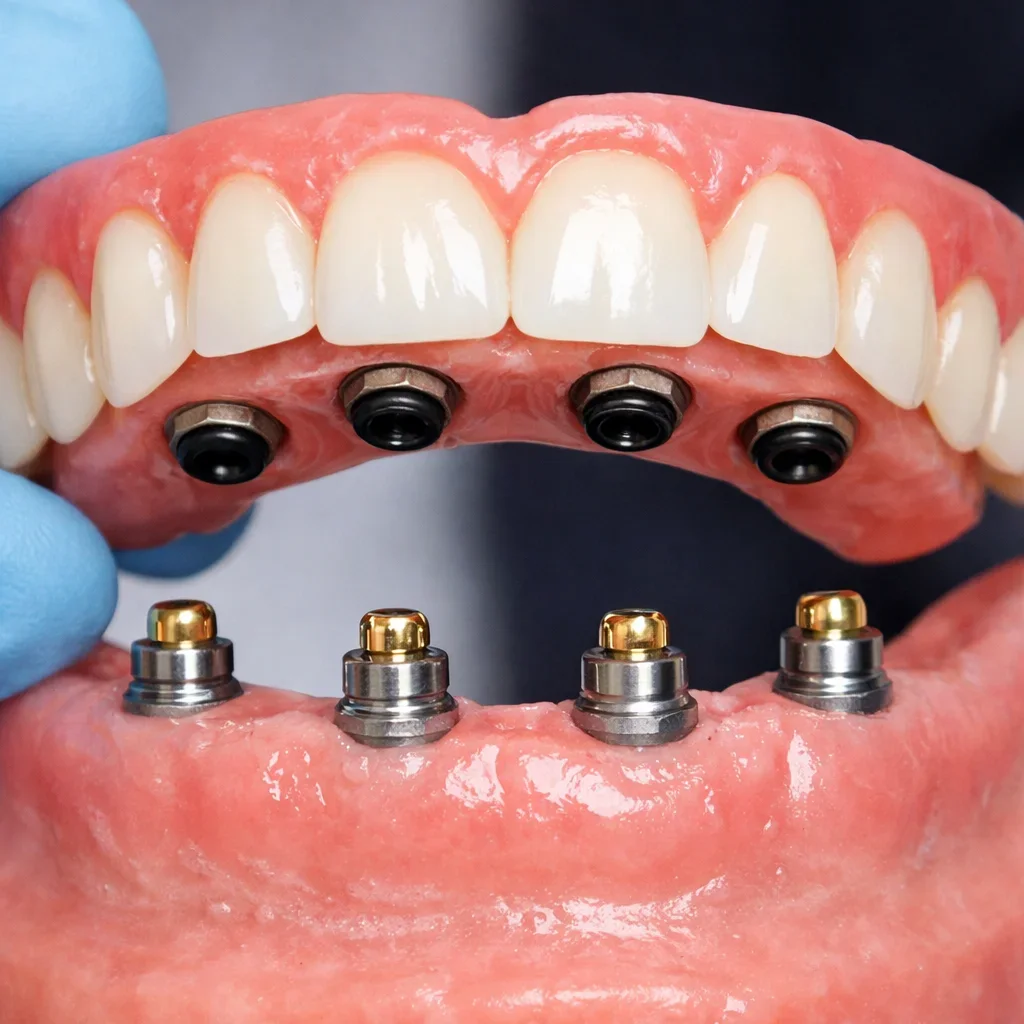
At their core, snap on lower dentures combine two essential components: dental implants and a customized overdenture. The implants act as artificial tooth roots embedded in the jawbone, while the denture contains special attachments that “snap” onto those implants. This snapping mechanism ensures that snap on lower dentures remain stable during daily activities such as eating, speaking, and smiling 😊.
Understanding the Implant-Supported Overdenture Concept
Another name for snap on lower dentures is “implant-retained overdentures.” The term overdenture refers to a removable prosthesis that sits over dental implants. Unlike fixed full-arch bridges, snap on lower dentures can be removed by the patient for cleaning, making them easier to maintain while still offering excellent stability.
Typically, two to four implants are placed in the front region of the lower jaw. After a healing period—during which the implants fuse with the bone through a process called osseointegration—the dentist attaches small connectors. These connectors allow the denture to click securely into place. Once attached, snap on lower dentures feel much more secure than conventional lower dentures.
Key Structural Components of Snap On Lower Dentures
- Dental Implants: Titanium posts surgically placed into the jawbone.
- Attachment System: Usually ball, locator, or bar attachments that enable the snapping mechanism.
- Customized Denture Base: Designed to match the patient’s gums and facial structure.
- Artificial Teeth: High-quality acrylic or porcelain teeth that restore appearance and function.
Each component works together to ensure that snap on lower dentures provide optimal retention and chewing efficiency. Because of this design, patients experience less movement and significantly fewer pressure sores compared to traditional dentures.
How Snap On Lower Dentures Differ from Traditional Dentures
Traditional lower dentures rely on suction and adhesive. Unfortunately, suction is often weak in the lower jaw due to tongue movement and reduced bone volume. This is why many patients complain about slipping or clicking noises. Snap on lower dentures eliminate these issues by anchoring directly to implants, creating a mechanical retention system instead of depending solely on gum support.
Another difference is chewing strength. Studies show that implant-supported options like snap on lower dentures can significantly improve bite force compared to conventional dentures. This means patients can eat a wider variety of foods without discomfort or fear of displacement.
Who Typically Needs Snap On Lower Dentures?
Patients who benefit most from snap on lower dentures usually fall into one of the following categories:
- Individuals with loose or unstable lower dentures.
- Patients experiencing sore gums due to denture movement.
- People with moderate jawbone loss who still have sufficient bone for implants.
- Those seeking a more affordable alternative to fixed full-arch implant bridges.
Because snap on lower dentures require implants, candidates must have adequate bone density or be eligible for bone grafting if needed. A comprehensive evaluation including X-rays or 3D scans helps determine suitability.
Functional and Psychological Benefits
Beyond mechanical stability, snap on lower dentures offer major psychological benefits. Many patients report improved confidence in social settings. The fear of dentures shifting while talking or laughing is dramatically reduced. This stability allows individuals to focus on enjoying conversations rather than worrying about their smile.
Functionally, snap on lower dentures improve speech clarity. Traditional lower dentures sometimes move when pronouncing certain words, especially those requiring tongue pressure. With implant retention, speech becomes more predictable and natural.
Daily Life Improvements
With snap on lower dentures, patients often experience:
- Better control while chewing tougher foods.
- Reduced gum irritation.
- Less reliance on denture adhesives.
- Improved overall oral comfort.
Long-Term Oral Health Considerations
One of the most important aspects of snap on lower dentures is bone preservation. Dental implants stimulate the jawbone during chewing, helping to slow bone resorption. Without this stimulation, bone loss can progress rapidly. By choosing snap on lower dentures, patients help maintain their jaw structure and facial profile over time.
Additionally, because snap on lower dentures are removable, cleaning around the implants is straightforward. Proper hygiene reduces the risk of peri-implant inflammation and ensures the longevity of both the implants and the prosthesis.
In conclusion, snap on lower dentures are a modern, implant-supported solution designed to improve stability, comfort, and function in the lower jaw. By combining removable convenience with implant security, snap on lower dentures address the limitations of traditional dentures and provide a reliable long-term option for patients seeking improved quality of life. For many individuals struggling with unstable lower dentures, snap on lower dentures represent a life-changing advancement in restorative dentistry.
How Snap On Lower Dentures Work with Dental Implants
Snap on lower dentures function through a carefully engineered connection between dental implants and a removable prosthetic denture. This system combines surgical precision with restorative design to create a stable, functional, and long-lasting solution for patients missing all lower teeth. Understanding how snap on lower dentures work helps patients feel confident about the procedure and the long-term benefits.
The foundation of snap on lower dentures lies in dental implants. These small titanium posts are surgically placed into the lower jawbone. Titanium is biocompatible, meaning it integrates naturally with bone tissue. After placement, a healing period of several weeks to a few months allows the implants to fuse with the jawbone in a process called osseointegration. This fusion creates a solid anchor for snap on lower dentures, preventing movement and improving chewing stability.
The Role of Dental Implants in Snap On Lower Dentures
Most snap on lower dentures are supported by two to four implants positioned strategically in the front portion of the lower jaw. This area typically maintains stronger bone density compared to the back regions. Once integrated, the implants serve as artificial tooth roots. Unlike traditional dentures that rest directly on the gums, snap on lower dentures rely on these implants for retention.
The implants are fitted with special attachment components. These connectors allow the denture to securely attach and detach. When the denture is pressed into place, it clicks or “snaps” onto the implants—hence the name snap on lower dentures 😊. This snapping mechanism ensures a firm hold while still allowing easy removal for cleaning.
Common Attachment Systems Used
- Ball Attachments: A ball-shaped connector on the implant fits into a socket within the denture.
- Locator Attachments: Low-profile connectors offering strong retention and easy replacement.
- Bar Systems: A metal bar connects multiple implants, and the denture clips onto the bar.
Each system is carefully selected based on the patient’s anatomy, bite force, and long-term goals. Regardless of the attachment type, the goal of snap on lower dentures remains the same: maximize stability while maintaining removability.
Step-by-Step Functional Mechanism
To fully understand how snap on lower dentures work, it helps to break the process into stages:
1. Surgical Placement of Implants
The dentist places the implants into the lower jaw under local anesthesia. This is typically a minor outpatient procedure.
2. Healing and Integration
During healing, the implants fuse with the bone. This integration is what gives snap on lower dentures their exceptional stability.
3. Attachment Installation
Once healing is complete, the dentist installs attachment components onto the implants.
4. Denture Fabrication and Fitting
A custom denture is designed to align perfectly with the attachments. When inserted, snap on lower dentures click securely into place.
Once fitted, patients immediately notice improved retention compared to conventional lower dentures. Snap on lower dentures remain stable even when chewing firmer foods or speaking for extended periods.
Why Stability Is Significantly Improved
The reason snap on lower dentures outperform traditional dentures is mechanical retention. Traditional dentures rely mainly on suction and muscle control. However, the lower jaw provides limited suction due to tongue movement and anatomical shape. By anchoring to implants, snap on lower dentures bypass these limitations entirely.
This implant anchorage distributes chewing forces more evenly across the jawbone. Instead of pressure concentrating on soft gum tissue, the load transfers through the implants into the bone. As a result, snap on lower dentures feel more secure and reduce gum irritation.
Bone Stimulation and Preservation
Another crucial function of snap on lower dentures is bone stimulation. When teeth are missing, the jawbone gradually shrinks because it lacks stimulation. Implants used in snap on lower dentures transmit chewing forces into the bone, helping preserve bone density. This slows facial collapse and maintains a more youthful appearance over time.
By supporting bone health, snap on lower dentures contribute not only to functional improvement but also to long-term structural preservation of the jaw.
Daily Use and Practical Function
In daily life, snap on lower dentures are simple to manage. Patients insert them each morning by aligning the denture with the implant attachments and applying gentle pressure until they snap into place. Removal is equally straightforward. Despite being removable, snap on lower dentures remain secure during meals and conversations.
Because of this balance between retention and removability, snap on lower dentures offer both convenience and reliability. Patients can clean them thoroughly outside the mouth, which supports better hygiene around the implants.
In summary, snap on lower dentures work by combining surgically placed dental implants with precision-engineered attachment systems. This integration creates a secure yet removable denture solution that dramatically improves stability, chewing function, and comfort. By understanding the mechanical and biological principles behind snap on lower dentures, patients can appreciate why this implant-supported approach has become one of the most trusted solutions for restoring lower arch stability in modern dentistry.
Benefits of Choosing Snap On Lower Dentures
Choosing snap on lower dentures is often a life-changing decision for patients who have struggled with unstable traditional dentures. The lower jaw presents unique challenges due to tongue movement, reduced bone support, and limited surface area for suction. Because of these anatomical limitations, many patients experience discomfort and frustration. Snap on lower dentures address these problems directly by combining dental implants with a secure attachment system, offering substantial improvements in stability, function, and confidence.
One of the most significant advantages of snap on lower dentures is stability. Traditional lower dentures frequently slip or shift during chewing or speaking. In contrast, snap on lower dentures anchor directly to implants embedded in the jawbone. This mechanical retention dramatically reduces unwanted movement, allowing patients to feel secure in everyday situations 😊.
Improved Stability and Chewing Efficiency
Stability directly impacts chewing performance. With conventional dentures, patients often avoid hard or fibrous foods due to fear of dislodgement. Snap on lower dentures significantly increase bite force compared to traditional options. Because the implants absorb and distribute chewing pressure into the jawbone, snap on lower dentures provide a firmer foundation for eating a wider variety of foods.
Foods Patients Can Enjoy More Comfortably
- Fresh fruits and vegetables
- Lean meats and proteins
- Nuts and seeds (with moderation)
- Whole-grain breads
By restoring stronger chewing ability, snap on lower dentures contribute not only to comfort but also to better nutrition and overall health.
Enhanced Comfort and Reduced Gum Irritation
Another key benefit of snap on lower dentures is improved comfort. Traditional dentures sit entirely on the gums, which can lead to sore spots and pressure points. Since snap on lower dentures are supported by implants, they reduce the amount of direct pressure placed on soft tissue. This helps minimize friction and chronic irritation.
Additionally, many patients find they no longer need denture adhesives when using snap on lower dentures. Eliminating adhesive products reduces mess and simplifies daily routines. The secure snapping mechanism ensures snap on lower dentures remain firmly in place without extra products.
Improved Speech and Social Confidence
Speech clarity is often compromised when dentures move unexpectedly. Clicking sounds or slight shifting can interfere with pronunciation. With snap on lower dentures, the secure implant retention improves stability during speech. Patients frequently report clearer articulation and greater ease when talking for extended periods.
Psychologically, this stability boosts confidence. Many individuals feel anxious about dentures slipping during social interactions. Snap on lower dentures reduce this fear significantly. Whether attending meetings, family gatherings, or dining out, patients feel more secure and relaxed.
Bone Preservation and Facial Structure Support
One of the most overlooked yet important benefits of snap on lower dentures is bone preservation. When teeth are missing, the jawbone begins to shrink due to lack of stimulation. Dental implants used in snap on lower dentures stimulate the bone during chewing, helping maintain bone density over time.
This preservation slows facial collapse and supports long-term oral health. By preventing excessive bone loss, snap on lower dentures contribute to maintaining natural facial contours and reducing the “sunken” appearance often associated with long-term denture wearers.
Removability with Security
Unlike fixed full-arch implant bridges, snap on lower dentures are removable. This provides convenience for cleaning while still offering strong retention during use. Patients can remove their snap on lower dentures nightly for thorough cleaning, promoting better hygiene around the implant attachments.
Daily Maintenance Advantages
- Easy removal for brushing and soaking
- Improved access for cleaning implant areas
- Lower risk of trapped food debris
This combination of security and removability makes snap on lower dentures a balanced solution for many patients.
Long-Term Durability and Cost-Effectiveness
Although the initial investment for snap on lower dentures may be higher than conventional dentures, the long-term value is often superior. Because implants help preserve bone and improve stability, patients typically require fewer adjustments and relines. Over time, snap on lower dentures may reduce the need for frequent replacements compared to traditional lower dentures.
Furthermore, improved chewing efficiency can positively impact overall health, potentially lowering future healthcare costs associated with poor nutrition.
Quality of Life Transformation
Perhaps the most powerful benefit of snap on lower dentures is the overall improvement in quality of life. Patients often describe feeling “normal” again. Eating becomes enjoyable rather than stressful. Social interactions feel natural. Daily routines become simpler and more predictable.
In summary, the benefits of snap on lower dentures extend far beyond simple tooth replacement. They offer enhanced stability, improved chewing efficiency, greater comfort, better speech clarity, bone preservation, and increased confidence. By combining implant technology with removable convenience, snap on lower dentures provide a comprehensive and reliable solution for individuals seeking a stable and long-term alternative to traditional lower dentures.
Who Is a Good Candidate for Snap On Lower Dentures?
Not every patient with missing lower teeth automatically qualifies for snap on lower dentures, but many adults who struggle with unstable dentures are excellent candidates. Determining whether snap on lower dentures are suitable involves evaluating bone density, oral health, medical history, and lifestyle expectations. Because snap on lower dentures rely on dental implants for retention, proper clinical assessment is essential before beginning treatment.
In general, the best candidates for snap on lower dentures are individuals who are completely edentulous (missing all lower teeth) or those who require full lower arch extraction. Patients who are frustrated with slipping traditional dentures often find that snap on lower dentures dramatically improve daily comfort and confidence 😊.
Patients with Unstable Traditional Dentures
One of the most common reasons patients consider snap on lower dentures is chronic instability. Lower dentures frequently shift due to tongue movement and reduced bone support. If you rely heavily on adhesives or avoid certain foods because of movement, snap on lower dentures may provide the stability you need.
Signs You May Benefit
- Dentures move while chewing
- Sore spots caused by denture friction
- Clicking sounds when speaking
- Frequent denture relines due to bone loss
Because snap on lower dentures anchor directly to implants, they eliminate many of these common frustrations.
Patients with Adequate Jawbone Density
Since snap on lower dentures require implant placement, sufficient bone density in the lower jaw is important. The front region of the mandible often retains good bone volume, even in long-term denture wearers. A 3D scan or panoramic X-ray allows the dentist to assess whether the jaw can support implants for snap on lower dentures.
If bone loss has occurred, bone grafting procedures may still make snap on lower dentures possible. Modern implant techniques have expanded eligibility for many patients who were once considered unsuitable.
Patients Seeking Improved Function but Removability
Some individuals want greater stability than traditional dentures provide but prefer a removable option rather than a fully fixed bridge. Snap on lower dentures are ideal for this group. They combine implant retention with the convenience of removal for cleaning.
Compared to fixed full-arch restorations, snap on lower dentures are often more affordable and easier to maintain. This balance makes them attractive to patients seeking both performance and practicality.
Patients in Good General Health
Because snap on lower dentures involve minor oral surgery for implant placement, overall health plays a role. Candidates should have controlled medical conditions and healthy gum tissue. Chronic conditions such as diabetes must be well managed. Smoking may impact implant success, so patients considering snap on lower dentures are encouraged to reduce or quit smoking.
Medical Considerations
- Controlled diabetes
- Stable cardiovascular health
- No active oral infections
- Commitment to good oral hygiene
With proper evaluation, many patients can safely proceed with snap on lower dentures even if they have manageable medical conditions.
Patients Experiencing Rapid Bone Loss
Long-term denture wear can accelerate bone resorption. Because snap on lower dentures use implants that stimulate the jawbone, they help slow future bone loss. Patients concerned about facial collapse or shrinking jaw structure may find snap on lower dentures beneficial for preserving facial support and maintaining a youthful appearance.
Realistic Expectations and Commitment
Successful outcomes with snap on lower dentures require realistic expectations and ongoing care. While snap on lower dentures significantly improve stability, they are not identical to natural teeth. Patients must understand that maintenance, hygiene, and periodic check-ups are necessary.
Those willing to attend follow-up visits and maintain daily cleaning routines typically experience long-term satisfaction with snap on lower dentures.
Who May Not Be an Ideal Candidate?
Although snap on lower dentures benefit many patients, certain conditions may require alternative solutions. Severe uncontrolled systemic diseases, extremely limited bone without grafting options, or inability to maintain oral hygiene may limit eligibility. In such cases, a dental professional can recommend alternative implant-supported or conventional treatments.
Ultimately, determining candidacy for snap on lower dentures requires a comprehensive consultation. Diagnostic imaging, oral examination, and medical review allow clinicians to create a personalized treatment plan. For patients frustrated by unstable dentures and seeking improved function, snap on lower dentures frequently represent a transformative and reliable solution.
In summary, good candidates for snap on lower dentures include individuals with unstable lower dentures, sufficient jawbone density, good general health, and a desire for improved function with removable convenience. With proper evaluation and commitment to care, snap on lower dentures can restore stability, comfort, and confidence for many patients seeking a long-term solution.
Procedure Timeline for Snap On Lower Dentures
Understanding the complete treatment timeline for snap on lower dentures helps patients feel more prepared and confident before starting the process. While every case is unique, the journey toward stable snap on lower dentures generally follows a structured sequence that includes consultation, implant placement, healing, denture fabrication, and final attachment. Because snap on lower dentures rely on dental implants for retention, careful planning and staged treatment are essential for long-term success.
Initial Consultation and Diagnostic Planning
The first step in obtaining snap on lower dentures is a comprehensive consultation. During this visit, the dentist evaluates oral health, bone density, bite alignment, and overall medical history. Digital imaging such as panoramic X-rays or 3D cone beam scans helps determine whether the lower jaw has sufficient bone to support implants for snap on lower dentures.
At this stage, patients can discuss expectations, lifestyle goals, and concerns. The dentist explains how snap on lower dentures work, outlines the number of implants required, and presents a personalized treatment plan. If extractions are necessary before placing implants, this will also be scheduled.
Key Planning Components
- Bone density evaluation
- Assessment of gum health
- Medical history review
- Treatment timeline estimation
Proper planning ensures that snap on lower dentures will function optimally once completed.
Implant Placement Surgery
The next stage involves surgical placement of dental implants into the lower jaw. Typically, two to four implants are placed to support snap on lower dentures. The procedure is usually performed under local anesthesia and is considered minimally invasive. Most patients report only mild discomfort afterward.
These titanium implants serve as the foundation for snap on lower dentures. After placement, the implants are left beneath the gum tissue to heal and integrate with the bone.
Immediate Aftercare
- Mild swelling and tenderness are common
- Soft diet is recommended for several days
- Proper oral hygiene must be maintained
Following post-operative instructions carefully improves healing and prepares the jaw for stable snap on lower dentures.
Healing and Osseointegration Phase
One of the most important stages in the snap on lower dentures process is osseointegration. This is when the implants fuse naturally with the jawbone. Healing typically takes between 8 to 16 weeks, depending on bone quality and overall health.
During this time, temporary dentures may be adjusted for comfort. Although patients must wait before attaching the final snap on lower dentures, this healing period is critical. The long-term stability of snap on lower dentures depends on successful implant integration.
Attachment Placement and Impression Taking
Once healing is complete, the dentist exposes the implants and attaches connector components. These attachments allow the denture to snap securely into place. Precision impressions are then taken to fabricate the custom snap on lower dentures.
The dental laboratory designs the denture base and artificial teeth to match facial structure, bite alignment, and aesthetic goals. Accurate measurements ensure that snap on lower dentures fit comfortably and align properly with the upper teeth.
Customization Details
- Tooth color selection
- Gum shade matching
- Bite adjustment planning
Final Fitting and Delivery
When the custom prosthesis is ready, the dentist schedules a fitting appointment. During this visit, snap on lower dentures are carefully positioned and snapped onto the implant attachments. Minor adjustments are made to optimize comfort and occlusion.
Patients are instructed on how to insert and remove snap on lower dentures properly. The snapping mechanism should feel secure yet manageable. Many patients immediately notice improved stability compared to traditional dentures 😊.
Follow-Up and Adaptation Period
After receiving snap on lower dentures, follow-up appointments ensure everything functions correctly. The dentist checks attachment retention, gum response, and bite alignment. Over the first few weeks, patients adapt to speaking and chewing with snap on lower dentures.
It is normal to experience a short adaptation phase as muscles adjust to the improved stability. However, most individuals quickly appreciate the difference that snap on lower dentures provide.
Total Timeline Overview
The complete process for snap on lower dentures typically ranges from three to six months, depending on healing speed and whether additional procedures such as bone grafting are required. Although this timeline may seem lengthy, the long-term benefits of snap on lower dentures make the structured approach worthwhile.
In summary, the journey toward stable snap on lower dentures involves consultation, implant placement, healing, attachment installation, and final denture fitting. Each step is carefully designed to ensure durability, comfort, and function. By following a systematic treatment timeline, snap on lower dentures deliver reliable, long-term improvements in stability, chewing ability, and overall quality of life.
Snap On Lower Dentures vs Traditional Lower Dentures
When patients explore tooth replacement options for the lower jaw, one of the most common comparisons is snap on lower dentures versus traditional lower dentures. While both solutions aim to restore function and appearance, the differences in stability, comfort, longevity, and daily experience are significant. Understanding these distinctions helps patients make informed decisions about whether snap on lower dentures are worth the investment compared to conventional removable dentures.
Stability and Retention Differences
The most noticeable difference between snap on lower dentures and traditional lower dentures is stability. Traditional lower dentures rely mainly on suction and the shape of the gums to stay in place. Unfortunately, the lower jaw does not provide strong natural suction due to tongue movement and limited surface area. As a result, many patients experience shifting or rocking with conventional dentures.
In contrast, snap on lower dentures are anchored to dental implants. These implants are surgically placed into the jawbone and act as secure foundations. Because snap on lower dentures physically attach to implants, they offer mechanical retention rather than depending solely on soft tissue support. This results in dramatically improved stability during speaking and eating 😊.
Practical Stability Comparison
- Traditional Dentures: May slip during chewing or talking.
- Snap On Lower Dentures: Securely snap into place and resist movement.
For patients frustrated with constant adjustments or adhesive use, snap on lower dentures often provide a transformative improvement.
Chewing Efficiency and Bite Strength
Chewing performance is another major difference. With traditional dentures, biting force is significantly reduced because pressure rests directly on the gums. This can cause discomfort and limit dietary choices. Snap on lower dentures, however, transfer chewing forces through implants into the jawbone. This structural support increases bite force and reduces gum irritation.
Studies have shown that implant-supported options like snap on lower dentures improve chewing efficiency compared to conventional dentures. Patients can typically enjoy a broader range of foods, including firmer fruits, vegetables, and proteins.
Comfort and Gum Health
Traditional lower dentures may cause sore spots, particularly as bone resorption continues over time. Because they sit entirely on the gum tissue, pressure can concentrate unevenly. Snap on lower dentures distribute forces more evenly through implants, reducing chronic pressure points.
Additionally, snap on lower dentures help preserve jawbone density by stimulating the bone during chewing. Traditional dentures do not provide this stimulation, which can accelerate bone shrinkage. Over time, this bone loss can affect facial structure and denture fit.
Long-Term Bone Considerations
- Traditional Dentures: May contribute to ongoing bone loss.
- Snap On Lower Dentures: Help maintain bone through implant stimulation.
Maintenance and Cleaning
Both traditional dentures and snap on lower dentures are removable for cleaning. However, snap on lower dentures require special attention around implant attachments. Patients must clean both the denture and the implant connectors daily to maintain long-term success.
While this may seem like additional responsibility, many patients appreciate that snap on lower dentures do not require adhesives. Eliminating adhesive products simplifies daily routines and reduces mess.
Cost Differences
Cost is an important factor when comparing snap on lower dentures to traditional dentures. Conventional lower dentures are generally more affordable initially because they do not require surgery. However, they often need frequent relines and adjustments due to ongoing bone loss.
Snap on lower dentures typically involve higher upfront costs due to implant placement and custom attachments. In the United States, the average cost for snap on lower dentures supported by two implants may range between $6,000 and $12,000, depending on location and materials. Traditional lower dentures may range between $1,000 and $3,000.
Although snap on lower dentures represent a larger initial investment, many patients consider the long-term functional and comfort benefits worth the difference.
Psychological and Social Confidence
Confidence is another major distinction. Traditional dentures may cause anxiety about slipping during conversations. Snap on lower dentures significantly reduce this concern because of their secure attachment. Patients often report feeling more natural and less self-conscious.
Improved speech clarity is also common with snap on lower dentures, as the secure fit reduces unwanted movement during pronunciation.
Overall Value Comparison
In summary, while traditional lower dentures provide a non-surgical and more affordable solution, they often lack the stability and bone-preserving advantages of snap on lower dentures. Implant-supported snap on lower dentures offer superior retention, improved chewing strength, better long-term bone health, and increased confidence.
For patients seeking a balance between affordability and enhanced performance, snap on lower dentures frequently represent a practical middle ground between conventional dentures and fully fixed implant bridges. The decision ultimately depends on individual needs, oral health status, and long-term expectations. However, for those prioritizing stability and quality of life, snap on lower dentures often stand out as the more advanced and reliable option.
Cost of Snap On Lower Dentures in 2026
Understanding the cost of snap on lower dentures in 2026 is an essential part of the decision-making process. While snap on lower dentures provide significantly greater stability and comfort compared to traditional dentures, they do involve dental implant placement, which increases the initial investment. However, when evaluating snap on lower dentures, it is important to consider both short-term pricing and long-term value.
The total cost of snap on lower dentures depends on several variables, including the number of implants required, geographic location, materials used, and whether additional procedures such as bone grafting are necessary. In most cases, snap on lower dentures are supported by two to four implants placed in the lower jaw.
Average Price Range in the United States (2026)
As of 2026, the average cost of snap on lower dentures in the United States typically ranges between:
Two-Implant Supported Snap On Lower Dentures
- $6,000 – $9,000 total
Four-Implant Supported Snap On Lower Dentures
- $8,000 – $15,000 total
This pricing usually includes implant surgery, attachment components, and the custom denture fabrication. However, fees can vary depending on clinical complexity and regional pricing differences. Some metropolitan areas may charge more for snap on lower dentures due to higher overhead and specialist involvement.
What Factors Influence the Cost?
Several elements directly affect the overall cost of snap on lower dentures. Understanding these factors helps patients evaluate estimates accurately.
1. Number of Implants
The more implants required, the higher the cost. While two implants can securely support snap on lower dentures, some patients benefit from four implants for enhanced stability.
2. Bone Grafting Needs
If the lower jaw has experienced significant bone loss, bone grafting may be required before placing implants for snap on lower dentures. This additional procedure can increase the total investment by $500 to $3,000 depending on complexity.
3. Attachment System Type
Different attachment systems (locator attachments, ball attachments, or bar systems) may influence the final cost of snap on lower dentures. Some systems offer enhanced retention but may require higher laboratory fees.
4. Material Quality
High-quality acrylic bases and premium denture teeth may increase durability and aesthetics, slightly impacting the total cost of snap on lower dentures.
Insurance Coverage and Financing
Dental insurance coverage for snap on lower dentures varies. Some plans partially cover implant placement or denture fabrication, while others categorize implants as elective procedures. Patients should verify benefits directly with their provider.
Many dental clinics offer financing plans that make snap on lower dentures more accessible. Monthly payment options can reduce the burden of upfront costs, allowing patients to benefit from improved stability sooner.
Long-Term Cost Efficiency
Although the initial investment for snap on lower dentures is higher than traditional dentures, the long-term value is often superior. Traditional dentures frequently require relines and replacements due to ongoing bone shrinkage. Because implants used in snap on lower dentures stimulate the jawbone, they help slow bone loss and maintain fit over time.
This bone preservation may reduce the need for frequent adjustments, making snap on lower dentures more cost-effective in the long run. Additionally, improved chewing efficiency may positively impact overall nutrition and health.
Cost Comparison with Other Full-Arch Options
When compared to fully fixed implant bridges (often called full-arch fixed restorations), snap on lower dentures are generally more affordable. Fixed full-arch solutions can range from $20,000 to $30,000 per arch, depending on materials and surgical complexity. In contrast, snap on lower dentures provide implant-supported stability at a more moderate price point.
This makes snap on lower dentures an attractive middle-ground solution for patients seeking enhanced function without the higher expense of fixed restorations.
Is the Investment Worth It?
For many patients, the answer is yes. The improved stability, enhanced chewing ability, reduced reliance on adhesives, and increased confidence often justify the cost of snap on lower dentures. Patients frequently report that snap on lower dentures significantly improve their quality of life 😊.
Ultimately, the cost of snap on lower dentures should be evaluated not only in financial terms but also in terms of daily comfort, social confidence, and long-term oral health benefits. By investing in snap on lower dentures, patients often gain lasting stability and peace of mind that traditional dentures simply cannot provide.
Maintenance and Cleaning of Snap On Lower Dentures
Proper maintenance is essential to protect your investment in snap on lower dentures and ensure long-term comfort, stability, and oral health. Although snap on lower dentures are more secure than traditional dentures, they still require consistent daily care. Because they connect to dental implants through attachment systems, both the denture and the implant components must be cleaned thoroughly to prevent complications.
One of the advantages of snap on lower dentures is that they are removable. This makes hygiene easier compared to fixed full-arch restorations. However, patients must develop a disciplined cleaning routine to maintain the health of the implants and surrounding gum tissue. When cared for properly, snap on lower dentures can function reliably for many years 😊.
Daily Cleaning Routine for Snap On Lower Dentures
Cleaning snap on lower dentures should become part of your morning and evening oral care routine. The process is straightforward but must be done carefully.
Step 1: Remove the Denture Carefully
Gently lift snap on lower dentures away from the implant attachments. Avoid twisting excessively, as this can strain the connectors.
Step 2: Brush the Denture
Use a soft denture brush and non-abrasive cleanser to clean snap on lower dentures. Regular toothpaste can be too abrasive and may scratch the acrylic surface.
Step 3: Clean the Implant Attachments
With the denture removed, brush around the implant abutments using a soft toothbrush. This step is crucial for maintaining the health of the implants supporting snap on lower dentures.
Step 4: Rinse Thoroughly
After brushing, rinse snap on lower dentures with lukewarm water. Avoid hot water, as excessive heat can distort the denture base.
Nighttime Care and Storage
Most dentists recommend removing snap on lower dentures at night. This allows gum tissues to rest and reduces the risk of irritation. Place the dentures in a denture-cleaning solution or plain water to prevent drying and warping.
Never sleep with snap on lower dentures unless specifically advised by your dentist. Continuous wear may increase the risk of inflammation around the implant sites.
Attachment Maintenance and Replacement
The retention mechanism in snap on lower dentures relies on small inserts within the attachment system. Over time, these inserts may wear down. Reduced snapping strength is usually the first sign that replacement is needed.
How Often Do Attachments Need Replacement?
- Every 6–18 months depending on wear
- More frequently in patients with strong bite force
Routine dental visits help ensure that the attachments supporting snap on lower dentures remain secure and functional.
Professional Maintenance Visits
Regular dental check-ups are critical for patients with snap on lower dentures. During these visits, the dentist evaluates implant stability, checks gum health, and inspects the denture base for wear.
Professional cleaning appointments may include specialized instruments designed to clean around implants supporting snap on lower dentures. Maintaining healthy gum tissue is essential for long-term implant success.
Common Hygiene Mistakes to Avoid
Even though snap on lower dentures are durable, improper cleaning habits can lead to damage or infection. Avoid these common mistakes:
- Using abrasive toothpaste on snap on lower dentures
- Skipping daily cleaning of implant attachments
- Soaking dentures in hot water
- Ignoring loose attachment signs
By preventing these errors, patients extend the lifespan of their snap on lower dentures.
Long-Term Care and Longevity
With proper care, snap on lower dentures can last 5–10 years or longer before requiring replacement. Dental implants themselves may last decades when maintained correctly. The key to long-term success with snap on lower dentures lies in consistent hygiene and regular dental evaluations.
Because implants stimulate the jawbone, snap on lower dentures also help preserve bone density over time. Maintaining healthy tissue around the implants ensures this benefit continues.
Protecting Your Investment
Snap on lower dentures represent a significant investment in both oral function and quality of life. Protecting that investment means prioritizing daily cleaning, attending regular check-ups, and replacing worn components when necessary.
When properly maintained, snap on lower dentures provide reliable stability, improved chewing ability, and enhanced confidence for years. By following a structured hygiene routine and working closely with your dental provider, you can maximize the durability and performance of your snap on lower dentures while protecting your overall oral health.
Risks, Longevity, and Long-Term Expectations
While snap on lower dentures provide outstanding stability and comfort compared to traditional dentures, it is important for patients to understand the potential risks, realistic longevity, and long-term expectations associated with this treatment. Like any implant-supported solution, snap on lower dentures involve both surgical and restorative components. Being fully informed allows patients to approach treatment confidently and maintain their snap on lower dentures successfully for many years.
Potential Risks of Snap On Lower Dentures
Although the success rate of dental implants supporting snap on lower dentures is high, no procedure is entirely risk-free. Most complications are rare and manageable when detected early.
1. Implant Failure
In a small percentage of cases, the implants supporting snap on lower dentures may fail to integrate properly with the jawbone. This risk is higher in smokers, patients with uncontrolled diabetes, or individuals with poor oral hygiene. Proper planning and follow-up care significantly reduce this risk.
2. Peri-Implant Inflammation
Peri-implantitis is an inflammatory condition affecting the tissue around implants. If plaque accumulates around the attachments of snap on lower dentures, infection can develop. Consistent cleaning and professional check-ups are essential to protect the implants.
3. Attachment Wear
The snapping mechanism that gives snap on lower dentures their stability relies on small retention inserts. Over time, these components may wear down and require replacement. Fortunately, this is a simple and routine maintenance procedure.
Longevity of Snap On Lower Dentures
One of the most encouraging aspects of snap on lower dentures is their durability. Dental implants themselves can last decades when properly maintained. The denture portion of snap on lower dentures typically lasts between 5 and 10 years before requiring replacement due to normal wear.
The longevity of snap on lower dentures depends heavily on daily hygiene habits and regular dental visits. Because implants stimulate the jawbone, they help slow bone loss, which contributes to long-term stability. This bone preservation is one of the major advantages of snap on lower dentures compared to conventional dentures.
Realistic Functional Expectations
Although snap on lower dentures significantly improve chewing efficiency, they are not identical to natural teeth. Patients can expect strong retention and better bite force compared to traditional dentures, but extremely hard foods should still be consumed with caution.
Most patients report that snap on lower dentures restore confidence in eating and speaking. However, adaptation takes time. During the first few weeks, muscles adjust to the improved stability. Patience and gradual adjustment are part of the process.
What Patients Typically Experience
- Improved speech clarity
- Enhanced chewing ability
- Greater comfort during daily activities
- Reduced need for denture adhesives
Long-Term Maintenance Responsibilities
Long-term success with snap on lower dentures requires commitment. Patients must remove and clean their dentures daily and carefully brush around implant attachments. Regular dental visits allow early detection of any issues affecting snap on lower dentures.
Attachment inserts may need replacement every 6 to 18 months depending on wear. While this is expected maintenance, it is minor compared to the functional benefits that snap on lower dentures provide.
Psychological and Quality-of-Life Impact
Over the long term, many patients describe snap on lower dentures as life-changing. The improved stability eliminates constant worry about denture movement. Social confidence increases, and daily routines become more predictable. Unlike traditional dentures that may loosen as bone shrinks, snap on lower dentures maintain better retention due to implant support.
This psychological benefit often outweighs the initial surgical concerns. When patients understand the realistic expectations associated with snap on lower dentures, satisfaction rates remain very high 😊.
When Replacement May Be Needed
Even with proper care, the acrylic base and artificial teeth of snap on lower dentures can wear over time. Signs that replacement may be necessary include cracks, reduced retention, or changes in bite alignment. Fortunately, implants can often continue functioning while only the denture portion of snap on lower dentures is replaced.
Overall Long-Term Outlook
In summary, snap on lower dentures offer a predictable and durable solution for lower tooth replacement. While minor risks exist, careful planning, good oral hygiene, and regular dental follow-up greatly enhance long-term success. With proper maintenance, snap on lower dentures can provide stable function, preserved bone structure, and improved quality of life for many years.
For patients seeking a balance between removability and implant-supported security, snap on lower dentures represent a reliable long-term investment. Understanding the risks, longevity, and realistic expectations ensures that individuals approach treatment fully informed and prepared to enjoy the lasting benefits of snap on lower dentures.