
Waste management in dental clinic environments is one of the most important responsibilities for modern dental professionals. Every dental clinic generates a variety of waste materials daily, including biological waste, sharps, chemical materials, disposable items, and general office waste. If these materials are not handled correctly, they can create serious risks for patients, dental staff, and the surrounding environment. Effective waste management in dental clinic settings ensures safety, protects public health, and supports environmentally responsible healthcare practices. 🦷
A well-organized waste management in dental clinic system begins with understanding the types of waste produced during dental procedures. Dental treatments such as fillings, extractions, root canal therapy, implant surgery, and routine cleanings can produce materials that require specialized disposal methods. These materials may include blood-soaked gauze, used needles, extracted teeth, dental amalgam containing mercury, chemical disinfectants, and disposable protective equipment. Without structured waste management in dental clinic protocols, these materials could contaminate water systems, harm waste handlers, or spread infection.
In modern dentistry, safety and hygiene are top priorities. Patients expect dental clinics to follow strict infection control and environmental standards. Proper waste management in dental clinic operations ensures that all potentially hazardous materials are handled according to healthcare safety guidelines. This includes segregating different waste categories, using appropriate containers, and ensuring that waste is transported and treated safely before final disposal.
One of the main goals of waste management in dental clinic systems is to reduce the risk of cross-contamination. Dental clinics deal with bodily fluids, bacteria, and potentially infectious materials. If these items are disposed of improperly, pathogens may spread to clinic staff, sanitation workers, or the wider community. By implementing a structured waste management in dental clinic protocol, dental practices maintain strict infection prevention measures that protect everyone involved.
Another essential component of waste management in dental clinic operations is regulatory compliance. Dental clinics must follow local healthcare regulations, environmental laws, and professional guidelines. Organizations such as the American Dental Association provide recommendations and best practices to ensure that dental facilities dispose of waste safely and responsibly. These regulations often include requirements for labeled waste containers, secure sharps disposal systems, and approved medical waste treatment services.
Beyond legal compliance, waste management in dental clinic procedures also supports environmental sustainability. Many dental materials contain substances that can harm ecosystems if they enter landfills or waterways. Dental amalgam, for example, contains mercury, which can contaminate soil and water if not properly captured and recycled. Modern waste management in dental clinic systems often include amalgam separators that prevent harmful materials from entering wastewater systems.
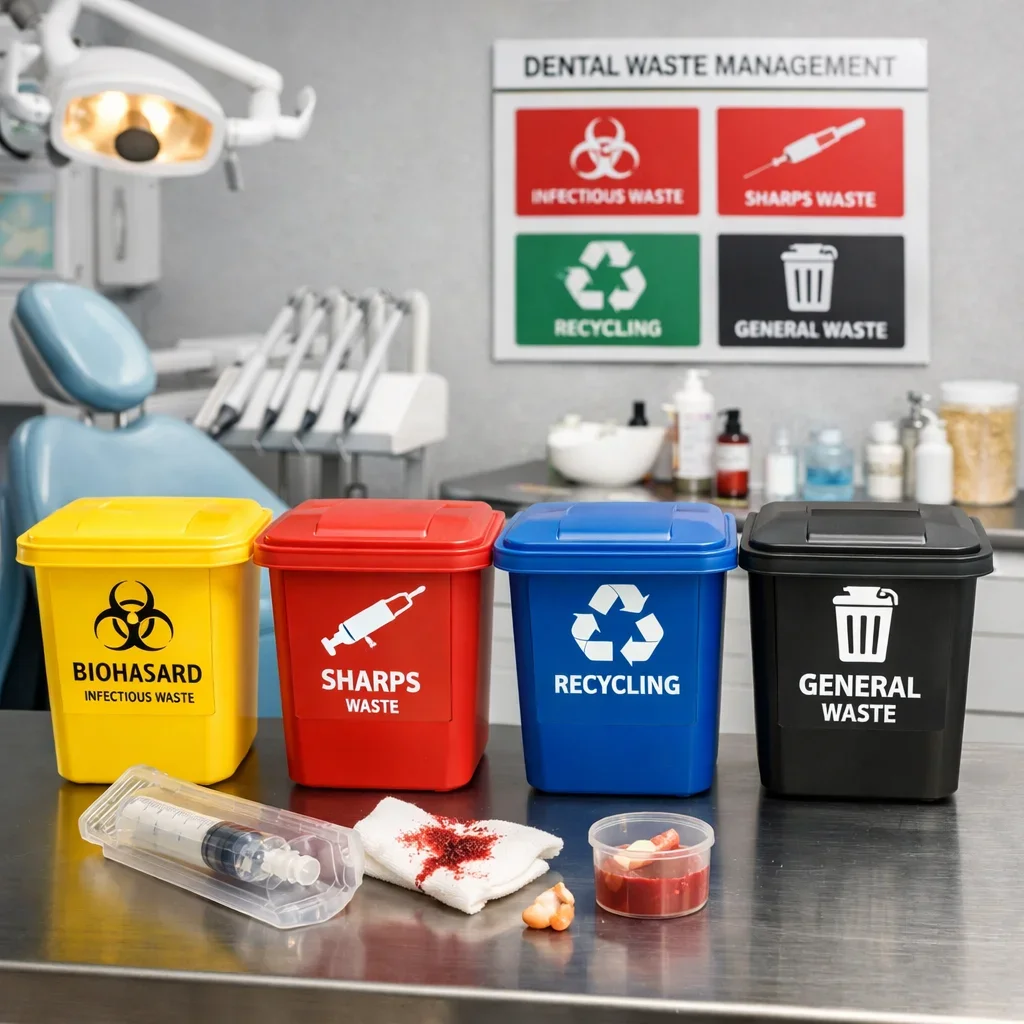
Effective waste management in dental clinic operations also improves workflow efficiency. When dental staff understand proper waste segregation procedures, they can dispose of materials quickly and safely without disrupting patient care. For example, clearly labeled containers for sharps, infectious waste, recyclable materials, and general waste help maintain an organized and hygienic clinical environment.
Dental clinics also benefit from educating patients about their commitment to safe healthcare practices. Many patients today are environmentally conscious and appreciate medical providers who prioritize responsible waste management. By demonstrating strong waste management in dental clinic protocols, dental practices can build trust and enhance their professional reputation.
For dental clinics seeking to implement comprehensive waste management in dental clinic strategies, communication and training are essential. Dental assistants, hygienists, dentists, and administrative staff must all understand their roles in handling waste properly. Training programs help staff recognize hazardous materials, use protective equipment correctly, and follow disposal procedures consistently.
If patients have questions about safety practices or environmental responsibility, dental clinics should encourage open communication. Clinics can provide additional information through patient education materials or direct contact. Patients can easily reach out through the Redent Klinik Contact Page to learn more about responsible dental care practices and clinic safety protocols.
Ultimately, waste management in dental clinic environments represents a crucial intersection of healthcare safety, environmental responsibility, and professional ethics. When dental clinics adopt modern waste management systems, they protect their staff, safeguard public health, and contribute to a cleaner environment. As dental technologies continue to evolve, the importance of waste management in dental clinic operations will only grow, making it an essential foundation for responsible and sustainable dental practice. 🌱
Why Waste Management in Dental Clinic Is Critical for Patient Safety and Public Health
Waste management in dental clinic environments plays a crucial role in protecting both patient safety and public health. Dental clinics generate a wide range of materials every day, including biological waste, sharps, chemical residues, disposable instruments, and contaminated protective equipment. Without a structured and reliable waste management in dental clinic system, these materials could expose patients, dental professionals, sanitation workers, and the surrounding community to significant health risks.
Modern dental care emphasizes strict hygiene and infection control protocols. Proper waste management in dental clinic operations ensures that potentially hazardous materials are identified, separated, and disposed of safely. By implementing standardized waste handling procedures, dental clinics maintain a clean clinical environment while preventing the spread of infectious diseases.
In addition to protecting human health, effective waste management in dental clinic systems also prevents environmental contamination. Dental procedures may involve materials containing chemicals, metals, and biomedical residues that must be handled responsibly. Without safe disposal systems, these materials could enter soil, water sources, or general waste streams, leading to long-term ecological damage. 🌱
Infection Control and Cross-Contamination Prevention
One of the primary reasons waste management in dental clinic operations is essential relates to infection prevention. Dental procedures frequently involve contact with saliva, blood, and other bodily fluids. These materials may contain bacteria, viruses, or other microorganisms that could spread disease if they are not handled properly.
Items such as gauze, cotton rolls, gloves, suction tips, and disposable instruments often become contaminated during dental treatments. If these items are disposed of in regular trash without proper containment, they could expose clinic staff and waste handlers to infectious agents. Therefore, waste management in dental clinic protocols require that infectious materials be separated into designated containers designed specifically for biomedical waste.
Proper infection control also depends on staff awareness. Dental teams must understand how to safely handle contaminated materials and follow established waste management in dental clinic guidelines consistently. Clear labeling, color-coded containers, and sealed medical waste bags are essential components of safe dental waste disposal.
Sharps Disposal and Safety Protocols
Another critical aspect of waste management in dental clinic environments involves the handling of sharps. Sharps include needles, scalpel blades, orthodontic wires, and other sharp instruments that can puncture the skin. Improper disposal of sharps presents a serious risk of injury and infection transmission.
To minimize these risks, dental clinics use puncture-resistant sharps containers that are specifically designed to prevent accidental needle sticks. Once these containers are filled to the designated level, they must be sealed and transferred to certified medical waste disposal services. This controlled approach ensures that waste management in dental clinic systems protect dental professionals and waste management personnel alike.
Protecting the Community and the Environment
Waste management in dental clinic systems also plays a vital role in protecting the broader community. Dental waste does not simply disappear after leaving the clinic. If hazardous materials are improperly discarded, they can enter municipal waste streams and eventually contaminate water sources, landfills, or recycling facilities.
For example, dental amalgam used in fillings contains mercury, which can be harmful if released into the environment. Many modern clinics install amalgam separators that capture these particles before wastewater enters public sewage systems. This is an important component of environmentally responsible waste management in dental clinic practices.
Regulatory organizations provide guidance for dental clinics to ensure safe waste disposal practices. Resources from the American Dental Association help dental professionals understand best practices for infection control and environmentally responsible waste management in dental clinic settings.
Maintaining Patient Trust and Professional Standards
Patients expect dental clinics to maintain the highest standards of hygiene and safety. When a dental clinic demonstrates strong waste management in dental clinic procedures, it reassures patients that their health and safety are being prioritized. Visible infection control measures, clean treatment areas, and organized waste containers contribute to a professional and trustworthy clinical environment. 😊
Effective waste management in dental clinic operations also reflects the ethical responsibility of healthcare providers. Dentists are not only responsible for treating oral health conditions but also for protecting the well-being of their patients and the community.
Transparency can further strengthen patient confidence. If patients have questions about safety procedures, clinics should encourage open communication. Patients who wish to learn more about hygiene protocols or clinic policies can contact dental professionals through the Redent Klinik Contact Page for additional information.
Operational Efficiency and Workplace Safety
Waste management in dental clinic environments also contributes to operational efficiency. When waste disposal systems are organized and standardized, dental staff can quickly dispose of materials without interrupting patient care. This helps maintain a smooth clinical workflow while ensuring safety standards are upheld.
Workplace safety is another major benefit. Dental professionals handle a variety of instruments and materials throughout the day. A well-structured waste management in dental clinic program minimizes workplace hazards by ensuring that sharp objects, contaminated materials, and chemicals are handled appropriately.
Ultimately, waste management in dental clinic settings is far more than a routine housekeeping task. It is a critical healthcare responsibility that protects patients, safeguards the environment, and supports professional standards in dentistry. By implementing strict waste management systems and educating staff about best practices, dental clinics create a safer, cleaner, and more sustainable healthcare environment for everyone involved.
Types of Waste Generated in a Dental Clinic and How to Classify Them Correctly
Understanding the different categories of waste is a fundamental step in building an effective waste management in dental clinic system. Dental clinics produce a diverse range of waste materials every day as part of routine patient care, diagnostic procedures, sterilization processes, and administrative activities. Proper classification ensures that each waste type is handled safely, reducing infection risks and environmental harm.
Effective waste management in dental clinic environments begins with recognizing that not all waste is the same. Some materials pose biological risks, others contain chemicals, and some are harmless general waste. When dental professionals correctly identify and separate these categories, disposal processes become safer, faster, and more compliant with healthcare regulations.
Dental clinics that implement structured waste management in dental clinic protocols help prevent cross-contamination, reduce occupational hazards, and protect the environment. Classification systems are typically based on international healthcare waste guidelines and recommendations from organizations such as the American Dental Association. These systems ensure that each category of dental waste is managed appropriately from the moment it is generated.
General Waste in Dental Clinics
General waste represents the largest portion of materials generated in dental practices. This category includes non-contaminated items such as paper towels, packaging materials, food waste from staff areas, and office-related trash. Although these materials are not hazardous, they still require responsible disposal as part of an organized waste management in dental clinic program.
Separating general waste from medical waste is critical because mixing them increases disposal costs and environmental risks. For example, if ordinary paper waste becomes contaminated with medical waste, it must be treated as hazardous material. Proper classification helps dental clinics maintain efficient waste management in dental clinic systems while reducing unnecessary treatment expenses.
Biomedical or Infectious Waste
Biomedical waste, sometimes referred to as infectious waste, includes materials contaminated with bodily fluids such as blood or saliva. Examples include used gauze, cotton rolls, surgical dressings, extracted teeth, and disposable suction tips. These materials can potentially carry microorganisms that cause infection.
Handling infectious waste properly is a cornerstone of waste management in dental clinic safety protocols. This type of waste must be placed in specially marked biohazard containers that are sealed and collected by certified medical waste disposal services. These containers are designed to prevent leakage, exposure, and accidental contact.
Dental teams must receive proper training to recognize infectious materials. By ensuring correct classification and disposal, clinics strengthen their waste management in dental clinic procedures and reduce the possibility of contamination.
Examples of Infectious Waste in Dentistry
Common examples include blood-soaked gauze, surgical gloves used during procedures, disposable saliva ejectors, and tissue samples. These materials require controlled disposal because they may carry pathogens. Effective waste management in dental clinic systems ensures that infectious waste is separated immediately after use.
Sharps Waste
Sharps waste refers to items capable of puncturing the skin, such as needles, orthodontic wires, scalpel blades, and certain dental instruments. Improper disposal of sharps can cause serious injuries and expose individuals to bloodborne infections.
In a well-organized waste management in dental clinic program, sharps are disposed of in rigid, puncture-resistant containers. These containers are designed to prevent accidental needle-stick injuries and must never be overfilled. Once the container reaches its safe capacity level, it is sealed and transferred to a licensed disposal service.
Dental clinics rely heavily on safe sharps handling to maintain workplace safety. By integrating sharps protocols into their waste management in dental clinic strategy, clinics protect both dental professionals and sanitation workers.
Chemical and Pharmaceutical Waste
Chemical waste is another important category in waste management in dental clinic systems. Dental practices frequently use disinfectants, sterilization chemicals, dental impression materials, and pharmaceutical products. Some of these substances may contain components that can be harmful if released into the environment.
Examples of chemical waste include expired medications, cleaning agents, sterilization solutions, and dental laboratory chemicals. These substances must be handled carefully and stored in designated containers until proper disposal can occur. Improper chemical disposal could contaminate water supplies or soil.
For this reason, dental clinics often partner with specialized waste disposal companies to manage chemical waste safely. These partnerships strengthen overall waste management in dental clinic operations.
Amalgam Waste and Heavy Metal Materials
Dental amalgam waste is particularly important in waste management in dental clinic practices because amalgam fillings contain mercury. Mercury is a heavy metal that can cause environmental damage if it enters water systems.
Modern dental clinics use amalgam separators to capture mercury particles before wastewater is released. These devices play a critical role in environmentally responsible waste management in dental clinic protocols. The collected amalgam material is then sent to recycling facilities that safely recover the metal.
By incorporating mercury control technologies, dental clinics demonstrate their commitment to responsible waste management in dental clinic practices and environmental protection. 🌱
Recyclable Materials in Dental Clinics
Not all dental waste is hazardous. Many materials used in dental clinics can be recycled if they are properly separated. Examples include certain plastics, paper packaging, cardboard boxes, and non-contaminated metal instruments.
Recycling initiatives can significantly improve waste management in dental clinic sustainability efforts. By separating recyclable materials, dental practices reduce landfill waste and support environmental conservation.
Staff awareness plays a major role in successful recycling programs. When employees understand how waste management in dental clinic systems work, they can easily identify which materials belong in recycling bins.
The Importance of Proper Waste Classification
Accurate waste classification is the foundation of safe and efficient waste management in dental clinic environments. When waste types are correctly identified at the point of generation, the entire disposal process becomes safer and more streamlined.
Clear labeling, color-coded containers, and staff education all contribute to successful waste management in dental clinic systems. These practices ensure that hazardous materials are handled with care while non-hazardous waste is processed efficiently.
Patients also benefit from these practices. Dental clinics that prioritize proper waste management demonstrate a commitment to high standards of hygiene and environmental responsibility. Patients who wish to learn more about clinic safety policies can easily reach out through the Redent Klinik Contact Page for additional information.
Ultimately, identifying and classifying waste correctly allows dental clinics to maintain safe treatment environments, comply with healthcare regulations, and reduce their environmental footprint. A strong waste management in dental clinic system begins with understanding what types of waste exist and how each should be handled responsibly.
Step-by-Step Waste Segregation Process in Waste Management in Dental Clinic
One of the most important pillars of effective waste management in dental clinic environments is proper waste segregation. Segregation means separating different types of waste at the point where they are generated. When waste is correctly sorted immediately after a dental procedure, it becomes significantly easier to manage, transport, and dispose of safely. Without an organized segregation system, hazardous materials could mix with general waste, increasing risks to healthcare workers, sanitation personnel, patients, and the environment.
Modern waste management in dental clinic systems rely on clear protocols that guide dental staff in identifying and disposing of waste appropriately. Every dental professional—from dentists and hygienists to assistants and sterilization technicians—plays a role in maintaining proper segregation practices. By following structured waste management in dental clinic procedures, dental facilities maintain a clean and compliant healthcare environment.
Segregation is especially important in dental settings because many procedures generate multiple waste types simultaneously. A simple tooth extraction, for example, may produce contaminated gauze, disposable suction tips, sharps such as needles, and general packaging waste. Effective waste management in dental clinic systems ensure that each of these materials is directed into the correct disposal stream immediately after use.
Identifying Waste at the Point of Generation
The first step in waste management in dental clinic segregation is identifying the type of waste being produced. Dental staff must be able to quickly determine whether an item belongs to infectious waste, sharps waste, chemical waste, recyclable material, or general waste.
For example, items that have been exposed to blood or saliva should be classified as infectious waste. Sharps such as needles and orthodontic wires require immediate placement into puncture-resistant containers. Chemical materials used during sterilization or dental laboratory work may require specialized disposal procedures. Proper identification is essential to ensure safe waste management in dental clinic environments.
Many dental clinics support this process by placing clearly labeled waste containers throughout treatment areas. These containers are typically color-coded and positioned conveniently so that dental staff can dispose of materials without interrupting patient care.
Training Dental Staff for Proper Waste Identification
Training is a critical component of successful waste management in dental clinic programs. Staff members must understand how to recognize different waste categories and respond quickly during clinical procedures. Regular training sessions and safety briefings help ensure that all team members remain confident and compliant with waste segregation protocols.
Training programs often include infection control education, safe handling procedures, and demonstrations of proper waste container usage. These programs strengthen overall waste management in dental clinic practices and promote a culture of safety.
Using Proper Containers and Segregation Tools
Effective waste management in dental clinic systems rely heavily on the correct use of disposal containers. Each category of dental waste must be placed into a container specifically designed for that type of material. This prevents contamination and ensures that waste can be handled safely during transportation and treatment.
Sharps containers, for example, are rigid and puncture-resistant to prevent needle injuries. Biohazard waste bags are designed to contain infectious materials without leaking. Chemical waste containers are often sealed to prevent exposure to hazardous substances. By using these specialized containers, dental clinics maintain reliable waste management in dental clinic systems.
Color-coding systems further simplify the segregation process. Common examples include red bags for infectious waste, yellow containers for sharps, and black bags for general waste. These visual cues allow dental staff to make quick disposal decisions during busy clinical procedures.
Temporary Storage and Waste Collection
After segregation, waste must be stored safely until it is collected by authorized disposal services. Temporary storage areas are another important component of waste management in dental clinic infrastructure. These areas should be clearly labeled, secured, and separated from patient care spaces.
Infectious waste containers must remain sealed and protected to prevent accidental exposure. Sharps containers should never be overfilled, as this increases the risk of injury. Chemical waste containers must be stored according to safety regulations to avoid leaks or chemical reactions.
Dental clinics typically work with licensed medical waste disposal providers who collect and transport hazardous waste for specialized treatment. This partnership ensures that waste management in dental clinic systems remain compliant with healthcare regulations and environmental standards.
Regulatory Guidelines and Compliance
Many national and international organizations provide guidance for dental waste management. The American Dental Association offers detailed recommendations regarding infection control and waste disposal procedures. Following these guidelines helps dental clinics maintain high professional standards and ensure safe waste management in dental clinic environments.
Regulations often specify how long waste can be stored, how containers should be labeled, and which disposal services are authorized to handle medical waste. Dental clinics must remain informed about these requirements to maintain compliance.
Reducing Waste Through Efficient Segregation
Another benefit of proper waste management in dental clinic segregation is waste reduction. When waste streams are correctly separated, recyclable materials can be recovered and processed rather than being treated as hazardous waste. This approach reduces disposal costs and supports environmentally responsible healthcare practices.
Dental clinics may recycle materials such as paper packaging, cardboard boxes, and certain plastics when they are not contaminated. Some clinics also implement amalgam recycling programs to safely recover mercury-containing materials.
By focusing on efficient waste management in dental clinic segregation systems, dental practices can reduce their environmental footprint while maintaining high standards of patient safety.
Building a Culture of Safety and Responsibility
Successful waste management in dental clinic operations depends on teamwork. Every member of the dental team must remain committed to proper segregation practices. When staff consistently follow established protocols, the clinic maintains a safe and organized clinical environment.
Patients also appreciate clinics that demonstrate strong safety and environmental responsibility. Transparent communication about hygiene standards and waste disposal practices builds trust and confidence in the dental care provider. Patients who wish to learn more about clinic safety protocols can reach out through the Redent Klinik Contact Page for additional information.
Ultimately, step-by-step segregation is the backbone of effective waste management in dental clinic systems. By identifying waste types correctly, using appropriate containers, training staff, and following regulatory guidelines, dental clinics create a safer workplace and protect both public health and the environment. ♻️
Color-Coding Systems Used in Waste Management in Dental Clinic
Color-coding systems play a vital role in the success of waste management in dental clinic environments. Because dental clinics generate multiple types of waste—including infectious materials, sharps, chemical waste, and general waste—clear visual systems are necessary to ensure safe disposal. Color-coded containers and bags help dental professionals quickly identify where each type of waste should be placed, reducing the risk of contamination and accidental exposure.
In busy dental clinics, staff members must dispose of materials quickly while maintaining strict hygiene protocols. Without visual guidance, mistakes could occur, leading to unsafe waste handling. Implementing standardized color-coding protocols improves efficiency and strengthens overall waste management in dental clinic practices. These systems allow dental teams to immediately recognize waste categories and follow proper disposal procedures without hesitation.
Color-coded waste segregation is widely recommended by healthcare organizations and regulatory bodies. Many international healthcare standards support the use of color systems to simplify waste classification. For dental clinics striving to maintain high safety standards, integrating color-coded containers into waste management in dental clinic programs is considered an essential best practice.
Why Color Coding Is Essential in Dental Waste Management
The main purpose of color coding in waste management in dental clinic systems is to prevent cross-contamination. Dental procedures often generate different waste types simultaneously, including contaminated gauze, used needles, chemical materials, and general trash. Without a clear system for separating these materials, hazardous waste could easily mix with non-hazardous waste.
Color-coded containers provide a simple and effective visual cue that helps staff immediately recognize which waste belongs where. This reduces confusion and ensures compliance with infection control standards. For example, a dental assistant disposing of blood-contaminated gauze can immediately recognize the correct container without needing to read detailed labels.
By supporting fast and accurate waste separation, color coding strengthens overall waste management in dental clinic systems while reducing potential health risks for staff and waste handlers.
Improving Workplace Safety Through Visual Systems
Visual communication tools like color coding improve workplace safety by reducing human error. In fast-paced clinical environments, quick decisions are often necessary. Clear visual indicators allow dental professionals to dispose of materials safely even during complex procedures.
Integrating visual safety systems into waste management in dental clinic protocols ensures that staff members remain protected from potential exposure to infectious or hazardous materials. These systems also help new employees quickly learn proper waste disposal procedures.
Common Color Codes Used in Dental Clinics
Although exact color standards may vary slightly by country or healthcare authority, most waste management in dental clinic systems follow widely recognized color guidelines. These standardized colors make it easier for healthcare workers to recognize waste categories regardless of the clinic or hospital where they work.
Red Containers – Infectious and Biomedical Waste
Red bags or containers are typically used for infectious waste. In dental clinics, this includes materials contaminated with blood or saliva, such as gauze, cotton rolls, surgical gloves, and disposable suction tips. Because these materials may carry bacteria or viruses, they must be handled carefully.
In waste management in dental clinic procedures, red containers are clearly labeled with biohazard symbols. These containers are sealed and transported to specialized treatment facilities where infectious waste is sterilized or incinerated according to healthcare regulations.
Yellow Containers – Sharps Waste
Sharps containers are usually yellow and made from rigid, puncture-resistant plastic. They are specifically designed to hold needles, scalpel blades, orthodontic wires, and other sharp instruments that could cause injuries.
Proper sharps disposal is a critical component of waste management in dental clinic safety protocols. By placing sharps directly into secure containers after use, dental professionals minimize the risk of accidental needle-stick injuries and potential exposure to bloodborne pathogens.
Black or Clear Bags – General Waste
Black or clear bags are commonly used for non-hazardous general waste. This includes items such as paper towels, packaging materials, office waste, and food-related trash from staff areas. Although these materials are not hazardous, they must still be separated from clinical waste to maintain organized waste management in dental clinic systems.
Separating general waste also helps reduce medical waste treatment costs. When non-hazardous materials are mistakenly placed in biohazard containers, they must be processed as medical waste, which increases disposal expenses.
Blue or White Containers – Recyclable Materials
Some dental clinics also use blue or white containers for recyclable materials such as paper packaging, cardboard boxes, and certain plastics that are not contaminated. Recycling initiatives are becoming increasingly important in modern waste management in dental clinic programs.
By separating recyclable materials from hazardous waste, dental clinics reduce landfill waste and support environmental sustainability. ♻️
Training Staff to Follow Color-Coding Protocols
Even the most effective color-coding systems will not work without proper staff training. Dental teams must understand how to use the color-coded containers correctly as part of the clinic’s waste management in dental clinic procedures.
Training programs typically include demonstrations, visual charts, and infection control guidelines. Staff members learn how to identify waste types and where to dispose of them safely. Continuous education ensures that all team members follow standardized waste management in dental clinic protocols.
Healthcare organizations such as the American Dental Association provide educational resources that support proper waste disposal and infection control practices.
Environmental Benefits of Color-Coded Waste Segregation
Color-coded waste segregation not only improves safety but also supports environmental protection. When waste streams are separated correctly, recyclable materials can be recovered and processed instead of being treated as hazardous waste.
For example, recyclable packaging materials can be directed to recycling facilities, while hazardous materials receive specialized treatment. This organized approach strengthens the sustainability of waste management in dental clinic operations.
Dental clinics that adopt environmentally responsible waste practices demonstrate their commitment to community health and environmental stewardship.
Building Patient Confidence Through Visible Safety Practices
Patients notice when dental clinics maintain clean and organized treatment areas. Visible waste segregation systems reassure patients that the clinic follows strict safety protocols. This transparency strengthens patient trust and reinforces the clinic’s professional reputation.
If patients have questions about hygiene standards or environmental policies, dental clinics should encourage open communication. Patients can request additional information or safety details through the Redent Klinik Contact Page.
Ultimately, color-coding systems form a critical part of effective waste management in dental clinic environments. By simplifying waste identification, improving safety, and supporting environmental sustainability, these visual systems help dental clinics maintain the highest standards of healthcare responsibility.
Safe Storage and Temporary Holding of Dental Waste Before Disposal
Safe storage and temporary holding are critical stages of waste management in dental clinic operations. After waste is segregated correctly at the point of generation, it must be stored securely until it is collected and transported by licensed medical waste disposal services. Without proper storage procedures, even correctly separated waste can become a source of infection, environmental contamination, or workplace injury.
Dental clinics generate various types of waste daily, including infectious materials, sharps, chemical waste, and non-hazardous trash. A reliable waste management in dental clinic system ensures that these materials remain safely contained while awaiting disposal. Temporary storage procedures are designed to prevent leaks, odors, accidental contact, and cross-contamination. These practices protect dental staff, patients, sanitation workers, and the surrounding community.
In many healthcare regulations, including those supported by the American Dental Association, clinics must follow strict guidelines regarding how long waste can be stored, where it should be kept, and what safety precautions must be applied. By implementing safe storage policies, dental clinics strengthen their overall waste management in dental clinic program and maintain compliance with healthcare safety standards.
Designating a Secure Waste Storage Area
One of the most important steps in waste management in dental clinic systems is establishing a designated storage area for medical waste. This area should be separate from patient treatment rooms, sterilization areas, and public spaces. A clearly marked storage zone reduces the risk of accidental exposure and keeps hazardous materials out of reach of unauthorized individuals.
The storage area should be well-ventilated, easy to clean, and protected from pests. Floors and surfaces should be made of non-porous materials so that any spills can be disinfected easily. In addition, proper signage should clearly indicate that the space is reserved for medical waste storage.
By organizing a secure holding area, dental clinics improve the efficiency of waste management in dental clinic operations and ensure that waste remains safely contained until collection.
Access Control and Security Measures
Access to the waste storage area should be limited to authorized staff members who have been trained in waste management in dental clinic protocols. Lockable doors, warning signs, and restricted entry systems help prevent unauthorized access and ensure safe handling of hazardous materials.
These security measures protect not only dental professionals but also cleaning staff and visitors who might otherwise come into contact with medical waste.
Proper Container Sealing and Labeling
Another essential component of waste management in dental clinic storage procedures is ensuring that all waste containers are sealed and labeled correctly. Once a waste container is filled to the recommended level, it must be securely closed to prevent spills or contamination.
Containers used in dental clinics often include biohazard bags for infectious waste, puncture-resistant sharps containers, and specialized containers for chemical materials. Each container must display appropriate labeling to identify the type of waste it contains.
Clear labeling helps waste management personnel identify materials quickly and apply the correct treatment method. Proper container management strengthens the safety of waste management in dental clinic practices.
Avoiding Overfilled Waste Containers
Overfilling waste containers can create serious safety risks. Sharps containers that exceed their capacity may lead to needle-stick injuries, while overfilled biohazard bags may rupture during transport. To prevent these hazards, dental clinics must monitor container levels and replace them before they become full.
This simple precaution plays an important role in maintaining effective waste management in dental clinic systems.
Storage Time Limits for Dental Waste
Medical waste should not remain in storage indefinitely. Healthcare regulations typically establish maximum time limits for storing hazardous materials. In many regions, infectious waste must be removed within 24 to 72 hours depending on climate conditions and local regulations.
These time limits are essential to prevent bacterial growth, unpleasant odors, and environmental contamination. Dental clinics that follow these guidelines demonstrate strong commitment to responsible waste management in dental clinic operations.
Regular waste collection schedules help ensure that storage areas remain organized and hygienic. Licensed waste disposal providers collect sealed containers and transport them to treatment facilities where they are sterilized, incinerated, or processed safely.
Handling Chemical and Pharmaceutical Waste
Chemical waste requires special attention during temporary storage. Dental clinics use various chemical agents for sterilization, cleaning, and dental procedures. Improper storage of these substances could result in leaks, chemical reactions, or environmental hazards.
For safe waste management in dental clinic practices, chemical containers should remain tightly sealed and clearly labeled. Some chemicals must be stored in temperature-controlled environments or separated from incompatible substances.
Dental clinics often collaborate with specialized disposal companies to manage chemical waste safely. These partnerships ensure compliance with environmental regulations and reinforce effective waste management in dental clinic systems.
Maintaining Clean and Hygienic Storage Areas
The waste storage area itself must be kept clean and regularly disinfected. Spills, leaks, or damaged containers must be addressed immediately to prevent contamination. Routine cleaning schedules help maintain hygiene and support proper waste management in dental clinic procedures.
Staff responsible for handling waste storage should wear protective equipment such as gloves and masks to reduce exposure risks. Training in infection control and waste handling procedures further strengthens safety protocols.
These practices create a safer working environment for dental teams and ensure that waste management in dental clinic systems operate effectively.
Patient Awareness and Transparency
Many patients today are interested in how healthcare providers manage hygiene and environmental responsibility. Dental clinics that demonstrate strong waste management in dental clinic practices build trust and credibility with their patients.
Transparency about safety standards reassures patients that the clinic prioritizes public health and environmental protection. Clinics can provide additional information about their waste handling policies through educational materials or direct communication.
Patients who would like to learn more about clinic safety procedures or hygiene policies can easily contact the dental team through the Redent Klinik Contact Page.
Ultimately, safe storage and temporary holding procedures are essential components of waste management in dental clinic systems. By establishing secure storage areas, sealing containers properly, following regulatory guidelines, and maintaining hygienic conditions, dental clinics ensure that waste is handled responsibly from the moment it is generated until final disposal. These practices protect healthcare workers, safeguard the environment, and uphold the highest standards of dental care. ♻️
Legal Regulations and Compliance Standards for Waste Management in Dental Clinic
Legal compliance is a critical component of effective waste management in dental clinic operations. Dental clinics operate within healthcare environments where strict regulations exist to protect patients, staff members, waste handlers, and the environment. Because dental practices generate biomedical waste, sharps, chemicals, and materials containing heavy metals, governments and healthcare organizations establish detailed rules regarding how these materials must be handled, stored, transported, and disposed of.
Understanding and following these regulations ensures that waste management in dental clinic systems operate safely and ethically. Failure to comply with waste disposal laws can lead to serious consequences, including environmental damage, workplace injuries, infection risks, and financial penalties for the dental practice. For this reason, dental professionals must remain informed about both national and local regulations governing healthcare waste management.
Regulatory standards for waste management in dental clinic environments typically address several key areas: waste classification, labeling requirements, storage limits, transportation procedures, and disposal methods. By implementing policies that align with these standards, dental clinics maintain safe healthcare practices and demonstrate professional responsibility.
International Guidelines for Dental Waste Management
Many dental clinics follow international healthcare waste management guidelines in addition to national regulations. These guidelines help standardize waste management in dental clinic procedures across different healthcare systems and promote consistent safety practices.
Organizations such as the American Dental Association provide valuable resources and recommendations regarding infection control and medical waste disposal. These guidelines help dental professionals understand how to safely manage hazardous materials, including sharps, chemical waste, and infectious materials.
International health organizations also recommend standardized waste segregation systems, color-coded containers, and specialized disposal services for biomedical waste. These practices strengthen waste management in dental clinic operations and help ensure that hazardous materials are treated safely before final disposal.
Environmental Protection Standards
Environmental protection regulations are another major component of waste management in dental clinic compliance. Dental materials such as amalgam fillings contain mercury, which can contaminate water systems if not properly controlled. To address this issue, many countries require dental clinics to install amalgam separators that capture mercury particles before wastewater enters the municipal sewage system.
Environmental guidelines may also regulate how chemicals, disinfectants, and dental laboratory materials are stored and disposed of. By following these rules, dental clinics support environmentally responsible waste management in dental clinic systems while preventing pollution.
Licensing and Authorized Waste Disposal Services
Most healthcare regulations require dental clinics to work with licensed medical waste disposal companies. These companies specialize in collecting, transporting, and treating hazardous healthcare waste according to strict safety standards.
In a compliant waste management in dental clinic system, waste containers are collected by certified waste carriers and transported to treatment facilities where the waste may be sterilized, incinerated, or processed using other approved methods. These specialized facilities ensure that infectious waste is neutralized before entering the general waste stream.
Dental clinics must keep records of waste collection services, including documentation showing that waste has been handled by authorized providers. These records are often required during regulatory inspections.
Waste Tracking and Documentation
Documentation plays a vital role in maintaining compliance with waste management in dental clinic regulations. Dental practices must maintain accurate records of the types and quantities of waste generated, the dates of waste collection, and the disposal services responsible for handling it.
This documentation provides transparency and accountability within the waste management process. If regulatory agencies conduct inspections or audits, these records demonstrate that the dental clinic follows proper waste management in dental clinic procedures.
Some regions also require clinics to maintain “waste manifests,” which track hazardous waste from the moment it leaves the clinic until it reaches the final treatment facility.
Staff Responsibilities and Regulatory Training
Compliance with waste management in dental clinic regulations depends heavily on staff awareness and training. Dentists, hygienists, dental assistants, and sterilization technicians must understand the legal requirements governing waste disposal.
Training programs typically include instruction on waste classification, container labeling, sharps handling, emergency procedures, and environmental protection policies. Regular refresher training ensures that staff remain informed about updated regulations and best practices.
Many dental clinics also designate an infection control officer or safety coordinator responsible for overseeing waste management in dental clinic compliance. This individual monitors waste disposal practices, maintains documentation, and ensures that staff follow established protocols.
Penalties for Non-Compliance
Ignoring or violating waste management regulations can lead to serious legal consequences for dental clinics. Regulatory agencies may impose fines, issue warnings, or suspend operating licenses if a clinic fails to follow proper waste disposal procedures.
Beyond financial penalties, non-compliance can damage a dental clinic’s reputation and erode patient trust. Patients expect dental professionals to maintain the highest standards of hygiene and environmental responsibility. Effective waste management in dental clinic systems help prevent these risks by ensuring that all regulatory requirements are met.
Patient Transparency and Ethical Responsibility
Legal compliance also supports transparency and ethical healthcare practices. When dental clinics openly follow recognized waste management in dental clinic standards, they demonstrate their commitment to protecting both public health and the environment.
Patients increasingly value healthcare providers who prioritize safety and sustainability. Clinics can build trust by educating patients about their infection control policies and environmental initiatives.
Patients who wish to learn more about hygiene standards or waste disposal practices can contact the dental team directly through the Redent Klinik Contact Page. Providing clear information reinforces the clinic’s dedication to responsible healthcare practices.
Ultimately, legal regulations form the backbone of safe waste management in dental clinic systems. By following international guidelines, maintaining accurate documentation, training staff, and partnering with licensed disposal services, dental clinics ensure that hazardous materials are handled responsibly. These compliance measures protect patients, support environmental sustainability, and maintain the professional integrity of dental healthcare providers.
Common Risks of Improper Waste Management in Dental Clinic Settings
Improper waste management in dental clinic environments can create serious risks for patients, dental staff, waste handlers, and the surrounding community. Dental clinics produce a wide range of materials during routine treatments, including contaminated gauze, used needles, chemical solutions, dental amalgam, and disposable protective equipment. When these materials are not handled and disposed of properly, they can cause infections, environmental pollution, workplace injuries, and legal complications.
Effective waste management in dental clinic systems exists specifically to prevent these risks. By separating waste correctly, storing it safely, and ensuring proper disposal through licensed medical waste services, dental clinics maintain a safe healthcare environment. However, when these systems are ignored or poorly implemented, the consequences can be severe.
Understanding the risks associated with poor waste management in dental clinic operations is essential for dental professionals. Recognizing these dangers helps clinics develop stronger protocols, improve staff training, and maintain strict compliance with healthcare safety regulations.
Risk of Infection Transmission
One of the most significant dangers of improper waste management in dental clinic settings is the potential spread of infectious diseases. Dental procedures frequently involve exposure to blood, saliva, and other bodily fluids that may contain bacteria, viruses, or other harmful microorganisms.
Contaminated materials such as gauze, cotton rolls, gloves, and disposable suction tips can carry pathogens if they are not properly contained. When these materials are mixed with general waste or left exposed, they may infect dental staff, sanitation workers, or other individuals who come into contact with them.
Proper waste management in dental clinic systems ensures that infectious waste is placed into biohazard containers that prevent leakage and accidental exposure. These containers are then transported to specialized treatment facilities where the waste is sterilized or destroyed safely.
Cross-Contamination Within the Clinic
Improper disposal practices can also lead to cross-contamination within the dental clinic itself. If infectious waste is not segregated correctly, bacteria and viruses can spread to surfaces, instruments, and equipment. This increases the risk of healthcare-associated infections for both patients and staff.
Maintaining strict waste management in dental clinic protocols helps prevent cross-contamination by ensuring that hazardous materials are isolated immediately after use.
Sharps Injuries and Occupational Hazards
Sharps injuries represent another major risk associated with poor waste management in dental clinic environments. Dental clinics frequently use needles, scalpel blades, orthodontic wires, and other sharp instruments during treatment procedures. If these items are not disposed of in puncture-resistant sharps containers, they can easily cause injuries.
Needle-stick injuries are particularly dangerous because they may expose healthcare workers to bloodborne pathogens such as hepatitis B, hepatitis C, or HIV. For this reason, sharps disposal is a critical component of waste management in dental clinic safety systems.
Proper sharps containers are designed to prevent accidental punctures and must be sealed once they reach their designated capacity. Dental clinics that enforce strict sharps disposal protocols significantly reduce workplace injury risks.
Risks to Sanitation Workers
Improperly disposed sharps do not only endanger dental staff. Waste collectors and sanitation workers are also at risk if needles or sharp objects are placed in general waste bags. Without clear waste management in dental clinic procedures, these workers may unknowingly handle dangerous materials.
By ensuring that sharps are always placed in approved containers, dental clinics help protect everyone involved in the waste disposal chain.
Environmental Pollution
Another serious consequence of inadequate waste management in dental clinic systems is environmental contamination. Certain dental materials contain chemicals and heavy metals that can harm ecosystems if they enter soil or water systems.
Dental amalgam, for example, contains mercury. If amalgam waste is improperly disposed of, mercury particles may enter wastewater systems and contaminate rivers, lakes, or groundwater. This pollution can have long-term environmental and public health consequences.
To prevent this problem, many modern clinics install amalgam separators that capture mercury particles before wastewater is released. This technology is an important part of environmentally responsible waste management in dental clinic practices.
Chemical Exposure and Toxic Hazards
Dental clinics also use various chemical agents for cleaning, sterilization, and dental laboratory procedures. These substances may include disinfectants, solvents, and dental materials that contain potentially hazardous compounds.
If chemical waste is disposed of incorrectly, it may cause toxic exposure to staff or contaminate water supplies. Proper waste management in dental clinic systems ensure that chemical materials are stored in sealed containers and handled by licensed disposal companies.
Following chemical disposal guidelines helps dental clinics protect both workplace safety and environmental health.
Legal and Financial Consequences
Improper waste disposal can also lead to serious legal consequences for dental clinics. Healthcare regulations require strict adherence to waste management in dental clinic protocols. Failure to comply with these regulations may result in fines, legal penalties, or even suspension of the clinic’s operating license.
Regulatory bodies often conduct inspections to verify that clinics follow appropriate waste management procedures. Maintaining clear documentation and working with licensed waste disposal services helps clinics remain compliant with legal requirements.
Professional organizations such as the American Dental Association provide guidelines that help dental professionals maintain safe and compliant waste disposal practices.
Damage to Clinic Reputation and Patient Trust
Beyond health and legal risks, poor waste management in dental clinic operations can damage a clinic’s professional reputation. Patients expect dental clinics to maintain the highest standards of hygiene, safety, and environmental responsibility.
If patients observe unsafe waste handling practices, they may lose confidence in the clinic’s overall commitment to patient safety. A strong waste management in dental clinic system demonstrates professionalism and reinforces patient trust.
Dental clinics can also promote transparency by educating patients about their infection control and environmental protection practices. Patients who have questions about clinic safety procedures can easily reach out through the Redent Klinik Contact Page.
Preventing Risks Through Strong Waste Management Systems
The good news is that most of these risks are entirely preventable. By implementing comprehensive waste management in dental clinic protocols, dental practices can eliminate hazards and create a safer healthcare environment.
Key prevention strategies include staff training, proper waste segregation, use of color-coded containers, installation of amalgam separators, and collaboration with certified medical waste disposal providers. These measures ensure that waste is handled responsibly from the moment it is generated until final treatment.
Ultimately, understanding the risks associated with poor waste management in dental clinic settings highlights the importance of strict safety protocols. When dental clinics prioritize responsible waste handling, they protect their staff, safeguard patients, and contribute to a healthier environment for the entire community. 🌍
Eco-Friendly and Sustainable Approaches to Waste Management in Dental Clinic
Sustainability has become an essential priority in modern healthcare, and dentistry is no exception. Eco-friendly waste management in dental clinic systems help reduce environmental impact while maintaining the highest standards of patient safety and regulatory compliance. Dental clinics generate multiple types of waste daily, including plastics, metals, chemicals, and biomedical materials. When these materials are handled responsibly, clinics can significantly reduce pollution and support long-term environmental protection.
Traditional healthcare waste disposal methods often rely heavily on incineration or landfill disposal. While these methods may be necessary for certain hazardous materials, they can also contribute to environmental pollution if not managed carefully. For this reason, many dental practices are adopting greener strategies that strengthen waste management in dental clinic programs while reducing their ecological footprint.
Eco-friendly dental practices focus on reducing waste generation, recycling safe materials, minimizing toxic substances, and improving energy efficiency. These sustainable approaches ensure that waste management in dental clinic operations align with broader environmental goals while continuing to prioritize patient safety and infection control.
Reducing Waste at the Source
The most effective way to improve waste management in dental clinic sustainability is to reduce waste production from the beginning. Many dental clinics are transitioning to digital technologies that eliminate unnecessary materials and reduce disposable products.
For example, digital radiography has largely replaced traditional film-based X-rays. Traditional dental X-ray films required chemical developers and fixers that could create hazardous chemical waste. Digital imaging eliminates these chemicals, making waste management in dental clinic procedures safer and more environmentally friendly.
Similarly, electronic record systems reduce paper waste by storing patient information digitally. These small changes significantly decrease the amount of waste generated by dental clinics each day.
Choosing Environmentally Friendly Dental Materials
Dental clinics can further improve waste management in dental clinic sustainability by selecting eco-conscious dental materials whenever possible. Many manufacturers now produce biodegradable dental products, recyclable packaging, and environmentally safe sterilization materials.
For instance, some disposable dental items are now manufactured using plant-based plastics or biodegradable polymers. These alternatives break down more easily in controlled waste treatment environments, reducing the long-term environmental impact of dental waste.
Recycling Programs in Dental Clinics
Recycling is another important component of sustainable waste management in dental clinic systems. Many dental clinics produce materials that can be recycled safely when properly separated from hazardous waste streams.
Common recyclable materials in dental practices include paper packaging, cardboard boxes, plastic containers, and certain metal instruments that are no longer in use. By separating these materials during waste segregation, dental clinics reduce the amount of waste sent to landfills.
Some specialized recycling programs also accept dental instruments, orthodontic wires, and certain dental metals. Recycling these materials conserves natural resources and supports environmentally responsible waste management in dental clinic operations. ♻️
Amalgam Recycling and Mercury Control
One of the most important environmental concerns in dentistry involves mercury from dental amalgam. Amalgam fillings contain small amounts of mercury that can become harmful if released into water systems. To address this issue, many modern dental clinics install amalgam separators that capture mercury particles before wastewater enters the sewage system.
The captured amalgam waste can then be sent to specialized recycling facilities where mercury and other metals are recovered safely. This process significantly strengthens waste management in dental clinic sustainability and prevents environmental contamination.
Minimizing Chemical Waste
Chemical waste is another area where dental clinics can adopt environmentally responsible practices. Dental clinics commonly use disinfectants, sterilization agents, and laboratory chemicals during daily operations. Improper disposal of these substances could pollute water systems or create hazardous working conditions.
Green dentistry initiatives encourage clinics to choose less toxic cleaning agents and biodegradable disinfectants whenever possible. By selecting safer products, clinics can reduce chemical hazards and improve waste management in dental clinic environmental responsibility.
Proper storage and disposal of chemical materials remain essential, and clinics should always follow safety guidelines provided by regulatory organizations such as the American Dental Association.
Energy-Efficient Sterilization and Equipment
Environmental sustainability in dental clinics is not limited to waste disposal. Energy-efficient equipment also contributes to greener waste management in dental clinic systems. Modern sterilization devices, dental compressors, and digital imaging systems often consume less energy while maintaining high performance.
Reducing energy consumption helps decrease the environmental footprint of dental clinics and supports broader sustainability goals. When combined with responsible waste handling, these improvements create a more environmentally friendly dental practice.
Staff Training for Sustainable Waste Practices
Successful eco-friendly waste management in dental clinic systems requires strong staff engagement. Dental professionals must understand how their daily actions affect waste production and environmental impact. Training programs can teach staff how to reduce waste, separate recyclable materials, and follow environmentally responsible procedures.
Staff awareness encourages consistent implementation of sustainability practices across the entire dental team. Simple habits—such as reducing unnecessary packaging or selecting reusable products when safe—can significantly strengthen waste management in dental clinic environmental programs.
Educating Patients About Green Dentistry
Patients increasingly value healthcare providers who prioritize sustainability and environmental responsibility. Dental clinics can share information about their eco-friendly waste management in dental clinic practices through patient education materials, website content, or conversations during appointments.
Transparency about sustainability initiatives helps build trust and demonstrates the clinic’s commitment to responsible healthcare practices. Patients who wish to learn more about environmentally conscious dental care can contact the dental team through the Redent Klinik Contact Page.
By combining waste reduction strategies, recycling programs, mercury control systems, and environmentally friendly materials, dental clinics can significantly improve their waste management in dental clinic sustainability efforts.
Ultimately, eco-friendly waste management in dental clinic operations benefits everyone. It protects natural resources, reduces pollution, improves workplace safety, and demonstrates that modern dentistry can provide excellent patient care while respecting the environment. 🌿
Training Dental Staff for Effective Waste Management in Dental Clinic
Training dental staff is one of the most important components of successful waste management in dental clinic systems. Even with advanced equipment, color-coded containers, and well-designed protocols, a dental clinic cannot maintain safe waste practices without knowledgeable and properly trained staff members. Every dental professional—including dentists, hygienists, dental assistants, sterilization technicians, and administrative personnel—must understand their role in handling waste safely and responsibly.
Waste management in dental clinic environments involves numerous tasks such as identifying hazardous materials, segregating waste correctly, handling sharps safely, storing medical waste properly, and coordinating with licensed disposal services. Without proper training, staff may unknowingly make mistakes that could lead to infection risks, workplace injuries, or environmental contamination. Therefore, continuous education is essential for maintaining high standards of safety and compliance.
Healthcare regulations often require dental clinics to provide formal training programs related to infection control and medical waste handling. These programs ensure that every member of the dental team understands the procedures involved in waste management in dental clinic operations and can perform their responsibilities confidently.
Understanding Waste Categories and Segregation
The first step in staff training for waste management in dental clinic systems is educating employees about different waste categories. Dental clinics generate several types of waste, including infectious waste, sharps, chemical waste, recyclable materials, and general waste.
Staff members must learn how to identify each type of waste at the point of generation. For example, gauze contaminated with blood should be placed in biohazard containers, while needles must be disposed of in puncture-resistant sharps containers. Packaging materials that are not contaminated may be directed to recycling bins. Correct segregation is essential for effective waste management in dental clinic practices.
Training sessions often include visual guides, demonstrations, and hands-on exercises that help staff recognize waste categories quickly and accurately. These educational tools strengthen staff confidence and improve compliance with waste disposal protocols.
Using Color-Coded Waste Containers
Many dental clinics use color-coded containers to simplify waste management in dental clinic systems. Staff training should include clear instructions on how to use these containers correctly. For example, red containers are typically used for infectious waste, yellow containers for sharps, and black bags for general waste.
By understanding the meaning of each color code, staff members can quickly dispose of materials during busy clinical procedures without confusion. This visual system supports faster decision-making and reduces the likelihood of improper waste disposal.
Sharps Safety and Injury Prevention
Another critical area of staff training involves sharps safety. Dental procedures frequently require the use of needles, scalpel blades, and orthodontic wires, all of which can cause injuries if handled improperly. Proper waste management in dental clinic protocols require sharps to be placed directly into designated sharps containers immediately after use.
Training programs teach staff how to avoid common hazards such as recapping needles or overfilling sharps containers. Employees also learn how to respond in the event of a needle-stick injury, including reporting procedures and medical evaluation steps.
These safety measures significantly reduce occupational risks and strengthen overall waste management in dental clinic practices.
Emergency Response and Incident Reporting
Staff must also understand how to respond if a waste-related incident occurs. For example, a spill involving infectious waste or chemical materials requires immediate action to prevent contamination. Training programs typically include emergency response protocols, including how to isolate the area, wear protective equipment, and clean the affected surfaces safely.
Incident reporting systems allow dental clinics to monitor potential risks and improve waste management in dental clinic procedures over time.
Handling Chemical and Pharmaceutical Waste
Chemical safety training is another essential component of waste management in dental clinic staff education. Dental clinics use disinfectants, sterilization chemicals, dental laboratory materials, and pharmaceutical products that may pose health risks if handled improperly.
Training sessions teach staff how to store chemicals safely, identify hazardous substances, and dispose of them according to environmental guidelines. Proper chemical waste management prevents accidental exposure and protects both staff and patients.
Guidelines provided by professional organizations such as the American Dental Association offer valuable resources for dental clinics seeking to maintain safe and compliant waste management practices.
Maintaining Documentation and Compliance Records
Waste management in dental clinic operations also requires accurate documentation. Staff members responsible for waste handling must record waste collection dates, container replacements, and disposal service interactions. These records help demonstrate regulatory compliance and allow clinics to monitor their waste management performance.
Training programs should explain the importance of maintaining these records and provide clear instructions for documentation procedures. When staff members understand the regulatory requirements associated with waste management in dental clinic systems, they are better equipped to follow compliance standards consistently.
Encouraging a Culture of Responsibility
Successful waste management in dental clinic environments depends not only on technical knowledge but also on workplace culture. Dental clinics should encourage a culture where every team member feels responsible for maintaining safe waste disposal practices.
Regular training sessions, staff meetings, and safety reminders reinforce the importance of proper waste handling. When dental professionals understand the impact of their actions on patient safety and environmental health, they are more likely to follow established protocols.
Promoting teamwork and accountability helps ensure that waste management in dental clinic systems remain effective even during busy clinical schedules.
Patient Communication and Transparency
Well-trained staff members can also help educate patients about the clinic’s safety and environmental practices. When patients see that dental professionals follow strict hygiene standards, they feel more confident about the quality of care they receive.
Patients who wish to learn more about clinic policies or safety procedures can easily reach out to the dental team through the Redent Klinik Contact Page. Providing this transparency reinforces trust and demonstrates the clinic’s commitment to responsible healthcare practices.
Ultimately, comprehensive staff training ensures that waste management in dental clinic systems operate smoothly and safely. By educating employees about waste segregation, sharps safety, chemical handling, documentation, and regulatory compliance, dental clinics create a safer workplace while protecting patients and the environment. Continuous learning and staff engagement remain key factors in maintaining effective and responsible dental waste management practices. 🦷