
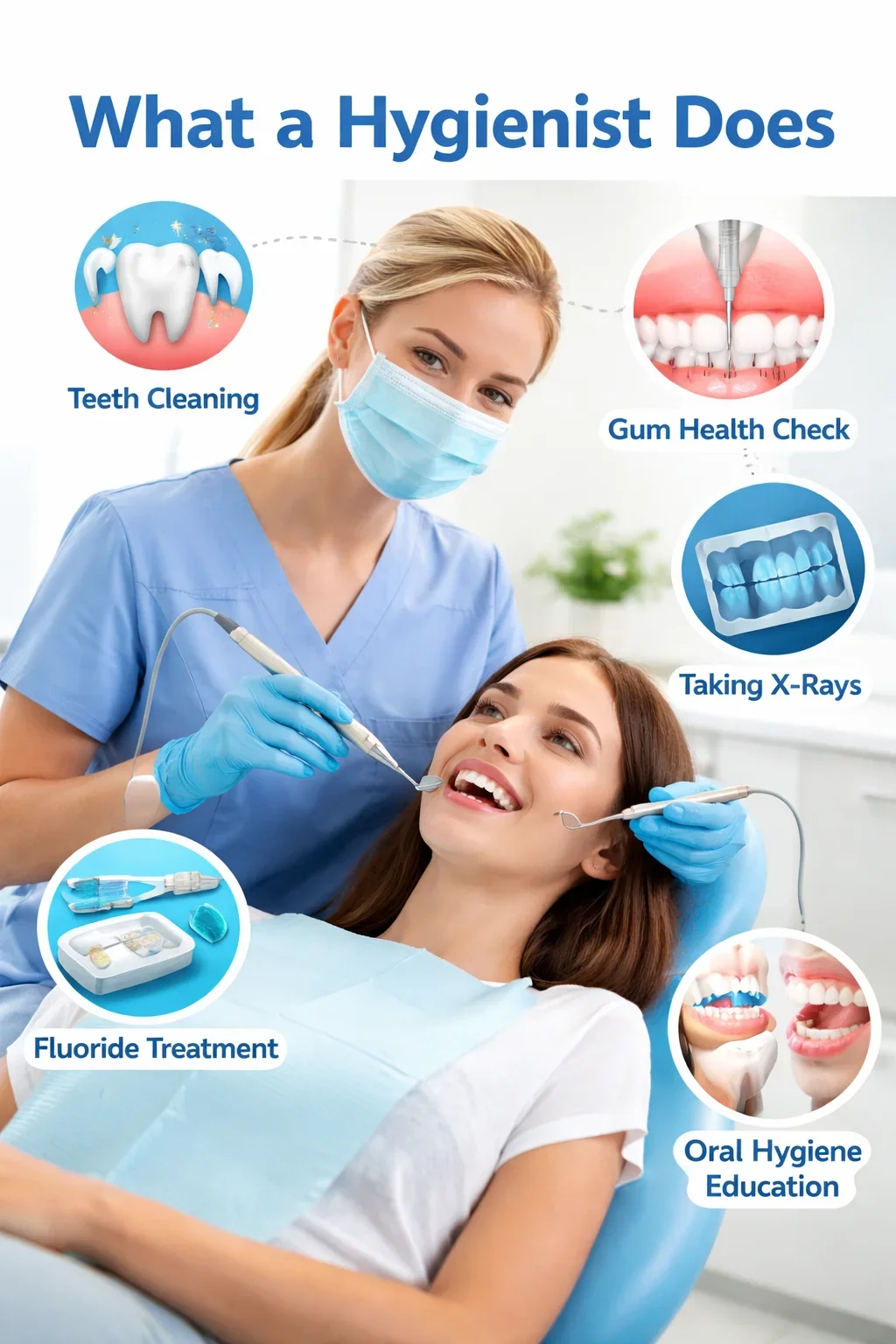
When people visit a dental clinic, they often think the dentist is the only professional responsible for their oral health. However, understanding what a hygienist does reveals that dental hygienists play a crucial and highly specialized role in maintaining healthy teeth and gums. A dental hygienist is a licensed oral health professional who focuses on preventive dental care, patient education, and early detection of oral health issues. Their work supports the dentist and ensures patients maintain long-term oral wellness.
Understanding what a hygienist does is essential because much of modern dentistry focuses on prevention rather than only treatment. Dental hygienists help prevent tooth decay, gum disease, and other oral health problems before they become serious conditions. Through professional cleaning, examinations, and patient education, hygienists help patients protect their smiles and avoid complex dental procedures later.
One of the primary responsibilities involved in what a hygienist does is performing professional dental cleanings. Even people who brush and floss regularly develop plaque and tartar buildup in areas that are difficult to reach. Dental hygienists use specialized tools to remove this hardened buildup safely. This process, often called scaling and polishing, helps prevent gum disease and tooth decay.
Another important aspect of what a hygienist does is evaluating the overall health of a patient’s mouth. During a dental visit, hygienists carefully examine the gums, teeth, tongue, and surrounding tissues. They check for signs of gingivitis, periodontal disease, cavities, and oral abnormalities. Because hygienists see patients regularly, they often detect early warning signs that may require further evaluation by a dentist.
Education is also a major component of what a hygienist does. Dental hygienists teach patients proper brushing and flossing techniques, recommend suitable oral care products, and provide personalized advice based on individual oral health needs. For example, someone prone to gum inflammation may receive guidance on improving flossing habits or using antimicrobial mouth rinses.
Preventive care is the foundation of what a hygienist does. Preventive dentistry focuses on stopping problems before they start. Hygienists often apply fluoride treatments to strengthen tooth enamel and reduce the risk of cavities. They may also apply dental sealants, particularly for children and teenagers, to protect vulnerable tooth surfaces.
Another critical part of what a hygienist does involves documenting oral health conditions and maintaining detailed patient records. Hygienists record measurements of gum pockets around teeth, which helps determine the presence or progression of periodontal disease. These records allow dentists to track changes in oral health over time and develop appropriate treatment plans.
Dental hygienists also perform dental X-rays when necessary. Radiographs help detect problems that cannot be seen with the naked eye, such as cavities between teeth, bone loss around roots, or impacted teeth. By assisting with diagnostic imaging, hygienists contribute significantly to accurate diagnosis and treatment planning.
For patients interested in improving the appearance of their smiles, what a hygienist does may also include cosmetic-related services such as teeth whitening. Professional whitening treatments performed in dental clinics can significantly brighten a patient’s smile under safe and controlled conditions.
Understanding what a hygienist does also means recognizing the hygienist’s role in supporting overall health. Research has shown strong links between oral health and systemic conditions such as diabetes, cardiovascular disease, and respiratory infections. Dental hygienists help patients understand how maintaining good oral hygiene can positively influence their overall health and well-being.
Hygienists also collaborate closely with dentists and other dental professionals. Their clinical observations often guide the dentist in diagnosing conditions or determining appropriate treatments. This teamwork ensures that patients receive comprehensive dental care during every visit.
Professional dental organizations highlight the importance of dental hygienists in modern healthcare. For example, the American Dental Association emphasizes the role hygienists play in preventive dentistry, patient education, and maintaining oral health standards across dental practices.
Patients who have questions about their oral health can also contact professional dental clinics for personalized advice. For example, individuals seeking consultation or dental services can visit the Redent Klinik Contact Page to connect with experienced dental professionals.
Ultimately, understanding what a hygienist does helps patients appreciate how important these professionals are in maintaining a healthy smile. Dental hygienists are often the first line of defense against oral disease. They combine clinical expertise with patient education to ensure individuals maintain proper oral hygiene habits.
In summary, what a hygienist does includes cleaning teeth, examining oral tissues, assisting in diagnosis, providing preventive treatments, educating patients, and supporting the dentist in delivering comprehensive dental care. Their work ensures that dental problems are detected early, treated effectively, and prevented whenever possible. By regularly visiting a dental hygienist, patients can protect their oral health, maintain a bright smile, and avoid more serious dental complications in the future. 🦷✨
What a Hygienist Does During a Routine Dental Visit
A routine dental visit involves far more than simply cleaning teeth. Understanding what a hygienist does during a standard dental appointment helps patients appreciate the level of expertise and preventive care involved in maintaining good oral health. Dental hygienists are trained professionals who focus on preventive dentistry, early detection of oral health problems, and patient education. Their work ensures that small dental issues are identified and addressed before they become more serious or costly to treat.
During a typical dental appointment, the hygienist is often the first professional the patient interacts with. From reviewing medical history to performing professional cleaning and assessing gum health, what a hygienist does involves a series of carefully structured steps designed to protect and improve oral health.
Reviewing Medical and Dental History
One of the first steps in understanding what a hygienist does during a routine dental visit is reviewing the patient’s medical and dental history. Before any examination or treatment begins, the hygienist carefully checks for updates regarding medications, medical conditions, allergies, or previous dental treatments.
This step is extremely important because many health conditions can affect oral health. For example, diabetes can increase the risk of gum disease, while certain medications may cause dry mouth, which increases the likelihood of cavities. By reviewing this information, the hygienist ensures that dental care is safe and tailored to the patient’s specific needs.
Another essential aspect of what a hygienist does at this stage is asking patients about symptoms they may be experiencing. Patients may report tooth sensitivity, gum bleeding, jaw discomfort, or persistent bad breath. These details help hygienists identify potential oral health concerns early.
Initial Oral Examination
Before beginning any cleaning procedures, hygienists conduct a preliminary examination of the mouth. This examination helps determine the overall health of the teeth and gums. Understanding what a hygienist does during this step reveals how preventive dentistry works in practice.
During the exam, the hygienist checks for signs of plaque buildup, tartar accumulation, gum inflammation, and tooth decay. They may also inspect the tongue, cheeks, and other soft tissues for abnormalities. This early screening plays a critical role in identifying oral health problems before they become severe.
Checking Gum Health and Periodontal Pockets
A key component of what a hygienist does during an oral exam is measuring periodontal pockets around the teeth. Using a specialized dental probe, hygienists gently measure the space between the tooth and the surrounding gum tissue.
Healthy gums usually have pocket depths between 1 and 3 millimeters. If deeper pockets are present, it may indicate gum disease, also known as periodontal disease. Detecting these changes early allows dentists and hygienists to recommend preventive treatments before the condition worsens.
Professional Teeth Cleaning
Professional cleaning is perhaps the most well-known part of what a hygienist does. Even patients who brush and floss regularly cannot completely remove plaque and tartar that accumulate over time. Dental hygienists use specialized instruments to remove these deposits safely and effectively.
The cleaning process usually involves several steps:
- Removing hardened tartar from tooth surfaces
- Eliminating plaque buildup along the gumline
- Polishing teeth to remove surface stains
- Flossing between teeth to ensure complete cleaning
This process helps prevent tooth decay and gum disease while leaving the teeth feeling smooth and clean. Understanding what a hygienist does during this step highlights how important professional cleaning is for maintaining oral health.
Dental X-Rays and Diagnostic Support
Another critical responsibility included in what a hygienist does during routine dental visits is taking dental X-rays when necessary. X-rays allow dental professionals to see problems that cannot be detected through a visual examination alone.
These images help identify issues such as:
- Cavities between teeth
- Bone loss caused by gum disease
- Impacted teeth
- Infections or abscesses
By assisting with diagnostic imaging, hygienists contribute to accurate diagnosis and effective treatment planning.
Patient Education and Oral Hygiene Guidance
Education is another vital part of what a hygienist does during every routine dental visit. Hygienists provide patients with practical guidance on improving daily oral care habits. They demonstrate proper brushing techniques, recommend flossing methods, and suggest oral care products suited to individual needs.
For example, patients with sensitive gums may receive recommendations for softer toothbrushes or specialized toothpaste. Those prone to cavities may be advised to use fluoride treatments or antimicrobial mouth rinses.
Hygienists also explain how lifestyle choices affect oral health. Smoking, poor nutrition, and excessive sugar consumption can all increase the risk of dental problems. By educating patients, hygienists empower them to take control of their oral hygiene and prevent future complications.
Preventive Treatments and Fluoride Application
Preventive treatments are another important component of what a hygienist does. After cleaning the teeth, hygienists may apply fluoride treatments to strengthen enamel and help protect against cavities.
Fluoride treatments are particularly beneficial for children, teenagers, and adults with a higher risk of tooth decay. The fluoride is applied as a gel, foam, or varnish and remains on the teeth for a short period to maximize its protective effect.
These preventive procedures demonstrate how what a hygienist does focuses not only on treating existing dental problems but also on preventing new ones from developing.
Supporting the Dentist and Ensuring Comprehensive Care
At the end of the appointment, hygienists share their observations with the dentist. Their detailed notes regarding gum health, plaque levels, and potential concerns help dentists perform a more accurate evaluation.
This collaborative approach ensures patients receive comprehensive care. The hygienist’s preventive expertise combined with the dentist’s diagnostic skills creates a complete dental care system designed to maintain healthy smiles.
Ultimately, understanding what a hygienist does during a routine dental visit reveals that hygienists are essential partners in oral healthcare. Their work protects teeth, prevents disease, and helps patients maintain long-term dental health. Regular visits to a dental hygienist can significantly reduce the risk of serious dental problems while promoting a brighter and healthier smile. 🦷✨
The Preventive Role in What a Hygienist Does for Oral Health
Preventive dentistry is one of the most important aspects of modern dental care, and it represents a large portion of what a hygienist does in everyday clinical practice. Rather than waiting for cavities, gum disease, or infections to develop, dental hygienists work proactively to prevent these issues before they start. This preventive approach protects not only the teeth and gums but also supports overall health. Understanding the preventive role in what a hygienist does helps patients realize why routine dental visits are essential for maintaining long-term oral wellness.
Dental hygienists focus on identifying risk factors, removing harmful plaque and tartar, applying protective treatments, and educating patients on how to care for their teeth at home. The preventive strategies included in what a hygienist does are designed to reduce the likelihood of dental disease and minimize the need for complex procedures in the future.
Why Preventive Dentistry Matters
Preventive care is at the heart of what a hygienist does. Oral diseases often develop slowly and without obvious symptoms in their early stages. Cavities and gum disease can progress for months or even years before a patient notices discomfort. Dental hygienists are trained to detect these early warning signs and intervene before significant damage occurs.
By focusing on prevention, hygienists help patients avoid treatments such as fillings, root canals, or gum surgery. Instead of repairing damage after it happens, the goal of what a hygienist does is to protect the teeth and gums so that serious problems never develop in the first place.
Plaque and Tartar Control
One of the central elements of what a hygienist does involves controlling plaque and tartar buildup. Plaque is a sticky film of bacteria that constantly forms on teeth. If it is not removed through brushing and flossing, plaque hardens into tartar, which cannot be removed at home.
During professional cleanings, hygienists use specialized dental instruments to remove plaque and tartar deposits from the teeth and gumline. This process prevents bacteria from irritating the gums and causing inflammation.
Why Plaque Removal Is Critical
Plaque contains harmful bacteria that produce acids capable of damaging tooth enamel. These bacteria can also irritate gum tissue, leading to gingivitis and periodontal disease. Because plaque forms continuously, routine professional cleaning is a key part of what a hygienist does to maintain oral health.
Regular plaque removal significantly reduces the risk of cavities and gum infections. When combined with proper daily brushing and flossing, this preventive care helps keep the mouth healthy and free from disease.
Preventing Gum Disease
Gum disease, also known as periodontal disease, is one of the most common oral health conditions worldwide. Preventing gum disease is a major focus of what a hygienist does. Early gum disease begins as gingivitis, which causes redness, swelling, and bleeding of the gums.
If untreated, gingivitis can progress to periodontitis, a more serious condition that damages the tissues and bone supporting the teeth. Dental hygienists monitor gum health carefully during each appointment. They measure periodontal pockets, evaluate gum inflammation, and identify signs of infection.
Through early detection and preventive cleaning, hygienists can often stop gum disease before it causes permanent damage. This preventive monitoring highlights another critical aspect of what a hygienist does in protecting patients’ oral health.
Fluoride Treatments and Enamel Protection
Strengthening tooth enamel is another preventive service included in what a hygienist does. Dental hygienists often apply fluoride treatments to protect teeth from decay. Fluoride is a mineral that strengthens enamel and makes teeth more resistant to acid attacks from bacteria and food.
Fluoride treatments are quick, painless, and highly effective. They are commonly recommended for children, teenagers, and adults who may be at higher risk of developing cavities. By reinforcing the protective outer layer of teeth, fluoride helps reduce the likelihood of decay and supports the preventive goals of what a hygienist does.
Dental Sealants for Extra Protection
Another preventive method included in what a hygienist does is the application of dental sealants. Sealants are thin protective coatings applied to the chewing surfaces of molars and premolars.
These teeth often have deep grooves that can trap food particles and bacteria. Even with good brushing habits, these areas may be difficult to clean effectively. Sealants fill these grooves, creating a smooth surface that prevents bacteria from accumulating.
Sealants are especially common for children and teenagers, but adults with deep tooth grooves may also benefit from them. By applying sealants, hygienists help protect vulnerable teeth and support long-term cavity prevention.
Identifying Risk Factors Early
Another preventive responsibility included in what a hygienist does involves identifying risk factors that could lead to oral health problems. These risk factors may include poor oral hygiene habits, smoking, excessive sugar consumption, dry mouth, or certain medical conditions.
Hygienists evaluate these factors during each visit and provide recommendations tailored to the patient’s lifestyle and health needs. For example, a patient with dry mouth may receive suggestions for saliva-stimulating products, while someone with a high cavity risk may be advised to increase fluoride use.
Educating Patients for Long-Term Prevention
Education is one of the most powerful preventive tools included in what a hygienist does. Dental hygienists teach patients proper brushing techniques, effective flossing methods, and the importance of maintaining a consistent oral hygiene routine.
They also provide guidance on nutrition and habits that influence oral health. Limiting sugary foods, drinking water regularly, and avoiding tobacco products are all recommendations that hygienists may discuss with patients.
By educating patients about preventive care, hygienists empower individuals to protect their own oral health between dental visits. This educational component reinforces the preventive focus of what a hygienist does.
The Long-Term Benefits of Preventive Care
When patients fully understand what a hygienist does, they begin to see how preventive dentistry benefits both their health and their finances. Preventing cavities and gum disease is far less costly and far less invasive than treating advanced dental problems.
Regular preventive visits help maintain healthy teeth, reduce dental pain, and preserve natural smiles for many years. They also contribute to better overall health, since oral infections can affect other parts of the body.
Ultimately, the preventive role in what a hygienist does represents one of the most valuable services in modern dental care. Through professional cleaning, early detection, protective treatments, and patient education, dental hygienists help ensure that patients enjoy healthier smiles and better quality of life. 🦷
Professional Teeth Cleaning: A Core Part of What a Hygienist Does
One of the most widely recognized aspects of what a hygienist does is professional teeth cleaning. While brushing and flossing at home are essential daily habits, they are not always enough to completely remove plaque and tartar buildup. Professional dental cleanings performed by trained hygienists help eliminate harmful deposits, protect gum health, and maintain a brighter smile. Understanding this part of what a hygienist does allows patients to appreciate why routine dental visits are so important for long-term oral health.
Dental hygienists use specialized tools, professional techniques, and clinical expertise to clean areas that are difficult to reach with a toothbrush. The cleaning process not only improves the appearance of teeth but also reduces the risk of cavities, gum disease, and bad breath. Because plaque constantly forms on the teeth, professional cleaning is a key preventive measure included in what a hygienist does during routine dental care.
Why Professional Cleaning Is Necessary
Many patients believe that brushing twice daily and flossing regularly is enough to maintain perfect oral health. While these habits are extremely important, they cannot always prevent plaque from accumulating in tight spaces between teeth or along the gumline. Over time, plaque hardens into tartar, a mineralized deposit that cannot be removed with ordinary brushing.
Removing tartar is one of the most essential components of what a hygienist does. Hygienists use precision instruments designed specifically for dental cleaning. These tools allow them to remove hardened deposits safely without damaging the enamel or surrounding tissues.
Without professional cleaning, tartar buildup can lead to gum irritation and eventually periodontal disease. By eliminating these deposits regularly, hygienists help protect the gums and keep the mouth healthy.
Step-by-Step Process of Professional Teeth Cleaning
Professional dental cleaning follows a structured process that ensures every tooth surface is thoroughly cleaned and polished. Each stage highlights the precision involved in what a hygienist does during a routine dental appointment.
1. Plaque and Tartar Removal (Scaling)
The first stage of professional cleaning involves scaling, which is the removal of plaque and tartar from the teeth. Hygienists use handheld instruments or ultrasonic scalers to carefully remove hardened deposits.
Ultrasonic scalers use gentle vibrations combined with water spray to break apart tartar while flushing away debris. This technology allows hygienists to clean efficiently and comfortably. Scaling is a central component of what a hygienist does because it eliminates bacteria that contribute to tooth decay and gum disease.
2. Tooth Polishing
After tartar removal, hygienists polish the teeth using a rotating dental instrument and a slightly abrasive polishing paste. This paste removes minor stains caused by coffee, tea, wine, and tobacco.
Polishing smooths the tooth surface, making it more difficult for plaque to accumulate again. This step enhances both the appearance and cleanliness of the teeth and demonstrates another important aspect of what a hygienist does.
3. Professional Flossing
Although flossing is part of everyday oral care, hygienists perform professional flossing to ensure that all spaces between teeth are completely clean. This allows them to remove any remaining debris and confirm that gum tissues are healthy.
Professional flossing also gives hygienists the opportunity to check for areas of gum bleeding, which may indicate inflammation. Observing these signs helps hygienists evaluate oral health and is another example of what a hygienist does during a cleaning session.
Removing Surface Stains
Many people visit the dentist not only for health reasons but also to improve the appearance of their smile. One of the cosmetic benefits of what a hygienist does during professional cleaning is the removal of surface stains.
Daily habits such as drinking coffee, tea, red wine, or smoking can cause discoloration on tooth surfaces. During polishing, hygienists remove these stains, helping teeth appear brighter and cleaner. Although professional cleaning is not the same as whitening treatment, it can significantly enhance the natural brightness of teeth.
Preventing Gum Disease Through Cleaning
Another major goal of what a hygienist does during professional cleaning is protecting gum health. Plaque and tartar accumulation near the gumline can cause irritation and inflammation. If untreated, this irritation can develop into gingivitis, the earliest stage of gum disease.
Regular professional cleaning helps remove the bacteria responsible for gum inflammation. By reducing plaque buildup, hygienists help prevent gingivitis and stop it from progressing into more severe periodontal disease.
How Often Professional Cleaning Is Recommended
Most dental professionals recommend professional cleaning every six months. However, the exact frequency may vary depending on the patient’s oral health condition. Patients with gum disease, frequent plaque buildup, or certain medical conditions may require more frequent cleanings.
Determining the appropriate cleaning schedule is another responsibility included in what a hygienist does. Hygienists assess each patient’s oral health and recommend cleaning intervals based on individual needs.
The Comfort and Safety of Modern Cleaning Techniques
Modern dental technology has made professional cleaning safer and more comfortable than ever before. Ultrasonic instruments, improved polishing systems, and advanced infection control protocols ensure that patients receive effective treatment with minimal discomfort.
These innovations have enhanced the quality of care provided by hygienists and continue to shape the evolution of what a hygienist does in modern dentistry.
Long-Term Benefits of Professional Teeth Cleaning
Regular professional cleaning offers numerous long-term benefits. By removing plaque, tartar, and surface stains, hygienists help maintain healthier teeth and gums. Patients who schedule routine cleanings often experience fewer cavities, lower risk of gum disease, and fresher breath.
Additionally, professional cleaning allows hygienists to monitor oral health over time. Subtle changes in gum condition or tooth structure can be detected early and addressed before they become serious problems.
Ultimately, professional cleaning represents one of the most essential services included in what a hygienist does. Through careful plaque removal, polishing, and preventive care, dental hygienists help patients maintain healthy smiles and avoid future dental complications. Regular visits to a hygienist ensure that teeth remain strong, clean, and protected for years to come. 🦷✨
Patient Education and Advice in What a Hygienist Does
One of the most valuable yet sometimes overlooked aspects of what a hygienist does is patient education. While professional cleaning and preventive treatments are essential, long-term oral health ultimately depends on what patients do every day at home. Dental hygienists play a key role in teaching individuals how to care for their teeth and gums properly. Through clear explanations, demonstrations, and personalized recommendations, a hygienist helps patients build effective oral hygiene routines that protect their smiles for years.
Understanding the educational role in what a hygienist does helps patients realize that dental visits are not only about treatment. They are also opportunities to learn practical habits that reduce the risk of cavities, gum disease, and other oral health problems. Hygienists serve as oral health coaches who guide patients toward better hygiene practices and healthier lifestyle choices.
Why Patient Education Is a Core Part of What a Hygienist Does
Education is essential because many dental problems develop due to incorrect brushing techniques, inconsistent flossing, or poor dietary habits. One of the main goals of what a hygienist does is helping patients understand how their daily routines affect their oral health.
During appointments, hygienists evaluate the patient’s current oral hygiene habits and identify areas that could be improved. They explain how plaque forms, why bacteria cause tooth decay, and how gum disease develops. By providing clear explanations, hygienists help patients understand the importance of preventive care.
Another important part of what a hygienist does is motivating patients. Many people know they should brush and floss regularly but struggle to maintain consistent habits. Hygienists encourage patients by explaining the long-term benefits of good oral hygiene and demonstrating simple techniques that make daily care easier.
Teaching Proper Brushing Techniques
One of the most common educational tasks involved in what a hygienist does is teaching patients how to brush their teeth correctly. Although brushing seems simple, many individuals brush too aggressively, miss certain areas, or use improper techniques.
Dental hygienists often demonstrate brushing methods using models or mirrors so patients can clearly see the correct motion and angle of the toothbrush. They may recommend holding the toothbrush at a 45-degree angle toward the gumline and using gentle circular motions rather than harsh scrubbing.
Patients also learn how long they should brush and how often. Most hygienists recommend brushing at least twice daily for two minutes each time. By teaching these techniques, hygienists ensure that patients remove plaque effectively while protecting their enamel and gums.
Choosing the Right Toothbrush
Another detail included in what a hygienist does during patient education is helping patients choose the right toothbrush. Hygienists often recommend soft-bristled toothbrushes because they clean effectively without damaging gum tissue.
In some cases, patients may benefit from electric toothbrushes, which provide consistent motion and can help improve brushing efficiency. Hygienists explain the advantages of different toothbrush options and help patients select the one that suits their needs.
Teaching Effective Flossing Methods
Flossing is another essential skill taught as part of what a hygienist does. Many patients avoid flossing because they find it difficult or uncomfortable. Hygienists demonstrate how to use floss properly so it slides gently between teeth without damaging the gums.
They show patients how to curve the floss around each tooth in a C-shape and move it carefully beneath the gumline to remove plaque. Hygienists may also introduce alternative tools such as floss picks, interdental brushes, or water flossers for patients who struggle with traditional floss.
By teaching these techniques, hygienists help patients clean areas that toothbrushes cannot reach. This reduces plaque buildup between teeth and lowers the risk of cavities and gum disease.
Guidance on Diet and Lifestyle Choices
Nutrition and lifestyle habits strongly influence oral health, which is why discussing these factors is part of what a hygienist does. Hygienists often talk with patients about how certain foods and beverages affect the teeth.
Frequent consumption of sugary snacks or acidic drinks can increase the risk of tooth decay. Hygienists may recommend reducing sugar intake, drinking more water, and choosing foods that support oral health, such as vegetables, dairy products, and crunchy fruits.
Smoking and tobacco use are also important topics. Hygienists educate patients about the risks associated with tobacco, including gum disease, tooth discoloration, and oral cancer. Encouraging healthier habits is a vital part of what a hygienist does when supporting overall well-being.
Personalized Oral Care Recommendations
Every patient has unique oral health needs, and personalized advice is another key aspect of what a hygienist does. Hygienists consider factors such as age, dental history, medical conditions, and lifestyle when recommending oral care strategies.
For example, patients prone to cavities may benefit from fluoride mouth rinses or prescription-strength toothpaste. Individuals with sensitive teeth may be advised to use desensitizing toothpaste. Patients with braces or dental implants may receive specific instructions for cleaning around orthodontic appliances or prosthetic components.
Providing individualized guidance ensures that patients receive practical recommendations tailored to their situation. This personalized approach demonstrates how what a hygienist does goes beyond general advice and focuses on targeted preventive care.
Helping Children Learn Healthy Oral Habits
Education is especially important for young patients. Teaching children good oral hygiene habits early in life is a major part of what a hygienist does. Hygienists use friendly explanations, visual demonstrations, and sometimes even games to make learning about oral care enjoyable.
By creating positive dental experiences for children, hygienists help reduce fear and encourage lifelong dental care habits. These early lessons often influence a child’s oral health for decades.
Encouraging Regular Dental Visits
Another important element of what a hygienist does is encouraging patients to maintain regular dental appointments. Hygienists explain why routine visits every six months allow dental professionals to detect problems early and provide preventive care.
When patients understand the purpose of regular checkups, they are more likely to stay consistent with their appointments. This consistency supports long-term oral health and prevents many serious dental conditions.
The Long-Term Impact of Patient Education
Ultimately, patient education is one of the most powerful tools in preventive dentistry. By teaching patients how to care for their teeth properly, hygienists help reduce the risk of oral disease and improve overall quality of life.
The educational role in what a hygienist does ensures that patients leave the dental clinic not only with cleaner teeth but also with the knowledge needed to maintain a healthy smile every day. Through guidance, encouragement, and personalized advice, dental hygienists empower patients to take control of their oral health and protect their smiles for the future. 🦷
How Dental Hygienists Help Detect Early Oral Health Problems
Early detection of oral health problems is one of the most critical responsibilities in modern preventive dentistry. A large part of what a hygienist does involves carefully examining the mouth to identify signs of dental issues before they become severe. While dentists diagnose and treat many oral conditions, hygienists are often the first professionals to notice subtle changes in the teeth, gums, and soft tissues. Because patients typically see hygienists regularly for cleanings and preventive visits, hygienists play a vital role in spotting early warning signs that might otherwise go unnoticed.
Understanding this diagnostic support role helps patients appreciate another essential dimension of what a hygienist does. By detecting problems early, hygienists help prevent minor concerns from developing into serious dental diseases that require more invasive treatments.
Why Early Detection Matters
Many dental conditions begin silently and without pain. Cavities, gum disease, infections, and even oral cancer can develop gradually without obvious symptoms. One of the most valuable aspects of what a hygienist does is identifying these conditions in their early stages.
When dental problems are discovered early, treatment is usually simpler, faster, and less expensive. For example, a small cavity can often be treated with a simple filling, while an untreated cavity may progress to the point where a root canal or extraction becomes necessary. By recognizing early signs of decay or gum inflammation, hygienists help patients avoid complicated procedures.
Early detection also protects long-term oral health. By monitoring changes in the mouth over time, hygienists ensure that developing conditions are addressed before they threaten the stability of teeth and supporting structures.
Screening for Tooth Decay
Identifying cavities is a routine yet important part of what a hygienist does. During dental appointments, hygienists carefully examine each tooth surface for signs of enamel damage, discoloration, or soft spots that may indicate decay.
Dental hygienists often use specialized dental explorers and lighting to inspect areas where cavities commonly develop. These include:
- Between teeth
- Along the gumline
- Deep grooves in molars
- Areas around dental restorations
By identifying suspicious areas early, hygienists provide valuable information to the dentist, who can then confirm the diagnosis and recommend treatment. This collaborative process highlights another key dimension of what a hygienist does in supporting comprehensive dental care.
Detecting Early Signs of Gum Disease
Monitoring gum health is another critical responsibility included in what a hygienist does. Gum disease begins with gingivitis, which causes redness, swelling, and bleeding of the gums. If untreated, it can progress to periodontitis, a serious infection that damages the bone supporting the teeth.
Dental hygienists carefully examine gum tissues during every visit. They look for signs of inflammation, recession, or bleeding. These symptoms often indicate that bacteria are accumulating beneath the gumline.
Measuring Periodontal Pockets
A key diagnostic technique used as part of what a hygienist does is periodontal probing. Hygienists use a small measuring instrument called a periodontal probe to measure the depth of the pockets between the teeth and gums.
Healthy gums typically have shallow pockets ranging from one to three millimeters. Deeper pockets may indicate the presence of periodontal disease. By recording these measurements, hygienists can track changes over time and help dentists determine whether treatment is needed.
Oral Cancer Screening
Another extremely important aspect of what a hygienist does is screening for oral cancer. Although oral cancer is less common than cavities or gum disease, early detection is essential for successful treatment.
During routine examinations, hygienists inspect the tongue, cheeks, lips, throat, and floor of the mouth for unusual lumps, sores, or discoloration. They may gently feel the neck and jaw area for swelling or abnormal tissue changes.
While hygienists do not diagnose cancer, their careful observations allow dentists to investigate suspicious findings quickly. Early detection significantly increases the chances of successful treatment.
Identifying Tooth Wear and Damage
Monitoring tooth wear is another responsibility included in what a hygienist does. Teeth may gradually wear down due to grinding (bruxism), acidic foods, or improper brushing habits. Hygienists look for signs such as flattened tooth surfaces, enamel erosion, and small cracks.
When these issues are detected early, dentists can recommend protective treatments such as night guards, fluoride treatments, or dietary changes. By recognizing these signs during routine examinations, hygienists help prevent further damage.
Using Dental X-Rays for Hidden Problems
Many oral health problems cannot be detected with visual examination alone. Dental hygienists often assist with diagnostic imaging, which is another essential part of what a hygienist does. Dental X-rays allow professionals to see beneath the surface of the teeth and gums.
X-rays can reveal conditions such as:
- Cavities between teeth
- Bone loss caused by gum disease
- Impacted teeth
- Hidden infections
- Problems beneath existing fillings or crowns
By capturing these images and helping interpret them with the dentist, hygienists contribute to more accurate diagnoses and better treatment planning.
Monitoring Changes Over Time
Another reason hygienists are so important in early detection is that they see patients regularly. This continuity of care allows hygienists to compare current oral health conditions with previous visits. Observing small changes in gum health, tooth structure, or oral tissues is a key element of what a hygienist does.
For example, a slight increase in gum pocket depth or a new area of enamel wear may indicate developing problems. By identifying these changes early, hygienists ensure that treatment can begin before significant damage occurs.
Supporting the Dentist’s Diagnosis
Although dentists are responsible for diagnosing and treating oral diseases, hygienists play an essential supporting role. Their observations and clinical notes provide valuable information that helps dentists make accurate assessments.
This teamwork is another reason what a hygienist does is so important within a dental practice. Hygienists collect detailed data about gum health, plaque levels, and potential problem areas, allowing dentists to focus on treatment planning and advanced care.
The Value of Early Detection in Oral Health
Ultimately, early detection is one of the most powerful tools in dentistry. By identifying oral health problems at their earliest stages, dental professionals can protect natural teeth and prevent more serious complications.
The diagnostic monitoring involved in what a hygienist does ensures that dental issues are recognized quickly and addressed effectively. Through careful examinations, periodontal measurements, oral cancer screenings, and diagnostic imaging, hygienists help safeguard patients’ smiles and overall health.
Regular dental visits provide hygienists with the opportunity to monitor oral health closely and detect small changes that might otherwise go unnoticed. This proactive approach allows patients to receive timely care and maintain healthy teeth and gums throughout their lives. 🦷
Tools, Technology, and Techniques Used in What a Hygienist Does
Modern dentistry relies heavily on specialized tools and advanced technology to maintain oral health, and understanding these instruments helps patients better appreciate what a hygienist does during a dental visit. Dental hygienists are highly trained professionals who use a variety of instruments, diagnostic tools, and modern technologies to perform preventive treatments, clean teeth effectively, and monitor oral health conditions. These tools allow hygienists to work precisely and safely while ensuring patient comfort.
The equipment used in what a hygienist does has evolved significantly over the years. Today’s dental clinics combine traditional hand instruments with modern digital technology, allowing hygienists to detect problems earlier, perform treatments more efficiently, and provide higher-quality preventive care.
Basic Dental Instruments Used by Hygienists
One of the most visible parts of what a hygienist does involves the use of dental instruments during professional cleanings. Hygienists rely on carefully designed hand tools that allow them to remove plaque and tartar while protecting the surrounding tissues.
These instruments are designed with precision and are essential for maintaining oral hygiene during dental appointments.
Scalers and Curettes
Scalers and curettes are among the most important tools involved in what a hygienist does. These instruments are specifically designed to remove hardened tartar deposits from the surfaces of teeth.
Scalers typically have pointed tips and are used to remove tartar above the gumline. Curettes, on the other hand, have rounded edges that allow hygienists to clean beneath the gumline safely. Removing tartar is essential because it harbors bacteria that can lead to cavities and gum disease.
The careful use of these instruments demonstrates the skill and precision required in what a hygienist does when performing dental cleanings.
Dental Mirrors and Explorers
Dental mirrors and explorers are diagnostic tools that help hygienists examine the mouth more thoroughly. A dental mirror allows hygienists to view areas that are difficult to see directly, such as the back surfaces of teeth.
An explorer is a thin, pointed instrument used to detect irregularities on tooth surfaces. By gently running the explorer along the enamel, hygienists can detect early signs of cavities or rough areas where plaque may accumulate.
These diagnostic tools are another important component of what a hygienist does during routine dental examinations.
Ultrasonic Cleaning Technology
One of the most advanced tools used in what a hygienist does is the ultrasonic scaler. This modern device uses high-frequency vibrations combined with a steady stream of water to remove plaque and tartar quickly and efficiently.
The ultrasonic scaler works by breaking apart hardened deposits on the teeth. The water spray also helps flush away debris and bacteria while keeping the treatment area cool.
Many patients find ultrasonic cleaning more comfortable than traditional hand scaling. This technology has significantly improved the efficiency and effectiveness of dental cleanings, making it an essential part of modern dental hygiene practice.
Polishing Tools and Air Polishing Systems
After plaque and tartar removal, hygienists polish the teeth to remove stains and create a smooth surface. Tooth polishing is another visible example of what a hygienist does during dental cleanings.
Traditional polishing involves a rotating rubber cup and a slightly abrasive polishing paste. This process removes surface stains caused by coffee, tea, tobacco, and certain foods.
Some clinics also use air polishing technology. Air polishers combine air, water, and fine powder particles to gently remove stains and plaque. This method can be faster and less abrasive than traditional polishing techniques.
Dental X-Ray Technology
Diagnostic imaging is another important aspect of what a hygienist does. Dental hygienists frequently assist in capturing dental X-rays, which allow dentists to examine areas that are not visible during a regular oral examination.
X-rays can reveal hidden problems such as:
- Cavities between teeth
- Bone loss caused by gum disease
- Impacted teeth
- Infections around tooth roots
- Issues beneath crowns or fillings
Digital X-ray systems used today produce images instantly and expose patients to significantly lower radiation compared to older systems. By helping capture these images, hygienists contribute to accurate diagnosis and treatment planning.
Periodontal Probes and Gum Health Monitoring
Monitoring gum health is another important part of what a hygienist does. Hygienists use periodontal probes to measure the depth of the pockets between teeth and gums.
This tool provides essential information about the condition of the gums. Healthy gums usually have shallow pockets, while deeper pockets may indicate gum disease.
By recording these measurements during each visit, hygienists can track changes in gum health over time. This ongoing monitoring allows dentists to intervene early if periodontal disease begins to develop.
Fluoride Application and Preventive Tools
Preventive treatments are another key part of what a hygienist does. Hygienists often apply fluoride treatments to strengthen tooth enamel and protect against cavities.
Fluoride may be applied in the form of gel, foam, or varnish. The treatment helps remineralize enamel and makes teeth more resistant to bacterial acid attacks.
In addition to fluoride, hygienists may apply dental sealants to protect molars from decay. Sealants create a thin protective barrier over deep grooves in the chewing surfaces of teeth.
Digital Patient Records and Monitoring Systems
Modern dental clinics use digital record systems that allow hygienists to track patient oral health over time. Recording detailed information about plaque levels, gum measurements, and previous treatments is another important element of what a hygienist does.
Digital records help dentists and hygienists compare current findings with previous visits, making it easier to detect subtle changes in oral health. This technology supports more accurate diagnosis and long-term monitoring of dental conditions.
Comfort and Safety Technology
Patient comfort and safety are always priorities in dental care. Hygienists use several tools to ensure procedures are comfortable and hygienic.
These may include:
- High-volume suction devices to remove saliva and debris
- Protective barriers and sterilized instruments
- Personal protective equipment such as gloves, masks, and shields
- Advanced sterilization systems for infection control
Maintaining strict hygiene standards is another important responsibility within what a hygienist does, ensuring that all treatments are performed safely.
The Role of Technology in Modern Dental Hygiene
Technology continues to transform dentistry, and dental hygienists are trained to use these innovations effectively. From ultrasonic scalers to digital imaging systems, these tools allow hygienists to provide more precise and efficient care.
Understanding the technology involved in what a hygienist does highlights the expertise required for this profession. Hygienists combine technical knowledge with clinical skills to deliver preventive treatments that protect patients’ oral health.
Ultimately, the tools and technologies used in what a hygienist does enable dental professionals to clean teeth thoroughly, detect problems early, and provide comfortable, effective care. With the support of modern dental equipment, hygienists help patients maintain healthier smiles and prevent dental problems before they become serious. 🦷
The Difference Between What a Hygienist Does and What a Dentist Does
Many patients visiting a dental clinic are unsure about the difference between the roles of a dentist and a dental hygienist. Understanding the distinction is essential because both professionals play important yet different roles in maintaining oral health. A large part of understanding modern dental care involves knowing what a hygienist does compared with what a dentist does. While both professionals work closely together, their responsibilities, training, and focus areas are different.
Dental hygienists primarily focus on preventive care, routine cleanings, and patient education. Dentists, on the other hand, diagnose oral diseases and perform complex dental treatments such as fillings, crowns, root canals, and oral surgery. Recognizing these differences helps patients better understand how each professional contributes to a comprehensive dental care system.
Education and Professional Training
The first difference between dentists and hygienists involves education and professional training. Dental hygienists complete specialized programs in dental hygiene, which usually take two to four years depending on the country and degree type. During their training, they learn about oral anatomy, preventive dentistry, dental radiography, and patient care techniques.
This educational foundation prepares hygienists to perform many preventive procedures that are central to what a hygienist does. Their focus is on maintaining oral health, preventing disease, and assisting the dentist in clinical procedures.
Dentist Education and Advanced Training
Dentists undergo significantly longer education and clinical training. After completing undergraduate studies, dentists attend dental school for several additional years. During this time they receive advanced training in diagnosing oral diseases, performing restorative procedures, and managing complex dental treatments.
Because of this advanced education, dentists are licensed to diagnose dental conditions and perform procedures such as extractions, implants, crowns, and orthodontic treatments. Meanwhile, preventive tasks remain a major part of what a hygienist does within the dental team.
Preventive Care vs. Treatment
Another key difference lies in the focus of their daily work. Preventive care is the primary area where what a hygienist does becomes most visible. Hygienists work to stop dental problems before they begin.
Typical preventive responsibilities include:
- Professional teeth cleaning
- Removing plaque and tartar buildup
- Applying fluoride treatments
- Providing oral hygiene education
- Monitoring gum health
- Taking dental X-rays
These services help patients maintain healthy teeth and reduce the risk of dental disease. Dentists, by contrast, focus on diagnosing and treating existing problems.
Diagnostic Responsibilities
Both dentists and hygienists participate in identifying potential oral health problems, but their roles differ. Observational assessment is a significant part of what a hygienist does. Hygienists carefully examine the mouth and note signs of gum inflammation, plaque buildup, or suspicious lesions.
However, while hygienists collect important information, the dentist is responsible for making the final diagnosis. The dentist reviews clinical findings, evaluates X-rays, and determines the appropriate treatment plan.
This collaboration ensures patients receive accurate diagnoses and effective treatment. Hygienists provide detailed clinical observations, which helps dentists identify problems more efficiently.
Clinical Procedures Performed by Dentists
While preventive care is central to what a hygienist does, dentists perform procedures that repair or replace damaged teeth. These procedures may include:
- Filling cavities
- Performing root canal treatments
- Extracting damaged teeth
- Placing dental crowns or bridges
- Installing dental implants
- Correcting bite problems
These treatments require advanced clinical training and specialized equipment. Dentists also manage dental pain, infections, and complex oral health conditions.
The Collaborative Dental Team
Although their responsibilities differ, dentists and hygienists work as a team to provide complete dental care. The teamwork between these professionals demonstrates how important what a hygienist does is within a dental clinic.
Typically, a patient’s dental visit begins with the hygienist performing a cleaning and preliminary examination. The hygienist gathers information about the patient’s oral health, including gum measurements, plaque levels, and possible areas of concern.
The dentist then reviews these findings, performs a detailed examination, and discusses any necessary treatments. This coordinated approach allows both professionals to focus on their areas of expertise while ensuring patients receive comprehensive care.
Patient Interaction and Education
Another difference between the two roles involves patient interaction. Because hygienists often spend more time with patients during routine visits, they play a key role in education and communication.
Teaching patients proper brushing techniques, explaining flossing methods, and providing personalized oral hygiene advice are important elements of what a hygienist does. Hygienists help patients develop healthy habits that protect their teeth and gums between dental visits.
Dentists also provide guidance, but hygienists usually focus more extensively on preventive education during appointments.
Regular Visits and Preventive Maintenance
Routine dental visits highlight the importance of what a hygienist does. Most patients see their hygienist every six months for professional cleaning and oral health monitoring. These regular visits allow hygienists to remove plaque buildup, assess gum health, and detect early signs of dental problems.
By maintaining consistent preventive care, hygienists help reduce the likelihood that patients will require complex treatments performed by dentists.
How Both Roles Protect Oral Health
Understanding the difference between dentists and hygienists helps patients appreciate the structure of modern dental care. While dentists provide diagnosis and treatment, hygienists focus on prevention and education.
The preventive services involved in what a hygienist does play a critical role in maintaining oral health. By removing plaque, monitoring gum health, and educating patients about proper hygiene practices, hygienists help prevent many dental diseases before they start.
Dentists then build upon this preventive foundation by diagnosing and treating conditions when necessary.
Why Both Professionals Are Essential
Ultimately, both dentists and hygienists are essential members of the dental healthcare team. Without preventive care, dental disease would occur far more frequently. Without treatment expertise, dental problems could not be properly managed.
The preventive focus of what a hygienist does ensures that patients maintain healthier teeth and gums over time. Meanwhile, dentists provide the advanced treatments required to restore oral health when problems occur.
Together, these professionals create a balanced approach to dental care that emphasizes prevention, early detection, and effective treatment. This teamwork allows patients to enjoy healthier smiles and improved overall oral health for many years. 🦷
The Importance of Regular Visits Based on What a Hygienist Does
Regular dental visits are one of the most effective ways to maintain long-term oral health. A key reason for scheduling these appointments is to benefit from what a hygienist does during routine preventive care. Dental hygienists focus on maintaining clean teeth, monitoring gum health, detecting early signs of disease, and educating patients on proper oral hygiene practices. When patients attend regular appointments, they receive consistent preventive care that significantly reduces the risk of developing serious dental problems.
Understanding the importance of regular visits begins with understanding what a hygienist does. Hygienists are trained to identify small oral health issues before they become major concerns. By visiting a hygienist consistently, patients can prevent cavities, avoid gum disease, and maintain a healthier smile over time.
Why Regular Dental Visits Are Essential
Many dental conditions develop slowly and without noticeable symptoms in the early stages. Cavities, gum disease, and even certain oral infections may progress silently until they cause pain or visible damage. One of the major benefits of regular visits is that what a hygienist does during these appointments helps detect these issues early.
Dental hygienists conduct thorough examinations of the teeth and gums at every visit. They look for signs of plaque accumulation, gum inflammation, and enamel damage. Early detection allows dentists to treat problems before they worsen, saving patients time, discomfort, and potential complications.
Preventing Small Problems from Becoming Big Ones
A small cavity may require only a simple filling if discovered early. However, if left untreated, that cavity may grow and damage the tooth’s inner structure. In such cases, patients may eventually require root canal therapy or even tooth extraction.
This preventive focus highlights the importance of what a hygienist does. By monitoring oral health regularly, hygienists help patients avoid serious dental treatments that could have been prevented through early care.
Professional Cleaning Maintains Oral Health
Professional cleaning is another key reason why regular dental visits matter. Even with proper brushing and flossing, plaque and tartar gradually accumulate on tooth surfaces. Removing these deposits is a fundamental part of what a hygienist does during routine appointments.
Dental hygienists use specialized instruments to remove plaque buildup that cannot be eliminated with a toothbrush alone. This cleaning process helps protect the teeth from decay and keeps the gums healthy.
Without regular professional cleaning, plaque can harden into tartar. Tartar creates a rough surface where bacteria can grow more easily, increasing the risk of gum disease and cavities.
Monitoring Gum Health Over Time
Gum health plays a crucial role in overall oral health. Gum disease is one of the most common dental conditions worldwide, and it often develops gradually. A major component of what a hygienist does is evaluating gum health during each visit.
Hygienists measure the depth of the pockets between teeth and gums to detect early signs of periodontal disease. Healthy gums usually have shallow pockets, while deeper pockets may indicate infection.
By recording these measurements at every appointment, hygienists can track changes over time. This long-term monitoring helps dentists intervene quickly if gum disease begins to develop.
Strengthening Teeth with Preventive Treatments
Preventive treatments are another reason regular dental visits are important. A significant part of what a hygienist does involves applying treatments that protect teeth from decay.
Fluoride Treatments
Fluoride helps strengthen tooth enamel and make teeth more resistant to acid attacks from bacteria. Hygienists often apply fluoride treatments after professional cleaning. This process reinforces enamel and reduces the risk of cavities.
Children, teenagers, and adults who are prone to tooth decay can benefit greatly from fluoride treatments. These preventive services help maintain stronger teeth between dental visits.
Dental Sealants
Another preventive measure included in what a hygienist does is applying dental sealants. Sealants are thin protective coatings placed on the chewing surfaces of molars. These teeth often contain deep grooves where food particles and bacteria can accumulate.
Sealants create a protective barrier that prevents plaque from settling into these grooves. This simple treatment can significantly reduce the risk of cavities, especially for younger patients.
Improving Daily Oral Hygiene Habits
Regular visits also provide opportunities for patients to improve their daily oral care routines. Patient education is an important part of what a hygienist does. Hygienists explain proper brushing techniques, demonstrate flossing methods, and recommend oral care products tailored to individual needs.
These educational conversations help patients maintain healthy habits between appointments. Many individuals are surprised to learn that small adjustments to their brushing or flossing technique can greatly improve oral hygiene.
Reducing Long-Term Dental Costs
Preventive dental care is also financially beneficial. Treating advanced dental problems can be expensive and time-consuming. However, regular preventive visits allow patients to address small issues early.
By benefiting from what a hygienist does during routine appointments, patients often avoid costly procedures such as root canals, crowns, or periodontal surgery.
Preventive care helps preserve natural teeth and reduces the need for complex restorative treatments in the future.
Supporting Overall Health
Oral health is closely connected to overall health. Studies have shown links between gum disease and systemic conditions such as heart disease, diabetes, and respiratory infections. Because of this connection, what a hygienist does plays a role in protecting more than just the teeth.
By helping patients maintain healthy gums and control bacterial growth in the mouth, hygienists contribute to better overall health. Regular dental visits therefore support both oral and systemic wellness.
Creating Consistent Oral Health Monitoring
Another advantage of regular visits is continuity of care. When hygienists see patients consistently, they become familiar with each individual’s oral health patterns. This familiarity allows them to recognize subtle changes more easily.
Tracking plaque levels, gum condition, and enamel wear over time is an important part of what a hygienist does. This long-term observation helps ensure that oral health remains stable and that emerging issues are addressed quickly.
Building Confidence in Dental Care
Finally, regular visits help patients feel more comfortable and confident about dental care. Seeing the same hygienist regularly builds trust and makes dental appointments less stressful.
Patients who understand what a hygienist does often feel more motivated to maintain their oral hygiene routines. This positive relationship encourages consistent dental care and contributes to healthier smiles.
Ultimately, regular dental visits are essential for maintaining oral health and preventing serious dental problems. The preventive services included in what a hygienist does help patients keep their teeth clean, their gums healthy, and their smiles strong for many years. 🦷
How What a Hygienist Does Improves Long-Term Dental Health
Maintaining healthy teeth and gums throughout life requires consistent care, preventive strategies, and professional monitoring. One of the most important contributors to long-term oral health is understanding what a hygienist does. Dental hygienists focus on prevention, early detection, and patient education—three pillars that significantly improve dental health over time. By combining professional treatments with personalized advice, hygienists help patients maintain healthy smiles for decades.
Many dental problems develop slowly, often without noticeable symptoms at first. Cavities, gum disease, and enamel erosion may progress silently until significant damage occurs. One of the most valuable aspects of what a hygienist does is identifying these risks early and guiding patients toward healthier oral habits. This proactive approach allows dental professionals to stop problems before they become severe.
The Preventive Foundation of Long-Term Oral Health
Preventive dentistry forms the backbone of long-term dental health. A central part of what a hygienist does is helping patients prevent dental problems rather than simply treating them. Preventive care includes professional cleaning, fluoride treatments, sealants, and ongoing oral health monitoring.
Regular dental hygiene visits remove plaque and tartar that cannot be eliminated with brushing alone. Over time, plaque accumulation can damage enamel and irritate gum tissue. By performing professional cleanings, hygienists protect the teeth and gums from long-term damage.
Preventive care also helps patients maintain their natural teeth longer. Many individuals lose teeth due to untreated gum disease or severe decay. However, consistent preventive care guided by what a hygienist does greatly reduces this risk.
Stopping Gum Disease Before It Progresses
Gum disease is one of the leading causes of tooth loss in adults. Early stages of gum disease often begin with mild inflammation known as gingivitis. If untreated, the condition may progress into periodontitis, which damages the bone supporting the teeth.
Monitoring gum health is a critical element of what a hygienist does. Hygienists measure periodontal pockets, check for gum bleeding, and evaluate tissue health during each appointment. By detecting inflammation early, hygienists allow dentists to intervene before the disease becomes severe.
Protecting Tooth Enamel Over Time
Tooth enamel is the hardest substance in the human body, yet it can still be weakened by acids produced by bacteria and certain foods. Another key aspect of what a hygienist does is helping patients protect their enamel through preventive treatments.
Fluoride applications strengthen enamel by promoting remineralization. When enamel becomes stronger, teeth are more resistant to decay. Hygienists may also recommend fluoride toothpaste or mouth rinses for patients who are prone to cavities.
Additionally, hygienists educate patients about dietary habits that affect enamel. Reducing sugary snacks and acidic beverages helps preserve enamel strength and contributes to long-term dental health.
Monitoring Changes in Oral Health
One reason dental hygienists play such a crucial role in long-term oral health is their ability to monitor changes over time. A significant component of what a hygienist does involves recording clinical observations during each visit.
These records may include:
- Plaque accumulation levels
- Gum pocket measurements
- Areas of enamel wear
- Signs of tooth sensitivity
- Changes in oral tissues
By comparing these findings with previous visits, hygienists can detect small changes that may indicate developing problems. Early detection ensures that treatment begins before major damage occurs.
Encouraging Lifelong Oral Hygiene Habits
Daily oral hygiene habits are the foundation of long-term dental health. Teaching proper brushing and flossing techniques is another vital part of what a hygienist does. Many patients believe they are brushing correctly but may actually miss key areas of the mouth.
Hygienists demonstrate effective brushing methods and show patients how to clean along the gumline where plaque often accumulates. They also explain how to floss properly to remove debris between teeth.
Personalized Oral Care Recommendations
Each patient has unique oral health needs. As part of what a hygienist does, hygienists provide individualized recommendations for oral care products and techniques. These recommendations may include:
- Electric toothbrushes for improved plaque removal
- Interdental brushes for patients with wider spaces between teeth
- Water flossers for patients who struggle with traditional floss
- Sensitivity toothpaste for individuals with enamel wear
These personalized strategies help patients maintain healthy teeth and gums between dental visits.
The Connection Between Oral Health and Overall Health
Another reason what a hygienist does is so important is the connection between oral health and overall health. Research has shown that gum disease may be associated with systemic conditions such as heart disease, diabetes, and respiratory infections.
By helping patients maintain healthy gums and reduce bacterial buildup, hygienists support both oral and general health. Preventive dental care therefore contributes to overall well-being.
Reducing the Need for Complex Dental Treatments
When patients maintain regular dental hygiene visits, they often avoid complicated dental procedures later in life. Preventive care is far less invasive and less costly than restorative treatments.
A major benefit of what a hygienist does is reducing the likelihood that patients will require treatments such as root canals, periodontal surgery, or tooth extractions. By maintaining healthy teeth and gums, hygienists help patients preserve their natural smiles.
Supporting Healthy Smiles at Every Age
Dental hygienists provide care for patients of all ages, from young children to older adults. Their role evolves as patients’ oral health needs change throughout life.
For children, hygienists focus on teaching healthy brushing habits and applying sealants to protect developing teeth. For adults, they emphasize plaque control and gum health monitoring. For older patients, hygienists help manage issues such as dry mouth, gum recession, and tooth sensitivity.
This adaptability highlights the long-term value of what a hygienist does in maintaining healthy smiles across every stage of life.
The Long-Term Value of Preventive Dental Care
Ultimately, the long-term impact of what a hygienist does extends far beyond a single dental appointment. Through preventive care, patient education, and ongoing monitoring, hygienists help protect teeth and gums for many years.
Patients who attend regular hygiene visits often experience fewer cavities, healthier gums, and better overall oral health. They also gain the knowledge and motivation needed to maintain effective oral hygiene habits at home.
By combining professional expertise with preventive care strategies, dental hygienists play a vital role in helping individuals achieve healthier smiles and improved quality of life. Understanding what a hygienist does reveals just how essential these professionals are in maintaining long-term dental health. 🦷