
If you have been researching full-mouth tooth replacement, you have probably asked yourself, what are all on four dental implants? This advanced dental solution is designed for patients who have lost most or all of their teeth and want a permanent, stable, and natural-looking alternative to traditional dentures. Understanding what are all on four dental implants can help you make a confident, informed decision about restoring your smile, oral health, and overall quality of life. 😊
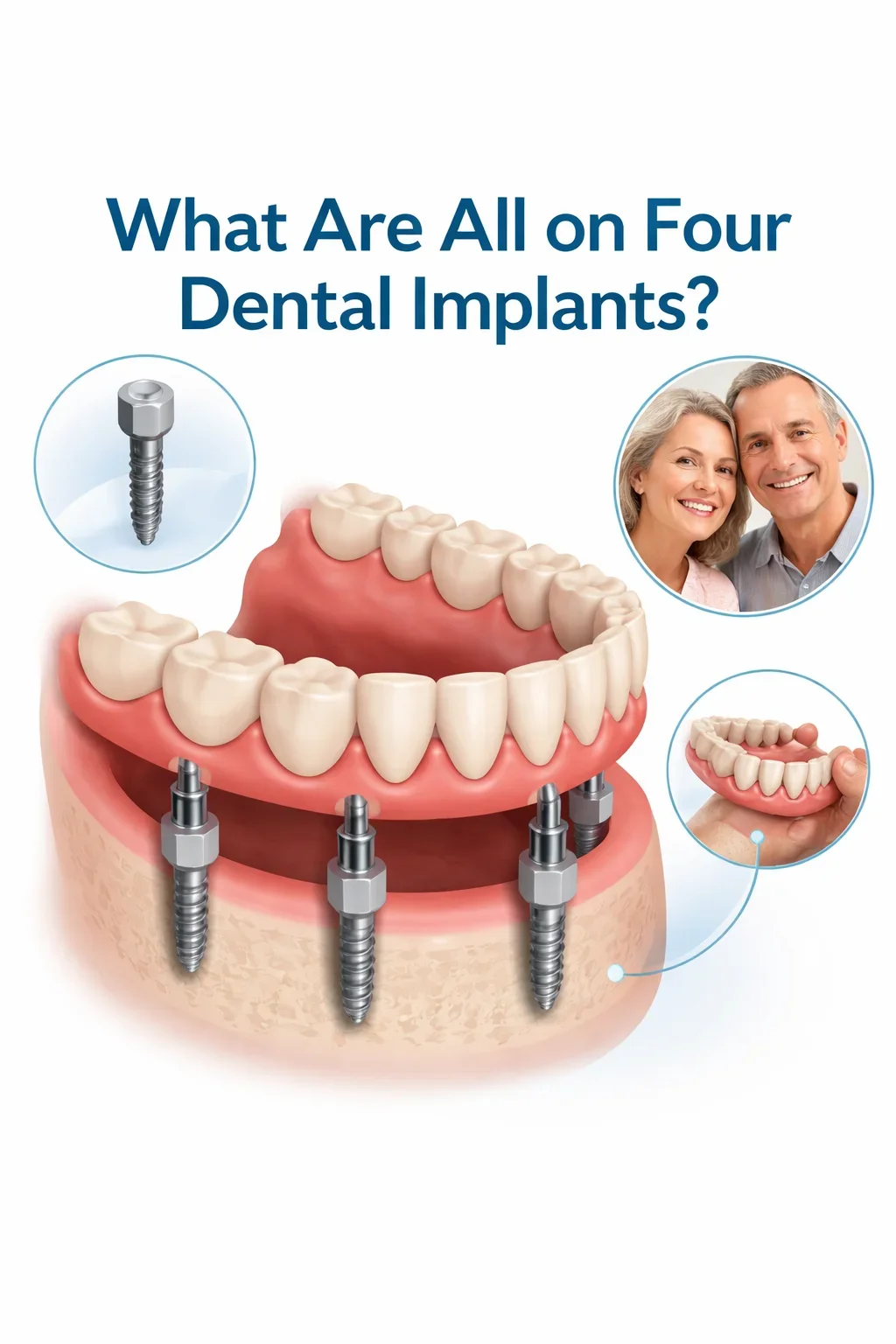
So, what are all on four dental implants in simple terms? They are a full-arch restoration technique that uses just four strategically placed dental implants to support an entire set of upper or lower teeth. Instead of placing an implant for each missing tooth, a dentist inserts four titanium implants into the jawbone. These implants act as artificial tooth roots and anchor a fixed bridge that replaces a full arch of teeth.
When people ask, what are all on four dental implants, they are often surprised to learn that the concept combines surgical precision, prosthetic design, and modern implant technology into one streamlined treatment. Two implants are typically placed vertically in the front of the jaw, where bone density is naturally higher. The other two implants are placed at an angle in the back of the jaw. This angled positioning maximizes contact with available bone and often eliminates the need for bone grafting.
To better understand what are all on four dental implants, it helps to compare them to traditional dentures. Conventional removable dentures sit on top of the gums and may slip or move while eating and speaking. In contrast, all-on-four implants are fixed in place. The prosthetic teeth are securely attached to the implants, providing stability, improved chewing power, and a more natural feel.
Another key aspect of what are all on four dental implants is the concept of immediate loading. In many cases, patients can receive a temporary fixed bridge on the same day as implant placement. This means you can walk out of the clinic with a functional smile instead of waiting months without teeth. Over time, the implants fuse with the jawbone through a biological process called osseointegration, creating a strong and durable foundation.
Patients often wonder, what are all on four dental implants made of? The implants themselves are typically made of medical-grade titanium, a material known for its strength and biocompatibility. The prosthetic teeth may be crafted from acrylic, composite, or high-quality ceramic materials designed to mimic the look and function of natural teeth.
When exploring what are all on four dental implants, it is important to consider the functional benefits. Because the implants stimulate the jawbone, they help prevent bone loss that commonly occurs after tooth loss. Traditional dentures do not provide this stimulation, which can lead to a sunken facial appearance over time. With all-on-four implants, patients often maintain better facial structure and a more youthful look. ✨
Another essential detail in understanding what are all on four dental implants is their long-term durability. With proper care, the implants themselves can last decades. The prosthetic bridge may require maintenance or replacement after many years, but overall, this solution is considered a long-term investment in oral health.
If you are considering this treatment, a thorough evaluation by an experienced implant dentist is crucial. Diagnostic tools such as 3D cone beam CT scans help determine bone quality, implant positioning, and overall suitability. For personalized guidance, you can visit the Redent Klinik Contact Page to discuss your specific case.
For additional reliable information about implant dentistry and treatment standards, you can also consult the American Dental Association, which provides educational resources on modern dental procedures.
In summary, what are all on four dental implants? They are an innovative, full-arch dental restoration method that uses four implants to support a complete set of fixed teeth. This approach offers stability, improved function, enhanced aesthetics, and long-term oral health benefits. By fully understanding what are all on four dental implants, you can determine whether this transformative treatment is the right solution for reclaiming your smile and confidence. 😁
1. What Are All on Four Dental Implants and How Do They Work?
To truly understand what are all on four dental implants, it is important to look beyond the basic definition and explore how the system functions inside the mouth. Many patients ask not only what are all on four dental implants, but also how four implants can possibly support a full arch of teeth. The answer lies in smart engineering, biological integration, and precise treatment planning. 🦷
The Core Concept Behind What Are All on Four Dental Implants
When people search for what are all on four dental implants, they are usually looking for a permanent solution to significant tooth loss. The All-on-4 concept is based on using four strategically positioned dental implants to anchor a complete arch of prosthetic teeth. Instead of placing an implant for every missing tooth, which could require 8–10 implants per arch, this technique uses only four implants to achieve full support.
Two implants are placed vertically in the front portion of the jaw where bone density is typically stronger. The other two implants are inserted at a 30–45 degree angle in the posterior (back) region. This angulation increases the contact area between the implant and bone, improving stability and often avoiding the need for bone grafting.
Why Angled Implants Matter
A critical detail in explaining what are all on four dental implants is understanding why angled implants are used. In many patients, especially those who have worn dentures for years, bone loss occurs in the back part of the jaw. By tilting the implants, the dentist can engage available bone without interfering with anatomical structures such as the maxillary sinus (upper jaw) or the inferior alveolar nerve (lower jaw).
This design makes the treatment less invasive compared to traditional full-mouth implant cases that may require sinus lifts or bone graft procedures.
How Do What Are All on Four Dental Implants Stay Secure?
Another frequent question after asking what are all on four dental implants is how these implants remain stable over time. The answer lies in a biological process called osseointegration. After placement, the titanium implants gradually fuse with the surrounding jawbone. This process typically takes several months, but once complete, the implants function much like natural tooth roots.
Immediately after surgery, a temporary fixed bridge is often attached. This is known as “immediate loading.” Patients can leave the clinic with a functional smile the same day in many cases. Over time, a final, more durable prosthesis replaces the temporary one.
Prosthetic Design: The Bridge That Connects Everything
To fully answer what are all on four dental implants, we must discuss the prosthetic bridge. The bridge is custom-designed to fit your mouth, facial structure, and bite alignment. It is securely screwed onto the implants, meaning it does not move or shift like removable dentures.
Materials for the final bridge may include:
- Acrylic fused to a titanium framework
- Zirconia (a strong, ceramic-like material)
- Hybrid composite materials
Each material offers different benefits in terms of durability, aesthetics, and cost. Regardless of material choice, the bridge restores chewing efficiency and natural-looking aesthetics.
Functional Advantages of What Are All on Four Dental Implants
When evaluating what are all on four dental implants, it is essential to look at functionality. Unlike traditional dentures that rest on gum tissue, these implants stimulate the jawbone during chewing. This stimulation helps prevent further bone resorption (bone shrinkage), preserving facial structure and preventing the “sunken” appearance often associated with long-term denture use.
Patients often report:
- Improved chewing ability 🍎
- Clearer speech
- Greater confidence when smiling 😁
- No slipping or clicking
How Treatment Planning Determines Success
A comprehensive evaluation is crucial when considering what are all on four dental implants. Dentists use 3D imaging (CBCT scans) to assess bone density, anatomical structures, and implant positioning. Digital planning software ensures precise placement and optimal load distribution across the four implants.
Proper case selection and planning significantly reduce complications and improve long-term outcomes. According to professional guidelines referenced by the American Dental Association, implant-supported restorations require careful assessment of systemic health, oral hygiene habits, and bone quality.
Are What Are All on Four Dental Implants a Long-Term Solution?
Yes, and that is why so many patients research what are all on four dental implants before committing to treatment. With proper care, the implants themselves can last decades. The prosthetic teeth may need maintenance or replacement after many years, depending on material wear and oral hygiene.
Routine check-ups, professional cleanings, and excellent home care are essential. Daily brushing, flossing with specialized tools, and possibly using a water flosser will help protect both the implants and surrounding gum tissue.
If you are considering this treatment and want expert evaluation, you can consult directly through the Redent Klinik Contact Page to determine whether this solution fits your specific needs.
In summary, what are all on four dental implants and how do they work? They are a biomechanically engineered, full-arch implant system that uses four strategically placed titanium implants to support a fixed prosthetic bridge. Through precise angulation, immediate loading, and osseointegration, this treatment provides stability, function, aesthetics, and long-term oral health benefits. Understanding what are all on four dental implants at this deeper level allows patients to appreciate why this approach has become one of the most trusted full-mouth rehabilitation solutions in modern dentistry. 🦷✨
2. Who Is a Good Candidate for What Are All on Four Dental Implants?
After understanding what are all on four dental implants, the next important question is whether you are a suitable candidate for this treatment. Many patients researching what are all on four dental implants are experiencing extensive tooth loss, failing dental work, or long-term denture discomfort. However, candidacy depends on several clinical and personal factors that must be carefully evaluated by an experienced implant dentist. 🦷
Patients With Significant Tooth Loss
One of the primary groups who benefit from what are all on four dental implants includes individuals who have lost most or all of their teeth in one or both arches. This may result from advanced periodontal disease, untreated cavities, trauma, or genetic conditions. When multiple teeth are missing, replacing each one with individual implants may not be practical or cost-effective. In such cases, understanding what are all on four dental implants provides clarity on how four implants can restore an entire smile.
This solution is particularly ideal for patients who currently wear full dentures but are dissatisfied with instability, discomfort, or difficulty eating. Because what are all on four dental implants involve a fixed prosthesis secured to implants, they eliminate many of the common complaints associated with removable dentures.
Patients With Bone Loss
Many people assume they are not candidates for implants due to bone loss. However, one advantage of what are all on four dental implants is that the angled placement of the posterior implants maximizes contact with available bone. This often allows patients to avoid complex bone grafting procedures.
Why Bone Density Still Matters
Even though what are all on four dental implants are designed to work in reduced bone conditions, sufficient bone volume is still required to ensure implant stability. A 3D cone beam CT scan is typically performed to assess bone density and structure. The dentist evaluates whether the jaw can properly support the implants and withstand long-term functional forces.
In cases of severe bone loss, additional procedures may still be necessary. However, compared to traditional implant protocols, what are all on four dental implants significantly reduce the need for grafting in many patients.
Healthy Gums and Controlled Medical Conditions
When exploring what are all on four dental implants, overall oral and systemic health must also be considered. Healthy gum tissue is essential because active periodontal infection can compromise implant success. Any gum disease must be treated before surgery.
Systemic health conditions such as diabetes, heart disease, or autoimmune disorders do not automatically exclude someone from receiving what are all on four dental implants, but they must be well-managed. Patients who smoke are also evaluated carefully, as smoking can impair healing and osseointegration.
The American Dental Association emphasizes that thorough medical history review and risk assessment are critical before undergoing implant surgery. This ensures safety and long-term predictability.
Patients Seeking a Fixed, Long-Term Solution
Another strong indicator of candidacy for what are all on four dental implants is a desire for a permanent, non-removable solution. Unlike traditional dentures, which must be removed for cleaning and may shift during eating, implant-supported full-arch restorations remain securely fixed in place.
Patients who prioritize:
- Improved chewing efficiency 🍎
- Natural aesthetics 😁
- Enhanced confidence
- Long-term stability
often find that what are all on four dental implants align perfectly with their expectations.
Psychological Readiness and Commitment
Understanding what are all on four dental implants also means recognizing the patient’s role in long-term success. Candidates must be committed to maintaining proper oral hygiene and attending regular follow-up appointments. Even though the prosthesis is fixed, it still requires meticulous cleaning to prevent peri-implant inflammation.
Are Age Limits a Concern?
There is no strict upper age limit for what are all on four dental implants. Many older adults successfully undergo this treatment with excellent outcomes. The determining factor is overall health rather than chronological age. Younger patients, however, must have completed jaw growth before being considered.
Comprehensive Evaluation Is Essential
The only way to definitively determine eligibility for what are all on four dental implants is through a comprehensive consultation. This includes clinical examination, digital imaging, bite analysis, and discussion of personal goals. Dentists assess whether the patient’s expectations match the realistic outcomes of treatment.
If you are considering this procedure and want to know whether you qualify, you can schedule a personalized evaluation through the Redent Klinik Contact Page. An individualized assessment ensures that your specific anatomical and medical factors are carefully reviewed.
In summary, who is a good candidate for what are all on four dental implants? Ideal candidates include individuals with extensive tooth loss, denture dissatisfaction, adequate bone support, healthy gums, and stable medical conditions. Patients seeking a fixed, long-term full-arch solution with improved functionality and aesthetics are often excellent candidates. By thoroughly understanding what are all on four dental implants and undergoing professional evaluation, you can determine whether this transformative treatment is the right step toward restoring your smile and confidence. ✨
3. Step-by-Step Procedure: What Are All on Four Dental Implants Treatment Stages?
Once patients clearly understand what are all on four dental implants, the next logical question is: how exactly is the procedure performed? Knowing the step-by-step treatment stages helps reduce anxiety and allows patients to prepare both physically and mentally. When exploring what are all on four dental implants, it is important to realize that the process combines careful diagnostics, surgical precision, and prosthetic artistry into one coordinated treatment plan. 🦷
Initial Consultation and Diagnostic Planning
The first stage in understanding what are all on four dental implants from a procedural perspective is the comprehensive consultation. During this visit, the dentist performs a detailed oral examination, reviews medical history, and discusses patient expectations. Digital X-rays and 3D cone beam CT scans are taken to evaluate bone density, anatomical structures, and optimal implant positioning.
Digital Smile Design and Treatment Mapping
A key advantage when planning what are all on four dental implants is the use of digital software to simulate the final result. Dentists map out implant angles, depth, and prosthetic alignment before surgery even begins. This digital planning ensures precise placement, balanced bite forces, and long-term stability.
At this stage, impressions or digital scans are also taken to prepare the temporary prosthesis that will often be placed immediately after surgery.
Tooth Extraction and Site Preparation
If any damaged or failing teeth remain, they are carefully extracted during the surgical appointment. Many patients who research what are all on four dental implants are relieved to learn that extractions and implant placement can often be completed in the same visit.
The dentist then prepares the implant sites within the jawbone. Because what are all on four dental implants rely on strategic angulation, the back implants are placed at specific angles to maximize bone contact and avoid anatomical structures such as the sinus cavities or nerve canals.
Implant Placement Surgery
The core stage in answering what are all on four dental implants procedurally is the placement of four titanium implants into the jaw. Two implants are placed vertically in the anterior region, while two are inserted at angles in the posterior region.
This strategic distribution allows the implants to act as a stable foundation for a full-arch bridge. The procedure is typically performed under local anesthesia, though sedation options are available for anxious patients. 😌
Primary Stability and Immediate Loading
One of the defining characteristics of what are all on four dental implants is the concept of immediate loading. If sufficient primary stability is achieved at the time of surgery, a temporary fixed bridge can be attached the same day. This means patients leave the clinic with a functional and aesthetic smile.
This immediate function distinguishes what are all on four dental implants from older implant protocols that required months of healing before teeth could be attached.
Healing and Osseointegration Phase
After surgery, the implants begin the process of osseointegration, where bone cells grow around and fuse with the titanium surface. This biological integration is essential to the long-term success of what are all on four dental implants. Healing typically takes three to six months, depending on bone quality and individual health factors.
During this period, patients follow specific dietary and hygiene instructions to protect the implants. Soft foods are recommended initially, and regular follow-up appointments ensure proper healing.
Final Prosthesis Placement
Once osseointegration is complete, the temporary bridge is replaced with a permanent prosthesis. This final restoration is custom-crafted for durability, aesthetics, and optimal bite alignment. Materials such as zirconia or reinforced acrylic may be used.
The final stage in the journey of what are all on four dental implants is securing this permanent bridge onto the implants. The dentist carefully adjusts the bite to ensure even force distribution, minimizing stress on individual implants.
Post-Treatment Maintenance and Monitoring
Understanding what are all on four dental implants also includes recognizing the importance of long-term care. Even though the prosthesis is fixed, it requires daily cleaning and professional maintenance. Specialized brushes and water flossers help clean beneath the bridge.
According to guidelines supported by the American Dental Association, regular dental check-ups are essential for monitoring implant health and preventing peri-implant disease.
If you are considering this life-changing procedure, scheduling a professional evaluation through the Redent Klinik Contact Page can provide personalized guidance tailored to your oral condition.
In summary, the step-by-step stages of what are all on four dental implants include consultation, digital planning, tooth extraction (if needed), precise implant placement, immediate temporary restoration, healing through osseointegration, and final prosthesis attachment. Each phase is carefully coordinated to ensure safety, comfort, and long-term success. By fully understanding what are all on four dental implants from a procedural standpoint, patients can approach treatment with clarity, confidence, and realistic expectations. ✨