
🦷 One of the most common questions patients ask before beginning implant treatment is: what do dental implants cost per tooth? The answer is not always straightforward because dental implant pricing depends on several clinical, geographic, and procedural factors. However, understanding the typical costs involved can help you make an informed decision and plan your treatment confidently.
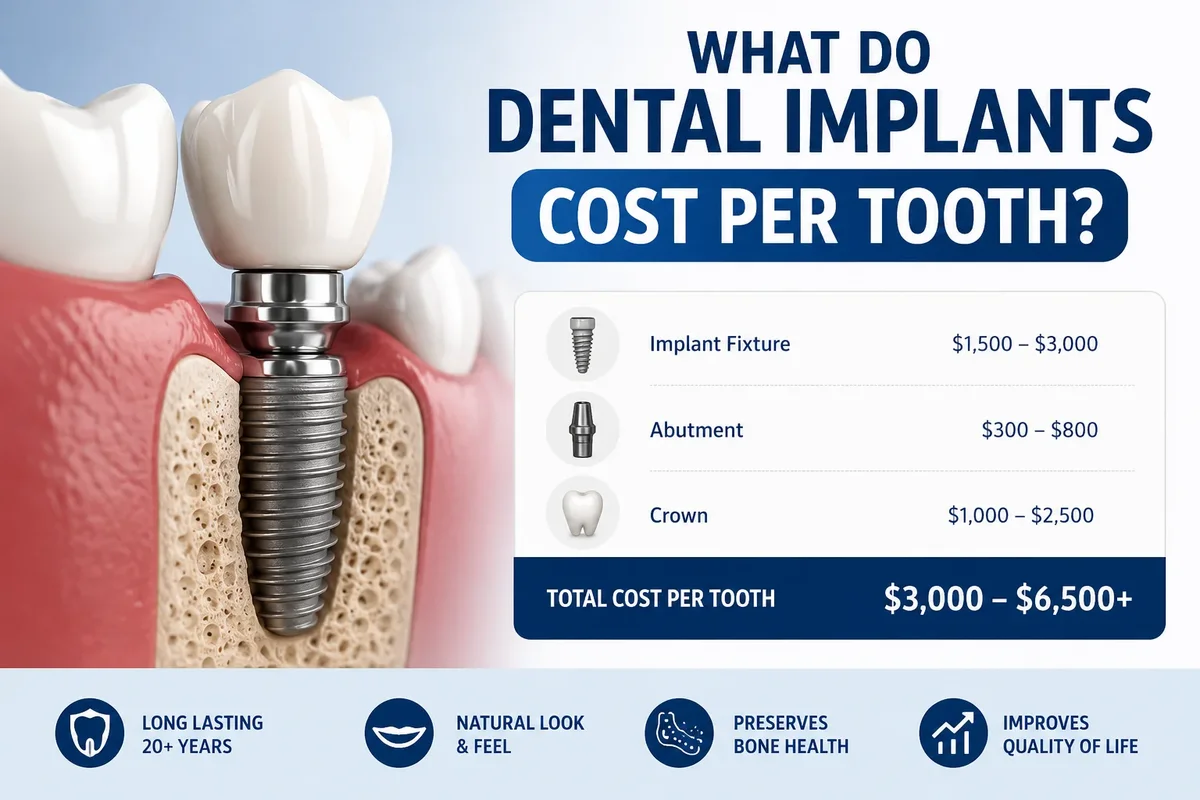
When researching what do dental implants cost per tooth, it is important to understand that a dental implant is not a single item. Instead, a complete implant restoration usually consists of three main components: the implant post, the abutment, and the dental crown. Each part contributes to the overall price. In many clinics, the complete treatment package may include consultations, digital imaging, surgical placement, follow-up visits, and the final restoration.
Patients searching for what do dental implants cost per tooth often discover a wide range of prices online. In the United States, a single dental implant can typically cost between $3,000 and $6,000 per tooth when all treatment stages are included. Some premium clinics may charge more depending on the dentist’s expertise, technology used, and the complexity of the case. International dental tourism destinations may offer lower prices, but patients should always evaluate quality, materials, safety standards, and aftercare services before making a decision.
Understanding what do dental implants cost per tooth requires looking beyond the initial fee. While traditional bridges and removable dentures may appear less expensive upfront, dental implants often provide greater long-term value. Because implants integrate with the jawbone, they help preserve bone structure, support facial aesthetics, and function similarly to natural teeth. Many patients find that implants offer a durable solution that can last decades with proper care.
Another important consideration when evaluating what do dental implants cost per tooth is the quality of materials used. Premium implant brands invest heavily in research, development, and clinical testing. Titanium implants remain the industry standard due to their excellent biocompatibility and long-term success rates. Some patients may also consider zirconia implants, which can have different pricing structures depending on the manufacturer and treatment requirements.
Diagnostic procedures can also influence what do dental implants cost per tooth. Before implant surgery, dentists typically perform comprehensive examinations that may include digital X-rays, CBCT scans, oral health assessments, and treatment planning. These evaluations help ensure the implant is placed accurately and safely. While these services add to the overall investment, they significantly improve treatment predictability and outcomes.
For many individuals, the biggest concern regarding what do dental implants cost per tooth is whether additional procedures are required. If a patient has experienced bone loss due to prolonged tooth absence, bone grafting or sinus augmentation may be necessary before implant placement. These preparatory treatments can increase the total cost but are often essential for achieving a stable and long-lasting result.
Patients comparing options for what do dental implants cost per tooth should also consider the experience of the implant dentist. Highly trained implant specialists often charge higher fees because of their advanced education, surgical expertise, and proven track records. While selecting the lowest-cost provider may seem attractive, treatment quality and clinical outcomes should always remain the primary considerations.
The following table provides a general estimate for patients researching what do dental implants cost per tooth:
| Treatment Component | Typical Cost Range (USD) |
|---|---|
| Initial Consultation | $50 – $300 |
| CBCT Scan and Imaging | $150 – $600 |
| Implant Placement Surgery | $1,500 – $3,000 |
| Abutment | $300 – $800 |
| Dental Crown | $1,000 – $2,500 |
| Total Per Tooth | $3,000 – $6,000+ |
Many patients researching what do dental implants cost per tooth are pleased to learn that financing options are frequently available. Dental practices may offer monthly payment plans, healthcare financing programs, or installment arrangements that make treatment more accessible. Some dental insurance plans may also contribute toward specific portions of implant treatment, although coverage varies significantly.
When evaluating what do dental implants cost per tooth, it is essential to focus on value rather than simply seeking the lowest price. Factors such as implant brand, clinician experience, digital technology, sterilization protocols, laboratory quality, and long-term follow-up care all play critical roles in treatment success. A carefully planned implant restoration can improve chewing function, speech, confidence, and overall quality of life.
If you are considering treatment and want professional guidance regarding what do dental implants cost per tooth, you can contact experienced implant professionals through the Redent Klinik Contact Page. Patients can also learn more about oral health standards and implant-related information from the American Dental Association.
Ultimately, the answer to what do dental implants cost per tooth depends on your unique oral health needs, treatment goals, and clinical circumstances. Although implant therapy requires a greater initial investment than some alternatives, many patients consider it one of the most effective and rewarding long-term solutions for replacing missing teeth. By understanding the components that influence pricing and choosing a qualified provider, you can make a confident and informed decision about your dental health.
What Do Dental Implants Cost Per Tooth in 2026?
As dental technology continues to advance, one of the most frequently searched questions remains: what do dental implants cost per tooth in 2026? Patients considering tooth replacement want accurate, up-to-date information before making a financial and healthcare decision. While costs vary based on location, treatment complexity, and provider expertise, understanding the current pricing landscape can help patients prepare for treatment and avoid unexpected expenses.
In 2026, the average answer to the question what do dental implants cost per tooth ranges from approximately $3,000 to $6,500 per tooth in many parts of the United States. However, this range should be viewed as a general estimate rather than a fixed fee because every implant case is unique. Some straightforward cases may cost less, while complex procedures requiring additional treatments may exceed this range.
Why Dental Implant Costs Have Changed in 2026
Several factors have influenced what do dental implants cost per tooth in recent years. Advances in digital dentistry, improved implant materials, and enhanced diagnostic technologies have improved treatment outcomes significantly. At the same time, inflation, laboratory costs, and healthcare expenses have contributed to rising treatment fees.
Many modern dental clinics now utilize digital workflows that include:
- 3D CBCT imaging
- Computer-guided implant surgery
- Digital impressions
- CAD/CAM crown manufacturing
- Advanced treatment planning software
While these technologies may increase the initial investment, they often improve accuracy, reduce complications, and enhance long-term success rates. Therefore, when evaluating what do dental implants cost per tooth, patients should also consider the value provided by modern treatment methods.
Typical Implant Cost Breakdown in 2026
Understanding the components involved helps answer the question of what do dental implants cost per tooth. Most implant treatments include several separate stages and fees.
| Procedure | Estimated Cost (USD) |
|---|---|
| Initial Consultation | $50 – $300 |
| Digital X-Rays | $50 – $250 |
| CBCT Scan | $150 – $600 |
| Implant Placement | $1,500 – $3,000 |
| Abutment | $300 – $800 |
| Final Crown | $1,000 – $2,500 |
| Total Average Cost | $3,000 – $6,500+ |
As this table demonstrates, the answer to what do dental implants cost per tooth involves more than simply purchasing an implant. The complete treatment process includes planning, surgery, restoration, and follow-up care.
Single-Tooth Implant Versus Multiple Implants
The answer to what do dental implants cost per tooth can vary significantly depending on how many teeth are being replaced. Single-tooth implants generally have the highest per-tooth cost because each missing tooth requires its own crown and restoration components.
For patients replacing multiple adjacent teeth, implant-supported bridges may lower the overall per-tooth expense. Similarly, full-arch solutions such as All-on-4 or All-on-6 systems can significantly reduce average costs when compared with replacing every tooth individually.
How Location Affects Implant Pricing
Geographic location remains one of the biggest factors affecting what do dental implants cost per tooth. Patients living in major metropolitan areas often face higher treatment costs due to increased operational expenses and higher demand for specialized dental services.
For example:
- New York City: $4,500 – $7,500+
- Los Angeles: $4,000 – $7,000+
- Chicago: $3,500 – $6,500+
- Mid-sized cities: $3,000 – $5,500+
- Dental tourism destinations: $1,000 – $3,500+
Patients researching what do dental implants cost per tooth often explore international treatment options. While overseas clinics may offer lower prices, patients should carefully evaluate quality standards, implant brands, warranty policies, and long-term support before choosing treatment abroad.
Premium Implant Brands and Their Influence on Cost
Another factor affecting what do dental implants cost per tooth is the implant manufacturer. Premium implant systems from internationally recognized companies often command higher prices due to extensive clinical research and long-term success data.
Common premium implant brands include:
- Straumann
- Nobel Biocare
- Zimmer Biomet
- BioHorizons
- Osstem
Although premium implants may increase treatment costs, many patients appreciate the additional confidence associated with highly researched systems.
Is a Higher Price Always Better?
When evaluating what do dental implants cost per tooth, patients should avoid focusing solely on the lowest available price. Implant treatment is a medical procedure that requires extensive planning, surgical skill, and restorative expertise.
A higher fee may reflect:
- Greater clinical experience
- Advanced technology
- Superior implant materials
- Better laboratory craftsmanship
- Comprehensive aftercare
- Longer warranty coverage
Instead of simply searching for the cheapest provider, patients should seek the best combination of quality, safety, experience, and value.
Financing Options Available in 2026
For many individuals researching what do dental implants cost per tooth, affordability is a major concern. Fortunately, modern dental clinics increasingly offer financing programs that make treatment more accessible.
Common payment solutions include:
- Monthly installment plans
- Healthcare financing providers
- Dental savings programs
- Credit-based treatment financing
- Employer-sponsored healthcare benefits
Some insurance plans may also contribute to portions of implant treatment, particularly when the procedure is considered medically necessary.
Patients interested in personalized treatment estimates can contact specialists through the Redent Klinik Contact Page. Additional oral health information and educational resources can be found through the American Dental Association.
Ultimately, when asking what do dental implants cost per tooth in 2026, patients should remember that pricing depends on far more than the implant itself. Treatment planning, technology, materials, surgeon experience, and long-term care all contribute to the final investment. Understanding these variables allows patients to make informed decisions and choose a solution that provides both functional and aesthetic benefits for many years to come. 😊
Average Price Breakdown for What Do Dental Implants Cost Per Tooth
💰 One of the most important aspects of understanding what do dental implants cost per tooth is knowing exactly where the money goes. Many patients are surprised to learn that the total fee is not simply for the implant itself. Instead, a dental implant treatment involves multiple stages, advanced technology, specialized materials, laboratory work, and professional expertise. Understanding this price breakdown helps patients make informed decisions and compare treatment options more accurately.
When researching what do dental implants cost per tooth, it is essential to remember that each component of treatment serves a critical purpose. A successful implant restoration requires careful planning, precise surgery, healing time, and a custom-designed final restoration. Skipping any of these steps could compromise the long-term success of the treatment.
The Three Main Components of a Dental Implant
To fully understand what do dental implants cost per tooth, patients should first become familiar with the three primary parts of a dental implant system.
- Implant Post: A titanium or zirconia fixture surgically inserted into the jawbone.
- Abutment: A connector that attaches the implant to the final crown.
- Dental Crown: The visible tooth restoration that resembles a natural tooth.
Each of these components contributes separately to the overall answer to the question what do dental implants cost per tooth.
Consultation and Treatment Planning Costs
Before implant treatment begins, patients typically undergo a comprehensive consultation. This stage is often overlooked when discussing what do dental implants cost per tooth, but it is one of the most important parts of treatment.
During the consultation, the dentist evaluates:
- Oral health condition
- Bone density levels
- Gum health
- Bite alignment
- Medical history
- Treatment suitability
Consultation fees generally range from $50 to $300 depending on the clinic and geographic location.
Digital Imaging and Diagnostic Costs
Modern implant dentistry relies heavily on advanced imaging. Therefore, when calculating what do dental implants cost per tooth, diagnostic scans must be included.
| Diagnostic Service | Typical Cost |
|---|---|
| Digital X-Ray | $50 – $250 |
| Panoramic Imaging | $100 – $300 |
| CBCT Scan | $150 – $600 |
These diagnostic tools allow dentists to assess nerve locations, bone volume, and implant positioning with remarkable precision. Although they increase treatment costs, they significantly improve safety and predictability.
Implant Placement Surgery Costs
The surgical phase represents one of the largest portions of what do dental implants cost per tooth. During this procedure, the implant post is placed into the jawbone under local anesthesia or sedation.
Average implant placement fees generally range from:
- Standard implant surgery: $1,500 – $3,000
- Complex surgical cases: $2,500 – $4,500+
- Guided implant surgery: Additional $200 – $1,000
The exact price depends on surgical complexity, bone quality, implant brand, and the experience of the treating dentist.
Abutment Costs Explained
Patients researching what do dental implants cost per tooth often overlook the abutment component. However, this small connector plays a vital role in securing the final crown.
Abutments may be:
- Stock abutments
- Custom titanium abutments
- Custom zirconia abutments
Typical abutment costs range from $300 to $800, depending on material selection and customization requirements.
Dental Crown Costs
The crown is the visible portion of the implant restoration and often accounts for a substantial percentage of what do dental implants cost per tooth.
Common crown materials include:
- Porcelain-fused-to-metal
- Full porcelain
- Zirconia
- Layered ceramic restorations
Typical crown costs range between $1,000 and $2,500. Premium esthetic crowns designed for front teeth may exceed this range due to additional laboratory craftsmanship and customization.
Average Complete Cost Breakdown
The following table provides a realistic overview for patients researching what do dental implants cost per tooth.
| Component | Average Cost |
|---|---|
| Consultation | $50 – $300 |
| CBCT Scan | $150 – $600 |
| Implant Post | $1,500 – $3,000 |
| Abutment | $300 – $800 |
| Crown | $1,000 – $2,500 |
| Total Estimated Cost | $3,000 – $6,500+ |
Additional Procedures That Affect Cost
Another major factor influencing what do dental implants cost per tooth is whether preparatory procedures are needed before implant placement.
Common additional treatments include:
- Tooth extraction
- Bone grafting
- Sinus lift surgery
- Soft tissue grafting
- Periodontal treatment
These procedures can add hundreds or even thousands of dollars to the final treatment cost. However, they are often necessary to ensure proper implant stability and long-term success.
Why Implant Costs Vary Between Clinics
Patients frequently wonder why answers to what do dental implants cost per tooth vary dramatically from one clinic to another. Several factors contribute to these differences:
- Experience of the implant dentist
- Location of the practice
- Quality of implant systems
- Use of digital technology
- Laboratory partnerships
- Warranty and aftercare programs
Premium clinics often invest heavily in technology and training, which can increase fees but may also improve treatment outcomes.
Long-Term Value Versus Initial Cost
When evaluating what do dental implants cost per tooth, patients should focus on long-term value rather than only the upfront investment. Dental implants can last decades when properly maintained, making them one of the most durable tooth replacement options available.
Unlike removable dentures or traditional bridges, implants preserve jawbone health, maintain facial structure, improve chewing efficiency, and offer a highly natural appearance. These benefits often justify the higher initial investment.
Patients seeking personalized information regarding what do dental implants cost per tooth can contact specialists through the Redent Klinik Contact Page. Additional educational resources about implant dentistry and oral health standards are available through the American Dental Association.
Ultimately, understanding the complete price breakdown behind what do dental implants cost per tooth allows patients to compare treatment options more accurately, avoid unexpected expenses, and make confident decisions about restoring their smile. 🦷✨
Factors That Influence What Do Dental Implants Cost Per Tooth
🦷 When patients begin researching what do dental implants cost per tooth, they often expect a simple answer with a fixed price. However, dental implant treatment is highly personalized, and the final cost can vary significantly from one patient to another. Understanding the factors that influence what do dental implants cost per tooth is essential for setting realistic expectations and making informed treatment decisions.
Unlike many standard dental procedures, implant treatment involves multiple clinical variables. Everything from bone quality and implant materials to the experience of the surgeon and the location of the clinic can impact pricing. As a result, two patients receiving what appears to be the same treatment may receive very different cost estimates.
Patient-Specific Oral Health Conditions
One of the most important factors affecting what do dental implants cost per tooth is the patient’s existing oral health condition. Before an implant can be placed successfully, the dentist must evaluate whether the jawbone and surrounding tissues can support the implant.
Patients with healthy bone structure and strong gums often require fewer preparatory procedures, which can reduce overall treatment expenses. However, patients who have experienced tooth loss for many years may develop significant bone resorption that requires additional intervention.
Common oral health factors that influence what do dental implants cost per tooth include:
- Bone density levels
- Periodontal disease history
- Jawbone volume
- Tooth extraction requirements
- Gum tissue condition
- Bite alignment issues
The healthier the oral environment, the more straightforward the implant procedure is likely to be.
Bone Grafting Requirements
Bone grafting is among the most significant variables affecting what do dental implants cost per tooth. Dental implants require sufficient bone volume for stability and long-term integration. If the jawbone has deteriorated due to tooth loss, trauma, or periodontal disease, additional grafting procedures may be necessary.
When Is Bone Grafting Necessary?
Bone grafting may be recommended when:
- A tooth has been missing for several years
- Severe gum disease has caused bone loss
- Previous dental infections damaged the jawbone
- The sinus cavity limits available bone height
Depending on complexity, grafting procedures may add anywhere from several hundred to several thousand dollars to the answer of what do dental implants cost per tooth.
Implant Material Selection
Another major factor influencing what do dental implants cost per tooth is the material chosen for the implant itself. Most implants are manufactured from medical-grade titanium due to its proven biocompatibility and long clinical history.
However, some patients prefer metal-free alternatives such as zirconia implants.
| Implant Material | Typical Cost Impact |
|---|---|
| Titanium | Standard pricing |
| Zirconia | Often higher pricing |
Patients comparing treatment options should discuss the advantages and limitations of each material with their dentist before deciding which option best suits their needs.
Implant Brand and Manufacturer
Many people researching what do dental implants cost per tooth are unaware that implant brands vary considerably. Leading manufacturers invest heavily in research, development, clinical trials, and quality control.
Examples of premium implant systems include:
- Straumann
- Nobel Biocare
- Zimmer Biomet
- BioHorizons
- Osstem
Premium brands generally increase what do dental implants cost per tooth, but many dentists and patients consider the investment worthwhile because of extensive long-term success data and global availability of replacement components.
Experience of the Implant Dentist
Professional expertise plays a major role in determining what do dental implants cost per tooth. Implant dentistry requires specialized training, surgical skill, and extensive experience.
A highly experienced implant surgeon may charge more because they provide:
- Advanced treatment planning
- Reduced complication risks
- Improved aesthetic outcomes
- Greater procedural efficiency
- Higher success rates
Although choosing the least expensive provider may appear attractive initially, implant treatment quality often has a direct impact on long-term outcomes.
Specialists Versus General Dentists
Patients researching what do dental implants cost per tooth often notice price differences between general dentists and specialists.
Implant specialists may include:
- Oral surgeons
- Periodontists
- Prosthodontists
Specialists typically have additional years of training focused specifically on implant procedures, which may contribute to higher treatment fees.
Geographic Location of the Clinic
Location is another significant factor influencing what do dental implants cost per tooth. Clinics operating in large metropolitan areas often face higher rent, staffing, insurance, and operational costs.
As a result, implant treatment in cities such as New York, Los Angeles, or London may cost substantially more than treatment in smaller communities.
Patients frequently compare local treatment options with dental tourism destinations. While overseas clinics may offer attractive pricing, it is important to evaluate:
- Safety standards
- Implant brands used
- Warranty availability
- Follow-up care options
- Travel expenses
These considerations can significantly affect the true value behind what do dental implants cost per tooth.
Technology Used During Treatment
Modern technology has transformed implant dentistry. Clinics utilizing advanced equipment may charge more, but they often provide greater precision and predictability.
Technologies that influence what do dental implants cost per tooth include:
- CBCT imaging
- Digital treatment planning
- Computer-guided surgery
- Digital impressions
- CAD/CAM crown manufacturing
These innovations improve treatment accuracy and can reduce the risk of complications.
Type of Final Restoration
The crown attached to the implant also affects what do dental implants cost per tooth. Different restorative materials have varying costs and aesthetic properties.
| Crown Material | Cost Level |
|---|---|
| Porcelain-Fused-to-Metal | Moderate |
| Full Porcelain | Higher |
| Zirconia | Premium |
Front teeth often require more advanced aesthetic customization, which may increase treatment expenses compared with implants placed in less visible areas.
Long-Term Value Considerations
While many patients focus exclusively on what do dental implants cost per tooth, long-term value should be part of the discussion. A well-planned implant can provide decades of function and appearance when maintained properly.
Dental implants offer benefits such as:
- Jawbone preservation
- Natural chewing ability
- Improved speech
- Enhanced confidence
- Long-term durability
These advantages often make implants one of the most cost-effective tooth replacement solutions over time.
Patients interested in personalized treatment recommendations can contact implant professionals through the Redent Klinik Contact Page. Additional educational information regarding implant treatment standards can be found through the American Dental Association.
Ultimately, understanding the many factors that influence what do dental implants cost per tooth allows patients to evaluate treatment proposals more accurately and choose solutions that balance quality, safety, aesthetics, and long-term value. 😊
How Implant Materials Affect What Do Dental Implants Cost Per Tooth
🦷 When patients research what do dental implants cost per tooth, they often focus on overall treatment fees without realizing how significantly implant materials influence pricing. The materials used in the implant post, abutment, and final crown can directly affect treatment costs, long-term durability, aesthetics, and overall patient satisfaction. Understanding these material differences is essential for anyone comparing treatment options and evaluating the true value behind what do dental implants cost per tooth.
Modern dental implants are designed to function as closely as possible to natural teeth. To achieve this goal, manufacturers invest heavily in research and development to create materials that are strong, biocompatible, and aesthetically pleasing. As a result, material selection is one of the most important factors influencing what do dental implants cost per tooth.
The Role of Materials in Dental Implant Treatment
A complete dental implant restoration generally consists of three primary components:
- Implant post
- Abutment
- Dental crown
Each component can be manufactured from different materials, and each choice affects what do dental implants cost per tooth in a unique way.
Higher-quality materials typically offer better longevity, aesthetics, and clinical performance. However, these advantages often come with higher treatment costs.
Why Material Quality Matters
Material quality impacts:
- Implant durability
- Biocompatibility
- Resistance to corrosion
- Appearance
- Long-term stability
- Patient comfort
For this reason, patients should never evaluate what do dental implants cost per tooth solely based on price. The quality of materials used can dramatically influence treatment outcomes for many years.
Titanium Implants: The Industry Standard
When discussing what do dental implants cost per tooth, titanium remains the most commonly used implant material worldwide. Titanium implants have been used successfully for decades and continue to be considered the gold standard in implant dentistry.
Advantages of titanium implants include:
- Excellent biocompatibility
- High success rates
- Strong osseointegration with bone
- Extensive clinical research
- Long-term reliability
Because titanium has such a well-established clinical history, many dentists recommend it as the first choice for implant treatment.
| Titanium Implant Benefits | Impact on Cost |
|---|---|
| Extensive research history | Moderate |
| Excellent durability | Moderate |
| Predictable success rates | Moderate |
For many patients, titanium provides the best balance between performance and affordability when considering what do dental implants cost per tooth.
Zirconia Implants: The Metal-Free Alternative
In recent years, zirconia implants have gained popularity among patients looking for metal-free solutions. As interest grows, zirconia has become an increasingly important topic in discussions about what do dental implants cost per tooth.
Zirconia is a ceramic material known for its white color and excellent aesthetic properties.
Benefits include:
- Metal-free construction
- Natural tooth-like color
- Excellent tissue compatibility
- Reduced visibility beneath thin gums
However, zirconia implants are often more expensive than titanium implants. Therefore, choosing zirconia may increase what do dental implants cost per tooth compared with traditional titanium systems.
Titanium Versus Zirconia Comparison
| Feature | Titanium | Zirconia |
|---|---|---|
| Clinical History | Extensive | Growing |
| Aesthetics | Excellent | Outstanding |
| Cost | Moderate | Higher |
| Strength | Excellent | Excellent |
Patients concerned primarily with aesthetics may prefer zirconia despite the higher impact on what do dental implants cost per tooth.
Abutment Materials and Their Cost Impact
The abutment serves as the connector between the implant and the crown. Although small, this component can significantly affect what do dental implants cost per tooth.
Common abutment materials include:
- Titanium
- Zirconia
- Gold alloy
- Custom CAD/CAM abutments
Standard titanium abutments are generally the most economical option. Custom zirconia abutments often cost more because they require individualized design and laboratory manufacturing.
For highly visible front teeth, dentists frequently recommend customized zirconia abutments to maximize aesthetics.
How Crown Materials Affect Pricing
The visible crown is another major contributor to what do dental implants cost per tooth. Various crown materials offer different levels of strength, aesthetics, and longevity.
Common Crown Material Options
- Porcelain-fused-to-metal (PFM)
- Full porcelain
- Monolithic zirconia
- Layered zirconia
- Lithium disilicate ceramic
Each option has unique advantages. While porcelain-fused-to-metal crowns may be less expensive, premium ceramic restorations often provide superior aesthetics and natural translucency.
| Crown Material | Relative Cost |
|---|---|
| PFM Crown | Moderate |
| Full Porcelain | Higher |
| Zirconia Crown | Premium |
| Layered Zirconia | Premium Plus |
As crown quality increases, so does what do dental implants cost per tooth, particularly in cases where aesthetics are a top priority.
Laboratory Quality and Customization
Many patients do not realize that dental laboratories play a crucial role in determining what do dental implants cost per tooth. High-end dental laboratories utilize advanced technology, skilled technicians, and premium materials to create highly customized restorations.
Laboratory factors that influence cost include:
- Digital design services
- Custom shading and characterization
- Handcrafted ceramic layering
- Premium milling technology
- Quality assurance procedures
Premium laboratory work often results in restorations that closely mimic natural teeth and provide superior long-term performance.
Balancing Cost and Value
When evaluating what do dental implants cost per tooth, patients should focus on long-term value rather than the lowest possible upfront fee. While premium materials may increase the initial investment, they often provide better durability, aesthetics, and patient satisfaction.
Important considerations include:
- Expected lifespan
- Aesthetic goals
- Functional requirements
- Maintenance needs
- Clinical predictability
Patients interested in personalized implant treatment recommendations can contact experienced professionals through the Redent Klinik Contact Page. Additional information regarding implant materials and oral health standards can be found through the American Dental Association.
Ultimately, understanding how implant materials affect what do dental implants cost per tooth empowers patients to make informed decisions that align with their clinical needs, aesthetic expectations, and financial goals. Choosing the right materials can significantly influence both the short-term cost and long-term success of dental implant treatment. ✨
Location and Clinic Expertise Impact on What Do Dental Implants Cost Per Tooth
🌍 One of the most significant yet often overlooked factors affecting what do dental implants cost per tooth is where the treatment is performed and who performs it. Patients are frequently surprised to discover that the same implant procedure can vary in cost by thousands of dollars depending on geographic location, clinic reputation, technology investments, and the expertise of the dental professional. Understanding these variables can help patients make smarter decisions when comparing treatment options and evaluating the true value behind what do dental implants cost per tooth.
Dental implant treatment is not a standardized commodity. Unlike purchasing a product with a fixed retail price, implant dentistry combines surgical skill, restorative expertise, diagnostic technology, laboratory craftsmanship, and long-term patient care. These factors create substantial variations in pricing across different regions and clinics.
Why Location Influences Implant Costs
When researching what do dental implants cost per tooth, geographic location is often one of the largest contributors to price differences. Dental clinics operate under varying economic conditions depending on where they are located.
Factors that influence location-based pricing include:
- Commercial rent expenses
- Staff salaries
- Insurance costs
- Regulatory requirements
- Local demand for dental services
- Cost of living in the area
Because these operational costs differ dramatically between regions, clinics must adjust their treatment fees accordingly. This directly affects what do dental implants cost per tooth for patients seeking treatment.
Urban Versus Rural Pricing Differences
Major metropolitan areas generally have higher treatment costs than smaller cities and rural communities.
| Location Type | Typical Implant Cost Range |
|---|---|
| Large Metropolitan Areas | $4,000 – $7,500+ |
| Mid-Sized Cities | $3,500 – $6,000+ |
| Small Towns | $3,000 – $5,000+ |
For example, patients researching what do dental implants cost per tooth in New York, Los Angeles, or London may receive significantly higher estimates than patients receiving comparable treatment in smaller communities.
Regional Cost Variations Within the Same Country
Even within a single country, there can be substantial differences in what do dental implants cost per tooth. Economic conditions, competition, and local demographics all influence pricing.
In the United States, implant costs often vary according to:
- State regulations
- Healthcare market conditions
- Regional labor costs
- Specialist availability
Patients living in highly competitive healthcare markets may encounter more pricing options, while patients in underserved regions may have fewer choices and potentially higher fees.
Dental Tourism and International Treatment
Many patients exploring what do dental implants cost per tooth eventually consider dental tourism. Countries known for dental tourism frequently advertise lower treatment costs than those found in North America, Western Europe, or Australia.
Popular dental tourism destinations include:
- Turkey
- Mexico
- Hungary
- Thailand
- Poland
- Costa Rica
In some cases, implant treatment abroad may cost 40% to 70% less than treatment in higher-cost regions.
Factors Beyond the Advertised Price
Although lower fees may seem attractive, patients evaluating what do dental implants cost per tooth internationally should consider additional expenses and risks.
- Travel costs
- Accommodation expenses
- Follow-up appointments
- Warranty limitations
- Communication challenges
- Emergency care accessibility
Sometimes the true overall cost becomes much closer to domestic treatment after these factors are included.
How Clinic Expertise Affects Implant Costs
Beyond geographic location, professional expertise has a major influence on what do dental implants cost per tooth. Implant dentistry requires advanced training, surgical precision, and extensive clinical experience.
Experienced implant professionals often charge higher fees because they provide:
- More accurate treatment planning
- Higher success rates
- Improved aesthetics
- Reduced complication risks
- Greater long-term predictability
Patients comparing treatment estimates should always consider qualifications and experience rather than focusing exclusively on price.
General Dentists Versus Implant Specialists
Patients researching what do dental implants cost per tooth frequently notice significant differences between general dentists and specialists.
Specialists may include:
- Oral surgeons
- Periodontists
- Prosthodontists
These professionals typically undergo several additional years of advanced education beyond dental school. Their specialized training often results in higher treatment fees but may also provide additional confidence for complex cases.
Technology Investments and Modern Clinics
The level of technology available at a clinic can substantially influence what do dental implants cost per tooth. Modern dental practices often invest heavily in advanced diagnostic and treatment technologies.
Examples include:
- CBCT scanners
- Digital impression systems
- Computer-guided implant surgery
- CAD/CAM crown fabrication
- Intraoral scanners
While these technologies increase operating costs, they often improve treatment accuracy and patient outcomes.
| Technology | Potential Benefit |
|---|---|
| CBCT Imaging | Improved surgical planning |
| Guided Surgery | Enhanced implant precision |
| Digital Impressions | Greater patient comfort |
| CAD/CAM Restorations | Improved crown accuracy |
Clinics utilizing these technologies may charge more, but many patients view the added precision as worthwhile when evaluating what do dental implants cost per tooth.
Reputation and Patient Reviews
A clinic’s reputation also influences what do dental implants cost per tooth. Highly regarded practices with strong patient reviews, extensive case portfolios, and long-standing community trust often command premium pricing.
Patients are frequently willing to pay more for:
- Proven clinical results
- Positive patient experiences
- Comprehensive warranties
- Established treatment protocols
- Consistent quality standards
Choosing a reputable provider can reduce uncertainty and increase confidence throughout the treatment process.
Balancing Cost, Quality, and Expertise
When evaluating what do dental implants cost per tooth, patients should strive to balance affordability with clinical excellence. The cheapest option is not always the most economical in the long run if complications, repairs, or replacements become necessary.
Instead, patients should evaluate:
- Dentist credentials
- Technology available
- Treatment planning quality
- Patient testimonials
- Warranty coverage
- Long-term support services
For personalized guidance regarding what do dental implants cost per tooth, patients can connect with experienced professionals through the Redent Klinik Contact Page. Additional educational information about oral health and implant dentistry is available through the American Dental Association.
Ultimately, location and clinic expertise play a critical role in determining what do dental implants cost per tooth. By understanding how regional economics, professional experience, technology investments, and clinic reputation influence pricing, patients can make more informed decisions and select treatment providers that offer the best balance of quality, safety, and long-term value. ✨
Additional Procedures That Increase What Do Dental Implants Cost Per Tooth
🦷 One of the most important reasons dental implant costs vary from patient to patient is the need for additional procedures before or during treatment. Many people search for what do dental implants cost per tooth expecting a simple fixed price, but the reality is that implant dentistry is highly individualized. While some patients qualify for immediate implant placement with minimal preparation, others require supplementary treatments to ensure the implant can be placed safely and successfully.
Understanding these additional procedures is essential when evaluating what do dental implants cost per tooth. These treatments often improve long-term implant success, but they also contribute to the total investment required for tooth replacement.
Why Additional Procedures Are Sometimes Necessary
Dental implants depend on healthy bone, stable gum tissue, and a disease-free oral environment. If any of these conditions are compromised, dentists may recommend preparatory procedures before implant placement.
Common reasons for additional treatment include:
- Insufficient bone volume
- Active gum disease
- Damaged teeth requiring extraction
- Previous dental infections
- Sinus anatomy limitations
- Soft tissue deficiencies
Each of these factors can influence what do dental implants cost per tooth because they require additional clinical time, materials, and expertise.
Tooth Extraction Costs Before Implant Placement
In many cases, a damaged or failing tooth must be removed before an implant can be placed. Tooth extraction is one of the most common procedures affecting what do dental implants cost per tooth.
Although some extractions are relatively straightforward, others may be more complex.
Types of Tooth Extractions
| Extraction Type | Typical Cost Range |
|---|---|
| Simple Extraction | $100 – $400 |
| Surgical Extraction | $250 – $800 |
| Impacted Tooth Removal | $300 – $1,000+ |
Depending on the condition of the tooth, extraction costs may significantly influence the final answer to what do dental implants cost per tooth.
Bone Grafting and Its Impact on Cost
Bone grafting is one of the most common and significant factors affecting what do dental implants cost per tooth. When a tooth has been missing for a prolonged period, the jawbone naturally begins to shrink because it no longer receives stimulation from chewing forces.
Dental implants require adequate bone support to remain stable and functional. If bone loss is present, grafting procedures may be necessary before implant placement.
Common Types of Bone Grafts
- Socket preservation grafts
- Minor ridge augmentation
- Major ridge reconstruction
- Autogenous bone grafts
- Synthetic bone grafts
- Allograft and xenograft materials
Bone grafting costs can range from several hundred dollars to several thousand dollars depending on complexity.
| Bone Grafting Procedure | Estimated Cost |
|---|---|
| Minor Graft | $300 – $1,000 |
| Moderate Graft | $1,000 – $2,500 |
| Major Reconstruction | $2,500 – $5,000+ |
As a result, bone grafting can substantially increase what do dental implants cost per tooth.
Sinus Lift Procedures
Patients requiring implants in the upper back jaw may need a sinus lift. This specialized procedure is often necessary when the sinus cavity extends too close to the available bone.
A sinus lift creates additional vertical bone height, allowing the implant to be placed safely.
Because sinus augmentation involves advanced surgical techniques, it can significantly affect what do dental implants cost per tooth.
| Sinus Lift Type | Typical Cost Range |
|---|---|
| Minor Sinus Lift | $1,000 – $2,000 |
| Major Sinus Lift | $2,000 – $5,000+ |
Although sinus lifts increase treatment costs, they often make implant placement possible for patients who would otherwise lack sufficient bone support.
Gum Grafting Procedures
Soft tissue quality also influences what do dental implants cost per tooth. In some cases, patients have insufficient gum tissue surrounding the future implant site.
Gum grafting may be recommended to:
- Improve aesthetics
- Protect implant surfaces
- Enhance tissue stability
- Reduce recession risks
- Create a natural appearance
These procedures can improve long-term implant health while increasing overall treatment expenses.
Why Soft Tissue Matters
Healthy gum tissue plays an important role in protecting the implant from bacteria and inflammation. Patients evaluating what do dental implants cost per tooth should understand that investing in healthy soft tissue often improves long-term outcomes and aesthetics.
Periodontal Disease Treatment
Active gum disease must be controlled before implant placement. Dentists frequently discover periodontal problems during initial examinations, making treatment necessary before surgery.
Common periodontal treatments include:
- Scaling and root planing
- Deep cleaning procedures
- Periodontal maintenance
- Surgical periodontal therapy
These treatments contribute to what do dental implants cost per tooth but are essential for reducing the risk of implant failure.
Temporary Tooth Replacement Solutions
Some patients require temporary restorations during the healing phase. Depending on the clinical situation, temporary solutions may be recommended while the implant integrates with the jawbone.
Examples include:
- Temporary removable dentures
- Flippers
- Essix retainers
- Temporary implant crowns
Although temporary restorations increase costs, they help maintain appearance and function throughout treatment.
Sedation and Comfort Options
Another factor affecting what do dental implants cost per tooth is the use of sedation. While many implant procedures can be performed under local anesthesia, some patients prefer additional comfort measures.
Available sedation options may include:
- Nitrous oxide
- Oral sedation
- IV sedation
- General anesthesia
More advanced sedation methods generally increase treatment costs but may provide greater comfort for anxious patients.
Total Cost Impact of Additional Procedures
The following table illustrates how supplementary treatments can affect what do dental implants cost per tooth.
| Additional Procedure | Estimated Cost Range |
|---|---|
| Tooth Extraction | $100 – $1,000+ |
| Bone Grafting | $300 – $5,000+ |
| Sinus Lift | $1,000 – $5,000+ |
| Gum Grafting | $500 – $3,000+ |
| Periodontal Therapy | $200 – $2,500+ |
| Sedation Services | $100 – $1,500+ |
Patients seeking personalized treatment plans and accurate estimates regarding what do dental implants cost per tooth can contact experienced implant professionals through the Redent Klinik Contact Page. Additional educational resources about implant dentistry and oral health are available through the American Dental Association.
Ultimately, understanding the additional procedures that influence what do dental implants cost per tooth allows patients to budget more effectively and appreciate the comprehensive care required to achieve long-lasting implant success. While these treatments may increase upfront costs, they often provide the foundation necessary for stable, healthy, and aesthetically pleasing implant restorations that can last for decades. ✨
Comparing Single-Tooth Implants to Other Tooth Replacement Options
🦷 When researching what do dental implants cost per tooth, many patients naturally compare implants with alternative tooth replacement options. While dental implants are often considered the premium solution for replacing missing teeth, they are not the only treatment available. Traditional bridges, removable partial dentures, and full dentures may initially appear less expensive. However, understanding the advantages, disadvantages, long-term costs, and durability of each option is essential when evaluating what do dental implants cost per tooth.
Choosing the right tooth replacement solution is about more than finding the lowest upfront price. Patients should also consider aesthetics, functionality, maintenance requirements, comfort, and long-term oral health benefits.
Why Replacing Missing Teeth Matters
Before comparing treatment options, it is important to understand why missing teeth should be replaced. Tooth loss can lead to a variety of complications over time, including:
- Difficulty chewing food
- Speech problems
- Jawbone deterioration
- Shifting of adjacent teeth
- Changes in facial appearance
- Reduced self-confidence
Because of these potential consequences, many patients researching what do dental implants cost per tooth are seeking a long-lasting solution that restores both function and appearance.
Single-Tooth Dental Implants
A single-tooth implant is often considered the closest replacement to a natural tooth. It consists of an implant post placed in the jawbone, an abutment, and a custom crown.
Advantages of Single-Tooth Implants
- Preserve jawbone structure
- Do not require support from neighboring teeth
- Provide excellent chewing function
- Look and feel natural
- Offer long-term durability
- Can last decades with proper care
Although what do dental implants cost per tooth is often higher than other options initially, implants frequently provide superior long-term value because they help prevent future oral health complications.
| Single Implant Component | Typical Cost Range |
|---|---|
| Implant Post | $1,500 – $3,000 |
| Abutment | $300 – $800 |
| Crown | $1,000 – $2,500 |
| Total Cost | $3,000 – $6,500+ |
Traditional Dental Bridges
Dental bridges are among the most common alternatives when comparing what do dental implants cost per tooth. A bridge replaces a missing tooth by attaching a prosthetic tooth to crowns placed on adjacent natural teeth.
While bridges generally have a lower upfront cost, they require modification of healthy neighboring teeth.
Advantages of Dental Bridges
- Lower initial cost
- Shorter treatment time
- No surgical procedure required
- Widely available treatment
Disadvantages of Dental Bridges
- Require reduction of healthy teeth
- Do not prevent bone loss
- May require replacement after 10–15 years
- Can increase stress on supporting teeth
Although bridges may seem attractive when evaluating what do dental implants cost per tooth, their long-term maintenance costs can accumulate over time.
| Treatment | Average Cost |
|---|---|
| Traditional Bridge | $2,000 – $5,000 |
Removable Partial Dentures
Removable partial dentures represent another alternative for patients researching what do dental implants cost per tooth. These appliances replace one or more missing teeth and can be removed for cleaning.
Advantages of Partial Dentures
- Lower upfront investment
- Non-surgical solution
- Can replace multiple teeth
- Easy to modify if additional teeth are lost
Disadvantages of Partial Dentures
- Reduced chewing efficiency
- Potential movement during eating
- May affect speech
- Do not prevent bone loss
- Require ongoing maintenance
Patients comparing what do dental implants cost per tooth often find that dentures offer lower initial costs but provide less comfort and stability than implants.
| Removable Partial Denture | Average Cost |
|---|---|
| Standard Partial Denture | $500 – $2,500 |
Full Dentures for Extensive Tooth Loss
For patients missing all teeth in an arch, traditional dentures are frequently considered when comparing what do dental implants cost per tooth. Dentures remain one of the most economical solutions for complete tooth replacement.
However, dentures have limitations.
- Can become loose over time
- Require adhesives in some cases
- May reduce bite strength
- Do not preserve jawbone volume
- Often require periodic adjustments
Because jawbone loss continues after tooth extraction, denture wearers frequently require relines or replacements throughout their lifetime.
Long-Term Cost Comparison
One of the most overlooked aspects when evaluating what do dental implants cost per tooth is the long-term financial picture. While implants typically have the highest upfront cost, they often require fewer replacements and repairs over time.
| Treatment Option | Initial Cost | Longevity |
|---|---|---|
| Dental Implant | High | 20+ Years |
| Dental Bridge | Moderate | 10–15 Years |
| Partial Denture | Low | 5–10 Years |
| Full Denture | Low | 5–10 Years |
For many patients, the durability of implants significantly influences how they view what do dental implants cost per tooth.
Jawbone Preservation Benefits
A major advantage of implants is their ability to preserve jawbone health. Unlike bridges and dentures, implants stimulate the underlying bone similarly to natural tooth roots.
This benefit helps:
- Maintain facial structure
- Reduce bone loss
- Support neighboring teeth
- Improve long-term oral health
These biological advantages often justify the higher investment associated with what do dental implants cost per tooth.
Quality of Life Considerations
Beyond financial factors, quality of life plays a major role when comparing treatment options. Patients who choose implants frequently report:
- Improved confidence
- Better chewing ability
- Greater comfort
- Enhanced aesthetics
- Natural speech patterns
These benefits are difficult to quantify financially but are important considerations when evaluating what do dental implants cost per tooth.
Patients seeking personalized treatment recommendations can contact implant professionals through the Redent Klinik Contact Page. Additional educational resources regarding oral health and tooth replacement options can be found through the American Dental Association.
Ultimately, while dental implants generally require a greater initial investment than bridges or dentures, many patients consider them the most comprehensive and long-lasting solution available. Understanding how implants compare with alternative treatments allows patients to make informed decisions and better evaluate what do dental implants cost per tooth in the context of long-term oral health, functionality, and overall value. ✨
Insurance, Financing, and Payment Plans for Dental Implants
💳 One of the most common concerns patients have when researching what do dental implants cost per tooth is how to pay for treatment. While dental implants are widely recognized as one of the most effective solutions for replacing missing teeth, the upfront investment can seem significant. Fortunately, modern dental practices, insurance providers, and healthcare financing companies offer a variety of payment options that can make implant treatment more affordable and accessible.
Understanding insurance coverage, financing solutions, and payment plans is an important part of evaluating what do dental implants cost per tooth. In many cases, patients are pleasantly surprised to discover that implant treatment can be managed through flexible monthly payments rather than a single large expense.
Why Dental Implant Costs Are a Financial Consideration
When discussing what do dental implants cost per tooth, it is important to remember that implant treatment is a comprehensive restorative procedure rather than a simple dental filling or cleaning. The process typically involves:
- Consultation and examination
- Diagnostic imaging
- Implant surgery
- Healing and osseointegration
- Abutment placement
- Custom crown fabrication
Because multiple treatment stages are involved, the overall investment can range from several thousand dollars per tooth. As a result, many patients explore financing opportunities while researching what do dental implants cost per tooth.
Does Dental Insurance Cover Implants?
Insurance coverage is one of the first questions patients ask when evaluating what do dental implants cost per tooth. Historically, many dental insurance plans excluded implant treatment entirely. However, this trend has gradually changed as implants have become more widely accepted as a standard treatment option.
Today, some insurance plans provide partial coverage for implant-related services.
Services That May Be Covered
- Initial consultation
- Diagnostic imaging
- Tooth extraction
- Bone grafting
- Implant placement
- Abutment placement
- Final crown restoration
The level of coverage varies significantly among providers. Some plans may contribute only a small percentage of treatment costs, while others may offer more substantial benefits.
| Insurance Coverage Type | Typical Contribution |
|---|---|
| Basic Dental Plans | Minimal or None |
| Enhanced Dental Plans | Partial Coverage |
| Premium Dental Plans | Greater Contribution |
Patients researching what do dental implants cost per tooth should always verify coverage details directly with their insurance provider before beginning treatment.
Annual Maximum Limitations
Even when insurance covers implants, annual benefit limits often affect how much assistance patients receive. Most dental plans include annual maximums that cap total reimbursements.
Common annual maximums include:
- $1,000
- $1,500
- $2,000
- $3,000+
Because implant treatment frequently exceeds these limits, patients may still be responsible for a significant portion of what do dental implants cost per tooth.
Medical Insurance and Implant Treatment
In certain situations, medical insurance may contribute to treatment costs. This possibility is often overlooked when patients investigate what do dental implants cost per tooth.
Medical insurance may become involved when tooth loss is associated with:
- Accidents
- Trauma
- Facial injuries
- Congenital conditions
- Tumor-related surgery
- Reconstructive procedures
Coverage varies considerably, so patients should discuss eligibility with both their dental and medical insurance providers.
Health Savings Accounts (HSA) and Flexible Spending Accounts (FSA)
Many patients reduce the financial burden of what do dental implants cost per tooth by utilizing tax-advantaged healthcare accounts.
These may include:
- Health Savings Accounts (HSA)
- Flexible Spending Accounts (FSA)
Funds from these accounts can often be applied toward qualified dental expenses, including implant treatment.
This strategy may provide meaningful tax savings while helping patients manage treatment costs more effectively.
Dental Financing Programs
Financing programs have become one of the most popular solutions for patients researching what do dental implants cost per tooth. Many dental offices partner with third-party financing providers that allow patients to spread treatment costs over time.
Common financing benefits include:
- Immediate treatment access
- Predictable monthly payments
- Flexible repayment periods
- Various credit options
Depending on the provider and applicant qualifications, repayment periods may range from six months to several years.
In-House Payment Plans
Many clinics offer internal payment plans that can reduce the stress associated with what do dental implants cost per tooth. These plans may allow patients to divide treatment expenses into manageable installments.
Potential benefits include:
- Reduced upfront expenses
- Flexible scheduling
- Simplified approval process
- Personalized payment arrangements
Patients should always ask whether in-house financing options are available during their consultation.
Interest-Free Financing Opportunities
Some financing providers and dental clinics offer promotional interest-free periods.
These programs may include:
- 6-month financing
- 12-month financing
- 18-month financing
- 24-month financing
Interest-free programs can make what do dental implants cost per tooth significantly more manageable when payments are completed within the promotional period.
Monthly Payment Examples
Many patients find it easier to evaluate what do dental implants cost per tooth when costs are broken into monthly payments.
| Total Treatment Cost | Estimated Monthly Payment* |
|---|---|
| $3,000 | $125 – $250 |
| $4,500 | $190 – $375 |
| $6,000 | $250 – $500 |
*Actual payment amounts depend on financing terms, interest rates, and repayment duration.
Budgeting for Long-Term Value
While patients often focus on the immediate answer to what do dental implants cost per tooth, long-term value should also be considered. Dental implants frequently last decades with proper maintenance, reducing the need for repeated replacement expenses.
Compared with some alternative treatments, implants may provide:
- Greater longevity
- Improved oral health
- Reduced maintenance costs
- Better chewing function
- Enhanced confidence
These benefits often justify the investment for many patients.
Choosing the Right Financial Strategy
The ideal financing approach depends on individual circumstances. Patients evaluating what do dental implants cost per tooth should compare:
- Insurance benefits
- HSA/FSA eligibility
- Third-party financing
- Clinic payment plans
- Interest-free promotions
- Personal budgeting goals
Patients seeking personalized treatment estimates and payment guidance can contact implant specialists through the Redent Klinik Contact Page. Additional educational information regarding oral health and restorative dentistry can be found through the American Dental Association.
Ultimately, understanding insurance coverage, financing options, and payment plans can make what do dental implants cost per tooth far less intimidating. With the growing availability of flexible payment solutions, many patients find that achieving a healthier, more confident smile is more accessible than they initially expected. ✨
How to Get the Best Value When Evaluating What Do Dental Implants Cost Per Tooth
🦷 For many patients, the first question is naturally what do dental implants cost per tooth. However, the more important question may be: how can you get the best value for your investment? While price is an important consideration, focusing solely on the lowest quote can sometimes lead to disappointing results. Dental implants are a long-term healthcare investment, and true value comes from balancing affordability, quality, safety, durability, and patient satisfaction.
Understanding how to evaluate what do dental implants cost per tooth from a value perspective allows patients to make informed decisions that benefit their oral health for many years to come. A successful implant restoration should not only replace a missing tooth but also provide lasting function, aesthetics, and confidence.
Why the Lowest Price Is Not Always the Best Choice
When researching what do dental implants cost per tooth, patients often encounter advertisements promoting extremely low prices. While these offers can seem attractive, it is important to understand what is actually included in the quoted fee.
Some low-cost offers may exclude:
- Diagnostic imaging
- Consultation fees
- Abutment costs
- Final crown restoration
- Follow-up appointments
- Warranty coverage
As a result, the initial quote may not reflect the true total cost of treatment. Patients should always request a comprehensive treatment plan before comparing prices.
Questions to Ask About Pricing
Before choosing a provider, patients should ask:
- What services are included?
- Are imaging fees separate?
- Is the crown included?
- Are follow-up visits covered?
- Is there a warranty?
- Are additional procedures expected?
These questions provide a more accurate understanding of what do dental implants cost per tooth and help avoid unexpected expenses later.
Evaluate the Dentist’s Qualifications
Professional expertise is one of the most important factors when assessing what do dental implants cost per tooth. Dental implant placement requires advanced surgical knowledge, restorative skill, and treatment planning experience.
Patients should review:
- Professional certifications
- Advanced implant training
- Years of clinical experience
- Continuing education activities
- Before-and-after case examples
Choosing a highly qualified provider may increase initial costs, but it often improves long-term outcomes and reduces the likelihood of complications.
Consider the Implant Brand Used
Not all implant systems are identical. Implant manufacturers vary in terms of research investment, quality control standards, and long-term clinical evidence.
When evaluating what do dental implants cost per tooth, patients should ask which implant brand will be used.
Common premium implant brands include:
- Straumann
- Nobel Biocare
- Zimmer Biomet
- BioHorizons
- Osstem
Premium systems may cost more initially but often provide excellent long-term reliability and support.
Why Implant Quality Matters
Higher-quality implant systems typically offer:
- Extensive clinical research
- Reliable component compatibility
- Long-term manufacturer support
- Proven success rates
These advantages can significantly influence the overall value associated with what do dental implants cost per tooth.
Assess Technology and Treatment Planning
Modern implant dentistry relies heavily on technology. Clinics investing in advanced diagnostic and surgical tools often deliver more predictable outcomes.
Patients comparing what do dental implants cost per tooth should ask whether the clinic utilizes:
- CBCT imaging
- Digital treatment planning
- Computer-guided surgery
- Digital impressions
- CAD/CAM restorations
While these technologies may contribute to higher fees, they frequently improve accuracy, comfort, and long-term success.
| Technology | Potential Benefit |
|---|---|
| CBCT Scan | Improved diagnostics |
| Guided Surgery | Greater implant precision |
| Digital Impressions | Enhanced patient comfort |
| CAD/CAM Design | Improved restoration accuracy |
Review Patient Testimonials and Results
Patient experiences can provide valuable insight when researching what do dental implants cost per tooth. Reviews and testimonials often reveal information about communication, professionalism, comfort, and treatment outcomes.
Look for feedback regarding:
- Clinical results
- Patient satisfaction
- Customer service
- Recovery experience
- Long-term success
Consistent positive reviews can indicate a strong commitment to quality care.
Examine Before-and-After Cases
Visual treatment examples can help patients understand the level of work a clinic provides. Reviewing documented implant cases is often more informative than comparing costs alone.
High-quality before-and-after photographs demonstrate:
- Aesthetic skill
- Attention to detail
- Consistency of results
- Complex case experience
These factors should be considered alongside what do dental implants cost per tooth when evaluating providers.
Understand Warranty and Maintenance Policies
Warranty coverage is another key consideration. Some clinics offer extensive warranties that protect patients if certain complications occur.
Questions to ask include:
- How long is the warranty?
- What does the warranty cover?
- Are replacement components included?
- What maintenance is required?
A strong warranty program often reflects confidence in treatment quality and can enhance the value of what do dental implants cost per tooth.
Compare Long-Term Costs, Not Just Initial Costs
One of the biggest mistakes patients make when researching what do dental implants cost per tooth is focusing exclusively on upfront expenses.
Dental implants may initially cost more than alternatives such as bridges or dentures, but they often provide superior longevity.
| Option | Typical Lifespan |
|---|---|
| Dental Implant | 20+ Years |
| Dental Bridge | 10–15 Years |
| Partial Denture | 5–10 Years |
| Full Denture | 5–10 Years |
Over time, maintenance and replacement costs associated with alternative treatments may narrow the apparent price gap.
Balancing Quality, Cost, and Confidence
The best value is not necessarily the cheapest option. Instead, patients should seek the provider who offers the optimal balance of:
- Clinical expertise
- High-quality materials
- Advanced technology
- Transparent pricing
- Strong patient support
- Long-term reliability
Patients interested in personalized implant consultations and treatment estimates can visit the Redent Klinik Contact Page. Additional oral health information and educational resources are available through the American Dental Association.
Ultimately, evaluating what do dental implants cost per tooth should involve much more than comparing numbers. The goal is to find a treatment solution that delivers lasting health, functionality, aesthetics, and confidence. By considering qualifications, technology, materials, warranties, and long-term value, patients can make informed decisions that maximize the return on their investment and enjoy the benefits of a healthy smile for decades to come. ✨